Showing posts with label conferences. Show all posts

Wednesday, November 05, 2014

Understanding the Cellular and Molecular Mechanisms of Physical Activity-Induced Health Benefits


From the NIH, this is a nearly 7 hour video of a recent conference on the cellular of molecular mechanisms of physical activity-induced health benefits (i.e. prevents disease or improves overall health).

Understanding the Cellular and Molecular Mechanisms of Physical Activity-Induced Health Benefits

Thursday, October 30, 2014 
Runtime: 06:46:51


Description: The NIH Common Fund is currently exploring research needs and opportunities related to the molecular mechanisms whereby physical activity prevents disease and improves health outcomes. This activity is undertaken with the leadership of the NIH Institute Directors Richard Hodes, M.D., National Institute on Aging (NIA), Stephen I. Katz, M.D., Ph.D., National Institute of Arthritis and Musculoskeletal and Skin Diseases (NIAMS), and Griffin Rodgers, M.D., National Institute of Diabetes and Digestive and Kidney Diseases (NIDDK), and with broad support throughout the NIH. The Trans NIH Committee Physical Activity Common Fund (PACF) Working Group plans to cover the broad aspects of physical activity related benefits under 5 sub-working groups within these ICs (NIAMS, NIDDK, NIA and OSC)

Download: To download this event, select one of the available bitrates:
[64k] [150k] [240k] [440k] [740k] [1040k] How to download a Videocast
Caption Text: Download Caption File

Tuesday, July 29, 2014

ITC2015 - Call for Papers


It looks like the Integral Theory Conference will be a yearly event. The MetaIntegral Foundation just sent out a "call for papers" for the 2015 ITC.

This year's theme, Integral Impacts: Using Integrative Metatheories to Catalyze Effective Change, seems to offer a lot of possibilities for useful learning.
Dear Friends,

MetaIntegral Foundation is pleased to announce our Call for Papers for the 2015 Integral Theory Conference. The conference theme is Integral Impacts: Using Integrative Metatheories to Catalyze Effective Change. We are proud to launch in conjunction with our conference partner, The HUB: An Integral Center for Diversity, Vitality & Creativity at Sonoma State University.

We also want to announce that our conference organization team shifts this year. Our terrific co-founder and three-time co-lead organizer Mark Forman is stepping down. We would love to have him back, but he is called to additional work and life projects. However, we are happy to say he is consulting with us about the 2015 event.

In addition, we feel extremely pleased to announce that Mark Fabionar -- Director of The HUB (our conference partner) -- and Alicia Stammer will be joining our seasoned team of Sean Esbjorn-Hargens, Jordan Luftig, and Lisa Celentano. This strong team collectively has the experience of running all the previous ITCs as well as creative ideas about how we can take the conference to the next level. We will be announcing new design features and elements in the months to come.

The conference will take place in the new state-of-the-art Student Center at Sonoma State University in Rohnert Park, California on July 16 - July 19, 2015. Pre-conference workshops will happen on Thursday, July 16, and the main conference from Thursday evening, July 16 to Sunday, July 19, 2015.

The Call for Papers details four categories of submissions: workshops, papers, poster presentations, and art -- as well as guidelines and deadlines for submission. Note that we are calling for art for the first time in the history of our conference, as we are excited to announce that we will be hosting our first Integral Art Exhibit at ITC 2015. 

Please download the attached Call for Papers and consider your submission!

Sincerely,

Sean Esbjorn-Hargens, Ph.D
Jordan Luftig, M.A.
Mark Fabionar, M.A.
Lisa Celentano
Alicia Stammer, M.S.O.D.

Friday, March 21, 2014

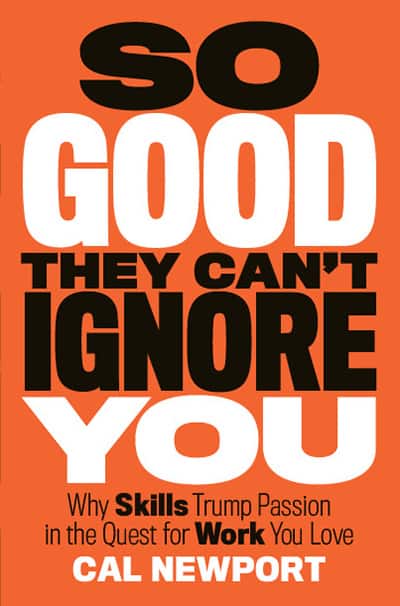
'Follow Your Passion' Is Wrong: Cal Newport speaks at World Domination Summit 2012


Cal Newport is the author of So Good They Can't Ignore You: Why Skills Trump Passion in the Quest for Work You Love (2012). In the video from the 2012 World Domination Summit, he dispels the "follow your passion" advice so many of us have been given and passed on to others. This video made the rounds on Facebook for a while - I am just now getting around to sharing it here.

Here is the blurb for his book:
In this eye-opening account, Cal Newport debunks the long-held belief that "follow your passion" is good advice. Not only is the cliché flawed-preexisting passions are rare and have little to do with how most people end up loving their work-but it can also be dangerous, leading to anxiety and chronic job hopping.

After making his case against passion, Newport sets out on a quest to discover the reality of how people end up loving what they do. Spending time with organic farmers, venture capitalists, screenwriters, freelance computer programmers, and others who admitted to deriving great satisfaction from their work, Newport uncovers the strategies they used and the pitfalls they avoided in developing their compelling careers.

Matching your job to a preexisting passion does not matter, he reveals. Passion comes after you put in the hard work to become excellent at something valuable, not before.
In other words, what you do for a living is much less important than how you do it.

With a title taken from the comedian Steve Martin, who once said his advice for aspiring entertainers was to "be so good they can't ignore you," Cal Newport's clearly written manifesto is mandatory reading for anyone fretting about what to do with their life, or frustrated by their current job situation and eager to find a fresh new way to take control of their livelihood. He provides an evidence-based blueprint for creating work you love.

SO GOOD THEY CAN'T IGNORE YOU will change the way we think about our careers, happiness, and the crafting of a remarkable life.
Cal Newport is an Assistant Professor of Computer Science at Georgetown University, who specializes in the theory of distributed algorithms. He previously earned his Ph.D. from MIT in 2009 and graduated from Dartmouth College in 2004.

In addition to his academic work, Newport is a writer who focuses on contrarian, evidence-based advice for building a successful and fulfilling life in school and after graduation.

'Follow Your Passion' Is Wrong: Cal Newport speaks at World Domination Summit 2012

Published on Jan 29, 2013


"The path to a passionate life is often way more complex than the simple advice 'follow your passion' would suggest."
You've been told you should follow your passion, to do what you love and the money will follow. But how sound is this advice? Cal Newport argues that it's astonishingly wrong.

You can find out more in his book, So Good They Can't Ignore You: Why Skills Trump Passion in the Quest for Work You Love.

Wednesday, March 19, 2014

Robert Hass, Eva Saulitis & Gary Snyder: Writing Nature


The 2014 AWP Conference and Bookfair was held in Seattle, WA, from February 27 - March 1, 2014. Among the panel discussions, one feature two of my favorites talking about "writing nature," Robert Hass and Gary Snyder. They were joined by poet and non-fiction author Eva Saulitis, with Peggy Shumaker acting as host and moderator.

Robert Hass, Eva Saulitis, & Gary Snyder: Writing Nature

Event Date: 02.28.14


Robert Hass, Eva Saulitis, & Gary Snyder: Writing Nature from Association of Writers and Writing Programs on FORA.tv

Author and marine biologist Eva Saulitis joins legendary poets Robert Hass and Gary Snyder for a reading followed by a conversation, moderated by Peggy Shumaker, about the task of writing about nature in a culture that often prizes easily commodifiable academic achievement over messier ways of knowing: the lyric, the spiritual, the sublime.

Bio


Robert L. Hass (born March 1, 1941, San Francisco) is an American poet. He served as Poet Laureate of the United States from 1995 to 1997. He won the 2007 National Book Award and shared the 2008 Pulitzer Prize for the collection Time and Materials: Poems 1997-2005.

Eva Saulitis, a writer and marine biologist, has studied the killer whales of Prince William Sound, Alaska for twenty-five years. She is the author of a book of essays Leaving Resurrection: Chronicles of a Whale Scientist, the poetry collection Many Ways to Say It, and Into Great Silence: A Memoir of Discovery and Loss among Vanishing Orcas. She has received fellowships from the Rasmuson Foundation and the Alaska State Council on the Arts and is an associate professor in the University of Alaska Low-Residency MFA program.

Peggy Shumaker's newest book is Toucan Nest: Poems of Costa Rica. Her memoir is Just Breathe Normally. A former Alaska State Writer Laureate, she edits the Alaska Literary Series and Boreal Books, publishing literature and fine art from Alaska. She teaches at the Rainier Writing Workshop and the MFA at Pacific Lutheran University.

Gary Snyder, best known as a poet, is an essayist, lecturer, and environmental activist. He is the author of over twenty books, including Turtle Island, winner of the 1975 Pulitzer Prize for Poetry. He served for many years as a faculty member at the University of California, Davis and has been a translator of ancient Chinese and modern Japanese literary texts into English.

Related Links


Tuesday, March 18, 2014

Song of the Reed: The Poetry of Rumi


The 2014 AWP Conference and Bookfair was held in Seattle, WA, from February 27 - March 1, 2014. Among the panel discussions, one focused and the life and poetry of Rumi, featuring Coleman Barks (one of the best known translators), Brad Gooch (author of a forthcoming Rumi biography), and Buddhist poet Anne Waldman (another of my favorites poets).

Song of the Reed: The Poetry of Rumi

Event Date: 03.01.14
Speakers: Coleman Barks, Brad Gooch, Anne Waldman


Song of the Reed: The Poetry of Rumi from Association of Writers and Writing Programs on FORA.tv

Thirteenth-century Persian poet Rumi is now the most popular poet in the United States. In this event, leading Rumi interpreter, Coleman Barks, reads his beloved versions of the Sufi poet’s verse, biographer Brad Gooch shares research into Rumi’s lived experience, and poet Anne Waldman reflects on Rumi’s contribution to poetry’s ecstatic tradition.

Bio


Coleman Barks has taught poetry and creative writing at the University of Georgia for thirty years. He is the author of numerous Rumi translations. His work with Rumi was the subject of an hour-long segment in Bill Moyers' Language of Life series on PBS, and he is a featured poet and translator in Bill Moyers' poetry special, "Fooling with Words." His own books of poetry include Winter Sky: Poems 1968-2008.

Brad Gooch’s Flannery: A Biography of Flannery O’Connor was a 2010 National Book Critics Circle Award finalist and a New York Times notable book. His short story collection Jailbait and Other Stories won the 1985 Writer’s Choice Award, sponsored by the Pushcart Foundation and National Endowment for the Arts. A Guggenheim fellow in biography, he has received a National Endowment for the Humanities fellowship and is a professor of English at William Paterson University. He is currently at work on a biography and translations of Rumi.

Anne Waldman
is the author of more than forty books, including Fast Speaking Woman and Vow to Poetry, a collection of essays, and The Iovis Trilogy: Colors in the Mechanism of Concealment, an epic poem and twenty-five-year project. With Allen Ginsberg she co-founded the Jack Kerouac School of Disembodied Poetics at Naropa University, where she is a Distinguished Professor of Poetics. She received a 2013 Guggenheim Fellowship, the Poetry Society of America’s Shelley Memorial Award, and has recently been appointed a Chancellor of the Academy of American Poets.

Thursday, December 26, 2013

Scientific American - Highlights from Neuroscience 2013

Scientific American Magazine

Here are 5 of the more interesting research presentations at the recent annual meeting of the Society for Neuroscience, as determined by the editors of Scientific American. Access PDFs of the abstracts from this year's meeting or download them to your e-reader or mobile device.

Highlights from Neuroscience 2013

The massive annual meeting of the Society for Neuroscience brought together tens of thousands of researchers exploring the workings of mind and brain


By John Matson

Tuesday, December 10, 2013

Evolution of Psychotherapy Conference - My Schedule


I am at the Evolution of Psychotherapy Conference in Anaheim, CA, just up the street from Disney Land (the happiest place on Earth, or something like that).

There is so much to do and learn - and some of it overlaps. Some of the biggest names in psychotherapy over the last 30 years are speaking here, including Otto Kernberg, Albert Bandura, Gerald Edelman (1972 Nobel Prize in Physiology/Medicine), Donald Meichenbaum, Judith Beck (daughter of Aaron Beck), Herriet Lerner, Ernest Rossi, Cloe Mandanes, Irvin Yalom, and Bessel van der Kolk, as well as some younger stars, such as Mary, Pipher, Francine Shapiro, Daniel Siegel, Stephen Gilligan, Peter Levine, and Steven Hayes.

Anyway, here is my schedule for the conference.


WEDNESDAY
8:30-9:30 - Keynote 1: Anaheim Convention Center
GERALD EDELMAN, MD, PHD - FROM BRAIN DYNAMICS TO CONSCIOUSNESS:  How Matter Becomes Imagination Arena
10:00-1:00 - DANIEL SIEGEL, MD - MINDFULNESS, MINDSIGHT AND THE BRAIN: What is Mind and Mental Health? - Hilton - Pacific Ballroom
2:30-5:30 – OTTO KERNBERG - TRANSFERENCE FOCUSED PSYCHOTHERAPY (TFP) OF SEVERE PERSONALITY DISORDERS - Marriott - Platinum 6-10

THURSDAY
8:30-11:30 – JEFFREY ZEIG, PHD:  HYPNOSIS: Advanced Techniques for Beginners - Marriott - Platinum Ballroom 1-5
1:00-4:00 – STEPHEN GILLIGAN, PHD - THE THREE POSITIVE CONNECTIONS: NEEDED FOR CREATIVE CHANGE - Marriott - Platinum Ballroom 6-10
4:30-5:30 – DANIEL AMEN, MD - BRAIN WARS: How Not Looking at the Brain Leads to Missed Diagnoses, Failed Treatments and Dangerous Behaviors - Hilton - California Ballroom
5:45-6:45 – MICHAEL GAZZANIGA, PHD - UNITY IN A MODULAR WORLD - Anaheim Convention Center - Arena

FRIDAY
8:00-9:00 – Daniel Siegel, MD - The Wheel of Awareness and the Integration of Consciousness (Live) - Anaheim Convention Center - Arena
9:20-10:20 – Robert Dilts - Accessing and Applying Archetypal Energies as Resources for Change and Healing (Live) - Hilton - California Ballroom
10:40-11:40 – PANEL: Posttraumatic Disorders - Jack Kornfield, PhD, Peter Levine, PhD, Donald Meichenbaum, PhD, and Mary Pipher, PhD, Moderator: Annellen Simpkins, PhD - Hilton Pacific Ballroom
12:00-1:00 – BESSEL VAN DER KOLK, MD - FRONTIER OF TRAUMA TREATMENT - MODERATOR: ANNELLEN SIMPKINS, PHD - Hilton - California Ballroom

2:30-3:30 – Stephen Gilligan, PhD - Generative Trance and Transformation (Live) -
Anaheim Convention Center Arena
3:50-4:50 – PANEL: Transference/Countertransference Otto Kernberg, MD, Peter Levine, PhD, and Erving Polster, PhD, Moderator: Michael Munion, MA - Marriot Grand Ballroom
5:10-6:10 – Ernest Rossi, PhD - The Mind-Body Healing Experience (MHE) (Live) - Anaheim Convention Center Arena

SATURDAY
8:00-9:00 – Steven Hayes, PhD - Compassion and Perspective Taking in Acceptance and Commitment Therapy (Video) - Marriott Grand Ballroom
9:20-10:20 – Donald Meichenbaum, PhD - Treatment of a Suicidal Patient with a History of Victimization: A Constructive Narrative Perspective (Video) - Hilton - Pacific Ballroom
10:40-11:40 – ALBERT BANDURA, PHD - ON SHAPING ONE’S FUTURE - MODERATOR: ALEXANDER SIMPKINS, PHD - Anaheim Convention Center Arena
12:00-1:00 – PETER LEVINE, PHD - SPIRITUALITY AND TRAUMA, MODERATOR: ALEXANDER SIMPKINS, PHD - Anaheim Convention Center Ballroom ABC

2:30-5:30 – BESSEL VAN DER KOLK, MD - THE BODY KEEPS SCORE: Integration of Mind, Brain, and Body in the Treatment of Trauma - Hilton California Ballroom
7:00-9:00 – IRVIN YALOM, MD - TEACHING PSYCHOTHERAPY THROUGH NARRATIVE - Anaheim Convention Center Arena

SUNDAY
8:00-9:00 – Steven Hayes, PhD - SELF, COMPASSION, AND PEACE OF MIND: The Implications of Evolution Science, Moderator: Betty Alice Erickson, MS - Marriott - Platinum Ballroom 6-10
9:15-11:15 – MICHAEL D. YAPKO, PHD - REALITY IS NEGOTIABLE: Absorbing People in Positive Possibilities - Marriott - Platinum Ballroom 1-5
11:30-12:30 – AARON T. BECK—COGNITIVE THERAPY PAST, PRESENT AND FUTURE PATHWAYS: Cognitive Therapy Past, Present and Future Pathways: A DISCUSSION WITH CHRISTINE PADESKY, PHD - AARON BECK, MD INTERVIEWED BY JUDITH BECK, PHD - Anaheim Convention Center Arena
12:30-1:30 - MARTIN SELIGMAN, PHD - POSITIVE PSYCHOLOGY: NEW DEVELOPMENTS - Anaheim Convention Center Arena

Friday, November 22, 2013

Compassion Research in Neuroscience: Defining Compassion, Empathy & Altruism - Economic, Philosophical & Contemplative Perspectives

The Center for Compassion and Altruism Research and Education

This video is a from a 2009 conference, but it's still an interesting talk. The speakers in this video are Brian Knutson, PhD, Richard Davidson, PhD, Tania Singer, PhD, Bill Mobley, MD, PhD.

Compassion Research in Neuroscience: Defining Compassion, Empathy & Altruism - Economic, Philosophical & Contemplative Perspectives


“Defining Compassion, Empathy & Altruism: Scientific, Economic, Philosophical & Contemplative Perspectives,” which took place March 4th to 5th 2009, was put on by CCARE. This part of the conference was the session on Compassion Research in Neuroscience. The speakers of this session were: Brian Knutson, PhD, Richard Davidson, PhD, Tania Singer, PhD, and Bill Mobley, MD, PhD.

Thursday, November 21, 2013

Science of Compassion 2013 — Neuroscience and Cognitive Perspectives on Compassion


This video from The Center for Compassion and Altruism Research and Education (CCARE) is from the CCARE Science of Compassion Summer Research Institute, co-sponsored by the Telluride Institute (July 20-25, 2013).

The purpose of the conference is outlined below, along with the bios of the speakers in the video below.

Science of Compassion 2013 — Neuroscience and Cognitive Perspectives


The purpose of the CCARE Science of Compassion Summer Research Institute, co-sponsored by the Telluride Institute, a five-day conference held in Summer 2013, was to advance research on compassion and altruism through collaboration, dialog, inquiry, education, and research.
This talk focused on the neuroscience and cognitive perspectives of compassion. Speakers include Drs. Stephanie Brown, Emiliana Simon-Thomas, Gaelle Desbordes, and Clifford Saron.

* * * * *

Purpose

The purpose of the CCARE Summer Research Institute, co-sponsored by the Telluride Institute, a five-day conference to be held in Summer 2013, is to advance research on compassion and altruism through collaboration, dialog, inquiry, education, and research.

Drawing from several disciplines including neuroscience, psychology, genetics, economics, and contemplative traditions, the CCARE Summer Research Institute aims to examine compassion, altruism and prosocial behavior from a wide perspective of scientific angles. In particular, the institute will explore and discuss the neural correlates, biological bases and antecedents of compassion; the effects of compassion on behavior, physiology, overall health, and the brain; and methods, techniques, and programs for cultivating compassion and promoting altruism within individuals and society-wide. Compassion education programs will also be integrated into the curriculum.

The long-term goal of the Summer Research Institute is to support young scientists who wish to focus their research on compassion, altruism, and prosocial behavior. Their participation in the Institute will allow them to deepen their knowledge of compassion research, receive training in compassion education and research programs, build collaborations and develop a network of like-minded scientists that can offer intellectual support and community. The Summer Research Institute will award competitive pilot research grants to outstanding participants whose research protocols promise to significantly further the field of compassion research.

Specific Goals

  • Provide an intensive training in the field of compassion research including operational definitions, biological underpinnings, and effects of compassion on behavior, physiology, overall health, and the brain
  • Foster dialog, research collaborations, and knowledge exchange between expert faculty and young researchers (graduate students and postdocs) in the field of compassion research
  • Delineate research questions and gaps in the field of compassion research in order to highlight new directions for research
  • Develop a community of young scientists (graduate students and post-docs) dedicated to researching compassion

* * * * *

Speakers


Clifford Saron, Ph.D., University of California – Davis


Clifford Saron, Ph.D., is an Associate Research Scientist at the Center for Mind and Brain and M.I.N.D. Institute at the University of California at Davis. He received his Ph.D. in Neuroscience from the Albert Einstein College of Medicine in 1999 studying the electrophysiology of interhemispheric visuomotor integration under the direction of Herbert Vaughan, Jr. Dr. Saron has had a long-standing interest in brain and behavioral effects of meditation practice and has been faculty at the Mind and Life Summer Research Institute and is currently a member of the Program and Research Council of the Mind and Life Institute. In the early 1990′s he was centrally involved in a field research project investigating Tibetan Buddhist mind training in collaboration with Jose Cabezón, Richard Davidson, Francisco Varela, Alan Wallace and others under the auspices of the Private Office of H.H. the Dalai Lama and the Mind and Life Institute. Currently, in collaboration with Buddhist scholar Alan Wallace and a consortium of over 30 scientists and researchers at UC Davis and elsewhere, he is Principal Investigator of The Shamatha Project, a unique longitudinal study of intensive meditation training based on the practice of meditative quiescence (shamatha) and cultivation of the four immeasureables (loving kindness, compassion, empathetic joy, and equanimity). The project, focused on changes in attention-related skills and emotion regulation, is the most comprehensive multimethod study to date regarding the potential effects of long-term intensive meditation practice on basic mental and physical processes related to cognition, emotion, health physiology, and motivation. His other primary research interest focuses on investigating brain and behavioral correlates of sensory processing and multisensory integration in children on the autistic spectrum.
___


Stephanie Brown, Ph.D, Stony Brook University


Stephanie Brown is an Associate Professor of Preventive Medicine at SUNY Stony Brook and an Adjunct Assistant Professor at the Institute for Social Research at the University of Michigan. She received a B.S. degree in Psychology from the University of Washington, and a Ph. D. in Social Psychology from Arizona State University. She completed a 2-year N.I.M.H. postdoctoral training program in “Psychosocial Factors in Mental Health and Illness” at the Institute for Social Research at the University of Michigan. Following her postdoctoral training, Dr. Brown received a research scientist career development award (K-01) to study whether dialysis patients who provide social support to others suffer fewer symptoms of depression. This project led to a series of empirical papers conducted with fellow Center faculty member Dylan Smith, suggesting that the health benefits of social contact are due to the provision, as opposed to the receipt, of social support. Dr. Brown spent three years as an Assistant Professor on the faculty in the Department of Internal Medicine at the University of Michigan before joining the faculty at SUNY Stony Brook in December 2009. Dr. Brown’s research currently focuses on the neuro-affective mechanisms underlying altruistic and prosocial behavior and she has a three-year grant from the National Science Foundation to examine the physiological consequences of helping others. Together with center member, Dylan Smith, Dr. Brown’s research examines (a) the role that other-focused motivational states play in stress regulation (b) the implications of helping-induced stress-regulation for physical health and longevity and (c) the contribution of other-focused motivational states and behaviors to the darker side of human experience including depression, suicidality, and PTSD. These lines of research are designed to shed light into the mechanisms underlying a caregiving motivational system, including its evolutionary origins and its implications for compassionate care, medicine, economic behavior, ethnic and international conflict, and other political attitudes and behaviors.
___


Gaëlle Desbordes, Ph.D., Research Fellow At The Athinoula A. Martinos Center And Harvard Medical School And A Visiting Scholar At Boston University


Gaëlle Desbordes, Ph.D., is a research fellow at the Athinoula A. Martinos Center for Biomedical Imaging within the Massachusetts General Hospital and Harvard Medical School and a visiting scholar at Boston University. Trained as a neuroscientist (PhD, Boston University) and with a background in engineering and computer science, her current research focuses on the neuroscientific investigation of meditative practices—including compassion meditation—using brain imaging (functional MRI) and physiological measurements of the autonomic nervous system. She is the recipient of a Francisco J. Varela Research Award from the Mind and Life Institute for her ongoing study of the neural and physiological correlates of advanced meditation practices. She is herself an experienced meditation practitioner with a particular interest in traditional contemplative methods for cultivating loving-kindness and compassion (e.g., Tibetan “mind training” or lo-jong methods). For the past four years she has worked in collaboration with Geshe Lobsang Tenzin Negi (Emory University) and Charles Raison (University of Arizona) on the Compassion and Attention Longitudinal Meditation (CALM) study, a longitudinal study that examines how Cognitively-Based Compassion Training (CBCT) affects emotional processing in the brain and the regulation of physiological responses to psychosocial stress. She is also on the neuroscience faculty at the Emory-Tibet Science Initiative—an ongoing effort overseen by HH the Dalai Lama aimed at implementing a comprehensive and sustainable science education program for Tibetan monks and nuns.
___


Emiliana Simon-Thomas, Ph.D., The Greater Good Science Center, University of California – Berkeley


Emiliana Simon-Thomas earned her doctorate in Cognition Brain and Behavior at UC Berkeley. Using behavioral, EEG and fMRI methods, her dissertation examined how negative states like fear and aversion influence thinking and decision-making.
During her postdoc, Emiliana moved into the positive terrain to study care/nurturance, love of humanity, compassion and awe under the mentorship of Dacher Keltner. From signaling, perceiving and self-reporting of emotions to peripheral autonomic and neural indices of emotion to understanding the psychosocial benefits of emotional authenticity and connection, Emiliana continues to examine the potential for enhancing everything pro-social.

Previously the Associate Director/Senior Scientist at the Center for Compassion and Altruism Research and Education at Stanford University, Emiliana joins the Greater Good Science Center with great enthusiasm for her hometown, Berkeley and heartfelt ambition to support and grow Greater Good Science to new heights, widths and depths!

Friday, October 18, 2013

Brain Mapping: Pushing the Frontiers of Neurology -- Atlantic Meets the Pacific 2013

http://www.uctv.tv/images/series/widescreen/623.jpg

This is an interesting talk from the UC San Diego "Atlantic Meets the Pacific" series of conversations. This one focuses on the new efforts at brain mapping in neuroscience.

Brain Mapping: Pushing the Frontiers of Neurology -- Atlantic Meets the Pacific 2013

Published on Oct 17, 2013

(Visit: http://www.uctv.tv/)
UC San Diego neuroscientists Ralph Greenspan and Nicholas Spitzer join Kris Famm of GlaxoSmithKline and James Fallows of The Atlantic for a look into the future of brain research. This program is part of The Atlantic Meets the Pacific 2013 conference presented by The Atlantic and UC San Diego. Series: "The Atlantic Meets The Pacific" [11/2013]

Saturday, October 12, 2013

Mark Vernon - The Evolution of Consciousness (The Institute of Art and Ideas)


Cool video talk from philosopher, author, blogger Mark Vernon from the 2012 How the Light Gets In Conference sponsored by The Institute of Art and Ideas.

An Author and ex-clergyman, Mark Vernon is now agnostic. He’s written books on friendship, well-being, God, spirituality, science and the philosophy of the everyday. His articles and reviews on religious, philosophical and ethical themes have appeared in many newspapers and magazines. He has degrees in physics, theology and a PhD in philosophy, and regularly contributes to debates and festivals, also teaching at The Idler Academy in London.


He is the author of several books, including How To Be An Agnostic (2011), What Not to Say: Philosophy for Life's Tricky Moments (2009), and 42: Deep Thought on Life, the Universe, and Everything (2008) [gotta love a philosopher who pays homage to Douglas Adams in his book title]. 


Here are links to all of Mark Vernon's videos at the IAI: Sex Machines, Buddhists in Suburbia, Gods and Monsters, How to be Agnostic, and The Evolution of Consciousness.

The Evolution of Consciousness


Mark Vernon

We understand that our bodies evolve, but does consciousness evolve too? Mark Vernon investigates the transformative ideas of Owen Barfield.

"Thoughtful, accessible, lucid" ~ Julian Baggini

Thursday, October 03, 2013

Being Human 2013 - Human Emotions with Richard Davidson, Paul Ekman, and Esther Sternberg


Human Emotions from Being Human on FORA.tv

Human Emotions

In this session we look at emotions as evolved behavioral responses, how well-being can be cultivated, and how our emotions can influence health. We further investigate the nature of compassion and its compatibility with evolutionary theory.

Session led by: Richie Davidson, Ph.D., Professor of Psychology and Psychiatry, University of Wisconsin-Madison; Founder and Chair of the Center for Investigating Healthy Minds
Paul Ekman, Ph.D., Psychologist, Paul Ekman Group, LLC
Esther Sternberg, MD, Physician


Richard Davidson

Neuroscientist Richard Davidson (author of The Emotional Life of Your Brain: How Its Unique Patterns Affect the Way You Think, Feel, and Live--and How You Can Change Them) was named one of the 100 most influential people in the world by Time magazine in 2006. His research focuses on correlating emotional states with the brain activity underlying them. Davidson has reached the conclusion that our brain circuitry isn't set in stone: though our emotions are evolved responses, they are remarkably plastic and can be shaped over time. As he says, "I think that what modern neuroscience is teaching us is that, in fact, there is a lot of plasticity, that change is indeed possible, and the evidence is more and more strongly in favor of the importance of environmental influences in shaping brain function and structure and even shaping the expression of our genes." At the Center for Investigating Healthy Minds, Davidson and other researchers investigate qualities of mind such as compassion and mindfulness in order to understand how healthy minds might be cultivated. He is perhaps most famous for his investigations into the neurological effects of meditation, showing how this practice can functionally rewire the brain. In 2012, he spoke at the Being Human conference in San Francisco. 

Paul Ekman

Paul Ekman (author of Emotions Revealed, Second Edition: Recognizing Faces and Feelings to Improve Communication and Emotional Life) is a pioneering psychologist in the study of emotions and facial expressions, and was named one of the most influential psychologists of the 20th century by the American Psychological Association. Ekman is most famous for his research establishing that nonverbal communication of emotions is not a cultural phenomenon but a universal one. Through his study of facial expressions, Ekman has substantiated Darwin's theory that human emotions are an evolved, biological response shared throughout cultures worldwide. On their importance in our lives, Ekman states, "Emotions can override…the more powerful fundamental motives that drive our lives: hunger, sex, and the will to survive." Ekman has also contributed to the study of microexpressions, involuntary facial expressions that occur when someone is attempting to conceal their true feelings. Microexpressions offer further evidence that emotional responses are indeed hardwired and universal. His system of reading these emotions gave rise to the crime drama television series Lie to Me, starring a character based on Ekman. In 2012, he spoke at the Being Human conference in San Francisco.

Esther Sternberg

Internationally recognized for her discoveries of the science of the mind-body interaction in illness and healing, Dr. Esther M. Sternberg (author of The Balance Within: The Science Connecting Health and Emotions) is a major force in collaborative initiatives on mind-body-stress-wellness and environment inter-relationships. Dr. Sternberg's many honors include recognition by the National Library of Medicine as one of 300 women physicians who have changed the face of medicine, the Anita Roberts National Institutes of Health Distinguished Woman Scientist Lectureship, and an honorary doctorate in medicine from Trinity College, Dublin. Currently Research Director for the Arizona Center for Integrative Medicine, University of Arizona at Tucson, Dr. Sternberg was previously Section Chief of Neuroendocrine Immunology and Behavior at the National Institute of Mental Health; Director of the Integrative Neural Immune Program, NIMH/NIH; and Co-Chair of the NIH Intramural Program on Research on Women's Health. She has been featured on numerous radio and television programs, including PBS's The New Medicine and Life Part II, NPR's Speaking of Faith and, in 2009, with Emmy Award winning Resolution Pictures, created and hosted a PBS special based on her books: The Science of Healing. Well known for her ability to translate complex scientific subjects for lay audiences, Sternberg has testified before Congress, advised the World Health Organization, and is a regular contributor to Science Magazine's "Books et al." column, and a regular columnist for Arthritis Today. A dynamic speaker, recognized by her peers as a spokesperson for the field, she translates complex scientific subjects in a highly accessible manner, with a combination of academic credibility, passion for science and compassion as a physician. Dr. Sternberg lectures nationally and internationally to both lay and scientific audiences and is frequently interviewed on radio, television and film and in print media on subjects including the mind-body connection, 'stress and illness', spirituality, love, and health, and place and well-being.


Wednesday, October 02, 2013

Being Human 2013 - Human Relationships with Helen Fisher, Ph.D.


Human Relationships from Being Human on FORA.tv

Human Relationships


Sexual behavior, romance, and partnerships are among the strongest human social drives. In this session we delve into the biology of sexual behavior and such topics as love addictions, serial monogamy, clandestine adultery, hookup culture, and how human partnering psychology is reflected in our animal cousins.

Session led by: Helen Fisher, Ph.D., Professor of Anthropology, Rutgers University
Justin Garcia, Ph.D., Assistant Professor of Gender Studies, The Kinsey Institute, Indiana University
Laurie Santos, Ph.D., Professor of Psychology, Director of the Comparative Cognition Laboratory, Yale University

Helen Fisher


Helen Fisher (author of
Anatomy of Love: A Natural History of Mating, Marriage, and Why We Stray [1994] and Why We Love: The Nature and Chemistry of Romantic Love [2004], among many other books) is an anthropologist specializing in the study of interpersonal romantic attraction. Her research into love and behavior leads her to the conclusion that the desire for love is a universal human drive, stronger than even the drive for sex. She has conducted extensive research into the evolution of sex, love, marriage, gender differences, and how your personality shapes who you love. Fisher believes that there are three main systems in the brain that deal with mating and reproduction: the sex drive, romantic love, and long-term attachment. Understanding the different qualities and goals of these three systems is crucial for navigating the ins and outs of love and relationships. It’s especially important to realize that the evolutionary background of love relationships is all about reproduction of the species, which at times may conflict with our wishes and expectations. As Fisher puts it, “I don’t think we’re an animal that was built to be happy; we are an animal that was built to reproduce.”

Justin Garcia


Justin Garcia (co-author of
Evolution and Human Sexual Behavior, 2013) is an evolutionary biologist, specializing in the study of how human evolution has shaped our sexual and romantic behavior. His research focuses on the evolutionary and biocultural foundations of human behavior, particularly romantic love, intimacy, and sexuality. He is especially interested in notions of commitment and attachment in romantic and sexual relationships. Garcia has said that "the most consistent feature of human sexuality is the remarkable diversity which exists among individuals and cultures." He notes that environmental and cultural forces contextualize and shape our sexuality in unique ways; for example, his research explores the development of a new Western "hook-up culture" that is accepting of casual sex. Garcia is also a scientific advisor at the dating site Match.com.

Laurie Santos


Laurie Santos researches the evolutionary background of the human brain by studying non-human primates in her Comparative Cognition Lab at Yale. In a series of fascinating experiments, Santos’ team has investigated economic decision making in capuchin monkeys. Researchers created a form of money: tokens that the monkeys could trade for food. They found that the monkeys made consistently irrational decisions, mirroring the same bad financial choices that people make. For example, the monkeys demonstrate the same loss-aversion behavior—treating losses as more important than gains— as human beings. This suggests that some of the core biases of the brain that shape human behavior were also present in our remote pre-human ancestors, and have been maintained through evolution. Santos believes that understanding the built-in biases of the human brain is crucial to encouraging rational behavior. As she puts it, “...the irony is that it might only be in recognizing our limitations that we can really actually overcome them.” She is currently researching whether primates have a precursor to theory of mind, the ability to imagine the thoughts and feelings of others. In 2012, she spoke at the Being Human conference in San Francisco.


Tuesday, October 01, 2013

Being Human 2013 - The Biology and Psychology of Ethical Behavior


The Biology and Psychology of Ethical Behavior from Being Human on FORA.tv

The Biology and Psychology of Ethical Behavior


Is morality culturally determined and relative, an evolved social contract that is absolute, or something else? In this session, we examine the biology of caring behavior and social interactions, as well as the dynamics of cooperation, competition, and power.


Session led by: Robert Sapolsky, Ph.D., Neuroscientist; Professor of Biological Sciences, Neurology, Neurological Sciences, and Neurosurgery, Stanford University
Susan Fiske, Ph.D., Professor of Psychology, Princeton University
Josh Greene, Ph.D., Associate Professor of Psychology, Harvard University

Susan Fiske

Susan Fiske is a psychologist known for her work in the field of social cognition. Her research has shown how prejudice, stereotyping, and discrimination are influenced by social relationships, and also how dynamics of cooperation, competition, and power can affect how people view other groups. This research has led her to the conclusion that prejudices are an inevitable part of the human condition, but that they are also quite malleable and subject to change. Fiske notes that "when people are on our side, we take the trouble to know them. This conclusion fits decades of research about how to get people from mutual outgroups—black/white, gay/straight, old/young, disabled/not, immigrant/host—to treat each other as individual human beings. When people come together across ingroup/outgroup boundaries, they get to know each other as individuals mainly when they need each other in the service of shared goals." In recent years, her work has focused on finding the neural correlates to prejudices using the tools of social neuroscience.

Joshua Greene

Joshua Greene is a philosopher, experimental psychologist, and neuroscientist who studies the neurological underpinnings of moral judgment. His work seeks to understand how our moral judgments are shaped by automatic processes (e.g. emotional gut reactions) and controlled cognitive processes (e.g. reasoning). He is perhaps best known for his application of neuroscience to the infamous "trolley problem," revealing the different parts of the brain that are involved in making difficult moral choices. He feels that common sense solutions often hurt more than help, saying, "[serious social] problems are a product of well-intentioned people abiding by their respective common senses and that the only long-run solution to these problems is for people to develop a healthy distrust of moral common sense. This is largely because our social instincts were not designed for the modern world. Nor, for that matter, were they designed to promote peace and happiness in the world for which they were designed, the world of our hunter-gatherer ancestors." He is the director of the acclaimed Moral Cognition Lab at Harvard.

Dr. Robert Sapolsky

Robert Sapolsky (author of Why Zebras Don't Get Ulcers, Third Edition and A Primate's Memoir: A Neuroscientist's Unconventional Life Among the Baboons, among other titles) is one of the world's leading neuroscientists, and has been called "one of the finest natural history writers around" by The New York Times. In studying wild baboon populations, Sapolsky examined how prolonged stress can cause physical and mental afflictions. His lab was among the first to document that stress can damage the neurons of the hippocampus. Sapolsky has shown, in both human and baboon societies, that low social status is a major contributor to stress and stress-related illness. He boils down the contemporary human's relationship with stress as follows: "We are not getting our ulcers being chased by Saber-tooth tigers, we're inventing our social stressors—and if some baboons are good at dealing with this, we should be able to as well. Insofar as we're smart enough to have invented this stuff and stupid enough to fall for it, we have the potential to be wise enough to keep [these stressors] in perspective." Sapolsky's study of stress in non-human primates has offered fascinating insight into how human beings relate to this universal pressure.

Monday, September 30, 2013

Being Human 2013 - The Future of Being Human with David Eagleman, Ph.D.


The Future of Being Human from Being Human on FORA.tv

The Future of Being Human


In this session, we examine how the contemporary journey into massive scales of space, time, and big data irreversibly expands our perspective on ourselves-and how medical innovations which allow us to move past our traditional human bodies will change our cares and our consciousness.


Session led by: David Eagleman, Ph.D.; Neuroscientist, Baylor College of Medicine
Natasha Vita-More, Ph.D.; Designer and Theorist
Jer Thorp; Data Artist

Dr. David Eagleman

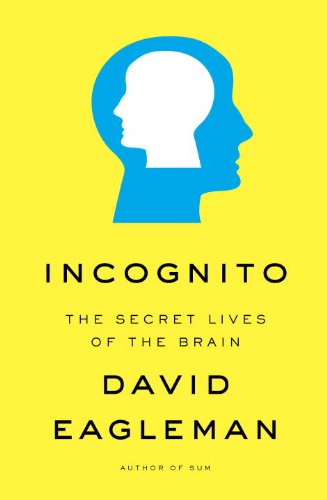
David Eagleman is a neuroscientist best known for his work on time perception, synesthesia, and the intersection of neuroscience and the legal system. His book, Incognito: The Secret Lives of the Brain, explores the neuroscience under the hood of the conscious mind—in other words, all the aspects of neural function of which we have no awareness or access. As he says, “It turns out your conscious mind — the part you think of as you — is really the smallest part of what’s happening in your brain, and usually the last one in line to find out any information.” Eagleman dismantles the common perception that the brain acts as a unified whole, instead pointing out that the brain is governed by a “band of rivals”: many different systems with conflicting goals. This band of rivals manages to work together thanks to a figurative overseer that we call the self. Eagleman is also passionate about how neuroscience challenges fundamental notions at the heart of our criminal justice system. Given that we are not in conscious command of most of the brain networks controlling our behavior, how can we be held responsible for our actions? Eagleman argues that the only rational course is to ask “What can we do from here?” and to create customized sentencing, tailored rehabilitation, and refined incentive structuring. In 2012, he spoke at the Being Human conference in San Francisco.

Jer Thorp

Jer Thorp is an artist and educator from Vancouver, Canada, currently living in New York. Coming from a background in genetics, his digital art practice explores the many-folded boundaries between science, data, art, and culture. Recently, his work has been featured by The Guardian, Scientific American, The New Yorker, and Popular Science. Thorp’s award-winning software-based work has been exhibited in Europe, Asia, North America, South America, including in the Museum of Modern Art in Manhattan.

Jer is an adjunct Professor in New York University’s ITP program, and a member of the World Economic Forum’s Global Agenda Council on Design Innovation. He is a co-founder of The Office For Creative Research, a multi-disciplinary research group exploring new modes of engagement with data. From 2010 – 2012, Jer was the Data Artist in Residence at the New York Times.

Natasha Vita-More

Natasha Vita-More, is a designer and author whose research concerns human enhancement and radical life extension. Dr. Vita-More designed the pioneering “Primo Posthuman” prototype and “Platform Diverse Body." She is co-editor and contributing author of The Transhumanist Reader: Classical and Contemporary Essays on the Science, Technology, and Philosophy of the Future Human. Her writings have been published in numerous books and academic journals such as Technoetic Arts, Evolution haute couture, Metaverse Creativity, New Realities: Being Syncretic, Beyond Darwin, and D’ARS.

Wired called Vita-More an "early adopter of revolutionary changes" and Village Voice claimed she is "a role model for superlongevity." Featured in LAWeekly, The New York Times, and U.S. News & World Report, Vita-More has appeared in numerous televised documentaries on the future. She received Special Recognition at Women in Video and has exhibited at the London Contemporary Art Museum, Niet Normaal, and the Moscow Film Festival. Dr. Vita-More is an adjunct professor at the University of Advancing Technology.

Saturday, September 14, 2013

Toward a Science of Consciousness Conference - Tucson, April 21-26, 2014 (20th Anniversary)


Looks like an excellent conference this year - with some seriously cool plenary speakers. Among the names announced so far: John Searle, Daniel Dennett, David Eagleman, Christof Koch, Ned Block, Susan Blackmore, and Rebecca Goldstein (among others).

I hope to attend as much of it this year as my hectic schedule allows.

Toward a Science of Consciousness


The Tucson Conference - 20th Anniversary

April 21-26, 2014

It was 20 years ago today......


Plenary Speakers TSC 2014 bios / photos including:

  • Susan Blackmore
  • Karl Deisseroth
  • Rebecca Goldstein
  • Henry Markram
  • Petra Stoerig
  • Ned Block
  • Daniel Dennett
  • Stuart Hameroff
  • George Mashour
  • Giulio Tononi
  • David Chalmers
  • David Eagleman
  • Christof Koch
  • John Searle
  • and many more....

Toward a Science of Consciousness - 20th Anniversary
The Tucson Conference - April 21-26 2014

Scientists, philosophers, researchers, scholars, artists and humanists are invited to the 20th Anniversary of the first Tucson conference “Toward a Science of Consciousness” held in 1994. The 2014 conference will reflect on 20 years of progress, present understanding and future directions in the science of consciousness.

On-Line Registration - NOW OPEN ! | click here

Submit your Abstracts
Submission Deadline: December 15

Please review the taxonomy and general abstract guidelines

You do not have to make payment in order to open a registration record and to submit an abstract for consideration

Workshops - Pre-Conference Workshop Proposals
Please review the workshop proposal guidelines

email to: center@u.arizona.edu

Workshop Proposal Deadline: September 15 | Notifications by Oct 1

Additional Conference Information: