Showing posts with label evolution. Show all posts

Friday, September 04, 2015

Teleological Perspectives and the Pre/Trans Fallacy of Integral Theory

http://image.slidesharecdn.com/theolology-proper-intro-arguments-for-existence-of-god-etc-21444/95/theolology-proper-intro-arguments-for-existence-of-god-etc-26-728.jpg?cb=1250142478

Teleology is an account of a given thing's purpose. For example, Aristotle argued that the purpose of an acorn, its intrinsic telos, is to become an oak tree. This is intrinsic teleology. [A purpose imposed by human use, such as a fork’s extrinsic purpose is to make eating certain foods easier, is extrinsic teleology.] Natural teleology contends that natural entities have intrinsic purposes, irrespective of human use or opinion.

According to Wikipedia:
Though ancient atomists rejected the notion of natural teleology, teleological accounts of non-personal or non-human nature were explored and often endorsed in ancient and medieval philosophies, but fell into disfavor during the modern era (1600-1900). 
In the late 18th century, Immanuel Kant used the concept of telos as a regulative principle in his Critique of Judgment. Teleology was also fundamental to the speculative philosophy of Georg Wilhelm Friedrich Hegel.
A recent example of teleological science is Thomas Nagel’s 2012 book, Mind and Cosmos: Why the Materialist Neo-Darwinian Conception of Nature is Almost Certainly False, an argument that the emergence of life, and in particular conscious life, cannot be explained by materialist or mechanistic principles but, rather, the required principles may be teleological.

Integral theorist Ken Wilber has based his entire integral model on a teleological view of the universe (derived from Vedanta and Tibetan Buddhism), arguing that consciousness arose in the universe so that the universe could come to know itself. In one of his early books, Wilber says that the “Big Bang which was really the roaring laughter of God voluntarily getting lost for the millionth time” (Up From Eden, p. 328). Or this, from a later book:
Maybe the evolutionary sequence really is from matter to body to mind to soul to spirit, each transcending and including, each with a greater depth and greater consciousness and wider embrace. And in the highest reaches of evolution, maybe, just maybe, an individual's consciousness does indeed touch infinity - a total embrace of the entire Kosmos - a Kosmic consciousness that is Spirit awakened to its own true nature. (A Brief History of Everything, p. 38)
In Sex, Ecology, Spirituality, Wilber offers,
… these life forms were apparently not content to merely reproduce themselves, but instead began a long evolution that would eventually allow them to represent themselves, to produce sign and symbols and concepts, and thus out of life arose mind. Whatever this process of evolution was, it seems to have been incredibly driven from matter to life to mind. But stranger still, a mere few hundred years ago, on a small and indifferent planet around an insignificant star, evolution became conscious of itself. (p.3)
This is a purely teleological understanding of evolution, of the universe. And for Wilber, eros is the force that drives the evolution of the universe.

In this model of the universe, the intention, or even the purpose, can only be understood through actions. In essence, the result of an action (evolution is the seemingly obvious drive toward complexity in the universe as we know it) explains its intention (the purpose of evolution is for the universe to become conscious of itself).

Wilber’s model, like Nagel’s, posits directionality—an intent—in nature. Wilber goes further and claims that the universe has become conscious of itself through human beings and that this is the intention behind evolution, going all the way back to the Big Bang (let’s ignore the fact that the Big bang is still a questionable origin story).

But is this necessarily true?

Psychologically, this is the sensorimotor stage of mentalization (the ability to think about thinking). Mentalization, according to Peter Fonagy, is a left-brain, voluntary, and slow secondary affect regulating system. It is the ability to step back and consider our own cognitive processes as objects of thought or reflection (paraphrasing Mary Main).

According to Csibra and Gergely (1998), "infant's 'teleological stance' generates reality-based explanations for actions that are neither mentalistic nor causal." In essence, the teleological perspective is "reality-based," in that it attempts to make sense of an event within the available evidence (primitive though it is), but it lacks a truly causal explanation due to a lack of ability to mentalize (to take one's thoughts/beliefs as an object of awareness).

Wilber’s sensorimotor stage is very low on his developmental schema and, in fact, it is the bottom (beginning) stage of cognitive development. As mentioned above, teleology is the sensorimotor stage of mentalization, the reading of one’s own and others’ mental states. There is likely some discrepancy in stages here, and Wilber’s sensorimotor stage and pre-operational stage may well be equivalent to Fonagy’s sensorimotor stage.

We take for granted that intentions precede actions in our experiences of other people. The problem is when we extend this belief to non-human agents, such as animals, weather, or the universe. This is a form of anthropomorphism, the attribution of human intentions and feelings to non-human agents.

As such, this is a primitive state of consciousness. It is correlated strongly with Wilber’s impulsive (or magical/animistic) stage of development. Again, very low on the hierarchy of cognitive development—it’s pre-rational (mind), pre-egoic (identity), pre-operational/symbolic (cognitive), and pre-conventional (moral). It is also preverbal, relying on a very basic cause and effect schema that intuits cause based on effects.

How is it that a teleological perspective in philosophy (and the philosophy of consciousness) is not considered primitive and pre-rational?

What we are really discussing here is a subtle manifestation of the pre/trans fallacy that Wilber himself is credited with discovering. Here is how this distinction is defined at Integral Life:
Ken noticed a core confusion that made it very difficult to discern between the lower stages and the higher stages. Trans-rational mystical experiences were often being dismissed as pre-rational fantasy, postmodern values were being erroneously projected onto pre-modern cultures, and pre-modern impulsiveness and hedonism were being celebrated by the postmodern counterculture. Rather than viewing psychology as a developmental process running from pre-rational to rational to trans-rational (or pre-differentiated fusion to differentiation to post-differentiated integration), a person was seen as being either rational or not—resulting in the trans-rational baby getting thrown out with the pre-rational bathwater.
This is one of Wilber's most important theoretical contributions.

Despite this, Wilber's whole integral model falls into the pre/trans fallacy inherent in teleological perspectives. It's puzzling that Wilber never saw this issue in his own work, but it's often difficult to separate enough from our own beliefs to view them objectively.

On the other hand, he might argue that mystical perspectives are not subject to causal explanations. He has made such claims before.
Neither sensory empiricism, nor pure reason, nor practical reason, nor any combination thereof can see into the realm of Spirit. In the smoking ruins left by Kant, the only possible conclusion is that all future metaphysics and authentic spirituality must offer direct experiential evidence. (The Marriage of Sense and Soul, p. 174)
According to this, we are to take as truth the "insights" of mystics who have seen into the realm of Spirit, whatever that may be. We are required to accept, in integral theory, a model of the evolution of the universe that is based on a teleological interpretation of why the universe is as it is.

And this does not even take into account the likelihood that the Big Bang is a false theory, or that rather than evolving toward greater complexity, the universe may well be evolving toward dissolution and entropy (space is expanding faster than previously believed).
As a result, it's suspected that receding galaxies will cross a type of cosmological event horizon, where any evidence of their existence, not even light, would ever be able to reach us, no matter how far into the future you went.

Would someone born in a future time when there are no other stars visible from Earth come up with the same models and explanations about the universe as people born during the previous centuries?

It seems unlikely.

We really lack any actual evidence for what is happening in other regions of the universe. We barely have a grip on what is happening on Earth.

Any person who believes that he or she can offer a cogent and comprehensive explanation for the universe and it's supposed evolution seems to me more than a little delusional.

Tuesday, February 24, 2015

The Evolutionary Role of the Freeze Response in Trauma

http://ecx.images-amazon.com/images/I/51egCAixgxL._SY344_BO1,204,203,200_.jpg


One of the biggest challenges in working with survivors of sexual trauma is the client's sense of failure if, during the course of the assault or rape, s/he froze and did not fight or run. The client feels s/he failed to do what s/he "should" have done, or could have done, to fight off or run from the perpetrator.

Of course, we know this is not true. And we might try to help the client understand that any response that kept him/her alive is the right response. Often these attempts to reframe the situation fall on deaf ears.

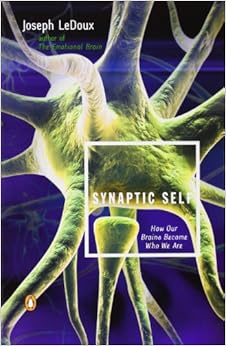
However, I have found that offering a biological and evolutionary explanation seems to carry a little more weight. Below is one of the best explanations of the neurobiology of the freeze response, courtesy of Joseph LeDoux.
"[F]reezing is a beneficial response when faced with a predator. Predators, primal danger for most animals, respond to and are excited by movement. Keeping still in the face of danger is often the best thing for the prey to do. Because millions of years ago animals who did so were more likely to survive, today it's what most animals do, at least as an initial line of defense. Freezing is not a choice but an automatic response, a preprogrammed way of dealing with danger."

"What's interesting is that freezing also occurs if a rat (or other animal) clearly hears a sound that preceded an aversive stimulus (a mild electrical shock of its feet) on some prior occasion. There's no predator around in this case, so how is the connection formed? The sound is a warning signal. Any rat that survives an encounter with a cat or other predator should store in its brain as much about the situation as possible so that the next time the sounds, sights, or smells that preceded the arrival of the cat occur, those stimuli can be attended to in order to increase its chances of staying alive."


~ Joseph LeDoux, Synaptic Self: How Our Brains Become Who We Are, 2002, p. 6

Saturday, October 25, 2014

Kat McGowan - Cooperation Is What Makes Us Human

http://ecx.images-amazon.com/images/I/31YEfyHQ-2L.jpg

This is a re-post of an older article from Nautilus, but it's worth the (re)read even if you saew it originally. Michael Tomasello is the primary expert here, and his book is listed below, along with a few others that are related and interesting reads.

Michael Tomasello, Why We Cooperate (2009)
Samuel Bowles, A Cooperative Species: Human Reciprocity and Its Evolution (2013)
Robert Axelrod, The Evolution of Cooperation: Revised Edition (2006)
Martin Nowak and Roger Highfield, SuperCooperators: Altruism, Evolution, and Why We Need Each Other to Succeed (2012)

Cooperation Is What Makes Us Human

Where we part ways with our ape cousins 

http://static.nautil.us/82_9778d5d219c5080b9a6a17bef029331c.jpg


TALES about the origins of our species always start off like this: A small band of hunter-gatherers roams the savannah, loving, warring, and struggling for survival under the African sun. They do not start like this: A fat guy falls off a New York City subway platform onto the tracks. 
But what happens next is a quintessential story of who we are as human beings.

On Feb. 17, 2013, around 2:30 a.m., Garrett O’Hanlon, a U.S. Air Force Academy cadet third class, was out celebrating his 22nd birthday in New York City. He and his sister were in the subway waiting for a train when a sudden silence came over the platform, followed by a shriek. People pointed down to the tracks.

O’Hanlon turned and saw a man sprawled facedown on the tracks. “The next thing that happened, I was on the tracks, running toward him,” he says. “I honestly didn’t have a thought process.”

O’Hanlon grabbed the unconscious man by the shoulders, lifting his upper body off the tracks, but struggled to move him. He was deadweight. According to the station clock, the train would arrive in less than two minutes. From the platform, O’Hanlon’s sister was screaming at him to save himself.
Suddenly other arms were there: Personal trainer Dennis Codrington Jr. and his friend Matt Foley had also jumped down to help. “We grabbed him, one by the legs, one by the shoulders, one by the chest,” O’Hanlon says. They got the man to the edge of the platform, where a dozen or more people muscled him up and over. More hands seized the rescuers’ arms and shoulders, helping them up to safety as well.

In the aftermath of the rescue, O’Hanlon says he has been surprised that so many people have asked him why he did it. “I get stunned by the question,” he says. In his view, anybody else would’ve done the same thing. “I feel like it’s a normal reaction,” he says. “To me that’s just what people do.”
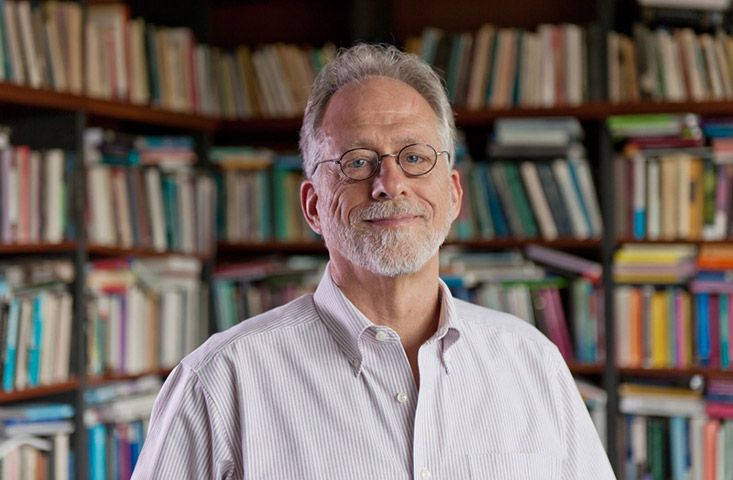
More precisely, it is something only people do, according to developmental psychologist Michael Tomasello, codirector of the Max Planck Institute for Evolutionary Anthropology.

For decades Tomasello has explored what makes humans distinctive. His conclusion? We cooperate. Many species, from ants to orcas to our primate cousins, cooperate in the wild. But Tomasello has identified a special form of cooperation. In his view, humans alone are capable of shared intentionality—they intuitively grasp what another person is thinking and act toward a common goal, as the subway rescuers did. This supremely human cognitive ability, Tomasello says, launched our species on its extraordinary trajectory. It forged language, tools, and cultures—stepping-stones to our colonization of every corner of the planet.

In his most recent research, Tomasello has begun to look at the dark side of cooperation. “We are primates, and primates compete with one another,” Tomasello says. He explains cooperation evolved on top of a deep-seated competitive drive. “In many ways, this is the human dilemma,” he says.

In conversation, Tomasello, 63, is both passionate and circumspect. Even as he overturns entrenched views in primatology and anthropology he treads carefully, backing up his theories by citing his experiments in human and primate behavior. He is aware of criticism from primatologists such as Frans de Waal, director of Living Links, a division of the Yerkes National Primate Research Center at Emory University in Atlanta, who has said Tomasello underestimates the minds of chimps and overestimates the uniqueness of human cooperation.

Nonetheless, Tomasello’s fellow scientists credit him with brave experiments and ingenious insights. Carol Dweck, a professor of psychology at Stanford University, who has done seminal research in child psychology and intelligence, has called Tomasello “a pioneer.” Herbert Gintis, an economist and behavioral scientist at the Santa Fe Institute, an interdisciplinary science research institution, agrees. “His work is fabulous,” Gintis says. “It has made clear certain things about what it means to be human.”

Every Chimp for Himself

Tomasello calls his theory of cooperation the Vygotskian Intelligence Hypothesis. It is named for Russian psychologist Lev Vygotsky, who argued in the 1920s that children’s minds do not automatically acquire skills, but develop full human intelligence only through cooperative teaching and social interactions. Tomasello applies this idea to the evolution of our species. He proposes that as many as 2 million years ago, as climate swings altered the availability and competition for food, our ancestors were forced to put their heads together to survive.

Tomasello began his research career at Emory University, working with apes at the Yerkes primate center. He acknowledges that chimpanzees, like humans, manage complex social lives, solve problems flexibly, and create and deploy tools. Nonetheless, “I take it as given that something is different,” he says. “Humans are doing something on a different level.”

As Tomasello began to study the cognition of chimpanzees and other great apes, he was influenced by pioneering child psychologist Jean Piaget, who recognized that children see the world differently. “He looked at children as if they were another species,” Tomasello says. “That’s the guiding image I started with.”

At the Yerkes primate center, Tomasello adopted an experimental method that he would develop throughout his career: systematically comparing the cognition of great apes and young children in head-to-head tests. Since the use of language is an obvious difference between humans and chimps, he began by looking at the precursors of speech. Great apes often communicate with gestures. Babies point before they talk. Presumably our hominid ancestors also gesticulated before they developed language. So Tomasello focused on pointing, devising dozens of studies to explore how and when chimps and children point.

He found a major difference between the two species. By the time a baby begins to point, at about nine months of age, she has already made several sophisticated cognitive leaps. When she points at a puppy and looks at you, she knows that her perspective may be different from yours (you haven’t noticed the pup), and she wants to share her information—doggie!—with you.

“We naturally inform people of things that are interesting or useful to them,” Tomasello says. “That’s unusual. Other animals don’t do that.” Pointing is an attempt to change your mental state. It is also a request for a joint experience: She wants you to look at the dog with her.

Chimps, by contrast, do not point things out to each other. Captive chimps will point for humans, but it’s to make a demand rather than to share information: I want that! Open the door! They do not understand informational human pointing, because they do not expect anyone to share information with them. In one of Tomasello’s experiments, food is hidden in one of two buckets. Even if the experimenter points to where it is, the chimp still chooses randomly. “It’s absolutely surprising,” Tomasello says. “They just don’t seem to get it."

In parallel experiments, children as young as 12 months have no trouble understanding an adult pointing a finger at a hidden reward. To understand pointing, Tomasello posits, you must form a “we intention,” a shared goal that both of you will pay attention to the same thing. Chimps don’t point because they don’t think in terms of “we.” They think in terms of “me.” “Cooperatively informing them of the location of food does not compute,” he says. The chimpanzee world is egocentric: Every chimp for himself.

The idea that chimps don’t work together appeared at first to contradict what some biologists had observed in the wild. Chimps take turns grooming one another, for example. They also form group hunting parties to encircle and kill red colobus monkeys, a favorite food. But these behaviors don’t require the kind of we intention that Tomasello was finding in even the youngest humans. Grooming is a tit-for-tat activity that merely requires two animals to alternate: Literally, I scratch your back, you scratch mine. There’s no need to jointly focus attention.

Chimps can also hunt together without deliberately coordinating, Tomasello reasons. If, during the chase, each chimp simply maximizes his own chances of catching the prey, each will position himself where he thinks the monkey will try to break out of the circle of predators. “This kind of hunting event is clearly a group activity of some complexity,” Tomasello writes in his book Why We Cooperate. “But wolves and lions do something very similar, and most researchers do not attribute to them any kind of joint goals or plans. The apes are engaged in a group activity in ‘I’ mode, not in ‘we’ mode.”


Michael TomaselloPhoto: Jacobs Foundation

Alone Together

Still, it was hard to tell exactly what was going on from watching wild animals. Lab experiments, where multiple animals can be tested in controlled situations and their responses measured and quantified, could clarify whether chimps even have a collaborative mode. Since collaboration requires that you understand what someone else wants and thinks, Tomasello explored whether chimps have what psychologists call “theory of mind,” or insight into what another individual might be thinking.

The consensus was that apes did not have this mental ability, but Tomasello and his team, including then undergraduate student Brian Hare, began devising ape-centric experiments to test whether that was truly the case. Rather than using psychology tests developed for human beings, as many ape researchers did, they invented new tests that were more relevant to the chimpanzee world.

Chimps are hierarchical with an alpha chimp getting priority in feeding. One experiment set a high-ranking chimp against a low-ranking one to compete for food. The researchers hid snacks in such a way that only the subordinate animal could see all the hiding places. When both animals were freed to go after the food, the subordinate dove for the snacks that had been hidden out of the high-ranking chimp’s line of sight. (Control experiments showed that if both animals saw where the food was hidden, the subordinate animal didn’t bother to approach the food.) The reasonable explanation was that the low-ranking chimp modeled his rival’s thought process in order to exploit his blind spots. He had a concept of what the other chimp saw and believed—the basic definition of theory of mind.

This study and others like it in 2000 and 2001 led the group to conclude that chimps do actually have insight into other individuals’ thoughts. But they don’t use this ability to cooperate, as humans often do. They use it to win.

“If you try to do something cooperative with a chimp—point out something, show them where some food is—their attention wanders all over the place,” says Tomasello. “But if you compete with them over food, they are zeroed in like a laser. All their cognitive skills are on.” (If chimps had a self-help bestseller, it would be titled, How to Outwit Rivals and Get More Fruit.)

It’s not that chimpanzees are incapable of helping. De Waal describes one instance in which chimps boosted an arthritic elderly troupe mate up to a joint perch and used their own mouths to carry water to her so that she could drink. De Waal says this is one of many examples of animal cooperation. He predicts the claim that humans are unique because they collaborate to solve problems “will drop by the wayside.”

Tomasello agrees that chimps sometimes assist each other and help each other get food, under specific conditions that eliminate all possibility of competition. In one of his experiments, conducted with wild-born chimps in a Ugandan sanctuary, two chimps entered separate cages, with fruit placed in a third. The first chimp knew from previous experience that he could not open his own cage door to get to the food, but he could help the other animal by pulling a chain that opened the door of the other cage. Here, with nothing to gain and nothing to lose, eight out of nine animals pulled the chain so that the other animal could get the fruit.

“It was a huge surprise to me,” Tomasello says. “My initial reaction was: Damn. That doesn’t fit very well.” But the more he thought about it, the more he realized that chimps, again, are acting individually, not in cooperation with each other. “To help, you just need to know what the goal is, and then if you’re motivated, you can help,” he says. “It’s not cognitively very complicated.” Human cooperation, meanwhile, requires two or more people to have insight into each other’s intentions, formulate a joint goal, assume specific roles, and then coordinate their efforts. It demands cognitive capacities that even the most helpful chimpanzees don’t possess.

In this case, the term “helpful” may be a little generous. Alicia Melis, a former postdoc in Tomasello’s lab, explains that chimps work together only grudgingly when it comes to obtaining food. In one of her experiments, a board laden with food is placed beyond the reach of two chimps; they can get the food only if each grabs one end of a rope attached to the board and they jointly pull it. In her experiment, the animals worked together only if the food was already evenly divided so that they did not have to compete over the spoils. It also helped if they already got along.

“The motivation does not seem to be, ‘Let’s do this together,’ ” says Melis, now an assistant professor of behavioral science at Warwick Business School in the U.K. “It’s, ‘Let me try to do this alone, and if I can’t, we’ll do it together.’ ”

Tomasello has discovered that young children, by contrast, find that working together can be a reward all its own. When adults deliberately drop objects in his experiments, babies of 14 months will crawl over to pick them up and hand them back. Toddlers open doors for experimenters whose hands are full. They do it without being asked and without being rewarded. Once they get the idea that they are partnering, they commit to joint intentionality. If a partner is having trouble, they stop and help. They share the spoils equally. “They really understand that we’re doing this together, and we have to divide it together,” Tomasello says.

Evolution of Collaboration

There are no fossils of ancient hominid brains or other physical evidence that might tell us when and how our ancestors first put their minds together to collaborate. Without such clues, the question of why we alone became a collaborative species is difficult to answer, says Hare, who is now a professor at the Center for Cognitive Neuroscience at Duke University. “Figuring out what makes us unique is hard as hell,” he says. “But it’s much easier than the next question, which is the real issue, the Higgs boson of evolutionary anthropology: How did we get that way?”

In the absence of physical evidence, Tomasello proposes one possible scenario. During the Pleistocene, about 1.5 million years ago, the climate became very bumpy, with frequent temperature swings that forced our ancestors to work together to access new sources of food. Perhaps we became scavengers, joining forces to ward off bigger, tougher meat-eating competitors. Under these circumstances, any genetic variation that made it easier to collaborate—maybe by more accurately reading someone else’s intentions, seeing the whites of their eyes, or simply being more relaxed about sharing food—presumably would have helped those individuals survive, and would have spread through the population.

Hints as to how this might have happened emerge from a surprising place: a fox-breeding farm in Siberia. In the 1950s the Russian biologist Dmitri Belyaev was interested in how dogs might first have been domesticated. He paired the most docile, friendly foxes he could find, then chose the gentlest from each litter and bred them. In a mere 10 generations, the young foxes acted like puppy dogs. The first time they met a human, they wagged their tails and tried to leap into people’s arms to lick their faces.

The descendants of those foxes still live in a facility in Siberia, where Hare, Tomasello’s former student, traveled in 2003 to test their cognition. He found that fox kits that had spent less than 20 minutes total around a person already understood human gestures, such as following a pointing finger to find food. They did not have to be taught. “That blew me away,” Hare says. His experiments suggested that as the foxes lost their fear of humans, they became able to repurpose their cognitive abilities to a new human-focused agenda: relating to us.

The foxes’ ability to read human social cues was now under strong artificial evolutionary pressure, since only the friendliest animals got the chance to breed. With Belyaev calling the shots, the foxes were competing against each other to be more socially perceptive. The outcome, a few dozen generations later, is a fox that understands human pointing. The small change in temperament permitted a big advance in social intelligence.

Hare and Tomasello suspect our ancestors went through a similar process. Basically, we domesticated ourselves. When collaborating to find food became essential because of changes in the climate or changes in the competition, we became less aggressive and more willing to share. Aggressive individuals, unwilling to cooperate, would starve and die out. Now that our temperaments allowed us to put our minds together, we were able to develop communal inventions like language and culture, and sustain these innovations by teaching and imitating one another. The ability to crystallize knowledge in inventions and traditions, Tomasello says, is what turned the ordinary primate mind into an extraordinary human one.

“Through our collaborative efforts, we have built our cultural worlds, and we are constantly adapting to them,” he writes in Why We Cooperate.

Us and Them

Today Tomasello is also looking through the prism of collaboration and beginning to explain some of the uniquely dark and nasty things that humans do. Maintaining a collaborative social structure encourages us to shun outsiders and discipline nonconformists. It fosters groupthink—the urge to stifle dissenting opinions in the interest of harmony and loyalty. Here, his research connects with that of anthropologists and economists who study social norms and other psychological underpinnings of group behavior.

Game theory models, which forecast how people behave when their interests are in conflict, suggest that cooperation can only be sustained in large groups if members punish anybody who freeloads or behaves selfishly. This prediction was borne out in 2005 by an anthropological study of 15 societies, mostly traditional small-scale communities, scattered around the globe.

But our tendency to enforce standards goes beyond simply ensuring justice. The impulse to formulate social rules and punish rule breakers applies to all kinds of situations, from whom we marry to how we dress. One possible benefit of these social norms is that they help us quickly identify who is part of our in-group and who is not; they also make it easier to collaborate more effectively. (If you hunt the same way I do, it’s going to be easier for us to work together, and it’s also a sign that you are a member of my group, someone I can presumably rely upon.)

The downside is that we also tend to blindly adopt arbitrary social conventions. Unlike other great apes, we are fundamentally conformists, Tomasello says. We form groups in which everybody dresses and talks the same way, “and anybody who intentionally doesn’t conform, we wonder: What’s wrong with them—do they not want to be one of us?” From this perspective, laws, morals, and religious rules are simply larger and more institutional versions of the impulse to police social norms, he says: “Human societies are just one layer of cooperation, or incentives for cooperation, on top of another.”

The open question is whether being natural-born collaborators also condemns us to be small-minded conformists who fear and distrust outsiders. Tomasello is now exploring how children understand group membership, testing how they act while wearing uniforms or being asked to work together. Kids absorb social norms quickly, he has found, and they enforce them enthusiastically. They can be little martinets. In one recent experiment, 3-year-olds are shown a game of pretend in which a pen is supposed to be used as an imaginary toothbrush. A puppet held by a researcher then asks to join the game, but draws with the pen instead. One child is outraged, barking, No! You must brush the teeth! The child’s reaction demonstrates the basic urge to impose social rules even when they are meaningless.

Ultimately, Tomasello’s research on human nature arrives at a paradox: our minds are the product of competitive intelligence and cooperative wisdom, our behavior a blend of brotherly love and hostility toward out-groups. Confronted by this paradox, the ugly side—the fact that humans compete, fight, and kill each other in wars—dismays most people, Tomasello says. And he agrees that our tendency to distrust outsiders—lending itself to prejudice, violence, and hate—should not be discounted or underestimated. But he says he is optimistic. In the end, what stands out more is our exceptional capacity for generosity and mutual trust, those moments in which we act like no species that has ever come before us.

Kat McGowan is a contributing editor at Discover magazine and independent journalist based in Berkeley, Calif., and New York City. She writes about neuroscience, genetics, and other science that affects how we understand ourselves.

This article was originally published in our “What Makes You So Special” issue in April, 2013.

Wednesday, October 15, 2014

Emily Singer - Evolution Is NOT so Random After All - We Evolve Toward Fitness

This is an interesting article on evolution experiments involving yeast and what they tell us about our own history and development. This article originally appeared at Quanta Magazine, under the title,
Evolution’s Random Paths Lead to One Place: A massive statistical study suggests that the final evolutionary outcome — fitness — is predictable.

If the World Started Over, Would Life Evolve the Same Way?


By Emily Singer, Quanta Magazine
10.03.14 | Permalink


Different strains of yeast grown under identical conditions develop different mutations but ultimately arrive at similar evolutionary endpoints.  Daniel Hertzberg for Quanta Magazine

In his fourth-floor lab at Harvard University, Michael Desai has created hundreds of identical worlds in order to watch evolution at work. Each of his meticulously controlled environments is home to a separate strain of baker’s yeast. Every 12 hours, Desai’s robot assistants pluck out the fastest-growing yeast in each world — selecting the fittest to live on — and discard the rest. Desai then monitors the strains as they evolve over the course of 500 generations. His experiment, which other scientists say is unprecedented in scale, seeks to gain insight into a question that has long bedeviled biologists: If we could start the world over again, would life evolve the same way?

Many biologists argue that it would not, that chance mutations early in the evolutionary journey of a species will profoundly influence its fate. “If you replay the tape of life, you might have one initial mutation that takes you in a totally different direction,” Desai said, paraphrasing an idea first put forth by the biologist Stephen Jay Gould in the 1980s.

Desai’s yeast cells call this belief into question. According to results published in Science in June, all of Desai’s yeast varieties arrived at roughly the same evolutionary endpoint (as measured by their ability to grow under specific lab conditions) regardless of which precise genetic path each strain took. It’s as if 100 New York City taxis agreed to take separate highways in a race to the Pacific Ocean, and 50 hours later they all converged at the Santa Monica pier.

The findings also suggest a disconnect between evolution at the genetic level and at the level of the whole organism. Genetic mutations occur mostly at random, yet the sum of these aimless changes somehow creates a predictable pattern. The distinction could prove valuable, as much genetics research has focused on the impact of mutations in individual genes. For example, researchers often ask how a single mutation might affect a microbe’s tolerance for toxins, or a human’s risk for a disease. But if Desai’s findings hold true in other organisms, they could suggest that it’s equally important to examine how large numbers of individual genetic changes work in concert over time.


Michael Desai, a biologist at Harvard University, uses statistical methods to study basic questions in evolution.  Sergey Kryazhimskiy

“There’s a kind of tension in evolutionary biology between thinking about individual genes and the potential for evolution to change the whole organism,” said Michael Travisano, a biologist at the University of Minnesota. “All of biology has been focused on the importance of individual genes for the last 30 years, but the big take-home message of this study is that’s not necessarily important.

The key strength in Desai’s experiment is its unprecedented size, which has been described by others in the field as “audacious.” The experiment’s design is rooted in its creator’s background; Desai trained as a physicist, and from the time he launched his lab four years ago, he applied a statistical perspective to biology. He devised ways to use robots to precisely manipulate hundreds of lines of yeast so that he could run large-scale evolutionary experiments in a quantitative way. Scientists have long studied the genetic evolution of microbes, but until recently, it was possible to examine only a few strains at a time. Desai’s team, in contrast, analyzed 640 lines of yeast that had all evolved from a single parent cell. The approach allowed the team to statistically analyze evolution.


To efficiently analyze many strains of yeast simultaneously, scientists grow them on plates like this one, which has 96 individual wells.  Sergey Kryazhimskiy

“This is the physicist’s approach to evolution, stripping down everything to the simplest possible conditions,” said Joshua Plotkin, an evolutionary biologist at the University of Pennsylvania who was not involved in the research but has worked with one of the authors. “They could partition how much of evolution is attributable to chance, how much to the starting point, and how much to measurement noise.”

Desai’s plan was to track the yeast strains as they grew under identical conditions and then compare their final fitness levels, which were determined by how quickly they grew in comparison to their original ancestral strain. The team employed specially designed robot arms to transfer yeast colonies to a new home every 12 hours. The colonies that had grown the most in that period advanced to the next round, and the process repeated for 500 generations. Sergey Kryazhimskiy, a postdoctoral researcher in Desai’s lab, sometimes spent the night in the lab, analyzing the fitness of each of the 640 strains at three different points in time. The researchers could then compare how much fitness varied among strains, and find out whether a strain’s initial capabilities affected its final standing. They also sequenced the genomes of 104 of the strains to figure out whether early mutations changed the ultimate performance.


Fluid-handling robots like this one make it possible to study hundreds of lines of yeast over many generations. Courtesy of Sergey Kryazhimskiy

Previous studies have indicated that small changes early in the evolutionary journey can lead to big differences later on, an idea known as historical contingency. Long-term evolution studies in E. coli bacteria, for example, found that the microbes can sometimes evolve to eat a new type of food, but that such substantial changes only happen when certain enabling mutations happen first. These early mutations don’t have a big effect on their own, but they lay the necessary groundwork for later mutations that do.

But because of the small scale of such studies, it wasn’t clear to Desai whether these cases were the exception or the rule. “Do you typically get big differences in evolutionary potential that arise in the natural course of evolution, or for the most part is evolution predictable?” he said. “To answer this we needed the large scale of our experiment.”

As in previous studies, Desai found that early mutations influence future evolution, shaping the path the yeast takes. But in Desai’s experiment, that path didn’t affect the final destination. “This particular kind of contingency actually makes fitness evolution more predictable, not less,” Desai said.
Sidebar: Diminishing Returns

Desai’s study isn’t the first to suggest that the law of diminishing returns applies to evolution. A famous decades-long experiment from Richard Lenski’s lab at Michigan State University, which has tracked E. coli for thousands of generations, found that fitness converged over time. But because of limitations in genomics technology in the 1990s, that study didn’t identify the mutations underlying those changes. “The 36 populations we had then would have been much more expensive to sequence than the hundred they did here,” said Michael Travisano of the University of Minnesota, who worked on the Michigan State study.

More recently, two papers published in Science in 2011 mixed and matched a handful of beneficial mutations in different types of bacteria. When the researchers engineered those mutations into different strains of bacteria, they found that the fitter strains enjoyed a smaller benefit. Desai’s study examined a much broader combination of possible mutations, showing that the rule is much more general.
Desai found that just as a single trip to the gym benefits a couch potato more than an athlete, microbes that started off growing slowly gained a lot more from beneficial mutations than their fitter counterparts that shot out of the gate. “If you lag behind at the beginning because of bad luck, you’ll tend to do better in the future,” Desai said. He compares this phenomenon to the economic principle of diminishing returns — after a certain point, each added unit of effort helps less and less.

Scientists don’t know why all genetic roads in yeast seem to arrive at the same endpoint, a question that Desai and others in the field find particularly intriguing. The yeast developed mutations in many different genes, and scientists found no obvious link among them, so it’s unclear how these genes interact in the cell, if they do at all. “Perhaps there is another layer of metabolism that no one has a handle on,” said Vaughn Cooper, a biologist at the University of New Hampshire who was not involved in the study.

It’s also not yet clear whether Desai’s carefully controlled results are applicable to more complex organisms or to the chaotic real world, where both the organism and its environment are constantly changing. “In the real world, organisms get good at different things, partitioning the environment,” Travisano said. He predicts that populations within those ecological niches would still be subject to diminishing returns, particularly as they undergo adaptation. But it remains an open question, he said.

Nevertheless, there are hints that complex organisms can also quickly evolve to become more alike. A study published in May analyzed groups of genetically distinct fruit flies as they adapted to a new environment. Despite traveling along different evolutionary trajectories, the groups developed similarities in attributes such as fecundity and body size after just 22 generations. “I think many people think about one gene for one trait, a deterministic way of evolution solving problems,” said David Reznick, a biologist at the University of California, Riverside. “This says that’s not true; you can evolve to be better suited to the environment in many ways.”

Monday, October 13, 2014

Does Evolutionary Theory Need a Rethink? - Two Arguments

Evolutionary theory is still founded on the ideas of random mutations and natural selection. The problem is that very few (if any) mutations are random - epigenetics has changed so much of what we know to be true about how organisms evolve. [You might guess that I am on the "yes, evolutionary theory needs an upgrade" side of the debate.]

In this article from Nature, Kevin Laland and colleagues argue that yes, urgently; Gregory A. Wray, Hopi E. Hoekstra and colleagues argue the no, all is well perspective.

Does evolutionary theory need a rethink?


Kevin Laland, Tobias Uller, Marc Feldman, Kim Sterelny, Gerd B. Müller, Armin Moczek, Eva Jablonka, John Odling-Smee, Gregory A. Wray, Hopi E. Hoekstra, Douglas J. Futuyma, Richard E. Lenski, Trudy F. C. Mackay, Dolph Schluter & Joan E. Strassmann

08 October 2014


Researchers are divided over what processes should be considered fundamental.  

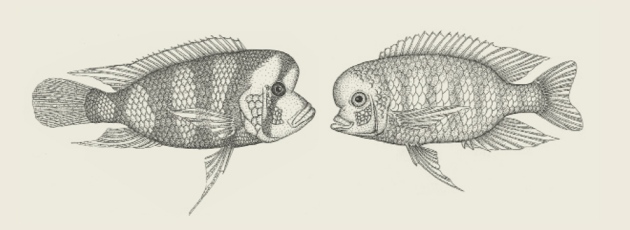
Illustration by R. Craig Albertson | Cichlids from Lake Tanganyika (left) and from Lake Malawi (right) evolved similar body shapes.

YES, URGENTLY — Kevin Laland and colleagues

NO, ALL IS WELL — Gregory A. Wray, Hopi E. Hoekstra and colleagues

Does evolutionary theory need a rethink? Yes, urgently


Without an extended evolutionary framework, the theory neglects key processes, say Kevin Laland and colleagues.

Charles Darwin conceived of evolution by natural selection without knowing that genes exist. Now mainstream evolutionary theory has come to focus almost exclusively on genetic inheritance and processes that change gene frequencies.

Yet new data pouring out of adjacent fields are starting to undermine this narrow stance. An alternative vision of evolution is beginning to crystallize, in which the processes by which organisms grow and develop are recognized as causes of evolution.

Some of us first met to discuss these advances six years ago. In the time since, as members of an interdisciplinary team, we have worked intensively to develop a broader framework, termed the extended evolutionary synthesis1 (EES), and to flesh out its structure, assumptions and predictions. In essence, this synthesis maintains that important drivers of evolution, ones that cannot be reduced to genes, must be woven into the very fabric of evolutionary theory.

We believe that the EES will shed new light on how evolution works. We hold that organisms are constructed in development, not simply ‘programmed’ to develop by genes. Living things do not evolve to fit into pre-existing environments, but co-construct and coevolve with their environments, in the process changing the structure of ecosystems.

The number of biologists calling for change in how evolution is conceptualized is growing rapidly. Strong support comes from allied disciplines, particularly developmental biology, but also genomics, epigenetics, ecology and social science1, 2. We contend that evolutionary biology needs revision if it is to benefit fully from these other disciplines. The data supporting our position gets stronger every day.

Yet the mere mention of the EES often evokes an emotional, even hostile, reaction among evolutionary biologists. Too often, vital discussions descend into acrimony, with accusations of muddle or misrepresentation. Perhaps haunted by the spectre of intelligent design, evolutionary biologists wish to show a united front to those hostile to science. Some might fear that they will receive less funding and recognition if outsiders — such as physiologists or developmental biologists — flood into their field.

However, another factor is more important: many conventional evolutionary biologists study the processes that we claim are neglected, but they comprehend them very differently (see ‘No, all is well’). This is no storm in an academic tearoom, it is a struggle for the very soul of the discipline.
Here we articulate the logic of the EES in the hope of taking some heat out of this debate and encouraging open discussion of the fundamental causes of evolutionary change (see Supplementary Information).

Core values

The core of current evolutionary theory was forged in the 1930s and 1940s. It combined natural selection, genetics and other fields into a consensus about how evolution occurs. This ‘modern synthesis’ allowed the evolutionary process to be described mathematically as frequencies of genetic variants in a population change over time — as, for instance, in the spread of genetic resistance to the myxoma virus in rabbits.

In the decades since, evolutionary biology has incorporated developments consistent with the tenets of the modern synthesis. One such is ‘neutral theory’, which emphasizes random events in evolution. However, standard evolutionary theory (SET) largely retains the same assumptions as the original modern synthesis, which continues to channel how people think about evolution.


Orange: Peter Chadwick/SPL; Blue: Lawrence Lawry/SPL | Plasticity: commodore butterflies emerge with different colours in dry (left) and wet seasons.
The story that SET tells is simple: new variation arises through random genetic mutation; inheritance occurs through DNA; and natural selection is the sole cause of adaptation, the process by which organisms become well-suited to their environments. In this view, the complexity of biological development — the changes that occur as an organism grows and ages — are of secondary, even minor, importance.

In our view, this ‘gene-centric’ focus fails to capture the full gamut of processes that direct evolution. Missing pieces include how physical development influences the generation of variation (developmental bias); how the environment directly shapes organisms’ traits (plasticity); how organisms modify environments (niche construction); and how organisms transmit more than genes across generations (extra-genetic inheritance). For SET, these phenomena are just outcomes of evolution. For the EES, they are also causes.

Valuable insight into the causes of adaptation and the appearance of new traits comes from the field of evolutionary developmental biology (‘evo-devo’). Some of its experimental findings are proving tricky to assimilate into SET. Particularly thorny is the observation that much variation is not random because developmental processes generate certain forms more readily than others3. For example, among one group of centipedes, each of the more than 1,000 species has an odd number of leg-bearing segments, because of the mechanisms of segment development3.

In our view, this concept — developmental bias — helps to explain how organisms adapt to their environments and diversify into many different species. For example, cichlid fishes in Lake Malawi are more closely related to other cichlids in Lake Malawi than to those in Lake Tanganyika, but species in both lakes have strikingly similar body shapes4. In each case, some fish have large fleshy lips, others protruding foreheads, and still others short, robust lower jaws.

SET explains such parallels as convergent evolution: similar environmental conditions select for random genetic variation with equivalent results. This account requires extraordinary coincidence to explain the multiple parallel forms that evolved independently in each lake. A more succinct hypothesis is that developmental bias and natural selection work together4, 5. Rather than selection being free to traverse across any physical possibility, it is guided along specific routes opened up by the processes of development5, 6.
“There is more to inheritance than genes.”
Another kind of developmental bias occurs when individuals respond to their environment by changing their form — a phenomenon called plasticity. For instance, leaf shape changes with soil water and chemistry. SET views this plasticity as merely fine-tuning, or even noise. The EES sees it as a plausible first step in adaptive evolution. The key finding here is that plasticity not only allows organisms to cope in new environmental conditions but to generate traits that are well-suited to them. If selection preserves genetic variants that respond effectively when conditions change, then adaptation largely occurs by accumulation of genetic variations that stabilize a trait after its first appearance5, 6. In other words, often it is the trait that comes first; genes that cement it follow, sometimes several generations later5.

Studies of fish, birds, amphibians and insects suggest that adaptations that were, initially, environmentally induced may promote colonization of new environments and facilitate speciation5, 6. Some of the best-studied examples of this are in fishes, such as sticklebacks and Arctic char. Differences in the diets and conditions of fish living at the bottom and in open water have induced distinct body forms, which seem to be evolving reproductive isolation, a stage in forming new species. The number of species in a lineage does not depend solely on how random genetic variation is winnowed through different environmental sieves. It also hangs on developmental properties that contribute to the lineage’s ‘evolvability’.

In essence, SET treats the environment as a ‘background condition’, which may trigger or modify selection, but is not itself part of the evolutionary process. It does not differentiate between how termites become adapted to mounds that they construct and, say, how organisms adapt to volcanic eruptions. We view these cases as fundamentally different7.

Volcanic eruptions are idiosyncratic events, independent of organisms’ actions. By contrast, termites construct and regulate their homes in a repeatable, directional manner that is shaped by past selection and that instigates future selection. Similarly, mammals, birds and insects defend, maintain and improve their nests — adaptive responses to nest building that have evolved again and again7. This ‘niche construction’, like developmental bias, means that organisms co-direct their own evolution by systematically changing environments and thereby biasing selection7.

Inheritance beyond genes

SET has long regarded inheritance mechanisms outside genes as special cases; human culture being the prime example. The EES explicitly recognizes that parent–offspring similarities result in part from parents reconstructing their own developmental environments for their offspring. ‘Extra-genetic inheritance’ includes the transmission of epigenetic marks (chemical changes that alter DNA expression but not the underlying sequence) that influence fertility, longevity and disease resistance across taxa8. In addition, extra-genetic inheritance includes socially transmitted behaviour in animals, such as nut cracking in chimpanzees or the migratory patterns of reef fishes8, 9. It also encompasses those structures and altered conditions that organisms leave to their descendants through their niche construction — from beavers’ dams to worm-processed soils7, 10. Research over the past decade has established such inheritance to be so widespread that it should be part of general theory.

Mathematical models of evolutionary dynamics that incorporate extra-genetic inheritance make different predictions from those that do not7–9. Inclusive models help to explain a wide range of puzzling phenomena, such as the rapid colonization of North America by the house finch, the adaptive potential of invasive plants with low genetic diversity, and how reproductive isolation is established.
Such legacies can even generate macro-evolutionary patterns. For instance, evidence suggests that sponges oxygenated the ocean and by doing so created opportunities for other organisms to live on the seabed10. Accumulating fossil data indicate that inherited modifications of the environment by species has repeatedly facilitated, sometimes after millions of years, the evolution of new species and ecosystems10.

Better together

The above insights derive from different fields, but fit together with surprising coherence. They show that variation is not random, that there is more to inheritance than genes, and that there are multiple routes to the fit between organisms and environments. Importantly, they demonstrate that development is a direct cause of why and how adaptation and speciation occur, and of the rates and patterns of evolutionary change.

SET consistently frames these phenomena in a way that undermines their significance. For instance, developmental bias is generally taken to impose ‘constraints’ on what selection can achieve — a hindrance that explains only the absence of adaptation. By contrast, the EES recognizes developmental processes as a creative element, demarcating which forms and features evolve, and hence accounting for why organisms possess the characters that they do.

Researchers in fields from physiology and ecology to anthropology are running up against the limiting assumptions of the standard evolutionary framework without realizing that others are doing the same. We believe that a plurality of perspectives in science encourages development of alternative hypotheses, and stimulates empirical work. No longer a protest movement, the EES is now a credible framework inspiring useful work by bringing diverse researchers under one theoretical roof to effect conceptual change in evolutionary biology.


*******

Does evolutionary theory need a rethink? No, all is well

Theory accommodates evidence through relentless synthesis, say Gregory A. Wray, Hopi E. Hoekstra and colleagues.

In October 1881, just six months before he died, Charles Darwin published his final book. The Formation of Vegetable Mould, Through the Actions of Worms11 sold briskly: Darwin’s earlier publications had secured his reputation. He devoted an entire book to these humble creatures in part because they exemplify an interesting feedback process: earthworms are adapted to thrive in an environment that they modify through their own activities.

Darwin learned about earthworms from conversations with gardeners and his own simple experiments. He had a genius for distilling penetrating insights about evolutionary processes — often after amassing years of observational and experimental data — and he drew on such disparate topics as agriculture, geology, embryology and behaviour. Evolutionary thinking ever since has followed Darwin’s lead in its emphasis on evidence and in synthesizing information from other fields.

A profound shift in evolutionary thinking began during the 1920s, when a handful of statisticians and geneticists began quietly laying the foundations for a dramatic transformation. Their work between 1936 and 1947 culminated in the ‘modern synthesis’, which united Darwin’s concept of natural selection with the nascent field of genetics and, to a lesser extent, palaeontology and systematics. Most importantly, it laid the theoretical foundations for a quantitative and rigorous understanding of adaptation and speciation, two of the most fundamental evolutionary processes.


John van Wyhe/Darwin-online.org.uk
A worm cast pictured in Charles Darwin’s final book.

In the decades since, generations of evolutionary biologists have modified, corrected and extended the framework of the modern synthesis in countless ways. Like Darwin, they have drawn heavily from other fields. When molecular biologists identified DNA as the material basis for heredity and trait variation, for instance, their discoveries catalysed fundamental extensions to evolutionary theory. For example, the realization that many genetic changes have no fitness consequences led to major theoretical advances in population genetics. The discovery of ‘selfish’ DNA prompted discussions about selection at the level of genes rather than traits. Kin selection theory, which describes how traits affecting relatives are selected, represents another extension12.

Nonetheless there are evolutionary biologists (see ‘Yes, urgently’) who argue that theory has since ossified around genetic concepts. More specifically, they contend that four phenomena are important evolutionary processes: phenotypic plasticity, niche construction, inclusive inheritance and developmental bias. We could not agree more. We study them ourselves.

But we do not think that these processes deserve such special attention as to merit a new name such as ‘extended evolutionary synthesis’. Below we outline three reasons why we believe that these topics already receive their due in current evolutionary theory.

New words, old concepts

The evolutionary phenomena championed by Laland and colleagues are already well integrated into evolutionary biology, where they have long provided useful insights. Indeed, all of these concepts date back to Darwin himself, as exemplified by his analysis of the feedback that occurred as earthworms became adapted to their life in soil.

Today we call such a process niche construction, but the new name does not alter the fact that evolutionary biologists have been studying feedback between organisms and the environment for well over a century13. Stunning adaptations such as termite mounds, beaver dams, and bowerbird displays have long been a staple of evolutionary studies. No less spectacular are cases that can only be appreciated at the microscopic or molecular scale, such as viruses that hijack host cells to reproduce and ‘quorum sensing’, a sort of group think by bacteria.

Another process, phenotypic plasticity, has drawn considerable attention from evolutionary biologists. Countless cases in which the environment influences trait variation have been documented — from the jaws of cichlid fishes that change shape when food sources alter, to leaf-mimicking insects that are brown if born in the dry season and green in the wet. Technological advances in the past decade have revealed an incredible degree of plasticity in gene expression in response to diverse environmental conditions, opening the door to understanding its material basis. Much discussed, too, was a book5 by behavioural scientist Mary Jane West-Eberhard that explored how plasticity might precede genetic changes during adaptation.

So, none of the phenomena championed by Laland and colleagues are neglected in evolutionary biology. Like all ideas, however, they need to prove their value in the marketplace of rigorous theory, empirical results and critical discussion. The prominence that these four phenomena command in the discourse of contemporary evolutionary theory reflects their proven explanatory power, not a lack of attention.

Modern expansion

Furthermore, the phenomena that interest Laland and colleagues are just four among many that offer promise for future advances in evolutionary biology. Most evolutionary biologists have a list of topics that they would like to see given more attention. Some would argue that epistasis — complex interactions among genetic variants — has long been under-appreciated. Others would advocate for cryptic genetic variation (mutations that affect only traits under specific genetic or environmental conditions). Still others would stress the importance of extinction, or adaptation to climate change, or the evolution of behaviour. The list goes on.

We could stop and argue about whether ‘enough’ attention is being paid to any of these. Or we could roll up our sleeves, get to work, and find out by laying the theoretical foundations and building a solid casebook of empirical studies. Advocacy can take an idea only so far.

What Laland and colleagues term the standard evolutionary theory is a caricature that views the field as static and monolithic. They see today’s evolutionary biologists as unwilling to consider ideas that challenge convention.

We see a very different world. We consider ourselves fortunate to live and work in the most exciting, inclusive and progressive period of evolutionary research since the modern synthesis. Far from being stuck in the past, current evolutionary theory is vibrantly creative and rapidly growing in scope. Evolutionary biologists today draw inspiration from fields as diverse as genomics, medicine, ecology, artificial intelligence and robotics. We think Darwin would approve.
 
Genes are central

Finally, diluting what Laland and colleagues deride as a ‘gene-centric’ view would de-emphasize the most powerfully predictive, broadly applicable and empirically validated component of evolutionary theory. Changes in the hereditary material are an essential part of adaptation and speciation. The precise genetic basis for countless adaptations has been documented in detail, ranging from antibiotic resistance in bacteria to camouflage coloration in deer mice, to lactose tolerance in humans.

Although genetic changes are required for adaptation, non-genetic processes can sometimes play a part in how organisms evolve. Laland and colleagues are correct that phenotypic plasticity, for instance, may contribute to the adaptedness of an individual. A seedling might bend towards brighter light, growing into a tree with a different shape from its siblings’. Many studies have shown that this kind of plasticity is beneficial, and that it can readily evolve if there is genetic variation in the response14. This role for plasticity in evolutionary change is so well documented that there is no need for special advocacy.
“What matters is the heritable differences in traits, especially those that bestow some selective advantage.”
Much less clear is whether plasticity can ‘lead’ genetic variation during adaptation. More than half a century ago, developmental biologist Conrad Waddington described a process that he called genetic assimilation15. Here, new mutations can sometimes convert a plastic trait into one that develops even without the specific environmental condition that originally induced it. Few cases have been documented outside of the laboratory, however. Whether this is owing to a lack of serious attention or whether it reflects a genuine rarity in nature can be answered only by further study.

Lack of evidence also makes it difficult to evaluate the role that developmental bias may have in the evolution (or lack of evolution) of adaptive traits. Developmental processes, based on features of the genome that may be specific to a particular group of organisms, certainly can influence the range of traits that natural selection can act on. However, what matters ultimately is not the extent of trait variation, nor even its precise mechanistic causes. What matters is the heritable differences in traits, especially those that bestow some selective advantage. Likewise, there is little evidence for the role of inherited epigenetic modification (part of what was termed ‘inclusive inheritance’) in adaptation: we know of no case in which a new trait has been shown to have a strictly epigenetic basis divorced from gene sequence. On both topics, further research will be valuable.

All four phenomena that Laland and colleagues promote are ‘add-ons’ to the basic processes that produce evolutionary change: natural selection, drift, mutation, recombination and gene flow. None of these additions is essential for evolution, but they can alter the process under certain circumstances. For this reason they are eminently worthy of study.

We invite Laland and colleagues to join us in a more expansive extension, rather than imagining divisions that do not exist. We appreciate their ideas as an important part of what evolutionary theory might become in the future. We, too, want an extended evolutionary synthesis, but for us, these words are lowercase because this is how our field has always advanced16.

The best way to elevate the prominence of genuinely interesting phenomena such as phenotypic plasticity, inclusive inheritance, niche construction and developmental bias (and many, many others) is to strengthen the evidence for their importance.

Before claiming that earthworms “have played a more important part in the history of the world than most persons would at first suppose”11, Darwin collected more than 40 years of data. Even then, he published only for fear that he would soon be “joining them”17.

References

  1. Pigliucci, M. & Müller, G. B. Evolution: The Extended Synthesis (MIT Press, 2010). Show context
  2. Noble, D. et al. J. Physiol. 592, 2237–2244 (2014). Show context
  3. Arthur, W. Biased Embryos and Evolution (Cambridge Univ. Press, 2004). Show context
  4. Brakefield, P. M. Trends Ecol. Evol. 21, 362–368 (2006). Show context
  5. West-Eberhard, M. J. Developmental Plasticity and Evolution (Oxford Univ. Press, 2003). Show context
  6. Pfennig, D. W. et al. Trends Ecol. Evol. 25, 459–467 (2010). Show context
  7. Odling-Smee, F. J., Laland, K. N. & Feldman, M. W. Niche Construction: The Neglected Process in Evolution (Princeton Univ. Press, 2003). Show context
  8. Jablonka, E. & Lamb, M. Evolution in Four Dimensions: Genetic, Epigenetic, Behavioral, and Symbolic Variation in the History of Life (MIT Press, 2014). Show context
  9. Hoppitt, W. & Laland, K. N. Social Learning: An Introduction to Mechanisms, Methods, and Models (Princeton Univ. Press, 2013). Show context
  10. Erwin, D. H. & Valentine J. W. The Cambrian Explosion: The Construction of Animal Biodiversity (Roberts, 2013). Show context
  11. Darwin, C. The Formation of Vegetable Mould, Through the Actions of Worms (John Murray, 1881). Show context
  12. Alcock, J. The Triumph of Sociobiology (Oxford Univ. Press, 2001). Show context
  13. Bailey, N. W. Trends Ecol. Evol. 27, 561–569 (2012). Show context
  14. Wada, H. & Sewall, K. B. Integ. Comp. Biol. http://dx.doi.org/10.1093/icb/icu097 (2014). Show context
  15. Waddington, C. H. Nature 150, 563–565 (1942). Show context
  16. Callebaut, W. in Evolution: The Extended Synthesis (Pigliucci, M. & Müller, G. B. eds) 443–482 (MIT Press, 2010). Show context
  17. Browne, J. Charles Darwin: The Power of Place Vol. II 479 (Jonathan Cape, 2003). Show context