Showing posts with label altruism. Show all posts

Saturday, October 25, 2014

Kat McGowan - Cooperation Is What Makes Us Human

http://ecx.images-amazon.com/images/I/31YEfyHQ-2L.jpg

This is a re-post of an older article from Nautilus, but it's worth the (re)read even if you saew it originally. Michael Tomasello is the primary expert here, and his book is listed below, along with a few others that are related and interesting reads.

Michael Tomasello, Why We Cooperate (2009)
Samuel Bowles, A Cooperative Species: Human Reciprocity and Its Evolution (2013)
Robert Axelrod, The Evolution of Cooperation: Revised Edition (2006)
Martin Nowak and Roger Highfield, SuperCooperators: Altruism, Evolution, and Why We Need Each Other to Succeed (2012)

Cooperation Is What Makes Us Human

Where we part ways with our ape cousins 

http://static.nautil.us/82_9778d5d219c5080b9a6a17bef029331c.jpg


TALES about the origins of our species always start off like this: A small band of hunter-gatherers roams the savannah, loving, warring, and struggling for survival under the African sun. They do not start like this: A fat guy falls off a New York City subway platform onto the tracks. 
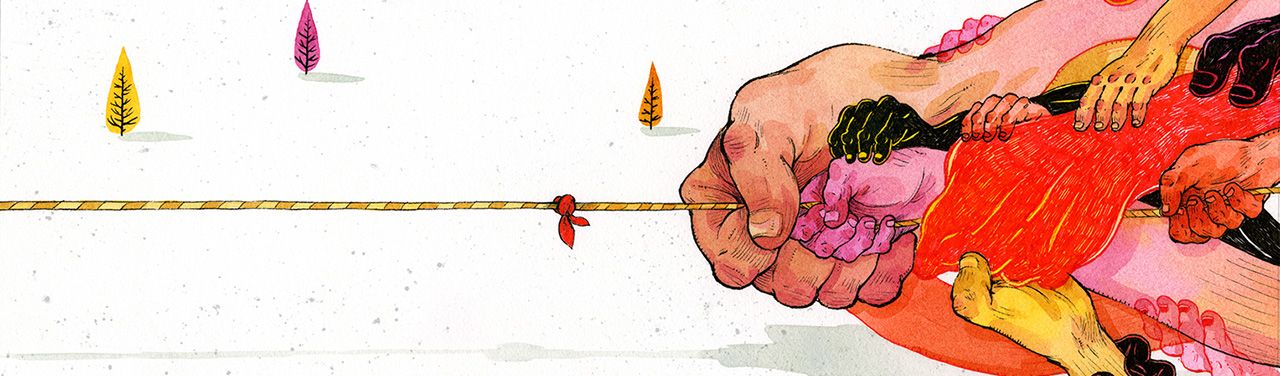
But what happens next is a quintessential story of who we are as human beings.

On Feb. 17, 2013, around 2:30 a.m., Garrett O’Hanlon, a U.S. Air Force Academy cadet third class, was out celebrating his 22nd birthday in New York City. He and his sister were in the subway waiting for a train when a sudden silence came over the platform, followed by a shriek. People pointed down to the tracks.

O’Hanlon turned and saw a man sprawled facedown on the tracks. “The next thing that happened, I was on the tracks, running toward him,” he says. “I honestly didn’t have a thought process.”

O’Hanlon grabbed the unconscious man by the shoulders, lifting his upper body off the tracks, but struggled to move him. He was deadweight. According to the station clock, the train would arrive in less than two minutes. From the platform, O’Hanlon’s sister was screaming at him to save himself.
Suddenly other arms were there: Personal trainer Dennis Codrington Jr. and his friend Matt Foley had also jumped down to help. “We grabbed him, one by the legs, one by the shoulders, one by the chest,” O’Hanlon says. They got the man to the edge of the platform, where a dozen or more people muscled him up and over. More hands seized the rescuers’ arms and shoulders, helping them up to safety as well.

In the aftermath of the rescue, O’Hanlon says he has been surprised that so many people have asked him why he did it. “I get stunned by the question,” he says. In his view, anybody else would’ve done the same thing. “I feel like it’s a normal reaction,” he says. “To me that’s just what people do.”
More precisely, it is something only people do, according to developmental psychologist Michael Tomasello, codirector of the Max Planck Institute for Evolutionary Anthropology.

For decades Tomasello has explored what makes humans distinctive. His conclusion? We cooperate. Many species, from ants to orcas to our primate cousins, cooperate in the wild. But Tomasello has identified a special form of cooperation. In his view, humans alone are capable of shared intentionality—they intuitively grasp what another person is thinking and act toward a common goal, as the subway rescuers did. This supremely human cognitive ability, Tomasello says, launched our species on its extraordinary trajectory. It forged language, tools, and cultures—stepping-stones to our colonization of every corner of the planet.

In his most recent research, Tomasello has begun to look at the dark side of cooperation. “We are primates, and primates compete with one another,” Tomasello says. He explains cooperation evolved on top of a deep-seated competitive drive. “In many ways, this is the human dilemma,” he says.

In conversation, Tomasello, 63, is both passionate and circumspect. Even as he overturns entrenched views in primatology and anthropology he treads carefully, backing up his theories by citing his experiments in human and primate behavior. He is aware of criticism from primatologists such as Frans de Waal, director of Living Links, a division of the Yerkes National Primate Research Center at Emory University in Atlanta, who has said Tomasello underestimates the minds of chimps and overestimates the uniqueness of human cooperation.

Nonetheless, Tomasello’s fellow scientists credit him with brave experiments and ingenious insights. Carol Dweck, a professor of psychology at Stanford University, who has done seminal research in child psychology and intelligence, has called Tomasello “a pioneer.” Herbert Gintis, an economist and behavioral scientist at the Santa Fe Institute, an interdisciplinary science research institution, agrees. “His work is fabulous,” Gintis says. “It has made clear certain things about what it means to be human.”

Every Chimp for Himself

Tomasello calls his theory of cooperation the Vygotskian Intelligence Hypothesis. It is named for Russian psychologist Lev Vygotsky, who argued in the 1920s that children’s minds do not automatically acquire skills, but develop full human intelligence only through cooperative teaching and social interactions. Tomasello applies this idea to the evolution of our species. He proposes that as many as 2 million years ago, as climate swings altered the availability and competition for food, our ancestors were forced to put their heads together to survive.

Tomasello began his research career at Emory University, working with apes at the Yerkes primate center. He acknowledges that chimpanzees, like humans, manage complex social lives, solve problems flexibly, and create and deploy tools. Nonetheless, “I take it as given that something is different,” he says. “Humans are doing something on a different level.”

As Tomasello began to study the cognition of chimpanzees and other great apes, he was influenced by pioneering child psychologist Jean Piaget, who recognized that children see the world differently. “He looked at children as if they were another species,” Tomasello says. “That’s the guiding image I started with.”

At the Yerkes primate center, Tomasello adopted an experimental method that he would develop throughout his career: systematically comparing the cognition of great apes and young children in head-to-head tests. Since the use of language is an obvious difference between humans and chimps, he began by looking at the precursors of speech. Great apes often communicate with gestures. Babies point before they talk. Presumably our hominid ancestors also gesticulated before they developed language. So Tomasello focused on pointing, devising dozens of studies to explore how and when chimps and children point.

He found a major difference between the two species. By the time a baby begins to point, at about nine months of age, she has already made several sophisticated cognitive leaps. When she points at a puppy and looks at you, she knows that her perspective may be different from yours (you haven’t noticed the pup), and she wants to share her information—doggie!—with you.

“We naturally inform people of things that are interesting or useful to them,” Tomasello says. “That’s unusual. Other animals don’t do that.” Pointing is an attempt to change your mental state. It is also a request for a joint experience: She wants you to look at the dog with her.

Chimps, by contrast, do not point things out to each other. Captive chimps will point for humans, but it’s to make a demand rather than to share information: I want that! Open the door! They do not understand informational human pointing, because they do not expect anyone to share information with them. In one of Tomasello’s experiments, food is hidden in one of two buckets. Even if the experimenter points to where it is, the chimp still chooses randomly. “It’s absolutely surprising,” Tomasello says. “They just don’t seem to get it."

In parallel experiments, children as young as 12 months have no trouble understanding an adult pointing a finger at a hidden reward. To understand pointing, Tomasello posits, you must form a “we intention,” a shared goal that both of you will pay attention to the same thing. Chimps don’t point because they don’t think in terms of “we.” They think in terms of “me.” “Cooperatively informing them of the location of food does not compute,” he says. The chimpanzee world is egocentric: Every chimp for himself.

The idea that chimps don’t work together appeared at first to contradict what some biologists had observed in the wild. Chimps take turns grooming one another, for example. They also form group hunting parties to encircle and kill red colobus monkeys, a favorite food. But these behaviors don’t require the kind of we intention that Tomasello was finding in even the youngest humans. Grooming is a tit-for-tat activity that merely requires two animals to alternate: Literally, I scratch your back, you scratch mine. There’s no need to jointly focus attention.

Chimps can also hunt together without deliberately coordinating, Tomasello reasons. If, during the chase, each chimp simply maximizes his own chances of catching the prey, each will position himself where he thinks the monkey will try to break out of the circle of predators. “This kind of hunting event is clearly a group activity of some complexity,” Tomasello writes in his book Why We Cooperate. “But wolves and lions do something very similar, and most researchers do not attribute to them any kind of joint goals or plans. The apes are engaged in a group activity in ‘I’ mode, not in ‘we’ mode.”


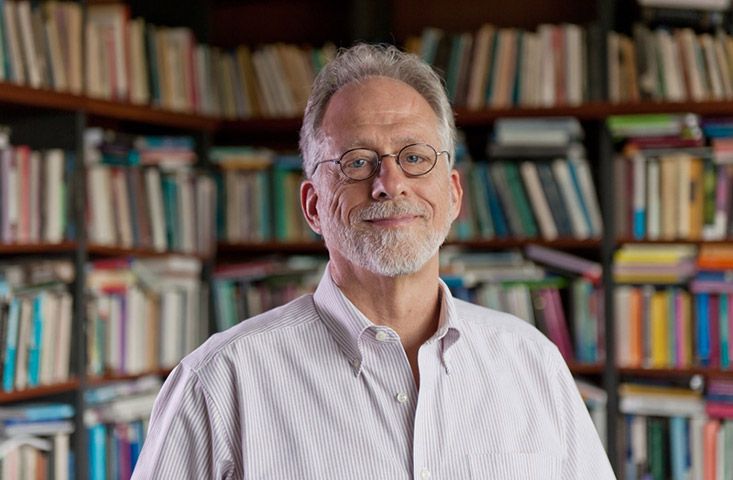
Michael TomaselloPhoto: Jacobs Foundation

Alone Together

Still, it was hard to tell exactly what was going on from watching wild animals. Lab experiments, where multiple animals can be tested in controlled situations and their responses measured and quantified, could clarify whether chimps even have a collaborative mode. Since collaboration requires that you understand what someone else wants and thinks, Tomasello explored whether chimps have what psychologists call “theory of mind,” or insight into what another individual might be thinking.

The consensus was that apes did not have this mental ability, but Tomasello and his team, including then undergraduate student Brian Hare, began devising ape-centric experiments to test whether that was truly the case. Rather than using psychology tests developed for human beings, as many ape researchers did, they invented new tests that were more relevant to the chimpanzee world.

Chimps are hierarchical with an alpha chimp getting priority in feeding. One experiment set a high-ranking chimp against a low-ranking one to compete for food. The researchers hid snacks in such a way that only the subordinate animal could see all the hiding places. When both animals were freed to go after the food, the subordinate dove for the snacks that had been hidden out of the high-ranking chimp’s line of sight. (Control experiments showed that if both animals saw where the food was hidden, the subordinate animal didn’t bother to approach the food.) The reasonable explanation was that the low-ranking chimp modeled his rival’s thought process in order to exploit his blind spots. He had a concept of what the other chimp saw and believed—the basic definition of theory of mind.

This study and others like it in 2000 and 2001 led the group to conclude that chimps do actually have insight into other individuals’ thoughts. But they don’t use this ability to cooperate, as humans often do. They use it to win.

“If you try to do something cooperative with a chimp—point out something, show them where some food is—their attention wanders all over the place,” says Tomasello. “But if you compete with them over food, they are zeroed in like a laser. All their cognitive skills are on.” (If chimps had a self-help bestseller, it would be titled, How to Outwit Rivals and Get More Fruit.)

It’s not that chimpanzees are incapable of helping. De Waal describes one instance in which chimps boosted an arthritic elderly troupe mate up to a joint perch and used their own mouths to carry water to her so that she could drink. De Waal says this is one of many examples of animal cooperation. He predicts the claim that humans are unique because they collaborate to solve problems “will drop by the wayside.”

Tomasello agrees that chimps sometimes assist each other and help each other get food, under specific conditions that eliminate all possibility of competition. In one of his experiments, conducted with wild-born chimps in a Ugandan sanctuary, two chimps entered separate cages, with fruit placed in a third. The first chimp knew from previous experience that he could not open his own cage door to get to the food, but he could help the other animal by pulling a chain that opened the door of the other cage. Here, with nothing to gain and nothing to lose, eight out of nine animals pulled the chain so that the other animal could get the fruit.

“It was a huge surprise to me,” Tomasello says. “My initial reaction was: Damn. That doesn’t fit very well.” But the more he thought about it, the more he realized that chimps, again, are acting individually, not in cooperation with each other. “To help, you just need to know what the goal is, and then if you’re motivated, you can help,” he says. “It’s not cognitively very complicated.” Human cooperation, meanwhile, requires two or more people to have insight into each other’s intentions, formulate a joint goal, assume specific roles, and then coordinate their efforts. It demands cognitive capacities that even the most helpful chimpanzees don’t possess.

In this case, the term “helpful” may be a little generous. Alicia Melis, a former postdoc in Tomasello’s lab, explains that chimps work together only grudgingly when it comes to obtaining food. In one of her experiments, a board laden with food is placed beyond the reach of two chimps; they can get the food only if each grabs one end of a rope attached to the board and they jointly pull it. In her experiment, the animals worked together only if the food was already evenly divided so that they did not have to compete over the spoils. It also helped if they already got along.

“The motivation does not seem to be, ‘Let’s do this together,’ ” says Melis, now an assistant professor of behavioral science at Warwick Business School in the U.K. “It’s, ‘Let me try to do this alone, and if I can’t, we’ll do it together.’ ”

Tomasello has discovered that young children, by contrast, find that working together can be a reward all its own. When adults deliberately drop objects in his experiments, babies of 14 months will crawl over to pick them up and hand them back. Toddlers open doors for experimenters whose hands are full. They do it without being asked and without being rewarded. Once they get the idea that they are partnering, they commit to joint intentionality. If a partner is having trouble, they stop and help. They share the spoils equally. “They really understand that we’re doing this together, and we have to divide it together,” Tomasello says.

Evolution of Collaboration

There are no fossils of ancient hominid brains or other physical evidence that might tell us when and how our ancestors first put their minds together to collaborate. Without such clues, the question of why we alone became a collaborative species is difficult to answer, says Hare, who is now a professor at the Center for Cognitive Neuroscience at Duke University. “Figuring out what makes us unique is hard as hell,” he says. “But it’s much easier than the next question, which is the real issue, the Higgs boson of evolutionary anthropology: How did we get that way?”

In the absence of physical evidence, Tomasello proposes one possible scenario. During the Pleistocene, about 1.5 million years ago, the climate became very bumpy, with frequent temperature swings that forced our ancestors to work together to access new sources of food. Perhaps we became scavengers, joining forces to ward off bigger, tougher meat-eating competitors. Under these circumstances, any genetic variation that made it easier to collaborate—maybe by more accurately reading someone else’s intentions, seeing the whites of their eyes, or simply being more relaxed about sharing food—presumably would have helped those individuals survive, and would have spread through the population.

Hints as to how this might have happened emerge from a surprising place: a fox-breeding farm in Siberia. In the 1950s the Russian biologist Dmitri Belyaev was interested in how dogs might first have been domesticated. He paired the most docile, friendly foxes he could find, then chose the gentlest from each litter and bred them. In a mere 10 generations, the young foxes acted like puppy dogs. The first time they met a human, they wagged their tails and tried to leap into people’s arms to lick their faces.

The descendants of those foxes still live in a facility in Siberia, where Hare, Tomasello’s former student, traveled in 2003 to test their cognition. He found that fox kits that had spent less than 20 minutes total around a person already understood human gestures, such as following a pointing finger to find food. They did not have to be taught. “That blew me away,” Hare says. His experiments suggested that as the foxes lost their fear of humans, they became able to repurpose their cognitive abilities to a new human-focused agenda: relating to us.

The foxes’ ability to read human social cues was now under strong artificial evolutionary pressure, since only the friendliest animals got the chance to breed. With Belyaev calling the shots, the foxes were competing against each other to be more socially perceptive. The outcome, a few dozen generations later, is a fox that understands human pointing. The small change in temperament permitted a big advance in social intelligence.

Hare and Tomasello suspect our ancestors went through a similar process. Basically, we domesticated ourselves. When collaborating to find food became essential because of changes in the climate or changes in the competition, we became less aggressive and more willing to share. Aggressive individuals, unwilling to cooperate, would starve and die out. Now that our temperaments allowed us to put our minds together, we were able to develop communal inventions like language and culture, and sustain these innovations by teaching and imitating one another. The ability to crystallize knowledge in inventions and traditions, Tomasello says, is what turned the ordinary primate mind into an extraordinary human one.

“Through our collaborative efforts, we have built our cultural worlds, and we are constantly adapting to them,” he writes in Why We Cooperate.

Us and Them

Today Tomasello is also looking through the prism of collaboration and beginning to explain some of the uniquely dark and nasty things that humans do. Maintaining a collaborative social structure encourages us to shun outsiders and discipline nonconformists. It fosters groupthink—the urge to stifle dissenting opinions in the interest of harmony and loyalty. Here, his research connects with that of anthropologists and economists who study social norms and other psychological underpinnings of group behavior.

Game theory models, which forecast how people behave when their interests are in conflict, suggest that cooperation can only be sustained in large groups if members punish anybody who freeloads or behaves selfishly. This prediction was borne out in 2005 by an anthropological study of 15 societies, mostly traditional small-scale communities, scattered around the globe.

But our tendency to enforce standards goes beyond simply ensuring justice. The impulse to formulate social rules and punish rule breakers applies to all kinds of situations, from whom we marry to how we dress. One possible benefit of these social norms is that they help us quickly identify who is part of our in-group and who is not; they also make it easier to collaborate more effectively. (If you hunt the same way I do, it’s going to be easier for us to work together, and it’s also a sign that you are a member of my group, someone I can presumably rely upon.)

The downside is that we also tend to blindly adopt arbitrary social conventions. Unlike other great apes, we are fundamentally conformists, Tomasello says. We form groups in which everybody dresses and talks the same way, “and anybody who intentionally doesn’t conform, we wonder: What’s wrong with them—do they not want to be one of us?” From this perspective, laws, morals, and religious rules are simply larger and more institutional versions of the impulse to police social norms, he says: “Human societies are just one layer of cooperation, or incentives for cooperation, on top of another.”

The open question is whether being natural-born collaborators also condemns us to be small-minded conformists who fear and distrust outsiders. Tomasello is now exploring how children understand group membership, testing how they act while wearing uniforms or being asked to work together. Kids absorb social norms quickly, he has found, and they enforce them enthusiastically. They can be little martinets. In one recent experiment, 3-year-olds are shown a game of pretend in which a pen is supposed to be used as an imaginary toothbrush. A puppet held by a researcher then asks to join the game, but draws with the pen instead. One child is outraged, barking, No! You must brush the teeth! The child’s reaction demonstrates the basic urge to impose social rules even when they are meaningless.

Ultimately, Tomasello’s research on human nature arrives at a paradox: our minds are the product of competitive intelligence and cooperative wisdom, our behavior a blend of brotherly love and hostility toward out-groups. Confronted by this paradox, the ugly side—the fact that humans compete, fight, and kill each other in wars—dismays most people, Tomasello says. And he agrees that our tendency to distrust outsiders—lending itself to prejudice, violence, and hate—should not be discounted or underestimated. But he says he is optimistic. In the end, what stands out more is our exceptional capacity for generosity and mutual trust, those moments in which we act like no species that has ever come before us.

Kat McGowan is a contributing editor at Discover magazine and independent journalist based in Berkeley, Calif., and New York City. She writes about neuroscience, genetics, and other science that affects how we understand ourselves.

This article was originally published in our “What Makes You So Special” issue in April, 2013.
Tuesday, January 14, 2014

The Top 10 Insights from the “Science of a Meaningful Life” in 2013 (Greater Good Science Center)

From UC Berkeley's Greater Good Science Center, here is a collection of 10 research summaries on topics related to having a meaningful life, for example the idea that a meaningful and healthy life is not the same as a happy life; or that mindfulness meditation can make people more altruistic (even when doing so has barriers) and that the emotional benefits of altruism are likely to be human universals.

There is some nice research summarized here - and for a nice change of pace, the news is good.

The Top 10 Insights from the “Science of a Meaningful Life” in 2013


Below are some of the most surprising, provocative, and inspiring findings published this past year.
By Jason Marsh, Devan Davison, Bianca Lorenz, Lauren Klein, Jeremy Adam Smith, Emiliana R. Simon-Thomas

January 2, 2014


The past few years have been marked by two major trends in the science of a meaningful life.

One is that researchers continued to add sophistication and depth to our understanding of positive feelings and behaviors. Happiness is good for you, but not all the time; empathy ties us together, and can overwhelm you; humans are born with an innate sense of fairness and morality, that changes in response to context. This has been especially true of the study of mindfulness and attention, which is producing more and more potentially life-changing discoveries.

The other factor involves intellectual diversity. The turn from the study of human dysfunction to human strengths and virtues may have started in psychology, with the positive psychology movement, but that perspective spread to adjacent disciplines like neuroscience and criminology, and from there to fields like sociology, economics, and medicine. Across all these fields, we’re seeing more and more support for the idea that empathy, compassion, and happiness are more than you-have-it-or-not capacities, but skills that can be cultivated by individuals and by groups of people through deliberate decisions.

In 2013, the UC Berkeley Greater Good Science Center is now part of a mature, multidisciplinary movement. Here are 10 scientific insights published in peer-reviewed journals from the past year that we anticipate will be cited in scientific studies, help shift public debate, and change individual behavior in the year to come.


A meaningful life is different—and healthier—than a happy one.


The research we cover here at the Greater Good Science Center is often referred to as “the science of happiness,” yet our tagline is “The Science of a Meaningful Life.” Meaning, happiness—is there a difference?

New research suggests that there is. When a study in the Journal of Positive Psychology tried to disentangle the concepts of “meaning” and “happiness” by surveying roughly 400 Americans, it found considerable overlap between the two—but also some key distinctions.

Based on those surveys, for instance, feeling good and having one’s needs met seem integral to happiness but unrelated to meaning. Happy people seem to dwell in the present moment, not the past or future, whereas meaning seems to involve linking past, present, and future. People derive meaningfulness (but not necessarily happiness) from helping others—being a “giver”—whereas people derive happiness (but not necessarily meaningfulness) from being a “taker.” And while social connections are important to meaning and happiness, the type of connection matters: Spending time with friends is important to happiness but not meaning, whereas the opposite is true for spending time with loved ones.

And other research published in the Proceedings of the National Academy of Sciences suggests that these differences might have important implications for our health. When Barbara Fredrickson and Steve Cole compared the immune cells of people who reported being “happy” with those of people who reported “a sense of direction and meaning,” the people leading meaningful lives seemed to have stronger immune systems.


The emotional benefits of altruism might be a human universal.


One of the most significant findings to have emerged from the sciences of happiness and altruism has been this: Altruism boosts happiness. Spending on others makes us happier than spending on ourselves—at least among the relatively affluent North Americans who have participated in this research.

But a paper published in the Journal of Personality and Social Psychology suggested that this finding holds up around the world, even in countries where sharing with others might threaten someone’s own subsistence.

In one study, the researchers examined data of more than 200,000 people from 136 countries; they determined that donating to charity in the past month boosts happiness “in most individual countries and all major regions of the world,” cutting across cultures and levels of economic well-being. It was even true regardless of whether someone said they’d had trouble securing food for their family in the past year.

When the researchers zeroed in on three countries with vastly different levels of wealth—Canada, Uganda, and India—they found that people reported greater happiness recalling a time when they’d spent money on others than when they’d spent on themselves. And in a study comparing Canada and South Africa, people reported feeling happier after donating to charity than after buying themselves a treat, even though they would never meet the beneficiary of their largess. This suggests to the researchers that their happiness didn’t result from feeling like they were strengthening social connections or improving their reputation but from a deeply ingrained human instinct.

In fact, they argue, the nearly universal emotional benefits of altruism suggest it is a product of evolution, perpetuating behavior that “may have carried short-term costs but long-term benefits for survival over human evolutionary history.”


Mindfulness meditation makes people more altruistic—even when confronted with barriers to compassionate action.


In March, the GGSC hosted a conference called “Practicing Mindfulness & Compassion,” where speakers made the case that the practice of mindfulness—the moment-by-moment awareness of our thoughts, feelings, and surrounding—doesn’t just improve our individual health but also makes us more compassionate toward others. Coincidentally, just weeks after the conference, two new studies bolstered this claim.

The first study, published in Psychological Science, found that people who took an eight-week mindfulness meditation course were significantly more likely than a control group to give up their waiting-room seat for a person on crutches. This was true despite the fact that other people in the waiting room (who were secretly working with the researchers) didn’t acknowledge the person in need or make any gesture to give up their own seats; prior research suggests that this kind of inaction strongly deters bystanders from helping out, but that wasn’t the case when the bystanders had received training in mindfulness.

A few weeks later, another study published in Psychological Science echoed that finding. In this second study, which was unrelated to the first, people who had practiced a mindfulness-based “compassion meditation” for a total of just seven hours over two weeks were significantly more likely than people who hadn’t received the training to give money to a stranger in need. What’s more, after completing their training, the meditation group showed noticeable changes in brain activity, including in networks linked to understanding the suffering of others.

“Our findings,” write the authors of the second study, “support the possibility that compassion and altruism can be viewed as trainable skills rather than as stable traits.”


Meditation changes gene expression.


Are genes destiny? They certainly influence our behavior and health outcomes—for example, one study published in 2013 found that genes make some people more inclined to focus on the negative. But more and more research is revealing how it’s a two-way street: Our choices can also influence how our genes behave.

In 2013, a collaborative project between researchers in Spain and France and at the University of Wisconsin found that when experienced meditators meditate, they quiet down the genes that express bodily inflammation in response to stress.

How did they figure this out? Before and after two different retreat days, the researchers drew blood samples from 19 long-term meditators (averaging more than 6000 lifetime hours) and 21 inexperienced people. During the retreat, the meditators meditated and discussed the benefits and advantages of meditation; the non-meditators read, played games, and walked around.

After this experience, the meditators’ inflammation genes—measured by blood concentrations of enzymes that catalyze or are a byproduct of gene expression—were less active. Blood samples from the people in the leisure-day condition did not show these changes.

Why does this matter? The researchers also looked at their study participants’ ability to recover from a stressful event. Long-term meditators’ ability to turn down inflammatory genes, it turns out, predicted how quickly stress hormones in their saliva diminished after a stressful experience—a sign of healthy coping and resilience that can potentially lead to a longer life.

This is good news to people who come from a family of stress cases who are stress-prone themselves: There are steps you can take to mitigate the impact of stressful events. Hard as it may be to find time or get excited about meditating, mounting evidence suggests that it can offer more concrete advantages to a healthy life than the leisurely activities we more readily seek.


Mindfulness training improves teachers’ performance in the classroom.


For educators grappling with students’ behavioral problems and other sources of stress, new research suggested an effective response: mindfulness.

Although mindfulness-based programs are not uncommon in schools these days, they’ve mainly been deployed to enhance students’ social, emotional, and cognitive skills; only a handful of programs and studies have examined the benefits of mindfulness for teachers, and in those cases, the research has focused largely on the general benefits for teachers’ mental health.

But in 2013, researchers at the University of Wisconsin’s Center for Investigating Healthy Minds broke new ground when they studied the impact of an eight-week mindfulness course developed specifically for teachers, looking not only at its effects on the teachers’ emotional well-being and levels of stress but also on their performance in the classroom.

They found that teachers randomly assigned to take the course felt less anxious, depressed, and burned out afterward, and felt more compassionate toward themselves. What’s more, according to experts who watched the teachers in action, these teachers ran more productive classrooms after completing the course and improved at managing their students’ behavior as well. The results, published in Mind, Brain, and Education, show that stress and burnout levels actually increased among teachers who didn’t take the course.

The researchers speculate that mindfulness may carry these benefits for teachers because it helps them cope with classroom stress and stay focused on their work. “Mindfulness-based practices offer promise as a tool for enhancing teaching quality,” write the researchers, “which may, in turn, promote positive student outcomes and school success.”


There’s nothing simple about happiness.


Who doesn’t want to be happy? Happy is always good, right?

Sure. Just don’t be too happy, OK? Because June Gruber and her colleagues analyzed health data and found that it’s much better to be a little bit happy over a long period of time than to experience wild spikes in happiness. Another study, published in the journal Emotion, showed how seeking happiness at the right time may be more important than seeking happiness all the time. Instead, allowing yourself to feel emotions appropriate to a situation—whether or not they are pleasant in the moment—is a key to long-lasting happiness.

In a study published earlier in the year in the journal Psychological Science, Sonja Lyubomirsky and Kristin Layous found that not all research-approved happiness practices work for everyone all the time. “Let’s say you publish a study that shows being grateful makes you happy—which it does,” Lyubomirsky recently told us. “But, actually, it’s much harder than that. It’s actually very hard to be grateful, and to be grateful on a regular basis, and at the right time, and for the right things.” She continued:
So, for example, some people have a lot of social support, some people have little social support, some people are extroverted, some people are introverted—you have to take into account the happiness seeker before you give them advice about what should make them happy. And then there are factors relevant to the activity that you do. How is it that you’re trying to become happier? How is it that you’re trying to stave off adaptation? Are you trying to appreciate more? Are you trying to do more acts of kindness? Are you trying to savor the moment? The kind of person you are, the different kinds of activities, and how often you do them, and where you do them—these are all going to matter.
The bottom line might be that if happiness were really that simple, we’d all be happy all the time. But we’re not, and that appears to be because there is no rigid formula for happiness. It’s a state that comes and goes in response to how we’re changing and how our world is changing.


Gratitude can save your life.


Or at least help lessen suicidal thoughts, says a study published in the Journal of Research in Personality.

Across a four-week period, 209 college students answered questions to measure depression, suicidal thoughts, grit, gratitude, and meaning in life. The idea was to see if the positive traits—grit and gratitude—mitigated the negative ones. Since depression is a large contributing factor to suicide, they controlled for that variable throughout the study.

Grit, said the authors, is “characterized by the long-term interests and passions, and willingness to persevere through obstacles and setbacks to make progress toward goals aligned or separate from these passionate pursuits.” It stands to reason that someone with lots of grit wouldn’t waste much time on suicidal thoughts.

But what about gratitude? That entails noticing the benefits and gifts received from others, and it gives an individual a sense of belonging. That should make life living—and, indeed, the researchers found that gratitude and grit worked synergistically together to make life more meaningful and to reduce suicidal thoughts, independent of depression symptoms.

As the authors note, their study has huge clinical implications: If therapists can specifically foster gratitude in suicidal people, they should be able to increase their sense that life is worth living. This new finding adds to a pile of new research on the benefits of gratitude. Saying “thanks” can make you happier, sustain your marriage through tough times, reduce envy, and even improve physical health.


Employees are motivated by giving as well as getting.


Over the past two decades, work satisfaction has declined, while time spent at work has significantly increased. Not a good combination!

Would paying people more money help? Some studies have shown that rewarding employees for their hard work and late nights at the office with a bonus will make things a little better and quiet dissatisfaction. But in September, through the collaborative research of Lalin Anik, Lara B. Aknin, Michael I. Norton, Elizabeth W. Dunn, and Jordi Quoidbach, we learned that employee bonuses might have the most positive effects when they’re spent on others. The researchers suggested an alternative bonus offer that has the potential to provide some of the same benefits as team-based compensation—increased social support, cohesion, and performance—while carrying fewer drawbacks.

Their first experiment focused on broad, self-reported measures of the impact of prosocial bonuses on an employee’s job satisfaction. They were either given a bonus to spend on charity or were not given a bonus at all. Those who gave to charities reported increased happiness and job satisfaction. The second experiment was conducted in two parts—both focused on “sports team orientation” by looking at the difference between donating to a charity or a fellow employee—and attempted to see if these improved actual performance. In the first part of the experiment, these participants were given $20 and told to spend it on a teammate or on themselves over the course of the week. In the second part of this experiment, they were instructed to spend $22 on themselves or on a specified teammate over the course of the week. Both of these experiments found more positive effects for givers than those who spent the $22 on themselves.

This collaborative research indicates that prosocial bonuses can benefit both individuals and teams, on both psychological and “bottom line” indicators, in both the short and long-term. So when you receive your bonus this year, you might want to think twice before buying those pair of shoes you’ve been dying for, instead consider spending it on someone else—because, according to this research, you’ll probably be much happier and more satisfied with your job.


Subtle contextual factors influence our sense of right and wrong.


An out-of-control train will kill five people. You can switch the train onto another track and save them—but doing so will kill one person. What should you do?

A series of experiments published in the journal Psychological Science suggests that on one day you’ll divert the train and save those five lives—but on another you might not. It all depends on how the dilemma is framed and how we’ve been thinking about ourselves.

Through the train dilemma and other experiments, the study revealed two factors that can influence our moral decisions. The first involves how morality has been defined for you, in this case around consequences or rules. For example, when researchers asked participants to think in terms of consequences, some readily diverted the train, thus saving four lives. On the other hand, those who prompted to think in terms of rules (e.g., “thou shalt not kill”) let the five die. But that factor was influenced by another that depends on memory and whether your past ethical or unethical behavior is on your mind—a memory of a good deed might make you more likely to cheat, for example, if urged to think of consequences. It’s the complex interaction between those two factors that shapes your decision.

That wasn’t the only study published during the past year that revealed how susceptible we are to context. One study found that people are more moral in the morning than in the afternoon. Another study, cleverly titled “Hunger Games,” found that when people are hungry, they express more support for charitable giving. Yet another experiment discovered that thinking about money makes you more inclined to cheat at a game—but thinking about time keeps you honest.

The bottom line is that our sense of right and wrong is heavily influenced by seemingly trivial variables in memory, in our bodies, and in changes within our environment. This doesn’t necessarily lead us to pessimistic conclusions about humanity—in fact, knowing how our minds work might help us to make better moral decisions.


Anyone can cultivate empathic skills—even psychopaths.


In daily life, calling someone a “psychopath” or a “sociopath” is a way of saying that the person is beyond redemption. Are they?

When neuroscientist James Fallon accidentally discovered that his brain resembled that of a psychopath—showing less activity in areas of the frontal lobe linked to empathy—he was confused. After all, Fallon was a happily married man, with a career and good relationships with colleagues. How could he be beyond redemption?

Additional genetic tests revealed “high-risk alleles for aggression, violence and low empathy.” What was going on? Fallon decided he was a “pro-social psychopath,” someone whose genetic and neurological inheritance makes it hard for him to feel empathy, but who was gifted with a good upbringing and environment—good enough to overcome latent psychopathic tendencies.

This self-description found support in a study published this year by Swiss and German researchers, which showed education levels and “social desirability” seemed to improve empathy in diagnosed psychopaths. Another new study found that empathy deficits don’t necessarily lead to aggression.

It seems that psychopaths can be taught to feel empathy and compassion, though they have a disability that makes developing those skills difficult. When a team of researchers looked at the brain activity of psychopathic criminals in the Netherlands, for example, they discovered the predictable empathic deficits. But they also found that it made a difference in their brains to simply ask the criminals to empathize with others—hinting that empathy may be repressed rather than missing entirely in people classified as psychopaths. For some, at least, it may help a great deal to lift that repression.

Psychopathy remains an intractable mental illness and social problem—this year’s studies of treatment did not reveal a magic bullet that would turn psychopaths into angels. But we can take heart in the fact that if they can develop empathic skills, anyone can.

Friday, November 22, 2013

Compassion Research in Neuroscience: Defining Compassion, Empathy & Altruism - Economic, Philosophical & Contemplative Perspectives

The Center for Compassion and Altruism Research and Education

This video is a from a 2009 conference, but it's still an interesting talk. The speakers in this video are Brian Knutson, PhD, Richard Davidson, PhD, Tania Singer, PhD, Bill Mobley, MD, PhD.

Compassion Research in Neuroscience: Defining Compassion, Empathy & Altruism - Economic, Philosophical & Contemplative Perspectives


“Defining Compassion, Empathy & Altruism: Scientific, Economic, Philosophical & Contemplative Perspectives,” which took place March 4th to 5th 2009, was put on by CCARE. This part of the conference was the session on Compassion Research in Neuroscience. The speakers of this session were: Brian Knutson, PhD, Richard Davidson, PhD, Tania Singer, PhD, and Bill Mobley, MD, PhD.

Thursday, November 21, 2013

Science of Compassion 2013 — Neuroscience and Cognitive Perspectives on Compassion


This video from The Center for Compassion and Altruism Research and Education (CCARE) is from the CCARE Science of Compassion Summer Research Institute, co-sponsored by the Telluride Institute (July 20-25, 2013).

The purpose of the conference is outlined below, along with the bios of the speakers in the video below.

Science of Compassion 2013 — Neuroscience and Cognitive Perspectives


The purpose of the CCARE Science of Compassion Summer Research Institute, co-sponsored by the Telluride Institute, a five-day conference held in Summer 2013, was to advance research on compassion and altruism through collaboration, dialog, inquiry, education, and research.
This talk focused on the neuroscience and cognitive perspectives of compassion. Speakers include Drs. Stephanie Brown, Emiliana Simon-Thomas, Gaelle Desbordes, and Clifford Saron.

* * * * *

Purpose

The purpose of the CCARE Summer Research Institute, co-sponsored by the Telluride Institute, a five-day conference to be held in Summer 2013, is to advance research on compassion and altruism through collaboration, dialog, inquiry, education, and research.

Drawing from several disciplines including neuroscience, psychology, genetics, economics, and contemplative traditions, the CCARE Summer Research Institute aims to examine compassion, altruism and prosocial behavior from a wide perspective of scientific angles. In particular, the institute will explore and discuss the neural correlates, biological bases and antecedents of compassion; the effects of compassion on behavior, physiology, overall health, and the brain; and methods, techniques, and programs for cultivating compassion and promoting altruism within individuals and society-wide. Compassion education programs will also be integrated into the curriculum.

The long-term goal of the Summer Research Institute is to support young scientists who wish to focus their research on compassion, altruism, and prosocial behavior. Their participation in the Institute will allow them to deepen their knowledge of compassion research, receive training in compassion education and research programs, build collaborations and develop a network of like-minded scientists that can offer intellectual support and community. The Summer Research Institute will award competitive pilot research grants to outstanding participants whose research protocols promise to significantly further the field of compassion research.

Specific Goals

  • Provide an intensive training in the field of compassion research including operational definitions, biological underpinnings, and effects of compassion on behavior, physiology, overall health, and the brain
  • Foster dialog, research collaborations, and knowledge exchange between expert faculty and young researchers (graduate students and postdocs) in the field of compassion research
  • Delineate research questions and gaps in the field of compassion research in order to highlight new directions for research
  • Develop a community of young scientists (graduate students and post-docs) dedicated to researching compassion

* * * * *

Speakers


Clifford Saron, Ph.D., University of California – Davis


Clifford Saron, Ph.D., is an Associate Research Scientist at the Center for Mind and Brain and M.I.N.D. Institute at the University of California at Davis. He received his Ph.D. in Neuroscience from the Albert Einstein College of Medicine in 1999 studying the electrophysiology of interhemispheric visuomotor integration under the direction of Herbert Vaughan, Jr. Dr. Saron has had a long-standing interest in brain and behavioral effects of meditation practice and has been faculty at the Mind and Life Summer Research Institute and is currently a member of the Program and Research Council of the Mind and Life Institute. In the early 1990′s he was centrally involved in a field research project investigating Tibetan Buddhist mind training in collaboration with Jose Cabezón, Richard Davidson, Francisco Varela, Alan Wallace and others under the auspices of the Private Office of H.H. the Dalai Lama and the Mind and Life Institute. Currently, in collaboration with Buddhist scholar Alan Wallace and a consortium of over 30 scientists and researchers at UC Davis and elsewhere, he is Principal Investigator of The Shamatha Project, a unique longitudinal study of intensive meditation training based on the practice of meditative quiescence (shamatha) and cultivation of the four immeasureables (loving kindness, compassion, empathetic joy, and equanimity). The project, focused on changes in attention-related skills and emotion regulation, is the most comprehensive multimethod study to date regarding the potential effects of long-term intensive meditation practice on basic mental and physical processes related to cognition, emotion, health physiology, and motivation. His other primary research interest focuses on investigating brain and behavioral correlates of sensory processing and multisensory integration in children on the autistic spectrum.
___


Stephanie Brown, Ph.D, Stony Brook University


Stephanie Brown is an Associate Professor of Preventive Medicine at SUNY Stony Brook and an Adjunct Assistant Professor at the Institute for Social Research at the University of Michigan. She received a B.S. degree in Psychology from the University of Washington, and a Ph. D. in Social Psychology from Arizona State University. She completed a 2-year N.I.M.H. postdoctoral training program in “Psychosocial Factors in Mental Health and Illness” at the Institute for Social Research at the University of Michigan. Following her postdoctoral training, Dr. Brown received a research scientist career development award (K-01) to study whether dialysis patients who provide social support to others suffer fewer symptoms of depression. This project led to a series of empirical papers conducted with fellow Center faculty member Dylan Smith, suggesting that the health benefits of social contact are due to the provision, as opposed to the receipt, of social support. Dr. Brown spent three years as an Assistant Professor on the faculty in the Department of Internal Medicine at the University of Michigan before joining the faculty at SUNY Stony Brook in December 2009. Dr. Brown’s research currently focuses on the neuro-affective mechanisms underlying altruistic and prosocial behavior and she has a three-year grant from the National Science Foundation to examine the physiological consequences of helping others. Together with center member, Dylan Smith, Dr. Brown’s research examines (a) the role that other-focused motivational states play in stress regulation (b) the implications of helping-induced stress-regulation for physical health and longevity and (c) the contribution of other-focused motivational states and behaviors to the darker side of human experience including depression, suicidality, and PTSD. These lines of research are designed to shed light into the mechanisms underlying a caregiving motivational system, including its evolutionary origins and its implications for compassionate care, medicine, economic behavior, ethnic and international conflict, and other political attitudes and behaviors.
___


Gaëlle Desbordes, Ph.D., Research Fellow At The Athinoula A. Martinos Center And Harvard Medical School And A Visiting Scholar At Boston University


Gaëlle Desbordes, Ph.D., is a research fellow at the Athinoula A. Martinos Center for Biomedical Imaging within the Massachusetts General Hospital and Harvard Medical School and a visiting scholar at Boston University. Trained as a neuroscientist (PhD, Boston University) and with a background in engineering and computer science, her current research focuses on the neuroscientific investigation of meditative practices—including compassion meditation—using brain imaging (functional MRI) and physiological measurements of the autonomic nervous system. She is the recipient of a Francisco J. Varela Research Award from the Mind and Life Institute for her ongoing study of the neural and physiological correlates of advanced meditation practices. She is herself an experienced meditation practitioner with a particular interest in traditional contemplative methods for cultivating loving-kindness and compassion (e.g., Tibetan “mind training” or lo-jong methods). For the past four years she has worked in collaboration with Geshe Lobsang Tenzin Negi (Emory University) and Charles Raison (University of Arizona) on the Compassion and Attention Longitudinal Meditation (CALM) study, a longitudinal study that examines how Cognitively-Based Compassion Training (CBCT) affects emotional processing in the brain and the regulation of physiological responses to psychosocial stress. She is also on the neuroscience faculty at the Emory-Tibet Science Initiative—an ongoing effort overseen by HH the Dalai Lama aimed at implementing a comprehensive and sustainable science education program for Tibetan monks and nuns.
___


Emiliana Simon-Thomas, Ph.D., The Greater Good Science Center, University of California – Berkeley


Emiliana Simon-Thomas earned her doctorate in Cognition Brain and Behavior at UC Berkeley. Using behavioral, EEG and fMRI methods, her dissertation examined how negative states like fear and aversion influence thinking and decision-making.
During her postdoc, Emiliana moved into the positive terrain to study care/nurturance, love of humanity, compassion and awe under the mentorship of Dacher Keltner. From signaling, perceiving and self-reporting of emotions to peripheral autonomic and neural indices of emotion to understanding the psychosocial benefits of emotional authenticity and connection, Emiliana continues to examine the potential for enhancing everything pro-social.

Previously the Associate Director/Senior Scientist at the Center for Compassion and Altruism Research and Education at Stanford University, Emiliana joins the Greater Good Science Center with great enthusiasm for her hometown, Berkeley and heartfelt ambition to support and grow Greater Good Science to new heights, widths and depths!

Monday, July 29, 2013

The Wright Show - Robert Wright and Shinzen Young: Meditation as Pumping Iron . . .


On this week's episode of The Wright Show, Robert Wright speaks with Buddhist author and teacher Shinzen Young about meditation as pumping iron, synthesizing Buddhism and Western science, technologically-enhanced enlightenment, and a whole lot more. Cool conversation between two interesting scholars.

Wright is the author of several excellent books, including The Evolution of God (2010), Nonzero: The Logic of Human Destiny (2001), and The Moral Animal: Why We Are, the Way We Are: The New Science of Evolutionary Psychology (1995).

Shinzen Young has recorded a lot of his teachings through Sounds True, including Break Through Difficult Emotions: How to Transform Painful Feelings with Mindfulness Meditation, Working with Thoughts, and The Science of Enlightenment: Teachings and Meditations for Awakening Through Self-Investigation (CEUs available for this course).

The Wright Show

Jul 28, 2013 | Robert Wright & Shinzen Young


FOLLOW:  
Recorded: Jul 25 Posted: Jul 28, 2013
Download: wmv | mp4 | mp3 | fast mp3

LINKS MENTIONED

What is Equanimity? (PDF)
Shinzen's website

Tuesday, May 28, 2013

TED Talk - Peter Singer: The Why and How of Effective Altruism


From TED2013, Peter Singer, a philosopher of applied ethics, talked about how to balance emotion and practicality to create an effective form of altruism. His most recent books are The Life You Can Save: How to Do Your Part to End World Poverty (2010), The Expanding Circle: Ethics, Evolution, and Moral Progress (2011), and Practical Ethics (2011).

Peter Singer: The why and how of effective altruism

FILMED MAR 2013 • POSTED MAY 2013 • TED2013


If you're lucky enough to live without want, it's a natural impulse to be altruistic to others. But, asks philosopher Peter Singer, what's the most effective way to give? He talks through some surprising thought experiments to help you balance emotion and practicality -- and make the biggest impact with whatever you can share. NOTE: Starting at 0:30, this talk contains 30 seconds of graphic footage.

Why you should listen to him:

Peter Singer may be, as The New Yorker calls him, the planet’s “most influential living philosopher.” The Australian academic specializes in applied ethics, to which he takes a secular, utilitarian approach -- minimize suffering, maximize well-being. He gained recognition in the 1970s with his groundbreaking book Animal Liberation: A New Ethics for Our Treatment of Animals, which questions society’s tendency to put human needs above those of members of other species. And he draws fire from critics who object to his fascinating argument in favor of an obligation to help the global poor that sets the bar so high that it means we are almost all living unethically. His defense of euthanasia and infanticide, in some circumstances, has led to protests against his lectures and to teaching position at Princeton.

But Singer’s collective body of work is more acclaimed than controversial. He has written the classic text Practical Ethics and many other books, with more in progress. He lectures at Princeton, where he is professor of bioethics, and the University of Melbourne, where he is a laureate professor. You can find dozens of brief, brilliant essays at Project Syndicate, where Singer examines the philosophical questions surrounding current topics like Obamacare, computer piracy and obesity.

Friday, May 24, 2013

The Compassionate Mind: Science Shows Why it’s Healthy and How it Spreads

From the Association for Psychological Science's Observer Magazine, this article was the cover story for the May/June issue, and it offers a great overview of the state of the science on compassion. Definitely a good resource article, as well as being a good overview in general.

The Compassionate Mind

Science shows why it’s healthy and how it spreads

By Emma Seppala


At a GlanceGathering Empirical Evidence About Compassion
  • Michael Tomasello and other scientists at the Max Planck Institute have found that infants and chimpanzees spontaneously engage in helpful behavior and will even overcome obstacles to do so.
  • Steve Cole at the University of California, Los Angeles, and Barbara L. Fredrickson at the University of North Carolina at Chapel Hill found in a study that people who are happy because they live a life of purpose or meaning had low levels of the cellular inflammation associated with many diseases, including cancer.
  • A brain-imaging study headed by neuroscientist Jordan Grafman from the National Institutes of Health showed that the “pleasure centers” in the brain, i.e., the parts of the brain that are active when we experience pleasure (like dessert, money, and sex), are equally active when we observe someone giving money to charity as when we receive money ourselves.

Decades of clinical research has focused and shed light on the psychology of human suffering. That suffering, as unpleasant as it is, often also has a bright side to which research has paid less attention: compassion. Human suffering is often accompanied by beautiful acts of compassion by others wishing to help relieve it. What led 26.5 percent of Americans to volunteer in 2012 (according to statistics from the US Department of Labor)? What propels someone to serve food at a homeless shelter, pull over on the highway in the rain to help someone with a broken down vehicle, or feed a stray cat?

What is Compassion?


What is compassion and how is it different from empathy or altruism? The definition of compassion is often confused with that of empathy. Empathy, as defined by researchers, is the visceral or emotional experience of another person’s feelings. It is, in a sense, an automatic mirroring of another’s emotion, like tearing up at a friend’s sadness. Altruism is an action that benefits someone else. It may or may not be accompanied by empathy or compassion, for example in the case of making a donation for tax purposes. Although these terms are related to compassion, they are not identical. Compassion often does, of course, involve an empathic response and an altruistic behavior. However, compassion is defined as the emotional response when perceiving suffering and involves an authentic desire to help.

Is Compassion Natural or Learned?


Though economists have long argued the contrary, a growing body of evidence suggests that, at our core, both animals and human beings have what APS Fellow Dacher Keltner at the University of California, Berkeley, coins a “compassionate instinct.” In other words, compassion is a natural and automatic response that has ensured our survival. Research by APS Fellow Jean Decety, at the University of Chicago, showed that even rats are driven to empathize with another suffering rat and to go out of their way to help it out of its quandary. Studies with chimpanzees and human infants too young to have learned the rules of politeness, also back up these claims. Michael Tomasello and other scientists at the Max Planck Institute, in Germany, have found that infants and chimpanzees spontaneously engage in helpful behavior and will even overcome obstacles to do so. They apparently do so from intrinsic motivation without expectation of reward. A recent study they ran indicated that infants’ pupil diameters (a measure of attention) decrease both when they help and when they see someone else helping, suggesting that they are not simply helping because helping feels rewarding. It appears to be the alleviation of suffering that brings reward — whether or not they engage in the helping behavior themselves. Recent research by David Rand at Harvard University shows that adults’ and children’s first impulse is to help others. Research by APS Fellow Dale Miller at Stanford’s Graduate School of Business suggests that this is also the case of adults, however, worrying that others will think they are acting out of self-interest can stop them from this impulse to help.

It is not surprising that compassion is a natural tendency since it is essential for human survival. As has been brought to light by Keltner, the term “survival of the fittest,” often attributed to Charles Darwin, was actually coined by Herbert Spencer and Social Darwinists who wished to justify class and race superiority. A lesser known fact is that Darwin’s work is best described with the phrase “survival of the kindest.” Indeed in The Descent of Man and Selection In Relation to Sex, Darwin argued for “the greater strength of the social or maternal instincts than that of any other instinct or motive.” In another passage, he comments that “communities, which included the greatest number of the most sympathetic members, would flourish best, and rear the greatest number of offspring.” Compassion may indeed be a naturally evolved and adaptive trait. Without it, the survival and flourishing of our species would have been unlikely.

One more sign that suggests that compassion is an adaptively evolved trait is that it makes us more attractive to potential mates. A study examining the trait most highly valued in potential romantic partners suggests that both men and women agree that “kindness” is one of the most highly desirable traits.

Compassion’s Surprising Benefits for Physical and Psychological Health


Compassion may have ensured our survival because of its tremendous benefits for both physical and mental health and overall well-being. Research by APS William James Fellow Ed Diener, a leading researcher in positive psychology, and APS James McKeen Cattell Fellow Martin Seligman, a pioneer of the psychology of happiness and human flourishing, suggests that connecting with others in a meaningful way helps us enjoy better mental and physical health and speeds up recovery from disease; furthermore, research by Stephanie Brown, at Stony Brook University, and Sara Konrath, at the University of Michigan, has shown that it may even lengthen our life spans.

The reason a compassionate lifestyle leads to greater psychological well-being may be explained by the fact that the act of giving appears to be as pleasurable, if not more so, as the act of receiving. A brain-imaging study headed by neuroscientist Jordan Grafman from the National Institutes of Health showed that the “pleasure centers” in the brain, i.e., the parts of the brain that are active when we experience pleasure (like dessert, money, and sex), are equally active when we observe someone giving money to charity as when we receive money ourselves! Giving to others even increases well-being above and beyond what we experience when we spend money on ourselves. In a revealing experiment by Elizabeth Dunn, at the University of British Columbia, participants received a sum of money and half of the participants were instructed to spend the money on themselves; the other half was told to spend the money on others. At the end of the study, which was published in the academic journal Science, participants who had spent money on others felt significantly happier than those who had spent money on themselves.

This is true even for infants. A study by Lara Aknin and colleagues at the University of British Columbia shows that even in children as young as two, giving treats to others increases the givers’ happiness more than receiving treats themselves. Even more surprisingly, the fact that giving makes us happier than receiving is true across the world, regardless of whether countries are rich or poor. A new study by Aknin, now at Simon Fraser University, shows that the amount of money spent on others (rather than for personal benefit) and personal well-being were highly correlated, regardless of income, social support, perceived freedom, and perceived national corruption.

Why is Compassion Good For Us?


Why does compassion lead to health benefits in particular? A clue to this question rests in a fascinating new study by Steve Cole at the University of California, Los Angeles, and APS Fellow Barbara Fredrickson at the University of North Carolina at Chapel Hill. The results were reported at Stanford Medical School’s Center for Compassion and Altruism Research and Education’s (CCARE) inaugural Science of Compassion conference in 2012. Their study evaluated the levels of cellular inflammation in people who describe themselves as “very happy.” Inflammation is at the root of cancer and other diseases and is generally high in people who live under a lot of stress. We might expect that inflammation would be lower for people with higher levels of happiness. Cole and Fredrickson found that this was only the case for certain “very happy” people. They found that people who were happy because they lived the “good life” (sometimes also know as “hedonic happiness”) had high inflammation levels but that, on the other hand, people who were happy because they lived a life of purpose or meaning (sometimes also known as “eudaimonic happiness”) had low inflammation levels. A life of meaning and purpose is one focused less on satisfying oneself and more on others. It is a life rich in compassion, altruism, and greater meaning.

Another way in which a compassionate lifestyle may improve longevity is that it may serve as a buffer against stress. A new study conducted on a large population (more than 800 people) and spearheaded by the University at Buffalo’s Michael Poulin found that stress did not predict mortality in those who helped others, but that it did in those who did not. One of the reasons that compassion may protect against stress is the very fact that it is so pleasurable. Motivation, however, seems to play an important role in predicting whether a compassionate lifestyle exerts a beneficial impact on health. Sara Konrath, at the University of Michigan, discovered that people who engaged in volunteerism lived longer than their non-volunteering peers — but only if their reasons for volunteering were altruistic rather than self-serving.

Another reason compassion may boost our well-being is that it can help broaden our perspective beyond ourselves. Research shows that depression and anxiety are linked to a state of self-focus, a preoccupation with “me, myself, and I.” When you do something for someone else, however, that state of self-focus shifts to a state of other-focus. If you recall a time you were feeling blue and suddenly a close friend or relative calls you for urgent help with a problem, you may remember that as your attention shifts to helping them, your mood lifts. Rather than feeling blue, you may have felt energized to help; before you knew it, you may even have felt better and gained some perspective on your own situation as well.

Finally, one additional way in which compassion may boost our well-being is by increasing a sense of connection to others. One telling study showed that lack of social connection is a greater detriment to health than obesity, smoking, and high blood pressure. On the flip side, strong social connection leads to a 50 percent increased chance of longevity. Social connection strengthens our immune system (research by Cole shows that genes impacted by social connection also code for immune function and inflammation), helps us recover from disease faster, and may even lengthen our life. People who feel more connected to others have lower rates of anxiety and depression. Moreover, studies show that they also have higher self-esteem, are more empathic to others, more trusting and cooperative and, as a consequence, others are more open to trusting and cooperating with them. Social connectedness therefore generates a positive feedback loop of social, emotional, and physical well-being. Unfortunately, the opposite is also true for those who lack social connectedness. Low social connection has been generally associated with declines in physical and psychological health, as well as a higher propensity for antisocial behavior that leads to further isolation. Adopting a compassionate lifestyle or cultivating compassion may help boost social connection and improve physical and psychological health.

Why Compassion Really Does Have the Ability to Change the World


Why are the lives of people like Mother Teresa, Martin Luther King, Jr., and Desmond Tutu so inspiring? Research by APS Fellow Jonathan Haidt at the University of Virginia suggests that seeing someone helping another person creates a state of “elevation.” Have you ever been moved to tears by seeing someone’s loving and compassionate behavior? Haidt’s data suggest that elevation then inspires us to help others — and it may just be the force behind a chain reaction of giving. Haidt has shown that corporate leaders who engage in self-sacrificing behavior and elicit “elevation” in their employees, also yield greater influence among their employees — who become more committed and in turn may act with more compassion in the workplace. Indeed, compassion is contagious. Social scientists James Fowler of the University of California, San Diego, and Nicholas Christakis of Harvard demonstrated that helping is contagious: acts of generosity and kindness beget more generosity in a chain reaction of goodness. You may have seen one of the news reports about chain reactions that occur when someone pays for the coffee of the drivers behind them at a drive-through restaurant or at a highway tollbooth. People keep the generous behavior going for hours. Our acts of compassion uplift others and make them happy. We may not know it, but by uplifting others we are also helping ourselves; research by Fowler and Christakis has shown that happiness spreads and that if the people around us are happy, we, in turn become happier.

Cultivating Compassion


Although compassion appears to be a naturally evolved instinct, it sometimes helps to receive some training. A number of studies have now shown that a variety of compassion and “loving-kindness” meditation practices, mostly derived out of traditional Buddhist practices, may help cultivate compassion. Cultivating compassion does not require years of study and can be elicited quite rapidly. In a study Cendri Hutcherson, at the California Institute of Technology, and I conducted in 2008 with APS Fellow James Gross at Stanford, we found that a seven-minute intervention was enough to increase feelings of closeness and connection to the target of meditation on both explicit measures, but also on implicit measures that participants could not voluntarily control; this suggests that their sense of connection had changed on a deep-seated level. Fredrickson tested a nine-week loving-kindness meditation intervention and found that the participants who went through the intervention experienced increased daily positive emotions, reduced depressive symptoms, and increased life satisfaction. A group led by Sheethal Reddy at Emory with foster children showed that a compassion intervention increased hopefulness in the children. Overall, research on compassion interventions show improvements in psychological well-being, compassion, and social connection.

In addition to questionnaire measures, researchers are finding that compassion interventions also impact behavior. APS Fellow Tania Singer and her team at the Max Planck Institute conducted a study that looked at the effects of compassion training on prosocial behavior. These researchers developed the Zurich Prosocial Game, which has the ability to measure an individual’s prosocial behavior multiple times, unlike many other prosocial tasks that only measure prosocial behavior in individuals once. Singer found that daylong compassion training did in fact increase prosocial behavior on the game. Interestingly, the type of meditation seems to matter less than just the act of meditation itself. Condon, Miller, Desbordes, and DeSteno (in press) found that eight-week meditation trainings led participants to act more compassionately toward a person who is suffering (give up their chair to someone in crutches) — regardless of the type of meditation that they did (mindfulness or compassion).

More research is needed to understand exactly how compassion training improves well-being and promotes altruistic behavior. Research by Antoine Lutz and APS William James Fellow Richard Davidson at the University of Wisconsin-Madison found that, during meditation, participants display enhanced emotional processing in brain regions linked to empathy in response to emotion-evoking cries. A study led by Gaëlle Desbordes at Massachusetts General Hospital indicated that both compassion and a mindfulness meditation training decreased activity in the amygdala in response to emotional images; this suggests that meditation in general can help improve emotion regulation. However, compassion meditation did not reduce activity for images of human suffering, suggesting that the compassion meditation increased a person’s responsiveness to suffering.

In collaboration with Thupten Jinpa, personal translator to the Dalai Lama, as well as several Stanford psychologists, CCARE has developed a secular compassion training program known as the Compassion Cultivation Training Program. Preliminary research spearheaded by Stanford’s Philippe Goldin suggests that it is helpful in reducing ailments such as social anxiety and that it elevates different compassion measures. In addition to having taught hundreds of community members and Stanford students who have expressed interest, we have also developed a teacher-training program currently under way.

Given the importance of compassion in our world today, and a growing body of evidence about the benefits of compassion for health and well-being, this field is bound to generate more interest and hopefully impact our community at large. CCARE envisions a world in which, thanks to rigorous research studies on the benefits of compassion, the practice of compassion is understood to be as important for health as physical exercise and a healthful diet; empirically validated techniques for cultivating compassion are widely accessible; and the practice of compassion is taught and applied in schools, hospitals, prisons, the military, and other community settings.

Establishing A Compassion Center at Stanford University School of Medicine


The Center for Compassion and Altruism Research and Education (CCARE) at Stanford University School of Medicine was founded in 2008 with the explicit goal of promoting, supporting, and conducting rigorous scientific studies on compassion and altruistic behavior. In 2005, His Holiness the Dalai Lama spoke at Stanford University before 5,000 people. During his visit, he shared the stage with a number of prominent neuroscientists and psychologists in a dialogue about the brain and emotions. James Doty, clinical professor of neurosurgery at Stanford University, was so inspired by the event that he created an informal research group of scientists to pursue research on compassion. He called this group “Project Compassion.”

In 2008, following a meeting with the Dalai Lama during which an invitation was extended to again visit Stanford to speak on compassion, His Holiness made a spontaneous donation to CCARE — the largest he has ever given to a non-Tibetan cause. Following that visit and on the receipt of two other significant donations, “Project Compassion” was formally integrated into the Stanford Institute for Neuro-Innovation and Translational Neurosciences as “The Center for Compassion and Altruism Research and Education.”

Founded and directed by Doty, CCARE is established within the Stanford Institute for Neuro-Innovation and Translational Neurosciences. CCARE has collaborated with a number of prominent neuroscientists, behavioral scientists, geneticists, and biomedical researchers to closely examine the physiological and psychological correlates of compassion and altruism. The center has also developed a secular compassion education program with Thupten Jinpa, Buddhist scholar and personal translator to the Dalai Lama.

Doty has a longstanding interest in the fundamental motivations of individuals to do good. This interest stemmed out of personal experience. A neurosurgeon with a background that involved poverty, hopelessness, and neglect as the child of an invalid mother and alcoholic father, Doty is no stranger to suffering. Through a series of acts of compassion by and love from strangers, however, he found his life transformed.

Despite the emotional challenges and financial difficulties of his life as a child and young adult, Doty was able not only to attend college but to complete medical school, a long-standing dream, and to go on to become a successful neurosurgeon, entrepreneur, inventor, philanthropist, and father of three. Deeply inspired by the compassion he received as a child, Doty now devotes much of his time to promoting compassion in society through research, education, events, and writing.

“I have received the greatest gift in my life and that is seeing the power of compassion to result in transformation,” Doty says.

References and Further Reading:


Aknin, L. B., Hamlin, J., & Dunn, E. W. (2012). Giving leads to happiness in young children. PLOS ONE, 7.

Aknin, L. B., Barrington-Leigh, C. P., Dunn, E. W., Helliwell, J. F., Burns, J., Biswas-Diener, R., Kemeza, I., Nyende, P., Ashton-James, C. E., & Norton, M. I. (in press). Prosocial spending and well-being: Cross-cultural evidence for a psychological universal. Journal of Personality and Social Psychology.

Algoe, S. B., & Haidt, J. (2009). Witnessing excellence in action: The ‘other-praising’ emotions of elevation, gratitude, and admiration. The Journal of Positive Psychology, 4, 105–127.

Baumeister, R. F., & Leary, M. R. (1995). The need to belong: Desire for interpersonal attachments as a fundamental human motivation. Psychological Bulletin, 117, 497–529.

Brown, S. L., Nesse, R. M., Vinokur, A. D., & Smith, D. M. (2003). Providing social support may be more beneficial than receiving it: Results from a prospective study of mortality. Psychological Science, 14, 320–327.

Burton, N. (2011, May). Romance report: Most men and women believe in the enduring power of attraction. Retrieved from http://glo.msn.com/relationships/romance-report-1534241.story.

Cole, S. W., Hawkley, L. C., Arevalo, J. M., Sung, C. Y., Rose, R. M., & Cacioppo, J. T. (2007). Social regulation of gene expression in human leukocytes. Genome Biology, 8, R189.

Condon, P., Desbordes, G., Miller, W., & DeSteno, D. (in press). Meditation increases compassionate responses to suffering. Psychological Science.

Diener, E., & Seligman, M. E. P. (2004). Beyond money: Toward an economy of well-being. Psychological Science in the Public Interest, 5, 1–31.

Dunn, E. W., Aknin, L. B., & Norton, M. I. (2008). Spending money on others promotes happiness. Science, 319, 1687–1688.

Fowler, J. H., & Christakis, N. A. (2010). Cooperative behavior cascades in human social networks. Proceedings of The National Academy of Sciences of The United States of America, 107, 5334–5338.

Holt-Lunstad, J., Smith T. B., & Layton, J. B. (2010). Social relationships and mortality risk: A meta-analytic review. PLOS Med 7, e1000316.

House, J. S., Landis, K. R., & Umberson, D. (2003). Social relationships and health. In P. Salovey, A. J. Rothman (Eds.), Social Psychology of Health (pp. 218–226). New York, NY, US: Psychology Press.

Konrath, S., Fuhrel-Forbis, A., Lou, A., & Brown, S. (2012). Motives for volunteering are associated with mortality risk in older adults. Health Psychology, 31, 87–96.

Lee, R. M., Draper, M., & Lee, S. (2001). Social connectedness, dysfunctional interpersonal behaviors, and psychological distress: Testing a mediator model. Journal of Counseling Psychology, 48, 310–318.

Leiberg, S., Klimecki, O., & Singer, T. (2011). Short-term compassion training increases prosocial behavior in a newly developed prosocial game. PLOS ONE, 6: e17798.

Lutz, A., Brefczynski-Lewis, J., Johnstone, T., Davidson, R. J. (2008). Regulation of the neural circuitry of emotion by compassion meditation: Effects of meditative expertise. PLOS ONE, 3: e1897.

Miller, D. T. (1999). The norm of self-interest. American Psychologist, 54, 1053–1060.

Moll, J., Krueger, F., Zahn, R., Pardini, M., de Oliveira-Souza, R., & Grafman, J. (2006). Human fronto-mesolimbic networks guide decisions about charitable donation. Proceedings of The National Academy of Sciences of The United States of America, 103, 15623–15628.

Poulin, M. J., Brown, S. L., Dillard, A. J., & Smith, D. M. (2013). Giving to others and the association between stress and mortality. American Journal of Public Health. e-View Ahead of Print. doi: 10.2105/AJPH.2012.300876

Pressman, S. D., Cohen, S., Miller, G. E., Barkin, A., Rabin, B. S., & Treanor, J. J. (2005). Loneliness, social network size, and immune response to influenza vaccination in college freshmen. Health Psychology, 24, 297–306.

Rand, D. G., Greene, G. D., & Nowak, M. A. (2013). Spontaneous giving and calculated greed. Nature, 489, 227–430.

Vianello, M., Galliani, E. M., & Haidt, J. (2010). Elevation at work: The organizational effects of leaders’ moral excellence. Journal of Positive Psychology, 5, 390–411.

Warneken, F. & Tomasello, M. (2006). Altruistic helping in human infants and young chimpanzees. Science, 311, 1301–1003.


Observer Vol.26, No.5 May/June, 2013