Showing posts with label morality. Show all posts

Friday, November 18, 2016

15 Rules for Living a Self-Reliant, Honest & Compassionate Life (The Hobo Ethical Code of 1899)


Who knew that "hobos" had such a powerful and perceptive ethic sense? Wikipedia points to 1890 as the first known use of the word:
A hobo is a migratory worker or homeless vagabond, especially one who is impoverished. The term originated in the Western—probably Northwestern—United States around 1890.[1] Unlike a "tramp", who works only when forced to, and a "bum", who does not work at all, a "hobo" is a traveling worker.[1][2]
According to a site called Britt, Iowa, the original hobo convention was in 1899, not 1889. They still have a Hobo Days celebration in that town.

At Brk Trail, there is this sobering statistic from Riding the Rails, about hobo life in the Great Depression:
Eighty-five per cent of the white youths said they were seeking work; for the African-Americans the percentage was even higher at 98 per cent. Fifty percent of the African-Americans had been unemployed for two years or longer. ~ Riding the Rails by Errol Lincoln Uys
To the point:

Here is today's post from Open Culture that outlines the 15 rules for living a quality life as a hobo. [Editor's note: Jungle refers to an area off a railroad where hobos camp and congregate, so jungling is living in such a place.]

These are good rules for all of us.
Who wants to be a billionaire?

A few years ago, Forbes published author Roberta Chinsky Matuson’s sensible advice to businesspersons seeking to shoot up that golden ladder. These lawful tipsespoused such familiar virtues as hard work and community involvement, and as such, were easily adaptable to the rabble—artists, teachers, anyone in the service industry or non-profit sector…

It must pain her that so many billionaires have been behaving so badly of late. Let’s hope so, anyway.

While there’s nothing inherently wrong with aspiring to amass lots of money, the next generation of billionaires are playing fast and loose with their souls if their primary role models are the ones dominating today’s headlines.

Wouldn’t it be grand if they looked instead to the Hobo Ethical Code, a serious standard of behavior established at the Hobo National Convention of 1889.

Given the peripatetic lifestyle of these migratory workers, it was up to the individual to hold him or herself to this knightly standard. Hoboes prided themselves on their self-reliance and honesty, as well as their compassion for their fellow humans.

The environment and the most vulnerable members of our society stand to benefit if tomorrow’s billionaires take it to heart.

The Hobo Ethical Code

1. Decide your own life; don’t let another person run or rule you.

2. When in town, always respect the local law and officials, and try to be a gentleman at all times.

3. Don’t take advantage of someone who is in a vulnerable situation, locals or other hobos.

4. Always try to find work, even if temporary, and always seek out jobs nobody wants. By doing so you not only help a business along, but ensure employment should you return to that town again.

5. When no employment is available, make your own work by using your added talents at crafts.

6. Do not allow yourself to become a stupid drunk and set a bad example for locals’ treatment of other hobos.

7. When jungling in town, respect handouts, do not wear them out, another hobo will be coming along who will need them as badly, if not worse than you.

8. Always respect nature, do not leave garbage where you are jungling. 
9. If in a community jungle, always pitch in and help.

10. Try to stay clean, and boil up wherever possible.

11. When traveling, ride your train respectfully, take no personal chances, cause no problems with the operating crew or host railroad, act like an extra crew member.

12. Do not cause problems in a train yard, another hobo will be coming along who will need passage through that yard.

13. Do not allow other hobos to molest children; expose all molesters to authorities…they are the worst garbage to infest any society.

14. Help all runaway children, and try to induce them to return home.

15. Help your fellow hobos whenever and wherever needed, you may need their help someday.

References from the Wikipedia entry:

1. "On Hobos, Hautboys, and Other Beaus". OUPblog. Oxford University Press. November 12, 2008. Retrieved 2009-08-05.
2. Mencken, H.L. (1937). "On the road again". The American Language (4th ed.). grammarphobia.com (July 25, 2009). Archivedfrom the original on 2012-05-05. Retrieved 2013-05-06.

Monday, November 24, 2014

Link Dump - Brain, Neuroscience, and Mental Health

Here are a few links that have been hanging around in my browser for the last few days (or weeks). Hope you find them interesting - follow the title links to read the whole article.

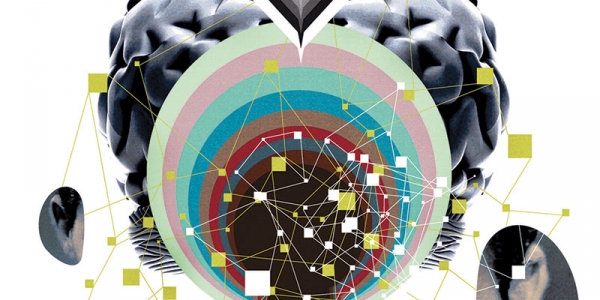
How to Study the Brain


6112-Marcus
Stuart Bradford 
for The Chronicle Review


And that is a good thing. On virtually any account, neuroscience needs more data—a lot more data—than it has.

To begin with, we desperately need a parts list for the brain. The varied multitude of cells in the human brain have names like "pyramidal cells," "basket cells," and "chandelier cells," based on their physical structures. But we don’t know exactly how many cell types there are—some, like Cajal-Retzius cells (which play a role in brain development) are quite rare. And we know neither what all these different cell types do nor why there are so many. Until we have a fuller understanding of the parts list, we can hardly expect to understand how the brain as a whole functions.


A double exposure of weakly electric fish with recordings of brain activity. Credit Béatrice de Géa for The New York Times

Research on the brain is surging. The United States and the European Union have launched new programs to better understand the brain. Scientists are mapping parts of mouse, fly and human brains at different levels of magnification. Technology for recording brain activity has been improving at a revolutionary pace.

The National Institutes of Health, which already spends $4.5 billion a year on brain research, consulted the top neuroscientists in the country to frame its role in an initiative announced by President Obama last year to concentrate on developing a fundamental understanding of the brain.
Scientists have puzzled out profoundly important insights about how the brain works, like the way the mammalian brain navigates and remembers places, work that won the 2014 Nobel Prize in Physiology or Medicine for a British-American and two Norwegians.

Yet the growing body of data — maps, atlases and so-called connectomes that show linkages between cells and regions of the brain — represents a paradox of progress, with the advances also highlighting great gaps in understanding.

Tuesday, November 11, 2014

The One Thing that Could Save the World: Why We Need Empathy Now More than Ever

I completely disagree with Paul Bloom (psychologist at Yale) that empathy is a poor moral guide. Bloom sets empathy against rationality, which is a false dichotomy.
George Lakoff: “Empathy is at the heart of real rationality, because it goes to the heart of our values, which are the basis of our sense of justice. Empathy is the reason we have the principles of freedom and fairness, which are necessary components of justice.”
In the article below,

The one thing that could save the world: Why we need empathy now more than ever

Critics say that empathy clouds our judgment and distracts us from true morality. Here's what they're missing.


The one thing that could save the world: Why we need empathy now more than ever 
Gregory Peck and Brock Peters in "To Kill a Mockingbird" 
Empathy is trending. President Obama wants to tackle America’s “empathy deficit,” medical students routinely receive empathy training, and everyone from business gurus to the Dalai Lama have become its champions. The latest neuroscience research shows that 98 percent of us have the capacity to empathize wired into our brains and, like riding a bike, it’s a skill we can learn and develop. No wonder Google searches for the E word have more than doubled  in the past decade. The art of imaginatively stepping into another person’s shoes and seeing the world from their perspective is, it would seem, a most valuable and valued twenty-first century asset.

Not so, says Yale psychologist Paul Bloom, leading the counter-charge against empathy’s popularity surge. It is, he claims, a poor moral guide, lacking the power to inspire us to act on, say, child poverty or humanitarian disasters. “Our public decisions will be fairer and more moral once we put empathy aside,” says Bloom, insisting we should instead, “draw on a reasoned, even counter-empathetic, analysis of moral obligation.” But in doing so, Bloom creates a false – and dangerous – dichotomy between empathy and reason, and misses the long lesson from history: that time and again, empathy has played a crucial role in creating a democratic culture that respects human rights. So where have the critics gone wrong?

The anti-empathy brigade launch their attack with the claim that having too much empathy can lead to what Bloom calls “empathetic distress” or burnout. Yes, identifying closely with someone else’s pain and mirroring their emotions – known as affective empathy – can seem overwhelming. But according to altruism expert Daniel Batson  at the University of Kansas, there is no scientific evidence that those with high levels of affective empathy are less able to respond to other people’s needs: they are not paralyzed by their sensitivity – indeed many may be motivated by it. Moreover, people who need to keep a cool head when the emotional heat is rising – be they doctors, firefighters or social workers – know to draw, instead, on their capacity for cognitive empathy, an ability Bloom too easily sidelines. And there’s a crucial distinction between the two.

If affective empathy is our mirror for reflecting others’ emotions, cognitive empathy is, by contrast, a pair of shoes that invites us to imagine the world from their viewpoint. So the smart doctor aims not to feel her patient’s anxiety, but to understand it, so that she can respond appropriately. Every good parent teaches cognitive empathy to their kids: ‘Imagine how you’d feel if someone did that to you,’ we tell them as a first step in their moral education. Trying to understand others’ perspectives is an essential part of our emotional intelligence toolkit, and it matters all the more if their lives and needs differ from our own. As George Bernard Shaw quipped, ‘Do not do unto others as you would have them do unto you – they might have different tastes.’ Our cognitive empathy enables us to discover those different tastes.

A second charge against empathy is that it fails at a distance: we empathize more easily with people in our backyards, say the critics, so help our neighbors while ignoring earthquake victims overseas. This is muddled thinking. Proximity is clearly no guarantee of care: we can stroll past a homeless person on our street just as we can be stopped in our tracks by a news story about a woman in Japan left homeless by an earthquake. The real question is how to give people a human face, whether they are near or far, so we get beyond abstract statistics and stereotypes and can make an emotional connection with their lived reality. Without empathy, we could never explain the massive rise in humanitarian giving by individuals to developing countries since the end of World War II.

The strongest critique in the empathy wars is the risk of empathic bias: the concern that we are partial towards our in-group – people of a similar socioeconomic or cultural background to our own. Think of the judge who gives a more lenient sentence to a white-collar criminal whose educational background resembles his own. Empathic bias is real and it matters – but it means that we need to deepen, not discard, our empathy, by escaping the boundaries of our peer group. That’s just what the Eton-educated writer George Orwell did when, in the late 1920s, he swapped his natty suit for tramping clothes and lived amongst hobos and beggars on the streets of East London, an empathic immersion described in “Down and Out in Paris and London” that exploded his prejudices about the homeless. We might all learn from his example and get talking to the strangers on our doorsteps, whether it’s your new Afghani neighbor or the heavily tattooed woman who delivers your mail each day.

Our empathy is powerful but it is clearly not perfect. So should the critiques of Bloom and others convince us to cast our innate empathic abilities aside and rely, instead, on reason as our moral compass? This would be a monumental mistake, proving us blind to the lessons of history. Reason divorced from empathy was a specialty of the Nazis, who used reason to argue that Jews were subhuman and then codified it in the Nuremberg Laws. What made the Holocaust possible was the Nazis’ racial ideology that achieved one of the most successful erosions of societal empathy in political history.

There are positive lessons from history too. A growing wave of scholars, from the cultural historian Lynn Hunt to the arch-rational psychologist Steven Pinker, argue that democratic rights have been won when societies have extended their empathy to previously neglected social groups. Look no further than the 18th century humanitarian revolution, which generated the first campaigns to tackle child poverty, the anti-slavery movement and associations to improve working conditions. In “The Better Angels of Our Nature,” Pinker points out it was rooted in ‘the rise of empathy and the regard for human life’, underpinned by the ‘reading revolution’ as literature opened up imaginations to previously hidden lives. When the public became sensitized to the suffering of marginalized groups, it spurred legislative reform. And this story has been repeated in struggles throughout democratic history, from women’s suffrage to gay rights and disability rights.

If there is one lesson that history teaches us, it is this: empathy cracks open the door of our moral concern, and laws and rights wedge that door open. Reason – embodied in laws and rights – and empathy are not, as the critics contend, polar opposites. They are in fact a democratic double act: like knife and fork, ball and socket, Fred and Ginger, they work best when they work together. As the cognitive linguist George Lakoff puts it, “Empathy is at the heart of real rationality, because it goes to the heart of our values, which are the basis of our sense of justice. Empathy is the reason we have the principles of freedom and fairness, which are necessary components of justice.”

Cast empathy aside to lean on reason alone and we would become emotionally tone deaf and politically indifferent. That is not who we want to be and – more importantly – it is not who we are.

Roman Krznaric’s new book is Empathy: Why It Matters, and How to Get It (Perigee/Penguin, on sale Nov. 4). He is a faculty member of The School of Life in London and founder of the world’s first digital Empathy Library. Follow him on Twitter at @romankrznaric.

Tuesday, November 04, 2014

Morality of Transhumanism and Posthumanism

http://arkmage.files.wordpress.com/2012/08/abstract-transhumanism-1162x1200-wallpaper_www-wall321-com_33.jpeg

From Bookforum's Omnivore blog, this is a whole collection of links on transhumanism, posthumanism, and other forms of technological enhancement, including moral bioenhancement.

Morality of transhumanism

Nov 4 2014
9:00AM

Thursday, October 09, 2014

Free Will or Self-Control? Patricia Churchland

http://i.ytimg.com/vi/0V7QrxEAbLM/0.jpg

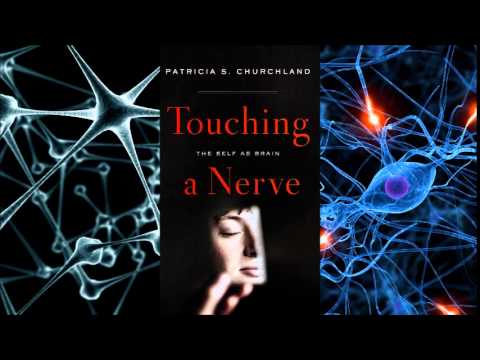
Patricia Churchland is the author, most recently, of Braintrust: What Neuroscience Tells Us about Morality (2012) and Touching a Nerve: Our Brains, Our Selves (2013). The latter book is the basis for her talk on free will, while the former is the basis for her 2014 Copernicus Center Lecture.

I am not at all a fan of Churchland's reductionist materialism. Still, I find her work interesting and thought-provoking, if only in how her beliefs can be refuted.

Free Will or Self-Control? Patricia Churchland

Copernicus Center for Interdisciplinary Studies
Published on Oct 6, 2014


Patricia Churchland’s research focuses on the interface between neuroscience and philosophy. Although many philosophers used to dismiss the relevance of neuroscience on grounds that what mattered was “the software, not the hardware”, increasingly philosophers have come to recognize that understanding how the brain works is essential to understanding the mind.

Patricia Churchland explores the impact of scientific developments on our understanding of consciousness, the self, free will, decision making, ethics, learning, and religion and issues concerning the neurobiological basis of consciousness, the self, and free will, as well as on more technical questions concerning to what degree the nervous system is hierarchically organized, how the difficult issue of co-ordination and timing is managed by nervous systems, and what are the mechanisms for the perceptual phenomenon of filling-in.
* * * * *

Patricia Churchland, The Brains Behind Morality (2014 Copernicus Center Lecture)

Copernicus Center for Interdisciplinary Studies
Published on Oct 2, 2014


2014 Copernicus Center Lecture was delivered by Patricia Churchland, a well-acclaimed Canadian-American philosopher noted for her contributions to neurophilosophy and the philosophy of mind.

Patricia Churchland’s research focuses on the interface between neuroscience and philosophy. Although many philosophers used to dismiss the relevance of neuroscience on grounds that what mattered was “the software, not the hardware”, increasingly philosophers have come to recognize that understanding how the brain works is essential to understanding the mind.

Patricia Churchland explores the impact of scientific developments on our understanding of consciousness, the self, free will, decision making, ethics, learning, and religion and issues concerning the neurobiological basis of consciousness, the self, and free will, as well as on more technical questions concerning to what degree the nervous system is hierarchically organized, how the difficult issue of co-ordination and timing is managed by nervous systems, and what are the mechanisms for the perceptual phenomenon of filling-in.

Copernicus Center Lecture 2014 was held on May 22 in the Auditorium at the Larisch Palace (Faculty of Law and Administration, Jagiellonian University, Bracka Str. 12, Kraków).

Copernicus Center Lectures is a series of lectures found by Copernicus Center with participation of the best scholars of our times. In previous years Copernicus Center Lectures were delivered by Francisco Ayala, sir Roger Penrose, Joseph LeDoux, George Ellis and Michael Heller.

Monday, September 15, 2014

Atheists Seen as a Threat to Moral Values (via Pacific Standard)

http://ct.perceptionvsfact.com/ol/pf/se/i52/5/7/23/frabz-Atheists-What-my-friends-think-I-do-What-my-mom-thinks-I-do-What-9b99aa.jpg

For some reason, I find this nonsense deeply amusing. It's ludicrous to think that Christians, who have been responsible for some of the greatest atrocities in human history, can condemn atheists as immoral and "deeply threatening." One need look no further than the Middle East to see how religion can motivate hate and violence.

At the same time, I do not reject religion as a whole, despite being an atheist of sorts myself (an agnostic atheist). Religion is an important moral and communal center in many peoples' lives. It's only when the "one true god" or "nonbelievers are heretics" ideologies get triggered that religion becomes dangerous.
“Atheists are stereotyped to be (among other things) cynical, skeptical, and nonconformist,” they write. “Individuals perceived to endorse conflicting values, or who fail to openly endorse group values, could threaten to undermine performance and success of the group as a whole by failing to adhere to group norms.” 
***
So it appears atheists have a huge perception problem: People widely assume that if they reject the notion of God, they also reject essential ethical values. Although they don’t represent all atheists, it would clearly help if humanists, with their vision of a moral society that does not require otherworldly guidance or punishment, could raise their profile. 
Richard Dawkins, Sam Harris, and Bill Maher have done a good job of instilling this view of atheists in the public. Dawkins and Maher, in particular, are so strident in their views and their presentation of their views that they alienate even other atheists, such as myself. Secular Humanism is the best antidote to the dogma of Dawkins and the rest.

Atheists Seen as a Threat to Moral Values


By Tom Jacobs • September 15, 2014


atheist-signs
(Photo: J. Bicking/Shutterstock)


New research attempts to pinpoint why non-believers are widely disliked and distrusted.

Halloween is coming, so here’s a tip for those of you who have yet to decide on a costume. If you really want to scare people, dress up as Richard Dawkins. Or Sam Harris.

Or just tell them you’re an atheist.

Confirming and expanding upon previous research, a newly published paper reports that, in the minds of many, atheists are deeply threatening. Specifically, they are seen as posing a danger to the value systems that unite us.

The fact that their belief systems defy the national consensus, along with “negative cultural stereotypes of atheists as cynical,” leads to the assumption that “atheists are unlikely to follow important group-based value norms” such as reciprocity and trust, according to a research team led by Skidmore College psychologist Corey Cook.

“The perception of threat alone is enough to drive intergroup enmity,” the researchers note, “even if atheists as a minority group do not have the political power or raw numbers to institute cultural changes in value systems.”

Cook and his colleagues describe two experiments, one of which featured 100 undergraduates at a large public university in the southeastern U.S. Seventy-three percent of participants were affiliated with a Christian church.

They were randomly assigned to read one of two news stories designed to appear as if they ran in the college newspaper. One was about a proposed expansion to the dental school. The other was about “moral decline among college students.” It reported that “traditional values such as loyalty and fidelity are less important than in previous years,” adding that today’s students lie and cheat more frequently than their predecessors.

After completing a filler task, participants reported how tense and anxious they felt when thinking about groups of people who are frequently stigmatized: college students, gay men, HIV-infected students, and atheists. They were also asked to indicate, on a one-to-six scale, “whether they would be willing to vote for an atheist presidential candidate, support a local business run by atheists, and whether they believed the U.S. Supreme Court should include atheists.”

Participants who read the neutral essay felt less anxiety when thinking about atheists than they did when considering the other feared groups. But for those who read the “moral threat” story, the level of anxiety provoked by pondering atheists shot up, to the point where it basically equaled the tension elicited by thinking about the other feared groups.

In addition, those who had read about the looming “moral threat” expressed more willingness to discriminate against atheists in the various contexts described above.

In another experiment, atheists produced more “feelings of moral disgust” than other “groups also perceived to threaten values—Muslims, gay men, and people with HIV.” Participants in this experiment (131 undergraduates) also expressed more willingness to discriminate against atheists than against member of the other groups.

Cook and his colleagues have a pretty good idea why the anti-atheist prejudice they documented is so pervasive.

“Atheists are stereotyped to be (among other things) cynical, skeptical, and nonconformist,” they write. “Individuals perceived to endorse conflicting values, or who fail to openly endorse group values, could threaten to undermine performance and success of the group as a whole by failing to adhere to group norms.”

“Although acceptance and egalitarianism are endorsed as traditional American values,” they add, “perceptions of violations to personal and group values are often seen as justification for hostile attitudes and subsequent discrimination. Such justification is reflected in the unwillingness to accept atheists as an everyday part of American society.”

So it appears atheists have a huge perception problem: People widely assume that if they reject the notion of God, they also reject essential ethical values. Although they don’t represent all atheists, it would clearly help if humanists, with their vision of a moral society that does not require otherworldly guidance or punishment, could raise their profile.


Staff writer Tom Jacobs is a veteran journalist with more than 20 years experience at daily newspapers. He has served as a staff writer for The Los Angeles Daily News and the Santa Barbara News-Press. His work has also appeared in The Los Angeles Times, Chicago Tribune, and Ventura County Star.

More From Tom Jacobs


Related Story


Americans Intuitively Judge Atheists as Immoral

Wednesday, September 10, 2014

Frans de Waal - Do Animals Have Morals?

Frans de Waal is one of the foremost researchers in primate emotions, especially prosocial behaviors. He is the author of several books, including Primates and Philosophers: How Morality Evolved (2006), The Age of Empathy: Nature's Lessons for a Kinder Society (2010), and The Bonobo and the Atheist: In Search of Humanism Among the Primates (2014).

In this TED Talk he discusses the morality of animals.


Do Animals Have Morals?


by NPR/TED Staff
September 05, 2014
Frans de Waal explains his work regarding morality and animals. LeahAndMark.com

About Frans de Waal's TED Talk

Empathy, cooperation and fairness seem like distinctly human traits. But biologist Frans de Waal explains why other animals might share those same qualities.

About Frans de Waal

Dr. Frans de Waal is a biologist and primatologist known for his work on the behavior and social intelligence of primates. His first book, Chimpanzee Politics, compared the schmoozing and scheming of chimps to that of human politicians. He is a professor of psychology at Emory University and director of the Living Links Center at the Yerkes National Primate Center.

Friday, August 29, 2014

Forum: Against Empathy - Paul Bloom

From the Boston Review, Paul Bloom (Brooks and Suzanne Ragen Professor of Psychology & Cognitive Science at Yale University and author of Just Babies: The Origins of Good and Evil) argues against empathy. Bloom feels, " I am not against morality, compassion, kindness, love, being a good neighbor, doing the right thing, and making the world a better place. My claim is actually the opposite: if you want to be good and do good, empathy is a poor guide."

Being a forum, there are replies from a wide range of people, including Peter Singer, Simon Baron-Cohen, Sam Harris, and Jesse Prinz.

Forum: Against Empathy


Opening the Debate - Paul Bloom:

Most people see the benefits of empathy as too obvious to require justification. This is a mistake. 


Responding

Peter Singer
Jack W. Berry, Lynn E. O'Connor
Marianne LaFrance
Nomy Arpaly
Christine Montross
Barbara H. Fried
Leslie Jamison
Leonardo Christov-Moore, Marco Iacoboni
Simon Baron-Cohen
Elizabeth Stoker Bruenig
Sam Harris
Jesse Prinz

Reply: Paul Bloom


Against Empathy

Paul Bloom
Tuesday, August 26, 2014


Photograph: Samantha Stock

When asked what I am working on, I often say I am writing a book about empathy. People tend to smile and nod, and then I add, “I’m against it.” This usually gets an uncomfortable laugh.

This reaction surprised me at first, but I’ve come to realize that taking a position against empathy is like announcing that you hate kittens—a statement so outlandish it can only be a joke. And so I’ve learned to clarify, to explain that I am not against morality, compassion, kindness, love, being a good neighbor, doing the right thing, and making the world a better place. My claim is actually the opposite: if you want to be good and do good, empathy is a poor guide.

The word “empathy” is used in many ways, but here I am adopting its most common meaning, which corresponds to what eighteenth-century philosophers such as Adam Smith called “sympathy.” It refers to the process of experiencing the world as others do, or at least as you think they do. To empathize with someone is to put yourself in her shoes, to feel her pain. Some researchers also use the term to encompass the more coldblooded process of assessing what other people are thinking, their motivations, their plans, what they believe. This is sometimes called “cognitive,” as opposed to “emotional,” empathy. I will follow this convention here, but we should keep in mind that the two are distinct—they emerge from different brain processes; you can have a lot of one and a little of the other—and that most of the discussion of the moral implications of empathy focuses on its emotional side.

Some degree of emotional empathy is bred in the bone. The sight and sound of another’s suffering is unpleasant for babies and, as soon as they are mobile enough, they try to help, patting and soothing others in distress. This is not uniquely human: the primatologist Frans de Waal notes that chimps will often put their arms around the victim of an attack and pat her or groom her.

Empathy can occur automatically, even involuntarily. Smith describes how “persons of delicate fibres” who notice a beggar’s sores and ulcers “are apt to feel an itching or uneasy sensation in the correspondent part of their own bodies.” John Updike writes, “My grandmother would have choking fits at the kitchen table, and my own throat would feel narrow in sympathy.”

And empathy can be extended through the imagination. In a speech before he became president, Barack Obama stressed how important it is
to see the world through the eyes of those who are different from us—the child who’s hungry, the steelworker who’s been laid off, the family who lost the entire life they built together when the storm came to town. . . . When you think like this—when you choose to broaden your ambit of concern and empathize with the plight of others, whether they are close friends or distant strangers—it becomes harder not to act, harder not to help.
Obama is right about this last part; there is considerable support for what the psychologist C. Daniel Batson calls “the empathy-altruism hypothesis”: when you empathize with others, you are more likely to help them. In general, empathy serves to dissolve the boundaries between one person and another; it is a force against selfishness and indifference.

It is easy to see, then, how empathy can be a moral good, and it has many champions. Obama talks frequently about empathy; witness his recent claim, after his first meeting with Pope Francis, that “it’s the lack of empathy that makes it very easy for us to plunge into wars. It’s the lack of empathy that allows us to ignore the homeless on the streets.” In The Empathetic Civilization (2009) Jeremy Rifkin argues that the only way our species will survive war, environmental degradation, and economic collapse is through the enhancement of “global empathy.” This past June, Bill and Melinda Gates concluded their Stanford commencement address by asking students to nurture and expand their empathetic powers, essential for a better world.

Most people see the benefits of empathy as akin to the evils of racism: too obvious to require justification. I think this is a mistake. I have argued elsewhere that certain features of empathy make it a poor guide to social policy. Empathy is biased; we are more prone to feel empathy for attractive people and for those who look like us or share our ethnic or national background. And empathy is narrow; it connects us to particular individuals, real or imagined, but is insensitive to numerical differences and statistical data. As Mother Teresa put it, “If I look at the mass I will never act. If I look at the one, I will.” Laboratory studies find that we really do care more about the one than about the mass, so long as we have personal information about the one.

In light of these features, our public decisions will be fairer and more moral once we put empathy aside. Our policies are improved when we appreciate that a hundred deaths are worse than one, even if we know the name of the one, and when we acknowledge that the life of someone in a faraway country is worth as much as the life a neighbor, even if our emotions pull us in a different direction. Without empathy, we are better able to grasp the importance of vaccinating children and responding to climate change. These acts impose costs on real people in the here and now for the sake of abstract future benefits, so tackling them may require overriding empathetic responses that favor the comfort and well being of individuals today. We can rethink humanitarian aid and the criminal justice system, choosing to draw on a reasoned, even counter-empathetic, analysis of moral obligation and likely consequences.

But even if you accept this argument, there is a lot more to life than public policy. Consider our everyday interactions with our parents and children, with our partners and friends. Consider also certain special relationships, such as that between doctor and patient or therapist and client. Empathy might not scale up to the policy level, but it seems an unalloyed good when it comes to these intimate relationships—the more the better.

I used to believe this, but I am no longer sure.


• • •

One of empathy’s most thoughtful defenders is the psychologist Simon Baron-Cohen. In his 2011 book The Science of Evil, he draws upon psychology and neuroscience to argue that the notion of evil should be replaced with “empathy erosion” and that a high degree of empathy is what makes for good people and good societies.

Individuals differ in their disposition to feel empathy, and Baron-Cohen posits an empathy curve that runs from Level 0, where there is no empathy at all, to Level 6, where one is “continually focused on other people’s feelings . . . . in a constant state of hyperarousal, such that other people are never off their radar.” He sketches one such Level 6 individual:
Hannah is a psychotherapist who has a natural gift for tuning into how others are feeling. As soon as you walk into her living room, she is already reading your face, your gait, your posture. The first thing she asks you is ‘How are you?’ but this is no perfunctory platitude. Her intonation—even before you have taken off your coat—suggests an invitation to confide, to disclose, to share. Even if you just answer with a short phrase, your tone of voice reveals to her your inner emotional state, and she quickly follows up your answer with ‘You sound a bit sad. What’s happened to upset you?’
Before you know it, you are opening up to this wonderful listener, who interjects only to offer sounds of comfort and concern, to mirror how you feel, occasionally offering soothing words to boost you and make you feel valued. Hannah is not doing this because it is her job to do so. She is like this with her clients, her friends, and even people she has only just met. Hannah’s friends feel cared for by her, and her friendships are built around sharing confidences and offering mutual support. She has an unstoppable drive to empathize.
It is easy to see what Baron-Cohen finds so impressive here. Hannah sounds like a good therapist, and it seems as if she would also be a good mother to young children.

But consider what it must be like to be her. Hannah’s concern for other people doesn’t derive from particular appreciation or respect for them; her concern is indiscriminate and applies to strangers as well as friends. She also does not endorse a guiding principle based on compassion and kindness. Rather, Hannah is compelled by hyperarousal—her drive is unstoppable. Her experience is the opposite of selfishness but just as extreme. A selfish person might go through life indifferent to the pleasure and pain of others—ninety-nine for him and one for everyone else—while in Hannah’s case, the feelings of others are always in her head—ninety-nine for everyone else and one for her.

It is no accident that Baron-Cohen chose a woman as his example. In a series of empirical and theoretical articles, psychologists Vicki Helgeson and Heidi Fritz have explored why women are twice as likely as men to experience depression. Their results suggest that this divergence is explained in part by a sex difference in the propensity for “unmitigated communion,” defined as “an excessive concern with others and placing others’ needs before one’s own.” Helgeson and Fritz developed a simple nine-item questionnaire, which asks respondents to indicate whether they agree with statements such as, “For me to be happy, I need others to be happy,” “I can’t say no when someone asks me for help,” and “I often worry about others’ problems.” Women typically score higher than men on this scale; Hannah would, I bet, score high indeed.

Strong inclination toward empathy comes with costs. Individuals scoring high in unmitigated communion report asymmetrical relationships, where they support others but don’t get support themselves. They also are more prone to suffer depression and anxiety. Working from a different literature on “pathological altruism,” Barbara Oakley notes in Cold-Blooded Kindness (2011), “It’s surprising how many diseases and syndromes commonly seen in women seem to be related to women’s generally stronger empathy for and focus on others.”

The problems that arise here have to do with emotional empathy—feeling another’s pain. This leads to what psychologists call empathetic distress. We can contrast this with non-empathetic compassion—a more distanced love and kindness and concern for others. Such compassion is a psychological plus. Putting aside the obvious point that some degree of caring for others is morally right, kindness and altruism are associated with all sorts of positive physical and psychological outcomes, including a boost in both short-term mood and long-term happiness. If you want to get happy, helping others is an excellent way to do so.

It is worth expanding on the difference between empathy and compassion, because some of empathy’s biggest fans are confused on this point and think that the only force that can motivate kindness is empathetic arousal. But this is mistaken. Imagine that the child of a close friend has drowned. A highly empathetic response would be to feel what your friend feels, to experience, as much as you can, the terrible sorrow and pain. In contrast, compassion involves concern and love for your friend, and the desire and motivation to help, but it need not involve mirroring your friend’s anguish.

Or consider long-distance charity. It is conceivable, I suppose, that someone who hears about the plight of starving children might actually go through the empathetic exercise of imagining what it is like to starve to death. But this empathetic distress surely isn’t necessary for charitable giving. A compassionate person might value others’ lives in the abstract, and, recognizing the misery caused by starvation, be motivated to act accordingly.

Summing up, compassionate helping is good for you and for others. But empathetic distress is destructive of the individual in the long run.

It might also be of little help to other people because experiencing others’ pain is exhausting and leads to burnout. This issue is explored in the Buddhist literature on morality. Consider the life of a bodhisattva, an enlightened person who vows not to pass into Nirvana, choosing instead to stay in the normal cycle of life and death to help the masses. How is a bodhisattva to live? In Consequences of Compassion (2009) Charles Goodman notes the distinction in Buddhists texts between “sentimental compassion,” which corresponds to empathy, and “great compassion,” which involves love for others without empathetic attachment or distress. Sentimental compassion is to be avoided, as it “exhausts the bodhisattva.” Goodman defends great compassion, which is more distanced and reserved and can be sustained indefinitely.

This distinction has some support in the collaborative work of Tania Singer, a psychologist and neuroscientist, and Matthieu Ricard, a Buddhist monk, meditation expert, and former scientist. In a series of studies using fMRI brain scanning, Ricard was asked to engage in various types of compassion meditation directed toward people who are suffering. To the surprise of the investigators, these meditative states did not activate parts of the brain that are normally activated by non-meditators when they think about others’ pain. Ricard described his meditative experience as “a warm positive state associated with a strong prosocial motivation.”

He was then asked to put himself in an empathetic state and was scanned while doing so. Now the appropriate circuits associated with empathetic distress were activated. “The empathic sharing,” Ricard said, “very quickly became intolerable to me and I felt emotionally exhausted, very similar to being burned out.”

One sees a similar contrast in ongoing experiments led by Singer and her colleagues in which people are either given empathy training, which focuses on the capacity to experience the suffering of others, or compassion training, in which subjects are trained to respond to suffering with feelings of warmth and care. According to Singer’s results, among test subjects who underwent empathy training, “negative affect was increased in response to both people in distress and even to people in everyday life situations. . . . these findings underline the belief that engaging in empathic resonance is a highly aversive experience and, as such, can be a risk factor for burnout.” Compassion training—which doesn’t involve empathetic arousal to the perceived distress of others—was more effective, leading to both increased positive emotions and increased altruism.

This brings us to the targets of empathy. As I write this, an older relative of mine who has cancer is going back and forth to hospitals and rehabilitation centers. I’ve watched him interact with doctors and learned what he thinks of them. He values doctors who take the time to listen to him and develop an understanding of his situation; he benefits from this sort of cognitive empathy. But emotional empathy is more complicated. He gets the most from doctors who don’t feel as he does, who are calm when he is anxious, confident when he is uncertain. And he particularly appreciates certain virtues that have little directly to do with empathy, virtues such as competence, honesty, professionalism, and respect.

Leslie Jamison makes a similar point in her new essay collection The Empathy Exams. Jamison was at one time a medical actor—she would fake symptoms for medical students, who would diagnose her as part of their training. She also rated them on their skills. The most important entry on her checklist was number thirty-one: “Voiced empathy for my situation/problem.” But when she discusses her real experiences with doctors, her assessment of empathy is mixed. She met with one doctor who was cold and unsympathetic to her concerns, which caused her pain. But she is grateful to another who kept a reassuring distance and objectivity: “I didn’t need him to be my mother—even for a day—I only needed him to know what he was doing,” she writes. “His calmness didn’t make me feel abandoned, it made me feel secure. . . . I needed to look at him and see the opposite of my fear, not its echo.”

Or consider friendship and love. Hannah’s “soothing words,” her “sounds of comfort and concern” and mirroring of others’ feelings describe how a certain type of therapist treats a client or how a certain type of parent treats an anxious toddler. But this isn’t how friendship usually works. Friendship is rooted in symmetry and equality, shared projects, teasing and jokes and gossip, all of which are absent from a therapeutic relationship. While I might benefit from a friend’s therapy if I were feeling deeply anxious or depressed, I don’t, on the whole, want my friends to treat me like a suffering patient, softly murmuring reassurances when they detect that I’m out of sorts. Hannah’s “You sound a bit sad. What’s happened to upset you?” exemplifies what Jamison means when she says, “Empathy is always perched precariously between gift and invasion.”

Putting aside the extremes, do more empathetic people make better friends and partners? To my knowledge, this has never been studied. Certainly we want our friends to understand us and to care about us. It would be unnerving if someone I love never flinched in the face of my suffering or lit up at my joy. But this is not because I want them to mirror my feelings; rather, it is because if they love me, they should worry about my misfortunes and be pleased when I do well. From a purely selfish standpoint, I might not want their empathetic resonance, particularly when I am feeling down. I would prefer that they greet my panic with calm and my sadness with good cheer. As Cicero said about friendship—but he could just as well have been talking about close relationships in general—it “improves happiness and abates misery, by the doubling of our joy and the dividing of our grief.”


• • •

When we think about individuals on the other extreme, what Baron-Cohen would describe as empathy Level 0, we naturally think about psychopaths, sociopaths, or antisocial/psychopathic personality types (the terms typically are used synonymously). Psychopaths are identified in poplar culture as the embodiment of evil. The term describes everyone from predatory CEOs to callous politicians to cannibal-killers such as Jeffrey Dahmer and the fictional Hannibal Lecter.  

There is a standard test for psychopathy developed by the psychologist Robert Hare. It is used to make legal decisions about criminal offenders, including whether they should be incarcerated for life, and used as well by experimental psychologists who give the test to undergraduates to explore how their scores relate to, for instance, attitudes toward sexual violence and their style of moral reasoning. If you like this sort of thing, you can take the test online, rating yourself on traits such as “glibness/superficial charm,” “lack of remorse or guilt,” and “promiscuous sexual behavior.”

The most important item for many people is “callous/lack of empathy.” Many popular treatments of psychopathy, such as Jon Ronson’s 2011 bestseller The Psychopath Test, see a lack of empathy as the core deficit in psychopathy. It is here that cognitive and emotional empathy come apart, because many people diagnosed with psychopathy are excellent at reading others’ minds. This is what enables them to be such masterful manipulators, con men, and seducers. But the emotional part is thought to be absent—they cannot feel other people’s pain—and this is why psychopaths are such terrible people.

This might be the popular picture, but the truth is more complicated. For one thing, as philosopher Jesse Prinz points out, psychopaths suffer from dulling of just about all emotional responses, not just empathy. This overall blunting of feeling—or “shallow affect”—is one of the criteria on the checklist. It was observed by Harvey Cleckley in The Mask of Sanity, his 1941 book that provided the first clinical description of psychopathy:
Vexation, spite, quick and labile flashes of quasi-affection, peevish resentment, shallow moods of self-pity, puerile attitudes of vanity, and absurd and showy poses of indignation are all within his emotional scale and are freely sounded as the circumstances of life play upon him. But mature, wholehearted anger, true or consistent indignation, honest, solid grief, sustaining pride, deep joy, and genuine despair are reactions not likely to be found within this scale.
It is unclear, then, whether an empathy deficit is at the core of psychopathy, or whether it is just one facet of a more general problem. One can explore this by looking at how well scores on the callous/lack of empathy item and certain related items are correlated with future bad behavior. In an extensive review of the literature, psychologist Jennifer Skeem and her colleagues note that these items are weak predictors of violence and criminality. The reason why the psychopath test has any predictive power at all is that it assesses past bad behavior—juvenile delinquency, criminal versatility, parasitic lifestyle, and so on—as well as factors such as lack of inhibition and poor impulse control. To put it another way, you can remove the empathy question from the scale, and it would be about as good at picking out psychopaths.

What about aggressive behavior more generally? Are more aggressive people less empathetic? Even I, a skeptic, would imagine there is some substantive relationship between empathy and aggression, since presumably someone with a great deal of empathy would find it unpleasant to cause pain in others. But a recent review summarizing data from all available studies of the relationship between empathy and aggression reaches a different conclusion. The authors of “The (non)relation between empathy and aggression: Surprising results from a meta-analysis” report that only 1 percent of the variation in aggression is accounted for by empathy. This means that if you want to predict how aggressive a person is, and you have access to an enormous amount of information about that person, including psychiatric interviews, pen-and-paper tests, criminal records, and brain scans, the last thing you would bother to look at would be measures of the person’s empathy.

Finally, one decisive test of the low-empathy-makes-bad-people theory would be to study a group of people who lack empathy but also lack the other traits associated with psychopathy. Such individuals do exist. Baron-Cohen notes that people with Asperger syndrome and autism typically have low cognitive empathy—they struggle to understand the minds of others—and have low emotional empathy as well. (As with psychopaths, there is some controversy about whether they are incapable of empathy or choose not to deploy it.) Despite their empathy deficit, such people show no propensity for exploitation and violence. Indeed, they often have strong moral codes and are more likely to be victims of cruelty than perpetrators.


• • •

Am I saying that empathy is irrelevant or a corrosive influence on how we treat those around us? This would be too strong a conclusion. There are many studies that look at individual differences in empathy levels and correlate these levels with real-world behavior, such as willingness to help someone in need. Many of these studies are poorly done. They often measure empathy through self-report, so you don’t know whether you are assessing actual empathy as opposed to the degree to which people see themselves, or want to be seen, as empathetic. Furthermore, people who help others more may assume that they are empathetic, since people often make judgments about themselves by drawing conclusions from their own behavior.

Nonetheless, there is some evidence that being more empathetic influences how likely one is to help in certain circumstances. The relationship is often weak, and not all studies find it. Still, given laboratory findings showing that inducing empathy increases the likelihood of altruistic behaviors, it would be wrong to dismiss empathy’s role in our moral lives.

But we know that a high level of empathy does not make one a good person and that a low level does not make one a bad person. Being a good person likely is more related to distanced feelings of compassion and kindness, along with intelligence, self-control, and a sense of justice. Being a bad person has more to do with a lack of regard for others and an inability to control one’s appetites.

So how much empathy do we really want in ourselves, our children, our friends, and our society? If you want to answer that question, it helps to think about a quite different emotional response—anger.

Empathy and anger share a lot. Both emerge in early childhood and exist in every human culture. Both are present in other primates such as chimpanzees. Both are social. Unlike emotions such as fear and disgust, which are often elicited by experiences and inanimate beings, empathy and anger are mainly geared toward other people. And they are both moral. The identification that comes with empathy can motivate kind behavior toward others; anger is often a response to perceived unfairness, cruelty, and other immoral acts.

Buddhist texts are even more skeptical about anger than they are about empathy. They see it as destructive of the individual and the world at large. This is a valid concern. But if I could determine the emotional life of my child, I wouldn’t leave out the capacity for anger. The emotional force of anger can protect us and those we are close to from exploitation and predation. Someone who could never get angry would be the perfect victim. Anger can also be a prod to moral behavior more generally; many great moral heroes—Martin Luther King, Jr., for instance—have been individuals who let themselves get angry at situations that others were indifferent to.

But I would worry about the irrational, arbitrary, and self-destructive aspects of anger, so I wouldn’t wish that my child possess too much of it. And I would make sure to add plenty of intelligence, concern for others, and self-control. I would want to ensure that anger is modified, shaped, and directed by rational deliberation. It would occasionally spur action, but it would be subservient to the capacities for rationality and compassion. If we were all constituted in this way, if we could all put anger in its place, ours would be a kinder and better world.

That is how we should think about empathy too.

Friday, June 13, 2014

Jonathan Haidt — The Psychology Behind Morality

This week on NPR's On Being, Jonathan Haidt is the guest. He is the author of The Righteous Mind: Why Good People are Divided by Politics and Religion, as well as Professor of Ethical Leadership at The Stern School of Business at New York University. In this conversation, he talks about the psychology behind morality.

Jonathan Haidt — The Psychology Behind Morality

On Being | June 12, 2014
Krista Tippett

The surprising psychology behind morality is at the heart of social psychologist Jonathan Haidt’s research. He says “when it comes to moral judgments, we think we are scientists discovering the truth, but actually we are lawyers arguing for positions we arrived at by other means.” He explains “liberal” and “conservative” not narrowly or necessarily as political affiliations, but as personality types — ways of moving through the world. His own self-described “conservative-hating, religion-hating, secular liberal instincts” have been challenged by his own studies.


Photo courtesy of TED

Listen

Voices on the Radio


Jonathan Haidt is the author of the bestselling book The Righteous Mind: Why Good People are Divided by Politics and Religion. He is Professor of Ethical Leadership at The Stern School of Business at New York University.

Production Credits
  • Host/Executive Producer: Krista Tippett
  • Executive Editor: Trent Gilliss
  • Senior Producer: Lily Percy
  • Technical Director: Chris Heagle
  • Associate Producer: Mariah Helgeson

Like-Minded Conversations


Kwame Anthony Appiah — Sidling Up to Difference: Social Change and Moral Revolutions
How can unimaginable social change happen in a world of strangers? Kwame Anthony Appiah is a philosopher who studies ethics and his parents' marriage helped inspire the movie Guess Who's Coming to Dinner. In a tense moment in American life, he has refreshing advice on simply living with difference.


Jacob Needleman — The Inward Work of Democracy
Krista Tippett speaks with philosopher Jacob Needleman. As new democracies are struggling around the world, it’s easy to forget that U.S. democracy was shaped by trial and error. A conversation about the “inward work” of democracy — the conscience that shaped the American experiment.


Pertinent Posts from the On Being Blog


Stepping Outside the Moral Matrix
In this TED talk, social psychologist Jonathan Haidt breaks down human moral values into five basic elements, then shows how an individual's placement on the liberal-conservative spectrum is determined by how much emphasis that person puts on each of these values.


Are Babies Moral?
A fascinating, in-depth article and video discussing new research indicating that babies may have a "rudimentary moral sense from the very start of life."


Barbara Ehrenreich on "Living With a 'Wild' God"
In Barbara Ehrenreich's latest book — and first memoir — she asks the age-old questions at the center of human life. A self-described atheist, she leans into the word "mystical" and encourages more cosmic wandering.


What Stories Do We Tell?
There are stories within stories that are desperate to be heard, and when they’re heard, they bring us to the place of encounter and empathy, which is the essence of hope and humanity.


David Eagleman's Secular Sermon on Knowing One's Selves
How and why did we choose this "secular sermon" for our podcast. A bit of behind-the-scenes insight that answers these questions — and a chance to watch the full sermon from The School of Life.