Showing posts with label Philosophy. Show all posts

Friday, September 04, 2015

Teleological Perspectives and the Pre/Trans Fallacy of Integral Theory

http://image.slidesharecdn.com/theolology-proper-intro-arguments-for-existence-of-god-etc-21444/95/theolology-proper-intro-arguments-for-existence-of-god-etc-26-728.jpg?cb=1250142478

Teleology is an account of a given thing's purpose. For example, Aristotle argued that the purpose of an acorn, its intrinsic telos, is to become an oak tree. This is intrinsic teleology. [A purpose imposed by human use, such as a fork’s extrinsic purpose is to make eating certain foods easier, is extrinsic teleology.] Natural teleology contends that natural entities have intrinsic purposes, irrespective of human use or opinion.

According to Wikipedia:
Though ancient atomists rejected the notion of natural teleology, teleological accounts of non-personal or non-human nature were explored and often endorsed in ancient and medieval philosophies, but fell into disfavor during the modern era (1600-1900). 
In the late 18th century, Immanuel Kant used the concept of telos as a regulative principle in his Critique of Judgment. Teleology was also fundamental to the speculative philosophy of Georg Wilhelm Friedrich Hegel.
A recent example of teleological science is Thomas Nagel’s 2012 book, Mind and Cosmos: Why the Materialist Neo-Darwinian Conception of Nature is Almost Certainly False, an argument that the emergence of life, and in particular conscious life, cannot be explained by materialist or mechanistic principles but, rather, the required principles may be teleological.

Integral theorist Ken Wilber has based his entire integral model on a teleological view of the universe (derived from Vedanta and Tibetan Buddhism), arguing that consciousness arose in the universe so that the universe could come to know itself. In one of his early books, Wilber says that the “Big Bang which was really the roaring laughter of God voluntarily getting lost for the millionth time” (Up From Eden, p. 328). Or this, from a later book:
Maybe the evolutionary sequence really is from matter to body to mind to soul to spirit, each transcending and including, each with a greater depth and greater consciousness and wider embrace. And in the highest reaches of evolution, maybe, just maybe, an individual's consciousness does indeed touch infinity - a total embrace of the entire Kosmos - a Kosmic consciousness that is Spirit awakened to its own true nature. (A Brief History of Everything, p. 38)
In Sex, Ecology, Spirituality, Wilber offers,
… these life forms were apparently not content to merely reproduce themselves, but instead began a long evolution that would eventually allow them to represent themselves, to produce sign and symbols and concepts, and thus out of life arose mind. Whatever this process of evolution was, it seems to have been incredibly driven from matter to life to mind. But stranger still, a mere few hundred years ago, on a small and indifferent planet around an insignificant star, evolution became conscious of itself. (p.3)
This is a purely teleological understanding of evolution, of the universe. And for Wilber, eros is the force that drives the evolution of the universe.

In this model of the universe, the intention, or even the purpose, can only be understood through actions. In essence, the result of an action (evolution is the seemingly obvious drive toward complexity in the universe as we know it) explains its intention (the purpose of evolution is for the universe to become conscious of itself).

Wilber’s model, like Nagel’s, posits directionality—an intent—in nature. Wilber goes further and claims that the universe has become conscious of itself through human beings and that this is the intention behind evolution, going all the way back to the Big Bang (let’s ignore the fact that the Big bang is still a questionable origin story).

But is this necessarily true?

Psychologically, this is the sensorimotor stage of mentalization (the ability to think about thinking). Mentalization, according to Peter Fonagy, is a left-brain, voluntary, and slow secondary affect regulating system. It is the ability to step back and consider our own cognitive processes as objects of thought or reflection (paraphrasing Mary Main).

According to Csibra and Gergely (1998), "infant's 'teleological stance' generates reality-based explanations for actions that are neither mentalistic nor causal." In essence, the teleological perspective is "reality-based," in that it attempts to make sense of an event within the available evidence (primitive though it is), but it lacks a truly causal explanation due to a lack of ability to mentalize (to take one's thoughts/beliefs as an object of awareness).

Wilber’s sensorimotor stage is very low on his developmental schema and, in fact, it is the bottom (beginning) stage of cognitive development. As mentioned above, teleology is the sensorimotor stage of mentalization, the reading of one’s own and others’ mental states. There is likely some discrepancy in stages here, and Wilber’s sensorimotor stage and pre-operational stage may well be equivalent to Fonagy’s sensorimotor stage.

We take for granted that intentions precede actions in our experiences of other people. The problem is when we extend this belief to non-human agents, such as animals, weather, or the universe. This is a form of anthropomorphism, the attribution of human intentions and feelings to non-human agents.

As such, this is a primitive state of consciousness. It is correlated strongly with Wilber’s impulsive (or magical/animistic) stage of development. Again, very low on the hierarchy of cognitive development—it’s pre-rational (mind), pre-egoic (identity), pre-operational/symbolic (cognitive), and pre-conventional (moral). It is also preverbal, relying on a very basic cause and effect schema that intuits cause based on effects.

How is it that a teleological perspective in philosophy (and the philosophy of consciousness) is not considered primitive and pre-rational?

What we are really discussing here is a subtle manifestation of the pre/trans fallacy that Wilber himself is credited with discovering. Here is how this distinction is defined at Integral Life:
Ken noticed a core confusion that made it very difficult to discern between the lower stages and the higher stages. Trans-rational mystical experiences were often being dismissed as pre-rational fantasy, postmodern values were being erroneously projected onto pre-modern cultures, and pre-modern impulsiveness and hedonism were being celebrated by the postmodern counterculture. Rather than viewing psychology as a developmental process running from pre-rational to rational to trans-rational (or pre-differentiated fusion to differentiation to post-differentiated integration), a person was seen as being either rational or not—resulting in the trans-rational baby getting thrown out with the pre-rational bathwater.
This is one of Wilber's most important theoretical contributions.

Despite this, Wilber's whole integral model falls into the pre/trans fallacy inherent in teleological perspectives. It's puzzling that Wilber never saw this issue in his own work, but it's often difficult to separate enough from our own beliefs to view them objectively.

On the other hand, he might argue that mystical perspectives are not subject to causal explanations. He has made such claims before.
Neither sensory empiricism, nor pure reason, nor practical reason, nor any combination thereof can see into the realm of Spirit. In the smoking ruins left by Kant, the only possible conclusion is that all future metaphysics and authentic spirituality must offer direct experiential evidence. (The Marriage of Sense and Soul, p. 174)
According to this, we are to take as truth the "insights" of mystics who have seen into the realm of Spirit, whatever that may be. We are required to accept, in integral theory, a model of the evolution of the universe that is based on a teleological interpretation of why the universe is as it is.

And this does not even take into account the likelihood that the Big Bang is a false theory, or that rather than evolving toward greater complexity, the universe may well be evolving toward dissolution and entropy (space is expanding faster than previously believed).
As a result, it's suspected that receding galaxies will cross a type of cosmological event horizon, where any evidence of their existence, not even light, would ever be able to reach us, no matter how far into the future you went.

Would someone born in a future time when there are no other stars visible from Earth come up with the same models and explanations about the universe as people born during the previous centuries?

It seems unlikely.

We really lack any actual evidence for what is happening in other regions of the universe. We barely have a grip on what is happening on Earth.

Any person who believes that he or she can offer a cogent and comprehensive explanation for the universe and it's supposed evolution seems to me more than a little delusional.

Thursday, February 05, 2015

Brain Science Podcast 115: Eastern Philosophy and Western Neuroscience (w/ Evan Thompson)

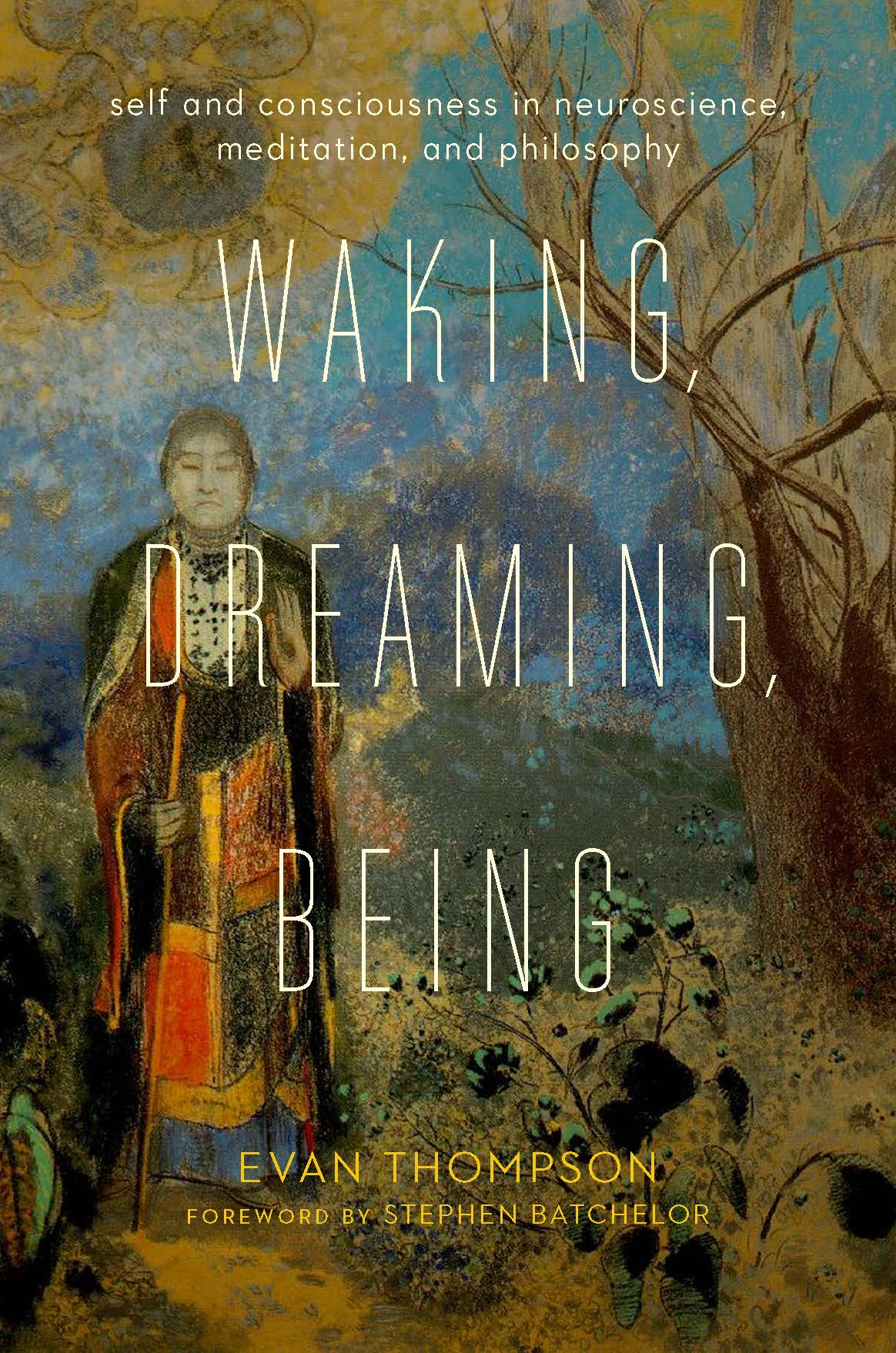
The new episode of Dr. Ginger Campbell's Brain Science Podcast features a conversation with philosopher Evan Thompson, PhD, about his new book, Waking, Dreaming, Being: Self and Consciousness in Neuroscience, Meditation, and Philosophy.

Thompson is one of the leading figures in bridging the gap between Eastern philosophy (specifically Buddhism and the Advaita Vedanta school of Hinduism) and Western neuroscience. In this book, he examines the connects and disconnects between Dream Yoga (both Buddhist and Vedanta) and neuroscience and neurobiology.

BSP 115: Eastern Philosophy and Western Neuroscience

January 29, 2015 / Ginger Campbell, MD
Brain Science Podcast


Scientific interest in the Mind and Consciousness is relatively new, but both Western and Eastern Philosophy have a long tradition of exploring these topics. In his new book Waking, Dreaming, Being: Self and Consciousness in Neuroscience, Meditation, and Philosophy, Evan Thompson explores how these diverse traditions can inform and enrich one another.

Thompson goes beyond a narrow view of consciousness, which focuses only on the waking state. Instead he considers how dreaming, lucid dreaming, and even near death experiences can advance our understanding of how our brain's generate both consciousness and our sense of Self.

Ginger Campbell, MD

How to get this episode:

Related Episodes:

  • BSP 5: Very brief introduction to Philosophy of Mind.
  • BSP 55:  Patricia Churchland, PhD, discusses Neurophilosophy.
  • BSP 58: Alva NoĆ«, PhD, discusses Out of Our Heads: Why You Are Not Your Brain, and Other Lessons from the Biology of Consciousness.
  • BSP 67: Thomas Metzinger discusses The Ego Tunnel: The Science of the Mind and the Myth of the Self.
  • BSP 73: Embodied Cognition with Lawrence Shapiro, PhD.
  • BSP 81: Patricia Churchland discusses Braintrust: What Neuroscience Tells Us about Morality.
  • BSP 89: Evan Thompson discusses Mind in Life: Biology, Phenomenology, and the Sciences of Mind.
  • BSP 96: Robert Burton, MD discusses A Skeptic's Guide to the Mind: What Neuroscience Can and Cannot Tell Us About Ourselves.

Announcements:

  • This month's Audible recommendation: The Teenage Brain: A Neuroscientist's Survival Guide to Raising Adolescents and Young Adults by Frances E. Jensen, MD
  • The next episode of the Brain Science Podcast will feature Dr. Norman Doidge talking about his new book The Brain's Way of Healing: Remarkable Discoveries and Recoveries from the Frontiers of Neuroplasticity.
  • Reminder: the 25 most recent episodes of the Brain Science Podcast are always free, but Premium subscribers have unlimited access to all back episodes and transcripts. The Brain Science Podcast Mobile App is FREE. It is a great way to consume both free and premium content (since this will not appear in iTunes or other podcasting apps).
  • Please share your feedback about this episode by sending email to brainsciencepodcast@gmail.com or going to the Brain Science Podcast Discussion Forum at http://brainscienceforum.com. You can also post to our fan pages on Facebook or Google+. I am looking for help with these community pages so please email me at brainsciencepodcast@gmail.com if you are interested.

Monday, December 08, 2014

Best Philosophy, Mind, and Consciousness Books of 2014 (according to me)

http://evanthompsondotme.files.wordpress.com/2012/11/waking-dreaming-being.jpg

Here are some of the best books I have been exposed to this year. Obviously, I cannot read everything, so this is a partial list at best. They are listed in alphabetical order. Descriptive text is from the publisher's blurb on Amazon.

A few of these books warrant the RECOMMENDED READ classification.


Consciousness: Theories in Neuroscience and Philosophy of Mind
Andrea Eugenio Cavanna and Andrea Nani
This book reviews some of the most important scientific and philosophical theories concerning the nature of mind and consciousness. Current theories on the mind-body problem and the neural correlates of consciousness are presented through a series of biographical sketches of the most influential thinkers across the fields of philosophy of mind, psychology and neuroscience. The book is divided into two parts: the first is dedicated to philosophers of mind and the second, to neuroscientists/experimental psychologists. Each part comprises twenty short chapters, with each chapter being dedicated to one author. A brief introduction is given on his or her life and most important works and influences. The most influential theory/ies developed by each author are then carefully explained and examined with the aim of scrutinizing the strengths and weaknesses of the different approaches to the nature of consciousness.


Enactive Cognition at the Edge of Sense-Making: Making Sense of Non-Sense
Massimiliano Cappuccio and Tom Froese, Editors
The enactive approach is a growing movement in cognitive science that replaces the classical computer metaphor of the mind with an emphasis on biological embodiment and social interaction as the sources of our goals and concerns. Mind is viewed as an activity of making sense in embodied interaction with our world. However, if mind is essentially a concrete activity of sense-making, how do we account for the more typically human forms of cognition, including those involving the abstract and the patently nonsensical? To address this crucial challenge, this collection brings together new contributions from the sciences of the mind that draw on a wide variety of disciplines, including psychopathology, phenomenology, primatology, gender studies, quantum physics, immune biology, anthropology, philosophy of mind, and linguistics. This book is required reading for anyone who is interested in how the latest scientific insights are changing how we think about the human mind and its limits.


The Escape of the Mind
Howard Rachlin
The Escape of the Mind is part of a current movement in psychology and philosophy of mind that calls into question what is perhaps our most basic, most cherished, and universally accepted belief--that our minds are inside of our bodies. Howard Rachlin adopts the counterintuitive position that our minds, conscious and unconscious, lie not where our firmest (yet unsupported) introspections tell us they are, but in how we actually behave over the long run. Perhaps paradoxically, the book argues that our introspections, no matter how positive we are about them, tell us absolutely nothing about our minds. The name of the present version of this approach to the mind is "teleological behaviorism."

The approaches of teleological behaviorism will be useful in the science of individual behavior for developing methods of self-control and in the science of social behavior for developing social cooperation. Without in any way denigrating the many contributions of neuroscience to human welfare, The Escape of the Mind argues that neuroscience, like introspection, is not a royal road to the understanding of the mind. Where then should we look to explain a present act that is clearly caused by the mind? Teleological behaviorism says to look not in the spatial recesses of the nervous system (not to the mechanism underlying the act) but in the temporal recesses of past and future overt behavior (to the pattern of which the act is a part).
 
But scientific usefulness is not the only reason for adopting teleological behaviorism. The final two chapters on IBM's computer, Watson (how it deviates from humanity and how it would have to be altered to make it human), and on shaping a coherent self, provide a framework for a secular morality based on teleological behaviorism.


The Hidden Agenda of the Political Mind: How Self- Interest Shapes Our Opinions and Why We Won’t Admit It
Jason Weeden and Robert Kurzban
When it comes to politics, we often perceive our own beliefs as fair and socially beneficial, while seeing opposing views as merely self-serving. But in fact most political views are governed by self-interest, even if we usually don't realize it. Challenging our fiercely held notions about what motivates us politically, this book explores how self-interest divides the public on a host of hot-button issues, from abortion and the legalization of marijuana to same-sex marriage, immigration, affirmative action, and income redistribution.

Expanding the notion of interests beyond simple economics, Jason Weeden and Robert Kurzban look at how people's interests clash when it comes to their sex lives, social status, family, and friends. Drawing on a wealth of data, they demonstrate how different groups form distinctive bundles of political positions that often stray far from what we typically think of as liberal or conservative. They show how we engage in unconscious rationalization to justify our political positions, portraying our own views as wise, benevolent, and principled while casting our opponents' views as thoughtless and greedy.

While many books on politics seek to provide partisans with new ways to feel good about their own side, The Hidden Agenda of the Political Mind illuminates the hidden drivers of our politics, even if it's a picture neither side will find flattering.


Interdisciplinary Perspectives on Consciousness and the Self
Sangeetha Menon, Anindya Sinha, B.V. Sreekantan, Editors
This volume is a collection of 23 essays that contribute to the emerging discipline of consciousness studies with particular focus on the concept of the self. The essays together argue that to understand consciousness is to understand the self that beholds consciousness. Two broad issues are addressed in the volume: the place of the self in the lives of humans and nonhuman primates; and the interrelations between the self and consciousness, which contribute to the understanding of cognitive functions, awareness, free will, nature of reality, and the complex experiential and behavioural attributes of consciousness. The book presents cutting-edge and original work from well-known authors and scholars of philosophy, psychiatry, behavioural sciences and physics. This is a pioneering attempt to present to the reader multiple ways of conceptualizing and thus understanding the relation between consciousness and self in a nuanced manner.


Living with a Wild God: A Nonbeliever's Search for the Truth about Everything
Barbara Ehrenreich 

RECOMMENDED READ.
From the New York Times bestselling author of Nickel and Dimed comes a brave, frank, and exquisitely written memoir that will change the way you see the world.

Barbara Ehrenreich is one of the most important thinkers of our time. Educated as a scientist, she is an author, journalist, activist, and advocate for social justice. In LIVING WITH A WILD GOD, she recounts her quest-beginning in childhood-to find "the Truth" about the universe and everything else: What's really going on? Why are we here? In middle age, she rediscovered the journal she had kept during her tumultuous adolescence, which records an event so strange, so cataclysmic, that she had never, in all the intervening years, written or spoken about it to anyone. It was the kind of event that people call a "mystical experience"-and, to a steadfast atheist and rationalist, nothing less than shattering.

In LIVING WITH A WILD GOD, Ehrenreich reconstructs her childhood mission, bringing an older woman's wry and erudite perspective to a young girl's impassioned obsession with the questions that, at one point or another, torment us all. The result is both deeply personal and cosmically sweeping-a searing memoir and a profound reflection on science, religion, and the human condition. With her signature combination of intellectual rigor and uninhibited imagination, Ehrenreich offers a true literary achievement-a work that has the power not only to entertain but amaze.


Macrocognition: A Theory of Distributed Minds and Collective Intentionality
Bryce Huebner
We live in an age of scientific collaboration, popular uprisings, failing political parties, and increasing corporate power. Many of these kinds of collective action derive from the decisions of intelligent and powerful leaders, and many others emerge as a result of the aggregation of individual interests. But genuinely collective mentality remains a seductive possibility.

This book develops a novel approach to distributed cognition and collective intentionality. It argues that genuine cognition requires the capacity to engage in flexible goal-directed behavior, and that this requires specialized representational systems that are integrated in a way that yields fluid and skillful coping with environmental contingencies. In line with this argument, the book claims that collective mentality should be posited where and only where specialized subroutines are integrated to yields goal-directed behavior that is sensitive to the concerns that are relevant to a group as such. Unlike traditional claims about collective intentionality, this approach reveals that there are many kinds of collective minds: some groups have cognitive capacities that are more like those that we find in honeybees or cats than they are like those that we find in people. Indeed, groups are unlikely to be "believers" in the fullest sense of the term, and understanding why this is the case sheds new light on questions about collective intentionality and collective responsibility.


Making Minds: How Theory of Mind Develops
Henry M. Wellman
Developmental psychologists coined the term "theory of mind" to describe how we understand our shifting mental states in daily life. Over the past twenty years researchers have provided rich, provocative data showing that from an early age, children develop a sophisticated and consistent "theory of mind" by attributing their desires, beliefs, and emotions to themselves and to others. Remarkably, infants barely a few months old are able to attend closely to other humans; two-year-olds can articulate the desires and feelings of others and comfort those in distress; and three- and four-year-olds can talk about thoughts abstractly and engage in lies and trickery.

This book provides a deeper examination of how "theory of mind" develops. Building on his pioneering research in The Child's Theory of Mind (1990), Henry M. Wellman reports on all that we have learned in the past twenty years with chapters on evolution and the brain bases of theory of mind, and updated explanations of theory theory and later theoretical developments, including how children conceive of extraordinary minds such as those belonging to superheroes or supernatural beings. Engaging and accessibly written, Wellman's work will appeal especially to scholars and students working in psychology, philosophy, cultural studies, and social cognition.


Mind, Language, and Subjectivity: Minimal Content and the Theory of Thought
Nicholas Georgalis
In this monograph Nicholas Georgalis further develops his important work on minimal content, recasting and providing novel solutions to several of the fundamental problems faced by philosophers of language. His theory defends and explicates the importance of ‘thought-tokens’ and minimal content and their many-to-one relation to linguistic meaning, challenging both ‘externalist’ accounts of thought and the solutions to philosophical problems of language they inspire. The concepts of idiolect, use, and statement made are critically discussed, and a classification of kinds of utterances is developed to facilitate the latter. This is an important text for those interested in current theories and debates on philosophy of mind, philosophy of language, and their points of intersection.


Perspectives on Social Ontology and Social Cognition
Mattia Gallotti and John Michael, Editors
Perspectives on Social Ontology and Social Cognition brings together contributions discussing issues arising from theoretical and empirical research on social ontology and social cognition. It is the first comprehensive interdisciplinary collection in this rapidly expanding area. The contributors draw upon their diverse backgrounds in philosophy, cognitive science, behavioral economics, sociology of science and anthropology.

Based largely on contributions to the first Aarhus-Paris conference held at the University of Aarhus in June 2012, the book addresses such questions as: If the reference of concepts like money is fixed by collective acceptance, does it depend on mechanisms that are distinct from those which contribute to understanding the reference of concepts of other kinds of entity? What psychological and neural mechanisms, if any, are involved in the constitution, persistence and recognition of social facts?

The editors’ introduction considers strands of research that have gained increasing importance in explaining the cognitive foundations of acts of sociality, for example, the theory that humans are predisposed and motivated to engage in joint action with con-specifics thanks to mechanisms that enable them to share others’ mental states. The book also presents a commentary written by John Searle for this volume and an interview in which the editors invite Searle to respond to the various questions raised in the introduction and by the other contributors.


The Routledge Handbook of Embodied Cognition
Lawrence Shapiro, Editor
Embodied cognition is one of the foremost areas of study and research in philosophy of mind, philosophy of psychology and cognitive science. The Routledge Handbook of Embodied Cognition is an outstanding guide and reference source to the key topics and debates in this exciting subject and essential reading for any student and scholar of philosophy of mind and cognitive science.
Comprising over thirty chapters by a team of international contributors, the Handbook is divided into six parts:
  • Historical underpinnings
  • Perspectives on embodied cognition
  • Applied embodied cognition: perception, language, and reasoning
  • Applied embodied cognition: social and moral cognition and emotion
  • Applied embodied cognition: memory, attention, and group cognition
  • Meta-topics.
The early chapters of the Handbook cover empirical and philosophical foundations of embodied cognition, focusing on Gibsonian and phenomenological approaches. Subsequent chapters cover additional, important themes common to work in embodied cognition, including embedded, extended and enactive cognition as well as chapters on empirical research in perception, language, reasoning, social and moral cognition, emotion, consciousness, memory, and learning and development.


Self and Other: Exploring Subjectivity, Empathy, and Shame
Dan Zahavi

RECOMMENDED READ - I recommend this book even though I disagree with Zahavi's basic understanding of consciousness and selfhood. My sense is that his philosophy lacks an adequate grounding in attachment theory and relational neuroscience (specifically, interpersonal neurobiology).
Can you be a self on your own or only together with others? Is selfhood a built-in feature of experience or rather socially constructed? How do we at all come to understand others? Does empathy amount to and allow for a distinct experiential acquaintance with others, and if so, what does that tell us about the nature of selfhood and social cognition? Does a strong emphasis on the first-personal character of consciousness prohibit a satisfactory account of intersubjectivity or is the former rather a necessary requirement for the latter?

Engaging with debates and findings in classical phenomenology, in philosophy of mind and in various empirical disciplines, Dan Zahavi's new book Self and Other offers answers to these questions. Discussing such diverse topics as self-consciousness, phenomenal externalism, mindless coping, mirror self-recognition, autism, theory of mind, embodied simulation, joint attention, shame, time-consciousness, embodiment, narrativity, self-disorders, expressivity and Buddhist no-self accounts, Zahavi argues that any theory of consciousness that wishes to take the subjective dimension of our experiential life serious must endorse a minimalist notion of self. At the same time, however, he also contends that an adequate account of the self has to recognize its multifaceted character, and that various complementary accounts must be integrated, if we are to do justice to its complexity. Thus, while arguing that the most fundamental level of selfhood is not socially constructed and not constitutively dependent upon others, Zahavi also acknowledges that there are dimensions of the self and types of self-experience that are other-mediated. The final part of the book exemplifies this claim through a close analysis of shame.


Speculative Realism: Problems and Prospects
Peter Gratton
Speculative realism is one of the most talked-about movements in recent Continental philosophy. It has been discussed widely amongst the younger generation of Continental philosophers seeking new philosophical approaches and promises to form the cornerstone of future debates in the field.

This book introduces the contexts out of which speculative realism has emerged and provides an overview of the major contributors and latest developments. It guides the reader through the important questions asked by realism (what can I know? what is reality?), examining philosophy's perennial questions in new ways. The book begins with the speculative realist's critique of 'correlationism', the view that we can never reach what is real beneath our language systems, our means for perception, or our finite manner of being-in-the-world. It goes on to critically review the work of the movement's most important thinkers, including Quentin Meillassoux, Ray Brassier, and Graham Harman, but also other important writers such as Jane Bennett and Catherine Malabou whose writings delineate alternative approaches to the real. It interrogates the crucial questions these thinkers have raised and concludes with a look toward the future of speculative realism, especially as it relates to the reality of time.


Waking, Dreaming, Being: New Light on the Self and Consciousness from Neuroscience, Meditation, and Philosophy
Evan Thompson

RECOMMENDED READ - I am not in complete agreement with some of Thompson's views, but his position on consciousness as enactive and embodied is, in my mind, spot on, as is his position on self as a verb (process) not a noun (thing).
A renowned philosopher of the mind, also known for his groundbreaking work on Buddhism and cognitive science, Evan Thompson combines the latest neuroscience research on sleep, dreaming, and meditation with Indian and Western philosophy of the mind, casting new light on the self and its relation to the brain. 

Thompson shows how the self is a changing process, not a static thing. When we are awake we identify with our body, but if we let our mind wander or daydream, we project a mentally imagined self into the remembered past or anticipated future. As we fall asleep, the impression of being a bounded self distinct from the world dissolves, but the self reappears in the dream state. If we have a lucid dream, we no longer identify only with the self within the dream. Our sense of self now includes our dreaming self, the "I" as dreamer. Finally, as we meditate--either in the waking state or in a lucid dream--we can observe whatever images or thoughts arise and how we tend to identify with them as "me." We can also experience sheer awareness itself, distinct from the changing contents that make up our image of the self. 

Contemplative traditions say that we can learn to let go of the self, so that when we die we can witness the dissolution of the self with equanimity. Thompson weaves together neuroscience, philosophy, and personal narrative to depict these transformations, adding uncommon depth to life's profound questions. Contemplative experience comes to illuminate scientific findings, and scientific evidence enriches the vast knowledge acquired by contemplatives.

Saturday, November 08, 2014

INTERVIEW - Waking, Dreaming, Being: Philosopher Evan Thompson Explores Self and Consciousness in Neuroscience and Meditation

Awesome interview with philosopher Evan Thompson as his new book, Waking, Dreaming, Being: Self and Consciousness in Neuroscience, Meditation, and Philosophy, is just about to be released (scheduled to be released November 18, 2014). Thompson is also the author of Mind in Life: Biology, Phenomenology, and the Sciences of Mind (Harvard University Press, 2007) and the co-author of the seminal work, The Embodied Mind: Cognitive Science and Human Experience (MIT Press, 1991; new expanded edition, 2015).

This was posted in Wild River Review (edited to remove substantial typos).

INTERVIEW - Waking, Dreaming, Being

Philosopher Evan Thompson Explores Self and Consciousness in Neuroscience and Meditation

For a philosopher, staying with the open question means turning it around and examining it from all sides, without trying to force any particular answer of conclusion. But it also means not being afraid to follow wherever the argument leads. Evan Thompson, Waking, Dreaming, Being


I had the privilege of meeting philosopher, professor, scholar and writer Evan Thompson nearly ten years ago at Upaya Zen Center in Santa Fe, New Mexico for a reunion of the Lindisfarne Association hosted by one of Thompson's longtime friends and colleagues, Roshi Joan Halifax.

Thompson is the son of the Lindisfarne Association's founder, cultural philosopher and poet William Irwin Thompson, and grew up in the mileu of some of the late twentieth century's most daring and original thinkers. It was not unusual for Thompson to sit down at the dinner table with social scientist, Gregory Bateson; Buddhist scholar, Robert Thurman; biologist, Lynn Margulis; or Chilean neuroscientiest Francisco Varela, with whom Thompson would later collaborate on a groundbreaking book - The Embodied Mind: Cognitive Science and Human Experience.

 At 16, Thompson, who was home-schooled by his father, enrolled at Amherst College where he majored in Asian Studies, concentrating on Chinese language and Buddhist philosophy. He went on to earn his PhD in Philosophy at the University of Toronto and is an expert in the fields of cognitive science, philosophy of mind, Phenomenology, and cross-cultural philosophy, especially Buddhist philosophy in dialogue with Western philosophy and science. In 2014 he was the Numata Invited Visiting Professor at the Center for Buddhist Studies at the University of California, Berkeley. He is currently Professor of Philosophy at the University of British Columbia in Vancouver, Canada. 

***

When I was eight years old, my father gave me a copy of Gautama Buddha: In Life and Legend by Betty Kelen. I still have the copy, a 75-cent paperback, with my name in my own handwriting on the first page. I couldn’t put the book down.  I read it in the back seat of our old blue Volkswagen station wagon… I asked my father why he sometimes marked sentences in books he was reading with a red pen. He told me they were important ones he wanted to remember and find again. Like father like son; the red ink I marked on the paragraphs describing the aspiration to attain enlightenment and become a Buddha hasn’t faded against the yellow paper. Something about this drama of enlightenment appealed to me...Waking, Dreaming, Being


 ***

WRR: You are a philosopher, and the son of a cultural philosopher and poet. That lineage shows in your new book, Waking, Dreaming, Being. What were the challenges you faced during the writing process?

Evan Thompson: In the beginning, it was to find the right voice, and that took a fair amount of time. I started the book with journal entries, some of which became the personal narratives in the book. I didn't yet have a sense of what I was going to do with those entries, but I knew that I wanted to try to use them in something I would write about consciousness and meditation.

Later, when I tried to take those narratives and cast them into a more reflective intellectual shape, the process was quite challenging. It took me awhile to find the right way to do that. My wife, Rebecca Todd, a cognitive neuroscientist who is on the faculty with me at the University of British Columbia, has a very good ear for words that sound genuine and not mannered, so I showed her many stages of the writing. I went through five or six literary agents trying to get them to work with me. The response I got from all of them was “this is really interesting but it’s too intellectual. It’s going to be too hard for us to work with.”

When I sent the manuscript to Anna Ghosh, she said the same thing except that she really loved what I was trying to do, which was weaving back and forth between Indian philosophy, neuroscience, and personal experience. So she gave me concrete information about how to do that in an accessible way, and that was extremely helpful. It was almost a two-year process of sending the manuscript to agents, and going through different drafts. But once Anna and I started working together and successfully arrived at the tone and the voice, the writing went quite quickly.

WRR: What did Anna and Rebecca say or show you that you weren’t able to see on your own?

Thompson: They told me to assume that the reader knows nothing, and to strive to make every idea concrete through something experiential, through something that can pull a person into the narrative, through an image or a metaphor or an idea or a question. If you can create a way for the reader to relate personally to an idea, then it's much easier for them to pick up technical, scientific or philosophical concepts along the way. I knew abstractly that’s what I had to do, but something about the way that Rebecca and Anna were able to work concretely with specific examples of my writing reinforced what they were saying and provided a breakthrough for me.

***

It’s three o’clock in the morning in Dharmsala, India. The village dogs are refusing to let the monkeys outside my room have the last screech. I’m jet-lagged, and the commotion woke me up. I listen for a while, enjoying their raucous contest, and then put in earplugs and settle back to bed. The earplugs muffle the racket but amplify the sound of my own breathing, so I focus on this inner rhythm in order to fall asleep…Since I was a kid, I’ve always wanted to capture the exact moment when sleep arrives and notice when I begin to dream…colored shapes start to float on the inside of my eyelids...turning into cows and shacks and mules, like the ones I saw this morning on the bus ride up the mountain…The next thing I know, I’m flying over a large tree-filled valley. I must be dreaming...I’m having a lucid dream––the kind of dream where you know you’re dreaming…

***

WRR: Your book, ultimately, is a meditation on consciousness. Is consciousness wholly dependent on the brain or does it transcend the brain?

Thompson: That's the fundamental question of the book. I felt compelled to write about it because it kept coming up for me in different ways, some of which were personal and some intellectual. On a personal level I thought about the question a lot when I was working intensely with my friend and mentor, Chilean neuroscientist, Francisco Varela, just before he died. He was terminally ill and we knew that at some point soon he was going to die.

I write about the last real conversation I had with him, how it centered on consciousness and the question of its transcendence. It was fall of 2000 and Cisco and I were in my dad’s apartment in New York on the Upper West Side, writing a scientific article about consciousness and the brain. We weren't raising that question at all in the article but we were talking about it a lot when we weren't working. Cisco was a Buddhist, and knew that he was going to die soon, so transcendence was something he was contemplating. From a Tibetan Buddhist perspective, consciousness is the most fundamental luminous nature of awareness, underlying more ordinary cognitive forms of the mind, and it's not considered to be brain dependent. Cisco took this perspective very seriously, but he was a neuroscientist, so he was also skeptical and doubtful.

The experience of talking to Cisco about this and watching him die and feel the loss intensified the question for me. It was a question that I had always thought about, having studied Asian and Western philosophy, but also having grown up in the New Age and yoga world where it was just taken for granted that people had multiple lives and that consciousness carried on after physical death.

But of course when you start studying philosophy and science those kind of ideas get subjected to intense criticism, and all of my professional career as a philosopher working with neuroscientists put a lot of critical pressure on the beliefs that I had been raised with. So, on an intellectual level, doing work in the philosophy of mind, it was natural to constantly return to that question.

WRR: How did Francisco Varela look at all this?  Especially at the end of his life when he still had much work to do. He could have felt that there was a lot he stood to lose.

Thompson: Varela had always been a very successful, groundbreaking scientist. Just before he died, he had major breakthroughs in the work he was doing on the brain basis of consciousness. Some of his studies had gotten a lot of attention, and had been published in places like Nature. He had a fantastic lab in Paris where he was bringing together people with the highest technical skills, but also with a deep interest in contemplative perspectives on consciousness.

So, the conversation I write about in Waking, Dreaming, Being occurred in my father’s apartment at a very pointed moment. Cisco was explaining to me––both from his own experience and from his understanding of Buddhist ideas––why it wouldn't be unreasonable to think that there could be an aspect to awareness or consciousness that would be unchanging across any perceptual or cognitive state, and that wouldn’t be perturbed by any bodily fluctuation. The traditional Indian image for this quality of awareness is luminosity, something I write about in the book.

Cisco was saying that from the experiential perspective of encountering the basic luminosity of awareness, which is what it is whether you're awake or dreaming or deeply asleep or under anesthesia (he had experienced being aware under anesthesia and encountering that quality of luminosity there), it would be natural to think that consciousness is something unchanging or constant, that it wouldn't be terminated by the death and decay of the brain. And as he was presenting that perspective.

I was presenting a neuroscientific perspective on why even that line of consideration––although it’s extremely compelling from a first-person experiential perspective–-does not necessarily imply that there really is a consciousness able to persist in the absence of the brain or the body.

WRR: Was he trying to convince you otherwise?

Thompson: It was a poignant role reversal––Cisco arguing the Buddhist view while I argued the neuroscientific view. But he wasn't trying to convince me or force anything. And I wasn't trying to convince him; we were exploring the matter together. He was, in his words, "staying with the open question."

I use this phrase in the book for the kind of attitude we need to cultivate, especially in the face of death. I f you have the chance, watch the film Monte Grande, which is about his life, and was done shortly before he died. He talks about precisely what we're talking about--death and what happens to consciousness. He presents the Buddhist view and he presents the neuroscience view; and he says that you have to stay with the open question, instead of trying to resolve it intellectually. You have to do that in an existential way, with your whole being, in the face of death. So that is another key thread for me in the book, this idea of staying with the open question.

WRR: How do you stay with the open question?

Thompson: For me, it means turning the question around, thinking about it from many angles, being open and curious, and following wherever the evidence and argument take you. 

The question about consciousness and brain came to the forefront in the “Mind and Life” dialogues Francisco Varela created with the Dalai Lama. (The Mind and Life Dialogues began in 1987 as a joint quest between scientists, philosophers and contemplatives to investigate the mind, develop a more complete understanding of the nature of reality, and promote well-being.) On several occasions, some of which I've participated in and write about in the book, the Dalai Lama has presented the Tibetan Buddhist view that pure awareness is not brain-based. Of course, the neuroscientists have immediately pushed back.

As a philosopher, I'm interested in these moments when very different traditions come together, traditions that are intellectually rigorous and that can argue with, probe, and challenge each other. I'm interested in writing that does justice to the question itself rather than in trying to present an answer and defend it against all possible objections, which is what philosophers today typically try to do.
I wanted to write a book where the question was the guiding idea for looking at a range of different kinds of experience: sleeping, dreaming, lucid dreaming, the dying process, out of body experience, and perception. I wanted to bring to bear the critical observations and arguments from several different traditions--Western science and philosophy, Indian yogic philosophies, and Indo-Tibetan Buddhist philosophy.

***

I’m ten years old, sleeping in the top bunk of my room. I know I’m asleep because I’m looking down at myself lying in the bed below.  I’m floating above the bed, just beneath the ceiling... "The Patient was lying in bed and awakened from sleep, and the first thing she remembered was “the feeling of being at the ceiling of the room.”

***

WRR: I think it’s part of the human condition to believe we are eternal and to believe we exist outside our bodies. You write beautifully about out-of-body and near-death experiences. In one case, you describe an operating room, what was going on physically; and how neurologically someone could think they were outside their bodies watching the surgery. Maybe you could talk a little bit about that.

Thompson: When I was a kid, I had some very vivid out-of-body experiences. My dad explained them to me in terms of the Indian yoga cosmology, in which there are other subtle energy bodies besides the physical body. So it wasn't just that I had been raised with certain beliefs, but that I had had compelling experiences that made sense in terms of those beliefs and that seemed to support them. But then I came to have a lot of doubts when I studied neuroscience, because neuroscience has shown that these experiences are linked to certain kinds of brain activities.

Just after Cisco died, I wrote a paper with one of his PhD students, Antoine Lutz, about how to combine neuroscience with first-person investigations of experience, an approach we called, following Cisco, "neurophenomenology." When the paper was published, we got an email from a cardiologist in the Netherlands, Pim van Lommel, whose research focused on near-death experiences. He thought our approach would be a good one to use in studying near-death experiences, but he added that these experiences present a challenge to the neuroscience view that consciousness is entirely brain-based.

I already knew about near-death experiences but hadn't known there were any scientific studies of them, so I was intrigued by van Lommel's suggestion and I dived into reading a lot of the near-death experience literature. I thought that if the events in the near-death experience narratives happened exactly as they are described, with people remembering events that occurred when their brains weren't functioning, then they would pose a real challenge to the prevailing view in neuroscience that consciousness is based on the brain. So I went in thinking that near-death experiences could be important, that maybe they were an anomaly that neuroscience can’t explain.

When I started to probe deeper, however, I became quite skeptical. Often, the narratives were constructed in a way in which the timeline made it seem as if certain things were being experienced when the brain was shut down, but if you actually looked at the evidence, there was no support for that. 

WRR: What did you ultimately find?

Thompson: Writing that chapter became a journey of discovery for me. I worked through the near-death experience literature and came out on the other side quite skeptical that these experiences show anything about consciousness having a life beyond the brain. It's not that people don’t have these experiences. People certainly  have very vivid and intense experiences, like out-of-body experiences, particularly in traumatic situations like cardiac arrest. But the way that a certain community within the medical world has presented these experiences as meaning that the spirit transcends the body, or that consciousness exists past the life of the body, that's a construction that's just not supported, let alone confirmed, by the evidence.

In that chapter (which is also published as its own short ebook) I try to convey that journey of starting out thinking, "Here are these experiences…what do they mean?”, then thinking, "Let’s take a closer look,” and then thinking, "These experiences shouldn't be understood in the way they're usually described, and we need a different way to understand them." 

Instead of using them to argue for either a spiritualist agenda, which is what many near-death experience writers do, or a materialist one, which is what neuroscience debunkers of these writers do, we need to take them seriously for what they are--narratives of the first-person experience airing from circumstances that we will all in some way eventually face. After all, if one were dying or having a near-death experience, it wouldn't be the truth or falsity of the experience according to some outside religious or scientific standard that would matter most. it would be one's mental ability to be calm or peaceful or mindful in the face of what is happening. In any case, that is what contemplative and yogic traditions tell us.

***

In September 1983 my father took me to Alpbach, Austria, to the International Symposium on Consciousness, where he had been invited to speak. I had just graduated from Amherst College, where I had majored in Asian studies and studied Buddhist philosophy with Robert Thurman, so the conference which featured the Dalai Lama, quantum physicist David Bohm and Francisco Varela was the perfect graduation present. It was at this conference that Varela and the Dalai Lama first met...

***

WRR: I'm interested in another figure about whom you paint a compelling portrait: the Dalai Lama.

Thompson: My experience of the Dalai Lama is through the Mind and Life Dialogues. Some of these discussions take place at the Dalai Lama’s home in Dharamsala, with a smaller group of scientists and philosophers, and some at larger public meetings in the United States. The discussions center on the encounter and conversation between Western science and Buddhist philosophy and practice. What makes the dialogues compelling is that the Dalai Lama is interested in what science has to say but he's also not timid about critically questioning the scientists and their assumptions.

What's most interesting to me has been to watch those moments when the Dalai Lama, in confronting neuroscience, seems to allow himself to entertain the idea that consciousness could be physically or biologically based. Given his personal interest in science, and his strong personal and political aspiration to keep Tibetan Buddhism alive in the modern world, he has undertaken to bring science into the Tibetan Buddhist monastic curriculum. I wonder what effect this will have on future generations of monks and nuns, some of whom may go on to become scientists. I wonder what effect it will have on both Buddhist and scientific thinking about the mind.

In my own philosophical work, I've been very enriched by these dialogues. They've really brought home to me how scientific and philosophical efforts to understand the mind can't be limited to the concepts and language of any one tradition or community, but must strive instead to learn from diverse cultures of investigation.

WRR: In Waking, Dreaming, Being, you also explore physical practices such as Yoga and Tai Chi and how they relate to consciousness and the body. 

Thompson: The brain, of course, is part of the body; and we can’t begin to understand how the brain is able to do what it does without seeing it as part of a larger embodied context. All contemplative practices work with the body in one way or another.

If you think about something as basic as sitting meditation, you will find that it is thoroughly somatic. You have to put your body into a certain position so you can meditate, and you have to maintain a posture of stability and alertness. You have to balance between a tendency towards drowsiness and sleep versus a tendency towards mental jumpiness. All of that is bodily in terms of the energy required to directly influence the mental functions of attention or awareness or concentration.

Some traditions work directly with movement, as in walking meditation or yoga asanas (which can be held still or flowing). Then there are practices like Tai Chi with continuous movement. There's also standing meditation, which is an important component of Tai Chi training. Here you have to maintain an open, meditative mental awareness in a standing stationary posture. This practice creates a very distinct quality of awareness and energy.

WRR: You have an ongoing Tai Chi Practice.

Thompson: Yes, and from the perspective of my own experience of Tai Chi and standing and sitting meditation, I don't think we can understand contemplative practices unless we see them in a somatic context. From a scientific perspective, this makes perfect sense because the brain regulates what the rest of the body is doing and the body regulates what the brain is doing. It’s a constant back and forth conversation.

This point about embodiment also applies to dreaming. Some scientists and philosophers talk about dreams as if they were just brain-based hallucinations. I don't think that's right. I think dreaming is a kind of imagining. It puts into play affective and sensorimotor systems of the body. Physiologically, lots of things are going on in the body beyond the brain when you dream, and phenomenologically many dreams are structured in terms of a virtual dream body through which you have the feeling of inhabiting a dream world and moving around in it. So dreaming involves embodiment in both physiological and phenomenological ways.

WRR: You have many examples of dreams in your book, but my favorites are the dreams where you're flying. I've only flown once in a dream - or at least a dream I so vividly remember - and I was nine or ten years old. I'd forgotten the dream until I read your evocative descriptions of your own dreams. I deeply appreciated them because dreams are such a large part of our lives. I also appreciated your examples of different kinds of dreams because I was able to start looking at my own dreams from a technical point of view. I've been dreaming differently since I read your book.

Thompson: I'm happy to hear this because one my aims is to give people new ways to appreciate their dreams. I wrote the dream chapters first. They form the heart of the book. I use my own dreams to illustrate my ideas, along with dreams that friends have told me as well as poetry by many writers from different places and times. It was through writing down my dreams and other personal stories that I found my way into writing the book.

The first thing I wrote was the story about the book on Gautama Buddha that my dad gave me when I was a little kid. That vignette became the opening for the Prologue. Then I wrote the dream chapters, and it was through those chapters that I found my way into a different style of writing from what I had done before--trying to illustrate philosophical ideas through personal experience.

WRR: You write about using dreams to gain control over our negative emotions.

Thompson: One of the central ideas of the Tibetan Buddhist practice called "dream yoga" is to use lucid dreaming––or conscious dreaming where you are aware that you are dreaming––as an occasion for meditation. Once you're able to recognize the dream as a dream, you can try to transform the dream. Emotions tend to be very intense in dreams, but if you can recognize the dream as a dream, you can use it as an opportunity to mentally transform negative emotions like fear or anger into positive emotions like equanimity or compassion. Then you can take this practice of transforming negative emotions into waking life.

In Western psychology, lucid dreaming is often defined as being able to control the dream because you know you're dreaming. The idea is that if you have control over the dream, you can use it as a place to work out personal issues or as your own kind of private fantasy world.

I don't think there's anything wrong with looking at lucid dreaming in this way, but I'd say it's rather limited from a contemplative perspective. It misses a deeper point, which is that what makes a dream lucid isn't being able to control it; it's being able to pay attention to the dream as a dream, regardless of whether you're able to control it. 

A cognitive shift happens with that kind of attention, and that cognitive shift is what dream yoga means by recognizing the dream as a dream. Transforming the dream is about intervening in the dream or trying to control it, and that requires recognizing the dream as a dream. The interesting thing is that if you try to be still or focus your attention on just one thing in the dream, the dream will fall apart. Change, movement, and attentional shifts are needed to keep the dream going. 

So, if you can let all that happen while keeping the awareness that it's a dream, you have the unique opportunity to develop a kind of meta-awareness or mindfulness of the dream. You're able to remember that whatever is happening is a function of your mind and that there's a difference between what your mind creates--the content of the dream--and the simple watching or witnessing awareness of the that process.

WRR:  Is lucid dreaming better than non-lucid dreaming?

Thompson: I don't think we should fetishize lucid dreaming and make it into something that's special and better than non-lucid dreaming. Both belong to human experience and both are valuable. People relate to their dreams in different ways. Some people find lucidity exhilarating and others find it obtrusive. One of the ideas I write about is that dreaming is spontaneous imagining. I don't see why spontaneous imagining is intrinsically better if it's lucid.

Some Buddhist teachers say that it's always better to be lucid than nonlucid when you dream. I don't follow that way of thinking, and in Waking, Dreaming, Being I use a parable from the Daoist thinker Zuangzi (Chuang Tzu) to say why. The parable is the one where first there is a man dreaming he is a butterfly, then there is a butterfly dreaming he is a man, and we can't say whether it's a man becoming a butterfly in a dream or a butterfly becoming a man in a dream. There's no lucidity, just a succession of phases. The parable is traditionally read as an allegory of life and death. With regard to dreaming and lucid dreaming, what I take from the parable is that we need to be able to let go of lucidity and release ourselves to the full presence of the dream. If we can't, then we deprive ourselves of certain natural and valuable experiences. 

WRR: I often think a spiritual practice is ultimately about how we face the end of our lives. We deny death so much in our culture. In Indian and Buddhist traditions, there are manuals giving instruction on how to die. You describe very well a workshop you took with Roshi Joan Halifax at Upaya Zen Center, where she takes you through a guided meditation that simulates your death. It seemed, at least the way you wrote about it, that it was frightening for you. I appreciate how honestly you described your experience.

Thompson: The fear of death is basic to the human condition. We're the only animals, so far as we know, who can think forward in time in order to try to imagine the time of their own deaths, who can grapple with trying to understand how the world will be once we are gone, and who can wonder whether death is the final end or whether there is some further continuation of consciousness. Contemplative traditions, especially the Indian yogic traditions, including Buddhism, are very much concerned with preparing us for the inevitability of dying and death, both one's own and the inevitable loss of loved ones. Buddhaghosa, the fifth century A.D. Indian Buddhist philosopher, says that the moment of death is the most important moment in life and that the point of meditation is to prepare one's mind for that moment.

If you look at probably any religion, or contemplative or spiritual tradition, you'll find a confrontation with death at its source. Siddhartha Gautama renounced life in the world and set out for the forest in search of awakening because he was so distressed by the sights of sickness, old age and dying, and death in the form of a corpse. Sacrificial death is at the basis of Christianity, and of course the image of the dying god is much older than Christianity.

The "dissolution meditation" I describe in the book is Roshi Joan Halifax's modern, nonsectarian adaptation of a Tibetan Buddhist practice. She uses it in her "Being with Dying" program for end-of-life clinicians and caregivers. You imagine the progressive dissolution of your body and mind as you die. The idea is that you cannot be an effective caregiver to the dying if you are constantly turning away mentally from death, so the meditation helps one to confront the thought of one's own death. In the traditional Tibetan Buddhist context, of course, the ritual is very powerful because it's full of cultural and religious symbolism. I found Roshi Joan's version to be very compelling. So was reliving the experience in writing about it.

WRR: I appreciate the little details you put into that chapter, how the thrust of the meditation was to remain conscious, and yet people fell asleep. You describe how a few people were snoring and I imagine I would be one of those.

Thompson: That’s funny. The link between sleep and death is very old. Sleep (hypnos) and death (thanatos) are twin brothers in Greek mythology. Sleep and death were linked much earlier in The Epic of Gilgamesh. They're linked in both Old and New Testaments. In my book, I give reasons for thinking that Tibetan Buddhist descriptions of what happens to our minds when we die are in many ways extrapolation from what happens when we sleep and dream. 


WRR: In your opinion, are we the dreamer or the dream? 

Thompson: You could say we are both.

Evan Thompson, Photo by Christian Coseru

In addition to Waking, Dreaming, Being: Self and Consciousness in Neuroscience, Meditation, and Philosophy (Columbia University Press), Thompson is the author of Mind in Life: Biology, Phenomenology, and the Sciences of Mind (Harvard University Press, 2007) and the co-author of The Embodied Mind: Cognitive Science and Human Experience (MIT Press, 1991; new expanded edition, 2015).