Sunday, November 07, 2010

Tariq Ramadan - The Quest for Meaning

Tariq Ramadan is a very unpopular man in some circles, while others believe he offers hope for peaceful coexistence between Muslims and largely secular Europeans. He was named one of the 100 most influential people in the world by Time magazine in 2004 - here is what they said about him then:
Tariq Ramadan
Modernist or Extremist?

By BRUCE CRUMLEY


Few observers deny the seductive brilliance of Swiss philosopher and Islamic theoretician Tariq Ramadan, but disagreement over his true agenda is ferocious. Within the past half-decade, Ramadan has become enormously influential among Muslims throughout Europe. He calls for believers to embrace and practice Islam in a thoroughly modern manner. And he advises Muslims on how they can fully integrate into European societies without betraying the universal laws and values of Islam. A successful author, he sells around 50,000 audiocassettes of his speeches each year in France alone.

Detractors claim that Ramadan's messages are filled with a double language. His followers, they say, can decipher his words as a call to furtively spread fundamentalist Islam in society under the cover of modernism and integration. Critics have denounced as anti-Semitic Ramadan's recent critique of "Jewish French intellectual" reaction to the intifadeh. They were appalled when he suggested last year a "moratorium" on the stoning of adulterers in order to consider the legitimacy of the act. (In 2003, his Islamist brother Hani was dismissed as a schoolteacher after defending the stoning of women in Le Monde.)

Ramadan's fans insist that his modernist message is genuine. Some Americans will soon get a chance to judge for themselves. In September he is scheduled to teach a course at the University of Notre Dame's Institute for International Peace Studies called Religion & Conflict.
Vanity Fair very recently posted a video of Ramadan debating Islam with Christopher Hitchens, who does not agree with Ramadan (obviously, since Hitchens dislikes all religions).

Politics Daily ran an excellent feature, by Sarah Wildman, on Ramadan in April of this year. Here is a bit of that article:
Since the early 1990s, Ramadan has been known for espousing a "third way" for European Muslims. Rather than pushing them to believe they can only be Muslim or French (or German or Belgian or British . . .), he offers a way to be both. To Americans, dual identity hardly raises an eyebrow, but Europeans rarely don two at once. In addition, a deep secularity is often the norm across the Pond, in contrast to an American penchant for religiosity. These are not countries that promoted immigration in the same way that the New World did, and the loosening of the Catholic Church's influence on civic life (in France in particular) came in the late 19th and early 20th centuries with strong barriers to representation of religion in public life.
On the bright side, he is allowed in the country now after been denied a visa during the Bush administration on the grounds of terrorism risks (he was accused of donating money to a Swiss charity that then donated the money to Hamas). There are still many - mostly conservatives - who believe that he is sending coded messages to Muslims to perpetuate fundamentalist ideals. Watch the video below - from the RSA - and judge for yourself.
Renowned philosopher and scholar Tariq Ramadan asks: how can different religious traditions move beyond tolerant co-existence to mutual respect and enrichment?


Download video (mp4)


James Whitlark - The Sequence of Archetypes in Individuation (Using Spiral Dynamics)

I've always suspected that Jungian systems could be adapted to the SDi and/or Integral models in some fashion. In this 2005 article by James Whitlark and posted at the DynaPsych site (maintained by Editor: Mark Germine, Associate Editors: Allan Combs, Ben Goertzel and with Honorary Editors: Ervin Laszlo, Stanley Krippner), Whitlark uses the Spiral Dynamics framework as a foundation for organizing Jungian archetypes into a hierarchical developmental model.

Here is the introduction:

The Sequence of Archetypes in Individuation

James Whitlark

Professor of English,Texas Tech University

Abstract

Scattered throughout Jung’s writings are a few references to the sequence of archetypes associated with stages of individuation. These archetypes constitute the configurations of the unconscious at various points in human development. The American Psychologist Clare Graves spent his career charting the conscious stages of that development. Taken together, they explain each other.

The Sequence of Archetypes in Individuation

The meeting with oneself is, at first, the meeting with one’s own shadow.… Whoever looks into the water sees his own image, but behind it …[s]ometimes a nixie gets into the fisherman’s net.… The nixie is an even more instinctive version of a magical feminine being whom I call the anima.… Only when all props and crutches are broken, and no cover from the rear offers even the slightest hope of security does it become possible for us to experience an archetype that up to then had hidden behind the meaningful nonsense played out by the anima. This is the archetype of meaning, just as the anima is the archetype of life itself.

—C. G. Jung., Archetypes of the Collective Unconscious, CW 9, par. 44-66

* * * *

The above description of the archetypes’ sequence sprawls over twenty-two, highly metaphorical paragraphs. Although its topic (the interrelationship of archetypes and individuation) is a major theme of Jung’s psychology, his descriptions of it are tentative and labyrinthine. In the above passage, for instance, he first mentions the shadow, then doubles back to what he declares to be a more primitive pattern, the “nixie” (generally called Trickster). Next he alludes to what he deems a more complex archetype—the anima. After encountering it, an individual may progress to a still-later stage of individuation associated with what he terms “the archetype of meaning” (i.e., the Wise Old Person). In many books, he lists a final archetype: the Self (the unified psyche). Given Jung’s scattered way of presenting the sequence, his followers tend to substitute simpler versions of individuation. In The Origins and History of Consciousness, for example, Erich Neumann attempted to describe the development of consciousness in terms of one archetype, the Hero; consequently, Neumann’s description is quite different from a sequence of archetypes. The “usual” view among Jungians is that individuation has three stages (Whitmont, 266; Edinger, Ego and Archetype, 186; Alschuler, 283). In a 1942 lecture on alchemy, however, Jung described five stages of it (Jung, CW 13, 1953-1967.; Franz, 1980), and he frequently alluded to the traditional notion that spiritual progress was sevenfold (e.g., CW 12, 1953-1967). As I shall argue, this last number comes closest to what results from splicing together his brief references.

In fleshing out his skeletal allusions, I take the same course post-Jungians have usually followed: supplementing his discoveries with later research. Understandably, this has previously meant adding relatively well-known psychologies (e.g., neo-Freudian theories or brain studies). I am extending the updating of Jungian thought into less familiar territory: the psychology of Clare Graves, who paid as much attention to the conscious side of individuation as Jung did to its unconscious. A contemporary of Abraham Maslow (whose system somewhat resembles the Gravesean), Graves spent his life trying to synthesize all the competing psychological systems.

Jung had already argued that each major psychology best serves a different group of patients (CW, vol. 7, p. 140). Graves developed this recognition of diversity further, demonstrating that each major psychology presumes a different ideal as crowning human maturation. Graves first encountered these (in collaboration with colleagues) by classifying essays of students asked to define maturity (i.e., the target of development). His first batch of essays extolled one or another of three aspirations: the Virtuous Person, the Successful Professional, or the Empathetic Humanitarian. After open admissions added to his classes, he encountered a fourth goal: the Unscrupulous Winner. Later, based on further research, he raised the number of types and discovered a sequence (albeit complicated by that tendency toward temporary regression found in any psychological description of human development). Why, though, (aside from temporary regressions) do people rise to ever-more global worldviews?

Confining his investigations to consciousness, Graves simply noted that encountering existential problems too complex for a lower-numbered stage moved people to higher-numbered ones. That development is easier to explain if one notes how the unconscious (Jungian) archetype of each stage prepares the way for the next stage. This happens in the following way. To maintain the conscious worldview within any stage, an individual represses cognitive dissonance (everything in the person’s experience that does not fit the conscious orientation). Being whatever consciousness rejected, these repressions have a configuration roughly its opposite (i.e., the archetype complementary to it). Eventually, if there is much dissonance (as in major existential problems), it overwhelms the energy available to suppress it and powerful images arise, preparatory to the next stage.

To his surprise, Graves found that stages alternate in emphasizing either the instinct of ego-centrism or that of social cooperation. He did not explain why this happens. By combining his psychology with Jung’s, we reach an explanation. Since the archetype is complementary (or, as Jung would say, “compensatory”) to consciousness, the emergence of its contents changes the life style from individual-oriented to society-oriented or vice versa and increases complexity by incorporating previously repressed data. This makes psychological health not static but dynamic and dialectic. Given the accelerating pace of social change, this process has become increasingly common and, indeed, necessary.

Graves’s most extensive presentation of his system is an unfinished, book-length, untitled manuscript of which I am one of the editorial consultants, but it is not yet ready for publication. Fortunately, all its basic ideas are available in otherwise unpublished works, available at http://www.clarewgraves.com , maintained by the manuscript’s primary editors, Chris Cowan and Natasha Todorovic. Cowan has already presented his interpretation of Graves psychology as Spiral Dynamics. Based on these sources and Jung’s works, I offer the ensuing synthesis, illustrated with examples both from anthropology and popular culture.
Follow this link to read the whole article.

Briefly, I want to list his stages, you'll have to go read the article to see his explanations for choosing these particular archetypes. He color-coded the stages with Spiral colors for easy identification.
Stage One: Survivor/Transitional-Object
Stage Two: Truster/Trickster
Stage Three: Unscrupulous Competitor/Hero
Stage Four: the Virtuous/the Shadow
Stage Five: Materialistic Analyst of Things/Anim(a/us)
Stage Six: Empathizer with Every Person/Wise One
Stage Seven: Distancer /Self
Are there higher stages?
I don't necessarily agree with his selections and rationale, but I have not had the time (or the inspiration) to create my own model. Still, this should have spurred some conversation someplace, and I have seen none in the 5 years since it was posted. Maybe now?

Brain Science Link Dump - 11/7/10

In an effort to clear out some open tabs so that Firefox won't crash several times a day, here is another of my occasional link dumps - stuff that is interesting that I haven't had time to post on specifically.

As usual, follow the title link to see the whole article.

Train The Brain: Using Neurofeedback To Treat ADHD

by Jon Hamilton

Katherine Ellison's son was 12 when he was diagnosed with attention deficit hyperactivity disorder, or ADHD.

Katherine Ellison and her son, whom she refers to as "Buzz" in her book, both have ADHD.
Courtesy of Katherine Ellison

Katherine Ellison and her son, whom she refers to as "Buzz" in her book, both have ADHD. Buzz was diagnosed at age 12.

"He was getting into fights. He wasn't doing his homework. He was being very difficult with his little brother. And he was just melting down day after day," Ellison says. "So I decided to devote a year to trying out different approaches to see if we could make it any better."

In recent years, more people have been trying an alternative approach called neurofeedback, a type of therapy intended to teach the brain to stay calm and focused. Neurofeedback is expensive, time consuming and still scientifically unproved. But, there's growing evidence that it can help.

* * * * *

The Psyche on Automatic

Amy Cuddy probes snap judgments, warm feelings, and how to become an “alpha dog.”

by Craig Lambert

Photograph by Fred Field

Amy Cuddy, at Harvard Business School’s Baker Library

Though snap judgments get no respect, they are not so much a bad habit as a fact of life. Our first impressions register far too quickly for any nuanced weighing of data: “Within less than a second, using facial features, people make what are called ‘spontaneous trait inferences,’” says Amy Cuddy.

Social psychologist Cuddy, an assistant professor of business administration, investigates how people perceive and categorize others. Warmth and competence, she finds, are the two critical variables. They account for about 80 percent of our overall evaluations of people (i.e., Do you feel good or bad about this person?), and shape our emotions and behaviors toward them. Her warmth/competence analysis illuminates why we hire Kurt instead of Kyra, how students choose study partners, who gets targeted for sexual harassment, and how the “motherhood penalty” and “fatherhood bonus” exert their biases in the workplace. It even suggests why we admire, envy, or disparage certain social groups, elect politicians, or target minorities for genocide.

* * * * *

Does adolescent stress lead to mood disorders in adulthood?

Posted On: November 3, 2010

Montreal, November 3, 2010 – Stress may be more hazardous to our mental health than previously believed, according to new research from Concordia University. A series of studies from the institution have found there may be a link between the recent rise in depression rates and the increase of daily stress.

"Major depression has become one of the most pressing health issues in both developing and developed countries," says principle researcher Mark Ellenbogen, a professor at the Concordia Centre for Research in Human Development and a Canada Research Chair in Developmental Psychopathology.

"What is especially alarming is that depression in young people is increasing in successive generations. People are suffering from depression earlier in life and more people are getting it. We want to know why and how. We believe that stress is a major contributor."

From parent to child

Ellenbogen and colleagues are particularly interested in the link between childhood stress and the development of clinical depression and bipolar disorder. His team is evaluating the stress of children who are living in families where one parent is affected by a mood disorder.

* * * * *

Mind over matter: Study shows we consciously exert control over individual neurons

Posted On: October 28, 2010

Every day our brains are flooded by stimulation — sounds, sights and smells. At the same time, we are constantly engaged in an inner dialogue, ruminating about the past, musing about the future. Somehow the brain filters all this input instantly, selecting some things for long- or short-term storage, discarding others and focusing in on what's most important at any given instant.

How this competition is resolved across multiple sensory and cognitive regions in the brain is not known; nor is it clear how internal thoughts and attention decide what wins in this continual contest of stimulation.

Now a collaboration between UCLA scientists and colleagues from the California Institute of Technology has shown that humans can actually regulate the activity of specific neurons in the brain, increasing the firing rate of some while decreasing the rate of others. And study subjects were able to do so by manipulating an image on a computer screen using only their thoughts.

* * * * *

The unhealthy ego: What can neuroscience tell us about our 'self'?

Posted On: October 28, 2010

With Election Day right around the corner, political egos are on full display. One might even think that possessing a "big ego" is a prerequisite for success in politics, or in any position of leadership. High achievers–CEO's, top athletes, rock stars, prominent surgeons, or scientists–often seem to be well endowed in ego.

But when does a "healthy ego" cross the line into unhealthy territory? Where is the line between confident, positive self-image and grandiose self-importance, which might signal a personality disorder or other psychiatric illness? More fundamentally, what do we mean by ego, from a neural perspective? Is there a brain circuit or neurotransmitter system underlying ego that is different in some people, giving them too much or too little?

What is Ego?

What ego is depends largely on who you ask. Philosophical and psychological definitions abound. Popularly, ego is generally understood as one's sense of self-identity or how we view ourselves. It may encompass self-confidence, self-esteem, pride, and self-worth, and is therefore influenced by many factors, including genes, early upbringing, and stress.

* * * * *

Study of babies' brain scans sheds new light on the brain's unconscious activity and how it develops

Posted On: November 1, 2010

Full-term babies are born with a key collection of networks already formed in their brains, according to new research that challenges some previous theories about the brain's activity and how the brain develops. The study is published today in the journal Proceedings of the National Academy of Sciences.

Researchers led by a team from the MRC Clinical Sciences Centre at Imperial College London used functional MRI scanning to look at 'resting state' networks in the brains of 70 babies, born at between 29 and 43 weeks of development, who were receiving treatment at Imperial College Healthcare NHS Trust.

Resting state networks are connected systems of neurons in the brain that are constantly active, even when a person is not focusing on a particular task, or during sleep. The researchers found that these networks were at an adult-equivalent level by the time the babies reached the normal time of birth.

These are only a few of the tabs I need to close, so there will be more to come.


Saturday, November 06, 2010

What Is Your Values Mode?

This seems to be a cross between Spiral Dynamics (vaguely) and Maslow's Hierarchy of Needs - it assesses where one stands in terms of values in the culture. The site is, as the above image suggests, called Cultural Dynamics: Strategy & Marketing.

To take the brief quiz and discover your values mode, go here. I recommend taking the quiz before reading about this system - then come back here and share your results, in you feel comfortable doing so.

So of course I took the quiz, and apparently I am a transcender - I wonder if I am also an includer. This result may not be valid since I am not British, but it serves my self-image, so I'll accept it. :)

TRANSCENDERS

The leading edge. The Transcenders are the most self aware and contented of the Pioneers, but also the ones most likely to push their perceptual boundaries, in an attempt to gain greater harmony with their own value set and gain connection with others and the environment around them.

They are the “scouts” for the rest of the Pioneers, pushing farther, faster, yet with a “lightness” that is not often felt by the other Pioneers.

For the majority of the time, life is fun. They are intrigued by the unknown, and have a need for openness in their lives. Forgiving of themselves, they are the most likely to be forgiving of others.

Here is the explanation of the memes (values modes) in their system, based on Dynamic Maslow Group TheoryTM.

VALUES MODES

Over the last 30 years, an ongoing body of social survey research has tracked and forcasted the changing values, beliefs and motivations of the British population. Using the responses to over 1000 questions, we have developed a typology that explains the dynamics of personal, market and cultural changes.

The typology is called Values ModesTM.

The Values Modes categorize people into 12 discrete psychographic types. Each group represents between 7% and 12% of the population aged 15 years and over. The categorization is based on the responses to a short questionnaire (Lickert scales), which can be used in any piece of research and is easy to administer face-to-face, by telephone or on-line.

We license the use of the questionnaire to clients and third party companies - primarily research agencies - for use on customer and employee research. The process is simple. The responses are sent to us and the results returned witghin minutes or hours, depending on the complexity and size of the data file.

The 12 Values Modes - the VMs (pronounced "vims") - form a psychographic classification system based on individuals' Values sets. By the term "Values", we mean that nest of beliefs and motivations - largely subconcious - that underpin our attitudes to everything we encounter.

The VMs help answer the question of WHY people do the things and make the choices that they do.

This is a valuable understanding in itself but Cultural Dynamics takes this to a new level through its understanding of the dynamics of change that operate through the VMs. These changes, which occur at the level of the individual, aggregate in the population over time to form significant changes in organizational and societal (cultural) values.

MASLOW GROUP THEORY

At the heart of understanding these changes - these cultural dynamics - is the combination of empirical data, gathered from large surveys amongst the population at large, and the deceptively simple looking psychological theory of motivation developed by Abraham Maslow and summarized in his Hierarchy of Needs.

Within Maslow's hierarchy, we recognize three primary motivational levels - the Settler (Sustenance Driven), the Prospector (Outer Directed) and the Pioneer (Inner Directed). Within each of these, we discern four different four different "flavours" - the Values Modes.

Taken all together, this combination of theoretical and empirical understanding constitutes Dynamic Maslow Group TheoryTM.

SETTLERS

The Settler (Sustenance Driven) needs are:

  • Core physiological needs.
  • Safety and Security.
  • Belonging.

The Settler Values Modes are:

Some typical Settler characteristics are:
  • Need to hold on to what you've got.
  • It's a "Them vs Us" world.
  • Worry about crime is never far away.
  • Clear sense of right and wrong. Rule breakers should expect just retribution.
  • Strong preference to socialise with "people like me".
  • Family/Community/Group is important - nationality, town, football team ...
  • Generally rather resistant to change.

PROSPECTORS

The Prospector (Outer Directed) needs are:

  • Esteem of Others.
  • Self Esteem.

The Prospector Values Modes are:

Some typical Prospector characteristics are:

  • Priority is to get "Me" known out there.
  • Clear optimism about life. The world is a big opportunity.
  • "Savvy". Aware of what's going on around.
  • Earning and spending money are crucial activities.
  • Ambitious - position, power and visible success are important.
  • Rules are "flexible" (more like "guidelines").

PIONEERS

The Pioneer (Inner Directed) needs are:

  • Aesthetic cognitive.
  • Self Actualization.

The Pioneer Values Modes are:

Some typical Pioneer characteristics are:

  • Fascination and curiosity with the world.
  • Unashamed acceptance of some larger purpose to existence.
  • Knows that knowledge usually leads to better questions rather than better answers.
  • Sometimes seen as a bit pompous or touchy-feely.
  • Needs activity, variety and a degree of ongoing change in life.

Stephen Mitchell - Minds: Uncovered or Constructed?

When people think of psychoanalytic theory as an approach to therapy, most still think of it as Freudian. While Freud is the "father" of psychoanalysis, very little of that approach is still based on techniques developed by Freud. His basic premise - that childhood issues inform most adult dysfunctions - remains as the basis of most modern depth psychology, and some of his ideas about transference remain in principle if not in practice.

Modern psychoanalytic theory has completely dismissed the privileged and "objective" stance of the therapist (which Freud advocated) in favor of relational models that recognize the importance of empathic attunement between the client and the therapist. Moreover, newer work has adopted some of (and, in fact, is partly the source of) the social constructionist ideas about the human mind - that who we are and how we function is not something that happens in a vacuum but, rather, is constructed through our interpersonal and intersubjective relationships with others.

The best known aspect of this model is attachment theory - the model of infant-caregiver interaction that helps shape all future relationships. But this same model is now a foundation in the therapeutic relationship, as well, in that the therapist can act as a surrogate attachment figure and through that relationship can help "heal" attachment failures from the client's childhood.

All of that is to set up this section on "minds," an excerpt from a chapter, "The Analyst's Knowledge and Authority," by Stephen Mitchell, from his book, Influence and Autonomy in Psychoanalysis. This section offers a constructionist model of the mind, in line with other thinkers, such as Ken Gergen, Jermone Bruner, and others.

Minds: Uncovered or Constructed?

In my view, the traditional approach, claiming knowledge about what is going on "in the mind," as if there were something to be found there that is inert and simply discoverable, starts us off on the wrong foot. There are no clearly discernible processes corresponding to the phrase "in the patient's mind" (in contrast to neurophysiological events in the brain) for either the patient or the analyst to be right or wrong about. The kinds of mental processes, both conscious and unconscious, that analysts are most interested in are generally enormously complex and lend themselves to many interpretations. There is no uniquely correct interpretation or best guess. As with good history, there are many possible good interpretations of important events occurring in the analytic situation.

In this way of thinking, mind is understood only through a process of interpretive construction. This is equally true for the first person, who is the mind in question, and for someone in the third-person position who is trying to understand the mind of another. Further, this is true for both conscious and unconscious mental processes. In a complex interpersonal situation, one can present to another in many different ways what is or was in one's mind. In an important sense, consciousness comes into being through acts of construction either by other or, through self-reflection, by oneself. Daniel Dennett (1991), one of the most influential contemporary philosophers, proposes a "multiple drafts" model of consciousness:

Just what we are conscious of within any particular time duration is not defined independently of the probes we use to precipitate a narrative about that period. Since these narratives are under continual revision, there is no single narrative that counts as the canonical version, the 'first edition' in which are laid down, for all time, the events that happened in the stream of consciousness of the subject, all deviations from which must be corruptions of the text [p. 136].

The phrase first edition is interesting to compare with Freud's (1912) phrase "stereotype plate" p. 100. Where Freud believed, consistent with the science of his time, that there is a discernible, objective prototype that the analyst comes to be able to identify, Dennett does not, because the edition, or draft arrived at is, for Dennett, partly a product of the process through which it is produced.

In this view, mind is an enormously complex set of processes of which anyone, including the person whose mind it is, can grasp only a small, highly selective segment. Thus, there can be no singular, authoritative version "in the patient's mind" about which either the analyst or the analysand can be right or wrong. Of course, this does not mean that anything goes, that all constructions of conscious experience are equally plausible or accurate. The actual experience, despite its malleability and ambiguity, provides constraints (in a way that is similar to form level in Rorschach cards [Hoffman, personal communication]) against which interpretations are measured. But it does mean that events in the patient's mind are knowable both to the analyst and to the patient only though an active process of composing and arranging them. Many arrangements are possible; although some are better and some are worse, there are no best guesses.

Unconscious processes, by definition, are even more ambiguous. As Ogden (1994) suggests, they are experienced as absences in presences and presences in absences. To understand unconscious processes in one's own mind or that of another is not simply to expose something that has a tangible existence, as one does in lifting a rock and exposing insects beneath. To understand unconscious processes in one's own mind or that of another is to use language in a fashion that actually discovers and creates new experience, something that was not there before. And there is an additional, crucial factor in the psychoanalytic situation: through interaction with the patient, the analyst is also cocreating new conscious and unconscious experiences, including our very efforts to interpret what took place previously.

This is really the crux of the matter. Traditional claims to analytic knowledge and authority presupposed that the central dynamics relevant to the analytic process are preorganized in the patient's mind and that the analyst is in a detached and privileged position to access them. As Friedman (1996) suggests, this is not a question of humility, but of epistemology and perhaps ontology:

What carries us beyond the question of the analyst's modesty is the more radical question of whether, a hidden meaning is known even to the Eye of God. If it is, then perhaps some piece of it might also be known to the eye of the analyst. If it is not--if there is no already given predisposition from which momentary developments are lawfully elicited--then the analyst's "co-creation" of meaning is, indeed, an adventure of a vastly different sort than we have imagined [p. 260].

When it comes to the question of what is in the unconscious, determining the best interpretation, the heterogeneous state of contemporary psychoanalytic schools is probably the most persuasive evidence against a singular standard of objectivity. Each school, each theory, each clinician organizes interpretations of unconscious dynamics in a particular fashion, and there are many, many plausible interpretations, or, in Nagel's (1995) terms, many ways to enrich commonsense.

Most interesting about Friedman's position is that, although he grasps the ways in which the "co-creation of meaning" makes psychoanalysis "an adventure of a vastly different sort," he wants to retain the trappings of classical authority as a hedge against what he fears will turn out to be an abyss.

It is hard to picture how an analyst would work who no longer believes in hunting for something that is already there to be discovered. For instance, Hanly observes that the strongest pillar of analysts' authority has always been their dedication to objective truth; it is that dedication that prevents analysts from pulling rank on patients, or engaging in other personal manipulations. If there is no objective truth to be known, what self-discipline will take its place? [p. 261].

Friedman (1988) often comes to the conclusion (this is true in many places in The Anatomy of Psychotherapy) that the psychoanalytic process cannot possibly work in the way that traditional psychoanalytic theory told us it did, but that there is something valuable, indeed absolutely essential, in analysts' acting as if they still believe it works in just that way. belief in a fictional objectivity is retained as a barricade against unrestrained feeling and activity on the analyst's part. This seems a weak rationale for retaining a dubious, increasingly anachronistic doctrine. (5)

Yet it is possible to anchor self-discipline, clinical responsibility and a respect for the patient's autonomy in an acknowledgement of the intersubjective nature of the analytic enterprise rather than a denial of it. Indeed, in my experience, "rank pulling" tends to be found more often in clinical work where the analyst believes he represents objective Truth (often under the banner of "standing firm") rather than in clinical work where truth and meaning are regarded as coconstructed. The patient's autonomy is more honestly and meaningfully protected through the acknowledgment of the analyst's influence than through claims to illusory objectivity.

A fundamental difference between the traditional approach to the analyst's knowledge and authority and more contemporary approaches is that many of us believe that each analyst provides a model or theoretical framework that does not reveal what is in the patient's mind, but that makes it possible to organize the patients conscious and unconscious experience in one among many possible ways, a way that is one hopes, conducive to a richer and less self-sabotaging existence. Thus, I would make very different claims for my model of psychopathology, based on conflictual relational configurations, than Brenner makes for his model, based on conflictual childhood sexual and aggressive impulses. I do not regard my model as empirically derived and objective, although it has certainly been influenced by empirical data and would likely be changed in response to disconfirming empirical data and any growing consensus of clinicians regarding some other viewpoint. I regard my model as one among many possible and valid ways of viewing psychopathology, one that reflects both the interpretive community that I was drawn to and trained in, and also my own distinctly subjective experience. Thus, my approach to the problem of the analyst's authority and knowledge is different from the traditional one, because it presupposes a different phenomenon (a different kind of mind, ambiguous and amenable to multiple interpretations rather than prefigured and distinct) about which the analyst hopes to have authoritative knowledge.

The analyst, if he or she is meaningfully engaged in the process, inevitably becomes touched and moved by the patient, and happily so. The understandings that emerge within the analyst's mind about the patient are embedded in the fluid, interpenetrating mix of their encounter, with their perpetual impact on each other. The analyst's guesses about the patient are not simply derived from the application of his or her theory but are saturated with the analyst's countertransferential responses to the patient. The traditional notions that the analyst is essentially invisible to the patient and that the properly functioning analyst understands the patient largely in dispassionate terms are essentially illusions, serving to disclaim the analyst's personal impact.(6)

This is not at all to deny that most, if not all, patients begin by attributing vast authority of various kinds to the analyst. That initial authority, which Freud (1912) approvingly called "the unobjectionable positive transference," is not the authority that the patient will ultimately come to respect as a meaningful feature of analytic change. The latter authority is not brought to the treatment but is a product of the analyst's participation in the treatment.

One important implication of the approach I am suggesting is that any understanding of a mind, one's own or another's, is personal; it is one's own understanding, based on one's own assumptions about human life, one's own dynamics, and so on. So, unlike Freud and Brenner, I do not regard any analyst's understanding of his or her patient's mind as a best guess in any sort of objective, generic sense, but rather as that particular analyst's best guess, embedded in the analyst's experience and in the context of the predominant transference-countertransference configurations. The analyst always participates in and, inevitably, cocreates precisely what she is also collaborating with the patient to try to understand. As Donnel Stern (1997) has put it, "psychoanalysis is not a search for the hidden truth about the patient's life, but the emergence, through curiosity and the acceptance of uncertainty, of constructs that may never have been thought before" (p. 7).

The analyst's expertise lies, most fundamentally, in her understanding of a process--what happens when one begins to express and reflect on one's experience in the presence of a trained listener, in the highly structured context provided by the analytic situation.


Authors@Google: John Medina - "Brain Rules for Baby: How to Raise a Smart and Happy Child"

This is a cool talk on the current science of how to raise a happy healthy child - some of which is counter-intuitive to modern "helicopter" parents. Media is the author of BRAIN RULES FOR BABY: How to Raise a Smart and Happy Child from Zero to Five, which is the title of the presentation at Google, as well.
"Brain Rules for Baby: How to Raise a Smart and Happy Child" by John Medina

Why is leaving your baby alone during the first part of pregnancy so important? Why is face time with Mom so crucial to maximizing your child's potential and screen time so damaging? What can you do to give your child the best chance at being smart and happy? Scientists know.

Following the success of his long-running New York Times bestseller Brain Rules, John Medina, renowned developmental molecular biologist at the University of Washington School of Medicine and director of the Brain Center for Applied Learning Research at Seattle Pacific University, brings us BRAIN RULES FOR BABY: How to Raise a Smart and Happy Child from Zero to Five.

The book combines all the latest science on how best to develop your baby's brain. Just one of the surprises: The best way to get your children into the college of their choice? Teach them impulse control.

Bridging the gap between what scientists know and what parents practice, each chapter describes brain rules — what scientists know for sure about how the early childhood brain works. The book presents the science behind the rules while offering practical ways for parents to apply the research. Medina, a dedicated father himself, shares his passion for brain science and for raising children, making the book easily accessible with humor, fascinating stories, and enlightening case studies throughout. Each chapter ends with a summary of key points.


The Venerable Bhikkhu Bodhi - It Takes Two to Tango: The Human Future and the Future of Buddhism

Via Google TechTalks - enjoy!


Friday, November 05, 2010

David Sloan Wilson - Evolving the City

Cool talk by David Sloan Wilson.
Roughly 50% of Americans don't believe the theory of evolution and nearly 100% worldwide don't appreciate its tremendous relevance to human affairs. In this University of Sydney talk, David Sloan Wilson shows how evolutionary theory can help to solve the problems of everyday life, from the quality of life in our cities to rethinking the fundamentals of economic theory and policy.

David Sloan Wilson is SUNY Distinguished Professor of Biology and Anthropology at Binghamton University. His books include Darwin’s Cathedral: Evolution, Religion, and the Nature of Society and Evolution for Everyone: How Darwin’s Theory Can Change the Way We Think About Our Lives. His next book is titled The Neighborhood Project: Using Evolution to Improve My City, One Block At A Time.

Presented by the Centre for Human Aspects of Science and Technology (CHAST), University of Sydney, September 2010
Part One:


Part Two:


Terry Patten with Robert Augustus Masters and Diane Bardwell Masters – “Transformation Through Intimacy”

Here is the linkage for yesterday's conversation for those who could not attend - like me. If you follow the site link below, there are a LOT of cool podcasts - this one is at the bottom of the page.
Beyond Awakening

November 4, 2010: Robert Augustus Masters and Diane Bardwell Masters – “Transformation Through Intimacy”

Click the play button below to load and listen to the audio:

(To download the audio in mp3 format, right click the link below
and choose Save Target As, or Save Link As)

Download Audio >>


Buddhist Geeks 193: The Lazy Path to Enlightenment (Glenn Mullin)

Passing along another good discussion on Buddhist Geeks.

Buddhist Geeks #193: The Lazy Path to Enlightenment

BG 193: The Lazy Path to Enlightenment

01. Nov, 2010 by Glenn Mullin

Episode Description:

We’re joined this week by author, teacher, and Tibetologist Glenn Mullin. During our conversation with Glenn we focus primarily on a system of teachings in the Tantric tradition called The Six Yogas of Naropa. He speaks about each aspect of the practice—including such practices as sexual yoga, dream yoga, and bardo yoga—and also explains why he thinks the 6 yogas are a perfect compliment for the modern lifestyle.

Episode Links:

Transcript


io9 - Slavoj Žižek: Wake up and smell the apocalypse

An interview with Slavoj Žižek is always fun - this one comes from io9 (This article originally appeared in New Scientist). Nice quote: "For me, remember, apocalypse means revelation, not catastrophe." His quote/thoughts about Craig Venter are funny and too true.

Slavoj Žižek: Wake up and smell the apocalypse

Slavoj Žižek: Wake up and smell the apocalypse

Is touchy-feely environmentalism a new opiate of the people? Why are we paying rent to Bill Gates? Is reality incomplete? Marxist cultural commentator Slavoj Žižek, the most dangerous philosopher in the west, unravels it all for Liz Else.

Your new book, Living in the End Times, is about the demise of global capitalism. What is science's place in all this?

Science is completely entangled with capital and capitalism. It is simultaneously the source of some threats (such as the ecological consequences of our industries or the uncontrolled use of genetic engineering), and our best hope of understanding those threats and finding a way to cope with them.

Given the book's title, it's no surprise that it also features the four horsemen of the apocalypse, which you identify with four major threats you say we face.

For me, remember, apocalypse means revelation, not catastrophe. Take the threat to our ecology. Until recently, the main reaction to ominous news such as Arctic sea ice melting faster than predicted was, "We are approaching an unthinkable catastrophe, the time to act is running out." Lately, we're hearing more voices telling us to be positive about global warming. True, they say, climate change increases competition for resources, flooding, the stresses on animals and indigenous cultures, ethnic violence and civil disorder. But we must bear in mind that thanks to climate change the Arctic's treasures could be uncovered, resources become more accessible, land fit for habitation and so on.

So it's business as usual?

Yes. But whatever the truth of the predictions about how much oil and gas are locked up in the Arctic, for me an extraordinary social and psychological change is taking place in front of our eyes: the impossible is becoming possible. We know the ecological catastrophe is possible, probable even, yet we do not believe it will really happen. Once the catastrophe occurs, it will be perceived as part of the normal run of things, as always having been possible.

Does that mean the way that we think about such threats is wrong?

Yes. One reason is to do with how certain environmentalists delight in proving that every catastrophe - even natural ones - is man-made, that we are all guilty, we exploited too much, we weren't feminine enough. All this bullshit. Why? Because it makes the situation "safer". If it is us who are the bad guys, all we have to do is change our behaviour. But in fact Mother Nature is not good - it's a crazy bitch.

So what should we do instead?

The fear is that this bad ecology will become a new opiate of the people. And I'm against the ecologists' anti-technology stance, the one that says, "we are alienated by manipulating nature, we should rediscover ourselves as natural beings". I think we should alienate ourselves more from nature so we become aware of the utter contingency, the fragility of our natural being.

We should alienate ourselves more from nature to be aware of our fragility

Another of your "horsemen" is research into biogenetics. What's your problem with that?

Craig Venter may dream of creating the first "trillion-dollar organisms" - patented bugs excreting biofuels, generating clean energy or producing tailor-made food. There are, of course, more sinister possibilities: for example, synthesising new viruses or other pathogens.

But I think the problem runs deeper in many ways. For example, such extreme genetic engineering will create substantially different organisms: we'll find ourselves in a terrain full of unknowns. These dangers are made worse by the absence of public control, so profiteering industrialists can tinker with the building blocks of life without any democratic oversight.

You were in China recently and got a glimpse of what's happening in biogenetics there.

In the west, we have debates about whether we should intervene to prevent disease or use stem cells, while the Chinese just do it on a massive scale. When I was in China, some researchers showed me a document from their Academy of Sciences which says openly that the goal of their biogenetic research is to enable large-scale medical procedures which will "rectify" the physical and physiological weaknesses of the Chinese people.

Do these issues arise from problems about what humans are becoming, and the relationships between the public and the private?

Yes. These are problems of the commons, the resources we collectively own or share. Nature is commons, biogenetics is genetic commons, intellectual property is commons. So how did Bill Gates become the richest man on earth? We are paying him rent. He privatised part of the "general intellect", the social network of communication - it's a new enclosure of the commons. This has given a new boost to capitalism, but in the long term it will not work. It's out of control.

Take a bottle of water: I produce it, you buy it. If I drink it, you cannot. Knowledge is exactly the opposite. If it freely circulates, it doesn't lose value; if anything, it gains value. The problem for companies is how to prevent the free circulation of knowledge. Sometimes they spend more money and time trying to prevent free copying than on developing products.

Despite your critique, you are positive about science?

I have a very naive Enlightenment fascination with it. I have total admiration for science.

Should philosophers be helping scientists?

Yes. For the last few decades, at least in the humanities, big ontological questions - What is reality? What is the nature of the universe? - were considered too naive. It was meaningless to ask for objective truth. This prohibition on asking the big questions partly accounts for the explosion of popular science books. You read Stephen Hawking's books as a way to ask these fundamental, metaphysical questions. I think that era of relativism, where science was just another product of knowledge, is ending. We philosophers should join scientists asking those big metaphysical questions about quantum physics, about reality.

And what is your take on reality?

There is an old philosophical idea about God being stupid and crazy, not finishing his creation. The idea is that God (but the point is to think about this without invoking God), when he created the world, made a crucial mistake by saying, "Humans are too stupid to progress beyond the atom, so I will not specify both the position and the velocity of the atom." What if reality itself is rather like a computer game where what goes on inside houses has not been programmed because it was not needed in the game? What if it is, in some sense, incomplete?

All these complex ideas... how do we come up with them?

I like Stephen Jay Gould here: intelligence, language and so on are exaptations, by-products of something which failed. Say I am using my cellphone - I become fully aware of it only when something goes wrong. We ask the big metaphysical questions even though we cannot solve them, and as a by-product we come up with wonderful, solid knowledge.


P2P Foundation - Q & A with Douglas Rushkoff on taking control of our tech


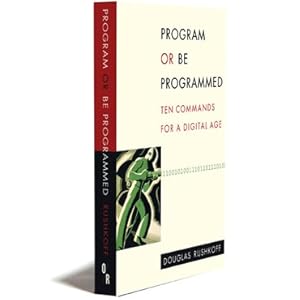
Rushkoff's new book sounds interesting - this brief question and answer was posted at the P2P Foundation site. Shareable magazine asked editors and advisers to submit questions for Rushkoff, which he answered - this is Michel Bauwens question (the rest can be seen at the link to the magazine).

Q & A with Douglas Rushkoff on taking control of our tech

photo of Michel Bauwens
Michel Bauwens
2nd November 2010

Following last week’s excerpt of Douglas Rushkoff’s new book Program or be Programmed: Ten Commands for the Digital Age, we follow with a Q&A with the author, featuring questions from Shareable’s community of contributors and advisors. On Wednesday, October 13 and Thursday, October 14, we invite our wider community of readers to engage with Rushkoff in the comments, as he responds to your questions and thoughts.

Shareable magazine has asked various members of its board of advisers to ask questions to Douglas Rushkoff, related to his new book.

The full collective interview is also reproduced here.

Here’s my question, and his reply, excerpted:

Michel Bauwens: If we indeed take control of our technology, how do you see the balance between individual control, relationships between peers, and the power of any new collectives that may arise in this networked world? Do you see the balance between individuality and collectivity changing?

Rushkoff: Well, if we take control of our tech, as you put it, then we get to decide how that dynamic changes. I don’t think we get to fully take charge of it, though. I think we get to partner with it, and with our various biological and evolutionary imperatives. I feel like the best we can hope for is conscious participation in all this.

There is almost certainly an evolutionary drive toward increasing complexity in the face of entropy. That’s practically a definition of life. Technology is so powerful and attractive to us because it holds the promise of greater complexity and greater connectedness. Atoms to molecules to cells to organelles to organisms. What’s next? No one knows for sure, but it sure ain’t Facebook.

I have been saying from the beginning—the early ’90s anyway—that we are looking at collective organism. But unlike some kind of fascist Borg, we don’t have to lose our individuality. It is actually enhanced as more people become aware of everyone else. Not a hive, but more of a coral reef.

Some of these rather invasive technologies are really just preparation for a world where everyone will know what you are thinking anyway.”


Thursday, November 04, 2010

Jonah Lehrer - Why Are the Effects of Marijuana So Unpredictable?

http://cannabismjseeds.com/img_files/big-bud.jpg

This article by Jonah Lehrer for Wired takes a look at the unpredictability of marijuana users' highs - the variations in THC levels, the amount of THC in ration to other cannabinoids (such as cannabidiol), and other factors, all make the newer strains of marijuana more potent and more problematic in users. Some of the effects that are new in this higher potency weed are memory loss and psychosis (especially in teens).

This article presents many of the reasons that I have issues with legalizing marijuana for regular usage. It is a lot safer in general than alcohol (which is more harmful to the individual and the public than heroin or cocaine), but in the specific, especially in heavy users, there are far more serious issues with the new high potency weed.

On the other hand, if marijuana were respected as a powerful entheogen and not abused, it could be useful in some ways. But how many users actually would do this? There are indications that the high levels of THC make weed more addictive than it was in the past, which makes casual use less likely.

Why Are the Effects of Marijuana So Unpredictable?

Alcohol is mostly predictable. When we drink a beer (or three), we usually have a pretty good sense of what it’s going to feel like. We can anticipate the buzz, the slackening of self-control, the impaired motor movements and the increased mind-wandering. In part, this is because alcohol is a tightly regulated psychoactive drug, and the alcohol content is clearly printed on every bottle. We also sense alcohol directly, so that the potency of a hard liquor tastes different than that of weak light beer. When we drink, we generally know how drunk we are going to be.

But not all drugs are so predictable. Consider marijuana, which can trigger dramatically different symptoms depending on the strain and context. It’s long been known that different strains of the drug contain various amounts of Tetrahydrocannabinol (THC), the main psychoactive ingredient. When people talk about the effects of the drug – such as giddiness, the munchies, and a sudden desire to watch The Big Lebowski – they’re typically referring to the effects of THC. (Interestingly, the same chemical can also make us paranoid. More on that later.) But THC doesn’t work alone – marijuana also contains cannabidiol, a compound associated with calm and relaxation. The ratio of THC to cannabidiol seems to be the key variable: Skunk-type strains, for instance, contain a higher ratio of THC to cannabidiol than, say, marijuana byproducts like hashish. (According to a paper in Neuropsychopharmacology, “Delta-9-THC and CBD can have opposite effects on regional brain function, which may underlie their different symptomatic and behavioral effects, and CBD’s ability to block the psychotogenic effects of delta-9-THC.”) In general, high levels of THC seem to be desired by marijuana users, which helps explain why levels of THC have increased dramatically in the last few decades.

Now for the bad news: These popular skunk-strains (high in THC, low in cannabidiol) seem to be uniquely associated with memory loss. That, at least, is the lesson of a recent paper in the British Journal of Psychiatry. Here’s Nature News:

Curran and her colleagues traveled to the homes of 134 volunteers, where the subjects got high on their own supply before completing a battery of psychological tests designed to measure anxiety, memory recall and other factors such as verbal fluency when both sober and stoned. The researchers then took a portion of the stash back to their laboratory to test how much THC and cannabidiol it contained.

The subjects were divided into groups of high (samples containing more than 0.75 percent cannabidiol) and low (less than 0.14 percent) cannabidiol exposure, and the data were filtered so that their THC levels were constant. Analysis showed that participants who had smoked cannabis low in cannabidiol were significantly worse at recalling text than they were when not intoxicated. Those who smoked cannabis high in cannabidiol showed no such impairment.

The results suggest that cannabidiol can mitigate THC’s interference with memory formation. This is the first study in human to show such effects. One previous study, led by Aaron Ilan, a cognitive neuroscientist at the San Francisco Brain Research Institute in California, failed to find variations in cognitive effects with varying concentrations of cannabidiol.

lan attributes the positive finding of Curran and her team to their more powerful methodology in analyzing subjects’ own smoking preferences. In the United States, government policy dictates that only marijuana provided by the National Institute on Drug Abuse can be used for research — and it “is notorious for being low in THC and of poor quality,” says Ilan.

The larger message is that it’s very difficult to generalize about the effects of most drugs. Just look at marijuana: One of the recurring mysteries of the drug is why the same compound can both relax us and make us paranoid; it sometimes causes uncontrollable laughter and sometimes leads to runaway anxiety. This suggests that the context of use – our mental state when smoking a joint, or eating a pot brownie – can profoundly influence the outcome. While it remains mostly unclear how or why this happens, there’s some interesting new research on endocannabinoids in rough-skinned newts. (Endocannabinoids are a class of neuromodulators widely expressed in the brain. Their name gives away the punchline: THC binds to endocannabinoid receptors with ease.) The basic moral of these studies is that the endocannabinoid system is tightly interwoven with the stress system. For instance, it’s long been recognized that stressing out a male newt leads, not surprisingly, to a rapid surge of corticosterone, a stress hormone. As a result, these poor males have little interest in sex, even when exposed to a lovely female newt. Here’s where the data gets surprising: The effects of the stress hormones seems to be mediated by the endocannabinoid system, so that when these endocannabinoid receptors are blocked stress has no effect. The males keep on having sex, even though they’ve just been through the ringer. Here are the scientists:

Thus, eCBs [endocannabinoids] regulate a variety of stress-related behaviors at distinct locations of the brain: Sex behaviors at the level of the hindbrain, nociceptive-induced behaviors at the level of the midbrain, and anxiety-like behaviors at the level of the forebrain. We hypothesize that eCBs might be involved in coordinating multiple physiological and behavioral functions during acutely stressful events.

What does this have to do with humans and marijuana? (As the researchers note, the stress and EC pathways have been extremely well-conserved in evolution: You get stressed just like a newt.) The reason marijuana has been around for thousands of years (and remains one of the most popular drugs in the world) is that it acts on an incredibly important neural system. EC receptors sit at the intersection of appetite and stress, pain and and anxiety. According to the newt data, EC receptor agonists – compounds that act like THC – induce the same blunting of the sex response as an acute stressor. (In other words, don’t smoke a joint if you hope to perform well in bed.) Is this because the newts are suddenly paranoid? Or is it because they’re too happy to bother with intercourse? The answer is that it depends. As the researchers note, the EC system, like the stress pathway it mediates, is largely context dependent, which is why the same the soup of cortical chemicals can produce a runner’s high and the awful feelings of terror. This has also been demonstrated in newts: The scientists can block the effect of stress on sex if they expose the creatures to sex beforehand, or give them an injection of vasotocin. In other words, priming the males with happy thoughts seems to allow their EC system to shrug off the effects of acute stress. Their previous experience has reversed the symptoms of being poked and prodded by a scientist.

Behavioral biologists have long known that behavioral responses to environmental stress are context-specific. Given that the state of neural a system will vary with the behavioral state of an animal, it follows that synaptic events mediated by eCB retrograde signaling might contribute to context-specific behaviors.

Too often, we forget that drugs work their magic on a brain that’s never the same. Who we are depends on when you ask the question. So it shouldn’t be too surprising that a drug with many different strains (each of which has a slightly different THC/cannabinoid ratio) and that acts on a context-dependent neural pathway would display such a wide variety of symptoms, from carefree euphoria to its emotional opposite.

For more on the cannabinoid/memory story, check out Addiction Inbox.

UPDATE: A scientist who studies the neural effects of alcohol and THC writes in with an illuminating comment:

I would argue that the wide array of subjective effects of marijuana likely arises from the ubiquity of the EC system in most areas of the brain. Consequently, I think the different experiences people have with this drug are probably due to individual differences and the state a person is in immediately preceding and at the time of intoxication (I believe you said something to this effect in your article). However, if one examines the dose-response function of THC and other cannabinoid drugs in lab animals, you’ll find that at high doses these compounds produce sedation (not surprising), but at very low doses they have stimulatory effects (not unlike EtOH). Therefore, I think you probably have something like a three-way interaction (dose x self x state) which would be hard to predict for the average user especially because THC content in illicit cannabis is unregulated.

Image: US Fish and Wildlife Service