Showing posts with label individualism. Show all posts

Sunday, June 23, 2013

Essentializing the Binary Self: Individualism and Collectivism in Cultural Neuroscience


In this interesting Perspectives paper from the open access Frontiers in Human Neuroscience, the authors analyzed current poster abstracts from the 18th Annual Meeting of the Organization for Human Brain Mapping (OHBM) in Beijing and scientific research published in peer-reviewed journals that addressed the neural foundations of culturally-shaped ways of defining or understanding the self. Their framework consisted of four biases - essentialism, binarity, Eurocentrism, and postcolonial and Orientalist views of the Self.
Both at the level of hypotheses generation and at the level of data interpretation, all research is influenced by specific socio-political and historical contexts. In this respect we argue that all quoted CN studies referring to the self are rooted in a specific context which defines the relevant research questions and topics and the way of interpretation. This context is traversed by social circumstances, political interests, and imbalances of power (Martínez Mateo et al., 2012).
Seems that social constructionist models are also gaining ground in the realm of brain mapping, brain imaging, and cognitive neuroscience more widely.


Full Citation: 
Martínez Mateo M, Cabanis M, Stenmanns J and Krach S. (2013). Essentializing the binary self: individualism and collectivism in cultural neuroscience. Frontiers in Human Neuroscience; 7:289. doi: 10.3389/fnhum.2013.00289

Essentializing the binary self: individualism and collectivism in cultural neuroscience

M. Martínez Mateo, M. Cabanis, J. Stenmanns, and S. Krach

Within the emerging field of cultural neuroscience (CN) one branch of research focuses on the neural underpinnings of “individualistic/Western” vs. “collectivistic/Eastern” self-views. These studies uncritically adopt essentialist assumptions from classic cross-cultural research, mainly following the tradition of Markus and Kitayama (1991), into the domain of functional neuroimaging. In this perspective article we analyze recent publications and conference proceedings of the 18th Annual Meeting of the Organization for Human Brain Mapping (2012) and problematize the essentialist and simplistic understanding of “culture” in these studies. Further, we argue against the binary structure of the drawn “cultural” comparisons and their underlying Eurocentrism. Finally we scrutinize whether valuations within the constructed binarities bear the risk of constructing and reproducing a postcolonial, orientalist argumentation pattern.

Introduction


At the 18th Annual Meeting of the Organization for Human Brain Mapping which was held in Beijing (June 10–14, 2012) the official program was amended by the philosophical supplement “Entering the Mind's I: Some reflections on the Chinese notion of self.” The supplement begins by explaining that the “concept of the individual as outlined by Western philosophy finds its most successful and most immediate conceptual and visual transposition in the work The Vitruvian Man by Leonardo [da Vinci].” The authors of this supplement pursue by stating that “No iconographic representation could be more antithetical to the concept of an individual characterized by the entirety of Chinese philosophy and culture (…)” (Lietti, 2012). 
During the conference various other contributions, symposia [e.g., “Imaging the sociocultural human brain” by Gao (2012)], i-poster presentations, or posters addressed “culturally” tuned ways of understanding the self. In these presentations the neural basis of “individualistic/Western” and “collectivistic/Eastern” “cultures” and their way of treating the self were discussed in comparison based on new insights from functional neuroimaging. 
But what does it mean to presume a “culturally” imprinted self? And what are the implications of considering two seemingly complementary groups with putatively opposed world- and self-views? The classic review of “cross-cultural” research by Markus and Kitayama (1991) represents the primary inspiration for actual neuroimaging work on “East/West” comparisons. We argue that, by doing so, assumptions implied in classic cross-cultural research are adopted to the functional neuroimaging community without being scrutinized. “Psychological” findings about “cultural differences” are thereby translated onto a “biological” level treating “culture” as a characteristic which can be read out from the body. By means of neuroimaging technology the simplifications of “culture” inherent to many cross-cultural psychological studies receive additional support as cultural differences can now be fostered by biological “evidence.” 
Here we elaborate why such neuroscientific findings bear the risk of constructing and reproducing essentialist (1), binarized (2), and Eurocentric (3) ways of thinking and acting which follow a postcolonial and orientalist tradition (4). These four dimensions build the frame for the current analysis. They all refer to specific traditions of critique which originate from philosophy and social science and which will be introduced in more detail in the respective sections of this manuscript. 
The endeavor to studying “cultural” phenomena by using functional MRI started only in the last decade (Chiao, 2009; Han and Northoff, 2009;Vogeley and Roepstorff, 2009; Kitayama and Park, 2010; Losin et al., 2010; Bao and Pöppel, 2012; Han et al., 2013; Rule et al., 2013). Since the year 2000 the number of publications in the cultural neurosciences (CN) has increased tremendously. Although particular concepts of “culture” are implied, these are only rarely explicitly addressed (Martínez Mateo et al., 2012, 2013). Within the field of CN, however, a particular branch has focused on “culturally” tuned ways of understanding the self [see Martínez Mateo et al. (2012) for a review on different branches in CN]. For the purpose of the present article we searched (i) peer-reviewed English language manuscripts of original functional MRI studies indexed in large databases (e.g., Google Scholar; PubMed) and (ii) abstracts published in the this year's Organization for Human Brain Mapping (OHBM) abstract book [pdf] which addressed the neural correlates of the self or self-concepts such as individualism and collectivism in a “cultural” context using cerebral blood flow imaging techniques such as fMRI or fNIRS. Overall, 10 manuscripts and 10 conference abstracts fulfilled these criteria and thus, formed the data pool for the present analysis. 
From these publications we extracted the aforementioned four fundamental dimensions which we problematize by briefly discussing their immanent assumptions, their implications and consequences.
Read the whole article.
Monday, October 22, 2012

James Hillman - Two Ideologies that Keep Us Going (Economics and Therapy)


This short piece credited to Sy Safransky (editor and Publisher of The Sun Magazine) is an excerpt from “Conversations with a Remarkable Man: Honoring the late James Hillman,” The Sun Magazine, by Sy Safransky, Scott London, and Genie Zeiger. The article collects three different interviews published in The Sun to honor Hillman on the occasion of his death in 2011.

Hillman argued in this interview (the order of the words have been rearranged by Safransky) that American culture is dominated by two errant philosophies - economics and psychotherapy. While I don't disagree, the model of therapy Hillman condemns is out-dated (despite its continued prevalence).

More and more therapists are adopting a relational model based more on social support and healthy relationships and less on the "individualistic, self-improvement philosophy," the "romantic ideology that suggests each person can become fuller, better, wiser, richer, more effective" model he criticizes here. Below this I offer a different quote from this interview, one which more accurately reflects the problem with therapy today - the insistence on a unique self.


Two ideologies that keep us going

Economics, and Therapy

, 19 October 2012 


There are therapists throughout the country, and they’re very important, because they pick up the refuse of the economic-political system. 

We have mental health clinics all over the nation, in every city and county. And they all produce pamphlets about how to deal with the problems of addiction, battered wives, childhood disorders. Someone has to pick these people up, and therapy does it. But therapy operates with an ideology – an individualistic, must-learn-to-cope ideology. The individual has to learn how to cope, and the therapist helps that person stay in control. This ideology is based on the idea of individual growth and potential.

Most schools of therapy share the idea that there’s an inner world that can be made to expand and grow, and that people are living short of their possibilities, and that they need help to… what she we call it? Fulfill their potential. Therapy has become a kind of individualistic, self-improvement philosophy, a romantic ideology that suggests each person can become fuller, better, wiser, richer, more effective.

I believe we now have two ideologies that run this country. One is economics, and the other is therapy. These are the basic, bottom-line beliefs that we return to in our private moments – these are what keeps us going.

~ Sy Safransky is the editor and publisher of The Sun Magazine. This is an excerpt from “Conversations with a Remarkable Man: Honoring the late James Hillman,” The Sun Magazine, by Sy Safransky, Scott London and Genie Zeiger.

~ James Hillman was an American psychologist. He studied at, and then guided studies for, the C.G. Jung Institute in Zurich, founded a movement toward archetypal psychology and retired into private practice, writing and traveling to lecture, until his death at his home in Connecticut on October 27, 2011.
* * * * * * *
I am in complete agreement with Hillman on what he says here, although I don't accept it as an either/or, but a both/and. We must be willing to "own" our experience, but we should not in any way get attached to our experience as a unique self - we are plural beings embedded in environments, cultural contexts, and relationships, which Hillman hints at here.
Hillman: There are many who have located the roots of the therapeutic movement in the individualism embraced by nineteenth-century modernism, in which everyone is the author of his or her intentions and is responsible for his or her own life. Own. Own is a very big word in therapy; you own your life, as if there were a self — an individual, enclosed self — within a skin. That’s individualism. That’s the philosophy of therapy. I question that. The self could be redefined, given a social definition, a communal definition.

Sunday, May 13, 2012

To Be Human: How We Became Modern with Seth Lerer


From UCtelevision, recorded at the UC San Diego campus, an interesting talk on how the development of language and the construction of linear time helped us become "human." Lerer is author of Inventing English: A Portable History of the Language.


To Be Human: How We Became Modern with Seth Lerer
Seth Lerer, the dean of Arts and Humanities at UC San Diego, presents how language, the written word and the recognition of the passage of time have led to the modern conception of self and the individual in this series exploring what it means to be human. Lerer's lecture is part of the "To Be Human" series sponsored by the Making of the Modern World program at Eleanor Roosevelt College at UC San Diego.

MMW is a multi-course general education sequence designed to provide a broad, global overview of the past from the emergence of the human species to the contemporary world. Series: "To Be Human " [5/2012]

Friday, September 30, 2011

Daily Om - Conscious Decisions: Going Against What Is Popular

Some good advice from yesterday's Daily Om. I've been going against the crowd a lot lately - and it feels in line with my integrity, no matter the small handful of people who are intent on smearing me for taking a stand.

Like most people, I don't much enjoy when people don't like me, especially those I once called friends. And contrary to some opinions, doing the right thing does not make anyone heroic, it simply makes them people who do the right thing.

I can be, and have been defensive when attacked for my stance on some issues. That's my weakness. But I do not regret my position. I only regret not having presented it with more compassion. Life is full of hard lessons.

Conscious Decisions: Going Against What Is Popular

Because an idea or way of doing things is popular doesn’t mean it’s right for everyone.


Just because an idea or way of doing things is popular doesn’t mean it’s right for everyone. However, part of the way that something becomes popular is that many of us don’t take the time to determine what’s right for us; we simply do what most of the people we know are doing. In this way, our decisions about life are made by default, which means they aren’t what we call conscious decisions. There may be many other options available, but we don’t always take the time to explore them. This may be the result of feeling overwhelmed or pressured by family, peers, and humanity at large, to do things their way, the way things have always been done. Regardless of the cause, it is important that, as often as we can, we decide for ourselves what to do with our lives rather than just drift along on the current of popular opinion.


It is not always easy to make decisions that go against the grain. Many people feel threatened when those close to them make choices divergent from the ones they are making. Parents and grandparents may be confused and defensive when we choose to raise our children differently from the way they raised us. Friends may feel abandoned if we decide to change our habits or behavior. Meanwhile, on our side of the fence, it’s easy to feel frustrated and defensive when we feel unsupported and misunderstood simply because we are thinking for ourselves. It can be exhausting to have to explain and re-explain our points of view and our reasons.


This is where gentleness, openness, and tolerance come into play. It helps if we are calmly persistent, consistent, and clear as we communicate to those around us why we are making the choices we are making. At the same time, we have the right to say that we are tired of talking about it and simply need our choices to be respected. Our lives belong to us and so do our decisions. Those who truly love us will stand by us and support our choices, never mind what’s popular.

What do you think? Discuss this article and share your opinion.

Thursday, July 21, 2011

Rob Horning - Love in the Age of Self-Consciousness

From The New Inquiry, Rob Horning looks at the state of love in our postmodern world of self-conscious identities. In a sense, Horning is examining the ways in which we commodify ourselves in the world of social media, eliminating the unique identities that once were the basis for authentic love. We are frequently encouraged to be brands, not individuals.

Love in the Age of Self-Consciousness

(via Kumi Yamashita)

If our identities are only self-conscious creations, where does that leave us? Where does that leave love?

By Rob Horning

In Baldassare Castiglione’s Book of the Courtier, an influential Renaissance-era attempt to define the perfect gentleman through a series of dialogues, one of the aristocratic speakers offers this advice for a courtier in love: “When the courtier wishes to declare his love he should do so by his actions rather than by speech, for a man’s feelings are sometimes more clearly revealed by a sigh, a gesture of respect or a certain shyness than by volumes of words.” Words are too easily employed by “cunning” men who are skilled in the art of contriving “false demonstrations of love” — men who seem “quite ready to cry when they really want to burst out laughing.” The lover should instead “use his eyes to carry faithfully the message written in his heart, because they communicate hidden feelings more effectively than anything else, including the tongue and the written word.”

But this distinction between words and actions is troublesome. In order to know he is in love — true love, the kind figured as a sort of divine visitation rather than a convenient decision on the lover’s part — the prospective lover must understand the “message written in his heart” as genuine, uncontrived, spontaneous feeling. But then he must articulate that message with his eyes, transforming the authentic awkwardness that first made him aware of his love into a signifying pretense. That which is supposed to make a lover know his love is sincere is subsequently made to serve as a dubious performance of sincerity. The lover must govern the representation of feelings that, if sincere, would be beyond governance, and at the same time, he must also recognize sincerity in feelings he know can be contrived and deployed strategically. How then can he ever know whether his feelings really are sincere if he must always stage-manage their expression?

This is the sort of annihilating reflexivity that, according to sociologist Anthony Giddens, is one of the defining characteristics of modernity. In Giddens’s view, tenacious self-consciousness stems from our having been uprooted from local conditions and circumstances that once stabilized identity. The sorts of cosmopolitan problems once reserved for Renaissance aristocrats now afflict nearly all of us. Like Castiglione’s courtiers, we are obliged to imagine that we can perfect ourselves in accordance with a social ideal generated in the abstract.

In a sense, the Renaissance court may have functioned as an early example of a nonplace, Marc Augé’s term for those artificial social environments that deny the contingencies of nature. These could be understood as spaces in which our identity is entirely determined by abstract social relations — where identity becomes, in effect, entirely political. In contemporary urban life, we pass seamlessly through such spaces, our identity is no longer fixed by a set of local traditions. Instead our local practices are linked to globalized social relations through widely disseminated discourses and procedures, through generalized nonplaces and brands. We use ATMs; we eat at McDonald’s; we shop at supermarkets and H&M — the stores are more comforting and familiar than the people around us, who more often than not are indifferent strangers who signal their benevolence by studiously ignoring us.

We no longer count on a community to provide the context in which we can be recognized; we can be anywhere and continue to act like ourselves. Whereas the horizons of local familiarity once limited what we could imagine for ourselves, modern life has situated us in broader “abstract systems” — standardized ways of doing things and ubiquitous cultural reference points, universally recognized procedures and authorities. Tradition — “how things are done here” — has been fatally disrupted. We can enter an elevator in any city or an Italian restaurant in any American town and understand what to expect and what to do. And thanks to the universality of money and the pervasive norms of capitalist market exchange, we trust we don’t need a personal relationship with a pub owner to get a pint.

Individuals are free to ascribe personal reasons for routines that were once “simply what is done.” We come to believe that we can control who we are to a far greater extent, so we try to master the social processes that shape us, dictating their outcome by administering carefully what we feed into them. Modern identity, then, is born of the alienation of auto-surveillance, which makes the self seem a discrete thing we manipulate from behind the curtain of publicity. But this only serves to accelerate those processes and make them more unpredictable. “The point is not that there is no stable social world to know,” Giddens claims, “but that knowledge of that world contributes to its unstable or mutable character.” By wanting to know about social processes, we set in motion the means by which they mutate incomprehensibly. Reflexivity generates stultifying angst even as it makes self-cultivation possible.

In “The Metropolis and Mental Life,” sociologist Georg Simmel claims that the complexity of modern city life brings about a rise in time-consciousness and the death of spontaneity. “Punctuality, calculability and exactness” lead to “the exclusion of those irrational, instinctive, sovereign human traits and impulses which originally seek to determine the form of life from within” — like the sort of sincere love that can be a “message written on the heart.” You would think the advent of mobile phones would reverse this, affording us the freedom to live more provisionally and seize upon the random opportunities city life can spontaneously supply. But such spontaneity runs counter to the deep emotionality Simmel associates with the premodern, “organic” way of life, with its slow pace and its strong, irrevocable ties. Spontaneity in that world was an unstudied responsiveness, the ability to fully inhabit one’s emotional responses within the relative security of small, sheltered world. Now the urban blasé attitude characterizes spontaneity in the form of “keeping options open.”

Is it possible to monitor and deploy one’s feelings and still actually feel them? This brings us back to Castiglione’s courtiers and their love problems. Considering the precariousness of courtiers’ status at court, dependent as it was on the ebb and flow of personal relationships and access to superiors, and the degree to which the negotiation of those relations relied on deliberate self-presentation as a mode of diplomacy, we might regard them as our psychosocial forebearers. Their work was also their leisure, as ours is becoming, and their uncertain place in the social hierarchy means they knew no “ontological security” — that is, as Giddens defines it, “the confidence most human beings have in the continuity of their self-identity and in the constancy of the surrounding social and material environments of action.”

For Castiglione, self-monitoring is not a problem at all but rather a ramification of that elusive ideal quality of sprezzatura, the “certain nonchalance which conceals all artistry,” which is supposed to be the surest mark of a true gentleman, the essence of the courtier’s social capital. Underlying sprezzatura is the idea that the value of an action is in how it is received rather than in any essential quality of the action itself. Deeds themselves become arbitrary, which in The Book of the Courtier leads to the ludicrous equivalence of disparate practices: for instance, how one appears on the battlefield and how one appears at a masked ball are judged by the same criteria, which have nothing to do with why one fights or why one dances. They are merely occasions for sprezzatura. How the courtier appears when in love, too, is evaluated according to criteria that abrogates the emotions presumably involved. Castiglione’s description of the ideal courtier in love renders the actual feelings of love superfluous.

Those actual feelings are precisely those awkward sorts of emotions that the doctrine of sprezzatura intends to suppress. Because feelings are arbitrary within the sprezzatura system, whether one genuinely loves is irrelevant, as insignificant as the reasons one goes to the masked ball. One simply goes because one’s presence is required. One loves because a gentleman wouldn’t be complete without it. In the ideal universe of perfect sprezzatura, men and women apparently interact with one another without requiring any understanding of why.

But supplanting love with sprezzatura, making a virtue of a courtier’s vigilant reflexivity, seems to spite the otherwise governing definition of love as beyond personal will and control. Implicit in that ideal of love as an uncontrollable force rather than a choice is a yearning for a social experience beyond strategy. Such a love could serve as an ontological anchor, providing a basis by which they could know who they “really” were in the midst of all the calculated self-presentation.

In modernity, we have come to rely on similar hopes for our own ontological security. To ease the anxieties of self-consciousness, Giddens argues in The Consequences of Modernity that the open-ended nature of modern identity means we have a constant need to have trust refreshed. We get some of this from the continuity of the social world — the familiarity of the buyosphere from one town to the next. But ultimately this is unsatisfactory:

The routines which are integrated with abstract systems are central to ontological security in conditions of modernity. Yet this situation also creates novel forms of psychological vulnerability, and trust in abstract systems is not psychologically rewarding in the way in which trust in persons is.

We need to draw basic trust from reciprocal friendship, yet the ground for such relationships continues to be eroded by modernity’s technological advances, which systematize friendship into social networks for our convenience. Companies like Facebook promise us the ability to manage the intimacy and intensity of our ability to love, but the ability to manage it renders it suspect.

Thus an intimacy deficit widens, and we expect more of personal relationships in order to close the gap without knowing how to get it.

Most of the speakers in The Book of the Courtier seem to experience this deficit, too, and yearn for the joys of certainty that they are loved. One explains that “no other satisfaction” equals that of knowing his lady “returned [his] love from her heart and had given … her soul.” Another agrees that “the greatest happiness” is to share “a single will” with his beloved. The Magnifico asserts that “the feeling that one is loved himself” is that which most “stirs” the heart. Such hopes would seem to betray a deep-seated uneasiness with the deception that sprezzatura requires, revealing a wish for a relationship that would be a haven from perpetual contrivances.

But since the postures of love are more valuable as an appurtenance for courtiers rather than an essential truth, mutual love becomes impossible, and mutual suspicion inevitable. Not surprisingly, then, love must be defined away from the mutuality that Castiglione’s players seem to long for. The Book of the Courtier concludes with a rhapsodic account of ideal neo-Platonic love, that proposes to make sincere communication between lovers unnecessary, rendering the beloved’s actions as irrelevant as sprezzatura renders the courtier’s. Love, as described in these concluding passages, is “a certain longing to possess beauty” rather than something experienced with another person. A lover must remember that “the body is something altogether distinct from beauty,” and though an individual may be beautiful, that individual’s behavior has nothing to do with it. So when an attractive woman grants her lover a kiss, the lover finds it pleasurable not because it reveals shared desire but because the lover’s “soul” is thereby “transported by divine love to the contemplation of celestial beauty.” The soul “turns to contemplate its own substance” and “perceives in itself a ray of that light which is the true image of the angelic beauty that has been transmitted to it.” The beloved becomes a mere springboard for the lover’s contemplation of the divine in himself.

That kind of love doubles down on reflexivity and self-consciousness rather than absolving it. In contemporary times, we may have devised a similarly solipsistic solution to our conundrums of love and insecurity: smart phones and social media, which let us live in constant communication with our networks on our terms while preserving our own kind of sprezzatura, the noncommittal openness, flexibility and responsiveness to rapidly changing circumstances, which also happen to be qualities highly desired by employers.

Shared experience is no longer local phenomenon but something that happens in virtual communities, where identity is a perpetual work in progress, a striving to reach a home that is not a particular place but a state of mind, a realization of some ideal community that nurtures an ideal self. But it may be an unrealizable fiction.

Our genuine individual idiosyncrasies — the sorts of things that might have allowed the kind of mutual love that cherishes the uniqueness of the particular individuals involved to flower — are replaced with efforts at coming up with contrived ones. Because modern city life is so impersonal and objective, Simmel claims, individuals try extra hard to be unique in whatever ways remain open and haven’t been legislated or subordinated to economic efficiency. “Extremities and peculiarities and individualizations must be produced and they must be over-exaggerated merely to be brought into the awareness even of the individual himself.” The internet is an extension of the metropolis as Simmel saw it. It has made that condition more acute, automating stimulation, bringing ever more content before our eyes, giving us an endless stream of novelty and taxing the limits of our attention span.

Social media becomes the site where autonomy struggles with anonymity, where social recognition struggles to remain uncommodifed. The Internet Metropolis strips away opportunities for individuation and gives us commodities and geegaws and such to compensate for it, keep us distracted. It prompts us to package ourselves in an effort to stand out amid the chaos, even to ourselves, so that we ourselves can recognize ourselves as even having a identity. Renaissance sprezzatura let courtiers in a highly competitive hothouse environment interact with one another with benign deference, as though it were a hermetic realm of polite decorum. Our mediated version in social networks lets us play potlatch while we build our brands in plain sight.


Thursday, April 07, 2011

Michel Bauwens - Why the four forms of intersubjectivity need each other

This article appeared a couple of weeks ago at the P2P Foundation site - Michel Bauwens takes a look four forms of intersubjectivity that are interdependent. The material is excerpted from a 2006 book: Michael Thompson with Marco Verweij, eds: Clumsy Solutions for a Complex World: Governance, Politics and Plural Perceptions (Palgrave).

Why the four forms of intersubjectivity need each other

photo of Michel Bauwens
Michel Bauwens
26th March 2011

Each way of life undermines itself. Individualism would mean chaos without hierarchical authority to enforce contracts and repel enemies. To get work done and settle disputes the egalitarian order needs hierarchy, too. Hierarchies, in turn, would be stagnant without the creative energy of individualism, uncohesive without the binding force of equality, unstable without the passivity and acquiescence of fatalism. Dominant and subordinate ways of life thus exist in alliance yet this relationship is fragile, constantly shifting, constantly generating a societal environment conducive to change.

Excerpted from a preprint of chapter one of the book:

* Michael Thompson with Marco Verweij, eds: Clumsy Solutions for a Complex World: Governance, Politics and Plural Perceptions. Palgrave.

By Michael Thompson and Marco Verweij:

“It is possible –at least in principle– to distinguish simultaneously between a limited number of social and cultural forms, and still recognize wide social and cultural variety. Physics has maintained that all the material objects that we can observe on earth and beyond consist of endlessly varying combinations of only six basic particles (or, in more recent formulations, a small number of strings). Analogously, it might be possible to discern a limited number of fundamental forms of social organization from which a large variety of ultimate forms of social and cultural life can be derived. This is the starting point of what we have come to call cultural theory.

The original aim of this theory was to devise a typology of social forms that fit –to the extent possible– the classificatory schemes developed by the grand old social theorists (Durkheim, Tönnies, Maine, Weber, etc.), as well as the evidence collected in subsequent ethnographic studies. According to our cultural theory, there are four primary ways of organizing, perceiving, and justifying social relations (usually called ‘ways of life,’ or ‘social solidarities’): egalitarianism, hierarchy, individualism and fatalism.

We postulate that these four ways of life are in conflict in every conceivable domain of social life. Most such domains (say the way in which a school operates, or the way in which an international regime functions) will consist of some dynamic combination of these pure forms. As many social domains can be distinguished within and between societies (and as many societies can be distinguished around the world), the theory allows one to perceive a wide and ever-changing cultural and social variety – while still enabling one to formulate general propositions about social and political life.

Each of the four ways of life consists of a specific way of structuring social relations and a supporting cast of particular beliefs, values, emotions, perceptions, and interests.

Our fourfold typology is strictly derived from two dimensions of sociality: what we will call ‘grid’ and ‘group’. Grid measures the extent to which role differentiation constrains the behavior of individuals: where roles are primarily ascribed, grid constraints are high; where roles are primarily a matter of choice, grid constraints are low.

Group, by contrast, measures the extent to which an overriding commitment to a social unit constrains the thought and action of individuals.

High-group strength results when people devote a lot of their available time to interacting with other members of their unit. In general, the more things they do together, and the longer they spend doing them, the higher the group strength. Where admission to the social unit is hard to obtain, making the unit more exclusive and conscious of its boundary, the group strength also tends to be high. An extreme case of high group strength is the monastic community whose members renounce their private property upon entering and depend on the corporate body for all their material and social needs. High-group strength of this sort requires a long-term commitment and a tight identification of members with one another as a corporate identity. Individuals are expected to act on behalf of the collective whole, and the corporate body is expected to act in the normative interests of its members.

Group strength is low when people negotiate their way through life on their own behalves as individuals, neither constrained by, nor reliant upon, a single group of others. Instead, low-group people interact as individuals with other individuals, picking and choosing with whom they will associate, as their present preoccupations and perceived interests demand. The low-group experience is a competitive, entrepreneurial way of life where the individual is not strongly constrained by duty to other persons. Attractive though this freedom from constraint might first appear to some, there is a serious disadvantage: in a low group context, you cannot count on the support of your fellows should your personal fortune wane. In the high-group context, the safety net of social support compensates for the loss of personal autonomy.

Grid stands for the complementary bundle of constraints on social interaction. Grid is high whenever roles are distributed on the basis of explicit public social classifications, such as gender, color, position in a hierarchy, holding a bureaucratic office, descent in a senior clan or lineage, or point of progression through an age-grade system. It is low when classificatory distinctions only weakly limit the range of social choices and activities open to people. A low-grid social environment is one in which access to roles depends on personal abilities to compete or negotiate for them, or even on formal regulations that ensure equal access and opportunity to compete. In either case, access to roles is not dependent on any ascribed characteristics of rank or birth.

Assigning two values (high and low) 8 to the grid and group dimensions gives the four ways of organizing, perceiving and justifying social relations.

Egalitarianism is associated with a low-grid score and a high-group score.

The combination of a high score on the grid dimension (many rules prescribing people’s roles) with a high score on the group dimension (strong group boundaries) gives the hierarchical way.

The third way of organizing and justifying social relations, individualism, is associated with low scores on both the grid and group scales.

Last, fatalism is characterized by a high-grid and a low-group score.

We are now in a position to describe how these four different forms of association tend to produce different ways of perceiving nature (including human nature), and the policy prescriptions that follow from that. In an egalitarian social setting, actors see nature as fragile, intricately interconnected and ephemeral, and man as essentially caring (until corrupted by coercive institutions such as markets and hierarchies). We must all tread lightly on the earth, and it is not enough that people start off equal; they must end up equal as well – equality of result. Trust and leveling go hand-in-hand, and institutions that distribute unequally are distrusted. Voluntary simplicity is the only solution to our environmental problems, with the Precautionary Principle being strictly enforced on those who are tempted not to share the simple life.

In a hierarchical social setting, actors see the world as controllable. Nature is stable until pushed beyond discoverable limits, and man is malleable: deeply flawed but redeemable by firm, long-lasting, and trustworthy institutions. Fair distribution is by rank and station or, in the modern context, by need (with the level of need being determined by expert and dispassionate authority). Environmental management requires certified experts to determine the precise locations of nature’s limits, and statutory regulation to ensure that all economic activity is kept within those limits.

In an individualistic social setting, actors view nature as benign and resilient –able to recover from any exploitation– and man as inherently self-seeking and atomistic. Trial and error, in self-organizing ego-focused networks (unfettered markets), is the way to go, with Adam Smith’s invisible hand ensuring that people only do well when others also benefit. The upholders of individualistic solidarity, in consequence, trust others until they give them reason not to and then retaliate in kind (the winning ‘tit for tat’ strategy in the iterated prisoner’s dilemma game), and see it as only fair that (as in the joint stock company) those who put the most in get the most out. They think institutions that work with the grain of the market (that get rid of environmentally harmful subsidies, for instance) are what are needed.

In a fatalistic social setting, finally, actors find neither rhyme nor reason in nature, and suppose that man is fickle and untrustworthy. Fairness is not to be found in this life, and there is no possibility of effecting change for the better. ‘Defect first’ –the winning strategy in the one-off prisoner’s dilemma– makes sense here, given the unreliability of communication and the permanent absence of prior acts of good faith. Without the possibility of ever getting in sync with nature, or of building trust with others, the fatalistic world unlike the three others is one in which learning is impossible. ‘Why bother?’ therefore is the rational management response.

Since it was first formulated, this classification of four different ways of organizing and perceiving social relations has helped illuminate the paradoxical and sometimes contradictory ways in which people approach contemporary public policy issues.:

Discussion

“Each way of organizing and perceiving provides a clear expression of the way in which a significant portion of the populace feels we should live with one another and with nature. And each one needs all the others in order to be sustainable.

It is useful to set out this latter point in some detail. Under pure egalitarianism there are no peaceful mechanisms, other than an endless search for consensus, for deciding between alternative opinions. There is no official leadership that can settle issues, nor a voting mechanism that can be invoked. This lack of procedures for settling conflicts can easily paralyze egalitarian social settings. It can also give rise to the violent expulsion of dissenters. In addition, pure egalitarianism creates social ills by ruling out any activities that would give rise to inequality of condition. This limits economic production to a bare minimum, as many forms of economic life contain a competitive element. Hence, undiluted egalitarianism will have to be mixed with at least minimal doses of the other ways of organizing and perceiving, if it is not to evaporate. Hierarchy has a whole ‘armory of different solutions to internal conflicts, upgrading, shifting sideways, downgrading, re-segregating and re-defining’ (Douglas 1978: 20). Individualism preaches the right of each individual to live according to his or her own needs and wants, without group interference. Such enthusiasm for individuality serves to dampen the disrespect in which dissenters are held. Together, hierarchy and individualism provide many ways in which to increase the resource base of a group of people, thus preventing impoverishment. Fatalism is useful for egalitarian organizations, as it continuously replenishes the moral outrage that keeps such organizations together.

Hierarchy, too, needs the others. Without the distrust of central control and insistence on transparency that are prevalent within both individualism and egalitarianism, hierarchy would be apt to be prey to the classical problems of bureaucracy: corruption, arbitrary use of power, tunnel vision, lack of innovativeness, and moral fragmentation. And without the unquestioning acceptance and resignation that fatalism implies hierarchical control would become impossible.

Unfettered individualism undermines itself, as it does not include the means to enforce contracts and check accumulating inequalities. To keep its playing fields level, an individualistic social system needs egalitarian-minded organizations to notice, and protest, mounting inequalities. It needs the regulatory capacities of hierarchy in order to enforce contracts, as well as to organize the continuous redistribution of resources that will keep playing fields level. And what would become of individualistic competition, if not a (fatalistic) sucker were born every minute?

Barry Schwartz has nicely summed up these inter-dependencies:

- Each way of life undermines itself. Individualism would mean chaos without hierarchical authority to enforce contracts and repel enemies. To get work done and settle disputes the egalitarian order needs hierarchy, too. Hierarchies, in turn, would be stagnant without the creative energy of individualism, uncohesive without the binding force of equality, unstable without the passivity and acquiescence of fatalism. Dominant and subordinate ways of life thus exist in alliance yet this relationship is fragile, constantly shifting, constantly generating a societal environment conducive to change.

It is therefore important that all the ways of life be taken some sort of account of in the policy process. And that, for all its simplicity, is the essence of clumsiness: all the ‘voices’ heard, and responded to by the others.”


Monday, February 21, 2011

The Cultural Self - Different Cultures, Different Selves

I've been making this point on and off now for a couple of years - and have long felt that there is no "me" without a "you" (or as Buber put it, no "I" without a 'Thou").

When I discovered Jerome Bruner, Kenneth Gergen, Rom Harre, and Lev Vygotsky (among many others), it all finally came together as cultural psychology. It seems more and more people are beginning to understand that the "self" is not simply pre-programmed to emerge in a series of innate structures. There are definitely some elements of this - you are not likely to find a three-year-old exhibiting post-formal cognition.

On the other hand, we're not likely to see too many people reaching post-formal cognition and ego development unless we do something to make this possible - higher development requires appropriate life conditions, i.e., culture.

I found this old episode of Philosophy Talk at Church of the Churchless - it's a great discussion featuring Hazel Markus: Different Cultures, Different Selves. Unfortunately, we have to buy the episode (on sale right now for $1.29). We can get new episodes for free each week as downloads.
Different Cultures, Different Selves

Audio: Get new Philosophy Talk episodes for free!
Subscribe to our weekly download service.


Download

Hazel Markus

Guest: Hazel Markus; Professor of Psychology; Director of the Research Institute of Comparative Studies in Race and Ethnicity; and Director

Why do we do what we do? To please others? To live up to what culture expects? Or for our own reasons as "autonomous agents"? Americans tend to admire (at least in theory) the autonomous individual, the person who knows what he wants, and sets out to get it, no matter what the world might think. Is this true of all cultures? John and Ken are joined by Stanford Psychologist Hazel Markus to explore differences in motivation and action across cultures.

Original Airdate 02/22/2009
This is from Dr. Markus' web page - in presenting a culture-based version of psyche, she approaches an integral model - or at least provides a piece sort of missing from Wilber's model.
Mutual Constitution of Culture and Psyche
Related Publications

Hazel works in the area of cultural psychology, which explores the interdependence between psychological structures and processes and sociocultural environments. Hazel and her colleagues investigate how people are shaped by culture as they engage with its patterns of meaning and practices; how people require and are shaped by engagement with the culture-specific meanings, practices, artifacts, and institutions of particular contexts; and how psychological tendencies serve to perpetuate these particular cultural contexts. This dynamic relationship between culture and the psyche or self is called the framework of mutual constitution.

Hazel and her colleagues have conducted extensive research comparing the psychological processes of Westerners and East Asians, demonstrating that European American models of independence and East Asian models of interdependence emphasize very different conceptions of the self and social relations. Hazel evaluates strategies for understanding the links between culture and psyche, and how the human brain has evolved to use cultural models that enable people to coordinate and cooperate in diverse culture-specific adaptations. She has studied cultural models of self, competence, motivation, conflict, and well-being as significant features of cultural contexts that fashion individual experience. As a cultural psychologist, Hazel asks questions such as: What is a person? What is the source of individual variation in behavior? And what meaning is attached to this variation in behavior? Depending on the cultural context (e.g., national origin, ethnic background, or social class) these questions are answered differently for different people.

Wednesday, February 09, 2011

Otto F. Von Feigenblatt - Forgiveness and Culture: An Interdisciplinary Dialogue


Cool . . . and the author's name is so European. :) Seriously, though, this is a very interesting article looking at the ways forgiveness varies from one culture to another.

Here is the full citation:
Von Feigenblatt, O.F. (2010, Dec. 15). Forgiveness and Culture: An Interdisciplinary Dialogue. Journal of History & Social Sciences, Vol. 1, No. 1; Available at SSRN:http://ssrn.com/abstract=1749687

Forgiveness and Culture: An Interdisciplinary Dialogue
Otto F. Von Feigenblatt
Nova Southeastern University; Journal of Alternative Perspectives in the Social Sciences; Millenia Atlantic University

December 15, 2010

Journal of History & Social Sciences, Vol. 1, No. 1, July-December 2010

Abstract:
Forgiveness is a contested concept. Psychologists tend to separate it from the related process of reconciliation and to emphasize the intrapersonal aspects of the phenomenon. On the other hand theologians and philosophers see an important connection between forgiveness and reconciliation due to relational factors. Culture adds further complexity to the study of forgiveness in that it questions the universality of dominant understandings of the concept, developed from a Western perspective, which are based on individualist values by testing those understandings in a collectivist context. This brief essay concludes with a brief representative illustration of forgiveness in traditional Japanese villages.
Here is the Introduction, to whet your appetite.
Introduction:
Forgiveness is one of those concepts that are part of common knowledge but that mean something dissimilar to different people. A Catholic Priest may hold a view of forgiveness that is inherently connected to religion while a psychologist may view forgiveness as an individual process that helps a client improve his or her mental health.

Furthermore, a political scientist involved in post-conflict reconstruction would probably view forgiveness as a necessary prerequisite to rebuild a vibrant civil society [Grodsky, 2009; Minear, 1991] or a philosopher, the act of forgiveness may be of greater importance for the offender than for the victim since it marks a return to the moral community. Those are just some of the many different understandings of forgiveness not including subtypes and nearly infinite cultural variants.

The following sections will compare and contrast some of the well known views of forgiveness such as the traditional psychological view, the theological perspective, and the philosophical approach. A final section will deal with culture and how it influences forgiveness in traditional Japanese villages.
PDF download.

Thursday, December 23, 2010

Maureen O'Hara - Relational Empathy: Beyond Modernist Egocentricism to Postmodern Holistic Contextualism

Nice article (book chapter) from Maureen O'Hara of Center for Studies of the Person, La Jolla, California on the nature of relational empathy in moving away from an individualist perspective in psychotherapy.

Maureen O'Hara
Center for Studies of the Person, La Jolla, California

Abstract
Considering empathy as both construct and human activity, the chapter contributes to the fast-growing discussion of the limits of the indigenous psychology of the Western world in addressing the relational needs of its members. In particular it examines the limits of Modernist individualism as a paradigm for understanding human experience, and on ways Western psychological descriptions and understandings of empathy in particular — whether Rogerian, psychoanalytic, existential or more generic — have obscured some of the important ways empathy functions in human relationships. Because of its position as a modernist, objectivist discourse, Western psychology has been slow to recognize how its own modes of enquiry and expression have limited our understanding of relational realities. The chapter extends understanding of empathy beyond its present role as the "royal road to understanding" of individuals by approaching it from within somewhat different frames of reference from those traditionally characteristic of psychological discussion. Empathy is then discussed in a more multi-levelled or holistic way as a way of being in, belonging to and knowing the relational contexts in which human beings find ourselves situated. Although the main arguments expand understanding of empathy as a therapeutic process the chapter concludes with a discussion of the social conditions of late twentieth century psychology. As our world undergoes what some consider to be the birth pangs of its first truly "global civilization", in which national, ethnic, religious, gender, class, boundaries are being shifted and erased on unprecedented scales, all of us, whether in formerly tribal or collectivist societies or in Western individualist ones, will need new postmodernist psychologies with which to navigate this new world.


Friday, November 05, 2010

P2P Foundation - Q & A with Douglas Rushkoff on taking control of our tech


Rushkoff's new book sounds interesting - this brief question and answer was posted at the P2P Foundation site. Shareable magazine asked editors and advisers to submit questions for Rushkoff, which he answered - this is Michel Bauwens question (the rest can be seen at the link to the magazine).

Q & A with Douglas Rushkoff on taking control of our tech

photo of Michel Bauwens
Michel Bauwens
2nd November 2010

Following last week’s excerpt of Douglas Rushkoff’s new book Program or be Programmed: Ten Commands for the Digital Age, we follow with a Q&A with the author, featuring questions from Shareable’s community of contributors and advisors. On Wednesday, October 13 and Thursday, October 14, we invite our wider community of readers to engage with Rushkoff in the comments, as he responds to your questions and thoughts.

Shareable magazine has asked various members of its board of advisers to ask questions to Douglas Rushkoff, related to his new book.

The full collective interview is also reproduced here.

Here’s my question, and his reply, excerpted:

Michel Bauwens: If we indeed take control of our technology, how do you see the balance between individual control, relationships between peers, and the power of any new collectives that may arise in this networked world? Do you see the balance between individuality and collectivity changing?

Rushkoff: Well, if we take control of our tech, as you put it, then we get to decide how that dynamic changes. I don’t think we get to fully take charge of it, though. I think we get to partner with it, and with our various biological and evolutionary imperatives. I feel like the best we can hope for is conscious participation in all this.

There is almost certainly an evolutionary drive toward increasing complexity in the face of entropy. That’s practically a definition of life. Technology is so powerful and attractive to us because it holds the promise of greater complexity and greater connectedness. Atoms to molecules to cells to organelles to organisms. What’s next? No one knows for sure, but it sure ain’t Facebook.

I have been saying from the beginning—the early ’90s anyway—that we are looking at collective organism. But unlike some kind of fascist Borg, we don’t have to lose our individuality. It is actually enhanced as more people become aware of everyone else. Not a hive, but more of a coral reef.

Some of these rather invasive technologies are really just preparation for a world where everyone will know what you are thinking anyway.”


Tuesday, October 12, 2010

Big Questions Online - Creative Relationships: The social dimension of innovation

http://cache1.asset-cache.net/xc/86131548.jpg?v=1&c=IWSAsset&k=2&d=77BFBA49EF8789215ABF3343C02EA548558BDB5729069951B8E6749BEF8161E0BE4E52D78EDE5863

If we are to have any hope of solving the major problems facing us, innovation will have to become more social, more relational.

We are wired for relationship from day one - mirror neurons and other neural circuits guarantee our attachment to a care-giver; we construct our identity and our world through relationships with family, friends, and the culture in which we live; we can even heal our childhood wounding through intimate relationship, and even through mindful relationship with our self.

It only makes sense that we are more creative and more innovative in relationship than in isolation. This first piece is from Big Questions Online, which is followed by the original article from Slate.

Creative Relationships

Creative Relationships
The social dimension of innovation.
Wednesday, September 15, 2010

Joshua Wolf Shenk begins his new Slate series on creative pairings, called "Two Is the Magic Number," by observing:

Collaboration yields so much of what is novel, useful, and beautiful that it's natural to try to understand it. Yet looking at achievement through relationships is a new, and even radical, idea. For hundreds of years, science and culture have focused on the self. We talk of self-expression, self-realization. Popular culture celebrates the hero. Schools test intelligence and learning through solo exams. Biographies shape our view of history.

Ah, but now, he says:

The shift in understanding creativity is well underway. The stereotypes of miraculous breakthrough moments—and the incessant drive to locate them in the head of epic individuals—are slowly yielding to a portrait of complex, meandering, inherently social paths toward innovation.

In the spirit of the series itself, Shenk is asking for input from readers. Do you have great examples of creative relationships within your field? What do you know about how these relationships work? And why do you think they're successful? You can post your comments below his piece.

Here is the original post from Slate:

Two Is the Magic Number: A new science of creativity

This article introduces a series on creative pairs. You can read the second piece in the series, a look inside the Lennon/McCartney partnership, here.

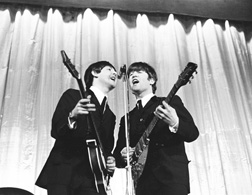
Paul McCartney and John Lennon. Click image to expand.

What makes creative relationships work? How do two people—who may be perfectly capable and talented on their own—explode into innovation, discovery, and brilliance when working together? These may seem to be obvious questions. Collaboration yields so much of what is novel, useful, and beautiful that it's natural to try to understand it. Yet looking at achievement through relationships is a new, and even radical, idea. For hundreds of years, science and culture have focused on the self. We talk of self-expression, self-realization. Popular culture celebrates the hero. Schools test intelligence and learning through solo exams. Biographies shape our view of history.

This pervasive belief in individualism can be traced to the idea most forcefully articulated by René Descartes. "Each self inhabits its own subjective realm," he declared, "and its mental life has an integrity prior to and independent of its interaction with other people." Though Descartes had his challengers, his idea became a core assumption of the Enlightenment, as did Thomas Hobbes' assertion that the natural state of man was "solitary" (as well as "poor, nasty, brutish, and short.")

Following this line, the first modern psychologists focused on the individual. Emil Kraepelin, the godfather of biological psychiatry, looked for organic explanations of illness. Despite Sigmund Freud's interest in early-life relationships, he treated his patients by having them speak into silence and saw cure as a reconciliation of internal conflicts.

Beyond illness, the fundamentals of healthy life took root from the idea of the atomized person. Jean Piaget, who created modern development theory—the system of thought about how children's minds work and grow—emphasized relationships to objects, not people. Even the most basic relational tool—the way we speak—was shaped by individualism, following Noam Chomsky's notion of language as an expression of inborn, internal capacities.

This focus on the self meshed tightly with Western ideology—the Ayn Randian notion of the rugged man forging his destiny on the forbidding plains. (A 1991 Library of Congress survey found Rand's Atlas Shrugged second only to the Bible as the book that made the most difference in American readers' lives.) The triumphant Western position in the Cold War established individual liberty and individual choice as the root unit of society—in opposition to the Marxist emphasis on collective achievement.

The ultimate triumph of the idea of individualism is that it's not really seen as an idea at all. It has seeped into our mental groundwater. Basic descriptions of inter-relatedness—enabling, co-dependency—are headlines for dysfunction. The Oxford American Dictionary defines individualism as, first, "the habit or principle of being independent and self-reliant" and, second, as "a social theory favoring freedom of action for individuals over collective or state control." This lopsided contrast of "freedom" vs. "state control" is telling. Even our primary reference on meaning, the dictionary, tilts in favor of the self.

But a new body of research has begun to show how growth and achievement emerge from relationships. The new science begins with infancy. For centuries, babies were seen as blank slates who just filled their stomachs, emptied their bowels and bladders, and cried and slept in between. As for any significant aspects of their environment, small children were seen as passive receivers. (And largely insensitive ones: For most of the 20th century, doctors routinely operated on babies without anesthesia, believing them exempt from pain.)

But a burgeoning field has shown that, from the very first days of life, relationships shape our experience, our character, even our biology. This research, which has flowered in the last ten years, took root in the 1970s. One reason, explains the psychologist and philosopher Alison Gopnik, was the advent of the simple video camera. It allowed researchers to easily capture and analyze the exchanges between babies and their caregivers. In video of 4-month-olds with their mothers, for example, the two mimic each other's facial expressions and amplify them. So, a baby's grin elicits a mother's smile, which leads the baby to a full-on expression of joy—round mouth, big eyes. This in turn affects the mother, and so on in a continuous exchange that entwines the pair.

Read the whole article.


Saturday, October 09, 2010

Mary Midgley: The Solitary Self

This comes from FORA.tv and the RSA - an excellent and entertaining talk by English philosopher Mary Midgley on her recent book The Solitary Self. Here si the book description from Amazon:
Renowned philosopher Mary Midgley explores the nature of our moral constitution to challenge the view that reduces human motivation to self-interest. Midgley argues cogently and convincingly that simple, one-sided accounts of human motives, such as the 'selfish gene' tendency in recent neo-Darwinian thought, may be illuminating but are always unrealistic. Such neatness, she shows, cannot be imposed on human psychology. She returns to Darwin's original writings to show how the reductive individualism which is now presented as Darwinism does not derive from Darwin but from a wider, Hobbesian tradition in Enlightenment thinking. She reveals the selfish gene hypothesis as a cultural accretion that is just not seen in nature. Heroic independence is not a realistic aim for Homo sapiens. We are, as Darwin saw, earthly organisms, framed to interact constantly with one another and with the complex ecosystems of which we are a tiny part. For us, bonds are not just restraints but also lifelines.
She is on the right path in my opinion - we have been so infatuated with individualism and self-interest that we have created isolation and existential loneliness rather that individuation (in the Jungian sense). We need community, we need interpersonal connection - AND we need healthy healthy individual identity - both/and, not either/or.
Description
Britain's leading moral philosopher, Mary Midgley, visits the RSA to challenge the idea that we are self-directed individuals at the mercy of our "selfish genes."

Midgley is one of the most renowned moral philosophers of her generation and the author of many books, including Beast and Man, Wickedness and The Myths We Live By. Her memoir, The Owl of Minerva was published in 2005.

Saturday, August 14, 2010

All in the Mind - Challenging Stereotypes: culture, psychology and the Asian Self (Part 2 of 2)

http://homedesigndecorating.com/wp-content/uploads/2010/05/Meditative-asian-garden-design.jpg

Here is part 2 of this excellent discussion - in my repost of part 1, I included some background information to offer a frame of reference, so I will include that here as well.

* * * * *

Some definitions might help - all of the following information comes from this excellent article:
Oyserman, D., Coon, H.M., & Kemmelmeier, M. (2002). Rethinking Individualism and Collectivism: Evaluation of Theoretical Assumptions and Meta-Analyses. Psychological Bulletin; Vol. 128, No. 1, 3–72. DOI: 10.1037//0033-2909.128.1.3
I'm not sure if this is available online for free access or not - I can't find it in an open access search.

And these come from the same article, but are more general definitions, and not based on a research model (as is the chart above, which gives sample items for a measure).
Individualism
The core element of individualism is the assumption that individuals are independent of one another. From this core, a number of plausible consequences or implications of individualism can be discerned. One question we explore further is whether research has empirically validated these plausible consequences or implications and whether these plausible consequences are, in fact, universally part of individualism.

Hofstede (1980) defined individualism as a focus on rights above duties, a concern for oneself and immediate family, an emphasis on personal autonomy and self-fulfillment, and the basing of one’s identity on one’s personal accomplishments. Waterman (1984) defined normative individualism as a focus on personal responsibility and freedom of choice, living up to one’s
potential, and respecting the integrity of others. Schwartz (1990) defined individualistic societies as fundamentally contractual, consisting of narrow primary groups and negotiated social relations, with specific obligations and expectations focusing on achieving status. These definitions all conceptualize individualism as a worldview that centralizes the personal—personal goals, personal uniqueness, and personal control—and peripheralizes the social (Bellah, Madsen, Sullivan, Swidler, & Tipton, 1985; Hsu, 1983; Kagitcibasi, 1994; U. Kim, 1994; Markus & Kitayama, 1991; Sampson, 1977; Triandis, 1995).

* * * *

Collectivism
The core element of collectivism is the assumption that groups bind and mutually obligate individuals. From this core, theorists discern a number of plausible consequences or implications of collectivism. One question we explore further is whether research has empirically validated these plausible consequences or implications cross-culturally and whether these plausible consequences are, in fact, universal consequences of collectivism.

Although sometimes seen as simple opposites, it is probably more accurate to conceptualize individualism and collectivism as worldviews that differ in the issues they make salient (Kagitcibasi, 1987, 1997; Kwan & Singelis, 1998). According to Schwartz (1990), collectivist societies are communal societies characterized by diffuse and mutual obligations and expectations based on ascribed statuses. In these societies, social units with common fate, common goals, and common values are centralized; the personal is simply a component of the social, making the in-group the key unit of analysis (e.g., Triandis, 1995). This description focuses on collectivism as a social way of being, oriented toward in-groups and away from out-groups (Oyserman, 1993). Because in-groups can include family, clan, ethnic, religious, or other groups, Hui (1988) and Triandis (1995), among others, have proposed that collectivism is a diverse construct, joining together culturally disparate foci on different kinds and levels of referent groups. In this way, collectivism may refer to a broader range of values, attitudes, and behaviors than individualism.

Plausible consequences of collectivism for psychology—self-concept, well-being, attribution style, and relationality—are easily discerned. First, with regard to the self, collectivism implies that (a) group membership is a central aspect of identity (Hofstede, 1980; Hsu, 1983; U. Kim, 1994; Markus & Kitayama, 1991) and (b) valued personal traits reflect the goals of collectivism, such as sacrifice for the common good and maintaining harmonious relationships with close others (Markus & Kitayama, 1991; Oyserman, 1993; Triandis, 1995). Second, with regard to well-being and emotional expression, collectivism implies that (a) life satisfaction derives from successfully carrying out social roles and obligations and avoiding failures in these domains (U. Kim, 1994; Kwan & Singelis, 1998; Markus & Kitayama, 1991) and (b) restraint in emotional expression, rather than open and direct expression of personal feelings, is likely to be valued as a means of ensuring in-group harmony.

Third, with regard to judgment, causal reasoning, and attributions, definitions of collectivism suggest that (a) social context, situational constraints, and social roles figure prominently in person perception and causal reasoning (Miller, 1984; Morris & Peng, 1994) and (b) meaning is contextualized and memory is likely to contain richly embedded detail. Last, with regard to relationality, definitions of collectivism imply that (a) important group memberships are ascribed and fixed, viewed as “facts of life” to which people must accommodate; (b) boundaries between in-groups and out-groups are stable, relatively impermeable, and important; and (c) in-group exchanges are based on equality or even generosity principles (U. Kim, 1994; Morris & Leung, 2000; Sayle, 1998; Triandis, 1995).
That should provide some background for the discussion in today's show from All in the Mind.

* * * * *

Challenging Stereotypes: culture, psychology and the Asian Self (Part 2 of 2)


Listen Now - 2010-08-14 |Download Audio - 14082010

We can't escape our cultural heritage, and yet it's more malleable than you might think. It's there in everything we do and say -- from the boardroom tables of big business to conversations with your GP. How are scientists getting inside our cultural mindsets to study them? Brain scans have entered the fray.

Show Transcript | Hide Transcript

Transcripts are published on Wednesdays, and audio on Saturdays after broadcast.

Guests

Professor Steven Heine
Department of Psychology
University of British Columbia, Canada
http://heine.socialpsychology.org/

Professor Daphna Oyserman
Department of Psychology
University of Michigan, United States
http://sitemaker.umich.edu/daphna.oyserman/home

Professor Shihui Han
Director, Cultural and Social Cognitive Neuroscience Laboratory
Peking University, China
http://www.psy.pku.edu.cn/LABS/CSCN_lab/people.html

Assistant Professor Takahiko Masuda
Department of Psychology
University of Alberta, Canada
http://www.ualberta.ca/~tmasuda/

Dr Deborah Ko
Department of Psychology
University of Hong Kong
http://www3.hku.hk/psychodp/people/profile.php?person=deborahko

Further Information

All in the Mind blog with Natasha Mitchell
A place to engage, or you can add your comments directly above too (look for Add Your Comment). Features extra audio this week of blog only interviews on the individualist / collectivist dichotomy, on differences in approaches to learning, and in various cultural assessments of what it means to be human.

Challenging Stereotypes: culture, psychology and the Asian Self (Part 1 of 2)
Part 1 of this 2 part series

XXth Congress of the International Association for Cross-Cultural Psychology
Held in Melbourne, Australia, 2010.

Publications

Title: Cultural difference in neural mechanisms of self-recognition
Author: Sui, J., Liu, C. H., Han, S.
Social Neuroscience, (2009) (in press)

Title: The bi-cultural self and the bi-cultural brain
Author: Ng. S. H., Han, S., in Wyer, R. S., Chiu, C.-y., & Hong, Y.-y (Eds.)
'Problems and solutions in cross-cultural theory, research and application', New York: Psychology Press, pp 329-342, New York: Psychology Press

Title: Cultural differences in the self: From philosophy to psychology and neuroscience
Author: Zhu, Y., Han, S.
URL: http://bit.ly/aAEDB9
Social and Personality Psychology Compass, 2, 2008, pp 1799-1811 Note: The link is a PDF

Title: Culture-sensitive neural substrates of human cognition: A transcultural neuroimaging approach
Author: Zhu, Y., Han, S.
Publisher: Nature Review Neuroscience, 9, 2008, pp 646-654
URL: http://bit.ly/clWTOV
Note: The link is a PDF

Title: Cognition, communication, and culture: Implications for the survey response process
Author: Schwarz, N., Oyserman, D., & Peytcheva, E.
Publisher: in 'Survey Methods in Multinational, Multiregional, and Multicultural Contexts' edited by Harkness et al, John Wiley and Sons Inc, 2010.
URL: http://sitemaker.umich.edu/oysermanlab/files/10_ch_schwarz_et_al_culture___survey_response_3mc.pdf

Title: Connecting and Separating Mind-Sets: Culture as Situated Cognition
Author: Daphna Oyserman, Nicholas Sorensen, Rolf Reber, Sylvia Xiaohua Chen
Publisher: Journal of Personality and Social Psychology, Vol. 97, No. 2, 2009, pp 217-235
URL: http://sitemaker.umich.edu/daphna.oyserman/files/oysermansorensenreberchenjpsp2009.pdf

Title: Does Culture Influence What and How We Think? Effects of Priming Individualism and Collectivism
Author: Daphna Oyserman and Spike W. S. Lee
Publisher: Psychological Bulletin, Vol. 134, No. 2, 2008, pp 311-342
URL: http://sitemaker.umich.edu/daphna.oyserman/files/oyserman_lee_2008_psychbulletin.pdf

Title: Is there a Universal Need for Positive Self Regard?
Author: Steven J. Heine, Darrin R. Lehman, Hazel Markus, Shinobu Kitayama
Publisher: Psychological Review, 106 (4), pp. 766-794, 1999.
URL: http://www2.psych.ubc.ca/~heine/docs/1999universal_need.pdf
Note: The link is a PDF file.

Presenter

Natasha Mitchell