Showing posts with label decision-making. Show all posts

Tuesday, August 26, 2014

Matthew Taylor: Beyond Belief – Towards a New Methodology of Change


This is an interesting article from Royal Society for the encouragement of Arts (RSA) CEO Matthew Taylor on the emerging demand for a participatory politics. I liked this quote: "beyonders want a model of change in which the public has the right and the responsibility to be the subject not the object." And this one, "beyonders tend to be decentralists seeking to devolve decision-making to the level at which the most constructive and responsive discourse between decision makers and citizens can occur."

This, of course, is happening more in Britain than in the States - we are content to watch the VMAs, count the seconds until Disney releases the next Star Wars film, and slowly kill ourselves with ignorance and laziness.

Beyond belief – towards a new methodology of change

August 24, 2014 by Matthew Taylor

An exciting and progressive new paradigm for purposive social change is emerging*. For want of a more positive descriptor, this can be called ‘beyond policy’. It has many positive things to say, but its starting point comprises a number of related critiques – some quite new, some very old – of traditional legislative or quasi-legislative decision-making.

One relatively new strand focuses on the problems such decision-making has with the complexity and pace of change in the modern world. For example, in their recent book ‘Complexity and the art of Public Policy’ David Colander and Roland Kupers write ‘The current policy compass is rooted in assumptions necessary half a century ago….while social and economic theory has advanced, the policy model has not. It is this standard policy compass that is increasingly derailing the policy discussion’. Old linear processes cannot cope with the ‘wicked problems’ posed by a complex world.

A second strand – most often applied to public service reform – argues that the relational nature of such services means that change cannot be done to people but must be continually negotiated with them, leaving as much room as possible for local discretion at the interface between public commissioner/provider and citizen/service user. The RSA identifies the key criterion for public service success as ‘social productivity’; the degree to which interventions encourage and enable people better to be able to contribute to meeting their own needs.

Design thinking provides another, rather elegant, stick with which to beat traditional policy methods. Here the contrast is between the schematic, inflexible, risk averse and unresponsive methods of the policy maker versus the pragmatic, risk taking, fast learning, experimental method of the designer. Across the world Governments local and national – including the UK with its recently established Policy Lab - are trying to bring the design perspective into decision-making (generally it promises lots of possibility at the margins but has proven hard to bring anywhere near the centre of power).

Connected to the design critique the rise of what David Price and Dom Potter among others refer to as ‘open’ organisations challenges many aspects of the technocratic model of expert policy makers ensconced in Whitehall or Town Hall. When transparency is expected and secrecy ever harder to maintain and when innovation is vital but increasingly being seen to take place at the fuzzy margins of organisations, then we are all potential policy experts.

A final stand worth mentioning (I am sure the are others) is more ideological and idealistic. Following the civic republican tradition, beyonders want a model of change in which the public has the right and the responsibility to be the subject not the object. There is, for example, the distinction made many years ago by historian Peter Clarke between ‘moral’ and ‘mechanical’ traditions in the British labour movement. The former (favoured by ‘beyonders’) is concerned with embedding progressive values in the hearts and minds of citizens who will themselves build a better society, while the latter is focused on winning power so that those in authority can mould a fairer better world according to their grand plan.

The dictionary definition of policy is: ‘a course or principle of action adopted or proposed by an organisation or individual’. So, echoing Bertrand Russell’s problem with the set that contains all sets, the most obvious objection to ‘beyond policy’ is that it is, well….a policy. ‘Beyonders’ are not anarchists. The issue here is not whether people in power should make decisions; after all, it is because they are judged to be likely to make good decisions that they have been vested with authority. The differences between the ‘traditional’ and ‘beyond’ policy camps are in practice ones of degree. Often the best traditional policy turns out to have used versions of the new methods. But that doesn’t mean the differences between the approaches aren’t important and often pretty obvious.

Beyonders put greater emphasis on citizens not only engaging with decisions but being part of their implementation. We recognise the importance of clear and explicit goals and shared metrics, but rather than setting these in stone at the outset see them emerging from a conversation authentically led and openly convened using a new style of dispersed and shared authority.

Beyonders are likely to see civic mobilisation as preceding and possibly being an alternative to legislative policy whereas traditionalists will tend to see mobilisation as something that happens after policy has been agreed by experts. Beyonders tend, at last at the outset, to be more pragmatic and flexible about the timeframe over which major change can occur – depending as it does on public engagement and consent – whereas traditionalists pride themselves (before a fall) on their demanding and fixed timetables. And, of course, beyonders tend to be decentralists seeking to devolve decision-making to the level at which the most constructive and responsive discourse between decision makers and citizens can occur.

Another reasonable challenge to the new paradigm is that it can’t be equally applied to all areas of policy. When it comes, for example, to military engagement or infrastructure investment, surely we need clear decisions made at the top and then imposed regardless?

Yes, even here the case is not clear-cut. One of the reasons we sometimes get infrastructure wrong in areas like transport and energy is that the policy making establishment (not just the law makers but those paid to advise and influence them) prefer big ticket schemes (which tend also to generate big ticket opposition) to more evolutionary, innovative or local solutions. And as the military and police know, without winning hearts and minds most martial solutions fail to sustain. A topical example is the way the terrorist threat in the UK is now less to do with organised conspiracy (requiring sophisticated and centralised surveillance) and more to do with disturbed and alienated youth who need to be identified and engaged with at a community level.

Perhaps the biggest challenge to the beyond policy paradigm is that it requires fundamental changes not just in the way we do policy, but in how we think about politics, accountability and social responsibility. The solidity of traditional policy making is contained within a wider system which cannot easily contend with the much more fluid material of ‘beyond policy’. When, for example, I tell politicians there their most constructive power may lie not in passing laws, imposing regulations or even spending money but on convening new types of conversation, they react like body builders who have asked to train using only cuddly toys.

Reflecting the way we tend to think about the world, the beyonders’ revolution requires action on several levels. Innovation shows us a better way of making change that lasts. See for example the work of Bruce Katz and Jennifer Bradley of the Brookings Institute on the advances made by US metros, often based on the convening power of the city mayor. Included in the ranks of a new generation of beyond policy practitioners are community organisers, ethnographers, big data analysts and service designers – they can all tell you why traditional policy making is a problem and they rarely see it as the best way to find solutions. There are also more academics and respected former policy makers (like former Canadian cabinet secretary Jocelyne Bourgon) helping to provide conceptual clarity and professional credibility to the project.

‘Beyond policy is a movement in progress, but in recognising its flaws and gaps we mustn’t forget the traditional system’s glaring inadequacies or that the political class is still, on the whole, clinging tight to it: Over the next ten months our political parties will offer manifestos full of old style policy to be enacted through an increasingly unreal model of social change.

If the problem was simply that the policies and pledges were unlikely to be enacted it would be bad enough. It is worse. Politicians feel they pay a high price for broken promises so, if elected, they demand that the machine try to ‘deliver’ regardless of whether the policy makes any sense or of any learning that points to the need to change course. The result is often distorted priorities and perverse outcomes along with gaming, demoralisation and cynicism among public servants. No chief executive of a large corporation (and none are as a large as the UK government) would dream of tying themselves in detail to a plan that is supposed to last the best part of five years regardless of unpredictable events. But that is exactly what we will apparently command our politicians – facing much more complex tasks and challenges – to do in ten months time.

Surely now, before another Government is elected on a false and damaging prospectus, it’s time to move beyond convention and have a grown up conversation about how society changes for good and how politician can best make a positive difference.

* This is an edited version of an article I have written for the News South Wales Institute of Public Administration

Matthew Taylor became Chief Executive of the RSA in November 2006. Prior to this appointment, he was Chief Adviser on Political Strategy to the Prime Minister. 

Saturday, June 14, 2014

Tom Jacobs - Feeling Impulsive? Head for the Forest


Nature . . . it does a mind good.

New research suggests that people who view nature images make less-impulsive decisions than those who looked at buildings or simple geometrical shapes. A lot of previous research found that exposure to nature can reduce stress; now it seems to also help us make smarter choices.

Feeling Impulsive? Head for the Forest

By Tom Jacobs • June 10, 2014 
green-forest-path
(Photo: Pakhnyushcha/Shutterstock)

New research finds yet another benefit of viewing images of the natural world.


Do you make too many impulsive decisions—eating that snack now and worrying about calories later, or buying that expensive toy and only to later realize it will break your budget?

Perhaps you need to spend more time in nature.

A first-of-its kind study, conducted at Utah State University, finds that people who looked at scenes of the natural world made less-impulsive decisions than those who viewed either buildings or simple geometrical shapes. Much research has found exposure to nature can lower stress; it now appears it also nudges us into making smarter choices.

In the online journal PLoS One, a research team led by University of Montana psychologist Meredith Berry describes an experiment featuring 185 undergraduates, all of whom viewed a series of 25 photographs. Sixty-three of them saw images of nature, including forests. Fifty-nine viewed photos of buildings and city streets. The final 63 saw a series of geometric shapes.

All then took part in a task that involved choosing between hypothetical financial outcomes. They were repeatedly presented with the proposition: “Would you rather have (a specific amount of money) now, or (a different amount) in (a specific point in the future)?” The amounts changed each time the question came up anew.

This is a classic way of measuring what researchers call “delay discounting.” Choosing to receive a lower amount of money now, rather than waiting for a greater reward, reflects some degree of self-destructive impulsivity.

It’s to our advantage not to give in to that temptation—and it turns out resistance came easier for people who had just spent virtual time in the pristine woodlands.

“Exposure to scenes of natural environments resulted in significantly less impulsive decision-making,” the researchers write. “Viewing scenes of built environments and geometric shapes resulted in similar, higher levels of impulsive decision-making.”

Berry and her colleagues can only speculate about the reasons for this. They note that, in previous research, people have reported that “time seems to slow when viewing awe-eliciting scenes.” Perhaps views of massive trees that took many years to grow prompted participants to adopt a long-range perspective, reducing the allure of an immediate payoff.

In any event, this is welcome news. As the researchers note, saving the environment will require cultivating a mindset that prioritizes long-term over short-term gain.

So if you’re tempted to buy a gas-guzzler, spend a few minutes staring at an Ansel Adams photograph. You might just change your mind.


Staff writer Tom Jacobs is a veteran journalist with more than 20 years experience at daily newspapers. He has served as a staff writer for The Los Angeles Daily News and the Santa Barbara News-Press. His work has also appeared in The Los Angeles Times, Chicago Tribune, and Ventura County Star.

More From Tom Jacobs

Friday, July 05, 2013

Degree of Early Life Stress Predicts Decreased Medial Prefrontal Cortex Activity and Shift from Internal to External Decision-Making

Another piece of research in the continuing saga of the prefrontal cortex - this time a look at how early life stress (ELS) predicts decreased prefrontal medial cortex activity, as well as a shift from internally-focused decision-making to externally-focused decision making.
This study is expected to be of great interest in the field of ELS itself in that it provides evidence about the relations among ELS, resting-state brain activity, task induced brain activity, and behavioral tendencies. Beyond elucidating the phenomena associated with ELS, this line of investigation is expected to contribute to improvement of our understanding of resting-state brain activity and self-oriented processes.
Interesting stuff - this is another piece of support for the developmental trauma diagnosis that should have been in the DSM-5.

The degree of early life stress predicts decreased medial prefrontal activations and the shift from internally to externally guided decision making: an exploratory NIRS study during resting state and self-oriented task


Takashi Nakao 1, Tomoya Matsumoto 2, Machiko Morita 3, Daisuke Shimizu 3, Shinpei Yoshimura 4, Georg Northoff 5, Shigeru Morinobu 2, Yasumasa Okamoto 2 and Shigeto Yamawaki 2
1. Department of Psychology, Graduate School of Education, Hiroshima University, Hiroshima, Japan2. Institute of Biomedical and Health Sciences, Hiroshima University, Hiroshima, Japan3. Faculty of Medicine, Hiroshima University, Hiroshima, Japan4. Faculty of Psychology, Otemon Gakuin University, Osaka, Japan5. Institute of Mental Health Research, University of Ottawa, Ottawa, ON, Canada
Early life stress (ELS), an important risk factor for psychopathology in mental disorders, is associated neuronally with decreased functional connectivity within the default mode network (DMN) in the resting state. Moreover, it is linked with greater deactivation in DMN during a working memory task. Although DMN shows large amplitudes of very low-frequency oscillations (VLFO) and strong involvement during self-oriented tasks, these features’ relation to ELS remains unclear. Therefore, our preliminary study investigated the relationship between ELS and the degree of frontal activations during a resting state and self-oriented task using near-infrared spectroscopy (NIRS). From 22 healthy participants, regional hemodynamic changes in 43 front-temporal channels were recorded during 5 min resting states, and execution of a self-oriented task (color-preference judgment) and a control task (color-similarity judgment). Using a child abuse and trauma scale, ELS was quantified. We observed that ELS showed a negative correlation with medial prefrontal cortex (MPFC) activation during both resting state and color-preference judgment. In contrast, no significant correlation was found between ELS and MPFC activation during color-similarity judgment. Additionally, we observed that ELS and the MPFC activation during color-preference judgment were associated behaviorally with the rate of similar color choice in preference judgment, which suggests that, for participants with higher ELS, decisions in the color-preference judgment were based on an external criterion (color similarity) rather than an internal criterion (subjective preference). Taken together, our neuronal and behavioral findings show that high ELS is related to lower MPFC activation during both rest and self-oriented tasks. This is behaviorally manifest in an abnormal shift from internally to externally guided decision making, even under circumstances where internal guidance is required.
Full Citation: 
Nakao T, Matsumoto T, Morita M, Shimizu D, Yoshimura S, Northoff G, Morinobu S, Okamoto Y, and Yamawaki S. (2013, Jul 3). The degree of early life stress predicts decreased medial prefrontal activations and the shift from internally to externally guided decision making: an exploratory NIRS study during resting state and self-oriented task. Frontiers in Human Neuroscience; 7:339. doi: 10.3389/fnhum.2013.00339

Introduction


By definition, early life stress (ELS) derives from adverse experiences during childhood and adolescence including physical, sexual, and maltreatment abuse (Brown et al., 2009). Demonstrably, ELS is associated with deficits in cognitive and affective function (Pechtel and Pizzagalli, 2011) and is a significant risk factor for mood and anxiety disorders later in life (Heim and Nemeroff, 2001; Heim et al., 2010; Schmidt et al., 2011). Several lines of evidence have indicated that ELS elicits structural changes in the brain. For example, reports of some animal studies have described that ELS results in abnormally increased synaptic density in the infralimbic cortex (Ovtscharoff and Braun, 2001), and decreased dendritic spine density in the prefrontal cortex (PFC) (Murmu et al., 2006). Reports of human neuroimaging studies have described that ELS is associated with reduced gray matter volume including that of the PFC (De Bellis et al., 2002; Andersen et al., 2008; Paus et al., 2008; Hanson et al., 2010).

Although few functional neuroimaging studies have addressed the influence of ELS, activations within the default mode network (DMN) are known to be associated with ELS (Burghy et al., 2012; Philip et al., 2013a,b; van der Werff et al., in press; Cisler et al., 2013; Wang et al., in press). The DMN consists mainly of cortical midline structures (Northoff and Bermpohl, 2004; Raichle and Gusnard, 2005) and comprises the medial prefrontal cortex (MPFC), posterior cingulate cortex, and superior temporal/inferior parietal cortex (Fox et al., 2005; Kim et al., 2010; Qin and Northoff, 2011). The DMN is more active at rest than during goal-directed/externally guided cognitive tasks (Raichle et al., 2001; Buckner et al., 2008). Regions within the DMN show a high degree of functional connectivity during rest (Raichle et al., 2001; Beckmann et al., 2005; Raichle and Snyder, 2007;Buckner et al., 2008). Regarding these features of the DMN, ELS is known to be associated with greater deactivation of DMN during a working memory task (Philip et al., 2013b), and shows decreased functional connectivity within the DMN during a resting state (Burghy et al., 2012;van der Werff et al., in press; Cisler et al., 2013; Wang et al., in press; Philip et al., 2013a).

Neuronally, the DMN can be characterized by large amplitudes of spontaneous slow oscillations during a resting state (Raichle et al., 2001;Fransson, 2005; Zou et al., 2008). Slow oscillations have been observed using measurements of different types, functional magnetic resonance imaging (fMRI; Biswal et al., 1995; Fransson, 2006; Chepenik et al., 2010), electroencephalography (EEG; Horovitz et al., 2008; Helps et al., 2010;Broyd et al., 2011), and near-infrared spectroscopy (NIRS; Obrig et al., 2000; Näsi et al., 2011; Pierro et al., 2012). Slow oscillations from 0.04 to 0.15 Hz are called low-frequency oscillations (LFOs). Even lower frequency oscillations (<0.04 Hz) are designated as very low-frequency oscillations (VLFOs) (Obrig et al., 2000; Näsi et al., 2011). Although the mechanisms underlying the slow oscillations remain unclear, several reports of the literature have described these as neuronal characteristics of psychological personality traits (Kunisato et al., 2011) and psychiatric disorders such as anxiety (Hou et al., 2012) and mood disorders (Chepenik et al., 2010; Wang et al., 2012). Psychiatric disorders have shown high degrees of ELS (Heim and Nemeroff, 2001; Heim et al., 2010; Schmidt et al., 2011). Therefore, one would suspect high ELS to be related to changes in slow oscillations during the resting state. This point, however, remains to be investigated.

In addition to LFOs during the resting state, the DMN shows activation in fMRI during various tasks such as self-reference (Kelley et al., 2002;Northoff et al., 2006), episodic memory retrieval (Buckner et al., 2008), envisioning the future (Szpunar et al., 2007), mentalizing (Gusnard et al., 2001; Amodio and Frith, 2006), and internally guided decision making (Nakao et al., 2012). The DMN is often explained integratively as associated with self-oriented/internally guided psychological processes (Qin and Northoff, 2011; Whitfield-Gabrieli and Ford, 2012). Again, however, no report in the relevant literature has described the association between ELS and DMN activity during self-oriented tasks.

This preliminary study was undertaken to investigate the relations between ELS and the degree of MPFC activations during a resting state and self-oriented task using NIRS. This non-invasive technique uses near-infrared light to evaluate spatiotemporal characteristics of brain function near the brain surface. The use of NIRS enables the detection of spontaneous slow oscillations in oxygenated hemoglobin (oxy-Hb: Obrig et al., 2000). The LFOs and VLFO measured by NIRS are known to be differentiated from other oscillatory phenomena such as heart beat and respiratory cycles (Obrig et al., 2000). The activation of surface regions of MPFC during self-oriented tasks has also been measured using NIRS (Di Domenico et al., 2012).

For the experiment described hereinafter, a child abuse and trauma scale (CATS) (Sanders and Becker-Lausen, 1995) was used to assess ELS. To control the effect of the recent stress level, we used the life event stress scale (LES) (Sarason et al., 1978). Stressful life events are known to affect brain function adversely through elevated cortisol level in the blood which is acutely or chronically caused by the hormonal stress response system: the hypothalamic–pituitary–adrenal (HPA) axis (Numakawa et al., 2013). Therefore, we also measured the blood levels of cortisol to assess whether early and/or recent life stress might elevate cortisol concentrations in the blood, resulting in alteration of PFC activation. We recorded eyes-closed (EC) and eyes-open (EO) resting-state NIRS before conducting cognitive tasks. In self-oriented cognitive and control tasks, color stimulus was used (see Figure 1A for example). The same color stimulus and color stimulus pairs were used in both tasks. As a self-oriented task, color-preference judgment (Johnson et al., 2005; Nakao et al., 2013) was used while the color-similarity judgment served as control (Johnson et al., 2005; Nakao et al., 2013) (see Figure 1A). We used these tasks for the following three reasons. First, using these tasks, we can differentiate between goal-directed/externally guided and self-oriented/internally guided psychological processes (Johnson et al., 2005; Nakao et al., 2013). Although color-similarity judgment requires participants to make a decision based on the external criterion (i.e., color-similarity), color-preference judgments require participants to make a decision based on their own internal criteria. Second, the same color-set is used in both tasks: the effects of stimuli can be well controlled. Third, Johnson et al. (2005) reported that the color-preference judgment activate the DMN including the MPFC [Brodmann area (BA) 9, 10] compared to the color-similarity judgment. The MPFC is the region of interest (ROI) in this study.

FIGURE 1
Figure 1. (A) Design of cognitive tasks. (B)Schematic figure showing how to make color combinations in the color-similarity judgment and color-preference judgment tasks. The left color wheel portrays examples of the color combinations of the similarity-easy set. The right color wheel displays examples of color combinations of the similarity-difficult set. The degrees from target color to choice color signify the color similarity. (C)Approximate location of the NIRS channel positions in MNI space. (D) NIRS probe position.

Monday, June 24, 2013

New Research in Psychopathy, Moral Decision-Making, and Empathy


Two new studies offer deeper insight into psychopathy, both from the open access journal, Frontiers in Human Neuroscience.

The first one suggests that people high in psychopathic traits - specifically, those related to affective deficit - do not lack moral judgment, but they tend to exhibit greater utilitarianism in choice of action.

Here is their definition of psychopathy, just to set the stage for these two studies:
Psychopathy is a personality disorder characterized by emotional dysfunction, callousness, manipulativeness, reduced guilt, remorse and empathy, egocentricity, and antisocial behavior including impulsivity and poor behavioral control. Moreover, psychopaths frequently engage in morally inappropriate behavior, including taking advantage of others, lying, cheating, and abandoning relationships (Cleckley, 1941; Hare, 1999).
The authors believe that their study lends support to the idea that moral judgment and moral choice/action operate in different brain circuits.

The second study looks at two different types of psychopathy - primary and secondary - and how these traits are correlated (or not) with somatosensory resonance with others pain and with empathic response to that pain.
Primary psychopathy has been designated as the heritable traits of emotional detachment commonly reported as a lack of compassion and guilt, callous misuse of others for personal gain and failure to form close interpersonal attachment (Levenson et al., 1995; Poythress and Skeem, 2006). Secondary psychopathy usually refers to poor behavioral control, hostility and antisociality (Levenson et al., 1995).
The shared neural representations between the perception of pain in self and other (somatosensory resonance) may be the result of an "automatic resonance mechanism (Jackson et al., 2006)" that might be seen as "the lower-level of a vicarious pain response on which higher order process operate to develop empathy (Han et al., 2009; Vachon-Presseau et al., 2011)."

They investigated the impact of psychopathic traits [measured with Levenson's Self-Report Psychopathy Scale (LSRP)] on the relationship between sensorimotor resonance to other's pain and self-reported empathy. These researchers have previously shown that "a steady-state response to non-painful stimulation is modulated by the observation of other people's bodily pain. This change in somatosensory response was interpreted as a form of somatosensory gating (SG)."

Somatosensory gating is the term for how the body-brain filters relevant information out of the flood of sensory data available at any given time. They found that observing pain in others more likely triggered somatosensory gating in male college students with high psychopathic traits compared to students with low psychopathic traits.

Here is the complex part of this:
The study of Fecteau et al. (2008), in which a community sample of men was exposed to visual stimuli depicting hands in painful and non-painful scenarios, was the first to show a positive correlation between suppression of motor evoked potentials (MEPs) and the score of their participants on the Coldheartedness subscale of the psychopathic personality inventory (PPI; Lilienfeld and Andrews, 1996). This result seemed counter-intuitive because increased sensorimotor resonance to the pain of others had been positively associated with self-reported empathy (Avenanti et al., 2009). However, it was also suggested that this automatic neural response could trigger distress (Decety, 2011) and threat related networks (Ibáñez et al., 2011), therefore advocating for an alternative or concomitant view to automatic pain resonance that simply implies arousal. This would also support the view that regulation processes of sensorimotor responses are required in order to respond empathically to the pain of others (Han et al., 2009). Together, these results suggest that sensorimotor resonance to the pain of others is not a direct path to empathy and further investigation on the role of psychopathic traits could be useful to better understand this relationship.
[Emphasis added.]

As I see it, and this applies to both studies, the use of self-report empathy with correctional sample (prison inmates) is more than likely compromised in its usefulness due to the deception, manipulation, and grandiose sense of self-worth that are defining characteristics of psychopathy.

Even so, these are interesting studies - both of which can be read or downloaded by following the title link.

High levels of psychopathic traits alters moral choice but not moral judgment

Sébastien Tassy, Christine Deruelle, Julien Mancini, Samuel Leistedt, and Bruno Wicker

04 June 2013

Psychopathy is a personality disorder frequently associated with immoral behaviors. Previous behavioral studies on the influence of psychopathy on moral decision have yielded contradictory results, possibly because they focused either on judgment (abstract evaluation) or on choice of hypothetical action, two processes that may rely on different mechanisms. In this study, we explored the influence of the level of psychopathic traits on judgment and choice of hypothetical action during moral dilemma evaluation. A population of 102 students completed a questionnaire with ten moral dilemmas and nine non-moral dilemmas. The task included questions targeting both judgment (“Is it acceptable to … in order to …?”) and choice of hypothetical action (“Would you … in order to …?”). The level of psychopathic traits of each participant was evaluated with the Levenson Self-Report Psychopathy (LSRP) scale. Logistic regression fitted with the generalized estimating equations method analyses were conducted using responses to the judgment and choice tasks as the dependent variables and psychopathy scores as predictor. Results show that a high level of psychopathic traits, and more specifically those related to affective deficit, predicted a greater proportion of utilitarian responses for the choice but not for the judgment question. There was no first-order interaction between the level of psychopathic traits and other potential predictors. The relation between a high level of psychopathic traits and increased utilitarianism in choice of action but not in moral judgment may explain the contradictory results of previous studies where these two processes were not contrasted. It also gives further support to the hypothesis that choice of action endorsement and abstract judgment during moral dilemma evaluation are partially distinct neural and psychological processes. We propose that this distinction should be better taken into account in the evaluation of psychopathic behaviors.
Full Citation: 
Tassy S, Deruelle C, Mancini J, Leistedt S and Wicker B. (2013). High levels of psychopathic traits alters moral choice but not moral judgment. Frontiers in Human Neuroscience; 7:229. doi: 10.3389/fnhum.2013.00229

* * * * *

The modulation of somatosensory resonance by psychopathic traits and empathy

Louis-Alexandre Marcoux, Pierre-Emmanuel Michon, Julien I. A. Voisin, Sophie Lemelin, Etienne Vachon-Presseau, and Philip L. Jackson 
19 June 2013
A large number of neuroimaging studies have shown neural overlaps between first-hand experiences of pain and the perception of pain in others. This shared neural representation of vicarious pain is thought to involve both affective and sensorimotor systems. A number of individual factors are thought to modulate the cerebral response to other's pain. The goal of this study was to investigate the impact of psychopathic traits on the relation between sensorimotor resonance to other's pain and self-reported empathy. Our group has previously shown that a steady-state response to non-painful stimulation is modulated by the observation of other people's bodily pain. This change in somatosensory response was interpreted as a form of somatosensory gating (SG). Here, using the same technique, SG was compared between two groups of 15 young adult males: one scoring very high on a self-reported measure of psychopathic traits [60.8 ± 4.98; Levenson's Self-Report Psychopathy Scale (LSRP)] and one scoring very low (42.7 ± 2.94). The results showed a significantly greater reduction of SG to pain observation for the high psychopathic traits group compared to the low psychopathic traits group. SG to pain observation was positively correlated with affective and interpersonal facet of psychopathy in the whole sample. The high psychopathic traits group also reported lower empathic concern (EC) scores than the low psychopathic traits group. Importantly, primary psychopathy, as assessed by the LSRP, mediated the relation between EC and SG to pain observation. Together, these results suggest that increase somatosensory resonance to other's pain is not exclusively explained by trait empathy and may be linked to other personality dimensions, such as psychopathic traits.
Full Citation: 
Marcoux L-A, Michon P-E, Voisin JIA, Lemelin S, Vachon-Presseau E and Jackson PL. (2013). The modulation of somatosensory resonance by psychopathic traits and empathy. Frontiers in Human Neuroscience; 7:274. doi: 10.3389/fnhum.2013.00274


Friday, May 17, 2013

Explainer: What Is Intuition?

From a site called Science Alert, this is a cool overview article on what we know about intuition and how to use it (as well as when).

Explainer: What Is Intuition?


BEN NEWELL, UNSW
FRIDAY, 03 MAY 2013


Whether or not intuition is inherently “good” depends on the situation. 
Image: tlfurrer/Shutterstock

The word intuition is derived from the Latin intueor– to see; intuition is thus often invoked to explain how the mind can “see” answers to problems or decisions in the absence of explicit reasoning – a “gut reaction”.

Several recent popular psychology books – such as Malcolm Gladwell’s Blink, Daniel Kahneman’s Thinking Fast and Slow and Jonah Lehrer’s The Decisive Moment – have emphasised this “power of intuition” and our ability to “think without thinking”, sometimes suggesting we should rely more heavily on intuition than deliberative (slow) or “rational” thought processes.

Such books also argue that most of the time we act intuitively – that is, without knowing why we do things we do.

But what is the evidence for these claims? And what is intuition anyway? 

Defining intuition


Albert Einstein once noted “intuition is nothing but the outcome of earlier intellectual experience”. In a similar vein, the American psychologist Herbert A. Simon (a fellow Nobel Laureate) stated that intuition was “nothing more and nothing less than recognition”.

These definitions are very useful because they remind us that intuition need not refer to some magical process by which answers pop into our minds from thin air or from deep within the unconscious.

On the contrary: intuitive decisions are often a product of previous intense and/or extensive explicit thinking.

Such decisions may appear subjectively fast and effortless because they are made on the basis of recognition.

As a simple example, consider the decision to take an umbrella when you leave for work in the morning. A quick glance at the sky can provide a cue (such as portentous clouds); the cue gives us access to information stored in memory (rain is likely); and this information provides an answer (take an umbrella).

When such cues are not so readily apparent, or information in memory is either absent or more difficult to access, our decisions shift to become more deliberative.

Those two extremes are associated with different experiences. Deliberative thought yields awareness of intermediate steps in a chain of thought, and of effortful combination of information.

Intuitive thought lacks awareness of intermediate cognitive steps (because there aren’t any) and does not feel effortful (because the cues trigger the response). But intuition is characterised by feelings of familiarity and fluency.


Is intuition any good?


Whether or not intuition is inherently “good” really depends on the situation.

Herbert A. Simon’s view that “intuition is recognition” was based on work describing the performance of chess experts.

Work by the Dutch psychologist Adriaan De Groot, and later by Simon and the psychologist William G Chase, demonstrated that a signature of chess expertise is the ability to identify promising moves very rapidly.

That ability is achieved via immediate “pattern matching” against memories of up to 100,000 different game positions to determine the next best move.

Novices, in contrast, don’t have access to these memories and thus have to work through the possible contingencies of each move.

This line of research led to investigations of experts in other fields and the development of what has become known as recognition-primed decision making.

Work by the research psychologist Gary A Klein and colleagues concluded that fire-fighters can make rapid “inutitive” decisions about how a fire might spread through a building because they can access a repertoire of prior similar experiences and run mental simulations of potential outcomes.

Thus in these kinds of situations, where we have lots of prior experience to draw on, rapid, intuitive decisions can be very good.

But intuition can also be misleading.

In a contrasting body of work, decision psychologist Daniel Kahneman (yet another Nobel Laureate) illustrated the flaws inherent in an over-reliance on intuition.

To illustrate such an error, he considered this simple problem: If a bat and a ball cost $1.10 in total and the bat costs $1 more than the ball, how much does the ball cost?

If you are like many people, your immediate – intuitive (?) – answer would be “10 cents”. The total readily separates into a $1 and 10 cents, and 10 cents seems like a plausible amount.

But a little more thinking reveals that this intuitive answer is wrong. If the ball cost 10 cents the bat would have to be $1.10 and the total would be $1.20! So the ball must cost 5 cents.

So why does intuition lead us astray in this example? Because here intuition is not based on skilled recognition, but rather on simple associations that come to mind readily (i.e., the association between the $1 and the 10 cents).

Kahneman and Tversky famously argued these simple associations are relied upon because we often like to use heuristics, or shortcuts, that make thinking easier.

In many cases these heuristics will work well but if their use goes “unchecked” by more deliberative thinking, errors – such as the 10 cents answer – will occur.

Using intuition adaptively


The take-home message from the psychological study of intuition is that we need to exercise caution and attempt to use intuition adaptively.

When we are in situations we have experienced lots of times (such as making judgements about the weather), intuition – or rapid recognition of relevant “cues” – can be a good guide.

But if we find ourselves in novel territory or in situations in which valid cues are hard to come by (such as stock market predictions), relying on our “gut” may not be wise.

Our inherent tendency to get away with the minimum amount of thinking could lead to slip-ups in our reasoning.


~ Ben Newell receives funding from the Australian Research Council.

Editor's Note: This article was originally published by The Conversation, here, and is licensed as Public Domain under Creative Commons. See Creative Commons - Attribution Licence.

Saturday, April 27, 2013

Jesse Singal - Daniel Kahneman’s Gripe With Behavioral Economics

From The Daily Beast, this is an interesting interview on his "issues" with the field of behavioral economics, a field which some credit him with creating.

Daniel Kahneman’s Gripe With Behavioral Economics

Nobel-winning psychologist Daniel Kahneman explains his problem with people using the term ‘behavioral economics.’


Apr 26, 2013

If you’re looking to better understand your own brain and only have time to read one book on the subject, it should be Daniel Kahneman’s Thinking, Fast and Slow, now out in paperback. Kahneman, a psychologist at Princeton University who won the 2002 Nobel Prize for economics for work that he and longtime collaborator Amos Tversky did on the psychology of decision making, gives a detailed, comprehensive account of how our cognitive processes are divided into fast (“System 1”) and slow (“System 2”) thinking. System 1 handles basic tasks and calculations like walking, breathing, and determining the value of 1 + 1, while System 2 takes on more complicated, abstract decision making and calculations like 435 x 23. Many of our mistakes, Kahneman writes, come when exhaustion or other factors cause System 1 to do jobs better suited for System 2.

Thinking, Fast and Slow’ by Daniel Kahneman. 512 pp. FSG. $16. (AP)

In a recent email interview, Kahneman explains the dangers of overconfidence, why economists are still at the top of the policy-making pecking order, and his good-natured gripe with the term “behavioral economics.”

It seems like overconfidence is one of the big targets of Thinking, Fast and Slow. Unfortunately, there’s some evidence that people are more drawn to those who exhibit this tendency, even when it isn’t warranted (such as political prognosticators). How do we get around our ingrained tendencies to be attracted to those who loudly proclaim easy answers?

This is most difficult where it matters the most, in running a democracy. People like leaders who look like they are dominant, optimistic, friendly to their friends, and quick on the trigger when it comes to enemies. They like boldness and despise the appearance of timidity and protracted doubt. Here, the hope for the selection of qualified leaders is in serious and critical media, but the incentives of popular media favor mirroring the preferences of the public, however misguided.

Prospects are quite a bit better for the selection of good leaders in organizations. In business enterprises as well as in politics, the more assertive and confident individuals have a big advantage, especially if they are also lucky and achieve a few early successes. But organizations are better placed to evaluate people by substantive achievements and by their contributions to the conversation. They can apply slow thinking to the selection of leaders, and they should.

Do you see any resistance to the ideas in Thinking, Fast and Slow from people who don’t want to acknowledge how error-prone the human brain can be under certain circumstances? 
Amos Tversky and I encountered this kind of resistance to our early work, which was focused mostly on errors of judgment, rather than on intelligent performance. Some people chose to infer that we believed humans to be feeble-minded, which we never did. Thinking, Fast and Slow is explicit in offering a view of the mind that deals with marvels as well as flaws, and it has largely escaped the criticism that it is biased against human nature. However, I have encountered some people, especially in the field of finance, who can easily think of individuals (often themselves, sometimes Warren Buffett) who understand the world with far more precision than my book suggests anyone can.

What has it been like winning the Nobel Prize and seeing your work explode in popularity without Amos Tversky around to share these experiences with you?

The work was already quite well known before Amos’s death, and he knew before he died that we had been nominated for the Nobel and were quite likely to get it eventually. For him, the Nobel was one of many things that he was going to miss by dying at 59, and certainly not the most important. As for me, I never forget that the recognition I get is for work that was done by a successful team of which I was lucky to be a member.

It’s a complicated question, but what is the simplest, most straightforward advice you’d give to someone who wants to make sure their System 2 isn’t ceding certain important decisions and calculations to System 1?

Not really a complicated question because the answers are not surprising. Slow down, sleep on it, and ask your most brutal and least empathetic close friends for their advice. Friends are sometimes a big help when they share your feelings. In the context of decisions, the friends who will serve you best are those who understand your feelings but are not overly impressed by them. For example, one important source of bad decisions is loss aversion, by which we put far more weight on what we may lose than on what we may gain. Advisors are likely to give us advice in which gains and losses are treated more neutrally—they are more likely to adopt a broad and long-term view of our problem, less likely than the affected individual to be swayed by the fears and hopes of the moment.

You note in the foreword to the recently released The Behavioral Foundations of Public Policy that economists have a “monopoly” on policy making, that. “Like it or not, it is a fact of life that economics is the only social science that is generally recognized as relevant and useful by policy makers.” Why is that? 
Policy makers, like most people, normally feel that they already know all the psychology and all the sociology they are likely to need for their decisions. I don’t think they are right, but that’s the way it is. On the other hand, people who have not studied economics are fully aware of their ignorance. The use of mathematics adds a touch of magic to economics. Indeed it makes perfect sense for economists to be the interpreters of policy-relevant research, because they understand and are trained to use big data. This, and the fact that policies always involve tradeoffs and almost always involve money, explains the dominant role of economics in policy.

Something else has happened in recent years that is amusing, but also frustrating for psychologists. When it comes to policy making, applications of social or cognitive psychology are now routinely labeled behavioral economics. The “culprits” in the appropriation of my discipline are two of my best friends, Richard Thaler and Cass Sunstein. Their joint masterpiece Nudge is rich in policy recommendations that apply psychology to problems—sometimes common-sense psychology, sometimes the scientific kind. Indeed, there is far more psychology than economics in Nudge. But because one of the authors ofNudge is the guru of behavioral economics, the book immediately became the public definition of behavioral economics. The consequence is that psychologists applying their field to policy issues are now seen as doing behavioral economics. As a result, they are almost forced to accept the label of behavioral economists, even if they are as innocent of economic knowledge as I am. Furthermore, these psychologists are rewarded by greater attention to their ideas, because they benefit from the higher credibility that comes to credentialed economists.

Obviously you (and Eldar Shafir, and other researchers) are hoping to change this, to have psychology better represented at the policy-making table. Where do you think Thinking, Fast and Slow has fit into this effort, and what’s next in the ongoing attempt to weave psychological findings more tightly into public policy?

The intrepid readers who get close to the end of my long tome will find an enthusiastic endorsement of the policy applications that have come under the label of behavioral economics. I am very optimistic about the future of that work, which is characterized by achieving medium-sized gains by nano-sized investments. But I hope that the work will eventually be recognized for what it is and relabeled. In the U.K., for example, there is a unit doing that work at 10 Downing Street. Its informal name is “the Nudge Unit” and its formal name is the “Behavioural Insights Team.” It is headed by a psychologist. The value of proper labeling is that good psychologists are more likely to be drawn to participate in efforts that explicitly recognize their discipline.

What’s so powerful about the rational actor model? Do you think economists will ever willingly give up those parts of it which should be discarded?

Think of the kind of market that Adam Smith described. You can get a lot of insight into how just the right amount of bread gets to London in the morning by assuming that the baker and the other participants in the market pursue their own interests in a sensible manner. The rational-agent model takes this idea to its logical extreme. If you want to predict the behavior of a market, you are best off assuming individual agents who act in a way that is predictable and fairly simple—for example by assuming that the participants are similarly motivated and exploit all their opportunities. I am not an economist, but I find it hard to imagine that they will ever give up the use of schematic individual agents, even if they endow these agents with a little more realistic psychology. And I see no reason why they should.

The rational agent model has more questionable consequences in the domain of policy because the assumption that individuals are rational in the pursuit of their interests has an ideological coloring and policy implications that many would view as unfortunate. If individuals are rational, there is no need to protect them against their own choices. At the extreme, no need for Social Security or for laws that compel motorcycle riders to wear helmets. It is not an accident that the department of economics at Chicago University, one of the most illustrious in the world, is known both for its adherence to a strict version of the rational actor model and for very conservative politics.

It seems as though there are many areas in which economists and psychologists are vying for the same public-policy space. How do you get around the fact that economists can produce elegant models, nifty graphs, and the like (even when the underlying ideas aren’t sturdy), but psychology research isn’t always quite so easy to present to policy makers in a shiny, impressive-looking way? 
You should not play down psychologists’ ability to turn out nifty Power Point slides. More seriously, I see much more collaboration than competition between psychologists and economists in the domain of policy, and my only quibble is with the label. I would like them all, when they collaborate, to call themselves behavioral scientists. The synergy is evident in policy books such as Cass Sunstein’s Simpler and the forthcoming Scarcity: Why Having Too Little Means So Much, by Sendhil Mullainathan and Eldar Shafir which deals with both the economics and the psychology of poverty.

Thursday, April 04, 2013

Authors@Google: Marc Schoen - Your Survival Instinct is Killing You


Dr. Marc Schoen discusses his new book Your Survival Instinct is Killing You: Retrain Your Brain to Conquer Fear, Make Better Decisions, and Thrive in the 21st Century. I just picked up a copy of this book, so this was a good preview of the book for those of you who get a copy.

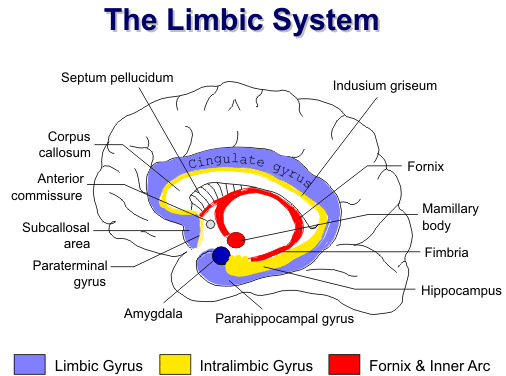
This book seems useful for anyone has experienced trauma or PTSD in their lives. The limbic system (also sometimes known as the paleomammalian brain) is the part of the brain that deals with fear, threats, and survival (the amygdalae). However, the limbic system is also the seat of long-term memory and emotions (the hippocampus). Those with PTSD often have an over-active amygdala (responsible for processing and encoding emotional memories) and therefore live with highly-charged emotional memories (thanks to the amygdalae) that often have a physiological component as well.

Anyway, this is good stuff.


Book Description
Release date: March 21, 2013


Thanks to technology, we live in a world that’s much more comfortable than ever before. But here’s the paradox: our tolerance for discomfort is at an all-time low. And as we wrestle with a sinking “discomfort threshold,” we increasingly find ourselves at the mercy of our primitive instincts and reactions that can perpetuate disease, dysfunction, and impair performance and decision making.

Designed to keep us out of danger, our limbic brain’s Survival Instinct controls what we intuitively do to avert injury or death, such as running out of a burning building. Rarely are we required to recruit this instinct today because seldom do we find ourselves in situations that are truly life-threatening. However, this part of our brain is programmed to naturally and automatically react to even the most benign forms of discomfort and stress as serious threats to our survival.

In this seminal book we learn how the Survival Instinct is the culprit that triggers a person to overeat, prevents the insomniac from sleeping, causes the executive to unravel under pressure, leads travelers to avoid planes or freeways, inflames pain, and due to past heartache, closes down an individual to love. In all of these cases, their overly-sensitive Survival Instinct is being called into action at the slightest hint of discomfort. In short, their Survival Instinct is stuck in the “ON” position…with grave consequences.

Your Survival Is Killing You can transform the way you live. Provocative, eye-opening, and surprisingly practical with its gallery of strategies and ideas, this book will show you how to build up your “instinctual muscles” for successfully managing discomfort while taming your overly reactive Survival Instinct. You will learn that the management of discomfort is the single most important skill for the twenty-first century. This book is, at its heart, a modern guide to survival.
Here is the video.

Authors@Google: Marc Schoen - Your Survival Instinct is Killing You

Published on Apr 2, 2013


Wednesday, March 13, 2013

Is Having A Child A Rational Decision?

In my opinion that would be a NO. Most people seem to have children because "that's what people do," or because their biology dictates it, or because they didn't practice birth control. I suspect that few people choose rationally when having a child - and I hesitate to call it a decision.

But I am a non-breeder, so maybe I am biased. This comes from NPR.

Is Having A Child A Rational Decision?

by TANIA LOMBROZO
March 11, 2013

Debates about whether it's rational to have children are nothing new. Recent books like David Benatar's Better to Have Never Been: The Harm of Coming Into Existence, Bryan Caplan's Selfish Reasons to Have More Kids, Christine Overall's Why Have Children: The Ethical Debate, and Jessica Valenti's Why Have Kids? span the full range of views, from passionate pleas against procreation to more light-hearted defenses.

Last year at the Huffington Post, Lisa Belkin suggested that most academic discussions of parenthood fail to address why so many people actually have kids. Most people don't decide to start a family after logical and ethical debate; they're moved (says Belkin):
To create a family. To craft a whole greater than yourself, of which you will eternally be a part. To take part in a life from its start to your own finish.
In other words, they're moved by what they think it would be like to have a child and how that fits in with their vision of a full life.

Is it possible that having a child is neither rational nor irrational, but outside the scope of rational decision making altogether?

In a surprising development, Belkin may have found an advocate from within the halls of academe: philosopher L.A. Paul. In a controversial new paper forthcoming in the journal Res Philosophica, Paul argues that having a child is an "epistemically-transformative experience," and therefore one for which rational decision-making procedures, such as maximizing your "expected utility," simply don't apply.

Let's unpack that a bit.

Paul begins with a common procedure for how someone with the luxury of deciding whether to have a child might go about making the decision. First, she (or he) considers what it would be like to have a child, and what it would be like not to have a child. After careful thought, our hypothetical person determines whether she has a preference for one outcome or the other, and she pursues that outcome accordingly.

The problem, suggests Paul, is that one can't know what it's like to have a child of one's own before actually having such a child. And that means that our childless decision-maker isn't in a position to evaluate one of her options to see how it stacks up against the alternative.

It's important to note that Paul isn't assuming that having a child is so wonderful and fulfilling that someone without children simply couldn't comprehend a parent's child-induced bliss. In fact, having a child could make someone miserable. Paul's point is precisely that you cannot knowwhat the experience of having your own child will be like until you experience it, whether the experience is positive, negative or somewhere in between. This is the sense in which having a child is an epistemically-transformative experience: it puts you in a position of access to knowledge that you didn't have before.

The classic philosophical example of an epistemically-transformative experience comes from a paper by Frank Jackson in which he introduces Mary, a hypothetical neuroscientist and genius who knows all there is to know about how light is processed by the retina, how the visual cortex and other brain areas generate perceptions of color, and so on. (If this isn't plausible today, feel free to fast-forward a few centuries — Jackson is willing to grant her all the knowledge of a "complete" science.) But poor Mary has been raised in a black and white cell and has never seen the color red. Jackson argues that she can't know what it's like to see red until she actually has the experience of seeing red. The title of Paul's paper, "What Mary can't expect when she's expecting," is a clever play on this well-known thought experiment.

If Paul is right, then we're simply wrong to think that decisions about epistemically-transformative experiences can be made rationally, whether it's having a child or seeing red for the first time.

In a blog post at Crooked Timber written with sociologist Kieran Healy, Paul sums up her argument as follows:
We are not arguing that it is right or wrong to have a child. Nor are we saying people shouldn't be happy with their choice. You can be happy with a child or blissfully child-free. But if you are happy, you shouldn't congratulate yourself on your wise decision—you should be thankful for your good luck. Choosing to have a child involves a leap of faith, not a carefully calibrated rational choice ... 
The standard story of parenthood says it's a deeply fulfilling event that is like nothing else you've ever experienced, and that you should carefully weigh what it will be like before choosing to do it. But in reality you can't have it both ways.
Paul's paper has generated a lot of buzz in the philosophical blogosphere. Brian Leiter calls it smart and interesting, and says it "rings true." Jason Streitfeld at Specter of Reason is more critical; several folks at New APPS: Art, Politics, Philosophy, Science praise the paper but wonder whether a richer cultural vocabulary for parenthood could close the epistemic gap between parents and non-parents, whether models of religious belief might be a more appropriate guide for decisions about life-transforming experiences than decision theory, and how to cash out what counts as a transformative experience in the first place. For my own response to Paul's argument you can visit this companion post at Psychology Today.

Part of what I admire about Paul's paper is its elegant fusion of real life with real philosophy — she doesn't shy away from a difficult topic, but tackles it with clarity, care, and a full philosophical arsenal.

"The great challenge for the sort of philosophy that I do," Paul shared with me by e-mail, "is to connect rigorously developed theories of mind, metaphysics, language and epistemology to questions that really matter to people. It can be hard to connect the pure with the practical in a productive way, but I think the interest in this paper shows that contemporary philosophers see the value of trying to do that."


You can keep up with more of what Tania Lombrozo is thinking on Twitter: @TaniaLombrozo

Thursday, February 14, 2013

Divided Brain, Divided World - RSA Action and Research Centre


Psychiatrist and author Iain McGilchrist, whose most recent book is The Master and His Emissary: The Divided Brain and the Making of the Western World, and the Director of RSA’s Social Brain Centre, Dr Jonathan Rowson, have joined forces to write Divided Brain, Divided World; Why the best part of us struggles to be heard. This document grew out of a workshop given in November the mark the evolution of The Social Brain Project into The Social Brain Centre. McGilchrist and Rowson explore the practical significance of our two brain hemispheres having radically different "world views."

For a detailed synopsis to the report, Jonathan Rowson posted an introduction of sorts a few days ago, which is here. I'll share a little of it below.

Divided Brain, Divided World

Divided Brain, Divided World; Why the best part of us struggles to be heard explores the practical significance of the scientific fact that the two hemispheres of our brains have radically different ‘world views’. It argues that our failure to learn lessons from the financial crash, our continuing neglect of climate change, and the increase in mental health conditions may stem from a literal loss of perspective that we urgently need to regain. The evidence-based case is that the abstract, articulate, instrumentalising world view of the left hemisphere is gradually usurping the more contextual, holistic but relatively tentative world view of the right hemisphere.

Divided Brain, Divided World examines how related issues are illuminated by the ideas developed in author and psychiatrist Iain McGilchrist’s critically acclaimed work: The Master and His Emissary: The Divided Brain and the Making of the Western World. It features a dialogue between McGilchrist and Director of RSA’s Social Brain Centre, Dr Jonathan Rowson, which informed a workshop with policymakers, journalists and academics. This workshop led to a range of written reflections on the strength and significance of the ideas, including critique, clarification and illustrations of relevance in particular domains, including economics, behavioural economics, climate change, NGO campaigning, patent law, ethics, and art.


Download Divided Brain, Divided World (PDF, 2MB)


* * * * *

The Process

Thankfully, in the report we have much broader capacity to develop the ideas, and in the afterword I reflected as follows:
“During the course of reading Iain’s work, the process of preparing and conducting the dialogue, organising the workshop, and compiling and writing this document, I have often felt somewhat overwhelmed by the effort, but never underwhelmed by the goal. The theory is big, difficult and audacious and most people don’t quite know what to do with it. So, there have been times where it has felt like the drive to extract importance out of the interest has been in vain, but when I reflect on the initial motivation, and the potential prize, it feels more like we just have to try differently, or better.”
You see, the book is magisterial, and the argument utterly fundamental, so anybody who spends their time trying to effect social change should at least be aware of it, and have some sense of what they feel or think about it. You can think of it as a grand theory for our times. The argument is pitched at too general a level to ever reflect a single direct cause of a single phenomenon, but once the narrative as a whole seeps into you, it feels like it is relevant to everything around us, and you want everybody else to be able to see the world through that lens.

One of the respondents, Independent Researcher Simon Christmas FRSA captured the value of this kind of contribution well (p 67):
“It has given me a better way of grasping many things I had already thought or felt. By doing so, it has made those thoughts and feelings clearer and more meaningful. Iain himself notes that there is little in the book that one might not arrive at by some other route. I think that is key to its impact: it speaks to an audience who have already fumbled their way to an intellectual discontent for which Iain’s argument provides a shape, a story, a narrative.”

Practical Implications:

We tried our best to make sense of the ‘so what?’ question and made some headway that I hope others might build on. In the report, John Wakefield’s (former political journalist) extended feedback piece (p 71) gives a particularly careful account of the extent to which we should expect practical implications from such a nuanced and high-level thesis, but for the press release we were naturally a little more direct:

“This issue has deep significance for anybody working to affect social change. The evidence-based case is that the abstract, instrumental, articulate and assured world view of the left hemisphere is gradually usurping the more contextual, humane, systemic, holistic but relatively tentative and inarticulate world view of the right hemisphere. This cultural trend can be illustrated in a range of current policy issues, for instance:
  • An obsession with exam results in school education
  • The creation of absurd forms of bibliometry and citation counting in higher education research assessment exercises.
  • Funding cuts for arts and humanities courses that struggle to justify themselves in instrumental terms.
  • Pervasive ignoring or denial of the scale of our climate change problem.
  • Political failure to think through the implications of the fact that beyond a minimal threshold higher income does not equate with higher wellbeing.
  • Political failure to question the imperative for economic growth.
Hopeful Pessimism:

Some might think the report has a negative quality, in that it’s basically a critique of the modern world and the direction we are heading, but at its heart it is hopeful, constructive and even optimistic: Iain closes the dialogue as follows:

“I call myself a hopeful pessimist. In respect of where we are currently headed, yes, I am a pessimist. In respect of our potential to adapt and change quickly, I am hopeful. I sense that people are sick of the current worldview in the West… In response to my book, people of all walks of life all over the world have written to me. They are looking for a change in direction, and I think all I have done is to give them courage to believe in what they already really know at some level – something which has not been articulated in quite the same terms before. In many ways my message is a very positive one. We have been sold a sadly limiting version of who we as human beings are, and how we relate to the world. Inside each one of us there is an intelligence, in fact a superior intelligence, that sees things differently from the way we have been sold – if we would only listen to it. Let’s hope that we can.”

###

A Note on Reading the Report:

I really hope as many people as possible can read the full report. However, if you just press ‘print’, you’ll get about 48 pages double-sided, so it is worth thinking of what you most want to read by going to the contents page in the PDF first. The dialogue with me and Iain is split into three parts: 1) The argument (p 8) 2) Challenges to the argument (p 23) 3) Practical Implications (p 31). The Reflections section (p 51) includes 14 feedback pieces including Ray Tallis, Mark Vernon, Tom Crompton, Rita Carter, Theresa Marteau and others. The Appendices (p 80) feature details of a three-hour workshop discussion where Guy Claxton, Mark Williamson, Matthew Taylor and many others spoke, and has been included to capture some of the best ideas generated collectively, but will probably only be of interest to those who are truly committed!