Showing posts with label relational. Show all posts

Sunday, September 07, 2014

Big Think - All Meaning Is Relational

At Big Think a few months back, Jag Bhalla breaks down the argument against a "pleasure machine" that would provide any experience you'd like (presumably pleasurable) for all time (no unplugging). The argument is that such an experience would be the ultimate in hedonism, and therefore very non-relational.

This is a little convoluted (as are most thought experiments), but I like the conclusion quite a bit - meaning IS relational.

All Meaning Is Relational


by Jag Bhalla
June 27, 2014


All meaning is relational (otherwise it’s potentially useless and unhealthy). That’s true for both senses of meaning, and Nozick’s “Pleasure Machine” shows why workable individualism must be relational.

1. Individualism’s definition includes seeking your “own goals without reference to others,” especially free from collective constraints. “Individual” itself means “nondividable” (Latin translation of Greek “atom” = “uncuttable”).

2. Individualized meaning in language (private usage) if unshared, is logically irrelevant to others.

3. “Meanings of life” work the same way. Purposes pursued to make life feel worthwhile, if too self-oriented (unshared, unrelational) risk uselessness and unhealthiness.

4. Nozick’s Pleasure Machine manipulates your mind to experience (as if real) anything you’d like. The catch? Like “The Matrix” you can’t unplug.

5. Nozick felt few would choose this individualist Eden; its extremely self-absorbed pleasures wouldn’t make a meaningful life (showing we aren’t entirely solo pleasure-seekers).

6. Philosophically there’s no trace of genuine individualism in Plato or Aristotle (an Epicurean version arose later). Hobbes (the mushroom-logic guy) and Bentham (of utility bucket fame) invented today’s pleasure-centric individualism (they’d both love Nozick’s machine).

7. Related religious ideas illustrate Judeo-Christian differences. Christianity promotes self-sacrifice and selflessness (and somehow a gospel of wealth). But Judaism favors both self-benefit and other-orientedness (see Hillel).

8. Pop-science claims nature is ruthlessly “selfish.” But human nature crucially adds otherness to selfness. We’ve evolved for team survival for ~10,000 generations (we’re highly self-deficient and other-dependent). Hence our deep drive to belong to and seek “responsibility to something greater than the self.”

9. Individualism remains a sampling error: Most cultures are still socio-centric (not W.E.I.R.D.).

10. Economic ideas now dominate how we balance selfness and otherness (often trumping philosophy, religion, science, data, and experience). Economists generally promote maximum self-seeking, delegating most otherness to markets (turning relational into transactional). But free markets alone don’t—and can’t (in practice)—work as advertised, or deliver all that’s needed.

Meaning and pleasure (or supposed synonyms like utility or happiness) aren’t interchangeable labels for life purposes. Meaning is inherently relational. Many pleasures now are not. Their logic leads to Nozick’s machine (or a globally self-oriented market “Matrix”).


~ Illustration by Julia Suits, The New Yorker Cartoonist & author of The Extraordinary Catalog of Peculiar Inventions.

Monday, August 18, 2014

George Atwood - Lectures on Abnormal Psychology

http://www.georgeatwood.com/uploads/7/3/4/6/7346190/8218012_orig.jpg

George Atwood is one of the co-founders (with Robert Stolorow and others) of the intersubjective systems theory model of post-Freudian, relational psychoanalysis. He is professor emeritus in Clinical Psychology at Rutgers University.

He also is the author of The Abyss of Madness (2011), one of the best books I have ever read about working with clients who are experiencing psychotic symptoms. You can read the first four chapters for free online.

He is co-author of Psychoanalytic Treatment: An Intersubjective Approach (with Robert Stolorow and Bernard Brandchaft), Contexts of Being: The Intersubjective Foundations of Psychological Life (with Stolorow), and Working Intersubjectively: Contextualism in Psychoanalytic Practice (with Donna Orange and Stolorow), among many others. Working Intersubjectively is also one of the best books I have read in this field, and I have read most of them.

The playlist below contains 36 videos (19 lectures - all but 2 are two parts) and 19 hours of education.


George Atwood, Ph.D - Professor of Psychology at Rutgers University - New Brunswick
Course: Abnormal Psychology
Recorded in Spring 2012

Wednesday, May 28, 2014

Happiness and its Discontents - Omnivore

From Bookforum's Omnivore blog, sometime last week, this collection of links focuses on happiness and its various forms, its economics, and as an object of our obsession.

Happiness and its discontents

May 22 2014
9:00AM

Sunday, December 29, 2013

Relational Reality: Charlene Spretnak at TEDx Manhattan Beach


Earlier this year I posted a piece by Michel Bauwens that reviewed and excerpted Relational Reality: New Discoveries of Interrelatedness That Are Transforming the Modern World (2009), and she recently appeared at TEDx Manhattan Beach to talk about relational reality.

Relational Reality: Charlene Spretnak at TEDx Manhattan Beach

Published on Dec 27, 2013


Charlene Spretnak is an author and activist who has long been fascinated with the subject of interrelatedness. In her talk, Charlene sites several recent discoveries indicating that all of physical reality, including humans, is far more dynamically interrelated than our modern schooling had supposed. These new discoveries reveal the impact of our relationships -- with other people and with nature -- on childhood development, intelligence, healing, and our life-long health and well-being.
* * * * *
Charlene Spretnak has been intrigued throughout her life as a writer, speaker, and activist with dynamic interrelatedness. She has written eight books on various subjects in which interrelatedness plays a central role. She is particularly interested in 21st-century discoveries indicating that the physical world, including the human bodymind, is far more dynamically interrelated than modernity had assumed. Such discoveries are currently causing a “relational shift” in our institutions and systems of knowledge, as she suggests in Relational Reality (2011). Several of her books have also proposed a "map of the terrain" of emergent social-change movements and an exploration of the issues involved. She has helped to create an eco-social frame of reference and vision in the areas of social criticism (including feminism), cultural history, and religion and spirituality. Since the mid-1980s, her books have examined the multiple crises of modernity and furthered the corrective efforts that are arising. Her book Green Politics was a major catalyst for the formation of the U.S. Green Party movement, of which she is a cofounder. In 2006 Charlene Spretnak was named by the British government's Environment Department as one of the "100 Eco-Heroes of All Time." In 2012 she received the Demeter Award for lifetime achievement as "one of the premier visionary feminist thinkers of our time" from the Association for the Study of Women and Mythology. She is a professor emerita in philosophy and religion. She hosts a weekly radio program about the Relational Shift, "All Together Now," on the Progressive Radio Network (prn.fm).

She is currently working on a book about the spiritual dimensions of modern and contemporary art from the 1800 to the present (Palgrave Macmillan, Fall 2014).

In addition to many articles, op-ed pieces, and reviews, she has written the following books (plus others not listed):

Relational Reality: New Discoveries of Interrelatedness That Are Transforming the Modern World (2011)
Missing Mary: The Queen of Heaven and Her ReEmergence in the Modern Church (2004)
The Resurgence of the Real: Body, Nature, and Place in a Hypermodern World (1997)
States of Grace: The Recovery of Meaning the Postmodern Age (1991)

Thursday, May 30, 2013

Daniel Siegel - Interpersonal Neurobiology


This is a brief but cool video of Dr. Dan Siegel explaining what interpersonal neurobiology is - courtesy of Portland Professional Counseling Videos.

Interpersonal Neurobiology


Interpersonal Neurobiology, a term coined by Dr. Dan Siegel, studies the way the brain grows and is influenced by personal relationships. Recent studies have confirmed that we are hardwired to connect with one another, and we connect through our emotions. Our brains, bodies, and minds are inseparable from the emotions that animate them. When that connection fails, we experience significant distress.

Normal human development relies on the cultivation of relationships with others to form and nurture the self-regulatory circuits that enable emotion to enrich, rather than enslave, our lives. Emotionally traumatic events can wreak havoc on our family, relationships and psyche, contributing to intense feelings of anxiety, feeling rejected or abandoned, or simply a perpetual dissatisfaction or distrust of close, intimate relationships. However, experiencing truly healthy relationships can become powerful catalysts for the transformations that are at the heart of the healing process.

IPNB explores the potential for healing trauma by using positive and secure influences on the brain. Conditions once thought to be permanent now have the bright potential for healing and growth. If trauma experience can change our neurons and genes, then “positive” experiences can have potential to restore our bodies to emotional and physical health. IPNB explores subtle, non-conscious influences on our experience of others, including implicit memory, mirror neurons, and emotional resonance.

Implicit Memory – Current situations trigger past emotional memories. ” When I sit in this big comfortable chair, it reminds me of when I was a kid and I would sit in my grandfather’s lap and feel safe and warm”. Or ” I get so angry when my wife and I fight it reminds me of when I would go to my room and hear my parents yelling at each other.”

Mirror Neurons – nerve cells activate in sympathy and in the same brain location as nerve cells of the person whose actions we are watching. These neurons help us to sense what others intend and help us connect with what the other feels…We resonate with their state.

Emotional Resonance – when two people experience deep feelings and can sense what the other feels. A mutual caring that is exchanged through words, expressions, or tones. One can feel what another is feeling.

What a IPNB therapist does:
1. Initiates and creates emotional safety along with the client.
2. Demonstrates vulnerability through transparency and self revealing.
3. Assists client in moving from “talking about” situations to being in emotional exchange with therapist in the “hear and now”.
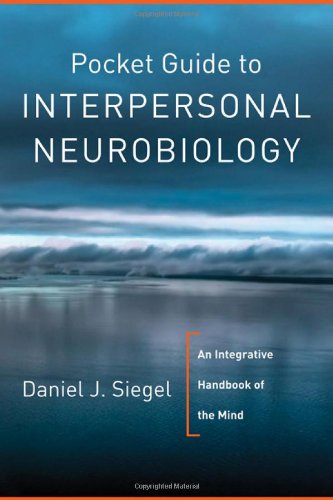
Selected Books by Daniel Siegel MD

Thursday, May 09, 2013

Ben Goertzel - Countering Objections to Mind Uploading (and Refuting that Countering)

In this post from IEET, Ben Goertzel offers his rebuttal to a recent article by George Dvorsky at io9 on why we will likely never be able to upload our "minds" into computers. He gave 8 reasons, none of which is the most crucial reason.

Before getting to the 9th reason, there is one REALLY important piece that has not been addressed in most of the articles I have seen - what is the definition of "mind" being used in the argument? Here is one of the possible versions of mind, from Wikipedia:

Understanding the relationship between the brain and the mind – mind-body problem is one of the central issues in the history of philosophy – is a challenging problem both philosophically and scientifically.[11] There are three major philosophical schools of thought concerning the answer: dualism, materialism, and idealism. Dualism holds that the mind exists independently of the brain;[12] materialism holds that mental phenomena are identical to neuronal phenomena;[13] and idealism holds that only mental phenomena exist.[13] 
The most straightforward scientific evidence that there is a strong relationship between the physical brain matter and the mind is the impact physical alterations to the brain have on the mind, such as with traumatic brain injury and psychoactive drug use.[14] 
In addition to the philosophical questions, the relationship between mind and brain involves a number of scientific questions, including understanding the relationship between mental activity and brain activity, the exact mechanisms by which drugs influence cognition, and the neural correlates of consciousness. 
Through most of history many philosophers found it inconceivable that cognition could be implemented by a physical substance such as brain tissue (that is neurons and synapses).[15]Philosophers such as Patricia Churchland posit that the drug-mind interaction is indicative of an intimate connection between the brain and the mind, not that the two are the same entity.[16] Descartes, who thought extensively about mind-brain relationships, found it possible to explain reflexes and other simple behaviors in mechanistic terms, although he did not believe that complex thought, and language in particular, could be explained by reference to the physical brain alone.[17]
There is a fourth option to the mind-body problem, an alternative I once named Singularism. In essence, Mind is the complex interaction between the body/brain and it's subjective experience, which is shaped and defined by its interpersonal and intersubjective context within a specific physical and temporal space.

Dan Siegel has a much simpler definition, but it's based on similar ideas to the ones I offer above - “A core aspect of the mind can be defined as an embodied and relational process that regulates the flow of energy and information.” 

The key words in Siegel's definition are embodied and relational - these are the essential elements missing from most of the definitions of mind that are used when people talk about uploading mind into computers.


Countering Objections to Mind Uploading


Ben Goertzel

Posted: May 6, 2013
By Adam Ford


Ben Goertzel, an IEET Fellow, in response to some common objections covered in an article on io9 by George Dvorsky (IEET Director) 'You'll Probably Never Upload Your Mind Into A Computer.'
Here is the beginning of the original article:

You Might Never Upload Your Brain Into a Computer


Many futurists predict that one day we'll upload our minds into computers, where we'll romp around in virtual reality environments. That's possible — but there are still a number of thorny issues to consider. Here are eight reasons why your brain may never be digitized.

Indeed, this isn't just idle speculation. Many important thinkers have expressed their support of the possibility, including the renowned futurist Ray Kurzweil (author of How to Create a Mind), roboticist Hans Moravec, cognitive scientist Marvin Minsky, neuroscientist David Eagleman, and many others.

Skeptics, of course, relish the opportunity to debunk uploads. The claim that we’ll be able to transfer our conscious thoughts to a computer, after all, is a rather extraordinary one.

But many of the standard counter-arguments tend to fall short. Typical complaints cite insufficient processing power, inadequate storage space, or the fear that the supercomputers will be slow, unstable and prone to catastrophic failures — concerns that certainly don’t appear intractable given the onslaught of Moore’s Law and the potential for megascale computation. Another popular objection is that the mind cannot exist without a body. But an uploaded mind could be endowed with a simulated body and placed in a simulated world.

To be fair, however, there are a number of genuine scientific, philosophical, ethical, and even security concerns that could significantly limit or even prevent consciousness uploads from ever happening. Here are eight of the most serious.
With that, here is the reply from Ben Goertzel, one of the most vocal supporters of mind uploads.

Objections are covered in order as they appear in the article:
1. Brain functions are not computable
2. We'll never solve the hard problem of consciousness
3. We'll never solve the binding problem
4. Panpsychism is true
5. Mind-body dualism is true
6. It would be unethical to develop
7. We can never be sure it works
8. Uploaded minds would be vulnerable to hacking and abuse
Ben Goertzel wrote a response to the io9 article: http://hplusmagazine.com/2013/04/20/g…

http://www.goertzel.org
http://opencog.org

Sunday, February 24, 2013

Charlene Spretnak - Relational Reality: New Discoveries of Interrelatedness that Are Transforming the Modern World


Back in November (2012), Michel Bauwens (at the P2P Foundation blog) posted a review of Charlene Spretnak's 2011 book, Relational Reality: New Discoveries of Interrelatedness That Are Transforming the Modern World. I have been meaning to share this ever since the original post, and finally, almost 4 months later, here it is.

This looks to be an interesting book.


photo of Michel Bauwens
Michel Bauwens
3rd November 2012

Spretnak, C. Relational Reality: New discoveries of Interrelatedness That Are Transforming the Modern World. Topsham: Green Horizon Books, 2011

What is the book about?

1. “Ms. Spretnak’s eighth book, Relational Reality: New Discoveries of Interrelatedness That Are Transforming the Modern World was published in 2011. Noting that our hypermodern societies, currently possess only a kindergarten understanding of the deeply relational nature of reality, she illuminates the coherence of numerous recent discoveries that are moving the relational worldview from the margins into the mainstream. The central realization, with myriad manifestations, is that all entities in this world, including humans, are thoroughly relational beings of great complexity who are both composed of and nested within contextual networks of creative, dynamic interrelationships. Nothing exists outside of those relationships. She presents newly created relational approaches that are already transforming the way we educate our children, attend to our health, green our communities, and rethink economic activity. New analysis of the crises of modernity and bountiful new solutions are the result.”

2. “Relational Reality reveals the coherence among numerous surprising discoveries of the interrelated nature of reality. These discoveries have resulted in a new perspective that has been emerging gradually for the past several decades but has gained momentum and is now transforming every mainstream field of human endeavor. All our basic assumptions (built on the old idea that everything in the physical world is essentially separate and functions mechanistically) are being reconsidered. No longer a marginal perspective, the Relational Shift is based on the realization that all entities in this world, including humans, are thoroughly relational beings of great complexity who are both composed of and nested within networks of creative, dynamic interrelationships. Nothing exists outside of those relationships. As we try to grasp the interrelated nature of reality, emergent relational approaches are already transforming the way we educate our children, attend to our health, green our communities, and rethink economic activity. New analyses of the crises of modernity and abundant new solutions are the result.”

Here are some excerpts, by Charlene Spretnak:

“Our hypermodern societies currently possess only a kindergarten-level understanding of the deeply relational nature of reality. It may seem unlikely that such advanced cultures could have missed “the way the world works,” but it was simply a matter of habit. Our cultural tendency has been to perceive the physical worlds as an aggregate of separate entities. We noticed some relationships between and among things, of course, but those seemed of marginal significance compared to what things are made of and how they function. The failure to notice that reality is inherently dynamic and interrelated at all levels – including substance and functioning – has caused a vast range of suffering: our medical system designed treatments as if our bodies were biomachines with independently functioning parts; our education systems regarded students as essentially isolate units into which learning can be implanted; our psychologists authoritatively conveyed to patients the Freudian notion that separating from core family relationships is the key to healthy maturation; and our workplaces and dwellings were designed with no inkling of the relationship between human health and natural light. Moreover, our communities have become fragmented and alienating, as the focus of modern life has largely contracted to the sphere of the Individual Consumer, a disintegration that has not been countered by support for the social fabric. Even more tragically, the entire planet is now imperilled by climate destabilization and ecological degradation, resulting from the modern assumption that highly advanced societies could throw toxic substances “away” somewhere and could exude staggeringly unnatural levels of carbon dioxide and other greenhouse gases into our atmosphere without ill effect… ” (Spretnak, C. Relational Reality: New discoveries of Interrelatedness That Are Transforming the Modern World; Topsham: Green Horizon Books p. 1-2)

The relational shift and the effect on our children

“Of all the areas being revitalized by the Relational Shift, the education of our children may well be the most poignant. While the relational perspective is, as yet, more influential in the academic disciplines at universities than it is in elementary and secondary schools, this is a moment of tremendous potential for reshaping the educational experience of young children starting out on their journey from kindergarten to high school graduation – and beyond. For the first time in the modern era, they are increasingly likely to be taught not the misleading mechanistic worldview but, rather, a coherent presentation of the relational nature of reality, a study of the fundamental relationships of the physical world and the cultures of the human family.

An organic progression would begin for very young children with a focus on the internal relationships that allow their own bodies to work so well (that is, a version for 5- and 6-year olds of the recent discoveries in relational physiology that reveal how creative and smart our internal bodymind relationships are).

This would lead to a focus on the relationships between their bodies and the sun, the weather, and water and subsequently to relationships between oxygen and breathing, between sunlight and photosynthesis for plants, between bees and pollination, and between juveniles and their parents in all animal and human families. From the early years of elementary education the children would enter into an understanding that the various areas of study are specific ways of grasping the relationships that constitute the world. They would learn about relationships among numbers (arithmetic); relationships among letters and words (reading, writing, and storytelling); relationships among the sun, the Earth, the moon, and the other planets (science); relationships among people who constitute a culture (social studies), and so on.

As the children mature, through high school, their understanding of the dynamic, creative relationships that constitute life becomes increasingly advanced, in areas such as literature, mathematics, science, history, art, music, social studies and political science (what used to be called civics). These would no longer be viewed as isolated fields, from which students readily disengage. They would comprise ways for students to grasp the relationships in which they themselves exist. In each area, understanding one level of relational analysis opens students’ eyes to the presence of further levels and developments.

Surely the shaping of a child’s consciousness would be enhanced by learning from the very beginning that she or he exists as an inherent part of more richly complex relationships – physical and mental, organic and cultural, creative and open-ended – than anyone could ever map. Along the way, children would also be taught the relational keys to happiness, resilience, responsibility, and what Edith Cobb called “compassionate intelligence.” By that Cobb meant a “generous worldview and process of understanding” involving a sense of relational identity that transcends a narrow focus on the self and that benefits from “humility as the creative tool.” She observed that a child’s development is ‘regulated by the meanings of nature imparted to him by the culture of his particular period in history.”

In modern Western culture she noted that a very young child “perceives preverbally the logic of relationships that are overlooked in later, more formally fixed and intellectualized systems of knowledge.” Cobb made that observation long before the relational critique of modernity illuminated the problem: the relational aspect of reality is not simply “overlooked” but brusquely shoved aside by the inculcation of a mechanistic worldview into the minds of children once they enter modern schooling.

The exciting potential in K-12 education today is not only that we might finally get it right in terms of accurately bringing our mechanistic knowledge systems up to date with the myriad recent discoveries in science about the deeply relational nature of the physical world. The relational orientation, in fact, contains all the best of several recently proposed educational reforms, including a focus on getting our children more interested in math and science so they will not be shut out of 21st-century jobs – but this overarching approach offers much more.

For our children to come of age securely situated in the understanding of organic and cultural interconnectedness might, just might, rescue them from the contagion of narcissism, aimlessness, and alienation that plagues so many of our young adults. It might well give them back their birth right as human organisms fully engaged with the embodied, embedded, organic interconnections needed to be healthy and to thrive, no longer isolate units of “coolness” and consumption but linked in their very cells with the dynamics of the entire Earth community.”

Andre Ling has the following critique, i.e. “Objects are Real”:

‘I must admit I get a bit frustrated by statements like ‘everything is interconnected’ or, more specifically this: ” the realization that all entities in this world, including humans, are thoroughly relational beings of great complexity who are both composed of and nested within networks of creative, dynamic interrelationships. Nothing exists outside of those relationships.” There has been a vibrant ongoing philosophical debate online about the relational vs. object-oriented approaches to philosophy. The relationalists believe that all entities can be reduced to their relationships. Reality is then a giant tangle of relations and entities are entangled clusters of these relations; the points where multiple relations converge into a dense nucleus. Key philosophical influences here include Deleuze (used by both camps), Whitehead and William James and some leading lights here are Brian Massumi and Erin Manning. Those in the object-oriented camp insist that objects cannot be reduced to their relations to other objects. Rather it is objects that enter into relationships with each other. There is a consensus in both camps in the understanding of reality as ecological (prompting Stengers, for example, to propose the term ‘ecosophy’ as an alternative to philosophy) but the critical gap is in the autonomous, irreducible status the object-oriented philosophers give to objects (which include both physical objects and ideas). If objects can enter into and exit various relationships without themselves undergoing change then surely they cannot be reduced to those relationships. Objects also enjoy a certain degree autonomy from their parts: if you cut off my leg I am still me. Furthermore, objects are understood to have withdrawn powers/capacities, which is precisely what enables them to introduce novelty, to be available to different kinds of uses and, indeed, what makes any kind of change possible at all: if all entities were already fully deployed as bundles of entirely external relationships, the universe would resemble a grid-lock with no possibility of change/movement. OOO-ers hold that it is the inner reality of objects – the fact that they are never fully deployed or expressed through their relationships with other entities, that opens up possibilities for change, movement and novelty. Furthermore, a fully relational ontology is most probably also necessarily one that depends on what OOO-ers call ontotheology: the belief that everything, ultimately, can be reduced to one, the source, the ground of being, God – a kind of singular universal relational web, with everything else (entities) being a kind of transitory or surface appearance/expression of that underlying reality. OO philosophy challenges this kind of thinking which is often a source of heated debate amongst both camps. OOO holds that there is no fundamental ground of being; there are just myriad kinds of objects, a kind of epic list of things that populate the cosmos, entering into and exiting their relationships with each other, being created, being destroyed, transforming and being transformed by each other. This in no way means that the relationships are not important, or even a central question (which is why I am so obsessed with Stengers’ ideas of ‘ecology of practices’, ‘ecosophy’ and ‘cosmopolitics’) and matter of concern for us in the contemporary period. The hegemonic patterns of relationships that have been established amongst the myriad entities that populate our world can be characterised as structural injustices, as capitalism, as a direct threat to continued human survival. Our practices, our world-views, our institutions, the way we relate to each other and the other entities around us are sick. However, to write-off entities as mere epiphenomena, secondary to relationships, with no autonomy (ontological, physical or otherwise) of their own, seems to be a bit of a case of throwing the baby out with the bathwater.”

Tuesday, October 23, 2012

David DeSteno - The Psychology of Compassion and Resilience (via Brain Pickings)


This short but very interesting talk by David DeStano, author of Out of Character: Surprising Truths About the Liar, Cheat, Sinner (and Saint) Lurking in All of Us, comes from Maria Popova and her excellent Brain Pickings blog. Popova also offered a review of the book when it was new in May of 2011, along with another video, which I will include below.

David DeSteno on the Psychology of Compassion and Resilience

by

How to use the intricate balance of altruism and self-interest to our collective advantage.

Last week, I journeyed to this year’s PopTech conference, where one of the most compelling talks came from psychologist David DeSteno, director of Northeastern University’s Social Emotions Lab and author of the fascinating Out of Character: Surprising Truths About the Liar, Cheat, Sinner (and Saint) Lurking in All of Us, one of last year’s 11 finest psychology books. DeSteno examines the science of compassion and resilience, and explores emerging ideas for leveraging the mechanisms of the mind that enable them:
"The distress we see someone experiencing — the compassion we feel for them — isn’t determined by the objective facts on the ground; it’s determined by who’s looking. … It’s not the severity or the objective facts of a disaster that motivate us to feel compassion and to help — it’s whether or not we see ourselves in the victims."

Tuesday, September 25, 2012

Tim Ingold - The Social Brain Hypothesis

I found these videos (all seven are embedded in this frame) of Tim Ingold lecturing about the social brain hypothesis at PLoS Blogs' Neuroanthropology. The blogger there, daniel.lende, does an excellent job of arguing against Robin Dunbar’s Social Brain Hypothesis, and offering own explanation of how the human brain really is social - “I’ll attempt to show that the brain is social because life is.”

To read Lende's post, check it out at his blog.


Tim Ingold - The Social Brain

Saturday, September 22, 2012

Daniel Stern and the Creation of Self Through Relational Experience


In integral theory, much like the history of Western psychology upon which it is based, human development - especially that of the infant - generally has been regarded as an innate process that, barring organic defect or environmental crisis, will unfold pretty much like clockwork until we are fully-grown adults. In essence, development was understood as almost completely intrapsychic.

Although some theorists intuited a deficiency in that model, it was not until the emergence of attachment theory (Bowlby and Ainsworth) that we began to understand how the infant develops within the interpersonal and intersubjective context of the child-caregiver dyad. While psychology has accepted these findings in relation to affect regulation, cultural transmission, language acquisition, and several other realms, it has not yet fully grasped that this is true, as well, for the development of the infant's sense of self.

Three people have really laid the groundwork for our understanding of the intersubjective development of the infant - Andrew Meltzoff, Colwyn Trevarthen, and Daniel Stern. I hope to do a post on Trevarthen at some point, but today my focus is Daniel Stern.

Stern's The Interpersonal World of the Infant: A View from Psychoanalysis and Developmental Psychology (be sure to get the 2000 paperback edition - it has a lengthy introduction that adds insights and new information not in the original text) is one of the landmark publications in reshaping how we conceive of the inner life of infants - it's assertions are based on 20-30 years of observational research.

What I most want to focus on here is the idea of the self that Stern proposes and how it develops. The following paragraphs lay out the basic model (somewhat confusingly, he begins with the second month, with the core self, then comes back at the end to the birth-2 months stage of emergent self).
There is, for one, the physical self that is experienced as a coherent, willful, physical entity with a unique affective life and history that belong to it. This self generally operates outside of awareness. It is taken for granted, and even verbalizing about it is difficult. It is an experiential sense of self that I call the sense of a core self (11). The sense of a core self is a perspective that rests upon the working of many interpersonal capacities. And when this perspective forms, the subjective social world is altered and interpersonal experience operates in a different domain, a domain of core-relatedness. This developmental transformation or creation occurs somewhere between the second and sixth months of life, when infants sense that they and mother are quite separate physically, are different agents, have distinct affective experiences, and have separate histories.

That is only one possible organizing subjective perspective about the self-and-other. Sometime between the seventh and ninth months of life, infants start to develop a second organizing subjective perspective. This happens when they “discover” that there are other minds out there as well as their own. Self and other are no longer only core entities of physical presence, action, affect, and continuity. They now include subjective mental states— feelings, motives, intentions— that lie behind the physical happenings in the domain of core-relatedness. The new organizing subjective perspective defines a qualitatively different self and other who can “hold in mind” unseen but inferable mental states, such as intentions or affects, that guide overt behavior. These mental states now become the subject matter of relating. This new sense of a subjective self opens up the possibility for intersubjectivity between infant and parent and operates in a new domain of relatcdness— the domain of intersubjective relatedness— which is a quantum leap beyond the domain of core-relatedness. Mental states between people can now be “read,” matched, aligned with, or attuned to (or misread, mismatched, misaligned, or misattuned). The nature of relatedness has been dramatically expanded. It is important to note that the domain of intersubjective relatedness, like that of core-relatedness, goes on outside of awareness and without being rendered verbally. In fact, the experience of intersubjective relatedness, like that of core-relatedness, can only be alluded to; it cannot really be described (although poets can evoke it).

The sense of a subjective self and other rests upon different capacities from those necessary for a sense of a core self. These include the capacities for sharing a focus of attention, for attributing intentions and motives to others and apprehending them correctly, and for attributing the existence of states of feeling in others and sensing whether or not they are congruent with one’s own state of feeling.

At around fifteen to eighteen months, the infant develops yet a third organizing subjective perspective about self and other, namely the sense that self (and other) has a storehouse of personal world knowledge and experience (“ I know there is juice in the refrigerator, and I know that I am thirsty”). Furthermore, this knowledge can be objectified and rendered as symbols that convey meanings to be communicated, shared, and even created by the mutual negotiations permitted by language.

Once the infant is able to create shareable meanings about the self and the world, a sense of a verbal self that operates in the domain of verbal relatedness has been formed. This is a qualitatively new domain with expanding, almost limitless possibilities for interpersonal happenings. Again, this new sense of self rests on a new set of capacities: to objectify the self, to be self-reflective, to comprehend and produce language.

So far we have discussed three different senses of the self and other, and three different domains of relatedness that develop between the age of two months and the second year of the infant’s life. Nothing has yet been said about the period from birth to two months. It can now be filled in.

During this earliest period, a sense of the world, including a sense of self, is emergent. Infants busily embark on the task of relating diverse experiences. Their social capacities are operating with vigorous goal-directedness to assure social interactions. These interactions produce affects, perceptions, sensorimotor events, memories, and other cognitions. Some integration between diverse happenings is made innately. For instance, if infants can feel a shape by touching an object, they will know what the object should look like without ever having seen it before. Other integrations are not so automatic but are quickly learned. Connectedness forms rapidly, and infants experience the emergence of organization. A sense of an emergent self is in the process of coming into being. The experience is that of the emergence of networks becoming integrated, and we can refer to its domain as the domain of emergent relatedness. Still, the integrative networks that are forming are not yet embraced by a single organizing subjective perspective. That will be the task of the developmental leap into the domain of core-relatedness.  
(Stern, Daniel N., 1998. The Interpersonal World of the Infant: A View from Psychoanalysis and Developmental Psychology. London: Karnac Books. Kindle Edition.[Kindle Locations 491-529])


Since the publication of the original book, Stern has added two more stages to this model - the core self-with-another following the core self and leading into the subjective self; and the narrative self, or selves, developing out of the verbal self (and it's cool that he acknowledges the multiplicity aspect of this self).

* * * * *

Each of these stages represents a change in the relationship between the infant and the caregiver. In the first two months, there is a very basic, body-based sense of self at this point, an emergent self represented as an organization of experience, all of which is contrary to the prevailing belief that children are born without a self.
I conclude that during the first two months the infant is actively forming a sense of an emergent self. It is a sense of organization in the process of formation, and it is a sense of self that will remain active for the rest of life. An overarching sense of self is not yet achieved in this period, but it is coming into being.

(Stern, Kindle Locations 686-688)
At two months, the infant begins to make consistent eye contact, and the relationship has shifted from organization and emergence to one of affect and mentalization.The next move is to meaning, and then to the autobiographical sense of self, which is more individual (my memories), but all of that autobiography is relational.

Here is more from Stern:
The four senses of the self conform in their time of emergence to the major developmental shifts that have been noted. The change in the social feel of an infant with the emergence of each sense of self is also in accord with the nature of these shifts. So is the predominant “action” between parent and child, which shifts from the physical and actional to the mental events that underlie the overt behavior and then to the meanings of events. Before examining these senses and domains further, however, we must address the issue of sensitive periods and make clear that we are dealing not only with successive phases but also with simultaneous domains of self-experience.

As the four domains of relatedness develop successively, one after the other, what happens to each domain when the next comes along? Does each sense of self remain intact in the presence of the new ones, so that they coexist? Or does the emergence of each new sense of self eclipse the existing ones, so that sequential phases wax and wane?
The traditional picture of both the clinical infant and the observed infant leans toward a view of sequential phases. In both developmental systems, the infant’s world view shifts dramatically as each new stage is ushered in, and the world is seen dominantly, if not exclusively, in terms of the organization of the new stage. What happens, then, to the previous phases, to the earlier world views? Either they are eclipsed and drop out or, as Werner (1948) suggests, they remain dormant but become integrated into the emergent organization and thereby lose much of their previous character. As Cassirer (1955) puts it, the advent of a higher stage “does not destroy the earlier phase, rather it embraces it in its own perspective” (p. 477). This also happens in Piaget’s system.
 (Stern, Kindle Locations 529-543)
This version of stage development is different than the transcend and include model of integral theory - which was borrowed/adapted from other sources. In Stern's model, each new stage adds a new experience to the previous one, and the stages co-exist at all times, although one may be more often used or active than others.

In Ken Wilber's AQAL model, early developmental stages are seen to be discrete, so that while one is dominant (the proximate self), we can only see and manipulate the world through that perspective or skill (this comes largely from Piaget's work, and it has been called into question in recent years). In Stern's model, however, we always have access to the all of the versions of self that have so far emerged.


Stern expands on these ideas in these two paragraphs:
We see that the subjective experience of social interactions seems to occur in all domains of relatedness simultaneously. One can certainly attend to one domain for a while to the partial exclusion of the others, but the others go on as distinct experiences, out of but available to awareness. In fact, much of what is meant by “socializing” is directed at focusing awareness on a single domain, usually the verbal, and declaring it to be the official version of what is being experienced, while denying the experience in the other domains (“ unofficial” versions of what is happening). Nonetheless, attention can and does shift with some fluidity from experience in one domain to that in another. For instance, language in interpersonal service is largely the explication (in the verbal domain) of concomitant experiences in other domains, plus something else. If you ask someone to do something, and that person answers “I’d rather not. I’m surprised you asked!” he may at the same time raise his head and throw it back slightly, raise his eyebrows, and look down his nose a bit. The meaning of this nonverbal behavior (which is in the domain of core-relatedness and intersubjective relatedness) has been well rendered in language. Still these physical acts retain distinctive experiential characteristics. Performing or being the target of them involves experiences that reside outside of language itself.

All domains of relatedness remain active during development. The infant does not grow out of any of them; none of them atrophy, none become developmentally obsolete or get left behind. And once all domains are available, there is no assurance that any one domain will necessarily claim preponderance during any particular age period. None has a privileged status all of the time. Since there is an orderly temporal succession of emergence of each domain during development— first emergent, then core, then subjective, then verbal— there will inevitably be periods when one or two domains hold predominance by default. In fact, each successive organizing subjective perspective requires the preceding one as a precursor. Once formed, the domains remain forever as distinct forms of experiencing social life and self. None are lost to adult experience. Each simply gets more elaborated. It is for this reason that the term domains of relatedness has been chosen, rather than phases or stages. (13)

(Stern, Kindle Locations 571-589)
Stern concludes his overview of the stage model with this summary of how the model operates within the subjective experience of the infant.
In summary, the subjective social life of the infant will be viewed as having the following characteristics. The infant is endowed with observable capacities that mature. When these become available, they are organized and transformed, in quantum mental leaps, into organizing subjective perspectives about the sense of self and other. Each new sense of self defines the formation of a new domain of relatedness. While these domains of relatedness result in qualitative shifts in social experience, they are not phases; rather, they are forms of social experience that remain intact throughout life. Nonetheless, their initial phase of formation constitutes a sensitive period of development. Subjective social experience results from the sum and integration of experience in all domains. The basic clinical issues are seen as issues for the life span and not as issues of developmental phases. A different contribution is made to the ontogeny of the developmental lines of all clinical issues as each domain of self-experience emerges.

(Stern, Kindle Locations 605-612)
I like Stern's model, but I find myself qualifying the whole thing as I read - for me, based on the available evidence of both neuroscience and contemplative practices, self is a process not a static entity. Self exists in context but not in any absolute sense.


Tuesday, September 11, 2012

Georg Northoff - From Emotions to Consciousness – A neuro-phenomenal and neuro-relational approach


This excellent article comes from the always open access Frontiers in Emotion Science (part of the "Frontiers" series of journals). In this article, Northoff extends the James-Lange theory of emotions, which posits that the environment has an indirect but modulating role on emotional feelings "via the body and its sensorimotor and vegetative functions." In his extension, the environment has a direct and "constitutional role in emotional feelings." Northoff calls his model the relational concept of emotional feeling, and he suggests that the "environment itself is constitutive of emotional feeling rather than the bodily representation of the environment."

This is a little geeky, but it represents the shift that is occurring in neuroscience toward a more embedded and embodied view of human experience.

From emotions to consciousness – a neuro-phenomenal and neuro-relational approach

  • Mind, Brain Imaging and Neuroethics Research Unit, Institute of Mental Health Research, University of Ottawa, Ottawa, ON, Canada
The James–Lange theory considers emotional feelings as perceptions of physiological body changes. This approach has recently resurfaced and modified in both neuroscientific and philosophical concepts of embodiment of emotional feelings. In addition to the body, the role of the environment in emotional feeling needs to be considered. I here claim that the environment has not merely an indirect and instrumental, i.e., modulatory role on emotional feelings via the body and its sensorimotor and vegetative functions. Instead, the environment may have a direct and non-instrumental, i.e., constitutional role in emotional feelings. This implies that the environment itself is constitutive of emotional feeling rather than the bodily representation of the environment. I call this the relational concept of emotional feeling. The present paper discusses recent data from neuroimaging that investigate emotions in relation to interoceptive processing and the brain’s intrinsic activity. These data show the intrinsic linkage of interoceptive stimulus processing to both exteroceptive stimuli and the brain’s intrinsic activity. This is possible only if the differences between intrinsic activity and intero- and exteroceptive stimuli is encoded into neural activity. Such relational coding makes possible the assignment of subjective and affective features to the otherwise objective and non-affective stimulus. I therefore consider emotions to be intrinsically affective and subjective as it is manifest in emotional feelings. The relational approach thus goes together with what may be described as neuro-phenomenal approach. Such neuro-phenomenal approach does not only inform emotions and emotional feeling but is also highly relevant to better understand the neuronal mechanisms underlying consciousness in general.

Full Citation: 
Northoff, G. (2012, Aug 31). From emotions to consciousness – a neuro-phenomenal and neuro-relational approach. Front. Psychology 3:303. doi: 10.3389/fpsyg.2012.00303

Here is the introduction to the paper, which offers some background on the way emotions have been understood in contemporary neuroscience.

Introduction

The well-known James–Lange theory determined feelings as perceptions of physiological body changes in the autonomic, hormonal, and motor systems. Once we become aware of physiological bodily changes induced by danger, we feel fear and subjectively experience emotional feelings. James (1884, p. 190) consequently considered bodily changes as central to emotional feelings; “we feel sorry because we cry, angry because we strike, afraid because we tremble, and not that we cry, strike, or tremble, because we are sorry, angry, or fearful, as the case may be.” Modern empirical versions of this theory resurface in current neuroscientific models of emotion as, for instance, in Damasio and others (Damasio, 1999, 2010; Craig, 2003, 2004, 2005, 2009, 2011; Bechara, 2004; Niedenthal, 2007).

Conceptually, the embodied approach to emotion emphasizes the crucial role of the body in emotional feeling. If the body and its vegetative and sensorimotor function play a crucial role in constituting emotional feelings, the body can no longer be considered in a merely objective way but rather as subjective and experienced – the mere Koerper as objective body must be distinguished from the lived body as subjectively experienced body in emotional feeling (Colombetti and Thompson, 2005, 2007; Colombetti, 2008)1.

The emphasis on the body raises the question for the role of the environment in constituting emotional feelings. The body stands in direct contact with the environment via its sensorimotor functions which are emphasized in recent body-based, e.g., embodied concepts of emotional feelings (see Niedenthal et al., 2005; Niedenthal, 2007). The body is supposed to represent the environment in sensorimotor terms and it is these bodily representations that are considered crucial in constituting emotional feelings. The environment may have then an indirect and modulatory role via the body in the constitution of the emotional feelings.

One could also imagine that the environment has a direct and constitutive role in emotional feeling; the environment may then directly constitute emotional feeling independent of the body’s sensorimotor (and vegetative) functions. In this case, emotional feelings should be constituted directly by the respective person’s and its brain’s relation to the social environment (see below for definition) rather than indirectly via bodily representations. Since the person-environment relation is crucial here, I call such approach the relational concept of emotional feeling (see Northoff, 2004 for a general outline of such relational approach and Ben-Ze’ev, 1993 for the characterization of perception as relational).

The general aim of the present paper is to review recent human imaging data on emotional feelings in relation to both interoceptive processing and the brain’s intrinsic activity. This will be accompanied by discussing the empirical and conceptual implications of these data which I assume to favor a relational approach to emotions. Such relational concept characterizes emotions and emotional feeling to be intrinsically affective and subjective. Neuronally I assume this to be related to the interaction of the stimuli with the brain’s intrinsic activity, i.e., rest-stimulus interaction (see below for definition). Finally, the empirical and conceptual implications of such relational approach to emotions for consciousness are pointed out.

Sunday, September 02, 2012

Gregor Žvelc - Facilitating Natural Healing Process within Attuned Therapeutic Relationship


This is an excellent article from the recent issue of The International Journal of Integrative Psychotherapy, by Gregor Zvelc, Director of Institute for Integrative Psychotherapy and Counseling, and founding member of International Integrative Psychotherapy Association (IIPA).

Zvelc outlines his mindful processing method in psychotherapy, an approach that allows clients to experience their inner states in a moment to moment subjective attunement with the therapist. He contextualizes his model within the other mindfulness-based therapeutic models.

Citation:
Zvelc, G. (2012). Mindful Processing in Psychotherapy – Facilitating Natural Healing Process within Attuned Therapeutic Relationship. The International Journal of Integrative Psychotherapy, Vol. 3, No. 1, p. 42-58. 


Gregor Žvelc


Abstract:
Mindfulness is non-judgmental, accepting awareness of what is going on in the present moment. The author proposes that mindfulness promotes natural healing of the organism, where the change comes spontaneously by acceptance and awareness of internal experience. Such process the author describes as ‘mindful processing’, because with mindful awareness disturbing experiences can be processed and integrated. The author’s interest in how mindfulness can be systematically applied in psychotherapy led to the development of the ‘mindful processing’ method, which invites the client to become aware of the moment-to-moment subjective experience. The method is used within attuned therapeutic relationship and the theoretical framework of Integrative Psychotherapy. Mindful Processing is not goal-oriented and doesn’t strive to achieve a positive outcome. Such an outcome is a natural by-product of accepting awareness of both pleasant and unpleasant inner experience (body sensations, affects and/or thoughts). The method is illustrated with a transcript of a session with commentary.

________________
It is remarkable how little we know about experience that is happening right now… This relative ignorance is especially strange in light of the following: First we are subjectively alive and conscious only now. Now is when we directly live our lives. Everything else is once or twice removed. The only time of raw subjective reality, of phenomenal experience, is the present moment.
(Daniel Stern, 2004, p. 3)

Mindfulness has become a very important concept in psychology and psychotherapy in recent years (Siegel, 2007). Mindfulness is non-judgmental, accepting awareness of what is going on in the present moment. Kabat-Zinn (1994) defines it as “paying attention in a particular way: on purpose, in the present moment and non-judgmentally” (p.4). Mindfulness-based interventions are becoming increasingly used in mental health settings. There has been an increasing amount of research about mindfulness over the last 10 years in clinical and health psychology. Siegel (2007) reports that mindfulness training helps to reduce subjective states of suffering, improve immune functioning, accelerate rates of healing, nurture interpersonal relationships and an overall sense of well being. Mindfulness has been shown to change brain function in positive ways, increasing activity in areas of the brain associated with positive affect (Davidson et al., 2003). Mindfulness training is also associated with changes in gray matter concentration in brain regions involved in learning and memory processes, emotion regulation, self-referential processing, and perspective taking (Hölzel et al., 2011). Mindfulness approaches have been shown to decrease stress and improve quality of life (e.g. Nyklíček & Kuijpers, 2008; Shapiro, Astin, Bishop, & Cordova, 2005). Mindfulness interventions are used with success with different mental health issues including depression (e.g. Ma & Teasdale, 2004; Kenny & Williams, 2007), anxiety disorders (e.g. Miller, Fletcher, & Kabat-Zinn, 1995), borderline personality disorder (e.g. Bohus et al., 2000), binge eating disorder (Telch, Agras, & Linehan, 2001), and even psychosis (Bach & Hayes, 2002; Gaudiano & Herbert, 2006). Mindfulness based cognitive therapy prevents relapse in cases of chronic depression (Teasdale et al., 2000; Ma & Teasdale, 2004; Williams, Duggan, Crane, & Fennell, 2006).

Martin (1997) proposed that mindfulness is a common factor which underlies different psychotherapy approaches. There are several specific approaches that explicitly emphasize the cultivation of mindfulness.

The most known of these approaches are:

• Mindfulness Based Stress Reduction (MBSR; Kabat-Zinn, 1990)
• Mindfulness-based cognitive therapy (MBCT; Segal, Williams, & Teasdale, 2002; Crane, 2009)
• Acceptance and commitment therapy (ACT; Hayes, Strosahl, & Wilson, 1999),
• Dialectical behavioral therapy (DBT; Linehan, 1993),
• Sensorimotor psychotherapy (Ogden & Minton, 2000; Ogden, Minton, & Pain, 2006).
Germer (2005) proposed three different ways of integrating mindfulness into psychotherapy. The therapist may:

1) personally practice mindfulness, thus bringing the quality of mindful presence into the therapy room with the client;
2) use a theoretical frame of reference informed by research and mindfulness practice;
3) explicitly teach the client how to practice mindfulness.
Germer (2005) collectively refers to this range of approaches as mindfulness-oriented psychotherapy.

Mindfulness and Integrative psychotherapy

Integrative Psychotherapy developed by Erskine and colleagues (Erskine, Moursund, & Trautmann, 1999) integrates theories and methods from psychoanalytic, humanistic and behavioral traditions of psychotherapy into a new theoretical framework. While the word ‘mindfulness’ is not explicitly mentioned in their writings, I think that mindfulness practice and research are very compatible with the framework of Integrative Psychotherapy (Žvelc, 2009). Theories and methods of Integrative Psychotherapy are based upon the philosophy of accepting awareness within attuned therapeutic relationship. Main methods of Integrative Psychotherapy are Inquiry, Attunement and Involvement, which invite the client in contact with self and others and promote integration of dissociated states of self. These methods invite the client into state of awareness and acceptance of his/her internal experience, which is the main mechanism of mindfulness.

Inquiry involves respectful exploration of the client's phenomenological experience. The therapist asks the client to reveal to him his subjective perspective; in doing so, the client becomes increasingly aware of his relational needs, feelings, behaviour and thoughts (Erskine et al., 1999). The therapist invites the client to search for answers, to think in new ways and to explore new avenues of awareness. For an effective inquiry, there is no expectation that the client will come to some predetermined goal or insight (Erskine et al., 1999). Inquiry promotes awareness and increases internal and external contact. With respectful Inquiry we are actually inviting the client to be aware of his/her experience.

Mindfulness can be defined as nonjudgmental, accepting awareness of one’s own experience in the current moment (Černetič, 2011). Such awareness can include internal experience (thoughts, feelings, and physical sensations) and/or external stimuli (e.g. sounds, colors, odors) that an individual becomes aware of in an allowing manner, without trying to avoid or suppress them (Žvelc, Černetič, & Košak, 2011). With respectful inquiry the client may become increasingly aware of aspects of his experience which he/she often tries to avoid. Therapeutic Inquiry alone is often not enough, it should be coupled with involved therapist’s response which invites the client to accept his/her experience. For healthy contact that promotes integration, full awareness is not enough; it should be coupled with acceptance of our experience (Žvelc, et al., 2011).

Involvement means that the therapist is willing to be affected by what happens in the relationship with the client (Erskine et al., 1999). Therapeutic involvement includes acknowledgment, validation, normalization, and presence. With acknowledgment, the therapist demonstrates that he is aware of what the client is feeling and experiencing. Validation is the acknowledgment of the significance of the client’s experience. Normalization depathologises the clients’ definition of their internal experiences or their coping mechanisms. In this manner, the therapist communicates to the client that his experience is a normal, and not pathological or defensive reaction. The next aspect of the Involvement is presence, which is described by Erskine & Trautmann (1996) in the following way:
‘Presence is enhanced when the therapist decenters from his or her own needs, feelings, fantasies, or hopes and centers instead on the client’s process. Presence also includes the converse of decentering, that is, being fully contactful with his or her own internal process and reactions. The therapist’s history, relational needs, sensitivities, theories, professional experience, own psychotherapy, and reading interests all shape unique reactions to the client. Presence involves both bringing the richness of the therapist’s experiences to the therapeutic relationship as well as decentering from the self of the therapist and centering on the client’s process.’ (p. 325).
I think that with these words authors express the essence of mindfulness of the therapist within therapeutic relationship.

The third method of Integrative Psychotherapy is attunement. Erskine and Trautmann (1993/1997) describe attunement as a two-part process: 'the sense of being fully aware of the other person's sensations, needs, or feelings and the communication of that awareness to the other person.' (p. 90). Attunement goes beyond empathy – it provides a reciprocal affect and/or resonating response. Therapist can be attuned to a wide variety of client behaviours and experiences, but especially to his rhythm, nature of affect, cognition, developmental level of psychological functioning and relational needs.

Inquiry, attunement and involvement provide the therapeutic framework within which the client is invited to become mindful of his/her experience. These methods provide the basic framework for processing of dissociated and unresolved experiences.

Read the whole article.