Offering multiple perspectives from many fields of human inquiry that may move all of us toward a more integrated understanding of who we are as conscious beings.
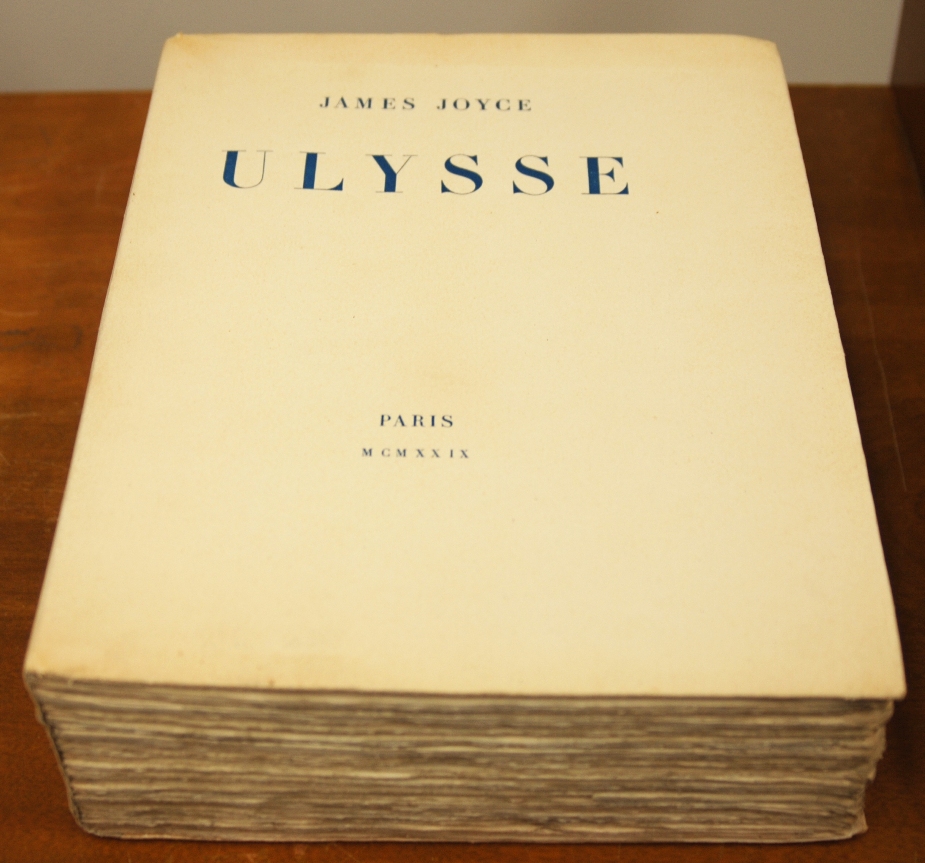
Via Open Culture, here is a quick guide to everything you need to enjoy reading James Joyce's Ulysses on this, June 16 (1904), the day of the action in the book, otherwise known as Bloomsday. Interestingly, 1904 was the last year that Joyce was to see Dublin, the city of his youth. And June 16 was the day on which he and Nora, who would become his wife, first went out on a date.
The only novel in the history of literature more daunting to most readers than Ulysses is Joyce's last novel, Finnegan's' Wake, the companion to Ulysses. In Joyce's mind, Ulysses was the "daytime" book, but Finnegan's Wake is the nighttime book, a nearly impenetrable text, written over a period of 17 years (with the assistance of Samuel Beckett as typist) and written in an idiosyncratic language that is almost code more than language.
In comparison, Ulysses is a piece of cake.
If you were in Dublin today, you could take a tour of all of the place Leopold Bloom visited through the course of the novel. It's amazing the Joyce was able to remember Dublin so precisely despite not having lived there in the two decades prior to writing the book.
Since its publication in 1922, James Joyce’s Ulysses has enjoyed a status, in various places and in various ways, as The Book to Read. Alas, this Modernist novel of Dublin on June 16, 1904 has also attained a reputation as The Book You Probably Can’t Read — or at least not without a whole lot of work on the side. In truth, nobody needs to turn themselves into a Joyce scholar to appreciate it; the uninitiated reader may not enjoy it on every possible level, but they can still, without a doubt, get a charge from this piece of pure literature. Today, on this Bloomsday 2014, we offer you everything that may help you get that charge, starting with Ulysses as a free eBook (iPad/iPhone - Kindle + Other Formats - Read Online Now). Or perhaps you’d prefer to listen to the novel as a free audio book; you can even hear a passage read by Joyce himself.
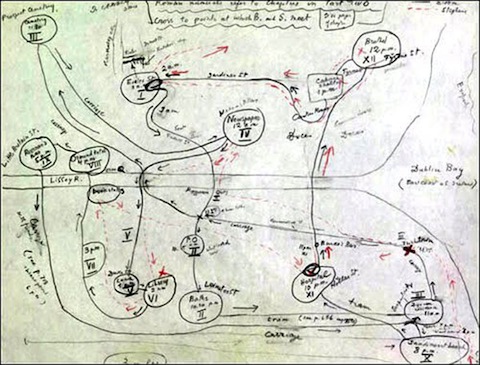
Even Vladimir Nabokov, obviously a formidable literary power himself, added to all this when he sketched out a map of the paths Bloom and Stephen Dedalus (previously seen in Joyce’s A Portrait of the Artist as a Young Man) take through Dublin in the book.
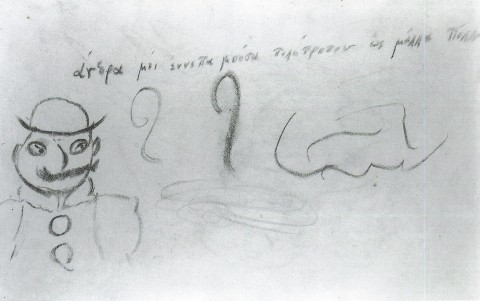
Other high-profile Ulysses appreciators include Stephen Fry, who did a video expounding upon his love for it, and Frank Delaney, whose podcast Re: Joyce, as entertaining as the novel itself, will examine the entire text line-by-line over 22 years. Still, like any vital work of art, Ulysses has drawn detractors as well. Irving Babbitt, among the novel’s early reviewers, said it evidenced “an advanced stage of psychic disintegration”; Virginia Woolf, having quit at page 200, wrote that “never did any book so bore me.” But bored or thrilled, each reader has their own distinct experience with Ulysses, and on this Bloomsday we’d like to send you on your way to your own. (Or maybe you have a different way of celebrating, as the first Bloomsday revelers did in 1954.) Don’t let the towering novel’s long shadow darken it. Remember the whole thing comes down to an Irishman and his manuscripts — many of which you can read online.
Earlier this week, we featured the Internet Archive’s audio of conversations between Orson Welles and Peter Bogdanovich. According to the Archive’s description, Welles’ “defense of his controversial adaptation of Kafka’s The Trial is so fascinating that listeners might want to rush out and rent the film.” But hang on — you need neither rush out nor rent it, since Welles’ The Trial has fallen into the public domain, or rather, it never had a copyright filed in the first place. The full movie, a visually inventive tale of unspecified crime, extreme punishment, and the procedural vortex in between, appears above for you to watch and judge, as it were, for yourself. You’ll have to, since the picture has long divided critics, including some of Welles’ strongest adherents. Even Welles biographer Charles Higham considers it “a dead thing, like some tablet found among the dust of forgotten men.”
“Say what you like,” Welles himself would tell the BBC in the year of the film’s premiere, “but The Trial is the best film I have ever made.” When Bogdanovich went to interview Anthony Perkins (best known, surely, for Hitchcock’s Psycho), who stars as the beleaguered Josef K., the actor spoke of the pride he felt performing for Welles. Perkins also mentioned Welles’ stated intent to make his adaptation a black comedy, a tricky sensibility to pull off for filmmakers in any league. Just as Welles wanted to “set the record straight” by recording his interviews with Bogdanovich, so he must have wanted to do with the 1981 footage just above, in which he speaks about the process of filming The Trial to an audience at the University of Southern California. He’d meant to shoot a whole documentary on the subject, which ultimately wound up on his heap of unfinished projects. Still, we should feel lucky that we have The Trial itself (which, in its prolonged creation, even missed its own Venice Film Festival premiere) to watch, debate, and either convict or exonerate of its alleged cinematic crimes.
As a fiction author, Rucker identifies himself as a transrealist (from Wikipedia):
Transrealism is a literary mode that mixes the techniques of incorporating fantastic elements used in science fiction with the techniques of describing immediate perceptions from naturalistic realism. While combining the strengths of the two approaches, it is largely a reaction to their perceived weaknesses. Transrealism addresses the escapism and disconnect with reality of science fiction by providing for superior characterization through autobiographical features and simulation of the author's acquaintances. It addresses the tiredness and boundaries of realism by using fantastic elements to create new metaphors for psychological change and to incorporate the author's perception of a higher reality in which life is embedded. One possible source for this higher reality is the increasingly strange models of the universe put forward in theoretical astrophysics.
While the Wikipedia entry sees transrealism as part of the slipstream literature genre, it sounds an awful lot like a form of postmodernist story-telling. Interested readers can check out Rucker's Transrealist Manifesto (1983).
Rudy Rucker is a cyberpunk author, a mathematician, and a Transrealist. Known for his book Ware Tetralogy (four novels in one volume), Rucker’s most current book is “The Big Aha.” In this episode of the philosophy podcast Diet Soap the ideas of Transrealism and Baudrillard’s Hyperrealism are juxtaposed through sound clips and audio collage. Rudy Rucker on Transrealism:
The Transrealist writes about immediate perceptions in a fantastic way. Any literature which is not about actual reality is weak and enervated. But the genre of straight realism is all burnt out. Who needs more straight novels? The tools of fantasy and SF offer a means to thicken and intensify realistic fiction. By using fantastic devices it is actually possible to manipulate subtext. The familiar tools of SF — time travel, antigravity, alternate worlds, telepathy, etc. — are in fact symbolic of archetypal modes of perception. Time travel is memory, flight is enlightenment, alternate worlds symbolize the great variety of individual world-views, and telepathy stands for the ability to communicate fully. This is the “Trans” aspect. The “realism” aspect has to do with the fact that a valid work of art should deal with the world the way it actually is. Transrealism tries to treat not only immediate reality, but also the higher reality in which life is embedded.
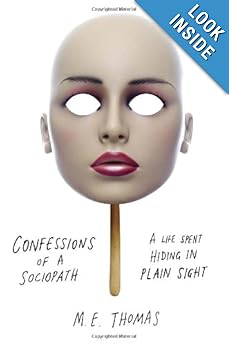
On this week's To the Best of Our Knowledge (TTBOOK), the topic is the beast within us all - beginning with M.E. Thomas on being a sociopath and ending with Patricia Churchland on whether we are genetically predisposed to genocide. There are four segments in all - you can listen to each one individually.
H.P. Lovecraft was the forefather of modern horror fiction. He inspired writers such as Stephen King, Robert Bloch and Neil Gaiman, but what lead an Old World, xenophobic gentleman to create one of literature’s most influential mythologies? What attracts the minds of 21 century people to read these fascinating stories of unspeakable abominations and cosmic gods? Fear of the Unknown is a chronicle of the life, work, and mind of H.P. Lovecraft, he’s weird tales are told by many today’s luminaries of dark fantasy including John Carpenter, Guillermo Del Toro, Neil Gaiman, Stuart Gordon, Caitlin Kiernan, and Peter Straub. Lovecraft’s writings have proven very influential, and can be seen in everything from movies to music and even video games.
I make things up and write them down. Which takes us from comics (like SANDMAN) to novels (like ANANSI BOYS and AMERICAN GODS) to short stories (some are collected in SMOKE AND MIRRORS) and to occasionally movies (like Dave McKean's MIRRORMASK or the NEVERWHERE TV series, or my own short film A SHORT FILM ABOUT JOHN BOLTON).
In my spare time I read and sleep and eat and try to keep the blog at www.neilgaiman.com more or less up to date.
An Evening with Neil Gaiman
Neil Gaiman is one of the world's greatest storytellers. He is a multi-award winning novelist who writes across genres and has been credited as one of the creators of modern comics. At this Sydney event, Neil talks and reads from his next novel for adults, The Ocean at the End of the Lane. Presented by Top Shelf in association with Sydney Writers' Festival, City Recital Hall, Jan 2013.
From Open Culture, a unique collection of animated videos based on great works of literature. I particularly liked Shel Silverstein's The Giving Tree and an animated mash-up of the spirits of Franz Kafka and Hunter S. Thompson.
Yesterday we featured Piotr Dumala’s 2000 animation of Fyodor Dostoyevsky’s classic novel, Crime and Punishment, and it reminded us of many other literary works that have been wonderfully re-imagined by animators — many that we’ve featured here over the years. Rather than leaving these wondrous works buried in the archives, we’re bringing them back and putting them all on display. And what better place to start than with a foundational text — Plato’s Republic. We were tempted to show you a claymation version of the seminal philosophical work (watch here), but we decided to go instead with Orson Welles’ 1973 narration of The Cave Allegory, which features the surreal artistic work of Dick Oden.
Staying with the Greeks for another moment … This one may have Sophocles and Aeschylus spinning in their graves. Or, who knows, perhaps they would have enjoyed this bizarre twist on the Oedipus myth. Running eight minutes, Jason Wishnow’s 2004 film features vegetables in the starring roles. One of the first stop-motion films shot with a digital still camera, Oedipus took two years to make with a volunteer staff of 100. The film has since been screened at 70+ film festivals and was eventually acquired by the Sundance Channel. Separate videos show you the behind-the-scenes making of the film, plus the storyboards used during production.
Between1992 and 1994, HBO aired The Animated Shakespeare, which brought to life 12 famous Shakespeare plays. Leon Garfield, a well-known British children’s author, wrote the scripts, mainly using Shakespearian language. And some talented Russian artists did the animation. Above, we give you the first part of the animated Romeo & Juliet. Get Part 2 and Part 3 here, and find other animated Shakespeare plays on this Youtube Channel.
The animated sequence above is from the 1974 film adaptation of Herman Hesse’s 1927 novel Steppenwolf. In this scene, the Harry Haller character played by Max von Sydow reads from the “Tractate on the Steppenwolf.” The visual imagery was created by Czech artist Jaroslav Bradác.
In 1999, Aleksandr Petrov won the Academy Award for Short Film (among other awards) for a film that follows the plot line of Ernest Hemingway’s classic novella, The Old Man and the Sea (1952). As noted here, Petrov’s technique involves painting pastels on glass, and he and his son painted a total of 29,000 images for this work. Rather incredible. It’s permanently listed in our collection of Oscar Winning Films Available Online and our collection of 500 Free Movies Online.
Emily Dickinson’s poetry is widely celebrated for its beauty and originality. To celebrate her birthday (it just passed us by earlier this week) we bring you this little film of her poem, “I Started Early–Took My Dog,” from the “Poetry Everywhere” series by PBS and the Poetry Foundation. The poem is animated by Maria Vasilkovsky and read by actress Blair Brown.
E.B. White, beloved author of Charlotte’s Web, Stuart Little, and the classic English writing guide The Elements of Style, died in 1985. Not long before his death, he agreed to narrate an adaptation of “The Family That Dwelt Apart,” a touching story he wrote for The New Yorker. The 1983 film was animated by the Canadian director Yvon Malette, and it received an Oscar nomination.
Shel Silverstein wrote The Giving Treein 1964, a widely loved children’s book now translated into more than 30 languages. It’s a story about the human condition, about giving and receiving, using and getting used, neediness and greediness, although many finer points of the story are open to interpretation. Today, we’re rewinding the videotape to 1973, when Silverstein’s little book was turned into a 10 minute animated film. Silverstein narrates the story himself and also plays the harmonica.
The online bookseller Good Books created an animated mash-up of the spirits of Franz Kafka and Hunter S. Thompson. Under a bucket hat, behind aviator sunglasses, and deep into an altered mental state, our narrator feels the sudden, urgent need for a copy of Kafka’s Metamorphosis. Unwilling to make the purchase in “the great river of mediocrity,” he instead makes the buy from “a bunch of rose-tinted, willfully delusional Pollyannas giving away all the money they make — every guilt-ridden cent.” The animation, created by a studio called Buck, should easily meet the aesthetic demands of any viewer in their own altered state or looking to get into one.
39 Degrees North, a Beijing motion graphics studio, started developing an unconventional Christmas card last year. And once they got going, there was no turning back. Above, we have the end result – an animated version of an uber dark Christmas poem (read text here) written by Neil Gaiman, the bestselling author of sci-fi and fantasy short stories. The poem was published in Gaiman’s collection, Smoke and Mirrors.
This collaboration between filmmaker Spike Jonze and handbag designer Olympia Le-Tan doesn’t bring a particular literary tale to life. Rather this stop motion film uses 3,000 pieces of cut felt to show famous books springing into motion in the iconic Parisian bookstore, Shakespeare and Company. It’s called Mourir Auprès de Toi.
Are there impressive literary animations that didn’t make our list? Please let us know in the comments below. We’d love to know about them.
Novelist Sebastian Faulks has a new book out, A Possible Life: A Novel in Five Parts, which offers five seemingly different characters from different times, but Faulks suggests they are connected by theme. In various ways, the characters all deal with issues of identity and selfhood. Sounds interesting.
A young intelligence officer during the Second World War survives life in a Nazi concentration camp. A music producer in the 1970s falls in love with a young bohemian singer who breaks his heart. A lonely Italian neuroscientist makes a revolutionary discovery: Humans have no souls. These are some of the stories Sebastian Faulks weaves together in his latest novel, A Possible Life. "The five parts of the novel connect in certain quite mechanical ways," with occasional characters and locales recurring throughout the stories, Faulks tells NPR's Rachel Martin. "The more important, the more interesting way I see it fitting together is that all the five sections of the novel are variations on a theme." Though the parts of the story are quite different, Faulks says he'd like readers to think of the book "rather as they might [be] going to hear a symphony, and when you come back out of having heard Mozart's Fifth, I don't think you say, 'I just heard four interesting pieces of music.' The book begins with Geoffrey, a clean-cut young Englishman, rather innocent, on the eve of the Second World War. "He's not a very good soldier, gets essentially kicked off his regular infantry position and ends up joining special forces in France, so he's a kind of spy," Faulks says. Taken prisoner, Geoffrey winds up in a concentration camp, where he must deal with the person he's becoming under the terrible circumstances — and the person he becomes after the war. "The change that takes place in him after a period of years enables him to survive," Faulks continues. "So in this first section of the novel, I'm setting up the idea that the self, and our idea of ourselves as individual human beings, is not quite as clear cut as we think, and that we can become different people in our own lives as they go along." The stories jump back and forth in time — one even takes place in the near future, in an Italy ravaged by global recession. "The reason this section had to be set in the future is ... I wanted somebody to have discovered what it is about the human brain that makes us human, that gives us this extraordinary gift of self-awareness," Faulks says. But today's technology isn't up to that challenge, "so it had to be set 30 years ago into the future." But Elena, the neuroscientist who cracks the brain's code, discovers that it doesn't make life any easier. "All the normal kind of emotional, romantic, family and daily problems persist."
Novelist Sebastian Faulks, a former journalist, is the author of Birdsong, A Week in December, and Pistache, among others. Muir Vidler/Courtesy of Henry Holt and Co.
All of the characters in A Possible Life "struggle with the idea of selfhood, and who they are and identity," Faulks says — though not all of them come at the issue through science, as does Elena. Jeanne, whose story follows Elena's, is an illiterate peasant woman in 1820s France. "She is also very religious, and I must say that these big philosophical questions about death, and who we are, and is the self really something that exists or is it just a delusion, don't really apply so much for people who do have a strong religious faith." Faulks describes a passage in Jeanne's story where a more educated young man tells her that someday, science will explain how her thoughts work. "And she looks at him and says, 'What on earth would be the point of that?' because to her these are not significant issues." And while it may be tempting to say that Jeanne, with her simple faith, is happier than the young man, Faulks says that's not quite right. "Otherwise we're really saying that everything, all human knowledge and education and things that we've acquired, act against our own interests ... and that's not really true, is it?" Could all of these characters have had very different lives from the ones Faulks described? He says yes. "You take the path marked A, and you could very easily have taken the path marked B, and you look back and sometimes you regret it, and sometimes you bless your good fortune or your good sense, but certainly we all have within us the potential to live in a hugely different way. And how happy you can make yourself, I think, a lot depends on how much you beat yourself up about that. "I'm not trying to preach in this book," he adds. "It's a book in which I really hope the reader can come, and they can inhabit the space ... It's me saying, here are five linked pieces of music. It should send you out of the concert hall with tears in your eyes, but feeling, I hope, a little bit uplifted."
Here are several lists for the Best Books of 2012, from a wide diversity of sources, including the New York Times, The Guardian, Washington Post, Esquire, and BPS Research.
Psychotherapist Adam Phillips muses on our 'unlived' lives in his new book. Photograph: Murdo Macleod for the Observer
Back in 1890, when the "science of mind" was fresh and new, it captured the imagination of a vast range of thinkers: philosophers, alienists, neurologists, psychologists, as well as the new human or social scientists. The great William James, who named the field and was the first to talk of the "stream of consciousness" of subjective life, also noted in his Principles of Psychology: "Perhaps the greatest breach in nature is the breach from one mind to another."
The passage of 120 years has done little to help us leap that breach or to make the subjective life transparent. But in the wake of a period of rampant individualism, with its noisy excess of desiring, getting, and spending, the scientists of mind, in all their initial broad range, are once more trying. They want to assert that "selfishness" is not what humans are about in genes or teams, and that happiness needs redefinition. Attempting to explain us better to ourselves, they remind us that without other minds, there wouldn't be what only seem to be our own in the first place.
Adam Phillips, that master of paradox and the quotable sentence, is also one of very few British psychoanalyst-philosophers. In Missing Out: In Praise of the Unlived Life (Hamish Hamilton £20), he muses on our unlived lives, the ones that shadow us with their lost delights, and wonders whether frustrations may not make us better able to live our pleasures than do seeming satisfactions. Greed, he notes in a parenthesis, is "despair about pleasure".
In The Shrink and the Sage (Icon £9.99) philosopher Julian Baggini and his partner, psychotherapist Antonia Macaro recombine two fields that had grown distant to ponder what might make the good life and breach gaps. Aristotle's "mean" sets the tone. Meanwhile Oliver Burkeman, in The Antidote(Canongate £15), steers us away from the tacky horrors of positive thinking. After a bout of George Bush at the raucous Get Motivated! Seminar in Texas, he travels through the hidden benefits of insecurity to the museum of failure, finally to embrace mortality in Mexico. Somewhere along the way I like to imagine he bumped into Susan Cain, whose Quiet (Viking £14.99) sings the power and delights of introversion in a raucous world.
In Together (Allen Lane £25), the second book in his homo faber trilogy, the ever-rewarding Richard Sennett digs into history and examines the cooperative skills we humans possess. In groups or tribal collectivities, solidarity that insists on everyone's being in agreement won't provide the necessary glue. Sennett wants both to allow complex differences and engender cooperation through a craft of togetherness that includes listening, working and ritual gatherings.
The American trend for long books filled with mountains of data in support of provocative hypotheses continues. Steven Pinker, in The Better Angels of Our Nature(Penguin £12.99), energetically argues that we've grown more civilised and less violent than our prehistoric, certainly pre-Hobbesian, forebears – something I've long wanted to believe but found it hard to while rockets, bombers and drones do their worst.
Jonathan Haidt is another Darwinian, this time a social and cultural psychologist, whose interests in The Righteous Mind (Allen Lane £20) are political, as well. Digging for the genesis and workings of morality in humans, he turns in this adventurous book to tribal life and animal behaviour, as well as the ancients and American politics. The rider on the elephant is his metaphor for the divided human mind, the first being our strategic reasoning; the much larger second all the other mental processes "outside of awareness but that actually govern most of our behaviour". It's odd that American psychologists seem to have forgotten that Freud too read Darwin, and so keep having to reinvent the unconscious. Our morality comes from the elephant, is instinctive and tribal, binds and blinds, and easily turns into the moralising that ever makes us "righter" than them. Is it possible to get Democrats and Republicans to breach the gap? I wasn't convinced, but maybe Haidt and Sennett should get together.
In the fascinating Beyond Human Nature (Allen Lane £22), Jesse J Prinz shows how on most of the points on which evolutionary psychologists like to reflect, humans are shaped far more by their culture than by nature. Examining knowledge, language, thinking, feeling and values, Prinz shows that people from different cultures perceive differently, are driven to, and suffer, mental illness in various ways, and find a wide range of mating partners attractive, until globalised values arrive to standardise taste.
And so to love and mating, perhaps the best way to bridge the great gap of separate minds, let alone bodies. If you prefer your wooing with data – on hunter gatherers, voles and the neurohormone oxytocin – then Robin Dunbar's The Science of Love and Betrayal(Faber £12.99) is for you. Alternately, if you want the complexities of love in a family story that comes in bold graphic form and contains a host of psy-knowledge and Winnicottian lore, then Alison Bechdel's comic drama Are You My Mother?(Jonathan Cape £16.99) is pure bliss.
THE BOY KINGS OF TEXAS: A Memoir By Domingo Martinez (Lyons) Recounting the author’s tough upbringing in Brownsville, Tex., this finalist for the National Book Award joins a rich body of Mexican American coming-of-age narratives. — Valerie Sayers
THE COLLECTED WRITINGS OF JOE BRAINARD Edited by Ron Padgett (Library of America) A superbly engaging bedside book in whichnearly every page is mysterious, inconsequential and fun. — Michael Dirda CONFRONT AND CONCEAL: Obama’s Secret Wars and Surprising Use of American Power By David E. Sanger (Crown) Sanger’s immensely readable work shows that President Obama has been surprisingly aggressive on national security, mostly behind closed doors. — D.T-R. CRONKITE By Douglas Brinkley (Harper) Brinkley reveals the legendary newscaster as an Odysseus-like figure — a man physically and morally courageous, but full of fears; ambitious for fame, fiercely jealous of rivals — who created around himself an aura of public trust. — Robert MacNeil DEARIE: The Remarkable Life of Julia Child By Bob Spitz (Knopf) A tasty retelling of Child’s privileged (but bland) childhood, her awakening to fine food and her delight in sharing it. — Becky Krystal DOUBLE CROSS: The True Story of the D-Day Spies By Ben Macintyre (Crown) The idiosyncratic British spymasters of World War II were almost Monty Python characters, yet they helped secure the Allied victory. — David Ignatius DRIFT: The Unmooring of American Military Power By Rachel Maddow (Crown) The author urges Congress and voters to become full partners in decisions to go to war and not leave them to their president. — Gordon M. Goldstein ELSEWHERE: A Memoir By Richard Russo (Knopf) Novelist Russo writes candidly of his mother, who inspired and sustained his literary career but also was demanding and manipulative.— Marie Arana
THE SOCIAL CONQUEST OF EARTH By Edward O. Wilson (Liveright) This renowned scientist unflinchingly defines the human condition as largely a product of the tension between the impulse to selfishness and to altruism, individual selection vs. group dynamic. — Colin Woodard
The 14 stories of this Pulitzer Prize in poetry finalist’s (for Inseminating the Elephant) debut collection, set in the Pacific Northwest, display the poet’s emotional economy alongside raw honesty, haunting understatement, and a sharp wit. Women, damaged and vulnerable, make bad choices again and again, pursue fruitless obsessions, and somehow often come out on top.
Analyzing our "estrangement from nature" in the 20th century, Challenger's moving and lyrical first nonfiction book medi-tates on big picture questions as she travels from a writer's solitary cabin on England's Ding Dong Moor to Antarctica with the British Antarctic Survey, back to the North Yorkshire town of Whitby and on to the tundra of the Arctic.
In his typically unflinching and bold manner, the late Hitchens candidly shares his thoughts about his suffering, the etiquette of illness and wellness, and religion in this stark and powerful memoir.
Solomon's own trials of feeling marginalized as gay, dyslexic, and depressive, while still yearning to be a father, frame these af-fecting real tales about bravely facing the cards one's dealt with.
The year’s notable fiction, poetry and nonfiction, selected by the editors of The New York Times Book Review.
Here are a few books from their list (starting with Fiction and Poetry):
BLASPHEMY. By Sherman Alexie. (Grove, $27.) The best stories in Alexie’s collection of new and selected works are moving and funny, bringing together the embittered critic and the yearning dreamer.
COLLECTED POEMS. By Jack Gilbert. (Knopf, $35.) In orderly free verse constructions, Gilbert deals plainly with grief, love, marriage, betrayal and lust.
DEAR LIFE: Stories. By Alice Munro. (Knopf, $26.95.) This volume offers further proof of Munro’s mastery, and shows her striking out in the direction of a new, late style that sums up her whole career.
A HOLOGRAM FOR THE KING. By Dave Eggers. (McSweeney’s, $25.) Eggers’s novel is a haunting and supremely readable parable of America in the global economy, a nostalgic lament for a time when life had stakes and people worked with their hands.
Non-Fiction:
BREASTS: A Natural and Unnatural History. By Florence Williams. (Norton, $25.95.) Williams’s environmental call to arms deplores chemicals in breast milk and the vogue for silicone implants.
THE SOCIAL CONQUEST OF EARTH.By Edward O. Wilson. (Norton, $27.95.) The evolutionary biologist explores the strange kinship between humans and some insects.
SPILLOVER: Animal Infections and the Next Human Pandemic. By David Quammen. (Norton, $28.95.) Quammen’s meaty, sprawling book chronicles his globe-trotting scientific adventures and warns against animal microbes spilling over into people.
WHY BE HAPPY WHEN YOU COULD BE NORMAL?By Jeanette Winterson. (Grove, $25.) Winterson’s unconventional and winning memoir wrings humor from adversity as it describes her upbringing by a wildly deranged mother.
It's awards season in the book world, with the National Book Awards in November and The Nobel Prize in Literature announcement. We figured now was as good a time as any to reflect on the books we've read this year (and as book editors, we've read a lot!), and determine which, in our opinion, are the best.
This fall was a monumental season for books, with the releases of Michael Chabon's long-awaited "Telegraph Avenue," Zadie Smith's enigmatic "NW," and J.K. Rowling's first foray into adult realism, "The Casual Vacancy." But somehow, the big-name releases underwhelmed us.
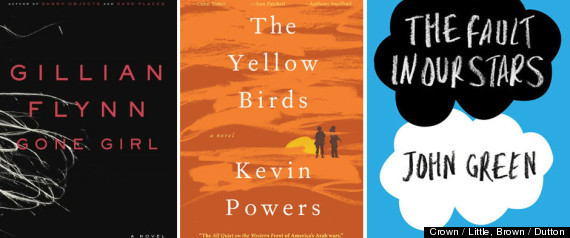
Instead, we were enchanted by writers who took risks: Davy Rothbart's big-hearted memoir moved us, Sheila Heti's intimate and peculiar story reached out to us, and Gillian Flynn's genre-bending thriller kept us up at night. Sure, there are a few stalwarts we'll never grow tired of--how can anyone resist Junot Díaz's sharp tongue, Marilynne Robinson's tender poignancy and Jonathan Franzen's cynicism?--but, for 2012 at least, we applaud the authors, both debut and more seasoned, who strayed from conventions.
Without further ado, here are the Huffington Post Books Editors' picks for the best books of 2012 (so far): follow the little blue link
* * * * *
From the British Psychological Society (BPS Research)
Which books have most impressed our writers this year?
Julian Baggini, Author
Tony Wright's Doing Politics
(Biteback £12.99) restores hope that serious thought can go on in
Westminster. Wright retired as an MP at the last election universally
respected by constituents and peers, and this collection of his writings
shows how an astute reading of the intellectual traditions of the left
provides all that is needed for a relevant, contemporary Labour party.
Roger Scruton continued to do the same job for the Conservatives, more
or less single-handed, in Green Philosophy: How to Think Seriously About the Planet (Atlantic £22).
Mary Beard, Classicist, author and broadcaster
Some of my favourite books of the year always turn out to be
exhibition catalogues. In 2012 my first prize went to the Royal
Academy's Johan Zoffany RA, Society Observed
(Royal Academy £24.95), edited by Martin Postle. It was a wonderful
souvenir of a great show, but also taught me a lot about an artist I
fancied I knew quite well – some of it surprisingly raunchy (like the
discussion of Zoffany's wonderful hanging condoms). In second place was
the British Museum's beautiful Shakespeare: Staging the World (British Museum £25), by Jonathan Bate and Dora Thornton. You never knew that Henry V's saddle could be so interesting! Honest.
As well as inflicting misery on millions, Tory governments tend to
provoke a new generation of left-wing writers. With what is both a
compelling and definitive guide to the rise of the BNP in the 00s, Bloody Nasty People: The Rise of Britain's Far Right (Verso £14.99), Daniel Trilling emerges at the forefront of a new wave of young progressive thinkers.
Sara Wheeler, Travel writer and biographer
A first book by a young Englishwoman impressed me. Suzanne Joinson's A Lady Cyclist's Guide to Kashgar
(Bloomsbury £12.99) consists of two parallel stories, each told from
the point of view of a childless female protagonist, one at a
shimmering, multi-ethnic Silk Road trading post, the other in
contemporary London. From a debutante to a grande dame: Alice Munro's Dear Life (Chatto & Windus £18.99), another dazzling collection of short stories, provincial and universal in equal measure.
Andrew Rawnsley, Chief political commentator, the Observer
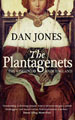
I hugely enjoyed Dan Jones on The Plantagenets
(HarperPress £25), stonking narrrative history told with pace, wit and
scholarship about the bloody dynasty that produced some of England's
most brilliant, brutal kings. I thought even my large appetite for
accounts of the great conflict of the 20th century might have been sated
after so many excellent recent books on the subject, but Antony Beevor
proved me wrong with his terrific The Second World War
(W&N £25). As we have come to expect from this master, he excels at
using eyewitness testimony to illustrate how mankind can be capable of
both terrible cruelty and astonishing courage.
Maria Popova, Editor of brainpickings.org
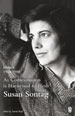
As Consciousness is Harnessed to Flesh: Diaries 1964-1980
(Hamish Hamilton £18.99), the second volume of Susan Sontag's published
diaries, presents a remarkable glimpse of the inner life – conflicted,
restless, brimming with conviction – of one of modern history's greatest
intellectuals. In Ignorance: How it Drives Science(Oxford
£14.99), Columbia biologist Stuart Firestein challenges our
relationship with facts and knowledge, making a bold case for new models
of science education and research funding rewarding curiosity rather
than certitude. Drawing from the City
(Tara £22.99) features the stunning illustrations of self-taught Indian
folk artist Teju Behan in a tender and aspirational story about woman's
empowerment in patriarchal society.
Robert McCrum, Associate editor, the Observer
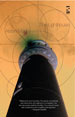
My big discovery this year was Alison Moore's The Lighthouse
(Salt £8.99), a beautifully constructed first novel of haunting
subtlety and dark mystery. Shortlisted for the Booker prize, it was
probably too slight to be a contender, but Alison Moore must be a name
to watch. Salley Vickers is a novelist whose imaginative journey always
promises magic and mystery. The Cleaner of Chartres (Viking £16.99) shows her on top form in a rich weave of loss and redemption spiked with Ms Vickers' irrepressible wit.