Showing posts with label film. Show all posts

Wednesday, July 16, 2014

What’s it Like to Experience and Recover from Psychosis?

http://image1.frequency.com/uri/w354_h200_ctrim_ll_tt1402504859000/_/item/1/7/4/4/Simon_Says_Psychosis_HD_720_174416201_thumbnail.jpg

Interesting little film . . . and here is the filmmaker's "spiel" about his work:

After ten months in the making, hoovering smoke, breaking mirrors, hundreds of hours of hard thought and hard work; behold! A short documentary entitled ‘Simon Says: Psychosis’.  One that I’m truly proud of making and one I urge and wish you have the time to view. I’ve written a small spiel to entice you into watching it below this very paragraph. Be sure to check out the Psychotic guide to viewing the film, “What is that?” you retort? Click here to find out, or here. Or here.

So here is the spiel…

Contrary to certain short sighted slogans, mental health isn’t just about those who have a problem. We all have mental health and thus the potential to develop mental ill health. Therefore it is vital that we take the time to understand, explore and talk about it as much as possible.

How absurd is it, that school teachers can talk about war, death, sex, drugs, violence, crime and other graphic subjects but not mental health? A circumstance of our own anatomy. Purely because at present time, it is not in the curriculum and they risk losing their jobs by straying from it.  As a society, we are constantly being bombarded by organisations and campaigns that tell us we have to ‘understand’. But how often and how well do they actually offer anything to actually help people to ‘understand’?

By making this documentary as ‘one creature beyond’ a mere information video (endeavouring to sneer at such). I hope the viewer to feel as entertained as they are moved, as captivated as they are enlightened and as illuminated as they are confronted with any morsel of ignorance they may have around Psychosis. Which if you are like me (in terms of limb count etc) might be substantial.

Which, brings me to that word, one that I was given by a model created by those who have never experienced psychosis but are largely responsible for defining it. With that in mind, if you are looking for a more primary source on what ‘psychosis’ is? how it feels? or what it means? then look no further. Personal stories convey a lot more than a medical definition. I challenge anyone to dispute this, even more so after watching the film.

So, if you’ve gotten this far, you not only owe it to your anatomy, you owe it to your species to watch and take a step to ‘understand’. Plus, there lies some cool animations, newsreel footage and funny stuff in wait, for the uninitiated to feast on. In all seriousness though, I promise that this is unlike any ‘mental health video’ that you may have seen before. On top of that, it’s a hot topic right now, so what have you got to lose?

treapanning

A large exertion has been made to make the film as detailed as possible, such a complex subject demands a certain amount of layering beyond the spoken word; visually, structurally, symbolically and thematically. In an effort for these… efforts to not be banished to subtlety,  a ‘psychotic guide’ has been written for the viewer. To be found in the download pack below or by itself here. If your intrigued or bewildered at what is meant by the term ‘Psychotic guide’ there is only one way to find out.

Free download pack follow this link  and click “slow download” at the bottom of the page. Pack includes:
  • A ready to burn DVD image
  • Psychotic guide to viewing the film
  • Illustrations from Helen Ahpornsiri
  • A ‘shocking’ list of stigmatising mental health headlines (cited and referenced)
  • Fragments of the filmmaking process
  • Full satirical articles from the spinning newspapers (easier reading than pausing the film)
To download just a movie file follow this link and click “slow download” at the bottom of page.
Please note; the film exists for free as a resource and tool for the purpose of education more than anything else. Nevertheless, let it be stated that it may not be used for any commercial purposes in full or in part.

What’s it Like to Experience and Recover from Psychosis?

By Sandra Kiume

Simon Says: Psychosis is a fantastic documentary featuring three people who’ve experienced psychosis, talking about what it’s like, and their recovery journeys assisted by the Early Intervention in Psychosis Service provided by the Sussex Partnership NHS Foundation Trust in the UK.
The film was created by John Richardson, a person with lived experience of psychosis, giving it special insight, empathy, and an insider perspective. For more background about the filmmaker’s process and intent, follow this link.
You can follow the filmmaker on Twitter at @insipidmedia, and also interact with a special account for the film, @sisaysPSYCHOSIS. Please ask questions and share your feedback on this unique and important project.

Thursday, June 05, 2014

Cyberpunk Short Film About An Addictive Drug Called "Mech"


Very cool . . . and soon to be a full-length feature film it seems. This comes via io9. This could be a very awesome series for the Sci-Fi network, too.

Must Watch: Cyberpunk Short Film About An Addictive Drug Called Mech


Charlie Jane Anders


It's well worth checking out this five-minute short film, Mech: Human Trials. Not only has it been picked up to become a full-length movie (something there's plenty of scope for), but it's also packing enough excitement and cool ideas into five minutes to keep you rewatching and rewinding.

In Mech: Human Trials, a mysterious drug not only fixes damage to your body, it makes you stronger and gives you superpowers. But it also slowly takes away your humanity, and turns you into something... else. Here's the official synopsis for the film, written, directed and produced by Patrick Kalyn:
After a serious accident, a man is introduced to a designer street drug promising to restore his ravaged body. Desperate to mend himself, he becomes consumed by the drug - only to discover it is threatening his humanity.
The short film was first teased by an anti-drug PSA over at Don'tDoMech.com, and then posted in its entirety online. And according to The Wrap, IAM Entertainment is already developing the movie as a full-length feature, directed by Kalyn and written by Mike Le, whose script Patient Zero made the Black List of unproduced screenplays in 2013.

[via First Showing]

Wednesday, April 16, 2014

Samuel Beckett’s Only Movie, "Film," Starring Buster Keaton


Samuel Beckett is one of my favorite authors in both the fiction and drama genres. I did not until now know that he had also made a film. It is called, simply enough, Film.

Thanks to Open Culture for unearthing this gem of inscrutability.

Watch Film, Samuel Beckett’s Only Movie, Starring Buster Keaton


April 15th, 2014


Fresh off the international success of his play Waiting For Godot, Samuel Beckett made a film, called aptly enough Film. It came out in 1965 and proved to be the only motion picture the soon-to-be Nobel Prize winner would ever make. As you might expect, it is enigmatic, bleakly funny and very, very odd. You can check it out above.

The 17-minute silent short is essentially a chase movie between the camera and the main character O – as in object. Film opens with O cowering from the gaze of a couple he passes on the street. Meanwhile, the camera looms just behind his head. At his stark, typically Beckettesque flat, O covers the mirror, throws his cat and his chihuahua outside and even trashes a picture — the only piece of decoration in the flat — that seems to be staring back at him. Yet try as he might, O ultimately can’t quite evade being observed by the gaze of the camera.

Barney Rosset, editor of Grove Press, commissioned the movie and regular Beckett collaborator Alan Schneider was tapped to direct. As Schneider recalled, the first draft of the screenplay was unorthodox.
The script appeared in the spring of 1963 as a fairly baffling when not downright inscrutable six-page outline. Along with pages of addenda in Sam’s inimitable informal style: explanatory notes, a philosophical supplement, modest production suggestions, a series of hand-drawn diagrams.
It took almost a year of discussion to bring the movie’s themes and story into focus.

For the lead character Beckett wanted to hire Charlie Chaplin until he was informed by an officious secretary that Chaplin doesn’t read scripts. Beckett then suggested Buster Keaton. The playwright was a longtime fan of the silent film legend. Keaton was even offered the role of Lucky on the original American production of Godot, though the actor declined. This time around, though, Keaton signed on, even if he couldn’t make heads or tales of the script.

And he wasn’t the only one. Ever since it came out, critics have been puzzling what Film is really about. Is it a statement on voyeurism in cinema? On human consciousness? On death? Beckett gave his take on the movie to the New Yorker: “It’s a movie about the perceiving eye, about the perceived and the perceiver — two aspects of the same man. The perceiver desires like mad to perceive and the perceived tries desperately to hide. Then, in the end, one wins.”

Keaton himself defined the movie even more succinctly, “A man may keep away from everybody but he can’t get away from himself.”

Related Content:

~ Jonathan Crow is a Los Angeles-based writer and filmmaker whose work has appeared in Yahoo!, The Hollywood Reporter, and other publications. You can follow him at @jonccrow.

Thursday, March 27, 2014

J Hoberman Reviews Lars von Trier’s "Nymphomaniac" (New York Review of Books)

Lars von Trier has created yet another strange and sexually outrageous film. And yes, as you have no doubt read, the sex IS real, but there are body doubles (porn stars) and prosthetics to protect the big-name talent in this film. 

Making return engagements to von Trier's sexual wonderland is Charlotte Gainsbourg and Willem Dafoe, both of 2009's Antichrist, a very strange and mesmerizing film.

Sex: The Terror and the Boredom

By J. Hoberman
March 26, 2014 | New York Review of Books


Christian Geisnaes/Magnolia Pictures | A scene from Lars von Trier’s Nymphomaniac
The Danish director Lars von Trier has made several great films (Dogville, Melancholia). He has also orchestrated a number of provocations, the strongest of which is The Idiots (1998), a movie that anticipates Borat, Jackass, and other recent movies in pushing regressive behavior beyond all acceptable limits. His newest film, Nymphomaniac, belongs with these audience-baiters—it’s similar, but less ghastly in its various affronts than Antichrist (2009), which also centered on the dour, ascetic Charlotte Gainsbourg.

In Antichrist (2011), Gainsbourg played a woman driven mad by grief; in Nymphomaniac she is the eponymous case study, known simply as Joe. A middle-aged good Samaritan named Seligman (Stellan SkarsgĂ„rd) finds her lying beaten and bleeding in a back alley and, as she refuses his offer to call the police or get an ambulance, brings her back to recover in his monastic apartment. There she lies on a narrow bed, he sits by her side and, after describing herself as “bad person” (a category that he reflexively rejects), she proceeds to tell him her story from the very beginning: “I discovered my cunt as a two-year-old.”

For a child, as we know, all is sex. Joe’s colorful (if gravely recounted) picaresque career as a sexual being and a sexual adventuress—set in an abstract, unidentified region of England—is punctuated by Seligman’s well-meaning, post-Freudian comments and woolly digressions. Joe’s tale also features a vast array of sex acts, both simulated and actual. (The credits list a half dozen “sex doubles.”) The movie is, then, a two-handed version of the Marquis de Sade’s Philosophy in the Bedroom with Seligman, the erudite lover of the arts and stereotypical liberal—tolerant, secular, feminist, hypocritical—attempting to understand Joe’s self-identified nymphomania as she oscillates between pride and self-loathing and also between present-day battered Joe and her dewy younger self (Stacy Martin).

Like Joe or the sadist she solicits in the movie’s second half, Nymphomaniac is at once excessive and withholding. Although the film is said to exist in a five-and-a-half-hour director’s cut, its distributor has released a shorter “international version” in two parts of 117 and 123 minutes each; the film is further subdivided into eight more-or-less chronological chapters. This two-stage delivery may or may not be a valid economic strategy, but it is a dubious aesthetic one. For what it’s worth, Nymphomaniac demands to be endured in a single sitting. As with Melancholia (2011), which represented the run-up to the end of the world, it’s experiential.

Although too capricious (or should we say promiscuous?) to be a taxonomy, the movie is designed to illustrate and exhaust every popular theory of nymphomania, including, of course, the idea that the condition exists only as a male fantasy—My Secret Garden or The Sexual Life of Catherine M notwithstanding. In various chapters, Joe’s motivations are variously ascribed to her sexual curiosity, desire to exercise traditional male sexual prerogatives, rejection of love, unresolved oedipal feelings, narcissism, loneliness, pathological low self-esteem, depression, frigidity, guilt, and masochism.
At least initially, Joe subscribes to the Sadean notion that she is simply “selfish”—that is, motivated by absolute egotism and a desire for absolute pleasure—although, unlike the Marquis, she does not see this as a virtue. Nor is she bound by logic, explaining at one point that she became a nymphomaniac by choice (“I was an addict of lust rather than need”) and refusing at another, in a memorable set piece, to accept the label “sex addict.”
Christian Geisnaes/Magnolia Pictures Charlotte Gainsbourg in Nymphomaniac
Von Trier declines to judge his protagonist. Unlike Steve McQueen, whose hellish portrait of a male sex addict was called Shame, or the didactic moralist Michael Haneke (who, in his adaptation of The Piano Teacher, completely missed the comic elements in Elfriede Jelinek’s novel of nymphomaniacal compulsion), von Trier has a sense of humor. However lumpy and tasteless it may be, his gruel is not without its raisins. There is a very funny montage in which young Joe tells a succession of lovers that they have given her her first orgasm; a tumultuous sequence in which an abandoned wife (Uma Thurman), accompanied by her young children, confronts the home-wrecking young Joe, volubly and at great length; a charming religious vision that, among other things, satirizes von Trier’s erstwhile model, Andrei Tarkovsky; and a scurrilously farcical scene in which mature Joe is sandwiched between two squabbling slices of male bread.

Much of the time, however, Nymphomaniac is dogged in its pursuit of what the academic film theorists of the 1970s used to call “unpleasure.” Or at least, that is how it seemed to me. Writing in The New Yorker, David Denby, not hitherto an admirer of von Trier, praised the movie as a “pornographic work of art” which means, I suppose, that it was some sort of turn-on.

Alienation, or the absence of feelings, is for von Trier a source of anxiety. But so is empathy. Antichrist which, above all, strove to make pain visceral, was ultimately only numbing; Grace, the scapegoat protagonist of Dogville (2003), suffered in part because of her generosity: she felt too deeply and wreaked a terrible vengeance as a result. Nymphomaniac’s most graphic sequence is not sexual but rather the miserable circumstances in which Joe’s father, hospitalized, delirious, and incontinent, meets his end. “When he died, I had no feelings left,” she tells Seligman—and not for the last time. The movie’s first part concludes with her loss of sexual sensation. “I can’t feel anything,” she wails after a long, unsatisfying bout of intercourse with her ardent and loving husband (Shia LeBeouf).

Von Trier is frequently accused of abusing his female protagonists. Joe gets more than her share, not least in a particularly graphic form of self-abuse, but essentially von Trier respects her as an enemy of society—her punishment, as well as her philosophy, is really a way of punishing the spectator. Like Alfred Hitchcock, von Trier enjoys directing his audience. He is however far less efficient and far more fretful than Hitch; rather than manipulate viewers he pranks them, as when, in one sequence of Nymphomaniac, he teases fans by threatening to restage a catastrophe out of Antichrist complete with Handel aria.

Despite a common monotony, Nymphomaniac’s two halves are quite different. With one large exception, the first part is consecrated to spectator enjoyment—derived either from the spectacle of the sexual antics involving the beautiful, frequently naked Stacy Martin (a twenty-four-year-old Franco-English actress who has the great good fortune or catastrophic luck of making her debut as a featured act in the von Trier circus) or else from the spectacle of Joe successfully defending her erotic rights in a man’s world or, possibly, from both. But the fun is paid for with interest in the movie’s second half by the debasing sexual escapades endured by the more mature and less conventionally appealing Gainsbourg.

Although variously a parody of Freudian analysis or a gloss on the Arabian Nights, Nymphomaniac most closely resembles an eighteenth-century novel about a young woman’s sexually-driven rise and fall or fall and rise; indeed, the first scientific study of female hypersexuality, Nymphomania, or a Dissertation Concerning the Furor Uterinus, was published by a French doctor in the late eighteenth century. Joe, however, is neither De Sade’s oft-violated Justine (for whom the protagonist of Melancholia is named) nor her sister, the sexual terrorist Juliette (although she shares some of her traits). Neither is she Pamela, Clarissa, or Moll Flanders.

In the end, she is the artist. Von Trier is proud of his provocations yet concerned that the audience may too easily indulge him or, pace David Denby, actually become aroused. Indeed, that, in a sense, is the movie’s punchline. Anxious that he will no longer be able to top himself, von Trier is willing to end Nymphomaniac—if not his career—with a cheap stunt meant to rebuke his admirers, as if to prove that he still can.


Nymphomaniac is in theaters now.

Sunday, February 09, 2014

Nepal: In the Mountain’s Shadow (Documentary)


Beautiful and occasionally sad documentary.

Nepal: In the Mountain’s Shadow

Published on Feb 5, 2014


"Nepal, in the Mountains Shadow" is a compelling cultural documentary set in the mystic country of Nepal. Guided by child rights activist and orphanage director Visma Raj Paudel, the film explores the growing social disparity that exists throughout the whole of the country, as he struggles to uncover the truth behind the plight of Nepal's most precious resource--its children. The documentary weaves together beautiful imagery and gripping first hand interviews to create a rare look into modern day Nepal.

Produced by: Maria Alexopoulus
2009 © Alexo Films Production
Distributed by High Banks Entertainment Ltd.

Saturday, January 11, 2014

Watch "The Trial" (1962), Orson Welles’ Worst or Best Film, Adapted From Kafka’s Classic Work


Via the internet's curators of cool, Open Culture, here is Orson Welles' film version of Franz Kafka's brilliant novel, The Trial.

Watch The Trial (1962), Orson Welles’ Worst or Best Film, Adapted From Kafka’s Classic Work

January 10th, 2014


Earlier this week, we featured the Internet Archive’s audio of conversations between Orson Welles and Peter Bogdanovich. According to the Archive’s description, Welles’ “defense of his controversial adaptation of Kafka’s The Trial is so fascinating that listeners might want to rush out and rent the film.” But hang on — you need neither rush out nor rent it, since Welles’ The Trial has fallen into the public domain, or rather, it never had a copyright filed in the first place. The full movie, a visually inventive tale of unspecified crime, extreme punishment, and the procedural vortex in between, appears above for you to watch and judge, as it were, for yourself. You’ll have to, since the picture has long divided critics, including some of Welles’ strongest adherents. Even Welles biographer Charles Higham considers it “a dead thing, like some tablet found among the dust of forgotten men.”


“Say what you like,” Welles himself would tell the BBC in the year of the film’s premiere, “but The Trial is the best film I have ever made.” When Bogdanovich went to interview Anthony Perkins (best known, surely, for Hitchcock’s Psycho), who stars as the beleaguered Josef K., the actor spoke of the pride he felt performing for Welles. Perkins also mentioned Welles’ stated intent to make his adaptation a black comedy, a tricky sensibility to pull off for filmmakers in any league. Just as Welles wanted to “set the record straight” by recording his interviews with Bogdanovich, so he must have wanted to do with the 1981 footage just above, in which he speaks about the process of filming The Trial to an audience at the University of Southern California. He’d meant to shoot a whole documentary on the subject, which ultimately wound up on his heap of unfinished projects. Still, we should feel lucky that we have The Trial itself (which, in its prolonged creation, even missed its own Venice Film Festival premiere) to watch, debate, and either convict or exonerate of its alleged cinematic crimes.

Related Content:

~ Colin Marshall hosts and produces Notebook on Cities and Culture and writes essays on cities, Asia, film, literature, and aesthetics. He’s at work on a book about Los Angeles, A Los Angeles Primer. Follow him on Twitter at @colinmarshall or on his brand new Facebook page.

Tuesday, December 10, 2013

Watch David Lynch’s Hotel Room: The Complete Miniseries Featuring Harry Dean Stanton, Griffin Dunne, and Crispin Glover (1993)

Here is a little macabre fun for your Tuesday morning - an old David Lynch miniseries (from 1993). This comes via Open Culture, the curators of cool on the interwebs.

Watch David Lynch’s Hotel Room: The Complete Miniseries Featuring Harry Dean Stanton, Griffin Dunne, and Crispin Glover (1993)


December 9th, 2013


David Foster Wallace once came up with this academic definition of the Lynchian: “a particular kind of irony where the very macabre and the very mundane combine to reveal the former’s perpetual containment within the latter.” Twin Peaks, the famously David Lynch-created series that ran in ABC primetime in 1990 and 1991, gave American television its first strong shot of the Lynchian. Though the director who had earlier offered up Eraserhead and Blue Velvet would spend most of his creative energy later that decade on cinema — the Twin Peaks movie Fire Walk with Me, the twitchy neo-noir Lost Highway, and the seemingly heartwarming but deceptively grim The Straight Story — he followed up Twin Peaks by making more TV shows, expressing varying degrees of the Lynchian, and meeting with varying degrees of acclaim. These include the documentary series American Chronicles, the retro sitcom On the Air (which Wallace describes as “mercifully ablated”), and the more highly appreciated (if even lesser-known) HBO miniseries Hotel Room, all of whose three episodes you can watch above. Lynch directed, and Barry Gifford (collaborator on Lost Highway and Wild at Heart) wrote, the first and third episodes; the second comes directed by James Signorelli and written by Bright Lights, Big City author Jay McInerney.

“For a millennium the space for the hotel room existed – undefined,” pronounces Lynch at the top of each chapter. “Mankind captured it and gave it shape and passed through. And sometimes when passing through, they found themselves brushing up against the secret names of truth.” All of Hotel Room‘s episodes play out in one such space in particular, number 603 of New York City’s Railroad Hotel. Each visits it in a different era, though, in typically Lynchian fashion, the hotel’s ageless maid and bellboy exist outside of time. The first story, set in 1969, finds 603 occupied by a prostitute, her hapless john Moe (played by Harry Dean Stanton), and a shady fellow who knows a bit too much about Moe’s past. The second, featuring Griffin Dunne and Mariska Hargitay, tells the then-present day tale of three fashionable young ladies and how they deal with one’s unstoppably amorous fiancĂ©e. The most enclosed and haunting of these chamber pieces happens during a blackout in 1936 wherein 603′s occupants, a couple played by Crispin Glover and Alicia Witt, make their way through a psychologically harrowing confrontation with the death of their son. While little in Hotel Room qualifies as “very macabre,” per se, the series still reflects a distinctive vision of America as a flat and colloquial yet crisply formal interplay of light and dark — one I can only call Lynchian.

Related Content:

~ Colin Marshall hosts and produces Notebook on Cities and Culture and writes essays on cities, Asia, film, literature, and aesthetics. He’s at work on a book about Los Angeles, A Los Angeles Primer. Follow him on Twitter at @colinmarshall or on his brand new Facebook page.

Thursday, August 29, 2013

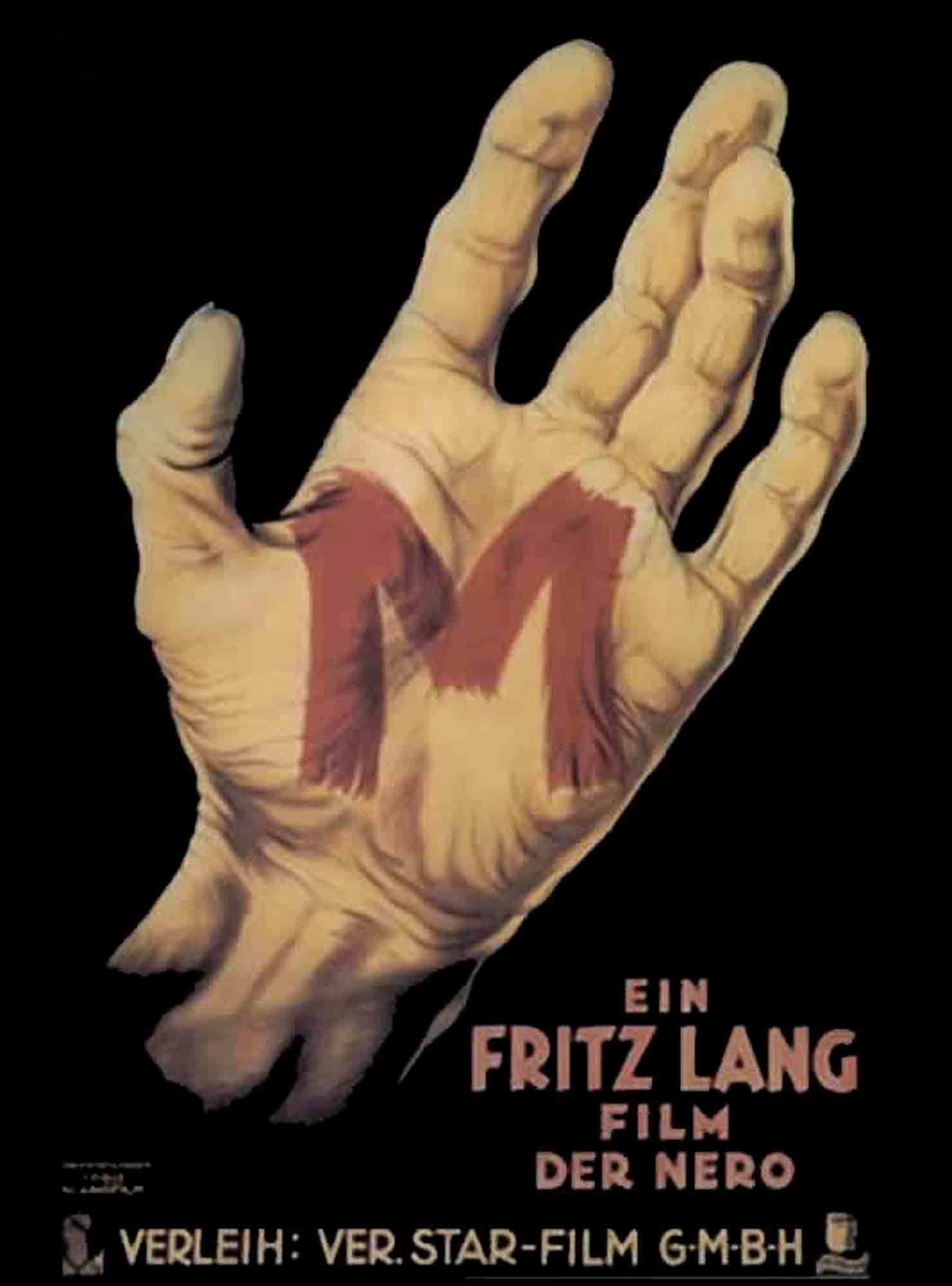
Fritz Lang’s M: Watch the Restored Version of the Classic 1931 Film


Very cool - gotta love all the excellent finds brought to us by Open Culture. Having not been a big box office success with its original release, M was re-released in 1959 in a shorter (butchered?) 89-minute version. The restored 109-minute version below is closer to Lang’s original film and was the product of a restoration project mounted in the 1990s.


Fritz Lang’s M: Watch the Restored Version of the Classic 1931 Film


August 25th, 2013

When Jean-Luc Godard asked the Austrian filmmaker Fritz Lang in 1961 to name his greatest film, the one most likely to last, Lang did not hesitate. “M,” he said.

Made in 1931, near the end of the Weimar Republic, M is Lang’s brilliant link between silent film and talkies, and between German Expressionism and what would eventually be called Film Noir. It tells the story of a Berlin society caught up in hysteria over a series of child murders, and of the massive mobilization — by police and criminals alike — to catch the killer.

The Hungarian actor Peter Lorre plays Hans Beckert, the mentally disturbed murderer. Lorre worked on the film in the daytime while performing on the stage in Bertolt Brecht’s own production of Mann ist Mann in the evenings. His striking performance in M would catapult him to international stardom.

The script was written by Lang and his wife, Thea Von Harbou. It was inspired by a series of mass murders, culminating in a sensational case of serial child killings in DĂŒsseldorf. In a 1931 article, Lang wrote:

The epidemic series of mass murders of the last decade with their manifold and dark side effects had constantly absorbed me, as unappealing as their study may have been. It made me think of demonstrating, within the framework of a film story, the typical characteristics of this immense danger for the daily order and the ways of effectively fighting them. I found the prototype in the person of the DĂŒsseldorf serial murderer and I also saw how here the side effects exactly repeated themselves, i.e. how they took on a typical form. I have distilled all typical events from the plethora of materials and combined them with the help of my wife into a self-contained film story. The film M should be a document and an extract of facts and in that way an authentic representation of a mass murder complex.

Although M was not a great box office success when it was released in Germany in 1931, the film gradually grew in stature and is now firmly established as one of the masterpieces of 20th century cinema. The formal brilliance of the film’s narrative structure, its classic visual images — the killer’s shadow appearing on a poster announcing a reward for his capture, a child’s balloon caught in a power line, Lorre’s bulging eyes as he discovers a chalk “M” on his shoulder — and its inventive use of sound — for example in the serial killer’s ominous whistling of Grieg’s Peer Gynt — have made M one of the most studied and imitated films ever made.

In 1959 M was re-released in truncated form, and for several decades afterward audiences were shown a badly altered 89-minute version. A restoration project was mounted in the 1990s. The 109-minute version above is closer to Lang’s original film. It’s now housed in our collection of 550 Free Movies Online.

Related content:

Thursday, August 22, 2013

Documentary - Samsara

File:Samsara Film Poster.jpg

Samsara is a 2011 documentary film, directed by Ron Fricke and produced by Mark Magidson, who also collaborated on Baraka (1992), another documentary film that relies on images and music to not so much tell a story as create a feeling.


Samsara was filmed over four years in 25 countries around the world. It was shot in 70 mm format and output to digital format. The film premiered at the 2011 Toronto International Film Festival and received a limited release in August 2012.


The film is presented in two parts below, or you can watch the film in one part at YouTube.


Samsara

Samsara is a Sanskrit word that means “the ever turning wheel of life” and is the point of departure for the filmmakers as they search for the elusive current of interconnection that runs through our lives.

Filmed over a period of almost five years and in twenty-five countries, Samsara transports us to sacred grounds, disaster zones, industrial sites, and natural wonders.

By dispensing with dialogue and descriptive text, the documentary subverts our expectations of a traditional documentary, instead encouraging our own inner interpretations inspired by images and music that infuses the ancient with the modern.

Samsara is a documentary film that explores the wonders of our world from the mundane to the miraculous, looking into the unfathomable reaches of man’s spirituality and the human experience. Neither a traditional documentary nor a travelogue, the film takes the form of a nonverbal, guided meditation.

Through powerful images, the film illuminates the links between humanity and the rest of nature, showing how our life cycle mirrors the rhythm of the planet.

Samsara was photographed entirely in 70mm film utilizing both standard frame rates and with a motion control time-lapse camera designed specifically for this project.


Samsara part 1 by polynikos12


Samsara part 2 by polynikos12

Wednesday, August 14, 2013

Michel Foucault’s Life and Philosophy Explored in 1993 Documentary - "Michel Foucault: Beyond Good and Evil"


From 1993, Michel Foucault: Beyond Good and Evil explores the life and philosophy of one of the 20th century's most influential and controversial post-structural philosophers. From the Stanford Encyclopedia of Philosophy, here is some intellectual background on Foucault and his influences:
Michel Foucault entered the École Normale SupĂ©rieure (the standard launching pad for major French philosophers) in 1946, during the heyday of existential phenomenology. Merleau-Ponty, whose lectures he attended, and Heidegger were particularly important. Hegel and Marx were also major concerns, the first through the interpretation of his work offered by Jean Hyppolite and the latter through the structuralist reading of Louis Althusser—both teachers who had a strong impact on Foucault at the École Normale. It is, accordingly, not surprising that Foucault's earliest works (his long “Introduction” to Dream and Existence by Ludwig Binswanger, a Heideggerian psychiatrist, and Maladie mentale et personalitĂ©, a short book on mental illness) were written in the grip of, respectively, existentialism and Marxism. But he soon turned away quite decisively from both. 
Although Jean-Paul Sartre, living and working outside the University system, had no personal influence on Foucault, the thought of him, as the French master-thinker preceding Foucault, is always in the background. Like Sartre, Foucault began from a relentless hatred of bourgeois society and culture and with a spontaneous sympathy for groups at the margins of the bourgeoisie (artists, homosexuals, prisoners, etc.). They were also similar in their interests in literature and psychology, as well as philosophy, and both, after an early relative lack of political interest, became strong activists. But in the end, Foucault seemed to insist on defining himself in contradiction to Sartre. Philosophically, he rejected what he saw as Sartre's centralization of the subject (which he mocked as “transcendental narcissism”). Personally and politically, he rejected Sartre's role as what Foucault called the “universal intellectual”, judging a society in terms of transcendent principles. There is, however, a tincture of protesting too much in Foucault's separation of himself from Sartre, and the question of the relation of their work remains a fertile one. 
Three other factors were of much more positive significance for the young Foucault. First, there was the French tradition of history and philosophy of science, particularly as represented by Georges Canguilhem, a powerful figure in the French University establishment, whose work in the history and philosophy of biology provided a model for much of what Foucault was later to do in the history of the human sciences. Canguilhem sponsored Foucault's doctoral thesis on the history of madness and, throughout Foucault's career, remained one of his most important and effective supporters. Canguilhem's approach to the history of science (an approach developed from the work of Gaston Bachelard), provided Foucault with a strong sense (Kuhnian avant la lettre) of the discontinuities in scientific history, along with a “rationalist” understanding of the historical role of concepts that made them independent of the phenomenologists' transcendental consciousness. Foucault found this understanding reinforced in the structuralist linguistics and psychology developed, respectively, by Ferdinand de Saussure and Jacques Lacan, as well as in Georges DumĂ©zil's proto-structuralist work on comparative religion. These anti-subjective standpoints provide the context for Foucault's marginalization of the subject in his “structuralist histories”, The Birth of the Clinic (on the origins of modern medicine) and The Order of Things (on the origins of the modern human sciences). 
In a quite different vein, Foucault was enthralled by French avant-garde literature, especially the writings of Georges Bataille and Maurice Blanchot, where he found the experiential concreteness of existential phenomenology without what he came to see as dubious philosophical assumptions about subjectivity. Of particular interest was this literature's evocation of “limit-experiences”, which push us to extremes where conventional categories of intelligibility begin to break down. 
This philosophical milieu provided materials for the critique of subjectivity and the corresponding “archaeological” and “genealogical” methods of writing history that inform Foucault's projects of historical critique.
Enjoy the documentary.


Michel Foucault’s Controversial Life and Philosophy Explored in a Revealing 1993 Documentary


August 14th, 2013


Complete with a bald Foucault re-enactor and dramatic readings of Foucault’s texts, this documentary titled “Beyond Good and Evil” explores the life and work of French poststructuralist Michel Foucault.

Foucault, who is famous for, among other works, “Madness and Civilization,” battled with mental illness himself. The documentary reveals that Foucault attempted suicide multiple times, at one point slashing his chest in the hallway of the École Normale SupĂ©rieure. Foucault also had morbid tastes, and adorned his room with Fransisco Goya pieces that depicted torture and war.

Other highlights include a recounting of Foucault dropping LSD in Death Valley (which he claimed was one of the most transformative events in his life) and Foucault referring to his near death experience after being hit by a car (arguably ironically) as “blissful.” Foucault also grew fond of America, where he could escape his French celebrity status and enjoy the sexual experimentation and drug use of San Francisco. 
Michel Foucault’s colorful life and hugely influential work were both struggles against limitation—the limits of language, of social structures and stultifying historical identities. As such, he managed to provoke scholars of every possible persuasion, since he called into question all positive programs—the ancient imperial, feudal, and liberal humanist—while steadfastly refusing to replace them with comprehensive alternative systems. And yet systems, social institutions of power and domination, were precisely the problem in Foucault’s estimation. Through his technique of raiding archives to produce an “archaeology of knowledge,” Foucault showed how every institution is shot through with what William E. Connolly calls “arbitrary… systemic cruelty.”

The film explores the philosopher and his complex and controversial life through interviews with colleagues and biographers and re-enactments of Foucault’s storied exploits in the American counterculture. Biographer James Miller points out that Foucault was “preoccupied with exploring states that were beyond normal everyday experience… drugs, certain forms of eroticism,” as a way to “reconfigure the world and his place in it.” In this, says anthropologist Paul Rabinow, Foucault sought to resurrect the questions that sober analytic philosophy had largely abandoned: questions about what it means to be human, beyond the social categories we take as natural and given.

via Critical Theory

Related Content:

~ Josh Jones is a writer and musician based in Washington, DC. Follow him at @jdmagness

Wednesday, July 31, 2013

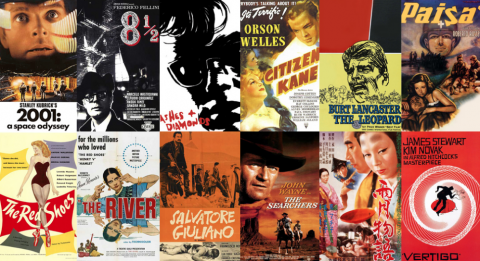
Martin Scorsese and Stanley Kubrick Pick Their 10 Favorite Films

From Open Culture, here are two "top ten" lists from two of America's most important filmmakers of the last 50 years. First up is Stanley Kubrick, who made his list in 1963. It would be interesting to see how that might have changed if he had done it in the last decade of his life.

The other list comes from one of my favorite directors, Martin Scorsese, who made his list earlier this year. Scorsese includes Kubrick's 2001: A Space Odyssey on his list - I wonder if Kubrick in his later years would have included Taxi Driver or Raging Bull or Mean Streets?

Stanley Kubrick’s List of Top 10 Films (The First and Only List He Ever Created)


July 30th, 2013


When, over the past weekend, I noticed the words “Stanley Kubrick” had risen into Twitter’s trending-topics list, I got excited. I figured someone had discovered, in the back of a long-neglected studio vault, the last extant print of a Kubrick masterpiece we’d somehow all forgotten. No suck luck, of course; Kubrick scholars, given how much they still talk about even the auteur’s never-realized projects like Napoleon, surely wouldn’t let an entire movie slip into obscurity. The burst of tweets actually came in honor of Kubrick’s 85th birthday, and hey, any chance to celebrate a director whose filmography includes the likes of Dr. Strangelove, The Shining, and 2001: A Space Odyssey, I’ll seize. The British Film Institute marked the occasion by posting a little-seen list of Kubrick’s top ten films.

“The first and only (as far as we know) Top 10 list Kubrick submitted to anyone was in 1963 to a fledgling American magazine named Cinema (which had been founded the previous year and ceased publication in 1976),” writes the BFI’s Nick Wrigley. It runs as follows:

1. I Vitelloni (Fellini, 1953)
2. Wild Strawberries (Bergman, 1957)
3. Citizen Kane (Welles, 1941)
4. The Treasure of the Sierra Madre (Huston, 1948)
5. City Lights (Chaplin, 1931)
6. Henry V (Olivier, 1944)
7. La notte (Antonioni, 1961)
8. The Bank Dick (Fields, 1940—above)
9. Roxie Hart (Wellman, 1942)
10. Hell’s Angels (Hughes, 1930)

But seeing as Kubrick still had 36 years to live and watch movies after making the list, it naturally provides something less than the final word on his preferences. Wrigley quotes Kubrick confidant Jan Harlan as saying that “Stanley would have seriously revised this 1963 list in later years, though Wild Strawberries, Citizen Kane and City Lights would remain, but he liked Kenneth Branagh’s Henry V much better than the old and old-fashioned Olivier version.” He also quotes Kubrick himself as calling Max Ophuls the “highest of all” and “possessed of every possible quality,” calling Elia Kazan “without question the best director we have in America,” and praising heartily David Lean, Vittorio de Sica, and François Truffaut. This all comes in handy for true cinephiles, who can never find satisfaction watching only the filmmakers they admire; they must also watch the filmmakers the filmmakers they admire admire.

Related Content:

* * * * * * *

Martin Scorsese Reveals His 10 Favorite Movies (and Writes a New Essay on Film Preservation)


July 31st, 2013


Cinema as we’ve almost always known it — “Edison, the LumiĂšre brothers, MĂ©liĂšs, Porter, all the way through Griffith and on to Kubrick” — has “really almost gone.” So writes Martin Scorsese in his recent essay for the New York Review of Books, “The Persisting Vision: Reading the Language of Cinema.” He argues that traditional film forms have “been overwhelmed by moving images coming at us all the time and absolutely everywhere, even faster than the visions coming at the astronaut” in Kubrick’s 2001: A Space Odyssey. “We have no choice but to treat all these moving images coming at us as a language. We need to be able to understand what we’re seeing and find the tools to sort it all out.” Only natural that Scorsese, as one of the best-known, highest-profile auteurs alive, would reference Kubrick, his generational predecessor in the untiring furtherance of cinematic vision and craft.

We just yesterday featured a post about Kubrick’s 1963 list of ten favorite films. Scorsese, for his part, has impressed many as one of the most enthusiastically cinephilic directors working in America today: his essays about and appearances on the DVDs of his favorite movies stand as evidence for the surprising breadth of his appreciation. Today, why not have a look at Scorsese’s list, which he put together for Sight and Sound magazine, and which begins with the Kubrick selection you might expect:

2001: A Space Odyssey (1968) – Stanley Kubrick
8½ (1963) – Federico Fellini
Ashes and Diamonds (1958) – Andrzej Wajda
Citizen Kane (1941) – Orson Welles
The Leopard (1963) – Luchino Visconti
Paisan (1946) – Roberto Rossellini
The Red Shoes (1948) – Michael Powell/Emeric Pressburger
The River (1951) – Jean Renoir
Salvatore Giuliano (1962) – Francesco Rosi
The Searchers (1956) – John Ford
Ugetsu Monogatari (1953) – Mizoguchi Kenji
Vertigo (1958) – Alfred Hitchcock

In “The Persisting Vision,” he champions comprehensive film preservation, citing the case of Hitchcock’s Vertigo, the final entry on his list, now named the greatest film of all time by Sight and Sound‘s critics poll. “When the film came out some people liked it, some didn’t, and then it just went away.” When, after decades of obscurity, Vertigo came back into circulation, the color was completely wrong,” and “the elements — the original picture and sound negatives — needed serious attention.” A restoration of the “decaying and severely damaged” film eventually happened, and “more and more people saw Vertigo and came to appreciate its hypnotic beauty and very strange, obsessive focus.” I, personally, couldn’t imagine the world of cinema without it — nor without any of the other pictures Scorsese calls his favorites.

Related Content:

~ Colin Marshall hosts and produces Notebook on Cities and Culture and writes essays on literature, film, cities, Asia, and aesthetics. He’s at work on a book about Los Angeles, A Los Angeles Primer. Follow him on Twitter at @colinmarshall.

Friday, May 10, 2013

Tom Waits Sings and Tells Stories in Tom Waits: A Day in Vienna, a 1979 Austrian Film


Via Open Culture, a cool old Tom Waits film. Happy Friday!

Tom Waits Sings and Tells Stories inTom Waits: A Day in Vienna, a 1979 Austrian Film


May 8th, 2013


The film opens at a derelict gas station. A paper sign, peeling from the wall, warns in German that open flames and smoking are dangerous and strictly forbidden. In walks Tom Waits, smoking a cigarette.

“This reminds me of a place I used to work in National City, California, called Spotco Self Service,” Waits says as he leans against a pump. “I worked for a gentleman named Charles Spotco. I was always late for work. I used to stay out at night. I’d come dragging to work, used to get there about ten-thirty in the morning. He’d chew me out and scream at me for being late. He always said I’d never amount to nothing. I never thought I’d be standing in a gas station in Vienna Austria. If I’d of told him that one day, Spotco, I’ll be leaning on a gas pump at a gas station in Vienna Austria, he would have said you gotta be out of your mind.”

The scene is from Tom Waits: A Day in Vienna, a half-hour Austrian TV film shot on April 19, 1979, and shown above in its entirety. Filmmakers Rudi Dolezal and Hannes Rossacher approached Waits when he arrived in Vienna on a short European tour, according to Barney Hoskyns in Lowside of the Road: A Life of Tom Waits. “He came in from Amsterdam saying he hadn’t slept all night, but he agreed on the spot to let us film him,” Rossacher told Hoskyns. “He didn’t want to do a proper interview but instead he wanted to tell stories.”

Dolezal and Rossacher drove Waits to the old gas station and later to a Greek cafe, where he told a comic story about a saxophone player. At the Konzerthaus that night they filmed Waits performing “Sweet Little Bullet From a Pretty Blue Gun,” “Pasties and a G-String” and “Christmas Card from a Hooker in Minneapolis.” Backstage before the encore, Dolezal can be seen, an amused look on his face, holding the boom mic as Waits paces back and forth singing “When the Saints Go Marching In.” Afterward, in a lounge, Waits sits down at a piano and plays a few bars of “I Can’t Wait to Get Off Work” before dancing with a bar girl and retiring for the night.

Tom Waits: A Day in Vienna will be added to our collection of 525 Free Movies Online.

Related Content:

Wednesday, April 10, 2013

The World According to John Coltrane: His Life & Music Revealed in Heartfelt 1990 Documentary


This is another excellent find from Open Culture, especially for lovers of classic jazz. If you are a fan of John Coltrane's experimental and innovative approach to jazz, or if you simply want to know he is held in such high esteem, despite his early death from liver cancer (age 40), then this is the perfect documentary.

Below the video post, I am including the list of interviewees and tracks played in the film.

The World According to John Coltrane: His Life & Music Revealed in Heartfelt 1990 Documentary


April 8th, 2013


In his short life, John Coltrane continually pushed the boundaries of music. From swing to bebop to free jazz, Coltrane was a restless seeker of new sounds. Inspired by the hypnotic, trance-inducing traditional music of North Africa and Asia, Coltrane created a new kind of music that fused jazz and Eastern spirituality.

The World According to John Coltrane tells the story of Coltrane’s quest, from his childhood in a deeply religious household in North Carolina to his early days playing saxophone in the Navy, to his apprenticeship with Miles Davis in the 1950s and his emergence as a bandleader and innovator in the 1960s. Most of the one-hour film is devoted to Coltrane’s later period, when he came into his own. The film is not a biography, in the traditional sense. There is very little about Coltrane’s personal life–his marriages, children, drug problems and declining health. Director Robert Palmer focuses instead on Coltrane’s journey as a musician.

The World According to John Coltrane was made in 1990, and includes interviews with Coltrane’s second wife, pianist Alice Coltrane, and a number of other musicians who knew Coltrane and played with him, including saxophonist Wayne Shorter, drummer Rashied Ali, and Pianist Tommy Flanagan. It provides some excellent insights into one of the 20th century’s greatest musicians.

via metafilter

Related Content:


Additional information:


Musicians interviewed include:
  • Roscoe Mitchell (saxophonist)
  • Rashied Ali (drummer)
  • Tommy Flanagan (pianist)
  • Jimmy Heath (saxophonist)
  • Wayne Shorter (saxophonist)
  • La Monte Young (composer)
  • Alice Coltrane (wife, pianist, harpist)

Tracks:
1 - A Love Supreme
2 - Alabama
3 - Blue Monk
4 - Dahomey Dance
5 - Dear Lord
6 - Eight Miles High
7 - Giant Steps
8 - Gospel Song 1
9 - Gospel Song 2
10 - Hot House
11 - Impressions
12 - Impressions 2
13 - India
14 - Koko
15 - Moroccan Folk Song
16 - My Favorite Things
17 - My Favorite Things 2
18 - Naima
19 - Number One
20 - Raga Bhimpalisi
21 - Roscoe In Morocco
22 - Round Midnight
23 - So What
24 - Things To Come

Wednesday, March 20, 2013

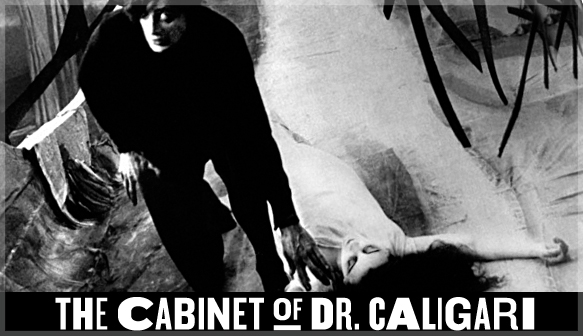
The Cabinet of Dr. Caligari


Via Snag Films, a classic of the silent film era.


The Cabinet of Dr. Caligari


Synopsis

In this silent, classic example of early German expressionism, this cinematic landmark relates the stylized tale of a Dr. Caligari, a fairground showman who hypnotizes an innocent villager--turning him into a sleepwalking "zombie"--and compels him to carry out fiendish murders.

Film Credits
  • Director: Robert Wiene
  • Writers: Hans Janowitz, Carl Mayer
  • Starring: Werner Krauss, Conrad Veidt

Monday, February 25, 2013

85th Annual Academy Awards Winners


I did not see the show last night (we went out to dinner with a friend instead) - besides, I find these things unbearable to watch. So, if you, like me, missed the show, but like to know who won (these movies get added to my must-see list), here is the list of winners, (with snarky commentary) courtesy of I Watch Stuff. Winners are in red text.

It seems they spread the wealth this year - no one film dominated the major categories. As an aside, based on what I have heard from friends, Wreck-It Ralph should have been nominated for Best Picture, and therefore was robbed in not winning the Best Animated Feature category.

Your 85th Annual Academy Awards Winners

February 24, 2013


argo-ben-affleck.jpg

Hollywood's biggest night of listing things is at last over, the Academy of Motion Picture Arts and Sciences last night giving Argo the year's highest honor, The Best Film Ben Affleck Made Since at Least The Town, in Sunday night's 85th Annual Oscars. Meanwhile, Daniel Day-Lewis won Best Actor for his portrayal of historic Linkin Park frontman Abraham Linkin; Jennifer Lawrence can feel good about herself for besting both child and the elderly; and Spielberg went home thinking he should have just made fucking Schindler's Other List, if everyone's going to be like this. Here are the full results:

BEST PICTURE
Amour
Argo
Beasts of the Southern Wild
Django Unchained
Les Misérables
Life of Pi
Lincoln
Silver Linings Playbook
Zero Dark Thirty

BEST ACTOR
Bradley Cooper, Silver Linings Playbook
Daniel Day-Lewis, Lincoln
Denzel Washington, Flight
Hugh Jackman, Les Misérables
Joaquin Phoenix, The Master

BEST ACTRESS
Emmanuelle Riva, Amour
Jennifer Lawrence, Silver Linings Playbook
Jessica Chastain, Zero Dark Thirty
Naomi Watts, The Impossible
Quvenzhane Wallis, Beasts of the Southern Wild

BEST SUPPORTING ACTRESS
Amy Adams, The Master
Anne Hathaway, Les Misérables
Sally Field, Lincoln
Helen Hunt, The Sessions
Jacki Weaver, Silver Linings Playbook

BEST SUPPORTING ACTOR
Alan Arkin, Argo
Christoph Waltz, Django Unchained
Philip Seymour Hoffman, The Master
Robert De Niro, Silver Linings Playbook
Tommy Lee Jones, Lincoln

BEST DIRECTOR
Ang Lee, Life of Pi
David O. Russell, Silver Linings Playbook
Benh Zeitlin, Beast of the Southern Wild
Michael Haneke, Amour
Steven Spielberg, Lincoln

BEST ORIGINAL SCREENPLAY
Amour
Django Unchained
Flight
Moonrise Kingdom
Zero Dark Thirty

BEST ADAPTED SCREENPLAY
Argo
Beasts of the Southern Wild
Life of Pi
Lincoln
Silver Linings Playbook

BEST ANIMATED FEATURE
Brave
Frankenweenie
ParaNorman
The Pirates! Band of Misfits
Wreck-It Ralph

BEST FOREIGN LANGUAGE FILM
Amour
A Royal Affair
No
Kon-Tiki
War Witch

BEST CINEMATOGRAPHY
Anna Karenina
Django Unchained
Life of Pi
Lincoln
Skyfall

BEST COSTUME DESIGN
Anna Karenina
Les Misérables
Lincoln
Mirror Mirror
Snow White and the Huntsman

BEST DOCUMENTARY FEATURE
5 Broken Cameras
The Gatekeepers
How to Survive a Plague
The Invisible War
Searching for Sugar Man

BEST DOCUMENTARY SHORT
Inocente
Kings Point
Mondays at Racine
Open Heart
Redemption

BEST FILM EDITING
Argo
Life of Pi
Lincoln
Silver Linings Playbook
Zero Dark Thirty

BEST MAKEUP AND HAIRSTYLING
Hitchcock
The Hobbit: An Unexpected Journey
Les Misérables

BEST ORIGINAL SCORE
Anna Karenina
Argo
Life of Pi
Lincoln
Skyfall

BEST ORIGINAL SONG
"Before My Time" from Chasing Ice
"Everybody Needs a Best Friend" from Ted
"Pi's Lullaby" from Life of Pi
"Skyfall" from Skyfall
"Suddenly"from Les Misérables

BEST PRODUCTION DESIGN
Anna Karenina
The Hobbit: An Unexpected Journey
Les Misérables
Life of Pi
Lincoln

BEST ANIMATED SHORT
Adam and Dog
Fresh Guacamole
Head Over Heels
Maggie Simpson in 'The Longest Daycare'
Paperman

BEST LIVE ACTION SHORT
Asad
Buzkashi Boys
Curfew
Death of a Shadow (Dood van een Schaduw)
Henry

BEST SOUND EDITING
Argo
Django Unchained
Life of Pi
Skyfall
Zero Dark Thirty
(A G.D. tie! Apparently that's allowed?)

BEST SOUND MIXING
Argo
Les Misérables
Life of Pi
Lincoln
Skyfall

BEST VISUAL EFFECTS
The Hobbit: An Unexpected Journey
Life of Pi
The Avengers
Prometheus
Snow White and the Huntsman