Showing posts with label government. Show all posts

Friday, October 17, 2014

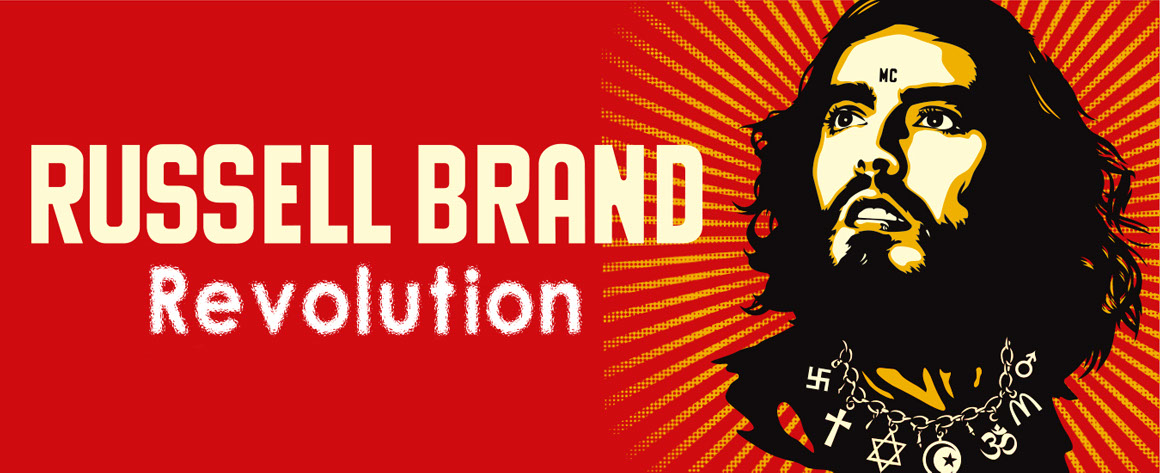
Russell Brand Says He Wants A ‘Revolution’

http://irishmarxism.files.wordpress.com/2013/11/russell-brand-revolution-header.jpg

Russell Brand's third book, Revolution, was just released on Tuesday (October 14), so of course he is making the rounds on NPR and various other outlets to promote his book. It seems Brand is less interested in comedy these days than he is in stirring up a revolt against the status quo. I disagree with him completely about not voting, but I can see why he and so many others feel their votes are worthless because there is no real choice.

Here is the ad copy for his book:
We all know the system isn’t working. Our governments are corrupt and the opposing parties pointlessly similar. Our culture is filled with vacuity and pap, and we are told there’s nothing we can do: “It’s just the way things are.”

In this book, Russell Brand hilariously lacerates the straw men and paper tigers of our conformist times and presents, with the help of experts as diverse as Thomas Piketty and George Orwell, a vision for a fairer, sexier society that’s fun and inclusive.

You have been lied to, told there’s no alternative, no choice, and that you don’t deserve any better. Brand destroys this illusory facade as amusingly and deftly as he annihilates Morning Joe anchors, Fox News fascists, and BBC stalwarts.

This book makes revolution not only possible but inevitable and fun.
I like Russell Brand. In many ways, he is right on target with his criticisms. But he is also naive about the citizens of England and America, who are content to be oblivious to how their corporatocracy is stealing them blind as long as they have their football (England) or football (USA).

The chances of people actually rising up and revolting are slim to none.

Russell Brand Says He Wants A ‘Revolution’

The wild, funny, blithely offensive comedian Russell Brand takes on the world’s woes with us. He says he’s got the answer.


October 15, 2014


Comedian and actor Russell Brand, on the cover of his new book, Revolution

British comedian, actor, provocateur, activist Russell Brand knows how to mix it up wild and funny. With his big mane, sharp mind, and glittering irreverence he has cut a wide swath in entertainment realms. Played the blazing rock star in Forgetting Sarah Marshall and Get Him to the Greek. Married and divorced Katy Perry. Toured doing stand-up last year with his Messiah Complex show. And now Russell Brand is going all-in on politics. Revolution, actually. Our world, our system is worn out and we know it, he says. Time for revolt. Up next On Point: Russell Brand, and revolution.

– Tom Ashbrook

Guests

Russell Brand, actor, comedian and activist. Author of the new book, Revolution. He is also author of My Booky Wook: A Memoir of Sex, Drugs, and Stand-Up and Booky Wook 2: This Time It's Personal. (@rustyrockets)


From Tom’s Reading List
Read An Excerpt Of “Revolution” By Russell Brand

Thursday, October 09, 2014

Trust Is Waning, and Inequality May Be to Blame

American's do not trust each other. A recent survey found that, compared to 46% in the 1970s, now only 33% believe they can trust their fellow citizens (in general). Distrust of the media has risen from 16% in the 1970s to nearly 48% today.

The whole study is paywalled, of course, but Pacific Standard offers a brief summary.

Trust Is Waning, and Inequality May Be to Blame


By Nathan Collins • September 30, 2014


(Photo: gregorywass/Flickr)

Trust in others and confidence in institutions is declining, while economic inequality creeps up, a new study shows.

•

Trust is on the decline in America. Between 1972 and 2012 Americans became less trusting of and less confident in not only government and the media, but also churches, doctors, business, and each other. And, according to a new report, increasing income inequality may be to blame.

Political scientists and sociologists have long wondered how, why, and even whether trust in government and other institutions changes over time. One theory, still taught today, is that the dramatic process of entering adulthood shapes a person’s social and political traits in a lasting way. Thus, citizens born during the Great Depression tend to embrace a more frugal lifestyle and often the welfare state as well, or so the theory goes. Scholars have argued more recently that traits like being frugal or trusting government are a matter of the zeitgeist, or perhaps a matter of one’s age. Whichever is true, questions remain. If it’s the times that affects trust, what is it about a particular period that makes people more or less willing to believe what others say?

Separating out the effects of age, birth year—cohort, it’s usually called—and survey year, it became clear that trust in others and confidence in institutions declined because of the times we were and are living in.

To sort it out, psychologists Jean Twenge, Keith Campbell, and Nathan Carter looked to data from the General Social Survey, or GSS, which since the 1970s has asked a total of 37,493 Americans questions about just about everything, including a range of questions about trust and confidence in other people and groups. In the early ’70s, 46 percent of Americans agreed that “most people can be trusted,” as the GSS posed the question. Between 2010 and 2012, however, those surveyed agreed with that statement just 33 percent of the time. Confidence declined by a similar amount. Only 16 percent of GSS respondents responded that they had “hardly any” confidence in the press when surveyed between 1972 and 1974, but that number nearly tripled by the 2010-12 survey.

More interesting than the raw numbers is the deeper story that the data tell. Separating out the effects of age, birth year—cohort, it’s usually called—and survey year, it became clear that trust in others and confidence in institutions declined because of the times we were and are living in. Cohort had some effects on confidence, and trust increased with age, but the data indicated something about the zeitgeist was powering the decline in trust and confidence.

That something, the team argues, is the economy. Greater income inequality, the team found, was correlated with lower trust in others, while greater poverty, more violent crime, and an improving stock market were linked with less confidence in institutions.

In an email, Carter told Pacific Standard that the team is “very interested” in how psychology and economics interact through what Depression-era economist John Maynard Keynes called “animal spirits,” spontaneous, sometimes irrational drives to economic or financial action, “which have unfortunately seen very little serious attention from either psychologists or economists.”

“I really think it will take a concerted effort for collaboration across economics and psychology to get a handle on how psychological states impact economies and vice versa,” Carter says.


Nathan Collins studied astrophysics and political science before realizing he wanted to learn about all of the science without worrying about tenure. In his second life as a freelance science writer, he’s written for Scientific American, New Scientist, and others.

More From Nathan Collins

Tuesday, August 26, 2014

Matthew Taylor: Beyond Belief – Towards a New Methodology of Change


This is an interesting article from Royal Society for the encouragement of Arts (RSA) CEO Matthew Taylor on the emerging demand for a participatory politics. I liked this quote: "beyonders want a model of change in which the public has the right and the responsibility to be the subject not the object." And this one, "beyonders tend to be decentralists seeking to devolve decision-making to the level at which the most constructive and responsive discourse between decision makers and citizens can occur."

This, of course, is happening more in Britain than in the States - we are content to watch the VMAs, count the seconds until Disney releases the next Star Wars film, and slowly kill ourselves with ignorance and laziness.

Beyond belief – towards a new methodology of change

August 24, 2014 by Matthew Taylor

An exciting and progressive new paradigm for purposive social change is emerging*. For want of a more positive descriptor, this can be called ‘beyond policy’. It has many positive things to say, but its starting point comprises a number of related critiques – some quite new, some very old – of traditional legislative or quasi-legislative decision-making.

One relatively new strand focuses on the problems such decision-making has with the complexity and pace of change in the modern world. For example, in their recent book ‘Complexity and the art of Public Policy’ David Colander and Roland Kupers write ‘The current policy compass is rooted in assumptions necessary half a century ago….while social and economic theory has advanced, the policy model has not. It is this standard policy compass that is increasingly derailing the policy discussion’. Old linear processes cannot cope with the ‘wicked problems’ posed by a complex world.

A second strand – most often applied to public service reform – argues that the relational nature of such services means that change cannot be done to people but must be continually negotiated with them, leaving as much room as possible for local discretion at the interface between public commissioner/provider and citizen/service user. The RSA identifies the key criterion for public service success as ‘social productivity’; the degree to which interventions encourage and enable people better to be able to contribute to meeting their own needs.

Design thinking provides another, rather elegant, stick with which to beat traditional policy methods. Here the contrast is between the schematic, inflexible, risk averse and unresponsive methods of the policy maker versus the pragmatic, risk taking, fast learning, experimental method of the designer. Across the world Governments local and national – including the UK with its recently established Policy Lab - are trying to bring the design perspective into decision-making (generally it promises lots of possibility at the margins but has proven hard to bring anywhere near the centre of power).

Connected to the design critique the rise of what David Price and Dom Potter among others refer to as ‘open’ organisations challenges many aspects of the technocratic model of expert policy makers ensconced in Whitehall or Town Hall. When transparency is expected and secrecy ever harder to maintain and when innovation is vital but increasingly being seen to take place at the fuzzy margins of organisations, then we are all potential policy experts.

A final stand worth mentioning (I am sure the are others) is more ideological and idealistic. Following the civic republican tradition, beyonders want a model of change in which the public has the right and the responsibility to be the subject not the object. There is, for example, the distinction made many years ago by historian Peter Clarke between ‘moral’ and ‘mechanical’ traditions in the British labour movement. The former (favoured by ‘beyonders’) is concerned with embedding progressive values in the hearts and minds of citizens who will themselves build a better society, while the latter is focused on winning power so that those in authority can mould a fairer better world according to their grand plan.

The dictionary definition of policy is: ‘a course or principle of action adopted or proposed by an organisation or individual’. So, echoing Bertrand Russell’s problem with the set that contains all sets, the most obvious objection to ‘beyond policy’ is that it is, well….a policy. ‘Beyonders’ are not anarchists. The issue here is not whether people in power should make decisions; after all, it is because they are judged to be likely to make good decisions that they have been vested with authority. The differences between the ‘traditional’ and ‘beyond’ policy camps are in practice ones of degree. Often the best traditional policy turns out to have used versions of the new methods. But that doesn’t mean the differences between the approaches aren’t important and often pretty obvious.

Beyonders put greater emphasis on citizens not only engaging with decisions but being part of their implementation. We recognise the importance of clear and explicit goals and shared metrics, but rather than setting these in stone at the outset see them emerging from a conversation authentically led and openly convened using a new style of dispersed and shared authority.

Beyonders are likely to see civic mobilisation as preceding and possibly being an alternative to legislative policy whereas traditionalists will tend to see mobilisation as something that happens after policy has been agreed by experts. Beyonders tend, at last at the outset, to be more pragmatic and flexible about the timeframe over which major change can occur – depending as it does on public engagement and consent – whereas traditionalists pride themselves (before a fall) on their demanding and fixed timetables. And, of course, beyonders tend to be decentralists seeking to devolve decision-making to the level at which the most constructive and responsive discourse between decision makers and citizens can occur.

Another reasonable challenge to the new paradigm is that it can’t be equally applied to all areas of policy. When it comes, for example, to military engagement or infrastructure investment, surely we need clear decisions made at the top and then imposed regardless?

Yes, even here the case is not clear-cut. One of the reasons we sometimes get infrastructure wrong in areas like transport and energy is that the policy making establishment (not just the law makers but those paid to advise and influence them) prefer big ticket schemes (which tend also to generate big ticket opposition) to more evolutionary, innovative or local solutions. And as the military and police know, without winning hearts and minds most martial solutions fail to sustain. A topical example is the way the terrorist threat in the UK is now less to do with organised conspiracy (requiring sophisticated and centralised surveillance) and more to do with disturbed and alienated youth who need to be identified and engaged with at a community level.

Perhaps the biggest challenge to the beyond policy paradigm is that it requires fundamental changes not just in the way we do policy, but in how we think about politics, accountability and social responsibility. The solidity of traditional policy making is contained within a wider system which cannot easily contend with the much more fluid material of ‘beyond policy’. When, for example, I tell politicians there their most constructive power may lie not in passing laws, imposing regulations or even spending money but on convening new types of conversation, they react like body builders who have asked to train using only cuddly toys.

Reflecting the way we tend to think about the world, the beyonders’ revolution requires action on several levels. Innovation shows us a better way of making change that lasts. See for example the work of Bruce Katz and Jennifer Bradley of the Brookings Institute on the advances made by US metros, often based on the convening power of the city mayor. Included in the ranks of a new generation of beyond policy practitioners are community organisers, ethnographers, big data analysts and service designers – they can all tell you why traditional policy making is a problem and they rarely see it as the best way to find solutions. There are also more academics and respected former policy makers (like former Canadian cabinet secretary Jocelyne Bourgon) helping to provide conceptual clarity and professional credibility to the project.

‘Beyond policy is a movement in progress, but in recognising its flaws and gaps we mustn’t forget the traditional system’s glaring inadequacies or that the political class is still, on the whole, clinging tight to it: Over the next ten months our political parties will offer manifestos full of old style policy to be enacted through an increasingly unreal model of social change.

If the problem was simply that the policies and pledges were unlikely to be enacted it would be bad enough. It is worse. Politicians feel they pay a high price for broken promises so, if elected, they demand that the machine try to ‘deliver’ regardless of whether the policy makes any sense or of any learning that points to the need to change course. The result is often distorted priorities and perverse outcomes along with gaming, demoralisation and cynicism among public servants. No chief executive of a large corporation (and none are as a large as the UK government) would dream of tying themselves in detail to a plan that is supposed to last the best part of five years regardless of unpredictable events. But that is exactly what we will apparently command our politicians – facing much more complex tasks and challenges – to do in ten months time.

Surely now, before another Government is elected on a false and damaging prospectus, it’s time to move beyond convention and have a grown up conversation about how society changes for good and how politician can best make a positive difference.

* This is an edited version of an article I have written for the News South Wales Institute of Public Administration

Matthew Taylor became Chief Executive of the RSA in November 2006. Prior to this appointment, he was Chief Adviser on Political Strategy to the Prime Minister. 

Thursday, August 07, 2014

Pacific Standard Explains the Origins of the Chemtrail Conspiracy

Have you ever wondered where the nonsense about chemtrails comes from? I have, but I am too lazy to go searching around the wackadoodle-net in an attempt to sort it out. Fortunately for me, and for you, at Pacific Standard has done the work for us.

One kink in this conspiracy is that we have a LOT of photos of WWII-ear propeller-driven planes leaving engine exhaust. Unless the government has been poisoning us for much longer than anyone could imagine....

Contrails from propeller-driven aircraft engine exhaust, early 1940s

The Origins of the Chemtrail Conspiracy

By Katie Heaney • August 05, 2014 • Pacific Standard

chemtrails
(Photo: mendhak/Flickr)

Why would the American government be interested in poisoning its population by spraying vapor out of an airplane? That remains unclear.

•

A couple of months ago, a video titled “Busted: Pilot Forgets to Turn Off CHEMTRAILS Before Landing” was uploaded to YouTube. (The version seen here is not the original upload, which was later removed with copyright claims.) Because the original was taken down, the exact view count isn’t known, but it accumulated enough interest to be given the (admittedly nebulous) label “viral video” by Discovery News. Certainly, for a short and low-quality YouTube video about chemtrails, it was unusually popular.

The video is 40 seconds long, the first five of which are unintelligible. It quickly becomes clear (well, hazily clear) that we’re seeing footage of an airplane coming in low for a landing at night. Trailing behind it are several stripes of aircraft exhaust. The plane passes a few lampposts, and by the 25-second mark, it’s safely on the ground. At that point, the camera’s operator zooms out and shifts left and up, panning over a stream of condensation left in the sky.

To most, this condensation would seem to be a pretty standard byproduct of flying in what look to be fairly foggy conditions. Hot airplane exhaust mixes with the lower-temperature atmosphere around it, and in the process, creates water vapor.

(I should add that I did not know exactly how to describe that process off the top of my head. I read about it on the Internet, and it made sense to me, so I’m repeating it here.)

But to the person who posted it, these 40 seconds show something much more sinister. It’s not that he or she does not believe that the meeting of hot and cold air produces moisture, or that (though I wouldn’t want to take words out of his or her mouth) every airplane that emits exhaust is up to no good. No, it’s that real condensation shouldn’t hang around so long, and that some airplanes are releasing a lot more than hot air.

THE BIRTH OF THE CHEMTRAIL conspiracy (the word “chemtrail” being a combination of chemical and contrail, and the word “contrail” a combination of condensation and trail) is generally pinpointed to a few-year window surrounding 1996. It was that year when the U.S. Air Force was first accused of using military aircraft to “spray” American citizens with mysterious substances, evidenced by the unusual contrail patterns left in the sky.

Probably not coincidentally, 1996 was also the year that a report called “Weather as a Force Multiplier: Owning the Weather in 2025” was presented (and made public) by students of the Air University. As an assignment, the Air Force chief of staff asked the study’s authors to “examine the concepts, capabilities, and technologies the United States will require to remain the dominant air and space force in the future.”

Though the paper’s introduction clearly specifies that it does not reflect official government policy, and that the weather modification and control scenarios described within it are “fictional representations of future situations/scenarios,” some took it as evidence that the government was actively working to control and manipulate the Earth’s climate.

Unfortunately for the Air Force, the third-best way to fan the flames of a conspiracy is to say you were only speaking hypothetically. The second-best way is to say, unequivocally, that any given practice isn’t government policy. And the first-best way is to then say you’ve investigated people’s concerns, and found them to be untrue—which the Air Force did in 2002. And in 2005.

In the years since, the chemtrail conspiracy has spawned dozens of semi-activist websites and forums, like Aircrap.org and Chemtrails911.com. Most recently, many have latched on to this summer’s Snowpiercer, a movie in which the government sprays chemicals into the sky in order to stop global warming, but instead “accidentally” creates a new ice age, killing everyone except a select few who are on board a perpetually moving train. The allegations from chemtrail activists are both broad and vague—it’s not particularly clear why the United States government would be poisoning its own people, for example, and, if they were, why they wouldn’t use a method more effective than spraying something in our general direction from 35,000 feet and hoping for the best—but one common, predominant thread is that chemtrails are making us sick.

One of the symptoms often said to be caused by chemtrails is very gross, and odd, and I’m sorry to write it here because upon reading you’ll almost certainly feel like it’s happening to you too: Many people who believe they’ve been infected by chemtrails also begin to believe that small, thread-like fibers are crawling out of their skin.

MORGELLONS DISEASE IS PROBABLY not a real disease. At least not in the way its sufferers think of it. It’s a strange name, in that it’s used both by people who believe they have it, and by people who say that believing they have it is all that it is. Many (if not most; though likely most) doctors and scientists consider it a form of delusional parasitosis, a kind of psychosis in which patients believe they’re infested by parasites or other organisms that are not actually present.

Pressured by an Internet-based community of supporters (started by a mother who diagnosed her two-year-old son with the condition), the Centers for Disease Control and Prevention undertook an investigation into the supposed disease, publishing its results in 2012. Researchers found no “causative medical condition” or infectious agent, and they instead attributed patients’ symptoms to delusional parasitosis. (Some of the patients likely had other potential contributing factors—50 percent tested positive for drugs.)

Still, several swaths of the Internet continue to reference the disease—and the health threat presented by so-called chemtrails in general—in earnest. This page even presents preventive dietary recommendations and a recipe for something called “Spring Hepatic Detox” tea, which the author writes is “Good to do, if you have been tested for heavy metals.”

Many of these sites’ authors and forum contributors post pictures of themselves taken from microscope slides: pieces of skin and specks and fibers, all thread-y looking and strange-colored, the way all hyper-zoomed-in images of things are. I could look at them forever (not that I’m volunteering—this is a hypothetical), but it wouldn’t make a difference. That’s all a conspiracy theory really needs, isn’t it? I admit, I like them for their reliability: Two opposing teams looking at the exact same thing, each convinced the other is missing it for what it really is.


Katie Heaney is a writer and an editor at BuzzFeed and author of Never Have I Ever. Follow her on Twitter @KTHeaney.

More From Katie Heaney

Tuesday, July 01, 2014

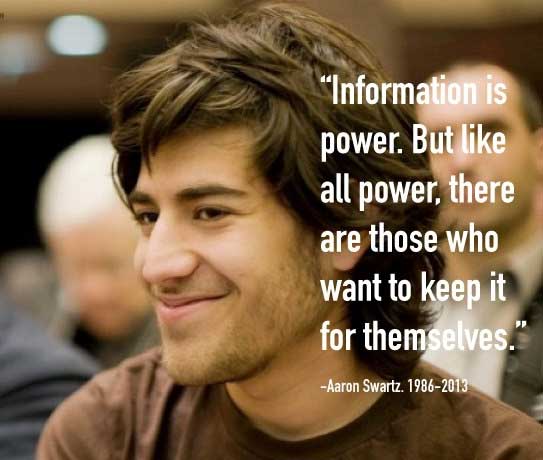
The Internet’s Own Boy: The Story of Aaron Swartz - New Documentary Is Free Online


This story is a tragedy, in my opinion. Aaron Swartz was being made an example of for having embarrassed the government on a couple of occasions. Even the case for which charges were finally brought did not cause any financial harm to his target (JSTOR), who urged the government to drop the charges. The Feds refused - Swartz's conviction would serve as a warning. Instead, the young man hanged himself in his NYC apartment.

Here is a key passage that explains why so many of us supported Swartz's "work":
Swartz’s manifesto didn’t just call for the widespread illegal downloading and sharing of copyrighted scientific and academic material, which was already a dangerous idea. It explained why. Much of the academic research held under lock and key by large institutional publishers like Reed Elsevier had been largely funded at public expense, but was now being treated as private property – and as Swartz understood, that was just one example of a massive ideological victory for corporate interests that had penetrated almost every aspect of society. The actual data theft for which Swartz was prosecuted, the download of a large volume of journal articles from the academic database called JSTOR, was largely symbolic and arguably almost pointless. (As a Harvard graduate student at the time, Swartz was entitled to read anything on JSTOR.)
Academic publishers like Reed Elsevier, JSTOR, Science Direct, Nature, Hindawi, Springer, and others control nearly all of the published research in nearly every field, much of which is funded by tax dollars either directly or indirectly.

These publishers then charge authors hundreds [sometimes thousands] of dollars to publish, and charge more if the author wants open access; they charge for images in articles; they charge libraries hundreds of dollars for subscriptions, even digital subscriptions; and they try to charge consumers (like me) between $30 and $70 for use of an article (often on 24 hours).

Anyway, first up here is a review of the film and the life of its subject, via Salon, followed by an open access version of the film from Open Culture.

“The Internet’s Own Boy”: How the government destroyed Aaron Swartz

A film tells the story of the coder-activist who fought corporate power and corruption -- and paid a cruel price

Andrew O'Hehir |


Aaron Swartz (Credit: TakePart/Noah Berger)

Brian Knappenberger’s Kickstarter-funded documentary The Internet’s Own Boy: The Story of Aaron Swartz, which premiered at Sundance barely a year after the legendary hacker, programmer and information activist took his own life in January 2013, feels like the beginning of a conversation about Swartz and his legacy rather than the final word. This week it will be released in theaters, arriving in the middle of an evolving debate about what the Internet is, whose interests it serves and how best to manage it, now that the techno-utopian dreams that sounded so great in Wired magazine circa 1996 have begun to ring distinctly hollow.

What surprised me when I wrote about “The Internet’s Own Boy” from Sundance was the snarky, dismissive and downright hostile tone struck by at least a few commenters. There was a certain dark symmetry to it, I thought at the time: A tragic story about the downfall, destruction and death of an Internet idealist calls up all of the medium’s most distasteful qualities, including its unique ability to transform all discourse into binary and ill-considered nastiness, and its empowerment of the chorus of belittlers and begrudgers collectively known as trolls. In retrospect, I think the symbolism ran even deeper. Aaron Swartz’s life and career exemplified a central conflict within Internet culture, and one whose ramifications make many denizens of the Web highly uncomfortable.

For many of its pioneers, loyalists and self-professed deep thinkers, the Internet was conceived as a digital demi-paradise, a zone of total freedom and democracy. But when it comes to specifics things get a bit dicey. Paradise for whom, exactly, and what do we mean by democracy? In one enduringly popular version of this fantasy, the Internet is the ultimate libertarian free market, a zone of perfect entrepreneurial capitalism untrammeled by any government, any regulation or any taxation. As a teenage programming prodigy with an unusually deep understanding of the Internet’s underlying architecture, Swartz certainly participated in the private-sector, junior-millionaire version of the Internet. He founded his first software company following his freshman year at Stanford, and became a partner in the development of Reddit in 2006, which was sold to Condé Nast later that year.

That libertarian vision of the Internet – and of society too, for that matter – rests on an unacknowledged contradiction, in that some form of state power or authority is presumably required to enforce private property rights, including copyrights, patents and other forms of intellectual property. Indeed, this is one of the principal contradictions embedded within our current form of capitalism, as the Marxist scholar David Harvey notes: Those who claim to venerate private property above all else actually depend on an increasingly militarized and autocratic state. And from the beginning of Swartz’s career he also partook of the alternate vision of the Internet, the one with a more anarchistic or anarcho-socialist character. When he was 15 years old he participated in the launch of Creative Commons, the immensely important content-sharing nonprofit, and at age 17 he helped design Markdown, an open-source, newbie-friendly markup format that remains in widespread use.

One can certainly construct an argument that these ideas about the character of the Internet are not fundamentally incompatible, and may coexist peaceably enough. In the physical world we have public parks and privately owned supermarkets, and we all understand that different rules (backed of course by militarized state power) govern our conduct in each space. But there is still an ideological contest between the two, and the logic of the private sector has increasingly invaded the public sphere and undermined the ancient notion of the public commons. (Former New York Mayor Rudy Giuliani once proposed that city parks should charge admission fees.) As an adult Aaron Swartz took sides in this contest, moving away from the libertarian Silicon Valley model of the Internet and toward a more radical and social conception of the meaning of freedom and equality in the digital age. It seems possible and even likely that the Guerilla Open Access Manifesto Swartz wrote in 2008, at age 21, led directly to his exaggerated federal prosecution for what was by any standard a minor hacking offense.

Swartz’s manifesto didn’t just call for the widespread illegal downloading and sharing of copyrighted scientific and academic material, which was already a dangerous idea. It explained why. Much of the academic research held under lock and key by large institutional publishers like Reed Elsevier had been largely funded at public expense, but was now being treated as private property – and as Swartz understood, that was just one example of a massive ideological victory for corporate interests that had penetrated almost every aspect of society. The actual data theft for which Swartz was prosecuted, the download of a large volume of journal articles from the academic database called JSTOR, was largely symbolic and arguably almost pointless. (As a Harvard graduate student at the time, Swartz was entitled to read anything on JSTOR.)

But the symbolism was important: Swartz posed a direct challenge to the private-sector creep that has eaten away at any notion of the public commons or the public good, whether in the digital or physical worlds, and he also sought to expose the fact that in our age state power is primarily the proxy or servant of corporate power. He had already embarrassed the government twice previously. In 2006, he downloaded and released the entire bibliographic dataset of the Library of Congress, a public document for which the library had charged an access fee. In 2008, he downloaded and released about 2.7 million federal court documents stored in the government database called PACER, which charged 8 cents a page for public records that by definition had no copyright. In both cases, law enforcement ultimately concluded Swartz had committed no crime: Dispensing public information to the public turns out to be legal, even if the government would rather you didn’t. The JSTOR case was different, and the government saw its chance (one could argue) to punish him at last.

Knappenberger could only have made this film with the cooperation of Swartz’s family, which was dealing with a devastating recent loss. In that context, it’s more than understandable that he does not inquire into the circumstances of Swartz’s suicide in “Inside Edition”-level detail. It’s impossible to know anything about Swartz’s mental condition from the outside – for example, whether he suffered from undiagnosed depressive illness – but it seems clear that he grew increasingly disheartened over the government’s insistence that he serve prison time as part of any potential plea bargain. Such an outcome would have left him a convicted felon and, he believed, would have doomed his political aspirations; one can speculate that was the point. Carmen Ortiz, the U.S. attorney for Boston, along with her deputy Stephen Heymann, did more than throw the book at Swartz. They pretty much had to write it first, concocting an imaginative list of 13 felony indictments that carried a potential total of 50 years in federal prison.

As Knappenberger explained in a Q&A session at Sundance, that’s the correct context in which to understand Robert Swartz’s public remark that the government had killed his son. He didn’t mean that Aaron had actually been assassinated by the CIA, but rather that he was a fragile young man who had been targeted as an enemy of the state, held up as a public whipping boy, and hounded into severe psychological distress. Of course that cannot entirely explain what happened; Ortiz and Heymann, along with whoever above them in the Justice Department signed off on their display of prosecutorial energy, had no reason to expect that Swartz would kill himself. There’s more than enough pain and blame to go around, and purely on a human level it’s difficult to imagine what agony Swartz’s family and friends have put themselves through.

One of the most painful moments in “The Internet’s Own Boy” arrives when Quinn Norton, Swartz’s ex-girlfriend, struggles to explain how and why she wound up accepting immunity from prosecution in exchange for information about her former lover. Norton’s role in the sequence of events that led to Swartz hanging himself in his Brooklyn apartment 18 months ago has been much discussed by those who have followed this tragic story. I think the first thing to say is that Norton has been very forthright in talking about what happened, and clearly feels torn up about it.

Norton was a single mom living on a freelance writer’s income, who had been threatened with an indictment that could have cost her both her child and her livelihood. When prosecutors offered her an immunity deal, her lawyer insisted she should take it. For his part, Swartz’s attorney says he doesn’t think Norton told the feds anything that made Swartz’s legal predicament worse, but she herself does not agree. It was apparently Norton who told the government that Swartz had written the 2008 manifesto, which had spread far and wide in hacktivist circles. Not only did the manifesto explain why Swartz had wanted to download hundreds of thousands of copyrighted journal articles on JSTOR, it suggested what he wanted to do with them and framed it as an act of resistance to the private-property knowledge industry.

Amid her grief and guilt, Norton also expresses an even more appropriate emotion: the rage of wondering how in hell we got here. How did we wind up with a country where an activist is prosecuted like a major criminal for downloading articles from a database for noncommercial purposes, while no one goes to prison for the immense financial fraud of 2008 that bankrupted millions? As a person who has made a living as an Internet “content provider” for almost 20 years, I’m well aware that we can’t simply do away with the concept of copyright or intellectual property. I never download pirated movies, not because I care so much about the bottom line at Sony or Warner Bros., but because it just doesn’t feel right, and because you can never be sure who’s getting hurt. We’re not going to settle the debate about intellectual property rights in the digital age in a movie review, but we can say this: Aaron Swartz had chosen his targets carefully, and so did the government when it fixed its sights on him. (In fact, JSTOR suffered no financial loss, and urged the feds to drop the charges. They refused.)

A clean and straightforward work of advocacy cinema, blending archival footage and contemporary talking-head interviews, Knappenberger’s film makes clear that Swartz was always interested in the social and political consequences of technology. By the time he reached adulthood he began to see political power, in effect, as another system of control that could be hacked, subverted and turned to unintended purposes. In the late 2000s, Swartz moved rapidly through a variety of politically minded ventures, including a good-government site and several different progressive advocacy groups. He didn’t live long enough to learn about Edward Snowden or the NSA spy campaigns he exposed, but Swartz frequently spoke out against the hidden and dangerous nature of the security state, and played a key role in the 2011-12 campaign to defeat the Stop Online Piracy Act (SOPA), a far-reaching government-oversight bill that began with wide bipartisan support and appeared certain to sail through Congress. That campaign, and the Internet-wide protest of American Censorship Day in November 2011, looks in retrospect like the digital world’s political coming of age.

Earlier that year, Swartz had been arrested by MIT campus police, after they noticed that someone had plugged a laptop into a network switch in a server closet. He was clearly violating some campus rules and likely trespassing, but as the New York Times observed at the time, the arrest and subsequent indictment seemed to defy logic: Could downloading articles that he was legally entitled to read really be considered hacking? Wasn’t this the digital equivalent of ordering 250 pancakes at an all-you-can-eat breakfast? The whole incident seemed like a momentary blip in Swartz’s blossoming career – a terms-of-service violation that might result in academic censure, or at worst a misdemeanor conviction.

Instead, for reasons that have never been clear, Ortiz and Heymann insisted on a plea deal that would have sent Swartz to prison for six months, an unusually onerous sentence for an offense with no definable victim and no financial motive. Was he specifically singled out as a political scapegoat by Eric Holder or someone else in the Justice Department? Or was he simply bulldozed by a prosecutorial bureaucracy eager to justify its own existence? We will almost certainly never know for sure, but as numerous people in “The Internet’s Own Boy” observe, the former scenario cannot be dismissed easily. Young computer geniuses who embrace the logic of private property and corporate power, who launch start-ups and seek to join the 1 percent before they’re 25, are the heroes of our culture. Those who use technology to empower the public commons and to challenge the intertwined forces of corporate greed and state corruption, however, are the enemies of progress and must be crushed.


”The Internet’s Own Boy” opens this week in Atlanta, Boston, Chicago, Cleveland, Denver, Los Angeles, Miami, New York, Toronto, Washington and Columbus, Ohio. It opens June 30 in Vancouver, Canada; July 4 in Phoenix, San Francisco and San Jose, Calif.; and July 11 in Seattle, with other cities to follow. It’s also available on-demand from Amazon, Google Play, iTunes, Vimeo, Vudu and other providers.

* * * * *

Luckily for us (especially those of us in a town too small to get a showing of this film, or who can't afford to pay per view), there is an open access version of the film available online.


The Internet’s Own Boy: New Documentary About Aaron Swartz Now Free Online

Open Culture | June 29th, 2014

On BoingBoing today, Cory Doctorow writes: “The Creative Commons-licensed version of The Internet’s Own Boy, Brian Knappenberger’s documentary about Aaron Swartz, is now available on the Internet Archive, which is especially useful for people outside of the US, who aren’t able to pay to see it online…. The Internet Archive makes the movie available to download or stream, in MPEG 4 and Ogg. There’s also a torrentable version.”

According to the film summary, the new documentary “depicts the life of American computer programmer, writer, political organizer and Internet activist Aaron Swartz. It features interviews with his family and friends as well as the internet luminaries who worked with him. The film tells his story up to his eventual suicide after a legal battle, and explores the questions of access to information and civil liberties that drove his work.”

The Internet’s Own Boy will be added to our collection, 200 Free Documentaries Online, part of our larger collection, 675 Free Movies Online: Great Classics, Indies, Noir, Westerns, etc..

Monday, June 23, 2014

Did Edward Snowden Change the World — One Year Later


It's been a year since Edward Snowden revealed the the documents that uncovered the NSA programs to spy on Americans, and the tech companies who are complicit in that surveillance. Efforts to reign in the government have stalled, Snowden is exiled in Russia, and the NSA continues to spy on Americans. Has anything really changed?

This collection of links looks at the Snowden saga from the perspective of a year after the revelations. It comes from Bookforum's Omnivore blog.

One year after Snowden

Jun 16 2014
9:00AM

Friday, June 13, 2014

Aneesh Chopra | Innovative State: How New Technologies Can Transform Government


Aneesh Chopra is the author of Innovative State: How New Technologies Can Transform Government (2014). Working for the Obama administration, Chopra was tasked with leading the administration's initiatives for a more open, tech-savvy government.

Hmmm . . . they certainly nailed the tech savvy part with with NSA spying programs, but they seem to forgotten about the transparency part.

Technology is ethically neutral, but its use have enormous moral and ethical implications.

Aneesh Chopra | Innovative State: How New Technologies Can Transform Government

Published on June 12, 2014


Over the last twenty years, our economy and our society, from how we shop and pay our bills to how we communicate, have been completely revolutionized by technology. Once it became clear how much this would change America, a movement arose to use these same technologies to reshape and improve government. But the idea languished, and while the private sector innovated, our government stalled, trapped in a model designed for the America of the 1930s and 1960s.

The election of Barack Obama offered a new opportunity. In 2009, Aneesh Chopra was named the first chief technology officer of the United States federal government. Previously the secretary of technology for Virginia and managing director for a health care think tank, Chopra was tasked with leading the administration's initiatives for a more open, tech-savvy government.
Inspired by private sector trailblazers, Chopra wrote the playbook for governmental open innovation. In Innovative State, drawing on interviews with tech leaders and policy experts, and building on his firsthand experience, Chopra offers an absorbing look at how open government can establish a new paradigm for the internet era and allow us to tackle our most challenging problems, from economic development to affordable health care.

Tuesday, May 06, 2014

Chris Hedges: We're Losing the Last Shreds of Legal Rights to Protect Ourselves from Oligarchy


From AlterNet, via Truthdig, Pulitzer Prize winning reporter, Chris Hedges looks at the loss of Constitutional Protects, largely due to the cooperation of the Obama administration, the industrial military complex, and the corporatocracy.

Here is the key quote from the article:
The goals of corporate capitalism are increasingly indistinguishable from the goals of the state. The political and economic systems are subservient to corporate profit. Debate between conventional liberals and conservatives has been replaced by empty political theater and spectacle. Corporations, no matter which politicians are in office, loot the Treasury, escape taxation, push down wages, break unions, dismantle civil society, gut regulation and legal oversight, control information, prosecute endless war, and dismantle public institutions and programs that include schools, welfare, and Social Security. And elected officials, enriched through our form of legalized corporate bribery, have no intention of halting the process.
The system has already been rigged to the point that there is little we can do, as citizens, to change this state of affairs.

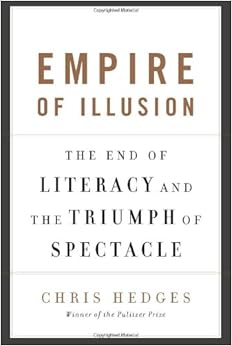
By the way, Hedges newest book is Empire of Illusion: The End of Literacy and the Triumph of Spectacle.

Chris Hedges: We're Losing the Last Shreds of Legal Rights to Protect Ourselves from Oligarchy

A ruling elite that accrues for itself total power, history has shown, eventually uses it.

May 5, 2014 | Chris Hedges


Photo Credit: WeAreChange; Screenshot / YouTube.com

The U.S. Supreme Court decision to refuse to hear our case concerning Section 1021(b)(2) of the National Defense Authorization Act (NDAA), which permits the military to seize U.S. citizens and hold them indefinitely in military detention centers without due process, means that this provision will continue to be law. It means the nation has entered a post-constitutional era. It means that extraordinary rendition of U.S. citizens on U.S. soil by our government is legal. It means that the courts, like the legislative and executive branches of government, exclusively serve corporate power — one of the core definitions of fascism. It means that the internal mechanisms of state are so corrupted and subservient to corporate power that there is no hope of reform or protection for citizens under our most basic constitutional rights. It means that the consent of the governed — a poll by OpenCongress.com showed that this provision had a 98 percent disapproval rating — is a cruel joke. And it means that if we do not rapidly build militant mass movements to overthrow corporate tyranny, including breaking the back of the two-party duopoly that is the mask of corporate power, we will lose our liberty.

“In declining to hear the case Hedges v. Obama and declining to review the NDAA, the Supreme Court has turned its back on precedent dating back to the Civil War era that holds that the military cannot police the streets of America,” said attorney Carl Mayer, who along with Bruce Afran devoted countless unpaid hours to the suit. “This is a major blow to civil liberties. It gives the green light to the military to detain people without trial or counsel in military installations, including secret installations abroad. There is little left of judicial review of presidential action during wartime.”

Afran, Mayer and I brought the case to the U.S. Southern District Court of New York in January 2012. I was later joined by co-plaintiffs Noam Chomsky, Daniel Ellsberg, journalist Alexa O’Brien, RevolutionTruth founder Tangerine Bolen, Icelandic parliamentarian Birgitta Jonsdottir and Occupy London activist Kai Wargalla.

Later in 2012 U.S. District Judge Katherine B. Forrest declared Section 1021(b)(2) unconstitutional. The Obama administration not only appealed — we expected it to appeal — but demanded that the law be immediately put back into effect until the appeal was heard. Forrest, displaying the same judicial courage she showed with her ruling, refused to do this.

The government swiftly went to the U.S. Court of Appeals for the 2nd Circuit. It asked, in the name of national security, that the court stay the district court’s injunction until the government’s appeal could be heard. The 2nd Circuit agreed. The law went back on the books. My lawyers and I surmised that this was because the administration was already using the law to detain U.S. citizens in black sites, most likely dual citizens with roots in countries such as Pakistan, Afghanistan, Somalia and Yemen. The administration would have been in contempt of court if Forrest’s ruling was allowed to stand while the federal authorities detained U.S. citizens under the statute. Government attorneys, when asked by Judge Forrest, refused to say whether or not the government was already using the law, buttressing our suspicion that it was in use.

The 2nd Circuit overturned Forrest’s ruling last July in a decision that did not force it to rule on the actual constitutionality of Section 1021(b)(2). It cited the Supreme Court ruling in Clapper v. Amnesty International, another case in which I was one of the plaintiffs, to say that I had no standing, or right, to bring the NDAA case to court. Clapper v. Amnesty International challenged the secret wiretapping of U.S. citizens under the FISA Amendments Act of 2008. The Supreme Court had ruled in Clapper that our concern about government surveillance was “speculation.” It said we were required to prove to the court that the FISA Act would be used to monitor those we interviewed. The court knew, of course, that the government does not disclose whom it is monitoring. It knew we could never offer proof. The leaks by Edward Snowden, which came out after the Supreme Court ruling, showed that the government was monitoring us all, along with those we interviewed. The 2nd Circuit used the spurious Supreme Court ruling to make its own spurious ruling. It said that because we could not show that the indefinite-detention law was about to be used against us, just as we could not prove government monitoring of our communications, we could not challenge the law. It was a dirty game of judicial avoidance on two egregious violations of the Constitution.

In refusing to hear our lawsuit the courts have overturned nearly 150 years of case law that repeatedly holds that the military has no jurisdiction over civilians. Now, a U.S. citizen charged by the government with “substantially supporting” al-Qaida, the Taliban or those in the nebulous category of “associated forces” — some of the language of Section 1021(b)(2) — is lawfully subject to extraordinary rendition on U.S. soil. And those seized and placed in military jails can be kept there until “the end of hostilities.”

Judge Forrest, in her 112-page ruling against the section, noted that under this provision of the NDAA whole categories of Americans could be subject to seizure by the military. These might include Muslims, activists, Black Bloc members and any other Americans labeled as domestic terrorists by the state. Forrest wrote that Section 1021(b)(2) echoed the 1944 Supreme Court ruling in Korematsu v. United States, which supported the government’s use of the military to detain 110,00 Japanese-Americans in internment camps without due process during World War II.

Of the refusal to hear our lawsuit, Afran said, “The Supreme Court has left in place a statute that furthers erodes basic respect for constitutional liberties, that weakens free speech and will chill the willingness of Americans to exercise their 1st Amendment rights, already in severe decline in this country.”

The goals of corporate capitalism are increasingly indistinguishable from the goals of the state. The political and economic systems are subservient to corporate profit. Debate between conventional liberals and conservatives has been replaced by empty political theater and spectacle. Corporations, no matter which politicians are in office, loot the Treasury, escape taxation, push down wages, break unions, dismantle civil society, gut regulation and legal oversight, control information, prosecute endless war and dismantle public institutions and programs that include schools, welfare and Social Security. And elected officials, enriched through our form of legalized corporate bribery, have no intention of halting the process.

The government, by ignoring the rights and needs of ordinary citizens, is jeopardizing its legitimacy. This is dangerous. When a citizenry no longer feels that it can find justice within the organs of power, when it feels that the organs of power are the enemies of freedom and economic advancement, it makes war on those organs. Those of us who are condemned as radicals, idealists and dreamers call for basic reforms that, if enacted, will make peaceful reform possible. But corporate capitalists, now unchecked by state power and dismissive of the popular will, do not see the fires they are igniting. The Supreme Court ruling on our challenge is one more signpost on the road to dystopia.

It is capitalism, not government, that is the problem. The fusion of corporate and state power means that government is broken. It is little more than a protection racket for Wall Street. And it is our job to wrest government back. This will come only through the building of mass movements.

“It is futile to be ‘anti-Fascist’ while attempting to preserve capitalism,” George Orwell wrote. “Fascism after all is only a development of capitalism, and the mildest democracy, so-called, is liable to turn into Fascism.”

Our corporate masters will not of their own volition curb their appetite for profits. Human misery and the deadly assault on the ecosystem are good for business. These masters have set in place laws that, when we rise up — and they expect us to rise up — will permit the state to herd us like sheep into military detention camps. Section 1021(b)(2) is but one piece of the legal tyranny now in place to ensure total corporate control. The corporate state also oversees the most pervasive security and surveillance apparatus in human history. It can order the assassination of U.S. citizens. It has abolished habeas corpus. It uses secret evidence to imprison dissidents, such as the Palestinian academic Mazen Al-Najjar. It employs the Espionage Act to criminalize those who expose abuses of power. A ruling elite that accrues for itself this kind of total power, history has shown, eventually uses it.


~ Chris Hedges, a Pulitzer Prize-winning reporter, writes a regular column for Truthdig every Monday. Hedges also wrote 12 books, including the New York Times bestseller “Days of Destruction, Days of Revolt (2012)," which he co-authored with the cartoonist Joe Sacco. Hedges's most recent book is "Empire of Illusion: The End of Literacy and the Triumph of Spectacle."

Tuesday, April 29, 2014

A Conversation with Noam Chomsky (UCSB)


From UCTV (UC Santa Barbara), Jan Nederveen Pieterse, professor of Global Studies and Sociology at UCSB, interviews linguist and social/political activist. As always, Chomsky is interesting and erudite.

A Conversation with Noam Chomsky

Published on Apr 28, 2014


Jan Nederveen Pieterse in conversation with Noam Chomsky, linguist, philosopher and political commentator. Chomsky is Emeritus professor of linguistics at MIT. Jan Nederveen Pieterse is professor of Global Studies and Sociology at University of California, Santa Barbara. Series: "Carsey-Wolf Center" [5/2014] - (Visit: http://www.uctv.tv/)

Tuesday, April 08, 2014

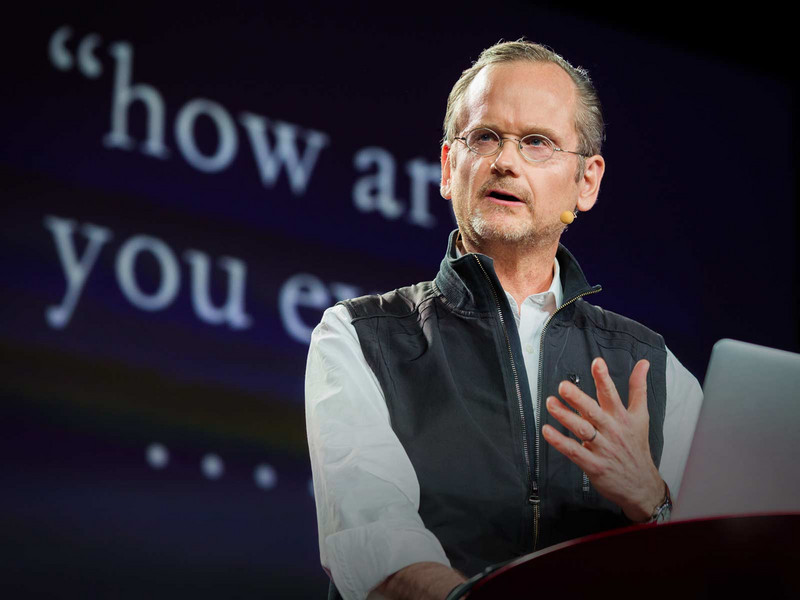
Lawrence Lessig - The Unstoppable Walk to Political Reform


I'm not as hopeful as Lessig about the progress of political reform (I suspect hell will freeze over before there is any REAL political reform). But Lessig knows things I don't know - lots of them - and he makes some interesting arguments. I hope he is correct.

Lawrence Lessig: The unstoppable walk to political reform

March 2014
Seven years ago, Internet activist Aaron Swartz convinced Lawrence Lessig to take up the fight for political reform. A year after Swartz's tragic death, Lessig continues his campaign to free US politics from the stranglehold of corruption. In this fiery, deeply personal talk, he calls for all citizens to engage, and offers a heartfelt reminder to never give up hope.


This talk was presented at an official TED Conference. TED's editors featured it among our daily selections on the home page.


Lawrence Lessig - Legal activist Lawrence Lessig has already transformed intellectual-property law with his Creative Commons innovation. Now he's focused on an even bigger problem: The US' broken political system.

Monday, March 03, 2014

Gary Taubes and Cristin Kearns Couzens - Big Sugar's Sweet Little Lies (Mother Jones)

Another article from Gary Taubes on the poison that is sugar - this time from Mother Jones and co-written with Cristin Kearns Couzens.

Big Sugar's Sweet Little Lies

How the industry kept scientists from asking: Does sugar kill?

—By Gary Taubes and Cristin Kearns Couzens 
November/December 2012 Issue


Illustration: Chris Buzelli

ON A BRISK SPRING Tuesday in 1976, a pair of executives from the Sugar Association stepped up to the podium of a Chicago ballroom to accept the Oscar of the public relations world, the Silver Anvil award for excellence in "the forging of public opinion." The trade group had recently pulled off one of the greatest turnarounds in PR history. For nearly a decade, the sugar industry had been buffeted by crisis after crisis as the media and the public soured on sugar and scientists began to view it as a likely cause of obesity, diabetes, and heart disease. Industry ads claiming that eating sugar helped you lose weight had been called out by the Federal Trade Commission, and the Food and Drug Administration had launched a review of whether sugar was even safe to eat. Consumption had declined 12 percent in just two years, and producers could see where that trend might lead. As John "JW" Tatem Jr. and Jack O'Connell Jr., the Sugar Association's president and director of public relations, posed that day with their trophies, their smiles only hinted at the coup they'd just pulled off.

Their winning campaign, crafted with the help of the prestigious public relations firm Carl Byoir & Associates, had been prompted by a poll showing that consumers had come to see sugar as fattening, and that most doctors suspected it might exacerbate, if not cause, heart disease and diabetes. With an initial annual budget of nearly $800,000 ($3.4 million today) collected from the makers of Dixie Crystals, Domino, C&H, Great Western, and other sugar brands, the association recruited a stable of medical and nutritional professionals to allay the public's fears, brought snack and beverage companies into the fold, and bankrolled scientific papers that contributed to a "highly supportive" FDA ruling, which, the Silver Anvil application boasted, made it "unlikely that sugar will be subject to legislative restriction in coming years."

The story of sugar, as Tatem told it, was one of a harmless product under attack by "opportunists dedicated to exploiting the consuming public." Over the subsequent decades, it would be transformed from what the New York Times in 1977 had deemed "a villain in disguise" into a nutrient so seemingly innocuous that even the American Heart Association and the American Diabetes Association approved it as part of a healthy diet. Research on the suspected links between sugar and chronic disease largely ground to a halt by the late 1980s, and scientists came to view such pursuits as a career dead end. So effective were the Sugar Association's efforts that, to this day, no consensus exists about sugar's potential dangers. The industry's PR campaign corresponded roughly with a significant rise in Americans' consumption of "caloric sweeteners," including table sugar (sucrose) and high-fructose corn syrup (HFCS). This increase was accompanied, in turn, by a surge in the chronic diseases increasingly linked to sugar. Since 1970, obesity rates in the United States have more than doubled, while the incidence of diabetes has more than tripled. (The chart below uses sugar "availability" numbers rather than the USDA's speculative new consumption figures.)


Precisely how did the sugar industry engineer its turnaround? The answer is found in more than 1,500 pages of internal memos, letters, and company board reports we discovered buried in the archives of now-defunct sugar companies as well as in the recently released papers of deceased researchers and consultants who played key roles in the industry's strategy. They show how Big Sugar used Big Tobacco-style tactics to ensure that government agencies would dismiss troubling health claims against their products. Compared to the tobacco companies, which knew for a fact that their wares were deadly and spent billions of dollars trying to cover up that reality, the sugar industry had a relatively easy task. With the jury still out on sugar's health effects, producers simply needed to make sure that the uncertainty lingered. But the goal was the same: to safeguard sales by creating a body of evidence companies could deploy to counter any unfavorable research.

This decades-long effort to stack the scientific deck is why, today, the USDA's dietary guidelines only speak of sugar in vague generalities. ("Reduce the intake of calories from solid fats and added sugars.") It's why the FDA insists that sugar is "generally recognized as safe" despite considerable evidence suggesting otherwise. It's why some scientists' urgent calls for regulation of sugary products have been dead on arrival, and it's why—absent any federal leadership—New York City Mayor Michael Bloomberg felt compelled to propose a ban on oversized sugary drinks that passed in September.

In fact, a growing body of research suggests that sugar and its nearly chemically identical cousin, HFCS, may very well cause diseases that kill hundreds of thousands of Americans every year, and that these chronic conditions would be far less prevalent if we significantly dialed back our consumption of added sugars. Robert Lustig, a leading authority on pediatric obesity at the University of California-San Francisco (whose arguments Gary explored in a 2011 New York Times Magazine cover story), made this case last February in the prestigious journal Nature. In an article titled "The Toxic Truth About Sugar," Lustig and two colleagues observed that sucrose and HFCS are addictive in much the same way as cigarettes and alcohol, and that overconsumption of them is driving worldwide epidemics of obesity and type 2 diabetes (the type associated with obesity). Sugar-related diseases are costing America around $150 billion a year, the authors estimated, so federal health officials need to step up and consider regulating the stuff.

The Sugar Association dusted off what has become its stock response: The Lustig paper, it said, "lacks the scientific evidence or consensus" to support its claims, and its authors were irresponsible not to point out that the full body of science "is inconclusive at best." This inconclusiveness, of course, is precisely what the Sugar Association has worked so assiduously to maintain. "In confronting our critics," Tatem explained to his board of directors back in 1976, "we try never to lose sight of the fact that no confirmed scientific evidence links sugar to the death-dealing diseases. This crucial point is the lifeblood of the association."

THE SUGAR ASSOCIATIONS's earliest incarnation dates back to 1943, when growers and refiners created the Sugar Research Foundation to counter World War II sugar-rationing propaganda—"How Much Sugar Do You Need? None!" declared one government pamphlet. In 1947, producers rechristened their group the Sugar Association and launched a new PR division, Sugar Information Inc., which before long was touting sugar as a "sensible new approach to weight control." In 1968, in the hope of enlisting foreign sugar companies to help defray costs, the Sugar Association spun off its research division as the International Sugar Research Foundation. "Misconceptions concerning the causes of tooth decay, diabetes, and heart problems exist on a worldwide basis," explained a 1969 ISRF recruiting brochure.

As early as 1962, internal Sugar Association memos had acknowledged the potential links between sugar and chronic diseases, but at the time sugar executives had a more pressing problem: Weight-conscious Americans were switching in droves to diet sodas—particularly Diet Rite and Tab—sweetened with cyclamate and saccharin. From 1963 through 1968, diet soda's share of the soft-drink market shot from 4 percent to 15 percent. "A dollar's worth of sugar," ISRF vice president and research director John Hickson warned in an internal review, "could be replaced with a dime's worth" of sugar alternatives. "If anyone can undersell you nine cents out of 10," Hickson told the New York Times in 1969, "you'd better find some brickbat you can throw at him."

By then, the sugar industry had doled out more than $600,000 (about $4 million today) to study every conceivable harmful effect of cyclamate sweeteners, which are still sold around the world under names like Sugar Twin and Sucaryl. In 1969, the FDA banned cyclamates in the United States based on a study suggesting they could cause bladder cancer in rats. Not long after, Hickson left the ISRF to work for the Cigar Research Council. He was described in a confidential tobacco industry memo as a "supreme scientific politician who had been successful in condemning cyclamates, on behalf of the [sugar industry], on somewhat shaky evidence." It later emerged that the evidence suggesting that cyclamates caused cancer in rodents was not relevant to humans, but by then the case was officially closed. In 1977, saccharin, too, was nearly banned on the basis of animal results that would turn out to be meaningless in people.

Meanwhile, researchers had been reporting that blood lipids—cholesterol and triglycerides in particular—were a risk factor in heart disease. Some people had high cholesterol but normal triglycerides, prompting health experts to recommend that they avoid animal fats. Other people were deemed "carbohydrate sensitive," with normal cholesterol but markedly increased triglyceride levels. In these individuals, even moderate sugar consumption could cause a spike in triglycerides. John Yudkin, the United Kingdom's leading nutritionist, was making headlines with claims that sugar, not fat, was the primary cause of heart disease.

In 1967, the Sugar Association's research division began considering "the rising tide of implications of sucrose in atherosclerosis." Before long, according to a confidential 1970 review of industry-funded studies, the newly formed ISRF was spending 10 percent of its research budget on the link between diet and heart disease. Hickson, the ISRF's vice president, urged his member corporations to keep the results of the review under wraps. Of particular concern was the work of a University of Pennsylvania researcher on "sucrose sensitivity," which sugar executives feared was "likely to reveal evidence of harmful effects." One ISRF consultant recommended that sugar companies get to the truth of the matter by sponsoring a full-on study. In what would become a pattern, the ISRF opted not to follow his advice. Another ISRF-sponsored study, by biochemist Walter Pover of the University of Birmingham, in England, had uncovered a possible mechanism to explain how sugar raises triglyceride levels. Pover believed he was on the verge of demonstrating this mechanism "conclusively" and that 18 more weeks of work would nail it down. But instead of providing the funds, the ISRF nixed the project, assessing its value as "nil."

The industry followed a similar strategy when it came to diabetes. By 1973, links between sugar, diabetes, and heart disease were sufficiently troubling that Sen. George McGovern of South Dakota convened a hearing of his Select Committee on Nutrition and Human Needs to address the issue. An international panel of experts—including Yudkin and Walter Mertz, head of the Human Nutrition Institute at the Department of Agriculture—testified that variations in sugar consumption were the best explanation for the differences in diabetes rates between populations, and that research by the USDA and others supported the notion that eating too much sugar promotes dramatic population-wide increases in the disease. One panelist, South African diabetes specialist George Campbell, suggested that anything more than 70 pounds per person per year—about half of what is sold in America today—would spark epidemics.

In the face of such hostile news from independent scientists, the ISRF hosted its own conference the following March, focusing exclusively on the work of researchers who were skeptical of a sugar/diabetes connection. "All those present agreed that a large amount of research is still necessary before a firm conclusion can be arrived at," according to a conference review published in a prominent diabetes journal. In 1975, the foundation reconvened in Montreal to discuss research priorities with its consulting scientists. Sales were sinking, Tatem reminded the gathered sugar execs, and a major factor was "the impact of consumer advocates who link sugar consumption with certain diseases."

Following the Montreal conference, the ISRF disseminated a memo quoting Errol Marliss, a University of Toronto diabetes specialist, recommending that the industry pursue "well-designed research programs" to establish sugar's role in the course of diabetes and other diseases. "Such research programs might produce an answer that sucrose is bad in certain individuals," he warned. But the studies "should be undertaken in a sufficiently comprehensive way as to produce results. A gesture rather than full support is unlikely to produce the sought-after answers."

A gesture, however, is what the industry would offer. Rather than approve a serious investigation of the purported links between sucrose and disease, American sugar companies quit supporting the ISRF's research projects. Instead, via the Sugar Association proper, they would spend roughly $655,000 between 1975 and 1980 on 17 studies designed, as internal documents put it, "to maintain research as a main prop of the industry's defense." Each proposal was vetted by a panel of industry-friendly scientists and a second committee staffed by representatives from sugar companies and "contributing research members" such as Coca-Cola, Hershey's, General Mills, and Nabisco. Most of the cash was awarded to researchers whose studies seemed explicitly designed to exonerate sugar. One even proposed to explore whether sugar could be shown to boost serotonin levels in rats' brains, and thus "prove of therapeutic value, as in the relief of depression," an internal document noted.

At best, the studies seemed a token effort. Harvard Medical School professor Ron Arky, for example, received money from the Sugar Association to determine whether sucrose has a different effect on blood sugar and other diabetes indicators if eaten alongside complex carbohydrates like pectin and psyllium. The project went nowhere, Arky told us recently. But the Sugar Association "didn't care."


In short, rather than do definitive research to learn the truth about its product, good or bad, the association stuck to a PR scheme designed to "establish with the broadest possible audience—virtually everyone is a consumer—the safety of sugar as a food." One of its first acts was to establish a Food & Nutrition Advisory Council consisting of a half-dozen physicians and two dentists willing to defend sugar's place in a healthy diet, and set aside roughly $60,000 per year (more than $220,000 today) to cover its cost.


Working to the industry's recruiting advantage was the rising notion that cholesterol and dietary fat—especially saturated fat—were the likely causes of heart disease. (Tatem even suggested, in a letter to the Times Magazine, that some "sugar critics" were motivated merely by wanting "to keep the heat off saturated fats.") This was the brainchild of nutritionist Ancel Keys, whose University of Minnesota laboratory had received financial support from the sugar industry as early as 1944. From the 1950s through the 1980s, Keys remained the most outspoken proponent of the fat hypothesis, often clashing publicly with Yudkin, the most vocal supporter of the sugar hypothesis—the two men "shared a good deal of loathing," recalled one of Yudkin's colleagues.

So when the Sugar Association needed a heart disease expert for its Food & Nutrition Advisory Council, it approached Francisco Grande, one of Keys' closest colleagues. Another panelist was University of Oregon nutritionist William Connor, the leading purveyor of the notion that it is dietary cholesterol that causes heart disease. As its top diabetes expert, the industry recruited Edwin Bierman of the University of Washington, who believed that diabetics need not pay strict attention to their sugar intake so long as they maintained a healthy weight by burning off the calories they consumed. Bierman also professed an apparently unconditional faith that it was dietary fat (and being fat) that caused heart disease, with sugar having no meaningful effect.

It is hard to overestimate Bierman's role in shifting the diabetes conversation away from sugar. It was primarily Bierman who convinced the American Diabetes Association to liberalize the amount of carbohydrates (including sugar) it recommended in the diets of diabetics, and focus more on urging diabetics to lower their fat intake, since diabetics are particularly likely to die from heart disease. Bierman also presented industry-funded studies when he coauthored a section on potential causes for a National Commission on Diabetes report in 1976; the document influences the federal diabetes research agenda to this day. Some researchers, he acknowledged, had "argued eloquently" that consumption of refined carbohydrates (such as sugar) is a precipitating factor in diabetes. But then Bierman cited five studies—two of them bankrolled by the ISRF—that were "inconsistent" with that hypothesis. "A review of all available laboratory and epidemiologic evidence," he concluded, "suggests that the most important dietary factor in increasing the risk of diabetes is total calorie intake, irrespective of source."

The point man on the industry's food and nutrition panel was Frederick Stare, founder and chairman of the department of nutrition at the Harvard School of Public Health. Stare and his department had a long history of ties to Big Sugar. An ISRF internal research review credited the sugar industry with funding some 30 papers in his department from 1952 through 1956 alone. In 1960, the department broke ground on a new $5 million building funded largely by private donations, including a $1 million gift from General Foods, the maker of Kool-Aid and Tang.

By the early 1970s, Stare ranked among the industry's most reliable advocates, testifying in Congress about the wholesomeness of sugar even as his department kept raking in funding from sugar producers and food and beverage giants such as Carnation, Coca-Cola, Gerber, Kellogg, and Oscar Mayer. His name also appears in tobacco documents, which show that he procured industry funding for a study aimed at exonerating cigarettes as a cause of heart disease.

The first act of the Food & Nutrition Advisory Council was to compile "Sugar in the Diet of Man," an 88-page white paper edited by Stare and published in 1975 to "organize existing scientific facts concerning sugar." It was a compilation of historical evidence and arguments that sugar companies could use to counter the claims of Yudkin, Stare's Harvard colleague Jean Mayer, and other researchers whom Tatem called "enemies of sugar." The document was sent to reporters—the Sugar Association circulated 25,000 copies—along with a press release headlined "Scientists dispel sugar fears." The report neglected to mention that it was funded by the sugar industry, but internal documents confirm that it was.

The Sugar Association also relied on Stare to take its message to the people: "Place Dr. Stare on the AM America Show" and "Do a 3 ½ minute interview with Dr. Stare for 200 radio stations," note the association's meeting minutes. Using Stare as a proxy, internal documents explained, would help the association "make friends with the networks" and "keep the sugar industry in the background." By the time Stare's copious conflicts of interest were finally revealed—in "Professors on the Take," a 1976 exposé by the Center for Science in the Public Interest—Big Sugar no longer needed his assistance. The industry could turn to an FDA document to continue where he'd left off.

While Stare and his colleagues had been drafting "Sugar in the Diet of Man," the FDA was launching its first review of whether sugar was, in the official jargon, generally recognized as safe (GRAS), part of a series of food-additive reviews the Nixon administration had requested of the agency. The FDA subcontracted the task to the Federation of American Societies of Experimental Biology, which created an 11-member committee to vet hundreds of food additives from acacia to zinc sulfate. While the mission of the GRAS committee was to conduct unbiased reviews of the existing science for each additive, it was led by biochemist George W. Irving Jr., who had previously served two years as chairman of the scientific advisory board of the International Sugar Research Foundation. Industry documents show that another committee member, Samuel Fomon, had received sugar-industry funding for three of the five years prior to the sugar review.

The FDA's instructions were clear: To label a substance as a potential health hazard, there had to be "credible evidence of, or reasonable grounds to suspect, adverse biological effects"—which certainly existed for sugar at the time. But the GRAS committee's review would depend heavily on "Sugar in the Diet of Man" and other work by its authors. In the section on heart disease, committee members cited 14 studies whose results were "conflicting," but 6 of those bore industry fingerprints, including Francisco Grande's chapter from "Sugar in the Diet of Man" and 5 others that came from Grande's lab or were otherwise funded by the sugar industry.

The diabetes chapter of the review acknowledged studies suggesting that "long term consumption of sucrose can result in a functional change in the capacity to metabolize carbohydrates and thus lead to diabetes mellitus," but it went on to cite five reports contradicting that notion. All had industry ties, and three were authored by Ed Bierman, including his chapter in "Sugar in the Diet of Man."

In January 1976, the GRAS committee published its preliminary conclusions, noting that while sugar probably contributed to tooth decay, it was not a "hazard to the public." The draft review dismissed the diabetes link as "circumstantial" and called the connection to cardiovascular disease "less than clear," with fat playing a greater role. The only cautionary note, besides cavities, was that all bets were off if sugar consumption were to increase significantly. The committee then thanked the Sugar Association for contributing "information and data." (Tatem would later remark that while he was "proud of the credit line...we would probably be better off without it.")

The committee's perspective was shared by many researchers, but certainly not all. For a public hearing on the draft review, scientists from the USDA's Carbohydrate Nutrition Laboratory submitted what they considered "abundant evidence that sucrose is one of the dietary factors responsible for obesity, diabetes, and heart disease." As they later explained in the American Journal of Clinical Nutrition, some portion of the public—perhaps 15 million Americans at that time—clearly could not tolerate a diet rich in sugar and other carbohydrates. Sugar consumption, they said, should come down by "a minimum of 60 percent," and the government should launch a national campaign "to inform the populace of the hazards of excessive sugar consumption." But the committee stood by its conclusions in the final version of its report presented to the FDA in October 1976.

For the sugar industry, the report was gospel. The findings "should be memorized" by the staff of every company associated with the sugar industry, Tatem told his membership. "In the long run," he said, the document "cannot be sidetracked, and you may be sure we will push its exposure to all corners of the country."

The association promptly produced an ad for newspapers and magazines exclaiming "Sugar is Safe!" It "does not cause death-dealing diseases," the ad declared, and "there is no substantiated scientific evidence indicating that sugar causes diabetes, heart disease or any other malady...The next time you hear a promoter attacking sugar, beware the ripoff. Remember he can't substantiate his charges. Ask yourself what he's promoting or what he is seeking to cover up. If you get a chance, ask him about the GRAS Review Report. Odds are you won't get an answer. Nothing stings a nutritional liar like scientific facts."

THE SUGAR ASSOCIATION would soon get its chance to put the committee's sugar review to the test. In 1977, McGovern's select committee—the one that had held the 1973 hearings on sugar and diabetes—blindsided the industry with a report titled "Dietary Goals for the United States," recommending that Americans lower their sugar intake by 40 percent (PDF). The association "hammered away" at the McGovern report using the GRAS review "as our scientific Bible," Tatem told sugar executives.

McGovern held fast, but Big Sugar would prevail in the end. In 1980, when the USDA first published its own set of dietary guidelines, it relied heavily on a review written for the American Society of Clinical Nutrition by none other than Bierman, who used the GRAS committee's findings to bolster his own. "Contrary to widespread opinion, too much sugar does not seem to cause diabetes," the USDA guidelines concluded. They went on to counsel that people should "avoid too much sugar," without bothering to explain what that meant.

In 1982, the FDA once again took up the GRAS committee's conclusion that sugar was safe, proposing to make it official. The announcement resulted in a swarm of public criticism, prompting the agency to reopen its case. Four years later, an agency task force concluded, again leaning on industry-sponsored studies, that "there is no conclusive evidence...that demonstrates a hazard to the general public when sugars are consumed at the levels that are now current." (Walter Glinsmann, the task force's lead administrator, would later become a consultant to the Corn Refiners Association, which represents producers of high-fructose corn syrup.)

The USDA, meanwhile, had updated its own dietary guidelines. With Fred Stare now on the advisory committee, the 1985 guidelines retained the previous edition's vague recommendation to "avoid too much" sugar but stated unambiguously that "too much sugar in your diet does not cause diabetes." At the time, the USDA's own Carbohydrate Nutrition Laboratory was still generating evidence to the contrary and supporting the notion that "even low sucrose intake" might be contributing to heart disease in 10 percent of Americans.

By the early 1990s, the USDA's research into sugar's health effects had ceased, and the FDA's take on sugar had become conventional wisdom, influencing a generation's worth of key publications on diet and health. Reports from the surgeon general and the National Academy of Sciences repeated the mantra that the evidence linking sugar to chronic disease was inconclusive, and then went on to equate "inconclusive" with "nonexistent." They also ignored a crucial caveat: The FDA reviewers had deemed added sugars—those in excess of what occurs naturally in our diets—safe at "current" 1986 consumption levels. But the FDA's consumption estimate was 43 percent lower than that of its sister agency, the USDA. By 1999, the average American would be eating more than double the amount the FDA had deemed safe­—although we have cut back by 13 percent since then.

ASKED TO COMMENT on some of the documents described in this article, a Sugar Association spokeswoman responded that they are "at this point historical in nature and do not necessarily reflect the current mission or function" of the association. But it is clear enough that the industry still operates behind the scenes to make sure regulators never officially set a limit on the amount of sugar Americans can safely consume. The authors of the 2010 USDA dietary guidelines, for instance, cited two scientific reviews as evidence that sugary drinks don't make adults fat. The first was written by Sigrid Gibson, a nutrition consultant whose clients included the Sugar Bureau (England's version of the Sugar Association) and the World Sugar Research Organization (formerly the ISRF). The second review was authored by Carrie Ruxton, who served as research manager of the Sugar Bureau from 1995 to 2000.

The Sugar Association has also worked its connections to assure that the government panels making dietary recommendations—the USDA's Dietary Guidelines Advisory Committee, for instance—include researchers sympathetic to its position. One internal newsletter boasted in 2003 that for the USDA panel, the association had "worked diligently to achieve the nomination of another expert wholly through third-party endorsements."

In the few instances when governmental authorities have sought to reduce people's sugar consumption, the industry has attacked openly. In 2003, after an expert panel convened by the World Health Organization recommended that no more than 10 percent of all calories in people's diets should come from added sugars—nearly 40 percent less than the USDA's estimate for the average American—current Sugar Association president Andrew Briscoe wrote the WHO's director general warning that the association would "exercise every avenue available to expose the dubious nature" of the report and urge "congressional appropriators to challenge future funding" for the WHO. Larry Craig (R-Idaho, sugar beets) and John Breaux (D-La., sugarcane), then co-chairs of the Senate Sweetener Caucus, wrote a letter to Secretary of Health and Human Services Tommy Thompson, urging his "prompt and favorable attention" to prevent the report from becoming official WHO policy. (Craig had received more than $36,000 in sugar industry contributions in the previous election cycle.) Thompson's people responded with a 28-page letter detailing "where the US Government's policy recommendations and interpretation of the science differ" with the WHO report. Not surprisingly, the organization left its experts' recommendation on sugar intake out of its official dietary strategy.

In recent years the scientific tide has begun to turn against sugar. Despite the industry's best efforts, researchers and public health authorities have come to accept that the primary risk factor for both heart disease and type 2 diabetes is a condition called metabolic syndrome, which now affects more than 75 million Americans, according to the Centers for Disease Control and Prevention. Metabolic syndrome is characterized by a cluster of abnormalities—some of which Yudkin and others associated with sugar almost 50 years ago—including weight gain, increased insulin levels, and elevated triglycerides. It also has been linked to cancer and Alzheimer's disease. "Scientists have now established causation," Lustig said recently. "Sugar causes metabolic syndrome."

Newer studies from the University of California-Davis have even reported that LDL cholesterol, the classic risk factor for heart disease, can be raised significantly in just two weeks by drinking sugary beverages at a rate well within the upper range of what Americans consume—four 12-ounce glasses a day of beverages like soda, Snapple, or Red Bull. The result is a new wave of researchers coming out publicly against Big Sugar.

During the battle over the 2005 USDA guidelines, an internal Sugar Association newsletter described its strategy toward anyone who had the temerity to link sugar consumption with chronic disease and premature death: "Any disparagement of sugar," it read, "will be met with forceful, strategic public comments and the supporting science." But since the latest science is anything but supportive of the industry, what happens next?

"At present," Lustig ventures, "they have absolutely no reason to alter any of their practices. The science is in—the medical and economic problems with excessive sugar consumption are clear. But the industry is going to fight tooth and nail to prevent that science from translating into public policy."

Like the tobacco industry before it, the sugar industry may be facing the inexorable exposure of its product as a killer—science will ultimately settle the matter one way or the other—but as Big Tobacco learned a long time ago, even the inexorable can be held up for a very long time.

About the Authors

Gary Taubes, author of the 2011 best-seller Why We Get Fat: And What to Do About It, has written for Discover, Science, and the New York Times Magazine. He is currently writing a book about sugar.


Cristin Kearns Couzens
took a two-year break from her career in dental health administration to pursue independent research on the sugar industry.