Showing posts with label journalism. Show all posts

Monday, June 23, 2014

Did Edward Snowden Change the World — One Year Later


It's been a year since Edward Snowden revealed the the documents that uncovered the NSA programs to spy on Americans, and the tech companies who are complicit in that surveillance. Efforts to reign in the government have stalled, Snowden is exiled in Russia, and the NSA continues to spy on Americans. Has anything really changed?

This collection of links looks at the Snowden saga from the perspective of a year after the revelations. It comes from Bookforum's Omnivore blog.

One year after Snowden

Jun 16 2014
9:00AM

Monday, July 22, 2013

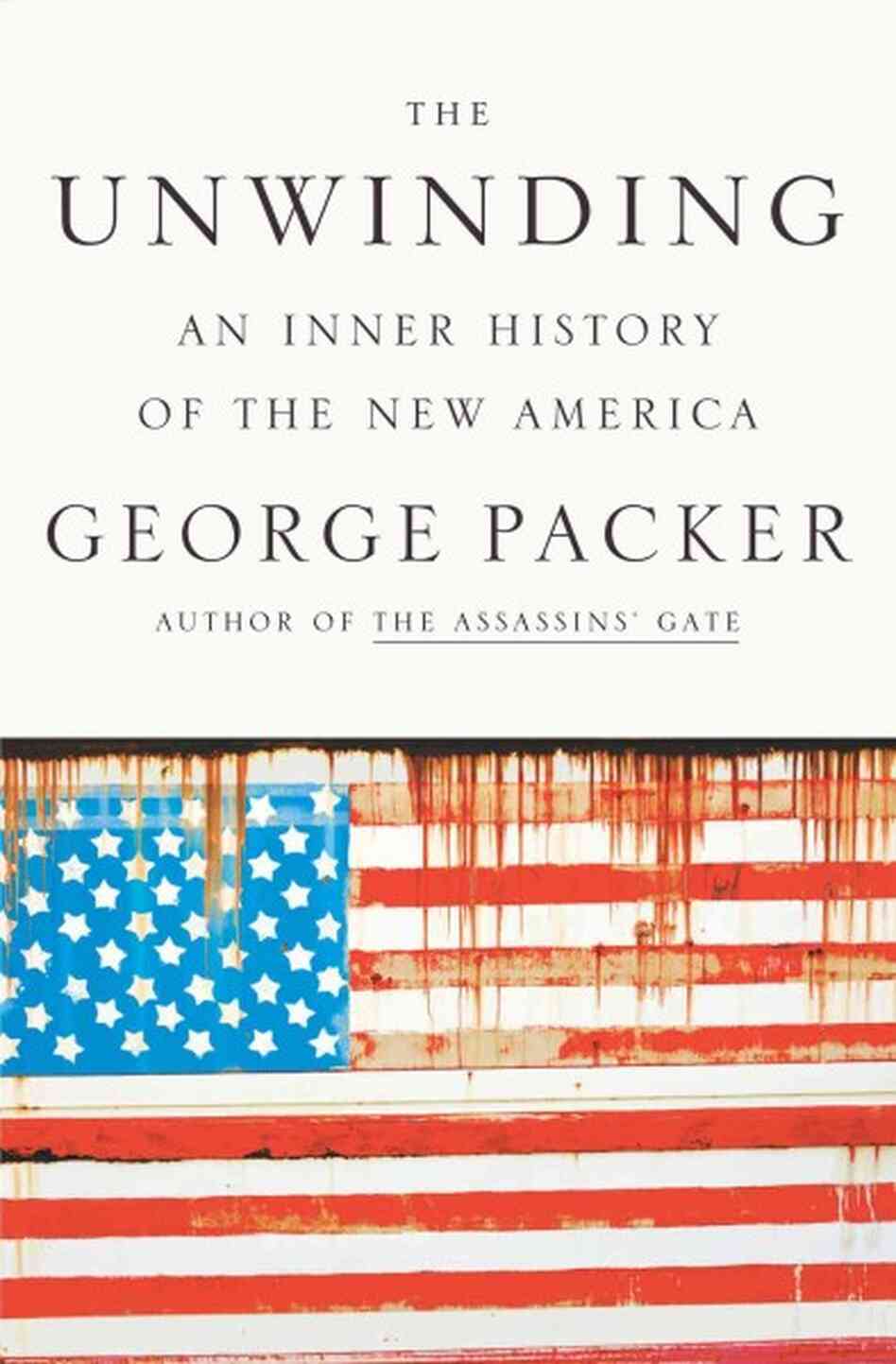
George Packer - "THE UNWINDING: An Inner History of the New America"


George Packer's new book, The Unwinding: An Inner History of the New America (May, 2013), has received glowing reviews from diverse reviewers, including Karen Armstrong (Seattle Times: "A monumental work that is both intimate and sweeping"), David Brooks (New York Times: “Gripping . . . deeply affecting . . . beautifully reported”), Joe Klein (Time: "Remarkable"), and Joseph Lelyveld (The New York Review of Books: “A work of prodigious, highly original reporting . . . . Packer’s arduous venture commands attention”).

Here is a summary from Amazon:
A riveting examination of a nation in crisis, from one of the finest political journalists of our generation

American democracy is beset by a sense of crisis. Seismic shifts during a single generation have created a country of winners and losers, allowing unprecedented freedom while rending the social contract, driving the political system to the verge of breakdown, and setting citizens adrift to find new paths forward. In The Unwinding, George Packer, author of The Assassins’ Gate: America in Iraq, tells the story of the United States over the past three decades in an utterly original way, with his characteristically sharp eye for detail and gift for weaving together complex narratives.

The Unwinding journeys through the lives of several Americans, including Dean Price, the son of tobacco farmers, who becomes an evangelist for a new economy in the rural South; Tammy Thomas, a factory worker in the Rust Belt trying to survive the collapse of her city; Jeff Connaughton, a Washington insider oscillating between political idealism and the lure of organized money; and Peter Thiel, a Silicon Valley billionaire who questions the Internet’s significance and arrives at a radical vision of the future. Packer interweaves these intimate stories with biographical sketches of the era’s leading public figures, from Newt Gingrich to Jay-Z, and collages made from newspaper headlines, advertising slogans, and song lyrics that capture the flow of events and their undercurrents.

The Unwinding portrays a superpower in danger of coming apart at the seams, its elites no longer elite, its institutions no longer working, its ordinary people left to improvise their own schemes for success and salvation. Packer’s novelistic and kaleidoscopic history of the new America is his most ambitious work to date.
Packer recently stopped by Google to talk about his new book.

George Packer - "THE UNWINDING: An Inner History of the New America"


Published on Jul 22, 2013

American democracy is beset by a sense of crisis. Seismic shifts during a single generation have created a country of winners and losers, allowing unprecedented freedom while rending the social contract, driving the political system to the verge of breakdown, and setting citizens adrift to find new paths forward. The Unwinding portrays a superpower in danger of coming apart at the seams, its elites no longer elite, its institutions no longer working, its ordinary people left to improvise their own schemes for success and salvation. George Packer tells the story of the United States over the past three decades in an utterly original way, with his characteristically sharp eye for detail and gift for weaving together complex narratives.

Wednesday, April 10, 2013

How 86 Journalists in 46 Countries Worked Together to Expose Tax Shelters of Politicians, Fundraisers. and Celebrities from Over 170 Countries

This is amazingly cool - I look forward to reading what this data mining reveals about the insane amount of money hidden in off-shore, untaxed accounts.

This excellent summary of the work that went into exposing this information comes from the Neiman Journalism Lab at Harvard University.


Intercontinental collaboration: How 86 journalists in 46 countries can work on a single investigation


Over 2.5 million files analyzed by a global team of journalists reveal financial information about politicians, fundraisers. and celebrities from over 170 different countries.

By Caroline O’Donovan

On Thursday morning, the International Consortium of Investigative Journalists— a project of the Center for Public Integrity — will begin releasing detailed reports on the workings of offshore tax havens. A little over a year ago, 260 gigabytes of data were leaked to ICIJ executive dIrector Gerard Ryle; they contained information about the finances of individuals in over 170 countries.

Ryle was a media executive in Australia at the time he received the data, says deputy director Marina Walker Guevara. “He came with the story under his arm.” Walker Guevara says the ICIJ was surprised Ryle wanted a job in their small office in Washington, but soon realized that it was only through their international scope and experience with cross border reporting that the Offshore Project could be executed. The result is a major international collaboration that has to be one of the largest in journalism history.

“It was a huge step. As reporters and journalists, the first thing you think is not ‘Let me see how I can share this with the world.’ You think: ‘How can I scoop everyone else?’ The thinking here was different.” Walker Guevara says the ICIJ seriously considered keeping the team to a core five or six members, but ultimately decided to go with the “most risky” approach when they realized the enormous scope of the project: Journalists from around the world were given lists of names to identify and, if they found interesting connections, were given access to Interdata, the secure, searchable, online database built by the ICIJ.

Just as the rise of information technology has allowed new competition for the attention of audiences, it’s also enabled traditional news organizations to partner in what can sometimes seem like dizzyingly complex relationships. The ICIJ says this is the largest collaborative journalism project they have ever organized, with the most comparable involving a team of 25 cross border journalists.

In the end, the Offshore Project brings together 86 journalists from 46 countries into an ongoing reporting collaboration. German and Canadian news outlets (Süddeutsche Zeitung, Norddeutscher Rundfunk, and the CBC) will be among the first to report their findings this week, with The Washington Post beginning their report on April 7, just in time for Tax Day. Reporters from more than 30 other publications also contributed, including Le Monde, the BBC and The Guardian. (The ICIJ actually published some preliminary findings in conjunction with the U.K. publications as a teaser back in November.)

“The natural step wasn’t to sit in Washington and try to figure out who is this person and why this matters in Azerbaijan or Romania,” Walker Guevara said, “but to go to our members there — or a good reporter if we didn’t have a member — give them the names, invite them into the project, see if the name mattered, and involve them in the process.”

Defining names that matter was a learning experience for the leaders of the Offshore Project. Writes Duncan Campbell, an ICIJ founder and current data journalism manager:
ICIJ’s fundamental lesson from the Offshore Project data has been patience and perseverance. Many members started by feeding in lists of names of politicians, tycoons, suspected or convicted fraudsters and the like, hoping that bank accounts and scam plots would just pop out. It was a frustrating road to follow. The data was not like that.
The data was, in fact, very messy and unstructured. Between a bevy of spreadsheets, emails, PDFs without OCR, and pictures of passports, the ICIJ still hasn’t finished mining all the data from the raw files. Campbell details the complicated process of cleaning the data and sorting it into a searchable database. Using NUIX software licenses granted to the ICIJ for free, it took a British programmer two weeks to build a secure database that would allow all of the far-flung journalists not only to safely search and download the documents, but also to communicate with one another through an online forum.

“Once we went to these places and gathered these reporters, we needed to give them the tools to function as a team,” Walker Guevara said.

Even so, some were so overwhelmed by the amount of information available, and so unaccustomed to hunting for stories in a database, that the ICIJ ultimately hired a research manager to do searches for reporters and send them the documents via email. “We do have places like Pakistan where the reporters didn’t have much Internet access, so it was a hassle for him,” says Walker Guevara, adding that there were also security concerns. “We asked him to take precautions and all that, and he was nervous, so I understand.”

They also had to explain to each of the reporting teams that they weren’t simply on the lookout for politicians hiding money and people who had broken the law. “First, you try the name of your president. Then, your biggest politician, former presidents — everybody has to go through that,” Walker Guevara says. While a few headline names did eventually appear — Imelda Marcos, Robert Mugabe — she says some of the most surprising stories came from observing broader trends.

“Alongside many usual suspects, there were hundreds of thousands of regular people — doctors and dentists from the U.S.,” she says, “It made us understand a system that is a lot more used than what you think. It’s not just people breaking the law or politicians hiding money, but a lot of people who may feel insecure in their own countries. Or hiding money from their spouses. We’re actually writing some stories about divorce.”

In the 2 million records they accessed, ICIJ reporters began to get an understanding of the methods account holders use to avoid association with these accounts. Many use “nominee directors,” a process which Campbell says is similar to registering a car in the name of a stranger. But in their post about the Offshore Project, the ICIJ team acknowledges that, to a great extent, most of the money being channeled through offshore accounts and shell companies is actually not being used for illegal transactions. Defenders of the offshore banks say they “allow companies and individuals to diversify their investments, forge commercial alliances across national borders, and do business in entrepreneur-friendly zones that eschew the heavy rules and red tape of the onshore world.”

Walker Guevara says that, while that can be true, the “parallel set of rules” that governs the offshore world so disproportionately favor the elite, wealthy few as to be unethical. “Regulations, bureaucracy, and red tape are bothersome,” she says, “but that’s how democracy works.”

Perhaps the most interesting question surrounding the Offshore Project, however, is how do you get traditional shoe-leather journalists up to speed on an international story that involves intensive data crunching. Walker Guevara says it’s all about recognizing when the numbers cease to be interesting on their own and putting them in global context. Ultimately, while it’s rewarding to be able to trace dozens of shell companies to a man accused of stealing $5 billion from a Russian bank, someone has to be able to connect the dots.

“This is not a data story. It was based on a huge amount of data, but once you have the name and you look at your documents, you can’t just sit there and write a story,” says Walker Guevara. “That’s why we needed reporters on the ground. We needed people checking courthouse records. We needed people going and talking to experts in the field.”

All of the stories that result from the Offshore Project — some of which could take up to a year to be published — will live on a central project page at ICIJ.org. The team is also considering creating a web app that will allow users to explore some (though probably not all) of the data. In terms of the unique tools they built, Walker Guevara says most are easily replicable by anyone using NUIX or dtSearch software, but they won’t be open sourced. Other lessons from the project, like the inherent vulnerability of PGP encryption and “other complex cryptographic systems popular with computer hackers,” will endure.

“I think one of the most fascinating things about the project was that you couldn’t isolate yourself. It was a big temptation — the data was very addictive,” Walker Guevara says. “But the story worked because there was a whole other level of traditional reporting that was going and checking public records, going and seeing — going places.”

Photo by Aaron Shumaker used under a Creative Commons license.

Wednesday, December 26, 2012

Top Brain, Psychology, and Neuroscience Stories from 2012

These stories come from three sources - Forbes, BPS Psychology, and PsyBlog. Many of these stories appeared here or in my Facebook feed, and several more are pieces I had missed.

For the first collection - this one comes from Forbes and was compiled by science and technology contributor David DiSalvo. Good list - to me the best story of these 10 is that Dr. Robert L. Spitzer finally recanted his research on reparative therapy and asked the Archives of Sexual Behavior, where his APA presentation from 2001 was published in 2003, to retract it. A lot of damage has been done already because of this paper, but at least he asked the journal to retract the paper.

The next collections will be posted tomorrow and Friday.

Forbes: The Top 10 Brain Science and Psychology Stories of 2012


David DiSalvo, Contributor

I write about science, technology, and the cultural ripples of both.

12/23/2012

 
This is the fourth year that I’ve chronicled some of the best brain science and psychology stories from the past 12 months, and every year it gets a little harder because the amount of research published each month just keeps growing. So this year, I’m narrowing the list by choosing the top 10 stories covered on Neuropsyched in 2012. I’ve focused on pieces covering research and research-spawned developments (in other words, there aren’t any top 10 lists in this top 10 list).

1. Humans Aren’t the Only Apes that Have a Midlife Crisis

Withdrawal, frustration, sadness — all are considered hallmarks of the human midlife crisis. Until now, the collection of factors cited as bringing on the angst have included societal and economic pressures that exert psychological forces strong enough to bend our lives into the famous U-shaped curve of happiness.

But research published in the Proceedings of the National Academy of Sciences could drastically alter those assumptions by bringing another no-less-ominous factor to the table: biology. It seems our cousins the great apes also experience midlife crises, and they don’t need the allure of a new Lexus or hair transplants to get them there.

First, let’s put the midlife crisis in perspective with what has been the accepted definition for many years. By midlife, the challenges of achievement have wound down and been replaced by responsibilities like raising a family, paying for a house, and trying to climb the next tenuous wrung on the corporate ladder. Taken altogether, these pressures drop us to the bottom of the U in the U-shaped curve of happiness.

But then, after what could be 10-15 years or more, the pressures start letting up. The burdens become less arduous, and we start our ascent from the bottom of the U into happier days when we experience more freedom to pursue what makes us fulfilled.

If social / psychological explanations were solely adequate for enlightening human behavior, the description I just gave could live on forever more. Good thing there are a few other primates on the planet to set us straight.

Researchers Andrew Oswald, a behavioral economist from the University of Warick and Alexander Weiss, a primatologist from the University ofEdinburgh, assembled an international team of experts to conduct a “well-being census” of 336 chimpanzees and 172 orangutans of all ages living in research facilities and zoos spanning five countries.

The team worked with the primates’ keepers and asked them to complete questionnaires designed to assess the mood, pleasure-seeking drive, and other personality traits of the apes across each of their life spans. The keepers were also asked to assess how effective each ape was in achieving the human equivalent of goals — becoming dominant, winning a mate, or learning to use a tool or toy in a novel way.

The results of these and other questions were analyzed and composite well-being scores were plotted along the apes’ life spans. As it turns out, they also have a distinctive U-shaped curve, and it looks a lot like ours. Around the age of 30, the approximate midpoint of an average chimp’s or orangutan’s life span, the apes experienced less energy, lowered moods, less willingness to engage with the group, and less gumption to achieve anything new.

What this finding tells us is that we have every reason to believe that biology exerts a strong influence in the human midlife crisis as well, although it’s not exactly clear why. Neurobiology, among other disciplines, now has the stage to carry on new research that could eventually unlock the reasons.

“This opens a whole new box in the effort to explain the midlife dip in well-being,” Andrew Oswald told the L.A.Times. “It makes one’s head spin.”


2. Receiving a Compliment has Same Effect as Receiving Cash

Compliments may not pay the rent, but according to new research, they help improve performance in a similar way to receiving a cash reward. 

Caroline von Tuempling/Getty Images

Researchers recruited 48 adults for the study who were asked to learn and perform a specific finger pattern (pushing keys on a keyboard in a particular sequence as fast as possible in 30 seconds). Once participants had learned the finger exercise, they were separated into three groups.

One group included an evaluator who would compliment participants individually; another group involved individuals who would watch another participant receive a compliment; and the third group involved individuals who evaluated their own performance on a graph.

When the participants were asked to repeat the finger exercise the next day, the group of participants who received direct compliments from an evaluator performed significantly better than participants from the other groups. The result indicates that receiving a compliment after exercising stimulated the individuals to perform better even a full day afterward.

According to Professor Norihiro Sadato, the study lead and professor at the National Institute for Physiological Sciences in Japan, ”To the brain, receiving a compliment is as much a social reward as being rewarded money. We’ve been able to find scientific proof that a person performs better when they receive a social reward after completing an exercise. Complimenting someone could become an easy and effective strategy to use in the classroom and during rehabilitation.”

The researchers had previously discovered that the same area of the brain affected in this study, the striatum, is activated when a person is rewarded a compliment or cash.

Why might this happen? Odd as it may sound, the answer is probably closely related to the function of sleep. Researchers theorize that complimenting someone’s efforts acts as a catalyst for better “skill consolidation” during sleep. To account for the sleep variable, researchers in this study kept close tabs on the duration and quality of sleep of the participants. From this and previous studies, it seems as though praise provides the right memory boost for the brain to more efficiently consolidate learning while we’re snoozing. Receiving a cash incentive appears to trigger the same effect.

The practical takeaway: if you’re in a position of authority (manager, teacher, etc), be sure to use compliments (and/or spot bonuses) as a means to encourage learning new skills. You may find that your underlings come back the next day with surprising improvements.

The study was published in the open-access journal PLOS One.


3. Could We One Day Switch Off Bad Habits in Our Brains?

Imagine one day being able to consult with a doctor about “switching off” your smoking habit with a day of outpatient surgery.

That’s the possibility raised by a new study conducted by MIT neuroscientists aimed at finding the master switch in the brain that controls habits. Researchers found that a small region of the brain’s prefrontal cortex, where most thought and planning occurs, is responsible for moment-by-moment control of which habits are switched on at a given time.

“We’ve always thought — and I still do — that the value of a habit is you don’t have to think about it. It frees up your brain to do other things,” says Institute Professor Ann Graybiel, a member of the McGovern Institute for Brain Research at MIT. “However, it doesn’t free up all of it. There’s some piece of your cortex that’s still devoted to that control.”

As we’re all well aware, old habits die hard, and that’s because they are deeply wired into our brains. That’s great in some cases because it allows our brain to expend energy on other things while a habitual behavior, such as driving to work, occurs with very little thought required. But in other cases habits can wreak havoc with our lives, as with obsessive-compulsive disorder. And sometimes what was once a beneficial habit continues even though it no longer benefits us.

The MIT team simulated that scenario with rats trained to run a T-shaped maze. As the rats approached the decision point, they heard a tone indicating whether they should turn left or right. When they chose correctly, they received a reward — chocolate milk (for turning left) or sugar water (for turning right).

To show that the behavior was habitual, the researchers eventually stopped giving the trained rats any rewards, and found that they continued running the maze flawlessly. The researchers then offered the rats chocolate milk in their cages, but mixed it with lithium chloride, which causes light nausea. The rats still continued to run left when cued to do so, but they stopped drinking the chocolate milk.

Once they had shown that the habit was fully ingrained, the researchers wanted to see if they could break it by interfering with a part of the prefrontal cortex known as the infralimbic (IL) cortex. Although the neural pathways that encode habitual behavior appear to be located in deep brain structures known as the basal ganglia, it has been shown that the IL cortex is also necessary for such behaviors to develop.

Using optogenetics, a technique that allows researchers to inhibit specific cells with light, the researchers turned off IL cortex activity for several seconds as the rats approached the point in the maze where they had to decide which way to turn.

Immediately, the rats stopped running to the left (the side with the tainted chocolate milk). This suggests that turning off the IL cortex switches the rats’ brains from an “automatic, reflexive mode to a mode that’s more cognitive or engaged in the goal — processing what exactly it is that they’re running for,” according to Kyle Smith, lead author of the paper.

Once broken of the habit of running left, the rats soon formed a new habit, running to the right side every time, even when cued to run left. The researchers showed that they could break this new habit by once again inhibiting the IL cortex with light. To their surprise, they found that these rats immediately regained their original habit of running left when cued to do so.

“This habit was never really forgotten,” Smith says. “It’s lurking there somewhere, and we’ve unmasked it by turning off the new one that had been overwritten.”

So what does this mean for us? First, it appears that old habits can be broken but they aren’t forgotten. They’re replaced by new habits, but the old habit is still lurking. And it seems that the IL cortex (the “master switch”) favors new habits over old ones.

We are, of course, a long way from testing this technique in humans. But eventually, according to Graybiel, it’s possible the technology will evolve to the point where it might be a feasible option for treating disorders involving overly repetitive or addictive behavior.

The study was published in the Proceedings of the National Academy of Sciences.


4. How One Flawed Study Spawned a Decade of Lies

In 2001, Dr. Robert L. Spitzer, psychiatrist and professor emeritus of Columbia University, presented a paper at a meeting of the American Psychiatric Association about something called “reparative therapy” for gay men and women. By undergoing reparative therapy, the paper claimed, gay men and women could change their sexual orientation. Spitzer had interviewed 200 allegedly former-homosexual men and women that he claimed had shown varying degrees of such change; all of the participants provided Spitzer with self reports of their experience with the therapy.

Spitzer, now 79 years old, was no stranger to the controversy surrounding his chosen subject. Thirty years earlier, he had played a leading role in removing homosexuality from the list of mental disorders in the association’s diagnostic manual. Clearly, his interest in the topic was more than a passing academic curiosity – indeed, it wouldn’t be a stretch to say he seemed invested in demonstrating that homosexuality was changeable, not unlike quitting smoking or giving up ice cream.

Fast forward to 2012, and Spitzer is of quite a different mind. In April he told a reporter with The American Prospect that he regretted the 2001 study and the effect it had on the gay community, and that he owed the community an apology. And in May he sent a letter to the Archives of Sexual Behavior, which published his work in 2003, asking that the journal retract his paper.

Spitzer’s mission to clean the slate is commendable, but the effects of his work have been coursing through the homosexual community like acid since it made headlines a decade ago. His study was seized upon by anti-homosexual activists and therapists who held up Spitzer’s paper as proof that they could “cure” patients of their sexual orientation.

Spitzer didn’t invent reparative therapy, and he isn’t the only researcher to have conducted studies claiming that it works, but as an influential psychiatrist from a prestigious university, his words carried a lot of weight.

In his recantation of the study, he says that it contained at least two fatal flaws: the self reports from those he surveyed were not verifiable, and he didn’t include a control group of men and women who didn’t undergo the therapy for comparison. Self reports are notoriously unreliable, and though they are used in hundreds of studies every year, they are generally regarded as thin evidence at best. Lacking a control group is a fundamental no-no in social science research across the board. The conclusion is inescapable — Spitzer’s study was simply bad science.

What’s remarkable is that this classic example of bad science was approved for presentation at a conference of the leading psychiatric association, and was subsequently published in a peer-reviewed journal of the profession. Spitzer now looks back with regret and critically dismantles his work, but the truth is that his study wasn’t credible from the beginning. It only assumed a veneer of credibility because it was stamped with the imprimatur of his profession.

Why this occurred is a bit more complicated than a mere case of professional cronyism. For many years before his paper on reparative therapy, Spitzer had conducted studies that evaluated the efficacy of self-reporting as a tool to assess a variety of personality disorders and depression. He was a noted expert on the development of diagnostic questionnaires and other assessment measures, and his work was influential in determining whether an assessment method was valuable or should be discarded.

Little wonder, then, that his paper on reparative therapy–which used an interview method that Spitzer recognized as reliable–was accepted by the profession. This wasn’t just anyone claiming that the self reports were valid, it was one of the most highly regarded diagnostic assessment experts in the world.

Reading the study now, I’m sure Spitzer is embarrassed by its flaws. Not only did he rely on self reports, but he conducted the participant interviews by phone, which escalates unreliability to the doesn’t-pass-the-laugh-test level. By phone, researchers aren’t able to evaluate essential non-verbal cues that might cast doubts on verbal responses. Phone interviews, along with written interviews, carry too much guesswork baggage to be valuable in a scientific study, and Spitzer certainly knew that.

The object lesson worth drawing from this story is that just one instance of bad science given the blessing of recognized experts can lead to years of damaging lies that snowball out of control. Spitzer cannot be held solely responsible for what happened after his paper was published, but he’d probably agree now that the study should never have been presented in the first place. At the very least, his example may help prevent future episodes of the same.


5. What Makes Presidents and Psychopaths Similar?

On October 14, 1912, just before giving a scheduled speech in Milwaukee, Theodore Roosevelt was shot in the chest by would-be assassin John Schrank. 
 
Roosevelt not only survived the attempt on his life, but went on to deliver his speech as scheduled. He began by saying,

“I don’t know whether you fully understand that I have just been shot; but it takes more than that to kill a Bull Moose. But fortunately I had my manuscript, so you see I was going to make a long speech, and there is a bullet – there is where the bullet went through – and it probably saved me from it going into my heart. The bullet is in me now, so that I cannot make a very long speech, but I will try my best.”

What explains Roosevelt’s dauntlessness? New research published in the Journal of Personality and Social Psychology suggests that presidents and psychopaths share a psychological trait that may shed light on what made Teddy such a unique character.

The trait is called “fearless dominance,” defined as the “boldness associated with psychopathy.” Researchers say that when found in the psychological makeup of presidents, it’s “associated with better rated presidential performance, leadership, persuasiveness, crisis management, Congressional relations, and allied variables; it was also associated with several largely or entirely objective indicators of presidential performance, such as initiating new projects and being viewed as a world figure.”

Researchers tested their hypothesis in the 42 U.S. presidents up to and including George W. Bush using (a) psychopathy trait estimates derived from personality data completed by historical experts on each president, (b) independent historical surveys of presidential leadership, and (c) largely or entirely objective indicators of presidential performance.

More than 100 experts, including biographers, journalists and scholars who are established authorities on one or more U.S. presidents, evaluated their target presidents using the data derived from the sources listed above.

The results:

Theodore Roosevelt ranked highest in fearless dominance, followed by

  • John F. Kennedy,
  • Franklin D. Roosevelt,
  • Ronald Reagan,
  • Rutherford Hayes,
  • Zachary Taylor,
  • Bill Clinton,
  • Martin Van Buren,
  • Andrew Jackson,
  • and George W. Bush.

6. Why Jerks Get Ahead

As much as we’d rather not admit it, jerks often get ahead in our world — usually at the expense of a lot of other people along the way. Psychological 
research over the past few years is revealing why. As it turns out, acting like a jerk isn’t the secret to reaping the rewards of jerkiness. The real secret is simply letting others place you on a pedestal.

The most recent study illustrating this point was covered in the Wall Street Journal in a piece entitled, ”Why Are We Overconfident?” The study wanted to uncover what adaptive advantage overconfidence could possibly convey, since it so often leads to errors that don’t benefit us. The short answer is that even if overconfidence produces subpar results, others still perceive it positively. Quoting from the article:

In one of several related experiments, researchers had people take a geography quiz —first alone, then in pairs. The task involved placing cities on a map of North America unmarked by state or national borders. The participants rated themselves on their own abilities and rated each other, secretly, on a number of qualities.

As expected, most people rated their own geographic knowledge far higher than actual performance would justify. In the interesting new twist, however, the people most prone to overrate themselves got higher marks from their partners on whether they “deserved respect and admiration, had influence over the decisions, led the decision-making process, and contributed to the decisions.”

In other words, overconfident people are perceived as having more social status, and social status is golden.

A study last year highlighted a similar result, but this time with respect to another jerk-marquis trait: rudeness. Being rude is a categorically negative behavior by most standards, and to suggest otherwise–that is, to mount a defense of rudeness–would be a really strange thing to do. But psychology research is often at its best when it endorses positions that at first glance seem awfully strange.

And so it is with rudeness, because while most of us deplore it, research suggests that we also see it as a sign of power. A study published in the journal Social Psychological and Personality Science indicated that the ruder someone acts, the more convinced observers become that he or she is powerful, and therefore does not have to respect the same rules the rest of us bow to.

In one of the experiments, study participants read about a visitor to an office who marched in and poured himself a cup of “employee only” coffee without asking. In another case they read about a bookkeeper that flagrantly bent accounting rules. Participants rated the rule breakers as more in control and powerful compared to people who didn’t steal the coffee or break accounting rules.

In another experiment participants watched a video of a man at a sidewalk café put his feet on another chair, tap cigarette ashes on the ground and rudely order a meal. Participants rated the man as more likely to “get to make decisions” and able to “get people to listen to what he says” than participants who saw a video of the same man behaving politely.

What this study appears to indicate is that violating norms is viewed by others as a sign of power, even if the observers would otherwise judge those violations as rude or flatly wrong. Considering many of the openly rude jerks we venerate, these findings make a lot of sense. (Though I would like to see a follow on study that examines observer perceptions when the rude rule breakers are caught. Perhaps it’s less the rudeness and corruption we admire, and more the ability to get away with it that intrigues us. Maybe we’re just a little smitten with the charisma of villainy.)

Taken together with the results of the study on overconfidence, it would seem that jerks are inherently quite good at putting one over on us. In fact, they don’t even have to try. They just need to work their trade and earn the praise of their peers. 

7. How Stress Damages Your Mental Health

Researchers at the Society for Neuroscience meeting in New Orleans (Oct 13-17, 2012) presented studies showing how stress, no matter its cause, alters brain circuitry in ways that can have long-term effects on mental health.

Research by Dipesh Chaudhury of the Mount Sinai School of Medicine in New York shows that traumatic events appear to cause depression by derailing the brain’s so-called reward system, which normally causes pleasurable feelings whenever we engage in fun activities like spending time with friends. People who have suffered major stress, such as soldiers returning from combat, often report that they no longer find pleasure in these things.

Mice respond in a similar way to traumatic events, Chaudhury says. And his research shows that this response can be prevented by reducing the activity of certain brain cells involved in the reward system. [Source: NPR, October 15, 2012] A drug causing a similar outcome could eventually be effective in humans.

Stress also causes the release of chemicals that impair the function of the prefrontal cortex, home of higher level thinking. When we experience acute stress, these chemicals–including cortisol and norepinephrine–heighten our reactive tendencies by muting our reflective tendencies, leading to everything from anxiety to aggression to depression.

One of the drugs that appear to reverse these effects is ketamine (I wrote about it recently here), an anesthetic that has the ability to rejuvenate damaged nerve cells in hours, potentially making it a groundbreaking new type of antidepressant Derivatives of the drug are already in human trials.

The American Psychological Association’s “Stress in America” report provides a useful table, shown below, indicating the effects of stress on your body, your mood, and your behavior. 
Common effects of stress …  
On your body . . .

  • Headache
  • Muscle tension or pain
  • Chest pain
  • Fatigue
  • Change in sex drive
  • Stomach upset
  • Sleep problems
On your mood . . . 

  • Anxiety
  • Restlessness
  • Lack of motivation or focus
  • Irritability or anger
  • Sadness or depression
On your behavior . . . 

  • Overeating or undereating
  • Angry outbursts
  • Drug or alcohol abuse
  • Tobacco use
  • Social withdrawal


Source: American Psychological Association’s “Stress in America” Report


8. Are Two Heads Really Better Than One?

Group thinking has been a popular topic in behavioral research for a long time, particularly so in the last couple of decades. The judgment of one person can be called into question for a hundred different reasons – everything from preexisting beliefs to confirmation bias and beyond.

But if you add another mind to the mix, then theoretically a buffer against some of those biases has been introduced, and better judgments should result.

Or so the theory goes.

A recent study published in the journal Psychological Science flips this idea on its head by asking if two people may actually produce worse judgments, not because together they aren’t capable of making a good decision – but precisely because they are so confident that they can.

Researchers tested this hypothesis with 252 subjects, dividing them into a group of individual decision-makers and a group of partners (referred to as dyads). They were given a set of questions that required estimated answers, (i.e. “What percentage of Americans own pets?”). For each question, they were also asked to rank their level of confidence in their answer on a scale of 1 to 5. To make things more interesting, subjects earned $30 for making estimates, but lost $1 for each percentage point their answer deviated from correct.

Each individual or dyad was then given a “peer advisor” opinion on their responses and told they could choose to revise their answers, if they wished, based on the new information.

The results showed that the dyads were more confident in their responses than individuals, and also chose to ignore advisor input more often than individuals. But they were also statistically no better than individuals in making correct estimates.

While notable, that isn’t the key finding of this study. The most interesting statistic is revealed between the subjects’ initial estimates and revised estimates. Individuals who chose to revise their answers based on the advisors’ opinions reduced their error rate by about 10 percentage points. Dyads that revised their answers only improved by about 5 percentage points.

The reason why has everything to do with the confidence-buttressing effect of two people working together. Individuals were willing to make larger revisions in their estimates based on new information, while the dyads made relatively small revisions, if any. The research team dubs this the “cost of collaboration.” If the dyads were more willing to integrate new information into their judgments, then they could potentially produce better results than individuals; but their reluctance to consider new information added no value to the end result.

Psychologist Julie Minson, co-lead of the study, says these findings don’t negate the value of group decision-making, but they do highlight a need for caution. “If people become aware that collaboration leads to an increase in overconfidence, you can set up ways to mitigate it. Teams could be urged to consider and process each others’ inputs more thoroughly.”

The same goes for a couple choosing a mortgage or a car, Minson adds. “Just because you make a decision with someone else and you feel good about it, don’t be so sure that you’ve solved the problem and you don’t need help from anybody else.”


9. Sleeplessness Causes Our Mental Circuits to Overheat

We intuitively know that sleep is important, and a great deal of research on the health effects of sleeplessness backs up this belief. But what exactly isgoing on in our brains when we don’t get enough shuteye?

Researchers tackled this question in a new study that suggests our brains become bundles of hyper-reactive nerve cells as the sleepless hours tick by. In a sense, our noggins overheat when we deprive them of necessary down time–bad news for those of us who work into the wee hours.

The research team, led by Marcello Massimini of the University of Milan, delivered a stout magnetic current to study participants’ brains that set off a cascade of electrical responses throughout their nerve cells. The team then measured the strength of this electrical response in the frontal cortex, a brain region that’s involved in making executive decisions, using nodes attached to participants’ scalps. This procedure was completed a day before a night of sleep deprivation and repeated afterward.

The results: participants’ electrical responses were significantly stronger after a night of sleep deprivation than they were the previous day. The effect was corrected by one good night’s sleep.

Writing in Science News, Laura Sanders points out that the results reinforce the most widely held theory of why we sleep:

During waking hours, the brain accumulates connections between nerve cells as new things are learned. Sleep, the theory says, sweeps the brain of extraneous clutter, leaving behind only the most important connections.

The study was published in the February 7th, 2012 issue of the journal, Cerebral Cortex.


10. How Your Brain Could be Keeping You Fat

Neurogenesis is a wonderful word that means our brains continue to grow new neurons throughout our lifetimes. Not long ago, the brain was thought of as a static hunk of tissue that stopped growing after a neuronal “pruning” period early in our lives.

With time, neuroscience research uncovered two parts of the brain that evidence neurogenesis: the hippocampus, associated with memory formation, and the olfactory bulb, associated with the sense of smell.

Now, a study has uncovered a third part of the brain that, at least in mice, shows positive signs of neurogenesis: the hypothalamus, associated with body temperature, metabolism, sleep, hunger, thirst and a few other critical functions.

The news about this particular form of neurogenesis, however, isn’t so wonderful.

Researchers from the Department of Neuroscience at the Johns Hopkins University School of Medicine injected mice with a chemical that incorporates itself into newly dividing cells. They found that the chemical appeared in rapidly proliferating cells called tanycytes in the hypothalamus, and further tests confirmed that the tanycytes specifically produced new neurons and not other types of cells.

The research team then wanted to find out what these neurons do, so they studied the new hypothalamus neurons in mice that had been fed a high fat diet since birth. Since the hypothalamus is associated with hunger and metabolism, the team speculated that the neurons may be linked in some way to weight gain. Turns out, they were right.

At a very young age, the mice fed a high fat diet didn’t show a difference in neurogenesis from young mice fed a normal diet. But when they became adults, the mice fed a high fat diet showed four times the neurogenesis of the normal mice, and gained significantly more weight and had much higher fat mass.

To make sure that the new neurons were actually correlating with the weight gain, the researchers killed the neurons in some of the mice with focused X-rays. Those mice showed far lower weight gain and body fat than those fed the same high fat diet, and even lower than mice that were more active.

In other words, it’s clear that these neurons have a major impact on weight regulation and fat storage in mice — and it’s altogether possible the same holds true for us.

Further tests will have to be conducted to find out if that’s the case, but from an evolutionary standpoint it would make sense. Dr. Seth Blackshaw, the lead researcher, comments that hypothalamic neurogenesis may be a mechanism that evolved to help wild animals survive and probably also our ancestors. “Wild animals that find a rich and abundant source of food typically eat as much as possible as these foods are generally rare to find.”

But in a culture with an abundance of food, that formerly life-saving advantage can turn into a distinct disadvantage. Blackshaw explains, “In the case of the lab animals and also in people in developed countries who have an almost unlimited access to food, this neurogenesis is not at all beneficial as it potentially encourages unnecessary excessive weight gain and fat storage.” In short, our diets may be training our brains to keep us fat.

On the upside, if these findings are confirmed in humans, they may eventually lead to a drug that blocks neurogenesis in the hypothalamus — but we’re a long way from there.

The study was published in the journal Nature Neuroscience.


~ You can find me on Twitter @neuronarrative and at my website, The Daily Brain.

TED - Spotting neuro-fiction: A guide to dissecting overblown neuroscience headlines


This is a cool TED Talk on the nonsense that the media makes out of neuroscience research, which Molly Cockett terms "neuro-bunk." Interesting . . . and necessary.


Spotting neuro-fiction: A guide to dissecting overblown neuroscience headlines


Neuroscientist Molly Crockett has a secret to share: if you want to make better decisions, eat a grilled cheese sandwich.

In today’s talk, filmed at the TEDSalon in London, Crockett shares how she accidentally had a part in circulating this message. Several years ago, Crockett and her fellow researchers set out to study how serotonin would effect reactions when a person felt that they were treated unfairly. They manipulated serotonin in a study by giving participants a beverage designed to deplete the brain of the amino acid tryptophan, which gets converted into serotonin. The study found that, when tryptophan was low, people were more likely to seek revenge when they felt mistreated.

“That’s the study we did. And here are some of the headlines that came out afterwards,” says Crockett, revealing these doozies:
“At this point you might be wondering, ‘Did I miss something? Cheese? Chocolate? Where did that come from?’” says Crockett. “I thought the same thing when these things came out, because our study had nothing to do with cheese or chocolate — we gave people a horrible-tasting drink. But it turns out that tryptophan also happens to be found in cheese and chocolate. And when science says that cheese and chocolate help you make better decisions, well that’s sure to grab people’s attention.”

This kind elision happens all the time as the press reports on neuroscience. From there, manufacturers latch on to overblown claims as they develop new products.

“Neuroscience is turning up more and more in marketing,” says Crockett. “Do you want to sell it? Put a brain on it.”

Crockett stresses that neuroscience is advancing quickly and leading to some truly amazing discoveries.

“I am more excited than most people for the potential of neuroscience to treat mental illness and even maybe make us better and smarter,” says Crockett. “But we’re not there yet … We have to be careful that we don’t let overblown claims detract the resources and attention away from the real science that’s playing a much longer game.”

For a primer on how to spot what Crockett calls “neuro-bunk,” “neuro-bullocks,” or “neuro-flapdoodle,” watch her engaging talk. And after the jump, a selection of headlines that readers should be wary of. Note: Inclusion here doesn’t mean that the science behind a study is bad, or that a news source intentionally overstated a claim. It’s simply that these pieces give conclusive answers to concepts that scientists are only beginning to understand. As Crockett says, “The answers shouldn’t be simple because the brain isn’t simple.”

“You Love Your iPhone. Literally,” The New York Times (Sept. 30, 2011)

In her talk, Crockett debunks this op-ed, about a study in which 16 subjects were shown audio and video of a ringing iPhone while functional magnetic resonance imaging (fMRI) was used to map their brain activity. The article notes a “flurry of activation in the insular cortex of the brain, which is associated with feelings of love and compassion.” Crockett says to be very skeptical of claims that a brain scan can show emotions or thoughts. Yes, there might be activity in the insular cortex — but this region is also associated with memory, language, attention, anger, disgust and pain. Says Crockett, “By the same logic, I could equally conclude, ‘You hate your iPhone.’ When you see activation in the insula, you can’t just pick and choose your favorite explanation off the list.”

“Study: ‘Love hormone’ roused by social media,” Fox News (July 12, 2012)

Oxytocin is often referred to as the “love molecule” or “moral molecule,” because it’s associated with trust, cooperation and bonding. But any articles that refer to it as such should be taken with a grain of salt, says Crockett. According to Crockett, studies on oxytocin “are scientifically valid and they have been replicated, but they’re not the full story.” She explains, “Other studies have shown that boosting oxytocin increases envy, it increases gloating. Oxytocin can bias people to favor their own group at the expense of other groups.”

“Hormone Oxytocin May Keep Men Faithful,” ABC News (Nov. 14, 2012)

Last month, a flurry of articles appeared based on a study in which male participants were given “a sniff” of oxytocin before being introduced to an “attractive” experimenter. The study found that men in monogamous relationships who received said sniff kept their distance from the researcher. The hormone didn’t appear to have an effect on single men. So what’s the problem with this study circulating in the press? That it is a very big leap to say that oxytocin might “keep men faithful.” Keeping physical distance from an attractive woman in a single situation is hardly a measure of fidelity.

“Neuro boosts minds, moods and more — A drink review,” Lifenut.com (Sept. 26, 2011)

Neuro is a brand of beverages that makes bold claims on its bottles. “Using the power of science, each Neuro enhances the body’s reaction to all the ways you live your life in color,” reads their website, “from providing the spark that ignites your passions and stimulates your mind, to the fuel for your dreams and inner peace.” Naturally, Crockett is skeptical about this brand and, with it, any positive reviews. “When this came up in my local shop, naturally I was curious about some of the research backing these claims. I went to the company’s website looking to find some controlled trials of their products — but I didn’t find any,” says Crockett. “Trial or no trial, these claims are front and center on their products.”

“Brain scans can detect lying,” PreventDisease.com (undated)

This article quotes research that could “put the lie detector machine out of business.” It shares the results of a study in which fMRI was used to scan students’ brains as they were asked to lie and tell the truth in a lab setting. And when they were lying, subjects showed increased brain activity. While this study is interesting, much more research needs to be done before this headline could be considered true. Jumping to this conclusion is dangerous, as the issue of whether to use brain scans as evidence courtrooms is currently being debated.

“Red wine and chocolate can boost your brain power,” The Telegraph (May 6, 2011)

As Crockett notes in her talk, the media flocks to science that says decadent food and beverages have benefits for the brain. The claims are usually overstated — or made through tangential facts — as happened with Crockett’s study that morphed pro-chocolate in the press. In general, headlines like these should always set off warning bells.

Below, a few other recent headlines which have us wary of neuro-bunk:
And some more great reading on the bounds of extrapolating from neuroscience research:

Monday, July 23, 2012

Chris Hedges In Conversation With Bill Moyers

Truthdig posted this Bill Moyers interview Chris Hedges - two generations of journalists who have made or are making careers of speaking truths others in the media are not often willing to take on. The interview marks the release of Hedges newest book, Days of Destruction, Days of Revolt, which he co-authored with fellow reporter and artist Joe Sacco

Chris Hedges Sits Down With Bill Moyers

Posted on July 22, 2012


In one of the most pointed, sweeping and personal public conversations about Chris Hedges’ life and work yet, Bill Moyers speaks with the journalist after the release of “Days of Destruction, Days of Revolt,” the book Hedges co-authored with fellow reporter and artist Joe Sacco.

The 50-minute conversation is followed by a segment on Sacco, who talks about the thinking and experiences that moved him to become a “comics journalist.”

For a transcript of the program, go here and click the ‘Full Transcript’ button immediately beneath the video.

—Posted by Alexander Reed Kelly. Follow him on Twitter: @areedkelly.

Moyers and Company:


Saturday, March 17, 2012

Awareness-in-Action: Daniel O'Connor - A Critical Integralism for the Challenges of Our Time

Daniel O'Connor is the mastermind behind Catallaxis! - one of the first generation of integral blogs still around on the web. In his most recent post, A Critical Integralism for the Challenges of Our Time, Daniel (also of Integral Ventures, LLC)is making available a free, creative commons licensed, e-book on critical integral theory.

Awareness-in-Action: A Critical Integralism for the Challenges of Our Time

Daniel O'Connor | Integral Ventures, LLC
Awareness-in-Action DownloadThis work represents an inquiry into the essential nature of human action in all its forms and fields. By human action, I mean to suggest a rather comprehensive scope of inquiry into anything and everything people do, regardless of how conscious or subconscious, purposeful or spontaneous, independent or interdependent these actions might seem. The myriad forms of this human doing—from writing, speaking, and conversing to giving, taking, and trading, to working, playing, and creating to learning, developing, and evolving—serve as creative expressions of, and logical complements to, the equally comprehensive notion of human being. In short, human action encompasses what we do, how we do, why we do, and ultimately who we are as we do.

My approach to the philosophy of human action, or praxiology, might be best described as a process of integral reconstruction. As a reconstruction, my intent is to clarify and formalize the tacit knowledge and intuitive competencies that must, logically, be presupposed by all people in order for them to act in any situation. To whatever extent such universal presuppositions might be validated, these would, logically, serve as necessary premises for all subsequent inquiries into, and hypotheses about, the many fields of human action, from economics and business to politics and governance to sociology and social work to journalism and activism. Thus, my focus of inquiry is that intuitive knowledge without which people could not act as they really do and, correspondingly, those essential premises without which we cannot know what human action really is.

As a distinctively integral reconstruction, my intent is to emphasize those essential premises necessary for a philosophy of human action that honors the full potential and variety of the human experience, which necessarily includes our experience of the worlds beyond humanity. Just as the adjective integral offers us two complementary definitions—comprehensive or essential—so too does the process of integral theorizing offer us two complementary approaches with two corresponding results.  In contrast to a comprehensivist approach to integralism characterized by the construction of an inspiring, encyclopedic meta-narrative, I prefer an essentialist approach characterized by the distillation of a compelling, universal meta-paradigm. Nevertheless, by focusing deeply on the quintessential features of all human action in real-world contexts, I propose in this work the broad contours of a meta-paradigm—an integral aperspectival-apractical meta-paradigm, to be precise—with the potential to enact a seemingly infinite plurality of differential perspectival-practical narratives at least suggestive of a meta-narrative, the specifics of which are by definition beyond anyone’s sole capacity to articulate. It is therefore so much the better that I, at least, won’t be enticed to try.

Therefore, this work actually represents two interdependent lines of inquiry into the possibility of an integral philosophy of human action and an action-oriented integral philosophy. In pursuing these lines of inquiry, I gratefully incorporate and, where necessary, reformulate the extraordinary insights of three primary theorists—Chris Argyris, Jürgen Habermas, and Ken Wilber—whose collective body of work already contains much of the content needed for such a reconstructive inquiry. Having engaged with this collective body of work since 1994, both in theory and in practice, I bring to this effort a commitment to help fulfill what I see as the latent potential in each of their brilliant philosophical programs. Granted, in my preliminary effort to articulate a form of integralism that is as realistic as it is idealistic and as fallibilistic as it is humanistic, with a pragmatic focus on the way people can, should, and already do act in the world, my contribution may be little more than a clarification of my own novel vision of the nexus between Argyris’s action science, Habermas’s critical theory, and Wilber’s integral theory. Nevertheless, the logic of this vision and its demonstrated capacity to reconstruct established views within these fields should justify the effort required of you, the reader. More to the point, the real promise of the critical integral praxis I call Awareness-in-Action is in its potential to define the common core of all the various forms and fields of human action, so that those of us concerned with such matters might learn how to respond more effectively to the interdependent economic, political, social, and ecological challenges of our time.

Click Here to Download

Creative Commons License

This copyrighted work is licensed under a Creative Commons Attribution-Noncommercial-No Derivative Works 3.0 Unported License.

Thursday, December 18, 2008

Common Dreams - Announcing the P.U.-litzer Prizes for 2008


Ah, yes, the worst in journalism acknowledged for their lack of subtlety, skill and/or functional brain cells. Some of these are so absurd that they seem made up, but anyone who spends any length of time watching the cable news shows will hear equally absurd and ignorant things on a regular basis. Cable news is the death of legitimate journalism.

Announcing the P.U.-litzer Prizes for 2008

by Jeff Cohen and Norman Solomon

Now in their seventeenth year, the P.U.-litzer Prizes recognize some of the nation's stinkiest media performances. As the judges for these annual awards, we do our best to identify the most deserving recipients of this unwelcome plaudit.

And now, the P.U.-litzers Prizes for 2008:

HOT FOR OBAMA PRIZE -- MSNBC's Chris Matthews
This award sparked fierce competition, but the cinch came on the day Obama swept the Potomac Primary in February -- when Chris Matthews spoke of "the feeling most people get when they hear Barack Obama's speech. My, I felt this thrill going up my leg. I mean, I don't have that too often."

BEYOND PARODY PRIZE -- Fox News
In August, a FoxNews.com teaser for the "O'Reilly Factor" program said: "Obama bombarded by personal attacks. Are they legit? Ann Coulter comments."

UPSIDE DOWN "ELITIST" AWARD -- New York Times columnist David Brooks
For months, high-paid Beltway journalists competed with each other in advising candidate Obama on how to mingle with working class folks. Ubiquitous pundit Brooks won the prize for his wisdom on reaching "less educated people, downscale people," offered on MSNBC in June: "Obama's problem is he doesn't seem like the kind of guy who could go into an Applebee's salad bar and people think he fits in naturally there. And so he's had to change to try to be more like that Applebee's guy." It would indeed be hard for Obama to fit in naturally at an Applebee's salad bar. Applebee's restaurants don't have salad bars.

GUTTER BALL PUNDITRY AWARD -- Chris Matthews of MSNBC's "Hardball"
In program after program during the spring, Matthews repeatedly questioned whether Obama could connect with "regular" voters -- "regular" meaning voters who are white or "who actually do know how to bowl." He once said of Obama: "This gets very ethnic, but the fact that he's good at basketball doesn't surprise anybody. But the fact that he's that terrible at bowling does make you wonder."

STRAIGHT SKINNY PRIZE -- Wall Street Journal reporter Amy Chozick
In August, the Journal's Chozick went beyond the standard elitist charge to offer yet another reason that average voters might be wary of Obama. Below the headline "Too Fit to Be President?" she wrote of Obama: "Despite his visits to waffle houses, ice-cream parlors and greasy-spoon diners around the country, his slim physique might have some Americans wondering whether he is truly like them." Chozick asked: "In a nation in which 66 percent of the voting-age population is overweight and 32 percent is obese, could Sen. Obama's skinniness be a liability?" To support her argument, she quoted Hillary Clinton supporters. One said: "He needs to put some meat on his bones." Another, prodded by Chozick, wrote on a Yahoo bulletin board: "I won't vote for any beanpole guy."

"OUR CENTER-RIGHT NATION" AWARD -- Newsweek editor Jon Meacham
With Democrats in the process of winning big in 2008 as they had in 2006, a media chorus erupted warning Democratic politicians away from their promises of change. Behind the warnings was the repeated claim that America is essentially a conservative country. In an election-eve Newsweek cover story with the sub-headline "America remains a center-right nation -- a fact that a President Obama would forget at his peril," Meacham argued that the liberalism of even repeatedly re-elected FDR offended voters. And the editor claimed that a leftward trend in election results and issues polling means little -- as would Obama's victory after months of charges that he stood for radical change. Evidence seemed to lose out to journalists' fears that campaign promises might actually be kept.

BAILOUT BLUSTER AWARD -- Pundit David Brooks
On Sept. 30, just after the House defeated the $700 billion Wall Street bailout measure, Brooks' column in the New York Times denounced the balking House members for their failure to heed "the collected expertise of the Treasury and Fed." But a week later, after the House approved a bailout -- and with the credit crunch unabated and stock market still plunging -- Brooks wrote: "At these moments, central bankers and Treasury officials leap in to try to make the traders feel better. Officials pretend they're coming up with policy responses, but much of what they do is political theater." Now he tells us.

"STATUS QUO CENTRISTS CAN'T BE IDEOLOGUES" AWARD -- Too many to name
In late November, corporate media outlets began to credit Barack Obama with making supposedly non-ideological Cabinet picks. The New York Times front page reported that his choices "suggest that Mr. Obama is planning to govern from the center-right of his party, surrounding himself with pragmatists rather than ideologues." Conservative Times columnist David Brooks praised the picks as "not ideological" and the economic nominees as "moderate and thoughtful Democrats." USA Today reported that Obama's selections had "records that display more pragmatism than ideology." In mediaspeak, if you thought invading Iraq and signing the NAFTA trade pact were good ideas, you're a pragmatist. If not, you're an ideologue.

"WHO WOULD HAVE PREDICTED?" AWARD -- New York Times
The Times op-ed page marked the fifth anniversary of the Iraq invasion in March by choosing "nine experts on military and foreign affairs" to write on "the one aspect of the war that most surprised them or that they wish they had considered in the prewar debate." None of the experts selected had opposed the invasion. That kind of exclusion made possible a bizarre claim by Times correspondent John Burns in the same day's paper: "Only the most prescient could have guessed ... that the toll would include tens of thousands of Iraqi civilians killed, as well as nearly 4,000 American troops; or that America's financial costs by some recent estimates, would rise above $650 billion by 2008." Those who'd warned of such disastrous results were not only prescient, but were routinely excluded from mainstream coverage.

IMPERIALLY EMBEDDED PRIZE -- John Burns, New York Times
Described as "the longest-serving foreign correspondent in New York Times history," Burns seemed less a skeptical reporter than a channeler of Henry Kissinger when he offered his world view to PBS' Charlie Rose in April: "The United States and its predominant economic, political and military power in the world have been the single greatest force for stability in the world, such as it is now, certainly since the Second World War. If the outcome in Iraq were to destroy the credibility of American power, to destroy America's willingness to use its power in the world to achieve good, to fight back against totalitarianism, authoritarianism, gross human rights abuses, it would be a very dark day."

Jeff Cohen, author of "Cable News Confidential: My Misadventures in Corporate Media, is founder of the media watch group FAIR, and director of the Park Center for Independent Media at Ithaca College .Norman Solomon, author of "War Made Easy: How Presidents and Pundits Keep Spinning Us to Death" is a columnist on media and politics.