Showing posts with label sugar. Show all posts

Monday, March 03, 2014

Gary Taubes and Cristin Kearns Couzens - Big Sugar's Sweet Little Lies (Mother Jones)

Another article from Gary Taubes on the poison that is sugar - this time from Mother Jones and co-written with Cristin Kearns Couzens.

Big Sugar's Sweet Little Lies

How the industry kept scientists from asking: Does sugar kill?

—By Gary Taubes and Cristin Kearns Couzens 
November/December 2012 Issue


Illustration: Chris Buzelli

ON A BRISK SPRING Tuesday in 1976, a pair of executives from the Sugar Association stepped up to the podium of a Chicago ballroom to accept the Oscar of the public relations world, the Silver Anvil award for excellence in "the forging of public opinion." The trade group had recently pulled off one of the greatest turnarounds in PR history. For nearly a decade, the sugar industry had been buffeted by crisis after crisis as the media and the public soured on sugar and scientists began to view it as a likely cause of obesity, diabetes, and heart disease. Industry ads claiming that eating sugar helped you lose weight had been called out by the Federal Trade Commission, and the Food and Drug Administration had launched a review of whether sugar was even safe to eat. Consumption had declined 12 percent in just two years, and producers could see where that trend might lead. As John "JW" Tatem Jr. and Jack O'Connell Jr., the Sugar Association's president and director of public relations, posed that day with their trophies, their smiles only hinted at the coup they'd just pulled off.

Their winning campaign, crafted with the help of the prestigious public relations firm Carl Byoir & Associates, had been prompted by a poll showing that consumers had come to see sugar as fattening, and that most doctors suspected it might exacerbate, if not cause, heart disease and diabetes. With an initial annual budget of nearly $800,000 ($3.4 million today) collected from the makers of Dixie Crystals, Domino, C&H, Great Western, and other sugar brands, the association recruited a stable of medical and nutritional professionals to allay the public's fears, brought snack and beverage companies into the fold, and bankrolled scientific papers that contributed to a "highly supportive" FDA ruling, which, the Silver Anvil application boasted, made it "unlikely that sugar will be subject to legislative restriction in coming years."

The story of sugar, as Tatem told it, was one of a harmless product under attack by "opportunists dedicated to exploiting the consuming public." Over the subsequent decades, it would be transformed from what the New York Times in 1977 had deemed "a villain in disguise" into a nutrient so seemingly innocuous that even the American Heart Association and the American Diabetes Association approved it as part of a healthy diet. Research on the suspected links between sugar and chronic disease largely ground to a halt by the late 1980s, and scientists came to view such pursuits as a career dead end. So effective were the Sugar Association's efforts that, to this day, no consensus exists about sugar's potential dangers. The industry's PR campaign corresponded roughly with a significant rise in Americans' consumption of "caloric sweeteners," including table sugar (sucrose) and high-fructose corn syrup (HFCS). This increase was accompanied, in turn, by a surge in the chronic diseases increasingly linked to sugar. Since 1970, obesity rates in the United States have more than doubled, while the incidence of diabetes has more than tripled. (The chart below uses sugar "availability" numbers rather than the USDA's speculative new consumption figures.)


Precisely how did the sugar industry engineer its turnaround? The answer is found in more than 1,500 pages of internal memos, letters, and company board reports we discovered buried in the archives of now-defunct sugar companies as well as in the recently released papers of deceased researchers and consultants who played key roles in the industry's strategy. They show how Big Sugar used Big Tobacco-style tactics to ensure that government agencies would dismiss troubling health claims against their products. Compared to the tobacco companies, which knew for a fact that their wares were deadly and spent billions of dollars trying to cover up that reality, the sugar industry had a relatively easy task. With the jury still out on sugar's health effects, producers simply needed to make sure that the uncertainty lingered. But the goal was the same: to safeguard sales by creating a body of evidence companies could deploy to counter any unfavorable research.

This decades-long effort to stack the scientific deck is why, today, the USDA's dietary guidelines only speak of sugar in vague generalities. ("Reduce the intake of calories from solid fats and added sugars.") It's why the FDA insists that sugar is "generally recognized as safe" despite considerable evidence suggesting otherwise. It's why some scientists' urgent calls for regulation of sugary products have been dead on arrival, and it's why—absent any federal leadership—New York City Mayor Michael Bloomberg felt compelled to propose a ban on oversized sugary drinks that passed in September.

In fact, a growing body of research suggests that sugar and its nearly chemically identical cousin, HFCS, may very well cause diseases that kill hundreds of thousands of Americans every year, and that these chronic conditions would be far less prevalent if we significantly dialed back our consumption of added sugars. Robert Lustig, a leading authority on pediatric obesity at the University of California-San Francisco (whose arguments Gary explored in a 2011 New York Times Magazine cover story), made this case last February in the prestigious journal Nature. In an article titled "The Toxic Truth About Sugar," Lustig and two colleagues observed that sucrose and HFCS are addictive in much the same way as cigarettes and alcohol, and that overconsumption of them is driving worldwide epidemics of obesity and type 2 diabetes (the type associated with obesity). Sugar-related diseases are costing America around $150 billion a year, the authors estimated, so federal health officials need to step up and consider regulating the stuff.

The Sugar Association dusted off what has become its stock response: The Lustig paper, it said, "lacks the scientific evidence or consensus" to support its claims, and its authors were irresponsible not to point out that the full body of science "is inconclusive at best." This inconclusiveness, of course, is precisely what the Sugar Association has worked so assiduously to maintain. "In confronting our critics," Tatem explained to his board of directors back in 1976, "we try never to lose sight of the fact that no confirmed scientific evidence links sugar to the death-dealing diseases. This crucial point is the lifeblood of the association."

THE SUGAR ASSOCIATIONS's earliest incarnation dates back to 1943, when growers and refiners created the Sugar Research Foundation to counter World War II sugar-rationing propaganda—"How Much Sugar Do You Need? None!" declared one government pamphlet. In 1947, producers rechristened their group the Sugar Association and launched a new PR division, Sugar Information Inc., which before long was touting sugar as a "sensible new approach to weight control." In 1968, in the hope of enlisting foreign sugar companies to help defray costs, the Sugar Association spun off its research division as the International Sugar Research Foundation. "Misconceptions concerning the causes of tooth decay, diabetes, and heart problems exist on a worldwide basis," explained a 1969 ISRF recruiting brochure.

As early as 1962, internal Sugar Association memos had acknowledged the potential links between sugar and chronic diseases, but at the time sugar executives had a more pressing problem: Weight-conscious Americans were switching in droves to diet sodas—particularly Diet Rite and Tab—sweetened with cyclamate and saccharin. From 1963 through 1968, diet soda's share of the soft-drink market shot from 4 percent to 15 percent. "A dollar's worth of sugar," ISRF vice president and research director John Hickson warned in an internal review, "could be replaced with a dime's worth" of sugar alternatives. "If anyone can undersell you nine cents out of 10," Hickson told the New York Times in 1969, "you'd better find some brickbat you can throw at him."

By then, the sugar industry had doled out more than $600,000 (about $4 million today) to study every conceivable harmful effect of cyclamate sweeteners, which are still sold around the world under names like Sugar Twin and Sucaryl. In 1969, the FDA banned cyclamates in the United States based on a study suggesting they could cause bladder cancer in rats. Not long after, Hickson left the ISRF to work for the Cigar Research Council. He was described in a confidential tobacco industry memo as a "supreme scientific politician who had been successful in condemning cyclamates, on behalf of the [sugar industry], on somewhat shaky evidence." It later emerged that the evidence suggesting that cyclamates caused cancer in rodents was not relevant to humans, but by then the case was officially closed. In 1977, saccharin, too, was nearly banned on the basis of animal results that would turn out to be meaningless in people.

Meanwhile, researchers had been reporting that blood lipids—cholesterol and triglycerides in particular—were a risk factor in heart disease. Some people had high cholesterol but normal triglycerides, prompting health experts to recommend that they avoid animal fats. Other people were deemed "carbohydrate sensitive," with normal cholesterol but markedly increased triglyceride levels. In these individuals, even moderate sugar consumption could cause a spike in triglycerides. John Yudkin, the United Kingdom's leading nutritionist, was making headlines with claims that sugar, not fat, was the primary cause of heart disease.

In 1967, the Sugar Association's research division began considering "the rising tide of implications of sucrose in atherosclerosis." Before long, according to a confidential 1970 review of industry-funded studies, the newly formed ISRF was spending 10 percent of its research budget on the link between diet and heart disease. Hickson, the ISRF's vice president, urged his member corporations to keep the results of the review under wraps. Of particular concern was the work of a University of Pennsylvania researcher on "sucrose sensitivity," which sugar executives feared was "likely to reveal evidence of harmful effects." One ISRF consultant recommended that sugar companies get to the truth of the matter by sponsoring a full-on study. In what would become a pattern, the ISRF opted not to follow his advice. Another ISRF-sponsored study, by biochemist Walter Pover of the University of Birmingham, in England, had uncovered a possible mechanism to explain how sugar raises triglyceride levels. Pover believed he was on the verge of demonstrating this mechanism "conclusively" and that 18 more weeks of work would nail it down. But instead of providing the funds, the ISRF nixed the project, assessing its value as "nil."

The industry followed a similar strategy when it came to diabetes. By 1973, links between sugar, diabetes, and heart disease were sufficiently troubling that Sen. George McGovern of South Dakota convened a hearing of his Select Committee on Nutrition and Human Needs to address the issue. An international panel of experts—including Yudkin and Walter Mertz, head of the Human Nutrition Institute at the Department of Agriculture—testified that variations in sugar consumption were the best explanation for the differences in diabetes rates between populations, and that research by the USDA and others supported the notion that eating too much sugar promotes dramatic population-wide increases in the disease. One panelist, South African diabetes specialist George Campbell, suggested that anything more than 70 pounds per person per year—about half of what is sold in America today—would spark epidemics.

In the face of such hostile news from independent scientists, the ISRF hosted its own conference the following March, focusing exclusively on the work of researchers who were skeptical of a sugar/diabetes connection. "All those present agreed that a large amount of research is still necessary before a firm conclusion can be arrived at," according to a conference review published in a prominent diabetes journal. In 1975, the foundation reconvened in Montreal to discuss research priorities with its consulting scientists. Sales were sinking, Tatem reminded the gathered sugar execs, and a major factor was "the impact of consumer advocates who link sugar consumption with certain diseases."

Following the Montreal conference, the ISRF disseminated a memo quoting Errol Marliss, a University of Toronto diabetes specialist, recommending that the industry pursue "well-designed research programs" to establish sugar's role in the course of diabetes and other diseases. "Such research programs might produce an answer that sucrose is bad in certain individuals," he warned. But the studies "should be undertaken in a sufficiently comprehensive way as to produce results. A gesture rather than full support is unlikely to produce the sought-after answers."

A gesture, however, is what the industry would offer. Rather than approve a serious investigation of the purported links between sucrose and disease, American sugar companies quit supporting the ISRF's research projects. Instead, via the Sugar Association proper, they would spend roughly $655,000 between 1975 and 1980 on 17 studies designed, as internal documents put it, "to maintain research as a main prop of the industry's defense." Each proposal was vetted by a panel of industry-friendly scientists and a second committee staffed by representatives from sugar companies and "contributing research members" such as Coca-Cola, Hershey's, General Mills, and Nabisco. Most of the cash was awarded to researchers whose studies seemed explicitly designed to exonerate sugar. One even proposed to explore whether sugar could be shown to boost serotonin levels in rats' brains, and thus "prove of therapeutic value, as in the relief of depression," an internal document noted.

At best, the studies seemed a token effort. Harvard Medical School professor Ron Arky, for example, received money from the Sugar Association to determine whether sucrose has a different effect on blood sugar and other diabetes indicators if eaten alongside complex carbohydrates like pectin and psyllium. The project went nowhere, Arky told us recently. But the Sugar Association "didn't care."


In short, rather than do definitive research to learn the truth about its product, good or bad, the association stuck to a PR scheme designed to "establish with the broadest possible audience—virtually everyone is a consumer—the safety of sugar as a food." One of its first acts was to establish a Food & Nutrition Advisory Council consisting of a half-dozen physicians and two dentists willing to defend sugar's place in a healthy diet, and set aside roughly $60,000 per year (more than $220,000 today) to cover its cost.


Working to the industry's recruiting advantage was the rising notion that cholesterol and dietary fat—especially saturated fat—were the likely causes of heart disease. (Tatem even suggested, in a letter to the Times Magazine, that some "sugar critics" were motivated merely by wanting "to keep the heat off saturated fats.") This was the brainchild of nutritionist Ancel Keys, whose University of Minnesota laboratory had received financial support from the sugar industry as early as 1944. From the 1950s through the 1980s, Keys remained the most outspoken proponent of the fat hypothesis, often clashing publicly with Yudkin, the most vocal supporter of the sugar hypothesis—the two men "shared a good deal of loathing," recalled one of Yudkin's colleagues.

So when the Sugar Association needed a heart disease expert for its Food & Nutrition Advisory Council, it approached Francisco Grande, one of Keys' closest colleagues. Another panelist was University of Oregon nutritionist William Connor, the leading purveyor of the notion that it is dietary cholesterol that causes heart disease. As its top diabetes expert, the industry recruited Edwin Bierman of the University of Washington, who believed that diabetics need not pay strict attention to their sugar intake so long as they maintained a healthy weight by burning off the calories they consumed. Bierman also professed an apparently unconditional faith that it was dietary fat (and being fat) that caused heart disease, with sugar having no meaningful effect.

It is hard to overestimate Bierman's role in shifting the diabetes conversation away from sugar. It was primarily Bierman who convinced the American Diabetes Association to liberalize the amount of carbohydrates (including sugar) it recommended in the diets of diabetics, and focus more on urging diabetics to lower their fat intake, since diabetics are particularly likely to die from heart disease. Bierman also presented industry-funded studies when he coauthored a section on potential causes for a National Commission on Diabetes report in 1976; the document influences the federal diabetes research agenda to this day. Some researchers, he acknowledged, had "argued eloquently" that consumption of refined carbohydrates (such as sugar) is a precipitating factor in diabetes. But then Bierman cited five studies—two of them bankrolled by the ISRF—that were "inconsistent" with that hypothesis. "A review of all available laboratory and epidemiologic evidence," he concluded, "suggests that the most important dietary factor in increasing the risk of diabetes is total calorie intake, irrespective of source."

The point man on the industry's food and nutrition panel was Frederick Stare, founder and chairman of the department of nutrition at the Harvard School of Public Health. Stare and his department had a long history of ties to Big Sugar. An ISRF internal research review credited the sugar industry with funding some 30 papers in his department from 1952 through 1956 alone. In 1960, the department broke ground on a new $5 million building funded largely by private donations, including a $1 million gift from General Foods, the maker of Kool-Aid and Tang.

By the early 1970s, Stare ranked among the industry's most reliable advocates, testifying in Congress about the wholesomeness of sugar even as his department kept raking in funding from sugar producers and food and beverage giants such as Carnation, Coca-Cola, Gerber, Kellogg, and Oscar Mayer. His name also appears in tobacco documents, which show that he procured industry funding for a study aimed at exonerating cigarettes as a cause of heart disease.

The first act of the Food & Nutrition Advisory Council was to compile "Sugar in the Diet of Man," an 88-page white paper edited by Stare and published in 1975 to "organize existing scientific facts concerning sugar." It was a compilation of historical evidence and arguments that sugar companies could use to counter the claims of Yudkin, Stare's Harvard colleague Jean Mayer, and other researchers whom Tatem called "enemies of sugar." The document was sent to reporters—the Sugar Association circulated 25,000 copies—along with a press release headlined "Scientists dispel sugar fears." The report neglected to mention that it was funded by the sugar industry, but internal documents confirm that it was.

The Sugar Association also relied on Stare to take its message to the people: "Place Dr. Stare on the AM America Show" and "Do a 3 ½ minute interview with Dr. Stare for 200 radio stations," note the association's meeting minutes. Using Stare as a proxy, internal documents explained, would help the association "make friends with the networks" and "keep the sugar industry in the background." By the time Stare's copious conflicts of interest were finally revealed—in "Professors on the Take," a 1976 exposé by the Center for Science in the Public Interest—Big Sugar no longer needed his assistance. The industry could turn to an FDA document to continue where he'd left off.

While Stare and his colleagues had been drafting "Sugar in the Diet of Man," the FDA was launching its first review of whether sugar was, in the official jargon, generally recognized as safe (GRAS), part of a series of food-additive reviews the Nixon administration had requested of the agency. The FDA subcontracted the task to the Federation of American Societies of Experimental Biology, which created an 11-member committee to vet hundreds of food additives from acacia to zinc sulfate. While the mission of the GRAS committee was to conduct unbiased reviews of the existing science for each additive, it was led by biochemist George W. Irving Jr., who had previously served two years as chairman of the scientific advisory board of the International Sugar Research Foundation. Industry documents show that another committee member, Samuel Fomon, had received sugar-industry funding for three of the five years prior to the sugar review.

The FDA's instructions were clear: To label a substance as a potential health hazard, there had to be "credible evidence of, or reasonable grounds to suspect, adverse biological effects"—which certainly existed for sugar at the time. But the GRAS committee's review would depend heavily on "Sugar in the Diet of Man" and other work by its authors. In the section on heart disease, committee members cited 14 studies whose results were "conflicting," but 6 of those bore industry fingerprints, including Francisco Grande's chapter from "Sugar in the Diet of Man" and 5 others that came from Grande's lab or were otherwise funded by the sugar industry.

The diabetes chapter of the review acknowledged studies suggesting that "long term consumption of sucrose can result in a functional change in the capacity to metabolize carbohydrates and thus lead to diabetes mellitus," but it went on to cite five reports contradicting that notion. All had industry ties, and three were authored by Ed Bierman, including his chapter in "Sugar in the Diet of Man."

In January 1976, the GRAS committee published its preliminary conclusions, noting that while sugar probably contributed to tooth decay, it was not a "hazard to the public." The draft review dismissed the diabetes link as "circumstantial" and called the connection to cardiovascular disease "less than clear," with fat playing a greater role. The only cautionary note, besides cavities, was that all bets were off if sugar consumption were to increase significantly. The committee then thanked the Sugar Association for contributing "information and data." (Tatem would later remark that while he was "proud of the credit line...we would probably be better off without it.")

The committee's perspective was shared by many researchers, but certainly not all. For a public hearing on the draft review, scientists from the USDA's Carbohydrate Nutrition Laboratory submitted what they considered "abundant evidence that sucrose is one of the dietary factors responsible for obesity, diabetes, and heart disease." As they later explained in the American Journal of Clinical Nutrition, some portion of the public—perhaps 15 million Americans at that time—clearly could not tolerate a diet rich in sugar and other carbohydrates. Sugar consumption, they said, should come down by "a minimum of 60 percent," and the government should launch a national campaign "to inform the populace of the hazards of excessive sugar consumption." But the committee stood by its conclusions in the final version of its report presented to the FDA in October 1976.

For the sugar industry, the report was gospel. The findings "should be memorized" by the staff of every company associated with the sugar industry, Tatem told his membership. "In the long run," he said, the document "cannot be sidetracked, and you may be sure we will push its exposure to all corners of the country."

The association promptly produced an ad for newspapers and magazines exclaiming "Sugar is Safe!" It "does not cause death-dealing diseases," the ad declared, and "there is no substantiated scientific evidence indicating that sugar causes diabetes, heart disease or any other malady...The next time you hear a promoter attacking sugar, beware the ripoff. Remember he can't substantiate his charges. Ask yourself what he's promoting or what he is seeking to cover up. If you get a chance, ask him about the GRAS Review Report. Odds are you won't get an answer. Nothing stings a nutritional liar like scientific facts."

THE SUGAR ASSOCIATION would soon get its chance to put the committee's sugar review to the test. In 1977, McGovern's select committee—the one that had held the 1973 hearings on sugar and diabetes—blindsided the industry with a report titled "Dietary Goals for the United States," recommending that Americans lower their sugar intake by 40 percent (PDF). The association "hammered away" at the McGovern report using the GRAS review "as our scientific Bible," Tatem told sugar executives.

McGovern held fast, but Big Sugar would prevail in the end. In 1980, when the USDA first published its own set of dietary guidelines, it relied heavily on a review written for the American Society of Clinical Nutrition by none other than Bierman, who used the GRAS committee's findings to bolster his own. "Contrary to widespread opinion, too much sugar does not seem to cause diabetes," the USDA guidelines concluded. They went on to counsel that people should "avoid too much sugar," without bothering to explain what that meant.

In 1982, the FDA once again took up the GRAS committee's conclusion that sugar was safe, proposing to make it official. The announcement resulted in a swarm of public criticism, prompting the agency to reopen its case. Four years later, an agency task force concluded, again leaning on industry-sponsored studies, that "there is no conclusive evidence...that demonstrates a hazard to the general public when sugars are consumed at the levels that are now current." (Walter Glinsmann, the task force's lead administrator, would later become a consultant to the Corn Refiners Association, which represents producers of high-fructose corn syrup.)

The USDA, meanwhile, had updated its own dietary guidelines. With Fred Stare now on the advisory committee, the 1985 guidelines retained the previous edition's vague recommendation to "avoid too much" sugar but stated unambiguously that "too much sugar in your diet does not cause diabetes." At the time, the USDA's own Carbohydrate Nutrition Laboratory was still generating evidence to the contrary and supporting the notion that "even low sucrose intake" might be contributing to heart disease in 10 percent of Americans.

By the early 1990s, the USDA's research into sugar's health effects had ceased, and the FDA's take on sugar had become conventional wisdom, influencing a generation's worth of key publications on diet and health. Reports from the surgeon general and the National Academy of Sciences repeated the mantra that the evidence linking sugar to chronic disease was inconclusive, and then went on to equate "inconclusive" with "nonexistent." They also ignored a crucial caveat: The FDA reviewers had deemed added sugars—those in excess of what occurs naturally in our diets—safe at "current" 1986 consumption levels. But the FDA's consumption estimate was 43 percent lower than that of its sister agency, the USDA. By 1999, the average American would be eating more than double the amount the FDA had deemed safe­—although we have cut back by 13 percent since then.

ASKED TO COMMENT on some of the documents described in this article, a Sugar Association spokeswoman responded that they are "at this point historical in nature and do not necessarily reflect the current mission or function" of the association. But it is clear enough that the industry still operates behind the scenes to make sure regulators never officially set a limit on the amount of sugar Americans can safely consume. The authors of the 2010 USDA dietary guidelines, for instance, cited two scientific reviews as evidence that sugary drinks don't make adults fat. The first was written by Sigrid Gibson, a nutrition consultant whose clients included the Sugar Bureau (England's version of the Sugar Association) and the World Sugar Research Organization (formerly the ISRF). The second review was authored by Carrie Ruxton, who served as research manager of the Sugar Bureau from 1995 to 2000.

The Sugar Association has also worked its connections to assure that the government panels making dietary recommendations—the USDA's Dietary Guidelines Advisory Committee, for instance—include researchers sympathetic to its position. One internal newsletter boasted in 2003 that for the USDA panel, the association had "worked diligently to achieve the nomination of another expert wholly through third-party endorsements."

In the few instances when governmental authorities have sought to reduce people's sugar consumption, the industry has attacked openly. In 2003, after an expert panel convened by the World Health Organization recommended that no more than 10 percent of all calories in people's diets should come from added sugars—nearly 40 percent less than the USDA's estimate for the average American—current Sugar Association president Andrew Briscoe wrote the WHO's director general warning that the association would "exercise every avenue available to expose the dubious nature" of the report and urge "congressional appropriators to challenge future funding" for the WHO. Larry Craig (R-Idaho, sugar beets) and John Breaux (D-La., sugarcane), then co-chairs of the Senate Sweetener Caucus, wrote a letter to Secretary of Health and Human Services Tommy Thompson, urging his "prompt and favorable attention" to prevent the report from becoming official WHO policy. (Craig had received more than $36,000 in sugar industry contributions in the previous election cycle.) Thompson's people responded with a 28-page letter detailing "where the US Government's policy recommendations and interpretation of the science differ" with the WHO report. Not surprisingly, the organization left its experts' recommendation on sugar intake out of its official dietary strategy.

In recent years the scientific tide has begun to turn against sugar. Despite the industry's best efforts, researchers and public health authorities have come to accept that the primary risk factor for both heart disease and type 2 diabetes is a condition called metabolic syndrome, which now affects more than 75 million Americans, according to the Centers for Disease Control and Prevention. Metabolic syndrome is characterized by a cluster of abnormalities—some of which Yudkin and others associated with sugar almost 50 years ago—including weight gain, increased insulin levels, and elevated triglycerides. It also has been linked to cancer and Alzheimer's disease. "Scientists have now established causation," Lustig said recently. "Sugar causes metabolic syndrome."

Newer studies from the University of California-Davis have even reported that LDL cholesterol, the classic risk factor for heart disease, can be raised significantly in just two weeks by drinking sugary beverages at a rate well within the upper range of what Americans consume—four 12-ounce glasses a day of beverages like soda, Snapple, or Red Bull. The result is a new wave of researchers coming out publicly against Big Sugar.

During the battle over the 2005 USDA guidelines, an internal Sugar Association newsletter described its strategy toward anyone who had the temerity to link sugar consumption with chronic disease and premature death: "Any disparagement of sugar," it read, "will be met with forceful, strategic public comments and the supporting science." But since the latest science is anything but supportive of the industry, what happens next?

"At present," Lustig ventures, "they have absolutely no reason to alter any of their practices. The science is in—the medical and economic problems with excessive sugar consumption are clear. But the industry is going to fight tooth and nail to prevent that science from translating into public policy."

Like the tobacco industry before it, the sugar industry may be facing the inexorable exposure of its product as a killer—science will ultimately settle the matter one way or the other—but as Big Tobacco learned a long time ago, even the inexorable can be held up for a very long time.

About the Authors

Gary Taubes, author of the 2011 best-seller Why We Get Fat: And What to Do About It, has written for Discover, Science, and the New York Times Magazine. He is currently writing a book about sugar.


Cristin Kearns Couzens
took a two-year break from her career in dental health administration to pursue independent research on the sugar industry.

Tuesday, February 04, 2014

Sugar Not Only Makes You Fat, It May Make You Sick (CNN)


I have been preaching the health risks of sugar for years, not simply arguing that it will make you fat and cause diabetes, but that it is a toxin for many organs in the body. New research looked at the health issues around added sugar (sugars not naturally occurring in fruits or grains) and found those who consume 17-21% of daily calories from added sugar have 38% higher risk of dying from cardiovascular disease, compared with those who consumed approximately 8% of calories from added sugar. Further, "This relative risk was more than double for those who consumed 21% or more of calories from added sugar,” according to the authors.

In 1999, Americans consumed, on average, 107.7 lbs/person/year - some estimates suggest that number is now down to a mere 99 lbs/person/year. However, other estimates place the number as high 130 lbs/person/year.

Research published last year (Aug. 2013) suggested that the added sugar from as few as 3 cans of soda each day (added to a normal healthy diet) can decrease life span and decrease fertility in mammals. That would be about 135 grams of high-fructose corn syrup. Based on the 130 lbs/person/year average, each American is already consuming about 219-220 grams of sugar a day. It's no wonder we are so sick and obese as a nation.

Sugar not only makes you fat, it may make you sick

February 3rd, 2014
Post by: Ben Tinker - CNN Medical News Senior Producer 
In recent years, sugar - more so than fat - has been receiving the bulk of the blame for our deteriorating health.

Most of us know we consume more sugar than we should. Let's be honest, it's hard not to.

The (new) bad news is that sugar does more damage to our bodies than we originally thought. It was once considered to be just another marker for an unhealthy diet and obesity. Now sugar is considered an independent risk factor for cardiovascular disease, as well as many other chronic diseases, according a study published Monday in JAMA Internal Medicine.

“Sugar has adverse health effects above any purported role as ‘empty calories’ promoting obesity,” writes Laura Schmidt, a professor of health policy in the School of Medicine at the University of California at San Francisco, in an accompanying editorial. “Too much sugar doesn’t just make us fat; it can also make us sick.”

But how much is too much? Turns out not nearly as much as you may think. As a few doctors and scientists have been screaming for a while now, a little bit of sugar goes a long way.

Added sugars, according to most experts, are far more harmful to our bodies than naturally-occurring sugars. We're talking about the sugars used in processed or prepared foods like sugar-sweetened beverages, grain-based desserts, fruit drinks, dairy desserts, candy, ready-to-eat cereal and yeast breads. Your fruits and (natural) fruit juices are safe.

Recommendations for your daily allotment of added sugar vary widely:

  • The Institute of Medicine recommends that added sugars make up less than 25% of your total calories
  • The World Health Organization recommends less than 10%
  • The American Heart Association recommends limiting added sugars to less than 100 calories daily for women and 150 calories daily for men
The U.S. government hasn't issued a dietary limit for added sugars, like it has for calories, fats, sodium, etc. Furthermore, sugar is classified by the Food and Drug administration as "generally safe," which allows manufacturers to add unlimited amounts to any food.

"There is a difference between setting the limit for nutrients or other substances in food and setting limits for what people should be consuming," an FDA spokesperson wrote in an e-mail to CNN. "FDA does not set limits for what people should be eating."

"With regard to setting a regulatory limit for added sugar in food, FDA would carefully consider scientific evidence in determining whether regulatory limits are needed, as it would for other substances in food."

There is some good news. While the mean percentage of calories consumed from added sugars increased from 15.7% in 1988-1994 to 16.8% in 1999-2004, it actually decreased to 14.9% between 2005 and 2010. But most adults still consumed 10% or more of their calories from added sugar and about 1 in 10 people consumed 25% or more of their calories from sugar during the same time period.

Participants in the study who consumed approximately 17 to 21% of their calories from added sugar had a 38% higher risk of dying from cardiovascular disease, compared with those who consumed approximately 8% of calories from added sugar, the study authors concluded.

“This relative risk was more than double for those who consumed 21% or more of calories from added sugar,” they wrote.

Schmidt writes that these new findings “provide physicians and consumers with actionable guidance. Until federal guidelines are forthcoming, physicians may want to caution patients that, to support cardiovascular health, it’s safest to consume less than 15% of their daily calories from added sugar.”

That’s the equivalent, Schmidt points out, of drinking one 20-ounce Mountain Dew soda in a 2,000-calorie diet.

“From there, the risk rises exponentially as a function of increased sugar intake,” she writes.

Despite our changing scientific understanding and a growing body of evidence on sugar overconsumption as an independent risk factor in chronic disease, sugar regulation remains an uphill battle in the United States. This is contrasted by the increased frequency of regulation abroad, where 15 countries now have taxes on sugar-sweetened beverages.

“‘Sin taxes,’ whether on tobacco, alcohol, or sugar-laden products, are popular because they are easy to enforce and generate revenue, with a well-documented evidence base supporting their effectiveness for lowering consumption,” writes Schmidt.

But forget about the short-term monetary cost. Before you reach for that next sugary treat, think long and hard about the long-term cost to your health.
* * * *

Here is another take on the sugar problem in this country - courtesy of OnlineNursingPrograms.com.

Nursing Your Sweet Tooth

Sunday, January 19, 2014

Why Sugar Makes Us Feel So Good (NPR)


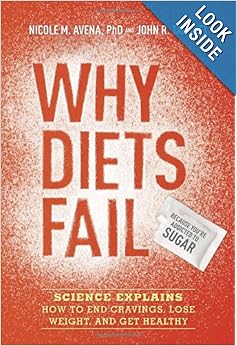
Dr. Nicole M. Avena is the author of Why Diets Fail (Because You're Addicted to Sugar): Science Explains How to End Cravings, Lose Weight, and Get Healthy and the subject of this NPR story.

This revolutionary eating plan reveals definitive proof that sugar is addictive, and presents the first science-based program to cut out the sugar, stop the cravings that cause most diets to eventually fail, and lose weight--permanently.
If you’re like most people, you’ve tried a few (or maybe many) different diets without success. The truth is, most diets work for a while, but there’s usually a point at which the dietary restrictions become too difficult to maintain. Why? Because whether you’re following a low-carb, paleo, gluten-free, or even an all-liquid green juice diet, the addictive nature of sugar causes cravings to take over and sabotage your diet-of-the-moment.

In Why Diets Fail, Dr. Nicole M. Avena and John R. Talbott reveal definitive proof that sugar is addictive and present the first science-based program to stop the cravings and lose weight—permanently. A neuroscientist and food addiction expert, Dr. Avena has conducted groundbreaking research showing that sugar triggers the same responses in the brain as addictive drugs like cocaine, nicotine, and alcohol. And like those other substances, the more sugar you eat, the more you need to get the same pleasurable feelings. (No wonder your last diet didn’t stick.)

Avena and Talbott’s eight-step plan walks you through the process of going sugar-free and surviving the make-or-break withdrawal period—those first few weeks when your body feels the absence of its favorite sweetener most acutely. An easy-to-use Sugar Equivalency Table developed by Talbott lists the amount of sugar in hundreds of common foods so you know precisely what to eat and what to avoid. And when it comes to what you can eat, you have a lot to choose from. In fact, you’ll probably eat more on this diet than you normally do—while continuing to lose weight.

This science-based program is the diet to end all diets. It will help you break the yo-yo dieting cycle, end those maddening sugar cravings, and develop a new longing for the good food that will keep you fit, healthy, and happy.
Sugar (as well as gluten) is one of the most destructive substances in the human diet. Sugar acts much like heroin in the brain - a lot of dopamine gets released. The dopamine flood is not as great as with heroin, but it has many of the same addictive properties.

Why Sugar Makes Us Feel So Good

by Eliza Barclay
January 16, 2014


Last week, I reported that scientists are working their way toward a consensus that sugar is addictive. While some researchers are still hesitant to liken sweet stuff to drugs or alcohol, the evidence is accumulating to explain why some of us really struggle to resist or moderate our sugar intake. (I count myself among them.)

I mentioned a new book called Why Diets Fail (Because You're Addicted to Sugar): Science Explains How to End Cravings, Lose Weight, and Get Healthy by Nicole Avena, a neuroscientist and research psychologist at Columbia University who has done a lot of work in this area. She's particularly interested in the neurotransmitters and brain receptors involved in eating. In lab experiments with rats, she's shown how overeating tasty foods (like sugar) can produce changes in the brain and behavior that resemble addiction.

Avena has also just put out a clever TED-Ed video with colorful visuals to help explain the details of just why sugar makes our brains go bonkers.

As the video shows, the key player in the reward system of our brain — where we get that feeling of pleasure — is dopamine. Dopamine receptors are all over our brain. And doing a drug like heroin brings on a deluge of dopamine.

Guess what happens when we eat sugar? Yes, those dopamine levels also surge — though not nearly as much as they do with heroin.

Still, too much sugar too often can steer the brain into overdrive, the video says. And that kickstarts a series of "unfortunate events" — loss of control, cravings and increased tolerance to sugar. All of those effects can be physically and psychologically taxing over time, leading to weight gain and dependence.

The takeaway is pretty clear: If you're sensitive to sugar and inclined to indulge in a supersugary treat, do it rarely and cautiously. Otherwise, there's a pretty good chance that your brain is going to start demanding sugar loudly and often. And we're probably better off without that extra voice in our head.

Wednesday, January 15, 2014

The Worst Thing You Can Eat Is Sugar

Excess sugar is poison in the body - and of course we love our poisons - alcohol, tobacco, drugs, gluten, and now sugar is finally being added to the list. Recently, a group of leading medical and nutrition experts released a call for a 20-30% reduction in sugar added to packaged and processed foods over the next 3-5 years. That would be a good start.

The worst thing you can eat is sugar

By Lindsay Kobayashi
Posted: January 13, 2014
Removing sugar from the food industry could reverse the obesity epidemic
A couple days ago, a group of leading medical and nutrition experts released a call for a 20-30% reduction in sugar added to packaged and processed foods over the next 3-5 years (1). The expert group, ‘Action on Sugar’, estimates that this change would result in a reduction of roughly 100 calories each person eats per day, and will eventually reverse the obesity epidemic (1). Wow. The media has picked up on this statement in a huge way, with headlines like ‘Sugar is the ‘new tobacco’ (2), and ‘Sugar is now enemy number one in the western diet (3). While these headlines sound sensationalist, they are right.

A sickening amount of sugar is added to many processed foods (1). Some culprits are obvious. There are 9 teaspoons of sugar in a can of regular Coke or Pepsi, but others are surprising. Heinz tomato soup has 4 teaspoons of sugar per serving. Add two slices of white bread to that soup at nearly a teaspoon of sugar, another teaspoon or two in your coffee or tea, and that’s your entire daily sugar allowance. Sugar should comprise no more than 5% of daily energy intake, which is about 6 teaspoons per day for women and 8 teaspoons per day for men (3).

And what is the big deal about sugar? A calorie is a calorie – right? Well, not so much. The calories provided by sugar are void of nutrition. ‘Action on Sugar’ (1) states it best:
Added sugar is a very recent phenomenon (c150 years) and only occurred when sugar, obtained from sugar cane, beet and corn became very cheap to produce. No other mammal eats added sugar and there is no requirement for added sugar in the human diet. This sugar is a totally unnecessary source of calories, gives no feeling of fullness and is acknowledged to be a major factor in causing obesity and diabetes both in the UK and worldwide.
Humans have no dietary requirement for added sugar. Dr Aseem Malhotra, the science director of ‘Action on Sugar’, emphasizes that the body does not require carbohydrates from sugar added to foods (3). Furthermore, high sugar intake may reduce the ability to regulate caloric intake (4), with consumption of sugar leading to eating more sugar, overeating, and ultimately to weight gain (5). Added sugar therefore presents a ‘double jeopardy’ of empty caloric intake that triggers further unnecessary consumption.

Dr Malhotra states that sugar is in fact ‘essential to food industry profits and lining the pockets of its co-opted partners’ (3). The sugar/food industry has tremendous power, sponsoring high-profile sporting events, gaining celebrity endorsements, and employing psychological techniques in their ubiquitous advertising. Maliciously, they target children, who are vulnerable to advertising and to giving in to a sweet tooth (6). The politics of the sugar industry have been covered by this blog in another post. Essential to their tactics is heavy resistance against the scientific links between sugar and obesity. The American Sugar Association website states that ‘sugar is a healthy part of a diet’ (7), and Sugar Nutrition UK states that ‘the balance of available evidence does not implicate sugar in any of the ‘lifestyle diseases’‘ (8). On top of that, the food industry sponsors scientific research that is biased towards showing no link between sugar and adverse health problems. Last month, a large evidence review found that research on sugar-sweetened beverages and obesity is more likely to find no association between the two when funded by the food industry (9).

Clearly, we have a long way to go in fighting against the paradigm of today’s food environment, which is largely dictated by the industry. ‘Action on Sugar’ has some important aims to this end: in addition to reducing sugar in processed foods by 20-30%, they aim to reach a consensus with the food industry that sugar is linked obesity and other negative health effects, to improve nutritional labelling of added sugar content using a traffic light system, and to ensure that scientific evidence is translated into government policy to reduce sugar. Their full list of aims can be found here (10). These aims are likely to be successful, as they are modelled off of sodium reduction efforts that have led to an estimated reduction of sodium in packaged foods ‘between 20 and 40%, with a minimum reduction of 6,000 strokes and heart attack deaths per year, and a healthcare saving cost of £1.5 billion [approx. $2.5 billion USD]’ (1).

So what can we do, as individuals? The first step is educating oneself, so if you’ve read this far then you’re one step ahead. Always read nutritional labelling on packaged foods carefully to determine how much sugar is in what you’re eating. Katharine Jenner, nutritionist and campaign director of ‘Action on Sugar’ states that you can ‘wean yourself off the white stuff’ by cutting down on using it at home, but the main source of sugar in our diets remains that added during the processing of manufactured food (1). The best thing is to heavily cut down on packaged, processed foods in favour of whole, unprocessed foods. Do this, if not only for your individual health, but to stop supporting an industry that comprises the well-being of the world’s population for financial profit. The worst thing you can do is eat sugar.

References

  1. Action on Sugar. Worldwide experts unite to reverse obesity epidemic by forming ‘Action on Sugar’. http://www.actiononsalt.org.uk/actiononsugar/Press%20Release%20/118440.html (accessed 12 January 2014).
  2. Poulter S. Sugar is the ‘new tobacco’: health chiefs tell food giants to slash levels by a third. Daily Mail. 09 January 2014. http://www.dailymail.co.uk/health/article-2536180/Sugar-new-tobacco-Health-chiefs-tell-food-giants-slash-levels-third.html (accessed 12 January 2014).
  3. Malhotra A. Sugar is now enemy number one in the western diet. The Guardian. 11 January 2014. http://www.theguardian.com/commentisfree/2014/jan/11/sugar-is-enemy-number-one-now (accessed 12 January 2014).
  4. Davidson TL, Swithers SE. A Pavlovian approach to the problem of obesity. Int J Obes Relat Metab Disord 2004;28(7):933-5.
  5. Bray GA, Nielsen SJ, Popkin BM. Consumption of high-fructose corn syrup in beverages may play a role in the epidemic of obesity. Am J Clin Nutr 2004;79(4):537-43.
  6. Calvert SL. Children as consumers: advertising and marketing. The Future of Children 2008;18(1):205-34.
  7. The Sugar Association. Balanced Diet. http://www.sugar.org/sugar-your-diet/balanced-diet/ (accessed 12 January 2014).
  8. Sugar Nutrition UK: Researching the Science of Sugar. Sugar & Health. http://www.sugarnutrition.org.uk/Sugar-and-Health.aspx (accessed 12 January 2014).
  9. Bes-Rastrollo M, Schulze MB, Ruiz-Canela M, Martinez-Gonzalez. Financial conflicts of interest and reporting bias regarding the association between sugar-sweetened beverages and weight gain: a systematic review of systematic reviews. PLOS Med 2013; doi: 10.1371/journal.pmed.1001578
  10. Action on Sugar. Aims. http://www.actiononsalt.org.uk/actiononsugar/Aims%20/118439.html (accessed 12 January 2014).

Image source

Saturday, October 19, 2013

Dr. Robert Lustig - Fat Chance: Fructose 2.0


Dr. Robert Lustig is a professor in the UC San Francisco Division of Pediatric Endocrinology, and he has previously been featured on UCTV with his talk, Sugar: The Bitter Truth, of which this talk is an update. He argues that fructose (too much) and fiber (not enough) appear to be cornerstones of the obesity epidemic through their effects on insulin.


A little background from Wikipedia:
[Dr. Lustig] practices in the field of neuroendocrinology, with an emphasis on the regulation of energy balance by the central nervous system.[2] He also has a special interest in childhood obesity.[2]

Lustig came to public attention through his efforts to establish that fructose can have serious deleterious effects on human (especially children's) health if consumed in too large amounts.[3] On May 26, 2009, he delivered a lecture called "Sugar: The Bitter Truth" which was posted on YouTube the following July and "went viral" with some 3.47 million viewings (as of Apr 28, 2013).[3] In his lecture, Lustig calls fructose a "poison" and equates its metabolic effects with those of ethanol.

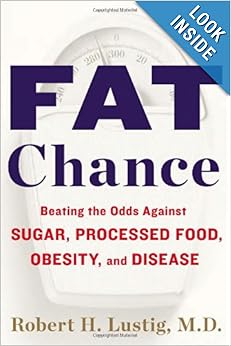
Lustig is the author of Fat Chance: Beating the Odds Against Sugar, Processed Food, Obesity, and Disease (2012).

Fat Chance: Fructose 2.0


Published on Oct 18, 2013

Dr. Robert Lustig, UCSF Division of Pediatric Endocrinology, updates his very popular video "Sugar: The Bitter Truth." He argues that sugar and processed foods are driving the obesity epidemic, which in turn affects our endocrine system. Series: "UCSF Osher Center for Integrative Medicine presents Mini Medical School for the Public" [10/2013]

(Visit: UCTV)

Tuesday, January 29, 2013

Dr. Robert Lustig: "Fat Chance: Beating The Odds Against Sugar, Processed Food, Obesity, and Disease"


Here are two recent articles/interviews with Dr. Robert Lustig about his new book, Fat Chance: Beating The Odds Against Sugar, Processed Food, Obesity, and Disease, the first is from The Diane Rehm Show and the other is from The Guardian (UK). Dr. Lustig argues that fructose (too much) and fiber (too little) are the cornerstones of the obesity and diabetes epidemics.

Robert H. Lustig, M.D has spent the past sixteen years treating childhood obesity and studying the effects of sugar on the central nervous system and metabolism. He is the Director of the UCSF Weight Assessment for Teen and Child Health Program and also a member of the Obesity Task Force of the Endocrine Society.

Here is some info on the book, via the publisher:
Robert Lustig’s 90-minute YouTube video “Sugar: The Bitter Truth”, has been viewed more than two million times. Now, in this much anticipated book, he documents the science and the politics that has led to the pandemic of chronic disease over the last 30 years. 
In the late 1970s when the government mandated we get the fat out of our food, the food industry responded by pouring more sugar in. The result has been a perfect storm, disastrously altering our biochemistry and driving our eating habits out of our control. 
To help us lose weight and recover our health, Lustig presents personal strategies to readjust the key hormones that regulate hunger, reward, and stress; and societal strategies to improve the health of the next generation. Compelling, controversial, and completely based in science, Fat Chance debunks the widely held notion to prove “a calorie is NOT a calorie”, and takes that science to its logical conclusion to improve health worldwide.
Other reviews/interviews can be found at KQED, Talk of the Nation, Oprah, and The Chicago Tribune, among many others.

Here is the episode from Diane Rehm:

Dr. Robert Lustig: "Fat Chance: Beating The Odds Against Sugar, Processed Food, Obesity, and Disease"

LISTEN
TRANSCRIPT
ORDER A CD

Monday, January 7, 2013

Recently published research suggests that obese people have a lower risk of death compared to people with normal weight. But this is not news to pediatric endocrinologist, Robert Lustig. He says fat doesn’t matter. What does matter, he argues, is metabolic function. For the past 16 years, he’s been treating childhood obesity and studying the effects of sugar on the central nervous system. In a new book he details the science and politics behind the dramatic increase in our consumption of sugar and explains why this shift is so detrimental to our health. Please join us to talk with Dr. Robert Lustig about obesity and disease.

Guests: Dr. Robert Lustig, Director of University of California, San Fransisco Weight Assessment for Teen and Child Health Program.

Related Links
Sugar: The Bitter Truth video (or watch it below)

Related Items
Fat Chance: Beating the Odds Against Sugar, Processed Food, Obesity, and Disease

"Sugar: The Bitter Truth" - Dr. Robert Lustig breaks down what sugar does to the body.

Read An Excerpt

Here is the review from The Guardian:

Fat Chance: The Bitter Truth About Sugar by Robert Lustig – review

Why eating sweet food is bad for you, but might not be your fault


Steven Poole
The Guardian, Friday 25 January 2013

A worker at a Turkish sugar refinery is dwarfed by mountains of beet. Photograph: Umit Bektas/Reuters

Here's a mini-quiz for foodists who pride themselves on their knowledge of obscure consumables: what are diastatic malt, dextran, ethyl maltol, panocha and sorghum syrup? They are all names used on food labels for added sugar. Robert Lustig, an endocrinologist who works on childhood obesity, is angry with the food industry and the capturing of western governments by its lobbyists. Added sugar is all around us, disguised under deliberately unfamiliar names, and its sweet molecule – fructose – is, according to Lustig, the prime cause of our ballooning "obesity pandemic".

Lustig explains the biochemistry of metabolism, and the vicious cycle of obesity, with patient clarity and some alarmingly vivid imagery. (You know the way sugar helps to brown meat while cooking? It's browning your insides the same way.) He is sceptical about one-shot solutions (miracle diet pills, antioxidants), since there is a complex interdependence between the actions of hormones and food intake. For example: there is fructose in fruit, so why isn't eating fruit bad? Because the fibre in fruit counteracts the noxious effects of the sugar, which is why it's better to eat your fruit than to drink it. (A glass of orange juice contains more sugar than the equivalent volume of Coke.) The bitter pill of Lustig's philosophy is sweetened by an agreeably cute humour: "Naturally occurring fructose comes from sugarcane, fruits, some vegetables, and honey. The first three have way more fibre than fructose, and the last is protected by bees."

There is no shortage of fad food books blaming one or other "toxin" for all our fleshly dolours. Yet to dismiss every such tract as populist scaremongering would be just as irrational as to believe them all. (The "experts" – whom it is fashionable in some quarters always to dismiss wholesale as a compromised class – did not, after all, turn out to be wrong about the harmful effects of cigarettes.) Recent reports elsewhere, indeed, indicate that there is a growing consensus behind the idea that the fructose factor helps to explain what otherwise looks like a puzzle: why do different diets – Atkins, the Paleo diet, the traditional Japanese or Mediterranean diets – all have notable health benefits? Because, or so this thinking runs, they are all low-sugar and high-fibre regimes.

Fat Chance is a persuasively indignant public-policy manifesto, but it's also a self-help book; curiously, each strain flatly contradicts the other. The crux is whether people can actually change their behaviour. Of course they can, you might retort, citing friends who have successfully slimmed; but Lustig spends most of the book denying that this is even possible, the better to justify government regulation. (He suggests agricultural subsidies for green vegetables instead of for corn and soy, and taxing foods that have added sugar. This latter would be a regressive tax, he admits, but the benefits would also accrue mostly to those on low incomes.)

Lustig denies personal autonomy for laudably humane reasons – because he wants to deconstruct the prejudice that obese people have merely given in to "gluttony and sloth". But his insistence on the complete irrelevance of "personal responsibility" leads him to rely on some ropey metaphysics and oversimplified science. "Biochemistry and hormones drive our behaviour," he writes reductively, assuring us that we are merely slaves to the antic nanoreactions of our neurobiology. And because obesity changes our hormonal balance, "weight loss is next to impossible".

Apparently, then, we can't choose what to do. "Most of the world views the word behaviour as meaning the actions we choose to do or not through 'free will,'" he writes. "However, the dictionary definition of behaviour is: 'a stereotyped motor response to a physiological stimulus.'" Unfortunately, Lustig does not provide a footnote to indicate which dictionary he was using. I checked the OED, the New Oxford American Dictionary, and Merriam-Webster, and none gave his definition of "behaviour" as primary. Lustig's description is a more specialised one, recalling the tradition of "behaviourism" in psychology. An animal's actions in this sense could be "conditioned", as in BF Skinner's famousSkinner box: a rat in the box learned to push one button for food and avoid the button that generated electric shocks. There's probably a bracing argument to be made that modern humans all live in a giant Skinner box, but Lustig doesn't come out and make it.

On the other hand, if Lustig's anti-free-will view is correct, it is hard to see the point of his urging the reader, in the book's self-help chapters, to alter his or her own buying and eating habits. Even so, he provides a six-page shopping list of low-fructose and high‑fibre foods that one can find in any supermarket; and offers advice on how to behave in a restaurant. (Don't be in a fast-food joint in the first place; don't have bread with the meal; don't order dessert.) So personal change is possible?

This is not to say that Lustig's advice isn't good. In fact, you can tell it is good because it is so close to what everyone already knows, despite his eagerness to sell the novelty of his version and dismiss the familiar mantra of "eat less and exercise more" as a "myth". So what is his answer? Er, eat less sugar, eat more fibre, and exercise more. Or, if you want it further reduced: avoid "processed" rubbish and just "eat real food". I worried for a moment that much of my own diet would, on Lustig's stringent criteria, turn out to have been unreal food: merely colourful hallucinations of elaborate victuals, simulated scoffing. But then I couldn't help myself, could I?

• Steven Poole's You Aren't What You Eat is published by Union Books.

Thursday, September 13, 2012

High Fructose Intake Linked to Poor Liver Health


Unlike glucose (the simplest sugar, and the foundation of carbohydrate energy use in the body), which can be metabolized and used for energy by cells throughout the body, fructose (fruit sugar) must be metabolized through a rather complex process in the liver, where some of it becomes glucose eventually, and a substantial portion is bound in triglycerides, destined to become very-low-density lipoproteins (VLDL) or be stored as fat (or to clog arteries as VLDL cholesterol).

A new study shows that this process, fructolysis, increases uric acid levels in the liver and decreases  ATP levels (the energy that powers cells) - this was with obese and diabetic subjects, but there is ample evidence that this is not confined only to this population.
For the present study, 244 obese and diabetic adults from the Look AHEAD Study were evaluated, with dietary fructose consumption estimated by the food frequency questionnaire. Liver ATP and uric acid levels were measured in 105 patients who participated in the Look AHEAD Fatty Liver Ancillary Study. Researchers assessed the change in liver ATP content using an IV fructose challenge in 25 subjects, comparing patients with low fructose consumption (less than 15 grams per day) to those with high fructose consumption (greater than 15 grams per day).

The team found that participants with a high intake of dietary fructose had lower liver ATP levels at baseline and a greater change in ATP content following the fructose challenge than those who consumed a lower amount of fructose. Patients with high uric acid levels (5.5 mg/dL or more) displayed lower ATP stores in response to fructose.

Dr. Abdelmalek concludes, “High fructose consumption and elevated levels of uric acid are associated with more severe depletion of liver ATP. Our findings suggest that increased dietary fructose intake may impair liver “energy balance.” Further research to define the clinical implications of these findings on metabolism and NAFLD is necessary.” The authors highlight the importance of public awareness of the risks associated with a diet high in fructose.
The study citation, as given in the press release:
“Higher Dietary Fructose Is Associated with Impaired Hepatic ATP Homeostasis in Obese Individuals with Type 2 Diabetes.” Manal F. Abdelmalek, Mariana Lazo, Alena Horska, Susanne Bonekamp, Edward W. Lipkin, Ashok Balasubramanyam, John P. Bantle, Richard J. Johnson, Anna Mae Diehl, Jeanne M. Clark, and the Fatty Liver Subgroup of the Look AHEAD Research Group. Hepatology; (DOI: 10.1002/hep.25741); Print Issue Date: September, 2012. URL: http://onlinelibrary.wiley.com/doi/10.1002/hep.25741/abstract

Here is some additional information on fructose metabolism from Wikipedia:

Metabolism

In a 2012 meta-analysis of controlled feeding clinical trials, fructose was not an independent factor for weight gain. Fructose consumption did cause weight gain in a diet with excessive calories, which could be due to the extra calories rather than fructose per se.[40]

Excess fructose consumption has been hypothesized to be a cause of insulin resistance, obesity,[41] elevated LDL cholesterol and triglycerides, leading to metabolic syndrome.[42] In preliminary research, fructose consumption was correlated with obesity.[43][44] A study in mice showed that a high fructose intake may increase adiposity.[45]

Although all simple sugars have nearly identical chemical formulae, each has distinct chemical properties. This can be illustrated with pure fructose. A journal article reports that, "...fructose given alone increased the blood glucose almost as much as a similar amount of glucose (78% of the glucose-alone area)".[46][47][48][48][49]

In Wistar fatty rats, a laboratory model of diabetes, 10% fructose feeding as opposed to 10% glucose feeding was found to increase blood triglyceride levels by 86%, whereas the same amount of glucose had no effect on triglycerides.[50] Neither glucose nor fructose influenced insulin or blood sugar in this model. The authors concluded "These results show that in genetically obese, diabetic rats feeding fructose and glucose is associated with an increase in hepatic lipogenic enzyme activities and triglyceride production, and suggest that fructose stimulates triglyceride production but impairs triglyceride removal, whereas glucose stimulates both of them.[50]

Another study in humans concluded that fructose and sucrose are metabolized similarly,[51] whereas a different analysis "produced significantly higher fasting plasma triglyceride values than did the glucose diet in men" and "...if plasma triacylglycerols are a risk factor for cardiovascular disease, then diets high in fructose may be undesirable".[52]

Fructose is a reducing sugar, as are all monosaccharides. The spontaneous chemical reaction of simple sugar molecules binding to proteins is known as glycation. Showing potential cause of skin and bone damage in a rat model of diabetes, investigators suggested "that long-term fructose consumption negatively affects the aging process."[53] Another study using human proteins showed that the glycation caused by fructose appears to be equivalent to glucose and so does not seem to be a better answer for diabetes for this reason alone, save for the smaller quantities required to achieve equivalent sweetness in some foods. It also found evidence for glycation of human lens proteins caused by fructose.[54]

The people most at risk of increased triglycerides and fat storage from eating fructose are those who are consuming more calories than they need. Consumption of high-fructose corn syrup is also a huge risk factor for anyone, healthy or overweight.

If you eat fruits, and you should, be sure your daily calorie intake is in check and that you are exercising regularly. Then, try to choose fruits lower in sugar, such as apples, berries, melons, and so on, that also offer good nutrient and antioxidant benefits.