Showing posts with label innovation. Show all posts

Monday, June 30, 2014

David Burkus | The Myths of Creativity


As one might gather from the title of this Google Talk, David Burkus is the author of The Myths of Creativity: The Truth About How Innovative Companies and People Generate Great Ideas (2013). Back around the beginning of June (the 9th), Burkus stopped by Google to talk about his book (which is described below the video).

David Burkus | The Myths of Creativity

Published on Jun 13, 2014


We tend to think of creativity in terms reminiscent of the ancient muses: divinely-inspired, unpredictable, and bestowed upon a lucky few. But when our jobs challenge us to be creative on demand, we must develop novel, useful ideas that will keep our organizations competitive. The Myths of Creativity demystifies the processes that drive innovation. Based on the latest research into how creative individuals and firms succeed, David Burkus highlights the mistaken ideas that hold us back and shows us how anyone can embrace a practical approach, grounded in reality, to finding the best new ideas, projects, processes, and programs.

Answers questions such as: What causes us to be creative in one moment and void in the next? What makes someone more or less creative than his or her peers? Where do our flashes of creative insight come from, and how can we generate more of them?

Debunks 10 common myths, including: the Eureka Myth; the Lone Creator Myth; the Incentive Myth; and The Brainstorming Myth.

David Burkus | The Myths of Creativity: The Truth About How Innovative Companies and People Generate Great Ideas

For anyone who struggles with creativity, or who makes excuses for delaying the work of innovation, The Myths of Creativity will help you overcome your obstacles to finding new ideas.

Thursday, June 19, 2014

Jeremy O'Brien: "Quantum Technologies"


Jeremy O'Brien spoke recently at Google on Quantum Technologies, a topic he has written on extensively [see his 2009 paper, with Furusawa and Vu ckovi c, Photonic Quantum Technologies]. This is interesting stuff - and likely to be the future of computing technology.

Jeremy O'Brien: "Quantum Technologies"

June 17, 2014


Jeremy O'Brien visited Google LA to deliver a talk: "Quantum Technologies." This talk took place on April 1, 2014.

Abstract:

The impact of quantum technology will be profound and far-reaching: secure communication networks for consumers, corporations and government; precision sensors for biomedical technology and environmental monitoring; quantum simulators for the design of new materials, pharmaceuticals and clean energy devices; and ultra-powerful quantum computers for addressing otherwise impossibly large datasets for machine learning-artificial intelligence applications. However, engineering quantum systems and controlling them is an immense technological challenge: they are inherently fragile; and information extracted from a quantum system necessarily disturbs the system itself. Despite these challenges a small number of quantum technologies are now commercially available. Delivering the full promise of these technologies will require a concerted quantum engineering effort jointly between academia and industry. We will describe our progress in the Centre for Quantum Photonics to delivering this promise using an integrated quantum photonics platform---generating, manipulating and interacting single particles of light (photons) in waveguide circuits on silicon chips.

Bio:

Jeremy O'Brien is professor of physics and electrical engineering and director of the Centre for Quantum Photonics (CQP). He received his Ph.D. in physics from the University of New South Wales in 2002 for experimental work on correlated and confined electrons in organic conductors, superconductors and semiconductor nanostructures, as well as progress towards the fabrication of a phosphorus in silicon quantum computer. As a research fellow at the University of Queensland (2001-2006) he worked on quantum optics and quantum information science with single photons. CQP's efforts are focused on the fundamental and applied quantum mechanics at the heart of quantum information science and technology, ranging from prototypes for scalable quantum computing to generalised quantum measurements, quantum control, and quantum metrology.

Friday, June 13, 2014

Aneesh Chopra | Innovative State: How New Technologies Can Transform Government


Aneesh Chopra is the author of Innovative State: How New Technologies Can Transform Government (2014). Working for the Obama administration, Chopra was tasked with leading the administration's initiatives for a more open, tech-savvy government.

Hmmm . . . they certainly nailed the tech savvy part with with NSA spying programs, but they seem to forgotten about the transparency part.

Technology is ethically neutral, but its use have enormous moral and ethical implications.

Aneesh Chopra | Innovative State: How New Technologies Can Transform Government

Published on June 12, 2014


Over the last twenty years, our economy and our society, from how we shop and pay our bills to how we communicate, have been completely revolutionized by technology. Once it became clear how much this would change America, a movement arose to use these same technologies to reshape and improve government. But the idea languished, and while the private sector innovated, our government stalled, trapped in a model designed for the America of the 1930s and 1960s.

The election of Barack Obama offered a new opportunity. In 2009, Aneesh Chopra was named the first chief technology officer of the United States federal government. Previously the secretary of technology for Virginia and managing director for a health care think tank, Chopra was tasked with leading the administration's initiatives for a more open, tech-savvy government.
Inspired by private sector trailblazers, Chopra wrote the playbook for governmental open innovation. In Innovative State, drawing on interviews with tech leaders and policy experts, and building on his firsthand experience, Chopra offers an absorbing look at how open government can establish a new paradigm for the internet era and allow us to tackle our most challenging problems, from economic development to affordable health care.

Thursday, February 20, 2014

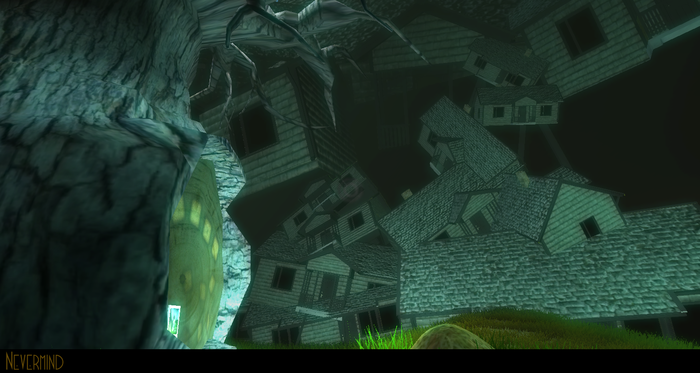
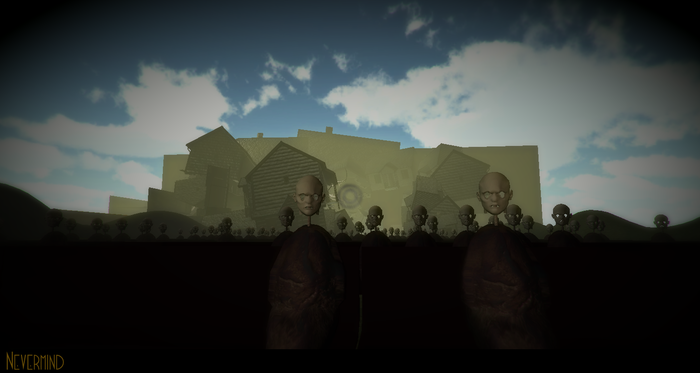
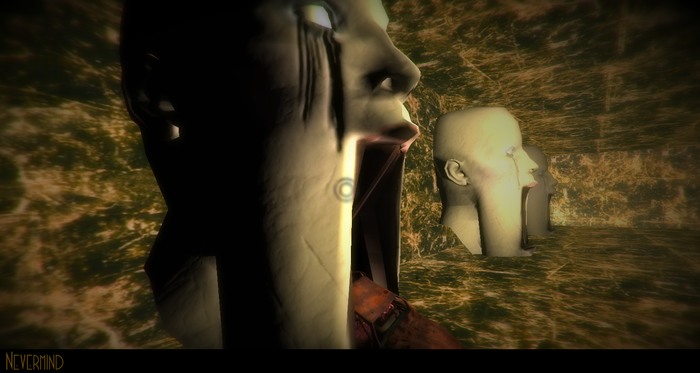
Kickstarter - Nevermind: A Biofeedback Horror Adventure Game


My friend Arthur turned me on to this Kickstarter campaign to create a biofeedback-enhanced horror adventure game, Nevermind. It uses your stress levels to make the game harder or easier (the more you get stressed, the harder it is). This seems like an amazingly cool way to teach/learn affect regulation.

One exciting facet of Nevermind is its potential to serve as a full-fledged therapeutic tool for those who suffer from issues - mild or severe - relating to stress, anxiety, PTSD, or other similar conditions. Although informal testing results have been promising thus far, we are excited to be in discussion as we speak with researchers who are eager to explore Nevermind's potential impact via rigorous clinical trials.

As a prime example of our passion to create "games that give back", one of our long-term goals is to craft a health-centric version of Nevermind specifically targeted to help actual patients develop tools to manage and ultimately overcome their conditions.
More from Erin Reynolds, the game's creator:
https://www.kickstarter.com/projects/reynoldsphobia/nevermind-a-biofeedback-horror-adventure-game

Nevermind is a biofeedback-enhanced horror adventure game that takes you into the dark and twisted world within the subconscious minds of trauma victims.

As you explore surreal labyrinths and solve the puzzles of the mind, a biofeedback sensor monitors how scared or stressed you become with each passing moment. If you let your fears get the best of you, the game will become harder. If you’re able to calm yourself in the face of terror, the game will be more forgiving.

Nevermind’s goal is to create an unforgettable gameplay experience that also teaches players how to be more aware of their internal responses to stressful situations. If you can learn to control your anxiety within the disturbing realm of Nevermind, just imagine what you can do when it comes to those inevitable stressful moments in the real world . . .
Part of the reason I want to bring this to your attention is that there are only 2 weeks left to get this project funded and they are WAY short of the goal.

If you can help, please do so.

Here is more info on the game:

You'll need an HTML5 capable browser to see this content.

Nevermind is - at its core - an adventure game (in the spirit of classic games like Myst), where you must explore strange worlds and solve puzzles to unlock the terrifying mystery that lurks within each patient’s inner psyche.

In Nevermind, you are a Neuroprober - a unique physician who, through the use of cutting-edge technology, is able to venture into the minds of psychological trauma victims for whom traditional treatment methods have proved ineffective.


As such, each “level” in Nevermind takes place within the surreal subconscious of one of these victims. Your goal is to explore the often dark and twisted world within, solving abstract puzzles as you recover fragments of memories (represented by photographs) surrounding the traumatic event.

Traumatic experiences, especially those left untreated, take their toll in countless ways, often triggering other serious problems as the victim’s subconscious desperately tries to cope. As a result, the patient’s mind doesn’t take kindly to those who attempt to peel back these layers, often prompting it to lash out in terrifying, unexpected ways.

Only the most vigilant of Neuroprobers can withstand the necessary waves of abuse to help their patient find true salvation.

Can you?


*  *  *  *  *


Nevermind started as a 2012 MFA thesis project at USC’s Interactive Media Program, led by industry veteran Erin Reynolds - who returned to academia to pursue new ways to create “positive” games for traditional gaming audiences. After an academic year, Erin and the Nevermind student development team were able to create one fully-functional level - a proof of concept that demonstrated Nevermind’s unique vision and the feasibility of the core technology.

Nevermind has since been featured in numerous festivals and nominated for several awards for innovation and technical achievement, including at IndieCade, Games for Change, SIGGRAPH, Unity Unite Awards, and the Serious Games Showcase and Challenge.


*  *  *  *  *


In light of Nevermind’s critical success, Erin decided to take the plunge - leaving her industry job to commit herself fully to make her dream of a full-featured, commercially viable version of Nevermind a reality. With your support, Nevermind will be the next great horror adventure game - unlike anything you've played before!

BIGGER, BETTER, SCARIER


The final commercial version of Nevermind will contain at least 4 levels (more if we hit our stretch goals!), for 5+ hours of gameplay PLUS the time and resources to feature even higher quality environments to complement a broader variety of new, more terrifying themes and traumas.

Saturday, February 01, 2014

Google Has Acquired AI Start-Up DeepMind - What Are They Planning?

Via Live Science, who re-posted an article originally from The Conversation, this is an op-ed by Matthew Higgs about Google's acquisition of the artificial intelligence start-up DeepMind.

Hmmm . . . Ray Kurzweil + Boston Dynamics (robotics) + DeepMind (artificial intelligence) . . . . Google is planning to upload Ray into an intelligent robot that is immortal?

What Does Google Want with DeepMind? Here are Three Clues (Op-Ed)

By Matthew Higgs, University College London | January 30, 2014

 
The golden age of AI is upon us. Credit: kidpixo.

This article was originally published at The Conversation. The publication contributed the article to LiveScience's Expert Voices: Op-Ed & Insights.

All eyes turned to London this week, as Google announced its latest acquisition in the form of DeepMind, a company that specialises in artificial intelligence technologies. The £400m pricetag paid by Google and the reported battle with Facebook to win the company over indicate that this is a firm well worth backing.

Although solid information is thin on the ground, you can get an idea of what the purchase might be leading to, if you know where to look.

Clue 1: what does Google already know?


Google has always been active in artificial intelligence and relies on the process for many of its projects. Just consider the “driver” behind its driverless cars, the speech recognition system in Google Glass, or the way its search engine predicts what we might search for after just a couple of keystrokes. Even the page-rank algorithm that started it all falls under the banner of AI.

Acquiring a company such as DeepMind therefore seems like a natural step. The big question is whether Google is motivated by a desire to help develop technologies we already know about or whether it is moving into the development of new technologies.

Given its track record, I’m betting on the latter. Google has the money and the drive to tackle the biggest questions in science, and developing computers that think like humans has, for a long time, been one of the biggest of them all.

Clue 2: what’s in the research?


The headlines this week have described DeepMind as a “secretive start-up”, but clues about what it gets up to at its London base can be gleaned from some of the research publications produced by the company’s co-founder, Demis Hassabis.

Hassabis' three most recent publications all focus on the brain activity of human participants as they undergo particular tasks. He has looked into how we take advantage of our habitat, how we identify and predict the behaviour of other people and how we remember the past and imagine the future.

As humans, we collect information through sensory input and process it many times over using abstraction. We extract features and categorise objects to focus our attention on the information that is relevant to us. When we enter a room we quickly build up a mental image of the room, interpret the objects in the room, and use this information to assess the situation in front of us.

The people at Google have, until now, generally focused on the lower-level stages of this information processing. They have developed systems to look for features and concepts in online photos and street scenes to provide users with relevant content, systems to translate one language to another to enable us to communicate, and speech recognition systems, making voice control on your phone or device a reality.

The processes Hassabis investigates require these types of information processing as prerequisites. Only once you have identified the relevant features in a scene and categorised objects in your habitat can you begin to take advantage of your habitat. Only once you have identified the features of someone’s face and recognised them as a someone you know can you start to predict their behaviour. And only once you have built up vivid images of the past can you extrapolate a future.

Clue 3: what else is on the shopping list?


Other recent acquisitions by Google provide further pieces to the puzzle. It has recently appointed futurist Ray Kurzweil, who believes in search engines with human intelligence and being able to upload our minds onto computers, as its director of engineering. And the purchase of Boston Dynamics, a company developing ground breaking robotics technology, gives a hint of its ambition.

Google is also getting into smart homes in the hope of more deeply interweaving its technologies into our everyday lives. DeepMind could provide the know-how to enable such systems to exhibit a level of intelligence never seen before in computers.

Combining the machinery Google already uses for processing sensory input with the ideas under investigation at DeepMind about how the brain uses this sensory input to complete high-level tasks is an exciting prospect. It has the potential to produce the closest thing yet to a computer with human qualities.

Building computers that think like humans has been the goal of AI ever since the time of Alan Turing. Progress has been slow, with science fiction often creating false hope in people’s minds. But these past two decades have seen unimaginable leaps in information processing and our understanding of the brain. Now that one of the most powerful companies in the world has identified where it wants to go next, we can expect big things. Just as physics had its heyday in the 20th century, this century is truly the golden age of AI.

Matthew Higgs receives funding from the EPSRC.

This article was originally published at The Conversation. Read the original article. The views expressed are those of the author and do not necessarily reflect the views of the publisher. This version of the article was originally published on LiveScience.


Editor's Recommendations

Friday, August 30, 2013

Raghava KK: Coloring Outside the Lines (FORA.tv)


This short video from National Geographic Live is pretty cool. The 2013 National Geographic Emerging Explorer Raghava KK creates interactive art with an agenda - to change the viewer's mind, literally.


Raghava KK: Coloring Outside the Lines


Raghava KK: Coloring Outside the Lines from National Geographic Live on FORA.tv

Your brain waves may change the appearance of art by 2013 National Geographic Emerging Explorer Raghava KK, but at the same time his art may change you through interactivity that shows the many perspectives within every story.

Bio of Raghava KK

Raghava KK's globally acclaimed art pushes the boundaries of creativity and technology, often blending the two in interactive, participatory experiences that challenge and change perceptions. His work spans genres as disparate as painting, sculpture, film and performance. His work spans genres as disparate as painting, sculpture, film and performance." You walk into an art gallery, approach a painting, touch the canvas, and watch it transform before your eyes. No alarms sound. No guards descend. In fact, you've done exactly what the painting's creator wanted you to do. For Raghava KK, interactive art isn't a stunt, but a powerful way to broaden perspectives and encourage empathy. "I like to question the way information itself is delivered," he explains. "Everyone has a bias. What can be transformational is creative expression that allows many different biased perspectives to coexist simultaneously. When you see the world through other people's eyes, you have a richer understanding of who you are and why people do what they do."

KK's distinctive style first flourished in his work as a newspaper cartoonist. His penchant for using comic pathos to challenge accepted societal norms has since swept through myriad art forms, including painting, sculpture, installation, film, and performance. Today, technology plays a pivotal role in his art, allowing multiple perspectives to be revealed and manipulated by the viewer, essentially becoming a new creation each time it is seen. His iPad picture book for children created a new genre of "shaken stories." Each time parents and kids shake the screen, a new definition of "family" appears. Mom, dad, and child; two dads and kids; two moms and kids; single parents. "I grew up in the bubble of a very traditional Indian family and only saw one point of view," he says. "I created this book because I wanted to expose my own children to many perspectives at a very early age." Now he's helping develop a new technology, embedded in picture frames, that lets his paintings become touch screens.

He creates the art with real paint, but when someone touches the canvas, the image changes via the magic of a digital projection system. "It's reinvented by each person who interacts with it," KK says. Another idea begins with an empty wall. As you stand before it, a randomly chosen character projects onto the blank space and mirrors your movements. "It's fascinating to see how people step outside their own inhibitions and start moving the way they think that character would move." He's using brain-wave technology to push the participatory experience even further. Wearing an EEG headset, the viewer's mood and perspective become part of the art. "I start with an image of a grumpy old woman; I call her Mona Lisa 2.0," he explains. "As you look at her, the EEG headset measures 13 frequencies from your brain waves to indicate if you're stressed, calm, sad, angry, relaxed, concentrating hard, or anything in between." A computer algorithm processes those brain-wave measurements and makes the woman's face respond to your mental activity. As your emotions change, the art changes in real time-grinning, smiling broadly, frowning, scowling, or gazing peacefully.

Technology is also key to an educational tool he's developing to teach children shapes-not just as flat geometric graphics, but as concepts. "We crowd-source photographs of structural objects in the real world that physically demonstrate different shapes-using a car tire to teach circles or the pyramids to teach triangles. It's a much more meaningful way to learn. This idea of many crowd-sourced images all existing simultaneously could be a great way to take on some of the world's bigger issues and show multiple perspectives on different topics." Ultimately, KK sees participatory art as a tool for encouraging self-realization, and he hopes the interactive experiences he creates will make people more open to having their opinions challenged. "I explore sensitive topics such as politics, identity, gender, sexuality, and conformity, but there's often an element of humor to my work. I like to disrupt your thinking, but make you feel like I'm hugging you while I'm disrupting you. That's why I frequently use the disarming aesthetic of cartoons to say something powerful. I want to make people think differently, without losing them along the way. "I think the most important ingredient of happiness is to feel you are useful and adding value to the world," he explains. "When I judge what my life has meant, it's not how much money I've made or how many paintings I've sold. It's whether I've used my art as a tool to give back and make a difference, large or small."

Monday, August 26, 2013

Documentary: A Profile of Elon Musk, Founder of Tesla Motors and SpaceX


Elon Musk is the personification of the wunderkind. After completing undergraduate degrees in economic and physics at the University of Pennsylvania, he then moved to the Silicon Valley to pursue a Ph.D. in applied physics and materials science at Stanford.

After only two days he left the program. Drawing inspiration from innovators such as Nikola Tesla, Bill Gates, Steve Jobs, and Walt Disney, Musk then focused his energies on three areas he felt were "important problems that would most affect the future of humanity," the Internet, clean energy, and space.

He co-founded PayPal, co-founded Tesla Motors, and founded SpaceX (the only private space program competitive with NASA), and he is worth $7.7 billion, as of August 2013. Oh yeah, he's only 40 years old.

He estimates he spends 100 hours a week on Tesla and SpaceX, a fact that likely accounts for his two failed marriages.

Elon Musk Profiled


This film profiles Elon Musk, the entrepreneur who helped create PayPal, built America’s first viable fully electric car company, started the nation’s biggest solar energy supplier, and may make commercial space travel a reality in our lifetime. And he’s only 40.

Elson Musk is a lot like the kid in the comic book, whose fantasies turn into reality. But not as a magician, he did as an engineer. Musk’s fantasies and companies have transformed the way we live. He founded his first company at age 23 and sold it a few years later for 300 million dollars. He helped pave the way for online commerce with PayPal. He made solar energy affordable and jump-started the electric car industry. Plus he his competing NASA to outer space.

Saturday, April 13, 2013

Breakthrough - Transparent Brain Imaging


This is a huge breakthrough in brain imaging, as reported in Nature earlier this week. The whole article is available as a PDF online. Eventually, we figure out to do this in a living body, so that we can't "real" images of the living, thinking brain.

Transparent Brain Imaging Will Accelerate Research 10 to 100 Times

by BIG THINK EDITORS
APRIL 11, 2013


The world of neuroscience is abuzz with the news that a new technique has been developed to study brain anatomy in mice. By removing the brain and treating it with chemicals, researchers are able to obtain a transparent view.

This advance was made by the bioengineering lab of Dr. Karl Deisseroth at Stanford and reported in the journal Nature yesterday. "Obtaining high-resolution information from a complex system, while maintaining the global perspective needed to understand system function, represents a key challenge in biology," the scientists wrote.

Their answer to this challenge is called CLARITY, which uses chemicals to transform intact brain tissue into a form that is optically "transparent and macromolecule-permeable."

To illustrate this breakthrough, Dr. Deisseroth's team released two videos. One shows "a flythrough" of a mouse brain using a fluorescent imaging technique. The second shows a 3D view of a mouse brain's memory hub, or hippocampus.

As the scientists note, existing methods require making hundreds of thin slices to the brain, and most crucially, hinders scientists' ability to analyze intact components in relation to each other.

So how significant is this development? "It's exactly the technique everyone's been waiting for," Terry Sejnowski of the Salk Institute told the Associated Press, estimating it will speed up brain anatomy research "by 10 to 100 times."

Watch the CLARITY demo videos here:

 
Image courtesy of Shutterstock

Sunday, March 31, 2013

Bruce Nussbaum - Creative Intelligence: Harnessing the Power to Create, Connect, and Inspire


Bruce Nussbaum, author of Creative Intelligence: Harnessing the Power to Create, Connect, and Inspire, speaks at Google about his new book. He is the former assistant managing editor at Business Week and is Professor of Innovation and Design at Parsons, The New School of Design. He is founder of the Innovation and Design online channel; founder of IN: Inside Innovation, a quarterly innovation supplement.

Here is a summary of his new book from Amazon:
Offering insights from the spheres of anthropology, psychology, education, design, and business, Creative Intelligence by Bruce Nussbaum, a leading thinker, commentator, and curator on the subjects of design, creativity, and innovation, is first book to identify and explore creative intelligence as a new form of cultural literacy and as a powerful method for problem-solving, driving innovation, and sparking start-up capitalism.

Nussbaum investigates the ways in which individuals, corporations, and nations are boosting their creative intelligence — CQ—and how that translates into their abilities to make new products and solve new problems. Ultimately, Creative Intelligence shows how to frame problems in new ways and devise solutions that are original and highly social.

Smart and eye opening, Creative Intelligence: Harnessing the Power to Create, Connect, and Inspire illustrates how to connect our creative output with a new type of economic system, Indie Capitalism, where creativity is the source of value, where entrepreneurs drive growth, and where social networks are the building blocks of the economy.
This is an interesting talk - although a little geeky.

Bruce Nussbaum: Creative Intelligence

AtGoogleTalks
Creative Intelligence is the first book to explore creative intelligence as a method for problem-solving, driving innovation, and sparking start-up capitalism. Knowing how to be creative is fast becoming a core competence of life today. Nussbaum charts the making of a new literacy, Creative Intelligence, or CQ. From corporate CEOs trying to parse the confusing matrix of global business to K-12 teachers attempting to reach wired kids bored with the classroom, creativity is increasingly seen as the antidote to the uncertainty and complexity that make our lives so insecure. Creative Intelligence embodies a bundle of specific literacies that increase our ability to navigate the unknown. It's a skill-set that explorers have tacitly used for eons but which, only now, is explicitly revealing its secrets to us. So to IQ and Emotional Quotient, we must now make room for CQ.

Nussbaum explores how people and organizations are learning how to be more creative in work and in life. He investigates the ways in which individuals, corporations, even nations are boosting their CQ and how that translates into their abilities to make new things and solve new problems within our new, increasingly complex environments. Ultimately, readers will learn how to frame problems in new ways and come up with solutions using CQ—it is the next evolutionary step in our thinking about how to deal with the future.

Wednesday, June 20, 2012

Modern Masters: Watch BBC Series Featuring Warhol, Matisse, Picasso and Dali


Another great find from Open Culture. I have watched two of these so far, Matisse and Warhol, and both are excellent. The host, Alastair Sooke, clearly loves art and he shares that enthusiasm with the viewer. Good stuff.

Modern Masters: Watch BBC Series Featuring Warhol, Matisse, Picasso and Dali


June 18th, 2012


Modern art. Like it or not, it’s had a profound impact on the way our world looks. As critic Alastair Sooke explains in this four-part series from the BBC, the great artworks of the past century have exerted an influence that extends far beyond museum walls.
Modern Masters, first broadcast in 2010 on the mainstream channel BBC One, looks at the life, work, and abiding influence of Henri Matisse, Pablo Picasso, Salvador Dali and Andy Warhol. “Art during the 20th century was radical, intoxicating, and immensely influential,” says Sooke, deputy art critic of The Daily Telegraph. “Matisse, Picasso, Dali and Warhol didn’t just change art history; they changed the world.”

Episode one, Andy Warhol: For a series examining the influence of 20th century art through the prism of celebrity artists, it’s fitting that Sooke should begin with an artist obsessed with celebrity. Sooke follows Warhol (see above) from his impoverished childhood in Pittsburgh to New York City, where he struggled as a commercial artist before becoming famous as a pop artist. Along the way he shows how Warhol’s aesthetic sensibility now permeates our culture. The other three episodes proceed along similar lines. Each is just under an hour long.

Episode two, Henri Matisse:


Episode three, Pablo Picasso:


Episode four, Salvador Dali:


Related Content:

Sunday, April 08, 2012

TEDxSwarthmore - What Makes a Good Society?


The topic of TEDxSwarthmore was the making of a good society. There were a lot of cool talks, of which I have selected the ones I found most interesting, including one by psychologist Barry Schwartz, whose work explores the social and psychological effects of free-market economic institutions on moral, social, and civic concerns. You can see all of the talks by clicking the link in the first sentence.


TEDxSwarthmore - What makes a good society?
TEDxSwarthmore hopes to challenge and inspire our audience to think big and become leaders of social change in their communities. Our theme "What makes a good society?" is a question that many in the Swarthmore community frequently tackle.

We hope that you will attend TEDxSwarthmore and mark March 31, 2012 on your calendars.

To find out more, go to:
www.TEDxSwarthmore.com

Please follow us on:
Facebook: www.facebook.com/tedxswat
Twitter: www.twitter.com/tedxswarthmore


Amy Cheng Vollmer - The Role of Science and Science Literacy
A "good society" benefits from having specialists. Among those specialists who lend their creative skills to society are scientists. Others are often surprised to hear that the scientific enterprise is a creative one; this is partly due to lack of clear and compassionate communication between scientists and nonscientists. While people do not deny that their lives benefit from many aspects of technology, few understand or appreciate that the foundation for the technology is scientific discovery. I will share ideas about building a scientifically literate society in which there is open communication based on mutual respect and trust.

Professor of Biology Amy Cheng Vollmer, an authority on microbiology and biotechnology, focuses her research on bacterial stress response, particularly in prokaryotes such as E. coli. She also is the president of the Waksman Foundation for Microbiology.


Mary Jean Chan - A Tapestry of Narratives: Conversations through Poetry
Watching the Nigerian writer Chimamanda Adichie's TED talk, "The Danger of a Single Story," was a powerful reminder for Chan that ideas about what constitutes a "good" society can only emerge from the tapestry of narratives that we weave every day of our lives. Chan loves poet Adrienne Rich's quote "If from time to time ... / I long ... / for return to the concrete and everlasting world / what in fact I keep choosing / are these words, these whispers, conversations / from which time after time the truth breaks moist and green." Genuine discourse and dialogue may seem like very simple things, albeit often yielding more questions than answers, but Chan believes them to be crucial pieces in furthering our daily attempt at building a better society.

A political science honors major and English literature minor from Hong Kong, Mary Jean Chan ('12) is passionate about heterodox economics, the intersection between politics and poetry, and other forms of literary expression. She was selected through the TEDxSwarthmore Student Challenge to join the speaker lineup as a student representative of Swarthmore College.


Barry Schwartz - Why Justice Isn't Enough
Whatever else a good society should be, it should be a just society. But what does it mean to say that a society is just? For most people, a just society is one in which people deserve what they get and people get what they deserve. Whereas it may be possible to achieve the first of these goals, it is not possible to achieve the second. This is true when it comes to admission to selective colleges, and it is true when it comes to any form of material success. Lots of people do not get what they deserve. Aside from merit, success depends on luck. If we appreciate the importance of luck in our own lives, we may be more favorably disposed to helping people who deserve success just as much as we do but haven't been as lucky.

Frequent TED and TEDx speaker Barry Schwartz is Dorwin P. Cartwright Professor of Social Theory and Social Action. His work explores the social and psychological effects of free-market economic institutions on moral, social, and civic concerns. In the book Practical Wisdom (2011), which Schwartz co-wrote with Kenneth Sharpe, William R. Kenan Jr. Professor of Political Science, the authors argue that without such wisdom, neither detailed rules nor clever incentives will be enough to solve the problems we face.


Corinna Lathan - Innovation, Empathy, and the Future of Human-Machine Interaction
The interaction between humans and technology has changed drastically in the last 20 years. This relationship shapes our society in positive and negative ways, and the next 20 years promises to bring about even more profound changes.

Perhaps you remember the "Borg Collective" from Star Trek: The Next Generation. The Borg used neural interfaces to connect every member of their society to each other and their leader. What if instead of a dictatorial society, the Borg had used their neural interconnections to create an advanced egalitarian society?

They didn't. But maybe we can.

As founder and CEO of AnthroTronix Inc., Corinna Lathan's ('88) work with children with disabilities has been featured in Forbes, Time, and The New Yorker and has led to her being named one of MIT Technology Review's "Top 100 World Innovators" and Fast Company's "Most Creative People in Business." Lathan also is the founder of Keys to Empowering Youth, an engineering mentoring program for young girls.


Donna Jo Napoli - What Children (and Everyone Else) Need to Read
Children's books often are banned because people feel that the vulnerability of childhood gives them the right and responsibility to protect children. They see books that touch on certain topics as dangerous. Although the motivations of these adults are understandable, Napoli argues that the top 12 reasons why books are banned are actually reasons why books should be read. She will discuss the unprotected child and the protected child and what these books do for each.

Professor of Linguistics Donna Jo Napoli's teaching areas include syntax, morphology, and the structure of American Sign Language. She also is a prolific and award-winning author of books for children and young adults, including Mama Miti (2010) and A Treasury of Greek Mythology (2011).


Mark Kuperberg -The Case for Big Government: The Case Americans Don't Want to Hear
Although America was founded on the principle of limited government, it was established when all existing governments were tyrannical to a large degree. It is time for us to rise above the circumstances of our birth. Today, our society faces many problems, including:

1) Rising economic inequality
2) Increased competition from large emerging economies in a globalized trading system
3) Pollution and climate change. All will require bigger government for their solutions.

Professor of Economics Mark Kuperberg, who joined Swarthmore's faculty in 1977, teaches popular courses on macroeconomics. His main areas of interest also include public finance and law and economics.


Rebecca Chopp - Moral Imagination, Liberal Arts, and the Good Society
Moral imagination is the ability to renew the world, to create new horizons, to set aright wrongs, and to imagine new possibilities. But in our increasingly consumer-driven culture, moral imagination is not a consumer good. Nor is it something you can master through rote learning. Rather, knowledge, virtue, art, and science combine to create the moral imagination of a community. Where do you find these ingredients in one place? In our liberal arts colleges and universities—the boldest incubators of moral imagination in the United States.

Since joining Swarthmore's community as president in 2009, Rebecca Chopp has focused her work on the College's role in cultivating a global intellectual community that will nurture innovative and ethical leaders in a variety of fields and endeavors.


Paul Starr - The American Struggle over Health Care Reform
Starr explores how the United States became so stubbornly different in health care and why we've been fighting over it for a century.

Paul Starr (P, '13) is a professor of sociology and public affairs at Princeton University and co-founder and co-editor of The American Prospect. He received the 1984 Pulitzer Prize for Nonfiction and the Bancroft Prize in American History for The Social Transformation of American Medicine (1982). His most recent book is Remedy and Reaction: The Peculiar American Struggle over Health Care Reform (2011). He is the father of Abigail Starr '13.


Sunday, February 19, 2012

TEDxMileHighSalon - Cesar Gonzalez - What Others Think Does Matter

Excellent lecture - we all need to find ourselves a community that focuses on our strengths, that treats each other as though each of us is a potential Bodhisattva (because we are).

TEDxMileHighSalon - Cesar Gonzalez - What Others Think Does Matter
By age 16, Cesar Gonzalez had lived on four continents. He later found himself with a degree from Caltech and a tremendous opportunity as an Unreasonable Fellow. Today, he is a permanent member of that extraordinary team. In this TEDxMileHighSalon Talk, he illustrates the power of community and our expectations to deliver extraordinary results. He doesn't have all the answers, but does have something unexpected to share at the end of his Talk.


Monday, September 19, 2011

Alan Kazdin - Rebooting Psychotherapy


This press release from Association for Psychological Science is basically a summary of the new article from Alan Kazdin on Rebooting Psychotherapy Research and Practice to Reduce the Burden of Mental Illness (the article is actually open access, so it's free for download).

My fear is that this represents yet another call for more evidence based therapy, which generally means therapies that can be manualized and systematized, and not the more intuitive approaches - the world does not need more versions of CBT and all its kin.

On the other hand, he seems to be calling for a more integrative approach, as well as a more innovative model of delivering mental health services - that sounds like a good thing.

Here's the abstract:
Rebooting Psychotherapy Research and Practice to Reduce the Burden of Mental Illness
Alan E. Kazdin and Stacey L. Blase
Department of Psychology, Yale University, New Haven, CT


Citation:
Kazdin, AE & Blase, SL. (2011, ). Rebooting Psychotherapy Research and Practice to Reduce the Burden of Mental Illness. Perspectives on Psychological Science, 6:21. DOI: 10.1177/1745691610393527


Abstract
Psychological interventions to treat mental health issues have developed remarkably in the past few decades. Yet this progress often neglects a central goal—namely, to reduce the burden of mental illness and related conditions. The need for psychological services is enormous, and only a small proportion of individuals in need actually receive treatment. Individual psychotherapy, the dominant model of treatment delivery, is not likely to be able to meet this need. Despite advances, mental health professionals are not likely to reduce the prevalence, incidence, and burden of mental illness without a major shift in intervention research and clinical practice. A portfolio of models of delivery will be needed. We illustrate various models of delivery to convey opportunities provided by technology, special settings and nontraditional service providers, self-help interventions, and the media. Decreasing the burden of mental illness also will depend on integrating prevention and treatment, developing assessment and a national database for monitoring mental illness and its  burdens, considering contextual issues that influence delivery of treatment, and addressing potential tensions within the mental health professions. Finally, opportunities for multidisciplinary collaborations are discussed as key considerations for reducing the burden of mental illness.
And here is the press release from APS, which includes a 30-minute video of Kazdin:

PRESS RELEASE

Rebooting Psychotherapy

Psychotherapy has come a long way since the days of Freudian psychoanalysis – today, rigorous scientific studies are providing evidence for the kinds of psychotherapies that effectively treat various psychiatric disorders. But Alan Kazdin, the John M. Musser Professor of Psychology at Yale University, believes that we must acknowledge a basic truth – all of our progress and development in evidence-based psychotherapy has failed to solve the rather serious problem of mental illness in the United States. In an article published in the January 2011 issue of Perspectives on Psychological Science, Kazdin and his co-author, Stacey Blase, also at Yale University, urge psychological scientists to rethink the current mental health system in order to make adequate treatment available and accessible to all who need it.
Now, in the latest issue of Perspectives on Psychological Science, several eminent scientists have come forth in response to Kazdin and Blase’s article, highlighting important points that will need to be addressed before the mental health care system can be overhauled, including:
  • Understanding what works and for whom: Psychological scientists Varda Shoham, of the University of Arizona-Tucson and Thomas R. Insel, Director of the National Institute of Mental Health, contend that knowing which treatments work won’t matter unless we know how to target the interventions to the people who will benefit most. “In the absence of such knowledge,” they argue, “we risk treatment decisions guided by accessibility to resources rather than patient needs – the very problem Kazdin and Blase aim to solve.”
  • Integrating several levels of care: Marc S. Atkins and Stacy L. Frazier at the University of Illinois at Chicago argue that “only a comprehensive and integrated public health model can adequately address the pervasive societal problems that underlie our country’s mental health needs.” Adopting such a public health approach will require that we pay attention to all levels of mental health care, distributing resources equally from the prevention to intervention stage of the treatment process.
  • Identifying optimal methods of delivery: According to Brian Yates of American University, we have to find more effective ways to deliver treatment – “methods that use less therapist time, less client time, minimize client transportation costs as well as brick-and-mortar space, and use less of other increasingly scarce and costly resources.”
While the notion of rethinking the current approach to mental health care seems like an incredibly daunting endeavor, there is some hope. As the authors of one commentary point out, the United States Department of Veterans Affairs has already developed and implemented new and innovative programs to address the mental health of its veterans.
Together, these commentaries offer frank insights into the challenges we face in trying to address the mental health burden in the United States.
Alan Kazdin discusses this pressing issue at the 2010 APS Annual Convention:
###
For more information about this study, please contact: Alan Kazdin at alan.kazdin@yale.edu.
Perspectives on Psychological Science is ranked among the top 10 general psychology journals for impact by the Institute for Scientific Information. It publishes an eclectic mix of thought-provoking articles on the latest important advances in psychology. For a copy of the article "Rebooting Psychotherapy Research and Practice to Reduce the Burden of Mental Illness" and access to other Perspectives on Psychological Science research findings, please contact Lucy Hyde at 202-293-9300 or lhyde@psychologicalscience.org.