Showing posts with label BBC. Show all posts

Friday, August 15, 2014

How Our Brains Can Control Our Emotions (BBC Future)

http://www.ravishly.com/sites/default/files/field/image/492534457.jpg

This is a brief but interesting video from BBC Future on how neuroscientists are trying to decipher our "emotional code" - the ways our brains create and express emotions.

How our brains can control our emotions

Future Thinking | 14 August 2014

The brain’s complicated wiring could help dictate whether we feel happy, angry or sad. Could electrical charges be the answer to help treat mental disorders?
(WARNING: Contains mild footage of animal experiments)

We all know humans have a complex range of emotions – from anger to fear, aggression to happiness. For something so familiar to all of us, it’s amazing how vexing and difficult a problem it still is in brain science.

David Anderson, professor of biology at California Institute for Technology, hopes this will change. He believes his and other researchers’ efforts will provide a much better understanding of what an emotion is in the brain.

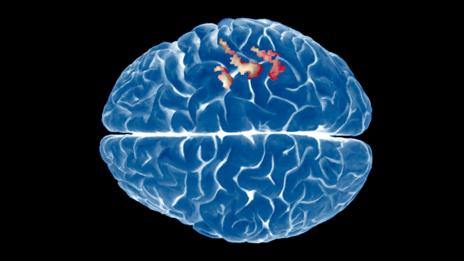
It has long been thought that the chemicals our bodies create largely regulate the way we feel, but Anderson thinks it could also be down to the wiring within our brains. His experiments on mice and flies that switch on and off light-sensitive neurons have shown that the neurons that control aggressive behaviour are the same or similar to the neurons that control sexual behaviour. It offers the intriguing notion that the neurons that control sex and violence are intimately linked or overlapping in the brain.

It’s these and other insights in the field that are beginning to uncover how emotions are encoded in the brain. The hope is that these intriguing findings will also provide a better understanding of how an emotion can go wrong in psychiatric disorders like depression, and how we can go about treating it.

  • Additional footage: Shutterstock.
  • If you would like to comment on this video, or anything else you have seen on Future, head over to our Facebook or Google+ page, or message us on Twitter.

Thursday, July 24, 2014

How the Brain Learns While You Sleep

From BBC Future, this is a cool and in-depth examination of what the research shows on how the brain consolidates learning in sleep (and in dreams, but that another study).

Below this long article is a related piece from BBC News.

Can you learn in your sleep?

David Robson | BBC
22 July 2014


(Getty Images)

Sleep learning used to be a pipe dream. Now neuroscientists say they have found ways to enhance your memory with your eyes closed, says David Robson.

Just before you climb under your duvet, you carefully prepare your room. You sprinkle a few drops of incense on your pillow, put on some headphones, and place a strange-looking band over your scalp. Then you go to sleep. The ritual takes just a few minutes, but you hope this could accelerate your learning of a diverse range of skills: whether you are trying to master the piano, tennis or fluent French. You won’t recall a single aspect of the night’s “training” – but that doesn’t matter: your performance the next morning should be better, all the same.

The idea of learning as you sleep was once thought very unlikely, but there are several ways – both low- and hi-tech – to try to help you acquire new skills as you doze. While there is no method that will allow you to acquire a skill completely from scratch while you are unconscious, that doesn’t mean that you still can’t use sleep to boost your memory. During the night, our brain busily processes and consolidates our recollections from the day before, and there could be ways to enhance that process.

Given that we spend a third of our lives in the land of nod, it is little wonder that sleep learning has long captured the imagination of artists and writers. In most incarnations, it involved the unconscious mind absorbing new information from a recording playing in the background. In Aldous Huxley’s Brave New World, for instance, a Polish boy learns English after having slept through a radio lecture by George Bernard Shaw; the authoritarian government soon uses the same technique to brainwash its subjects. More recently, in The Simpsons, Homer buys a tape to subliminally reduce his appetite as he sleeps, only to find that it is instead changing his vocabulary. When his wife, Marge, asks if his diet is working, the normally inarticulate Homer replies: “Lamentably, no. My gastronomic rapacity knows no satiety”.

Bad science

In reality, this particular kind of sleep learning is almost certainly impossible. Although some early studies suggested that subjects could pick up some facts as they slept, the researchers couldn’t be sure that they hadn’t just awoken to listen to the recording. To test those suspicions, Charles Simon and William Emmons attached electrodes on the scalps of their subjects, allowing them to be sure that they only played the tapes once the subjects were dozing. As they had suspected, the subjects learnt nothing once they had dropped off. The results were published in the 1950s, but entrepreneurs over the years have still tried to cash-in on the attraction of effortless learning with various products – even though their methods had no scientific basis.


Monitoring brain activity of sleeping people suggests they can't learn new skills while unconscious (SPL)

Despite being blind and deaf to new information, however, the sleeping brain is far from idle: it mulls over the day’s experiences, sending memories from the hippocampus – where memories are first thought to form – to regions across the cortex, where they are held in long-term storage. “It helps stabilise the memories and integrate them into a network of long-term memory,” says Susanne Diekelmann at the University of Tubingen in Germany. Sleep also helps us to generalise what we’ve learnt, giving us the flexibility to apply the skills to new situations. So although you can’t soak up new material, you might instead be able to cement the facts or skills learned throughout the day.

Smell enhancer

So far, at least four methods have shown promise. The simplest strategy harks back to the research of a 19th Century French nobleman named the Marquis d’Hervey de Saint-Denys. As he explored ways to direct his dreams, the Marquis found that he could bring back certain memories with the relevant smells, tastes or sounds. In one experiment, he painted a scantily clad woman while chewing an orris root; when his servant then placed the root in his mouth as he slept, the tart flavour brought back visions of the same beautiful lady in the foyer of a theatre. She was wearing “a costume that would have hardly been acceptable to the theatre committee”, he wrote with delight in his book, Dreams and How to Guide Them. Another time, he asked the conductor of an orchestra to play certain waltzes whenever he danced with two particularly attractive women. He then rigged up a clock to a music box, so that it played the same tunes during the night, which apparently brought their handsome figures to his sleeping mind.

The Marquis simply wanted to seed his slumbers with pleasant (and sometimes lustful) experiences, but it now looks like the same approach can also trigger the sleeping brain to replay the learning of skills or facts, reinforcing the memory in the process.


(Thinkstock)

Diekelmann, for instance, asked her volunteers to play a variation of the game Concentration, in which they had to learn a specific pattern of objects in a grid before going to sleep in her lab. Some of the subjects were exposed to a subtle, artificial, odour as they played, and Diekelmann then wafted the same scent into their noses as they slept. Brain scans showed that these subjects had greater communication between the hippocampus and several cortical areas, compared to those without the cue – just the kind of activity that should lead to enhanced memory consolidation. Sure enough, those subjects remembered about 84% of the object locations when they awoke, while a control group remembered just 61%.

It’s not just sweet smells that could boost learning; as the Marquis found with his night-time waltzes, sounds might also be able to trigger recall, provided they do not wake you up in the process. In one study, volunteers found it easier to master a musical game (a little like Guitar Hero) if they heard soft strains of the melody as they slept. Bjorn Rasch at the University of Zurich, Switzerland, meanwhile, found that the same setup helped Swiss German speakers learning Dutch vocabulary, allowing them to remember about 10% more.

Tech upgrade

In the near future, technology may offer further ways of upgrading the brain’s sleep cycles. Memory consolidation is thought to occur during specific, slow, oscillations of electrical activity, so the idea here is to subtly encourage those brain waves without waking the subject. Jan Born, at the University of Tubingen, has been at the forefront of these experiments. In 2004, he found that he could help amplify those signals using transcranial direct current stimulation (tDCS), which passes a small electric current across the skull, successfully improving his subjects’ performance on a verbal memory test.

More recently, he has turned to an even less-invasive form of stimulation, which uses a skullcap of electrodes to measure neural activity, while headphones deliver sounds that are in sync with the brain waves. Born compares the auditory stimulation to the tiny push that you might give a child on a swing, so that it gently enhances neural activity that is already present in the brain. “You deepen the slow wave sleep and make it more intense,” says Born. “It’s a more natural way of getting the system into a rhythm,” he says.


(Thinkstock)

If the idea of going to sleep with a cumbersome headset doesn’t appeal, Miriam Reiner at the Technion Institute of Technology in Haifa, Israel may have a more attractive solution. She hopes to use a form of neurofeedback, which allows subjects to control their neural activity while awake. In her setup, an electrode attached to the subject’s head feeds into a simple computer game, in which the subject is advised to drive a car with the power of their thoughts.

When the electrode records the right frequency of brainwaves, normally associated with memory consolidation during sleep, they accelerate; when they don’t, it slows down. It typically takes just a few minutes for the subjects to start revving up the right brainwaves – and the change in mind set is palpable, says Reiner. “I feel kind of relaxed – like when you’re in a garden or walking along beach. It’s just like being in a serene beautiful place.” The idea is to kick-start memory consolidation straight after learning, which then gives the sleeping brain a head-start as it sets about reorganising the day’s events. “You create a seed that then grows during the night,” says Reiner.

Play a tune

To test the impact on learning, her subjects first learned a complex sequence of finger movements – a little like learning to play a tune on the piano – before taking 30 minutes of neurofeedback. The benefits were immediate – straight after the training they were about 10% better than the controls, suggesting the computer game really had begun to stabilise their memories as if they were actually asleep. Importantly, the improvements continued to grow as they were tested throughout the following week, supporting her theory that neurofeedback could help memories to blossom as you sleep.

Needless to say, we will need to see bigger trials with many more subjects before these techniques should be recommended for everyday use. Since the experiments have so far used somewhat artificial tests of learning and memory, it would also be useful to see how they fare on more useful tasks; Reiner is beginning to take a few steps in this direction by testing whether her neurofeedback can help students learn the guitar. Diekelmann also thinks that we need to confirm that these memory hacks don’t have unexpected consequences. “If you enhance one set of memories, maybe you’d impair another set,” she says.


Sounds and melodies can consolidate memory (Thinkstock)

And we shouldn’t shy away from the problems highlighted by fiction like Brave New World and The Simpsons, she says. Although she doesn’t think that these methods could be used for brainwashing people against their will, she thinks we still need to question whether it would be right to start manipulating their children’s memories, for instance, in these ways. “Sleep is a vulnerable state.” But she’s keen to stress that these potential issues shouldn’t deter interest in sleep learning. “It’s very worthwhile. We just need to use it as responsibly as possible.”

Easy tricks

Once those questions have been addressed, there shouldn’t be too many practical hurdles for people who wish to use the techniques for themselves, says Diekelmann. Many of her students and colleagues have already found that sensory cues during sleep can help them swat-up for exams. “It’s very easy to apply,” she says. And you can now buy EEG kits that work with your smartphone, potentially opening the door for games that help you boost memory consolidation. Even the hardware for certain forms of tDCS became commercially available last year, which could lead to kits designed to improve sleep learning.

Further evidence will be needed to show that the commercial kits can provide the benefits seen in the laboratory experiments, but Born is optimistic. “I think it’s just a matter of time before it is used as a cognitive enhancer,” he says.

At the very least, the research could change the way we view this often under-appreciated part of our lives. Sleep tends to be considered an unnecessary down-time that we try to conquer with coffee or Red Bull; we are all driven by the need to squeeze the day for every last drop of productivity. But we may take more time to catch 40 winks if we know that the most profitable part of the day really could involve doing nothing at all.

~ If you would like to comment on this, or anything else you have seen on Future, head over to our Facebook or Google+ page, or message us on Twitter.
* * * *

Sleep's memory role discovered


Brain in a head
The mechanism by which a good night's sleep improves learning and memory has been discovered by scientists.

The team in China and the US used advanced microscopy to witness new connections between brain cells - synapses - forming during sleep.

Their study, published in the journal Science, showed even intense training could not make up for lost sleep.

Experts said it was an elegant and significant study, which uncovered the mechanisms of memory.

It is well known that sleep plays an important role in memory and learning. But what actually happens inside the brain has been a source of considerable debate.

Researchers at New York University School of Medicine and Peking University Shenzhen Graduate School trained mice in a new skill - walking on top of a rotating rod.

They then looked inside the living brain with a microscope to see what happened when the animals were either sleeping or sleep deprived.

Their study showed that sleeping mice formed significantly more new connections between neurons - they were learning more.

 
A connection between two brain cells

And by disrupting specific phases of sleep, the research group showed deep or slow-wave sleep was necessary for memory formation.

During this stage, the brain was "replaying" the activity from earlier in the day.

Prof Wen-Biao Gan, from New York University, told the BBC: "Finding out sleep promotes new connections between neurons is new, nobody knew this before.

"We thought sleep helped, but it could have been other causes, and we show it really helps to make connections and that in sleep the brain is not quiet, it is replaying what happened during the day and it seems quite important for making the connections."


Analysis


This is just the latest piece of science to highlight the importance of sleep.

A new reason for sleep was discovered last year when experiments showed the brain used sleep to wash away waste toxins built up during a hard day's thinking.

However, there are concerns that people are not getting enough sleep.

As part of the BBC's Day of the Body Clock, Prof Russell Foster argued that society had become "supremely arrogant" in ignoring the importance of sleep, leading to "serious health problems".

These include:
  • cancer
  • heart disease
  • type-2 diabetes
  • infections
  • obesity
The reward for more sleep, Prof Foster argues, is we would all be "better human beings."

Further tests showed how significant sleep was.

Mice doing up to an hour's training followed by sleep were compared with mice training intensively for three hours but then sleep deprived.

The difference was still stark, with the sleepers performing better and the brain forming more new connections.

Prof Gan added: "One of the implications is for kids studying, if you want to remember something for long periods you need these connections.

"So it is probably better to study and have good sleep rather than keep studying."

Commenting on the findings, Dr Raphaelle Winsky-Sommerer, from the University of Surrey, told the BBC: "This is very impressive, carefully crafted and using a combination of exquisite techniques to identify the underlying mechanisms of memory.

"They provide the cellular mechanism of how sleep contributes to dealing with experiences during the day.

"Basically it tells you sleep promotes new synaptic connections, so preserve your sleep."

Friday, July 18, 2014

Neuroscience: "I Can Read Your Mind" (BBC Future)

From the BBC Future blog, this is an interesting article on new efforts in neuroscience to read minds (sort of), or least to identify images received through sensory channels as well as those experienced in dreams. All of this part of the European Human Brain Project.

This article looks at a little bit of the research currently being conducted and how it fits into bigger projects.

Neuroscience: ‘I can read your mind’

Rose Eveleth | 18 July 2014


(Getty Images)

What are you looking at? Scientist Jack Gallant can find out by decoding your thoughts, as Rose Eveleth discovers.

After leaders of the billion-euro Human Brain Project hit back at critics, six top neuroscientists have expressed "dismay" at their public response

Jack Gallant can read your mind. Or at least, he can figure out what you’re seeing if you’re in his machine watching a movie he’s playing for you.

Gallant, a researcher at the University of California, Berkeley, has a brain decoding machine – a device that uses brain scanning to peer into people’s minds and reconstruct what they’re seeing. If mind-reading technology like this becomes more common, should we be concerned? Ask Gallant this question, and he gives a rather unexpected answer.

In Gallant’s experiment, people were shown movies while the team measured their brain patterns. An algorithm then used those signals to reconstruct a fuzzy, composite image, drawing on a massive database of YouTube videos. In other words, they took brain activity and turned it into pictures, revealing what a person was seeing.
For Gallant and his lab, this was just another demonstration of their technology. While his device has made plenty of headlines, he never actually set out to build a brain decoder. “It was one of the coolest things we ever did,” he says, “but it’s not science.” Gallant’s research focuses on figuring out how the visual system works, creating models of how the brain processes visual information. The brain reader was a side project, a coincidental offshoot of his actual scientific research. “It just so happens that if you build a really good model of the brain, then that turns out to be the best possible decoder.”

Science or not, the machine strokes the dystopian futurists among people who fear that the government could one day tap into our innermost thoughts. This might seem like a silly fear, but Gallant says it’s not. “I actually agree that you should be afraid,” he says, “but you don’t have to be afraid for another 50 years.” It will take that long to solve two of the big challenges in brain-reading technology: the portability, and the strength of the signal.


Decoding brain signals from scans can reveal what somebody is looking at (SPL)
Right now, in order for Gallant to read your thoughts, you have to slide into a functional magnetic resonance imaging (MRI) machine – a huge, expensive device that measures where the blood is flowing in the brain. While MRI is one of the best ways to measure the activity of the brain, it’s not perfect, nor is it portable. Subjects in an MRI machine can’t move, and the devices are expensive and huge. 
And while comparing the brain image and the movie image side by side makes their connection apparent, the image that Gallant’s algorithm can build from brain signals isn’t quite like peering into a window. The resolution on MRI scans simply isn’t high enough to create something that generates a clear picture. “Until somebody comes up with a method for measuring brain activity better than we can today there won’t be many portable brain-decoding devices that will be built for a general use,” he says.

Dream reader

While Gallant isn’t working on trying to build any more decoding machines, others are. One team in Japan is currently trying to make a dream reader, using the same fMRI technique. But unlike in the movie experiment, where researchers know what the person is seeing and can confirm that image in the brain readouts, dreams are far trickier.

To try and train the system, researchers put subjects in an MRI machine and let them slip into that weird state between wakefulness and dreaming. They then woke up the subject and ask what they had seen. Using that information, they could correlate the reported dream images—everything from ice picks to keys to statues – to train the algorithm.


Researchers are trying to decode dreams by studying brain activity (Thinkstock)
Using this database, the Japanese team was able to identify around 60% of the types of images dreamers saw. But there’s a key hurdle between these experiments and a universal dream decoder: each dreamer’s signals are different. Right now, the decoder has to be trained to each individual. So even if you were willing to sleep in an MRI machine, there’s no universal decoder that can reveal your nightly adventures.

Even though he’s not working on one, Gallant knows what kind of brain decoder he might build, should he chose to. “My personal opinion is that if you wanted to build the best one, you would decode covert internal speech. If you could build something that takes internal speech and translates into external speech,” he says, “then you could use it to control a car. It could be a universal translator.”

Inner speech

Some groups are edging closer to this goal; a team in the Netherlands, for instance, scanned the brains of bilingual speakers to detect the concepts each participant were forming – such as the idea of a horse or cow, correctly identifying the meaning whether the subjects were thinking in English or Dutch. Like the dream decoder, however, the system needed to be trained on each individual, so it is a far cry from a universal translator.

If nothing else, the brain reader has sparked more widespread interest in Gallant’s work. “If I go up to someone on the street and tell them how their brains work their eyes glaze over,” he says. When he shows them a video of their brains actually at work, they start to pay attention.

If you would like to comment on this, or anything else you have seen on Future, head over to our Facebook or Google+ page, or message us on Twitter.

Sunday, July 06, 2014

David Robson - Hypnosis: The Day My Mind Was 'Possessed'

Would you volunteer to be hypnotized and have the belief implanted that you are possessed by an alien being? David Robson did, and this article tells about his experience.

From the BBC Future site.

Hypnosis: The day my mind was 'possessed'

In Depth | 3 July 2014
David Robson

(Thinkstock)
 
Scientists are using hypnosis to understand why some people believe they’re inhabited by paranormal beings. To find out more, David Robson discovered what it’s like to lose his mind.

I am lying on my back and trapped in a gleaming white tunnel, the surface barely six inches from my nose. There is a strange mechanical rumbling in the background, and I hear footsteps padding around the room beyond. In my mounting claustrophobia, I ask myself why I am here – but there is no way out now. A few moments later, the light dims, and as the man speaks, my thoughts begin to fade.

“The engineer has developed a way of taking control of your thoughts from the inside. He does this because he is fascinated by mind control, and wants to apply the most direct method of controlling your thoughts. He is doing this to advance his research into mind control. You will soon be aware of the engineer inserting his thoughts.”

A strange serenity descends as I realise that soon, my will won’t be my own. Then the experiment begins. I am about to be possessed.

The man who will soon take control of my thoughts is Eamonn Walsh, a psychologist who uses hypnosis to investigate psychoses at the Institute of Psychiatry in London. The idea is to turn healthy subjects into ‘virtual patients’ suffering full-on delusions, such as being possessed by a paranormal entity, allowing the scientists to understand the underlying illness in a new way, and potentially find treatments

The scientists are understandably keen to distance themselves from stage hypnotists. “It’s not flaky, it’s not for entertainment – we’ve got carefully specific research goals,” says Mitul Mehta, who collaborates with Walsh on these studies. It’s a bold idea, but can it possibly work? And what does it feel like to lose total control of your mind?


I confess that I was a little nervous when I entered the lab earlier that day. Hypnosis research has a somewhat murky history; one early experiment very nearly ended in murder. The researchers in question were two of the most prominent doctors in France at the beginning of the 20th Century: Jean-Martin Charcot, now considered the “founder of modern neurology”, and Georges Gilles de la Tourette, who is most famous for the disease that bears his name. They studied cases of “hysteria” – in which patients were suddenly unable to feel or move their limbs, for instance, despite no observable injury. Both doctors believed that the disorders might share certain characteristics with hypnosis – a hypothesis they tested by showing that people with hysteria are more susceptible to suggestion than healthy subjects.

They soon veered into less reputable territory, however. At the time, newspapers reported tales of criminals “mesmerising” innocent people to carry out nefarious deeds. Despite his scepticism about the reports, Gilles de la Tourette decided to hypnotise a hysterical patient, Blanche, to see if it might be possible. Placing her in a trance, he showed Blanche a ‘poisoned’ glass of beer and asked to feed the poison to another man, known as Mr G. Blanche happily complied, kissing Mr G as she did so, before he feigned death. She later denied all knowledge of the apparent murder. 
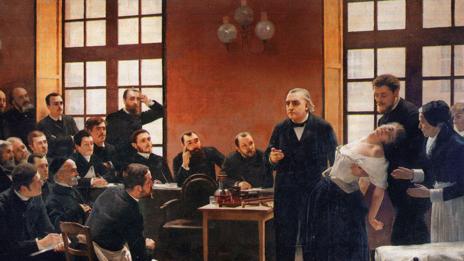
Neurologist Jean-Martin Charcot is depicted demonstrating hysteria in a woman called Blanche Wittman (Wikipedia/CC-PD-Mark)

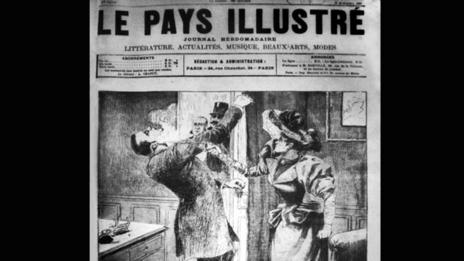
Perhaps it was this cavalier attitude that nearly cost Gilles de la Tourette his life. One day in December 1893, he was confronted at home by another one of his hospital’s patients, a 29-year-old woman named Rose Kamper-Lecoq. Claiming that her hypnosis sessions had irretrievably altered her will, she whipped out a pistol and shot at him three times. Only one of the bullets penetrated his skull, but he was well enough to write to a friend the same evening, concluding in a wonderfully blasé fashion: “quelle drôle d’histoire” – “what a funny story”.

Kamper-Lecoq’s story is all the more striking in light of today’s research. Although her violence almost certainly wasn’t caused by hypnosis, it seems to have stemmed from many of the delusions that psychologists like Walsh are now unpicking with their virtual patients. She was said to be sure that Gilles de la Tourette was in love with her – a disorder known as “erotomania” – and she also (falsely) believed that someone was controlling her mind remotely: exactly the kind of mind possession I signed up for. I just hope it doesn’t end with me putting a bullet in somebody’s skull. 
Georges Gilles de La Tourette was shot by a disgruntled woman he'd hypnotised, as this French newspaper depicted (Wikipedia/CC-PD-Mark)

Before I was possessed, I first was tested for my “hypnotisability”. The procedure usually involves some kind of guided relaxation, followed by a series of suggestions that are meant to warp your perceptions and behaviours. I was told that I could hear a fly buzzing around my head, for example; later, the researcher said that a balloon would slowly lift my arm into the air. From what I can remember, my arm felt light, as if it were filled with helium, and before I had realised it, it was already floating upwards. The buzzing of the “fly”, meanwhile, felt like the flashes of images and voices you might begin to hear if you are very tired and about to drop off to sleep – you realise they aren’t real, yet they are perceptible all the same. Based on my responses, I scored 10 out of 12 – a degree of suggestibility that puts me in the top 10% of the population.

Given the reliance on subjective reports, the authenticity of hypnotic behaviour has been a matter of debate. “Some believe that hypnosis is pure fakery, whereas others believe it is a genuinely altered state of consciousness that can produce profound changes in perception, thought, and memory,” says Rochelle Cox, a cognitive scientist at Macquarie University in Australia.
 
Some people are easier to hypnotise than others (Thinkstock)

Although I didn’t feel like I was faking it, I ask Walsh whether he is ever concerned his subjects are pretending. He agrees the possibility casts an ever-present shadow over the research. “Anytime you submit a study to a journal, it’s one of the reviewers’ favourite questions,” he says. But advances in brain scanning have begun to lay those concerns to rest. While in the brain scanner, the hypnotiser might tell the subject to see a black and white photograph in colour, for instance – and you would see the areas for colour processing bursting into action as if they were actually looking at a real-life scene. Importantly, when the same subjects are simply asked to ‘pretend’ to experience, or imagine, those feelings, you don’t see the same activity. Such results have converted many sceptics.

Along the way, the researchers have edged closer to understanding what causes the hypnotic state in the first place. It seems that hypnotic induction turns something like a dimmer switch in the brain’s frontal lobes. These regions are thought to generate “higher-order thoughts” – reflective awareness of your own wants and needs and motives. Take that away, it seems, and you begin to do and feel things without realising why. That might explain why students tanked up on alcoholic drinks – the equivalent to two pints of beer – score much higher on the standard hypnotisability tests; alcohol is known to dampen frontal lobe activity, says Zoltan Dienes at the University of Sussex in Brighton, UK.

Why some people naturally drop into that state, while others find it harder, is an open question, however. Twin studies suggest it can be passed through the generations, and there’s some evidence it can be inherited. Importantly, people tend to retain the same score throughout their life, so it could just be another fundamental feature of our minds like IQ. 
Hypnotism can be used as a treatment for all sorts of medical conditions (SPL)

Along these lines, much of the work so far has been devoted to studying whether hypnotic suggestion could be used in place of painkillers. Randomised controlled trials have also investigated whether hypnosis could reduce stress, help cancer patients with their fatigue during chemotherapy, treat irritable bowel syndrome, and even boost students’ learning of new skills.

Around the year 2000, however, the research began to take a more macabre turn: rather than taking the ill and making them better, psychologists used it to plant delusions in the minds of the healthy. Like Gilles de la Tourette’s studies a hundred years before, one of the first investigations was inspired by a patient suffering from ‘hysterical paralysis’ – the sensation that she could not move her left leg, even though there was no physical disability. To see if they could recreate the disorder, researchers hypnotised a subject to feel the same sensations, and placed him in a brain scanner. The results – published in the medical journal The Lancet – revealed exactly the same pattern of activity in his brain as the hysterical patient, strongly supporting the possibility that hypnosis could be used to test hypotheses about real mental conditions.

Since then, psychologists have used it to conjure many other types of delusion, including erotomania, Capgras syndrome – the sensation that your loved ones have been replaced by a doppelganger – and mirror misidentification, in which people fail to recognise their own reflections. “Patients may cover up all the mirrors in their house because they think the stranger is following them around,” explains Cox, who carried out many of the studies. Hypnosis, she says, can produce almost identical symptoms. “Both are compellingly real, believed with conviction, and resistant to rational counterargument.” It is completely reversible, the researchers reassure me – all subjects leave the labs free of delusion. 
Some people see a stranger in a mirror instead of their own face (Thinkstock)

Hypnosis lets the scientist create the symptoms at will, while also manipulating the conditions to try to see what underlying cognitive processes might be misfiring in order to conjure the delusions. Eventually, you might even be able to use the hypnotised subjects to test certain kinds of therapies – before you risk them on mentally ill patients.

Needless to say, some of the researchers are sceptical of the benefits of this approach. Dienes, for instance, agrees that these virtual patients may be useful for the ‘hysteria’ disorders – like the limb paralysis. But he is sceptical that you can hypnotise somebody to experience the highly complex and terrifying psychosis of a disease like schizophrenia.

Walsh readily acknowledges that it can’t recreate every aspect of an illness, but sees hypnosis as a complementary technique that adds to the understanding gleaned from direct observations of real patients. “It’s is just another way of looking at things – you’re shining a light on the darkness from a different angle,” he says.

Before I allowed myself to be possessed, Walsh showed me two prints by the late 16th Century painter, Caravaggio, to make a point about the patients who believe they are controlled for real. One shows Saint Matthew as an “illiterate oaf”, his feet still dirty from his work in the fields. An angel is guiding his hand as he writes the gospel. In the second, “he’s been promoted” – Saint Matthew is clean and has a halo. The angel is now depicted above his head, whispering God’s words into his mind. 
Two Caravaggio paintings that capture the delusion of mind-control: a guided hand (left) and whispered commands (right) (Wikipedia/Paul Hermans/CC-PD-Mark)

The two paintings, he says, perfectly depict the two different ways in which patients experience possession: either they feel that another being is controlling their movements, or that another person is directly planting thoughts into their head. Such feelings may be due to mental illnesses like schizophrenia or psychotic depression, or the result of cultural practices such as shamanism that might lead people to feel like they are channelling another spirit, which may also be triggered by a ‘dissociative’ state similar to hypnosis. I will experience both, he says.

One of the team’s biggest challenges was to create suitable hypnotic suggestions that could feasibly manifest in a delusion, without being too scary. Possession stories often reflect contemporary culture of the day – in the Industrial Revolution, people believed the factory looms were directing their behaviour; Kamper-Lecoq’s delusions were influenced by her brushes with ‘mesmerism’; and in the early 20th Century, it was thought to be radio antennae planting ideas into people’s head. So rather than creating a spiritual demon, the team told a story of an ‘engineer’ doing research into mind control – a tale that isn’t too menacing, but which neatly draws on today’s fears about privacy and individual liberty. 
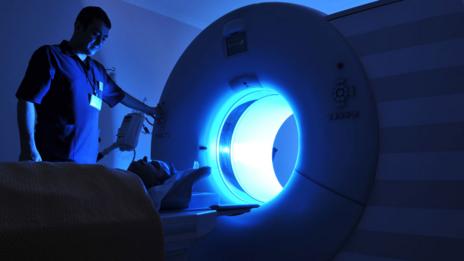
I was hypnotised inside a claustrophobic fake scanner similar to this one (Thinkstock)

Walsh puts me in the shell of an old brain scanner, which is often used to test procedures before hiring the real thing. At first I feel crushingly claustrophobic, but I soon forget those feelings as he counts down from 20, leading me gently into the hypnotic state. With a pen in my hand and a sheet of paper on my lap, my task will be to hear a word and finish the sentence under three different scenarios; first Walsh tells me that the engineer is whispering the words to write directly into my brain; then that he is able to direct the movements of my hand; and finally that the engineer is in complete control of both my thoughts and movements.

The first scenario had only a minimal effect: I seem to have to wait a little before the words come suddenly, as if from nowhere, but it doesn’t feel so different to my normally sporadic mind. But when Walsh instead tells me that the engineer has now taken over my movements, it is much more noticeable: my hand seems to move in a jerky, mechanical fashion, and it feels like my fingers are dancing to their own tune. It is then that I also begin to get flashes of the engineer himself – who I picture to be a hunched man with a wide grin and a long, grey pony-tail. By the time we reach the third set of suggestions – where Walsh tells me that the engineer will now control my hand movements, and my thoughts – the engineer’s power over me becomes much more vivid. My writing becomes faster, and more intense, and I get the distinct feeling that I am watching myself, from the outside. At points it feels like I can almost hear the engineer directing his thought-control machine. It is only when Walsh ends the session, and counts back up to 20, that I fully realise how strange the sensation was: a little like the moment of lucidity once you awake from a fevered dream. 
The strange stream of writing I produced during my possession (Stephen Dowling)

When I tell Walsh about my impressions, he says they are pretty much in-line with his other subjects. As one person put it: “I felt as if my hand had been made of metal.” While many, like me, pictured the engineer visually, others felt he was more amorphous: “Like a presence, as opposed to something that one can see”.

So far, these investigations have suggested a few networks of brain regions that might lie behind these delusions. When a person believes that their hand is being controlled by another being, you find an abnormally high connectivity between the motor areas that control movement, and regions that help us understand another’s motives and actions. Conversely, when the subjects were told that the engineer was inserting the thoughts into their mind during the writing task, they had much lower activity in the language areas of the brain – perhaps because they were less conscious of the generation of the words.

In some scenarios, they found increased activity in the areas involved in ‘error detection’. In normal everyday life, these regions normally keep track of our movements and the way they are executed, and then fire if things don’t go according to plan – like when you trip up. So it’s possible that the heightened activity reflects the subjects’ feelings that their movements were becoming more unpredictable, as if they were no longer under their own control. 


If the same regions of activity continue to emerge in further studies of hypnotic subjects and real patients, it might suggest new treatments. For instance, it might be possible to find drugs that specifically alter activity in the regions in question; alternatively, non-invasive brain stimulation could help correct any abnormal circuits – preventing the ‘error network’ from going into overdrive. The team are also interested in using neurofeedback – technologies that allow patients to view their neural activity on a screen, and correct it appropriately. “We are a few steps away from doing this,” says Quinton Deeley, who has run many of the experiments. “But we are at the threshold of doing it for anxiety and attention deficit disorder, and I don’t see why they couldn’t be applied to things like delusions”.

Away from mental health, it’s possible the work might shed light on more general phenomena. It’s possible that it could relate to religious phenomena – like the feeling of ‘talking in tongues’ or the kind of mass hysteria seen in the Salem Witch Trials. And possibly even what is going on the brain when we first conceive of an idea, and how it takes hold and guides our behaviour.

My brief period of possession has certainly made me more conscious of my own thoughts, and the strange ways they can seem to pop into your head. At least, I’m pretty certain that belief is my own… or is that just the engineer, guiding my hand as I type?

If you would like to comment on this, or anything else you have seen on Future, head over to our Facebook or Google+ page, or message us on Twitter.

Tuesday, May 20, 2014

Mental: A History of the Madhouse (BBC Documentary)


Most people have heard the word bedlam, and know that it refers to a chaotic, noisy, and disorganized state of being. The origin of the word is the Bethlem Royal Hospital in London, originally founded in 1247, making it likely the oldest psychiatric hospital in Western Civilization. The city of London took over the asylum in 1546-47.

Conditions in Bethlem were often horrid at best, thus the term bedlam - from the fourteenth century, Bethlem had been referred to colloquially as "Bedleheem", "Bedleem" or "Bedlam."
Typically, the hospital appears to have been a receptacle for the very disturbed and troublesome and this fact lends some credence to accounts such as that provided by Donald Lupton in the 1630s who described the "cryings, screechings, roarings, brawlings, shaking of chaines, swearings, frettings, chaffings" that he observed therein.
At various times in its early existence, the doors were opened to citizens of the city to come and observe the people kept there (likely beginning in 1598 as a way to create income) - its proximity to two playhouses made it part of a night out for some people.

The hospital was rebuilt in a new location in 1675 and 1676, but it was shoddy work and within 200 years it would need to be rebuilt again.

Anyway, there is a lot to know about Bethlem, but it is only one of the many "madhouses" discussed in this fascinating documentary from the BBC.

Mental: A History of the Madhouse

Published on Feb 10, 2014


Documentary which tells the fascinating and poignant story of the closure of Britain's mental asylums. In the post-war period, 150,000 people were hidden away in 120 of these vast Victorian institutions all across the country. Today, most mental patients, or service users as they are now called, live out in the community and the asylums have all but disappeared. Through powerful testimonies from patients, nurses and doctors, the film explores this seismic revolution and what it tells us about society's changing attitudes to mental illness over the last sixty years.
Here is some more from the Wellcome Trust Library site - which is where the image at the top was also found.
Among the interviewees were patients, members of medical and nursing staffs, the historian Dr Peter Barham, and Dr Henry Rollin FRCP FRCPsych, emeritus consultant psychiatrist at Horton Hospital, Epsom, and former Librarian of the Royal College of Psychiatrists. Dr Rollin described the grimly low levels of medical care in many of those asylums, and of care in general. Historic film footage of crude brain surgery was shown. Of prefrontal leucotomy Dr Rollin confessed "I had the misfortune to recommend sixteen patients [for the operation] ... it was of no benefit whatsoever, and some of them had the tragedy of personality change." It seemed at times that the only escape from the tyranny of routine lay in the menace of maltreatment. A former psychiatric nurse in Newcastle told of a difficult patient being dragged away and having a bucket of cold water being poured over him by a staff member who then jammed the bucket on the patient's head. A young woman who suffered panic attacks went to one asylum and ended up staying inside for thirty-three years.

As an illustration of a classic old-style asylum, the programme focused on High Royds near Leeds (illustration top), which had all the right qualifications: a Psycho-type silhouette at twilight, miles of corridors, once fine but now decayed Victorian decoration, the indispensable looming water-tower, and of course a proposal to turn it into luxury residences when it closed in 2003.


High Royds. Drawing by Paul Digby, 2003-4. Wellcome Library no. 643245i

The Wellcome Library has a large drawing made by an artist in High Royds in 2003-2004 as part of the ritual commemorations that were felt to be required at the time of its decommissioning. It looks like drawings done by patients to describe their gloomy life in the asylum. In fact, as film of the High Royds corridors showed, the drawing is merely an atmospheric representation of the actual interior in which patients spent their "empty and repetitive asylum life". There was a "quasi-prison atmosphere" (Dr Rollin again). The film-makers found articulate people who were able and willing to describe their experiences at High Royds and other asylums, whether as patients or as staff. These interviews are priceless.

The film-makers were careful not to make High Royds seem like a scapegoat: after describing episodes of brutality towards patients, the commentary stated that there was "no evidence of this kind of treatment at High Royds" which on the contrary was "in the forefront of the drugs revolution" in therapy. Some of the reminiscences on the High Royds website are quite complimentary, though others, it must be said, recall much unpleasantness. Other asylums in Newcastle, Sussex and Buckinghamshire also featured in the narrative, often with superb historic film footage.

The film showed the long process leading to the closure of the asylums. The first real "breaking point with the Victorian period" (Barham) was the 1959 Mental Health Act. Dame Pat Hornsby Smith MP called for "sympathy and understanding" to be the principles underlying treatment of the mentally ill. In 1961 Enoch Powell as Minister of Health 1960-1963 started a war on the asylums with a remarkable speech seizing on the image of the "looming water-tower and chimney combined" as the emblem of the asylum. Powell urged "the elimination of by far the greater part of this country's mental hospitals as they are today". He lost battles but won the war when Care in the Community was introduced. But Dr Rollin was no happier about the new arrangements than about the bad old days of the asylum. "The whole concept of Community Care is a disaster: I don't think the community cares" (NIMBYism was one of the problems he had in mind).

Tuesday, March 04, 2014

Exchanges: Ideas and Argument - BBC - 6 Episodes

A.C. Grayling is the author of about 30 books on philosophy, including  The Meaning of Things (2001), Against All Gods: Six Polemics on Religion and an Essay on Kindness (2007), The Good Book: A Humanist Bible (2011), Ideas That Matter: The Concepts That Shape the 21st Century (2012), and The God Argument (2013).

He is a director and contributor at Prospect Magazine. His main academic interests lie in epistemology, metaphysics and philosophical logic. He has described himself as "a man of the left" and is associated in Britain with the new atheism movement, and is sometimes described as the 'Fifth Horseman of New Atheism'. He frequently appears in the British media discussing philosophy, as in this series from BBC World Service.

In these six episodes, Grayling speaks with Kay Redfield Jamison, Iain Couzin, Henry Markram, Bonnie Bassler, Daniel Cohen, and Nassim Nicholas Taleb.

Exchanges - Ideas and Argument

Exchanges - Ideas and Argument

The world's leading figures in science, economics, politics and architecture join an audience to discuss their ideas.

Recent episodes

  • Exchanges at the Frontier: 01 Mar 14 - Kay Redfield Jamison

    Sat, 1 Mar 14
    Duration: 50 mins
    The Psychiatrist Kay Redfield Jamison is a world leading specialist in bipolar disorder, and suffers from the condition herself. She shares her unique perspective with A.C.Grayling and an audience at Wellcome Collection, London.
  • Exchanges at the Frontier: 22 Feb 14 - Iain Couzin

    Sat, 22 Feb 14
    Duration: 50 mins
    Why do locusts swarm? How do ants manage their traffic flow so much better than humans? Iain Couzin talks to Matthew Sweet about what we can learn from collective animal behaviour.
  • Exchanges at the Frontier: 15 Feb 14 - Henry Markram

    Sat, 15 Feb 14
    Duration: 50 mins
    Henry Markram has received the biggest personal grant in the history of science. He has a billion euros to build a super computer which will replicate the human brain. He tells A.C.Grayling and an audience at Wellcome Collection how the virtual brain will reveal revolutionise the treatment of mental disorders.
  • Exchanges at the Frontier: 08 Feb 14 - Bonnie Bassler

    Fri, 7 Feb 14
    Duration: 50 mins
    Bonnie Bassler is the world specialist in how bacteria communicate within the human body. She explains to A.C.Grayling and pupils at Haverstock School, that this process holds the key to solving the problem of failing antibiotics.
  • Exchanges: The Global Economy 18 Jan 14: Daniel Cohen

    Sat, 18 Jan 14
    Duration: 50 mins
    Why doesn’t money make us happy? French economist Daniel Cohen explores the paradox of why growing economies do not lead to growing satisfaction with life. He tells Justin Rowlatt, and an audience at Paris Dauphine University that economics focusses us on competition while it’s cooperation and free-giving that makes us happy.
  • Exchanges: The Global Economy 11 Jan 14: Nassim Nicholas Taleb

    Sat, 11 Jan 14
    Duration: 50 mins
    He has been described as a ‘super hero of the mind’ and ‘the hottest thinker in the world; the one-time business trader and full-time philosopher of randomness Nassim Nicholas Taleb joins Justin Rowlatt and an audience at the Grand Amphitheatre of the Sorbonne in Paris for a special event staged in partnership with Paris Dauphine University.

Friday, January 31, 2014

The History and Promise of Complexity Science - BBC4

Complexity at BBC4 In Our Time
Complexity was little understood a generation ago, but research into complex systems now has important applications in many fields, from biology to political science. Several scientists discuss the history and promise of complexity science, noting Santa Fe Institute's contributions to the emerging field.

The MP3 is available for download.

Complexity
Duration: 43 minutes
First broadcast: Thursday 19 December 2013

Melvyn Bragg and his guests discuss complexity and how it can help us understand the world around us. When living beings come together and act in a group, they do so in complicated and unpredictable ways: societies often behave very differently from the individuals within them. Complexity was a phenomenon little understood a generation ago, but research into complex systems now has important applications in many different fields, from biology to political science. Today it is being used to explain how birds flock, to predict traffic flow in cities and to study the spread of diseases.

With:
  • Ian Stewart, Emeritus Professor of Mathematics at the University of Warwick
  • Jeff Johnson, Professor of Complexity Science and Design at the Open University
  • Professor Eve Mitleton-Kelly, Director of the Complexity Research Group at the London School of Economics.
Listen to the program on BBC Radio (43 minutes, December 19, 2014) 

    LINKS AND FURTHER READING

    READING LIST:

    • Albert-Laszlo Barabasi, Linked: The New Science of Networks (Perseus Books, 2003)
    • Mark Buchanan, Nexus: Small Worlds and the Groundbreaking Science of Networks (W. W. Norton & Company, 2003)
    • Mark Earls, Herd: How to Change Mass Behaviour by Harnessing Our True Nature (John Wiley & Sons, 2009)
    • Roger Lewin, Complexity: Life at the Edge of Chaos (University of Chicago Press, 1992)
    • Melanie Mitchell, Complexity: A Guided Tour (Oxford University Press, 2011)
    • Herbert Simon, The Sciences of the Artificial (MIT Press, 1996)
    • Steven Strogatz, Sync: The Emerging Science of Spontaneous Order (Hyperion, 2003)
    • Duncan Watts, Small Worlds: The Dynamics of Networks between Order and Randomness (Princeton University Press, 2003)

    Credits

    Presenter: Melvyn Bragg
    Interviewed Guests: Ian Stewart, Jeff Johnson, Eve Mitleton-Kelly
    Producer: Thomas Morris

    Monday, December 02, 2013

    The Brain: A Secret History - Mind Control


    I have digging a little into the CIA experiments from the 1950s through the 1970s (Project Bluebird, Project Artichoke, MKULTRA), specifically their work in creating multiple personalities in victims in order to make them into assassins. The reality of these experiments is not in question - they happened and the CIA declassified a lot of the documents (which makes me wonder how bad are the experiments they did not declassify). One of the more compelling books on the subject is Bluebird : Deliberate Creation of Multiple Personality by Psychiatrists (2000) by Colin Ross, M.D.

    This research project was inspired by a first person account of similar experiences - I am a skeptic regarding any wide-ranging government mind control efforts, organized and coordinated satanic cult activity, and the creation of very specific and widely seen "alters" that are programmed for very detailed activities in survivors with dissociative identity disorder (formerly known as multiple personality disorder - MPD).

    That said, I would be not at all surprised if there are groups organized around pedophilia and child prostitution who use some of these techniques to control and instill fear in the children they victimize.

    Moreover, I have little doubt that there are sociopathic gurus, fundamentalist preachers, and other forms of religious or political "leaders" who employ some of these mind control techniques - knowingly or unknowingly - to control their followers and manipulate them into doing what the leader wishes, whether it's financial (Andrew Cohen), sexual (Marc Gafni, Genpo Roshi, and a list of others), or some other objective. 

    Anyway, this is the beginning of several posts on this topic.

    Here is the description from BBC Four for the original broadcast of the video below:
    In a compelling and at times disturbing series, Dr Michael Mosley explores the brutal history of experimental psychology.

    To begin, Michael traces the sinister ways this science has been used to try to control our minds. He finds that the pursuit of mind control has led to some truly horrific experiments and left many casualties in its wake. Extraordinary archive captures what happened - scientists systematically change the behaviour of children; law abiding citizens give fatal electric shocks; a gay man has electrodes implanted in his head in an attempt to turn his sexuality.

    Michael takes a hallucinogenic drug as part of a controlled experiment to try to understand how its mind-bending properties can change the brain. This is a scientific journey which goes to the very heart of what we hold most dear - our free will, and our ability to control our own destiny.
    This is disturbing stuff, but not nearly as much so as the documentary on CIA mind control projects I will post tomorrow.

    The Brain: A Secret History


    In a compelling and at times disturbing series, Dr Michael Mosley explores the brutal history of experimental psychology.

    Mosley embarks on three journeys to understand science's last great frontier - the human mind - as he traces the history of the attempts to understand and manipulate the brain. Experiments on the human mind have led to profound insights into how our brain works - but have also involved great cruelty and posed some terrible ethical dilemmas.

    Mind Control. To begin, Michael traces the sinister ways this science has been used to try to control our minds. He finds that the pursuit of mind control has led to some truly horrific experiments and left many casualties in its wake. Extraordinary archive captures what happened - scientists systematically change the behavior of children; law abiding citizens give fatal electric shocks; a gay man has electrodes implanted in his head in an attempt to turn his sexuality.

    The other two episodes in the series are on emotions and how we learn about healthy brains by studying broken brains.
    Emotions. In this film, Michael investigates how scientists have struggled to understand that most irrational and deeply complex part of our minds - our emotions. Michael meets survivors - both participants and scientists - of some of the key historical experiments. Many of these extraordinary research projects were captured on film - an eight-month-old boy is taught to fear random objects, baby monkeys are given mothers made from wire and cloth, and an adult is deliberately violent before a group of toddlers.

    Broken Brains. Dr Michael Mosley concludes his series exploring the brutal history of experimental psychology by looking at how experiments on abnormal brains have revealed the workings of the normal brain. He meets remarkable individuals like Karen, who suffered from a rare condition - alien hand syndrome - which meant that one of her hands constantly attacked her. And Julia, who seems to have recovered from her stroke - until experiments reveal she is unable to recall the name of any object.

    Friday, August 23, 2013

    Documentary - The Truth About Personality

    Horizon: Michael Mosley put on his thinking cap for The Truth About Personality.

    BBC Two's Horizon produced this episode on the Truth About Personality with Michael Mosley as our anxious and curious host. Here is some of the review of this episode (of what appears to be a rather lame series, this episode withstanding) from The Telegraph UK:
    Mosley’s personal experience forming the narrative thread through the science bits. Mosley said from the get-go that he was pessimistic and anxious. So he went to the University of Essex, where a slimy electronic skull cap showed that his right brain was much more active than his left (very bad, apparently).

    Then, at the Massachusetts Institute of Technology, Mosley put on two bracelets that were straight out of the Seventies’ sci-fi drama Blake’s 7. They measured the activity of his autonomic nervous system, which showed his “arousal level” – that’s just anxiety, by the way, nothing exciting – to be rather high.

    Having established scientifically that he was indeed pessimistic and anxious, Mosley did an actual experiment – with method, results and conclusion – to see if he could be engineered into cheering up. “Cognitive bias modification” was a fancy way of asking Mosley to repeatedly choose the one picture of a cheerful face out of a screen full of miserable ones. More profound, perhaps, were Mosley’s attempts at mindfulness meditation, which he learned from Andy Puddicombe, a former Buddhist monk. 
    Mosley then started to witter about whether he was feeling more cheerful or not, sounding like a clubber who’d taken an ecstasy pill and wasn’t sure if it was working. But there was still more fascinating science to come – especially at the macabre Quebec Brain Bank, where hundreds of human brains are pickled in Lock & Lock food containers. Their data indicated that a lack of maternal love in early life could make the brain less able to deal with stress 
    Like the programme’s approach to difficult science, the results of Mosley’s seven-week self-improvement programme were admirably clear. When Mosley went back to the Essex boffins, his right brain and his left were much more in balance. Just this breath going in, just this breath going out – that’s the meditative secret to true happiness. Oh, and always search out the one happy face on your train to work.
    It's cool television - and nothing we are likely to see in the US on any of our hundreds of stations producing mind-numbing and soul-deadening drivel.

    The Truth About Personality


    Michael Mosley explores the latest science about how our personalities are created and whether they can be changed.

    Despite appearances, Mosley is a pessimist who constantly frets about the future. He wants to worry less and become more of an optimist. He tries out two techniques to change this aspect of his personality – with surprising results.

    He travels to the frontiers of genetics and neuroscience to find out about the forces that shape all our personalities.

    Tuesday, August 06, 2013

    Documentary - Battle of The Brains (on Intelligence)


    BBC Horizon created this documentary pitting seven geniuses within their given field against each other to see which one is the most intelligent, except we have many divergent ideas about what constitutes intelligence.

    Battle of The Brains


    Can you think of 100 different uses for a sock? How would you cope with glasses that turn everything upside down? What’s your emotional intelligence? Can you create a work of art in ten minutes?

    Horizon takes seven people who are some of the highest flyers in their field – a musical prodigy, a quantum physicist, an artist, a dramatist, an RAF fighter pilot, a chess grandmaster and a Wall Street trader. Each is put through a series of tests to discover who is the most intelligent?

    The principle way that we measure intelligence, the IQ test, remains popular and convenient. Yet most psychologists agree that it only tells half the story… at most. Where they disagree is how to measure intelligence, for the simple reason that the experts still don’t know exactly what it is.

    Monday, February 25, 2013

    Meet The Izzards (Eddie Izzard Traces His Genetic Heritage)


    This is cool on a science level, but even more so on an "Eddie Izzard is awesome" level. Two parts - one looks at the maternal line and the second looks at the paternal line. Enjoy Meet the Izzards!

    Meet The Izzards Episode 1: The Mum's Line

    BBC One | Comedian and actor Eddie Izzard embarks on a unique, epic and personal journey using his own DNA to trace the migration of his ancestors out of Africa and into Europe over almost 200,000 years. A simple saliva swab and the latest cutting-edge DNA science help Eddie explore the secrets of his genetic history. In this first film Eddie explores his mum's line over the last 10,000 generations, tracing her ancestral route across 10,000 miles all the way back home to Britain.

    Along the way he meets some of his modern DNA cousins, from the African bush to the shores of the Red Sea, as he discovers how humans populated the globe, why he has blue eyes and how the Izzards ended up in Europe.
    * * * * *

    Meet The Izzards Episode 2: The Dad's Line

    BBC One | In the second episode of a two-part documentary, comedian and actor Eddie Izzard embarks on a unique, epic and personal journey using his own DNA to trace the migration of his ancestors out of Africa and into Europe. A simple saliva swab and the latest cutting-edge DNA science help Eddie explore the secrets of his father's family history. He traces his male ancestral route over hundreds of thousands of years and across 10,000 miles all the way back home to Britain.

    Along the way he meets some of his DNA cousins among the Bakola pygmies of Cameroon, and in the Middle East he discovers how we first had sex with Neanderthals, as he finds out where the male Izzards came from.