Showing posts with label hypnosis. Show all posts

Sunday, September 07, 2014

The Amazing Brain (To the Best of Our Knowledge)

http://cdn.zmescience.com/wp-content/uploads/2011/07/3.png

Here is this week's To the Best of Our Knowledge from PRI (Public Radio International and NPR). The topic this week is the amazing brain.

The Amazing Brain

09.07.2014 | TTBOOK
It's hard to wrap your head around the future of the human brain. Augmented intelligence, memory playback, downloadable skills - it's all coming. We explore the future of the mind, and hear how a brain injury can transform your life.


Guest(s):
Producer(s):

Stories: 

Struck By Genius - Jason Padgett

Jason Padgett was a hard-partying guy until a traumatic brain injury turned him into a math genius. Now, he sees complex geometric designs everywhere he looks.

***


Future of the Mind - Michio Kaku

What if you could take a pill or download netware to supercharge your brain? Physicist Michio Kaku says augmented intelligence and memory playback systems are the future of brain science.

***


Disharmony - Noa Guy

Noa Guy was a promising Israeli composer whose musical career was derailed by a car accident. In this episode from Israel Story, Shai Satran tells the story of how she learned to make music again.

Click here to hear more pieces from Israel Story.

***


Dangerous Idea: Simulating drugs through hypnosis

Filmmaker and hypnotist Albert Nerenberg explains how we can simulate the effects of drugs through hypnosis.

***


On Our Minds: Against Football

Steve Almond has loved football his whole life. But after investigating the violence and social ills that shape football, he explains why he no longer watches his favorite sport.


Related Books:


Struck By Genius (Jason Padgett, Maureen Ann Seaberg)


The Future of the Mind: The Scientific Quest to Understand, Enhance, and Empower the Mind (Michio Kaku)


Against Football (Steve Almond)

Sunday, July 06, 2014

David Robson - Hypnosis: The Day My Mind Was 'Possessed'

Would you volunteer to be hypnotized and have the belief implanted that you are possessed by an alien being? David Robson did, and this article tells about his experience.

From the BBC Future site.

Hypnosis: The day my mind was 'possessed'

In Depth | 3 July 2014
David Robson

(Thinkstock)
 
Scientists are using hypnosis to understand why some people believe they’re inhabited by paranormal beings. To find out more, David Robson discovered what it’s like to lose his mind.

I am lying on my back and trapped in a gleaming white tunnel, the surface barely six inches from my nose. There is a strange mechanical rumbling in the background, and I hear footsteps padding around the room beyond. In my mounting claustrophobia, I ask myself why I am here – but there is no way out now. A few moments later, the light dims, and as the man speaks, my thoughts begin to fade.

“The engineer has developed a way of taking control of your thoughts from the inside. He does this because he is fascinated by mind control, and wants to apply the most direct method of controlling your thoughts. He is doing this to advance his research into mind control. You will soon be aware of the engineer inserting his thoughts.”

A strange serenity descends as I realise that soon, my will won’t be my own. Then the experiment begins. I am about to be possessed.

The man who will soon take control of my thoughts is Eamonn Walsh, a psychologist who uses hypnosis to investigate psychoses at the Institute of Psychiatry in London. The idea is to turn healthy subjects into ‘virtual patients’ suffering full-on delusions, such as being possessed by a paranormal entity, allowing the scientists to understand the underlying illness in a new way, and potentially find treatments

The scientists are understandably keen to distance themselves from stage hypnotists. “It’s not flaky, it’s not for entertainment – we’ve got carefully specific research goals,” says Mitul Mehta, who collaborates with Walsh on these studies. It’s a bold idea, but can it possibly work? And what does it feel like to lose total control of your mind?


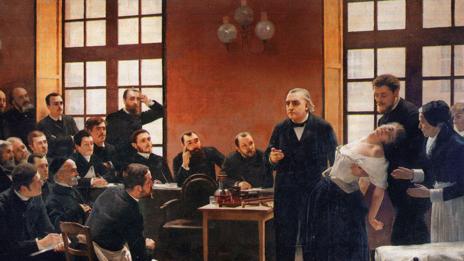
I confess that I was a little nervous when I entered the lab earlier that day. Hypnosis research has a somewhat murky history; one early experiment very nearly ended in murder. The researchers in question were two of the most prominent doctors in France at the beginning of the 20th Century: Jean-Martin Charcot, now considered the “founder of modern neurology”, and Georges Gilles de la Tourette, who is most famous for the disease that bears his name. They studied cases of “hysteria” – in which patients were suddenly unable to feel or move their limbs, for instance, despite no observable injury. Both doctors believed that the disorders might share certain characteristics with hypnosis – a hypothesis they tested by showing that people with hysteria are more susceptible to suggestion than healthy subjects.

They soon veered into less reputable territory, however. At the time, newspapers reported tales of criminals “mesmerising” innocent people to carry out nefarious deeds. Despite his scepticism about the reports, Gilles de la Tourette decided to hypnotise a hysterical patient, Blanche, to see if it might be possible. Placing her in a trance, he showed Blanche a ‘poisoned’ glass of beer and asked to feed the poison to another man, known as Mr G. Blanche happily complied, kissing Mr G as she did so, before he feigned death. She later denied all knowledge of the apparent murder. 
Neurologist Jean-Martin Charcot is depicted demonstrating hysteria in a woman called Blanche Wittman (Wikipedia/CC-PD-Mark)

Perhaps it was this cavalier attitude that nearly cost Gilles de la Tourette his life. One day in December 1893, he was confronted at home by another one of his hospital’s patients, a 29-year-old woman named Rose Kamper-Lecoq. Claiming that her hypnosis sessions had irretrievably altered her will, she whipped out a pistol and shot at him three times. Only one of the bullets penetrated his skull, but he was well enough to write to a friend the same evening, concluding in a wonderfully blasé fashion: “quelle drôle d’histoire” – “what a funny story”.

Kamper-Lecoq’s story is all the more striking in light of today’s research. Although her violence almost certainly wasn’t caused by hypnosis, it seems to have stemmed from many of the delusions that psychologists like Walsh are now unpicking with their virtual patients. She was said to be sure that Gilles de la Tourette was in love with her – a disorder known as “erotomania” – and she also (falsely) believed that someone was controlling her mind remotely: exactly the kind of mind possession I signed up for. I just hope it doesn’t end with me putting a bullet in somebody’s skull. 
Georges Gilles de La Tourette was shot by a disgruntled woman he'd hypnotised, as this French newspaper depicted (Wikipedia/CC-PD-Mark)

Before I was possessed, I first was tested for my “hypnotisability”. The procedure usually involves some kind of guided relaxation, followed by a series of suggestions that are meant to warp your perceptions and behaviours. I was told that I could hear a fly buzzing around my head, for example; later, the researcher said that a balloon would slowly lift my arm into the air. From what I can remember, my arm felt light, as if it were filled with helium, and before I had realised it, it was already floating upwards. The buzzing of the “fly”, meanwhile, felt like the flashes of images and voices you might begin to hear if you are very tired and about to drop off to sleep – you realise they aren’t real, yet they are perceptible all the same. Based on my responses, I scored 10 out of 12 – a degree of suggestibility that puts me in the top 10% of the population.

Given the reliance on subjective reports, the authenticity of hypnotic behaviour has been a matter of debate. “Some believe that hypnosis is pure fakery, whereas others believe it is a genuinely altered state of consciousness that can produce profound changes in perception, thought, and memory,” says Rochelle Cox, a cognitive scientist at Macquarie University in Australia.
 
Some people are easier to hypnotise than others (Thinkstock)

Although I didn’t feel like I was faking it, I ask Walsh whether he is ever concerned his subjects are pretending. He agrees the possibility casts an ever-present shadow over the research. “Anytime you submit a study to a journal, it’s one of the reviewers’ favourite questions,” he says. But advances in brain scanning have begun to lay those concerns to rest. While in the brain scanner, the hypnotiser might tell the subject to see a black and white photograph in colour, for instance – and you would see the areas for colour processing bursting into action as if they were actually looking at a real-life scene. Importantly, when the same subjects are simply asked to ‘pretend’ to experience, or imagine, those feelings, you don’t see the same activity. Such results have converted many sceptics.

Along the way, the researchers have edged closer to understanding what causes the hypnotic state in the first place. It seems that hypnotic induction turns something like a dimmer switch in the brain’s frontal lobes. These regions are thought to generate “higher-order thoughts” – reflective awareness of your own wants and needs and motives. Take that away, it seems, and you begin to do and feel things without realising why. That might explain why students tanked up on alcoholic drinks – the equivalent to two pints of beer – score much higher on the standard hypnotisability tests; alcohol is known to dampen frontal lobe activity, says Zoltan Dienes at the University of Sussex in Brighton, UK.

Why some people naturally drop into that state, while others find it harder, is an open question, however. Twin studies suggest it can be passed through the generations, and there’s some evidence it can be inherited. Importantly, people tend to retain the same score throughout their life, so it could just be another fundamental feature of our minds like IQ. 
Hypnotism can be used as a treatment for all sorts of medical conditions (SPL)

Along these lines, much of the work so far has been devoted to studying whether hypnotic suggestion could be used in place of painkillers. Randomised controlled trials have also investigated whether hypnosis could reduce stress, help cancer patients with their fatigue during chemotherapy, treat irritable bowel syndrome, and even boost students’ learning of new skills.

Around the year 2000, however, the research began to take a more macabre turn: rather than taking the ill and making them better, psychologists used it to plant delusions in the minds of the healthy. Like Gilles de la Tourette’s studies a hundred years before, one of the first investigations was inspired by a patient suffering from ‘hysterical paralysis’ – the sensation that she could not move her left leg, even though there was no physical disability. To see if they could recreate the disorder, researchers hypnotised a subject to feel the same sensations, and placed him in a brain scanner. The results – published in the medical journal The Lancet – revealed exactly the same pattern of activity in his brain as the hysterical patient, strongly supporting the possibility that hypnosis could be used to test hypotheses about real mental conditions.

Since then, psychologists have used it to conjure many other types of delusion, including erotomania, Capgras syndrome – the sensation that your loved ones have been replaced by a doppelganger – and mirror misidentification, in which people fail to recognise their own reflections. “Patients may cover up all the mirrors in their house because they think the stranger is following them around,” explains Cox, who carried out many of the studies. Hypnosis, she says, can produce almost identical symptoms. “Both are compellingly real, believed with conviction, and resistant to rational counterargument.” It is completely reversible, the researchers reassure me – all subjects leave the labs free of delusion. 
Some people see a stranger in a mirror instead of their own face (Thinkstock)

Hypnosis lets the scientist create the symptoms at will, while also manipulating the conditions to try to see what underlying cognitive processes might be misfiring in order to conjure the delusions. Eventually, you might even be able to use the hypnotised subjects to test certain kinds of therapies – before you risk them on mentally ill patients.

Needless to say, some of the researchers are sceptical of the benefits of this approach. Dienes, for instance, agrees that these virtual patients may be useful for the ‘hysteria’ disorders – like the limb paralysis. But he is sceptical that you can hypnotise somebody to experience the highly complex and terrifying psychosis of a disease like schizophrenia.

Walsh readily acknowledges that it can’t recreate every aspect of an illness, but sees hypnosis as a complementary technique that adds to the understanding gleaned from direct observations of real patients. “It’s is just another way of looking at things – you’re shining a light on the darkness from a different angle,” he says.

Before I allowed myself to be possessed, Walsh showed me two prints by the late 16th Century painter, Caravaggio, to make a point about the patients who believe they are controlled for real. One shows Saint Matthew as an “illiterate oaf”, his feet still dirty from his work in the fields. An angel is guiding his hand as he writes the gospel. In the second, “he’s been promoted” – Saint Matthew is clean and has a halo. The angel is now depicted above his head, whispering God’s words into his mind. 
Two Caravaggio paintings that capture the delusion of mind-control: a guided hand (left) and whispered commands (right) (Wikipedia/Paul Hermans/CC-PD-Mark)

The two paintings, he says, perfectly depict the two different ways in which patients experience possession: either they feel that another being is controlling their movements, or that another person is directly planting thoughts into their head. Such feelings may be due to mental illnesses like schizophrenia or psychotic depression, or the result of cultural practices such as shamanism that might lead people to feel like they are channelling another spirit, which may also be triggered by a ‘dissociative’ state similar to hypnosis. I will experience both, he says.

One of the team’s biggest challenges was to create suitable hypnotic suggestions that could feasibly manifest in a delusion, without being too scary. Possession stories often reflect contemporary culture of the day – in the Industrial Revolution, people believed the factory looms were directing their behaviour; Kamper-Lecoq’s delusions were influenced by her brushes with ‘mesmerism’; and in the early 20th Century, it was thought to be radio antennae planting ideas into people’s head. So rather than creating a spiritual demon, the team told a story of an ‘engineer’ doing research into mind control – a tale that isn’t too menacing, but which neatly draws on today’s fears about privacy and individual liberty. 
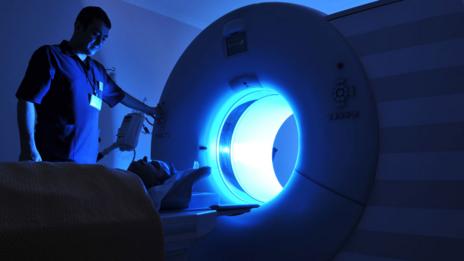
I was hypnotised inside a claustrophobic fake scanner similar to this one (Thinkstock)

Walsh puts me in the shell of an old brain scanner, which is often used to test procedures before hiring the real thing. At first I feel crushingly claustrophobic, but I soon forget those feelings as he counts down from 20, leading me gently into the hypnotic state. With a pen in my hand and a sheet of paper on my lap, my task will be to hear a word and finish the sentence under three different scenarios; first Walsh tells me that the engineer is whispering the words to write directly into my brain; then that he is able to direct the movements of my hand; and finally that the engineer is in complete control of both my thoughts and movements.

The first scenario had only a minimal effect: I seem to have to wait a little before the words come suddenly, as if from nowhere, but it doesn’t feel so different to my normally sporadic mind. But when Walsh instead tells me that the engineer has now taken over my movements, it is much more noticeable: my hand seems to move in a jerky, mechanical fashion, and it feels like my fingers are dancing to their own tune. It is then that I also begin to get flashes of the engineer himself – who I picture to be a hunched man with a wide grin and a long, grey pony-tail. By the time we reach the third set of suggestions – where Walsh tells me that the engineer will now control my hand movements, and my thoughts – the engineer’s power over me becomes much more vivid. My writing becomes faster, and more intense, and I get the distinct feeling that I am watching myself, from the outside. At points it feels like I can almost hear the engineer directing his thought-control machine. It is only when Walsh ends the session, and counts back up to 20, that I fully realise how strange the sensation was: a little like the moment of lucidity once you awake from a fevered dream. 
The strange stream of writing I produced during my possession (Stephen Dowling)

When I tell Walsh about my impressions, he says they are pretty much in-line with his other subjects. As one person put it: “I felt as if my hand had been made of metal.” While many, like me, pictured the engineer visually, others felt he was more amorphous: “Like a presence, as opposed to something that one can see”.

So far, these investigations have suggested a few networks of brain regions that might lie behind these delusions. When a person believes that their hand is being controlled by another being, you find an abnormally high connectivity between the motor areas that control movement, and regions that help us understand another’s motives and actions. Conversely, when the subjects were told that the engineer was inserting the thoughts into their mind during the writing task, they had much lower activity in the language areas of the brain – perhaps because they were less conscious of the generation of the words.

In some scenarios, they found increased activity in the areas involved in ‘error detection’. In normal everyday life, these regions normally keep track of our movements and the way they are executed, and then fire if things don’t go according to plan – like when you trip up. So it’s possible that the heightened activity reflects the subjects’ feelings that their movements were becoming more unpredictable, as if they were no longer under their own control. 


If the same regions of activity continue to emerge in further studies of hypnotic subjects and real patients, it might suggest new treatments. For instance, it might be possible to find drugs that specifically alter activity in the regions in question; alternatively, non-invasive brain stimulation could help correct any abnormal circuits – preventing the ‘error network’ from going into overdrive. The team are also interested in using neurofeedback – technologies that allow patients to view their neural activity on a screen, and correct it appropriately. “We are a few steps away from doing this,” says Quinton Deeley, who has run many of the experiments. “But we are at the threshold of doing it for anxiety and attention deficit disorder, and I don’t see why they couldn’t be applied to things like delusions”.

Away from mental health, it’s possible the work might shed light on more general phenomena. It’s possible that it could relate to religious phenomena – like the feeling of ‘talking in tongues’ or the kind of mass hysteria seen in the Salem Witch Trials. And possibly even what is going on the brain when we first conceive of an idea, and how it takes hold and guides our behaviour.

My brief period of possession has certainly made me more conscious of my own thoughts, and the strange ways they can seem to pop into your head. At least, I’m pretty certain that belief is my own… or is that just the engineer, guiding my hand as I type?

If you would like to comment on this, or anything else you have seen on Future, head over to our Facebook or Google+ page, or message us on Twitter.

Monday, September 28, 2009

Science News - The Mesmerized Mind

Very interesting - looking at how the brain functions when hypnotized.

Scientists are unveiling how the brain works when hypnotized

access
THE MESMERIZED MINDIllustration by Lou Beach

Mention hypnosis, and the image that springs to mind is a caped magician swinging a pocket watch, seducing otherwise sensible people into barking like dogs.

But hypnosis is more than a stage show act. For years, psychologists have used it to help patients calm preflight jitters, get a good night’s sleep or chuck a cigarette habit. Hypnosis even has uses in mainstream medicine for reducing the side effects of cancer treatments and helping patients cope with pain. Some physicians routinely employ hypnosis as an adjunct to mainstream anesthesia to help block pain during surgery or childbirth.

Most recently, hypnosis has advanced from stage and clinic into the laboratory. It is now used as a research tool to temporarily create hallucinations, compulsions, delusions and certain types of seizures in the lab so that these phenomena can be investigated in detail.

Such studies may lead to more effective treatments for a number of psychiatric and neurological disorders, assert psychologists Peter W. Halligan and David Oakley in the June issue of Trends in Cognitive Sciences.

Other scientists, intrigued by the many practical uses of hypnosis, are striving to figure out how it works. Using the latest neuroimaging tools, these scientists are getting a look at what goes on in the hypnotized brain. The findings are mesmerizing.

When hypnotized people act on a hypnotic suggestion, they really do see, hear and feel differently, such research shows. When they’re told to see colors, for example, the color-processing parts of their brains light up—despite the absence of any real color in view. When they are told to envision color objects in black and white, these color-processing areas are less active. Other imaging studies show that hypnotically induced pain activates the same brain areas as “real” pain.

Still, questions remain, says Halligan, of Cardiff University in Wales, who has studied hypnosis for more than a decade. Scientists have yet to discover how hypnosis produces physiological changes. And some scientists question whether such changes are confined to hypnosis. Perhaps the patterns of brain activity seen during hypnosis can occur during everyday experiences when people are fully absorbed in an activity, some researchers say.

The real question, says Halligan, is whether hypnosis is a specific brain state that differs from any other.

“In other words, is there some sort of neural correlate, or biological marker, within the brain during a hypnotic trance?” he asks.

The answer so far, emerging from studies done during the past few years, is maybe. New research at the University of Geneva suggests that hypnosis alters neural activity by rerouting some of the usual connections between brain regions. Such neurological detours don’t happen when subjects merely imagine a scenario.

Changing your mind

Hypnosis got its start as a “miracle cure” in 1774 when physician Franz Mesmer found a way, using ethereal music played on a glass harmonica, to induce a hypnotic trance in patients suffering from various unexplained medical problems. Though eventually discredited as a healer, Mesmer demonstrated that the mind could be manipulated by suggestion to produce an effect in the body. So powerful is this effect that the practice was resurrected in the 19th century, before the discovery of ether, to block pain during major surgeries.

In this mysterious state of mind, the brain is “quiet,” focused and superattentive. People sometimes report feeling disconnected from their surroundings and lost in thought. During hypnosis, subjects are more open than usual to suggestions and have the ability to focus intensely on a specific thought, feeling or sensation.

Most adults, about two-thirds, are hypnotizable to some degree, though some people experience the effects of hypnosis more intensely than others do, says David Spiegel, a psychiatrist at Stanford University School of Medicine who uses hypnosis in his medical practice. Ten to 15 percent of adults are “highly hypnotizable,” he says, meaning they can experience dramatic changes in perception with hypnosis.

A person’s ability to become hypnotized is unrelated to intelligence, compliancy or gullibility, but may be linked to an ability to become deeply absorbed in activities such as reading, listening to music or daydreaming. People who find themselves engrossed in a best seller even while the television is blaring, or swept away by a movie and losing track of time, are likely to be quite hypnotizable.

During hypnosis, the hypnotherapist tries to direct thoughts, feelings and behavior by instructing a person to concentrate on particular images or ideas. A typical session starts with some sort of induction procedure that helps the subject relax—say, counting down from 20 to one or mentally descending a set of stairs.

To produce a specific behavior or thought, the hypnotherapist will make suggestions targeted toward the goal. To reduce the pain of a medical procedure, for example, a hypnotherapist might invoke an image of pain being turned down like the volume on a radio.

access
YOUR BRAIN ON HYPNOSIS
View larger version | Studies show hypnosis reroutes brain signals. Hypnotized people who are told that their left hand is paralyzed show brain patterns (yellow) that differ from those who aren't hypnotized (red) and from those who aren't hypnotized but are told to pretend their left hand is paralyzed (green).
Y. Cojan Et al./Neuron 2009

Over the years, rigorously controlled studies have shown that hypnosis can also control blood pressure and even make warts go away. But because very few studies have attempted to find out how it works, some scientists are still skeptical of its power.

Critics suggest hypnosis is nothing more than playacting, with subjects trying to please the hypnotist. That skepticism has driven some researchers to take a hard look at what happens in the brain during hypnosis. Over the past few years, scientists have begun gathering evidence that hypnosis can indeed measurably change how the brain works.

In 2005, scientists at Weill Medical College of Cornell University in New York City used functional MRI to show how hypnotic suggestions can override “automatic” processes in the brain. When shown the names of colors printed in different colors of ink—for example, the word red printed in blue—subjects were instructed to name the ink color while ignoring the word.

Though this task may sound easy, it’s often difficult for people who can read because the tendency is to automatically read the word instead of naming the color. When told under hypnosis that the words would appear as gibberish, highly hypnotizable subjects were able to perform the task faster, and with fewer errors, than subjects who were less hypnotizable and therefore less likely to respond to suggestion.

The fMRI results were also striking. Highly hypnotizable participants showed less activity in a brain area called the anterior cingulate cortex, which is active when people are trying to sort out conflicting information from different sources, such as contradictory word names and colors. The study was published in the Proceedings of the National Academy of Sciences.

Going deeper

Scientists agree that there is a pattern or “orchestra” of brain activity during hypnosis. Halligan and his colleagues are working to figure out what this particular pattern might be, and which—if any—brain region serves as conductor. As part of a collaboration with psychiatrist Quinton Deeley of King’s College London, the researchers are looking at how patterns of brain activity in the induction phase—the countdown—prepare the brain for suggestions.

Preliminary findings suggest that hypnosis boosts activity in the brain’s prefrontal cortex—a region responsible for various executive functions such as decision making and regulating attention—while suppressing activity in other brain regions.

access
THE EYE-ROLL TESTSome researchers and hypnotists use a simple eye-roll test to get an idea of how hypnotizable people are. If more white, or sclera, shows when a person looks up (bottom), he or she is more likely to be susceptible to hypnosis.T. Dube, adapted from Powerlines/Istockphoto

Still, researchers are stumped to explain how these changes in brain patterns work to make hypnotized people feel and see things differently. Recent theories, discussed in the article in Trends by Halligan and Oakley, of University College London, propose that hypnotic suggestions may inhibit or disconnect certain mental processes from the brain’s executive control systems.

Until recently, such hypotheses had remained untested. But in the June 25 issue of Neuron, Yann Cojan of the University of Geneva and colleagues report a direct test.

The researchers put 18 subjects in a brain scanner, instructing them to push a button using one hand or the other. Each trial began with a cue indicating which hand to prepare for movement. After a brief interval, an image of a hand would turn green—signaling to press the button—or red, a command to inhibit any motion. Twelve subjects did half of the trials while hypnotized, with the suggestion that their left hand was “paralyzed,” and the other half in a normal, unhypnotized state. Six subjects did trials without hypnosis under instructions to pretend their left hand was paralyzed.

When volunteers used their right hands, the motor cortex linked up with brain regions that control body movement to carry out the task.

But fMRI scans showed changes in several brain areas when hypnotic paralysis prevented subjects from responding to the “go” signal with their left hands. Under hypnosis, neurons in the brain’s motor cortex fired up as usual to prepare for the task. But when instructed to use the left, or “paralyzed” hand, the motor cortex failed to send signals to motor execution regions. Instead, it directed its signals to another brain region, the precuneus.

The precuneus is a sort of center for self-consciousness. If you’ve ever pictured yourself falling flat on your face in the middle of an important event, that’s your precuneus working overtime. Its function is to help retrieve memories and images of yourself from the brain’s archives and help to visualize movements.

By rerouting motor signals to the precuneus, hypnosis appeared to decouple the typical relationship between brain areas that generate the signals for hand movement and the areas that carry out such movements. Subjects who were not hypnotized and were asked to fake paralysis showed no such disconnect between these regions.

Because the precuneus is involved in mental imagery and self-awareness, Cojan says, hypnosis appeared to enhance the brain’s self-monitoring processes to allow images generated by suggestion—“your hand is heavy and cannot move”—to guide behavior.

By linking to the precuneus, “the motor cortex is connected to the idea that it cannot move the left hand,” Cojan says. “So even if you try to move, it will neglect to send signals to the motor execution areas.”

Because the motor cortex fired up as usual to prepare for the task, the findings suggest that mental images created through hypnotic suggestions work by redirecting normal brain functions rather than actively suppressing them, he adds.

Generating piece of mind

Using insights gleaned from the brain scans of subjects paralyzed under hypnosis, Cojan conducted a follow-up study to see whether something like hypnosis happens in the brains of patients during hysterical paralysis. In such instances, patients become paralyzed even though the condition can’t be traced to any physical or neurological brain damage.

An fMRI study of patients with hysterical hand paralysis did not find the heightened precuneus activity that is seen in hypnosis, Cojan’s group reported in the September NeuroImage.

Previously, it had been suggested that hysterical paralysis was “a kind of self-hypnosis,” Cojan says. “Our findings show that’s not the case.”

Halligan points to the recent paralysis studies as examples of how hypnosis can be used to further studies on the nature of hypnosis and to provide insights on a variety of real-life syndromes and disorders.

In 2000, he and Oakley began looking at ways to use hypnosis to simulate psychosomatic conditions, such as hysterical paralysis or hysterical blindness, in the lab. By creating virtual patients through hypnosis, scientists might be able to better understand the basis for such disorders by comparing patients’ brains with hypnotized brains, the researchers reckoned.

Deeley, who treats psychiatric patients at his private practice in London, says using hypnosis also allows him to track brain processes involved in other kinds of disorders that would not ordinarily be possible to study with brain imaging.

In an ongoing series of experiments, he and his colleagues are using hypnosis to study conditions in which patients sense a “lack of control” over their movements or behavior. Such perceptual experiences may be reported by people who experience nonepileptic seizures or who suffer delusions caused by schizophrenia.

By making some targeted suggestions—“Your left hand is now shaking at your side” or “Your right leg is twitching”—the scientists can model a particular symptom in a consistent and controlled way, Deeley says.

“You can’t have somebody having a full-blown seizure within an MRI scanner,” he says. “It’s not safe because they’re moving fast, and you wouldn’t get any useful information. But if you actually restrict an involuntary movement to a particular limb or a hand, it is possible to create a partial model of these involuntary movements.”

Another advantage of hypnosis is that it allows researchers to untangle the many components that make up a complex disorder, such as schizophrenia. In such cases, patients may feel not only that they’re losing control, but also that their actions or behavior are guided by an outside force or agent, such as the CIA.

Scientists then have the problem of sorting out whether a change in brain activity is associated with the physical experience of a movement or whether it is tied to the delusional beliefs behind the movement.

“In such cases, you’ve got two processes going on associated with complex change in brain activity, and you just can’t unpack them in terms of working out what’s associated with what,” Deeley says.

Experimental manipulations using hypnosis could provide a window into a wide range of disorders, he says, and could help explain other types of altered states, such as meditation.

Halligan agrees, noting that hypnosis could be used to simulate various disorders commonly associated with brain injury, such as visual impairment. In a recent study, he used hypnotic suggestions to replicate conditions described by injured soldiers who are still capable of detecting motion in certain visual fields but are unable to make out any distinguishing features of the moving object.

“That’s not to say that the same psychological consequences of pathology seen in patients are somehow replicated in hypnosis,” Halligan says. “But using hypnosis to simulate a specific condition for imaging may tell us which brain systems are involved.” This information may then feed back into the development of new treatments and rehabilitation tools, he says.

Such advancements, however, hinge on learning more about the underlying processes involved in hypnosis itself. Current efforts may help scientists differentiate between the brain structures that play a role in hypnosis and those that are involved in the tasks subjects are asked to perform.

“These are still early days,” Halligan says, noting that it has yet to be seen how well hypnotically simulated disorders will actually match the conditions they’re intended to mimic. Still, he says, hypnosis provides a way to “test and probe.”

Best of all, no pocket watches are involved.

Susan Gaidos is a freelance science writer based in Maine.

Thursday, January 08, 2009

Scientific American Mind - Is Hypnosis a Distinct Form of Consciousness?


This cool article at Scientific American Mind - Is Hypnosis a Distinct Form of Consciousness? - suggests that the hypnotic state is a unique form of consciousness. Specifically, it's a "state" of consciousness, separate from but similar to waking, dreaming, and deep sleep, but I'm not sure science is ready to admit Advaita or Buddhist theories of consciousness into their hallowed halls.

Is Hypnosis a Distinct Form of Consciousness?

Studies confirm that during hypnosis subjects are not in a sleeplike state but are awake

By Scott O. Lilienfeld and Hal Arkowitz

The hypnotist, dangling a swinging pocket watch before the subject’s eyes, slowly intones: “You’re getting sleepy … You’re getting sleepy …” The subject’s head abruptly slumps downward. He is in a deep, sleeplike trance, oblivious to everything but the hypnotist’s soft voice. Powerless to resist the hypnotist’s influence, the subject obeys every command, including an instruction to act out an upsetting childhood scene. On “awakening” from the trance half an hour later, he has no memory of what happened.

In fact, this familiar description, captured in countless movies, embodies a host of misconceptions. Few if any modern hypnotists use the celebrated swinging watch introduced by Scottish eye surgeon James Braid in the mid-19th century. Although most hypnotists attempt to calm subjects during the “induction,” such relaxation is not necessary; people have even been hypnotized while pedaling vigorously on a stationary bicycle. Electroencephalographic (EEG) studies confirm that during hypnosis subjects are not in a sleeplike state but are awake—though sometimes a bit drowsy. Moreover, they can freely resist the hypnotist’s suggestions and are far from mindless automatons. Finally, research by psychologist Nicholas Spanos of Carleton University in Ontario shows that a failure to remember what transpired during the hypnosis session, or so-called posthypnotic amnesia, is not an intrinsic element of hypnosis and typically occurs only when subjects are told to expect it to occur.

The Consciousness Question
The iconic scene we described at the article’s outset also raises a deeper question: Is hypnosis a distinct state of consciousness? Most people seem to think so; in a recent unpublished survey, psychologist Joseph Green of Ohio State University at Lima and his colleagues found that 77 percent of college students agreed that hypnosis is a distinctly altered state of consciousness. This issue is of more than academic importance. If hypnosis differs in kind rather than in degree from ordinary consciousness, it could imply that hypnotized people can take actions that are impossible to perform in the waking state. It could also lend credibility to claims that hypnosis is a unique means of reducing pain or of effecting dramatic psychological and medical cures.

Despite the ubiquitous Hollywood depiction of hypnosis as a trance, investigators have had an extremely difficult time pinpointing any specific “markers”—indicators—of hypnosis that distinguish it from other states. The legendary American psychiatrist Milton Erickson claimed that hypnosis is marked by several unique features, including posthypnotic amnesia and “literalism”—a tendency to take questions literally, such as responding “Yes” to the question “Can you tell me what time it is?” We have already seen that posthypnotic amnesia is not an inherent accompaniment of hypnosis, so Erickson was wrong on that score. Moreover, research by Green, Binghamton University psychologist Steven Jay Lynn and their colleagues shows that most highly hypnotizable subjects do not display literalism while hypnotized; moreover, participants asked to simulate hypnosis demonstrate even higher rates of literalism than highly hypnotizable subjects do.

Other experts, such as the late University of Pennsylvania psychiatrist Martin Orne, have argued that only hypnotized participants experience “trance logic”—the ability to entertain two mutually inconsistent ideas at the same time. For example, a hypnotist might suggest to a subject that he is deaf and then ask him, “Can you hear me now?” He may respond “No,” thereby manifesting trance logic. Nevertheless, research by the late Theodore X. Barber, then at the Medfield Foundation, and his colleagues showed that participants asked to simulate hypnosis displayed trance logic just as often as hypnotized people did, suggesting that trance logic is largely a function of people’s expectations rather than an intrinsic component of the hypnotic state itself.

Brain Changes
Still other investigators have sought to uncover distinct physiological markers of hypnosis. Under hypnosis, EEGs, especially those of highly suggestible participants, sometimes display a shift toward heightened activity in the theta band (four to seven cycles per second). In addition, hypnotized participants frequently exhibit increased activity in their brain’s anterior cingulate cortex (ACC).

Yet neither finding is surprising. Theta activity is typically associated with states of quiet concentration, which frequently accompany hypnosis. The ACC is linked to the perception of contradictions, which many hypnotized participants experience as they imagine things—such as childhood experiences in the present—that seem to conflict with reality. Further, psychologists have reported similar brain changes among awake subjects. For example, the ACC becomes activated during the famous Stroop task, which requires subjects to name the colors of ink (such as “green”) in which competing color words (such as “blue”) are printed. Thus, these brain changes are not unique to hypnosis.

Fueling the perception of hypnosis as a distinct trancelike state is the widespread assumption that it leads to marked increases in suggestibility, even complete compliance to the therapist’s suggestions. Nowhere is this zombielike stereotype portrayed more vividly than in stage hypnosis shows, in which people are seemingly induced to bark like dogs, sing karaoke and engage in other comical behaviors in full view of hundreds of amused audience members.

Yet research shows that hypnosis exerts only a minor impact on suggestibility. On standardized scales of hypnotic suggestibility, which ask participants to comply with a dozen suggestions (that one’s arm is raising on its own power, for example), the increase in suggestibility following a hypnotic induction is typically on the order of 10 percent or less. Moreover, research demonstrates that a formal hypnotic induction is not needed to produce many of the seemingly spectacular effects of hypnosis, such as reduction of extreme pain or various physical feats, popular in stage hypnosis acts, such as suspending a participant horizontally between the backs of two chairs. One can generate most, if not all, of these effects merely by providing highly suggestible people with sufficient incentives to perform them. Stage hypnotists are well aware of this little secret. Before beginning their shtick, they prescreen audience members for high suggestibility by providing those people with a string of suggestions. They then handpick their participants from among the minority who comply.

We agree with Lynn and psychologist Irving Kirsch of the University of Hull in England, who wrote in 1995 that “having failed to find reliable markers of trance after 50 years of careful research, most researchers have concluded that this hypothesis [that hypnosis is a unique state of consciousness] has outlived its usefulness.” Increasingly, evidence is suggesting that the effects of hypnosis result largely from people’s expectations about what hypnosis entails rather than from the hypnotic state itself. Still, it is always possible that future studies could overturn or at least qualify this conclusion. In particular, research on potential physiological markers of hypnosis may elucidate how hypnosis differs from other states of consciousness. Although hypnosis poses fascinating mysteries that will keep scientists busy for decades, it seems clear that it has far more in common with everyday wakefulness than with the watch-induced trance of Hollywood crime thrillers.

Note: This article was originally printed with the title, "Altered States".