Offering multiple perspectives from many fields of human inquiry that may move all of us toward a more integrated understanding of who we are as conscious beings.
This is from Nautilus, this is an interesting look at the future of super-intelligent humans. I suspect we are not likely to see this in my lifetime (I'm 47), but I have no doubt that as we learn more and more about genetics and intelligence, it is inevitable that we will try to create who cities of the super-smart.
The question is will they be smart enough to realize they were created to be pawns in the battles between oligarchies.
Genetic engineering will one day create the smartest humans who have ever lived.
By Stephen Hsu Illustration by Gemma O’Brien
October 16, 2014
Lev Landau, a Nobelist and one of the fathers of a great school of Soviet physics, had a logarithmic scale for ranking theorists, from 1 to 5. A physicist in the first class had ten times the impact of someone in the second class, and so on. He modestly ranked himself as 2.5 until late in life, when he became a 2. In the first class were Heisenberg, Bohr, and Dirac among a few others. Einstein was a 0.5! My friends in the humanities, or other areas of science like biology, are astonished and disturbed that physicists and mathematicians (substitute the polymathic von Neumann for Einstein) might think in this essentially hierarchical way. Apparently, differences in ability are not manifested so clearly in those fields. But I find Landau’s scheme appropriate: There are many physicists whose contributions I cannot imagine having made. I have even come to believe that Landau’s scale could, in principle, be extended well below Einstein’s 0.5. The genetic study of cognitive ability suggests that there exist today variations in human DNA which, if combined in an ideal fashion, could lead to individuals with intelligence that is qualitatively higher than has ever existed on Earth: Crudely speaking, IQs of order 1,000, if the scale were to continue to have meaning.
The Overnight Genius: Actor Cliff Robertson, who plays the part of bakery worker-turned-genius Charly (spelled Charlie in the novel), studies an illustration of a maze in this scene from the 1967 film adaptation of Flowers for Algernon.Photo by Cinerama/Courtesy of Getty Images In Daniel Keyes’ novel Flowers for Algernon, a mentally challenged adult called Charlie Gordon receives an experimental treatment to raise his IQ from 60 to somewhere in the neighborhood of 200. He is transformed from a bakery worker who is taken advantage of by his friends, to a genius with an effortless perception of the world’s hidden connections. “I’m living at a peak of clarity and beauty I never knew existed,” Charlie writes. “There is no greater joy than the burst of solution to a problem… This is beauty, love, and truth all rolled into one. This is joy.” The contrast between a super-intelligence and today’s average IQ of 100 would be greater still.
The possibility of super-intelligence follows directly from the genetic basis of intelligence. Characteristics like height and cognitive ability are controlled by thousands of genes, each of small effect. A rough lower bound on the number of common genetic variants affecting each trait can be deduced from the positive or negative effect on the trait (measured in inches of height or IQ points) of already discovered gene variants, called alleles. The Social Science Genome Association Consortium, an international collaboration involving dozens of university labs, has identified a handful of regions of human DNA that affect cognitive ability. They have shown that a handful of single-nucleotide polymorphisms in human DNA are statistically correlated with intelligence, even after correction for multiple testing of 1 million independent DNA regions, in a sample of over 100,000 individuals. If only a small number of genes controlled cognition, then each of the gene variants should have altered IQ by a large chunk—about 15 points of variation between two individuals. But the largest effect size researchers have been able to detect thus far is less than a single point of IQ. Larger effect sizes would have been much easier to detect, but have not been seen. This means that there must be at least thousands of IQ alleles to account for the actual variation seen in the general population. A more sophisticated analysis (with large error bars) yields an estimate of perhaps 10,000 in total.1 Each genetic variant slightly increases or decreases cognitive ability. Because it is determined by many small additive effects, cognitive ability is normally distributed, following the familiar bell-shaped curve, with more people in the middle than in the tails. A person with more than the average number of positive (IQ-increasing) variants will be above average in ability. The number of positive alleles above the population average required to raise the trait value by a standard deviation—that is, 15 points—is proportional to the square root of the number of variants, or about 100. In a nutshell, 100 or so additional positive variants could raise IQ by 15 points. Given that there are many thousands of potential positive variants, the implication is clear: If a human being could be engineered to have the positive version of each causal variant, they might exhibit cognitive ability which is roughly 100 standard deviations above average. This corresponds to more than 1,000 IQ points.
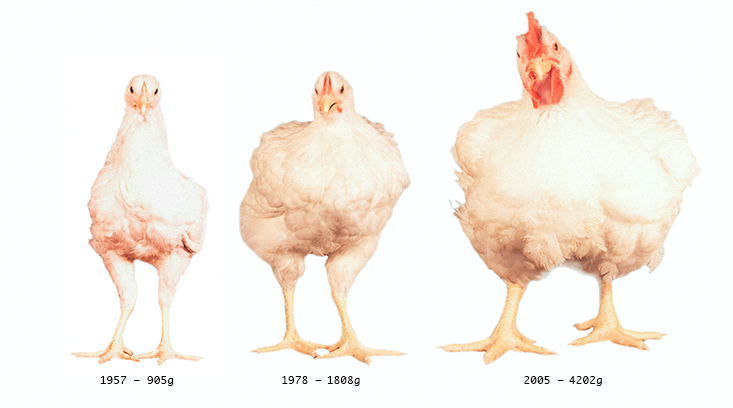
Supersize me: The breeding of domesticated plants and animals has changed some populations by as much as 30 standard deviations. Broiler chickens, for example, have increased in size more than four times since 1957. A similar approach could be applied to human intelligence, leading to IQs greater than 1,000.Zuidhof, M.J., Schneider, B.L., Carney, V.L., Korver, D.R., & Robinson, F.E. Growth, efficiency, and yield of commercial broilers from 1957, 1978, and 2005. Poultry Science 93, 1-13 (2014).
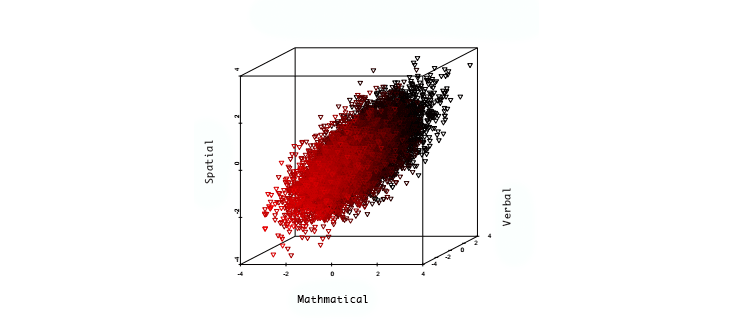
It is not at all clear that IQ scores have any meaning in this range. However, we can be confident that, whatever it means, ability of this kind would far exceed the maximum ability among the approximately 100 billion total individuals who have ever lived. We can imagine savant-like capabilities that, in a maximal type, might be present all at once: nearly perfect recall of images and language; super-fast thinking and calculation; powerful geometric visualization, even in higher dimensions; the ability to execute multiple analyses or trains of thought in parallel at the same time; the list goes on. Charlie Gordon, squared. To achieve this maximal type would require direct editing of the human genome, ensuring the favorable genetic variant at each of 10,000 loci. Optimistically, this might someday be possible with gene editing technologies similar to the recently discovered CRISPR/Cas system that has led to a revolution in genetic engineering in just the past year or two. Harvard genomicist George Church has even suggested that CRISPR will allow the resurrection of mammoths through the selective editing of Asian elephant embryo genomes. Assuming Church is right, we should add super-geniuses to mammoths on the list of wonders to be produced in the new genomic age. SOME of the assumptions behind the prediction of 1,000 IQs are the subject of ongoing debate. In some quarters, the very idea of a quantification of intelligence is contentious. In his autobiographical book Surely You’re Joking, Mr. Feynman!, the Nobel Prize winning physicist Richard Feynman dedicated an entire chapter to his quest to avoid the humanities, called “Always Trying to Escape.” As a student at the Massachusetts Institute of Technology, he says, “I was interested only in science; I was not good at anything else.” The sentiment is a familiar one: Common wisdom sometimes says that people who are good at math are not so good with words, and vice versa. This distinction has affected how we understand genius, suggesting it is an endowment of one particular faculty of the brain, and not a general superlative of the whole brain itself. This in turn makes the idea of apples-to-apples comparisons of intelligence moot, and the very idea of a 1,000 IQ problematic. But psychometric studies, which seek to measure the nature of intelligence, paint a different picture. Millions of observations have shown that essentially all “primitive” cognitive abilities—short and long term memory, the use of language, the use of quantities and numbers, the visualization of geometric relationships, pattern recognition, and so on—are positively correlated. The figure below displays graphically the ability scores of a large group of individuals, in areas such as mathematical, verbal, and spatial performance. The space of the graph is not filled uniformly, but instead the points cluster along an ellipsoidal region with a single long (or principal) axis.
Smart is smart: The Project Talent study looked at the mathematical, verbal, and spatial skills of over 100,000 ninth-graders, as displayed in this scatterplot. Ability in one area was positively correlated with ability in the other two.
These positive correlations between narrow abilities suggest that an individual who is above average in one area (for example, mathematical ability) is more likely to be above average in another (verbal ability). They also suggest a robust and useful method for compressing information concerning cognitive abilities. By projecting the performance of an individual onto the principal axis, we can arrive at a single number measure of cognitive ability results: the general factor g. Well-formulated IQ tests are estimators of g. Does g predict genius? Consider the Study of Mathematically Precocious Youth, a longitudinal study of gifted children identified by testing (using the SAT, which is highly correlated with g) before age 13. All participants were in the top percentile of ability, but the top quintile of that group was at the one in 10,000 level or higher. When surveyed in middle age, it was found that even within this group of gifted individuals, the probability of achievement increased drastically with early test scores. For example, the top quintile group was six times as likely to have been awarded a patent than the lowest quintile. Probability of a STEM doctorate was 18 times larger, and probability of STEM tenure at a top-50 research university was almost eight times larger. It is reasonable to conclude that g represents a meaningful single-number measure of intelligence, allowing for crude but useful apples-to-apples comparisons. Another assumption behind the 1,000-IQ prediction is that cognitive ability is strongly affected by genetics, and that g is heritable. The evidence for this assumption is quite strong. In fact, behavior geneticist and twins researcher Robert Plomin has argued that “the case for substantial genetic influence on g is stronger than for any other human characteristic.”2
In twin and adoption studies, pairwise IQ correlations are roughly proportional to the degree of kinship, defined as the fraction of genes shared between the two individuals. Only small differences due to family environment were found: Biologically unrelated siblings raised in the same family have almost zero correlation in cognitive ability. These results are consistent over large studies conducted in a variety of locations, including different countries. In the absence of deprivation, it would seem that genetic effects determine the upper limit to cognitive ability. However, in studies where subjects have experienced a wider range of environmental conditions, such as poverty, malnutrition, or lack of education, heritability estimates can be much smaller. When environmental conditions are unfavorable, individuals do not achieve their full potential (see The Flynn Effect).
Sidebar: The Flynn Effect
The Flynn effect, named after the philosopher James Flynn, refers to a significant increase in raw cognitive scores over the last 100 years or so—the equivalent of two standard deviations in some cases. This raises a number of thorny issues. Were our ancestors idiots? Is cognitive ability really so malleable under environmental influence (contrary to what has been found in recent twin studies)? The average person 100 years ago was massively deprived by today’s standards— much more so than we would ever be allowed to reproduce in a modern twin study. United States gross domestic product per capita is eight times higher now, and the average number of years people spend in school has increased dramatically. In the America of 1900, adults had an average of about seven years of schooling, a median of 6.5 years, and 25 percent had completed four years or less. Modern twin and adoption studies only include individuals raised in a much smaller range of environments—almost all participants in recent studies have had legally mandated educations, which in the U.S. includes at least several years of high school. There is a revealing analogy with height. While taller parents tend to have taller children (i.e., height is heritable), significant gains in average height which mirror the Flynn effect (amounting to an almost +2 standard deviation change) have been observed as nutrition and diet have improved.
SUPER-INTELLIGENCE may be a distant prospect, but smaller, still-profound developments are likely in the immediate future. Large data sets of human genomes and their corresponding phenotypes (which are the physical and mental characteristics of the individual) will lead to significant progress in our ability to understand the genetic code—in particular, to predict cognitive ability. Detailed calculations suggest that millions of phenotype-genotype pairs will be required to tease out the genetic architecture, using advanced statistical algorithms. However, given the rapidly falling cost of genotyping, this is likely to happen in the next 10 years or so. If existing heritability estimates are any guide, the accuracy of genomic-based prediction of intelligence could be better than about half a population standard deviation (meaning better than plus or minus 10 IQ points). Once predictive models are available, they can be used in reproductive applications, ranging from embryo selection (choosing which IVF zygote to implant) to active genetic editing (for example, using CRISPR techniques). In the former case, parents choosing between 10 or so zygotes could improve the IQ of their child by 15 or more IQ points. This might mean the difference between a child who struggles in school, and one who is able to complete a good college degree. Zygote genotyping from single cell extraction is already technically well developed, so the last remaining capability required for embryo selection is complex phenotype prediction. The cost of these procedures would be less than tuition at many private kindergartens, and of course the consequences will extend over a lifetime and beyond. The corresponding ethical issues are complex and deserve serious attention in what may be a relatively short interval before these capabilities become a reality. Each society will decide for itself where to draw the line on human genetic engineering, but we can expect a diversity of perspectives. Almost certainly, some countries will allow genetic engineering, thereby opening the door for global elites who can afford to travel for access to reproductive technology. As with most technologies, the rich and powerful will be the first beneficiaries. Eventually, though, I believe many countries will not only legalize human genetic engineering, but even make it a (voluntary) part of their national healthcare systems. The alternative would be inequality of a kind never before experienced in human history.
Stephen Hsu is Vice-President for Research and Professor of Theoretical Physics at Michigan State University. He is also a scientific advisor to BGI (formerly, Beijing Genomics Institute) and a founder of its Cognitive Genomics Lab. References 1. Hsu, S.D.H. On the genetic architecture of intelligence and other quantitative traits. Preprint arXiv:1408.3421 (2014). 2. Plomin, R. IQ and human intelligence. The American Journal of Human Genetics65, 1476-1477 (1999).
In this article, Lee Billings riffs on Stanislaw Lem's relatively unknown book of philosophical essays, Summa Technologiae (Electronic Mediations), written in 1964 but not fully translated into English until 2013. Lem is known primarily for his science fiction writing, especially the 1961 novel Solaris, adapted into a meditative film by Andrei Tarkovsky in 1972.
In the Summa, however, Lem meditates on topics that were still fully "fantastic" in 1964, but now are topics of conversation within the realm of the possible, such as virtual reality, nanotechnology, artificial intelligence and the technological singularity.
I remember well the first time my certainty of a bright future evaporated, when my confidence in the panacea of technological progress was shaken. It was in 2007, on a warm September evening in San Francisco, where I was relaxing in a cheap motel room after two days covering The Singularity Summit, an annual gathering of scientists, technologists, and entrepreneurs discussing the future obsolescence of human beings. In math, a “singularity” is a function that takes on an infinite value, usually to the detriment of an equation’s sense and sensibility. In physics, the term usually refers to a region of infinite density and infinitely curved space, something thought to exist inside black holes and at the very beginning of the Big Bang. In the rather different parlance of Silicon Valley, “The Singularity” is an inexorably-approaching event in which humans ride an accelerating wave of technological progress to somehow create superior artificial intellects—intellects which with predictable unpredictability then explosively make further disruptive innovations so powerful and profound that our civilization, our species, and perhaps even our entire planet are rapidly transformed into some scarcely imaginable state. Not long after The Singularity’s arrival, argue its proponents, humanity’s dominion over the Earth will come to an end. I had encountered a wide spectrum of thought in and around the conference. Some attendees overflowed with exuberance, awaiting the arrival of machines of loving grace to watch over them in a paradisiacal post-scarcity utopia, while others, more mindful of history, dreaded the possible demons new technologies could unleash. Even the self-professed skeptics in attendance sensed the world was poised on the cusp of some massive technology-driven transition. A typical conversation at the conference would refer at least once to some exotic concept like whole-brain emulation, cognitive enhancement, artificial life, virtual reality, or molecular nanotechnology, and many carried a cynical sheen of eschatological hucksterism: Climb aboard, don’t delay, invest right now, and you, too, may be among the chosen who rise to power from the ashes of the former world! Over vegetarian hors d’oeuvres and red wine at a Bay Area villa, I had chatted with the billionaire venture capitalist Peter Thiel, who planned to adopt an “aggressive” strategy for investing in a “positive” Singularity, which would be “the biggest boom ever,” if it doesn’t first “blow up the whole world.” I had talked with the autodidactic artificial-intelligence researcher Eliezer Yudkowsky about his fears that artificial minds might, once created, rapidly destroy the planet. At one point, the inventor-turned-proselytizer Ray Kurzweil teleconferenced in to discuss, among other things, his plans for becoming transhuman, transcending his own biology to achieve some sort of eternal life. Kurzweil believes this is possible, even probable, provided he can just live to see The Singularity’s dawn, which he has pegged at sometime in the middle of the 21st century. To this end, he reportedly consumes some 150 vitamin supplements a day.
Returning to my motel room exhausted each night, I unwound by reading excerpts from an old book, Summa Technologiae. The late Polish author Stanislaw Lem had written it in the early 1960s, setting himself the lofty goal of forging a secular counterpart to the 13th-century Summa Theologica, Thomas Aquinas’s landmark compendium exploring the foundations and limits of Christian theology. Where Aquinas argued for the certainty of a Creator, an immortal soul, and eternal salvation as based on scripture, Lem concerned himself with the uncertain future of intelligence and technology throughout the universe, guided by the tenets of modern science. To paraphrase Lem himself, the book was an investigation of the thorns of technological roses that had yet to bloom. And yet, despite Lem’s later observation that “nothing ages as fast as the future,” to my surprise most of the book’s nearly half-century-old prognostications concerned the very same topics I had encountered during my days at the conference, and felt just as fresh. Most surprising of all, in subsequent conversations I confirmed my suspicions that among the masters of our technological universe gathered there in San Francisco to forge a transhuman future, very few were familiar with the book or, for that matter, with Lem. I felt like a passenger in a car who discovers a blindspot in the central focus of the driver’s view. Such blindness was, perhaps, understandable. In 2007, only fragments of Summa Technologiae had appeared in English, via partial translations undertaken independently by the literary scholar Peter Swirski and a German software developer named Frank Prengel. These fragments were what I read in the motel. The first complete English translation, by the media researcher Joanna Zylinska, only appeared in 2013. By Lem’s own admission, from the start the book was a commercial and a critical failure that “sank without a trace” upon its first appearance in print. Lem’s terminology and dense, baroque style is partially to blame—many of his finest points were made in digressive parables, allegories, and footnotes, and he coined his own neologisms for what were, at the time, distinctly over-the-horizon fields. In Lem’s lexicon, virtual reality was “phantomatics,” molecular nanotechnology was “molectronics,” cognitive enhancement was “cerebromatics,” and biomimicry and the creation of artificial life was “imitology.” He had even coined a term for search-engine optimization, a la Google: “ariadnology.” The path to advanced artificial intelligence he called the “technoevolution” of “intellectronics.” Even now, if Lem is known at all to the vast majority of the English-speaking world, it is chiefly for his authorship of Solaris, a popular 1961 science-fiction novel that spawned two critically acclaimed film adaptations, one by Andrei Tarkovsky and another by Steven Soderbergh. Yet to say the prolific author only wrote science fiction would be foolishly dismissive. That so much of his output can be classified as such is because so many of his intellectual wanderings took him to the outer frontiers of knowledge. Lem was a polymath, a voracious reader who devoured not only the classic literary canon, but also a plethora of research journals, scientific periodicals, and popular books by leading researchers. His genius was in standing on the shoulders of scientific giants to distill the essence of their work, flavored with bittersweet insights and thought experiments that linked their mathematical abstractions to deep existential mysteries and the nature of the human condition. For this reason alone, reading Lem is an education, wherein one may learn the deep ramifications of breakthroughs such as Claude Shannon’s development of information theory, Alan Turing’s work on computation, and John von Neumann’s exploration of game theory. Much of his best work entailed constructing analyses based on logic with which anyone would agree, then showing how these eminently reasonable premises lead to astonishing conclusions. And the fundamental urtext for all of it, the wellspring from which the remainder of his output flowed, is Summa Technologiae. The core of the book is a heady mix of evolutionary biology, thermodynamics—the study of energy flowing through a system—and cybernetics, a diffuse field pioneered in the 1940s by Norbert Wiener studying how feedback loops can automatically regulate the behavior of machines and organisms. Considering a planetary civilization this way, Lem posits a set of feedbacks between the stability of a society and its degree of technological development. In its early stages, Lem writes, the development of technology is a self-reinforcing process that promotes homeostasis, the ability to maintain stability in the face of continual change and increasing disorder. That is, incremental advances in technology tend to progressively increase a society’s resilience against disruptive environmental forces such as pandemics, famines, earthquakes, and asteroid strikes. More advances lead to more protection, which promotes more advances still. And yet, Lem argues, that same technology-driven positive feedback loop is also an Achilles heel for planetary civilizations, at least for ours here on Earth… The full article appears in the Fall 2014 Nautilus Quarterly. Subscribe today! Freelance writer Lee Billings is the author of Five Billion Years of Solitude: The Search for Life Among the Stars. Photograph by Forum/UIG/Getty Images
This is so pathetic - the National Review thinks we have a "nerd problem."
Is it not enough to support a creationism museum, a publicly funded Noah's Ark theme park ($43 million dollars worth of tax breaks in Kentucky, while the state cuts social programs and education), and to have several states trying to eradicate evolution from the science classroom in public schools? How ironic is it that in some areas now, if you want your kids to get a good science education you have to send them to parochial schools?
So, the topper of all the toppers, the National Review (once seen as the intellectual mouthpiece for the conservative movement) is waging war on intellectuals, you know, those nerdy science types. So much for being intellectual. Now they are just dumb, and really afeared of them brainy folks.
Top of the list, of course, is Neil DeGrasse Tyson, along with Paul Krugman, Rachel Maddow (not to mention Ezra Klein and Nate Silver), and anyone else who believes in science and thinks that "facts" should come with references.
This part of the article is funny...
Nerds used to be 90-pound weaklings
who never got the girl. Then nerds built the Internet and personal
computers. Now nerds rule the world. Or at least, that part of it that
isn’t controlled by retrograde politicians.
The funny thing, to me, is that I am a nerd, and used to get called a nerd, or a geek, a lot when I was in 4th-7th grades. Then an amazing thing happened, my genetics kicked in and suddenly I was a nerdy 13 year old who was 6 feet tall and weighed 180 lbs (see what I did there? science!). No one called me names anymore.
But I digress.
This article from Salon is about how the right someone is so scared of science that they didn't just stick their heads in the sand, rather, they seem to have lost their heads in their collective arses.
Paul Krugman, Neil deGrasse Tyson, Rachel Maddow (Credit: AP/Fredrik Persson/Richard Shotwell/Chris Pizzello/Photo collage by Salon)
If you prick a nerd, does he not bleed? If you wrong us, shall we not revenge? Like fire ants boiling out of their underground lair, overcome with rage at whatever dastard disturbed their slumber, nerds everywhere are taking to the streets, apoplectic at the most foul attack on entitled smarts this nation has seen since Dwight D. Eisenhower called Robert Oppenheimer a pencil-necked geek. OK, I don’t actually have a link for that Eisenhower thing. Maybe it didn’t happen. But I do have a link for National Review’s cover-story assaulting nerd-dom, “Smarter Than Thou.” A cover story that begins by attacking none other than Neil DeGrasse Tyson — the Holy Roman Nerd-Emperor himself! — as the “the fetish and totem of the extraordinarily puffed-up ‘nerd’ culture that has of late started to bloom across the United States.” Oh boy, them’s fightin’ words. I can tell you, nerds are spitting mad. They’ve got the torches and pitchforks ready to hand. They’re going to burn some shit down! Well, actually, probably not. What they’re really going to do is craft some sarcastically amusing tweets, because you know, they’re nerds. That’s how nerds roll. And maybe they’ll write a clever smartphone app that can be deployed to mock people who don’t accept the science of climate change. Because, contra National Review’s Charles Cooke, who seems to believe that the new primacy of the nerd is some kind of collectivist scam by Ezra Klein and Nate Silver and Rachel Maddow and “anybody who conforms to the Left’s social and moral precepts while wearing glasses and babbling about statistics,” the cultural ascendancy of the nerd has nothing to do with who wears horn-rims on TV and everything to do with the massive technological transformation of society over the last 20 years. Nerds used to be 90-pound weaklings who never got the girl. Then nerds built the Internet and personal computers. Now nerds rule the world. Or at least, that part of it that isn’t controlled by retrograde politicians. The primacy of nerd culture is not an Ezra Klein affectation; it’s fallout from the fact that nerds are making an awful lot of money these days. Cooke, after leading off with Tyson, fatally exposes his hand by defining the leaders of the new nerd menace as a group that, oddly, all share politics that National Review doesn’t approve of.
Prominent examples include MSNBC’s Melissa Harris-Perry, Rachel Maddow, Steve Kornacki, and Chris Hayes; Vox’s Ezra Klein, Dylan Matthews, and Matt Yglesias; the sabermetrician Nate Silver; the economist Paul Krugman; the atheist Richard Dawkins; former vice president Al Gore; celebrity scientist Bill Nye…
Later, Cooke says that “the nerds of MSNBC and beyond are not actually nerds — with scientific training and all that it entails — but the popular kids indulging in a fad.” I’m not sure it’s all that smart to attack the likes of Dawkins or Krugman, (or even Bill Nye, a mechanical engineer who worked for Boeing) as lacking scientific training. But Cooke’s real problem is that the “real” nerds — the ones that aren’t on MSNBC, also, by and large, share the political beliefs he scorns. Cooke never mentions Silicon Valley, which is odd, because the fact that the world’s greatest preponderance of nerds also happens to be the United States’ most formidable bastion of left-wing progressive politics would seem to support his thesis that nerds are pinkos. (And yes, I know, there are a lot of libertarian nerds — but guess what, those guys believe in science too!) There’s a reason for Cooke’s omission. Acknowledging that nerds — you know, the guys and gals who invented the microchip and the PC and the smartphone — actually do have a grasp of scientific fact, which leads them to take seriously the problem of historically unprecedented carbon dioxide emissions and the idiocy of rewriting school science textbooks to include dogma about creationism and intelligent design, is a disastrous dead end for conservatives. If Cooke honestly wanted to grapple with the cultural cachet of nerd-dom, he’d have to answer questions such as why a poll by the Pew Research Service found that in 2009 that only six percent of scientists identify as Republican. He’d have to grapple with the true reasons for Tyson’s popularity, which have much more to do with how grateful a significant portion of this nation is for someone who can rebut ignorance and religious propaganda with humor and clarity than with any political identification. He’d have to face up to the sobering reality that the majority of people who understand how the world works in terms of biology and physics and mathematics also think that our overheating globe is a serious problem. Instead, Cooke argues that leftists are embracing the nerd-designation because it says to the world what they are not: “… which is southern, politically conservative, culturally traditional, religious in some sense, patriotic, driven by principle rather than the pivot tables of Microsoft Excel, and in any way attached to the past.” Oh NO! Cooke dares attack nerdish chart-love! That really stings. But you know what? It’s not the fault of liberal nerds that Ken Hamm’s Creation Museum, which claims that dinosaurs were wiped out in a flood 4300 years ago, is in the South. And for better or worse, it’s not the fault of liberal nerds that large swathes of Republican politicians in the South have lined up behind the breath-taking rejection of the scientific method that is symbolized by the Creation Museum. But this thing about attachment to the past — well maybe Cooke’s got a point there. Nerds love science fiction, in part because we love the promise of the future, a promise of Star Trek abundance and material prosperity for everyone. We look at the past, at centuries that included slavery and child labor and infant mortality and Inquisitions and the lack of female suffrage, and we think, we can do better than that. We can progress. That’s why we like Neil DeGrasse Tyson. Because we believe that civilization is going somewhere, and that if the future isn’t better than the past, then we’re just wasting our time on this planet.
Andrew Leonard is a staff writer at Salon. On Twitter, @koxinga21.
This is a nice post from NPR's 13.7 Cosmos and Culture blog - numbers one and three would have helped me immeasurably if someone had shared that wisdom. Number two I would ignored, but it has become a cornerstone of how I live my life. There is IQ (what the tests measure) and then there is intelligence, maybe better known as wisdom (knowledge + experience).
We take it for granted that children should play. Why not adults? iStockphoto
With peak graduation season just behind us, we've all had the chance to hear and learn from commencement speeches — without even needing to attend a graduation. They're often full of useful advice for the future as seniors move on from high school and college. But what about the stuff you wish you'd been told long before graduation? Here are just three of the many things I wish I'd known in high school, accumulated at various points along the way to becoming a professor of psychology. 1. People don't judge you as harshly as you think they do. In a 2001 study, psychologists Kenneth Savitsky, Nicholas Epley and Thomas Gilovich asked college students to consider various social blunders: accidentally setting off the alarm at the library, being the sole guest at a party who failed to bring a gift or being spotted by classmates at the mall while carrying a shopping bag from an unfashionable store. Some students imagined experiencing these awkward moments themselves — let's call them the "offenders" — while others considered how they, or another observer, would respond watching someone else do so. We'll call them the "observers." The researchers found that offenders thought they'd be judged much more harshly than the observers actually judged people for those offenses. In other words, observers were more charitable than offenders thought they would be. In another study, students who attempted a difficult set of anagrams thought observers' perception of their intellectual ability would plummet. In fact, observers' opinions hardly shifted at all. Why do we expect others to judge us more harshly than they do? One of the main reasons seems to be our obsessive focus on ourselves and our own blunders. If you fail to bring a gift to a party, you might feel embarrassed and focus exclusively on that single bit of information about you. In contrast, other people will form an impression of you based on lots of different sources of information, including your nice smile and your witty banter. They'll also have plenty to keep them occupied besides you: enjoying a conversation, taking in the view, planning their evening or worrying about the impression that they are making. We don't loom nearly as large in other people's narratives as we do in our own. Now, it isn't the case that others are always charitable. Sometimes they do judge us harshly. What the studies find is that others judge us less harshly than we think they will. But that should be enough to provide some solace. We can take it as an invitation to worry less about what others think of us and as a reminder to be generous in how we judge them. 2. You should think of intelligence as something you develop. Is a person's intelligence a fixed quantity they're born with? Or is it something malleable, something that can change throughout the lifespan? The answer is probably a bit of both. But a large body of research suggests you're better off thinking of intelligence as something that can grow — a skill you can develop — and not as something set in stone. Psychologist Carol Dweck and her colleagues have been studying implicit theories or "mindsets" about intelligence for decades, and they find that mindset really matters. People who have a "growth mindset" typically do better in school and beyond than those with a "fixed mindset." One reason mindset is so important is because it affects how people respond to feedback. Suppose George and Francine both do poorly on a math test. George has a growth mindset, so he thinks to himself: "I'd better do something to improve my mathematical ability. Next time I'll do more practice problems!" Francine has a fixed mindset, so she thinks to herself: "I guess I'm no good at math. Next time I won't bother with the honors course!" And when George and Francine are given the option of trying to solve a hard problem for extra credit, George will see it as an attractive invitation to grow his mathematical intelligence and Francine as an unwelcome opportunity to confirm she's no good at math. Small differences in how George and Francine respond will, over time, generate big differences in the experiences they expose themselves to, their attitude toward math and the proficiency they ultimately achieve. (The gendered name choices here are not accidental: Girls often have a fixed mindset when it comes to mathematical ability; mindset probably accounts for some of the gender gap in girls' and boys' performance in mathematics in later school years.) The good news is that mindsets are themselves malleable. Praising children's effort rather than their intelligence, for example, can help instill a growth mindset. And simply reading about the brain's plasticity might be enough to shift people's mindsets and generate beneficial effects. That's enough to convince me that whether or not intelligence is malleable, our skills and achievements — the things we do with our intelligence — certainly are. Let's do what we can to "grow" them. 3. Playing isn't a waste of time. We take it for granted that children can and should play. By adulthood, that outlook is expected to give way as we make time for more "mature" preoccupations. In her recent book Overwhelmed: Work, Love, and Play When No One Has the Time, Brigid Schulte takes a close look at how American adults spend their leisure time. She isn't too impressed: We don't have much of it (especially women and especially mothers), and we don't enjoy it as much as we could. Young adults are somewhere in the transition: too old for "child's play" and not yet into adulthood. But the lesson from psychology is that there's a role for play at all ages, whether it's elaborate games of make-believe, rule-based games, unstructured summer playtime or forms of "higher culture," like art, music and literature. Playing is a way to learn about ourselves and about the world. Playing brings with it a host of emotional benefits. Play is joyful in part because it's an end in itself. It's thus perhaps ironic (but fortuitous) that play is also a means to greater wellbeing and productivity, even outside the playroom. So make time for play; it's not something to outgrow. Finally, if you're in search of more advice, check out NPR's collection of more than 300 commencement addresses, covering 1774 to the present.
Here is an excellent article on creativity and the brain from The Atlantic. This is one of the more comprehensive and interesting articles on creativity I have seen in the mainstream press. It's well worth the read.
A leading neuroscientist who has spent decades studying creativity shares her research on where genius comes from, whether it is dependent on high IQ—and why it is so often accompanied by mental illness.
AS A PSYCHIATRIST and neuroscientist who studies creativity, I’ve had the pleasure of working with many gifted and high-profile subjects over the years, but Kurt Vonnegut—dear, funny, eccentric, lovable, tormented Kurt Vonnegut—will always be one of my favorites. Kurt was a faculty member at the Iowa Writers’ Workshop in the 1960s, and participated in the first big study I did as a member of the university’s psychiatry department. I was examining the anecdotal link between creativity and mental illness, and Kurt was an excellent case study. He was intermittently depressed, but that was only the beginning. His mother had suffered from depression and committed suicide on Mother’s Day, when Kurt was 21 and home on military leave during World War II. His son, Mark, was originally diagnosed with schizophrenia but may actually have bipolar disorder. (Mark, who is a practicing physician, recounts his experiences in two books, The Eden Express and Just Like Someone Without Mental Illness Only More So, in which he reveals that many family members struggled with psychiatric problems. “My mother, my cousins, and my sisters weren’t doing so great,” he writes. “We had eating disorders, co-dependency, outstanding warrants, drug and alcohol problems, dating and employment problems, and other ‘issues.’ ”) While mental illness clearly runs in the Vonnegut family, so, I found, does creativity. Kurt’s father was a gifted architect, and his older brother Bernard was a talented physical chemist and inventor who possessed 28 patents. Mark is a writer, and both of Kurt’s daughters are visual artists. Kurt’s work, of course, needs no introduction. For many of my subjects from that first study—all writers associated with the Iowa Writers’ Workshop—mental illness and creativity went hand in hand. This link is not surprising. The archetype of the mad genius dates back to at least classical times, when Aristotle noted, “Those who have been eminent in philosophy, politics, poetry, and the arts have all had tendencies toward melancholia.” This pattern is a recurring theme in Shakespeare’s plays, such as when Theseus, in A Midsummer Night’s Dream, observes, “The lunatic, the lover, and the poet / Are of imagination all compact.” John Dryden made a similar point in a heroic couplet: “Great wits are sure to madness near allied, / And thin partitions do their bounds divide.” Compared with many of history’s creative luminaries, Vonnegut, who died of natural causes, got off relatively easy. Among those who ended up losing their battles with mental illness through suicide are Virginia Woolf, Ernest Hemingway, Vincent van Gogh, John Berryman, Hart Crane, Mark Rothko, Diane Arbus, Anne Sexton, and Arshile Gorky. My interest in this pattern is rooted in my dual identities as a scientist and a literary scholar. In an early parallel with Sylvia Plath, a writer I admired, I studied literature at Radcliffe and then went to Oxford on a Fulbright scholarship; she studied literature at Smith and attended Cambridge on a Fulbright. Then our paths diverged, and she joined the tragic list above. My curiosity about our different outcomes has shaped my career. I earned a doctorate in literature in 1963 and joined the faculty of the University of Iowa to teach Renaissance literature. At the time, I was the first woman the university’s English department had ever hired into a tenure-track position, and so I was careful to publish under the gender-neutral name of N. J. C. Andreasen. Not long after this, a book I’d written about the poet John Donne was accepted for publication by Princeton University Press. Instead of feeling elated, I felt almost ashamed and self-indulgent. Who would this book help? What if I channeled the effort and energy I’d invested in it into a career that might save people’s lives? Within a month, I made the decision to become a research scientist, perhaps a medical doctor. I entered the University of Iowa’s medical school, in a class that included only five other women, and began working with patients suffering from schizophrenia and mood disorders. I was drawn to psychiatry because at its core is the most interesting and complex organ in the human body: the brain. I have spent much of my career focusing on the neuroscience of mental illness, but in recent decades I’ve also focused on what we might call the science of genius, trying to discern what combination of elements tends to produce particularly creative brains. What, in short, is the essence of creativity? Over the course of my life, I’ve kept coming back to two more-specific questions: What differences in nature and nurture can explain why some people suffer from mental illness and some do not? And why are so many of the world’s most creative minds among the most afflicted? My latest study, for which I’ve been scanning the brains of some of today’s most illustrious scientists, mathematicians, artists, and writers, has come closer to answering this second question than any other research to date.
THE FIRST ATTEMPTED EXAMINATIONS of the connection between genius and insanity were largely anecdotal. In his 1891 book, The Man of Genius, Cesare Lombroso, an Italian physician, provided a gossipy and expansive account of traits associated with genius—left-handedness, celibacy, stammering, precocity, and, of course, neurosis and psychosis—and he linked them to many creative individuals, including Jean-Jacques Rousseau, Sir Isaac Newton, Arthur Schopenhauer, Jonathan Swift, Charles Darwin, Lord Byron, Charles Baudelaire, and Robert Schumann. Lombroso speculated on various causes of lunacy and genius, ranging from heredity to urbanization to climate to the phases of the moon. He proposed a close association between genius and degeneracy and argued that both are hereditary. Francis Galton, a cousin of Charles Darwin, took a much more rigorous approach to the topic. In his 1869 book, Hereditary Genius, Galton used careful documentation—including detailed family trees showing the more than 20 eminent musicians among the Bachs, the three eminent writers among the Brontës, and so on—to demonstrate that genius appears to have a strong genetic component. He was also the first to explore in depth the relative contributions of nature and nurture to the development of genius. As research methodology improved over time, the idea that genius might be hereditary gained support. For his 1904 Study of British Genius, the English physician Havelock Ellis twice reviewed the 66 volumes of The Dictionary of National Biography. In his first review, he identified individuals whose entries were three pages or longer. In his second review, he eliminated those who “displayed no high intellectual ability” and added those who had shorter entries but showed evidence of “intellectual ability of high order.” His final list consisted of 1,030 individuals, only 55 of whom were women. Much like Lombroso, he examined how heredity, general health, social class, and other factors may have contributed to his subjects’ intellectual distinction. Although Ellis’s approach was resourceful, his sample was limited, in that the subjects were relatively famous but not necessarily highly creative. He found that 8.2 percent of his overall sample of 1,030 suffered from melancholy and 4.2 percent from insanity. Because he was relying on historical data provided by the authors of The Dictionary of National Biography rather than direct contact, his numbers likely underestimated the prevalence of mental illness in his sample. A more empirical approach can be found in the early-20th-century work of Lewis M. Terman, a Stanford psychologist whose multivolume Genetic Studies of Genius is one of the most legendary studies in American psychology. He used a longitudinal design—meaning he studied his subjects repeatedly over time—which was novel then, and the project eventually became the longest-running longitudinal study in the world. Terman himself had been a gifted child, and his interest in the study of genius derived from personal experience. (Within six months of starting school, at age 5, Terman was advanced to third grade—which was not seen at the time as a good thing; the prevailing belief was that precocity was abnormal and would produce problems in adulthood.) Terman also hoped to improve the measurement of “genius” and test Lombroso’s suggestion that it was associated with degeneracy. In 1916, as a member of the psychology department at Stanford, Terman developed America’s first IQ test, drawing from a version developed by the French psychologist Alfred Binet. This test, known as the Stanford-Binet Intelligence Scales, contributed to the development of the Army Alpha, an exam the American military used during World War I to screen recruits and evaluate them for work assignments and determine whether they were worthy of officer status. Terman eventually used the Stanford-Binet test to select high-IQ students for his longitudinal study, which began in 1921. His long-term goal was to recruit at least 1,000 students from grades three through eight who represented the smartest 1 percent of the urban California population in that age group. The subjects had to have an IQ greater than 135, as measured by the Stanford-Binet test. The recruitment process was intensive: students were first nominated by teachers, then given group tests, and finally subjected to individual Stanford-Binet tests. After various enrichments—adding some of the subjects’ siblings, for example—the final sample consisted of 856 boys and 672 girls. One finding that emerged quickly was that being the youngest student in a grade was an excellent predictor of having a high IQ. (This is worth bearing in mind today, when parents sometimes choose to hold back their children precisely so they will not be the youngest in their grades.) These children were initially evaluated in all sorts of ways. Researchers took their early developmental histories, documented their play interests, administered medical examinations—including 37 different anthropometric measurements—and recorded how many books they’d read during the past two months, as well as the number of books available in their homes (the latter number ranged from zero to 6,000, with a mean of 328). These gifted children were then reevaluated at regular intervals throughout their lives. “The Termites,” as Terman’s subjects have come to be known, have debunked some stereotypes and introduced new paradoxes. For example, they were generally physically superior to a comparison group—taller, healthier, more athletic. Myopia (no surprise) was the only physical deficit. They were also more socially mature and generally better adjusted. And these positive patterns persisted as the children grew into adulthood. They tended to have happy marriages and high salaries. So much for the concept of “early ripe and early rotten,” a common assumption when Terman was growing up. But despite the implications of the title Genetic Studies of Genius, the Termites’ high IQs did not predict high levels of creative achievement later in life. Only a few made significant creative contributions to society; none appear to have demonstrated extremely high creativity levels of the sort recognized by major awards, such as the Nobel Prize. (Interestingly, William Shockley, who was a 12-year-old Palo Alto resident in 1922, somehow failed to make the cut for the study, even though he would go on to share a Nobel Prize in physics for the invention of the transistor.) Thirty percent of the men and 33 percent of the women did not even graduate from college. A surprising number of subjects pursued humble occupations, such as semiskilled trades or clerical positions. As the study evolved over the years, the term gifted was substituted for genius. Although many people continue to equate intelligence with genius, a crucial conclusion from Terman’s study is that having a high IQ is not equivalent to being highly creative. Subsequent studies by other researchers have reinforced Terman’s conclusions, leading to what’s known as the threshold theory, which holds that above a certain level, intelligence doesn’t have much effect on creativity: most creative people are pretty smart, but they don’t have to be that smart, at least as measured by conventional intelligence tests. An IQ of 120, indicating that someone is very smart but not exceptionally so, is generally considered sufficient for creative genius.
Kyle Bean
BUT IF HIGH IQ does not indicate creative genius, then what does? And how can one identify creative people for a study? One approach, which is sometimes referred to as the study of “little c,” is to develop quantitative assessments of creativity—a necessarily controversial task, given that it requires settling on what creativity actually is. The basic concept that has been used in the development of these tests is skill in “divergent thinking,” or the ability to come up with many responses to carefully selected questions or probes, as contrasted with “convergent thinking,” or the ability to come up with the correct answer to problems that have only one answer. For example, subjects might be asked, “How many uses can you think of for a brick?” A person skilled in divergent thinking might come up with many varied responses, such as building a wall; edging a garden; and serving as a bludgeoning weapon, a makeshift shot put, a bookend. Like IQ tests, these exams can be administered to large groups of people. Assuming that creativity is a trait everyone has in varying amounts, those with the highest scores can be classified as exceptionally creative and selected for further study. While this approach is quantitative and relatively objective, its weakness is that certain assumptions must be accepted: that divergent thinking is the essence of creativity, that creativity can be measured using tests, and that high-scoring individuals are highly creative people. One might argue that some of humanity’s most creative achievements have been the result of convergent thinking—a process that led to Newton’s recognition of the physical formulae underlying gravity, and Einstein’s recognition that E=mc2. A second approach to defining creativity is the “duck test”: if it walks like a duck and quacks like a duck, it must be a duck. This approach usually involves selecting a group of people—writers, visual artists, musicians, inventors, business innovators, scientists—who have been recognized for some kind of creative achievement, usually through the awarding of major prizes (the Nobel, the Pulitzer, and so forth). Because this approach focuses on people whose widely recognized creativity sets them apart from the general population, it is sometimes referred to as the study of “big C.” The problem with this approach is its inherent subjectivity. What does it mean, for example, to have “created” something? Can creativity in the arts be equated with creativity in the sciences or in business, or should such groups be studied separately? For that matter, should science or business innovation be considered creative at all? Although I recognize and respect the value of studying “little c,” I am an unashamed advocate of studying “big C.” I first used this approach in the mid-1970s and 1980s, when I conducted one of the first empirical studies of creativity and mental illness. Not long after I joined the psychiatry faculty of the Iowa College of Medicine, I ran into the chair of the department, a biologically oriented psychiatrist known for his salty language and male chauvinism. “Andreasen,” he told me, “you may be an M.D./Ph.D., but that Ph.D. of yours isn’t worth sh--, and it won’t count favorably toward your promotion.” I was proud of my literary background and believed that it made me a better clinician and a better scientist, so I decided to prove him wrong by using my background as an entry point to a scientific study of genius and insanity. The University of Iowa is home to the Writers’ Workshop, the oldest and most famous creative-writing program in the United States (UNESCO has designated Iowa City as one of its seven “Cities of Literature,” along with the likes of Dublin and Edinburgh). Thanks to my time in the university’s English department, I was able to recruit study subjects from the workshop’s ranks of distinguished permanent and visiting faculty. Over the course of 15 years, I studied not only Kurt Vonnegut but Richard Yates, John Cheever, and 27 other well-known writers.
The writer Kurt Vonnegut came from a family with a long history of mental illness—and exceptional creativity. Above: Vonnegut (right) meets with Hollywood producer Mark Robson in 1971. (AP)
Going into the study, I keyed my hypotheses off the litany of famous people who I knew had personal or family histories of mental illness. James Joyce, for example, had a daughter who suffered from schizophrenia, and he himself had traits that placed him on the schizophrenia spectrum. (He was socially aloof and even cruel to those close to him, and his writing became progressively more detached from his audience and from reality, culminating in the near-psychotic neologisms and loose associations of Finnegans Wake.) Bertrand Russell, a philosopher whose work I admired, had multiple family members who suffered from schizophrenia. Einstein had a son with schizophrenia, and he himself displayed some of the social and interpersonal ineptitudes that can characterize the illness. Based on these clues, I hypothesized that my subjects would have an increased rate of schizophrenia in family members but that they themselves would be relatively well. I also hypothesized that creativity might run in families, based on prevailing views that the tendencies toward psychosis and toward having creative and original ideas were closely linked. I began by designing a standard interview for my subjects, covering topics such as developmental, social, family, and psychiatric history, and work habits and approach to writing. Drawing on creativity studies done by the psychiatric epidemiologist Thomas McNeil, I evaluated creativity in family members by assigning those who had had very successful creative careers an A++ rating and those who had pursued creative interests or hobbies an A+. My final challenge was selecting a control group. After entertaining the possibility of choosing a homogeneous group whose work is not usually considered creative, such as lawyers, I decided that it would be best to examine a more varied group of people from a mixture of professions, such as administrators, accountants, and social workers. I matched this control group with the writers according to age and educational level. By matching based on education, I hoped to match for IQ, which worked out well; both the test and the control groups had an average IQ of about 120. These results confirmed Terman’s findings that creative genius is not the same as high IQ. If having a very high IQ was not what made these writers creative, then what was? As I began interviewing my subjects, I soon realized that I would not be confirming my schizophrenia hypothesis. If I had paid more attention to Sylvia Plath and Robert Lowell, who both suffered from what we today call mood disorder, and less to James Joyce and Bertrand Russell, I might have foreseen this. One after another, my writer subjects came to my office and spent three or four hours pouring out the stories of their struggles with mood disorder—mostly depression, but occasionally bipolar disorder. A full 80 percent of them had had some kind of mood disturbance at some time in their lives, compared with just 30 percent of the control group—only slightly less than an age-matched group in the general population. (At first I had been surprised that nearly all the writers I approached would so eagerly agree to participate in a study with a young and unknown assistant professor—but I quickly came to understand why they were so interested in talking to a psychiatrist.) The Vonneguts turned out to be representative of the writers’ families, in which both mood disorder and creativity were overrepresented—as with the Vonneguts, some of the creative relatives were writers, but others were dancers, visual artists, chemists, architects, or mathematicians. This is consistent with what some other studies have found. When the psychologist Kay Redfield Jamison looked at 47 famous writers and artists in Great Britain, she found that more than 38 percent had been treated for a mood disorder; the highest rates occurred among playwrights, and the second-highest among poets. When Joseph Schildkraut, a psychiatrist at Harvard Medical School, studied a group of 15 abstract-expressionist painters in the mid-20th century, he found that half of them had some form of mental illness, mostly depression or bipolar disorder; nearly half of these artists failed to live past age 60.
The brain of a genius: After completing her analysis of a creative person, the author provides the subject with a 3‐D model of his or her brain. (Mike Basher)
WHILE MY WORKSHOP STUDY answered some questions, it raised others. Why does creativity run in families? What is it that gets transmitted? How much is due to nature and how much to nurture? Are writers especially prone to mood disorders because writing is an inherently lonely and introspective activity? What would I find if I studied a group of scientists instead? These questions percolated in my mind in the weeks, months, and eventually years after the study. As I focused my research on the neurobiology of severe mental illnesses, including schizophrenia and mood disorders, studying the nature of creativity—important as the topic was and is—seemed less pressing than searching for ways to alleviate the suffering of patients stricken with these dreadful and potentially lethal brain disorders. During the 1980s, new neuroimaging techniques gave researchers the ability to study patients’ brains directly, an approach I began using to answer questions about how and why the structure and functional activity of the brain is disrupted in some people with serious mental illnesses. As I spent more time with neuroimaging technology, I couldn’t help but wonder what we would find if we used it to look inside the heads of highly creative people. Would we see a little genie that doesn’t exist inside other people’s heads? Today’s neuroimaging tools show brain structure with a precision approximating that of the examination of post-mortem tissue; this allows researchers to study all sorts of connections between brain measurements and personal characteristics. For example, we know that London taxi drivers, who must memorize maps of the city to earn a hackney’s license, have an enlarged hippocampus—a key memory region—as demonstrated in a magnetic-resonance-imaging, or MRI, study. (They know it, too: on a recent trip to London, I was proudly regaled with this information by several different taxi drivers.) Imaging studies of symphony-orchestra musicians have found them to possess an unusually large Broca’s area—a part of the brain in the left hemisphere that is associated with language—along with other discrepancies. Using another technique, functional magnetic resonance imaging (fMRI), we can watch how the brain behaves when engaged in thought. Designing neuroimaging studies, however, is exceedingly tricky. Capturing human mental processes can be like capturing quicksilver. The brain has as many neurons as there are stars in the Milky Way, each connected to other neurons by billions of spines, which contain synapses that change continuously depending on what the neurons have recently learned. Capturing brain activity using imaging technology inevitably leads to oversimplifications, as sometimes evidenced by news reports that an investigator has found the location of something—love, guilt, decision making—in a single region of the brain. And what are we even looking for when we search for evidence of “creativity” in the brain? Although we have a definition of creativity that many people accept—the ability to produce something that is novel or original and useful or adaptive—achieving that “something” is part of a complex process, one often depicted as an “aha” or “eureka” experience. This narrative is appealing—for example, “Newton developed the concept of gravity around 1666, when an apple fell on his head while he was meditating under an apple tree.” The truth is that by 1666, Newton had already spent many years teaching himself the mathematics of his time (Euclidean geometry, algebra, Cartesian coordinates) and inventing calculus so that he could measure planetary orbits and the area under a curve. He continued to work on his theory of gravity over the subsequent years, completing the effort only in 1687, when he published Philosophiœ Naturalis Principia Mathematica. In other words, Newton’s formulation of the concept of gravity took more than 20 years and included multiple components: preparation, incubation, inspiration—a version of the eureka experience—and production. Many forms of creativity, from writing a novel to discovering the structure of DNA, require this kind of ongoing, iterative process. With functional magnetic resonance imaging, the best we can do is capture brain activity during brief moments in time while subjects are performing some task. For instance, observing brain activity while test subjects look at photographs of their relatives can help answer the question of which parts of the brain people use when they recognize familiar faces. Creativity, of course, cannot be distilled into a single mental process, and it cannot be captured in a snapshot—nor can people produce a creative insight or thought on demand. I spent many years thinking about how to design an imaging study that could identify the unique features of the creative brain.
The images on the left show the brain of a creative subject (top) and a matched control subject during a word‐association task. The images on the right show brain activation as the subjects alternate between an experimental task (word association) and a control task (reading a word). The line representing the creative subject’s brain activation moves smoothly up and down as the task changes, reflecting effective use of the association cortices in making connections. The control subject’s activation line looks ragged by comparison.
MOST OF THE HUMAN BRAIN'S high-level functions arise from the six layers of nerve cells and their dendrites embedded in its enormous surface area, called the cerebral cortex, which is compressed to a size small enough to be carried around on our shoulders through a process known as gyrification—essentially, producing lots of folds. Some regions of the brain are highly specialized, receiving sensory information from our eyes, ears, skin, mouth, or nose, or controlling our movements. We call these regions the primary visual, auditory, sensory, and motor cortices. They collect information from the world around us and execute our actions. But we would be helpless, and effectively nonhuman, if our brains consisted only of these regions. In fact, the most extensively developed regions in the human brain are known as association cortices. These regions help us interpret and make use of the specialized information collected by the primary visual, auditory, sensory, and motor regions. For example, as you read these words on a page or a screen, they register as black lines on a white background in your primary visual cortex. If the process stopped at that point, you wouldn’t be reading at all. To read, your brain, through miraculously complex processes that scientists are still figuring out, needs to forward those black letters on to association-cortex regions such as the angular gyrus, so that meaning is attached to them; and then on to language-association regions in the temporal lobes, so that the words are connected not only to one another but also to their associated memories and given richer meanings. These associated memories and meanings constitute a “verbal lexicon,” which can be accessed for reading, speaking, listening, and writing. Each person’s lexicon is a bit different, even if the words themselves are the same, because each person has different associated memories and meanings. One difference between a great writer like Shakespeare and, say, the typical stockbroker is the size and richness of the verbal lexicon in his or her temporal association cortices, as well as the complexity of the cortices’ connections with other association regions in the frontal and parietal lobes. A neuroimaging study I conducted in 1995 using positron-emission tomography, or PET, scanning turned out to be unexpectedly useful in advancing my own understanding of association cortices and their role in the creative process. This PET study was designed to examine the brain’s different memory systems, which the great Canadian psychologist Endel Tulving identified. One system, episodic memory, is autobiographical—it consists of information linked to an individual’s personal experiences. It is called “episodic” because it consists of time-linked sequential information, such as the events that occurred on a person’s wedding day. My team and I compared this with another system, that of semantic memory, which is a repository of general information and is not personal or time-linked. In this study, we divided episodic memory into two subtypes. We examined focused episodic memory by asking subjects to recall a specific event that had occurred in the past and to describe it with their eyes closed. And we examined a condition that we called random episodic silent thought, or REST: we asked subjects to lie quietly with their eyes closed, to relax, and to think about whatever came to mind. In essence, they would be engaged in “free association,” letting their minds wander. The acronym REST was intentionally ironic; we suspected that the association regions of the brain would actually be wildly active during this state. This suspicion was based on what we had learned about free association from the psychoanalytic approach to understanding the mind. In the hands of Freud and other psychoanalysts, free association—spontaneously saying whatever comes to mind without censorship—became a window into understanding unconscious processes. Based on my interviews with the creative subjects in my workshop study, and from additional conversations with artists, I knew that such unconscious processes are an important component of creativity. For example, Neil Simon told me: “I don’t write consciously—it is as if the muse sits on my shoulder” and “I slip into a state that is apart from reality.” (Examples from history suggest the same thing. Samuel Taylor Coleridge once described how he composed an entire 300-line poem about Kubla Khan while in an opiate-induced, dreamlike state, and began writing it down when he awoke; he said he then lost most of it when he got interrupted and called away on an errand—thus the finished poem he published was but a fragment of what originally came to him in his dreamlike state.) Based on all this, I surmised that observing which parts of the brain are most active during free association would give us clues about the neural basis of creativity. And what did we find? Sure enough, the association cortices were wildly active during REST. I realized that I obviously couldn’t capture the entire creative process—instead, I could home in on the parts of the brain that make creativity possible. Once I arrived at this idea, the design for the imaging studies was obvious: I needed to compare the brains of highly creative people with those of control subjects as they engaged in tasks that activated their association cortices. For years, I had been asking myself what might be special or unique about the brains of the workshop writers I had studied. In my own version of a eureka moment, the answer finally came to me: creative people are better at recognizing relationships, making associations and connections, and seeing things in an original way—seeing things that others cannot see. To test this capacity, I needed to study the regions of the brain that go crazy when you let your thoughts wander. I needed to target the association cortices. In addition to REST, I could observe people performing simple tasks that are easy to do in an MRI scanner, such as word association, which would permit me to compare highly creative people—who have that “genie in the brain”—with the members of a control group matched by age and education and gender, people who have “ordinary creativity” and who have not achieved the levels of recognition that characterize highly creative people. I was ready to design Creativity Study II. THIS TIME AROUND, I wanted to examine a more diverse sample of creativity, from the sciences as well as the arts. My motivations were partly selfish—I wanted the chance to discuss the creative process with people who might think and work differently, and I thought I could probably learn a lot by listening to just a few people from specific scientific fields. After all, each would be an individual jewel—a fascinating study on his or her own. Now that I’m about halfway through the study, I can say that this is exactly what has happened. My individual jewels so far include, among others, the filmmaker George Lucas, the mathematician and Fields Medalist William Thurston, the Pulitzer Prize–winning novelist Jane Smiley, and six Nobel laureates from the fields of chemistry, physics, and physiology or medicine. Because winners of major awards are typically older, and because I wanted to include some younger people, I’ve also recruited winners of the National Institutes of Health Pioneer Award and other prizes in the arts. Apart from stating their names, I do not have permission to reveal individual information about my subjects. And because the study is ongoing (each subject can take as long as a year to recruit, making for slow progress), we do not yet have any definitive results—though we do have a good sense of the direction that things are taking. By studying the structural and functional characteristics of subjects’ brains in addition to their personal and family histories, we are learning an enormous amount about how creativity occurs in the brain, as well as whether these scientists and artists display the same personal or familial connections to mental illness that the subjects in my Iowa Writers’ Workshop study did. To participate in the study, each subject spends three days in Iowa City, since it is important to conduct the research using the same MRI scanner. The subjects and I typically get to know each other over dinner at my home (and a bottle of Bordeaux from my cellar), and by prowling my 40-acre nature retreat in an all-terrain vehicle, observing whatever wildlife happens to be wandering around. Relaxing together and getting a sense of each other’s human side is helpful going into the day and a half of brain scans and challenging conversations that will follow. We begin the actual study with an MRI scan, during which subjects perform three different tasks, in addition to REST: word association, picture association, and pattern recognition. Each experimental task alternates with a control task; during word association, for example, subjects are shown words on a screen and asked to either think of the first word that comes to mind (the experimental task) or silently repeat the word they see (the control task). Speaking disrupts the scanning process, so subjects silently indicate when they have completed a task by pressing a button on a keypad. Playing word games inside a thumping, screeching hollow tube seems like a far cry from the kind of meandering, spontaneous discovery process that we tend to associate with creativity. It is, however, as close as one can come to a proxy for that experience, apart from REST. You cannot force creativity to happen—every creative person can attest to that. But the essence of creativity is making connections and solving puzzles. The design of these MRI tasks permits us to visualize what is happening in the creative brain when it’s doing those things. As I hypothesized, the creative people have shown stronger activations in their association cortices during all four tasks than the controls have. (See the images on page 74.) This pattern has held true for both the artists and the scientists, suggesting that similar brain processes may underlie a broad spectrum of creative expression. Common stereotypes about “right brained” versus “left brained” people notwithstanding, this parallel makes sense. Many creative people are polymaths, people with broad interests in many fields—a common trait among my study subjects. After the brain scans, I settle in with subjects for an in-depth interview. Preparing for these interviews can be fun (rewatching all of George Lucas’s films, for example, or reading Jane Smiley’s collected works) as well as challenging (toughing through mathematics papers by William Thurston). I begin by asking subjects about their life history—where they grew up, where they went to school, what activities they enjoyed. I ask about their parents—their education, occupation, and parenting style—and about how the family got along. I learn about brothers, sisters, and children, and get a sense for who else in a subject’s family is or has been creative and how creativity may have been nurtured at home. We talk about how the subjects managed the challenges of growing up, any early interests and hobbies (particularly those related to the creative activities they pursue as adults), dating patterns, life in college and graduate school, marriages, and child-rearing. I ask them to describe a typical day at work and to think through how they have achieved such a high level of creativity. (One thing I’ve learned from this line of questioning is that creative people work much harder than the average person—and usually that’s because they love their work.) One of the most personal and sometimes painful parts of the interview is when I ask about mental illness in subjects’ families as well as in their own lives. They’ve told me about such childhood experiences as having a mother commit suicide or watching ugly outbreaks of violence between two alcoholic parents, and the pain and scars that these experiences have inflicted. (Two of the 13 creative subjects in my current study have lost a parent to suicide—a rate many times that of the general U.S. population.) Talking with those subjects who have suffered from a mental illness themselves, I hear about how it has affected their work and how they have learned to cope.
The author’s research on creativity includes in-depth neurological studies of “individual jewels,” including Pulitzer Prize–winning novelist Jane Smiley, shown here in 1991. (AP)
SO FAR, THIS STUDY—which has examined 13 creative geniuses and 13 controls—has borne out a link between mental illness and creativity similar to the one I found in my Writers’ Workshop study. The creative subjects and their relatives have a higher rate of mental illness than the controls and their relatives do (though not as high a rate as I found in the first study), with the frequency being fairly even across the artists and the scientists. The most-common diagnoses include bipolar disorder, depression, anxiety or panic disorder, and alcoholism. I’ve also found some evidence supporting my early hypothesis that exceptionally creative people are more likely than control subjects to have one or more first-degree relatives with schizophrenia. Interestingly, when the physician and researcher Jon L. Karlsson examined the relatives of everyone listed in Iceland’s version of Who’s Who in the 1940s and ’60s, he found that they had higher-than-average rates of schizophrenia. Leonard Heston, a former psychiatric colleague of mine at Iowa, conducted an influential study of the children of schizophrenic mothers raised from infancy by foster or adoptive parents, and found that more than 10 percent of these children developed schizophrenia, as compared with zero percent of a control group. This suggests a powerful genetic component to schizophrenia. Heston and I discussed whether some particularly creative people owe their gifts to a subclinical variant of schizophrenia that loosens their associative links sufficiently to enhance their creativity but not enough to make them mentally ill. As in the first study, I’ve also found that creativity tends to run in families, and to take diverse forms. In this arena, nurture clearly plays a strong role. Half the subjects come from very high-achieving backgrounds, with at least one parent who has a doctoral degree. The majority grew up in an environment where learning and education were highly valued. This is how one person described his childhood:
Our family evenings—just everybody sitting around working. We’d all be in the same room, and [my mother] would be working on her papers, preparing her lesson plans, and my father had huge stacks of papers and journals … This was before laptops, and so it was all paper-based. And I’d be sitting there with my homework, and my sisters are reading. And we’d just spend a few hours every night for 10 to 15 years—that’s how it was. Just working together. No TV.
So why do these highly gifted people experience mental illness at a higher-than-average rate? Given that (as a group) their family members have higher rates than those that occur in the general population or in the matched comparison group, we must suspect that nature plays a role—that Francis Galton and others were right about the role of hereditary factors in people’s predisposition to both creativity and mental illness. We can only speculate about what those factors might be, but there are some clues in how these people describe themselves and their lifestyles. One possible contributory factor is a personality style shared by many of my creative subjects. These subjects are adventuresome and exploratory. They take risks. Particularly in science, the best work tends to occur in new frontiers. (As a popular saying among scientists goes: “When you work at the cutting edge, you are likely to bleed.”) They have to confront doubt and rejection. And yet they have to persist in spite of that, because they believe strongly in the value of what they do. This can lead to psychic pain, which may manifest itself as depression or anxiety, or lead people to attempt to reduce their discomfort by turning to pain relievers such as alcohol. I’ve been struck by how many of these people refer to their most creative ideas as “obvious.” Since these ideas are almost always the opposite of obvious to other people, creative luminaries can face doubt and resistance when advocating for them. As one artist told me, “The funny thing about [one’s own] talent is that you are blind to it. You just can’t see what it is when you have it … When you have talent and see things in a particular way, you are amazed that other people can’t see it.” Persisting in the face of doubt or rejection, for artists or for scientists, can be a lonely path—one that may also partially explain why some of these people experience mental illness. ONE INTERESTING PARADOX that has emerged during conversations with subjects about their creative processes is that, though many of them suffer from mood and anxiety disorders, they associate their gifts with strong feelings of joy and excitement. “Doing good science is simply the most pleasurable thing anyone can do,” one scientist told me. “It is like having good sex. It excites you all over and makes you feel as if you are all-powerful and complete.” This is reminiscent of what creative geniuses throughout history have said. For instance, here’s Tchaikovsky, the composer, writing in the mid-19th century:
It would be vain to try to put into words that immeasurable sense of bliss which comes over me directly a new idea awakens in me and begins to assume a different form. I forget everything and behave like a madman. Everything within me starts pulsing and quivering; hardly have I begun the sketch ere one thought follows another.
Another of my subjects, a neuroscientist and an inventor, told me, “There is no greater joy that I have in my life than having an idea that’s a good idea. At that moment it pops into my head, it is so deeply satisfying and rewarding … My nucleus accumbens is probably going nuts when it happens.” (The nucleus accumbens, at the core of the brain’s reward system, is activated by pleasure, whether it comes from eating good food or receiving money or taking euphoria-inducing drugs.) As for how these ideas emerge, almost all of my subjects confirmed that when eureka moments occur, they tend to be precipitated by long periods of preparation and incubation, and to strike when the mind is relaxed—during that state we called REST. “A lot of it happens when you are doing one thing and you’re not thinking about what your mind is doing,” one of the artists in my study told me. “I’m either watching television, I’m reading a book, and I make a connection … It may have nothing to do with what I am doing, but somehow or other you see something or hear something or do something, and it pops that connection together.” Many subjects mentioned lighting on ideas while showering, driving, or exercising. One described a more unusual regimen involving an afternoon nap: “It’s during this nap that I get a lot of my work done. I find that when the ideas come to me, they come as I’m falling asleep, they come as I’m waking up, they come if I’m sitting in the tub. I don’t normally take baths … but sometimes I’ll just go in there and have a think.” SOME OF THE OTHER most common findings my studies have suggested include: Many creative people are autodidacts. They like to teach themselves, rather than be spoon-fed information or knowledge in standard educational settings. Famously, three Silicon Valley creative geniuses have been college dropouts: Bill Gates, Steve Jobs, and Mark Zuckerberg. Steve Jobs—for many, the archetype of the creative person—popularized the motto “Think different.” Because their thinking is different, my subjects often express the idea that standard ways of learning and teaching are not always helpful and may even be distracting, and that they prefer to learn on their own. Many of my subjects taught themselves to read before even starting school, and many have read widely throughout their lives. For example, in his article “On Proof and Progress in Mathematics,” Bill Thurston wrote:
My mathematical education was rather independent and idiosyncratic, where for a number of years I learned things on my own, developing personal mental models for how to think about mathematics. This has often been a big advantage for me in thinking about mathematics, because it’s easy to pick up later the standard mental models shared by groups of mathematicians.
This observation has important implications for the education of creatively gifted children. They need to be allowed and even encouraged to “think different.” (Several subjects described to me how they would get in trouble in school for pointing out when their teachers said things that they knew to be wrong, such as when a second-grade teacher explained to one of my subjects that light and sound are both waves and travel at the same speed. The teacher did not appreciate being corrected.) Many creative people are polymaths, as historic geniuses including Michelangelo and Leonardo da Vinci were. George Lucas was awarded not only the National Medal of Arts in 2012 but also the National Medal of Technology in 2004. Lucas’s interests include anthropology, history, sociology, neuroscience, digital technology, architecture, and interior design. Another polymath, one of the scientists, described his love of literature:
I love words, and I love the rhythms and sounds of words … [As a young child] I very rapidly built up a huge storehouse of … Shakespearean sonnets, soliloquies, poems across the whole spectrum … When I got to college, I was open to many possible careers. I actually took a creative-writing course early. I strongly considered being a novelist or a writer or a poet, because I love words that much … [But for] the academics, it’s not so much about the beauty of the words. So I found that dissatisfying, and I took some biology courses, some quantum courses. I really clicked with biology. It seemed like a complex system that was tractable, beautiful, important. And so I chose biochemistry.
The arts and the sciences are seen as separate tracks, and students are encouraged to specialize in one or the other. If we wish to nurture creative students, this may be a serious error. Creative people tend to be very persistent, even when confronted with skepticism or rejection. Asked what it takes to be a successful scientist, one replied:
Perseverance … In order to have that freedom to find things out, you have to have perseverance … The grant doesn’t get funded, and the next day you get up, and you put the next foot in front, and you keep putting your foot in front … I still take things personally. I don’t get a grant, and … I’m upset for days. And then I sit down and I write the grant again.
DO CREATIVE PEOPLE simply have more ideas, and therefore differ from average people only in a quantitative way, or are they also qualitatively different? One subject, a neuroscientist and an inventor, addressed this question in an interesting way, conceptualizing the matter in terms of kites and strings:
In the R&D business, we kind of lump people into two categories: inventors and engineers. The inventor is the kite kind of person. They have a zillion ideas and they come up with great first prototypes. But generally an inventor … is not a tidy person. He sees the big picture and … [is] constantly lashing something together that doesn’t really work. And then the engineers are the strings, the craftsmen [who pick out a good idea] and make it really practical. So, one is about a good idea, the other is about … making it practical.
Of course, having too many ideas can be dangerous. One subject, a scientist who happens to be both a kite and a string, described to me “a willingness to take an enormous risk with your whole heart and soul and mind on something where you know the impact—if it worked—would be utterly transformative.” The if here is significant. Part of what comes with seeing connections no one else sees is that not all of these connections actually exist. “Everybody has crazy things they want to try,” that same subject told me. “Part of creativity is picking the little bubbles that come up to your conscious mind, and picking which one to let grow and which one to give access to more of your mind, and then have that translate into action.” In A Beautiful Mind, her biography of the mathematician John Nash, Sylvia Nasar describes a visit Nash received from a fellow mathematician while institutionalized at McLean Hospital. “How could you, a mathematician, a man devoted to reason and logical truth,” the colleague asked, “believe that extraterrestrials are sending you messages? How could you believe that you are being recruited by aliens from outer space to save the world?” To which Nash replied: “Because the ideas I had about supernatural beings came to me the same way that my mathematical ideas did. So I took them seriously.” Some people see things others cannot, and they are right, and we call them creative geniuses. Some people see things others cannot, and they are wrong, and we call them mentally ill. And some people, like John Nash, are both.
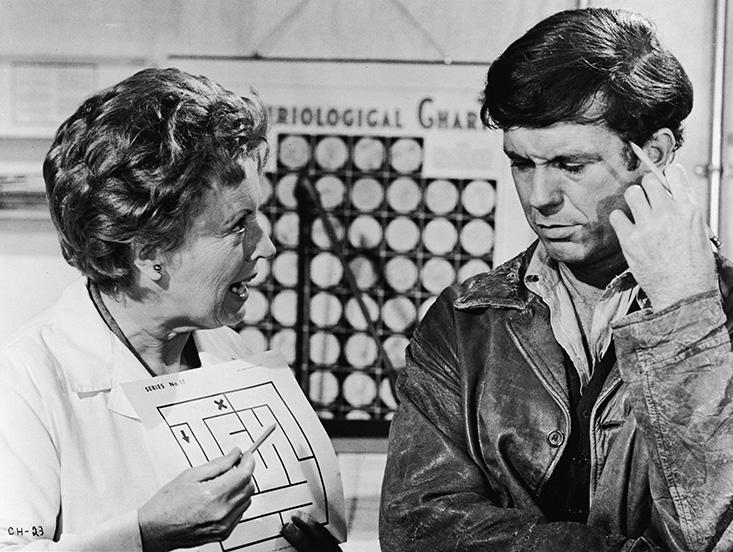
The sentiment is a familiar one: Common wisdom sometimes says that people who are good at math are not so good with words, and vice versa. This distinction has affected how we understand genius, suggesting it is an endowment of one particular faculty of the brain, and not a general superlative of the whole brain itself. This in turn makes the idea of apples-to-apples comparisons of intelligence moot, and the very idea of a 1,000 IQ problematic.