Offering multiple perspectives from many fields of human inquiry that may move all of us toward a more integrated understanding of who we are as conscious beings.
This is from Nautilus, this is an interesting look at the future of super-intelligent humans. I suspect we are not likely to see this in my lifetime (I'm 47), but I have no doubt that as we learn more and more about genetics and intelligence, it is inevitable that we will try to create who cities of the super-smart.
The question is will they be smart enough to realize they were created to be pawns in the battles between oligarchies.
Genetic engineering will one day create the smartest humans who have ever lived.
By Stephen Hsu Illustration by Gemma O’Brien
October 16, 2014
Lev Landau, a Nobelist and one of the fathers of a great school of Soviet physics, had a logarithmic scale for ranking theorists, from 1 to 5. A physicist in the first class had ten times the impact of someone in the second class, and so on. He modestly ranked himself as 2.5 until late in life, when he became a 2. In the first class were Heisenberg, Bohr, and Dirac among a few others. Einstein was a 0.5! My friends in the humanities, or other areas of science like biology, are astonished and disturbed that physicists and mathematicians (substitute the polymathic von Neumann for Einstein) might think in this essentially hierarchical way. Apparently, differences in ability are not manifested so clearly in those fields. But I find Landau’s scheme appropriate: There are many physicists whose contributions I cannot imagine having made. I have even come to believe that Landau’s scale could, in principle, be extended well below Einstein’s 0.5. The genetic study of cognitive ability suggests that there exist today variations in human DNA which, if combined in an ideal fashion, could lead to individuals with intelligence that is qualitatively higher than has ever existed on Earth: Crudely speaking, IQs of order 1,000, if the scale were to continue to have meaning.
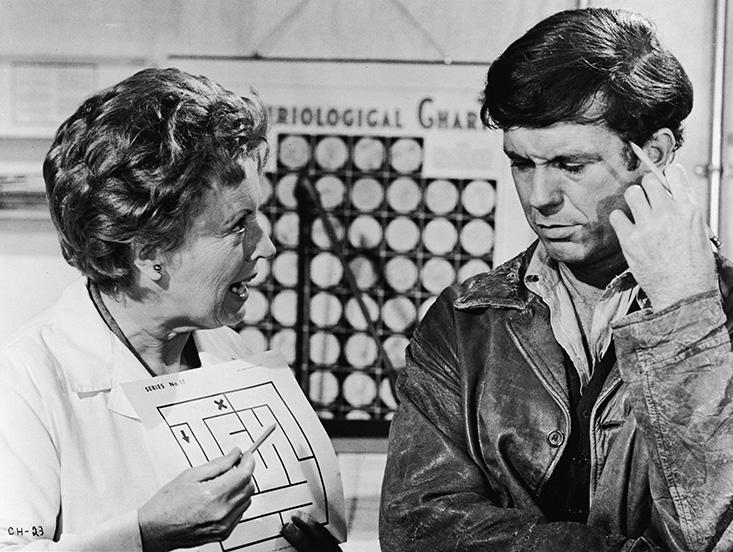
The Overnight Genius: Actor Cliff Robertson, who plays the part of bakery worker-turned-genius Charly (spelled Charlie in the novel), studies an illustration of a maze in this scene from the 1967 film adaptation of Flowers for Algernon.Photo by Cinerama/Courtesy of Getty Images In Daniel Keyes’ novel Flowers for Algernon, a mentally challenged adult called Charlie Gordon receives an experimental treatment to raise his IQ from 60 to somewhere in the neighborhood of 200. He is transformed from a bakery worker who is taken advantage of by his friends, to a genius with an effortless perception of the world’s hidden connections. “I’m living at a peak of clarity and beauty I never knew existed,” Charlie writes. “There is no greater joy than the burst of solution to a problem… This is beauty, love, and truth all rolled into one. This is joy.” The contrast between a super-intelligence and today’s average IQ of 100 would be greater still.
The possibility of super-intelligence follows directly from the genetic basis of intelligence. Characteristics like height and cognitive ability are controlled by thousands of genes, each of small effect. A rough lower bound on the number of common genetic variants affecting each trait can be deduced from the positive or negative effect on the trait (measured in inches of height or IQ points) of already discovered gene variants, called alleles. The Social Science Genome Association Consortium, an international collaboration involving dozens of university labs, has identified a handful of regions of human DNA that affect cognitive ability. They have shown that a handful of single-nucleotide polymorphisms in human DNA are statistically correlated with intelligence, even after correction for multiple testing of 1 million independent DNA regions, in a sample of over 100,000 individuals. If only a small number of genes controlled cognition, then each of the gene variants should have altered IQ by a large chunk—about 15 points of variation between two individuals. But the largest effect size researchers have been able to detect thus far is less than a single point of IQ. Larger effect sizes would have been much easier to detect, but have not been seen. This means that there must be at least thousands of IQ alleles to account for the actual variation seen in the general population. A more sophisticated analysis (with large error bars) yields an estimate of perhaps 10,000 in total.1 Each genetic variant slightly increases or decreases cognitive ability. Because it is determined by many small additive effects, cognitive ability is normally distributed, following the familiar bell-shaped curve, with more people in the middle than in the tails. A person with more than the average number of positive (IQ-increasing) variants will be above average in ability. The number of positive alleles above the population average required to raise the trait value by a standard deviation—that is, 15 points—is proportional to the square root of the number of variants, or about 100. In a nutshell, 100 or so additional positive variants could raise IQ by 15 points. Given that there are many thousands of potential positive variants, the implication is clear: If a human being could be engineered to have the positive version of each causal variant, they might exhibit cognitive ability which is roughly 100 standard deviations above average. This corresponds to more than 1,000 IQ points.
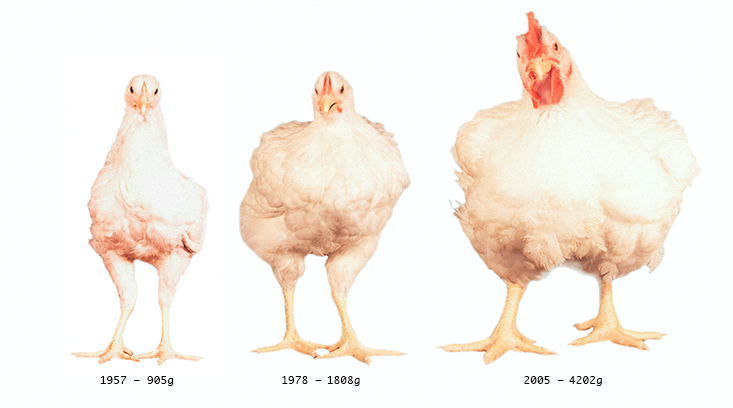
Supersize me: The breeding of domesticated plants and animals has changed some populations by as much as 30 standard deviations. Broiler chickens, for example, have increased in size more than four times since 1957. A similar approach could be applied to human intelligence, leading to IQs greater than 1,000.Zuidhof, M.J., Schneider, B.L., Carney, V.L., Korver, D.R., & Robinson, F.E. Growth, efficiency, and yield of commercial broilers from 1957, 1978, and 2005. Poultry Science 93, 1-13 (2014).
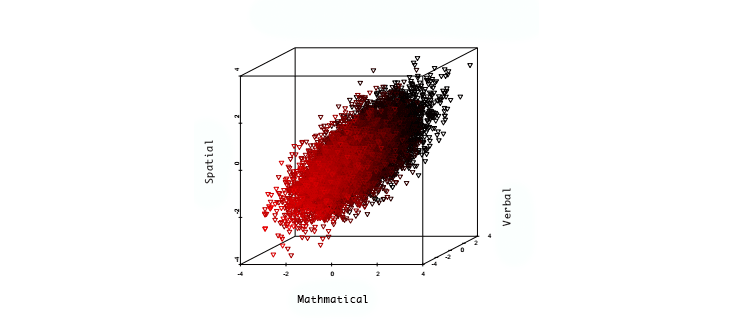
It is not at all clear that IQ scores have any meaning in this range. However, we can be confident that, whatever it means, ability of this kind would far exceed the maximum ability among the approximately 100 billion total individuals who have ever lived. We can imagine savant-like capabilities that, in a maximal type, might be present all at once: nearly perfect recall of images and language; super-fast thinking and calculation; powerful geometric visualization, even in higher dimensions; the ability to execute multiple analyses or trains of thought in parallel at the same time; the list goes on. Charlie Gordon, squared. To achieve this maximal type would require direct editing of the human genome, ensuring the favorable genetic variant at each of 10,000 loci. Optimistically, this might someday be possible with gene editing technologies similar to the recently discovered CRISPR/Cas system that has led to a revolution in genetic engineering in just the past year or two. Harvard genomicist George Church has even suggested that CRISPR will allow the resurrection of mammoths through the selective editing of Asian elephant embryo genomes. Assuming Church is right, we should add super-geniuses to mammoths on the list of wonders to be produced in the new genomic age. SOME of the assumptions behind the prediction of 1,000 IQs are the subject of ongoing debate. In some quarters, the very idea of a quantification of intelligence is contentious. In his autobiographical book Surely You’re Joking, Mr. Feynman!, the Nobel Prize winning physicist Richard Feynman dedicated an entire chapter to his quest to avoid the humanities, called “Always Trying to Escape.” As a student at the Massachusetts Institute of Technology, he says, “I was interested only in science; I was not good at anything else.” The sentiment is a familiar one: Common wisdom sometimes says that people who are good at math are not so good with words, and vice versa. This distinction has affected how we understand genius, suggesting it is an endowment of one particular faculty of the brain, and not a general superlative of the whole brain itself. This in turn makes the idea of apples-to-apples comparisons of intelligence moot, and the very idea of a 1,000 IQ problematic. But psychometric studies, which seek to measure the nature of intelligence, paint a different picture. Millions of observations have shown that essentially all “primitive” cognitive abilities—short and long term memory, the use of language, the use of quantities and numbers, the visualization of geometric relationships, pattern recognition, and so on—are positively correlated. The figure below displays graphically the ability scores of a large group of individuals, in areas such as mathematical, verbal, and spatial performance. The space of the graph is not filled uniformly, but instead the points cluster along an ellipsoidal region with a single long (or principal) axis.
Smart is smart: The Project Talent study looked at the mathematical, verbal, and spatial skills of over 100,000 ninth-graders, as displayed in this scatterplot. Ability in one area was positively correlated with ability in the other two.
These positive correlations between narrow abilities suggest that an individual who is above average in one area (for example, mathematical ability) is more likely to be above average in another (verbal ability). They also suggest a robust and useful method for compressing information concerning cognitive abilities. By projecting the performance of an individual onto the principal axis, we can arrive at a single number measure of cognitive ability results: the general factor g. Well-formulated IQ tests are estimators of g. Does g predict genius? Consider the Study of Mathematically Precocious Youth, a longitudinal study of gifted children identified by testing (using the SAT, which is highly correlated with g) before age 13. All participants were in the top percentile of ability, but the top quintile of that group was at the one in 10,000 level or higher. When surveyed in middle age, it was found that even within this group of gifted individuals, the probability of achievement increased drastically with early test scores. For example, the top quintile group was six times as likely to have been awarded a patent than the lowest quintile. Probability of a STEM doctorate was 18 times larger, and probability of STEM tenure at a top-50 research university was almost eight times larger. It is reasonable to conclude that g represents a meaningful single-number measure of intelligence, allowing for crude but useful apples-to-apples comparisons. Another assumption behind the 1,000-IQ prediction is that cognitive ability is strongly affected by genetics, and that g is heritable. The evidence for this assumption is quite strong. In fact, behavior geneticist and twins researcher Robert Plomin has argued that “the case for substantial genetic influence on g is stronger than for any other human characteristic.”2
In twin and adoption studies, pairwise IQ correlations are roughly proportional to the degree of kinship, defined as the fraction of genes shared between the two individuals. Only small differences due to family environment were found: Biologically unrelated siblings raised in the same family have almost zero correlation in cognitive ability. These results are consistent over large studies conducted in a variety of locations, including different countries. In the absence of deprivation, it would seem that genetic effects determine the upper limit to cognitive ability. However, in studies where subjects have experienced a wider range of environmental conditions, such as poverty, malnutrition, or lack of education, heritability estimates can be much smaller. When environmental conditions are unfavorable, individuals do not achieve their full potential (see The Flynn Effect).
Sidebar: The Flynn Effect
The Flynn effect, named after the philosopher James Flynn, refers to a significant increase in raw cognitive scores over the last 100 years or so—the equivalent of two standard deviations in some cases. This raises a number of thorny issues. Were our ancestors idiots? Is cognitive ability really so malleable under environmental influence (contrary to what has been found in recent twin studies)? The average person 100 years ago was massively deprived by today’s standards— much more so than we would ever be allowed to reproduce in a modern twin study. United States gross domestic product per capita is eight times higher now, and the average number of years people spend in school has increased dramatically. In the America of 1900, adults had an average of about seven years of schooling, a median of 6.5 years, and 25 percent had completed four years or less. Modern twin and adoption studies only include individuals raised in a much smaller range of environments—almost all participants in recent studies have had legally mandated educations, which in the U.S. includes at least several years of high school. There is a revealing analogy with height. While taller parents tend to have taller children (i.e., height is heritable), significant gains in average height which mirror the Flynn effect (amounting to an almost +2 standard deviation change) have been observed as nutrition and diet have improved.
SUPER-INTELLIGENCE may be a distant prospect, but smaller, still-profound developments are likely in the immediate future. Large data sets of human genomes and their corresponding phenotypes (which are the physical and mental characteristics of the individual) will lead to significant progress in our ability to understand the genetic code—in particular, to predict cognitive ability. Detailed calculations suggest that millions of phenotype-genotype pairs will be required to tease out the genetic architecture, using advanced statistical algorithms. However, given the rapidly falling cost of genotyping, this is likely to happen in the next 10 years or so. If existing heritability estimates are any guide, the accuracy of genomic-based prediction of intelligence could be better than about half a population standard deviation (meaning better than plus or minus 10 IQ points). Once predictive models are available, they can be used in reproductive applications, ranging from embryo selection (choosing which IVF zygote to implant) to active genetic editing (for example, using CRISPR techniques). In the former case, parents choosing between 10 or so zygotes could improve the IQ of their child by 15 or more IQ points. This might mean the difference between a child who struggles in school, and one who is able to complete a good college degree. Zygote genotyping from single cell extraction is already technically well developed, so the last remaining capability required for embryo selection is complex phenotype prediction. The cost of these procedures would be less than tuition at many private kindergartens, and of course the consequences will extend over a lifetime and beyond. The corresponding ethical issues are complex and deserve serious attention in what may be a relatively short interval before these capabilities become a reality. Each society will decide for itself where to draw the line on human genetic engineering, but we can expect a diversity of perspectives. Almost certainly, some countries will allow genetic engineering, thereby opening the door for global elites who can afford to travel for access to reproductive technology. As with most technologies, the rich and powerful will be the first beneficiaries. Eventually, though, I believe many countries will not only legalize human genetic engineering, but even make it a (voluntary) part of their national healthcare systems. The alternative would be inequality of a kind never before experienced in human history.
Stephen Hsu is Vice-President for Research and Professor of Theoretical Physics at Michigan State University. He is also a scientific advisor to BGI (formerly, Beijing Genomics Institute) and a founder of its Cognitive Genomics Lab. References 1. Hsu, S.D.H. On the genetic architecture of intelligence and other quantitative traits. Preprint arXiv:1408.3421 (2014). 2. Plomin, R. IQ and human intelligence. The American Journal of Human Genetics65, 1476-1477 (1999).
Vincent van Gogh, Isaac Newton, Wolfgang Amadeus Mozart, Ludwig van Beethoven, Edgar Allan Poe, Franz Kafka, Robert Schumann, Michelangelo, Virginia Wolf, Richard Strauss, Leo Tolstoy, John Keats, John Nash, and Ernest Hemingway, just to name a few. All of these great artists and thinkers suffered from some form of affective disorder (usually thought to be bipolar), alcoholism, psychosis, or were just plain weird (eccentric is probably a kinder word).
If we added in more recent creatives with mental illness, such as Kurt Cobain (deceased), Elliott Smith (deceased), Stephen Fry, Jim Morrison (deceased), Allen Ginsberg, Janis Joplin (deceased), Kristin Hersh, Syd Barrett (deceased), Brain Wilson, Ray Davies, Jim Carrey, Ian Curtis (deceased), Sylvia Plath (deceased), and the lest could go on and on. Those listed as deceased died from causes related to their mental illness, directly or indirectly.
Kristin Hersh (of Throwing Muses fame, as well as her amazing solo work) is a popular example of a gifted, perhaps "genius," musician whose mental illness shaped her work.
Here are the lyrics to a song she wrote 10 years before recording it because she was unable to play it "without throwing up." Notice there are no stanza breaks, bridges, or chorus - this is probably what it feels like to be manic - and it almost feels like she sings it in one breath. It's not surprising then that 1984 was the year she was first diagnosed with schizophrenia (later changed to bipolar).
The letter
September 29, 1984 Dear so and so
Gather me up because I'm lost
Or I'm back where I started from
I'm crawling on the floor Rolling on the ground
I might cry I won't go home
So here's the story
I am turning up in circles
And I'm spinning on my knuckles
Don't forget that there are circles left undone
And very close to me
Forgive me Comfort me
I'm crawling on the floor Rolling on the ground
There's a blanket wrapped around my head
I'm moving in a line that's shaped like this
I'm holding in my breath I have a room
Can you tell if I am lying
Don't forget that I'm living inside
The space where walls and floor meet
There's a box inside my chest
An animal stuffed with my frustration
Can you hear me?
Don't forget that I'm alone when you're away
You make me act like other people do
Forgive me Comfort me You comfort me
You make me die I'm gonna cry I won't go home
Don't kill the god of sadness
Just don't let her get you down
See that man inside that book I read
Can't handle his own head
So what the hell am I supposed to do?
I'd like to know how he died
My hands are shaking Don't you love me anymore
I only need a person, keep my shoulders
Stand around lie down
Move your hand above the floor
Gather me up because I'm lost
Or I'm back where I started from
I'm crawling on the ground Rolling on the floor
I'm gonna cry You look for me
Love Kristin, P.S. keep them coming
This is what it sounds like, notice how the tempo and voice change:
Hersh had this to say about her mental illness (she has talked about hearing voices and described music as something she has "almost no control over, like well-rehearsed Tourette's"), from an interview in The Guardian.
"I feel like music is real and bipolar disorder is not any longer," she says. "I hated the connection between mental illness and art. I couldn't stand that you had to be sick in order to create beauty, or confused to create truth. It made no sense. It was a huge relief to be essentially cured."
We accept without questioning that mental illness and creativity are intimately linked, and there is some genetic evidence that there is a real connection (see here [bipolar]). Other researchers have found slightly higher rates of some neuroses (here [particularly in writers]), although that connection is tenuous.
Perhaps at the most extreme end of the spectrum, in those we might consider true geniuses, there is a greater tendency toward psychological challenges. But in general there is very little real correlation, let alone causation, between creativity and insanity.
In the article below, Arne Dietrich dispels that "mythconception."
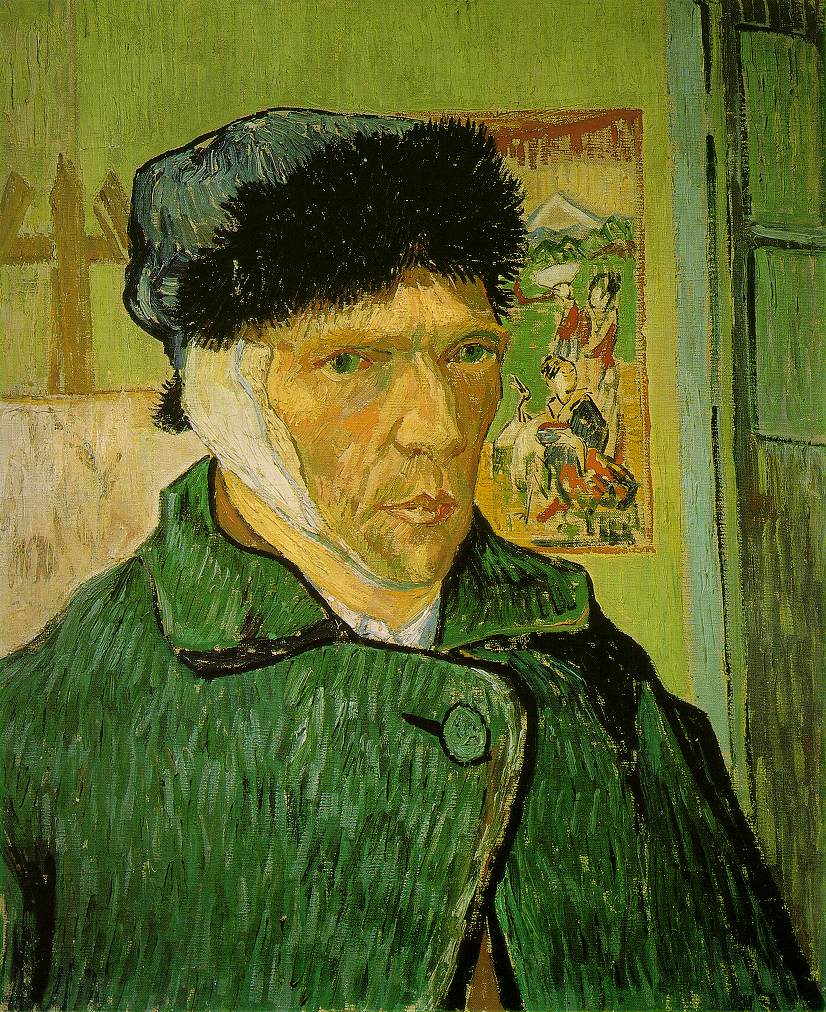
Arne Dietrich Department of Psychology, American University of Beirut, Beirut, Lebanon Take troubled Vincent van Gogh, famed 19th century painter who suffered from bipolar disorder, cut off part of his left ear, and eventually committed suicide. Or Isaac Newton, eccentric 17th century physicist, general headcase, and judging from his leviathan superego, a candidate for making the diagnostic criteria of at least half a dozen psychological disorders. No sooner do we contemplate this aberrant pair, a whole army of mad geniuses springs to mind led by such illustrious figures as autistic Wolfgang Amadeus, depressed Ludwig van, or tortured Edgar Allan. Like Franz Kafka, Robert Schumann, Michelangelo, Virginia Wolf, Richard Strauss, John Nash, or Ernest Hemingway, they were all, at some point in their lives, anguished, tormented, alcoholic, angst-ridden, manic, outright psychotic, or just plain weird. Add the mind-boggling savant syndrome, throw in a quote from a venerable ancient Greek for good measure—say, Aristotle: “No great mind has ever existed without a touch of madness”—and we have the making of mythconception (for more details, see Rothenberg, 1990; Schlesinger, 2009, 2012; Simonton, in press). Writers must by now have spilled gallons of ink over the purported link between creativity and madness filling shelves of books and articles (e.g., Post, 1994; Kaufman, 2005; Koh, 2006). Such tales from the insanity zone are nuggets of pure gold for the true believer in the unlock-your-infinite-creative-potential movement. What if we could just open “the doors of perception?” What would we have lost had Prozac turned Nietzsche into a regular bloke? Sadly, there is no sign that this kettle is going off the boil anytime soon. Hollywood can't get enough of it. Nor does the TED Conference, the new home of international meme laundering. The narrative of the troubled genius just strikes all the right chords for coverage in the tweet-sized attention span of modern news reporting. Not even the BBC can resist, having featured a headline last year reading: “Creativity ‘closely entwined with mental illness”’ (Kyaga et al., 2011; Roberts, 2012). Such frenzied enthusiasm and a few flag-waving generalization might be forgiven among those untouched by the purifying powers of statistical reasoning, but one would expect more professional scrutiny in the rarefied air of peer-reviewed psychology journals. Far from it. Even in the academic ether do respectable people, even those of the highest scientific standing, regularly rise to levels of speculation that can safely be called imprudent (see, for instance, Jamison, 1993). So what, then, is the link? Is there indeed just a thin line separating insanity from genius? The best place to start looking for an answer, one would think, is the scientific literature—if that is the right phrase to use here. I say this because one quickly discovers, while perusing this literature, that there does not seem to be any scientific data on the matter. The entire thesis of the highly-gifted mentally ill rests entirely on an unholy marriage of case reports and anecdotal storytelling (see for instance, Jamison, 1993 or Post, 1994). It is not uncommon, for instance, to read articles galloping through so many esoteric live episodes, irrelevant factoids, and so much delicious gossip (did you know that the reclusive William Cavendish insisted on having a chicken roasting at all hours of the day?), that the validity of the link is all but a foregone conclusion. But it is one thing to be enchanted by folklore, it is quite another to turn a blind eye to lethal doses of selective data reporting. Like no other field of psychology, the study of creativity is beset with nebulous concepts, combustible propositions and myopic theorizing, to say nothing of all the vacuous fluff out there. The fog enshrouding this particular Potemkin village is nevertheless easy to lift. We need only to drill into some basic numbers on mental illness that continue to be enthusiastically ignored—incidence and prevalence data, to be precise—take the wraps off an astonishing medley of cognitive biases—base rate fallacy, availability heuristic, illusionary correlations and the like—and unpack a few question-begging definitions of creativity. As every undergraduate student knows, to establish a positive correlation between event A and some other event B, you need to collect baseline data on the frequency of both events. According to the (World Health Organization, 2013), mental illness, unlike genius, is by no means a rare phenomenon. Mood disorders, such as the various forms of bipolar and depressive disorders, occur in about 10% of the population. This amounts to hundreds of millions of people! Similar prevalence rates exist for anxiety disorders, which makes for a few more—wait for it—hundreds of millions of people! There is somewhat less suffering from schizophrenia, substance abuse disorder, the different kinds of personality disorders and autism, but enough to add several tens of millions more. The Centers for Disease Control and Prevention (2001) estimated in 2001—when the world's population stood at 6.2 billion, or about a billion less than today—that there were some 450,000,000 people living in poor mental health. The lifetime incidence of people making at least a single visit to the mind's Pre-Hell is said to be significantly over 50%. What do these staggering numbers mean? In the somber land of regression curves, they tell us that we can spare ourselves the trouble of determining the frequency of eminence in the population. For, irrespective of how we define creativity, let alone genius, this number must be less—vastly less. The simple truth of the matter is that the VAST majority of creative people are not mentally ill and, more importantly, the VAST majority of those suffering from psychopathology are not geniuses. Seen in this light, the claim that creativity and insanity somehow go together sounds more like densely ignorant nonsense, the stunted idea of someone who spent too many hours in a hot tub. It isn‘t my goal here to make a case for the opposite claim, but, by all evidence, it is hard to escape that conclusion. By the looks of these numbers, I would wager good money that the link between mental illness and genius is negative. To be exact: extremely negative. This isn’t to say that there might be something to it, perhaps if the data is parsed differently (see Simonton, in press), but this link, unqualified as in the BBC headline above, is wrong—outright! This would seems to hold not only for psychopathology tout court, but also for each psychological disorder alone, as well as, to restrict things further to severe cases of a given disorder or to specific types of creativity (Waddell, 1998). That this fact has been almost universally overlooked, like one would a tic, is as crazy as it is amazing. Most psychology undergraduate students, if they are reasonably attentive, would recognize the mad-genius howler as a textbook case of the base rate fallacy (Kahneman and Tversky, 1973). This common statistical sin, also known as base rate neglect, concerns the tendency to focus on specific information and ignore generic, baseline information, even when—and here is the rub—the latter is presented. Thus, people greatly underestimate the probability of a genius being totally sane and greatly overestimate the probability of an individual with mental illness being creative. The fact is that a very large proportion of creative people have no pathological symptoms (Simonton, 2005, in press). Incidentally, the same reference point neglect occurs for insanity and violence (Stuart, 2003). This link, too, is strongly negative, despite the perception we get from the media. But it doesn't end there. This error in thinking is so extensive and the opportunities for flummoxing so abundant that this matter is sure to continue to generate more heat than light. It is a disarming reflection of our reluctance, or inability, to think statistically that we just can't seem to snap, crackle, pop out of it. What makes our intuition misfire by such a wide margin? Seeing the world through our own warped force field is standard operating procedure of course. Psychologists have long accepted the sobering fact that our mind comes with a whole stack of cognitive biases preloaded and preinstalled. Without getting too technical about it, the one doing most of the dopamine squirting here bears the inauspiciously label “availability heuristic.” It is a mental shortcut that estimates the likelihood or frequency of an event by the ease with which a specific instance of it comes to mind. So when you think about the creativity-madness link, the odd behaviors of Michael Jackson are more likely to guide you than the 99% media-invisible normals. The availability heuristic as a cognitive mechanism was first proposed and demonstrated by Kahneman and Tversky (1973). In a now classic experiment, they asked people to judge the likelihoods of an English word either starting with the letter K or having a K as its third letter. With people more readily thinking of kitchen, kennel or kickboxing than ankle, Eskimo or acknowledge, their participants overestimated the number of words starting with a K and underestimated those with a K in third position. An English text, however, has about three times as many words with a third-place K; they are just not as available in memory. What's more, the availability heuristic also causes illusionary correlations, for the same reason. This leads to the perception of a non-existent relationship between two events simply because they occurred together at some point in the past (Chapman, 1967). Alternatively, this false impression can also arise from the way people incorrectly integrate contingency information (Perales and Shanks, 2007). Naturally enough, the more vivid the pairing, the more people tend to enduringly conflate the events and overestimate the frequency of their co-occurrence, and thus their causal relationship. The loopy logic then comes full circle with the confirmation bias, the tendency people have of confirming their existing beliefs. Cases that substantiate the belief, and ambiguous information that can be tweaked that way, strengthens the imaginary connection, while cases that violate or disconfirm it are ignored. Consider this rather typical finding from Redelmeier and Tversky (1996), who asked arthritis patients to track the weather over 15 months and judge to what extent their condition was related to it. While the correlation was actually zero, virtually all were certain that their level of pain depended on the weather. We have here a knockdown one-two punch then. The availability heuristic serves as the seed for the illusionary correlation between madness and genius, and the confirmation bias supplies the fertilizer that nourishes it. I could go on and on. In fact, I think I will. Pulling conceptual rabbits out of metaphysical thin air is routine business in creativity research. Open any source, academic or otherwise, and you will find the concept of creativity linked to, say, low arousal, defocused attention, right brains, unconscious processes, lateral thinking, or altered states of consciousness, to name but a few popular themes, when common sense alone tells you that their opposites are also sources of creative thinking (Dietrich, 2007). Consider, for instance, a study by Kyaga and colleagues (2011) that searched the database of Swedish registries for the insanely gifted, as it were. The real humdinger of the study was the operational definition of creativity. They found mental illness to be more common in people holding “creative occupations“—artists, writers, and scientists—compared to the evidently insipid army of accountants and auditors. Not only would this be news to engineers in Silicon Valley, but also the authors ask us to accept that writers and graphic designers are—by definitional fiat—creative. This is nuts. For the record, this study is the one that led to the BBC headline quoted earlier. All of this would seem to suggest that some serious scientific work needs to be done on the matter. In addition to controlling for cognitive biases, measurement and analytic issues can also contribute to a false assessment of the creativity-madness link (Simonton, in press). Until such time, I take my inspiration form the humanistic perspective and prefer to think, just like Abraham Maslow and Carl Rogers did, that creativity is associated with mental health. Standing tall at the top of the hierarchy of needs, creative imagination and expression is the hallmark of a well-adjusted, self-actualizing, fully functioning person. References
Chapman, L. J. (1967). Illusionary correlations in observational report. J. Verb. Learn. 6, 151–155. doi: 10.1016/S0022-5371(67)80066-5 CrossRef Full Text
Dietrich, A. (2007). Who is afraid of a cognitive neuroscience of creativity? Methods 42, 22–27. doi: 10.1016/j.ymeth.2006.12.00. CrossRef Full Text
Jamison, K. R. (1993). Touched with Fire: Manic-Depressive Illness and the Artistic Temperament. New York, NY: Free Press.
Kahneman, D., and Tversky, A. (1973). On the psychology of prediction. Psychol. Rev. 80, 237–251. doi: 10.1037/h0034747 CrossRef Full Text
Kaufman, J. C. (2005). The door that leads into madness: eastern european poets and mental illness. Creat. Res. J. 17, 99–103. doi: 10.1207/s15326934crj1701_8 CrossRef Full Text
Koh, C. (2006). Reviewing the link between creativity and madness: a postmodern perspective. Educ. Res. Rev. 1, 213–221.
Kyaga, S., Lichtenstein, P., Boman, M., Hultman, C., Långström, N., and Landén, M. (2011). Creativity and mental disorder: family study of 300 000 people with severe mental disorder. Br. J. Psychiatry 199, 373–379. doi: 10.1192/bjp.bp.110.085316 Pubmed Abstract | Pubmed Full Text | CrossRef Full Text
Perales, J. C., and Shanks, D. R. (2007). Models of covariation-based causal judgment: a review and synthesis. Psychon. Bull. Rev. 14, 577–596. doi: 10.3758/BF03196807 Pubmed Abstract | Pubmed Full Text | CrossRef Full Text
Post, F. (1994). Creativity and psychopathology: a study of 291 world-famous men. Br. J. Psychiatry 165, 22–34. Pubmed Abstract | Pubmed Full Text
Redelmeier, D. A., and Tversky, A. (1996). On the belief that arthritis pain is related to the weather. Proc. Natl. Acad. Sci. U.S.A. 93, 2895–2896. Pubmed Abstract | Pubmed Full Text
Rothenberg, A. (1990). Creativity and Madness: New Findings and Old Stereotypes. Baltimore, MD: Johns Hopkins University Press.
Schlesinger, J. (2009). Creative mythconceptions: a closer look at the evidence for the “Mad Genius” hypothesis. Psychol. Aesthet. Creativity Arts 3, 62–72. doi: 10.1037/a0013975 CrossRef Full Text
Schlesinger, J. (2012). The Insanity Hoax: Exposing the Myth of the Mad Genius. New York, NY: Shrinktunes Media.
Simonton, D. K. (2005). Are genius and madness related? Contemporary answers to an ancient question. Psychiatry Times 22, 7.
Simonton, D. K. (in press). More method in the mad-genius controversy: A historiometric study of 204 historic creators. Psychol. Aesthet. Creativity Arts.
Stuart, H. (2003). Violence and mental illness: an overview. World Psychiatry 2, 121–124.
Waddell, C. (1998). Creativity and mental illness: is there a link? Can. J. Psychiatry 43, 166–173. Pubmed Abstract | Pubmed Full Text
David Whitley is an archeologist specializing far western North American rock art. In this TEDx Talk from the end of 2013, he talks about human creativity and mental health are their deep interconnection.
Archeologist David Whitley suggests that the strengths and weaknesses of humans are deeply intertwined and inter-dependent. He shares his journey, taking us back 40,000 years, to discover the origin of human artistic genius. David decided to become an archaeologist when he was three years old, and determined that he would study cave paintings (rock art) when he was 12. No one told him, at the time, that rock art was an ignored topic in American archaeology. Not deterred, David continued his studies and completed his doctorate at UCLA. He primarily writes about prehistoric art and religion, which he finds harder to study, and consequently much more interesting, than the standard archaeological topics of tools, technology, and diet. His most recent book is Cave Paintings and the Human Spirit: The Origin of Creativity and Belief David’s focus lies in the rock art of far western North America. His understanding of this art primarily derives from Native American ethnography–anthropological accounts of tribal religions and practices. He uses this understanding as a springboard for examining the ultimate origin of art and religion. David lives near Tehachapi, California, in a forest of blue oak trees. When he’s not working or writing, he rides his faithful old ranch horse, Twelve, through the mountains. “It’s the best way to think,” says David.
BBC Horizon created this documentary pitting seven geniuses within their given field against each other to see which one is the most intelligent, except we have many divergent ideas about what constitutes intelligence.
Can you think of 100 different uses for a sock? How would you cope with glasses that turn everything upside down? What’s your emotional intelligence? Can you create a work of art in ten minutes? Horizon takes seven people who are some of the highest flyers in their field – a musical prodigy, a quantum physicist, an artist, a dramatist, an RAF fighter pilot, a chess grandmaster and a Wall Street trader. Each is put through a series of tests to discover who is the most intelligent? The principle way that we measure intelligence, the IQ test, remains popular and convenient. Yet most psychologists agree that it only tells half the story… at most. Where they disagree is how to measure intelligence, for the simple reason that the experts still don’t know exactly what it is.
"Great wits are sure to madness near allied, and thin partitions do their bounds divide" (Dryden). There often seems to be a link between creativity and mental illness. Many great poets, playwrights, artists and composers suffered from depression, alcoholism, obsessionality, bipolar or psychotic disorders at some time in their lives. How strong is the link and what might account for it? Are these disorders beneficial to the creative process or a drawback that must be overcome? For transcript and download versions of this lecture, please visit the event's page on the Gresham College website: Genius or Madness?
BIO Dr. Glenn Wilson As well as being one of Britain's best-known psychologists, Glenn Wilson is the Visiting Gresham Professor of Psychology. He has appeared on numerous television and radio programs and has published more than 150 scientific articles and 33 books. He is an expert on individual differences; social and political attitudes; sexual behavior, deviation and dysfunction; and psychology applied to the performing arts. Not one to shy away from contention, his most recent books include: Born Gay: The Psychobiology of Sex Orientation, The Secret of Lasting Love, and Psychology for Performing Artists. He has lectured widely abroad, having been a guest of the Italian Cultural Association, and a visiting professor at California State University, Los Angeles, San Francisco State University, Stanford University, the University of Nevada, Reno and Sierra Nevada College. Apart from being a professional psychologist, Dr. Wilson trained as an opera singer at the Guildhall School of Music and Drama in London and still undertakes professional engagements as an actor, singer and director.
Additional information and resources:
This is a part of Glenn Wilson's series of lectures as Visiting Professor of Psychology, 2012/13. The other lectures are as follows:
In the 1980s, Stevie Ray Vaughan tore through the international music scene like a Texas tornado. His amazingly fluid and dexterous guitar playing on a series of platinum albums established Vaughan as a household name and helped spark a blues revival. But in the summer of 1990 a helicopter he was riding on crashed into a hill in Wisconsin, and the whirlwind had passed. This concert film captures Vaughan in full force. It was made on July 15, 1985, during Vaughan’s second appearance at the Montreux Jazz Festival. His first, in 1982, had seemed like a disaster at the time. Vaughan and his band Double Trouble had never made a record and were virtually unknown outside of Texas in 1982, and their performance at Montreux was met by booing from the some members of the audience. Vaughan was shaken. He had never been booed before. But the 1982 Montreux performance turned out to be the most important of Vaughan’s career, as Chris Gill explains in Guitar World:
David Bowie was in the audience, and he made a point of meeting Vaughan and his manager in the after-hours lounge. John Paul Hammond, the son of record producer John Hammond, also saw the show and asked for a tape of the performance to give to his father. Jackson Browne caught the band’s performance in the after-hours lounge, and he sat in with the group until early the next morning. Within the next few months, Browne invited Vaughan and Double Trouble to his L.A. studio to record a demo, Bowie asked Stevie to appear on his next album [Let's Dance], and John Hammond, who helped develop the careers of Bob Dylan and Bruce Springsteen, helped the band sign a deal with Epic Records and offered to produce their debut album. The rest, as the cliché goes, is history.
So the 1985 Montreux appearance was something of a triumphal return for Vaughan. There was no booing this time. Vaughan had a pair of platinum albums under his belt, and he and Double Trouble were touring Europe to promote their third album, Soul to Soul. In the film, Vaughan and the band are introduced by festival founder Claude Nobs, who gave them their big shot in 1982. The trio of Vaughan on guitar and vocals, Tommy Shannon on bass, and Chris Layton on drums had just been expanded to include Reese Wynans on keyboards. They play 13 songs, including three with Texas bluesman Johnny Copeland, who joins them on “Cold Shot,” “Tin Pan Alley” and “Look at Little Sister,” in which Copeland and Vaughan trade blistering guitar solos. Another song, Copeland’s “Don’t Stop By the Creek, Son,” was apparently performed that night but cut from the film. The rest of the concert appears to be intact. Here’s the set list:
If you are a jazz fan, and especially if you are a Miles Davis fan, this offering from Open Culture is very cool - a definitive biography of one of the great jazz musicians of all time.
Miles Davis was indisputably one of the greatest musicians in jazz history. This 2001 documentary from BBC Four traces the outline of Davis’s extraordinary life: his musically precocious childhood in St. Louis; his move to New York City after graduating from high school in 1944 (ostensibly to attend Julliard, but really to immerse himself in the jazz club scene and connect with his idols Dizzy Gillespie and Charlie Parker); his early bebop period; The Birth of Cool and his masterpiece, Kind of Blue; and his continued reinvention of himself in the 1960s and 1970s, when he incorporated rock and funk influences into his music.
The Miles Davis Story features interviews with many of the people who knew Davis best, including his wives and some of the great musicians who worked with him, like Jimmy Cobb, Shirley Horn, Clark Terry and Keith Jarrett. The film also includes older interviews with Dizzy Gillespie and with Davis himself, who died a decade earlier. The Miles Davis Story runs just over two hours, and will be added to our growing archive of Free Movies Online. It’s a great way to learn about the life of Davis, but to actually hear his music we recommend you revisit our earlier post, ‘The Sound of Miles Davis’: Classic 1959 Performance with John Coltrane.
The sentiment is a familiar one: Common wisdom sometimes says that people who are good at math are not so good with words, and vice versa. This distinction has affected how we understand genius, suggesting it is an endowment of one particular faculty of the brain, and not a general superlative of the whole brain itself. This in turn makes the idea of apples-to-apples comparisons of intelligence moot, and the very idea of a 1,000 IQ problematic.