A week or two ago, I posted an article on one guy's first experience of a sensory deprivation flotation tank. Strangely, here is another one, this time from Nautilus, after several years of never seeing anything written on this topic.
Are sensory deprivation tanks making a comeback?
Postcards From the Edge of Consciousness
Sensory deprivation goes from CIA torture manuals to a yoga studio near you.
By Meehan Crist | Illustration By Vivienne Flesher
August 14, 2014
I AM FRESH from the shower, wrapped in just a towel and smelling of mild herbal soaps (both shower and soaps are required), standing at the door to the tank. It resembles a shower door—knee-high, sliding—and opens to reveal a tub bigger than a bathtub but smaller than a hot tub, with a bulge in the middle. The tub is molded from a pale blue material that reminds me of above-ground Jacuzzis from the ’70s. The walls are padded with soundproof material. Overhead, the ceiling looks low enough to touch. There are no windows. Sam Zeiger had this tank built into his Chelsea apartment nearly 30 years ago and he is currently down the hall, in the living room, which has been modestly closed off from this half of the apartment by a folding screen. I am not uncomfortable, though I am, perhaps, in a state of nervous anticipation. This is my first float.
Leaving my towel outside, I step in and slide the door shut behind me. The air is humid and close. The smell reminds me of the inside of an old sailboat—salt and weathered fiberglass. The water is loaded with more salt than the Dead Sea, and both air and water are kept at skin temperature, so that as you float it is hard to say where body ends and environment begins. Once the lights are off, the darkness is total. The tank offers a reduced sensory experience as close to nothingness as you can get.
Slowly, so as not to disturb the water into motion, I lower myself down. The water feels thick. Slippery with salt. I lie back and feel for the big round button I’ve been told will be on my left. When I press it the lights go dark, and I begin floating.
YOU'LL HEAR things that you don’t normally hear,” Zeiger had said as he prepped me in his living room. “Your heart beat, your blood flow. A lot of people report hearing a quiet, high-pitched whine, which is your nervous system.” The proprietor of Blue Light Floatation, Zeiger is neither scientist nor clinician, but for the past 29 years, he has hosted a steady stream of floaters and attained something like cult status. The flotation community leans a bit New Age, and Zeiger’s living room, which smells pleasantly herbal, features floor-to-ceiling bookshelves lined with titles such as Indestructible Truth, You Are the Eyes of the World, and The Attention Revolution. Tibetan prayer flags are draped over a lamp at one end of the brown leather couch. I have come because flotation has seen a popular resurgence in recent years, with commercial tank operators popping up across the country, and I’ve heard stories both fantastic and mundane about the reduced stimulus experience. It can cure terrible, lifelong phobias. It helps with chronic pain. It is a portal to other dimensions. It is relaxing.
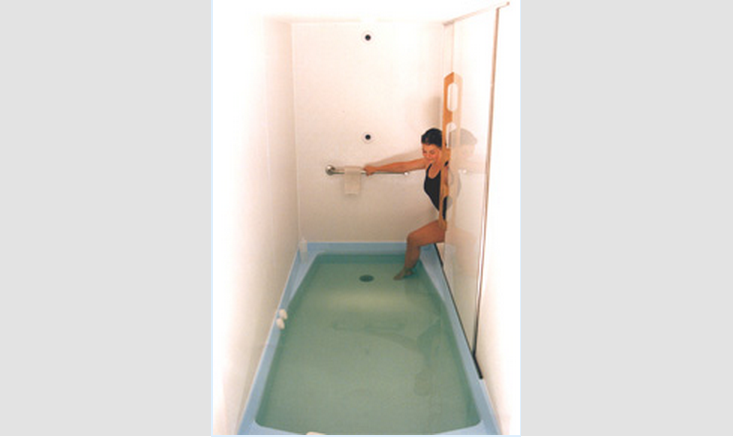 Into the Tank: Today, most commercial flotation tanks are stand-alone boxes with a hatch that opens at one end. But some, like the tank in Sam Zeiger’s apartment in Chelsea, are specially-designed rooms that are more like a large shower stall.David Seefelt/High-TechFloatationResearch suggests that something rather remarkable happens when sensory stimulus from the external world is reduced to nearly nothing. REST, or Restricted Environmental Stimulation Therapy, as floating and the related dry chamber methods are known to researchers, has been shown to slow the heartbeat, reduce blood pressure, and release muscle tension. It increases levels of endorphins and lowers levels of adrenaline, as well as stress hormones such as cortisol. Some of these effects can be measured across sessions. Cortisol levels, for example, tend to go down after the first session, then go down further and stay down after repeated sessions. Clinically, REST has been shown to help with tension headaches, hypertension, and chronic pain, as well as performance enhancement. Basketball players, tennis players, dart players, skiers, and pilots all perform better after REST. Scores on memory and cognition tests improve. Some subjects report powerful emotional experiences, as in a particularly intense session of psychotherapy, and nearly all subjects report greater relaxation and an elevated mood after floating.
But why? Sensory Deprivation: Fifteen Years of Research, published in 1969 and edited by John P. Zubek, was the first authoritative overview of what was then called the “sensory deprivation” literature. The book catalogues an array of promising findings, but as REST researcher and pioneer Peter Suedfeld noted in a 1994 issue of the Journal of Environmental Psychology, “researchers had generated many facts, but had failed to propose and test a theory that would explain the wide-ranging and impressive changes in functioning that were evidenced during or after REST.” Nearly a decade later, we have more facts and a growing store of anecdotal evidence, but a scientific explanation is far from complete. Beyond the tantalizing promise of clinical applications, a better understanding of how flotation affects the mind and body may offer insight into a common but poorly-understood twilight phase of consciousness that occurs between waking and sleeping, when the lines between conscious and unconscious begin to blur and the mind begins to unwind.
AT FIRST I cling to the tank, fingers splayed and pressing up against the sides. Then I let go. My mind offers this: unmoored. The saltwater makes me so buoyant that I float without any effort at all. The darkness behind my eyelids is indistinguishable from the darkness of the tank. But I am naggingly aware of a line along my skin where water meets air. I think about this line, and whether I should be thinking about it. Some say that the experience of flotation is similar to meditation, and this is certainly reminiscent of meditation—the mind twitching and fretting like a puppy tied to a lamppost.
But the sensory experience of floating is like nothing else. The only sounds come from inside the body: the whooshing rush of each breath filling then escaping the lungs, the echoing thump of the heart in the chest. At some point (has it been five minutes? 10 minutes?), I realize I can’t tell if my eyes are open or closed. When I twitch my eyelids to check, the sound of the ensuing blink is a resonant boom. A rumbling begins somewhere behind my right ear, as if a truck is coming around the curve of my head, and as it thunders past, I realize an air bubble has been loosed from my hair. There are subtler noises as well, a regular swish like the hem of a woman’s dress brushing a marble floor—my blood circulating.
Suddenly, my left foot touches the side of the tank and my whole body tenses. I use my toes to push off, followed quickly by my right foot bumping up against the other side. I have pushed too hard. Though I can’t see anything, I am acutely aware of the boundary the tub inscribes around me. After a few more bumps and gentle pushes, my body and the water make peace, and I stop fixating on the tank. Then I discover I can’t think about the tank. I can’t mentally place where the sides might be or where my body might be in relation to anything else. My brain keeps asking my body, where am I? And my body keeps saying, um, I don’t know…
This is when I begin to get dizzy. I swear my body is spinning clockwise on the surface of the water, so I prepare to bump the left side of the tank, but I don’t. This is wildly disorienting. It’s as if the tank has disappeared and I’m spinning in endless space.
BECAUSE flotation simulates the weightless conditions of space, NASA has used flotation tanks to train its astronauts.
BUT BEFORE astronauts and the New-Age embrace, there were Cold War fears about brainwashing. The reduced sensory environment of REST grew out of experiments secretly funded by the CIA in the 1950s and 60s, on what was then termed “sensory deprivation.” In the early 1950s, remarkable video footage surfaced which showed American GIs taken captive in Korea denouncing capitalism and imperialism, prompting the CIA to ask: how could these extraordinary confessions have been extracted? The intelligence community suspected a powerful new mind-control technique. In a sensational and hugely popular book published in 1951, Brain-Washing in Red China, the journalist and secret CIA propagandist Edward Hunter proposed the term “brain-wash,” a literal translation of the Chinese his nao, to “wash brain.” If Communist powers had figured out powerful new mind-control techniques, then Western powers needed to catch up. It was a psychological arms race that could only be run by scientists studying the human mind.
The CIA’s interest in sensory deprivation as a potential mechanism of brainwashing was sparked by the illustrious psychologist Donald Hebb of McGill University. Hebb is best known for the famous dictum “cells that fire together wire together,” referring to a theory about neural mechanisms now foundational to modern neuroscience. Less well known is the fact that he attended a secret meeting at the Montreal Ritz-Carlton on June 1, 1951, along with high-ranking representatives from the defense departments of three countries—Britain, the United States, and Canada. At this meeting, the question of brainwashing was raised. Hebb, then chair of the Human Relations and Research Committee of the Canadian Defense Research Board, speculated that prisoners might be more malleable if placed into isolation with limited sensory input. The others were impressed. Three months later, he began research funded by Canada’s Department of National Defense (and carefully monitored by the CIA) into the effects of sensory deprivation. As Alfred McCoy reports in A Question of Torture: CIA Interrogation, From the Cold War to the War on Terror, within the intelligence community, one stated goal of the research was to prepare soldiers taken hostage and subjected to mind-control techniques. Hebb published the results in a 1954 issue of the Canadian Journal of Psychology under the guise of a study on monotonous environments such as those experienced by long-distance truck drivers.
The experimental setup Hebb designed looks very little like today’s flotation tanks. Twenty-two male student volunteers were paid $20 a day, twice the average daily wage, to lay on a bed in a chamber designed to induce “perceptual isolation.” The students wore a translucent plastic visor that emitted diffuse light to prevent “pattern vision,” as well as cotton gloves and cardboard cuffs that went from elbow to fingertips to reduce tactile stimulation (see The Early Days). A U-shaped foam rubber pillow helped dampen auditory stimuli, but an air conditioner in the ceiling remained on 24 hours a day, emitting a steady hum of white noise. The students were allowed breaks to use the bathroom and eat meals, which many ate sitting at the foot of the bed. They were invited to stay as long as they liked, but most could not make it past two or three days.
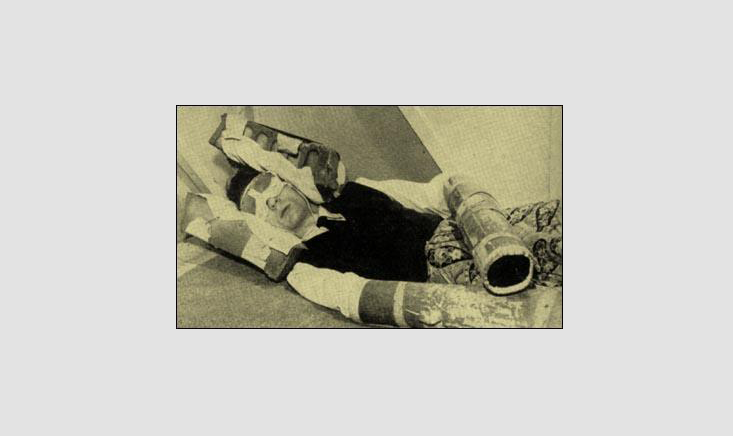 The Early Days: In the 1950s and ’60s, early sensory deprivation researchers experimented with a wide array of techniques for reducing sensory stimulus. Here, one of Hebb’s volunteer subjects lies on a bed in a specially designed chamber, wearing a visor to reduce visual stimulation, padding around the ears to reduce auditory stimulation, and cuffs from the elbow past the fingertips to reduce tactile stimulation. Most subjects could not stand to remain in such conditions for more than two days.Credit UnknownThe results were startling. Subjects’ cognitive skills deteriorated rapidly and most experienced powerful hallucinations. As one of Hebb’s graduate students, Woodburn Heron, wrote in a 1956 issue of Scientific American, “Our subjects’ hallucinations usually began with simple forms… Then the visions became more complex, with abstract patterns repeated like a design on wallpaper, or recognizable figures, such as rows of little yellow men with black caps on and their mouths open. Finally, there were integrated scenes: e.g. a procession of squirrels with sacks over their shoulders marching “purposefully” across the visual field, prehistoric animals walking about in a jungle, processions of eyeglasses marching down a street.” Some subjects experienced auditory or tactile hallucinations, as well—“one had a feeling of being hit in the arm by pellets fired from a miniature rocket ship he saw.” Many participants refused to finish the experiment.
The CIA, however, was most interested in the students’ receptivity to beliefs that had previously been rejected. Before going into the chamber, participants were given various tests and questionnaires, including one gauging belief in paranormal phenomena. While the participants were in the chamber, Hebb’s team played “a recording of a talk arguing for the reality of ghosts, poltergeists, and other supernatural phenomena.” Apparently, even those who had reported not believing in such phenomena found this talk quite convincing. “Some of them reported that for several days after the experiment they were afraid they were going to see ghosts.”
Realizing the implications of his work, Hebb soon abandoned the study of sensory deprivation, but flame had been put to fire. Seven years after the McGill study was published, 230 articles on the subject had appeared in scientific journals, and behind closed doors controlling sensory environments had emerged as a way to soften prisoners before interrogation. In a confidential report to the Canadian Defense Research Board, Hebb noted that four of the students in his study “remarked spontaneously that being in the apparatus was a form of torture.” In the last interview he gave before his death, he said, “It was clear when we gave our report to the Defense Board that we were describing formidable interrogation techniques.”
This formidable potential was not lost on the CIA. During the 1950s and ’60s, multiple CIA projects funded scientific research on psychological torture and interrogation techniques, including sensory deprivation. The most expansive was the now-notorious MKUltra project, which used (sometimes unwitting) American and Canadian citizens as test subjects in a wide-ranging research program on mind control. As McCoy notes, the CIA dispensed $25 million for psychological experiments on human subjects to researchers at non-governmental organizations, including 44 universities and 12 hospitals. The chilling outcome of this research was made public only after The New York Times published an exposé on U.S. involvement in torture and assassinations in Honduras, and the CIA was forced to release the interrogation training manual known as KUBARK. Dated 1963, the last year of the MKUltra program, KUBARK details interrogation methods that include periods of both sensory overstimulation and sensory deprivation.
Researchers now recognize that many of the dramatic effects of Hebb’s research were not the result of reduced stimulus, per se, but to monotonously-repeated overstimulation: the lighted visor, the white noise, even the pressure of the bed against the back. But the study became recognized as a landmark investigation into sensory deprivation. And sensory deprivation continues to be associated with torture, obscuring the fact that dramatic negative effects such as hallucinations, intense anxiety, and mental breakdown are not merely a result of restricted sensation, but of how sensation is manipulated and under what circumstances.
I AM reluctant to admit it, but some corner of my mind was vigilant for the onset of hallucinations. For regression and psychological breakdown. For the dissolution of the self into nothing.
I try to relax. Breathe slower and deeper. I try to release the tension in my legs and arms, to let my head drop into the water as it might drop onto a pillow. This is harder than you might think. My neck stretches a tiny bit longer. My head drops a fraction of an inch. And then I am stuck. Focusing on my shoulders, I think, relax. The tension maintains a vice grip. Goddamnit, I think, relax.
What I did not expect: once I stopped trying so hard to relax, my attention turned inward, burrowing through bodily sensation like geological layers of sediment. I become aware of the curve and stretch of each muscle, the pull of tendon and ligament. I notice the meat of my upper arms as distinct strips of flesh around a solid core of humerus. I feel my ribs as what they are, a bone case for my organs. Cosmonaut of my own anatomy, I go deeper and become aware of stomach and gut, the spaces carved out for food and waste and fetus, all of it pulsing as the bone case yawns open, then draws shut, with every breath. How have I never noticed all this, before?
WAIT, did I fall asleep? I am suddenly aware of myself as a pinprick consciousness in a vast dark, where before I was not, which makes me wonder if I have just woken up. How long have I been in the tank?
My right shoulder twitches. My right forearm. My left calf muscle. It’s like those involuntary muscle twitches you get right before you fall asleep. Except that I’m not falling asleep, I’m waking up. Or letting go. This body doesn’t seem to belong to me. Muscles are releasing like the first raindrops of a quickening spring shower. It is both exhilarating and utterly relaxing. I’m not trying to do anything, anymore. I’m watching.
Here, beyond conscious control, is the previously unattainable physical release. My shoulders go. My neck relaxes. The muscles along my spine elongate and a subtle ache lodged in my back for months finally disappears. I can’t remember the last time I felt this good.
But how can I describe this other feeling, being utterly present while also being outside my body and outside time? Of being connected to everything and nothing?
The only way I can describe it is that floating feels like being meditated. As if the tank does it for you, from the outside in.
THE AVERAGE brain is an electrochemical organ that generates as much as 10 watts of electricity, enough to power a small light bulb. This electrical activity can be recorded in the form of brainwaves that have higher or lower frequencies and amplitudes, and the four most common—beta, alpha, theta, and delta—roughly indicate levels of arousal. Beta waves are short and fast and associated with day-to-day levels of activity, such as reading a book or navigating a busy city street. On the other end of the spectrum, delta waves are long and slow, associated with deep sleep. It’s the grey areas in the middle that seem to be at play in flotation.
EEG recordings have shown that during flotation beta and alpha waves decrease, while theta waves increase, patterns of brain activity typically associated with sleep or meditative states. While there are different distributions of brainwaves across different brain areas, decreasing beta and alpha waves are broadly associated with lowering states of arousal. And while theta waves occur throughout the brain during wakefulness, they characterize the first stage of sleep. Coupled with subjective reports about flotation, these patterns point toward a hypnogogic state, that liminal zone where conscious control of mental processes begins to loosen its grip, when you stop engaging with the outside world and turn inward, just before falling asleep.
The first flotation tank was built in the mid-1950s by a researcher who had a lifelong fascination with states of consciousness. John Lilly, a brilliant and wildly unorthodox researcher then studying sensory deprivation at the National Institute of Mental Health (NIMH), invented an upright flotation tank in which a subject could be fully submerged like a scuba diver. The suit he designed is reminiscent of scuba gear, with the addition of a rather terrifying-looking hood and blackout mask to restrict vision (see A Breath of Fresh Air).
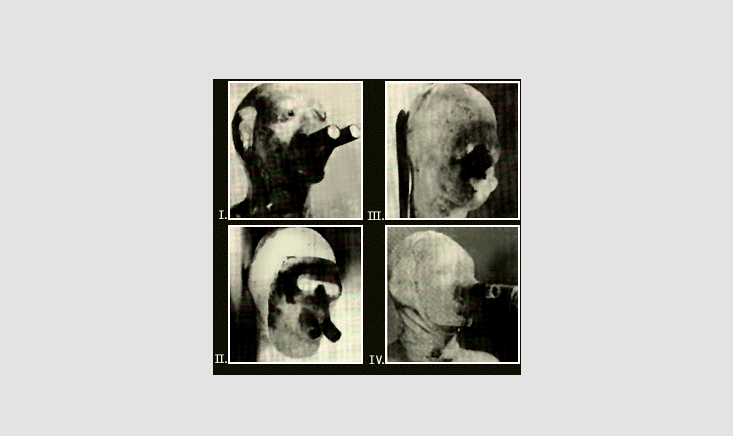 A Breath of Fresh Air: The first experimental flotation tank designed by John Lilly completely immersed the subject underwater. Subjects wore a full-body suit much like scuba gear, with a special hood and black goggles to block sensory stimulation to the visual system. This setup proved far too anxiety-provoking, so Lilly redesigned the tank so subjects could float with their face out of the water, breathing freely.John Lilly/Columbia University PressAt first, Lilly experimented on himself and fellow researchers, and he quickly realized the discomfort and of the hood and the fear of drowning were aggravating distractions. He decided to ditch the suit and redesign the tank so a subject could float horizontally, with their face out of the water.
Lilly, who was friends with such luminaries as Richard Feynman and Buckminster Fuller, lost a great deal of credibility in the scientific community when he left NIMH to follow his own dubious research programs, which included taking massive amounts of LSD and Ketamine (sometimes while floating), giving LSD to dolphins, and trying to communicate with extraterrestrial life. “I took LSD for the first time, in the tank, with three dolphins under it in a sea pool. I was scared shitless,” wrote Lilly. “As I climbed over the wall into the saltwater, a memorandum, from N.I.M.H appeared before me: “Never take LSD alone.” That’s when I learned that fear can propel you in a rocketship to far out places.” And yet, Lilly may have been onto something.
Subsequent research suggests there are states of arousal that fall between conventionally categorized states such as sleep and waking, supporting his intuition that there are multiple states of human consciousness we have yet to fully explore. In the 1990s, the discovery of the Default Mode Network, an interconnected archipelago of brain areas whose activity decreases when we are focused on a task and increases when we stop focusing, complicated the notion that brain areas are either “on” or “off,” in use or on hold. And sleep, as anyone who has used the popular SleepCycle app knows, is composed of multiple levels of arousal serving many functions, which we have yet to fully understand. As veteran REST researcher Roderick Borrie puts it, “If you just look at brainwaves, it looks like the brain is asleep, but it’s not, which allows a different kind of processing to occur.”
“We had a Zen master come to my lab once,” Suedfeld told me, “and he asked us if we would let him float, so we did, of course. He came out and said, every day since I was very young, I meditate four or five hours a day, and the level of meditative depth that I experienced in the tank was such as I can only manage maybe once or twice a year.” Suedfeld, who coined the term REST with Borrie in the 1970s, has shown that restricted stimulus environments can reduce pain, ease headaches, and support behavior modification. Recently, he has used REST to help people quit smoking. He believes REST has clinical advantages over meditation. “You don’t have to learn how to do it,” he said. “You are in no danger of becoming addicted physically and you can’t overdose. If you have a bad experience all you have to do is get up and walk out.”
Highly experienced meditators show dramatic increases and synchronization in gamma waves, a type of brainwave even shorter and faster than beta waves, which have not been found in the brain during flotation. As Dr. Richard Davidson, a meditation researcher at the University of Madison-Wisconsin, put it, “Meditation is really designed to produce awakening, not sleep.” And there are many different meditation techniques. “Meditation is kind of like sports, some are more active, some are less active.” When I asked about mindfulness meditation, the practice most commonly compared to flotation, he said, “Mindfulness is classically described as paying attention non-judgmentally, and I doubt that participants in REST are given that instruction.”
Evidence for what happens during flotation remains elusive partly because after the 1960s, sensory deprivation was something of a dirty word, associated with Lilly’s less-than-scientific experimentation and the torture of political prisoners both at home and abroad. The research dissipated. “Hebb and others who were doing that kind of research were attacked as being complicit in torture,” said Suedfeld. He paused. “I know of several people doing that research who were physically attacked. One had his children threatened at school. They had their houses and automobiles vandalized, et cetera. So that drove quite a few people out of the field, not surprisingly.” Even today, the REST literature is plagued by small sample sizes, poor controls, and case studies that offer tantalizing if incomplete evidence.
But research may be picking up, due partly to the recent resurgence of commercial float centers like the one I visited in Chelsea, or the one recently installed in a yoga studio just 20 blocks uptown. In Sweden, researchers such as Annette Kjellgren, Sven Bood, and Torsten Norlander have been conducting larger, well-controlled studies that show REST is clinically effective on conditions such as stress, chronic pain, and hypertension. In the U.S., Justin Feinstein, a young clinical neuropsychologist at the Laureate Institute for Brain Research, is constructing a flotation lab that will, for the first time, allow investigation into changes in brain activity during flotation. He will use the Institute’s two fMRI scanners to record brain activity while subjects are floating. Once Feinstein’s lab is up and running, it will be one of only a few flotation research labs in the country, and the only one with fMRI scanning capability. “A lot of speculation goes on in the field,” he said, “but we just don’t know. A lot of this research has yet to be done.”
One of the biggest remaining mysteries is why people tend to have a similar progression of subjective experiences in the tank. Thomas Fine at the University of Toledo’s College of Medicine, whose research has shown that REST raises endorphins and lowers stress hormones, as well as offering relief from hypertension, rheumatoid arthritis, and pain, has encountered this progression many times in his work. He notes that people will have different experiences depending on different individual characteristics, such as sensitivity to external stimuli, but says, “Even John Lilly talked about people initially being aware of their body and the effect on the body, then when people got used to the tank, it was less about their body and more about their internal experience. It could be more about emotion or what their thoughts are, or the connection between those. Then as they float further, they go to no thought, just experience. That’s the level we think is related to the deep relaxation.”
 Did I expect the private present tense to be so deafening? And then so quiet? When I stopped trying so hard to relax, what came over me was a calm more profound than anything I could have imagined.Was I waiting for an out-of body experience? For enlightenment?
I did not expect this, either: Once I was less distracted by the physical, my attention turned toward the mental, peeling back layer after layer of thought toward some white-hot core of emotion. When I began to cry, softly, the water responded, creating tiny wavelets that rocked my body at the center of the tank.
Near the end of my float, I noticed a new sound, soft and slightly distant. Not bothersome, but a constant hum with a flickering texture. I concentrated on this sound. Listened. Tried to name it. The best I could come up with was crickets. It sounded like a chirruping field of crickets, just across a two-lane road on a summer evening. It was lovely. Mesmerizing.
Afterward, when I asked Zeiger about the crickets, he nodded and said, “That’s the sound of your consciousness at work.” Zeiger had a tall glass of spicy iced tea waiting for me in his living room. It was the best thing I have ever tasted, which I know because I wrote this in my notebook—“the best thing I have ever tasted.” He sat across from me in an expensive ergonomic desk chair, wearing a pale blue shirt that matched his jeans and steady blue eyes, and all that undifferentiated blue made looking at him like looking at the sky—my eyes didn’t quite know where to focus.
I felt raw. A little dazed. Colors were a bit overwhelming. They say your senses are heighted afterward. As I blinked at Zeiger, trying to follow what he was saying, I was reminded that the sensory reduction techniques used by the CIA were designed to make prisoners more sensitive to the overstimulation that follows. At Guantanamo Bay, they have used bright lights and blared heavy metal from loudspeakers for days.
Outside, on West 23rd Street, everything was too bright, too loud, too fast. Text screamed from all sides. Signs for “News on 23rd” and takeout from “Wrapido.” A woman with short legs ran for a bus, and I watched her watch it pull away. In its wake, an old brick building with huge white letters in each window: “Joschi Yoga.” I thought about all the people inside, stretching and sweating and trying to calm their minds. A siren shrieked into life somewhere down the avenue, wailing high and bright.
~ Meehan Crist is writer in residence in Biological Sciences at Columbia University and editor-at-large at Nautilus. Her writing has appeared in publications such as The New York Times, The Los Angeles Times, The New Republic, The Believer, Scientific American and Science.
Additional Reading
Aftanas, L.I. & Golocheikine, S.A.Human anterior and frontal midline theta and lower alpha reflect emotionally positive state and internalized attention: high-resolution EEG investigation of meditation. Neuroscience Letters 310, 57-60 (2001).
Fine, T.H., & Turner, J.W., Jr. The use of restricted environmental stimulation therapy (REST) in the treatment of essential hypertension. First International Conference on REST and Self-Regulation, 136-143 IRIS Publications, Toledo, Ohio (1983).
Fine, T.H. & Turner, J.W. REST-assisted relaxation and chronic pain. Health and Clinical Psychology 4, 511-518 (1985).
Heron, W. The pathology of boredom. Scientific American 196, 52-56 (1957).
Iwata, K., Yamamoto, M., Nakao, M., & Kimura, M. A study on polysomnographic observations and subjective experiences under sensory deprivation. Psychiatry and Clinical Neurosciences 53, 129-131 (1999).
Iwata, K., Nakao, M., Yamamoto, M., & Kimura, M. Quantitative characteristics of alpha and theta EEG activities during sensory deprivation. Psychiatry and Clinical Neurosciences 55, 191-192 (2001).
Jacobs, G.D., Heilbronner, R.L., & Stanely, J.M. The effects of short term flotation REST on relaxation: a controlled study. Health Psychology 3, 99-112 (1984).
Kjaer, T.W., Law, I., Wiltschiotz, G., Paulson, O.B., & Madsen, P.L. Regional cerebral blood flow during light sleep—a H2 15O-PET study. Journal of Sleep Research 11, 201–207 (2002).
Klein, N. The Shock Doctrine Picador, New York (2007).
Solomon, P. et al. Sensory Deprivation: A Symposium Held and Harvard Medical School Harvard University Press, Cambridge (1961).
Lilly, J.C. Mental effects of reduction of ordinary levels of physical stimuli on intact healthy persons. Psychiatric Research Reports of the American Psychiatric Association 5, 10-28 (1956).
Lilly, J.C. & Gold, E.J. Tanks for the Memories: Flotation Tank Talks Gateway Books & Tapes (1996).
Lutz, A., Greischar, L.L., Rawlings, N.B., Ricard, M., & Davidson, R.J. Long-term meditators self-induce high-amplitude gamma synchrony during mental practice. PNAS 101, 16369-16373 (2004).
McCoy, A.W. A Question of Torture Henry Holt, New York (2006).
McGrady, A.V., Turner, J.W. Jr., Fine, T.H., & Higgins, J.T. Effects of biobehaviorally-assisted relaxation training on blood pressure, plasma renin, cortisol, and aldosterone levels in borderline essential hypertension. Clinical Biofeedback & Health 10, 16-25 (1987).
Murphy, C.W., Kurlents, E., Cleghorn R.A., & Hebb, D.O. Absence of increased corticoid excretion with the stress of perceptual deprivation. Canadian Journal of Biochemistry and Physiology 33,1062-1063 (1955).
Rzewnicki, R., Wallbaum, A.B.C., Steel, H., & Suedfeld, P. REST for muscle contraction headaches: A comparison of two REST environments combined with progressive muscle relaxation training. Restricted Environmental Stimulation: Research and Commentary 245-254 (1990).
Schacter, D.L. The hypnagogic state: a critical review of the literature. Psychological Bulletin 83, 452-481 (1976).
Suedfeld, P. The benefits of boredom: sensory deprivation reconsidered. American Scientist 63, 60-69 (1975).
Suedfeld, P. The clinical relevance of reduced sensory stimulation. Canadian Psychological Review/Psychologie canadienne 16, 88-103 (1975).
Turner, J.W. Jr. & Fine, T.H. Effects of relaxation associated with brief restricted environmental stimulation therapy (REST) on plasma cortisol, ACTH, and LH. Biofeedback and Self-Regulation 8, 115-126 (1983).
Turner, J.W. Jr., Fine, T., Ewy, G., Sershon, P., & Frelich, T. The presence or absence of light during flotation restricted environmental stimulation: Effects on plasma cortisol, blood pressure and mood. Biofeedback and Self-Regulation 14, 291-300 (1989).
Turner, J.W. Jr. & Fine, T.H. Hormonal changes associated with restricted environmental stimulation therapy. In Suedfeld, P., Turner, J., & Fine, T. (Eds.), Restricted environmental stimulation theoretical and empirical development in flotation REST Springer-Verlag, New York, N.Y. (1990).
Zubeck, J.P. Sensory Deprivation: Fifteen years of research N.Y. Appleton-Century-Crofts (1969).