Tuesday, October 12, 2010

NPR - The Buddha Imagines The Unimaginable (And Gets It Right!)

Gotta hand it to Sid, not only did he plumb the depths of human consciousness and experience, identify attachment as the source of all human misery, and then lay out the path to free us from suffering . . . .

He also did some physics in his spare time.

The Buddha Imagines The Unimaginable (And Gets It Right!)

Golden Buddha.

It's not easy thinking about the smallest things in nature.

You can think: there's a pebble.

There's a grain of sand.

There's a speck.

But when you get below speck-level, to cells and molecules and atoms which can't be seen, thinking about the smallest scales is a deeply intellectual exercise.

And one of the champions of small-scale thinking turns out to be, of all people, the Buddha!

Relief panel of the Life of Buddha.
Bhante Anandajoti

That’s him, in the center, sitting cross-legged and wearing a princely hat. He astounds the gathered crowd with his knowledge of math and numbers, his fingers poised as he counts units of the infinitely large and small.

My friend Ezra Block read about the Buddha's special abilities in a book called The Universal History of Numbers, by Georges Ifrah. We've been exchanging notes:

Me: So tell me the story.

Ezra: Georges Ifrah tells a tale about the Buddha that comes from an ancient text known as the "Lalitavistara Sutra" (basically a collection of "did you hear about the time he...?" stories), which recounts how the Buddha had to compete with other suitors for the hand of Gopa.

Me: Gopa is a lady he likes?

Ezra: Gopa is lady he likes a lot. But Gopa's dad didn't want his daughter to marry just anyone, so he set up a competition.

Those wishing to wed Gopa were required to perform all sorts of artistic, athletic and mental feats in order to prove their worthiness.

Me: Like...?

Ezra: Like archery contests, physical competition, and yes, mathematics.

Me: Wasn't he some kind of prince?

Ezra: Oh yes. He was called Prince Siddhartha. And even as princes go, he was in a special class. Buddhist stories pump him to be superhuman — from conception and birth and throughout his entire life.

Me: So tell me about the math competition...

Ezra: Well there's this episode about a counting contest between the Buddha and a mathematician named Arjuna where the prince is asked to calculate both a very big number and, yes, a very, very small number.

Me: Is that hard?

Ezra: Well, the small problem was to count the number of — I guess you could call them — atoms, the smallest possible unit, in a yojana.

Me: What's a yojanda?

Ezra: According to Alex Bellos, a journalist who included this tale in his new book Here's Looking at Euclid, a yojana is an ancient unit of length equivalent to around 10 kilometers.

Me: So the question is, roughly: How many atoms are there in a line 10 kilometers long?

Ezra: Kind of. And here, courtesy of the ancient texts, is his solution:

A yojana, the Buddha said, is equivalent to:

Four krosha, each of which was the length of
One thousand arcs, each of which was the length of
Four cubits, each of which was the length of
Two spans, each of which was the length of
Twelve phalanges of fingers, each of which was the length of
Seven grains of barley, each of which was the length of
Seven mustard seeds, each of which was the length of
Seven particles of dust stirred up by a cow, each of which was the length of
Seven specks of dust disturbed by a ram, each of which was the length of
Seven specks of dust stirred up by a hare, each of which was the length of
Seven specks of dust carried away by the wind, each of which was the length of
Seven tiny specks of dust, each of which was the length of
Seven minute specks of dust, each of which was the length of
Seven particles of the first atoms.

So here's the neat part: According to Alex Bellos, it turns out the Buddha's calculation got the size of an atom very close to right!

This was, in fact, a pretty good estimate. Just say that a finger is 4 centimeters long. The Buddha's "first atoms" are, therefore, 4 centimeters divided by 7 ten times, which is 0.04 meter x 7 to the minus 10 or 0.00000000001416 meter, which is more or less the size of a carbon atom.

Me: Wow!

Ezra: Well, remember, this is a legend so I wouldn't like, fall on my knees or anything...

Me: But still...

Ezra: Maybe the neat thing here lies in the notion that the civilization that gave rise to Buddhism was also the same civilization and culture that had a thing for and a means to express — usefulness aside — infinitely large and small numbers. A number describing the size of a carbon atom would be meaningless in a society that had no notion of atoms or building blocks of that scale.

Here's a group of ancient people (ancient Indians) trying not only to comprehend the infinite but somehow thought it important to name so many divisions of infinitely large and small.

Me: So why did they do it?

Ezra: I don't know. Maybe this is where poetry meets mathematics? The act of dividing has a kind of mystery. And beauty.

Me: Maybe. When you go below atomic size and get down to quarks, you drop off the periodic table and start playing with James Joyce who coined the word "quark." I think we should stop here.

Ezra: The Buddha did.


MIT World - Participatory Culture: The Culture of Democracy and Education in a Hypermediated Society

Interesting conversation.

Participatory Culture: The Culture of Democracy and Education in a Hypermediated Society

Moderator: Henry Jenkins

Mitchel Resnick SM '88, PhD '92
Karen Schrier
Erin Reilly
Pilar Lacasa
Sangita Shresthova

April 23, 2010
Running Time: 1:19:35

About the Lecture

Even back in the early days of Comparative Media Studies (CMS), when Henry Jenkins and colleagues met in the basement of the Media Lab, there was much discussion of how new media might shape learning and spur novel forms of expression and community engagement. Over the years, as Jenkins and these panelists attest, CMS, with its extended family of collaborators and visiting scholars, has both refined and broadened its study of the impact of new technologies on education, culture and politics.

Mitchel Resnick of the Media Lab has frequently made common cause with partners at CMS, finding them “kindred spirits” in “thinking about technologies as ways of empowering people.” Resnick develops tech tools to unleash creative expression in children, and he argues for the central role of play in learning experiences. Exploration and experimentation, “the testing of boundaries,” should be integrated into school curricula, he believes, so children can “figure out what questions they want to ask.” Resnick praises CMS for taking ideas from the media world, like remixing and online sharing, to help people “rethink ideas about learning.”

Some CMS graduates are designing pathbreaking educational material for schools and other educational venues. Karen Schrier developed an interactive game around the Boston Massacre intended to create a “paradigm shift in teaching history.” The game assigns each player a unique perspective from which to interpret events of the time. The idea, she says, is to reconstruct history. Ultimately, Schrier hopes “new literacies” such as critical and ethical thinking, and reinterpretation, will be incorporated into school coursework.

In Spain, Pilar Lacasa applies the insights she has distilled from research at CMS to projects with software and game companies, hoping to transform her nation’s schools. At MIT, she learned the value of playing games, and using them in education to create learners who truly participate. She views electronic games as important tools for teachers, and she celebrates the rise of YouTube for its contribution to media production and participatory culture in young people.

“Teachers need to realize they are hunters and gatherers,” says Erin Reilly, a former CMS lecturer and current new media literacy researcher. Like media makers, teachers cook up lesson plans with peers, “coopting from others, and adapting for their own discipline and learning objectives.” She is working with teachers in large school systems on strategy guides, derived from collaborative brainstorming sessions. She envisions teachers from different communities using technology to share and build on each other’s stories and experiences, “pooling knowledge toward a common goal.

As a child of two cultures, CMS offered “a place where there were no borders” to Sangita Shresthova. A dancer-researcher, Shresthova realized at MIT that stories can be told across several media and that communities can come together and even ease mutual suspicions during live performances -- such as a Bollywood dance event she staged in Prague with remixed film and song. Spectators can become participants, she learned, and creating communities, whether through events like these, or through online fan websites, allows people to think differently and “take action on other issues.”

A growing emphasis at CMS, says Henry Jenkins has been the connection between participatory experiences, education and civic engagement. He notes that technology and new media do not bring about participatory culture so much as support deeply engrained participatory practices and enable new forms of engagement. “The urge to participate is greater than that,” he concludes.
More on the speakers.


Big Questions Online - Creative Relationships: The social dimension of innovation

http://cache1.asset-cache.net/xc/86131548.jpg?v=1&c=IWSAsset&k=2&d=77BFBA49EF8789215ABF3343C02EA548558BDB5729069951B8E6749BEF8161E0BE4E52D78EDE5863

If we are to have any hope of solving the major problems facing us, innovation will have to become more social, more relational.

We are wired for relationship from day one - mirror neurons and other neural circuits guarantee our attachment to a care-giver; we construct our identity and our world through relationships with family, friends, and the culture in which we live; we can even heal our childhood wounding through intimate relationship, and even through mindful relationship with our self.

It only makes sense that we are more creative and more innovative in relationship than in isolation. This first piece is from Big Questions Online, which is followed by the original article from Slate.

Creative Relationships

Creative Relationships
The social dimension of innovation.
Wednesday, September 15, 2010

Joshua Wolf Shenk begins his new Slate series on creative pairings, called "Two Is the Magic Number," by observing:

Collaboration yields so much of what is novel, useful, and beautiful that it's natural to try to understand it. Yet looking at achievement through relationships is a new, and even radical, idea. For hundreds of years, science and culture have focused on the self. We talk of self-expression, self-realization. Popular culture celebrates the hero. Schools test intelligence and learning through solo exams. Biographies shape our view of history.

Ah, but now, he says:

The shift in understanding creativity is well underway. The stereotypes of miraculous breakthrough moments—and the incessant drive to locate them in the head of epic individuals—are slowly yielding to a portrait of complex, meandering, inherently social paths toward innovation.

In the spirit of the series itself, Shenk is asking for input from readers. Do you have great examples of creative relationships within your field? What do you know about how these relationships work? And why do you think they're successful? You can post your comments below his piece.

Here is the original post from Slate:

Two Is the Magic Number: A new science of creativity

This article introduces a series on creative pairs. You can read the second piece in the series, a look inside the Lennon/McCartney partnership, here.

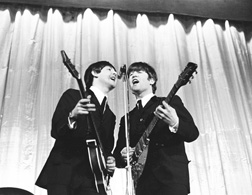
Paul McCartney and John Lennon. Click image to expand.

What makes creative relationships work? How do two people—who may be perfectly capable and talented on their own—explode into innovation, discovery, and brilliance when working together? These may seem to be obvious questions. Collaboration yields so much of what is novel, useful, and beautiful that it's natural to try to understand it. Yet looking at achievement through relationships is a new, and even radical, idea. For hundreds of years, science and culture have focused on the self. We talk of self-expression, self-realization. Popular culture celebrates the hero. Schools test intelligence and learning through solo exams. Biographies shape our view of history.

This pervasive belief in individualism can be traced to the idea most forcefully articulated by René Descartes. "Each self inhabits its own subjective realm," he declared, "and its mental life has an integrity prior to and independent of its interaction with other people." Though Descartes had his challengers, his idea became a core assumption of the Enlightenment, as did Thomas Hobbes' assertion that the natural state of man was "solitary" (as well as "poor, nasty, brutish, and short.")

Following this line, the first modern psychologists focused on the individual. Emil Kraepelin, the godfather of biological psychiatry, looked for organic explanations of illness. Despite Sigmund Freud's interest in early-life relationships, he treated his patients by having them speak into silence and saw cure as a reconciliation of internal conflicts.

Beyond illness, the fundamentals of healthy life took root from the idea of the atomized person. Jean Piaget, who created modern development theory—the system of thought about how children's minds work and grow—emphasized relationships to objects, not people. Even the most basic relational tool—the way we speak—was shaped by individualism, following Noam Chomsky's notion of language as an expression of inborn, internal capacities.

This focus on the self meshed tightly with Western ideology—the Ayn Randian notion of the rugged man forging his destiny on the forbidding plains. (A 1991 Library of Congress survey found Rand's Atlas Shrugged second only to the Bible as the book that made the most difference in American readers' lives.) The triumphant Western position in the Cold War established individual liberty and individual choice as the root unit of society—in opposition to the Marxist emphasis on collective achievement.

The ultimate triumph of the idea of individualism is that it's not really seen as an idea at all. It has seeped into our mental groundwater. Basic descriptions of inter-relatedness—enabling, co-dependency—are headlines for dysfunction. The Oxford American Dictionary defines individualism as, first, "the habit or principle of being independent and self-reliant" and, second, as "a social theory favoring freedom of action for individuals over collective or state control." This lopsided contrast of "freedom" vs. "state control" is telling. Even our primary reference on meaning, the dictionary, tilts in favor of the self.

But a new body of research has begun to show how growth and achievement emerge from relationships. The new science begins with infancy. For centuries, babies were seen as blank slates who just filled their stomachs, emptied their bowels and bladders, and cried and slept in between. As for any significant aspects of their environment, small children were seen as passive receivers. (And largely insensitive ones: For most of the 20th century, doctors routinely operated on babies without anesthesia, believing them exempt from pain.)

But a burgeoning field has shown that, from the very first days of life, relationships shape our experience, our character, even our biology. This research, which has flowered in the last ten years, took root in the 1970s. One reason, explains the psychologist and philosopher Alison Gopnik, was the advent of the simple video camera. It allowed researchers to easily capture and analyze the exchanges between babies and their caregivers. In video of 4-month-olds with their mothers, for example, the two mimic each other's facial expressions and amplify them. So, a baby's grin elicits a mother's smile, which leads the baby to a full-on expression of joy—round mouth, big eyes. This in turn affects the mother, and so on in a continuous exchange that entwines the pair.

Read the whole article.


Responses to the Consensus Statement Reached Among Participants at the Edge The New Science of Morality Conference

Last month, the Edge The New Science of Morality Conference produced a consensus statement signed by several moral philosophers and scientists. Then they sought responses from other scientists - not all agree completely with the statement.

CONSENSUS STATEMENT

1) Morality is a natural phenomenon and a cultural phenomenon
Like language, sexuality, or music, morality emerges from the interaction of multiple psychological building blocks within each person, and from the interactions of many people within a society. These building blocks are the products of evolution, with natural selection playing a critical role. They are assembled into coherent moralities as individuals mature within a cultural context. The scientific study of morality therefore requires the combined efforts of the natural sciences, the social sciences, and the humanities.

2) Many of the psychological building blocks of morality are innate
The word "innate," as we use it in the context of moral cognition, does not mean immutable, operational at birth, or visible in every known culture. It means "organized in advance of experience," although experience can revise that organization to produce variation within and across cultures.

Many of the building blocks of morality can be found, in some form, in other primates, including sympathy, friendship, hierarchical relationships, and coalition-building. Many of the building blocks of morality are visible in all human culture, including sympathy, friendship, reciprocity, and the ability to represent others' beliefs and intentions.

Some of the building blocks of morality become operational quite early in childhood, such as the capacity to respond with empathy to human suffering, to act altruistically, and to punish those who harm others.

3) Moral judgments are often made intuitively, with little deliberation or conscious weighing of evidence and alternatives
Like judgments about the grammaticality of sentences, moral judgments are often experienced as occurring rapidly, effortlessly, and automatically. They occur even when a person cannot articulate reasons for them.

4) Conscious moral reasoning plays multiple roles in our moral lives
People often apply moral principles and engage in moral reasoning. For example, people use reasoning to detect moral inconsistencies in others and in themselves, or when moral intuitions conflict, or are absent. Moral reasoning often serves an argumentative function; it is often a preparation for social interaction and persuasion, rather than an open-minded search for the truth. In line with its persuasive function, moral reasoning can have important causal effects interpersonally. Reasons and arguments can establish new principles (e.g., racial equality, animal rights) and produce moral change in a society.

5) Moral judgments and values are often at odds with actual behavior
People often fail to live up to their consciously-endorsed values. One of the many reasons for the disconnect is that moral action often depends on self-control, which is a fluctuating and limited resource. Doing what is morally right, especially when contrary to selfish desires, often depends on an effortful inner struggle with an uncertain outcome.

6) Many areas of the brain are recruited for moral cognition, yet there is no "moral center" in the brain
Moral judgments depend on the operation of multiple neural systems that are distinct but that interact with one another, sometimes in a competitive fashion. Many of these systems play comparable roles in non-moral contexts. For example, there are systems that support the implementation of cognitive control, the representation of mental states, and the affective representation of value in both moral and non-moral contexts.

7) Morality varies across individuals and cultures
People within each culture vary in their moral judgments and behaviors. Some of this variation is due to heritable differences in temperament (for example, agreeableness or conscientiousness) or in morally-relevant capacities (such as one’s ability to take the perspective of others). Some of this difference is due to variations in childhood experiences; some is due to the roles and contexts influencing a person at the moment of judgment or action.

Morality varies across cultures in many ways, including the overall moral domain (what kinds of things get regulated), as well as specific moral norms, practices, values, and institutions. Moral virtues and values are strongly influenced by local and historical circumstances, such as the nature of economic activity, form of government, frequency of warfare, and strength of institutions for dispute resolution.

8) Moral systems support human flourishing, to varying degrees
The emergence of morality allowed much larger groups of people to live together and reap the benefits of trust, trade, shared security, long term planning, and a variety of other non-zero-sum interactions. Some moral systems do this better than others, and therefore it is possible to make some comparative judgments.

The existence of moral diversity as an empirical fact does not support an "anything-goes" version of moral relativism in which all moral systems must be judged to be equally good. We note, however, that moral evaluations across cultures must be made cautiously because there are multiple justifiable visions of flourishing and wellbeing, even within Western societies. Furthermore, because of the power of moral intuitions to influence reasoning, social scientists studying morality are at risk of being biased by their own culturally shaped values and desires.

Signed by:

Roy Baumeister, Florida State University
Paul Bloom, Yale University
Joshua Greene, Harvard University
Jonathan Haidt, University of Virginia
Sam Harris, Project Reason
Joshua Knobe, Yale University
David Pizarro, Cornell University

____

To view videos and transcripts of the conference, please visit:
http://www.edge.org/3rd_culture/morality10/morality10_index.html

Here are a couple of the responses - including one from Alison Gopnik, one of my favorite neuroscientists - her work with infants and young children has totally changed my understanding of the wee ones.

RANDOLPH NESSE, M.D.
Psychiatrist, University of Michigan; coauthor, Why We Get Sick

What a great idea to ask people who study morality what they agree on! Most of the consensus statements are nice straight descriptions. Morality is intuitive, emotional, not in any one part of the brain, both biological and cultural, and somewhat different in different individuals and cultures. These statements seem bland, but they are sophisticated. The overarching conclusion, that morality can and should be studied scientifically as a natural and social phenomenon, seems undeniably correct to me.

Many will, however, find it provocative. I'd like to hear what they have to say. They should not be dismissed as merely religious or insufficiently rational. It seems entirely possible that there are good reasons, perhaps even evolutionary reasons, for widespread reluctance to think about morality as a natural phenomenon. It seems possible that people feel intuitively that an objective view of morality could undermine moral behavior.

On other thought…missing from the summary, but no doubt present throughout the detailed transcripts, is the back story that led to progress in studying morality. The death this week of George Williams makes the advances of the 1960s particularly salient. It seems to me that the discovery that natural selection does not work for the good of the species is a psychic trauma as great as that imposed by Copernicus and Freud. It still reverberates, as evidenced by Nowak's article in Nature last week, and subsequent commentaries.

I have a special interest in this, because I think Mary Jane West-Eberhard's ideas about social selection explain how selection can shape genuine altruism with no need for group selection. Just as sexual selection shapes extreme traits that make one preferred as a mate, extreme altruistic traits can be shaped if they result in being preferred as a social partner or group member.

I find this important not only as a way of escaping the interminable debate about levels of selection, but also because it could explain some otherwise mysterious things I see in the clinic, especially our shared extreme concern about what others think about us. I think this will prove crucial to any explanation of how selection shaped capacities for morality.

* * * * *

ALISON GOPNIK
Professor of Psychology, University of California, Berkeley; Author, The Philosophical Baby

We can agree that there are some innate building blocks for moral intuition and judgment. But surely one of the most dramatic and obvious features of our moral capacities, evident everywhere from democracy to feminism to gay marriage, is our capacity for change and even radical transformation with new experiences. Practices that once seemed self-evidently acceptable, such as slavery or the oppression of women, seem so no longer.

At the same time this transformation isn't just random but seems to have a progressive quality. How do we get to new and better moral conceptions of the world, if the moral nativists are right? The consensus statement , at least implicitly, suggests that the solution to this problem lies in a contrast between moral intuition and moral reasoning.

The implication is that change and revision are only possible through explicit moral reasoning which operates on top of an innate evolved set of moral intuitions. But, arguably, even young children seem able to understand both that social practices can change and that that change should minimize harm. The situation is analogous to that of our ability to learn about the world.

There also we might have thought that only self-conscious, explicit scientific reasoning allowed for change and progress. In fact, the developmental evidence suggest that, in both the cognitive and moral domains, we are capable of changing, revising and altering what we do and believe in the light of experience, and this ability is as deeply evolved a part part of our human nature as any.

* * * * *

PETER DITTO
Professor of Psychology, University of California, Irvine

People have a history of confusing what is with what ought to be. Any list of general principles underlying moral judgment should include this observation.

I agree with virtually everything in this consensus statement. This is not surprising given the quality of the contributors. But any scientific treatment of moral judgment must be clear about its defining characteristics, boundaries, and the nature of its relations with other kinds of judgment that have interested psychologists and philosophers. And yet the distinction between descriptive and prescriptive judgment has always been more blurry, both conceptually and empirically, than it first appears.

The is-ought problem has a venerable history in moral philosophy. Most attention has been directed toward our tendency to assume that what is ought to be. The naturalistic fallacy — assuming that what is natural is also morally good — is a classic example. More recently, Psychologist Paul Rozin has talked about the process of moralization, in which some behavior that is originally viewed as bad or good for pragmatic reasons — smoking cigarettes or vegetarianism — takes on moral value over time. Specifying the psychological process by which descriptive beliefs and pragmatic pressures are converted into vice and virtue will be crucial in understanding both personal and cultural variations in moral evaluation.

But it is the opposite process — our tendency to come to believe that what ought to be really is — that may be the more interesting and important confusion. Moral intuitions often violate principles of utility in that some act is treated as sacred or protected in a way which conflicts with cost-benefit logic. If I refuse to betray one friend to save the lives of several others, my sense that disloyalty is morally wrong conflicts with well-rehearsed economic intuitions that an act of betrayal on my part would have produced a lower body count.

Such moral dilemmas fascinate psychologists and philosophers, and capture the psychological lynch pin underlying real world political controversies regarding issues like capital punishment, the use of enhanced interrogation techniques, and even embryonic stem cell research. But when was the last time you heard someone say that capital punishment is morally wrong while conceding that it is effective at deterring future crime? Years of psychological research confirm that mental systems abhor such dissonance. Instead, people who believe that enhanced interrogation is morally wrong also typically believe that it is ineffective in producing actionable intelligence, and those morally opposed to embryonic stem cell research almost always doubt its likelihood of producing medical breakthroughs. Our moral intuitions tend to shape our descriptive beliefs such that we construct a world in which the right course of action morally becomes the right course of action practically as well.

The fluid relation between descriptive and prescriptive belief is both an age-old observation and a theoretical and empirical challenge for modern morality researchers. It also has important practical implications. The intractability of the venomous culture war that plagues contemporary American politics flows from this tendency to reify moral intuition with factual belief. It is difficult to resolve differences of moral opinion when each side has its own facts.


Buddhist Geeks #191: Living as a River (Bodhipaksa)

Very cool and very timely - I just got my copy of Living as a River, Bodhipaksa's new book - Living As a River: Finding Fearlessness in the Face of Change - so it's cool to hear this discussion.

Buddhist Geeks #191: Living as a River

BG 191: Living as a River

11. Oct, 2010 by Bodhipaksa

Episode Description:

Bodhipaksa is a teacher from the Triratna Buddhist Community, formerly the Friends of the Western Buddhist Order. He joins us this week to explore the Buddhist teachings on impermanence and “change blindness.” We also explore one of the central practices that he teaches, called the 6-elements practice—one of the primary methods found in the earliest strata of Buddhist teachings. Finally, we explore the importance of enlightenment in his teaching, what is traditionally called stream-entry, but which he refers to as “entry-level enlightenment.”

Episode Links:

Transcript


Monday, October 11, 2010

Big Questions Online - What Can Archaeology Tell Us About the Development of Human Emotions?

http://aworldofprogress.com/wp-content/uploads/2009/10/neanderthal.jpg

This is a cool article on the prehistory of human compassion that can be derived from the archaeology. We were much better people in those days than many people might believe - and even the neanderthals look pretty humane in taking care of their own.

What Can Archaeology Tell Us About the Development of Human Emotions?

A roundup of answers from the authors of “The Prehistory of Compassion.”

Monday, October 11, 2010

Penny Spikins: Archaeology has been slow to engage with emotions and their development as a research topic despite them being key to what makes us human and how we form decisions. Compassion—the feeling of sympathy for others in distress or suffering that motivates us to act—is perhaps one of the most significant. It is clear today that chimpanzees, our closest living relatives, display compassion, and that we ourselves can be highly compassionate. Our research set out to explore the 6 million years that have elapsed since the last common ancestor between these two compassion-bearing species, how this emotion manifested in hominins that are now extinct, and ultimately how it developed into what we possess today.

We searched the archaeological record for reliable indicators of genuinely compassionate acts, such as caring for others over a long timescale; taking risk, pain, or cost on others' behalves; and soothing others in distress. Any one case might not necessarily mean much, but we found that there was a real wealth of evidence. This was used as the foundation for a four-stage model of the development of compassion in humans and our ancestors over the past 2 million years.

I think, as archaeologists, we can be afraid of studying something that has in the past been intangible or difficult to define, yet archaeology has an important story to tell about compassion in our early ancestors. Life is full of untold stories of everyday people who courageously and selflessly care for others, and it is heartwarming to be able to extend that very 'human' story back so many thousands and even millions of years. We think the story that the archaeological record has to tell us about compassion in ancient humans is an important one. The world of early humans is the one in which our feelings and humanity was forged, and we think it is important to realize that much of what makes us special as a species is about the lengths we are prepared to go to look after one another.

Holly Rutherford: When studying the archaeological record, we found some truly inspiring stories. For example, some 530,000 years ago at the site of Sima de los Huesos in Spain, a cranium of a child most likely between 5 and 8 years old at the time of death was found. This child suffered from a condition called "lambdoid single suture craniosynostosis," a premature closing of some or all of the separate bony elements of the skull. This would have caused a build up of pressure on the skull and brain, likely impacting upon the child's cognitive faculties, in addition to giving the child an unusual appearance relative to other children of a similar age. Ana Garcia, the excavator of this site, noted that "her/his pathological condition was not an impediment to receive the same attention as any other Middle Pleistocene Homo child." Despite the additional care requirements this child would have needed, it survived for a number of years, clearly reflecting the capacity for compassion and long-term care in Homo heidelbergensis.

Evidence is especially rich in the Neanderthal species, with abundant evidence of long-term care for others. Perhaps the most striking example comes from the Shanidar cave in Iraq. Here, an adult male suffered multiple fractures across his body, with the right side being particularly badly affected. He further suffered from a withered right arm, with the forearm being completely lost before his death. Also present were degenerative deformities in both of his legs that would have caused him to have a painful limp. He further received a "crushing" injury to his cranium, possibly causing blindness in his left eye due to the deformity of the skull. Studies of Shanidar 1's injuries have suggested that the majority occurred in adolescence, yet were largely healed by the time of his death. What is amazing is that his demise was some 20 to 35 years later, at the age of between 35 and 50 years old. Despite a long list of severe injuries, this individual was looked after for almost all of his life and lived to a relatively advanced Neanderthal age.

Andy Needham: Physical traces from skeletons often make for quite moving tales of compassion in early hominin species. There is evidence beyond the body itself that can tell us about our ancestors. Burial practice is particularly useful when trying to understand the feelings of early hominins. Neanderthals are perhaps the earliest species to practice burial. At the Shanidar cave, Neanderthals were buried between 45,000 and 100,000 years ago. At least half of the 10 individuals recovered from this site reflect intentional burial. Neanderthals could care not only about living individuals, but also about people who had died. Here we begin to see the emerging of a capacity to extend compassion to more abstract concepts.

It is with modern humans that this extension into the abstract really takes off. Early modern humans also buried their dead, though they displayed a new focus toward objects. Burial was common generally, but individuals with complex care requirements, such as a young child from Sunghir in Russia who suffered from bowing of the legs, were singled out and often contained a great wealth of grave goods, in this case several thousand ivory beads.

With modern humans, we saw a new practice: that of caring through and deriving comfort from objects. It is with modern humans that decorative objects, such as shell beads, became common. We believe these objects acted as a source of comfort between different group members. This assertion is based on the practice of converting human teeth into beads and wearing them, deriving a sense of well-being from the object and its meaning; here, caring was transmitted through objects and made people feel secure even when the person was no longer there. Think about the comfort we draw from seeing photographs of our loved ones today, even when they might be hundreds of miles away. Objects in the past may have acted in a similar way for modern humans, connecting people emotionally through time and space.

Penny Spikins, Holly Rutherford, and Andy Needham are researchers in archaeology at The University of York.


Upaya Dharma Podcasts - The Only Way Out Is Through

Nice dharma talk from Sensei Fleet Maull.

The Only Way Out Is Through

Speaker: Sensei Fleet Maull,
Recorded: Wednesday Oct 6, 2010

Sensei Fleet Maull invites us to embrace the fullness of our lives, especially the aspects of our lives that we are most fearful of. He speaks about how we all have a sense that we’re in prison due to our mind of preferences. Sensei shares intimately how he has dealt with grief and everyday life stressors, and how his experiences relate to the First Noble Truth.


Immanuel Wallerstein - Does Social-Democracy Have a Future?

Interesting perspective - Wallerstein looks at two recent elections in Europe (Sweden and Great Britain) that suggest social democracy may be on its way to the political scrap heap of human history.

It's unclear to me if this is a step forward, or yet another form of retrenchment into more conservative and less compassionate perspectives.

What do these two elections tell us about the future of social-democracy? Social-democracy – as a movement and an ideology – is conventionally (and probably correctly) traced to the “revisionism” of Eduard Bernstein in late nineteenth-century Germany. Bernstein argued essentially that, once they obtained universal suffrage (by which he meant male suffrage), the “workers” could use elections to win office for their party, the Social-Democratic Party (SPD), and take over the government. Once they won parliamentary power, the SPD could then “enact” socialism. And therefore, he concluded, talk of insurrection as the road to power was unnecessary and indeed foolish.

What Bernstein was defining as socialism was in many ways unclear but still seemed at the time to include the nationalization of the key sectors of the economy. The history of Social-Democracy as a movement since then has been that of a slow but continuous shift away from a radical politics to a very centrist orientation.

The parties repudiated their theoretical internationalism in 1914 by lining up to support their governments during the First World War. After the Second World War, the parties algined themselves with the United States in the Cold War against the Soviet Union. And in 1959, at its Bad Godesburg conference, the German SPD officially repudiated Marxism entirely. It stated that “from a party of the working class, the Social-Democratic Party has become a party of the people.”

What the German SPD and other social-democratic parties came to stand for at that time was the social compromise called the “welfare state.” In this objective, in the period of the great expansion of the world-economy during the 1950s and 1960s, it was quite successful. And at that time, it remained a “movement” in the sense that these parties commanded the active support and allegiance of very large numbers of persons in their country.

When, however, the world-economy entered into its long stagnation beginning in the 1970s, and the world entered the period dominated by neo-liberal “globalization,” the social-democratic parties began to go further. They dropped the emphasis on the welfare state to become the advocates merely of a softer version of the primacy of the market. This was what Blair’s “new Labour” was all about. The Swedish party resisted this shift longer than others, but it too finally succumbed.

The consequence of this, however, was that Social-Democracy ceased to be a “movement” that could rally the strong allegiance and support of large numbers of persons. It became an electoral machine that lacked the passion of yesteryear.

Read the whole article.


Gilles Deleuze & Felix Guattari - The Rhizome as a Mode of Knowledge

http://viachicago.files.wordpress.com/2008/10/aspens1.jpg
[All of these aspen are a single rhizome]

This post is indebted to Sam Mickey for his article in Integral Theory in Action (SUNY Press, 2010), "Rhizomatic Contributions to Integral Ecology in Deleuze and Guattari." [The book is a collection of papers from the first bi-annual Integral Theory Conference held in 2008 - a review of the book is coming soon.]

Mickey's paper introduced me to the concept of the rhizome from the apparently classic book by Deleuze and Guattari, A Thousand Plateaus: Capitalism and Schizophrenia. I immediately bought the book - then found that the first chapter, Introduction: Rhizome is available on Scribd. I am in agreement with Mickey that the rhizome concept is a fitting metaphor for integral theory in general, and integral ecology is particular.

A partial definition: "the rhizome is an acentered, nonhierarchical, nonsignifying system without a General and without an organizing memory or central automaton, defined solely by a circulation of states." The rhizome is both multiplicity and singularity - nonlinear and nondual. [OK, so maybe my version of integral theory looks a bit different than yours.]

The text that follows is a later section of that chapter, after they have already distinguished between the rhizome and the tree as two different modes of knowing and being (although, as noted above, tress can sometimes be rhizomes as well). Here they elucidate their concept a little more fully. The text is meant to be difficult, I believe, and a bit less than linear at times - the full chapter and end-notes are at the link above.
Let us summarize the principal characteristics of a rhizome: unlike trees or their roots, the rhizome connects any point to any other point, and its traits are not necessarily linked to traits of the same nature; it brings into play very different regimes of signs, and even nonsign states. The rhizome is reducible neither to the One nor the multiple. It is not the One that becomes Two or even directly three, four, five, etc. It is not a multiple derived from the One, or to which One is added (n + 1). It is composed not of units but of dimensions, or rather directions in motion. It has neither beginning nor end, but always a middle (milieu) from which it grows and which it overspills. It constitutes linear multiplicities with n dimensions having neither subject nor object, which can be laid out on a plane of consistency, and from which the One is always subtracted (n - 1). When a multiplicity of this kind changes dimension, it necessarily changes in nature as well, undergoes a metamorphosis. Unlike a structure, which is defined by a set of points and positions, with binary relations between the points and blunivocal relationships between the positions, the rhizome is made only of lines: lines of segmentarity and stratification as its dimensions, and the line of flight or deterritorialization as the maximum dimension after which the multiplicity undergoes metamorphosis, changes in nature. These lines, or lineaments, should not be confused with lineages of the arborescent type, which are merely localizable linkages between points and positions. Unlike the tree, the rhizome is not the object of reproduction: neither external reproduction as image-tree nor internal reproduction as tree-structure. The rhizome is an antigenealogy. It is a short-term memory, or antimemory. The rhizome operates by variation, expansion, conquest, capture, offshoots. Unlike the graphic arts, drawing, or photography, unlike tracings, the rhizome pertains to a map that must be produced, constructed, a map that is always detachable, connectable, reversible, modifiable, and has multiple entryways and exits and its own lines of flight. It is tracings that must be put on the map, not the opposite. In contrast to centered (even polycentric) systems with hierarchical modes of communication and preestablished paths, the rhizome is an acentered, nonhierarchical, nonsignifying system without a General and without an organizing memory or central automaton, defined solely by a circulation of states. What is at question in the rhizome is a relation to sexuality-but also to the animal, the vegetal, the world, politics, the book, things natural and artificial-that is totally different from the arborescent relation: all manner of "becomings."

A plateau is always in the middle, not at the beginning or the end. A rhizome is made of plateaus. Gregory Bateson uses the word "plateau" to designate something very special: a continuous, self-vibrating region of intensities whose development avoids any orientation toward a culmination point or external end. Bateson cites Balinese culture as an example: mother-child sexual games, and even quarrels among men, undergo this bizarre intensive stabilization. "Some sort of continuing plateau of intensity is substituted for [sexual] climax," war, or a culmination point. It is a regrettable characteristic of the Western mind to relate expressions and actions to exterior or transcendent ends, instead of evaluating them on a plane of consistency on the basis of their intrinsic value.20 For example, a book composed of chapters has culmination and termination points. What takes place in a book composed instead of plateaus that communicate with one another across microfissures, as in a brain? We call a "plateau" any multiplicity connected to other multiplicities by superficial underground stems in such a way as to form or extend a rhizome. We are writing this book as a rhizome. It is composed of plateaus. We have given it a circular form, but only for laughs. Each morning we would wake up, and each of us would ask himself what plateau he was going to tackle, writing five lines here, ten there. We had hallucinatory experiences, we watched lines leave one plateau and proceed to another like columns of tiny ants. We made circles of convergence. Each plateau can be read starting anywhere and can be related to any other plateau. To attain the multiple, one must have a method that effectively constructs it; no typographical cleverness, no lexical agility, no blending or creation of words, no syntactical boldness, can substitute for it. In fact, these are more often than not merely mimetic procedures used to disseminate or disperse a unity that is retained in a different dimension for an image-book. Technonarcissism. Typographical, lexical, or syntactic creations are necessary only when they no longer belong to the form of expression of a hidden unity, becoming themselves dimensions of the multiplicity under consideration; we only know of rare successes in this.21 We ourselves were unable to do it. We just used words that in turn function for us as plateaus. RHIZOMATICS = SCHIZOANALYSIS = STRATOANALYSIS = PRAGMATICS = MICROPOLITICS. These words are concepts, but concepts are lines, which is to say, number systems attached to a particular dimension of the multiplicities (strata, molecular chains, lines of flight or rupture, circles of convergence, etc.). Nowhere do we claim for our concepts the title of a science. We are no more familiar with scientificity than we are with ideology; all we know are assemblages. And the only assemblages are machinic assemblages of desire and collective assemblages of enunciation. No signifiance, no subjectification: writing to the nth power (all individuated enunciation remains trapped within the dominant significations, all signifying desire is associated with dominated subjects). An assemblage, in its multiplicity, necessarily acts on semiotic flows, material flows, and social flows simultaneously (independently of any recapitulation that may be made of it in a scientific or theoretical corpus). There is no longer a tripartite division between a field of reality (the world) and a field of representation (the book) and a field of subjectivity (the author). Rather, an assemblage establishes connections between certain multiplicities drawn from each of these orders, so that a book has no sequel nor the world as its object nor one or several authors as its subject. In short, we think that one cannot write sufficiently in the name of an outside. The outside has no image, no signification, no subjectivity. The book as assemblage with the outside, against the book as image of the world. A rhizomebook, not a dichotomous, pivotal, or fascicular book. Never send down roots, or plant them, however difficult it may be to avoid reverting to the old procedures. "Those things which occur to me, occur to me not from the root up but rather only from somewhere about their middle. Let someone then attempt to seize them, let someone attempt to seize a blade of grass and hold fast to it when it begins to grow only from the middle."22 Why is this so difficult? The question is directly one of perceptual semiotics. It's not easy to see things in the middle, rather than looking down on them from above or up at them from below, or from left to right or right to left: try it, you'll see that everything changes. It's not easy to see the grass in things and in words (similarly, Nietzsche said that an aphorism had to be "ruminated"; never is a plateau separable from the cows that populate it, which are also the clouds in the sky).

History is always written from the sedentary point of view and in the name of a unitary State apparatus, at least a possible one, even when the topic is nomads. What is lacking is a Nomadology, the opposite of a history. There are rare successes in this also, for example, on the subject of the Children's Crusades: Marcel Schwob's book multiplies narratives like so many plateaus with variable numbers of dimensions. Then there is Andrzejewski's book, Les portes du paradis (The gates of paradise), composed of a single uninterrupted sentence; a flow of children; a flow of walking with pauses, straggling, and forward rushes; the semiotic flow of the confessions of all the children who go up to the old monk at the head of the procession to make their declarations; a flow of desire and sexuality, each child having left out of love and more or less directly led by the dark posthumous pederastic desire of the count of VendĂ´me; all this with circles of convergence. What is important is not whether the flows are "One or multiple"-we're past that point: there is a collective assemblage of enunciation, a machinic assemblage of desire, one inside the other and both Plugged into an immense outside that is a multiplicity in any case. A more recent example is Armand Farrachi's book on the Fourth Crusade, La dislocation, in which the sentences space themselves out and disperse, or else jostle together and coexist, and in which the letters, the typography begin to dance as the crusade grows more delirious.23 These are models of nomadic and rhizomatic writing. Writing weds a war machine and lines of flight, abandoning the strata, segmentarities, sedentarity, the State apparatus. But why is a model still necessary? Aren't these books still "images" of the Crusades? Don't they still retain a unity, in Schwob's case a pivotal unity, in Farrachi's an aborted unity, and in the most beautiful example, Les portes du paradis, the unity of the funereal count? Is there a need for a more profound nomadism than that of the Crusades, a nomadism of true nomads, or of those who no longer even move or imitate anything? The nomadism of those who only assemble (agencent). How can the book find an adequate outside with which to assemble in heterogeneity, rather than a world to reproduce? The cultural book is necessarily a tracing: already a tracing of itself, a tracing of the previous book by the same author, a tracing of other books however different they may be, an endless tracing of established concepts and words, a tracing of the world present, past, and future. Even the anticultural book may still be burdened by too heavy a cultural load: but it will use it actively, for forgetting instead of remembering, for underdevelopment instead of progress toward development, in nomadism rather than sedentarity, to make a map instead of a tracing. RHIZOMATICS = POP ANALYSIS, even if the people have other things to do besides read it, even if the blocks of academic culture or pseudoscientificity in it are still too painful or ponderous. For science would go completely mad if left to its own devices. Look at mathematics: it's not a science, it's a monster slang, it's nomadic. Even in the realm of theory, especially in the realm of theory, any precarious and pragmatic framework is better than tracing concepts, with their breaks and progress changing nothing. Imperceptible rupture, not signifying break. The nomads invented a war machine in opposition to the State apparatus. History has never comprehended nomadism, the book has never comprehended the outside. The State as the model for the book and for thought has a long history: logos, the philosopher-king, the transcendence of the Idea, the interiority of the concept, the republic of minds, the court of reason, the functionaries of thought, man as legislator and subject. The State's pretension to be a world order, and to root man. The war machine's relation to an outside is not another "model"; it is an assemblage that makes thought itself nomadic, and the book a working part in every mobile machine, a stem for a rhizome (Kleist and Kafka against Goethe).

Write to the nth power, the n - 1 power, write with slogans: Make rhizomes, not roots, never plant! Don't sow, grow offshoots! Don't be one or multiple, be multiplicities! Run lines, never plot a point! Speed turns the point into a line!24 Be quick, even when standing still! Line of chance, line of hips, line of flight. Don't bring out the General in you! Don't have just ideas, just have an idea (Godard). Have short-term ideas. Make maps, not photos or drawings. Be the Pink Panther and your loves will be like the wasp and the orchid, the cat and the baboon. As they say about old man river:
He don't plant 'tatos
Don't plant cotton
Them that plants them is soon forgotten
But old man river he just keeps rollin' along
A rhizome has no beginning or end; it is always in the middle, between things, interbeing, intermezzo. The tree is filiation, but the rhizome is alliance, uniquely alliance. The tree imposes the verb "to be" but the fabric of the rhizome is the conjunction, "and ... and ... and..."This conjunction carries enough force to shake and uproot the verb "to be." Where are you going? Where are you coming from? What are you heading for? These are totally useless questions. Making a clean slate, starting or beginning again from ground zero, seeking a beginning or a foundation-all imply a false conception of voyage and movement (a conception that is methodical, pedagogical, initiatory, symbolic ... ). But Kleist, Lenz, and BĂ¼chner have another way of traveling and moving: proceeding from the middle, through the middle, coming and going rather than starting and finishing.25 American literature, and already English literature, manifest this rhizomatic direction to an even greater extent; they know how to move between things, establish a logic of the AND, overthrow ontology, do away with foundations, nullify endings and beginnings. They know how to practice pragmatics. The middle is by no means an average; on the contrary, it is where things pick up speed. Between things does not designate a localizable relation going from one thing to the other and back again, but a perpendicular direction, a transversal movement that sweeps one and the other away, a stream without beginning or end that undermines its banks and picks up speed in the middle.

Sunday, October 10, 2010

Call for Papers: 3rd Online Consciousness Conference

This yearly online conference is excellent - I always enjoy reading the papers and discussions. They are seeking papers for this year's iteration of the conference. This year's theme is "Neurophilosophy and the Philosophy of Neuroscience."

cfp: 3rd Online Consciousness Conference

Please post and distribute widely; apologies for cross-posting.

I am pleased to announce the call for papers for the third online consciousness conference. Invited speakers include,

Kathleen Akins, Simon Fraser University

Paul Churchland, University of California San Diego

Steven Harnad, University of South Hampton

Jesse Prinz, The Graduate Center, CUNY

Papers in any area of consciousness studies are welcome, though the conference has as its theme this year 'Neurophilosophy and the Philosophy of Neuroscience'. Selected papers from the conference relating to this theme, pending outside review, will be published in the annual special issue of Synthese "Neuroscience and its Philosophy". Because of this contributions that are unpublished elsewhere and related to the theme are preferred, though exceptions can be made.

Papers should be roughly 3,000-4,000 words and subsequent presentations, should the presenter choose to make one, should be about 20 minutes (though longer papers/presentations are acceptable). Submissions, suitable for blind review, should be sent to consciousnessonline@gmail.com by January 5th 2011. Those interested in being referees or commentators should also contact me. Authors of accepted papers are urged to make, or have made, some kind of audio/visual presentation (e.g. narrated powerpoint or video of talk) though this is not required to present.

For more information visit the conference website: consciousnessonline.wordpress.com

Brain Science in the News

http://www.bri.ucla.edu/images/brain2.jpg

This is another in my occasional link dumps - clearing out some old tabs. Most of these come from Big Think, one of the coolest newer sites on the web - check them out if you haven't already.

Speak, Memory: Language and the Brain

Wmefeb-brain-celljpg1

In the field of neuroscience, we know far less about language than about other brain mechanisms like emotion, memory, or sensation. The inherent difficulty of studying language is that it is so closely linked to thought. There are certainly parts of the brain in which language is concentrated, but it is hard to differentiate these areas from those involved in non-language cognitive processes. Language areas also appear to be quite fluid, occupying different parts of the brain among different individuals. And because language is a strictly human phenomenon, researchers can't use animal studies to investigate brains at the neuron level.

Paradoxically, language-specific areas were the first localized areas to be discovered in the brain. As discussed earlier in our Going Mental series, French physician Paul Broca and German neurologist Carl Wernicke independently discovered two important language areas in the 1860s. Based on their brain damage studies, a cohesive picture of language processing emerged: stimuli from the auditory cortex (speech) or the visual cortex (reading) travel to Wernicke's area in the left posterior temporal lobe, where it is processed and comprehended. From there, a bundle of nerves called the arcuate fasiculus connects to Broca's area in the frontal lobe, which is responsible for language production. From there, the message is sent to the motor cortex for translation either into speech or writing. This succinct language circuit was the prevailing model for over a century; the only problem is that new tests show it to be inaccurate.

Read the whole post.

* * * * *

Braingasm: Sex and Your Synapses

Orgasm-682_729284a

It is a cliché that the brain is the "largest sex organ," but the repetition of the phrase doesn't make it any less true. The mechanics of its role during sex are less obvious and less well understood than that of the body's other sex organs, but by using brain imaging scans, neuroscientists have begun to get a sense of what parts of the brain light up during sex, especially at the moment of orgasm.

In his Big Think interview, Rutgers psychologist Barry Komisaruk, a pioneer of neuroscientific sex studies on the female orgasm, told us what science now knows about "la petite mort." One early study of orgasms, he explains, suggests that the subjective experience of orgasm is very similar between men and women. Despite having different anatomies, men and women seem to be hard-wired to experience sexual pleasure in the same way. But does this translate to a similarity in the brain?

Read the whole post.

* * * * *

How the Brain Fears

Whos-afraid-of-big-bad-wolves1

Emotions are messy, complicated phenomena—not just for lovers, but for neuroscientists as well, because they combine cognition with physiology. Scientists once thought of emotion as a purely mental activity which elicited bodily responses, but they now see the mind and body as equally responsible for creating the experiences of fear, joy, and anger. Despite this complexity, science is beginning to understand emotion by examining one emotional pathway at a time, with the hope of some day combining them into a comprehensive understanding.

Fear is the most researched and best understood of all emotions. It's the easiest emotion to study because it has the most measurable physiological response, but it's also the most important emotion we have from an evolutionary standpoint. Learning to fear something dangerous that caused pain in the past, like a snake or a spider, most likely helped our ancestors to survive. And proving its evolutionary importance, the fear circuit in our brains is actually a shortcut that allows dangerous stimuli to bypass parts of the brain normally involved in sensory processing, as NYU neuroscientist Joseph LeDoux explains in the video below.

Read the whole post.

* * * * *

The Neuroscience of Cocktail Party Conversation

Ear

So you're at a cocktail party, and, like at most cocktail parties, there are a handful of conversations happening around the room. Yet, despite the dull roar of laughter and discussion, you have no trouble focusing on the voice of the person with whom you're speaking. You see her eyes and lips moving and you understand every word she is saying. But as often happens, you begin to lose interest in the conversation. And though you continue to nod your head and say things like, "Uh-huh, Oh really?" you consciously turn your attention to the uproarious banter of a more enticing conversation happening elsewhere in the room.

How is it that in a blink of an eye, we're able to selectively refocus our auditory attention to a distant conversation, while ignoring the conversation that's happening right in front of us? The answer, it turns out, is a mystery

According to Tony Zador, a Professor of Biology and Program Chair of Neuroscience at the Cold Spring Harbor Laboratory, the brain mechanisms responsible for any kind of attention, whether visual or auditory, are probably not fundamentally different. However, the challenge of understanding how the brain goes about selectively listening to one cocktail party conversation over another is twofold. The first issue is one of computation: "We have a whole bunch of different sounds and from a bunch of different sources and they are superimposed at the level of the ears and somehow they’re added together and to us it’s typically pretty effortless to separate out those different threads of the conversation, but actually that’s a surprisingly difficult task," says Zador. Scientists were able to program computers to recognize speech in controlled situations and quiet rooms as far back as ten years ago, says Zador, but when deployed in real world settings with background noise their algorithms fail completely. Humans on the other hand have evolved to effortlessly break down the components of an auditory scene.

Read the whole post.

* * * * *

Adderall-big

The narrative of personal improvement is as American as baseball—almost as American as a fondness for illegal and prescription drugs. From steroids and human growth hormones on the baseball diamond to amphetamines in college libraries and quadrangles, performance enhancing drugs combine a desire for productivity and success with drug abuse in a way that is uniquely American. And the statistics confirm their growing demand: the journal Addiction reports that on certain college campuses, especially competitive Northeastern colleges, up to 25 percent of students admitted to having misused ADHD medication in the past year. Yet despite their prevalence, these drugs, and the disorder they treat, are highly misunderstood.

Firstly, the widespread abuse contributes to a sense that ADHD is an invented illness. This is simply not the case says Dr. Harold Koplewicz, one of the nation's leading child psychiatrists. Attention Deficit/Hyperactivity Disorder may be misunderstood, he says, but that doesn't make it any less real: It is a neurological disorder that affects an estimated 15 to 20 million Americans and is marked by measurable neurochemical differences in the brain.

"When you have Attention Deficit/Hyperactivity Disorder, you use your dopamine and your norepinephrine faster in your brain than the average person," says Koplewicz. "And when you don’t have enough of that, you become inattentive or you become more impulsive or you’re more hyperactive."

Read the whole post.

* * * * *


By News Staff | October 2nd 2010

Like many of history's greatest minds, narcissists spend a great deal of time deep in thought - but for narcissists it is thought about themselves.

Neuroscientists recently found a correlation between high scores on the Machiavellian Egocentricity subscale - a measure of narcissism - and activity during rest in the posteromedial cortex, a brain region that previous studies have associated with thoughts about the self. The study also found a correlation between poor decision-making and brain activity during rest in the medial prefrontal cortex. Impulsive action without regard for consequences is another aspect of psychopathic behavior.

Narcissists thinking about themselves all of the time is more than a stereotype. Since narcissism is one component of the psychopathic mind, differences between the brain patterns of normal people and narcissists may help psychiatrists to understand and treat dangerous individuals.

Read the whole post.