Showing posts with label Nautilus. Show all posts

Friday, November 07, 2014

Ingenious: Christof Koch Tackles Consciousness and the Self

http://static.nautil.us/4662_f64b2463cf1dba199491c885dff932f3.png

From Nautilus, this is a nice interview with neuroscientist and author (and panpsychism proponent). His recent book is Consciousness: Confessions of a Romantic Reductionist (2012).

https://www.sciencenews.org/sites/default/files/15559

Ingenious: Christof Koch

The neuroscientist tackles consciousness and the self

Consciousness may be the greatest illusion of all. Or at least the greatest mystery. “It is in the brain that the poppy is red, that the apple is odorous, that the skylark sings,” wrote Oscar Wilde. But how does the brain construct conscious experience? For the past 25 years, Christof Koch has been trying to provide an answer. At the Allen Institute for the Brain, where he is chief scientific officer, Koch is steering an ambitious project to map the complex networks of the brain. The goal is nothing short of understanding how we function in the world—how we see, fall in love, feel pain, marvel at a night sky full of stars.
In his most recent book, Consciousness: Confessions of a Romantic Reductionist (2012), Koch writes that “consciousness is a fundamental, an elemental, property of living matter.” He puts forth an “integrated information theory” that he believes provides the first rigorous scientific theory to explain consciousness. On a recent afternoon at the Allen Institute in Seattle, Koch took time to explain the captivating, if not entirely clear, theory. Koch, formerly a professor of cognitive and behavioral biology at the California Institute of Technology, has a capacious mind and a piercing intensity. In our discussion, his explanations ranged across brain biology and artificial intelligence, infamous patient Terri Schiavo and the film Her.

Interview Transcript


Why do you say consciousness is not an emergent property of the brain?

Well, I mean, “emergent” fundamentally means that at some level it’s not there, but then at a different level something is there. So the classical example of an emergent property is the wetness of water. If you take one or two molecules of H2O, they’re not wet. But then you take trillions of them, 1023, and then suddenly you get this property that it clings to surfaces that we know as wetness. With consciousness, for the longest [time] I also believed, well, it’s an emergent property—small brains don’t have it and then once you get to some bigger brains they do have it. But the problem with that assertion is that consciousness is so fundamentally different from anything else. Neurons and neuromechanisms are so different from the perception they can generate. My perception of having pain, or my perception of seeing red, is so radically different from the neurons that support the perception of seeing red or the neurons that support the perception of having pain that it’s totally unclear how we can go from one to the other.

So finally then, I at least came to the conclusion that it is a fundamental property of certain pieces of highly organized matter, that highly organized matter such as brain are capable of, and do have, experiences. We just live in a world with space and time and mass and energy, and also where complex organized matter has conscious experience; and that’s just the character of the world we are in. Now we can study this property; and the property that organized matter has to have in order to have consciousness; and how much consciousness [it has]. And if every piece of organized matter has consciousness, what about a fetus? What about an early born? What about a patient with severely compromised … [with] most of his brain dysfunctional? What about a dog? What about a cat? What about a worm? And then of course, I can ask the same question: If this is true, what about other pieces of organized matter that didn’t evolve but that we built, like computers or like the Internet? To what extent do they have conscious experience? To what extent does it feel like something to be there?

How can a computer or the Internet be conscious?

Well I mean, unless … In some sense it’s fairly obvious. Once you don’t have the notion any more that of course, we have in our culture for thousands of years that there is this magic thing—the soul, right? So if you believe in the thing called a “soul,” and only we have it and nobody else [has] it, right, then of course, you know you can ask what’s the nature of the soul. And of course it’s been impossible to understand what a soul is and what’s it made out of and where it was before I was born and where it’s going to go after I die. But once you get rid of this notion of a soul as just, as not being compatible with anything else I know and not consistent; then if you believe that consciousness is a property of certain types of natural systems, then in principle you should be able to replicate in a different natural system—once you think about it in that way. And yes, so in principle, once a computer is complex enough to begin to rival the human brain, then in principle, why should it not also have conscious experience? 

So was Watson on Jeopardy conscious? 

Well, okay, so there the difference is: So Watson wasn’t conscious, Watson is just very good, was programmed. It doesn’t feel like anything to be Watson, right? Watson was very cleverly programmed by a team of, you know, up to 100 engineers and scientists to answer a particular question. Now of course, you know, if you ask something related like you know, what’s the weather like today, it probably couldn’t answer that. But it was programmed exactly to answer Jeopardy.
But let’s take this process fast, forward. Let’s wait 20 or 30 years, right. In fact, let’s take the recent movie, Her, right. Now you remember Samantha, right? So Samantha was the name of this entity. Think of it like Siri but in 20 years from now, right. So now I have this highly conversant voice that talks like a human and has the same memory and can, you know, remember things and feel things and you have to ask your question: Does it feel like anything to be Samantha? In fact, at some point, she asks herself that in the movie, Her.  Does it feel like anything? Does she actually have feelings or is she just a set of very complicated input-output routines? And this now really depends on your metaphysical stance and it depends on your theory of consciousness. Interestingly, the dominant theory today, the dominant sort of, metaphysical assumption about consciousness that’s known as “functionalism”—and most philosophers these days are functionalists—would say yes, if she replicates all the causal relationships, if she simulates all the causal relationships of a human brain, then there would be no question. She would be conscious.

Now Integrated Information Theory of consciousness takes a somewhat different tack. It says, well, if you build a neuromorphic brain that has, you know, let’s say copper instead of axons, and transistors instead of neurons, then if you have the same cause-effect repertoires as [the] human brain, then this entity would actually be conscious. But if you simulate the brain like Samantha did, you would not be conscious. So the IIT claims that it doesn’t feel like anything to be Samantha. Essentially, for the same reason that a computer simulation of the weather, of a storm, of a tornado is never wet, right? You can simulate these days on modern computers; you can simulate the details of a tornado and of a hurricane. But it’s never wet inside the computer, right. It simulates the effect of water, but it’s never wet. For the same reason, IIT says that you can simulate consciousness, but this system itself will not have consciousness. In order for it to have consciousness, you have to replicate the detail—not simulate, but you have to replicate the actual cause-effect repertoire of the brain.

What is “Integrated Information Theory?”

Integrated Information Theory is the attempt by one particular, very gifted individual—a psychiatrist and a neuroscientist, Giulio Tononi—he’s at the University of Wisconsin, in Madison—to make sense of all this knowledge, know all that we have on the one hand about the philosophy of consciousness, but more importantly, about your conscious experiences and about the neurology of consciousness, and to put that into a rigorous scientific axiomatic theory that tells you quite precisely what consciousness is, how it originates, which systems have it, and which ones do not have it. And which also gives rise to a whole set of predictions that you can test in the lab, in the clinic, to again measure and ascertain which systems are conscious and which ones are not. Because in clinical practice, it is very often problematic, for certain classes of patients, to really be sure that the patient is conscious.
You may remember Terri Schiavo? You know, many years ago in Florida. So, she was a patient whose heart had stopped for 15 minutes, and she was in a so-called persistent vegetative state, or permanent vegetative state, where she clearly was … she had wake-sleep periods but when she was “awake” it was impossible to communicate with her. And so in patients like this, they may look normal. If you just see a picture of them, she may look like she’s smiling, but she doesn’t respond in any meaningful way to you. So here, it is not easy in this patient—and there are a few thousands of these patients in the U.S. alone—to ascertain to what extent do they feel anything. Does it feel like something to be Terri Schiavo? Or is it just sort of a brain mechanism? There still are some brain stem reflexes left so she’s clearly alive but without any conscious experience. Just like you are in a deep sleep. In a deep sleep, you’re clearly alive but you don’t have any conscious experiences.

Do you believe Terri Schiavo was conscious?

No. I mean, together … I looked at, you know, I looked at all the evidence. There were four separate clinical teams of medical experts that went over this question. All the evidence suggests that she, like thousands of sad cases like her, was sort of operating on brain stem mechanism. Yeah, occasionally you know, if you shine a bright light, occasionally she would track. Occasionally, she would, you know, look like she [was trying] to smile. But you know, if I film somebody for hours or days, yes, occasionally I can interpret you know, I can interpret if I really, if I’m hoping for a signal—like if I’m the loved ones, or the parents of this unfortunate patient—I can interpret there is something there but if you do this over a long time and if you’re a little bit more detached from it, you clearly see there doesn’t … there didn’t seem to … All the evidence indicated that there wasn’t anybody home anymore That she literally, Terri Schiavo, her conscious self, had died 14 years earlier. The shell of her self, particularly her brain and the brain stem, was still operating. And at autopsy, it was … the brain showed all the cerebral cortex had shrunk by more than a factor of two. So clearly she couldn’t see anything. All of her visual brain at the back was sort of degenerated. So all of that supports the contention: No, that she was not there. It didn’t feel like anything to be her. She, the her, she wasn’t present anymore.

How does Integrated Information Theory explain consciousness where other theories don’t?

Well I mean, a) there really aren’t that many consistent theories around. There are lots of hypotheses, but if by theory you mean a well formulated axiomatic body of short statements from which you can derive a mathematical calculus that you can then turn into predictions, there really isn’t any good alternative around. So … But that’s exactly what I like about the theory. It seems to be very plausible. It shares many elements of a conceptual framework that people have grappled with over the years. So for example, David Chalmers, a philosopher, he in his work 20 years ago already surmised that there was something key about particular types of information—that’s essentially what the theory says. It says particular types of systems generate a particular type of information called, “integrated information,” and it is integrated information that is experienced as experience. That’s what … it’s an identity relation. The theory essentially says that a particular type of information that makes a difference with the system in and of itself is what experience is. So it’s a fundamental assertion that tells you have a complicated, you have an organized system, it makes a difference to itself, and this difference that it makes to itself you can describe in mathematical terms—that’s what conscious experience is.

In a sense it takes us back to Pythagoras—you know in Sicily, the Greek philosopher and mathematician in Sicily who said that everything is ultimately numbers. It ultimately makes this assertion that consciousness is a particular informational structure in a high dimensional space. We don’t experience it as such. We experience it as sounds and sights and the tastes and the pains and the pleasures of life. But it says conscious is this high dimensional structure in these abstract spaces, and from there I can make predictions and I can turn toward neuroscience and toward the clinic to test to what extent these predictions are valid. And it also makes extrapolation. It also says which types of artificial systems, like which types of computer may or may not be conscious.

How can a subjective sense of blue be reduced to immaterial information?

You do it the other way around. You start with your sense of blue. You ask: What is it that makes a sense of blue, blue? Well for one, there is a sense. I do have experience of blue; it exists. It is the way it is because it’s different from any other experience I could have. So it’s different from black; it’s different from seeing you; it’s different from seeing a frame of the movie Blade Runner; it’s different from tasting, you know, wine. So it’s very different and … But it’s integrated. I cannot … So for example, you know, I see this video on a blue background but while I see the blue background, I see a lot of other things at the same time. I cannot separate that out. It’s holistic, it’s integrated; something philosophers have much remarked upon. It’s also structure. When I see a blue sky, it’s blue above, it’s not blue to the below. It’s blue on the left or blue on the right, so it has a sub-structure. And there’s only one blue. It’s not that I experience blue while simultaneously, there’s another Christof that experiences something very slowly and there’s another Christof that experiences something at an incredibly fast scale. There’s only one conscious experience.

And so, then you ask, given all these different properties about blue or any other experience—a kind of blue—you ask what is the mathematical calculus? How does a system have to be structured in order to support that? And that gives rise to a mathematical calculus. If you now, if you take those sort of, ways of defining your phenomenal experience, if you take them seriously and ask what mechanism can support them, then you turn into this … So you translate into mechanisms and then you give rise, you get out this calculus, that’s this calculus that says well in order to have an experience that has these different properties, you need to have a particular system that makes a difference to itself that is structured in a particular way; there’s only one of these systems and it has to make a difference to itself. So there has to be a mechanism like a neuron or like a transistor, it can be on and off—the type of information it has has to be integrated, has to be highly differentiated and then you get to IIT. So it’s a systematic process of going from the different aspects of conscious experience to a particular mechanism that supports. But you start out with experience. You don’t start out with a mechanism like a brain and ask how does a brain mechanism predict “y” conscious experience. You start with your conscious experiences and you ask what is the underlying mechanism have to be? What property does it have to obey in order to have conscious experiences? 

You write that Integrated Information Theory is “an elaborate form of panpsychism.” What is panpsychism?

So panpsychism is a very ancient philosophical belief. It goes back to, in our culture, to Plato and it’s very widespread. If you talk to Buddhists … I spent last year, a week with His Holiness, the Dalai Lama, so he and his Buddhists have reasons—are certainly all panpsychists—that assumes that consciousness is very widespread. Now it depends exactly what type of panpsychist you are—of course, there are many different forms—but essentially, it says that it’s very, very widespread and certainly may extend throughout the entire animal kingdom or may even extend wider. 
Now as a philosophical position it’s appealing, but it’s very difficult to get anything more out of it. Like you want to ask, well are there all-system conscious? What makes them conscious? Are there any systems that are not conscious? And so panpsychism doesn’t answer these questions. IIT, Integrated Information Theory, does. It makes certain very predictive—it makes some very specific predictions. It says, for instance, probably all complex neurobiological systems—all creatures that have brains—may well have consciousness, including bees and worms and octopi, etc. It may also be possible that if you build a brain out of wires and transistors, that you find consciousness there too.
But it also says that other systems like, for example, digital simulations will not be conscious. And it also says that there isn’t super-consciousness, that if I take a bunch of … For example, clearly answers the question that you and I, although we’re interacting, there’s no super-consciousness, there’s no right now Christof-Kevin or Kevin-Christof super-consciousness. There’s you, your conscious, you have conscious experience; I have conscious experience. We interact, but right now there is no über-consciousness. So [IIT] makes a number of very precise predictions that panpsychism was never able to make so it’s a much richer, more quantitative, more scientific form of panpsychism. But it does share the basic intuition that consciousness is graded and it’s much more widespread than we think in nature.

When you write things like, “the entire cosmos is suffused with sentience, ” you sound pretty New Age-y.

Yes, so here I have to confess that the nice turn of phrase I probably shouldn’t … It’s a beautiful turn of phrase, right? And so as a writer, you want to use it but … So you always have to make a judgment. As a scientist, you know, I ought to be very careful what I say. Yes because IIT again says that you’re conscious, I’m conscious, but it’s not … there isn’t this sort of woven consciousness everywhere. What I meant to say [was] that it’s much more widespread than we think. Many animals may have it; in fact, most animals for all I know will have it and lots of other systems may have it, so that’s what I meant by it. I may be taking too much of a license here as a writer compared to being a very accurate and precise scientist!

It sounds like a contradiction to say consciousness is both panpsychic and quantifiable.

Yeah, but I … So that’s the advantage of IIT. So IIT—finally, we have something that philosophers have not been able to do over the last 2,600 years with a precise mathematical definition of what it is, how to measure it. In fact, that’s … It has this number called ϕ that measures sort of the quantity. It has an informational structure that measures the quality of it so you can now make some very precise statements about consciousness. And while I don’t think Integrated Information Theory is the final word on consciousness, it’s certainly, it’s a big step in the right direction, and those sorts of theories will take us in a direction where we can turn, just like we’ve turned many other subject from metaphysics into physics, and ultimately into scientific subjects, to be able to ultimately explain this most mysterious of all phenomena—how does subjectivity, how do feelings, how does experience get into the physical world.

The self is often called an illusion. How do you define the self?

Well, the self is this sense of ego, this sense of continuity in space and time—that I wake up you know, this morning, I’m the same that I was yesterday, and I’m the same that I was last year, and then when my mom points at a picture of me, you know, where she says, “Well see? That’s you at 2 years old”—I have no idea it’s me, but I believe her. I say, well that’s my self, right. Although I know in the intervening time everything—a molecule in my body—has changed, I still believe that sort of is me.
So partly, it’s an illusion, because of course, we know we’ve changed radically, we have different … we may have different make up—we certainly have different memory—but still, I have this sense, and I think I need this sense in order to act in the world and to continue to act and to take advantage of experiences I’ve stored up over my lifetime. So partly, the Buddhists are right in the sense that it is partly illusory. But ultimately what remains is, and I’d like to end on this, with this phrase, what remains ultimately is my experience of having a self, my experience of having experiences as such. That is the most fundamental observation I can make about the universe and ultimately science has to explain how this feeling of having experiences comes into the physical world.

You write that, “some deep and elemental organizing principle created the universe.” What do you mean?

I find myself in a universe that’s conducive to life, right. This is the discovery over the last 30 years known as the “anthropic principle,” that everything in this particular universe seems to be extraordinarily balanced, so that you can have emergence of stable elements, you can have stable stars around which you can have stable planets and then you have natural evolution that gives rise to complex features. We also live in a universe where complexity begets conscious experience—that’s the heart of something like Integrated Information Theory, that complex piece of organized matter gives rise to consciousness. So isn’t it amazing that we are in this universe. Is that a chance event? Is there an infinite number of universes and we just happened to find ourselves in this one particular universe? So now for a reason I’m utterly unable to justify, I find this all deeply mysterious and deeply beautiful—that I do live in this universe, that is conducive to life, that is conducive to conscious experience. And I see looking back over the last 13 billion years of cosmic evolution, and then 4.3 billion years of terrestrial evolution, and then maybe 4 billion years of biological evolution, that here, we are very complicated creatures and the evolution is ongoing. So it’s all very mysterious, but it’s all very beautiful to me. In that sense, I guess I was born with this sense of mystery. I find that very, very surprising.

What would you be if you weren’t a scientist?

A climber. A professional climber. Climbing’s very addictive because in climbing, you can certainly experience … It’s all about conscious experience. You’re out there on the edge, you’re out there on the sharp end of a rope, and you’re hyper-conscious of the world. Your ego sort of recedes. It’s a form of meditation because you are engaged to such an extent with the world, with the environment, you have to pay such attention to every little unevenness in the rock, that your inner voice—this constant critic that’s always in your head—is completely silent and you just experience the raw feels of the world. It’s a wonderful, it’s an ego-loss, it’s a very addicting experience so I wish in a different life, I could just be a climber all the time.

Saturday, October 25, 2014

Kat McGowan - Cooperation Is What Makes Us Human

http://ecx.images-amazon.com/images/I/31YEfyHQ-2L.jpg

This is a re-post of an older article from Nautilus, but it's worth the (re)read even if you saew it originally. Michael Tomasello is the primary expert here, and his book is listed below, along with a few others that are related and interesting reads.

Michael Tomasello, Why We Cooperate (2009)
Samuel Bowles, A Cooperative Species: Human Reciprocity and Its Evolution (2013)
Robert Axelrod, The Evolution of Cooperation: Revised Edition (2006)
Martin Nowak and Roger Highfield, SuperCooperators: Altruism, Evolution, and Why We Need Each Other to Succeed (2012)

Cooperation Is What Makes Us Human

Where we part ways with our ape cousins 

http://static.nautil.us/82_9778d5d219c5080b9a6a17bef029331c.jpg


TALES about the origins of our species always start off like this: A small band of hunter-gatherers roams the savannah, loving, warring, and struggling for survival under the African sun. They do not start like this: A fat guy falls off a New York City subway platform onto the tracks. 
But what happens next is a quintessential story of who we are as human beings.

On Feb. 17, 2013, around 2:30 a.m., Garrett O’Hanlon, a U.S. Air Force Academy cadet third class, was out celebrating his 22nd birthday in New York City. He and his sister were in the subway waiting for a train when a sudden silence came over the platform, followed by a shriek. People pointed down to the tracks.

O’Hanlon turned and saw a man sprawled facedown on the tracks. “The next thing that happened, I was on the tracks, running toward him,” he says. “I honestly didn’t have a thought process.”

O’Hanlon grabbed the unconscious man by the shoulders, lifting his upper body off the tracks, but struggled to move him. He was deadweight. According to the station clock, the train would arrive in less than two minutes. From the platform, O’Hanlon’s sister was screaming at him to save himself.
Suddenly other arms were there: Personal trainer Dennis Codrington Jr. and his friend Matt Foley had also jumped down to help. “We grabbed him, one by the legs, one by the shoulders, one by the chest,” O’Hanlon says. They got the man to the edge of the platform, where a dozen or more people muscled him up and over. More hands seized the rescuers’ arms and shoulders, helping them up to safety as well.

In the aftermath of the rescue, O’Hanlon says he has been surprised that so many people have asked him why he did it. “I get stunned by the question,” he says. In his view, anybody else would’ve done the same thing. “I feel like it’s a normal reaction,” he says. “To me that’s just what people do.”
More precisely, it is something only people do, according to developmental psychologist Michael Tomasello, codirector of the Max Planck Institute for Evolutionary Anthropology.

For decades Tomasello has explored what makes humans distinctive. His conclusion? We cooperate. Many species, from ants to orcas to our primate cousins, cooperate in the wild. But Tomasello has identified a special form of cooperation. In his view, humans alone are capable of shared intentionality—they intuitively grasp what another person is thinking and act toward a common goal, as the subway rescuers did. This supremely human cognitive ability, Tomasello says, launched our species on its extraordinary trajectory. It forged language, tools, and cultures—stepping-stones to our colonization of every corner of the planet.

In his most recent research, Tomasello has begun to look at the dark side of cooperation. “We are primates, and primates compete with one another,” Tomasello says. He explains cooperation evolved on top of a deep-seated competitive drive. “In many ways, this is the human dilemma,” he says.

In conversation, Tomasello, 63, is both passionate and circumspect. Even as he overturns entrenched views in primatology and anthropology he treads carefully, backing up his theories by citing his experiments in human and primate behavior. He is aware of criticism from primatologists such as Frans de Waal, director of Living Links, a division of the Yerkes National Primate Research Center at Emory University in Atlanta, who has said Tomasello underestimates the minds of chimps and overestimates the uniqueness of human cooperation.

Nonetheless, Tomasello’s fellow scientists credit him with brave experiments and ingenious insights. Carol Dweck, a professor of psychology at Stanford University, who has done seminal research in child psychology and intelligence, has called Tomasello “a pioneer.” Herbert Gintis, an economist and behavioral scientist at the Santa Fe Institute, an interdisciplinary science research institution, agrees. “His work is fabulous,” Gintis says. “It has made clear certain things about what it means to be human.”

Every Chimp for Himself

Tomasello calls his theory of cooperation the Vygotskian Intelligence Hypothesis. It is named for Russian psychologist Lev Vygotsky, who argued in the 1920s that children’s minds do not automatically acquire skills, but develop full human intelligence only through cooperative teaching and social interactions. Tomasello applies this idea to the evolution of our species. He proposes that as many as 2 million years ago, as climate swings altered the availability and competition for food, our ancestors were forced to put their heads together to survive.

Tomasello began his research career at Emory University, working with apes at the Yerkes primate center. He acknowledges that chimpanzees, like humans, manage complex social lives, solve problems flexibly, and create and deploy tools. Nonetheless, “I take it as given that something is different,” he says. “Humans are doing something on a different level.”

As Tomasello began to study the cognition of chimpanzees and other great apes, he was influenced by pioneering child psychologist Jean Piaget, who recognized that children see the world differently. “He looked at children as if they were another species,” Tomasello says. “That’s the guiding image I started with.”

At the Yerkes primate center, Tomasello adopted an experimental method that he would develop throughout his career: systematically comparing the cognition of great apes and young children in head-to-head tests. Since the use of language is an obvious difference between humans and chimps, he began by looking at the precursors of speech. Great apes often communicate with gestures. Babies point before they talk. Presumably our hominid ancestors also gesticulated before they developed language. So Tomasello focused on pointing, devising dozens of studies to explore how and when chimps and children point.

He found a major difference between the two species. By the time a baby begins to point, at about nine months of age, she has already made several sophisticated cognitive leaps. When she points at a puppy and looks at you, she knows that her perspective may be different from yours (you haven’t noticed the pup), and she wants to share her information—doggie!—with you.

“We naturally inform people of things that are interesting or useful to them,” Tomasello says. “That’s unusual. Other animals don’t do that.” Pointing is an attempt to change your mental state. It is also a request for a joint experience: She wants you to look at the dog with her.

Chimps, by contrast, do not point things out to each other. Captive chimps will point for humans, but it’s to make a demand rather than to share information: I want that! Open the door! They do not understand informational human pointing, because they do not expect anyone to share information with them. In one of Tomasello’s experiments, food is hidden in one of two buckets. Even if the experimenter points to where it is, the chimp still chooses randomly. “It’s absolutely surprising,” Tomasello says. “They just don’t seem to get it."

In parallel experiments, children as young as 12 months have no trouble understanding an adult pointing a finger at a hidden reward. To understand pointing, Tomasello posits, you must form a “we intention,” a shared goal that both of you will pay attention to the same thing. Chimps don’t point because they don’t think in terms of “we.” They think in terms of “me.” “Cooperatively informing them of the location of food does not compute,” he says. The chimpanzee world is egocentric: Every chimp for himself.

The idea that chimps don’t work together appeared at first to contradict what some biologists had observed in the wild. Chimps take turns grooming one another, for example. They also form group hunting parties to encircle and kill red colobus monkeys, a favorite food. But these behaviors don’t require the kind of we intention that Tomasello was finding in even the youngest humans. Grooming is a tit-for-tat activity that merely requires two animals to alternate: Literally, I scratch your back, you scratch mine. There’s no need to jointly focus attention.

Chimps can also hunt together without deliberately coordinating, Tomasello reasons. If, during the chase, each chimp simply maximizes his own chances of catching the prey, each will position himself where he thinks the monkey will try to break out of the circle of predators. “This kind of hunting event is clearly a group activity of some complexity,” Tomasello writes in his book Why We Cooperate. “But wolves and lions do something very similar, and most researchers do not attribute to them any kind of joint goals or plans. The apes are engaged in a group activity in ‘I’ mode, not in ‘we’ mode.”


Michael TomaselloPhoto: Jacobs Foundation

Alone Together

Still, it was hard to tell exactly what was going on from watching wild animals. Lab experiments, where multiple animals can be tested in controlled situations and their responses measured and quantified, could clarify whether chimps even have a collaborative mode. Since collaboration requires that you understand what someone else wants and thinks, Tomasello explored whether chimps have what psychologists call “theory of mind,” or insight into what another individual might be thinking.

The consensus was that apes did not have this mental ability, but Tomasello and his team, including then undergraduate student Brian Hare, began devising ape-centric experiments to test whether that was truly the case. Rather than using psychology tests developed for human beings, as many ape researchers did, they invented new tests that were more relevant to the chimpanzee world.

Chimps are hierarchical with an alpha chimp getting priority in feeding. One experiment set a high-ranking chimp against a low-ranking one to compete for food. The researchers hid snacks in such a way that only the subordinate animal could see all the hiding places. When both animals were freed to go after the food, the subordinate dove for the snacks that had been hidden out of the high-ranking chimp’s line of sight. (Control experiments showed that if both animals saw where the food was hidden, the subordinate animal didn’t bother to approach the food.) The reasonable explanation was that the low-ranking chimp modeled his rival’s thought process in order to exploit his blind spots. He had a concept of what the other chimp saw and believed—the basic definition of theory of mind.

This study and others like it in 2000 and 2001 led the group to conclude that chimps do actually have insight into other individuals’ thoughts. But they don’t use this ability to cooperate, as humans often do. They use it to win.

“If you try to do something cooperative with a chimp—point out something, show them where some food is—their attention wanders all over the place,” says Tomasello. “But if you compete with them over food, they are zeroed in like a laser. All their cognitive skills are on.” (If chimps had a self-help bestseller, it would be titled, How to Outwit Rivals and Get More Fruit.)

It’s not that chimpanzees are incapable of helping. De Waal describes one instance in which chimps boosted an arthritic elderly troupe mate up to a joint perch and used their own mouths to carry water to her so that she could drink. De Waal says this is one of many examples of animal cooperation. He predicts the claim that humans are unique because they collaborate to solve problems “will drop by the wayside.”

Tomasello agrees that chimps sometimes assist each other and help each other get food, under specific conditions that eliminate all possibility of competition. In one of his experiments, conducted with wild-born chimps in a Ugandan sanctuary, two chimps entered separate cages, with fruit placed in a third. The first chimp knew from previous experience that he could not open his own cage door to get to the food, but he could help the other animal by pulling a chain that opened the door of the other cage. Here, with nothing to gain and nothing to lose, eight out of nine animals pulled the chain so that the other animal could get the fruit.

“It was a huge surprise to me,” Tomasello says. “My initial reaction was: Damn. That doesn’t fit very well.” But the more he thought about it, the more he realized that chimps, again, are acting individually, not in cooperation with each other. “To help, you just need to know what the goal is, and then if you’re motivated, you can help,” he says. “It’s not cognitively very complicated.” Human cooperation, meanwhile, requires two or more people to have insight into each other’s intentions, formulate a joint goal, assume specific roles, and then coordinate their efforts. It demands cognitive capacities that even the most helpful chimpanzees don’t possess.

In this case, the term “helpful” may be a little generous. Alicia Melis, a former postdoc in Tomasello’s lab, explains that chimps work together only grudgingly when it comes to obtaining food. In one of her experiments, a board laden with food is placed beyond the reach of two chimps; they can get the food only if each grabs one end of a rope attached to the board and they jointly pull it. In her experiment, the animals worked together only if the food was already evenly divided so that they did not have to compete over the spoils. It also helped if they already got along.

“The motivation does not seem to be, ‘Let’s do this together,’ ” says Melis, now an assistant professor of behavioral science at Warwick Business School in the U.K. “It’s, ‘Let me try to do this alone, and if I can’t, we’ll do it together.’ ”

Tomasello has discovered that young children, by contrast, find that working together can be a reward all its own. When adults deliberately drop objects in his experiments, babies of 14 months will crawl over to pick them up and hand them back. Toddlers open doors for experimenters whose hands are full. They do it without being asked and without being rewarded. Once they get the idea that they are partnering, they commit to joint intentionality. If a partner is having trouble, they stop and help. They share the spoils equally. “They really understand that we’re doing this together, and we have to divide it together,” Tomasello says.

Evolution of Collaboration

There are no fossils of ancient hominid brains or other physical evidence that might tell us when and how our ancestors first put their minds together to collaborate. Without such clues, the question of why we alone became a collaborative species is difficult to answer, says Hare, who is now a professor at the Center for Cognitive Neuroscience at Duke University. “Figuring out what makes us unique is hard as hell,” he says. “But it’s much easier than the next question, which is the real issue, the Higgs boson of evolutionary anthropology: How did we get that way?”

In the absence of physical evidence, Tomasello proposes one possible scenario. During the Pleistocene, about 1.5 million years ago, the climate became very bumpy, with frequent temperature swings that forced our ancestors to work together to access new sources of food. Perhaps we became scavengers, joining forces to ward off bigger, tougher meat-eating competitors. Under these circumstances, any genetic variation that made it easier to collaborate—maybe by more accurately reading someone else’s intentions, seeing the whites of their eyes, or simply being more relaxed about sharing food—presumably would have helped those individuals survive, and would have spread through the population.

Hints as to how this might have happened emerge from a surprising place: a fox-breeding farm in Siberia. In the 1950s the Russian biologist Dmitri Belyaev was interested in how dogs might first have been domesticated. He paired the most docile, friendly foxes he could find, then chose the gentlest from each litter and bred them. In a mere 10 generations, the young foxes acted like puppy dogs. The first time they met a human, they wagged their tails and tried to leap into people’s arms to lick their faces.

The descendants of those foxes still live in a facility in Siberia, where Hare, Tomasello’s former student, traveled in 2003 to test their cognition. He found that fox kits that had spent less than 20 minutes total around a person already understood human gestures, such as following a pointing finger to find food. They did not have to be taught. “That blew me away,” Hare says. His experiments suggested that as the foxes lost their fear of humans, they became able to repurpose their cognitive abilities to a new human-focused agenda: relating to us.

The foxes’ ability to read human social cues was now under strong artificial evolutionary pressure, since only the friendliest animals got the chance to breed. With Belyaev calling the shots, the foxes were competing against each other to be more socially perceptive. The outcome, a few dozen generations later, is a fox that understands human pointing. The small change in temperament permitted a big advance in social intelligence.

Hare and Tomasello suspect our ancestors went through a similar process. Basically, we domesticated ourselves. When collaborating to find food became essential because of changes in the climate or changes in the competition, we became less aggressive and more willing to share. Aggressive individuals, unwilling to cooperate, would starve and die out. Now that our temperaments allowed us to put our minds together, we were able to develop communal inventions like language and culture, and sustain these innovations by teaching and imitating one another. The ability to crystallize knowledge in inventions and traditions, Tomasello says, is what turned the ordinary primate mind into an extraordinary human one.

“Through our collaborative efforts, we have built our cultural worlds, and we are constantly adapting to them,” he writes in Why We Cooperate.

Us and Them

Today Tomasello is also looking through the prism of collaboration and beginning to explain some of the uniquely dark and nasty things that humans do. Maintaining a collaborative social structure encourages us to shun outsiders and discipline nonconformists. It fosters groupthink—the urge to stifle dissenting opinions in the interest of harmony and loyalty. Here, his research connects with that of anthropologists and economists who study social norms and other psychological underpinnings of group behavior.

Game theory models, which forecast how people behave when their interests are in conflict, suggest that cooperation can only be sustained in large groups if members punish anybody who freeloads or behaves selfishly. This prediction was borne out in 2005 by an anthropological study of 15 societies, mostly traditional small-scale communities, scattered around the globe.

But our tendency to enforce standards goes beyond simply ensuring justice. The impulse to formulate social rules and punish rule breakers applies to all kinds of situations, from whom we marry to how we dress. One possible benefit of these social norms is that they help us quickly identify who is part of our in-group and who is not; they also make it easier to collaborate more effectively. (If you hunt the same way I do, it’s going to be easier for us to work together, and it’s also a sign that you are a member of my group, someone I can presumably rely upon.)

The downside is that we also tend to blindly adopt arbitrary social conventions. Unlike other great apes, we are fundamentally conformists, Tomasello says. We form groups in which everybody dresses and talks the same way, “and anybody who intentionally doesn’t conform, we wonder: What’s wrong with them—do they not want to be one of us?” From this perspective, laws, morals, and religious rules are simply larger and more institutional versions of the impulse to police social norms, he says: “Human societies are just one layer of cooperation, or incentives for cooperation, on top of another.”

The open question is whether being natural-born collaborators also condemns us to be small-minded conformists who fear and distrust outsiders. Tomasello is now exploring how children understand group membership, testing how they act while wearing uniforms or being asked to work together. Kids absorb social norms quickly, he has found, and they enforce them enthusiastically. They can be little martinets. In one recent experiment, 3-year-olds are shown a game of pretend in which a pen is supposed to be used as an imaginary toothbrush. A puppet held by a researcher then asks to join the game, but draws with the pen instead. One child is outraged, barking, No! You must brush the teeth! The child’s reaction demonstrates the basic urge to impose social rules even when they are meaningless.

Ultimately, Tomasello’s research on human nature arrives at a paradox: our minds are the product of competitive intelligence and cooperative wisdom, our behavior a blend of brotherly love and hostility toward out-groups. Confronted by this paradox, the ugly side—the fact that humans compete, fight, and kill each other in wars—dismays most people, Tomasello says. And he agrees that our tendency to distrust outsiders—lending itself to prejudice, violence, and hate—should not be discounted or underestimated. But he says he is optimistic. In the end, what stands out more is our exceptional capacity for generosity and mutual trust, those moments in which we act like no species that has ever come before us.

Kat McGowan is a contributing editor at Discover magazine and independent journalist based in Berkeley, Calif., and New York City. She writes about neuroscience, genetics, and other science that affects how we understand ourselves.

This article was originally published in our “What Makes You So Special” issue in April, 2013.

Friday, October 17, 2014

Genetic Engineering Will One Day Create the Smartest Humans Who Have Ever Lived

This is from Nautilus, this is an interesting look at the future of super-intelligent humans. I suspect we are not likely to see this in my lifetime (I'm 47), but I have no doubt that as we learn more and more about genetics and intelligence, it is inevitable that we will try to create who cities of the super-smart.

The question is will they be smart enough to realize they were created to be pawns in the battles between oligarchies.


Super-Intelligent Humans Are Coming

Genetic engineering will one day create the smartest humans who have ever lived.

http://static.nautil.us/4477_d03a857a23b5285736c4d55e0bb067c8.png


Lev Landau, a Nobelist and one of the fathers of a great school of Soviet physics, had a logarithmic scale for ranking theorists, from 1 to 5. A physicist in the first class had ten times the impact of someone in the second class, and so on. He modestly ranked himself as 2.5 until late in life, when he became a 2. In the first class were Heisenberg, Bohr, and Dirac among a few others. Einstein was a 0.5!

My friends in the humanities, or other areas of science like biology, are astonished and disturbed that physicists and mathematicians (substitute the polymathic von Neumann for Einstein) might think in this essentially hierarchical way. Apparently, differences in ability are not manifested so clearly in those fields. But I find Landau’s scheme appropriate: There are many physicists whose contributions I cannot imagine having made.

I have even come to believe that Landau’s scale could, in principle, be extended well below Einstein’s 0.5. The genetic study of cognitive ability suggests that there exist today variations in human DNA which, if combined in an ideal fashion, could lead to individuals with intelligence that is qualitatively higher than has ever existed on Earth: Crudely speaking, IQs of order 1,000, if the scale were to continue to have meaning.

Hsu_BREAKER_Charly.jpg
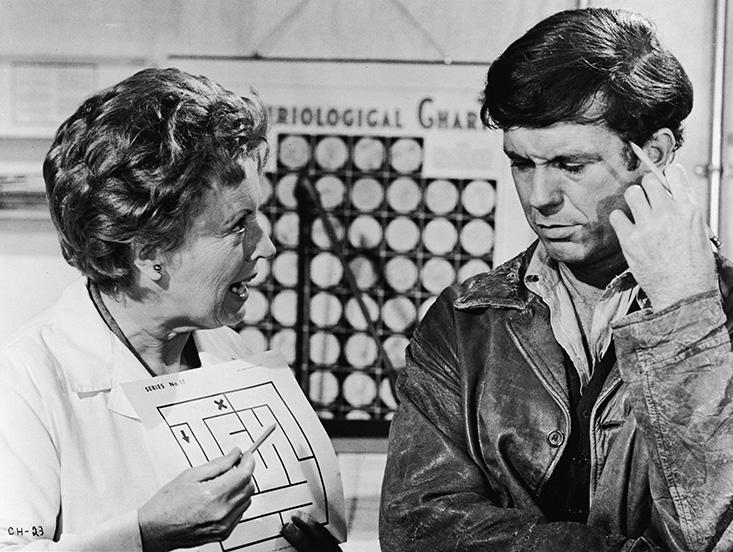
The Overnight Genius: Actor Cliff Robertson, who plays the part of bakery worker-turned-genius Charly (spelled Charlie in the novel), studies an illustration of a maze in this scene from the 1967 film adaptation of Flowers for Algernon.Photo by Cinerama/Courtesy of Getty Images
In Daniel Keyes’ novel Flowers for Algernon, a mentally challenged adult called Charlie Gordon receives an experimental treatment to raise his IQ from 60 to somewhere in the neighborhood of 200. He is transformed from a bakery worker who is taken advantage of by his friends, to a genius with an effortless perception of the world’s hidden connections. “I’m living at a peak of clarity and beauty I never knew existed,” Charlie writes. “There is no greater joy than the burst of solution to a problem… This is beauty, love, and truth all rolled into one. This is joy.” The contrast between a super-intelligence and today’s average IQ of 100 would be greater still. 
The possibility of super-intelligence follows directly from the genetic basis of intelligence. Characteristics like height and cognitive ability are controlled by thousands of genes, each of small effect. A rough lower bound on the number of common genetic variants affecting each trait can be deduced from the positive or negative effect on the trait (measured in inches of height or IQ points) of already discovered gene variants, called alleles.

The Social Science Genome Association Consortium, an international collaboration involving dozens of university labs, has identified a handful of regions of human DNA that affect cognitive ability. They have shown that a handful of single-nucleotide polymorphisms in human DNA are statistically correlated with intelligence, even after correction for multiple testing of 1 million independent DNA regions, in a sample of over 100,000 individuals.

If only a small number of genes controlled cognition, then each of the gene variants should have altered IQ by a large chunk—about 15 points of variation between two individuals. But the largest effect size researchers have been able to detect thus far is less than a single point of IQ. Larger effect sizes would have been much easier to detect, but have not been seen.

This means that there must be at least thousands of IQ alleles to account for the actual variation seen in the general population. A more sophisticated analysis (with large error bars) yields an estimate of perhaps 10,000 in total.1 

Each genetic variant slightly increases or decreases cognitive ability. Because it is determined by many small additive effects, cognitive ability is normally distributed, following the familiar bell-shaped curve, with more people in the middle than in the tails. A person with more than the average number of positive (IQ-increasing) variants will be above average in ability. The number of positive alleles above the population average required to raise the trait value by a standard deviation—that is, 15 points—is proportional to the square root of the number of variants, or about 100. In a nutshell, 100 or so additional positive variants could raise IQ by 15 points.

Given that there are many thousands of potential positive variants, the implication is clear: If a human being could be engineered to have the positive version of each causal variant, they might exhibit cognitive ability which is roughly 100 standard deviations above average. This corresponds to more than 1,000 IQ points.


Hsu_chickens-breaker
 
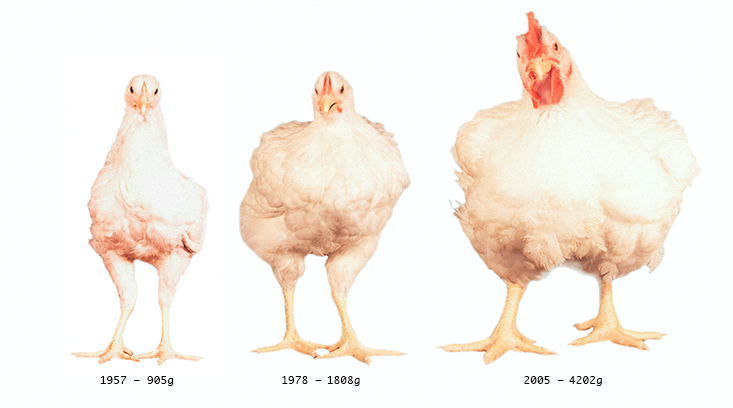
Supersize me: The breeding of domesticated plants and animals has changed some populations by as much as 30 standard deviations. Broiler chickens, for example, have increased in size more than four times since 1957. A similar approach could be applied to human intelligence, leading to IQs greater than 1,000.Zuidhof, M.J., Schneider, B.L., Carney, V.L., Korver, D.R., & Robinson, F.E. Growth, efficiency, and yield of commercial broilers from 1957, 1978, and 2005. Poultry Science 93, 1-13 (2014).
It is not at all clear that IQ scores have any meaning in this range. However, we can be confident that, whatever it means, ability of this kind would far exceed the maximum ability among the approximately 100 billion total individuals who have ever lived. We can imagine savant-like capabilities that, in a maximal type, might be present all at once: nearly perfect recall of images and language; super-fast thinking and calculation; powerful geometric visualization, even in higher dimensions; the ability to execute multiple analyses or trains of thought in parallel at the same time; the list goes on. Charlie Gordon, squared.

To achieve this maximal type would require direct editing of the human genome, ensuring the favorable genetic variant at each of 10,000 loci. Optimistically, this might someday be possible with gene editing technologies similar to the recently discovered CRISPR/Cas system that has led to a revolution in genetic engineering in just the past year or two. Harvard genomicist George Church has even suggested that CRISPR will allow the resurrection of mammoths through the selective editing of Asian elephant embryo genomes. Assuming Church is right, we should add super-geniuses to mammoths on the list of wonders to be produced in the new genomic age.

SOME of the assumptions behind the prediction of 1,000 IQs are the subject of ongoing debate. In some quarters, the very idea of a quantification of intelligence is contentious.

In his autobiographical book Surely You’re Joking, Mr. Feynman!, the Nobel Prize winning physicist Richard Feynman dedicated an entire chapter to his quest to avoid the humanities, called “Always Trying to Escape.” As a student at the Massachusetts Institute of Technology, he says, “I was interested only in science; I was not good at anything else.”

Feynman Bongos The sentiment is a familiar one: Common wisdom sometimes says that people who are good at math are not so good with words, and vice versa. This distinction has affected how we understand genius, suggesting it is an endowment of one particular faculty of the brain, and not a general superlative of the whole brain itself. This in turn makes the idea of apples-to-apples comparisons of intelligence moot, and the very idea of a 1,000 IQ problematic.
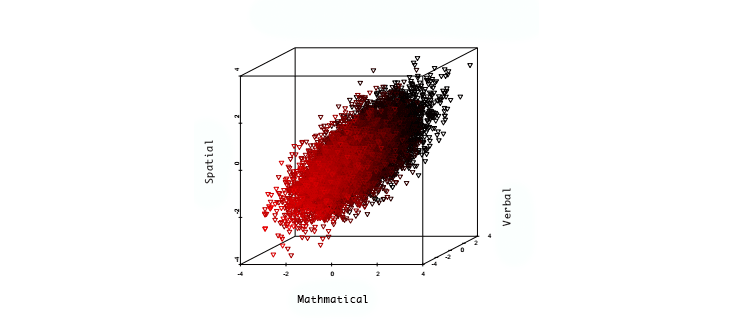

But psychometric studies, which seek to measure the nature of intelligence, paint a different picture. Millions of observations have shown that essentially all “primitive” cognitive abilities—short and long term memory, the use of language, the use of quantities and numbers, the visualization of geometric relationships, pattern recognition, and so on—are positively correlated. The figure below displays graphically the ability scores of a large group of individuals, in areas such as mathematical, verbal, and spatial performance. The space of the graph is not filled uniformly, but instead the points cluster along an ellipsoidal region with a single long (or principal) axis.


Hsu_BREAKER_graph
Smart is smart: The Project Talent study looked at the mathematical, verbal, and spatial skills of over 100,000 ninth-graders, as displayed in this scatterplot. Ability in one area was positively correlated with ability in the other two.
These positive correlations between narrow abilities suggest that an individual who is above average in one area (for example, mathematical ability) is more likely to be above average in another (verbal ability). They also suggest a robust and useful method for compressing information concerning cognitive abilities. By projecting the performance of an individual onto the principal axis, we can arrive at a single number measure of cognitive ability results: the general factor g. Well-formulated IQ tests are estimators of g.

Does g predict genius? Consider the Study of Mathematically Precocious Youth, a longitudinal study of gifted children identified by testing (using the SAT, which is highly correlated with g) before age 13. All participants were in the top percentile of ability, but the top quintile of that group was at the one in 10,000 level or higher. When surveyed in middle age, it was found that even within this group of gifted individuals, the probability of achievement increased drastically with early test scores. For example, the top quintile group was six times as likely to have been awarded a patent than the lowest quintile. Probability of a STEM doctorate was 18 times larger, and probability of STEM tenure at a top-50 research university was almost eight times larger. It is reasonable to conclude that g represents a meaningful single-number measure of intelligence, allowing for crude but useful apples-to-apples comparisons.

Another assumption behind the 1,000-IQ prediction is that cognitive ability is strongly affected by genetics, and that g is heritable. The evidence for this assumption is quite strong. In fact, behavior geneticist and twins researcher Robert Plomin has argued that “the case for substantial genetic influence on g is stronger than for any other human characteristic.”2


Hsu_BREAKER_red-2
In twin and adoption studies, pairwise IQ correlations are roughly proportional to the degree of kinship, defined as the fraction of genes shared between the two individuals. Only small differences due to family environment were found: Biologically unrelated siblings raised in the same family have almost zero correlation in cognitive ability. These results are consistent over large studies conducted in a variety of locations, including different countries.

In the absence of deprivation, it would seem that genetic effects determine the upper limit to cognitive ability. However, in studies where subjects have experienced a wider range of environmental conditions, such as poverty, malnutrition, or lack of education, heritability estimates can be much smaller. When environmental conditions are unfavorable, individuals do not achieve their full potential (see The Flynn Effect).


Sidebar: The Flynn Effect 
The Flynn effect, named after the philosopher James Flynn, refers to a significant increase in raw cognitive scores over the last 100 years or so—the equivalent of two standard deviations in some cases. This raises a number of thorny issues. Were our ancestors idiots? Is cognitive ability really so malleable under environmental influence (contrary to what has been found in recent twin studies)?

The average person 100 years ago was massively deprived by today’s standards— much more so than we would ever be allowed to reproduce in a modern twin study. United States gross domestic product per capita is eight times higher now, and the average number of years people spend in school has increased dramatically. In the America of 1900, adults had an average of about seven years of schooling, a median of 6.5 years, and 25 percent had completed four years or less. Modern twin and adoption studies only include individuals raised in a much smaller range of environments—almost all participants in recent studies have had legally mandated educations, which in the U.S. includes at least several years of high school.

There is a revealing analogy with height. While taller parents tend to have taller children (i.e., height is heritable), significant gains in average height which mirror the Flynn effect (amounting to an almost +2 standard deviation change) have been observed as nutrition and diet have improved.
 
SUPER-INTELLIGENCE may be a distant prospect, but smaller, still-profound developments are likely in the immediate future. Large data sets of human genomes and their corresponding phenotypes (which are the physical and mental characteristics of the individual) will lead to significant progress in our ability to understand the genetic code—in particular, to predict cognitive ability. Detailed calculations suggest that millions of phenotype-genotype pairs will be required to tease out the genetic architecture, using advanced statistical algorithms. However, given the rapidly falling cost of genotyping, this is likely to happen in the next 10 years or so. If existing heritability estimates are any guide, the accuracy of genomic-based prediction of intelligence could be better than about half a population standard deviation (meaning better than plus or minus 10 IQ points).

Once predictive models are available, they can be used in reproductive applications, ranging from embryo selection (choosing which IVF zygote to implant) to active genetic editing (for example, using CRISPR techniques). In the former case, parents choosing between 10 or so zygotes could improve the IQ of their child by 15 or more IQ points. This might mean the difference between a child who struggles in school, and one who is able to complete a good college degree. Zygote genotyping from single cell extraction is already technically well developed, so the last remaining capability required for embryo selection is complex phenotype prediction. The cost of these procedures would be less than tuition at many private kindergartens, and of course the consequences will extend over a lifetime and beyond.

The corresponding ethical issues are complex and deserve serious attention in what may be a relatively short interval before these capabilities become a reality. Each society will decide for itself where to draw the line on human genetic engineering, but we can expect a diversity of perspectives. Almost certainly, some countries will allow genetic engineering, thereby opening the door for global elites who can afford to travel for access to reproductive technology. As with most technologies, the rich and powerful will be the first beneficiaries. Eventually, though, I believe many countries will not only legalize human genetic engineering, but even make it a (voluntary) part of their national healthcare systems.

The alternative would be inequality of a kind never before experienced in human history.

Stephen Hsu is Vice-President for Research and Professor of Theoretical Physics at Michigan State University. He is also a scientific advisor to BGI (formerly, Beijing Genomics Institute) and a founder of its Cognitive Genomics Lab.

References
1. Hsu, S.D.H. On the genetic architecture of intelligence and other quantitative traits. Preprint arXiv:1408.3421 (2014).
2. Plomin, R. IQ and human intelligence. The American Journal of Human Genetics 65, 1476-1477 (1999).

Sunday, October 05, 2014

Why Stanislaw Lem’s Futurism Deserves Attention

http://larb.wpengine.netdna-cdn.com/wp-content/uploads/2013/07/1368481406.jpg

In this article, Lee Billings riffs on Stanislaw Lem's relatively unknown book of philosophical essays, Summa Technologiae (Electronic Mediations), written in 1964 but not fully translated into English until 2013. Lem is known primarily for his science fiction writing, especially the 1961 novel Solaris, adapted into a meditative film by Andrei Tarkovsky in 1972.

In the Summa, however, Lem meditates on topics that were still fully "fantastic" in 1964, but now are topics of conversation within the realm of the possible, such as virtual reality, nanotechnology, artificial intelligence and the technological singularity.

The Book No One Read

Why Stanislaw Lem’s futurism deserves attention


I remember well the first time my certainty of a bright future evaporated, when my confidence in the panacea of technological progress was shaken. It was in 2007, on a warm September evening in San Francisco, where I was relaxing in a cheap motel room after two days covering The Singularity Summit, an annual gathering of scientists, technologists, and entrepreneurs discussing the future obsolescence of human beings.
In math, a “singularity” is a function that takes on an infinite value, usually to the detriment of an equation’s sense and sensibility. In physics, the term usually refers to a region of infinite density and infinitely curved space, something thought to exist inside black holes and at the very beginning of the Big Bang. In the rather different parlance of Silicon Valley, “The Singularity” is an inexorably-approaching event in which humans ride an accelerating wave of technological progress to somehow create superior artificial intellects—intellects which with predictable unpredictability then explosively make further disruptive innovations so powerful and profound that our civilization, our species, and perhaps even our entire planet are rapidly transformed into some scarcely imaginable state. Not long after The Singularity’s arrival, argue its proponents, humanity’s dominion over the Earth will come to an end.

I had encountered a wide spectrum of thought in and around the conference. Some attendees overflowed with exuberance, awaiting the arrival of machines of loving grace to watch over them in a paradisiacal post-scarcity utopia, while others, more mindful of history, dreaded the possible demons new technologies could unleash. Even the self-professed skeptics in attendance sensed the world was poised on the cusp of some massive technology-driven transition. A typical conversation at the conference would refer at least once to some exotic concept like whole-brain emulation, cognitive enhancement, artificial life, virtual reality, or molecular nanotechnology, and many carried a cynical sheen of eschatological hucksterism: Climb aboard, don’t delay, invest right now, and you, too, may be among the chosen who rise to power from the ashes of the former world!

Over vegetarian hors d’oeuvres and red wine at a Bay Area villa, I had chatted with the billionaire venture capitalist Peter Thiel, who planned to adopt an “aggressive” strategy for investing in a “positive” Singularity, which would be “the biggest boom ever,” if it doesn’t first “blow up the whole world.” I had talked with the autodidactic artificial-intelligence researcher Eliezer Yudkowsky about his fears that artificial minds might, once created, rapidly destroy the planet. At one point, the inventor-turned-proselytizer
 Ray Kurzweil teleconferenced in to discuss,
among other things, his plans for becoming transhuman, transcending his own biology to 
achieve some sort of
 eternal life. Kurzweil
 believes this is possible, 
even probable, provided he can just live to see
 The Singularity’s dawn, 
which he has pegged at 
sometime in the middle of the 21st century. To this end, he reportedly consumes some 150 vitamin supplements a day.


Returning to my motel room exhausted each night, I unwound by reading excerpts from an old book, Summa Technologiae. The late Polish author Stanislaw Lem had written it in the early 1960s, setting himself the lofty goal of forging a secular counterpart to the 13th-century Summa Theologica, Thomas Aquinas’s landmark compendium exploring the foundations and limits of Christian theology. Where Aquinas argued for the certainty of a Creator, an immortal soul, and eternal salvation as based on scripture, Lem concerned himself with the uncertain future of intelligence and technology throughout the universe, guided by the tenets of modern science.

To paraphrase Lem himself, the book was an investigation of the thorns of technological roses that had yet to bloom. And yet, despite Lem’s later observation that “nothing ages as fast as the future,” to my surprise most of the book’s nearly half-century-old prognostications concerned the very same topics I had encountered during my days at the conference, and felt just as fresh. Most surprising of all, in subsequent conversations I confirmed my suspicions that among the masters of our technological universe gathered there in San Francisco to forge a transhuman future, very few were familiar with the book or, for that matter, with Lem. I felt like a passenger in a car who discovers a blindspot in the central focus of the driver’s view.

Such blindness was, perhaps, understandable. In 2007, only fragments of Summa Technologiae had appeared in English, via partial translations undertaken independently by the literary scholar Peter Swirski and a German software developer named Frank Prengel. These fragments were what I read in the motel. The first complete English translation, by the media researcher Joanna Zylinska, only appeared in 2013. By Lem’s own admission, from the start the book was a commercial and a critical failure that “sank without a trace” upon its first appearance in print. Lem’s terminology and dense, baroque style is partially to blame—many of his finest points were made in digressive parables, allegories, and footnotes, and he coined his own neologisms for what were, at the time, distinctly over-the-horizon fields. In Lem’s lexicon, virtual reality was “phantomatics,” molecular nanotechnology was “molectronics,” cognitive enhancement was “cerebromatics,” and biomimicry and the creation of artificial life was “imitology.” He had even coined a term for search-engine optimization, a la Google: “ariadnology.” The path to advanced artificial intelligence he called the “technoevolution” of “intellectronics.”

Even now, if Lem is known at all to the vast majority of the English-speaking world, it is chiefly for his authorship of Solaris, a popular 1961 science-fiction novel that spawned two critically acclaimed film adaptations, one by Andrei Tarkovsky and another by Steven Soderbergh. Yet to say the prolific author only wrote science fiction would be foolishly dismissive. That so much of his output can be classified as such is because so many of his intellectual wanderings took him to the outer frontiers of knowledge.

Lem was a polymath, a voracious reader who devoured not only the classic literary canon, but also a plethora of research journals, scientific periodicals, and popular books by leading researchers. His genius was in standing on the shoulders of scientific giants to distill the essence of their work, flavored with bittersweet insights and thought experiments that linked their mathematical abstractions to deep existential mysteries and the nature of the human condition. For this reason alone, reading Lem is an education, wherein one may learn the deep ramifications of breakthroughs such as Claude Shannon’s development of information theory, Alan Turing’s work on computation, and John von Neumann’s exploration of game theory. Much of his best work entailed constructing analyses based on logic with which anyone would agree, then showing how these eminently reasonable premises lead to astonishing conclusions. And the fundamental urtext for all of it, the wellspring from which the remainder of his output flowed, is Summa Technologiae.

The core of the book is a heady mix of evolutionary biology, thermodynamics—the study of energy flowing through a system—and cybernetics, a diffuse field pioneered in the 1940s by Norbert Wiener studying how feedback loops can automatically regulate the behavior of machines and organisms. Considering a planetary civilization this way, Lem posits a set of feedbacks between the stability of a society and its degree of technological development. In its early stages, Lem writes, the development of technology is a self-reinforcing process that promotes homeostasis, the ability to maintain stability in the face of continual change and increasing disorder. That is, incremental advances in technology tend to progressively increase a society’s resilience against disruptive environmental forces such as pandemics, famines, earthquakes, and asteroid strikes. More advances lead to more protection, which promotes more advances still.

And yet, Lem argues, that same technology-driven positive feedback loop is also an Achilles heel for planetary civilizations, at least for ours here on Earth…

The full article appears in the Fall 2014 Nautilus Quarterly. Subscribe today!

Freelance writer Lee Billings is the author of Five Billion Years of Solitude: The Search for Life Among the Stars.

Photograph by Forum/UIG/Getty Images

Thursday, October 02, 2014

What If the Universe Didn’t Start With the Big Bang?

http://www.dailygalaxy.com/.a/6a00d8341bf7f753ef017d421dca64970c-pi

More than likely it didn't. So then what? Is the universe cyclic, with no known beginning? Of course, this is the kind of model Roger Penrose proposed in Cycles of Time: An Extraordinary New View of the Universe (2010). You can read more about Penrose's conformal cyclic cosmology theory at Wikipedia.

What If the Universe Didn’t Start With the Big Bang?

Posted By Nautilus Editors on Oct 01, 2014

Last week, researchers using the Planck spacecraft to study the skies announced that the polarization of light spotted by the BICEP2 experiment could be entirely explained by dust swirling around the Milky Way. This news was a bucket of cold water on the theories of many cosmologists: It meant that BICEP2 might not have been detecting gravitational waves, which were interpreted as being proof of cosmic inflation, the long-held theory that parts of the Universe began growing astonishingly fast very soon after the Big Bang. (Read Maggie McKee’s excellent, more detailed summary of the news.)

But for Paul Steinhardt, the lack of evidence for gravitational waves was good news. Steinhardt advances an alternate theory of cosmology, doing away with inflation in favor of slower expansion of the Universe. This more gentle growth would not produce strong gravitational waves, so the lack of evidence for them means his theory is still a candidate to explain the cosmos.

Steinhardt is also, appropriately, the Nautilus Ingenious for this month. Here is a key part of McKee’s interview with him, where he describes why the Big Bang may have been a transition from a previous phase rather than an absolute beginning. You can see the entire interview and transcript here.


Maggie McKee is a freelance science writer focusing mainly on astronomy and physics. Previously an editor at New Scientist and Astronomy, she lives near Boston with her husband.
* * * * *

Ingenious: Paul J. Steinhardt

The Princeton physicist on what’s wrong with inflation theory and his view of the Big Bang.


Paul J. Steinhardt does not look like a firebrand. With his wiry spectacles and buttoned-up bearing, he would not seem out of place in an office of accountants. But the Director of the Princeton Center for Theoretical Science is an academic agitator, vocally criticizing the leading theory of the universe’s infancy, a theory that he himself helped create more than 30 years ago. According to this picture, called inflation, space itself expanded faster than the speed of light just after the universe’s birth in the big bang, doubling in size 100,000 times in less than a billionth of a billionth of a billionth of a second.

But once started, inflation is hard to stop entirely, so pockets of space should constantly be budding off into new universes with different properties. In such a multiverse, anything that can happen will happen somewhere, and that is a fatal flaw for Steinhardt—a theory that cannot rule anything out is not scientific, he argues. He has been pursuing an alternative scenario where our universe cycles between periods of expansion and contraction, so that the big bang was really a big bounce. Most other researchers are skeptical of the approach, but Steinhardt is undeterred.

And his search for alternative schemes is not limited to cosmology. For decades, he has been pondering the different ways atoms might be arranged in crystals, discovering that arrangements previously thought to be impossible were actually allowed. In recent years he even struck out into the wilderness of the Russian Far East to look for the rarest arrangements in nature, an expedition that yielded minerals new to science, including one dubbed “steinhardtite.”

Both Steinhardt’s passion for unsolved puzzles and his critiques of overly accommodating scientific theories are on display in our video interview.

Each video question plays at the top of the screen 
[Go to the Nautilus page to view these video clips - transcripts below].


What does the term “Big Bang” mean?
According to the theory of inflation, what was the early expansion of the universe like?
What caused the expansion of the universe?
You have become a critic of inflation. Why?
Why is it so unsettling to believe we might live in an accidental universe?
What do you think of recent findings supporting the existence of gravitational waves?
You have been working on alternative theories to inflation. What are they?
What is a cyclic universe?
What is the main criticism of the cyclic universe picture?
Can we ever know the full history of the universe?
What does the Higgs boson have to do with cosmology?
How did you get into science?
Can you share some stories about the Nobelist Richard Feynman?
What are quasicrystals?
A quasicrystal is named after you. How did that happen?
How did an inflation researcher like you come to study quasicrystals?
What would you be if you weren’t a scientist?

Interview Transcript


What does the term “Big Bang” mean?

Physicists mean two things when they talk about the Big Bang. What cosmologists usually mean is the idea that the universe was once hot and dense, and has been expanding and cooling. So when people who are non-scientists ask us do we believe in the Big Bang theory, that’s usually what we’re talking about. Is there evidence that the universe was once hot and dense and has been expanding and cooling? And the answer is: There’s overwhelming evidence for that. When the public generally asks us about the Big Bang theory though, they have a different idea in mind. They have the idea of this big bang itself, the big bang beginning, the idea that the universe, you know, at one time didn’t exist and suddenly sprang from nothingness into something-ness and that’s the Big Bang. And if you ask physicists are they confident in that idea, the answer is no. There are different ideas about what might have happened as we go back to that moment in time. People have had ideas over, you know, the last century, of what might have occurred during that time and that’s a subject which is central to a lot of the debates we have in cosmology today.

According to the theory of inflation, what was the early expansion of the universe like?

So if the space between you and me, for example, were stretching at this rate at the present time, you’d be either trying to speak to me by sending a sound wave or we could send light signals, [and] the space between us would be stretching so fast that the light would be having to make up, or the sound would be having to make up the new distance. There would be [space] being created so fast, that [sound waves/light signals] would never get to you, or yours to me. We’d lose sight of one another and lose communication with one another. That’s the kind of expansion we’re talking about when we’re talking about inflation.

And just to put some numbers on it, in typical examples, the inflation begins when the universe is about a billionth, billionth, billionth, billionth of a second old, and it doubles in size roughly every billionth, billionth, billionth, billionth of a second—for maybe a hundred thousand doublings, or a million doublings, or maybe a billion doublings. That means it doubles in size or multiplies by eight in volume, you know, every billionth, billionth, billionth, billionth of a second and after a short time, a region which is smaller than a nucleus blows up to a size which is much larger than the space that we observe today when we look around the universe. We only see a finite patch of the universe. It’d be enormously bigger than that and we’d just be a tiny patch; what we would observe would just be a tiny patch of that piece of space that was once smaller than a nucleus, that blew up and inflated at that time.

What caused the expansion of the universe?  

We do not know what caused the inflation. There are, you know… Over the last 30 years, there are probably hundreds, maybe thousands of papers with people with different proposals for what is the precise field or the precise form of energy which—they all have to have the property they self-repel, they all have to produce this accelerating effect, but as for their precise identity, there are lots and lots and lots and lots of different ideas, some of which involve quantum fields like the original idea; some of which involve the use of extra dimensions; some of which use the idea from string theory, quantum strings, or quantum brains—membranes; many, many different ideas, and whichever one you choose by the time you… What we observe in the universe today doesn’t help us distinguish very keenly which one of these ideas is correct. We can eliminate some possibilities but there’s so many—there are many different options.

They all have to have the property that somehow the inflation ends. And the property… I mean one thing that’s always, that’s bothered me about the story since the very first example, is the property of getting this inflation and having it end has always involved some degree of tuning or fine-tinkering of the model, you know, fine-tuning. Every model has some sort of what we call parameters or coefficients or features in it that have to be finely adjusted in order to get what you want. If you don’t adjust them right you get something entirely different, which you don’t want, which is inconsistent with what we observe. So we don’t have what I would call a pretty theory, a theory that naturally explains this process and that’s, you know, one of the problems at present time—is to find something, a natural explanation, for what we observe. And as we observe more properties of the universe, that becomes more stringent and a more stringent constraint on our models.

You have become a critic of inflation. Why?

What we discovered is that it’s possible, that actually it’s possible, and then eventually realized it’s almost hard to avoid that inflation once it starts is really eternal—that it can end in some patches, but it will always continue yet in other patches of the universe and where it continues, it blows up in volume so much that it occupies the vast majority of the universe. And although it continues to produce patches where it ends, the patches that are inflating are always outrunning the regions where it ends, and so you end up with patch after patch after patch where inflation has ended being tiny little specks in a universe where it’s continuing.

Now those patches where it’s ended are pretty darn large—they’re large enough to contain us—so maybe you shouldn’t be, you might not be concerned at first. But the problem is, due to the effects of quantum physics these patches are not all the same. The effects of quantum physics, when you include them properly, lead to a situation where some patches are like us, but some patches are not like us; and in fact, every conceivable possible outcome of the universe can occur if you look from patch to patch to patch and there’s no particular reason why ours is more likely than any other. So in a sense we would live in this picture, in an accidental universe. We’re trying to explain the universe in a simple, forcefully deterministic way, and instead in this inflation universe, it looks like it’s an accident that we live in the universe such as we do. It could have many widely different properties.

Why is it so unsettling to believe we might live in an accidental universe?

First of all, the fact that the universe is so simple on large scales. If you observe something which could be complicated, but it turns out to be very simple, it’s screaming at you that there’s some explanation for why it is so. Now the problem with an accidental universe is that it’s not an explanation at all. It’s not even a scientific theory in the form we’re talking about—in the sense that it allows every conceivable possibility. If you allow every conceivable possibility, then there’s no test or combination of tests that can disprove such a concept. You’re allowed to have that idea if you like, but it’s no longer in the realm of science—you’re some kind of metaphysics or philosophy, which is outside the realm of science.

So the problem with inflation is that it began as an idea which seemed to have definite predictions and properties and, and with the discovery of eternal inflation, the multiverse, it moved to this accidental universe picture where it no longer has any particular test or combination of tests that can disprove it. It’s so flexible—and this is just one form of flexibility we’re talking about right now, it has other forms of flexibility—but it’s so flexible just because of this multiverse that there’s nothing… anything you would observe you’d say, “Oh, that could happen in a multiverse. That could happen too,” you know. You could just go on and on. There’d be nothing that would tell you that the theory could possibly be wrong. And such ideas, as I say, lie outside the domain of normal sciences that’s been practiced for the last 400 years. So I think it’s a very… It’s a kind of, I would call it, a failure mode. You know, usually we’re used to theories failing because they make a definite prediction, you go to make the observation, and it disagrees. That’s science as we normally understand it. It makes a prediction, it gets tested, and it fails. This is different.  This is a theory which you thought made definite predictions and now you’ve discovered that it has this sort of infinite way out and so that means it’s just no longer, you know, an ordinary scientific idea, which is a different kind of failure mode than what we’re used to.

What do you think of recent findings supporting the existence of gravitational waves?

You can’t be sure what’s causing that signal. Is it really a signal from the deep part of the sky beyond the galaxies, the thing you’re trying to detect? Is it a signal caused by the dust within our galaxy, twisting the light as it scatters from that dust? Is it a signal that’s caused by the atmosphere, which is constantly fluctuating and distorting the light as it comes to my detector? Is it light that bounces off the ground and comes into my detector and is distorted that way, or is it light that is distorted by the lens in my detector? There are many sources you’d have to look in with just a single frequency. So what they were trying to do was extremely difficult and more than could be done I would say, and so there were reasons to be concerned right off the bat and the biggest concern was, had they taken a proper account of the dust in our own galaxy? And that’s the issue that people have been focusing on most up to this point.

Because we know there is, in our own galaxy, dust, which has the property that light which comes, which scatters off of it, becomes polarized—and that is to say when the light comes, gets scattered off of us, it gets scattered off of the dust. Instead of the light coming toward it with the electric fields oscillating in every possible direction, some directions are preferred over others depending upon the particular dust particle that it scatters off of. Now that is what BICEP2 was trying to measure—was the polarization of light, not by the dust but caused in the early universe by gravitational waves. But they can’t distinguish by themselves which caused it. The dust? Or was it the gravitational waves?
Now, various groups have tried to improve on what they did and conclude that most [likely], that dust is a large contributor and perhaps the entire source of the signal they were seeing. And we’re waiting now for results from the Planck Satellite experiment, which should be presenting us with a detailed map of that particular region of the sky that the BICEP2 team measured and then we’ll be able to say more about the likelihood that they saw these gravitational waves. (See the related blog post, “Excitement About Gravity Waves Comes Crashing Down,” which reports on the Planck team’s finding that the polarization signal could be entirely explained by dust, rather than gravitational waves.)

You have been working on alternative theories to inflation. What are they? 

What if we didn’t start from the Big Bang? Maybe that’s not the beginning of space and time; and maybe what we think of as a bang, is really a bounce: a transition from a preexisting phase—let’s say of contraction—[and then] a bounce into expansion. Now suddenly there’s a whole new domain of time, before the bounce, before the bang, [with] which you can introduce processes that would naturally smooth and flatten the universe.

So the theories I’ve been working on have that property. They transform the bang to a bounce, and they introduce processes that would just naturally occur when, in a contracting universe automatically they would tend to flatten and smooth the universe. And then you add the quantum physics into it—different regions of space contracting at different times due to these random quantum fluctuations. You can’t keep things completely in sync—quantum physics doesn’t allow it—so the slight non-uniformity in the rate of contraction will translate into fluctuations, variations in temperature and density after the bounce, that would produce the fluctuations you see in the microwave background. But because this process of contraction is very gentle and slow compared to the very rapid inflationary expansion, it doesn’t produce the violent effects that produce the big gravitational waves, that high amplitude gravitational wave that inflation does. Instead it produces gravitational waves which are much, much weaker, far too weak to be observed.

We have this more realistic, contemporary version, which produces a multiverse in which anything can happen and is completely unpredictive. And then we have a theory which says in the bouncing theory, we shouldn’t see the gravitational waves in this particular kind of… in this kind of bouncing theory, you shouldn’t see these gravitational waves. And that’s the spectrum of models which we know at present and there may be other models yet to be found.

What is a cyclic universe?  

The bouncing model which I was just describing is one in which I only talked about a single bounce—taking the most recent bang and saying suppose it’s a bounce, and suppose… In that case it allows, opens up the possibility of the smoothing that accounts for the smoothness we see today, [that it] was produced during the period of contraction before that bounce.

Expand the story a bit. Was that the only bounce? Could there have been a sequence of bounces? Could there have been a kind of episodic or cyclic universe? Yes, all those things are natural possibilities. They’re natural possibilities, but I should say that during each period of contraction, and in each preceding… [and] each such bounce, there’s always going to be this smoothing process, this flattening process which has the property that in a sense you’re kind of erasing information, or spreading out information so thinly from what preceded it, [that] there is almost no trace of it in the universe that you can look at today.  You have to look for indirect evidence of this process.

So you don’t see direct evidence of earlier cycles, but you could infer they might exist based on the fact that you see the smoothness and the flatness and the absence of gravitational waves and maybe other properties explained by this sort of episodic or cyclic universe. Now once you have that possibility around theoretically you can also ask the question well, how did it begin? Did it have a beginning? Maybe. It could have had a beginning and then kind of settled into a regular pattern, or as far as we can tell theoretically, it may have continued forever into the past and forever into the future. So there is… the way you get around the problem of beginning is that there is no beginning. It was always there doing this, forever in the past and forever in the future.

What is the main criticism of the cyclic universe picture?

The one remaining issue is the bounce itself. What exactly happens with the bounce, what physics describes that bounce and there, there are several working ideas that people have. Some, in some cases, one [side] thinking about bounces in which the universe contracts to a point and then reverses itself and begins to expand right away before reaching zero size—before having to worry about the effects of quantum gravity. And so we both constructed examples like that. And then there are also examples where [another] says no, let’s go ahead and push on and see if we can explore whether quantum gravity would naturally lead to a bounce. Now both those ideas are under development.
And my view is this, this is the key problem. Whether or not we can have this bounce is the key problem of fundamental physics and cosmology. It relates to fundamental physics of quantum gravity, to the problem of cosmology. Could the smoothing have occurred before? Can we avoid the multiverse problem? They relate. You know, all these things are tied up together and I think it’s the key problem that we should be focusing on, you know, as we enter the 21st century. It’s the key problem we should be focusing on because if we can show it’s impossible, then we have to, definitely have to win, win out over the multiverse. Get control of it. If it’s possible, then I just think it’s a much simpler idea than inflation and the multiverse. Just discard that, and I think this bouncing idea is a much simpler way of explaining the universe in which… the simple universe, which we observe.

Can we ever know the full history of the universe?

I’m optimistic about our being able to figure out the history of the universe at this point because what we’ve observed about it on a large scale is this extraordinary simplicity. If it were complicated, if it looked like it came out of some complicated sausage-making machine, then you’d say, well the fact that I can only observe one part of it and I’m only seeing a little piece of the sausage, it makes it pretty hard for me to figure out the machine that produced it. But that’s not what we’re observing. We’re not observing some complicated sausage—we’re observing an extraordinary symbol of uniformed, featureless—very few degrees of freedom here to describe the universe on large scales. 
It’s also true that our fundamental physics if you, you know… recent discoveries about the Higgs in fundamental physics have just shown that to be simpler than many theorists thought it should be. So what… at the present time, I’m saying there’s fascinating simplicity observed on large scales. There’s fascinating simplicity observed on small scales. That makes me optimistic that it should be, that we should be looking for a very simple solution with so little, so few degrees of freedom that you would be in, you’d immediately be able to recognize that that’s a very sensible compelling model to explain what we observe.

What does the Higgs boson have to do with cosmology?

If we assume for the moment that the Large Hadron Collider has seen all the particles to be seen up to high, you know, reasonably high energies, there’s a surprising result that emerges from this analysis. And that is that our present universe is in a metastable state. Instead of being at the lowest energy state in the universe, it’s actually at a state of relatively high energy compared to what would be the minimum. It’s separated from that minimum by a large energy barrier, which is why we are in the state we are in and aren’t immediately jumping to a state of low energy. But ultimately if this picture is correct, we can’t be in a stable state. Eventually, some sort of quantum fluctuation or a thermal fluctuation could, is going to kick us out and we’re no longer going to be in the present vacuum state.

So that means in our present vacuum state, instead of being in a universe in which the vacuum, energy in the vacuum is relatively small and positive—which is the way it is today—and instead of being in a universe which is accelerating its expansion, it’s going to jump at some point into a state in which… that the universe is going to be begin to contract.

This kind of idea is interesting because in the kind of cyclic universe as I was describing, this is exactly what has to be the case. If the universe is going to cycle, it can’t remain in the present accelerating universe, it has to eventually end its acceleration and enter a phase of contraction and here’s the Higgs, maybe providing us with that hint that that will be, that that could occur. Then if it turns out that when you contract you bounce, that would lead to the Higgs coming back to the current vacuum, but now in a universe which is hot and expanding again and the process of expanding and cooling and forming galaxies and stars could begin again.   

So this work on microphysics which we, in the Large Hadron Collider, which we don’t normally think about as cosmology—it was really just designed to see if we could see if there was a Higgs at all—has turned out to be potentially very interesting for cosmology, much more interesting maybe even then you’d say for particle physics because it may be pointing us to new possibilities for the past and future of our universe that, that we didn’t dream were possible, and that the Higgs is pointing us to.

How did you get into science?

I think ever since I was a toddler I always wanted to be a scientist. My father used to tell me—he was not a scientist, he was a lawyer—for some reason, he used to tell me stories about scientists and discovering things in science and that just sounded to me so exciting to discover something new that no one had ever known before. I just found that extremely thrilling and so I always wanted to be a scientist of some sort. And so you know from the first books I remember you know, all my experiences were… science was always a big part of my life. And so you know, as a kid growing up I had a chemistry lab between a biology laboratory, between a telescope, and doing that kind of thing, doing lots of research that I could. You know getting, kind of getting involved in research as young as I could.

The one area which I had very little exposure to up to that point was physics and it wasn’t until I was an undergraduate at Caltech that I… I mean I took physics in high school but they were pretty prosaic courses but when I first, you know, realized that physics was really interesting was when I was an undergraduate at Caltech and I, the first year forced to take physics, for the first two years and that professor… you know, within weeks I’d met you know, very exciting people including Richard Feynman and I was completely sold: That’s, that was the science I wanted to do. And then I began to explore different areas of physics because I didn’t know much about physics when I started in it and the very last one I came to was cosmology. As I mentioned earlier, it really was as a post-doc, and I happened to walk into a lecture by Alan Guth—really never having taken a course in cosmology—that’s when I was first exposed to it and it has occupied a big part of my research life ever since.

Can you share some stories about the Nobelist Richard Feynman?  

I had several interactions with Feynman. I started a course with him called “Physics X.” My roommate and I asked him if he’d be willing to teach a “pseudo-course”—a false course—called “Physics X” in which he would come every week and he would answer any questions that you might throw at him. And that was a real thrill because literally the discussion, you know, ranged all over the map. It wasn’t just about things you know, the obvious things about particle physics you could ask about. He didn’t even particularly like that kind of question. He wanted you to bring in some phenomenon, some mysterious phenomenon and we would be discussing about you know, what might explain that phenomena. And so it’s a, it was a really important influential experience for me. 
And then I also did my senior thesis project with him, so that was another set of experiences so it left there a real mark on my thinking, including my thinking about science which has been coming back to me since the BICEP2. A lot of… BICEP2 has brought in a lot of interesting debate about… that you wouldn’t think scientists would have to debate about—about what is the nature of science, this issue of whether it’s important that science be testable or not testable, falsifiable or not falsifiable. These were issues which I think in Feynman’s mind were extremely clear and I think conventional—I would have said conventional—and certainly in my own mind, conventional and very clear, but, you know, I’ve been hearing some very interesting views that, you know, having a theory which is not falsifiable may be okay in science—and I find that very strange and actually I find it rather dangerous—but it sort of brought me back to rethinking some of my experience with Feynman from those days.

What are quasicrystals?  

Back in the 1980s, my student and I had been hypothesizing that there could exist forms of matter in which the atoms and molecules could organize themselves into patterns that were impossible for crystals, but they weren’t random either. In fact they would have symmetries which crystals, patterns do—but symmetries which crystals aren’t allowed to have.
So it’s been known for 200 years that atoms could organize themselves like building blocks into certain patterns where the atoms or clusters of atoms regularly repeat. That’s what makes a crystal a crystal. And if I make things out of building blocks that way, it’s been known for nearly 200 years, there are only certain symmetries which are possible. So all the crystals that you observe in nature up until recently, only conform to one of 32 symmetry possibilities established, you know, in the 19th century. Everything we’ve known up to that point lived that way.

But what we showed, my student, Dov Levine and I showed is that if you get away from the idea of just a single repeating unit, if you allow yourself let’s say two repeating units, so two repeating atoms, which repeat at different frequencies, suddenly symmetries which were impossible become possible. So for example, crystals can never organize themselves into any kind of structure which has five-fold symmetry. It’s forbidden for crystals—mathematically, it’s impossible. But the quasi-, the systems we were thinking about which we call quasicrystals could. In fact, they could arrange themselves and to form a solid with the symmetry of a soccer ball—which has you know many pentagons on it, many, many different axes of five-fold symmetry—we could even get that kind of structure. And while we were working on the this idea, there was a group at the National Bureau of Standards led by Dan Shechtman, which was looking at various aluminum alloys and they stumbled across one which produced a pattern of diffraction which had five-fold symmetry, which was inconsistent with the laws of crystallography. They had no explanation for it but they, you know, said, “Here it is! We don’t understand it, but you know, here’s a possibility.” And it turned out the patterns they were getting conformed precisely with the kinds of patterns we had predicted hypothetically. And so that’s how the idea of, that’s how the discovery of quasicrystals was made—the realization that the hypothetical idea and the experimental idea actually related, came through that and in 2011, Dan Shechtman won the Nobel Prize in Chemistry for his discovery of the… we now call the first quasicrystal.

A quasicrystal is named after you. How did that happen?

All the quasicrystals that have been discovered since 1984, up until recently, were discovered in the laboratory synthetically—and people even argued that they required that; they were such delicate forms of matter that they could only form that way whereas, my own thinking based on, you know, theoretical reasoning was there was no reason why that had to be so. Some quasicrystals might be energetically stable and if so, maybe they’d be found in nature. So I launched a search, a worldwide search to look for natural quasicrystals around 1998 and there’s a long story that goes with it, but about 10 years later we actually found a sample in a museum in Florence thanks to a mineralogist there, Luca Bindi, who helped us search. We found a sample of quasicrystal in a very complicated rock and there’s no question it was a quasicrystal so that could have been the end of the story, but what happened was that when we began to show this rock to geologists, or our results to geologists, they became very skeptical that it could possibly be natural. Not because it was a quasicrystal, but because it… of the particular chemistry of our quasicrystal. It had metallic aluminum in it and aluminum has a strong affinity for oxygen—so in nature, there’s lots of aluminum but there’s no metallic aluminum unless you go to as aluminum foundry. So they said this must come from an aluminum foundry, not from nature.

So that then launched a quest to try to figure out where this guy came from—where the sample from Florence came from—and over the next two years we eventually were able to show that it came from a very obscure region of far Eastern Russia, was found in the ground, was not formed in a foundry, and was actually part of a meteorite that fell there—probably about 10,000 years ago—and a meteorite that comes from the very beginning of the solar system, about 4 and a half billion years ago, so our quasicrystal’s about 4 and a half billion years old. And then I put together a geological expedition… I put together a geological expedition to go there to look for more samples, which we found, because we only had the one in the museum to begin with, and we found more and it not only had the quasicrystal but it had other new minerals that had never been seen before. And one of them is a mixture of aluminum, iron, and nickel and the team decided… so when you find a new mineral you have to write a paper explaining its properties and then you have to post a name for it and they did me the honor of calling it Steinhardtite. So that’s the Steinhardtite mineral. It’s one of the minerals found this meteorite that’s 4 and a half billion years old and that includes the first known natural quasicrystal.

How did an inflation researcher like you come to study quasicrystals?

I came to physics rather late, so when I decided I was interested in physics, I had to find out what area of physics I wanted to investigate. So what I decided to do was spend, you know, each of my undergraduate years exploring some area of science, physics rather, to decide which one I would want to choose, figuring at the end I would choose one. But what actually… I didn’t choose. Every one of those experiences led to some, you know, by some trajectory or another, to other projects that continued, almost all of them up to the present day, including spending a summer at Yale University studying, what was originally their structure of amorphous silicon—so silicon when you cool it rapidly will form a random network, and its properties have never been… were at that time and even today aren’t really fully understood, so I started on that project. That got me interested into thinking about what kind of structures, atoms, and molecules can form. Do they have to really conform to the rules of crystallography? And then again like most of you know these stories, there’s a long circuitous story—trying different things, failing, eventually led to the idea of quasicrystals.

I’m always looking around for good problems to work on so I don’t have any rules about what problems I work on, I have to… but I need an idea. So I’m always listening, to lots of different areas of science in hopes that I’ll find a good puzzle.

What would you be if you weren’t a scientist?

Hmm. That’s tough because really, that’s the only thing I’ve been thinking about. What would I be doing if I were not a scientist? Well I’d probably be teaching something about science. Yeah, I wouldn’t be a scientist but I’d probably be a teacher of some sort. At least I could… you know, I enjoy learning about it as well as doing research in it. But it’s hard for me to believe that I wouldn’t be doing research in it—at least tinkering on my own.

Maggie McKee is a freelance science writer focusing mainly on astronomy and physics. Previously an editor at New Scientist and Astronomy, she lives near Boston with her husband.