Showing posts with label risk. Show all posts

Tuesday, September 23, 2014

Michael Unger - Stop Bubble-Wrapping Your Kids! How Overprotection Leads to Psychological Damage

http://assets0.circlesoft.net/document/photos/000/273/157/large_9781741756494.jpg

Michael Ungar, PhD, is a family therapist and a professor of social work at Dalhousie University, where he codirects the Resilience Research Centre. He’s the author of Too Safe for Their Own Good: How Risk and Responsibility Help Teens Thrive.

This article was published originally in Psychotherapy Networker magazine and re-posted at Alternet.

This style of parenting seems to weird to me. Granted, I grew up in the 1970s, in a quiet suburb of Los Angeles, but I had an incredible amount of freedom compared to today's kids. As a seven or eight year old (maybe younger), I was allowed to walk nearly a mile to the 7-11 to buy baseball cards with my allowance on a Saturday morning. At eight or nine, I could ride my bicycle several miles with a friend or two to go to Magic Mountain, which included crossing several major intersections. As a nine-year-old in southern Oregon, I was allowed to be out all day, fishing my way with a friend down Williams Creek.

I grew up with the freedom to make mistakes, get stuffed in a garbage can (I was six, and we were riding our bikes in the junior high school down the street), and to explore the world in which I grew up. Those experiences are part of who I am today.

Psychologist: Stop Bubble-Wrapping Your Kids! How Overprotection Leads to Psychological Damage

If overprotection can disadvantage children, why do so many parents continue to bubble-wrap their kids?


Psychotherapy Networker / By Michael Ungar

September 17, 2014  |  I’m sure Shyam wasn’t thinking about the harm she was causing her 8-year-old daughter, Marian, when she demanded her daughter’s school put an extra crossing guard closer to their home. Nor did she doubt herself when she insisted that children be barred from bringing oranges to school because Marian developed a minor rash every time she ate one. At home, Marian was closely monitored and never allowed to take risks: no sleepovers, no playing on the trampoline with friends, no walking to the corner store (less than a block away) by herself.

Shyam might sound extreme in her parenting, but among the families that come to therapy these days, she’s far from an outlier. While not all overprotective parents are as extreme in their behaviors as Shyam (indeed, few experience themselves as being obsessive at all), many middle-class families are struggling to decide how much protection is the right amount, even when their children are showing signs of anxiety and rebellion as a result. Whether these families are my clients or my neighbors, overprotective parenting appears to have become the rule, rather than the exception, in today’s world.

I’ll be the first to admit that I found it difficult not to roll my eyes and tell Shyam to lighten up. I wanted to share stories about my own upbringing, which included healthy doses of benign neglect by a mother who told me to go outside and play and not come back until I was hungry, or badly injured.

Or I could’ve explained to Shyam that there’s now consensus among social scientists that children across the United States, Canada, Australia, England, and other high-income countries have never been safer. Even the respected epidemiologists at the Centers for Disease Control in Atlanta recently published a report that showed that the real risks to our children aren’t abductions by strangers or being murdered, but much more commonplace problems like bullying and obesity. Believe it or not, physical fighting, cigarette use, and even sexual activity among teens are all decreasing. And the police chiefs of Canada, much like police chiefs in other countries, tell us that crime in our communities is down, and that the person most likely to assault a child sexually is still, by far, a member of the child’s own family.

In my experience, however, no amount of statistical reporting gets parents to stop hovering over their children. Regardless of whether the parent is seeing me clinically or we’re sharing a burger on my back deck, statistics do not change behavior. The patterns are too enmeshed—and worse, reinforced by neighbors (who criticize parents for letting 8-year-olds walk to school alone), educators (who’ve forbidden failure in the classrooms and sanitized playgrounds), and Fox News anchors (who sensationalize every child abduction, no matter where it’s taken place). Shyam is symptomatic of a new normal, which is causing real harm to children’s psychosocial development.

This new normal is a growing pattern of overprotection that I’ve seen emerging as one of the thorniest clinical issues for therapists because it can look so reasonable. If we therapists have children too (I have two older teens), we may find ourselves empathizing and afraid to admit that we’re just as crazy when it comes to our own kids. Statistics be damned! We’re not going to let anything bad happen to our child.

Where Shyam is a little different from other parents is that, as a consequence of her relentless efforts to protect her daughter and ensure her success at every activity, Marian began to experience severe anxiety before school each day and show the early signs of anorexia. Indeed, the growing number of young adults who aren’t allowed responsibilities in life and who are presenting with anxiety disorders is a warning sign that many parents have lost their way. As a consultant to Shyam’s case, I knew that her fears needed to be challenged, albeit gently, and that Marian needed much more control over the decisions that affected her. The question was how could we, as the family’s clinical team, help Shyam and Marian find a new normal.

The Risk-Taker’s Advantage

Over years of working with parents to help undo the bubble wrap around their children, I’ve found four questions to be useful. Rather than insisting that parents change their behavior and supervise their children less, or trying to persuade them that the world really is a safer place today, I focus on how they can give their kids opportunities to experience the manageable amounts of risk and responsibility needed for success. I ask them:
1. When you were growing up and were about the same age as your child, what risks did you take and what responsibilities did you have?
2. What did you learn from those experiences?
3. Later in life, how helpful were those lessons?
4. How will your child learn the same life lessons?
These questions, especially the fourth one, shift the focus of the clinical work from trying to get parents to stop overprotecting to doing what’s positive for their children, which is providing them with opportunities to experience what I call the risk-taker’s advantage.

That advantage comes when children are given the chance to experience just enough stress to demand their full attention, but not so much that it overwhelms them. These manageable experiences can come in two forms—taking risks and assuming responsibility—which often go hand in hand. For example, giving a child her first pocket knife at, say, age 9 not only gives her the advantage of experiencing a little risky play with a sharp object: it signals that she’s responsible for keeping herself and others safe. Of course, few families find it difficult to argue against giving a child her own pocketknife, but ask those same parents to let their 9-year-old ride her bike to school alone, use the stove to help cook dinner, or go into a fast-food restaurant and order her meal by herself, and suddenly you’ll see them unsure about whether their child is competent enough to keep herself safe or responsible enough to make good decisions.

When we bubble-wrap children, we deny them opportunities to experience what evolutionary psychologists have described as antiphobic play. “Free-range children,” a term coined by New York City journalist Lenore Skenazy, are likelier to experience the exhilaration of overcoming situations that they’re biologically hardwired to fear until they have the physical and psychological maturity to cope with them. Riding the subway at age 9 alone and climbing high up into a tree both offer children the same opportunity to experience enough risk to scare themselves a bit while feeling responsible for the consequences that can follow recklessness. Adventurous play and progressively larger responsibilities are important building blocks for psychological well-being.

Shyam may have given Marian the protection an 8-year-old sometimes requires, but she was neglecting her daughter’s need to encounter risk, like going to the playground with her friends and attending sleepovers at someone else’s house, where bedtimes and expectations may differ from those at home. Such experiences bring with them advantages we can’t provide our kids without help from others.

When I met with Shyam alone, I used the four questions to tease apart her beliefs about her role as a parent and what Marian needed psychologically. When I asked Shyam what risks she’d taken growing up, she told me about her strict upbringing, in which she’d made few, if any, decisions on her own. She was expected to share responsibilities for housework and looking after her younger siblings. She was rarely outside her parents’ supervision—at least until college, when she went through a period of rebellion, tried drinking, and even had a boyfriend, though she refused to be sexually active until she married her husband, whom she met shortly after graduation.

Shyam’s early years had made her feel secure at home, but she’d learned little about taking chances outside it. She didn’t, at first, want to acknowledge that this pattern could be a problem for Marian. Her daughter would, she insisted, be a success, someone her whole family (including the grandparents) would admire. Nothing could put that success at risk.

I next asked Shyam whether she’d learned anything from having so many responsibilities as a child, or if taking those risks in college had taught her anything that was useful later in life. She admitted she was a little bitter about the responsibilities she’d been given, but happy that her childhood had taught her how to look after others. Her behavior at college, however, was unforgivable, she said, insisting nothing good had come of any of it.

“So let me see if I’m understanding,” I said to Shyam. “All those responsibilities you had while younger were good, even though you didn’t always like them?”

“What I liked was that I felt a lot older, ready to have my own children,” she responded.

“I sometimes hear from children who take risks that they feel much the same afterward. Both experiences—of taking risks and having responsibilities—make us feel older,” I said, “or in control of our lives. So I’m wondering, if you became a responsible adult by having responsibility for others, how is Marian going to find that same feeling of being all grown up?”

“I don’t want her to have to give up her childhood like I did,” Shyam protested.

“Yes, I understand,” I said. “But then, if she has no responsibilities for herself or others, and she’s not taking many risks, how will she learn the life lessons she needs to get ready to be away at college when she’s older?”

Though Shyam hesitated to admit it, I had the sense that my questions were making her worry that Marian would be less prepared for adulthood than even she had been. “I don’t know what else to do. She’s just a child, and our community is so dangerous,” she argued.

I knew Shyam was stuck, unsure of what else she should do. Pulling out the “our community is so dangerous” card was a last-ditch effort to defend herself and keep doing more of what she felt comfortable doing. For better or worse, though, Marian’s anxiety was increasing, and Shyam realized she couldn’t stop it by accompanying Marian to school each morning and sitting beside her for the first hour. Exasperated, Shyam finally began to look cautiously for opportunities to give Marian more risks and responsibilities appropriate to her age. She began by leaving Marian alone at her gymnastics lesson and letting her coach decide what amount of safety equipment was necessary. As Shyam explained, justifying her decision to us both, “She’s a professional coach and former national champion. I think she can assess the danger to Marian better than me, right? But I can’t watch. I have to go and come back or else I just get in the way.”

It was a helpful first step that let Marian experience both a measure of well-managed risk and a period of responsibility for herself. When I asked Marian about the change, she was enthusiastic about the independence she was experiencing. Gymnastics lessons without her mother may have seemed to me like just a normal kid activity—but to Marian, it may as well have been a solo flight over Antarctica.

Unfortunately, however, even when parents try to stop hovering over their child, the social gaze of their extended families and communities can thwart their efforts. One mother I met was surprised when her neighbor knocked on her door holding the mother’s 5-year-old son by the hand. “I saw him playing at the bottom of your driveway and thought you should know he was near the road,” she said.
“Thank you,” the mother replied and explained that she’d taught her son not to go off the driveway. Besides, even if he had, she’d reasoned, the traffic on their quiet suburban street was so light, it was unlikely the boy would have been hurt.

“Oh, he hadn’t gone in the road at all,” said the neighbor. “But it just looked to me like he could be in some danger.”

All this emphasis on safety and monitoring our children is missing the point of parenting. While children are young enough to pay attention to the advice of their caregivers, they should be encouraged to experience enough risk and responsibility to learn from the small mistakes they’re bound to make.

Kids Need Responsibility

When 13-year-old Tricia came to see me she was doing everything she could to distance herself from a world of zero risk and predictable success. Just months before I met her, she’d been the preppy kid with the big smile and enthusiasm for fundraising. Then puberty whooshed in like a thunderstorm and she began asking for more risk and more responsibility, like being able to stay out later with her friends. It was normal kid stuff, which a generation or two ago would never have triggered a referral to therapy. However, Tricia’s parents, like most other parents in their community, were suddenly becoming overprotective. Instead of realizing their daughter was growing up and looking for the rites of passage that mark a transition to adulthood, they’d begun to worry that she was in too much danger beyond their front door.

Like any high-spirited youth, Tricia rebelled. She turned Goth, dyed her hair black, and began disappearing after school. Her rebelliousness led to arguments at home and groundings. These only made matters worse. By the time I caught up with Tricia and her parents, Tricia had fully committed herself to doing everything in her power to show them that she could look after herself. Unfortunately, that had meant experimenting with soft drugs and alcohol and finding a boyfriend a couple years older than her. It might sound extreme, but in my experience such behaviors have become common among the middle-class kids from secure homes with caregivers who put too much effort into monitoring them. Tricia didn’t want to be “bad,” but what other choice did she have if she was going to experience enough risk and responsibility to feel grown up?

Over several weekly meetings, I invited Tricia’s parents to talk about their lives growing up, with their daughter present. Those conversations became the basis for renegotiations of the house rules and discussions about how to assign Tricia meaningful responsibilities at home. In other words, we stopped the arguments over making her bed and instead insisted she help shop for the weekly groceries and cook once a week. We also worked on getting Tricia’s parents to stop saying no and instead find ways to say yes to the developmental things Tricia wanted to take on. That meant allowing her to have a boyfriend, but insisting she sit down with their family doctor to discuss sexual health and safety. Tricia’s father summarized our work together this way: “I guess if she’s old enough to mess up, she’s old enough to take some responsibility to do things right.”

It was interesting that as Tricia was given more opportunities to experience manageable amounts of risk and responsibility for herself and others, she began to appreciate the structure her parents were providing. She came home for dinner more often, didn’t mind being reminded to go to bed when it was getting late on a school night, and even agreed to go on a family camping trip. She was, after all, still a child, with a child’s need for attachment to her caregivers, but she was also an adolescent, who required experiences beyond those that her family could provide her.

A Solution to Overprotection

I recently spoke to an audience of 500 teachers and caregivers about the potential consequences of overprotective parenting. If the questions afterward indicated anything, it’s that as a group, we’re split on what makes for good parenting at a time when we perceive our children threatened by everything from pedophiles to peanuts.

One mother wanted to know if it would be appropriate for her 7-year-old son to walk to school on his own (she’d been letting him do it, but worried that other parents considered her irresponsible). Rather than answering yes or no, I suggested she consider whether there were major highways to cross or gangs of violent youth waiting to rob her son. I asked her about her child’s ability to find his way alone. And then I asked her how she’d gotten to school when she’d been 7. As she considered each question, I could see her reaching the same conclusion I’d have reached: that if her community is as safe as most middle-class neighborhoods, then yes, her child should walk to school.

The next parent asked how to handle his 12-year-old daughter, who wanted to get a tattoo. He wished she’d wait, but wondered if he was just being overprotective. The issue had become an ongoing struggle, and the girl was threatening to run away if her parents didn’t let her do what she wanted. Before answering, I had to take a deep breath, anxious that the audience understand that not being overprotective wasn’t the same as being too permissive.

“I’m not sure a 12-year-old can make a well-informed decision about a tattoo,” I said. “That seems to be something we as parents should exercise some control over. If she were my daughter, I’d tell her to wait, at least until she likes wearing the same style of clothing for more than a year.” The audience laughed. “Could you give her a clothing allowance instead and let her choose what she wears for a few years, and then promise to revisit tattoos when, say, she’s 16?”

The audience’s questions highlighted the problem we face as parents. We’ve become so focused on keeping children safe that many of us don’t seem to know what’s normal anymore. It’s as if we look at children as a species of underevolved pets, whom we adults must take care of. Excessive protection, however, goes against what we know about the positive role that risk and responsibility play in children’s development.

Being pushed to the point of failure at tasks that, with effort, we can manage is necessary to develop a sense of personal efficacy. Research on children’s behavior in sports shows that children who have incremental opportunities to push themselves to the limits of their ability are likelier to handle genuinely daunting physical challenges, like a double black-diamond ski run, with aplomb because of the confidence they gain by facing and surmounting challenges. Untested children are likelier to be anxious, tense, afraid of the hill, and therefore the odds-on favorites to wind up in a cast.

I’ve found in my clinical work that the solution to the problem of overprotection can begin with two tasks. First, parents need to make a realistic survey of the risks their children face at home and beyond their front door. Second, they need to assess their children’s capacity to solve their own problems given the risks they face. If we remember that resilience is nurtured when children have the support they need to develop competencies and self-efficacy, then our role as caregivers (and therapists) becomes that of crossing guards, rather than jailors. We can ease children’s successful—if sometimes challenging—transition through danger, rather than sparing them from danger altogether.

Enabling Change

A great deal of neurological evidence shows that facilitated engagement with a mildly stressful environment may be beneficial to a child’s development. Bruce Ellis at the University of Arizona and W. Thomas Boyce at the University of British Columbia have worked together to show that a highly emotionally reactive child (made that way by genetic predisposition or obsessive parenting) can function just fine in a low-stress and well-supported household, but wilts when put into new surroundings. Of course, that doesn’t mean we want to force children to endure rocky lives just to develop a hardy disposition. The best environments for children foster growth, but they don’t overwhelm them with so much shelter that children lack opportunities to develop the skills they’ll need to survive when bad things happen.

I hate blaming parents for messing up their kids, but the truth is that many parents today aren’t doing what they should be doing to ensure their children’s optimal development. We’re seeing an explosion of cases in which love and protection are trumping common sense and science. For example, the therapist of an overly anxious 7-year-old consulted with me because he knew the boy’s anxiety was being triggered by his mother, who constantly reminded him of how dangerous school can be and of his own fragility. Germs are everywhere, the mother told him, so he should always carry a bottle of hand sanitizer and never play in the sandbox. Playground equipment can break bones, so he should never play on the swings or, heaven forbid, the teeter-totter. Strangers are lurking to steal the child in every grocery store, so he must never be out of eye contact with her. As if all that wasn’t bad enough, the boy was expected to succeed at every task, from playing nicely with his friends to reading three grade levels beyond his age. Unsurprisingly, he became insecure and shy whenever his mother left him. He refused to go outside at recess unless an adult accompanied him. In class, if he couldn’t solve a math problem or his drawing wasn’t beautiful enough, he’d throw a tantrum.

We tried asking the boy’s mother to focus less on germs and more on encouraging her son to become healthy and strong by spending time outside. We asked her about her favorite sports growing up (she couldn’t recall any), and we asked her to research the real risks to her child from germs. Despite repeated efforts to have her reconsider what she said to her son, there was little measurable change after several months. It was as if we couldn’t find a way to help her without making her more defensive.

Eventually, we reached out to the boy’s school and his paternal grandfather for whatever help they could offer. The school agreed to give the boy some responsibility, encouraging him to help teach the younger children to read. His grandfather agreed to take the boy out once a week for an adventure: a waterpark, four-wheeling at a nearby farm, or just staying out late enough to watch the fireworks on the Fourth of July. It was difficult to get the mother to agree to these interventions, as small as they were, but since they were being offered by trusted sources of support, they were easier to sell. Finally, we spoke with the boy about his experience of the world and whether he found it dangerous. The more opportunities he had for interesting excursions and assisting the teacher, the more he began to like being with other people. He began making new friends and even stopped refusing to go out at recess.

Since the boy’s mother never really changed, we enlisted the help of external partners to do what she couldn’t bring herself to do: expose her son to risk and responsibility. As a systemic therapist, I sometimes feel strange benching parents to give their children what they need developmentally. But in many cases when anxiety or delinquency reflects overly enmeshed and overly protective parenting, I’ve found that the solutions need to be more ecological. In other words, it’s a matter of changing the environment—which can mean giving kids chances to use an ax when camping, or ride a snowmobile. Even the most vulnerable kids will grow if the environment is rich in opportunities.

The Problems of the Privileged

The pattern of overmonitoring children’s every move and emotional experience shows up in dozens of ways, small and large. Think, for example, of parents who sit and watch their 5-year-old at a soccer practice, the team swarming the ball as it moves from one end of the field to the other. It does a child no good when every time she touches the ball, her parents shout, “Way to go!” and clap enthusiastically. The child has done nothing to merit such praise and, in my experience, can grow up expecting to be the darling of everyone’s attention all the time. That’s not the perfect formula for the kind of individual who can form an equal and loving relationship with another person. According to these kids’ parents, though, nothing should threaten their children’s self-esteem. While these parents mean well, the world of hand sanitizers, net nannies, and oversupervision isn’t giving children the risk-taker’s advantage.

As a therapist, I encounter children when overprotection has led to psychopathology. My role is to remind parents, gently but firmly, that their children need a variety of experiences for normal development, including opportunities to screw up and fix their problems themselves. The work can be exhausting, if only because this always seems like it’s a problem we don’t need to be having. I understand better the need for intervention with children coping with exposure to war, racism, and bullying. But being overprotected in safe communities, with lots of advantages in life? It makes no sense, but it’s a problem of the privileged that doesn’t appear to be going away anytime soon.

Sometimes I succeed in helping families reconsider their obsession with their child’s success and safety; sometimes not so much. What I do know is that often when I’m successful as a therapist, parents who were once overprotective zealots, doing what they’d been told by risk-averse communities, become allies in the battle to change their children’s schools and neighborhoods. They’re the ones pushing for zip lines on the playground, permission for children to throw snowballs during recess, and organizing bike-to-school days.

If overprotection can disadvantage children, why do so many parents continue to bubble-wrap their kids? Should we blame a culture of risk aversion, or the news media’s obsession with sexual assaults on children? Do some parents like to keep their children endlessly dependent? Or do they have such fragile egos that they need their children to be safe and successful so they can feel whole? Individual families offer many reasons for patterns of overprotection that may pose challenges in therapy. What’s clear to me is that parents, whatever their motives, don’t give up patterns of overprotection just because the statistics tell them their communities are safe. Most parents, however, will change when they’re persuaded that they’re disadvantaging their child. After all, they’re fundamentally motivated to see their child succeed. Once they recognize that a mix of a little failure, a lot of responsibility, and some risk can help their child become healthier and happier, they begin to see their children and their role as parents with new eyes. Suddenly, being a good parent no longer seems irreconcilable with learning to lighten up.

Michael Ungar, PhD, is a family therapist and a professor of social work at Dalhousie University, where he codirects the Resilience Research Centre. He’s the author of the bestseller Too Safe for Their Own Good: How Risk and Responsibility Help Teens Thrive.

Tuesday, October 15, 2013

Longitudinal Study - Influence of Early Regulatory Problems in Infants on Their Development at 12 Months


There is copious evidence that challenges during infancy, especially maternal dysregulation (distress, mood disorders, personality disorders, and so on), can have serious development impact on the emotional and regulatory health of the infants. In the study below, the researchers noted regulatory issues in a group of infants at 4 and 6 months and then at 12 months to see if there is any prediction power of problems in the first 6 months for social and interpersonal function at one year.
Regulatory problems that persist longer than the first 3 to 4 months, present an unfavorable factor for further childhood development. The persistence and “broadening” of the child’s regulatory problems into other areas of behavior contribute to an increased risk for further social-emotional and cognitive development in infancy.
One of the leading researchers in this realm is Dr. Allan Schore, whose trilogy of Affect Regulation and the Origin of the Self: The Neurobiology of Emotional Development (1994), Affect Dysregulation and Disorders of the Self (2003), and Affect Regulation and the Repair of the Self (2003), are the best and most comprehensive books on early childhood development, how the brain develops, and how attachment patterns between infant and caregiver shape both of these.

Dr. Schore has received the 2013 Award for Outstanding Contributions to Practice in Trauma Psychology from Division 56 (Trauma Psychology) of the American Psychological Association. He has also been awarded Honorary Membership by the American Psychoanalytic Association for his outstanding contribution to psychoanalysis.
Anyway, the article below is interesting and important information. It's open access, but it's also quite long so I am only including the introductory material.

Full Citation:
Sidor, A, Fischer, C, Eickhorst, A, and Cierpka, M. (2013, Oct 12). Influence of early regulatory problems in infants on their development at 12 months: a longitudinal study in a high-risk sample. Child and Adolescent Psychiatry and Mental Health, 7:35 doi:10.1186/1753-2000-7-35

Influence of early regulatory problems in infants on their development at 12 months: a longitudinal study in a high-risk sample


Anna Sidor, Cristina Fischer, Andreas Eickhorst, and Manfred Cierpka
Author Affiliations

Abstract (provisional)


Background

This study examined the extent to which regulatory problems in infants at 4 and 6 months influence childhood development at 12 months. The second aim of the study was to examine the influence maternal distress has on 4-month-old children's subsequent development as well as gender differences with regard to regulatory problems and development.

Methods

153 mother-child dyads enrolled in the family support research project "Nobody slips through the net" constituted the comparison group. These families faced psychosocial risks (e.g. poverty, excessive demands on the mother, and mental health disorders of the mother, measured with the risk screening instrument Heidelberger Belastungsskala - HBS) and maternal stress, determined with the Parental Stress Index (PSI-SF). The children's developmental levels and possible early regulatory problems were evaluated by means of the Ages and Stages Questionnaires (ASQ) and a German questionnaire assessing problems of excessive crying along with sleeping and feeding difficulties (SFS).

Results

A statistically significant but only low, inverse association between excessive crying, whining and sleep problems at 4 and 6 months and the social development of one-year-olds (accounting for 5% and 8% of the variance respectively) was found. Feeding problems had no effect on development. Although regulatory problems in infants were accompanied by increased maternal stress level, these did not serve as a predictor of the child's social development at 12 months. One-year-old girls reached a higher level of development in social and fine motor skills. No gender differences were found with regard to regulatory problems, nor any moderating effect of gender on the relation between regulatory problems and level of development.

Conclusions

Our results reinforce existing knowledge pertaining to the transactional association between regulatory problems in infants, maternal distress and dysfunctionality of mother-child interactions. They also provide evidence of a slight but distinct negative influence of crying and sleeping problems on children's subsequent social development. Easily accessible support services provided by family health visitors (particularly to the so-called "at-risk families") are strongly recommended to help prevent the broadening of children's early regulatory problems into other areas of behavior.

Background


Early regulatory problems are understood as difficulties infants have in adjusting to the environment, regulating their behavior and arousal and in self-calming. These difficulties reveal themselves in symptoms characteristic of age and developmental stages such as crying or sleeping and feeding problems [1]. Crying in the first three months is regarded as the expression of the usual difficulty experienced in initial adjustment to childhood development [2]. However, according to the guidelines of the German Association for Child and Youth Psychiatry [3], excessive crying / whining beyond the first 3 to 4 months of life is seen as a regulatory problem in early infancy pertaining to interaction and regulatory contexts such as self-calming, sleeping and feeding. In such a case, the infant would fuss or cry inconsolably and to an excessive degree. The symptoms typically appear two weeks postnatal, peaking in the sixth week, and generally decreasing at the end of the third month [4,5]. As for the prevalence of excessive crying in the first three months, frequencies between 5 and 19% were determined [6]. Persistence of crying beyond the third month was reported in 5.8% of the cases and beyond the sixth month in 2.5% of them [7]. An estimated 5% of all excessive crying cases have organic causes, such as gastrointestinal problems (gastrointestinal reflux, colic), atopy or neuropediatric disorders [5].

Around the third month, most children's self-regulation abilities improve in a surge of development. Excessive crying can be replaced during the course of early childhood development by other symptoms (e.g. sleep disorders) [8]. A study by Kries and colleagues [7] showed that ongoing sleep and feeding problems among children who still cried excessively at 6 months had increased by a factor of 6 to 9.

As with increased crying, the temporary problems relating to the sleep-wake cycle represent normal postnatal adjustment difficulties. According to the guidelines for the diagnosis of regulatory disorders, non-organic sleep disorders are only diagnosed from the 6th month since the day-night and sleep-wake cycles are still establishing themselves in the first half of the first year of life [6]. In the second half of the first year (between the 7th and the 9th months), the so-called reorganisation processes set in, which lead to an accumulation of sleep problems involving waking and crying at night [9]. Characteristic problems include falling and/or staying asleep (generally accompanied by crying). Sleeping problems are seen as being related to parental support for falling (and re-falling) asleep: the children are unable to fall asleep on their own. The estimated prevalence of early sleeping disorders in the first two years of life ranges between 10 and 30% [6,10].

Feeding problems are also frequently temporary disorders that occur during weaning and introduction of puréed and solid food to the diet. According to the guidelines of the German Association for Child and Youth Psychiatry, a feeding disorder is said to be present when feeding is perceived by the parents as stressful, a meal requires more than 45 minutes and/or the interval between meals is less than 2 hours [3]. The parent–child interaction during feeding is also strained. Due to fear of malnutrition, parents put pressure on the child, contributing to the perpetuation of feeding problems. Since meals in such cases require a great deal of time, the child is fed very frequently, and even during sleep, which results in infants/toddlers lacking hunger as a motivation to eat [6]. Zero to Three [1], a diagnostic system that classifies psychopathological pictures in the first three years of life, distinguished six diagnostic subtypes of feeding disorders, defined by symptoms and clinical course: “feeding disorder of state regulation”, “feeding disorder of caregiver-infant reciprocity”, “infantile anorexia”, “sensory food aversion”, “posttraumatic feeding disorder” and “feeding disorder associated with a concurrent medical condition”.

The prevalence of mild to moderate feeding disorders in the first two years of life is estimated at approx. 15-25% and of serious disorders at 3-10% [11].

Regulatory problems and parental distress


Excessive crying that continues after the first 3 to 4 months and is often accompanied by sleep-wake-cycle disorders, presents a challenge. It puts a strain on parents and can be a risk factor for the child’s further development [12-14]. In families that are considered to be psychosocially at risk and with access to relatively few resources, early regulation disorders in the children can lead to an escalation and perpetuation of symptoms as well as persistence of regulatory problems in other areas [4]. Von Hofacker and colleagues [3,9] were able to show that the relationship between parents and infant can be seriously influenced by persistent problems coupled with psychosocial pressures. The authors associate “regulatory problems” in early infancy with a triad of symptoms consisting of (1) the influence of the child’s behavior regulation, (2) the occurrence of dysfunctional interaction patterns between the infant and care-giver and (3) parents’ mental and physical stress levels, which are often linked to a current or chronic sleep deprivation. The most significant risk factor comes from interruption of sleep at night owing to irregular childhood sleeping, waking and eating cycles [15-18]. In particular, persistent crying and sleep problems in early infancy affect both the well-being of parents and the relationship between parents and infant [9]. The inability to settle their children and the feelings of helplessness, chronic fatigue, loss of self-confidence and excessive demands cause fears of failure and self-doubt among mothers and fathers with respect to their parental role [19]. Definitions of parental exhaustion vary between extreme fatigue caused by several sleepless nights, which can be remedied by making up for lost sleep, and exhaustion characterised by the fact that it persists even when there is full compensation for the lack of sleep [17]. Since childhood development takes place within the context of a relationship, both difficulties and problems in the relationship as well as the state of the attachment figure can have an effect on development, especially social-emotional development. Salomonsson and Sleed [20] found a strong association between maternal distress and the socio-emotional development of children in the first 16 months of life.

Influence of regulatory problems on childhood development

Regulatory problems that persist longer than the first 3 to 4 months, present an unfavorable factor for further childhood development. The persistence and “broadening” of the child’s regulatory problems into other areas of behavior contribute to an increased risk for further social-emotional and cognitive development in infancy. With regard to later behavioral problems in children, there are various findings. According to the meta-analysis conducted by Hemmi and colleagues [21], persistent excessive crying has the greatest effect on subsequent symptoms: on externalized problems (d = 0.51) and internalized problems (d = 0.50) and on ADHD (d = 0.42). Feeding problems (d = 0.21) and multiple regulatory disorders (d = 0.45) were only held in connection with general behavioral problems. Infant sleeping problems in this study had only a small influence on internalized disorders (d = 0.24) and general behavioral disorders (d = 0.42), while the effect for ADHD was great (d = 1.30).

Wurmser and colleagues [8] reported that infants who had received a diagnosis of excessive crying were also judged to be temperamentally “more challenging” at 30 months in comparison to other children. In addition, a greater frequency of both externalizing and internalizing disorders were found in mid-childhood among children who had cried excessively as babies. Desantis and colleagues [22] found an association between duration of whining and unease in the first weeks of life, emotional reactivity and externalizing disorders from the ages of 3 to 8.

In a study by Schmid and colleagues [13], persistent multiple regulatory disorders (increased crying, sleeping and feeding problems in the 5th month) were a predictor of adjustment difficulties and a negative predictor of social skills for pre-school children (56 months). However, this association applied only to boys. The results of the Mannheim Child Risk Study [23] point to an overall more favorable prognosis for an isolated regulatory problem: the behavioral problems rate in later childhood was only slightly higher than among children from the control group. Children with multiple regulatory disorders showed significantly higher rates of subsequent disorders, both internalizing and externalizing. These multiple regulatory disorders nevertheless played a minor role in comparison to the psychosocial pressures on the families involved in the study: the highest rate of mental abnormalities was found among children who had suffered multiple regulatory disorders as infants and who were also subject to high psychosocial risks.

With regard to the long-term effects of early regulatory problems on cognitive development, there is only limited evidence to date and the studies that have been carried out thus far have shown only small or very small effects. Rao and colleagues [12] found a comparatively low cognitive performance (IQ recorded with WPPSI-R) in areas of verbal communication and interaction among five-year-old children with a history of prolonged excessive crying as babies. These children also scored less on fine motor skill development in comparison to other children of the same age. Increased crying only in the first 12 weeks, on the other hand, had no effect on cognitive development.

Wolke and colleagues [14] reported a lower level of development among 20-month-old infants who at the age of 5 months had been diagnosed with multiple regulatory disorders, in comparison to other infants. This association was more pronounced among boys (small effect) than among girls (very small effect) but was significant for both genders. Among 56-month-old girls, a direct inverse association was found between early regulatory problems and cognitive development. In boys, multiple regulatory problems predicted lower mental development at 20 months. The negative influence of early regulatory problems on cognitive development was nevertheless very small. In another study [22], an association was found between duration of whining and unease during the first 12 weeks and sensory perception/stimulus processing at 3 to 8 years old, but no effects of excessive crying were observed.

The etiological mechanisms involved in the long-term effects of early regulatory problems on subsequent emotional and cognitive development in children remain unclear. Excessive crying beyond 3 months is regarded as an indicator of dysfunctional regulatory capacities and potentially low behavioral inhibition, and as an overall predictor of subsequent behavioral abnormalities. It is suspected that ineffective regulatory mechanisms, stimulus hypersensitivity and deficits in behavior regulation play distinct roles in the formation of regulatory disorders (see overview in [21]).

The present study involved children raised in high-risk families, and thus more vulnerable to further stressors and maladaptive outcomes (i.e. [24]). Laucht and colleagues (2004) found the highest rate of mental problems among children who had suffered multiple regulatory disorders as infants; they were also found to be susceptible to high psychosocial risks [23].

Study aims and hypothesis

This study investigates how and to what extent regulatory problems in 4- and 6-month-old infants affect the children's development at 12 months. Given the limited evidence in the literature, we hypothesize a week association. A differential influence on various aspects of infant’s development, such as motor skills, problem-solving skills and social development is also investigated. On the basis of previous findings, regulatory disorders in the first six months are expected to be associated with a lower level of childhood development at one year. Compared to previous studies [12,14], which used only one measure of cognitive development or general development, the strength of this study is that it seeks to investigate different facets of infant development in the context of regulatory disorders. Due to the paucity of evidence in the literature, the differential influence among the developmental scales is investigated only exploratively.

In addition, given the slight gender-based differences in the link between regulatory disorders and developmental levels [14], we expect to observe a more pronounced association in boys. Based on other findings [20], we expect, also, to see a link between maternal distress during the children’s 4th month and their subsequent social development at 12 months. On the basis of the concept of “triad of symptoms” [3,9], we anticipate an association between regulatory problems in infants, maternal distress and dysfunctionality of mother-child interaction.

As the children involved in our study are raised in high-risk families, we seek to investigate to what extent the occurrence of psychosocial risks, such as poverty or low maternal education levels, have an additional effect on the child`s development. If any evidence of a negative impact of early regulatory problems on a child’s development could be found around the infant's first birthday, it would emphasize the importance of early preventive measures in the first year of the child`s life, particularly for those in high-risk families. The present study builds uniquely upon previous research by examining different facets of infant development in the context of regulatory disorders in a group of younger children raised in high-risk families up to the age of 12 months.

Read the whole article (pdf).

Friday, January 18, 2013

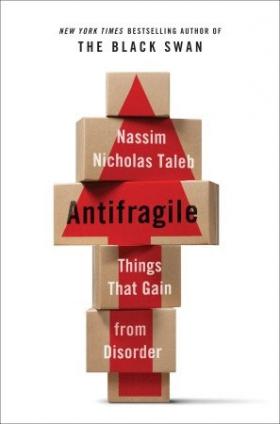
Nassim Nicholas Taleb Talks About Antifragile at the RSA


Nassim Nicholas Taleb is the author of Antifragile: Things That Gain from Disorder - in this video he talks about the book at The RSA. This video is only a highlights reel, so if you would like to hear the whole discussion, listen to the podcast (linked to below).

Nassim Nicholas Taleb Talks About Antifragile at the RSA


06 Dec 2012

Radical philosopher Nassim Nicholas Taleb offers a blueprint for how to live - and thrive - in a world we don't understand, and which is too uncertain for us to even try to predict.
Discussant: Rohan Silva, senior policy adviser to the Prime Minister at No 10 Downing Street.
Chair: Fraser Nelson, editor, The Spectator

Thursday, January 03, 2013

Authors@Google Presents: Nassim Nicholas Taleb


Nassim Nicholas Taleb stopped by the Google offices a couple of weeks ago (December 12, 2012) to talk about his most recent book, Antifragile: Things That Gain from Disorder. Taleb is also the author of The Black Swan: The Impact of the Highly Improbable (2007) and Fooled by Randomness: The Hidden Role of Chance in Life and in the Markets (2005).

Authors@Google Presents: Nassim Nicholas Taleb


Posted on Jan 2, 2013
Authors@Google is proud to present Nassim N. Taleb, author of Fooled By Randomness and The Black Swan, talking about his new book, Antifragile.

Wednesday, December 19, 2012

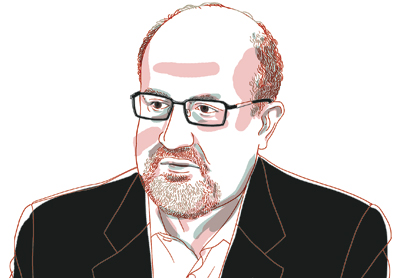
Tom Bartlett - This Is Not a Profile of Nassim Taleb


This is from a couple of days ago at the The Chronicle Review, a sort of but not really interview with noted risk engineering specialist and anti-academician Nassim Taleb, author of The Black Swan: Second Edition: The Impact of the Highly Improbable: With a new section: "On Robustness and Fragility" and his new book, Antifragile: Things That Gain from Disorder.

Taleb is a bit of a curmudgeon, which is not a bad trait in an author who seems to hate more things than he likes - but there are some things more than others:
editors who "overedit," when what they should really do is hunt for typos; unctuous, fawning travel assistants; "bourgeois bohemian bonus earners"; meetings of any kind; appointments of any kind; doctors; Paul Krugman; Thomas Friedman; nerds; bureaucrats; air conditioning; television; soccer moms; smooth surfaces; Harvard Business School; business schools in general; bankers at the Federal Reserve; bankers in general; economists; sissies; fakes; "bureaucrato-journalistic" talk; Robert Rubin; Google News; marketing; neckties; "the inexorable disloyalty of Mother Nature"; regular shoes.
I guess we'll have to read the book to know why these things and people made the list.

This Is Not a Profile of Nassim Taleb

By Tom Bartlett


This is a pretty long and interesting article, so here is only a section of it. Follow the link in the title above to see the whole piece.
Taleb is in the university but not of it. He spent the first couple decades of his career as a derivatives trader before turning to scholarship and essay writing in his mid-40s. Taleb is a professor of risk engineering at the Polytechnic Institute of New York University. Despite his wall of degrees (he has an M.B.A. from the University of Pennsylvania's Wharton School and a doctorate from the University of Paris), he believes that universities propagate "touristification," another term he coined, a phenomenon that occurs when what should be an exciting exploration turns into a programmatic exercise. It's better to be an adventurer than a tourist. Education isn't the only result of this modern sin; gym machines and "the electronic calendar" fall short as well.

Taleb has a low opinion of most professors. He titles one section of the new book "The Charlatan, the Academic, and the Showman." In a chart, Taleb divides professions into three categories: fragile, robust, and antifragile. It's bad to be fragile, better to be robust, best to be antifragile. Artists and writers are antifragile. Postal employees and truck drivers are robust. Academics, bureaucrats, and the pope are fragile. Benedict, beware.

Most of Taleb's ire is directed at business schools, specifically the one at Harvard. At Harvard they "lecture birds to fly," then arrogantly claim credit when the fledglings become airborne. He rails against the "Soviet-Harvard delusion," linking an institution that's graduated thousands with a state that killed millions. What is the delusion, exactly? It is a belief in a top-down system that tries to control and protect, purportedly for mankind's benefit, thereby eliminating the natural stressors and necessary randomness that create strength and encourage enterprise. Dekulakization and course catalogs are symptoms of the same ailment.

Taleb has no patience for so-called structured learning. "Only the autodidacts are free," he writes in the book. He pursued his real education in his spare time, doing only as much as was required to pass his courses. At 13, he set himself a goal of reading for 30 to 60 hours a week, pretty much a full-time job. To prove that he hit the books with enthusiasm, Taleb ticks off the names of more than 30 great writers he has read. We don't learn much about what he gleaned from this ardent page-turning or which authors influenced his own style. He does give the following assessment of the work of Austrian novelist Stefan Zweig: "didn't like."

Actually, Antifragile feels like a compendium of people and things Taleb doesn't like. He is, for instance, annoyed by editors who "overedit," when what they should really do is hunt for typos; unctuous, fawning travel assistants; "bourgeois bohemian bonus earners"; meetings of any kind; appointments of any kind; doctors; Paul Krugman; Thomas Friedman; nerds; bureaucrats; air conditioning; television; soccer moms; smooth surfaces; Harvard Business School; business schools in general; bankers at the Federal Reserve; bankers in general; economists; sissies; fakes; "bureaucrato-journalistic" talk; Robert Rubin; Google News; marketing; neckties; "the inexorable disloyalty of Mother Nature"; regular shoes.

The social sciences make the list, too. He contrasts them with "smart" sciences, like physics. He mocks social scientists as mired in "petty obsessions, envy, and icy-cold hatreds," contrasting the small-mindedness of academe with the joie de vivre of the business world. "My experience is that money and transactions purify relations," he writes. "Ideas and abstract matters like 'recognition' and 'credit' warp them, creating an atmosphere of perpetual rivalry." In our interview, he went even further, saying he would "shut down" the social sciences. "Those guys are living in their own world," he said. "That is the truth. You don't need them."

I pointed out that he praises some psychologists, like Daniel Kahneman, and regularly refers to psychological concepts in Antifragile. Would he padlock the psych labs, too? No, he told me. "Psychology is more empirical," he clarified. Sociologists, on the other hand, would presumably be better off delivering mail.

He saves his iciest hate for economists. Taleb has no use for the "charlatanic" field, comparing economic research to medieval medicine. Economists are, in his estimation, weak, ignorant, fearful, and generally pathetic. At one point he fantasizes about beating up an economist in public.

Taleb singles out his least-favorite economists, including Robert C. Merton, a professor of finance at MIT, formerly of Harvard, and Myron Scholes, a professor emeritus of finance at Stanford, who jointly received the Nobel Prize in 1997 for their model of valuing derivatives that's designed to hedge against risk. Merton is "serious, mechanistic, boring," according to Taleb, and the two used "fictional mathematics" in their research. He calls this "unsettling" in a footnote, though in the earlier draft he sent me he used a harsher word. I'd wager that punch may have been pulled by Random House's legal department. Merton didn't return my messages, and Scholes politely declined to comment.

Gary Pisano, however, was willing to talk. Pisano, a professor of business administration at Harvard, is singled out in the book for his "dangerous" thinking; Taleb hammers him for supposedly misunderstanding the market for biotechnology. Pisano told me Taleb didn't know what he was talking about. "His argument is about these rare events that generate huge returns," he said. "That doesn't happen in biotech." The specifics of that debate aside, Pisano shrugged off the criticism and said he had enjoyed Taleb's work in the past: "I think he writes some very interesting and provocative things, but I think it gets a little lost in the manner."

The idea that Taleb's insights are sometimes overwhelmed by his belligerence is a longstanding criticism. Articles published in the American Statistician soon after The Black Swan appeared chastised him for his alleged ignorance of "entire subfields of statistics," committing mathematical errors, and lobbing "gratuitous insults" at statisticians. The opprobrium was mixed with gratitude that, whatever his faults, Taleb had managed to shine a bright light on an arcane topic. Still, you got the sense that statisticians were smarting. Taleb's fans—and there are many of them—see his abrasiveness as proof that he doesn't tolerate nonsense. They show up in droves to hear him speak, leave rapturous reviews on Amazon, and praise his television appearances. One YouTube commenter put it succinctly: "He's so awesome."

While Taleb dislikes the university system and doesn't respect career academics, he's not against education per se. Studying mathematics is fine for its own sake. And it's worthwhile to read the classics. But modern scholarship is bewitched by novel findings—what Taleb dubs "neomania"—and researchers are driven by their need to publish, perverting their efforts and tainting the outcome. "How can knowledge be something you do for professional advancement?" he asked. But, you might counter, Taleb is a professor at a university who publishes in journals. It would be one thing if he were blogging from a cabin somewhere, but isn't he part of the problem he's identified?

Ah, but he doesn't publish papers to advance his career. They are technical addenda to his popular books. "I ban myself from publishing anything outside of these footnotes," he writes in Antifragile. Because of his success, he is not beholden to deans and committees or anyone else, for that matter. "You cannot rely on external confirmation and have a happy life," he told me. "I don't rely on external confirmation, and I have a happy life."
Read the whole article.

Monday, December 17, 2012

Nassim Nicholas Taleb - UNDERSTANDING IS A POOR SUBSTITUTE FOR CONVEXITY (ANTIFRAGILITY)


From Edge, former mathematical trader and current risk manager, and author of The Black Swan: Second Edition: The Impact of the Highly Improbable: With a new section: "On Robustness and Fragility", Nassim Nicholas Taleb talks about the ideas in his newest book, Antifragile: Things That Gain from Disorder.

Here is the publisher's ad-copy for the book:
Nassim Nicholas Taleb, the bestselling author of The Black Swan and one of the foremost thinkers of our time, reveals how to thrive in an uncertain world. 
Just as human bones get stronger when subjected to stress and tension, and rumors or riots intensify when someone tries to repress them, many things in life benefit from stress, disorder, volatility, and turmoil. What Taleb has identified and calls “antifragile” is that category of things that not only gain from chaos but need it in order to survive and flourish.

In The Black Swan, Taleb showed us that highly improbable and unpredictable events underlie almost everything about our world. In Antifragile, Taleb stands uncertainty on its head, making it desirable, even necessary, and proposes that things be built in an antifragile manner. The antifragile is beyond the resilient or robust. The resilient resists shocks and stays the same; the antifragile gets better and better.

Furthermore, the antifragile is immune to prediction errors and protected from adverse events. Why is the city-state better than the nation-state, why is debt bad for you, and why is what we call “efficient” not efficient at all? Why do government responses and social policies protect the strong and hurt the weak? Why should you write your resignation letter before even starting on the job? How did the sinking of the Titanic save lives? The book spans innovation by trial and error, life decisions, politics, urban planning, war, personal finance, economic systems, and medicine. And throughout, in addition to the street wisdom of Fat Tony of Brooklyn, the voices and recipes of ancient wisdom, from Roman, Greek, Semitic, and medieval sources, are loud and clear. 
Antifragile is a blueprint for living in a Black Swan world. 
Erudite, witty, and iconoclastic, Taleb’s message is revolutionary: The antifragile, and only the antifragile, will make it.
That's high praise, but this does look like a very interesting book for those who are into systems thinking.

UNDERSTANDING IS A POOR SUBSTITUTE FOR CONVEXITY (ANTIFRAGILITY)

Nassim Nicholas Taleb [12.12.12]


The point we will be making here is that logically, neither trial and error nor "chance" and serendipity can be behind the gains in technology and empirical science attributed to them. By definition chance cannot lead to long term gains (it would no longer be chance); trial and error cannot be unconditionally effective: errors cause planes to crash, buildings to collapse, and knowledge to regress.

NASSIM NICHOLAS TALEB, essayist and former mathematical trader, is Distinguished Professor of Risk Engineering at NYU’s Polytechnic Institute. He is the author the international bestseller The Black Swan and the recently published Antifragile: Things That Gain from Disorder (Amazon). (US: Random House; UK: Penguin Press)

Nassim Nicholas Taleb's Edge Bio

UNDERSTANDING IS A POOR SUBSTITUTE FOR CONVEXITY (ANTIFRAGILITY)


Something central, very central, is missing in historical accounts of scientific and technological discovery. The discourse and controversies focus on the role of luck as opposed to teleological programs (from telos, "aim"), that is, ones that rely on pre-set direction from formal science. This is a faux-debate: luck cannot lead to formal research policies; one cannot systematize, formalize, and program randomness. The driver is neither luck nor direction, but must be in the asymmetry (or convexity) of payoffs, a simple mathematical property that has lied hidden from the discourse, and the understanding of which can lead to precise research principles and protocols.

MISSING THE ASYMMETRY

The luck versus knowledge story is as follows. Ironically, we have vastly more evidence for results linked to luck than to those coming from the teleological, outside physics—even after discounting for the sensationalism. In some opaque and nonlinear fields, like medicine or engineering, the teleological exceptions are in the minority, such as a small number of designer drugs. This makes us live in the contradiction that we largely got here to where we are thanks to undirected chance, but we build research programs going forward based on direction and narratives. And, what is worse, we are fully conscious of the inconsistency.

The point we will be making here is that logically, neither trial and error nor "chance" and serendipity can be behind the gains in technology and empirical science attributed to them. By definition chance cannot lead to long term gains (it would no longer be chance); trial and error cannot be unconditionally effective: errors cause planes to crash, buildings to collapse, and knowledge to regress.

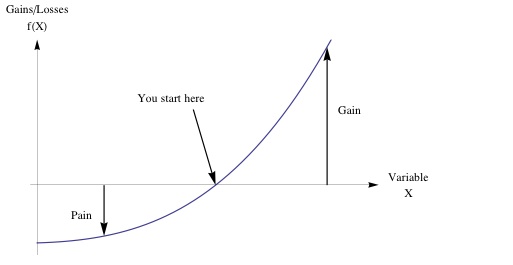
The beneficial properties have to reside in the type of exposure, that is, the payoff function and not in the "luck" part: there needs to be a significant asymmetry between the gains (as they need to be large) and the errors (small or harmless), and it is from such asymmetry that luck and trial and error can produce results. The general mathematical property of this asymmetry is convexity (which is explained in Figure 1); functions with larger gains than losses are nonlinear-convex and resemble financial options. Critically, convex payoffs benefit from uncertainty and disorder. The nonlinear properties of the payoff function, that is, convexity, allow us to formulate rational and rigorous research policies, and ones that allow the harvesting of randomness.

Figure 1- More Gain than Pain from a Random Event. The performance curves outward, hence looks "convex". Anywhere where such asymmetry prevails, we can call it convex, otherwise we are in a concave position. The implication is that you are harmed much less by an error (or a variation) than you can benefit from it, you would welcome uncertainty in the long run.

OPAQUE SYSTEMS AND OPTIONALITY

Further, it is in complex systems, ones in which we have little visibility of the chains of cause-consequences, that tinkering, bricolage, or similar variations of trial and error have been shown to vastly outperform the teleological—it is nature's modus operandi. But tinkering needs to be convex; it is imperative. Take the most opaque of all, cooking, which relies entirely on the heuristics of trial and error, as it has not been possible for us to design a dish directly from chemical equations or reverse-engineer a taste from nutritional labels. We take hummus, add an ingredient, say a spice, taste to see if there is an improvement from the complex interaction, and retain if we like the addition or discard the rest. Critically we have the option, not the obligation to keep the result, which allows us to retain the upper bound and be unaffected by adverse outcomes.

This "optionality" is what is behind the convexity of research outcomes. An option allows its user to get more upside than downside as he can select among the results what fits him and forget about the rest (he has the option, not the obligation). Hence our understanding of optionality can be extended to research programs — this discussion is motivated by the fact that the author spent most of his adult life as an option trader. If we translate François Jacob's idea into these terms, evolution is a convex function of stressors and errors —genetic mutations come at no cost and are retained only if they are an improvement (i). So are the ancestral heuristics and rules of thumbs embedded in society; formed like recipes by continuously taking the upper-bound of "what works". But unlike nature where choices are made in an automatic way via survival, human optionality requires the exercise of rational choice to ratchet up to something better than what precedes it —and, alas, humans have mental biases and cultural hindrances that nature doesn't have. Optionality frees us from the straightjacket of direction, predictions, plans, and narratives. (To use a metaphor from information theory, if you are going to a vacation resort offering you more options, you can predict your activities by asking a smaller number of questions ahead of time.)

While getting a better recipe for hummus will not change the world, some results offer abnormally large benefits from discovery; consider penicillin or chemotherapy or potential clean technologies and similar high impact events ("Black Swans"). The discovery of the first antimicrobial drugs came at the heel of hundreds of systematic (convex) trials in the 1920s by such people as Domagk whose research program consisted in trying out dyes without much understanding of the biological process behind the results. And unlike an explicit financial option for which the buyer pays a fee to a seller, hence tend to trade in a way to prevent undue profits, benefits from research are not zero-sum.

THINGS LOVE UNCERTAINTY

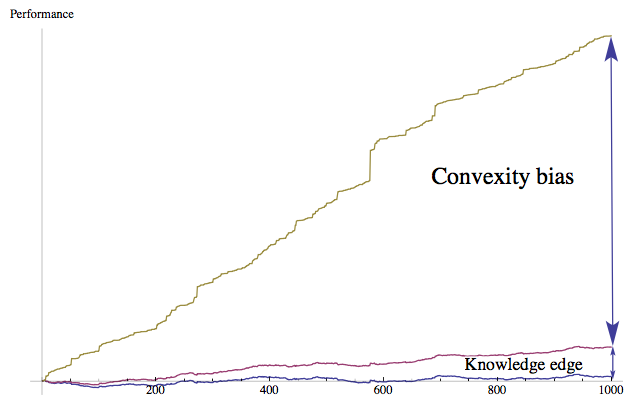
What allows us to map a research funding and investment methodology is a collection of mathematical properties that we have known heuristically since at least the 1700s and explicitly since around 1900 (with the results of Johan Jensen and Louis Bachelier). These properties identify the inevitability of gains from convexity and the counterintuitive benefit of uncertainty (ii, iii). Let us call the "convexity bias" the difference between the results of trial and error in which gains and harm are equal (linear), and one in which gains and harm are asymmetric ( to repeat, a convex payoff function). The central and useful properties are that a) The more convex the payoff function, expressed in difference between potential benefits and harm, the larger the bias. b) The more volatile the environment, the larger the bias. This last property is missed as humans have a propensity to hate uncertainty.

Antifragile is the name this author gave (for lack of a better one) to the broad class of phenomena endowed with such a convexity bias, as they gain from the "disorder cluster", namely volatility, uncertainty, disturbances, randomness, and stressors. The antifragile is the exact opposite of the fragile which can be defined as hating disorder. A coffee cup is fragile because it wants tranquility and a low volatility environment, the antifragile wants the opposite: high volatility increases its welfare. This latter attribute, gaining from uncertainty, favors optionality over the teleological in an opaque system, as it can be shown that the teleological is hurt under increased uncertainty. The point can be made clear with the following. When you inject uncertainty and errors into airplane ride (the fragile or concave case) the result is worsened, as errors invariably lead to plane delays and increased costs —not counting a potential plane crash. The same with bank portfolios and fragile constructs. But it you inject uncertainty into a convex exposure such as some types of research, the result improves, since uncertainty increases the upside but not the downside. This differential maps the way. The convexity bias, unlike serendipity et al., can be defined, formalized, identified, even on the occasion measured scientifically, and can lead to a formal policy of decision making under uncertainty, and classify strategies based on their ex ante predicted efficiency and projected success, as we will do next with the following 7 rules.

Figure 2 The Antifragility Edge (Convexity Bias). A random simulation shows the difference between a) the process with convex trial and error (antifragile) b) a process of pure knowledge devoid of convex tinkering (knowledge based), c) the process of nonconvex trial and error; where errors are equal in harm and gains (pure chance). As we can see there are domains in which rational and convex tinkering dwarfs the effect of pure knowledge (iv).

SEVEN RULES OF ANTIFRAGILITY (CONVEXITY) IN RESEARCH

Next I outline the rules. In parentheses are fancier words that link the idea to option theory.

1) Convexity is easier to attain than knowledge (in the technical jargon, the "long-gamma" property): As we saw in Figure 2, under some level of uncertainty, we benefit more from improving the payoff function than from knowledge about what exactly we are looking for. Convexity can be increased by lowering costs per unit of trial (to improve the downside).

2) A "1/N" strategy is almost always best with convex strategies (the dispersion property):following point (1) and reducing the costs per attempt, compensate by multiplying the number of trials and allocating 1/N of the potential investment across N investments, and make N as large as possible. This allows us to minimize the probability of missing rather than maximize profits should one have a win, as the latter teleological strategy lowers the probability of a win. A large exposure to a single trial has lower expected return than a portfolio of small trials.

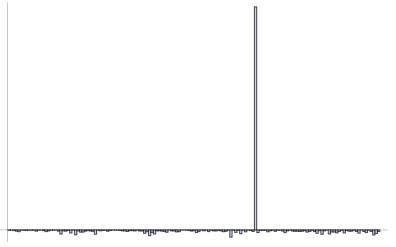
Further, research payoffs have "fat tails", with results in the "tails" of the distribution dominating the properties; the bulk of the gains come from the rare event, "Black Swan": 1 in 1000 trials can lead to 50% of the total contributions—similar to size of companies (50% of capitalization often comes from 1 in 1000 companies), bestsellers (think Harry Potter), or wealth. And critically we don't know the winner ahead of time.

Figure 3-Fat Tails: Small Probability, High Impact Payoffs: The horizontal line can be the payoff over time, or cross-sectional over many simultaneous trials. 
3) Serial optionality (the cliquet property). A rigid business plan gets one locked into a preset invariant policy, like a highway without exits —hence devoid of optionality. One needs the ability to change opportunistically and "reset" the option for a new option, by ratcheting up, and getting locked up in a higher state. To translate into practical terms, plans need to 1) stay flexible with frequent ways out, and, counter to intuition 2) be very short term, in order to properly capture the long term. Mathematically, five sequential one-year options are vastly more valuable than a single five-year option.

This explains why matters such as strategic planning have never born fruit in empirical reality: planning has a side effect to restrict optionality. It also explains why top-down centralized decisions tend to fail.

4) Nonnarrative Research (the optionality property). Technologists in California "harvesting Black Swans" tend to invest with agents rather than plans and narratives that look good on paper, and agents who know how to use the option by opportunistically switching and ratcheting up —typically people try six or seven technological ventures before getting to destination. Note the failure in "strategic planning" to compete with convexity.

5) Theory is born from (convex) practice more often than the reverse (the nonteleological property). Textbooks tend to show technology flowing from science, when it is more often the opposite case, dubbed the "lecturing birds on how to fly" effect (v, vi). In such developments as the industrial revolution (and more generally outside linear domains such as physics), there is very little historical evidence for the contribution of fundamental research compared to that of tinkering by hobbyists. (vii) Figure 2 shows, more technically how in a random process characterized by "skills" and "luck", and some opacity, antifragility —the convexity bias— can be shown to severely outperform "skills". And convexity is missed in histories of technologies, replaced with ex post narratives.

6) Premium for simplicity (the less-is-more property). It took at least five millennia between the invention of the wheel and the innovation of putting wheels under suitcases. It is sometimes the simplest technologies that are ignored. In practice there is no premium for complexification; in academia there is. Looking for rationalizations, narratives and theories invites for complexity. In an opaque operation to figure out ex ante what knowledge is required to navigate is impossible.

7) Better cataloguing of negative results (the via negativa property). Optionality works by negative information, reducing the space of what we do by knowledge of what does not work. For that we need to pay for negative results.

Some of the critics of these ideas —over the past two decades— have been countering that this proposal resembles buying "lottery tickets". Lottery tickets are patently overpriced, reflecting the "long shot bias" by which agents, according to economists, overpay for long odds. This comparison, it turns out is fallacious, as the effect of the long shot bias is limited to artificial setups: lotteries are sterilized randomness, constructed and sold by humans, and have a known upper bound. This author calls such a problem the "ludic fallacy". Research has explosive payoffs, with unknown upper bound —a "free option", literally. And we have evidence (from the performance of banks) that in the real world, betting against long shots does not pay, which makes research a form of reverse-banking (viii).

NOTES

i Jacob, F. , 1977, Evolution and tinkering. Science, 196(4295):1161–1166.
ii Bachelier, L. ,1900, Theorie de la spéculation, Gauthiers Villard.
iii Jensen, J.L.W.V., 1906, “Sur les fonctions convexes et les inégalités entre les valeurs moyennes.” Acta Mathematica 30.
iv Take F[x] = Max[x,0], where x is the outcome of trial and error and F is the payoff. ∫ F(x) p(x) dx ≥ F(∫ x p(x)) , by Jensen's inequality. The difference between the two sides is the convexity bias, which increases with uncertainty.
v Taleb, N., and Douady, R., 2013, "Mathematical Definition and Mapping of (Anti)Fragility",f.. Quantitative Finance
vi Mokyr, Joel, 2002, The Gifts of Athena: Historical Origins of the Knowledge Economy. Princeton, N.J.: Princeton University Press.
vii Kealey, T., 1996, The Economic Laws of Scientific Research. London: Macmillan.
viii Briys, E., Nock,R. ,& Magdalou, B., 2012, Convexity and Conflation Biases as Bregman Divergences: A note on Taleb's Antifragile.

Tuesday, August 28, 2012

Upaya Dharma Podcasts - Laurie Leitch & Loree Sutton: Embodying Risk, Embracing Failure

Nice teaching from the Upaya Zen Center.


Laurie Leitch & Loree Sutton: 8-22-2012: Embodying Risk, Embracing Failure


Speakers: Laurie Leitch & Loree Sutton

Recorded: Wednesday Aug 22, 2012

Special Announcement: Please watch for our upcoming podcast survey … will be launched in the next 7-10 days … exact date will be announced shortly. We would greatly appreciate your participation in this survey.

Episode Description: Laurie Leitch, PhD, reflects on how we know when we’re ready for a risk and what it means to fail or succeed, to live “without anxiety about imperfection.” She invites us to listen to the whole body, rather than just the mind, about how and when to risk. Loree Sutton, MD, then looks at resilience, not merely on the individual but on the social level, and how as a society we can create systems to facilitate wholeness.

Note: Due to technical difficulties; during Loree Sutton’s 10 minute talk, the microphone occasionally cuts out, however the talks is still understandable. Please accept our apologies for any inconvenience.

Teacher Biographies:

Laurie Leitch, PhD, cofounder of the Trauma Resource Institute, has been in psychotherapy practice and health consultation for more than 25 years.

Laurie worked with individuals following the September 11th terrorist attacks, was on a team to assist survivors of the tsunami in Thailand, traveled to Louisiana in response to Hurricane Katrina, and recently returned from Rwanda where she introduced the Trauma Resiliency Model to community aid workers. She is also co-project director for the China Earthquake Relief Project, a project sponsored by the World Health Organization to provide aid to Sichuan Province, China following the May 12, 2008 earthquake.

Laurie has conducted clinical trainings at hospitals, social service agencies, conferences, and grassroots agencies. She has extensive experience in cross-cultural research and practice, and conducts training and research internationally on restoring resiliency after trauma.

Retired Army Brigadier General Loree Sutton, MD is a psychiatrist who served as Founding Director of the Defense Centers of Excellence for Psychological Health and Traumatic Brain Injury (DCoE) from 2007 to 2010. Committed to empowering others, Sutton has more than 20 years of leadership experience encompassing a diverse mix of domains: civilian and military; combat and peacekeeping; command and staff; clinical and academic; organizational design and development; transmedia strategic communications; public policy; global health; education, technology and training.
During this past year, Sutton has engaged with numerous community-based organizations to catalyze and accelerate peer-to-peer neurobiologically-based training for veterans, service members, families and caregivers. Organizations include the Trauma Resource Institute, Homeward Bound USA, Coming Home Project, American Foundation for Suicide Prevention, Center for a New American Security, Paws and Stripes, Equus Medendi, and Soldier’s Heart. Recognized nationally by the American Psychiatric Association, Sutton has been featured on NBC Dateline and an upcoming documentary on military sexual trauma.

Further, the Rockefeller Foundation selected Sutton and Laurie Leitch, PhD, as co-recipients of the Bellagio Fellowship; their proposal is titled “Global Leadership Meets Emerging Neuroscience: Building Resiliency in a Weary World.” Sutton currently serves as an adjunct faculty member at New York University and the Uniformed Services University of the Health Sciences. Looking ahead, Sutton will continue to focus on community-based approaches to building resiliency, maximizing recovery and fostering reintegration in support of our nation’s veterans, service members and their loved ones. Her interest in resiliency extends from individuals, families and communities to the realm of global leadership and national security. She remains passionately devoted to the public health imperative of leading sustainable cultural change and advocating strength-based and resiliency- informed approaches to leadership, based upon emerging advances in neuroscience.


Play