These powerful stories shatter preconceived notions about mental illness, and pose the provocative question: What can the world learn from different kinds of minds?
Playlist (9 talks)

14:52 - Elyn Saks A tale of mental illness -- from the inside
"Is it okay if I totally trash your office?" It's a question Elyn Saks once asked her doctor, and it wasn't a joke. A legal scholar, in 2007 Saks came forward with her own story of schizophrenia, controlled by drugs and therapy but ever-present. In this powerful talk, she asks us to see people with mental illness clearly, honestly and compassionately.
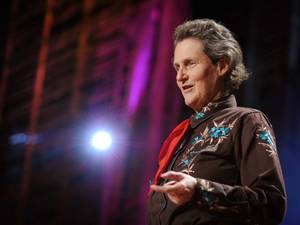
19:43 - Temple Grandin The world needs all kinds of minds
Temple Grandin, diagnosed with autism as a child, talks about how her mind works — sharing her ability to "think in pictures," which helps her solve problems that neurotypical brains might miss. She makes the case that the world needs people on the autism spectrum: visual thinkers, pattern thinkers, verbal thinkers, and all kinds of smart geeky kids.

14:17 - Eleanor Longden The voices in my head
To all appearances, Eleanor Longden was just like every other student, heading to college full of promise and without a care in the world. That was until the voices in her head started talking. Initially innocuous, these internal narrators became increasingly antagonistic and dictatorial, turning her life into a living nightmare. Diagnosed with schizophrenia, hospitalized, drugged, Longden was discarded by a system that didn't know how to help her. Longden tells the moving tale of her years-long journey back to mental health, and makes the case that it was through learning to listen to her voices that she was able to survive.
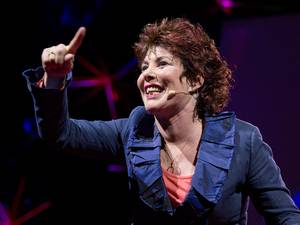
8:44 - Ruby Wax What's so funny about mental illness?
Diseases of the body garner sympathy, says comedian Ruby Wax — except those of the brain. Why is that? With dazzling energy and humor, Wax, diagnosed a decade ago with clinical depression, urges us to put an end to the stigma of mental illness.

22:18 - Sherwin Nuland How electroshock therapy changed me
Surgeon and author Sherwin Nuland discusses the development of electroshock therapy as a cure for severe, life-threatening depression — including his own. It’s a moving and heartfelt talk about relief, redemption and second chances.
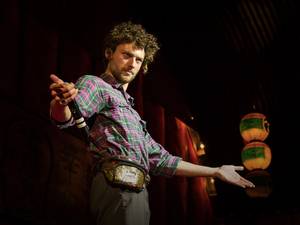
5:51 - Joshua Walters On being just crazy enough
At TED's Full Spectrum Auditions, comedian Joshua Walters, who's bipolar, walks the line between mental illness and mental "skillness." In this funny, thought-provoking talk, he asks: What's the right balance between medicating craziness away and riding the manic edge of creativity and drive?

18:01 - Jon Ronson Strange answers to the psychopath test
Is there a definitive line that divides crazy from sane? With a hair-raising delivery, Jon Ronson, author of The Psychopath Test, illuminates the gray areas between the two. (With live-mixed sound by Julian Treasure and animation by Evan Grant.)
18:48 - Oliver Sacks What hallucination reveals about our minds
Neurologist and author Oliver Sacks brings our attention to Charles Bonnet syndrome — when visually impaired people experience lucid hallucinations. He describes the experiences of his patients in heartwarming detail and walks us through the biology of this under-reported phenomenon.
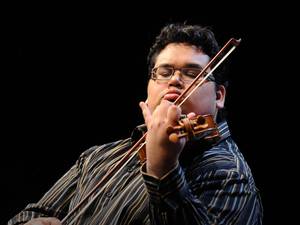
9:26 - Robert Gupta Music is medicine, music is sanity
Robert Gupta, violinist with the LA Philharmonic, talks about a violin lesson he once gave to a brilliant, schizophrenic musician — and what he learned. Called back onstage later, Gupta plays his own transcription of the prelude from Bach's Cello Suite No. 1.
Showing posts with label minds. Show all posts
Showing posts with label minds. Show all posts
Tuesday, November 11, 2014
TED Talk Playlist: All Kinds of Minds (9 Talks)
This is a cool collection of TED Talks entitled, "All kinds of minds." These nine talks "shatter" common beliefs and stereotypes about mental illness, or more accurately, neurodiversity.


Wednesday, April 09, 2014
The Science and Practice of Happiness Across the Lifespan - Research on Aging

Sonja Lyubomirsky, Ph.D., is professor of psychology at the University of California, Riverside. She received her B.A., summa cum laude, from Harvard University and her Ph.D. in social psychology from Stanford University. Her research - on the possibility of permanently increasing happiness -- has been honored with a Science of Generosity grant, a John Templeton Foundation grant, a Templeton Positive Psychology Prize, and a million-dollar grant from NIMH.
Lyubomirsky's 2008 book, The How of Happiness: A New Approach to Getting the Life You Want (Penguin Press) has been translated into 19 languages, and her most recent book, The Myths of Happiness: What Should Make You Happy, but Doesn't, What Shouldn't Make You Happy, but Does, was released in January, 2013.
She gave this talk at UC San Diego a few days ago.
The Science and Practice of Happiness Across the Lifespan - Research on Aging
Published on Apr 4, 2014
What makes people happy? Is happiness a good thing? How can we make people happier still? Sonja Lyubomirsky, PhD, examines happiness and how we can use our minds as well as coping tools better handle life's challenges. Series: "Stein Institute for Research on Aging" [4/2014]
Sunday, October 20, 2013
Alva Noë - MRI Scans Can't Show Us Consciousness or Personhood (Dogs Are People, Too)
In his recent column for NPR's 13.7 Cosmos and Culture, philosopher Alva Noë argues in favor of animal intelligence and consciousness - that we don't see the dog's consciousness or personhood when you look at its brain in MRI scans. Their subjective states are best experienced when we spend time with them, not as scientists or observers but as companions.
So first up is the New York Times column by Gregory Berns that inspired Noë's column, and then Noë's column from NPR.
So first up is the New York Times column by Gregory Berns that inspired Noë's column, and then Noë's column from NPR.
Dogs Are People, Too
By GREGORY BERNS
Published: October 5, 2013

Jane Evelyn Atwood/Contact Press Images
FOR the past two years, my colleagues and I have been training dogs to go in an M.R.I. scanner — completely awake and unrestrained. Our goal has been to determine how dogs’ brains work and, even more important, what they think of us humans.
MultimediaNow, after training and scanning a dozen dogs, my one inescapable conclusion is this: dogs are people, too.
Video: How Dogs Love Us (YouTube)
Because dogs can’t speak, scientists have relied on behavioral observations to infer what dogs are thinking. It is a tricky business. You can’t ask a dog why he does something. And you certainly can’t ask him how he feels. The prospect of ferreting out animal emotions scares many scientists. After all, animal research is big business. It has been easy to sidestep the difficult questions about animal sentience and emotions because they have been unanswerable.
Until now.
By looking directly at their brains and bypassing the constraints of behaviorism, M.R.I.’s can tell us about dogs’ internal states. M.R.I.’s are conducted in loud, confined spaces. People don’t like them, and you have to hold absolutely still during the procedure. Conventional veterinary practice says you have to anesthetize animals so they don’t move during a scan. But you can’t study brain function in an anesthetized animal. At least not anything interesting like perception or emotion.
From the beginning, we treated the dogs as persons. We had a consent form, which was modeled after a child’s consent form but signed by the dog’s owner. We emphasized that participation was voluntary, and that the dog had the right to quit the study. We used only positive training methods. No sedation. No restraints. If the dogs didn’t want to be in the M.R.I. scanner, they could leave. Same as any human volunteer.
My dog Callie was the first. Rescued from a shelter, Callie was a skinny black terrier mix, what is called a feist in the southern Appalachians, from where she came. True to her roots, she preferred hunting squirrels and rabbits in the backyard to curling up in my lap. She had a natural inquisitiveness, which probably landed her in the shelter in the first place, but also made training a breeze.
With the help of my friend Mark Spivak, a dog trainer, we started teaching Callie to go into an M.R.I. simulator that I built in my living room. She learned to walk up steps into a tube, place her head in a custom-fitted chin rest, and hold rock-still for periods of up to 30 seconds. Oh, and she had to learn to wear earmuffs to protect her sensitive hearing from the 95 decibels of noise the scanner makes.
After months of training and some trial-and-error at the real M.R.I. scanner, we were rewarded with the first maps of brain activity. For our first tests, we measured Callie’s brain response to two hand signals in the scanner. In later experiments, not yet published, we determined which parts of her brain distinguished the scents of familiar and unfamiliar dogs and humans.
Soon, the local dog community learned of our quest to determine what dogs are thinking. Within a year, we had assembled a team of a dozen dogs who were all “M.R.I.-certified.”
Although we are just beginning to answer basic questions about the canine brain, we cannot ignore the striking similarity between dogs and humans in both the structure and function of a key brain region: the caudate nucleus.
Rich in dopamine receptors, the caudate sits between the brainstem and the cortex. In humans, the caudate plays a key role in the anticipation of things we enjoy, like food, love and money. But can we flip this association around and infer what a person is thinking just by measuring caudate activity? Because of the overwhelming complexity of how different parts of the brain are connected to one another, it is not usually possible to pin a single cognitive function or emotion to a single brain region.
But the caudate may be an exception. Specific parts of the caudate stand out for their consistent activation to many things that humans enjoy. Caudate activation is so consistent that under the right circumstances, it can predict our preferences for food, music and even beauty.
In dogs, we found that activity in the caudate increased in response to hand signals indicating food. The caudate also activated to the smells of familiar humans. And in preliminary tests, it activated to the return of an owner who had momentarily stepped out of view. Do these findings prove that dogs love us? Not quite. But many of the same things that activate the human caudate, which are associated with positive emotions, also activate the dog caudate. Neuroscientists call this a functional homology, and it may be an indication of canine emotions.
The ability to experience positive emotions, like love and attachment, would mean that dogs have a level of sentience comparable to that of a human child. And this ability suggests a rethinking of how we treat dogs.
DOGS have long been considered property. Though the Animal Welfare Act of 1966 and state laws raised the bar for the treatment of animals, they solidified the view that animals are things — objects that can be disposed of as long as reasonable care is taken to minimize their suffering.
But now, by using the M.R.I. to push away the limitations of behaviorism, we can no longer hide from the evidence. Dogs, and probably many other animals (especially our closest primate relatives), seem to have emotions just like us. And this means we must reconsider their treatment as property.
One alternative is a sort of limited personhood for animals that show neurobiological evidence of positive emotions. Many rescue groups already use the label of “guardian” to describe human caregivers, binding the human to his ward with an implicit responsibility to care for her. Failure to act as a good guardian runs the risk of having the dog placed elsewhere. But there are no laws that cover animals as wards, so the patchwork of rescue groups that operate under a guardianship model have little legal foundation to protect the animals’ interest.
If we went a step further and granted dogs rights of personhood, they would be afforded additional protection against exploitation. Puppy mills, laboratory dogs and dog racing would be banned for violating the basic right of self-determination of a person.
I suspect that society is many years away from considering dogs as persons. However, recent rulings by the Supreme Court have included neuroscientific findings that open the door to such a possibility. In two cases, the court ruled that juvenile offenders could not be sentenced to life imprisonment without the possibility of parole. As part of the rulings, the court cited brain-imaging evidence that the human brain was not mature in adolescence. Although this case has nothing to do with dog sentience, the justices opened the door for neuroscience in the courtroom.
Perhaps someday we may see a case arguing for a dog’s rights based on brain-imaging findings.
~ Gregory Berns is a professor of neuroeconomics at Emory University and the author of How Dogs Love Us: A Neuroscientist and His Adopted Dog Decode the Canine Brain.
* * * * *
If You Have To Ask, You'll Never Know
by Alva Noë
October 11, 2013
If you need empirical information about what is happening in the brain of a dog to know that dogs think, then either you've never met a dog or your own humanity is in doubt.Sometimes it is our questions that get in the way.
Suppose two ships are sinking and you can save only one. How should you decide which ship to save? Should you save the one with the most people in it?
When this question was put by her teacher to Sissy Jupe, a young character in Charles Dickens' Hard Times, she could only weep and run away. She was unable to to take up the standpoint from which this could even be asked. For Sissy, the very question was repugnant, perhaps because it presupposed that the value of a person is the sort of thing that can be chalked up, counted and weighed. Her caring, her engagement with others, precluded that sort of calculating detachment.
I had to think of Sissy Jupe when I read Gregory Berns' essay in The New York Times about his research on the dog brain and his startling (to some) conclusion that dogs are people, too.
If you need information about what is happening in the brain of a dog to know that dogs think and have feelings and emotions, then either you've never met a dog or your own humanity is in doubt.
You can no more seriously entertain the possibility that a dog is a mere automaton than you can entertain such a hypothesis about your human loved ones. To do so would require you to stand back and look at what a dog (or a person) does (and says) as devoid of meaning and expressive power. And to do that would be disrespectful. This is the Sissy Jupe point.
It is certainly true that no amount of information about the movements and behaviors (including linguistic behaviors) of animals, human or otherwise, can suffice to establish, beyond any possible doubt, that they think and feel and have emotions, that they are conscious.
So, I ask, can it be seriously maintained that information about brain activity can settle such skeptical worries decisively? How do we know that what happens in me when my brain fires neurons is the same as what happens in you? How could we ever know that for sure?
Should prospective husbands and wives do due diligence and check MRIs before tying the knot, just to make sure they are both really people?
My own suggestion — I develop this in Out of Our Heads — is that we should not think of our appreciation of the consciousness of people (and dogs) as the sort of thing we discover on the basis of empirical investigation of their brains or their behavior. It is, rather, a presupposition of the kinds of lives we lead together.
You could not love someone (dog, or person), if you took seriously the possibility that he or she (or it) might, appearances to the contrary, turn out to be a robot. And, as the writer and professional animal trainer Vicky Hearne has argued persuasively, you can't actually work with dogs if you don't take them seriously as, well, responsible agents. A search-and-rescue dog, for example, or a seeing-eye dog, is a collaborator, not a tool.
Berns writes in his piece:
"By looking directly at their brains and bypassing the constraints of behaviorism, M.R.I.'s can tell us about dogs' internal states."Yes, indeed. I'm all for studying dog brains and for using such studies to inform our understanding of dog psychology. But you don't see the dog's consciousness or personhood when you look at its brain. Those internal states come into focus only when we appreciate, with Sissy Jupe, that we are not detached observers, not even when we are scientists.
~ You can keep up with more of what Alva Noë is thinking on Facebook and on Twitter: @alvanoe

Saturday, June 29, 2013
Caitrin Nicol - Do Elephants Have Souls?
Here is an excellent article from The New Atlantis on the lives and too frequent deaths of elephants, one of the more remarkable creatures on the planet in terms of intelligence, emotional range, and social dynamics. This article asks if elephants have souls?
I guess that depends on how you define "soul" . . . .
I guess that depends on how you define "soul" . . . .
Do Elephants Have Souls?
Caitrin Nicol
There is mystery behind that masked gray visage, an ancient life force, delicate and mighty, awesome and enchanted, commanding the silence ordinarily reserved for mountain peaks, great fires, and the sea.—Peter Matthiessen, The Tree Where Man Was BornThe birth of an elephant is a spectacular occasion. Grandmothers, aunts, sisters, and cousins crowd around the new arrival and its dazed mother, trumpeting and stamping and waving their trunks to welcome the floppy baby who has so recently arrived from out of the void, bursting through the border of existence to take its place in an unbroken line stretching back to the dawn of life.
After almost two years in the womb and a few minutes to stretch its legs, the calf can begin to stumble around. But its trunk, an evolutionarily unique inheritance of up to 150,000 muscles with the dexterity to pick up a pin and the strength to uproot a tree, will be a mystery to it at first, with little apparent use except to sometimes suck upon like human babies do their thumbs. Over time, with practice and guidance, it will find the potential in this appendage flailing off its face to breathe, drink, caress, thwack, probe, lift, haul, wrap, spray, sense, blast, stroke, smell, nudge, collect, bathe, toot, wave, and perform countless other functions that a person would rely on a combination of eyes, nose, hands, and strong machinery to do.
Welcome to the world: This newborn hasn’t yet stood up and stretched its legs, let alone figured out how to use its trunk.“Elephant Nature Park” by Christian Haugen (CC BY 2.0).
Once the calf is weaned from its mother’s milk at five or whenever its next sibling is born, it will spend up to 16 hours a day eating 5 percent of its entire weight in leaves, grass, brush, bark, and basically any other kind of vegetation. It will only process about 40 percent of the nutrients in this food, however; the waste it leaves behind helps fertilize plant growth and provide accessible nutrition on the ground to smaller animals, thus making the elephant a keystone species in its habitat. From 250 pounds at birth, it will continue to grow throughout its life, to up to 7 tons for a male of the largest species or 4 tons for a female.
Of the many types of elephants and mammoths that used to roam the earth, one born today will belong to one of three surviving species: Elephas maximus in Asia, Loxodonta africana (savanna elephant) or Loxodonta cyclotis (forest elephant) in Africa. There are about 500,000 African elephants alive now (about a third of them the more reticent, less studied L. cyclotis), and only 40,000 – 50,000 Asian elephants remaining. The Swedish Elephant Encyclopedia database currently lists just under 5,000 (most of them E. maximus) living in captivity worldwide, in half as many locations — meaning that the average number of elephants per holding is less than two; many of them live without a single companion of their kind.
For the freeborn, if it is a cow, the “allomothers” who welcomed her into the world will be with her for life — a matriarchal clan led by the oldest and biggest. She in turn will be an enthusiastic caretaker and playmate to her younger cousins and siblings. When she is twelve or fourteen, she will go into heat (“estrus”) for the first time, a bewildering occurrence during which her mother will stand by and show her what to do and which male to accept. If she conceives, she will have a calf twenty-two months later, crucially aided in birthing and raising it by the more experienced older ladies. She may have another every four to five years into her fifties or sixties, but not all will survive.
If it is a bull, he will stay with his family until the age of ten or twelve, when his increasingly rough and suggestive play will cause him to be sent off. He may loosely join forces with a few other young males, or trail around after older ones he looks up to, but for the most part he will be independent from then on. Within the next few years he will start going into “musth,” a periodic state of excitation characterized by surging levels of testosterone, dribbling urine and copious secretions from his temporal glands, and extreme aggression responsive only to the presence of a bigger bull, who has an immediate dominance that the young male risks injury or death by failing to defer to. Although he reaches sexual maturity at a fairly young age, thanks to the competition he may not sire any children until he is close to thirty. (Ancient Indian poetry lauds bulls in musth for their amorous powers, even as keepers of Asian elephants have respected the phase as one highly dangerous to humans since time immemorial. Until 1976, it was widely believed in the scientific community that African elephants do not enter musth. This changed when researchers at Amboseli National Park in Kenya were dismayed to note an epidemic of “Green Penis Syndrome,” which they feared signaled some horrible venereal disease — until they realized it was nothing more nor less alarming than the very definition of a force of nature.)
Other than this primal temporary madness, elephants (when they do not feel threatened) are quite peaceable, with a gentle, loyal, highly social nature. Here is how John Donne, having seen one at a London exposition in 1612, put it:
Natures great master-peece, an Elephant,Donne is not the first or the last to view the elephant in its stature and dignity as a synecdoche for the total grandeur of the universe, come to earth in lumpen grey form. Here he suggests that it represents a moral ideal as well. Animals are often celebrated for virtues that they seem to embody: dogs for loyalty, bears for courage, dolphins for altruism, and so on. But what does it really mean for them to model these things? When people act virtuously, we give them credit for well-chosen behavior. Animals, it is presumed, do so without choosing.
The onely harmlesse great thing; the giant
Of beasts; who thought, no more had gone, to make one wise
But to be just, and thankfull, loth to offend,
(Yet nature hath given him no knees to bend)
Himselfe he up-props, on himselfe relies,
And foe to none, suspects no enemies.
From a religious, anthropocentric perspective, it might be said that while animal virtues do not entail morality for the animals themselves, they reveal to us the goodness in creation; as the medieval theologian Johannes Scotus Eriugena wrote, “In a wonderful and inexpressible way God is created in His creatures.” From a more biological view, it might be noted that people mostly do not choose their dispositions either, that behavioral tendencies are more determined than we like to tell ourselves, and that blame and credit for such things are often misapplied in human contexts too.
But the latter idea — that humans, although capable of conscious self-direction, are as mutely carried along by the force of selection as your friendly neighborhood amoeba — simply elides the question, while the former raises many more; the tiger is as much God’s creature as the lamb. In any case, the capacity for “choosing” is a binary conceit that gestures at something much fuller, an inner realm of awareness, selfhood, and possibility. In other words, a soul.
To the ancients, soul was anima, that which animates, the living-, moving-, breathing-ness of a biological being. In this sense, not only animals but plants have souls (of different capacities appropriate to what they are). For many religions, by contrast, the soul is specifically incorporeal, perhaps immortal, and believed to be unique to human beings, who are responsible (to a point) for its condition. To modern science it is, if anything, the hard problem of consciousness, also commonly thought to be the province of just one species.
Without either choosing sides or somehow reconciling these three dueling realities with each other, it would be impossible to say what a soul is, let alone who has one. But there is a fourth sense in which when we talk about it, we all mean more or less the same thing: what it means for someone to bare it, for music to have it, for eyes to be the window to it, for it to be uplifted or depraved. Even if, religiously, we know by revelation that other people possess them for eternity, we only engage with or know anything about them at a quotidian level by way of the same cues and interactions that a more this-worldly view would take as their sum total: bright eyes, a dejected slump, a sudden manic inspiration or a confession of regret.
Also a matter of conventional wisdom is the idea that human beings are on one side of a great divide while all animals are on the other, subjects of their instincts and our necessities and pleasures. What exactly the divide is, though, is difficult to define. Various contestants have included reason, language, art, technology, religion, walking upright and the use of hands, knowledge of mortality, sin, suicide, and more. In The Explicit Animal (1991), Raymond Tallis rounds up a master list of them:
Man has called himself (among other things): the rational animal; the moral animal; the consciously choosing animal; the deliberately evil animal; the political animal; the toolmaking animal; the historical animal; the commodity-making animal; the economical animal; the foreseeing animal; the promising animal; the death-knowing animal; the art-making or aesthetic animal; the explaining animal; the cause-bearing animal; the classifying animal; the measuring animal; the counting animal; the metaphor-making animal; the talking animal; the laughing animal; the religious animal; the spiritual animal; the metaphysical animal; the wondering animal... Man, it seems, is the self-predicating animal.As Tallis goes on to explain, any given one of those distinctions is both too narrow, in being an insufficient explanation of what makes human beings human, and too open, in being demonstrably shared to some extent by another species.
Chimpanzees and other large primates, for instance, are so intelligent and personable that they blur many of these boundaries. But since we are so closely connected evolutionarily, it is easy to tacitly view them as way stations toward the human apex, impoverished versions of ourselves rather than somebody in their own right. There is, however, nothing else remotely like an elephant. (Its closest living relatives are sea cows — dugongs and manatees — and the hyrax, an African shrewmouse about the size of a rabbit.) As such, it presents the perfect opportunity for thoughtful reconsideration of the human difference, and how much that difference really matters.
.jpg)
360w.jpg)
Read the whole, long article, which is very worth your time.
Monday, December 17, 2012
Nassim Nicholas Taleb - UNDERSTANDING IS A POOR SUBSTITUTE FOR CONVEXITY (ANTIFRAGILITY)
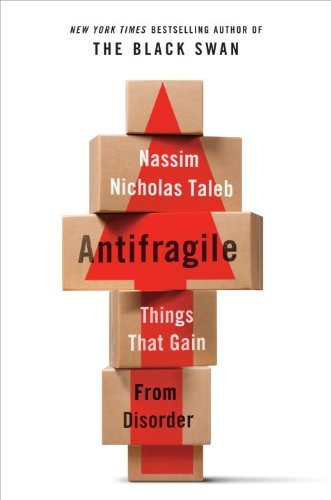
From Edge, former mathematical trader and current risk manager, and author of The Black Swan: Second Edition: The Impact of the Highly Improbable: With a new section: "On Robustness and Fragility", Nassim Nicholas Taleb talks about the ideas in his newest book, Antifragile: Things That Gain from Disorder.
Here is the publisher's ad-copy for the book:
Nassim Nicholas Taleb, the bestselling author of The Black Swan and one of the foremost thinkers of our time, reveals how to thrive in an uncertain world.
Just as human bones get stronger when subjected to stress and tension, and rumors or riots intensify when someone tries to repress them, many things in life benefit from stress, disorder, volatility, and turmoil. What Taleb has identified and calls “antifragile” is that category of things that not only gain from chaos but need it in order to survive and flourish.
In The Black Swan, Taleb showed us that highly improbable and unpredictable events underlie almost everything about our world. In Antifragile, Taleb stands uncertainty on its head, making it desirable, even necessary, and proposes that things be built in an antifragile manner. The antifragile is beyond the resilient or robust. The resilient resists shocks and stays the same; the antifragile gets better and better.
Furthermore, the antifragile is immune to prediction errors and protected from adverse events. Why is the city-state better than the nation-state, why is debt bad for you, and why is what we call “efficient” not efficient at all? Why do government responses and social policies protect the strong and hurt the weak? Why should you write your resignation letter before even starting on the job? How did the sinking of the Titanic save lives? The book spans innovation by trial and error, life decisions, politics, urban planning, war, personal finance, economic systems, and medicine. And throughout, in addition to the street wisdom of Fat Tony of Brooklyn, the voices and recipes of ancient wisdom, from Roman, Greek, Semitic, and medieval sources, are loud and clear.
Antifragile is a blueprint for living in a Black Swan world.
Erudite, witty, and iconoclastic, Taleb’s message is revolutionary: The antifragile, and only the antifragile, will make it.That's high praise, but this does look like a very interesting book for those who are into systems thinking.
UNDERSTANDING IS A POOR SUBSTITUTE FOR CONVEXITY (ANTIFRAGILITY)
Nassim Nicholas Taleb [12.12.12]
The point we will be making here is that logically, neither trial and error nor "chance" and serendipity can be behind the gains in technology and empirical science attributed to them. By definition chance cannot lead to long term gains (it would no longer be chance); trial and error cannot be unconditionally effective: errors cause planes to crash, buildings to collapse, and knowledge to regress.
NASSIM NICHOLAS TALEB, essayist and former mathematical trader, is Distinguished Professor of Risk Engineering at NYU’s Polytechnic Institute. He is the author the international bestseller The Black Swan and the recently published Antifragile: Things That Gain from Disorder (Amazon). (US: Random House; UK: Penguin Press)
Nassim Nicholas Taleb's Edge Bio
UNDERSTANDING IS A POOR SUBSTITUTE FOR CONVEXITY (ANTIFRAGILITY)
Something central, very central, is missing in historical accounts of scientific and technological discovery. The discourse and controversies focus on the role of luck as opposed to teleological programs (from telos, "aim"), that is, ones that rely on pre-set direction from formal science. This is a faux-debate: luck cannot lead to formal research policies; one cannot systematize, formalize, and program randomness. The driver is neither luck nor direction, but must be in the asymmetry (or convexity) of payoffs, a simple mathematical property that has lied hidden from the discourse, and the understanding of which can lead to precise research principles and protocols.
MISSING THE ASYMMETRY
The luck versus knowledge story is as follows. Ironically, we have vastly more evidence for results linked to luck than to those coming from the teleological, outside physics—even after discounting for the sensationalism. In some opaque and nonlinear fields, like medicine or engineering, the teleological exceptions are in the minority, such as a small number of designer drugs. This makes us live in the contradiction that we largely got here to where we are thanks to undirected chance, but we build research programs going forward based on direction and narratives. And, what is worse, we are fully conscious of the inconsistency.
The point we will be making here is that logically, neither trial and error nor "chance" and serendipity can be behind the gains in technology and empirical science attributed to them. By definition chance cannot lead to long term gains (it would no longer be chance); trial and error cannot be unconditionally effective: errors cause planes to crash, buildings to collapse, and knowledge to regress.
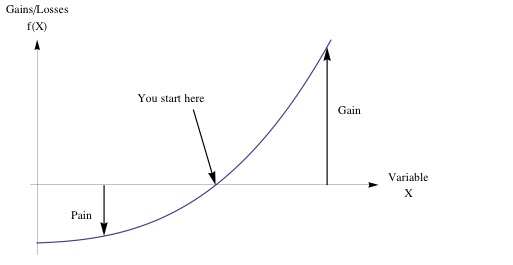
The beneficial properties have to reside in the type of exposure, that is, the payoff function and not in the "luck" part: there needs to be a significant asymmetry between the gains (as they need to be large) and the errors (small or harmless), and it is from such asymmetry that luck and trial and error can produce results. The general mathematical property of this asymmetry is convexity (which is explained in Figure 1); functions with larger gains than losses are nonlinear-convex and resemble financial options. Critically, convex payoffs benefit from uncertainty and disorder. The nonlinear properties of the payoff function, that is, convexity, allow us to formulate rational and rigorous research policies, and ones that allow the harvesting of randomness.
Figure 1- More Gain than Pain from a Random Event. The performance curves outward, hence looks "convex". Anywhere where such asymmetry prevails, we can call it convex, otherwise we are in a concave position. The implication is that you are harmed much less by an error (or a variation) than you can benefit from it, you would welcome uncertainty in the long run.
OPAQUE SYSTEMS AND OPTIONALITY
Further, it is in complex systems, ones in which we have little visibility of the chains of cause-consequences, that tinkering, bricolage, or similar variations of trial and error have been shown to vastly outperform the teleological—it is nature's modus operandi. But tinkering needs to be convex; it is imperative. Take the most opaque of all, cooking, which relies entirely on the heuristics of trial and error, as it has not been possible for us to design a dish directly from chemical equations or reverse-engineer a taste from nutritional labels. We take hummus, add an ingredient, say a spice, taste to see if there is an improvement from the complex interaction, and retain if we like the addition or discard the rest. Critically we have the option, not the obligation to keep the result, which allows us to retain the upper bound and be unaffected by adverse outcomes.
This "optionality" is what is behind the convexity of research outcomes. An option allows its user to get more upside than downside as he can select among the results what fits him and forget about the rest (he has the option, not the obligation). Hence our understanding of optionality can be extended to research programs — this discussion is motivated by the fact that the author spent most of his adult life as an option trader. If we translate François Jacob's idea into these terms, evolution is a convex function of stressors and errors —genetic mutations come at no cost and are retained only if they are an improvement (i). So are the ancestral heuristics and rules of thumbs embedded in society; formed like recipes by continuously taking the upper-bound of "what works". But unlike nature where choices are made in an automatic way via survival, human optionality requires the exercise of rational choice to ratchet up to something better than what precedes it —and, alas, humans have mental biases and cultural hindrances that nature doesn't have. Optionality frees us from the straightjacket of direction, predictions, plans, and narratives. (To use a metaphor from information theory, if you are going to a vacation resort offering you more options, you can predict your activities by asking a smaller number of questions ahead of time.)
While getting a better recipe for hummus will not change the world, some results offer abnormally large benefits from discovery; consider penicillin or chemotherapy or potential clean technologies and similar high impact events ("Black Swans"). The discovery of the first antimicrobial drugs came at the heel of hundreds of systematic (convex) trials in the 1920s by such people as Domagk whose research program consisted in trying out dyes without much understanding of the biological process behind the results. And unlike an explicit financial option for which the buyer pays a fee to a seller, hence tend to trade in a way to prevent undue profits, benefits from research are not zero-sum.
THINGS LOVE UNCERTAINTY
What allows us to map a research funding and investment methodology is a collection of mathematical properties that we have known heuristically since at least the 1700s and explicitly since around 1900 (with the results of Johan Jensen and Louis Bachelier). These properties identify the inevitability of gains from convexity and the counterintuitive benefit of uncertainty (ii, iii). Let us call the "convexity bias" the difference between the results of trial and error in which gains and harm are equal (linear), and one in which gains and harm are asymmetric ( to repeat, a convex payoff function). The central and useful properties are that a) The more convex the payoff function, expressed in difference between potential benefits and harm, the larger the bias. b) The more volatile the environment, the larger the bias. This last property is missed as humans have a propensity to hate uncertainty.
Antifragile is the name this author gave (for lack of a better one) to the broad class of phenomena endowed with such a convexity bias, as they gain from the "disorder cluster", namely volatility, uncertainty, disturbances, randomness, and stressors. The antifragile is the exact opposite of the fragile which can be defined as hating disorder. A coffee cup is fragile because it wants tranquility and a low volatility environment, the antifragile wants the opposite: high volatility increases its welfare. This latter attribute, gaining from uncertainty, favors optionality over the teleological in an opaque system, as it can be shown that the teleological is hurt under increased uncertainty. The point can be made clear with the following. When you inject uncertainty and errors into airplane ride (the fragile or concave case) the result is worsened, as errors invariably lead to plane delays and increased costs —not counting a potential plane crash. The same with bank portfolios and fragile constructs. But it you inject uncertainty into a convex exposure such as some types of research, the result improves, since uncertainty increases the upside but not the downside. This differential maps the way. The convexity bias, unlike serendipity et al., can be defined, formalized, identified, even on the occasion measured scientifically, and can lead to a formal policy of decision making under uncertainty, and classify strategies based on their ex ante predicted efficiency and projected success, as we will do next with the following 7 rules.
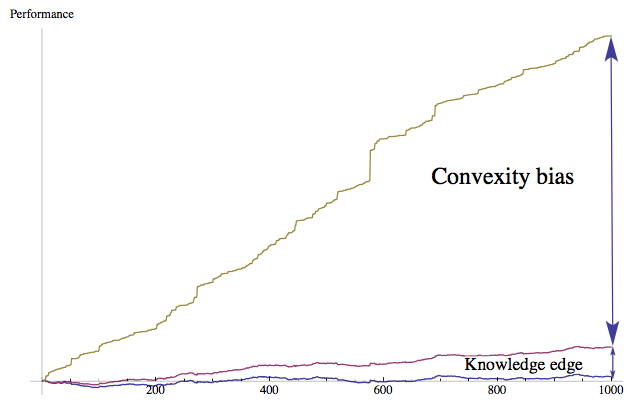
Figure 2 The Antifragility Edge (Convexity Bias). A random simulation shows the difference between a) the process with convex trial and error (antifragile) b) a process of pure knowledge devoid of convex tinkering (knowledge based), c) the process of nonconvex trial and error; where errors are equal in harm and gains (pure chance). As we can see there are domains in which rational and convex tinkering dwarfs the effect of pure knowledge (iv).
SEVEN RULES OF ANTIFRAGILITY (CONVEXITY) IN RESEARCH
Next I outline the rules. In parentheses are fancier words that link the idea to option theory.
1) Convexity is easier to attain than knowledge (in the technical jargon, the "long-gamma" property): As we saw in Figure 2, under some level of uncertainty, we benefit more from improving the payoff function than from knowledge about what exactly we are looking for. Convexity can be increased by lowering costs per unit of trial (to improve the downside).
2) A "1/N" strategy is almost always best with convex strategies (the dispersion property):following point (1) and reducing the costs per attempt, compensate by multiplying the number of trials and allocating 1/N of the potential investment across N investments, and make N as large as possible. This allows us to minimize the probability of missing rather than maximize profits should one have a win, as the latter teleological strategy lowers the probability of a win. A large exposure to a single trial has lower expected return than a portfolio of small trials.
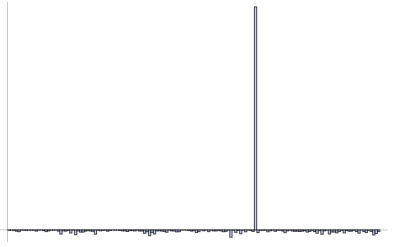
Further, research payoffs have "fat tails", with results in the "tails" of the distribution dominating the properties; the bulk of the gains come from the rare event, "Black Swan": 1 in 1000 trials can lead to 50% of the total contributions—similar to size of companies (50% of capitalization often comes from 1 in 1000 companies), bestsellers (think Harry Potter), or wealth. And critically we don't know the winner ahead of time.
Figure 3-Fat Tails: Small Probability, High Impact Payoffs: The horizontal line can be the payoff over time, or cross-sectional over many simultaneous trials.

3) Serial optionality (the cliquet property). A rigid business plan gets one locked into a preset invariant policy, like a highway without exits —hence devoid of optionality. One needs the ability to change opportunistically and "reset" the option for a new option, by ratcheting up, and getting locked up in a higher state. To translate into practical terms, plans need to 1) stay flexible with frequent ways out, and, counter to intuition 2) be very short term, in order to properly capture the long term. Mathematically, five sequential one-year options are vastly more valuable than a single five-year option.
This explains why matters such as strategic planning have never born fruit in empirical reality: planning has a side effect to restrict optionality. It also explains why top-down centralized decisions tend to fail.
4) Nonnarrative Research (the optionality property). Technologists in California "harvesting Black Swans" tend to invest with agents rather than plans and narratives that look good on paper, and agents who know how to use the option by opportunistically switching and ratcheting up —typically people try six or seven technological ventures before getting to destination. Note the failure in "strategic planning" to compete with convexity.
5) Theory is born from (convex) practice more often than the reverse (the nonteleological property). Textbooks tend to show technology flowing from science, when it is more often the opposite case, dubbed the "lecturing birds on how to fly" effect (v, vi). In such developments as the industrial revolution (and more generally outside linear domains such as physics), there is very little historical evidence for the contribution of fundamental research compared to that of tinkering by hobbyists. (vii) Figure 2 shows, more technically how in a random process characterized by "skills" and "luck", and some opacity, antifragility —the convexity bias— can be shown to severely outperform "skills". And convexity is missed in histories of technologies, replaced with ex post narratives.
6) Premium for simplicity (the less-is-more property). It took at least five millennia between the invention of the wheel and the innovation of putting wheels under suitcases. It is sometimes the simplest technologies that are ignored. In practice there is no premium for complexification; in academia there is. Looking for rationalizations, narratives and theories invites for complexity. In an opaque operation to figure out ex ante what knowledge is required to navigate is impossible.
7) Better cataloguing of negative results (the via negativa property). Optionality works by negative information, reducing the space of what we do by knowledge of what does not work. For that we need to pay for negative results.
Some of the critics of these ideas —over the past two decades— have been countering that this proposal resembles buying "lottery tickets". Lottery tickets are patently overpriced, reflecting the "long shot bias" by which agents, according to economists, overpay for long odds. This comparison, it turns out is fallacious, as the effect of the long shot bias is limited to artificial setups: lotteries are sterilized randomness, constructed and sold by humans, and have a known upper bound. This author calls such a problem the "ludic fallacy". Research has explosive payoffs, with unknown upper bound —a "free option", literally. And we have evidence (from the performance of banks) that in the real world, betting against long shots does not pay, which makes research a form of reverse-banking (viii).
NOTES
i Jacob, F. , 1977, Evolution and tinkering. Science, 196(4295):1161–1166.
ii Bachelier, L. ,1900, Theorie de la spéculation, Gauthiers Villard.
iii Jensen, J.L.W.V., 1906, “Sur les fonctions convexes et les inégalités entre les valeurs moyennes.” Acta Mathematica 30.
iv Take F[x] = Max[x,0], where x is the outcome of trial and error and F is the payoff. ∫ F(x) p(x) dx ≥ F(∫ x p(x)) , by Jensen's inequality. The difference between the two sides is the convexity bias, which increases with uncertainty.
v Taleb, N., and Douady, R., 2013, "Mathematical Definition and Mapping of (Anti)Fragility",f.. Quantitative Finance
vi Mokyr, Joel, 2002, The Gifts of Athena: Historical Origins of the Knowledge Economy. Princeton, N.J.: Princeton University Press.
vii Kealey, T., 1996, The Economic Laws of Scientific Research. London: Macmillan.
viii Briys, E., Nock,R. ,& Magdalou, B., 2012, Convexity and Conflation Biases as Bregman Divergences: A note on Taleb's Antifragile.
Subscribe to:
Posts (Atom)