Showing posts with label joy. Show all posts

Friday, September 26, 2014

Jonathan Robinson: Finding Happiness Now...and in the Future (Talks at Google)

http://ecx.images-amazon.com/images/I/51prI5wrCML._SY344_BO1,204,203,200_.jpg

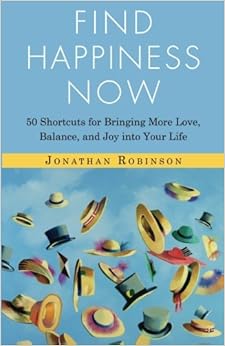
Psychologist Jonathan Robinson is the author of Find Happiness Now: 50 Shortcuts for Bringing More Love, Balance, and Joy Into Your Life (March, 2014), as well as several other books, including Communication Miracles for Couples: Easy and Effective Tools to Create More Love and Less Conflict (2012).

Robinson recently stopped by Google to talk about his book on happiness.

Jonathan Robinson: "Finding Happiness Now...and in the Future"

Published on Sept 3, 2014


Jonathan Robinson is a psychotherapist, best-selling author of ten books, and a professional speaker from Northern California. He has reached over 250 million people around the world with his practical methods, and his work has been translated into 47 languages. Articles about Jonathan have appeared in USA TODAY, Newsweek, and the Los Angeles Times, as well as dozens of other publications. In addition, Mr. Robinson has made numerous appearances on the Oprah show and CNN, as well as other national TV talk shows. He has spent over 35 years studying the most practical and powerful methods for personal and professional development.

More about Jonathan

Tuesday, May 20, 2014

Daily Om - Moving Through Darkness: The Places We Go


Today's Daily Om looks at the ways we can sometimes find ourselves off track in our lives -- and why that might happen.

Moving through Darkness

The Places We Go

by Madisyn Taylor
May 19, 2014

Often it takes something major to wake us up as we struggle to maintain an illusion of control.

In life, most of us want things to go to the places we have envisioned ourselves going. We have plans and visions, some of them divinely inspired, that we want to see through to completion. We want to be happy, successful, and healthy, all of which are perfectly natural and perfectly human. So when life takes us to places we didn’t consciously want to go, we often feel as if something has gone wrong, or we must have made a mistake somewhere along the line, or any number of other disheartening possibilities. This is just life’s way of taking us to a place we need to go for reasons that go deeper than our own ability to reason. These hard knocks and trials are designed to shed light on our unconscious workings and deepen our experience of reality.

Often it takes something major to wake us up, to shake us loose from our ego’s grip as it struggles to maintain an illusion of control. It is loss of control more than anything else that humbles us and enables us to see the big picture. It reminds us that the key to the universe lies in what we do not know, and what we do know is a small fraction of the great mystery in which we live. This awareness softens and lightens us, as we release our resistance to what is. Another gift gleaned from going to these seemingly undesirable places is that, in our response to difficulty, we can see all the patterns and unresolved emotional baggage that stand in the way of our unconditional joyfulness. Joy exists within us independently of whether things go our way or not. And when we don’t feel it, we can trust that we will find it if we are willing to surrender to the situation, moving through it as we move through our difficult feelings.

We can take our inspiration from any fairy tale that finds its central character lost in a dark wood, frightened and alone. We know that the journey through the wood provides its own kind of beauty and richness. On the other side, we will emerge transformed, lighter and brighter, braver and more confident for having moved through that darkness.
A well-known American poet, Robert Frost, once famously said, "The only way out is through."

Very often, when we find ourselves far from where we wanted to be, either through mistakes we made or the simple ways that life can confound our expectations, there is a reason for the detour.

While we struggle with our loss of control, or self-criticism, we easily lose touch with the big picture. This is when it helps to have friends for support and encouragement, and some form of spiritual practice that can allow us to sit peacefully with our feelings of confusion.

If we do not allow the feelings, we never see the potential for growth that a tough situation provides. In doing so, we only compound the problem and put off dealing with it. The next time it comes up, it will be bigger and more challenging.

Often, if we are willing to listen, there is a quiet voice within us that can help us find our way out of the darkness. But we have to listen.

Thursday, December 26, 2013

The Importance of Play: John Cohn at TEDxDelft

File:Cohn.jpg

According to Wikipedia:
John Maxwell Cohn (born February 9, 1959) is an IBM Fellow and chief scientist of design automation at IBM. Cohn has been an innovator in the area of design automation for both analog and digital custom integrated circuits. Cohn has 60 patents issued or pending in the field of design automation, methodology, and circuits.
In this TEDx Talk, he riffs on the importance of play in the success he has had over his life as an engineer. I could not agree more.

The neuroscientist Jaak Panksepp has identified play as one of the seven primary affective circuits in the human brain. From an interview with Panksepp in Discover Magazine:
Panksepp has charted seven networks of emotion in the brain: SEEKING, RAGE, FEAR, LUST, CARE, PANIC/GRIEF, and PLAY. He spells them in all caps because they are so fundamental, he says, that they have similar functions across species, from people to cats to, yes, rats.
There is more on the topic of play below the video, also from the Discover Magazine interview.

The importance of play: John Cohn at TEDxDelft

Published on Dec 19, 2013

Dr John Cohn (@johncohnvt) is a self-confessed nerd. He already knew he wanted to be an engineer at the age of eight, found himself a nerdy college, a nerdy job and even a nerdy wife, or at least a fellow-engineer. As a nerd he breaks the mould though. Because onstage, with his rainbow-coloured lab coat, his Einstein-inspired hairdo and his party light headband, he is most of all entertaining and fun. That ties in with his motto: keep things playful. Bring a playful spirit into your work.

John says he is at his most creative, influential, productive and happy when he is playful at his work. With playful he means being in a state of childlike innocence. So playfulness is not just about enjoying your work, you are even more creative, as studies show. You can also reclaim that childlike state, by imagining you are still seven years old.

Life however, has a way of taking play away from us. The harder life gets, the more we have to work at staying playful. If work is not playful anymore, than it is just work. Which is why they call it work, incidentally. Six years ago, life became very difficult for John, when his son Sam died in a car crash. Sam was an organ donor, and when his life ended he saved the life of four other people. Needless to say, John's life changed forever. And trying to get his life back on track involved a playful element, although he didn't think of it like that at the time. John and his family started making SamStones, small stones with Sam's name on it. Now, over six years later, some 40,000 SamStones have travelled all over the world, and each stone tells a story. One of them even went to space and back.

Life will give you reasons not to play, and you have to fight back!
* * * * *

Here are a few of the questions and answers from that interview on the topic of play:
Then you made a U-turn: Instead of studying separation anxiety, you started 
to study play and laughter. Why?

It was the classic masks of theater, sadness and happiness. We had essentially done the work on the sadness mask. I wanted to move to the joy mask. Joy is social, so you’re looking at play. Play is a brain process that feels good, that allows the animal to engage fully with another animal. And if you understand the joy of play, I think you have the foundation of the nature of joy in general. Part of its benefit is simply taking away the psychological pain of separation. Play is engaging in an attachment-like way with strangers, which you have to do later in life.

Time for another animal experiment, right?

To study attachment, we couldn’t use rats or mice. They’re laboratory animals bred inadvertently to live by themselves. But I noticed that rats in the lab are wonderful for play. Psychic pain reduces the inclination to play—but since rats don’t feel it, they can be separated without panic and then when you put them together, bang! They play.

And the rats played with you, too?

After the experiments we’d dim the lights to make the rats more comfortable. That was our time to have fun. You see me sitting there and saying, come on, guys, come on—it’s okay. I knew that if I could tickle them, they would get jazzed up more, and that’s what happened, right in front of the camera.

How did you turn that kind of playing around into a rigorous experiment?

I thought about the hunger research I’d done in the past. If I wanted animals to eat, then the best way was to make sure they hadn’t eaten for a while. If I want animals to play, I’d have to make them hungry for play. So I put them in a cage alone, apart from their family, first for 4 hours, then 8 hours, then 12 hours, and finally 24 hours. I was looking for a behavior that I could use to measure play, like jumping on each other. How often do they bounce and touch each other? Then they run around—it’s too complex to follow unless you do slow-motion movies—and they end up wrestling. These behaviors were very easy to measure. We collected a lot of data on the response to social hunger.

Is play embedded deeply in the brain, the way attachment is?

Many experiments over the years suggested it was, but to be sure I removed the upper brain of the animals at three days of age. Amazingly, the rats still played in a fundamentally normal way. That meant play was a primitive process. We saw, too, that play helped the animals become socially sophisticated in the cortex. That’s why it’s so important to give our kids opportunities for play.

And yet it seems that childhood play has become much more controlled than it was when I was young. 
I have gone to ADHD meetings to consider this childhood problem. But the doctors do not want to hear the possibility that these kids are hyper-playful because they’re starved for real play—because they are giving them anti-play medicines. Teachers are promoting the pipeline of prescription controls as much as any other group, because their lives are hard. They are supposed to be teaching kids at the cortical level of reading, writing, and arithmetic, but if they’ve got kids who are still hungry for play, it’s gonna be classroom chaos. And you can sympathize with them, because they should be getting kids that are sufficiently well regulated to sit and use their upper brains. But the kids’ lower brains are still demanding attention.

What happens to animals if they are deprived of play over 
the long term?

They look normal and they eat normally, they’re just not as socially sophisticated. Animals deprived of play are more liable to get into a serious fight. Play teaches them what they can do to other animals and still remain within the zone of positive relationships. If you have play you become sociosexually more sophisticated. Let’s say you have the classic triangle: two males and one female, because males are competitive for sex. So if you’ve got one animal that’s had lots of play and the other animal hasn’t, guess who is successful? The animal that’s had play knows how to stay between the female and the other male. The other guy’s a klutz.

Did you ever find a way to track and measure the play response in rats?

Yes. I had a postdoctoral student, Brian Knutson, who asked me whether there was a play vocalization. I said, we know they don’t make any audible sounds but maybe there’s ultrasonics. We wound up buying the equipment so his study could be done. Brian came in the first day after it was set up and said, Jaak, there is a sound when the animals are playing. That was the 50-kilohertz chirp [at a pitch far above the range of human hearing].

Sunday, August 25, 2013

NPR: Follow Your Weird


With this year's Burning Man Festival about to kick off, NPR's To the Best of Our Knowledge (TTBOOK) has devoted their show this week to "following your weird." Among their guests this week are Erik Davis, author of Nomad Codes: Adventures in Modern Esoterica, Barbara Ehrenreich, author of Dancing in the Streets: A History of Collective Joy; and Hal Taussig, author of A New New Testament: A Bible for the 21st Century Combining Traditional and Newly Discovered Texts. 

Interesting people and interesting discussions.

Follow Your Weird

08.25.2013

From trance music to ecstatic dance, from Burning Man to psychedelic mushrooms, Americans are awash in weird and intense experiences - and maybe even inventing a new kind of religion. Is this just a bunch of New Age thrill-seekers getting off, or is something deeper going on? We explore the edges of contemporary spiritual culture.

Interviewer(s):
Jim Fleming; Steve Paulson; Anne Strainchamps


Producer(s):
Steve Paulson


MODERN ESOTERICA - ERIK DAVIS
If traditional religion has lost its luster, where do you find sacred experiences? Anthropologist Erik Davis goes looking around the edges of contemporary culture - from Burning Man and trance music to psychedelics.


* * * * *

MURDER AND MAGIC MUSHROOMS - HAMILTON MORRIS
Steven Pollock, a legendary figure in the psychedelic underground, was murdered in 1981. Journalist Hamilton Morris investigates this unsolved murder and uncovers the largely forgotten story of Pollock, a brilliant - if renegade - scientist.

Here's Pollock's article from Harpers, "Blood Spore"


* * * * *

ECSTATIC DANCE - SARA NICS
Ecstatic dance can help us transcend our day-to-day lives. TTBOOK producer Sara Nics describes her own experience of ecstatic dance - grounded in her body, feeling bliss without invoking God or any larger meaning.


* * * * *

COLLECTIVE JOY - BARBARA EHRENREICH
From carnivals and music festivals to Dionysian revelries, people have always engaged in ecstatic rituals. But Barbara Ehrenreich says modern Westerners have become obsessed with personal happiness, and we often neglect the pleasures of collective joy.


* * * * *

NEW NEW TESTAMENT - HAL TAUSSIG
What would make Christianity more vital in the 21st century? Theologian Hal Taussig says one answer is "A New New Testament," which combines Gnostic gospels with the traditional New Testament scriptures - all within the same book.

* * * * *

Related Books:

Incidental Music:

Thursday, October 04, 2012

Alice Walker: “Go to the Places That Scare You”

From Yes! Magazine - an excellent interview with author, poet, activist, and multiple award winning novelist Alice Walker, an American icon. She is known for her magic realism, but more important perhaps is her commitment to social justice.

Alice Walker: “Go to the Places That Scare You”

The acclaimed novelist on why a life worth living is a life worth fighting for. 
 
Alice Walker photo by Harley Soltes
Photo by Harley Soltes.
Alice Walker is a poet, essayist, and commentator, but she’s best known for her prodigious accomplishments as a writer of literary fiction. Her novel The Color Purple won the Pulitzer Prize and National Book Award in 1983 and quickly became a classic of world literature. Set in an African-American community in the rural South during the decades before World War II, the novel is told in letters written by Celie, a woman who survives oppression and abuse with her spirit not only intact, but transcendent.

Walker’s writing is characterized by an ever-present awareness of injustice and inequality. But whether describing political struggle—as in Meridian, which deals with the civil rights movement—or meditating on the human relationship to nature and animals, as in her latest book, The Chicken Chronicles, her work conveys the possibility of change. In Walker’s vision, grace is available through love and a deep connection to the beauty of the world.
 
Walker was born in the segregated South, the eighth child in a family who made their living as sharecroppers in Georgia. She came of age during the civil rights movement, and emerged early in her career as a defining voice in feminism and an advocate for African-American women writers. She is a prominent activist who has worked, marched, traveled, and spoken out to support the causes of justice, peace, and the welfare of the earth.

Alice Walker spoke to YES! about the challenges of working for change, and the possibility of living with awareness—and joy.

Valerie Schloredt: Over the past few days I’ve been immersed in your work, and I’ve been wondering how you do it. Being able to move someone to tears with a few words on a page is extraordinary to me.

Alice Walker: I want very much for you to feel for whoever I’m talking about, or whatever I’m talking about. Because it is only by empathy being aroused that we change. That is the power of writing. I’ve experienced exactly what you’re saying, reading other writers. I remember the book I first had that experience with was Jane Eyre, being right there with Jane, and understanding, yes, we have to change these horrible institutions where they abuse children. Today, I’m the supporter of an orphanage in Kenya. And one of the reasons comes from having been so moved by reading about Jane at Lowood.

Schloredt: It’s interesting to hear about what you read as a child, because some of your best-known work, like The Color Purple, draws on the stories of your ancestors and your family and aspects of the world you knew as a child.

Alice Walker: Beauty in Truth
A new documentary on how the poet, activist, and Pulitzer Prize-winning author 
has changed the world with her words.

Walker: I think the foundation of everything in my life is wonder. We were way out in the country, and why wouldn’t you just absolutely wonder at the splendor of nature? It’s true I had various sufferings, but nothing really compares to understanding that you live in a place that, moment by moment, is incredible. That your mother could say, “I think we’ll have tea tonight,” pull up a sassafras root, take it home, boil it, and you have sassafras tea. I mean, it’s such a miraculous universe. For a child, this magic is something that supports us, even through the hard times.

Schloredt: Do you go back to your childhood home?

Walker: It doesn’t exist.

Schloredt: No?

Walker: No. And there were many of them. We lived in shacks. Each year the people who owned the land (that they had stolen from the Indians), after they had taken the labor for the year, forced us to another shack. How could people do that, to people that they recognized as people? They did this to babies, they did this to small children, they could look at the people they were exploiting and actually see that they were working them into ill health and early death. It didn’t stop them.
 
The most beautiful parts of the area that I lived in are now an enclave of upper-class white housing tracts with a huge golf course. They built a road that went right through the front yard of our church. Most of the people moved to cities, they moved to projects. So, it doesn’t exist.

Schloredt: Something I wanted to ask after listening to you talk last night [at the YES! celebration in Seattle], is the idea that some people don’t experience empathy, and don’t have a conscience that bothers them when they’re treating people extremely badly. Where can progressives go with that idea? How do we relate to knowing that?

Walker: You relate to it by being honest. We’re sitting back thinking that every single person has a conscience, if you could just reach it. Why should we believe that? I mean, what would make you actually believe that? Certainly not the history of the world as we know it. So it’s about trying to understand the history of the world, how it’s been shaped, and by whom, and for what purposes.

Understanding trumps compassion at this point. When people are forcing you out of your home, starving your children, destroying your planet—you should bring understanding of them to bear. Not everybody is loving of children, not everybody cares about the ocean. I think if we collectively decide that we are going to confront this, we have a chance. Because humanity is very smart, and we’d like to survive. And we’re not going to survive the way we’re going. I think we know that.

Schloredt: Your novels are among those books that cause people to say, “This book changed my life,” or “This book changed my way of thinking.” For me the book of yours that really did something to my way of thinking was Meridian.

That is a very powerful book. One thing that really affected me was the description of the cost of racism to the psyche, what a struggle it is to fight such embedded injustice. I think I saw you as the character Meridian. Are you—have you got some Meridian in you?

Walker: I think all people who struggle at the risk of their lives have some Meridian in them. It’s an acceptance of a kind of suffering. You hope that something will come of it, but there’s no way of knowing. What I didn’t realize was so close to me was how Meridian gets really sick as she encounters various struggles. She’s using every ounce of her will, her intelligence, her heart, her soul. It often leaves her debilitated. And that has certainly been true in my life. And it’s something that I have to accept.
 
In Jackson, Mississippi, during the civil rights movement, the mayor had a tank that the town bought just to use against us. So there’s the possibility of the tank running over you, and you have to stand there. So I understood that, well, this is probably going to mean a few weeks of just being immobilized. And then you figure out ways to recuperate.

It’s learning to accept that the cost is great. It would have to be, because we’re talking about emotional intelligence and growth and stretching yourself, reaching for the sun, kind of as if you were a plant. It’s a difficult thing to change the world, your neighborhood, your family, your self.

Schloredt: Not only is Meridian risking her life, like the other civil rights activists in the South, but there’s also internal oppression, an inner struggle the characters deal with.

Walker: The inner struggle is extremely difficult for all of us, because we all have faults, severe ones, that we will struggle with forever. One of the things that I like about Meridian is that it is about how we like to have almost a stereotype about leaders and revolutionaries and world-changers, that they are always whole. It’s wise to accept that [human faults] are inevitable. Factor that in and keep going.

Schloredt: I love the passage where Meridian visits a black church after the assassination of Martin Luther King and finds that they’ve incorporated his rhetoric into the sermon.

Walker: This is the segment where B.B. King is in the stained-glass window with a sword—where the people needed to incorporate, as far as I was concerned at the time, a bit more militancy. More awareness of what you’re up against, and confronting that with real clarity. In some ways it’s the same issue that we’re talking about. You have to go to the places that scare you so that you can see: What do you really believe? Who are you really? Are you prepared to take this all the way to wherever the truth leads you and accept that you have to figure out different ways of confronting reality?

Schloredt: I wanted to ask you about Occupy and uprisings in the Middle East. You’ve been politically active over your lifetime. Is there advice that you would give to people who are organizing now in the United States?

Walker: If you want to have a life that is worth living, a life that expresses your deepest feelings and emotions, and cares and dreams, you have to fight for it. You have to go wherever you need to go, and you have to be wherever you need to be, and place yourself there against the forces that would distort you and destroy you.

I love the uprisings, I love the Occupy movement, and I think the young people especially are doing something that is very natural. It is natural to want to have a future. It is very natural to want to live in peace and joy. What is lovely about this time is the awareness that is sweeping the planet. People are just waking up, every moment.

Schloredt: One thing that I worry about for progressives is that we are often distracted from effective direct action by the project of improving ourselves, of being good.

Walker: And also, “good” in that sense can sometimes be very facile. And a good cover, you know, “I’m doing good, so I don’t have to change very much.” But I think for most Americans, the change that’s required is huge.

Schloredt: How do we make that change happen?

Walker: Well, you know, you’re doing it. I think YES! Magazine is part of what’s changing people’s consciousness. And I think the spread of Buddhism—the retreat centers, the meditation practice—has had a huge impact on people’s consciousness. Americans learning Buddhist tradition has helped a lot of people understand that they actually have a power that is theirs. They have their own mind. It’s not somebody else’s mind, and it’s not controllable, unless you permit it. That’s a foundation for huge change.

Schloredt: Your writing has, I’m sure, also changed consciousnesses. How does it feel to know that your work has in some way changed the world?

Walker: Well, it’s a gift the universe has permitted you to achieve—but it’s not just dropped in your lap, you have to really work for it. For instance, years ago when I wrote Possessing the Secret of Joy, the campaign against female genital mutilation [FGM] was a dangerous subject. There was a great deal of flak about my wanting to address it.
 
I wrote the book, and then Pratibha Parmar and I made the film [Warrior Marks, a documentary about FGM], and lugged it around Africa, and London, New York, all over. It allowed women who had no voice about FGM to speak. Progress is slow, and sometimes it’s discouraging. It’s like knocking on doors in the South asking people to vote, and they’re terrified of voting. And then seeing over the course of years that people started understanding that they had a right to reject the practice of FGM, that they had a voice. I feel grateful that I could be an instrument to stop any kind of suffering. I mean, what a joy.

Schloredt: In your novels you describe profound suffering and pain, but there is also often the potential for reconciliation and healing. If you could create healing and reconciliation for something that’s happening in our country today, what would it be?

Walker: I think the War on Terror is really absurd, especially coming from a country that is founded on terrorism. The hypocrisy of that is corrosive, and we should not accept it. There is no way to stop terrorism if you insist on making enemies of most of the people on the planet. Why should they care about you? All they feel is fear.

So I would stop the War on Terror, and I would start making peace with the peoples of the planet by trying to understand them. I would like us to be able to say, “If that happened to me, I would feel exactly the way you do. And what can we do from here, from this understanding? What can we do together?” 

Valerie Schloredt interviewed Alice Walker for It's Your Body, the Fall 2012 issue of YES! Magazine. Valerie is associate editor of YES! Magazine.
 

Wednesday, March 07, 2012

Secular Buddhist Podcast - Episode 105 :: Shyalpa Tenzin Rinpoche :: Living Fully: Finding Joy in Every Breath

Great discussion - Ted Meissner speaks with Shyalpa Tenzin Rinpoche about his new book, Living Fully: Finding Joy in Every Breath.

Quote:
“We should examine and question our preconceptions, and be daring enough to explore new and unfamiliar terrain.” — Shyalpa Tenzin Rinpoche
Episode 105 - Shyalpa Tenzin Rinpoche :: Living Fully: Finding Joy in Every Breath
Feb 24, 2012
Shyalpa Tenzin Rinpoche
Shyalpa Tenzin Rinpoche joins us to speak about his new book, Living Fully: Finding Joy in Every Breath.

Hi, everyone. I’m recording this introduction while attending the Wisdom 2.0 conference in California. This is the second of the “W20″ conferences, next month is the tenth annual International Scientific Conference, April is the inaugural International Symposia for Contemplative Studies, and then of course we’re looking forward to attending the second Buddhist Geeks conference in August. All of these are linked on the calendar on the SecularBuddhism.org website of course, but the point is our practice is growing. It’s finding new and vital ways to change people’s lives outside of traditional settings, opening the door for others who may otherwise not find the same wonder of this practice, that we do.

Buddhism is not just for Buddhists. When we use the term “Buddhism” in this context, we mean the practice, not the religion. This is sometimes a very difficult concept to convey, and sometimes a very difficult concept to accept. There are people in the monastic tradition, however, who not only understand that, but do their very best to share this with others.

Shyalpa Tenzin Rinpoche is the spiritual guide of Shyalpa Monastery in Kathmandu, the founder of the Tibetan Refugee Children’s Fund, and the head of Ranging Yeshe, Inc., a nonprofit that organizes teachings and retreats throughout the United States. Buddhafield, in Millerton, NY, is the future site of the Center for Enlightenment and Rinpoche’s seat in the US. He has lectured at Harvard, Yale, Wesleyan, and the Naropa Institute. He lives in Nepal and New York.

So, sit back, relax, and have a nice Lapsang Souchong tea. Special thanks to Patrick Taggart, one of our listeners who suggested this tea on FaceBook, who wrote, “I always feel that its smokiness resonates perfectly with the feeling of a rainy evening.”


:: Discuss this episode ::

Web Links
Music for This EpisodeAjikan

Chikuzen Shakuhachi SeriesThe music heard in the middle of the podcast is from the Chikuzen Shakuhachi Series, Volume 1, courtesy of Tai Hei Shakuhachi. The tracks used in this episode are:
  • Track 6 :: Esashi Oiwake

~ Ted Meissner is the Executive Director of the Secular Buddhist Association, and host of the SBA's official podcast, The Secular Buddhist. His background is in the Zen and Theravada traditions, he is a regular speaker on interfaith panel discussions, and is interested in examining the evolution of contemplative practice in contemporary culture.


Saturday, September 24, 2011

The Dalai Lama - Negative actions or unwholesome deeds cannot result in joy and happiness


HEALING ANGER:
The Power of Patience
from a Buddhist Perspective

by the Dalai Lama,
translated by Geshe Thupten Jinpa

more...


Dalai Lama Quote of the Week


Question: Your Holiness and other teachers tell us to be sincerely joyful about others' worldly achievements, happiness, and acquisitions. But if we know with certainty that a person has acquired or achieved something through unskillful or non-virtuous means, such as lying, stealing, cheating, harming, in what manner should that happiness for them be experienced and expressed?


Dalai Lama: One's attitude toward superficial successes that are achieved through wrong means of livelihood such as lying, stealing, cheating, and so on, should not be the same as for achievements and happiness which are genuine. However, here you must bear in mind that if you examine this carefully, you will find that although the immediate circumstances that gave rise to a person's joy and happiness may be a wrong means of livelihood, that is merely the immediate circumstance: the actual cause of that happiness is the individual's merit in the past.

So one has to see the difference between immediate circumstances and long-term causes. One of the characteristics of karmic theory is that there is a definite, commensurate relationship between cause and effect. There is no way that negative actions or unwholesome deeds can result in joy and happiness. Joy and happiness, by definition, are the results or fruits of wholesome actions. So, from that point of view, it is possible for us to admire not so much the immediate action, but the real causes of joy. (p.119)

--from Healing Anger: The Power of Patience from a Buddhist Perspective by the Dalai Lama, translated by Geshe Thupten Jinpa, published by Snow Lion Publications


Healing Anger • Now at 5O% off
(Good until September 23rd).


Saturday, September 17, 2011

The Dalai Lama - There is a definite, commensurate relationship between cause and effect


HEALING ANGER:
The Power of Patience
from a Buddhist Perspective

by the Dalai Lama,
translated by Geshe Thupten Jinpa

more...


Dalai Lama Quote of the Week


Question: Your Holiness and other teachers tell us to be sincerely joyful about others' worldly achievements, happiness, and acquisitions. But if we know with certainty that a person has acquired or achieved something through unskillful or non-virtuous means, such as lying, stealing, cheating, harming, in what manner should that happiness for them be experienced and expressed?


Dalai Lama: One's attitude toward superficial successes that are achieved through wrong means of livelihood such as lying, stealing, cheating, and so on, should not be the same as for achievements and happiness which are genuine. However, here you must bear in mind that if you examine this carefully, you will find that although the immediate circumstances that gave rise to a person's joy and happiness may be a wrong means of livelihood, that is merely the immediate circumstance: the actual cause of that happiness is the individual's merit in the past.


So one has to see the difference between immediate circumstances and long-term causes. One of the characteristics of karmic theory is that there is a definite, commensurate relationship between cause and effect. There is no way that negative actions or unwholesome deeds can result in joy and happiness. Joy and happiness, by definition, are the results or fruits of wholesome actions. So, from that point of view, it is possible for us to admire not so much the immediate action, but the real causes of joy. (p.119)


--from Healing Anger: The Power of Patience from a Buddhist Perspective by the Dalai Lama, translated by Geshe Thupten Jinpa, published by Snow Lion Publications


Healing Anger • Now at 5O% off
(Good until September 23rd).


Monday, August 30, 2010

Authors@Google: Mingyur Rinpoche

Another nice Authors@Google lecture - How do I get a job at Google? Maybe they need a personal trainer to keep all those smart people in shape . . . .

Mingyur Rinpoche is speaking on his 2008 book, The Joy of Living.
This refreshing book is yet another sign that the next generation of Buddhism is creative, cross-cultural and cross-disciplinary. Born in 1975 in Nepal, the author is among the generation of Tibetan lamas trained outside of Tibet, and he's also a gifted meditator. His brain activity has been measured during meditation, earning him the enviable sobriquet of "happiest man on earth." He fuses scientific and spiritual considerations, explaining meditation as a physical as well as a spiritual process.

Mingyur Rinpoche knows from experience that meditation can change the brain. He experienced panic attacks as a child that he was able to overcome through intensive meditation. If diligently practiced, meditation can affect the "neuronal gossip"—his imaginative rendering of brain cell communication—that keeps us stuck in unhappy behaviors. The meditation master offers a wide variety of techniques, counseling ease in practice to avoid boredom or aversion. Less is more; practice shorter periods more often, he says. His approach will be especially welcome for anyone frustrated by meditation or convinced they're "not doing it right." This book is a fresh breath from the meditation room, written with kindness, energy and wit. Three cheers for a cheerful contemplative.


Part Two:


Friday, April 02, 2010

James Baraz - Lighten Up! - Buddhism's not such a raw deal

Nice article from the Tricycle archives.

Lighten Up!

Buddhism's not such a raw deal.

By James Baraz

Life, though full of woe, holds also sources of happiness and joy, unknown to most. Let us teach people to seek and to find real joy within themselves and to rejoice with the joy of others! Let us teach them to unfold their joy to ever sublimer heights! Noble and sublime joy is not foreign to the Teaching of the Enlightened One. Wrongly, the Buddha’s Teaching is sometimes considered to be a doctrine diffusing melancholy. Far from it: the Dhamma leads step by step to an ever purer and loftier happiness.

–Nyanaponika Thera (1901–1994)

Lighten Up

“I DIDN’T KNOW BUDDHISM was about being happy,” one of the wedding guests said to me after the ceremony. I had just officiated at the marriage of two friends, longtime dharma practitioners. As part of the ceremony, I had invited everyone to join in a lovingkindness meditation for the couple. “May you both be happy, may you be filled with joy and love,” we had silently repeated, our wishes deepening with each phrase. With the vibrant power of lovingkindness awakened, the guest’s conclusion that Buddhism is about happiness was understandable.

Despite pervasive images of the smiling Buddha, the practice and teachings of Buddhism have had a reputation of being rather more somber than joyful. With so much emphasis on “suffering and the end of suffering,” there’s not much air time for happiness and joy. Some practitioners may even think that expressing those qualities is un-Buddhist. My friend Rick Foster, coauthor of How We Choose to Be Happy, frequently takes calls from listeners when he talks about his book on radio shows. He says he has come to expect that when a caller begins with “I’m a Buddhist . . .” almost invariably the statement will continue with something like: “and all your emphasis on getting happy seems to overlook the suffering in life.”

I went through a period of time in my own practice when I might have been one of those callers. For several long years, the truth of suffering became my primary guide. “Real” practice meant committing to “getting off the wheel,” freeing myself of lifetimes of suffering as I wandered through endless cycles of death and rebirth. The “end of suffering” got entangled in my mind with the “end of living,” which meant tempering aliveness and enthusiasm and fun. Perhaps it was a necessary stage in the awakening process, but the smiling Buddha who had so lovingly inspired me during my first years of practice had turned into a stern taskmaster. Practice became a serious endeavor.

Playing the guitar and singing had been a joyful pursuit for me since the days of the Beatles. Now I rarely did either, and when I did I noticed an underlying sense of guilt. How could I be a serious practitioner and spend my time just having fun? A lifelong sports fanatic, I felt conflicted when I’d get carried away yelling and screaming at the television as I watched my team play. My poor family and housemates had to deal with my somber persona as I suppressed my natural inclination to celebrate life. I carried this same tendency into my work as a dharma teacher, a slight wariness creeping into my attitude toward those aspects of life that were fun and attractive, that might entice one to remain “on the wheel.” This focus on suffering actually had a numbing effect. Shutting down my vitality left me feeling rather disconnected from myself and others, and less able to respond compassionately to the suffering of those closest to me.

Through the struggle and crisis of those years, I learned something important: lack of aliveness and joy is not a sign of awakening. In fact, it is just the opposite. As one of the seven factors of enlightenment, joy is not only a fruit of awakening but also a prerequisite. Joy creates a spaciousness in the mind that allows us to hold the suffering we experience inside us and around us without becoming overwhelmed, without collapsing into helplessness or despair. It brings inspiration and vitality, dispelling confusion and fear while connecting us with life. Profound understanding of suffering does not preclude awakening to joy. Indeed, it can inspire us all the more to celebrate joyfully the goodness in life. The Dalai Lama and Bishop Desmond Tutu are good examples of people who have seen tremendous suffering and are still able to inspire others with an infectious joy.

We all know what it’s like to get trapped in dark, constricting states of mind—and how useless it is, in terms of awakening, to dwell there. That is exactly what the Buddha taught: we don’t need to stay stuck in greed, hatred, and delusion. Life can be lighter, more workable, even when it’s challenging. This lightening up, which I see as an aspect of joy, is the fruit of insight into anatta, the selfless nature of reality, and anicca, the truth of impermanence. When we are not attached to who we think we are, life can move through us, playing us like an instrument. Understanding how everything is in continual transformation, we release our futile attempts to control circumstances. When we live in this easy connection with life, we live in joy.

Joy has many different flavors. It might overflow from us in song or dance, or it might gently arise as a smile or a sense of inner fullness. Joy is not something we have to manufacture. It is already in us when we come into the world, as we can see in the natural delight and exuberance of a healthy baby. We need only release the layers of contraction and fear that keep us from it.
Methods for opening the mind to joy and happiness are found throughout the Buddha’s teachings. One sure way is through skillful practice of meditation. Through seeing clearly, we can free the mind of grasping, aversion, and ignorance, allowing our natural joy to manifest. In fact, research has amply demonstrated that meditation increases activity in areas of the brain associated with positive emotions.

But formal meditation is not the only way to tap into joy. The teachings say that when we cultivate wholesome mind-states—generosity, love, compassion, happiness for others—we experience pamojja, translated as “gladness” or “delight.” In one of the discourses (Majjhima Nikaya 99), the Buddha says, “That gladness connected with the wholesome, I call an equipment of the mind . . . an equipment for developing a mind that is without hostility and ill will.” As I climbed out of my “dark night,” I was delighted to discover that those positive feelings—joy, delight, happiness, gladness—rather than being impediments on the path, actually facilitate awakening. They are part of our tool kit for keeping the heart open. Gladness and delight do not merely balance out negative tendencies, they actually heal the aversive mind.

Over the past year, I have been leading dharma groups focused on cultivating joy in our daily lives. Participants learned, some of them for the first time, that relating to the present moment with joy is a choice we can make. Discovering this can change our lives. Whether we are paying careful attention to wholesome states when they arise, reflecting on gratitude, or feeling the delight of living with integrity (which the Buddha called “the bliss of blamelessness”), we can access joy by shifting the focus of our awareness to what uplifts the heart. The Buddha spoke of this as “inclining the mind” toward the wholesome. This doesn’t mean disregarding suffering; it does mean not overlooking happiness and joy. With so much fear and sadness in the world, it is healthy to let our hearts delight in the blessings of life. In waking up, it’s important to remember that in addition to the ten thousand sorrows there are also the ten thousand joys.

Ajahn Sumedho, abbot of Amaravati Buddhist Monastery, in England, writes, “Once you have insight, then you find you enjoy and delight in the beauty and goodness of things. Truth, beauty, and goodness delight us; in them we find joy.” When we open a channel to the wellspring of joy, the waters of well-being that flow into our lives are a gift not only to ourselves. As joyful bodhisattvas, we serve by inspiring spaciousness, perspective, courage, and goodness in the hearts of others. May you be happy and awaken joy in yourself and all those you meet.


JAMES BARAZ is a founding teacher of Spirit Rock Meditation Center and coordinates the Community Dharma Leader program and the Kalyana Mitta Network. SHOSHANA ALEXANDER contributed to this article. She is the author of In Praise of Single Parents and Women’s Ventures, Women’s Visions. Together with Baraz, she is writing a book about Buddhism as a path to joy.

Image: "Rehearsal for the Kalachakra Ceremony, Labrang Monastery, Amdo, Tibet," ©Robin Brentano

AWAKENING JOY: A GUIDED MEDITATION

Sit quietly in a relaxed posture. Focus on the heart center. As you inhale, visualize breathing in benevolent energy from all around you. With each exhalation, allow any negativity to be released.

Reflect on a person or situation in your life you’re grateful for. Begin with the phrase “I’m grateful to . . .” or “I’m grateful for . . . ”

Invite into your awareness an image of that person or situation. Fully experience your gratitude, taking time to feel in your body the energy of that blessing in your life.

Take a moment to silently send a thought of appreciation to that person or that situation.
Repeat this for ten minutes, reflecting one by one on the various blessings in your life.
End with the intention to express your gratitude directly to those who’ve come to mind.
Notice the feeling of well-being as the meditation ends. As an experiment, do this as a daily gratitude practice for a week and notice its effects.

—James Baraz