Showing posts with label human beings. Show all posts

Sunday, August 24, 2014

Society in the Brain | Dr. Danilo Bzdok | TEDxRWTHAachen


This brief TEDx talk provides a basic introduction to the way the human mind was shaped by social interactions. More than maybe any other factor, the need to live in ever-increasing groups spurred the brain to expand and adapt in ways other species (including other primates) were not required to do.

In a lot of ways, this is a mirror of the developmental models of psychoanalytic theory which argue that the human mind, and even the sense of self, is entirely constructed by the interpersonal and intersubjective experiences of the infant in relation to the primary caregivers. Without that attachment experience, we fail in many profound ways to become fully human.

Researcher Danilo Bzdok is a post-doc in cognitive neuroscience and data mining at the Jülich Research Center, and he is working on another PhD in informatics.

Here is one of his articles, relevant to this topic: Definition and characterization of an extended social-affective 3 default network, available as a free download from ResearchGate.

Society in the brain | Dr. Danilo Bzdok | TEDxRWTHAachen

Published on Aug 21, 2014


Researcher Danilo Bzdok explains how our brains have been shaped by the necessity to establish relationships with other humans. The ability to effectively interact with friends and enemies, he proposes, might even be at the basis of all human.

Dr. Danilo Bzdok is a former RWTH Aachen student and now Post-Doc in cognitive neuroscience and data mining at the Jülich Research Center. Working on another PhD in informatics, Mr Bzdok has a thorough understanding of how big data can help solving the greatest riddles about the human brain. 
This talk was given at a local TEDx event, produced independently of the TED Conferences.

Tuesday, June 24, 2014

The Neurobiology of Human Relationships - Dr. Ruth Buczynski interviews Dr. Louis Cozolino


This is a too brief video, but what's here is cool. Louis Cozolino is one of the co-founders, along with Dan Siegel and Allan Schore, of interpersonal neurobiology. Dr. Cozolino is the author of The Neuroscience of Human Relationships: Attachment and the Developing Social Brain (now in a 2nd edition, 2014) and The Neuroscience of Psychotherapy: Healing the Social Brain (also in a 2nd edition, 2010), among several other books.

The Neurobiology of Human Relationships

Uploaded on Aug 5, 2009


In this video, Dr. Ruth Buczynski interviews Dr. Louis Cozolino about the Neurobiology of Human Relationships. Neurobiology can give us insight into how our minds and brains interact. Dr. Cozolino talks about how the brain is a social organ and can only be fully understood when examined during interactions with others. Neurobiology gives us more information on the function of different regions of our brains including our amygdala and prefrontal cortex.

Saturday, November 09, 2013

Michael White - Are We Still Evolving?

Short answer is yes.

For the last 50,000 years or so, we've adapted to the local environments where have settled to build villages, towns, and cities. Going forward, we will adapt to the social (meat-space and online) and physical (including further urbanization and climate change) environment we are creating for our grandchildren.

We are less likely to exhibit considerable physical changes than we are to develop greater intellectual and interpersonal (brain changes) stages in our evolution.

Are We Still Evolving?

Yep, but there's a catch: Our identities might be too fluid for any advantageous mutations to take hold.

October 30, 2013 • By Michael White
(PHOTO: LONELY/SHUTTERSTOCK)
Our evolutionary trajectory over the last three million years took us from small-brained walking apes who lived in East African grasslands to modern humans who have colonized just about every type of environment of every major land mass on the planet. So what's next? Are we still evolving? If so, have our culture and our technology changed our evolutionary trajectory? Using new genetic inventories of world populations, researchers are now tracing our recent evolutionary path in remarkable detail. They are discovering that our culture and our general restlessness as a species have had a big impact on our genetic makeup.

A human living in Africa 50,000 years ago wouldn't look out of place groomed and dressed up in a business suit, sipping coffee at a Starbucks in Manhattan. Yet while fully modern humans evolved in Southern Africa, a glance around a Manhattan Starbucks is enough to show you that human evolution has continued since we migrated out of Africa and settled the rest of the world: our stature, skin color, hair, eye color, and other facial features clearly show where in the world at least some of our ancestors lived. Modern humans began branching out into the Near East, Asia, Europe, and Australia by about 40,000 years ago, finally arriving in South America by 12,000 years ago. As our species colonized new environments around the world, we confronted new foods, new pathogens, and other new challenges posed by differences in sunlight, temperature, and altitude. Different populations around the world evolved in response to their unique environmental challenges; as a result, we differ from each other not only in our outward appearance, but also in the inner workings of our bodies. The effects of different evolved adaptations among humans in different parts of world can be seen today in the strong influence our ancestry can have on our health.

To get a better understanding of the changes in our recent evolutionary past, scientists have been looking under the hood at the genetic workings of those evolutionary changes. They're using large genetic inventories of different world populations, such as the Human Genome Diversity Project, to look for mutations that show signs of being actively promoted by evolution. Among the findings are mutations that cause lighter skin color in northern human populations. Lighter colored skin may have evolved in response to the need to maintain sunlight-activated vitamin D synthesis as humans migrated northward. Scientists have discovered different mutations in Europeans and East Asians that are responsible for the lighter skin color in these populations. Other studies have uncovered mutations responsible for straight hair in Asians and blue eyes in Europeans; the evolutionary basis for the short stature of “Pygmy” populations that live in the tropical forests of Africa, Asia, and South America; and the different genetic adaptations of Andean, Tibetan, and Ethiopian high-altitude societies to low oxygen levels that would make the rest of us sick. These changes may seem subtle when you consider what can happen over millions of years, but there is no question that humans have continued to evolve.

There is also no question that we've managed to influence the course of our own evolution. One of the biggest cultural changes we've undergone as a species has been to settle down into villages and cities, and support ourselves by raising crops and livestock. In the process, we've altered the evolution of our immune system and our metabolism. The clearest example of a diet-induced evolutionary change is adult lactose tolerance in dairy-consuming Europeans and African Maasai, a useful trait to have before the availability of Lactaid.

Our species' wanderlust has also had a profound impact on how we've experienced evolutionary change. Much of our genetic makeup is due to what geneticists call founder effects, meaning that our genes reflect the chance membership of the small band of colonists that we've descended from, rather than evolutionary pressure to adapt. The fact that Scots commonly have red hair, while Norwegians have blond hair is likely due to founder effects and not because red hair is better suited to the Scottish climate. Our long tradition of pulling up stakes and seeking our fortunes elsewhere has also had the effect of putting the brakes on natural selection in many cases. One research team studied the fate of seemingly favorable mutations worldwide and concluded that human "populations may be too mobile, or their identities too fluid" for advantageous mutations to spread completely through a population. By moving around so much, we stir up the human gene pool and alter how evolutionary pressures act on our genes.

The recent evolutionary changes studied by scientists all occurred well before a few game-changing developments that include antibiotics, vaccines, mass-produced food, fertility drugs, and online dating services. We've raised the odds that, in most areas of the world, children will live to adulthood and go on to have their own children. Does this mean that we've transcended the messy process of evolution and made ourselves largely immune to natural selection? Not quite—just because our children aren't eaten by predators or don’t succumb to childhood diseases does not mean that evolution has lost its power over our species. For the past 40,000 years, we've been adapting to the local environments that we've colonized; in the future, we will adapt to the social and physical environment we are making for ourselves. We'll face the uncertain new challenges of climate change, but we also continue to confront the questions of how to successfully choose a mate and whether and when to have children. More people are choosing to have children later in life or not at all, a choice that generally wasn't an option for most women not too long ago. The well-being of our children today depends less on the chance occurrence of a famine or epidemic, and more on the choices we make as parents. These kinds of decisions clearly influence whose DNA ends up in the next generation. Our future evolutionary trajectory depends on how billions of people resolve these choices over the next 40,000 years.

Friday, November 08, 2013

Annalee Newitz - The Mysterious Tool-Making Culture Shared by Crows and Humans


From io9, Annalee Newitz presents the findings from a recent collection of studies on the evolution of tool use. Only humans and crows make tools of a specific kind for the acquisition of food - we both have learned how to use naturally available hooks or to fashion hooks to achieve a goal.

Why?

It seems, based on one of the studies presented on the evolution of tool use in the Philosophical Transactions of the Royal Society B, gathered into a special issue on the subject, that animals develop tools in response to their environments. If the tasty little beetle larvae the New Caledonian crows love to eat were easily accessible, they likely would not have developed the hook tools they use to gather the larvae.

[You can read the Introduction to the special issue, "Tool use as adaptation," by Dora Biro, Michael Haslam, and Christian Rutz, for free at the link.]

Good stuff.

The Mysterious Tool-Making Culture Shared by Crows and Humans

Annalee Newitz
11.7.2013


Many animal species use tools, from insects, elephants and sea urchins to apes, badgers and octopuses, but there are only two animals who make hooks to catch food: humans and crows. Why we both do this is a mystery — and unraveling it could explain the reasons why tool use evolved in the first place.

On the south Pacific island of New Caledonia, families of wild crows have developed a tool-making industry. One of their main sources of protein is beetle larvae, which are found in the rotted trunks of fallen trees. The problem is that the crows can't actually get inside the trunks with beak and claw alone. So they've learned to fish for the tasty bugs by fashioning tools out of slender sticks. Using its dextrous beak, a crow prepares the stick by stripping bark from one end. Then it tweaks the end into a small hook that looks something like the tip of a crochet needle. Carefully holding the stick in its beak, the bird dips it into bore holes in the logs, fishing out a meal.


Crow the Tool-Maker


This isn't just some genetically-programmed behavior. Crows aren't born knowing how to make these tools; they teach the technique to their young. And they can improvise, too. In one lab experiment, a crow bent the end of a wire using the edge of a glass as a cantilever. It used the hooked wire to retrieve another stick, which was long enough to reach some food it wanted. So it used one tool to make another tool — and then used that tool to grab still another tool. That's pretty sophisticated stuff.


On New Caledonia, crows use other tools as hooks, too. They carefully tear the barbed edges from the wide leaves of the pandanus plant, then dip these thin, serrated strips into bore holes, pulling up unwary insects caught on the tiny prongs.


What we don't know is how well the birds actually understand their tools. Do they just understand that sticks mean dinner? Or are they clear on what kind of sticks get the job done? Two UK biologists, James St. Clair and Christian Rutz, recently studied crow tool use on New Caledonia, and found that the birds aren't just randomly trying different kinds of sticks on their prey — they know exactly what they're doing, and quickly recognized pre-made hooks the humans offered them.

In a series of experiments where the researchers presented captured crows with different kinds of tools, the crows correctly went for the hooks, deploying them neatly to fish bits of meat out of a hole bored in a log. St. Clair and Rutz concluded that crows "paid close attention to the functional properties of hooked stick tools, with no need for trial-and-error learning." They've honed their fishing skills over generations.


As an interesting aside, St. Clair and Rutz also found that crows seem to be "left handed" and "right handed" when it comes to their fishing sticks. When crows grip these tools in their beaks, most prefer to position the non-business end of the sticks pressed against their right cheeks, rather than their left. And no matter which direction the sticks were presented to them by the researchers, the crows would make sure to position the sticks correctly — aiming the hooked end directly at the meat.

What we see in this study is one of the only detailed portraits of how crows understand their tools in the wild. There have been plenty of lab studies showing that crows can learn to be very deft tool-makers, like the one I mentioned earlier with the crow who made a hook out of wire. The problem is that animals in the lab nearly always show greater facility with tools — domestication seems to inspire more tool-using behavior.

These wild New Caledonian crows were clearly creative, making hooks, repositioning them, and adapting pre-made tools for their uses. They convinced St. Clair and Rutz that crows regard hooks in pretty much the same way humans do, as flexible tools we make to get at desirable things (such as food) that are out of reach.

While that's fascinating, it still begs the question of why some animals like crows and humans have responded to their physical limitations by making tools. Why don't all animals do it?


Opportunity, Not Necessity


Last month, St. Clair and Rutz's findings appeared in a collection of papers on the evolution of tool use in the Philosophical Transactions of the Royal Society B. As biologist Dora Biro, archaeologist Michael Haslan and Rutz remark in the introduction to this collection, we still have a lot to learn about why tool use evolves in the first place. Obviously, using tools confers a great advantage — it helps animals get food more easily, and that's probably why such a diverse range of animals have adapted to grip tools in their beaks, claws, hands, trunks and mandibles.


The question is, why does one group start using tools while another does not? A big problem is that it's hard to observe tool use in the wild, and even harder to compare the fitness of tool users with non-tool users to see whether one group clearly has an advantage over the other.

A single study conducted several years ago, of bottlenose dolphins off the coast of Australia, offered an intriguing peek at tool development in action. One group of the dolphins started gripping sponges in their beaked mouths while they foraged for food in the rough sands of the sea bottom. Other groups in the same area never "sponged." Scientists observing the two groups found virtually no difference in how many offspring each had. There was no reproductive advantage to the dolphins' tool use, and therefore it was difficult to come up with an evolutionary explanation for their behavior.


That's about to change. The authors of the new studies in the Royal Society collection do have some theories about why tool use evolved. One possibility — which could be relevant in the dolphins' case — is that tool-using groups gain access to food sources that non-tool users can't. So that means a group of tool-users can share an ecoystem with non-tool users, because they feed off different things.

Tool use is a direct result of environmental opportunity. For an animal to start using tools, it obviously has to be in an environment where tools are available, and where using tools confers an advantage. This explains why, for example, sea creatures often use other sea creatures as tools. Biological materials are more available (and less likely to rot right away) in a marine environment where few sticks and rocks are floating around in the water column.

Crucially, this explanation suggests that tool use doesn't evolve out of our needs. It develops out of what animals find in their environments. The New Caledonian crows wouldn't need to invent hooked tools if their favorite grubs typically lived in shallow holes that the birds could reach with their beaks. What this means is that animals will develop tools in response to their environments.


Other environmental factors may affect tool adoption too. Riskier environments seem to spur tool use, perhaps because food sources are more difficult to come by. And in addition, animals with large toolkits — like humans — seem to invent more tools as their populations grow. This could help explain why humanity's population explosion over the past century has been accompanied by an explosion in tool diversity, including radical new technologies.


This Is Your Brain on Tools


Another key factor in tool use seems to be social learning. Species like chimps, crows, and humans all spend an extended period of time during adolescence learning from their families and social groups. And this confers a greater advantage when it comes to tool invention.

One intriguing possibility is that when tool use has emerged in a species, it can actually change the course of its evolution, affecting both minds and bodies. Perhaps bipedalism emerged in humans partly because generations of people used their hands for tools. The people who could walk with tools in their hands, and whose hands had the best fine motor control, survived to reproduce more often than those who didn't. If tools can affect the course of our evolution, it could mean that our behavior has been changing our biology over generations.


We know from brain imaging tests that animals treat sticks, hooks, and other tools as extensions of their bodies. Could these tools have changed our brains over time, resulting in this self/tool merging at the neurological level? That's one possible reason why studies of human children show that we're born with a predisposition to use tools. Maybe the urge to make tools is itself an adaptation. And that urge is something humans might share with species like crows, who are in other ways dramatically different from us.

The fact that humans use tools doesn't make us unique among animals. Comparing ourselves with other tool users has helped us understand that the evolution of this skill is as much a reflection of our environment as it is any innate capability. Instead of looking at tools as a way we change the environment, it might be more accurate to think of tools as the most profound way our environments have changed us.

Read the collection of papers in the Philosophical Transactions of the Royal Society B.

Tuesday, September 24, 2013

Humans Have Been Evolving Like Crazy Over the Past Few Thousand Years (Smithsonian 2012)

Evolution? Most Americans, in the neighborhood of 85%, do not believe in pure evolution (in the absence of a creator).
Forty-six percent of Americans believe in the creationist view that God created humans in their present form at one time within the last 10,000 years. The prevalence of this creationist view of the origin of humans is essentially unchanged from 30 years ago, when Gallup first asked the question. About a third of Americans believe that humans evolved, but with God’s guidance; 15% say humans evolved, but that God had no part in the process.” (Gallop Poll, June 2012)

[Emphasis added to this quote.]

Despite this troubling ignorance, human beings have continued to evolve - even within the time-frame of Biblical history.

Humans Have Been Evolving Like Crazy Over the Past Few Thousand Years

November 29, 2012
A DNA molecule Photo: ynse / Wikimedia Commons
It’s a common argument of the know-it-all teen, fresh from an introductory biology course: “Life is so cushy now,” he might say, “People aren’t even evolving anymore.” As the argument goes, most people live a decently long life and have a chance to pass on their genes, since we aren’t so often being gobbled up by lions or succumbing to now-curable diseases. With this comes a dampening on the forces of natural selection, and a stagnation, or even weakening, of the human species.
But the truth, it seems, couldn’t be more different. Over the past 5 to 10 thousand years, says Nature, reporting on a new study, the genetic diversity in the human population has exploded, a bloom that serves as stage one in the process of evolution.
The human genome has been busy over the past 5,000 years. Human populations have grown exponentially, and new genetic mutations arise with each generation. Humans now have a vast abundance of rare genetic variants in the protein-encoding sections of the genome.
Brandon Keim, writing in Wired, says, “As a species, we are freshly bursting with the raw material of evolution.”
Most of the mutations that we found arose in the last 200 generations or so. There hasn’t been much time for random change or deterministic change through natural selection,” said geneticist Joshua Akey of the University of Washington, co-author of the Nov. 28 Nature study. “We have a repository of all this new variation for humanity to use as a substrate. In a way, we’re more evolvable now than at any time in our history.
Most of the new genetic shifts are extremely rare, appearing in only a small slice of the human population. The researchers look at their newly unveiled realization of the breadth of human diversity in terms of what it could mean for trying to understand the genetic basis of a number of diseases, or in what it tells us about humanity’s evolution history. But what it also means is that—come the emergence of a new disease or the turned tide of the zombie apocalypse—BAM, rapid evolution. Bring it, selection pressures. We got this.
* * * * *

Here is the full text of the original article - it's mostly incomprehensible to a non-geneticist, or at least to me.

Analysis of 6,515 exomes reveals a recent origin of most human protein-coding variants


Wenqing Fu [1], Timothy D. O'Connor [1], Goo Jun [2], Hyun Min Kang [2], Goncalo Abecasis [2], Suzanne M. Leal [3], Stacey Gabriel [4], David Altshuler [4], Jay Shendure [1], Deborah A. Nickerson [1], Michael J. Bamshad [1,5], Population Genetics Working Group, Broad GO, Seattle GO, NHLBI Exome Sequencing Project, and Joshua M. Akey [1]

1. Department of Genome Sciences, University of Washington, Seattle, Washington, USA.
2. Department of Biostatistics, University of Michigan, Ann Arbor, Michigan, USA.
3. Department of Molecular and Human Genetics, Baylor College of Medicine, Houston, TX, USA.
4. Broad Institute of MIT and Harvard, Cambridge, Massachusetts, USA.
5. Department of Pediatrics, University of Washington, Seattle, Washington, USA.

Copyright notice and Disclaimer
Users may view, print, copy, download and text and data- mine the content in such documents, for the purposes of academic research, subject always to the full Conditions of use: http://www.nature.com/authors/editorial_policies/license.html#terms


Abstract


Establishing the age of each mutation segregating in contemporary human populations is important to fully understand our evolutionary history1,2 and will help facilitate the development of new approaches for disease gene discovery3. Large-scale surveys of human genetic variation have reported signatures of recent explosive population growth4-6, notable for an excess of rare genetic variants, qualitatively suggesting that many mutations arose recently. To more quantitatively assess the distribution of mutation ages, we resequenced 15,336 genes in 6,515 individuals of European (n=4,298) and African (n=2,217) American ancestry and inferred the age of 1,146,401 autosomal single nucleotide variants (SNVs). We estimate that ~73% of all protein-coding SNVs and ~86% of SNVs predicted to be deleterious arose in the past 5,000-10,000 years. The average age of deleterious SNVs varied significantly across molecular pathways, and disease genes contained a significantly higher proportion of recently arisen deleterious SNVs compared to other genes. Furthermore, European Americans had an excess of deleterious variants in essential and Mendelian disease genes compared to African Americans, consistent with weaker purifying selection due to the out-of-Africa dispersal. Our results better delimit the historical details of human protein-coding variation, illustrate the profound effect recent human history has had on the burden of deleterious SNVs segregating in contemporary populations, and provides important practical information that can be used to prioritize variants in disease gene discovery.


As part of the NHLBI sponsored Exome Sequencing Project (ESP), we sequenced the exomes of 6,515 individuals (Supplementary Table 1) including 4,298 European-Americans (EAs) and 2,217 African-Americans (AAs). Exome data were subjected to standard quality control filters as previously described6 (Supplementary Information), resulting in a data set of 1,146,401 autosomal protein-coding SNVs with a known ancestral state (709,816 and 643,128 in EAs and AAs, respectively) distributed across 15,336 protein-coding genes. To quantitatively estimate the age of each SNV (i.e., allele age), we developed a simulation approach to generate a series of coalescent trees for a specified demographic model, and estimated allele age based upon the derivation of Griffiths and Tavaré7 (Supplementary Information). We verified the accuracy and robustness of this approach to factors including recombination rate heterogeneity, population growth, migration, and purifying selection. Extensive coalescent simulations demonstrated that we could accurately estimate the expected allele age in the simulated data, although the variance associated with any individual SNV can be large (Supplementary Fig. 6 and 7).

We estimated the age of all 1,146,401 SNVs using six different previously inferred demographic models5,6,8-11, three of which considered recent explosive population growth5,6,8 (Supplementary Table 2). Estimates of allele age were generally robust across different demographic models, with the largest discrepancies resulting in a two-fold difference in average age across all SNVs (Supplementary Table 3 and Supplementary Fig. 8a). However, because most SNVs arose recently (see below), differences among demographic models were highly concordant (Supplementary Information). Accordingly, we report results based on a modified Out-of-African model9 in which accelerated population growth began 5,115 years ago with a per generation growth rate of 1.95% and 1.66% for EAs and AAs, respectively6.

The site frequency spectrum (SFS) of protein-coding SNVs revealed an enormous excess of rare variants (Fig. 1a). Indeed, we observed a SNV approximately once every 52 bp and 57 bp in EAs and AAs, respectively, whereas in a population without recent explosive growth we would expect the SNVs to occur once every 257 bp and 152 bp in EAs and AAs, respectively (Supplementary Information). Thus, the EA and AA samples contain a ~5 and ~3-fold increase in SNVs, respectively, attributable to explosive population growth, resulting in a large burden of rare SNVs predicted to have arisen very recently (Fig. 1b). For example, the expected age of derived singletons, which comprise 55.1% of all SNVs, is 1,244 and 2,107 years for the EA and AA samples, respectively. Overall, 73.2% of SNVs (81.4% and 58.7% in EAs and AAs, respectively) are predicted to have arisen in the past 5,000 years. SNVs that arose >50 thousand years (kyr) ago were observed more frequently in the AA samples (Fig. 1b), which likely reflects stronger genetic drift in EAs associated with the out of Africa dispersal.

The average age across all SNVs was 34.2±0.9 (s.d.) kyr in EAs and 47.6±1.5 kyr in AAs, and these estimates were robust to sequencing errors (Supplementary Information; Supplementary Fig. 9). As expected, SNVs shared between EAs and AAs were significantly older (104.4 kyr and 115.8 kyr for EAs and AAs, respectively) than population-specific variants (5.4 kyr and 15.3 kyr in EAs and AAs, respectively; Fig. 1c) (t-test; p<10-5 by permutation). Furthermore, there were large and significant differences among the average allele age of SNVs stratified by functional type (t-test; p<10-5 by permutation). For instance, splice site, nonsense, and non-synonymous SNVs were two to eight times younger compared to synonymous and noncoding variants (Fig. 1d). Moreover, we classified amino acids into four groups (non-polar and neutral, polar and neutral, acidic and polar, and basic and polar), and nonsynonymous SNVs resulting in changes between groups were significantly younger than those within groups (t-test; p<10-5 by permutation; Supplementary Fig. 10a). These differences in average allele age are likely due to varying intensities of selective constraint among different classes of SNVs12. Consistent with this prediction, we observed significantly higher values of the neutrality index, a measure of the direction and degree of departure from neutral evolution, in genomic regions enriched for younger variants (Spearman's correlation; p=0.004 and 0.001 for EAs and AAs, respectively; Supplementary Fig. 11), indicating a higher burden of deleterious SNVs.

To more directly identify putatively deleterious SNVs, we used four functional prediction methods (SIFT13, PolyPhen214, a likelihood ratio test15, MutationTaster16) applicable to nonsynonymous SNVs and two conservation-based methods (GERP++17 and PhyloP18) applicable to all SNVs (Supplementary Information). We found a strong inverse relationship between average SNV age and the number of methods that predicted a variant to be deleterious (Fig. 2a and 2b). Thus, SNVs predicted to be deleterious by multiple methods likely experience (on average) more intense purifying selection and may be of particular interest in disease mapping studies, or to weight differently in rare variant association tests. The age of nonsynonymous SNVs predicted to be deleterious by all six methods was 3.0 and 6.2 kyr in EAs and AAs, respectively, and 88.7% were <5 kyr (92.9% and 80.6% in EAs and AAs, respectively).

The strengths and weaknesses of functional prediction methods vary substantially and as a result the accuracy of any single method is modest15. Accordingly, we used a majority rule approach to identify a more conservative set of SNVs predicted to be deleterious6. Specifically, nonsynonymous SNVs predicted to be functionally significant by at least four methods and all other SNVs (synonymous, splice, and noncoding variants) predicted by two conservation-based methods were designated as deleterious. In total, 14.4% (164,688) of SNVs, including 152,633 nonsynonymous variants, met these criteria. We found that allele age was strongly related to the probability that a variant was predicted to be deleterious (Supplementary Fig. 12), with the fraction of SNVs predicted to be deleterious diminishing as allele age increased (Fig. 2c and Supplementary Fig. 13). The average age of conservatively defined deleterious variants was 5.2±0.3 kyr for EAs and 10.1±0.6 kyr for AAs. Moreover, 86.4% of these SNVs were predicted to have arisen in the past 5 kyr (91.2% and 77.0% for EAs and AAs, respectively), corresponding to the onset of accelerated population growth (Fig. 3a). In other demographic models, a similarly high proportion of deleterious SNVs were predicted to have arisen since the onset of accelerated growth rates, with the exact timing varying somewhat among models, but always in the timeframe of 5-10 kyr (Supplementary Table 3; Supplementary Fig. 8b and 8c).

Moreover, 7,197 (57.4%) of the 12,533 genes in EAs and 4,534 (37.5%) of the 11,607 genes in AAs that harbor one or more deleterious variants only possess deleterious SNVs with an estimated age of < 5 kyr (Fig. 3b). Thus, recent accelerated population growth has had a large influence on the number of genes harboring deleterious variants in contemporary populations. Notably, after correcting for exon length of each gene, three and eighteen genes in EAs and in AAs, respectively, have a significant excess of deleterious variants that arose after the onset of recent accelerated growth (p≤3×10⁻⁶; Supplementary Table 4), including 12 genes that have been associated with human diseases19 such as LAMC1 (premature ovarian failure20), LRP1 (Alzheimer Disease21), CPE (coronary artery atherosclerosis22), and KIAA0196 (hereditary spastic paraplegia23).

Next, we investigated the distribution of ages for conservatively defined deleterious SNVs in 849 genes that cause Mendelian disorders24, 2,663 genes associated with complex diseases19, 1,226 genes considered “essential” (i.e., a mouse knockout associated with lethality or sterility)25, and 11,711 genes classified as “other” (Supplementary Information). The proportion of deleterious SNVs in genes for Mendelian disorders (15.9%), essential genes (15.2%), and genes associated with complex diseases (15.1%) were each significantly higher (Fisher's exact test, p<10-16) compared to other genes (14.0%). In the EA samples, the proportion of deleterious SNVs did not decline monotonically as a function of age for Mendelian and essential genes. Rather, the proportion of deleterious variants with an estimated age of 50-100 kyr in Mendelian disease genes and 100-150 kyr in essential genes were elevated (Fig. 4a). This pattern was not observed in the AAs (Fig. 4a). To explore this observation, we performed simulations to estimate the probability that a deleterious SNV survives to the present day as a function of when the variant arose, the magnitude of selection, and presence or absence of an out of Africa bottleneck (Supplementary Information). Simulations of deleterious alleles in the presence of a bottleneck recapitulated the patterns observed in EAs (Supplementary Fig. 14). Specifically, in the presence of a bottleneck, weakly deleterious alleles (selection coefficient, s≤0.001) have an increased probability of survival precisely in the intervals 50-100 kyr and 100-150 kyr. Thus, our simulations suggest that genes underlying disease and essential genes are more functionally constrained relative to other genes, and the bottleneck associated with the out of Africa dispersal led to less efficient purging of weakly deleterious alleles26.

Finally, we found that the average age of deleterious variants (and the proportion of deleterious variants; Supplementary Fig. 15) was significantly different across 235 KEGG pathways (Kruskal-Wallis Rank Sum Test; p=2.5×10⁻³ and 1.08×10⁻⁶ for EAs and AAs, respectively; Fig. 4b; Supplementary Information). The average age across pathways did not vary significantly when all SNVs were considered (Kruskal-Wallis Rank Sum Test; p=0.259 and 0.075 for EAs and AAs, respectively), indicating the differences observed for deleterious variants likely represent heterogeneity of functional constraint across pathways. In general, the average age of deleterious variants in metabolic pathways was older than that in other pathways (Mann-Whitney test, p=1.11×10⁻⁴ and 6.27×10⁻⁹ for EAs and AAs, respectively), suggesting they are subject to less functional constraint. Conversely, deleterious variants in human disease pathways (Mann-Whitney test, p=0.03 for AAs) and in pathways involved in organismal systems were significantly younger (Mann-Whitney test, p=0.04 and 0.002 for EAs and AAs, respectively).

In summary, the spectrum of protein-coding variation is considerably different today compared to what existed even as recently as 200 – 400 generations ago. 86.4% of putatively deleterious protein-coding SNVs arose in the last 5-10 kyr, which are enriched for mutations of large effect (Supplementary Fig. 14), as selection has not had sufficient time to purge them from the population. It thus seems likely that rare variants play a significant role inheritable phenotypic variation, disease susceptibility, and adverse drug responses. In principle, our results provide a framework for developing new methods to prioritize potential disease causing variants in gene mapping studies. More generally, the recent dramatic increase in human population size, resulting in a deluge of rare functionally important variation, has important implications for understanding and predicting current and future patterns of human disease and evolution. For instance, the increased mutational capacity of recent human populations has led to a larger burden of Mendelian disorders, increased the allelic and genetic heterogeneity of traits, and may have created a new repository of recently arisen advantageous alleles that adaptive evolution will act upon in subsequent generations27.

Methods Summary


Exome sequences were obtained for 6,823 individuals, who were sequenced to high-coverage (median depth > 100x) on an Illumina GAII or HiSeq2000. Library construction, exome capture, sequencing, mapping, calling and filtering were performed as previously described, with minor modifications6 (and see Supplementary Information). After quality control and removal of related individuals, 6,515 individuals were retained. Ancestry of each individual was inferred by PCA performed on the sequence data. We developed a simulation approach based on coalescent theory to estimate allele age, which was applied to 1,146,401 autosomal SNVs with known ancestral states. A complete description of the materials and methods is provided in Supplementary Information.

Acknowledgements


We acknowledge the support of the National Heart, Lung, and Blood Institute (NHLBI) and the contributions of the research institutions, study investigators, field staff and study participants in creating this resource for biomedical research; and the Population Genetics Project Team. We thank Jim Wilson and Ron Do for critical feedback on the manuscript. Funding for GO ESP was provided by NHLBI grants RC2 HL-103010 (HeartGO), RC2 HL-102923 (LungGO), and RC2 HL-102924 (WHISP). The exome sequencing was performed through NHLBI grants RC2 HL-102925 (BroadGO) and RC2 HL-102926 (SeattleGO).
 

Footnotes


Author Contributions

WF and JMA conceived the analyses. DAN, SG, and DA oversaw data generation and QC. GJ, HMK, and GA developed algorithms and called SNVs. WF performed the majority of analyses with contributions from TDO. WF, MJB, JS, and JMA analyzed the data and wrote the manuscript with contributions from all authors.

Supplementary Information is linked to the online version of the paper at www.nature.com/nature.


References are available at the NIH site.

Thursday, September 19, 2013

Distilling the Essence of an Evolutionary Process: Implications for a Formal Description of Culture


From arXiv.org's division of quantitative biology, a production of the Cornell University Library, this is an older paper just now posted at this site outlining a model for understanding cultural evolution by looking at a specific process of biological evolution - selection.

Their model echoes the argument in favor of the human brain's open architecture (posted here yesterday), that the unique ability of the human brain are responsible for culture:
To invent in the strategic, intuitive manner characteristic of humans requires a cognitive architecture that supports the capacity to spontaneously adapt concepts to new circumstances and merge them together to conceptualize new situations.
This article is more than 10 years old, presented in 2000 at a conference and then published in 2005 in a book. Still, this is a cutting edge topic right now as we begin to embrace the idea that cultural evolution is an emergent property of biological and consciousness evolution.

Oh yeah, a note on the image above. In terms of variation, biological evolution is much less random than we imagined (and certainly less so than Darwinians, like Richard Dawkins, will currently admit). Likewise, cultural evolution is much less directed than originally believed. In a marketplace of ideas, so to speak, new memes (like "twerking") are generally random in their emergence, not orchestrated and directed.

Distilling the Essence of an Evolutionary Process and Implications for a Formal Description of Culture 

Liane Gabora, Diederik Aerts

(Submitted on 18 Sep 2013)

It has been proposed that, since the origin of life and the ensuing evolution of biological species, a second evolutionary process has appeared on our planet. It is the evolution of culture-e.g., ideas, beliefs, and artifacts. Does culture evolve in the same genuine sense as biological life? And if so, does it evolve through natural selection, or by some other means? Why does no other species remotely approach the degree of cultural complexity of humans? These questions lie at the foundation of who we are and what makes our lives meaningful. Although much research has been done on how selective pressures operating at the biological level affect cognition and culture, little research has focused on culture as an evolutionary process in its own right. Like biological forms, cultural forms - ideas, attitudes, artifacts, mannerisms, etc. - incrementally adapt to the constraints and affordances of their environment through descent with modification. In some respects culture appears to be Darwinian, i.e., a process of differential replication and selection amongst randomly generated variants. This suggests that knowledge of biological evolution can be put to use to gain insight into culture. However, attempts to apply Darwinian theory to culture have not yielded the kind of unifying framework for the social sciences that it provided for the biological sciences, largely because of the nonrandom manner in which the mind - the hub of cultural change - generates and assimilates novelty. This paper investigates how and when humans became capable of supporting culture, and what previously held it back, focusing on how we attained the creative powers we now possess. To invent in the strategic, intuitive manner characteristic of humans requires a cognitive architecture that supports the capacity to spontaneously adapt concepts to new circumstances and merge them together to conceptualize new situations.

Journal Reference: 
Gabora, L. & Aerts, D. (2005). In (W. Kistler, Ed.) Proceedings of Center for Human Evolution Workshop #4: Cultural Evolution, May 18-19, 2000. Bellevue, WA: Foundation for the Future.

Cite as: arXiv:1309.4712 [q-bio.PE]
(or arXiv:1309.4712v1 [q-bio.PE] for this version)

CONTENTS

1 Do Evolutionary Models Capture the Dynamics of Culture? ................. 3

1.1 Memes .............................................................................................. 4
1.2 Mathematical Approaches ................................................................ 4
1.3 Computer Models ............................................................................. 4
1.4 Where Do We Stand? ........................................................................ 6
2 Background from Cognitive Science .......................................................... 6
2.1 Conceptual Space and the Distributed Nature of Memory................. 6
2.2 Conceptual Integration....................................................................... 7
2.3 Focusing and Defocusing................................................................... 7
3 Evolution of the Culture-evolving Mind ..................................................... 8
3.1 What Sparked the Origin of Culture?................................................. 8
3.2 The Earliest Modern Minds and the ‘Cultural Revolution’................ 8
4 Rethinking Evolution .................................................................................... 9
4.1 The Cultural Replicator: Minds Not Memes....................................... 9
4.2 Creative Thought is Not a Darwinian Process .................................. 10
4.3 Evolution as Context-driven Actualization of Potential.................... 11
5 Concepts: An Enigma at the Heart of the Problem .................................. 12
5.1 The SCOP Representation of a Concept ........................................... 12
5.2 Embedding the SCOP in Complex Hilbert Space ............................. 13
5.3 Concept Combination ........................................................................ 14
6 Summary and Conclusions .......................................................................... 14

Introduction


It has been proposed that, since the origin of life and the ensuing evolution of biological species, a second evolutionary process has appeared on our planet. It is the evolution of culture—e.g. ideas, beliefs, and artifacts—and the creative minds that invent them, adapt them to new situations, and play with them for artistic expression and fun. But does culture evolve in the same genuine sense as biological life? And if so, does it evolve through natural selection, or by some other means? Why does no other species remotely approach the degree of cultural complexity of humans? These are questions that must be addressed because they lie at the foundation of who we are and what makes our lives meaningful.

Although much research has been done on how selective pressures operating at the biological level affect cognition and culture, little research has focused on culture as an evolutionary process in its own right. Nonetheless, culture does appear to evolve. Like biological forms, cultural forms—ideas, attitudes, artifacts, mannerisms, etc.—incrementally adapt to the constraints and affordances of their environment through descent with modification. Agricultural techniques become more efficient, computers get faster, scientific theories predict and account for more observations, new designs are often artistic spin-offs of those that preceded them. And in some respects culture appears to be Darwinian, that is, a process of differential replication and selection amongst randomly generated variants. For example, different brands of peanut butter may be said to compete to be ‘selected’ by consumers. This suggests that knowledge of biological evolution can be put to use to gain insight into cultural patterns. However, the attempt to straightforwardly apply Darwinian theory to culture has not been overwhelmingly fruitful. It certainly hasn’t provided the kind of unifying framework for the social sciences that Darwin’s idea of natural selection provided for the biological sciences. This is largely because the underlying substrate of the process—human beings—are notoriously complex and unpredictable! For example, natural selection cannot tell us much about how someone came up with the idea for turning peanuts into a spreadable substance in the first place!


The difficulty applying evolutionary theory as it has been developed in biology to culture arises largely because of the highly nonrandom manner in which the mind—the hub of cultural change—generates and assimilates novelty. To understand how, when, and why the human mind became capable of supporting culture, and what may have previously held it back, we need to know something about how we attained the creative powers we now possess, and how creative processes actually work, in groups as well as individuals. To invent in the strategic, intuitive manner characteristic of the human mind requires a cognitive architecture that supports the capacity to spontaneously adapt concepts to new circumstances and merge them together to conceptualize new situations. Thus we find that at the heart of the puzzle of how culture evolves lies the problem of concepts, not so much just how we use them to identify and classify objects in the world, but their contextuality and compositionality, and the creative processes thereby enabled.


We will see that the change-of-state a mind undergoes as it develops an idea is not a natural selection process, and indeed it may be that culture evolves, but only in small part through Darwinian mechanisms. We suggest that its basic mode of evolving turns out to be a more general process referred to as context-driven actualization of potential. Thus the story of how ideas are born and bred in one mind after another leads us to another story, that of what it means to evolve, and how an evolutionary process could work. Finally, this paper will touch on how an evolutionary perspective on culture can shed light on questions of a philosophical or spiritual nature that have been with us since the first fledgling creative insights glimmered in our ancestors’ brains.
 

1. Do Evolutionary Models Capture the Dynamics of Culture?


Let us consider how well attempts to formally or informally describe culture as an evolutionary process do at capturing the cultural dynamic.
 

1.1 Memes

Perhaps the most well known attempt to apply Darwinism to culture is the meme approach (Aunger 2000; Blackmore 1999, 2000; Dawkins 1976). It simplifies things by restricting what counts as ‘culturally transmitted’ to things that are passed from one person to another relatively intact, such as eye-catching fashions, or belief in God. This approach quickly runs into problems. First because ideas and stories are not simply stored, outputted, and copied by others as discreet chunks, complete unto themselves. They are dynamically influenced by the context in which they appear, and we process and re-process them in ways that reflect our unique experiences and unique style of weaving them into an internal model of the world, or worldview. Furthermore, the meme perspective leads us to view ourselves as ‘meme hosts’, passive imitators and transmitters of memes. Although some authors have capitalized on the shock value of the ensuing dismal view of the human condition, clearly we are not merely passive hosts but active evolvers of culture.
 

1.2 Mathematical Approaches

Others have drawn from mathematical models of population genetics and epidemiology to model the spread of ideas (Cavalli-Sforza & Feldman, 1981; Schuster & Sigmund, 1983; Boyd & Richerson, 1985). They examine the conditions under which mutated units of culture pass vertically via family, or horizontally through a community by imitation within an age cohort, and proliferate. The limitations of this approach are expressed succinctly by Kauffman (1999):
True, but impoverished. Why impoverished? Because the concept of meme, and its descent with modification is taken as a, or perhaps ‘the’ central conceptual contribution to the evolution of human culture. But the conceptual framework is so limited as to be nearly trivial. Like NeoDarwinism, it suffers from the inability to account for the source of new forms, new memes. Further, mere descent with modification is a vastly oversimplified image.

Consider the new concepts, artifacts, legal systems, modes of governance, modes of coevolving organizations at different levels that have come into existence in the past three million years. Our understanding of these and other aspects of culture transforms every day. Take, for instance, the Wright brother’s airplane. It is a recombination of four technological facts: an airfoil, a light gas engine, bicycle wheels, and a propeller. The more diversity that exists in a technological community, the more diversity of novel combinations of existing elements are present that might later prove useful in some context. Thus, 200,000 years ago, the diversity of the economic web of goods and services was severely limited. Today it is vast. 200,000 years ago, finding a technological novelty with the stone and bone implements available was hard. Today, with millions of artifacts already in existence, the generation of novel ones is easy.
 

In short, memes do not just descend with modification. A rich web of conceptual interactions is at work as humans happen upon, design, and implement a combinatorially exploding diversity of new goods and services. This WEB structure of technological and cultural evolution is far richer, and far closer to the truth, than mere meme descent with modification. Indeed, this broader view helps us begin to understand how and why memes recombine and diversify. It is a more generative picture, undoubtedly still inadequate, but far better than a naïve copying of neoDarwinism.

1.3 Computer Models

To what extent we can computationally abstract the underlying skeleton of the cultural process and actually evolve something with it? If culture, like biology, is a form of evolution, it should be possible to develop a minimal model of it analogous to the genetic algorithm, a biologically inspired search tool that evolves solutions to complex problems through a reiterated process of randomly mutating information patterns and selectively replicating those that come closest to a solution (Holland 1975). Meme and Variations (or MAV for short) is to our knowledge the first computer model of the process by which culture evolves in a society of interacting individuals. It is discussed only briefly here since it is presented in detail elsewhere (Gabora 1995). MAV consists of an artificial society of neural network-based agents that don’t have genomes, and neither die nor have offspring, but that can invent, assess, imitate, and implement ideas, and thereby gradually increase the fitness of their actions. Agents have an unsophisticated but functional capacity to mentally simulate or assess the relative fitness of an action before actually implementing it (and this capacity can be turned off). They are also able to invent strategically and intuitively, as opposed to randomly, building up ‘hunches’ based on trends that worked in the past (and this too can be turned off). This was possible because of the integrated structure of the neural network. All the agents’ concepts are connected, if indirectly, to one another, and thus each can influence, if only weakly, each other. The architecture of MAV is also such that it implements a cultural version of epistasis. In biological epistasis, the fitness conferred by one gene depends on which allele is present at another gene. In MAV, the fitness conferred by the locus determining the movement of one limb depends on what the other limbs are doing.

Initially all agents are immobile. Every iteration, each agent has the opportunity to acquire a new idea for some action, either through 1) innovation, by strategically modifying a previously learned idea, or 2) imitation, by copying an action performed by a neighbor. Quickly some agent invents an action that has a higher fitness than doing nothing, and this action gets imitated by others. As ideas continue to be invented, assessed, implemented as actions, and spread through imitation, the diversity of actions increases. Diversity then decreases as the society evolves toward implementing only those actions that are most fit.


MAV exhibits many phenomena observed in biology, such as drift—changes in the relative frequencies of different alleles (forms of a gene) as a statistical byproduct of randomly sampling from a finite population. Second, as in biology we find that epistasis increases the amount of time it takes to evolve. Third, although in the absence of variation-generating operations culture does not evolve, increasing innovation much beyond the minimum necessary causes average fitness to decrease, just as in biology.


MAV also addresses the evolutionary consequences of phenomena unique to culture. Imitation, mental simulation, and strategic (as opposed to random) generation of variation all increase the rate at which fitter actions evolve. The higher the ratio of innovation to imitation, the greater the diversity,  and the higher the fitness of the fittest action. Interestingly however, for the society as a whole, the optimal innovation-to-imitation ratio was approximately 2:1 (but diversity is compromised). For the agent with the fittest behavior, the less it imitated (i.e. the more effort reserved for innovation), the better. This suggests if you’re the smartest one around, don’t waste time copying what others are doing!
 

Thus it is possible to genuinely evolve information using a computer algorithm that mimics the mechanics of culture [1]. More recent computer models of cultural evolution (e.g. Spector & Luke, 1996a, b; Baldassarre, 2001) embed the cultural dynamic in a genetic algorithm. Thus agents not only exchange ideas but bear offspring and die. Although these models have unearthed interesting results concerning the interaction between biological and cultural evolution, we believe the first priority is to first learn what we can through computer simulations of culture alone before combining the two. After all, culture is not merely an extension of biology. Biology does not provide adequate explanatory power to account for the existence of widgets (just as physics cannot explain the existence of worms). Culture is spectacularly unlike anything else biological processes have given rise to. Indeed there is much left to do with such a culture-only modeling approach. Everyday experience suggests that human culture exhibits other phenomena observed in biological evolution that could be investigated with this kind of computer model, such as Founder Effect (stabilization in a  closed-off social group) and altruism (being especially nice to those who are related to you). In fact one could argue that humans feel more altruistic toward their ‘cultural kin’ than their biological kin. (For example, who would you go out of your way for the most: someone who has the same eye color or blood type as you, or someone who shares your interests?)

1.4 Where Do We Stand?
 

How well have we done at capturing what really happens in cultural evolution? At best, invention and imitation are modeled as single-step processes, in no way coming close to what really happens as a novel idea is churned through. There is a saying, ‘you never step into the same stream twice’, and it applies to streams of thought as well as streams of water. Units of culture are not retrieved whole and discreet from memory like apples from a box. Humans not only have the ability to blend and adapt ideas to new situations and see them in new perspectives, we are compelled to. And we are compelled to entice others to see things our way too, or to bat ideas around with one another, using each other as a mental scaffold. Moreover, just about anything is food for thought, and thus food for culturally transmittable behavior. Some items in memory, such as a recipe for goulash, may be straightforwardly transmitted through imitation. Others, such as, say, an attitude of racial prejudice, appear to be culturally transmitted, but it is impossible to point to any particular phrase or gesture through which this transmission is mediated. Still others partake in the cultural dynamic in even subtler ways, as when a composer releases the painful experience of his daughter’s death in a piece of music.
 

As an idea passes from one individual to another, it assimilates into the various minds it encounters, and these minds are altered to accommodate not only the idea but also what it may, perhaps only subtly, imply or suggest. An idea has a different impact on different individuals, depending on the beliefs and preconceptions already in place. Furthermore, individuals differ in the extent to which they process it, and thus the extent to which their worldview is affected by it and by its ‘halo’ of implications. They also differ in the extent to which their processing of the idea takes place alone or through interaction with others. There are individuals who are never directly exposed to the idea, but indirectly altered by it nevertheless, through exposure to others who are directly exposed. In short, the evolution of the ideas, stories, and artifacts that constitute culture is a subtle matter.

Notes:
1. MAV will be elaborated such that agents have a more realistic method of generating novelty, and multiple drives that are satisfied to different degrees by different actions, and the fitness function for the evaluation of an idea emerges from the drive strengths.
Go read the whole article.

Tuesday, August 06, 2013

Only 21% Of Americans Believe Humans Evolved Without Divine Guidance

From Huffington Post, a new YouGov poll suggests that only 21% of Americans believe in the scientific model of evolution, meaning 79% believe that evolution (or creation) was guided by some type of god. This is actually an increase since 2004, when only 13% of Americans said that human beings evolved without god's guidance.

Yet 40% of those polled believe creationism and/or intelligent design should be taught in our schools and only 32% oppose bringing religion into the science classroom (28% are somehow unsure).

Evolution And God: Only 21% Of Americans Believe Humans Evolved Without Divine Guidance


The Huffington Post | By Yasmine Hafiz 
Posted: 07/23/2013 | Updated: 07/26/2013


Though the number of Americans who believe that human beings evolved without God's influence has increased since 2004, the percentage may still prove surprising to some.

According to a YouGov poll, only 21% of Americans believe that human beings evolved without the involvement of God, and 25% of those surveyed said, "Human beings evolved but God guided this process."

37% of respondents answered that "God created human beings in their present form," in response to the question "Which of the following comes closest to your views on the origin of human beings?"

The research shows a slow change in the national acceptance of evolution, as in 2004 only 13% of Americans said that human beings evolved without God's guidance.

However, the country remains divided on the issue of what to teach in schools, as 40% favor teaching creationism and intelligent design in schools while 32% oppose it and 29% are unsure.

June 21st marked the 88th anniversary of the Scopes Trial, when a Tennessee high school teacher, John Scopes, was tried in 1925 for teaching evolution. The practice was at that time illegal under the Butler Act, which made it unlawful to teach evolution in any state-funded school, but the trial attracted intense national attention and publicized the debate between religious "modernists" and "fundamentalists."

Scopes lost the trial, but it was a watershed moment for America, and teaching evolution in schools became the national norm. More recently the debate has been couched in the terms of the role of religion in the government, with many arguing that the teaching of creationism and intelligent design violates the separation of church and state.

Sunday, June 09, 2013

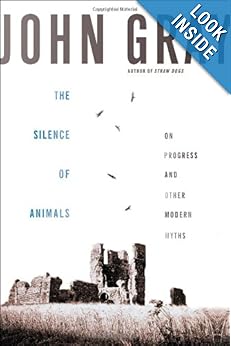
Simon Critchley on John Gray’s Godless Mysticism in "The Silence of Animals"


Philosopher John Gray's new book, The Silence of Animals: On Progress and Other Modern Myths (Jiune, 2013) [the third book in a sequence beginning with False Dawn: The Delusions of Global Capitalism (2000) and then Straw Dogs: Thoughts on Humans and Other Animals (2007)], is reviewed within the context of the whole sequence in this article from The Los Angeles Review of Books.

Key quotes:
The radical core of Gray’s work, unfashionable as it might seem, is a strident defense of the ideal of contemplation against action, whether the bios theoretikos of Aristotle or the ataraxia of the Epicureans. As Gray says in the final words of Straw Dogs, “Can we not think of the aim of life as being simply to see?”
Gray’s godless mysticism would retain the forms of askesis common to religious forms of mystical practice (fasting, concentration and prayer) that attempt to nullify the self. But this would be done not in order to attain a higher experience of “Self” [sic] or some union with god, but rather to occasion a turn towards the nonhuman world in its mere being. A godless mysticism would not redeem us, but would redeem us from the need for redemption, the very need for meaning. A redemption from redemption, then. Meaninglessness would here be the achievement of the ordinary, the life of the senses. This line of thought gets very close to what the philosopher Eugene Thacker has called a mysticism of the inhuman, a climatological mysticism expressed in the dust of the planet.
 This is an in-depth and interesting review, as well as critical in a productive way - makes me want to go back and read the three books in order, especially since I have only read a handful of essays.

Simon Critchley on The Silence of Animals

John Gray’s Godless Mysticism: On "The Silence of Animals"

Simon Critchley

June 2nd, 2013

The Silence of Animals : On Progress and Other Modern Myths

Triptych image: Mariechen Danz, "Ye (3)," 2006
Photo: Andrea Huyoff. Courtesy of the artist and Galerie Tanja Wagner, Berlin

HUMAN BEINGS DO NOT just make killer apps. We are killer apes. We are nasty, aggressive, violent, rapacious hominids, what John Gray calls in his widely read 2002 book, Straw Dogs, homo rapiens. But wait, it gets worse. We are a killer species with a metaphysical longing, ceaselessly trying to find some meaning to life, which invariably drives us into the arms of religion. Today’s metaphysics is called “liberal humanism,” with a quasi-religious faith in progress, the power of reason and the perfectibility of humankind. The quintessential contemporary liberal humanists are those Obamaists, with their grotesque endless conversations about engagement in the world and their conviction that history has two sides, right and wrong, and they are naturally on the right side of it.

Gray’s most acute loathing is for the idea of progress, which has been his target in a number of books, and which is continued in the rather uneventful first 80 pages or so of The Silence of Animals. He allows that progress in the realm of science is a fact. (And also a good: as Thomas De Quincey remarked, a quarter of human misery results from toothache, so the discovery of anesthetic dentistry is a fine thing.) But faith in progress, Gray argues, is a superstition we should do without. He cites, among others, Conrad on colonialism in the Congo and Koestler on Soviet Communism (the Cold War continues to cast a long shadow over Gray’s writing) as evidence of the sheer perniciousness of a belief in progress. He contends, contra Descartes, that human irrationality is the thing most evenly shared in the world. To deny reality in order to sustain faith in a delusion is properly human. For Gray, the liberal humanist’s assurance in the reality of progress is a barely secularized version of the Christian belief in Providence.

With the Nazi jurist Carl Schmitt in mind, Gray writes in Black Mass (2007): “Modern politics is a chapter in the history of religion.” Politics has become a hideous surrogate for religious salvation, and secularism is itself a religious myth. In The Silence of Animals, he writes, “Unbelief today should begin by questioning not religion but secular faith.” What most disturbs Gray are utopian political projects based on some faith that concerted human action in the world can allow for the realization of seemingly impossible political ends and bring about the perfection of humanity. As he makes explicit in Black Mass, he derives his critique of utopianism from Norman Cohn’s 1957 book, The Pursuit of the Millennium. What Cohn implied but Gray loudly declares is that Western civilization can be defined in terms of the central role of millenarian thinking. Salvation is collective, terrestrial, imminent, total, and miraculous. What takes root with early Christian belief, and massively accelerates in medieval Europe, finds its modern continuation in a sequence of bloody utopian political projects, from Jacobinism to Bolshevism, Stalinism, Nazism, and different varieties of Marxist-Leninist, anarchist, or Situationist ideologies. They all promised to build heaven on earth and left us with hell instead.

In Black Mass, Gray persuasively attempted to show how the energy of such utopian political projects has drifted from the left to the right. Bush, Blair, and the rest framed the war on terror as an apocalyptic struggle that would forge the new American century of untrammeled personal freedom and free markets. During the first years of the new millennium, a religious fervor energized the project of what we might call “military neoliberalism”: violence was the means for realizing liberal democratic heaven on earth. The picture of a world at war where purportedly democratic regimes, like the USA, deploy terror in their alleged attempts to confront it is still very much with us, even if full-scale, classical military invasions have given way to the calculated cowardice of drone strikes and targeted assassinations.

Carl Schmitt’s critique of parliamentary democracy led him towards an argument for dictatorship. Where does Gray’s loathing of liberalism leave him? He identifies the poison in liberal humanism, but what’s the antidote? It is what Gray calls “political realism”: we have to accept, as many ancient societies did and many non-Western societies still do, that the world is in a state of ceaseless conflict. Periods of war are followed by periods of peace, only to be followed by war again. What goes around comes around. And around. History makes more sense as a cycle than as a line of development or even decline.

In the face of such ceaseless conflict, Gray counsels that we have to abandon the belief in utopia and accept the tragic contingencies of life: there are moral and political dilemmas for which there are simply no solutions. We have to learn to abandon pernicious daydreams such as a new cosmopolitan world order governed by universal human rights, or that history has a teleological, providential purpose that underwrites human action. We even have to renounce the Obamaesque (in essence, crypto-Comtian or crypto-Saint-Simonian) delusion that one’s life is a narrative that is an episode in some universal story of progress. It is not.

Against the grotesque distortion of conservatism into the millenarian military neoliberalism, Gray wants to defend the core belief of traditional Burkean Toryism. The latter begins in a realistic acceptance of human imperfection and frailty. As such, the best that flawed and potentially wicked human creatures can hope for is a commitment to civilized constraints that will prevent the very worst from happening: a politics of the least worst. Sadly, no one in political life seems prepared to present this argument, least of all those contemporary conservatives who have become more utopian than their cynical pragmatist left-liberal counterparts, such as the British Labor Party.

* * *

The most extreme expression of human arrogance, for Gray, is the idea that human beings can save the planet from environmental devastation. Because they are killer apes who will always deploy violence, force, and terror in the name of some longed-for metaphysical project, human beings cannot be trusted to save their environment. Furthermore — and this is an extraordinarily delicious twist — the earth doesn’t need saving. Here Gray borrows from James Lovelock’s Gaia hypothesis. The ever-warming earth is suffering from disseminated primatemaia, a plague of people. Homo rapiens is savagely ravaging the planet like a filthy pest that has infested a once beautiful, well-appointed, and spacious house. In 1600, the human population was about half a billion. In the 1990s it increased by the same amount. And the acceleration continues. What Gray takes from the Gaia hypothesis is that this plague cannot be solved by the very people who are its cause. It can only be solved by a large-scale decline in human numbers back down to manageable levels. Let’s go back to 1600!

Such is the exhilaratingly anti-humanist, dystopian, indeed Ballardesque, vision of a drowned world at the heart of Gray’s work: when the earth is done with humans, it will recover and the blip of human civilization will be forgotten forever. Global warming is simply one of the periodic fevers that the earth has suffered during its long, nonhuman history. It will recover and carry on. But we cannot and will not.

* * *

Where does this leave us? Although Gray is critical of Heidegger’s residual humanism (animals are poor in world and rocks and stone are worldless, Martin insists), he is very close to a line of thought in a collection of Heidegger’s fragments published as Overcoming Metaphysics. Written between 1936 and 1946, these are Heidegger’s bleakest and most revealing ruminations, in my view. At their center stands an all-too-oblique critical engagement with National Socialism filtered through the lens of his willful reading of Nietzsche. Heidegger concludes his meditations with the words, “No mere action will change the world.” 
The statement finds its rejoinder in the title of Heidegger’s posthumously published 1966 interview with Der Spiegel: “Only a god can save us.” For Heidegger and Gray, there is no god, unfortunately, and we cannot save ourselves. It’s the belief that we can save ourselves that got us into our current mess. If political voluntarism is the motor of modernity’s distress, then the task becomes how we might think without the will.

This takes us to the compelling critique of the concept of action in Gray’s work. Whether Arendtian fantasies of idealized praxis, liberal ideas of public engagement and intervention, or leftist delusions about the propaganda of the deed, action provides consolation for killer apes like us by momentarily staving off the threat of meaninglessness. The radical core of Gray’s work, unfashionable as it might seem, is a strident defense of the ideal of contemplation against action, whether the bios theoretikos of Aristotle or the ataraxia of the Epicureans. As Gray says in the final words of Straw Dogs, “Can we not think of the aim of life as being simply to see?” 
But Gray’s ideological masterstroke is the fusion of his quasi-Burkean critique of liberalism, underpinned as it is by a deep pessimism about human nature, with a certain strand of Taoism. More particularly, what engages Gray is the ultra-skeptical illusionism of Chuang-Tzu, magnificently expressed in the subtle paradoxes of The Inner Chapters. Chuang-Tzu writes, “How do I know that to take pleasure in life is not a delusion?” The answer is that I do not know and furthermore it doesn’t matter. Pushing much further than the furtive Descartes in his Dutch oven, Chuang-Tzu writes, “While we dream we do not know that we are dreaming, and in the middle of a dream interpret a dream within it.” He concludes, “You and Confucius are both dreams, and I who call you a dream am also a dream.” There is no way out of the dream and what has to be given up is the desperate metaphysical longing to find some anchor in a purported reality. 
Homo rapiens must learn to give up the destructive and pointless search for meaning and learn to see that the aim of life is the release from meaning. What interests Gray in the mind-bending paradoxes of Chuang-Tzu is the acceptance of the fact that life is a dream without the possibility, or even the desire, to awaken from the dream. If we cannot be free of illusions, if illusions are part and parcel of our natural constitution, then why not simply accept them? In the final pages of Black Mass Gray writes: “Taoists taught that freedom lies in freeing oneself from personal narratives by identifying with cosmic processes of death and renewal.” Rather than seek the company of utopian thinkers, we should find consolation in the words of “mystics, poets and pleasure-lovers. 
Such is the consoling company Gray keeps in The Silence of Animals. There is much here that is familiar to readers of Gray, such as the critique of progress and the constant tilting at liberal humanism. There is also much that is welcome, such as the robust defense of Freud as a moralist based on Philip Rieff’s classic interpretation, which is wielded against Jungian obscurantism, the triumph of the therapeutic, and the desire to fill the Freudian void with grisly specters like the collective unconscious. But what’s new in The Silence of Animals is Gray’s argument for what he calls “godless mysticism” based largely on a reading of Wallace Stevens (it’s true that Stevens makes a couple of cameo appearances in Gray’s The Immortalization Commission from 2011). Stevens is the still point around which the world turns in The Silence of Animals. 
Each of the three parts of The Silence of Animals is framed and guided by quotations from Stevens; what seems to draw Gray’s attention is the sheer austerity of his late verse, for example the 25 poems included under the title “The Rock” in the Collected Poems in 1954, the year before Stevens’s death. Stevens’s poetry self-consciously moves between the poles of reality and the imagination. In his most Wordsworthian mood, as in “The Idea of Order at Key West,” the two poles would appear to fuse or be held in a creative balance: imagination grasps and transfigures reality. But in the very late poems, a hard, cold, contracted reality takes center stage. The power of imagination appears to be impoverished. The season of these late poems — always important for Stevens — changes from the florid and Floridian landscapes of the earlier verse to the harsh, unending cold of the Connecticut winter. 
In the final poem in The Palm at the End of the Mind, “Of Mere Being,” Stevens speaks of that which is “Beyond the last thought,” namely a bird that sings “Without human meaning, / Without human feeling, a foreign song.” Stevens seems to be saying that things merely are: the tree, the bird, its song, its feathers, the wind moving in the branches. One can say no more. For Gray, “The mere being of which Stevens speaks is the pure emptiness to which our fictions may sometimes point.” That is to say, in accepting that the world is without meaning, a path is indicated that takes us beyond the meaning we have made. 
Paradoxically, for Gray, the highest value in existence is to know that there is nothing of substance in the world. Nothing is more real than nothing. It is the nothingness beyond us, the emptiness behind words, that Gray wants us to contemplate. His is a radical nominalism behind which stands the void. In this, as he is well aware, Gray is close to Beckett. We are condemned to words, but language is a prison house from which we constantly seek to escape. Rather than any comforting dogma of the linguistic turn, Gray is trying to imagine a turn away from the linguistic. Human language should be pointed towards a nonhuman silence. 
In his very last poems, Stevens comes about as close as one can get to giving up poetry in poetry. It is poetry of the antipodes of the poetry; the hard, alien reality that we stare at, unknowing. All we have are ideas about the thing, but not the thing itself. Desire contracts, the mind empties, the floors of memory are wiped clean and nothingness flows over us without meaning. In a very late lyric that Gray does not cite but which he might, “A Clear Day and No Memories,” Stevens writes:
Today the air is clear of everything.
It has no knowledge except of nothingness
And it flows over us without meanings,
As if none of us had ever been here before
And are not now: in this shallow spectacle,
This invisible activity, this sense.
It is “this sense” that Gray wants to cultivate in us, this turning of the self away from itself and its endless meaning-making and toward things in their variousness and particularity. The point is to undergo a kind of movement from the limitations of the human towards a greater inhuman realm of experience that can be had in the observation of plants, birds, landscapes, and even cityscapes. Stevens continues, with another “as if” (and whole books have been written on his use of hypothetical conjunctions):
As if nothingness contained a métier,
A vital assumption, an impermanence
In its permanent cold, an illusion so desired.
Poems are words chosen out of desire, but words that don’t create anything permanent. In creating illusion, they assume impermanence. This is what Stevens sees as the métier of nothingness: its work, its craft, its supreme fictiveness. It is abstract. It must change. It must give pleasure. 
Gray’s godless mysticism would retain the forms of askesis common to religious forms of mystical practice (fasting, concentration and prayer) that attempt to nullify the self. But this would be done not in order to attain a higher experience of “Self” [sic] or some union with god, but rather to occasion a turn towards the nonhuman world in its mere being. A godless mysticism would not redeem us, but would redeem us from the need for redemption, the very need for meaning. A redemption from redemption, then. Meaninglessness would here be the achievement of the ordinary, the life of the senses. This line of thought gets very close to what the philosopher Eugene Thacker has called a mysticism of the inhuman, a climatological mysticism expressed in the dust of the planet. 
* * *

There’s an unexpected local hero in The Silence of Animals: J.A. Baker (1926–1987), author of The Peregrine, a book that, to my shame, I didn’t know prior to reading Gray. It is the record of 10 years spent watching peregrine falcons in a narrow stretch of Essex countryside between Chelmsford and the coast. I happen to know that landscape quite well, or once knew it. It’s a minimal, flat landscape of neat fields, mudbanks, estuarial systems, and vast skies with huge clouds shuttling from west to east. In intense lyrical descriptions, Baker sought to escape the human perspective and look at the world through the eyes of this predatory bird, “Looking down, the hawk saw the big orchard beneath him shrink into dark, twiggy lines and green strips […] saw the estuary lifting up its blue and silver mouth, tongued with green islands.”

Baker was not crazy. He knew that there is no way out of the human world, and no way he could become a peregrine falcon. What interests Gray is the discipline (for Baker, an askesis of time, place and repetition: many days, months, and years spent returning to the same small strip of countryside) involved in peeling enough of oneself away in order to try to look outwards and upwards. Contemplation here is not some Hamlet-like, inward-facing attempt at stilling the self’s commotion. It’s the outward-facing decreation of the self through a cultivation of the senses. What’s being attempted is a non-anthropomorphic relation to animals and nature as a whole, where the falcon cannot hear the falconer. Gray’s godless mysticism asks us to look outside ourselves and simply see. This is a lot more difficult than it sounds.

* * *

Schopenhauer, usually read in abridged, aphoristic form, was the most popular philosopher of the 19th century. Epigrammatic pessimism of his sort gives readers reasons for their misery and words to buttress their sense of hopelessness and impotence. Few things offer more refined intellectual pleasure than backing oneself into an impregnably defended conceptual cul-de-sac and sitting there, knowing and immovable. It’s the thrill of reading Adorno or, in a certain light, Agamben. Such is what Nietzsche called “European Buddhism.”

Sometimes I think John Gray is the great Schopenhauerian European Buddhist of our age. What he offers is a gloriously pessimistic cultural analysis, which rightly reduces to rubble the false idols of the cave of liberal humanism. Counter to the upbeat progressivist evangelical atheism of the last decade, Gray provides a powerful argument in favor of human wickedness that’s still consistent with Darwinian naturalism. It leads to passive nihilism: an extremely tempting worldview, even if I think the temptation must ultimately be refused. 
The passive nihilist looks at the world with a highly cultivated detachment and finds it meaningless. Rather than trying to act in the world, which is pointless, the passive nihilist withdraws to a safe contemplative distance and cultivates his acute aesthetic sensibility by pursuing the pleasures of poetry, peregrine-watching, or perhaps botany, as was the case with the aged Rousseau (“Botany is the ideal study for the idle, unoccupied solitary,” Jean-Jacques said). Lest it be forgotten, John Stuart Mill also ended up a botanist. 
In a world that is rushing to destroy itself through capitalist exploitation or military crusades — two arms of the same Homo rapiens — the passive nihilist resigns himself to a small island where the mystery of existence can be seen for what it is without distilling it into a meaning. The passive nihilist learns to see, to strip away the deadening horror of habitual, human life and inhale the void that lies behind our words. 
What will define the coming decades? I would wager the following: the political violence of faith, the certainty of environmental devastation, the decline of existing public institutions, ever-growing inequality, and yet more Simon Cowell TV shows. In the face of this horror, Gray offers a cool but safe temporary refuge. 
Truth to tell, the world of Gray’s passive nihilist can be a lonely place, seemingly stripped of intense, passionate, and ecstatic human relations. It is an almost autistic universe, like J.A. Baker’s. It is also a world where mostly male authors and poets seem to be read, although Elizabeth Bishop comes to mind. As Stevens writes in his Adagia, “Life is an affair of people not of places. But for me life is an affair of places and that is the trouble.” Gray, like Stevens, seems preoccupied with place but, unlike Stevens, appears untroubled. What Gray says is undeniable: we are cracked vessels glued to ourselves in endless, narcissistic twittering. We are like moths wheeling around the one true flame: vanity. Who doesn’t long to escape into an animal silence? 
Of course, love is the name of the counter-movement to that longing. Love — erotic, limb-loosening and bittersweet — is another way of pointing outwards and upwards, but this time towards people and not places. But that, as they say, is another story.

Author’s Note: This essay builds from certain formulations that the reader can find in The Faith of the Faithless (Verso, London and New York, 2012). See Chapter 2, pp.109-117.

Simon Critchley's last book was The Mattering of Matter. Documents from the Archive of the International Necronautical Society (with Tom McCarthy, Sternberg, Berlin, 2012) and his next book is Stay, Illusion! The Hamlet Doctrine (Pantheon, New York, 2013).