Showing posts with label Brain Science Podcast. Show all posts

Thursday, February 05, 2015

Brain Science Podcast 115: Eastern Philosophy and Western Neuroscience (w/ Evan Thompson)

The new episode of Dr. Ginger Campbell's Brain Science Podcast features a conversation with philosopher Evan Thompson, PhD, about his new book, Waking, Dreaming, Being: Self and Consciousness in Neuroscience, Meditation, and Philosophy.

Thompson is one of the leading figures in bridging the gap between Eastern philosophy (specifically Buddhism and the Advaita Vedanta school of Hinduism) and Western neuroscience. In this book, he examines the connects and disconnects between Dream Yoga (both Buddhist and Vedanta) and neuroscience and neurobiology.

BSP 115: Eastern Philosophy and Western Neuroscience

January 29, 2015 / Ginger Campbell, MD
Brain Science Podcast


Scientific interest in the Mind and Consciousness is relatively new, but both Western and Eastern Philosophy have a long tradition of exploring these topics. In his new book Waking, Dreaming, Being: Self and Consciousness in Neuroscience, Meditation, and Philosophy, Evan Thompson explores how these diverse traditions can inform and enrich one another.

Thompson goes beyond a narrow view of consciousness, which focuses only on the waking state. Instead he considers how dreaming, lucid dreaming, and even near death experiences can advance our understanding of how our brain's generate both consciousness and our sense of Self.

Ginger Campbell, MD

How to get this episode:

Related Episodes:

  • BSP 5: Very brief introduction to Philosophy of Mind.
  • BSP 55:  Patricia Churchland, PhD, discusses Neurophilosophy.
  • BSP 58: Alva NoĆ«, PhD, discusses Out of Our Heads: Why You Are Not Your Brain, and Other Lessons from the Biology of Consciousness.
  • BSP 67: Thomas Metzinger discusses The Ego Tunnel: The Science of the Mind and the Myth of the Self.
  • BSP 73: Embodied Cognition with Lawrence Shapiro, PhD.
  • BSP 81: Patricia Churchland discusses Braintrust: What Neuroscience Tells Us about Morality.
  • BSP 89: Evan Thompson discusses Mind in Life: Biology, Phenomenology, and the Sciences of Mind.
  • BSP 96: Robert Burton, MD discusses A Skeptic's Guide to the Mind: What Neuroscience Can and Cannot Tell Us About Ourselves.

Announcements:

  • This month's Audible recommendation: The Teenage Brain: A Neuroscientist's Survival Guide to Raising Adolescents and Young Adults by Frances E. Jensen, MD
  • The next episode of the Brain Science Podcast will feature Dr. Norman Doidge talking about his new book The Brain's Way of Healing: Remarkable Discoveries and Recoveries from the Frontiers of Neuroplasticity.
  • Reminder: the 25 most recent episodes of the Brain Science Podcast are always free, but Premium subscribers have unlimited access to all back episodes and transcripts. The Brain Science Podcast Mobile App is FREE. It is a great way to consume both free and premium content (since this will not appear in iTunes or other podcasting apps).
  • Please share your feedback about this episode by sending email to brainsciencepodcast@gmail.com or going to the Brain Science Podcast Discussion Forum at http://brainscienceforum.com. You can also post to our fan pages on Facebook or Google+. I am looking for help with these community pages so please email me at brainsciencepodcast@gmail.com if you are interested.

Monday, October 20, 2014

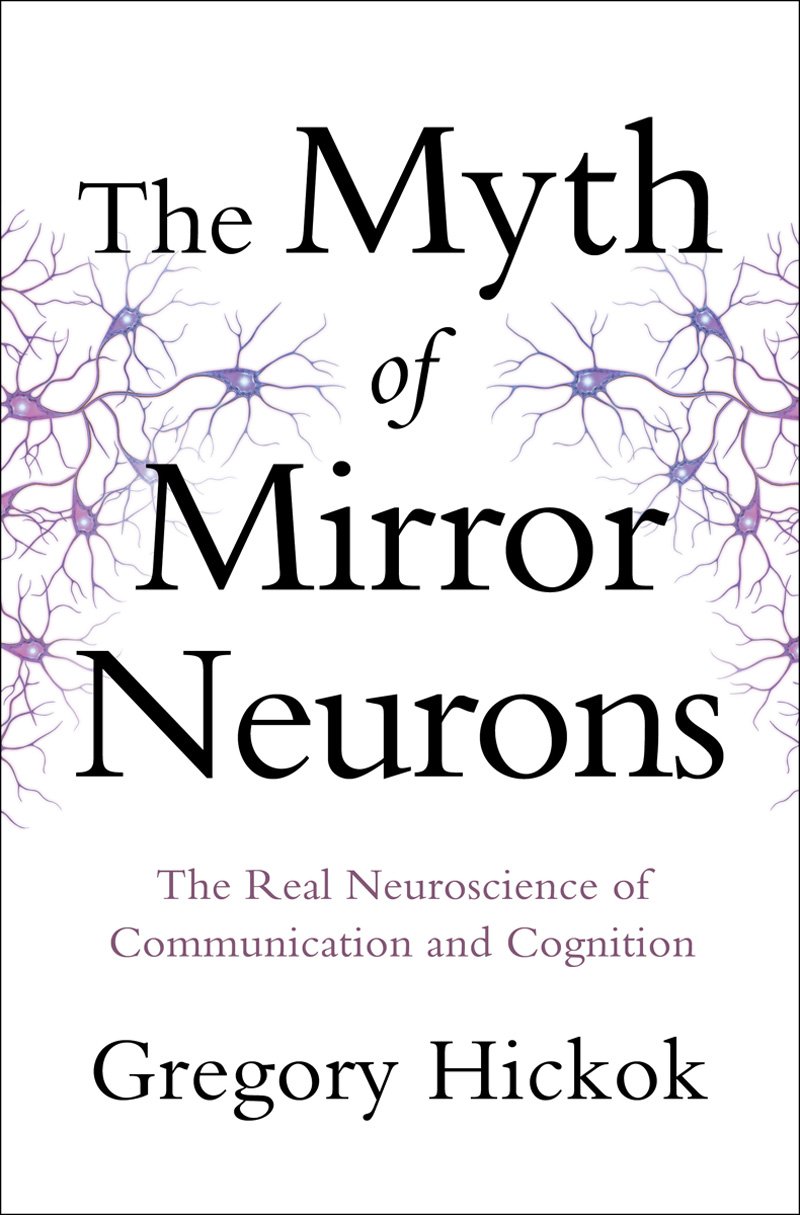
What Do Mirror Neurons Really Do? (Brain Science Podcast 112, w/ Gregory Hickok)


Gregory Hickok is the author of The Myth of Mirror Neurons: The Real Neuroscience of Communication and Cognition (2014), and he was the guest on the most recent episode of the Brain Science Podcast, hosted by Dr. Ginger Campbell.

This is from the Amazon ad copy for the book:
In The Myth of Mirror Neurons, neuroscientist Gregory Hickok reexamines the mirror neuron story and finds that it is built on a tenuous foundation—a pair of codependent assumptions about mirror neuron activity and human understanding. Drawing on a broad range of observations from work on animal behavior, modern neuroimaging, neurological disorders, and more, Hickok argues that the foundational assumptions fall flat in light of the facts. He then explores alternative explanations of mirror neuron function while illuminating crucial questions about human cognition and brain function: Why do humans imitate so prodigiously? How different are the left and right hemispheres of the brain? Why do we have two visual systems? Do we need to be able to talk to understand speech? What’s going wrong in autism? Can humans read minds?

The Myth of Mirror Neurons not only delivers an instructive tale about the course of scientific progress—from discovery to theory to revision—but also provides deep insights into the organization and function of the human brain and the nature of communication and cognition.
Sounds like a great book and an important counter-balance to all of the hype being piled on the concept of mirror neurons since their discovery.

What Do Mirror Neurons Really Do? (BSP 112)

October 16, 2014/ Ginger Campbell, MD

Greg Hickok, PhD 

Ever since their chance discovery back in 1992 mirror neurons have captured the imagination of both scientists and nonscientists, but their actual role remains mostly speculative. In The Myth of Mirror Neurons: The Real Neuroscience of Communication and Cognition, Dr. Gregory Hickok (UC-Irvine) explains why the most popular theory is probably wrong. He also provides a fascinating account of how science is really done and the sobering lesson that scientists can fall prey to the same cognitive biases (and tendencies toward laziness) that plague all humans.

I first discussed the discovery of mirror neurons back in BSP 35 when I featured Mirrors in the brain: How our minds share actions, emotions, and experience (2008) by Giacomo Rizzolatti and Corrado Sinigaglia. At that time what I found most fascinating was that since mirror neurons fire both when a subject (usually a monkey) performs an action and when a similar action is observed, this proves that single neurons are not necessarily purely motor or purely sensory. This surprising discovery seems to have been overshadowed in the rush to use mirror neurons to explain everything from autism to language evolution.

The latest Brain Science Podcast (BSP 112) features an interview with Dr. Gregory Hickok. BSP 35 is also available for FREE via the Brain Science Podcast Mobile APP.

Play podcast.

(Click to stream, right click to download OR go to BSP site to listen)

How to get this episode:
The most recent 25 episodes of the Brain Science Podcast are still FREE. See the individual show notes for links the audio files.


References and Links
Announcements:
  • Next month's episode will provide exclusive coverage of "Neuroplasticity and Healing" an event being hosted by the Dalai Lama at the UAB School of Medicine.
  • The most recent 25 episodes of the Brain Science Podcast are always FREE. Older episodes and episode transcripts are available for $1 each. Premium subscribers have unlimited access to all 100+ episodes and transcripts.
  • Reminder: The Brain Science Podcast mobile app is now FREE for iOS, Android and Windows Mobile. Check newer episodes for extra free content!
  • Don't forget to check out my other podcast Books and Ideas.
Please share your feedback about this episode by sending email to brainsciencepodcast@gmail.com or going to the Brain Science Podcast Discussion Forum at http://brainscienceforum.com. You can also post to our fan pages on Facebook or Google+.

Sunday, August 03, 2014

Neurobiology for Dummies w/ Frank Amthor, PhD (Brain Science Podcast 110)


Frank Amthor, PhD, is the author of Neurobiology for Dummies (2014), the follow up to his popular Neuroscience for Dummies (2011). He is the guest on the most recent edition of the Brain Science Podcast, hosted by Dr. Ginger Campbell.

"Neurobiology for Dummies" (BSP 110)

July 26, 2014 / Ginger Campbell, MD


Frank Amthor, PhD

Frank Amthor's latest book Neurobiology for Dummies isn't just for readers who are new to neuroscience. In this excellent follow-up to his Neuroscience for Dummies Dr. Amthor discusses a wide variety of brain-related topics. Since I have known Frank for several years it was a special treat to interview him for BSP 110. We talked about a wide variety of ideas ranging from what makes neurons special to how brains differ from current computers.

How to get this episode:
The most recent 25 episodes of the Brain Science Podcast are still FREE. See the individual show notes for links the audio files.


Reference and Links:

Announcements:

Friday, June 27, 2014

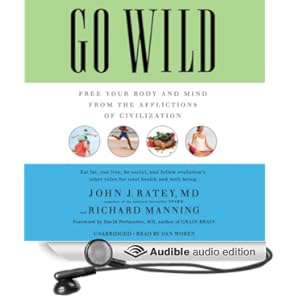
Brain Science Podcast - "Go Wild" with Dr. John Ratey

http://ecx.images-amazon.com/images/I/51WbdF4MsxL._SL500_AA300_PIaudible,BottomRight,13,73_AA300_.jpg

Dr. John Ratey is the co-author, along with Richard Manning, of Go Wild: Free Your Body and Mind from the Afflictions of Civilization. This podcast originally appeared on Dr. Ginger Campbell's Books and Ideas podcast, where Dr. Ratey has been a guest a couple of times.

Here is the publisher's blurb from Amazon:
The scientific evidence behind why maintaining a lifestyle more like that of our ancestors will restore our health and well-being.

In GO WILD, Harvard Medical School Professor John Ratey, MD, and journalist Richard Manning reveal that although civilization has rapidly evolved, our bodies have not kept pace. This mismatch affects every area of our lives, from our general physical health to our emotional wellbeing. Investigating the power of living according to our genes in the areas of diet, exercise, sleep, nature, mindfulness and more, GO WILD examines how tapping into our core DNA combats modern disease and psychological afflictions, from Autism and Depression to Diabetes and Heart Disease. By focusing on the ways of the past, it is possible to secure a healthier and happier future, and GO WILD will show you how.
Good podcast.

"Go Wild" with Dr. John Ratey (podcast)

Ginger Campbell, MD
Monday, June 23, 2014


Richard Manning and John Ratey (click photo to play mp3)

Episode 55 of Books and Ideas is an interview with Dr. John Ratey, co-author of Go Wild: Free Your Body and Mind from the Afflictions of Civilization. There is considerable evidence that our hunter-gatherer ancestors were generally suprisingly healthy, so the purpose of this book and our conversation was to explore the scientific evidence supporting a return to a healthier lifestyle. We touch on diet, exercise, the role of sleep and even meditation. We also explore the importance of our relationship with nature and each other.

Listen to Episode 55 of Books and Ideas

Episode Transcript (Download PDF)


Since I have previously interviewed Dr. Ratey about his books Spark: The Revolutionary New Science of Exercise and the Brain (BSP 33) and Driven To Distraction: Recognizing and Coping with Attention Deficit Disorder from Childhood Through Adulthood (BSP 45), I will be also be posting this episode in the Brain Science Podcast feed.

References:
Additional references are available in the Free Episode Transcript. 

Announcements:
  • This episode of Books and Ideas will appear in the Brain Science Podcast feed tomorrow. The next episode of the Brain Science Podcast will be posted in late July.
  • Since I am starting a Fellowship in Palliative Care Medicine next month I am not sure when I will publish another episode of Books and Ideas, but I do plan a future episode about Palliative Care.
  • I am speaking at The Amazing Meeting next month in Las Vegas. Check the schedule for the exact time and be sure to drop me an email if you are going to be there.
  • I also plan to attend Podcast Movement 2014 which is being held in Dallas in August.
Share Your Feedback:

Sunday, April 06, 2014

Brain Plasticity with Michael Merzenich (Brain Science Podcast 105)

This is the January episode of the Dr. Ginger Campbell's fabulous Brain Science Podcast, #105, featuring a discussion with Michael Merzenich, author of Soft-Wired: How the New Science of Brain Plasticity Can Change Your Life.

One of the books not listed in the "further reading" section is The Mind and the Brain: Neuroplasticity and the Power of Mental Force, by Jeffrey Schwartz, but it too is an excellent book on this topic.

Brain Plasticity with Michael Merzenich (BSP 105)

Posted January 21, 2014 | Ginger Campbell, MD


Michael Merzenich

If you have read anything about brain plasticity you have seen the name Michael Merzenich. Dr. Merzenich is one of the pioneers in this field, having spent over 30 years documenting that the human brain (and that of other mammals) continues to change throughout life. I interviewed Dr. Merzenich several years ago (BSP 54), but the publication of his first book Soft-Wired: How the New Science of Brain Plasticity Can Change Your Life gave us another opportunity to talk about how we can apply these discoveries in our daily lives.

According to Dr. Merzenich,
"No matter how much you've struggled, no matter where you've been in your life, you're in charge of your life going forward. And you have the capacity; you have the resources to change things for the better—always have that capacity. And that's what the book is trying to emphasize. “ (BSP 105)
I found Soft-Wired very compelling because it combines a clear explanation of the science with many stories about real people facing a wide variety of cognitive challenges. The overall tone of the book is very optimistic even though it also considers the way bad choices can contribute to cognitive decline.

Ginger Campbell, MD
BSP 105 Brain Plasticity with Dr. Michael Merzenich (link takes you to the BSP site to listen to the podcast or listen at one of the ways below)

How to get this episode:
The most recent 25 episodes of the Brain Science Podcast are still FREE. See the individual show notes for links the audio files.


Related Episodes:
  • BSP 10: Introduction to Brain Plasticity.
  • BSP 17: Discussion of The Wisdom Paradox: How Your Mind Can Grow Stronger As Your Brain Grows Older by Elkhonon Goldberg.
  • BSP 28: Interview with Dr. Norman Doidge, author of The Brain That Changes Itself.
  • BSP 33: Interview with Dr. John Ratey, author of Spark: The Revolutionary New Science of Exercise and the Brain.
  • BSP 54: Interview with Dr. Michael Merzenich, author of Soft-Wired.
  • BSP 87: Interview with Dr. Pam Greenwood, co-author of Nurturing the Older Brain and Mind.
Further Reading:

Tuesday, March 25, 2014

Sleep Science with Penny Lewis (Brain Science Podcast 107)


In this recent episode of the Brain Science Podcast, Dr. Ginger Campbell speaks with Dr. Penny Lewis about her new book, The Secret World of Sleep: The Surprising Science of the Mind at Rest (2013).

Sleep Science with Penny Lewis (BSP 107)

March 18, 2014 / Ginger Campbell, MD


Penny Lewis

In The Secret World of Sleep: The Surprising Science of the Mind at Rest Dr. Penelope A. Lewis provides a highly readable account of the fascinating world of sleep research. Fascinating research is being carried out with animals as varied as fruit flies and rats, as well as with humans. I was surprised to learn that most people actually find it fairly easy to fall asleep in an fMRI scanner.

I have just posted an interview with Dr. Lewis (BSP 107) that includes a discussion of the role of sleep in memory as well as interesting findings about how synapses in the brain actually change during sleep. We still don't know exactly what sleep (and dreaming) are essential, but research in this field is growing. Dr. Lewis is excited about emerging research that suggests improving slow wave sleep may significantly improve learning and memory.

Listen:
Ginger Campbell, MD
BSP 107 Sleep Science with Penny Lewis
69:55
How to get this episode:
The most recent 25 episodes of the Brain Science Podcast are still FREE. See the individual show notes for links the audio files.

References:

The Secret World of Sleep: The Surprising Science of the Mind at Rest by Penelope A. Lewis
Dreamland: Adventures in the Strange Science of Sleep by David K. Randall (audible link)
Dreaming: A Very Short Introduction by J. Allan Hobson
See episode transcript for additional links and references.

Announcements:

Thursday, February 20, 2014

Luiz Pessoa - "The Cognitive-Emotional Brain" (Brain Science Podcast 106)

Here is another excellent episode of Dr. Ginger Campbell's Brain Science Podcast. In this episode she speaks with Luiz Pessoa, author of The Cognitive-Emotional Brain: From Interactions to Integration.

"The Cognitive-Emotional Brain" (BSP 106)

February 17, 2014
Brain Science Podcast
Hosted by Dr. Ginger Campbell


Luiz Pessoa of the University of Maryland

In The Cognitive-Emotional Brain: From Interactions to Integration neuroscientist Luiz Pessoa argues that emotion and cognition are deeply intertwined throughout many levels of the brain. In a recent interview (BSP 106) Pessoa and I focused on recent discoveries about the amygdala and Thalamus that challenge traditional assumptions about what these structures do. The amygdala processes more than fear (and other negative stimuli) and the Thalamus is more than a mere relay station.

This a fairly technical discussion but Pessoa did a good job of making the material accessible to all listeners. The reason I think these concepts matter is that not only do they challenge overly simplistic notions of how the brain works, but they also challenge our tendency to see emotion and cognition as separate and often opposing processes.

How to get this episode:

FREE: audio mp3 (click to stream, right click to download)
Buy Episode Transcript for $1.
Premium Subscribers now have unlimited access to all old episodes and transcripts.
The most recent 25 episodes of the Brain Science Podcast are still FREE. See the individual show notes for links the audio files.


References and Additional Reading

The Cognitive-Emotional Brain: From Interactions to Integration by Luiz Pessoa
Pessoa L, Adolphs R. (2010) "Emotion processing and the amygdala: from a 'low road' to 'many roads' of evaluating biological significance.” Nature Reviews Neuroscience, 11(11):773-83. doi: 10.1038/nrn2920.
Networks of the Brain by Olaf Sporns
In Search of Memory: The Emergence of a New Science of Mind by Eric R. Kandel (BSP 3)
Beyond Boundaries: The New Neuroscience of Connecting Brains with Machines---and How It Will Change Our Lives by Miguel Nicolelis (BSP 79)
Visit Dr. Pessoa's lab at emotioncognition.org to learn more.

Related Episodes

BSP 11: Emotion
BSP 32: a brief introduction to Neuroanatomy
BSP 65 and BSP 91 are interviews with Jaak Panksepp about the subcortical origins of emotion
I spoke with Olaf Sporns about the Human Connectome and the use of Network Theory in BSP 74 and BSP 103.
BSP 90: a discussion of Self Comes to Mind: Constructing the Conscious Brain by Antonio Damasio.

Announcements

Tuesday, December 17, 2013

Connectome Update (Brain Science Podcast 103) with Olaf Sporns


On last month's Brain Science Podcast, your host, Dr. Ginger Campbell, spoke with neuroscientist Olaf Sporns, author of Discovering the Human Connectome, to get an update on connectome research.

Connectome Update (BSP 103)

November 22, 2013
Ginger Campbell, MD


OLAF SPORNS, PHD

The Human Connectome is a description of the structural connectivity of the human brain, but according to Olaf Sporns, author of Discovering the Human Connectome, this description must include a description of the brain's dynamic behavior. I first talked with Sporns back in BSP 74, but BSP 103 gave us a chance to talk about recent progress in connectomics.

Sporns sees the study of the brain's connections as fundamental to understanding how the brain works.

"It will allow us to ask new questions that perhaps we couldn’t ask before. It will be a foundational data set for us, just like the genome is. We will not be able to imagine neuroscience going back to a time when we did not have the connectome, but it will not give us all the answers.”

In his first book, Networks of the Brain, Sporns described how Network Theory provides important tools for dealing with the large data sets that are created by studying complex systems like the human brain. In BSP 103 we discuss both the challenges and the promise of Discovering the Human Connectome.

Monday, October 07, 2013

Synapse Evolution with Seth Grant (Brain Science Podcast 101)

Genes2Cognition
 The latest episode of Dr. Ginger Campbell's Brain Science Podcast features "synapse evolution" with Dr. Seth Grant, Director of Genes to Cognition (G2C), a neuroscience research program that seeks to both discover fundamental biological principles and generate important insights into brain disease.
The Genes to Cognition programme (G2C) established a framework for studying genes, brain and behaviour in order to link basic molecular research from genomes and experimental genetic organisms with human clinical studies of cognition. The G2C framework was developed around the current understanding of the molecular basis of learning & memory.

The G2C programme collects and integrates data in the areas of psychiatry, human and mouse psychology, cellular neurophysiology and cell biology, proteomics and biochemistry, molecular biology, human and mouse genetics and genomics.
This is geeky stuff for those not versed in neuroscience (and even those who are), but Grant makes the information accessible for non-neuroscientists.

Great episode!

Synapse Evolution with Seth Grant (Brain Science Podcast 101)

September 27, 2013 | Ginger Campbell, MD


Seth Grant

Early in his career Seth Grant helped develop the transgenic mice that Eric Kandel used in his studies of how memory works. Since then he has combined his skill in genetics with his work on isolating the proteins that form the functional components of the synapse. (The synapse is a key component in the nervous systems of all multi-cellular animals.) When we last talked back in BSP 51 I was particularly struck by how many of these proteins actually evolved with single celled life--long before the arrival of nervous systems.

Recently Grant's work has focused on the discovery that the vertebrate synapse is actually much more complex than the one present in invertebrates. For BSP 101 we got together to talk about two papers he and his collegues recently published in Nature Neuroscience. These papers explore how small changes in the synapse proteins effect learning in measurable ways.

Grant has a special gift for making complex ideas clear, which means that this interview can be enjoyed by all listeners, even those who are new to the Brain Science Podcast and neuroscience.

Download Free Episode Transcript 

References:

  • S.G.N. Grant, T. J. O'Dell, K. A. Karl, P. L. Stein, P. Soriano, and E. R. Kandel, "Impaired long-term potentiation, spatial learning, and hippocampal development in fyn mutant mice." Science 258 (1992):1903-10.
  • Emes RD, Pocklington AJ, Anderson CN, Bayes A, Collins MO, Vickers CA, Croning MD, Malik BR, Choudhary JS, Armstrong JD, Grant SG, "Evolutionary expansion and anatomical specialization of synapse proteome complexity." Nature Neuroscience 11 (2008) 799-806.
  • Nithianantharajah, J., Komiyama, N., McKechanie, A., Johnstone, M., Blackwood, D. H., Clair, D. S., Emes, R. D., van de Lagemaat, L. N., Saksida, L. M., Bussey, T. J. & Grant, S. G. N. “Synaptic scaffold evolution generated components of vertebrate cognitive complexity.” Nature Neuroscience 16 (2013) 16-24. doi:10.1038/nn.3276
  • Ryan, T. J., Kopanitsa, M. V., Indersmitten, T., Nithianantharajah, J., Afinowi, N. O., Pettit, C., Stanford, L. E., Sprengel, R., Saksida, L. M., Bussey, T. J., O'Dell, T. J., Grant, S. G. N. & Komiyama, N. “Evolution of GluN2A/B cytoplasmic domains diversified vertebrate synaptic plasticity and behavior.” Nature Neuroscience 16 (2013) 25-32. doi:10.1038/nn.3277
List of research papers by Seth Grant

See FREE transcript for more links and references

More episodes about brain evolution: BSP 47, BSP 48, and BSP 51

Announcements:

You can support the the Brain Science Podcast by visiting the BSP Store and by direct donations.
Upcoming Episodes will feature the return of Olaf Sporns (BSP 74) and Dr. Allen Frances, author of Saving Normal: An Insider's Revolt Against Out-of-Control Psychiatric Diagnosis, DSM-5, Big Pharma, and the Medicalization of Ordinary Life and Essentials of Psychiatric Diagnosis, Revised Edition: Responding to the Challenge of DSM-5®.

I (Dr. Campbell) will be at the University of Florida November 1-5, 2013 attending the meeting of the National Association of Science Writers. Drop me an email at brainsciencepodcast@gmail.com if you would like to have a meet up.

Leave feedback here or visit the Brain Science Podcast discussion group at Goodreads.com, our Fan Page on Facebook or our page on Google+.

Saturday, May 25, 2013

Neuroanthropolgy: What is it and WHY should You Care? (Brain Science Podcast 97)

Very cool episode of the Brain Science Podcast. Dr. Ginger Campbell speaks with  Daniel H. Lende and Greg Downey about neuroanthropology in general, and about their 2012 book, The Encultured Brain: An Introduction to Neuroanthropology, in particular.

Neuroanthropolgy: What is it and WHY should You Care? (BSP 97)

May 24, 2013


You may be tired of seeing the prefix "neuro" used to describe every new fad, but The Encultured Brain: An Introduction to Neuroanthropology [2012] edited by Daniel H. Lende and Greg Downey makes an impassioned argument for why neuroscience and anthropology should be working together to unravel the ongoing mystery of how our brains make us who we are. The latest Brain Science Podcast (BSP 97) is a thought-provoking conversation with Downey and Lende. After explaining that anthropology can offer neuroscience field data about "brains in the wild," we explore two case studies that demonstrate the promise of this new partnership.

Listen to BSP 97 (or download mp3)


Download the FREE Episode Transcript.
Subscribe to the Brain Science Podcast or listen on the BSP Mobile app.

References and Links:

*Please see the FREE transcript for additional references.

Announcements: