Thursday, April 07, 2011

Peter Kruse Has Developed a Tool to Tap into the Intuitive Beliefs that Drive Social Change

This interesting article comes from Think Quarterly - a periodic (quarterly, it seems) book project by Google for its partners and advertisers. This first issue, or Book #1, is called Think Data - and it has an interesting assortment of articles.

Like most companies, Google regularly communicates with our business customers via email newsletters, updates on our official blogs, and printed materials.

On this occasion, we've sent a short book about data, called Think Quarterly, to a small number of our UK partners and advertisers. You're now on the companion website, thinkquarterly.co.uk (also available at m.thinkquarterly.co.uk, if you're on the move).

We're flattered by the positive reaction but have no plans to start selling copies! Although Think Quarterly remains firmly aimed at Google's partners and advertisers, if you're interested in the subject of data then please feel free to read on...

Get Think Quarterly 01 for eReaders and other devices:
Download EPUB version or Download PDF version

In addition to this piece by Peter Kruse, there is also an interesting article by Hans Rosling: A Data State of Mind.

Soft Values, Hard Facts

Peter Kruse has developed a tool that can tap into the intuitive beliefs that drive social change. By accessing the parts other data can’t reach, it offers you the most valuable insight of all: what’s coming next.

peter-kruse

Words by Ulrike Reinhard
Photography by Jonnek Jonnekson

Professor Peter Kruse is the founder and CEO of nextpractice, based in Bremen, Germany. Alongside a team of psychologists, economists, sociologists, computer scientists and designers, he develops customised management tools to support entrepreneurial decision-making and empower collective intelligence. Using the ‘nextexpertizer’ tool, Kruse is able to access the collective intuition of groups, revealing the hidden value patterns underpinning social change. The data that emerges enables us to answer the question: what’s next?

We produce so much data every day that it is becoming difficult to generate genuine insights. How can we use these data streams more efficiently?

The biggest challenge is to reduce complexity by detecting meaningful patterns. Otherwise the risk of sudden and dangerous breakdowns – like the financial crisis we’ve just recovered from – is far too high.

So the question is how to get the right data. Using customers, citizens and other experts as detectors for relevant information maximises complexity reduction in data analysis. This is where the nextexpertizer method comes in.

The mantra of nextpractice is ‘A Matter of Fact in a World of Values’. What does this mean?

In established methods of collecting data, like standardised questionnaires and predefined scales, people give their judgments on the basis of hopefully intelligent questions and simple categories like ‘yes’ and ‘no’, multiple choice, ranking, etc. The respondent can only add value when the intentions of the interviewer are decoded correctly.

But language is a very tricky phenomenon, so the first difficulty to be tackled is the problem of semantics, which adds a lot of noise to every measurement. The second problem is a direct consequence of the first. Interpretation of language is a mainly conscious process that isn’t well connected with a person’s intuitive knowledge and unconscious valuations, which are crucial for complexity reduction.


Marcelo Gleiser - Can Scientists Overreach?

Marcelo Gleiser takes a look at Marilynne Robinson's (Pulitzer Prize winning author of Gilead) essay Absence of Mind in his article, Can Scientists Overreach? Robinson makes some good points about the ways science can be just as fundamentalist and narrow-minded as the worst of religion. It's cool (to me) to see a theoretical physicist picking up her arguments.

This comes from NPR's outstanding blog, 13.7 Cosmos and Culture.

"Yes," says Marilynne Robinson, the Pulitzer Prize winning author of Gilead, in her essay Absence of Mind, based on the Dwight H. Terry Lectures she delivered at Yale University in 2009.

Science, religion, and our reality: a drawing of man's connection to both science and religion.
Noel A. Tanner/Flickr

Robinson is particularly critical of fundamentalist scientism as preached by Richard Dawkins, Daniel Dennett and Steven Pinker, among others. The reading is tough, but well worth it. Her arguments are dead on, as is her prose:

"The clutch of certitudes that, together, trivialize and discredit are very much in need of being looked at again."

This, in a nutshell, is the crux of her argument: Science paints a wonderful picture of the world, but a necessarily incomplete one. To reduce everything to science and its methods impoverishes humanity. We need cultural diversity and that includes the culture of religion.

What makes some scientists so sure of their science? The practice of science, after all, relies precisely on uncertainties; a theory only works until its limits are exposed. In fact, this is a good thing, since new theories sprout from the cracks of old ones.

For science to advance it needs to fail. The truths of today will not be the truths of tomorrow.

So, asks Robinson, whence comes this certainty? She goes on to examine several cases, pointing out their weaknesses. Essentially, scientists shouldn't be making sweeping generalizations based on their science alone. For example, in criticizing Pinker's analysis of the noble savage she writes:

"... is it reasonable to debunk the myth of the Noble Savage by pondering any twentieth-century society, however remote and exotic? We can have no knowledge of their history, so we cannot know if what appears to us as primitivity is not dispossession and marginalization ... I hold no particular brief for the notion of primal innocence, yet neither am I content to see so defective a case made against it."

It gets heavier.

In 2006, Robinson wrote a scathing review of Dawkins's The God Delusion for Harper's Magazine, "Hysterical Scientism: The Ecstasy of Richard Dawkins."

"So bad science is still science in more or less the same sense that bad religion is still religion. That both of them can do damage on a huge scale is clear. The prestige of both is a great part of the problem, and in the modern period the credibility of anything called science is enormous. As the history of eugenics proves, science at the highest levels is no reliable corrective to the influence of cultural prejudice but is in fact profoundly vulnerable to it."

I also quote her last words:

"It is diversity that makes any natural system robust, and diversity that stabilizes culture against the eccentricity and arrogance that have so often called themselves reason and science."

Frontal attacks on religion and its practices will only produce more animosity. Fundamentalism leads to further entrenchment, not to conciliation. Perhaps a better approach is to teach science as it truly functions, constantly engaged in a two-way exchange with the culture of its time.

Much of science and religion spring from the same human desire to find meaning and direction in life. I welcome Robinson's call for humility and self-criticism in the sciences. And hope that radical religious leaders and theologians would do the same.


Michel Bauwens - Why the four forms of intersubjectivity need each other

This article appeared a couple of weeks ago at the P2P Foundation site - Michel Bauwens takes a look four forms of intersubjectivity that are interdependent. The material is excerpted from a 2006 book: Michael Thompson with Marco Verweij, eds: Clumsy Solutions for a Complex World: Governance, Politics and Plural Perceptions (Palgrave).

Why the four forms of intersubjectivity need each other

photo of Michel Bauwens
Michel Bauwens
26th March 2011

Each way of life undermines itself. Individualism would mean chaos without hierarchical authority to enforce contracts and repel enemies. To get work done and settle disputes the egalitarian order needs hierarchy, too. Hierarchies, in turn, would be stagnant without the creative energy of individualism, uncohesive without the binding force of equality, unstable without the passivity and acquiescence of fatalism. Dominant and subordinate ways of life thus exist in alliance yet this relationship is fragile, constantly shifting, constantly generating a societal environment conducive to change.

Excerpted from a preprint of chapter one of the book:

* Michael Thompson with Marco Verweij, eds: Clumsy Solutions for a Complex World: Governance, Politics and Plural Perceptions. Palgrave.

By Michael Thompson and Marco Verweij:

“It is possible –at least in principle– to distinguish simultaneously between a limited number of social and cultural forms, and still recognize wide social and cultural variety. Physics has maintained that all the material objects that we can observe on earth and beyond consist of endlessly varying combinations of only six basic particles (or, in more recent formulations, a small number of strings). Analogously, it might be possible to discern a limited number of fundamental forms of social organization from which a large variety of ultimate forms of social and cultural life can be derived. This is the starting point of what we have come to call cultural theory.

The original aim of this theory was to devise a typology of social forms that fit –to the extent possible– the classificatory schemes developed by the grand old social theorists (Durkheim, Tönnies, Maine, Weber, etc.), as well as the evidence collected in subsequent ethnographic studies. According to our cultural theory, there are four primary ways of organizing, perceiving, and justifying social relations (usually called ‘ways of life,’ or ‘social solidarities’): egalitarianism, hierarchy, individualism and fatalism.

We postulate that these four ways of life are in conflict in every conceivable domain of social life. Most such domains (say the way in which a school operates, or the way in which an international regime functions) will consist of some dynamic combination of these pure forms. As many social domains can be distinguished within and between societies (and as many societies can be distinguished around the world), the theory allows one to perceive a wide and ever-changing cultural and social variety – while still enabling one to formulate general propositions about social and political life.

Each of the four ways of life consists of a specific way of structuring social relations and a supporting cast of particular beliefs, values, emotions, perceptions, and interests.

Our fourfold typology is strictly derived from two dimensions of sociality: what we will call ‘grid’ and ‘group’. Grid measures the extent to which role differentiation constrains the behavior of individuals: where roles are primarily ascribed, grid constraints are high; where roles are primarily a matter of choice, grid constraints are low.

Group, by contrast, measures the extent to which an overriding commitment to a social unit constrains the thought and action of individuals.

High-group strength results when people devote a lot of their available time to interacting with other members of their unit. In general, the more things they do together, and the longer they spend doing them, the higher the group strength. Where admission to the social unit is hard to obtain, making the unit more exclusive and conscious of its boundary, the group strength also tends to be high. An extreme case of high group strength is the monastic community whose members renounce their private property upon entering and depend on the corporate body for all their material and social needs. High-group strength of this sort requires a long-term commitment and a tight identification of members with one another as a corporate identity. Individuals are expected to act on behalf of the collective whole, and the corporate body is expected to act in the normative interests of its members.

Group strength is low when people negotiate their way through life on their own behalves as individuals, neither constrained by, nor reliant upon, a single group of others. Instead, low-group people interact as individuals with other individuals, picking and choosing with whom they will associate, as their present preoccupations and perceived interests demand. The low-group experience is a competitive, entrepreneurial way of life where the individual is not strongly constrained by duty to other persons. Attractive though this freedom from constraint might first appear to some, there is a serious disadvantage: in a low group context, you cannot count on the support of your fellows should your personal fortune wane. In the high-group context, the safety net of social support compensates for the loss of personal autonomy.

Grid stands for the complementary bundle of constraints on social interaction. Grid is high whenever roles are distributed on the basis of explicit public social classifications, such as gender, color, position in a hierarchy, holding a bureaucratic office, descent in a senior clan or lineage, or point of progression through an age-grade system. It is low when classificatory distinctions only weakly limit the range of social choices and activities open to people. A low-grid social environment is one in which access to roles depends on personal abilities to compete or negotiate for them, or even on formal regulations that ensure equal access and opportunity to compete. In either case, access to roles is not dependent on any ascribed characteristics of rank or birth.

Assigning two values (high and low) 8 to the grid and group dimensions gives the four ways of organizing, perceiving and justifying social relations.

Egalitarianism is associated with a low-grid score and a high-group score.

The combination of a high score on the grid dimension (many rules prescribing people’s roles) with a high score on the group dimension (strong group boundaries) gives the hierarchical way.

The third way of organizing and justifying social relations, individualism, is associated with low scores on both the grid and group scales.

Last, fatalism is characterized by a high-grid and a low-group score.

We are now in a position to describe how these four different forms of association tend to produce different ways of perceiving nature (including human nature), and the policy prescriptions that follow from that. In an egalitarian social setting, actors see nature as fragile, intricately interconnected and ephemeral, and man as essentially caring (until corrupted by coercive institutions such as markets and hierarchies). We must all tread lightly on the earth, and it is not enough that people start off equal; they must end up equal as well – equality of result. Trust and leveling go hand-in-hand, and institutions that distribute unequally are distrusted. Voluntary simplicity is the only solution to our environmental problems, with the Precautionary Principle being strictly enforced on those who are tempted not to share the simple life.

In a hierarchical social setting, actors see the world as controllable. Nature is stable until pushed beyond discoverable limits, and man is malleable: deeply flawed but redeemable by firm, long-lasting, and trustworthy institutions. Fair distribution is by rank and station or, in the modern context, by need (with the level of need being determined by expert and dispassionate authority). Environmental management requires certified experts to determine the precise locations of nature’s limits, and statutory regulation to ensure that all economic activity is kept within those limits.

In an individualistic social setting, actors view nature as benign and resilient –able to recover from any exploitation– and man as inherently self-seeking and atomistic. Trial and error, in self-organizing ego-focused networks (unfettered markets), is the way to go, with Adam Smith’s invisible hand ensuring that people only do well when others also benefit. The upholders of individualistic solidarity, in consequence, trust others until they give them reason not to and then retaliate in kind (the winning ‘tit for tat’ strategy in the iterated prisoner’s dilemma game), and see it as only fair that (as in the joint stock company) those who put the most in get the most out. They think institutions that work with the grain of the market (that get rid of environmentally harmful subsidies, for instance) are what are needed.

In a fatalistic social setting, finally, actors find neither rhyme nor reason in nature, and suppose that man is fickle and untrustworthy. Fairness is not to be found in this life, and there is no possibility of effecting change for the better. ‘Defect first’ –the winning strategy in the one-off prisoner’s dilemma– makes sense here, given the unreliability of communication and the permanent absence of prior acts of good faith. Without the possibility of ever getting in sync with nature, or of building trust with others, the fatalistic world unlike the three others is one in which learning is impossible. ‘Why bother?’ therefore is the rational management response.

Since it was first formulated, this classification of four different ways of organizing and perceiving social relations has helped illuminate the paradoxical and sometimes contradictory ways in which people approach contemporary public policy issues.:

Discussion

“Each way of organizing and perceiving provides a clear expression of the way in which a significant portion of the populace feels we should live with one another and with nature. And each one needs all the others in order to be sustainable.

It is useful to set out this latter point in some detail. Under pure egalitarianism there are no peaceful mechanisms, other than an endless search for consensus, for deciding between alternative opinions. There is no official leadership that can settle issues, nor a voting mechanism that can be invoked. This lack of procedures for settling conflicts can easily paralyze egalitarian social settings. It can also give rise to the violent expulsion of dissenters. In addition, pure egalitarianism creates social ills by ruling out any activities that would give rise to inequality of condition. This limits economic production to a bare minimum, as many forms of economic life contain a competitive element. Hence, undiluted egalitarianism will have to be mixed with at least minimal doses of the other ways of organizing and perceiving, if it is not to evaporate. Hierarchy has a whole ‘armory of different solutions to internal conflicts, upgrading, shifting sideways, downgrading, re-segregating and re-defining’ (Douglas 1978: 20). Individualism preaches the right of each individual to live according to his or her own needs and wants, without group interference. Such enthusiasm for individuality serves to dampen the disrespect in which dissenters are held. Together, hierarchy and individualism provide many ways in which to increase the resource base of a group of people, thus preventing impoverishment. Fatalism is useful for egalitarian organizations, as it continuously replenishes the moral outrage that keeps such organizations together.

Hierarchy, too, needs the others. Without the distrust of central control and insistence on transparency that are prevalent within both individualism and egalitarianism, hierarchy would be apt to be prey to the classical problems of bureaucracy: corruption, arbitrary use of power, tunnel vision, lack of innovativeness, and moral fragmentation. And without the unquestioning acceptance and resignation that fatalism implies hierarchical control would become impossible.

Unfettered individualism undermines itself, as it does not include the means to enforce contracts and check accumulating inequalities. To keep its playing fields level, an individualistic social system needs egalitarian-minded organizations to notice, and protest, mounting inequalities. It needs the regulatory capacities of hierarchy in order to enforce contracts, as well as to organize the continuous redistribution of resources that will keep playing fields level. And what would become of individualistic competition, if not a (fatalistic) sucker were born every minute?

Barry Schwartz has nicely summed up these inter-dependencies:

- Each way of life undermines itself. Individualism would mean chaos without hierarchical authority to enforce contracts and repel enemies. To get work done and settle disputes the egalitarian order needs hierarchy, too. Hierarchies, in turn, would be stagnant without the creative energy of individualism, uncohesive without the binding force of equality, unstable without the passivity and acquiescence of fatalism. Dominant and subordinate ways of life thus exist in alliance yet this relationship is fragile, constantly shifting, constantly generating a societal environment conducive to change.

It is therefore important that all the ways of life be taken some sort of account of in the policy process. And that, for all its simplicity, is the essence of clumsiness: all the ‘voices’ heard, and responded to by the others.”


RSA Keynote - Barbara Strauch: The Secret Life of the Grown-Up Brain


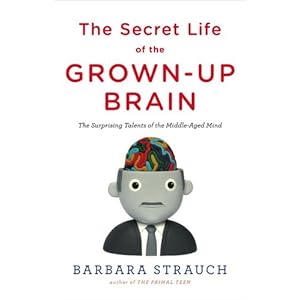
Cool keynote lecture from RSA Events - featuring New York Times' health and science editor Barbara Strauch, author of The Secret Life of the Grown-up Brain: The Surprising Talents of the Middle-Aged Mind.

The Secret Life of the Grown-Up Brain

6th Apr 2011; 13:00

Listen to the audio

Please right-click button and choose "Save Link As..." to download audio file onto your computer.

RSA Keynote

For many years, scientists thought that the human brain simply decayed over time and its dying cells led to memory slips, fuzzy logic, negative thinking, and even depression.

But new research from neuroscientists and psychologists suggests that, in fact, the brain reorganises, improves in important functions, and even helps us adopt a more optimistic outlook in middle age. Growth of white matter and brain connectors allow us to recognize patterns faster, make better judgments, and find unique solutions to problems.

Scientists call these traits cognitive expertise and they reach their highest levels in middle age.

Join the New York Times' health and science editor Barbara Strauch at the RSA as she reveals the latest research that shows that the middle-aged brain is more flexible, more capable and more surprisingly talented than previously thought.

Speaker: Barbara Strauch, health and medical science editor and deputy science editor at The New York Times.

Get the latest RSA Audio

Subscribe to RSA Audio iTunes Podcast iTunes | RSA Audio RSS Feed RSS | RSA Mixcloud page Mixcloud

You are welcome to link to, download, save or distribute our audio/video files electronically. Find out more about our open access licence.

Speakers

Books

The Secret Life of the Grown-Up Brain

Wednesday, April 06, 2011

Massimo Pigliucci - The Problem with Atheism, a Buddhist Perspective

Philosopher Massimo Pigliucci, writing at his blog, Rationally Speaking, offers a Buddhist take-down of atheism, sort of, and Pigliucci is an atheist one should note. His post is built on some quotes from Brad Warner's book Sex, Sin, and Zen (a fun read by he way, if you can take your Buddhism with a dose of punk irreverence).

Warner explains why atheism will never overtake religion - "Atheism, as rational and sensible as it is, will never be an adequate substitute for religion. It's like trying to substitute actual eating with a superbly argued essay on food" - a quote Pigliucci shared on his FB page. His atheist fan base were less than pleased. His point was that religion fills a deep emotional need for many people over which intellect has no sway. He's right - and Pigliucci admits that one of its strengths is alleviating the existential fear of death.

The problem with atheism, a Buddhist perspective

by Massimo Pigliucci
No, I have not converted to Buddhism. And yes, I am still an atheist. That said, I’ve been reading a book recommended by a friend of mine, Brad Warner’s Sex, Sin and Zen, which has given me the opportunity to run a little informal experiment about which I’ll tell you in a minute.
Warner is a Zen Buddhist monk, and the book is a light-hearted exploration of what Buddhism has to say regarding one of the things we care most about in life: sex. But this post, alas, is not about sex. Instead, it is about the reaction I got on my “official” Facebook page when I posted the following quote from the book (you can find the exact thread here):
"Atheism, as rational and sensible as it is, will never be an adequate substitute for religion. It's like trying to substitute actual eating with a superbly argued essay on food."
The quote comes from a context in which Warner was discussing an article by Elisabeth Cornwell entitled “Why women are bound to religion: an evolutionary perspective,” which makes the commonsense argument that “in order for women to abandon religion and its securities, there needs to be something tangible to replace the support it offers.” Warner then goes on to explain that Buddha realized that “religion and spirituality were pretty much fucked up. But he also understood the very important role they play in human society. As Cornwell points out in her article on the evolution of religion, religion serves a need much, much deeper than anything the intellect can ever hope to reach.” And it is this passage that is followed by the quote I posted on Facebook.
I thought this was all obviously true, and in fact reflects a standing debate within both the atheist and secular humanist communities (they overlap, but they are most certainly not identical) to explain why religion — pace Nietzsche — is still very much alive and well in the 21st century. The response I got from my Facebook friends was somewhat surprising. There were more than 20 comments within a matter of minutes (35 as of the time of this writing), with 3,666 “impressions” (a number that Facebook provides to give you an idea of how many people have seen your post on their Wall —- the 666 figure is, I take it, just a coincidence).
If you scroll through the comments, two patterns emerge: first, most people missed what I thought was the obvious point of the quote (granted, I had the advantage of having read the full chapter, but still); second, the overwhelming majority of the posts were defensive to the utmost degree. Here is a sample:
"Avoiding wood alcohol, as rational and sensible as it is, will never be an adequate substitute for wood alcohol. It's like trying to substitute actual eating with a superbly argued essay on food."
"Whoever said that atheism is supposed to be a substitute for religion? I am an atheist and I do not want a substitute for religion. If I missed religion, I'd get myself some."
"This is a silly analogy. One could just as well say it's trying to substitute injecting yourself with syphilis with a superbly argued essay on not being a jackass."
"And I suppose that not collecting stamps is not a substitute for a hobby either..."
"If you really want baloney, you can still go to the supermarket."
"An aphorism can never be an adequate substitute for more complex writing. It is an argument from authority which uses a specific poetic approach to make the ideas more appealing."
"We're all born atheists. It' religion that's the substitute."
"Atheism does not contain ritual, ceremony, or practice, and so is not like eating."
"Avoiding poison, as rational and sensible as it is, will never be an adequate substitute for eating poison."
"Atheism could never be a substitute for religion, in the same way that not stamp collecting could never be a substitute for stamp collecting."
"This implies an unsubstantiated hunger that is not recognized by fulfilled agnostics."
You get the gist. There were, of course, also some readers who took the quote as an indication of a serious problem:
"Instead of substituting religion, if we start reflecting upon the need to fill the void it may get us some where... and in the process, hopefully, not fill the void with magic and wishful thinking."
"The bare thesis of atheism provides none of the social supports, ethical guidelines, or cosmological-metaphysical closure of religion. Humanism, however, can and does."
"There is a hole that needs filling (physical and metaphysical explanations, justifications for moral codes, social cohesion, sense of community, belonging, purpose, common goals, etc.) and religion just happened to develop in order to fill that hole."
"Atheism isn't in the business of replacing religion. Humanism is. Atheism is the demolition phase. Humanism is the new foundation."
The first set of quotes (and similar others on the thread) reflect an all too common reflexive attitude by several of my fellow atheists, a “(rhetorically) shoot first and understand later” sort of approach which is not exactly conducive to constructive discourse. This reflexive attitude seems to be based on two underlying assumptions: first, that whatever comes from religion must be bad, by definition; second, that atheists don’t need to do much more than point out how silly the other side is, and we are done. Both assumptions are highly questionable.
Without getting into a long history of both Western and Eastern thought — a history in which religions have played a major positive as well as negative role regardless of how much we would like them to play only a negative one — it seems to me undeniable that religions do indeed, as Buddha recognized and Warner re-articulated, fill a fundamental human psychological niche. That niche has to do not just with explanations of how the world works (an area in which science has steadily and inexorably overtaken religion even in the mind of many religious people), but with meaning, emotions, ethics, and the specter of final and total annihilation of the self.
It is these latter dimensions of the niche that most people refer to as “spirituality,” and neither science nor atheism can do a damn thing about them, unfortunately. Science can tell us which parts of the brain are responsible for our emotions, or are used when we engage in moral decision making, but that’s a completely different set of questions that has only a superficial bearing on the real issues.
Before you start furiously hitting your keyboard to pen long and angry responses to the above paragraph, please pause to think that nothing I am writing here can reasonably be construed as a defense of religion. But it is a (partial) explanation of why religion persists despite literally millennia of attempts by the secular-rational community to get rid of it. It is a fact that we better face and analyze, rather than run away from.
Which brings me to the second assumption that seems to underlie many of my readers’ responses: surely once we explain to people that there are no gods, once we break the spell to use my friend Daniel Dennett’s phrase, people will flock to atheism in droves and we’ll be done with religion once and for all. Hence the popularity in certain quarters of the New Atheists’ attacks on religion — as well as their abysmal failure to make a dent in the phenomenon of religion itself. To be fair, one can hardly expect a handful of books to change society (well, except for the Old Testament, or the Christian Gospels, or the Quran, or the Vedas, or the Theravada, or...), but the disheartening fact is that there really isn’t anything new in the New Atheism. As documented by Jennifer Michael Hecht in her super Doubt: A History we have been going at it for millennia, and yet religions persist, largely unperturbed by the barrage of rational arguments against them. Do you see why Warner is right, that we do have a problem?
The quotes from my Facebook responses which struck closest to what I think is a good analysis are those that present atheism as the first of two punches that the secular movement is attempting to deliver to the religious juggernaut, what philosopher Francis Bacon (in the context of how science works) called the pars destruens (the project of destruction). Bacon then argued that one doesn’t get very far by just demolishing things, one has to build something in their stead, what he termed the pars construens (the construction project). Here the pars construens can be played by secular humanism, which — unlike atheism — is a philosophy with positive values.
There are a couple of problems, however. I have already nodded at the most obvious one: not all atheists are secular humanists. This is because it is easier to agree on what we all do not believe than on what we do believe. Secular humanism, at least as presented in the various Humanist Manifestos, adopts a number of positions that are clearly reflective of European style progressive liberalism, which means that our libertarian friends (a sizable minority within the atheism movement), not to mention the comparatively few (in my experience) conservative atheists, immediately (and ill advisedly, in my opinion) jump ship. I know a good number of atheists who proudly distance themselves from secular humanism.
The other thing is, humanist groups and even humanist inspired congregations have been around for quite some time now, but they haven’t made much of a dent. Think of the American Humanist Association, the Council for Secular Humanism, the Society for Ethical Culture, the American Ethical Union, and even — to some extent — the Unitarians. I mean, it’s not like we haven’t been trying. But have you been at any meetings or platforms of any of these groups? They are usually attended by a small number of people, more often than not with a population characterized by an aging demographic. They are simply not going to be the response to religion that we are looking for, no matter how much good they do for the people that support them.
So we do have a problem, and we don’t seem to know what to do about it. Let me leave you with a few more thoughts from Warner — not because I endorse everything he says (I’m certainly not about to enlist as a Buddhist), but because it provides us with much food for thought, if we can manage to stop the damn knee-jerk reaction that is sure to powerfully present itself a few lines into his writings:
"A lot of people consider Buddhism a form of atheism. In a sense it is, in that it does not have a god in the usual sense of the word. We don’t have a deity figure. We don’t have a creation myth. We don’t fear reprisals from cosmic grandpa if we fail to worship him properly. Yet ... the universe in Buddhist terms is not dead matter or a cosmic void. It is a living, intelligent thing we all partake in. ... If God is a big ‘ol white dude in the sky who smites sinners and rewards football players, then I’m an atheist. If God exists outside the universe, I’m an atheist. If God cares more for one religion than another, I’m an atheist. And if God believes that women are inferior to men, I’m an atheist. ... I don’t worship God as an old man on a throne beyond the orbit of Jupiter, but I do worship the universe. The universe is more than dead matter. It’s more than insubstantial spirit."
Well, I don’t think the universe is any such thing, but clearly our message is much harder to successfully deliver. Is there any way around this, or is secularism forever destined to be a minority position among humankind?

TEDxDUCTAC - Dr. Menis Yousry - The Social Brain

Menis Yousry is a systems and family psychologist who specializes in personal growth technologies - he is founder of the Essence Foundation, a a non-profit personal development organization staffed almost entirely by volunteers. They offer a variety of personal development courses.
Dr. Yousry delivers a lecture on the relationship between our conscious and unconscious memories as a cause of conflict between human intentions and actions. Specifically, the lecture focuses on how the social brain influences identity, and defines 'Who We Think We Are' as an image that is often distinctly different from whom we really are.


Dr Menis Yousry

Founder and lead facilitator of the Essence Foundation, Dr Yousry is a Family & Systemic Psychotherapist and Psychologist with BSc, MSc and PhD degrees from the University of London. He worked as a Family Therapist supervisor within the National Health Service for twelve years.

Over the last 20 years he has designed and facilitated personal development courses in the USA, UK, Bulgaria, Hungary, Sweden, Spain, Germany and Russia, appearing on television and radio.

Essence
By weaving together his interest in human potential, art, culture and developmental psychology with a thorough grounding in research he developed a simple, sensitive and unique approach to personal development – an approach grounded in transferring intellectual and theoretical understanding to our day-to-day living experience.
Read more at the Foundation website.

The Dalai Lama - Belief that phenomena inherently exist is the ultimate root of all afflictions


THE BUDDHISM OF TIBET
by the Dalai Lama
translated and edited by
Jeffrey Hopkins
with Anne Klein

more...

Dalai Lama Quote of the Week

Afflictions are classed as peripheral mental factors and are not themselves any of the six main minds [eye, ear, nose, tongue, body and mental consciousnesses]. However, when any of the afflicting mental factors becomes manifest, a main mind [a mental consciousness] comes under its influence, goes wherever the affliction leads it, and 'accumulates' a bad action.

There are a great many different kinds of afflictions, but the chief of them are desire, hatred, pride, wrong view and so forth. Of these, desire and hatred are chief. Because of an initial attachment to oneself, hatred arises when something undesirable occurs. Further, through being attached to oneself the pride that holds one to be superior arises, and similarly when one has no knowledge of something, a wrong view that holds the object of this knowledge to be non-existent arises.

How do self-attachment and so forth arise in such great force? Because of beginningless conditioning, the mind tightly holds to 'I, I' even in dreams, and through the power of this conception, self-attachment and so forth occur. This false conception of 'I' arises because of one's lack of knowledge concerning the mode of existence of things. The fact that all objects are empty of inherent existence is obscured and one conceives things to exist inherently; the strong conception of 'I' derives from this. Therefore, the conception that phenomena inherently exist is the afflicting ignorance that is the ultimate root of all afflictions. (p.26)

--from The Buddhism of Tibet by the Dalai Lama, translated and edited by Jeffrey Hopkins, with Anne Klein, published by Snow Lion Publications

The Buddhism of Tibet • Now at 5O% off
(Good until April 8th).


Tags: , , , , , , , , , , , , , , , , ,

Peter Owen Jones - Around the World in 80 Faiths

Interesting documentary on the varieties of world religions, and not just the big six (Judaism, Christianity, Islam, Buddhism, Hinduism, and Confucianism - which really aren't the big six by numbers) - posted at the Top Documentary Films site.

Around the World in 80 Faiths

Around the World in 80 FaithsAnglican vicar Peter Owen-Jones has been given a year’s sabbatical to travel the world with a BBC crew to explore different faiths around the world at the beginning of the 21st century.

Pete Owen Jones presents the definitive guide to faith on earth, with eighty rituals across six continents in the space of a year.

The big six world religions are only part of the story. Faith is belief in the sacred, and it is expressed in a rich diversity of rituals, in denominations, sects, cults, tribal faiths and new religious movements.

Pete’s mission is to witness and take part in rites rarely filmed before, to take the religious pulse of the planet and to understand the depth of humanity’s fascination with the divine.

As an Anglican priest, Pete will be confronting cultures that will challenge his values and prejudices – he will be surprised, even offended, but also enlightened.

Watch the full documentary now (playlist – 6 hours)


Tuesday, April 05, 2011

Existential Anxiety Can Motivate Escape from Self-Awareness

http://www.1stwebdesigner.com/wp-content/uploads/2009/04/photoshopped/tree-of-death-photomanipulation.jpg

Or, in other words, thinking about death makes us anxious. This book chapter from Pelin Kesebir and Tom Pyszczynski (both from the University of Colorado at Colorado Springs) looks at the awareness of death as a motivational factor.

In my psychoanalytic study group last week, we talked briefly about how the awareness of death can be a shock to people when it hits - because they have been motivated by anxiety to avoid that awareness. For many people this comes in mid-life or so, when their own parents die.

I grew up with death, however, animals we raised and butchered for food, my father when I was 13, various people I knew in middle school and high school, then some friends after college, and most recently, my "surrogate" father last spring. Add to that the fact that I was a little goth from time to time as a teenager, sitting in cemeteries high on acid - death really does not phase me.

Maybe there was some benefit to my growing up.

Pelin Kesebir
University of Colorado at Colorado Springs

Tom Pyszczynski
University of Colorado at Colorado Springs

THE OXFORD HANDBOOK OF MOTIVATION, R. Ryan, ed., The Oxford Handbook of Motivation, New York: Oxford University Press, 2011


Abstract:
The capacity for self-reflection, which plays an important role in human self-regulation, also leads people to become aware of the limitations of their existence. Awareness of the conflict between one’s desires (e.g., to live) and the limitations of existence (e.g., the inevitability of death) creates the potential for existential anxiety. In this chapter, we review how this anxiety affects human motivation and behavior in a variety of life domains. Terror management theory and research suggests that transcending death and protecting oneself against existential anxiety are potent needs. This protection is provided by an anxiety buffering system, which imbues people with a sense of meaning and value that function to shield them against these concerns. We review evidence of how the buffering system protects against existential anxiety in four dimensions of existence - the physical, personal, social, and spiritual domains. Because self-awareness is a prerequisite for existential anxiety, escaping self-awareness can also be an effective a way to obviate the problem of existence. After elaborating on how existential anxiety can motivate escape from self-awareness, we conclude the chapter with a discussion of remaining issues and directions for future research and theory development.
Here are the first two paragraphs of the article, essentially an introduction to the chapter (by the way, there is evidence that both elephants and dolphins - and maybe ravens/crows - understand, mourn, and remember deaths, and likely reflect on their own - so human are not the only animal with this affliction):
Unlike any other animal, we humans live our lives starkly aware that, despite our most fervent desires, death will sooner or later come to us. This knowledge, combined with other uniquely human sophisticated mental abilities, inevitably leads people to ask questions about the meaning, value, and purpose of existence. Although writers and philosophers throughout the ages have pointed to the vital impact of existential concerns on the human psyche, systematic empirical investigation of how existential concerns affect human motivation began only relatively recently. The purpose of terror management theory (TMT; Greenberg, Pyszczynski, & Solomon, 1986) is to explain the role that awareness of the inevitability of death plays in diverse aspects of human life. In this chapter, we review what terror management theory and research has revealed about existential anxiety and its effects on human behavior and experience. The main tenet of TMT is that the desire to transcend the fragility of human existence by construing oneself as a valuable contributor to a meaningful universe lies at the root of a diverse array of otherwise distinct human motives.

The research we will review in this chapter focuses on a uniquely human source of motivation. Although other animals react with fear to clear and present dangers that threaten their existence, only humans have the self-awareness that leads them to realize that death is inevitable. Like other evolutionary advances, this awareness led to changes in the way motivational systems operated by building on previous evolved adaptations. Thus, existential motivation operates on other more basic motive systems—co-opting them to meet new needs and changing the way other needs other needs are pursued. We start by considering how the emergence of self-awareness changed the human condition.

TEDxConcordia - Michelle Holliday - The Pattern of Living Systems

In her TED Talk, Michelle Holliday challenges us to see what the pattern of living systems reveals about the future of humanity.

Here is the thrust of her argument (the whole text is posted at her blog):
At every level of human activity, it’s the same simple pattern.

And this pattern suggests a very different guiding story.

The pattern is this. All living systems have four defining characteristics:

1. First, there are parts – that's the individual bees in a hive, it's the trillions of individual cells that make up your body. And it's the people in an organization, each with unique perspectives, passions and contributions to share.

The more diverse or divergent the parts, the more resilient, adaptive and creative the living system will be. And we know this from biodiversity, right? We need divergent parts.

2. The second characteristic is that there is the level not of the parts but of the whole - an emergent whole - with characteristics and capabilities of its own that can't be understood by looking only at the parts. So that's the whole bee hive. It's your body, it's you, and you're so much more than just a collection of cells, right? You think, you feel, you move. And these are things that can't be understood by looking only at your cells. And it's the organization, with its culture and its dynamics that lie at a level above that of the individuals.

The more convergent the whole – so, for example, the more you remain recognizably you even as your cells are continuously replaced, the more the organization remains focused on a clear shared purpose, even as people come and go – the more convergence there is, the more resilient and adaptive and creative the living system will be. So there's this paradox that you want high levels of divergence and high levels of convergence if you want a thriving living system.

3. The third defining characteristic is relationship. Dynamic relationship internally and externally.

And the more open and free-flowing the relationships, the more resilient, adaptive and creative the living system will be. So, you want to build a vibrant network of connections if you want a thriving living system.

So we have divergent parts, convergent whole, dynamic relationships.

4. The final characteristic of living systems is what some biologists call a self-integrating property. That means that by itself, the living system integrates divergent parts into a convergent whole in dynamic relationship internally and externally in an ongoing, moment-by-moment process of self-organization and self-creation.

So that's what biologists call a self-integrating property.


Here is some background on Holliday - she is the founder and brand manager of Cambria, a consulting group.
MICHELLE HOLLIDAY Founder & Brand Strategist, Cambria Consulting

Michelle Holliday is a brand strategist with close to 20 years’ experience in international marketing. Her expertise is in aligning internal and external branding and communications for powerful, sustainable impact.

Early in her career, Michelle was one of two expatriates responsible for establishing H.J. Heinz in the former Soviet Union. She developed and implemented a comprehensive strategy to launch five product categories, covering everything from pricing and positioning to packaging and promotion. When she left, the office had 35 employees and sales of $12 million a year, with product distribution throughout the former Soviet Union.

She left Heinz to become Brand Manager for the Coca-Cola brand for Russia, Moldova and Kazakhstan. With an $11 million marketing budget, she initiated and oversaw a full range of advertising campaigns. She is most proud of her work on the region’s first national contest, which tied together an under-the-cap prize mechanism, 3 television commercials, outdoor advertising, point-of-sale materials and a 30-minute nationally televised film produced specifically for the promotion. As she entered the position, Coca-Cola was new to the region and market leader Pepsi had a 20-year head start. When she left, Coca-Cola’s sales were double those of Pepsi’s.

Her growing interest in the internal side of branding led Michelle to leave Coca-Cola to co-found a consulting firm dedicated to leveraging culture and leadership more effectively. It was here that she developed the Engagement Competency Model (ECM), a diagnostic tool and guiding framework for building an organization that engages employees and customers on a sustainable basis. Based in Washington, DC, her firm’s clients included Merrill Lynch, the US Department of Energy and the Eurasia Foundation.

When personal circumstances led her to Montreal in 2004, Michelle continued to apply the ECM, first as a freelance consultant and then as founder of Cambium Consulting, a multi-disciplinary team blending brand strategy, organizational development and graphic design. In these capacities, her experience has included clients in foodservice, scientific fields, healthcare, retail management, consulting, business-to-business product offerings, and energy efficiency. For an international chain of cafés, her mandate was to help preserve the best and evolve the rest of the client’s culture. To this end, she developed and implemented an integral brand strategy, articulating the company’s positioning, developing and applying core marketing standards, and creating an employee training program and “vibe” video. Her contributions have been vital to the company’s rapid expansion. In another example, she helped all 650 employees of the Montreal Nature Museums to articulate and move toward a compelling shared vision. A highlight of that client relationship has been the opportunity to engage some of the world’s most brilliant nature scientists in conversation about the living systems theories that underlie the ECM.

When she is not helping clients, Michelle is writing a book that is both deeply philosophical and eminently practical describing the emerging era in human civilization, in which engagement is the only viable competitive lever.

Michelle has a Bachelor’s Degree in Russian Studies and a Master’s Degree with a concentration in International Marketing. She is certified to apply the values-based Cultural Transformation Tools. She has lived in the USA, Canada, Scotland, England, Russia and France and speaks English, Russian and conversational French.


Michah Allen - Zombies or Cyborgs: Is Facebook Eating Your Brain?

http://2.bp.blogspot.com/_rGVZ0J953lE/Soq8z8NCE7I/AAAAAAAAAao/LTsoqBhBXFQ/s320/Zombie-Eat-Flesh-lg.gif

I found this at Intrepid Insights, who got it from Michah Allen's blog, Neuroconscience - she's a PhD student and this seems to have been the slide collection for what must have been a very cool presentation.

It's a less doom and gloom look at the impact of social media on our brains, using the concept of neurocognitive plasticity.

Zombies or Cyborgs: Is Facebook Eating Your Brain?


View more presentations from Micah Allen

Tags: , , , , , , , , , , , ,