.NIH - Identifying and Characterizing Individual Concepts from their fMRI Signatures: From Concrete Nouns to Numbers to Social InteractionsWatch or download at the NIH site.
Air date: Monday, October 18, 2010, 12:00:00 PM
Time displayed is Eastern Time, Washington DC Local
Category: Neuroscience
Description: Dr. Just's research examines a variety of "understanding" processes involving visual thinking, language comprehension and problem-solving processes. To find out what goes on in a person's mind during such thinking, their lab uses several methodologies, such as functional brain imaging, reaction time studies, verbal protocol analysis, and eye movement monitoring during comprehension and visual thinking. The experiments determine the nature of the on-line psychological processes that occur during understanding and thinking. The research examines the thinking of both normal subjects as well as patients with brain damage, to determine the organization of the underlying cognitive mechanisms. The various performance measures are used to construct theoretical models, often expressed in computational terms, that perform the same task and exhibit similar performance characteristics as human subjects.
The specific topics that their research addresses include sentence and text comprehension, coordinated comprehension of text and diagrams, and the role of working memory in comprehension and problem-solving, mental kinematics and mental models of dynamic events. In addition to studying various kinds of understanding, they also examine why individuals differ in the strategies and cognitive resources that they bring to bear on a task, attempting to explain why some people are better thinkers than others. Since early 1995, they have been using functional magnetic resonance imaging (fMRI) to study sentence comprehension and spatial thinking. The early part of this work has not only found the network of brain areas that become active during various language and visual tasks, but has also begun to relate the amount of brain activity to the amount of cognitive processing. fMRI research has become another tool for addressing the nature of understanding (linguistic and visual), directly assessing brain function during task performance.
NIH Neuroscience Seminar Series
Author: Marcel Just, PhD, Carnegie Mellon University
Runtime: 01:11:56
Download: Download Video
How to download a Videocast
Permanent link: http://videocast.nih.gov/launch.asp?16201
Offering multiple perspectives from many fields of human inquiry that may move all of us toward a more integrated understanding of who we are as conscious beings.
Wednesday, October 20, 2010
NIH - Identifying and Characterizing Individual Concepts from their fMRI Signatures: From Concrete Nouns to Numbers to Social Interactions
TED Talks - Heribert Watzke: The brain in your gut
Heribert Watzke: The brain in your gut
Did you know you have functioning neurons in your intestines -- about a hundred million of them? Food scientist Heribert Watzke tells us about the "hidden brain" in our gut and the surprising things it makes us feel.Why you should listen to him:
Heribert Watzke set up the department of food material science at Nestlé in Switzerland, pulling together many disciplines, including chemistry, nutrition and neuroscience, in pursuit of ever better foods. Watzke's background is in chemistry -- in the mid-'80s, he was part of a groundbreaking team at Syracuse working on splitting water into hydrogen and oxygen to create alternative energy -- before moving to materials science.
At Nestlé's lab, Watzke focuses on the most basic form of human energy: the chemistry of food. Research on food has previously focused on its sensory qualities -- taste, aroma, texture. But there is much more to know. How does food's biological structure determine its quality, its digestibility, its nutritional qualities? What's the science of turning a biological structure (for instance, a kernel of grain) into something humans can make into pure energy (for instance, a slice of bread)? His team has been looking recently at the impact of food structure on fat digestion, in support of the fight against obesity. How much fat is needed to feel full? And how can we most effectively communicate with the 100 million neurons in our gut?
Tuesday, October 19, 2010
Germany's Failed Multiculturalism? What's Next?
Some 4.3 million of these are Muslim and there are more than 3,000 mosques across Germany.
Has multiculturalism really failed in Germany (and by extension, much of Western Europe), or is Germany's conservative Christian government no longer willing to pretend it is tolerant?
Why am I reminded of the cliche, "Those who do not remember the past . . . ." A poll suggests that 13% of Germans would welcome a new Fuhrer.
And why does this remind of the immigration issues we face in this country? In Europe they have allowed immigration with an open boarder policy, and we have not. Either way, when things get tough, we blame the immigrants, not the politicians who created the mess.
First, a report from The Daily Mail (UK) - a couple of her most alarming comments are in bold, then an interview with Slavoj Žižek from Democracy Now!
I don't think I'm misreading this in hearing her say: Learn to speak German and live by our (my) Christian values or leave Germany, now.Mrs Merkel said the so-called ‘multikulti’ concept – ‘that we are now living side by side and are happy about it’ – does not work. ‘This approach has failed, utterly,’ she said just days after a poll showed a third of all Germans viewed immigrants as nothing more than welfare cheats.
Addressing fears of ‘German-ness’ being lost amid new mosques, headscarves in classrooms and Turkish ghettos in cities like Berlin, she added: ‘We feel bound to the Christian image of humanity – that is what defines us. Those who do not accept this are in the wrong place here.’
Mrs Merkel joined leading political and business leaders who have questioned immigration policies in recent months.
Bundesbank board member Thilo Sarrazin recently moved the debate centre-stage when he wrote a book that said the country’s four million Muslims were ‘dumbing down’ society and that the national Christian identity of Germans was in danger of being lost.
A poll taken after his book was published showed that one fifth of all Germans would vote for a party headed by Mr Sarrazin if he chose to form one.
Against that backdrop, Mrs Merkel – with her own and her CDU conservative party ratings in the gutter – has chosen finally to speak out.
Until now, mindful of the German legacy of World War II and atonement for racial policies responsible for the deaths of millions, German politicians since 1945 have tended only to speak in broad positive terms of the ‘multikulti’ society.
Germany began to evolve into a country of immigration in the 1960s when Turks and others arrived to fill the labour vacuum left by the nation’s war dead.
Mrs Merkel addressed this in her speech saying: ‘At the beginning of the 60s our country called the foreign workers to come to Germany and now they live in our country. We kidded ourselves a while, we said: “They won’t stay, sometime they will be gone.” But this isn’t reality.’
She tempered her comments by insisting that Germany still welcomed immigrants – particularly the skilled ones it needs for its export-driven economy – and echoed recent comments made by the country’s president that Islam was ‘part of Germany’, like Christianity and Judaism.
But Mrs Merkel also added that those who did come must adapt, and learn German ‘as quickly as possible’.
The ratcheting up in the political tone, allied as it is with the fears of the population about unemployment and loss of identity, triggered a sharp warning from Jewish leaders in Germany that democracy is under threat.
Stephan Kramer, of the Central Council of Jews in Germany, said yesterday that the current debate on immigration was making people feel ‘uneasy and scared’.
He also referred to a study by the Friedrich Ebert Foundation, which showed that more than a third of those surveyed thought Germany was being ‘over-run by foreigners’ and that more than one in ten called for a ‘fuehrer’ to run the country ‘with a strong hand’.
Ethnocentric much?
I understand that they are dealing with some serious economic and cultural issues, but is it ALWAYS the "other" who gets blamed? OK, that's a rhetorical question. When human beings face crisis they fall back to older, safer positions. However, with German history as a guide, the world community needs to keep an eye on this.
One of the people keeping any eye on this issue is the rock-star philosopher, Slavoj Žižek.
Zizek recently wrote for the Guardian UK:
Liberal multiculturalism masks an old barbarism with a human face. Across Europe, the politics of the far right is infecting us all with the need for a 'reasonable' anti-immigration policy.He has a unique and controversial perspective. He considers himself a liberal/leftist, which is not something Americans have much experience with.
___
Recent electoral results in the west as well as in the east signal the gradual emergence of a different polarity. There is now one predominant centrist party that stands for global capitalism, usually with a liberal cultural agenda (for example, tolerance towards abortion, gay rights, religious and ethnic minorities). Opposing this party is an increasingly strong anti-immigrant populist party which, on its fringes, is accompanied by overtly racist neofascist groups. The best example of this is Poland where, after the disappearance of the ex-communists, the main parties are the "anti-ideological" centrist liberal party of the prime minister Donald Tusk and the conservative Christian Law and Justice party of the Kaczynski brothers. Similar tendencies are discernible in the Netherlands, Norway, Sweden and Hungary. How did we get here?
Slavoj Zizek: Far Right and Anti-Immigrant Politicians on the Rise in Europe
![]()
We turn now to Europe, where many are concerned about the growing acceptability of anti-immigrant rhetoric and policies. Far from just being expressed by the extreme right wing, the anti-immigrant trend has entered the mainstream. German Chancellor Angela Merkel told a gathering of young members of her conservative Christian Democratic Union party this weekend that multiculturalism has utterly failed. A recent German poll found 13 percent of Germans would welcome the arrival of a new "Führer," and more than a third of Germans feel the country is "overrun by foreigners." We speak to the world-renowned philosopher Slavoj Zizek, who has the been called "the Elvis of cultural theory." [includes rush transcript]
Guest:
Slavoj Zizek, Slovenian philosopher, psychoanalyst and cultural theorist. He is author of dozens of books, his latest one from Verso Books is called Living in the End Times.AMY GOODMAN: We turn now to Europe, where many are concerned about the growing acceptability of anti-immigrant rhetoric and policies. Far from just being expressed by the extreme right, the anti-immigrant trend has entered the mainstream. German Chancellor Angela Merkel told a gathering of young members of her conservative Christian Democratic Union party this weekend that multiculturalism has utterly failed.
CHANCELLOR ANGELA MERKEL: [translated] In Frankfurt, on the main, two out of three children under the age of five have an immigrant background. We are a country which, at the beginning of the 1960s, actually brought guest workers to Germany. Now they live with us, and we lied to ourselves for a while, saying that they won’t stay and that they will disappear one day. That’s not the reality. This multicultural approach, saying that we simply live side by side and are happy about each other, this approach has failed, utterly failed.
AMY GOODMAN: The German chancellor later added immigrants were welcome in Germany and that Islam is a part of the nation’s modern-day culture. Her comments are seen as part of a rightward shift and come just days after a study by the center-left Friedrich Ebert Foundation found that more than 30 percent of people believe Germany is, quote, "overrun by foreigners." A similar number believed immigrants had come to Germany for its social benefits and, quote, "should be sent home when jobs are scarce." Earlier this year, a book by an influential bank executive in Germany created an uproar, because it blamed the decline of German nationhood on the alleged failure of many immigrants to integrate.
As the debates rage on in Europe, I’m joined here in New York by a controversial public intellectual who’s been called "the Elvis of cultural theory." Yes, I’m talking about the Slovenian philosopher and critic Slavoj Žižek. He’s the author of over thirty books. His latest, from Verso, is just out, and it’s called Living in the End Times. In a recent piece for The Guardian newspaper of London, he argues that "across Europe, the politics of the far right is infecting [everyone] with the need for a 'reasonable' anti-immigration policy."
Well, Slavoj Žižek, welcome to Democracy Now!
SLAVOJ ŽIŽEK: Glad to be here. Thank you.
AMY GOODMAN: Put everything together for us, from Angela Merkel talking about the end of multiculturalism—even what that means, "multiculturalism"—to the mass protests that are taking place in France and beyond.
SLAVOJ ŽIŽEK: I really think that usually we Europeans are a little bit arrogant, like we are the model of tolerance and so on. Now something horrible has happened, and what is really worrying is that it’s not only the countries, the parts of Europe, that we usually associate with intolerance, like southeastern Europe, Romania, Hungary and so on, it’s even the very models of tolerance—Netherlands, Norway and so on.
What really worries me is—I will say something very simple, almost commonsensical, that, you know, for me, I’m here always for censorship. Through democracy, tolerance, in an authentic sense, means that you simply cannot say certain things publicly. You are considered—you know, like if you say publicly an anti-Semitic, sexist joke, it’s unacceptable. Things which were unacceptable ten, fifteen years ago are now acceptable. And what I really am worried about is how the far right, what was twenty years ago the domain of the far right, is setting—even if they are a minority, they are setting the general agenda.
The typical rhetorical trick here is in two moves. First, you of course condemn the far right—"no place in our developed democracy." But then you add, "But they are addressing the real worries of the people," and so on and so on. So, in precisely—that’s the dirty sophistic trick—in order to prevent hatred outbursts, we have to control the situation. You know what is significant about Sarrazin, the banker, that you mentioned? You know that he was politically close to social democracy.
AMY GOODMAN: Which means?
SLAVOJ ŽIŽEK: Which means that they—really, the extreme right imposed their topic onto everyone. But let me tell you now something which may surprise you. I, of course, don’t accept this horrible logic—we have to do it more modestly to prevent real outbursts—but I think there is a failure in this standard, liberal, multicultural vision, which means every ethnic group, whatever, to itself, all we need is a neutral legal framework guaranteeing the coexistence of groups. Sorry if I shock someone, but I think we do need what Germans call Leitkultur, leading culture. Just it shouldn’t be nationally defined. We should fight for that. Yes, I agree with right-wingers. We need a set of values accepted by all. But what will these values be, my god? We neglected this a little bit. You know that it’s not just this abstract liberal model: you have your world, I have my world, we just need a neutral legal network—how we will politely ignore each other.
My second point would have been that it’s absolutely crucial how this anti-immigrant explosion is linked to the withdrawal of leftist politics, especially in the matters of economy and so on. It is as if the left, being obsessed by the idea that we shouldn’t appear as reactionary in the economic sense, that is to say that "No, no, no, we are not the old trade union representatives of the working class, we are for postmodern digital capitalism" and so on. They don’t want to touch the working class or so-called lower ordinary people. And here right-wingers enter. Do you know, the horrible paradox is that, apart from some small leftist fringe parties, the only serious political force in Europe today which still is ready to appeal to the ordinary working people are the right-wing anti-immigrants? So you see, we, the leftists, we have no right, absolutely no right, to take this arrogant view of offended tolerant people who are horrored—no, we should ask the question, how we enabled what is going on.
AMY GOODMAN: I want to ask you about this Christian Science Monitor poll that showed 13 percent of Germans would welcome the arrival of a new Führer. More than a third of Germans feel the country is "overrun by foreigners." Roughly 60 percent would restrict the practice of Islam, and 17 percent believe Jews have too much influence. Thirteen percent would welcome the arrival of a new Führer.
SLAVOJ ŽIŽEK: I think—now again, I will maybe shock you, but, you know, don’t exaggerate the meaning of this. No, no, I think that—OK, my first thesis, that Germany—and this makes it all the more tragic—from my personal experience, Germany is, for example, far more effectively, in everyday life, tolerant than France, for example, I claim with all responsibility. It’s not as general as it may appear. Go to mixed part of ex-West Berlin and so on, you will still see wonderful collaboration. Don’t worry about this. What I’m just saying is that we shouldn’t get too fascinated by these details.
We should ask more fundamental questions, like this is, for me, only part of a general shift, which I mention in the text you kindly referred to, how the whole political mapping of Europe is changing in a horrible way. To cut a long story short, very briefly, 'til now, we had the standard situation that you also have it up ’til now here: one big left-of-center party, one big right-of-center party—they are the only two parties which address the entire population—and then small fringe parties. Now, more and more in Europe, another polarity is emerging: a big liberal capitalist party, which can even be in social matters like abortion, women's rights, relatively progressive—pure, let’s call it, capitalist party—and the only serious opposition is the immigrant—anti-immigrant nationalists. It’s something horrible that has happened. The anti-immigrants are establishing themselves as the only authentic—of course, they are not authentic politically, but in the sense of really experienced as authentic—voice of protest. If you want to protest, the only way to do it effectively in Europe is this. So I think it’s a matter of life and death for a slightly more radical left to emerge.
You know what? Walter Benjamin, the great Frankfurt School fellow [inaudible], he said something which we should always bear in mind today. He said, "Behind every fascism, there is a failed revolution." It goes, more than ever, for us. Like, take—let’s take your own country, Kansas, which is now the bedrock of Christian fundamentalism. As Thomas Frank demonstrated in his book, my god, 'til twenty, thirty years ago, Kansas was the breeding ground of all radical socialist, and so on, mass movements. The same in Europe. This should worry us, not this arrogant—which always has a negative class connotation. When people attack common people's racism, it’s always like we upper-middle-class liberals dismissing ordinary people. We should start asking ourselves what we did wrong.
AMY GOODMAN: And as you come here to the United States, your assessment of the Tea Party movement?
SLAVOJ ŽIŽEK: It’s a perfect example of what I was talking about. I had almost—I use the terms a little bit ironically, but nonetheless—a kind of epiphany moment when, a year ago or so, when they organized, grassroot Republicans, all those—the first wake of tea parties against spending so much money for banks. You know what I was doing? I was sitting in a hotel room, jumping between two channels on TV. One was Fox News—you must know the enemy to fight it. The other one was PBS. On Fox News, it was a live transmission of a tea party in Texas where a singer, kind of a fake folk singer, was singing anti-Washington, anti-state-expenditure song. On PBS, there was a documentary on the great leftist icon Pete Seeger. I was shocked at how the words, although the political meanings of it, were almost the same. Both were singing about we small, ordinary people are exploited; big bad guys, bankers in Washington, and so on, Wall Street, and so on. This is the tragedy. This is the tragedy at its purest.
You must know better than me. I don’t know whether—as far as I can judge the situation, it was after Carter, with Reagan, when this grassroots movement and so on were more taken over by the right, like, no, the time of left, leftist, radical mass mobilization has passed now. When somebody tells you, "Oh, tea party, oh, out of a local grassroot protest," your first assessation is, are right-wingers again doing it, or what? This is a very sad moment. But no reasons—I hope I made it clear—for traditional European America bashing. And this is, I think, part of a global process of what I call the disappearance of the—what philosophers like Kant called the public use of reason.
I listened with amazement and great pleasure to the report about how here in the States the universities, which are financed by taxpayers’ money, are more and more used by companies. In Europe, we are even worse. I’ll tell you why. Because they stated clearly the program in Europe. It’s not only this concrete problem—big companies controlling, through money donations, universities. It’s something more fundamental going on. It’s a well-organized, all-European campaign to turn us scientists, human or natural, into experts. The idea is, we have a problem—let’s say oil spill in Louisiana—oh, we need experts to tell us how to contain it. We have a public disorder, demonstrations; we need psychologists and so on. This is not thinking. What universities should do is not serve as experts to those in power who define the problems. We should redefine and question the problems themselves. Is this the right perception of the problem? Is this really the problem? We should ask much more fundamental questions.
Here, it may surprise you, but I still have sympathy for Obama. But in my view, one of his greatest failures is not Afghanistan. There, the situation is very complex. I don’t know what I would have done. It’s how he reacted to the oil spill. You know why? Because he played this legal, moralistic game, as if the—you know, like, I will kick—we know where—BP, they will make—sorry, but in a tragedy of these proportions, you cannot play this legalistic game who is guilty and so on. You should start asking more general questions. BP is evil, but are we aware that it may have happened also to another company? So the problem is not BP. The problems are much more general—the structure of our economy, why are we living like this, our way of life, and so on and so on. I think that this is the problem today. I’m saying this ironically as a leftist. We have maybe even too much anti-capitalism, but in this overload of anti-capitalism, but always in this legal, moralistic sense: ooh, that company is using child slave labor; ooh, that company is polluting; ooh, that company is—that company, whatever, is exploiting our universities. No, no, the problem is more fundamental. It’s about how the whole system works to make the companies do this. Don’t moralize the problem, because if you moralize it, you can say in the States whatever you want. Already in the movies like Pelican Brief, you remember, no problem, big company, even the president of the United States, can be corrupted. No, this excess of anti-capitalism is a false excess. We should start asking more fundamental questions.
AMY GOODMAN: Slavoj Žižek, your latest book, why did you call it Living in the End Times?
SLAVOJ ŽIŽEK: Of course, the point is to ironically refer or evoke this metaphor of doom, whatever, in 2012, we are approaching the end of times. And, of course, my point is not—I am not this kind of believer—oh, we have two years to live, then whatever will happen. But nonetheless, I think that at the whole—at different levels, we are approaching slowly—no panic yet—a kind of a zero point. In the sense of—let’s look at ecology. It is clear that when people tell me, "Oh, but you are utopian," I tell them, "No, the only true utopia is that things can go on like they do now indefinitely." And it’s very strange how we behave. On the one hand, we don’t really believe there will be a catastrophe. We are split. We know it. We admit it rationally. But then you go out, there is sun, the grass is green, can anything happen. At the same time—this is ideology of everyday life—to make our conscience clear, did you notice how we are blackmailed at this everyday level? "Oh, you threw that newspaper away. No, you should take—"
AMY GOODMAN: Ten seconds.
SLAVOJ ŽIŽEK: Yeah. So, what I’m claiming is that we are approaching a certain zero point. We have to act. If not, I don’t want to live in a society which will be here in twenty years, let us say.
AMY GOODMAN: Slavoj Žižek, I want to thank you for being with us, Slovenian philosopher, author of many books. His latest is just coming out now from Verso Books. It’s called Living in the End Times.
Paul Froese - Is Our Personal Image of God Stable or in Flux?

Wouldn't the answer to this question depend on the perspective and developmental stage of the person who believes? Of the two answers given, the 2nd (dynamic) approach seems most reasonable to me, though I am sure that some people are very static in their belief.
Is Our Personal Image of God Stable or in Flux?
Paul Froese answers.Thursday, October 14, 2010There are basically two opposing responses—both of which have merit. We know that longitudinal studies (those that follow individuals over a long period of time) tend to show that most people are pretty static in their religious beliefs and behaviors. In other words, people tend to stay within the religious tradition of their childhood and also tend to stick to certain basic religious attitudes throughout their lives. Unlike public opinion on contemporary issues—such as how you feel the president is doing on job creation, which can vary dramatically from day to day—religious indicators are reliably stable.
Of course, there are clear and often discussed exceptions. Religious conversions are interesting mainly because they are unusual. To completely swap or discard your religious worldview is a major development, and social science abounds with theories and studies attempting to explain these fascinating reversals. And there are a substantial number of people who drift away from their religious upbringing only to return when they have children. Young adults tend to eschew church for a number of reasons that are easily guessed. But more often than not, these individuals will again enter church doors with their neatly dressed children in tow and their minivans parked strategically for a quick exit.
But a second response is that a person's image of God can change by the minute. I say this mainly due to the fact that most believers have very complex and abstract ideas about their God, so that it would be easy in conversation to get someone to attribute a wide range of characteristics and dispositions to the divine. This is not to say that most believers are confused or insincere in their faith, but rather that the idea of God is so vast that it cannot be easily summed up by even the most devout believer. In sum, a person's relationship with God is dynamic.
We could compare a believer's relationship to God to that of a relationship to a spouse. A person loves his spouse and remains devoted to her (hopefully), but if you ask a person about his spouse, you might get very different answers throughout the day. At one moment, pride is displayed; at another, irritation. This is due to the fact that spouses have intensely intimate relationships that act on multiple levels—economic, social, sexual, psychological, and the list goes on. A believer's relationship with God tends to be as intimate and occurs at a similar number of levels—in despair, in times of joy, in public, in the dark of night, and the list goes on. So if we capture the individual at an especially troubled or conversely happy time, we might hear some very different stories about God.
Still, general conceptions of God will be stable over time. It would be extremely rare that a person has faith in a traditional God one minute and expresses complete disbelief the next (this speaks to the futility of trying to convince someone else that your beliefs are better than hers—it won't happen in the course of an evening). Over a long period of time, I expect you would find that a person is pretty consistent in how she talks about God. And these more stable beliefs are very important. In our recent book, America's Four Gods: What We Say About God—and What That Says About Us, Chris Bader and I find that images of God provide a window into how a believer, or nonbeliever, understands her world and interacts with it. If we understand another person's image of God, we can begin to get a sense of how the world looks through her eyes. Essentially, an image of God is a powerful worldview that believers develop early in life and tend to keep.
Paul Froese is a professor of sociology and a resident scholar in the Institute for Studies of Religion at Baylor University.
Simon G. Powell - Synchronicity and Emergent Self-Organisation
Synchronicity and Emergent Self-Organisation
As far as synchronicities ago, I have had my fair share of extraordinary ones. Sometimes they even seem to come in bursts and flurries. In any case, when you experience a powerful synchronicity it is hard to simply assume that chance alone was at play. The ‘merelyistic' arguments that wave such events aside as nothing more than happenstance and statistical probability are well worn and well boring. From my own experiences it seems to me that something else may be afoot - and I would connect this with the phenomenon of self-organization. In other words, the notion I am entertaining in this essay is that synchronicities are real and that they evince a hitherto unacknowledged instance of self-organization.
When you think about it, Nature is replete with instances of self-organization. Look at how, over time, various exquisitely ordered patterns crystallise out of the Universe. On a macroscopic scale you have stable and enduring spherical stars, solar systems, and spiral galaxies. On a microscopic scale you have atomic and molecular forms of organization. And on a psychological level, fed by all this ambient order and pattern, you have consciousness which also seems to organise itself into being (by way of the brain). Thus, patterned organisation of one form or another is what Nature is proficient at doing over time. And even when Nature elicits something that seems totally destructive - like an exploding supernova - even the spewing fallout (elements such as carbon, silicon and iron for example) can, eventually, potentiate further forms of self-organization.
Probably the most notable example of self-organization is life itself. What could be more redolent in self-organizing prowess than a living biological organism? Imagine what it is like for an individual cell in an organism. It needs water - and lo and behold water is delivered to it. What a great life saving coincidence. The cell may also need some glucose as fuel. Lo and behold glucose is delivered. Fuel is no good to the cell without oxygen to burn it with. Lo and behold oxygen is delivered - yet another coincidence. Or maybe the cell needs a certain crucial protein in a certain crucial place. Ah, there it is again - the nifty providential coincidence in which what is needed is provided for.
Of course, I am fooling around here. A cell is able to sustain its highly organized pattern not through the coincidental arrival of what it needs but by the deliberate arrival of what it needs. For the cell is part of an exquisite self-organizing system - namely a living creature - which itself has arisen due to the amazing self-organizing process we call evolution.
In short, whether it be living things like organisms and ecosystems, or non-living things like snowflakes and rolling ocean waves, Nature has, through its lawful configuration, a striking ability to promote order and organization. This being the case, is it possible that the amazing synchronicities many of us experience represent an emerging ‘higher level' manifestation of self-organization? To make use of an alluring metaphor, are certain events and cultural processes akin to iron filings coming under the organising influence of a powerful magnet? Such a ‘magnet' could be seen, perhaps, to be synonymous with the Whole which forces component parts to synchronise in a specific way.
Leaving that quixotic contention on the backburner, let me focus on the staggering synchronicity that propelled me into writing this essay. Before I detail it, let me just mention another synchronicity of note. I am what they call a mushroom man, a psilocybin researcher. Once, when I was doing some historical research in this field, I came across a very curious synchronicity involving the author Arthur Koestler. Here is what I wrote about this strange synchronicity in a multimedia item that I used to produce. To give the reader the proper context, the following quote comes after material about the British history of the psilocybin mushroom in which I noted key news articles that made it to the pages of the Times newspaper (these news articles related to the sub-cultural use of Britain's indigenous psilocybin mushroom that emerged during the 1970's and 1980's):
"I should like to relate an uncanny synchronistic twist to the story so far. Right alongside one of the mushroom articles appearing in the Times in 1981 there appeared a large picture of the author Arthur Koestler in conjunction with a short feature about him. The significance of Koestler is that he experienced psilocybin in the early 1960's but had bad experiences and thence severely derided psilocybin in his subsequent writings. However, no connection was made between the Koestler feature and the mushroom feature although they were both printed on the same page. This was not surprising though as the link was tenuous and would only be known to a dedicated student of psilocybin history. A mere interesting coincidence then and nothing more. Two years later, printed right next to a Times story on the acquittal of a psilocybin mushroom possessor (which became a test-case whereby the unprocessed mushroom was deemed to be egal to possess) was a short piece announcing the suicide of Koestler. This was a startling piece of synchronicity, given a decidedly fractal depth since Koestler had written two books chiefly about synchronicity entitled The Roots of Coincidence and The Challenge of Chance. He even ran a competition in the Sunday Times in 1974 to find the most interesting case of synchronicity. Indeed the Koestler Foundation exists to this day which still documents cases of synchronicity. Perhaps someone should inform them of the above case. It certainly seems more than chance."
I well recall what it felt like when I became privy to these synchronistic psilocybinetic juxtapositions. It felt like reality was a kind of narrative or story, that there were plots and themes which, like currents and eddies in a river, were coalescing certain events together. In fact, this is what I really mean when I talk of higher level self-organization. It is the idea that there are natural forces afoot that are weaving together events and people in subtle ways that science does not yet acknowledge. In any case, let me briefly detail the main synchronicity that occurred recently.
Back in 1985 I met this chap that ended up being a guru to me. He introduced me to the ideas and teachings of Gurdjieff. And I rate Gurdjieff as the single biggest influence of my inner life (notwithstanding the influence of the psilocybin mushroom!). Ever since then, the guru and I have discussed Gurdjieff and his practical psychological teachings. And in the mid-1990's the guru and I made a number of important pioneering psilocybin treks around various wilderness areas of the UK. So we have always been, as Gurdjieff would say, essence friends.
Now, back in 1985 after I first met the guru and he first told me about Gurdjieff, the first book I read about him (and I eventually went on to read just about every available Gurdjieff book) was The Gurdjieff Work by Kathleen Riordan Speeth - and it had such an impact that I can even now recall certain pages of that book.
Fast forward 25 years. Due to the death of a distant relative and the necessity for a small inheritance to be shared out, the guru, who I am still in touch with, was contacted by his long lost cousin who, on a trip to London, paid him a visit. They had never met before - but were pretty much forced to meet due to the aforementioned death of a relative. It transpires that they are rather like chalk and cheese. The guru is uneducated (in the traditional sense) and has pretty much always been extremely poor (in the material sense). The long lost cousin on the other hand appeared to be very educated and even rather wealthy. In other words, the guru and his long lost cousin had lived totally different lives in different countries and had never been aware of one another's existence.Well, after an initial meeting and certain discussions, it transpired that this long lost cousin spent time in the mid-1970's living with, and being romantically involved with.... none other than Kathleen Riordan Speeth, the Gurdjieff author mentioned above! As if that was not amazing enough, I soon learned that this Kathleen Riordan Speeth, after the relationship ended with the guru's cousin, went on to have some sort of a relationship with Claudio Naranjo (a scholar of South American psychedelic shamanism). This too was synchronistic as I mention, and quote, Naranjo in a forthcoming psilocybin book of mine. To be sure, the quote pertains to self-organization - although in this case the self-organization of vast amounts of psychological information into powerful visionary symbols.
So, all in all, these unfolding synchronicities have had a big impact on me of late. Being highly personal however, no one will likely feel them as forcibly as me. These events also made me ponder more deeply what I say about self-organization in my psilocybin book - namely that reality consists of a flow of self-organizing information. If so, then it is no wonder that we may become embroiled in curiously profound synchronistic events. As I have said elsewhere, life on Earth is akin to a self-writing self-righting story. There are plots and themes and convoluted sub-plots. And we may be characters - being woven together in ways we never drepamed were possible. So keep your eyes and minds open. And trust that Pachamama be a cool author.
The Power of Collaborative Innovation - Venkatesh Hariharan
ABSTRACT
Presented by Venkatesh Hariharan, Corporate Affairs Director (Asia-Pacific) for Red Hat (leaders in Open Source business solutions); recorded at Google, Bangalore 20th August 2010. "The views expressed in the recording are those of the speaker and not necessarily those of Red Hat."
Monday, October 18, 2010
New Poem: Sitting Shiva
I borrowed the title of this poem from the Jewish tradition of a seven-day mourning period following a loved one's death.
We lost Maggie, our beautiful Great Dane, this weekend (I wrote about it at The Masculine Heart). More so than even the deaths of immediate family members, I feel a need to observe a mourning, to hold her loss in my awareness and feel it with as much embodiment as I can muster.
As is generally the case with these things, it is not a good poem, but it is one I need to write, maybe one of many.
Sitting Shiva
we stumble through this silence -
autumn wind howling through the hole
of her sudden absence
we've collected her toys,
keeping only her favorite -
the squeaky sheep
mornings are the worst,
the daily ritual disrupted -
no wet kisses and bad breath
waking us to the sunrise,
never again the wagging tail
nor the "woooo" of her joy
in having all of us awake
now there is only the silence,
the empty space where was her bed,
useless food and water bowls
and it's the silence
piercing our hearts
binding our tongues
leaving us gasping
wondering who
we are without her
and how to take
the next breath
and the next
the next
Documentary - Ladies and Gentlemen . . . Mr. Leonard Cohen
Ladies and Gentlemen . . . Mr. Leonard Cohen paints an informal portrait of the legendary Montreal poet, novelist and songwriter both onstage and off.
The Spirituality of Sam Harris - Newsweek
Harris is out on tour promoting his new book, The Moral Landscape: How Science Can Determine Human Values. His next project, The Illusion of the Self, sounds like something I might want to read.
Sam Harris Believes in God
The neuroscientist and rationalist has made his name attacking religious faith. Who knew he was so spiritual?
(Page 1 of 2)![]()
Sam Harris, a member of the tribe known as “the new atheists,” wishes the headline to this story said something else. How about “Sam Harris Believes in Spirituality,” he suggests over lunch. Or “Sam Harris Believes in ‘God,’ ” with scare quotes?
In any case, Sam Harris—a hero to the growing numbers of Americans who check the atheist box on opinion polls—concedes he believes in something certain people would call “God.” In a related thought, he raises the topic of his next project: a spirituality guide tentatively titled The Illusion of the Self. Based on Harris’s own “spiritual journey,” it will “[celebrate] the spiritual aspect of human existence [and explain] how we can live moral and spiritual lives without religion,” according to a statement from his publisher, Free Press. It’s surprising. One hardly expects Harris, a hyperrational polemicist, to veer into the realm of spiritual self-help.
Spirituality is not a new interest of Harris’s, however. A careful reader will have noticed that though he’s often been lumped together with the rabble-rousers Daniel Dennett, Richard Dawkins, and Christopher Hitchens (all are advisers to his nonprofit group Project Reason), and though he continues to insist that religious faith is possibly the most destructive force in the world, he shuns the label “atheist.” Harris places reason at the apex of human abilities and achievement, but he concedes that there’s much that humans may never empirically know—like what happens after death. “Mystery,” he wrote in the concluding chapter of The End of Faith, published in 2004, “is ineradicable from our circumstance, because however much we know, it seems like there will always be brute facts that we cannot account for but which we must rely on to explain everything else.” For his praise of the contemplative experience in The End of Faith, Harris has received criticism from atheists.
Harris is in town promoting The Moral Landscape, his new book. Even here, he briefly explores the connections between spiritual experience—especially an experience of selflessness—and human happiness. “I see nothing irrational about seeking the states of mind that lie at the core of many religions. Compassion, awe, devotion and feelings of oneness are surely among the most valuable experiences a person can have,” he writes. Over lunch, he says with a smile how much he looks forward to working on the next project, which will allow him to pull back, after six long years, and focus on things that support human flourishing. “Ecstasy, rapture, bliss, concentration, a sense of the sacred—I’m comfortable with all of that,” says Harris later. “I think all of that is indispensable and I think it’s frankly lost on much of the atheist community.”
The answer to the question “Do you believe in God?” comes down to this: It depends on what you mean by “God.” The God Harris doesn’t believe in is, as he puts it, a “supernatural power” and “a personal deity who hears prayers and takes an interest in how people live.” This God and its subscribers he finds unreasonable. But he understands that many people—especially in progressive corners of organized religion and among the “spiritual but not religious”—often mean something else. They equate God with “love” or “justice” or “singing in church” or “that feeling I get on a walk in the woods,” or even “the awesome aspects of existence I’ll never understand.”
According to a 2008 study by the Pew Forum on Religion and Public Life, a quarter of Americans believe that God is “an impersonal force.” Among Catholics, the Eastern Orthodox, and the unaffiliated, the number rises to a third. Among Jews, it’s half. In a Gallup study done in May, 9 percent of respondents said they believe in a God who doesn’t answer prayers.
When polled about God, “people substitute in their own ideas,” says John Green, senior research adviser at Pew. “People have a vague, fuzzy notion of transcendence, and they substitute God for it...When you try to make the definition more specific, fewer people answer in the affirmative.” Or put another way, “If you let the concept of God float a little bit, almost everybody is a theist,” says Stephen Prothero, author of God Is Not One. What Sam Harris believes in—rationality, morality, transcendence, humility, awe, community, selflessness, and love—meets a fairly common definition of God.
Harris says he became interested in spiritual and philosophical questions while an undergraduate at Stanford University. At 18, he experimented with the drug ecstasy and was struck by the possibility that the human mind—his own mind—might be able to achieve a state of loving unselfishness without the help of drugs. So he left college and traveled to India and Nepal, where he studied with Hindu and Buddhist teachers who could help him attain a kind of peace and selflessness through meditation. Over the next 10 years, he read religion and philosophy on his own and spent weeks and months—adding up to two years—in silent retreat.
He finally returned to Stanford to complete a philosophy degree. Though he prefers the Eastern mystics, he sees some wisdom in the Western mystical tradition as well. “If I open a page of [the 13th-century Christian mystic] Meister Eckhart, I often know what he’s talking about.” Harris pursued a doctorate in neuroscience because he hoped science would give him the tools to rationally explore human experience.
Harris’s true obsession, then, is not God but consciousness, the idea that the human mind can be taught—trained, rationally—to be more loving, more generous, less egocentric than it is in its natural state. And though he knows that he can sound like a person who believes in God, he thinks that God is the wrong word to describe his beliefs. “There’s a real problem with the word,” he says, “because it shields the genuinely divisive doctrines and believers from criticism. If the God of the 25 percent is incredibly valuable, which it is; and it’s actually worth realizing, which it is; and it’s something we can talk about rationally, which it is; then calling it ‘God’ prevents you from criticizing all the divisive nonsense that comes with religion.” Believing in transcendence is not the same thing as believing that you’ll get virgins in paradise if you blow yourself up—and Sam Harris wants to be clear about that.
Lisa Miller is NEWSWEEK's religion editor and the author of Heaven: Our Enduring Fascination With the Afterlife. Become a fan of Lisa on Facebook
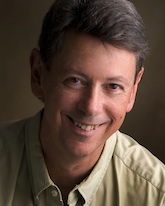
Shrink Rap Radio - #249 – Buddha’s Brain: The Neuroscience of Happiness, Love, & Wisdom with Rick Hanson
#249 – Buddha’s Brain: The Neuroscience of Happiness, Love, & Wisdom with Rick Hanson
Rick Hanson, Ph.D., is a neuropsychologist and founder of the Wellspring Institute for Neuroscience and Contemplative Wisdom. A summa cum laude graduate of UCLA, he teaches at universities and meditation centers in Europe, Australia, and North America. His work has been featured on the BBC and in Consumer Reports Health, U.S. News and World Report, and other major magazines.
Dr. Hanson’s most recent book is Buddha’s Brain: The Practical Neuroscience of Happiness, Love, and Wisdom, which is being published in eleven languages.
An authority on self-directed neuroplasticity, he edits the Wise Brain Bulletin, has a weekly e-newsletter, Just One Thing, and his Your Wise Brain blog is on Huffington Post, Psychology Today, and other major websites. He has several audio programs with Sounds True, and his first book was Mother Nurture: A Mother’s Guide to Health in Body, Mind, and Intimate Relationships (Penguin, 2002).A psychology podcast by David Van Nuys, Ph.D.
Posted on October 16, 2010
Sunday, October 17, 2010
Upaya Dharma Podcasts - Eyes Wide Open
Eyes Wide Open Part 1 of 9
Speakers: Frank Ostaseski & Roshi Joan Halifax
Recorded: Friday Sep 10, 2010
The eyes of a dying patient are clear mirrors. In their gaze there is simply no place to hide. Coming face to face with dying requires a fierce compassion and self-awareness that is best supported by mindfulness, emotional balance and equanimity. These two pioneers in contemplative care of the dying are offering this special intensive for experienced caregivers. The training builds essential competencies in three areas: strengthens individual capacity for compassionate service, enhances spiritual development, and teaches health care providers and family caregivers how to work with burn-out, secondary trauma, and moral distress. The program includes one to one dialogue, contemplative practices, and didactic sessions on neuroscience and mindfulness.
NOTE: There was a slideshow at the end of this session. This segment is not part of the audio.
Podcast: Play in new window | Download
* * *Eyes Wide Open Part 2 of 9
Speakers: Frank Ostaseski & Roshi Joan Halifax
Recorded: Saturday Sep 11, 2010
Podcast: Play in new window | Download
Eyes Wide Open Part 3 of 9
Speakers: Frank Ostaseski & Roshi Joan Halifax
Recorded: Saturday Sep 11, 2010
NOTE: Participants watched a film called “Choosing Thomas” during this session, starting at approx. 38:38. This segment is not part of the audio.
Podcast: Play in new window | Download
* * *
Eyes Wide Open Part 4 of 9
Speakers: Frank Ostaseski & Roshi Joan Halifax
Recorded: Saturday Sep 11, 2010
Podcast: Play in new window | Download
* * *
Eyes Wide Open Part 5 of 9
Speakers: Frank Ostaseski & Roshi Joan Halifax
Recorded: Saturday Sep 11, 2010
Podcast: Play in new window | Download
Eyes Wide Open Part 6 of 9
Speakers: Frank Ostaseski & Roshi Joan Halifax
Recorded: Saturday Sep 11, 2010
Podcast: Play in new window | Download
* * *
Eyes Wide Open Part 7 of 9
Speakers: Frank Ostaseski & Roshi Joan Halifax
Recorded: Saturday Sep 11, 2010
Podcast: Play in new window | Download
* * *
Eyes Wide Open Part 8 of 9
Speakers: Frank Ostaseski & Roshi Joan Halifax
Recorded: Sunday Sep 12, 2010
Podcast: Play in new window | Download
* * *
Eyes Wide Open Part 9 of 9
Speakers: Frank Ostaseski & Roshi Joan Halifax
Recorded: Sunday Sep 12, 2010
NOTE: Participants watched an unedited film (belonging to Frank) at the end of this session – this is not part of the audio.
Podcast: Play in new window | Download
Brain Science in the News - Week of 10/17/10
Read the whole post.Is killing yourself adaptive? That depends: An evolutionary theory about suicide
By Jesse Bering Oct 11, 2010Most psychological science is the science of being and feeling like a human being, and since there is only one human being that I have or ever will have experience in being, it is not always clear to me where my career ends and my personal life begins. And this is especially salient to me right now because, like many other adult gay commentators and horrified onlookers, the raft of gay teen suicides in recent weeks has reawakened memories of my own adolescent battles with suicidal thought. There is so much I want to say about this, in fact, that I’ll be breaking this column up into two separate posts, for I’m reminded of the many illuminating theories and studies on suicide I’ve come across over the years that helped me to understand—and more importantly to overcome and to escape from—that frighteningly intoxicating desire to prematurely rid myself of a seemingly interminable hell.
If only I could have reached out and gotten hold of Tyler Clementi’s shirttail before he lunged off the George Washington Bridge, or eased my fingertips between the rope and the neck of thirteen-year-old Seth Walsh before he hanged himself from a tree in his backyard, I would have pointed out to them that, one day, they will find beauty even in this fleeting despair. I would tell them that their sexual orientation places them in the company of some of the greatest figures and secular angels in creative history—to name just a few, Michelangelo, Caravaggio, Oscar Wilde, Andy Warhol, Leonardo da Vinci, Marcel Proust, Jean Genet, Hans Christian Anderson and Tchaikovsky. Finally, I’d tell them about the scientific research and ideas that I’m going to share with you, razor-sharp reasoning by bright scholars that may have pierced their suicidal cognition just enough to allow them to breathe a little more easily through those suffocating negative emotions.
Read the whole post.Cross-cultural personality change throughout the lifespan: a result of brain development?
It's not difficult to readily imagine the rebellious angst ridden teenager or the wise old man of very few words. McCrae, et al.’s 1999 research findings seem to have validated these prototypical depictions. They found that across various cultures (Germany, Italy, Portugal, Croatia, and South Korea) there were higher levels of neuroticism in young adults and decreases in extraversion and openness in older adults. Older adults also showed increase rates of agreeableness and conscientiousness. But why? The authors offer up some explanations such as a combination of maturational, cultural, cohort and sampling effects. They also briefly mention genetic and evolutionary influences and this is what I am particularly interested in. We know that genes are influenced by evolutionary processes and that brain development is affected by gene expression. I suggest that brain development provides the perfect explanatory mechanism for such changes in personality traits throughout the life span.
The Neurological Origins of Religious Belief
John Cookson on September 14, 2010It has been known for some time that religious belief and behavior affect the brain—in the same way all habits, emotions and memories build neural pathways. But can we pinpoint specific chemicals, genes and clusters of neurons that give rise to religiosity, or to atheism?
Rutgers University evolutionary biologist Lionel Tiger thinks we can: “Religion is really made by the brain. It is a secretion of the brain,” says Tiger, who thinks the root of religious belief is an evolutionary drive to seek this "secretion"—namely serotonin—which provides the believer with feelings of well-being. A neurotransmitter that regulates mood and appetite, serotonin is linked to feelings of well-being when it floods the central nervous system.
“One of the ways of looking at religion is to what extent and how does it generate the serotonergic juices that make us feel good,” says Tiger. Attending a religious service, for example, can be a flurry of social activity and controlled procedure, which releases a cocktail of serotonin-led neurotransmitters in the brain. This chemical response “soothes” the organ, he says, echoing the results of recent studies. Working with neuroscientist Michael McGuire, Tiger has connected this research on serotonin as it works in the brain with the social aspects and origins of religion.
* * * * *
The Neurobiology of Evil
John Cookson on September 8, 2010
Is a person's propensity toward evil a matter of malfunctioning synapses and neurons?
Michael Stone, professor of clinical psychiatry at Columbia University and author of “The Anatomy of Evil,” says it is. Ever-more-detailed brain scans are revealing the biological origins of psychological issues in "evil" people, from those who are mildly antisocial to serial murderers.
Under each brain’s wrinkly cortex lies the limbic system, an evolutionary heirloom controlling emotion and motivation, among other functions. Within this limbic system is the amygdala, an almond-shaped cluster of nuclei that processes our feelings of fear and pleasure.
Murderers and other violent criminals have been shown to have amygdalae that are smaller or that don’t function properly, explains Stone. One recent study concluded that individuals who exhibit a marker of “limbic neural maldevelopment” have “significantly higher levels of antisocial personality, psychopathy, arrests and convictions compared with controls.”
Dan Dennett at Harvard Law on “Free Will, Responsibility, and the Brain”
Posted by The Situationist Staff
From The Crimson:
Tufts University professor Daniel C. Dennett discussed the ways in which neuroscience may impact human understanding of moral and legal responsibility to an overflowing audience in Pound Hall at Harvard Law School yesterday.
The event, titled “Free Will, Responsibility, and the Brain,” was sponsored by the Law School’s Student Association for Law and Mind Sciences (SALMS), and began with a Dilbert comic strip depicting free will as an ambiguous concept.
“It does justice to our common sense thinking about free will,” he said of the comic strip.
Dennett, who co-directs the Tufts University Center for Cognitive Studies, is best known for his arguments that human consciousness and free will are the result of physical processes in the brain.
Early in the talk, Dennett asked the audience to flick their right wrists in the next ten seconds, explaining that their brains decided to perform the action a third of second before it actually occurred.
* * * * *
Read the rest.Researchers reach consensus on use of deep brain stimulation to treat Parkinson's
Posted On: October 13, 2010Since the late 1990s, deep brain stimulation (DBS) has proven to be a lifeline for some patients suffering from Parkinson's disease, a cruel neurological disorder that can cause lack of control over movement, poor balance and coordination, and rigidity, among other symptoms.
The procedure is used only for patients whose symptoms cannot be adequately controlled with medications. A neurosurgeon uses magnetic resonance imaging or computed tomography to identify the exact target within the brain where abnormal electrical nerve signals generate the disease's tremors and other symptoms, and a neurostimulator is then surgically implanted to deliver electrical stimulation to that area to block the signals.
The goal, ultimately, is to improve the patient's quality of life.
Yet despite its effectiveness, there has been no consensus on several aspects of the use DBS, including which patients make the best candidates, where the optimal location for the placement of electrodes is, and the role that still exists for surgical removal of the damaged areas of the brain.


Most psychological science is the science of being and feeling like a human being, and since there is only one human being that I have or ever will have experience in being, it is not always clear to me where my career ends and my personal life begins. And this is especially salient to me right now because, like many other adult gay commentators and horrified onlookers, the raft of