Showing posts with label shamanism. Show all posts

Tuesday, June 24, 2014

What a Shaman Sees in A Mental Hospital


This article comes from Earth: We Are One and has been viewed there more than 337 thousand times, in addition to views on other sites and blogs.

Although I am a Western-trained psychotherapist, I see much value in the shamanic view of mental illness. I use some of the basic principles with my clients who are suffering with psychosis to good success.

In this article Stephanie Marohan speaks with Malidoma Patrice Somé about the shamanic view of mental illness. Somé is the author of Of Water and the Spirit: Ritual, Magic and Initiation in the Life of an African Shaman.

What a Shaman Sees in A Mental Hospital

June 12, 2014
by Stephanie Marohn (featuring Malidoma Patrice Somé)


The Shamanic View of Mental Illness

In the shamanic view, mental illness signals “the birth of a healer,” explains Malidoma Patrice Somé. Thus, mental disorders are spiritual emergencies, spiritual crises, and need to be regarded as such to aid the healer in being born.

What those in the West view as mental illness, the Dagara people regard as “good news from the other world.” The person going through the crisis has been chosen as a medium for a message to the community that needs to be communicated from the spirit realm. “Mental disorder, behavioral disorder of all kinds, signal the fact that two obviously incompatible energies have merged into the same field,” says Dr. Somé. These disturbances result when the person does not get assistance in dealing with the presence of the energy from the spirit realm.

One of the things Dr. Somé encountered when he first came to the United States in 1980 for graduate study was how this country deals with mental illness. When a fellow student was sent to a mental institute due to “nervous depression,” Dr. Somé went to visit him.

“I was so shocked. That was the first time I was brought face to face with what is done here to people exhibiting the same symptoms I’ve seen in my village.” What struck Dr. Somé was that the attention given to such symptoms was based on pathology, on the idea that the condition is something that needs to stop. This was in complete opposition to the way his culture views such a situation. As he looked around the stark ward at the patients, some in straitjackets, some zoned out on medications, others screaming, he observed to himself, “So this is how the healers who are attempting to be born are treated in this culture. What a loss! What a loss that a person who is finally being aligned with a power from the other world is just being wasted.”

Another way to say this, which may make more sense to the Western mind, is that we in the West are not trained in how to deal or even taught to acknowledge the existence of psychic phenomena, the spiritual world. In fact, psychic abilities are denigrated. When energies from the spiritual world emerge in a Western psyche, that individual is completely unequipped to integrate them or even recognize what is happening. The result can be terrifying. Without the proper context for and assistance in dealing with the breakthrough from another level of reality, for all practical purposes, the person is insane. Heavy dosing with anti-psychotic drugs compounds the problem and prevents the integration that could lead to soul development and growth in the individual who has received these energies.

On the mental ward, Dr Somé saw a lot of “beings” hanging around the patients, “entities” that are invisible to most people but that shamans and psychics are able to see. “They were causing the crisis in these people,” he says. It appeared to him that these beings were trying to get the medications and their effects out of the bodies of the people the beings were trying to merge with, and were increasing the patients’ pain in the process. “The beings were acting almost like some kind of excavator in the energy field of people. They were really fierce about that. The people they were doing that to were just screaming and yelling,” he said. He couldn’t stay in that environment and had to leave.

In the Dagara tradition, the community helps the person reconcile the energies of both worlds–”the world of the spirit that he or she is merged with, and the village and community.” That person is able then to serve as a bridge between the worlds and help the living with information and healing they need. Thus, the spiritual crisis ends with the birth of another healer. “The other world’s relationship with our world is one of sponsorship,” Dr. Somé explains. “More often than not, the knowledge and skills that arise from this kind of merger are a knowledge or a skill that is provided directly from the other world.”

The beings who were increasing the pain of the inmates on the mental hospital ward were actually attempting to merge with the inmates in order to get messages through to this world. The people they had chosen to merge with were getting no assistance in learning how to be a bridge between the worlds and the beings’ attempts to merge were thwarted. The result was the sustaining of the initial disorder of energy and the aborting of the birth of a healer.

“The Western culture has consistently ignored the birth of the healer,” states Dr. Somé. “Consequently, there will be a tendency from the other world to keep trying as many people as possible in an attempt to get somebody’s attention. They have to try harder.” The spirits are drawn to people whose senses have not been anesthetized. “The sensitivity is pretty much read as an invitation to come in,” he notes.

Those who develop so-called mental disorders are those who are sensitive, which is viewed in Western culture as oversensitivity. Indigenous cultures don’t see it that way and, as a result, sensitive people don’t experience themselves as overly sensitive. In the West, “it is the overload of the culture they’re in that is just wrecking them,” observes Dr. Somé. The frenetic pace, the bombardment of the senses, and the violent energy that characterize Western culture can overwhelm sensitive people.

Schizophrenia and Foreign Energy

With schizophrenia, there is a special “receptivity to a flow of images and information, which cannot be controlled,” stated Dr. Somé. “When this kind of rush occurs at a time that is not personally chosen, and particularly when it comes with images that are scary and contradictory, the person goes into a frenzy.”

What is required in this situation is first to separate the person’s energy from the extraneous foreign energies, by using shamanic practice (what is known as a “sweep”) to clear the latter out of the individual’s aura. With the clearing of their energy field, the person no longer picks up a flood of information and so no longer has a reason to be scared and disturbed, explains Dr. Somé.

Then it is possible to help the person align with the energy of the spirit being attempting to come through from the other world and give birth to the healer. The blockage of that emergence is what creates problems. “The energy of the healer is a high-voltage energy,” he observes. “When it is blocked, it just burns up the person. It’s like a short-circuit. Fuses are blowing. This is why it can be really scary, and I understand why this culture prefers to confine these people. Here they are yelling and screaming, and they’re put into a straitjacket. That’s a sad image.” Again, the shamanic approach is to work on aligning the energies so there is no blockage, “fuses” aren’t blowing, and the person can become the healer they are meant to be.

It needs to be noted at this point, however, that not all of the spirit beings that enter a person’s energetic field are there for the purposes of promoting healing. There are negative energies as well, which are undesirable presences in the aura. In those cases, the shamanic approach is to remove them from the aura, rather than work to align the discordant energies

Alex: Crazy in the USA, Healer in Africa

To test his belief that the shamanic view of mental illness holds true in the Western world as well as in indigenous cultures, Dr. Somé took a mental patient back to Africa with him, to his village. “I was prompted by my own curiosity to find out whether there’s truth in the universality that mental illness could be connected with an alignment with a being from another world,” says Dr. Somé.

Alex was an 18-year-old American who had suffered a psychotic break when he was 14. He had hallucinations, was suicidal, and went through cycles of dangerously severe depression. He was in a mental hospital and had been given a lot of drugs, but nothing was helping. “The parents had done everything–unsuccessfully,” says Dr. Somé. “They didn’t know what else to do.”

With their permission, Dr. Somé took their son to Africa. “After eight months there, Alex had become quite normal, Dr. Somé reports. He was even able to participate with healers in the business of healing; sitting with them all day long and helping them, assisting them in what they were doing with their clients . . . . He spent about four years in my village.” Alex stayed by choice, not because he needed more healing. He felt, “much safer in the village than in America.”

To bring his energy and that of the being from the spiritual realm into alignment, Alex went through a shamanic ritual designed for that purpose, although it was slightly different from the one used with the Dagara people. “He wasn’t born in the village, so something else applied. But the result was similar, even though the ritual was not literally the same,” explains Dr. Somé. The fact that aligning the energy worked to heal Alex demonstrated to Dr. Somé that the connection between other beings and mental illness is indeed universal.

After the ritual, Alex began to share the messages that the spirit being had for this world. Unfortunately, the people he was talking to didn’t speak English (Dr. Somé was away at that point). The whole experience led, however, to Alex’s going to college to study psychology. He returned to the United States after four years because “he discovered that all the things that he needed to do had been done, and he could then move on with his life.”

The last that Dr. Somé heard was that Alex was in graduate school in psychology at Harvard. No one had thought he would ever be able to complete undergraduate studies, much less get an advanced degree.

Dr. Somé sums up what Alex’s mental illness was all about: “He was reaching out. It was an emergency call. His job and his purpose was to be a healer. He said no one was paying attention to that.”

After seeing how well the shamanic approach worked for Alex, Dr. Somé concluded that spirit beings are just as much an issue in the West as in his community in Africa. “Yet the question still remains, the answer to this problem must be found here, instead of having to go all the way overseas to seek the answer. There has to be a way in which a little bit of attention beyond the pathology of this whole experience leads to the possibility of coming up with the proper ritual to help people.

Longing for Spiritual Connection

A common thread that Dr. Somé has noticed in “mental” disorders in the West is “a very ancient ancestral energy that has been placed in stasis, that finally is coming out in the person.” His job then is to trace it back, to go back in time to discover what that spirit is. In most cases, the spirit is connected to nature, especially with mountains or big rivers, he says.

In the case of mountains, as an example to explain the phenomenon, “it’s a spirit of the mountain that is walking side by side with the person and, as a result, creating a time-space distortion that is affecting the person caught in it.” What is needed is a merger or alignment of the two energies, “so the person and the mountain spirit become one.” Again, the shaman conducts a specific ritual to bring about this alignment.

Dr. Somé believes that he encounters this situation so often in the United States because “most of the fabric of this country is made up of the energy of the machine, and the result of that is the disconnection and the severing of the past. You can run from the past, but you can’t hide from it.” The ancestral spirit of the natural world comes visiting. “It’s not so much what the spirit wants as it is what the person wants,” he says. “The spirit sees in us a call for something grand, something that will make life meaningful, and so the spirit is responding to that.”

That call, which we don’t even know we are making, reflects “a strong longing for a profound connection, a connection that transcends materialism and possession of things and moves into a tangible cosmic dimension. Most of this longing is unconscious, but for spirits, conscious or unconscious doesn’t make any difference.” They respond to either.

As part of the ritual to merge the mountain and human energy, those who are receiving the “mountain energy” are sent to a mountain area of their choice, where they pick up a stone that calls to them. They bring that stone back for the rest of the ritual and then keep it as a companion; some even carry it around with them. “The presence of the stone does a lot in tuning the perceptive ability of the person,” notes Dr. Somé. “They receive all kinds of information that they can make use of, so it’s like they get some tangible guidance from the other world as to how to live their life.”

When it is the “river energy,” those being called go to the river and, after speaking to the river spirit, find a water stone to bring back for the same kind of ritual as with the mountain spirit.

“People think something extraordinary must be done in an extraordinary situation like this,” he says. That’s not usually the case. Sometimes it is as simple as carrying a stone.

A Sacred Ritual Approach to Mental Illness

One of the gifts a shaman can bring to the Western world is to help people rediscover ritual, which is so sadly lacking. “The abandonment of ritual can be devastating. From the spiritual view, ritual is inevitable and necessary if one is to live,” Dr. Somé writes in Ritual: Power, Healing, and Community. “To say that ritual is needed in the industrialized world is an understatement. We have seen in my own people that it is probably impossible to live a sane life without it.”

Dr. Somé did not feel that the rituals from his traditional village could simply be transferred to the West, so over his years of shamanic work here, he has designed rituals that meet the very different needs of this culture. Although the rituals change according to the individual or the group involved, he finds that there is a need for certain rituals in general.

One of these involves helping people discover that their distress is coming from the fact that they are “called by beings from the other world to cooperate with them in doing healing work.” Ritual allows them to move out of the distress and accept that calling.

Another ritual need relates to initiation. In indigenous cultures all over the world, young people are initiated into adulthood when they reach a certain age. The lack of such initiation in the West is part of the crisis that people are in here, says Dr. Somé. He urges communities to bring together “the creative juices of people who have had this kind of experience, in an attempt to come up with some kind of an alternative ritual that would at least begin to put a dent in this kind of crisis.”

Another ritual that repeatedly speaks to the needs of those coming to him for help entails making a bonfire, and then putting into the bonfire “items that are symbolic of issues carried inside the individuals . . . It might be the issues of anger and frustration against an ancestor who has left a legacy of murder and enslavement or anything, things that the descendant has to live with,” he explains. “If these are approached as things that are blocking the human imagination, the person’s life purpose, and even the person’s view of life as something that can improve, then it makes sense to begin thinking in terms of how to turn that blockage into a roadway that can lead to something more creative and more fulfilling.”

The example of issues with an ancestors touches on rituals designed by Dr. Somé that address a serious dysfunction in Western society and in the process “trigger enlightenment” in participants. These are ancestral rituals, and the dysfunction they are aimed at is the mass turning-of-the-back on ancestors. Some of the spirits trying to come through, as described earlier, may be “ancestors who want to merge with a descendant in an attempt to heal what they weren’t able to do while in their physical body.”

“Unless the relationship between the living and the dead is in balance, chaos ensues,” he says. “The Dagara believe that, if such an imbalance exists, it is the duty of the living to heal their ancestors. If these ancestors are not healed, their sick energy will haunt the souls and psyches of those who are responsible for helping them.” The rituals focus on healing the relationship with our ancestors, both specific issues of an individual ancestor and the larger cultural issues contained in our past. Dr. Somé has seen extraordinary healing occur at these rituals.

Taking a sacred ritual approach to mental illness rather than regarding the person as a pathological case gives the person affected–and indeed the community at large–the opportunity to begin looking at it from that vantage point too, which leads to “a whole plethora of opportunities and ritual initiative that can be very, very beneficial to everyone present,” states. Dr. Somé.

The Shamanic View of Mental Illness
by Stephanie Marohn (featuring Malidoma Patrice Somé)

(Excerpted from The Natural Medicine Guide to Schizophrenia, pages 178-189, or The Natural Medicine Guide to Bi-polar Disorder)

Monday, April 14, 2014

Sacred Psychiatry in Ancient Greece - Georgios Tzeferakos & Douzenis Athanasios


This open access article from the Annals of General Psychiatry offers an interesting glimpse into the role of the psychological healer in ancient Greece, and to surprise, the role that shamanism played in their healing model. Cool stuff.

Full Citation:
Tzeferakos, G, and Athanasios, D. (2014, Apr 12). 'Sacred psychiatry in ancient Greece. Annals of General Psychiatry; 13:11. doi:10.1186/1744-859X-13-11

'Sacred psychiatry in ancient Greece'

Georgios Tzeferakos and Douzenis Athanasios
Author Affiliations
Published: 12 April 2014


Abstract (provisional)


From the ancient times, there are three basic approaches for the interpretation of the different psychic phenomena: the organic, the psychological, and the sacred approach. The sacred approach forms the primordial foundation for any psychopathological development, innate to the prelogical human mind. Until the second millennium B.C., the Great Mother ruled the Universe and shamans cured the different mental disorders. But, around 1500 B.C., the predominance of the Hellenic civilization over the Pelasgic brought great changes in the theological and psychopathological fields. The Hellenes eliminated the cult of the Great Mother and worshiped Dias, a male deity, the father of gods and humans. With the Father's help and divinatory powers, the warrior-hero made diagnoses and found the right therapies for mental illness; in this way, sacerdotal psychiatry was born.

The complete article is available as a provisional PDF. The fully formatted PDF and HTML versions are in production. 

Introduction


Three basic trends in psychiatric thought can be traced back to earliest times: (a) organic approach, the attempt to explain diseases of the mind in physical terms; (b) psychological approach, the attempt to find a psychological explanation for mental disturbances; and (c) sacred or magical approach, which can be further divided into the animistic, mythological and demonological models [1]. The origin of the word ‘magic’ leads us back to the Persian religion. The prophet Zoroaster (sixth century B.C.) helped man in his struggle against evil. Aiding Zoroaster in his proselytization of the right road were the priests known as Mah (pronounced Mag), which meant ‘the greatest ones’. In subsequent years, the great Magi lost their high reputation and became known as charlatans and tricksters, hence, the connotation to the word ‘magic’ [2].
 

The magical sacred approach forms the primordial foundation for any psychopathological development because it reflects a modality of interpretation of reality that is innate to the prelogical human mind. The animistic model is based on prelogical, emotional reasoning, originating from certain historical conditions. Primitive man lived in deep communion with nature and perceived all phenomena to be connected by mysterious forces. Chance does not exist, and everything that happens has a precise meaning because the world is inhabited by animated entities that support every single event. Different feelings and emotions, psychosensorial disturbances, and delusions are the work of obscure and ineffable forces that people the world of nature and can act on a man's mind and soul [3].
 

Greek thought in the middle of the second millennium B.C. transformed the animistic conception into a naturalistic, anthropomorphic theology, in which indistinct and fluid forces were materialized in myths. Every symptom was thought to be caused by a certain deity, which could, if implored, benevolently cure it. The human passions, the emotional suffering from endopsychic conflicts, and the different psychiatric symptoms were projected and concentrated in a divine symbol. The myth was a form of knowledge that took place by symbolizing in concrete divine shapes the phenomena of nature and the complex life of the soul and mind. The ‘anthropomorphism’ of the Greek mythology, where even gods have feelings and emotions, is a historical breakthrough [4].
 

The genesis and the evolvement of the more elaborate mythological comprehension of the man and the universe are in a direct relationship with the historical dynamic process of an increasing complexity of the social structure. During the pre-Homeric era, in the Minoan and the Mycenaean societies, citizens were divided according to their financial status, to their position in the administrative hierarchy, and to their relationship with the kings. The king in these primitive societies was the sole judicial, legislative, and administrative authority. Another important criterion for the social position and integration in the different groups and ‘fratrias’, in the pre-Homeric and Homeric societies, was the genealogical lineage. Noble families claiming to have descended from mythological heroes gained social power and prestige.
 

The extensive colonization of the Mediterranean coast by the Greeks led to the emergence of new social groups. The merchants gained wealth and power and also became the bearers of new cultural, scientific, and political ideas taken from the neighboring nations. Gradually and through turbulent strife, the mainstay of the social structure in the ancient Greek world, the city-state (‘polis’) became the cradle of democracy. In the classical era, although the old noble families still held much of their power, the new wealthy aristocracy and the middle social clashes gained access to legislative, administrative, and judicial institutions. This social ‘democratization’ allowed and supported the great scientific and cultural changes that took place in this historical period.
 

Shamanism


Primitive man cured his minor troubles through various intuitive, empirical techniques. The first attempts to explain illness were equally intuitive: sometimes simple phenomena having a cause-and-effect relationship were easily understood (overeating and drinking may cause discomfort and thus purgatives will cure it); but that was not always the case. When the causes of an ailment were not obvious, primitive man ascribed them to the malignant influences of either other humans or divine beings and dealt with the former by magic or sorcery and the latter through magico-religious practices.
 

In these primitive societies, the typical witch, doctor, or shaman was a person capable of transcending into an ecstatic state, with the help of aromatic herbs, alcohol, seeds, and music. While being in ecstasy, he was able to communicate with the pathogenic spirits, drive them away, and thus cure the patient. In hunting societies, shamans acquire their healing powers from animal spirits [5]. A shaman was able to communicate with the beasts, travel through time and space, sink deep into the world of the spirits, and change his psychic and physical form.
 

When the Greeks colonized the Black Sea, during the seventh century B.C., they came in contact with shamanic rituals and beliefs. A key figure of shamanism was Pythagoras (sixth century B.C.). He was, in today's terms, a mathematician, astronomer, psychologist, psychiatrist, physician, musicologist, mystic, and philosopher. He gathered excessive wisdom by living through 10 or 20 human generations [6], and he believed in reincarnation (‘metempsychosis’). Through an indefinite cycle of psychic reincarnations, one could achieve immortality, a privilege seized only by the gods. Pythagoras could be considered the ‘father’ of Psychology since, as Porphyrios says, ‘He was the first one to define with precision the anthropocentric science, which teaches us the nature of an individual’ [7]. He was the founder of the encephalocentric doctrine which considered the brain as the seat of human consciousness, sensation, and knowledge and claimed that the psychic organ has a tripartite division, closely resembling the structural theory of Freud: (1) reason, which was the innate category of truth, (2) intelligence, which carried out the synthesis of sensory sensations, and (3) impulse, which derived from the soma. The rational part had its seat in the brain and the irrational one in the heart. Pythagoras considered the mental life to be a harmony supported by the relationship between antithetical forms: love-hate, good-bad, etc. Life itself was regulated according to this theory by opposite rhythmic movements, e.g., sleep-wakefulness, and mental symptoms originated from a disequilibrium of this basic harmony. The work of Pythagoras and Empedocles, originator of the cosmogenic theory of the four classical elements (fire, earth, air, and water), formed the basis for the humoral theory of Hippocrates [8]. Pythagoras stressed the value of group psychotherapy, medical herbs (opium for anxiety, cauliflower and scilla against depression, anis against epilepsy), and music for the treatment of emotionally ill patients [9]. On the other hand, the Pythagoreans avoided cauterizations and incisions [10]. According to Edebstein [11], the ‘Hippocratic oath’ is of Pythagorean origin because some of its main principles are the rejection of assisted suicide and abortion, the prohibition of surgical procedures, and public disclosure of medical cases. Hippocrates and his followers performed surgeries, administered drugs for abortion, and publicly discussed case reports, with direct reference to the patients' names [12].
 

The psychic immortality was a common belief between the Pythagoreans and the Orphic religious cult, which, according to Herodotus, originated from the Egyptian religion [13]. Fundamental feature of Orphism was the psychic ‘catharsis’ or cleansing, from somatic impulses and passions, through shamanic-like rituals, music, strict dietary practices, and exorcisms [14]. Psychically depressed patients were stimulated with Phrygian music, while the excited ones were sedated with the Doric tonalities. Orphic mysteries mainly practiced in Thrace descended to the Hellenic world from Northern Europe and Siberia [15].
 

Between legend and history: Melampus and Asclepius


Ancient Greek medicine was a complex practice perceived as something between myth and reality, as an expression of a magical divinatory, hieratic, and empirical technical practice. Examples of such interrelationship are the myths of Melampus, a priest-psychiatrist who allegedly lived in Argos 200 years before the Trojan War [16], and Asclepius who was considered to be the ‘god of medicine’ by the ancient Greeks [17].

Until the second millennium B.C., a female deity governed the Universe, according to the archaic Pelasgic religion. She was the Great Mother Earth, named Cybele or Selene or Hecate, who dominated man and predated other deities. She gave birth to all things, fertilized not by any male opposite but by symbolic seeds in the form of the wind, beans, or insects [18]. The Great Mother regulated the sexual and affective life and if angered could unleash malevolent influences that brought about zoopathic psychoses. The place of origin of her following is uncertain, but it is thought that she had popular followings in Thrace. Her most important sanctuary was Lagina, a theocratic city-state in which the goddess was served by eunuchs, called Dactyls [19].
 

The predominance of the Hellenic civilization, in the second millennium B.C., over the Pelasgic, modified the psychopathological interpretation. This fundamental change almost led to a civil war, with lots of killings, especially in the Delphi temple. The Hellenes eliminated the cult of Hecate and worshiped Dias, a male deity, the father of gods and humans. The warrior cult of the hero replaced that of the Mother earth. It was the hero who set himself up as a physician and priest against the forces of evil. With the Father's help and divinatory powers, he made diagnoses and found the right therapies for mental illness; in this way, sacerdotal psychiatry was born around 1500 B.C. [1].

Read the whole article by downloading the PDF from the link above.

Monday, March 31, 2014

Jose Luis Stevens: Awaken the Inner Shaman (Sounds True)

From Sounds True, Tami Simon speaks with former psychotherapist and current shaman, Dr. José Luis Stevens, about his new book with Sounds True, Awaken the Inner Shaman: A Guide to the Power Path of the Heart.

Tuesday, March 25, 2014 
Jose-Luis-Stevens.jpg Tami Simon speaks with Dr. José Luis Stevens, a leading shamanic teacher who brings indigenous wisdom to personal and organizational challenges. José is the cofounder of the Power Path School of Shamanism and the author of 18 books and ebooks, including his latest book with Sounds True, Awaken the Inner Shaman: A Guide to the Power Path of the Heart. In this episode, Tami speaks with José about what the Inner Shaman is and how we can access it through practice and surrender. He explores shamanic ways of seeing, relating to your body, and actualizing your potential. José also examines the questions of trust and faith for both the Inner Shaman and the unfolding of world events. (68 minutes)

Play

Download »
Read Transcript »

more from Jose Luis Stevens:
Awaken the Inner Shaman

Here is a description of the book:
Within you is a greater, wiser self that is not bound by your fears, worries, or perceived limitations. Dr. José Luis Stevens calls this the Inner Shaman—the part of you that connects directly to the true source of the universe. "The shamans of every tradition know that the physical world we can see and touch is a mere shadow of the true spirit world," writes Dr. Stevens. With Awaken the Inner Shaman, he presents a direct and practical guide for opening our eyes to the greater wisdom and knowing within—and stepping into the power and responsibility we possess to shape and serve our world. In this rousing and provocative book, he invites readers to discover:
  • What is the Inner Shaman? How an understanding of our deeper spiritual potential shows up in every mystical and scientific tradition.
  • Seeing through the heart—why the heart offers us the most immediate path for accessing the Inner Shaman
  • Illuminating the Inner Shaman through spirituality, quantum physics, medical science, and experiential knowing
  • The Inner Shaman in action—how to stop living from the egoic mind and put your true essence in charge
  • Eight tools to strengthen your connection to the Inner Shaman, and much more
Humanity has become enthralled by the Siren’s song of technological progress, which has lured us away from the spiritual source that truly sustains us. In Awaken the Inner Shaman, Dr. José Stevens challenges us to reclaim our lost power to heal, see truly, and fulfill our purpose in life. As Dr. Stevens writes: "The Inner Shaman, suppressed and ignored for centuries, can be discovered in the most obvious place possible—within your own heart."

Tuesday, February 25, 2014

Psychosis or Spiritual Awakening: Phil Borges at TEDxUMKC


If you have ever spent any time around people struggling with schizophrenia, you might be aware of how often their delusions and hallucinations are religiously contextualized. People suffering this form of psychosis may believe they are Jesus, or Mary, or God, or that their therapist is Jesus or God. There can be frequent apocalyptic imagery in their delusions. 

In my limited experience, psychosis is often a form of wish fulfillment that is intolerable to the person. For example, someone might believe powerful people are looking out for him and keeping him safe because he is so special and important. This delusion may represent an unconscious need to have someone or some people keeping him safe (maybe even from himself), who believe that he is special (as we all are special) and worth assistance.

Because I see psychosis as a form of acting out unconscious needs or wishes, my sense of the religious and spiritual content may represent a form of spiritual awakening, albeit shrouded in paranoia, magical thinking, or other thought disorders.

In this talk, Borges gives examples of "shamans" he has met, some of who were identified by their "visions" (i.e., hallucinations). In our culture, this young person (often adolescents or teens) would be diagnosed as schizophrenic or suffering a manic psychosis and given copious amounts of powerful antipsychotic drugs. In these primal cultures, the apprenticeship to a master shaman allows them to make sense of their visions and reframe them as journeys into the spirit world. In the U.S., we would medicate the hell out of the person and s/he would suffer for decades with mental illness.

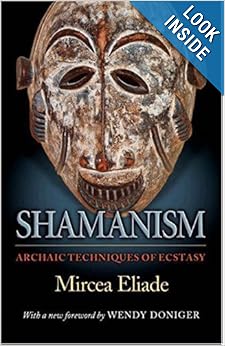
The great scholar of comparative religion, Mircea Eliade, in his classic text, Shamanism: Archaic Techniques of Ecstasy, details many similar examples of "the calling" and how the crisis of the calling is resolved through initiation into the shamanic mysteries. Rather than being dependent on the culture for survival (as in the U.S), these people are of service to the community, they have status and specialized roles. That alone can make all of the difference.

Psychosis or Spiritual Awakening: Phil Borges at TEDxUMKC

Published on Feb 23, 2014


Phil Borges, filmmaker and photographer, has been documenting indigenous and tribal cultures for over 25 years. His work is exhibited in museums and galleries worldwide and his award winning books have been published in four languages. Phil's recent project, Inner Worlds, explores cultural differences with respect to consciousness and mental illness.

Here is some more information on Borges - seems like a cool guy who has been doing some important work documenting indigenous cultures for a few decades now.

For over twenty-five years Phil Borges has been documenting indigenous and tribal cultures, striving to create an understanding of the challenges they face. His work is exhibited in museums and galleries worldwide and his award winning books, which have been published in four languages, include Tibetan Portrait, Enduring Spirit, Women Empowered and Tibet: Culture on the Edge. He has hosted television documentaries on indigenous cultures for Discovery and National Geographic channels. Phil also lectures and teaches internationally.

Phil’s recent project, Inner Worlds, explores cultural differences with respect to consciousness, mental illness and the relevance of Shamanic traditional practices and beliefs to those of us living in the modern world.

Phil’s program Stirring the Fire has produced several short documentaries, a book and an exhibition highlighting some of the extraordinary women worldwide who are breaking through gender barriers and conventions in order to enhance the well being of their communities.

In 2000 Phil founded Bridges to Understanding, an online classroom program that connects youth worldwide through digital storytelling in order to enhance cross-cultural understanding and help build a sense of global citizenship in youth. He also co-founded Blue Earth Alliance, a 501c3 that sponsors photographic projects focusing on endangered cultures and threatened environments.

Phil graduated from University of California as a Regents Scholar in 1969 and was honored with their prestigious University of California Medal in 2004. He lives with his family in Seattle.

Here is another TED Talk in which he speaks about his photography - beautiful images, some of which I am sure most of us have seen before.

Photographer Phil Borges on TEDTalks

Posted by: June Cohen
January 10, 2007


Photographer Phil Borges displays his remarkable portraits documenting the world’s disappearing cultures, from persecuted monks in Tibet to embattled tribes in the Ecuadorian Amazon. He also shares inspiring results from his digital-storytelling workshops, which give indigenous teenagers tools for cultural preservation and self-expression. A former dentist, Phil Borges rediscovered his passion for photography, and spent the last 25 years documenting indigenous cultures around the world. His work collected in several books, including Tibetan Portrait and Enduring Spirit. In 2001, he founded Bridges to Understanding, an organization that works with teenagers worldwide, promoting cultural preservation and exchange through digital storytelling. (Recorded February 2006 in Monterey, CA. Duration: 19:19)


Monday, December 16, 2013

Documentary - Vanishing Point (Inuit Culture)


Via documentalka, this is an excellent documentary about the efforts of two Inuit communities to maintain connections to their traditional culture. Official site for the film is here - this is their synopsis:
Navarana is a Polar Eskimo elder who lives in the most remote corner of the planet, the northwest tip of Greenland. She is connected by blood to a group of Canadian Inuit because of a shaman’s migration journey across the frozen Arctic in the 1860s. Today, despite rapid technological and social changes, her people in Greenland proudly maintain and covet age-old customs. But Navarana wonders what life is like for her distant cousins in Arctic Canada. Setting out on hunting journeys in both her homeland and on Canada’s Baffin Island, she discovers that while these two isolated groups of Inuit share much in common, they also present strikingly different lifestyles and practices. At a time when her people are up against vast and inescapable challenges, Navarana looks for the way forward and considers what has been lost and what has been gained. 
Vanishing Point is a POV documentary filmed in an observational, cinema vérité style. Its spoken languages are dialects of Inuktitut. 
Release Date: May, 2012
Enjoy!

Vanishing Point

Published on Nov 30, 2013


This feature documentary tells the story of 2 Inuit communities of the circumpolar north one on Canada Baffin Island, the other in Northwest Greenland that are linked by a migration led by an intrepid shaman. Navarana, an Inughuit elder and descendant of the shaman, draws inspiration and hope from the ties that still bind the 2 communities to face the consequences of rapid social and environmental change.

Monday, August 19, 2013

The Horse Boy - Autism, Horses, and Mongolian Shamans


When Rupert Isaacson and Kristin Neff (parents of Rowan) reach their limit in caring for their autistic son, having tried medications, diets, and everything else, they seek a more traditional method of healing - horses and shamans.
They journey to Mongolia with Rowan and seek out various shamans for healing, eventually making their way to the Reindeer People (who ride reindeer), where the possibility of a miracle healing is presented to them.

With commentary along the way from Dr. Temple Grandin and Dr. Simon Baron-Cohen, among others, we also learn what it means to have autism and to be non-neurotypical.


How far would you travel to heal someone you love? An intensely personal yet epic spiritual journey, THE HORSE BOY follows one Texas couple and their autistic son as they trek on horseback through Outer Mongolia, in a desperate attempt to treat his condition with shamanic healing. 
A complex condition that can dramatically affect social interaction and communication skills, autism is the fastest-growing developmental disability today. After two-year-old Rowan Isaacson was diagnosed with autism, he ceased speaking, retreated into himself for hours at a time, and often screamed inconsolably for no apparent reason. Rupert Isaacson, a writer and former horse trainer, and his wife Kristin Neff, a psychology professor, sought the best possible medical care for their son. But traditional therapies had little effect. 
 
Then they discovered that Rowan has a profound affinity for animals, particularly horses. When Rupert began to ride with Rowan every day, Rowan began to talk again and engage with the outside world. Was there a place on the planet that combined horses and healing? There was — Mongolia, the country where the horse was first domesticated, and where shamanism is the state religion. What if we were to take Rowan there, thought Rupert, and ride on horseback from shaman to shaman? What would happen? 
THE HORSE BOY is a magical expedition from the wild open steppe to the sacred Lake Sharga. As the family sets off on a quest for a possible cure, Rupert and Kristin find their son is accepted — even treasured — for his differences. By telling one family’s extraordinary story, the film gives a voice to the thousands of families who are living with autism every day. As Rupert and Kristin struggle to make sense of their child’s autism, and find healing for him and themselves in this unlikeliest of places, Rowan makes dramatic leaps forward, astonishing both his parents and himself.

Thursday, May 09, 2013

Michael Harner - Our World: Shamans and Spirits


Reality Sandwich posted this excerpt from the new book by Michael Harner, one of the pioneers in bringing shamanic practices into the modern world. His new book is called Cave and Cosmos: Shamanic Encounters with Another Reality, published by North Atlantic Books.

Here is the publisher's promotional blurb for the book:
In 1980, Michael Harner blazed the trail for the worldwide revival of shamanism with his seminal classic The Way of the Shaman. In this long-awaited sequel, he provides new evidence of the reality of heavens.

Drawing from a lifetime of personal shamanic experiences and more than 2,500 reports of Westerners’ experiences during shamanic ascension, Harner highlights the striking similarities between their discoveries, indicating that the heavens and spirits they've encountered do indeed exist. He also provides instructions on his innovative core-shamanism techniques, so that readers too can ascend to heavenly realms, seek spirit teachers, and return later at will for additional healing and advice.

Written by the leading authority on shamanism, Cave and Cosmos is a must-read not only for those interested in shamanism, but also for those interested in spirituality, comparative religion, near-death experiences, healing, consciousness, anthropology, and the nature of reality.
For the sake of honesty and full disclosure, I don't buy into the "reality" of heaven realms or the underworld. I see them as archetypal inner worlds all of us can access with a little training. Nor do I believe the "spirits" people encounter in their journeys are real - rather, I see them as inner figures, not unlike CG Jung's spiritual guide, Philemon.

Our World: Shamans and Spirits

Michael Harner


The following is excerpted from Cave and Cosmos: Shamanic Encounters with Another Reality, published by North Atlantic Books.

Close your eyes,
then you will find the way.
--from a Puyallup Indian myth

Based on archaeological and comparative ethnological evidence, shamanism is believed by many scholars to be at least 30,000 years old and quite possibly is more ancient. Without dispute, it is the most time-tested system for healing through the purposeful integration of mental, emotional, and spiritual capacities. Although the word "shaman" comes from the Tungusic-speaking peoples of Siberia and north China, the worldwide similarity of the basic practices led anthropologists to apply the term generically elsewhere.

Until the present century, shamanism was practiced on all inhabited continents by indigenous peoples, including such widely separated peoples as the Sami (formerly "Lapps") of northernmost Europe, the aboriginal peoples of Australia, the Kung Bushmen of southern Africa, and the indigenous peoples of North and South America. However, due to such factors as introduced disease, wars, missionization, and persecution, the numbers of indigenous shamans were drastically reduced in the last five centuries, commonly along with a radical erosion of their culture's shamanic knowledge. In the last few decades this situation has started to change.

SHAMANS

Definitions are often a contentious matter, particularly in the case of shamans and shamanism. What I offer now is what I have personally found useful in my work with shamans, and within shamanism, for half a century. The following words are not intended to satisfy everyone, or perhaps even most, but they are intended to communicate what I am talking about in this book.

While the work of shamans encompasses virtually the full gamut of known spiritual practices, shamanism is universally characterized by an intentional change in consciousness (Eliade's "ecstasy") to engage in purposeful two-way interaction with spirits. Its most distinctive feature, which is not universal, is the out-of-body journey to other worlds.

It should be noted that in some indigenous societies, there are shamans who do not journey at all, and others who journey only in the Middle World or, if they journey beyond the Middle World, may not go to both the Upper and Lower Worlds. What they all do share is disciplined interaction with spirits in nonordinary reality to help and heal others.

Whether journeying or not, shamans depend heavily upon the assistance of their tutelary entities, or helping spirits, with whom they interact in the altered state of consciousness that worldwide is most commonly achieved with the aid of auditory (sonic) driving. Both in traditional indigenous settings and in contemporary society, shamans work within a holistic framework. They address the spiritual side of illness in a complementary relationship with the nonspiritual treatment of illness and injury.

Shamans must be distinguished from sorcerers. Sorcerers are not healers and commonly cause pain and suffering.

The Two Realities

A basic assumption in shamanism is that there are two realities, and the perception of each depends upon one's state of consciousness. This assumption is explicit in core shamanism but usually is implicit in indigenous shamanism, where there is commonly not as much interest in a disciplined distinction between realities. Indeed, some indigenous shamans I have known seemed to enjoy the drama and romance of a blurring between realities.

Shamans access another reality especially in order to work with helping spirits to heal, divine, and accomplish other tasks for their patients and clients. This other reality is accessed by entering the shamanic state of consciousness (SSC), as I described in The Way of the Shaman. The SSC can range from light to deep and is most commonly entered temporarily with the help of auditory driving.

Those in the ordinary state of consciousness (OSC) perceive ordinary reality (OR); those in the SSC are able to enter into and perceive nonordinary reality (NOR). These states are both called realities because each is empirically encountered and has its own forms of knowledge and relevance to human existence.

NOR is not a consensual reality, and indeed if it were, shamanic practitioners would have no function, for it is their responsibility to perceive successfully what others do not. One of the distinguishing characteristics of the shamanic practitioner is the ability to move back and forth at will between these realities with discipline and purpose in order to heal and help others.

"Seeing" in Shamanism

"Seeing" is an important aspect of shamanism and shamanic journeying. As Eliade remarks, "‘Seeing' a spirit ... is a certain sign that one has in some sort obtained a ‘spiritual condition,' that is, that one has transcended the profane condition of humanity." The word "seer" in English may refer to the ancient European shamans, those who were "see-ers." Similarly, the Matsigenka Indians of the Upper Amazon call a shaman one "who sees." At the same time, "seeing" is a gloss in shamanism for more than visualizing, for it refers to perceiving with all the senses, including hearing, touch, smell, and taste.

Shamans differ from those who believe in spirits, because they know from firsthand experience that spirits exist. They see the spirits, touch them, hear them, smell them, and converse with them. This is why in many tribal societies around the world, the shaman is referred to not only as "one who sees" but also as "one who knows," or as a "person of knowledge." Shamans no more believe spirits exist than you believe your family, friends, and acquaintances exist. You know your family, friends, and acquaintances exist because you talk and otherwise interact with them daily. Similarly, shamans know spirits exist because they interact with them daily or, more often, nightly, for it is usually easier to see spirits in darkness. Also, darkness is an important medium for identifying spirits, for it eliminates the possibility of confusing them with the ordinary images of daylight reality.

The familiar concept of the "third eye" from Eastern spiritual practices crops up elsewhere. It is often known among Australian aboriginals, for example, as the "strong eye," located similarly in the center of the forehead. Sometimes a quartz crystal, a uniquely important stone crossculturally in shamanism, is pressed into that center to help the beginning shaman see shamanically more clearly. In former times, a Paviotso shaman in America could carry a quartz crystal on the cave power quest described in Chapter 1 so as to be able afterward to "see through anything." The seeing of shamans is not restricted to perceiving in darkness but commonly extends to seeing through things that in ordinary reality appear to most people as opaque. In shamanic extraction healing work, one sees or senses the illness within the sick person.

A power to "see through anything" is a common feature of shamanic experience. This power brings its own light to penetrate darkness and matter, as Knud Rasmussen notes for the Iglulik Eskimo:

"The first time a young shaman experiences this light, while sitting up on the bench [in the darkened igloo] invoking his helping spirits, it is as if the house in which he is suddenly rises; he sees far ahead of him, through mountains, exactly as if the earth were one great plain, and his eyes could reach the end of the earth. Nothing is hidden from him any longer."

In shamanism, "seeing" also involves seeing with the heart, or knowing in your heart that what you are perceiving is truth. This emotional certainty is fundamental to the experience of direct revelation and is one of the features that usually characterize shamanic seeing.

In 1968 I was discussing shamanic seeing with French ethnologist Jacques Lemoine, a specialist in the shamanism of the Hmong peoples of Laos. Although an outstanding fieldworker, he had never asked the shamans if they saw images, because they had already told him that they "saw with the heart." Therefore he assumed that no visual perception was involved. I urged him to interview one of his Hmong shaman friends further. Sure enough, a few months later he reported that they did indeed see images with their closed and covered eyes when they were doing their journeys and other work, and that they still said they saw with the heart, simply because emotional certainty was part of their direct revelations. Such an emotional certainty is also necessary for successful work in Western shamanic healing.

Are Shamans Born or Made?

For the Westerner, it is easy to assume that shamans practice their profession full-time. In fact, however, shamans usually spend most of their time doing ordinary work such as farming or hunting, food gathering and processing, and child-rearing. In the evenings, and upon request, they journey and do other shamanic work in a disciplined and controlled way. Their spiritual work in an altered state of consciousness is very intense. It is not possible even to eat a meal when doing it. So it is inconceivable that one could be working in this kind of altered state of consciousness all day on a regular basis. Shamans must be part-timers.

Persons may become shamans in many different ways. In Siberia, for example, shamans might inherit the power and knowledge through their families. Elsewhere in Siberia, and in some places in native South America, persons might suffer a serious illness, such as smallpox, and be expected to die but then have a miraculous recovery. Or perhaps it was a freak accident like a lightning strike that one survived. When such a thing happened, the community members characteristically concluded that healing power had come to save the person. They then sometimes asked the power-blessed person, upon recovery, to help heal someone else who was sick. The recovered person, even if unsure of his or her ability, could hardly refuse relatives and friends in need. If, in response, he or she successfully intervened, a shaman could be born.

In some indigenous societies, children were watched to see if they showed signs of being directly in touch with the spiritual realms, such as when they spontaneously sang a song apparently received from the spirits, as among the Pomo of Native California. If such signs occurred, then the children's healing powers might be tested by the adults. However, even in such cases the child was rarely recognized as a full-fledged shaman until becoming an adult. Shamanic practitioners worldwide were typically mature adults, usually with their own children.

In certain cultures, it was quite common to pay an established shaman for training. For example, East Greenland Eskimo shamans usually had several paid teachers. Among the Shuar in eastern Ecuador, the only known way to become a shaman is to buy the power, in the form of spirit helpers, from another shaman. The usual payment in the 1950s was in shuar kuit, or "Indian valuables." To pay a well-known shaman for a weeklong period of training and power transmission, a man might have to spend two or three years amassing enough feather headdresses, blowguns, curare blowgun dart poison, perhaps a hunting dog, and maybe even a muzzle-loading shotgun. Today shamanism remains strong among the Shuar, but the payment is usually in major amounts of Ecuadorian currency.

There are other ways, too, that one may become a shaman. In the Conibo tribe of eastern Peru, for example, the beginner, under the guidance of a shaman, may learn primarily from the spirit of a tall sacred tree (the ceiba). In the old days among Inuit of the Arctic, usually one of the most valued ways to become a shaman was to be initiated by the spirits in extreme isolation while suffering. To achieve this, an apprentice, under the supervision of a shaman, might spend days alone in a miniature igloo in the dead of winter without any heat, light, food, and little or no water, until the spirits brought enlightenment and healing power.

Perhaps one of the most mysterious and distinctive ways of becoming a shaman has been through experiencing the dismemberment of one's body in an altered state of consciousness. Accounts of this kind of initiatory experience are relatively common among Siberian tribes and Aboriginal Australian people. Later we will examine this important type of shamanic experience and its significance (see Chapter 11).

While there are many ways to become a shaman, how is not as important as the strength of the helping spirits supporting a person. In other words, the crucial issue is not whether one pays a shaman, as among the Shuar, or almost starves and freezes to death in isolated darkness on the ice, as among some Inuit in the days before missionization. Rather, the issue can be stated very simply: does one's shamanic work produce successful results for those who ask for help? If such results come, it matters little how or where one trained, or if one trained at all in a formal sense, for the people will recognize him or her as a shaman. Shamans are known by their works, and the ultimate judgment is by those on whose behalf they work for healing, divination, and other purposes.
Read the whole article.