Showing posts with label semiotics. Show all posts

Wednesday, July 31, 2013

David Christopher Lane - Ken Wilber's Eye: Exploring the Dangers of Theological Reifications

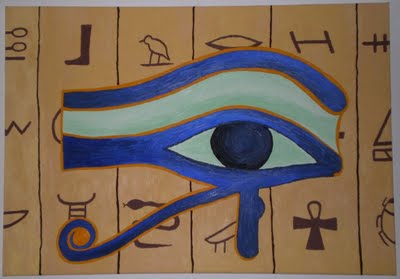
The Eye of Ra

From Integral World, David Lane recently posted an article in response to Wilber's new "Integral Semiotics." While he is slightly critical of Wilber's overgeneralizations in some areas - his reifications - Lane is overall much kinder to this new rewrite of old ideas than am I.

When Lane says, "Wilber wants to argue that reality is far more than mere sensorimotor referents," I want to say, "Well, duh!" He's been saying that for close to 35 years. And really, as I have mentioned previously, this is simply another iteration of his basic model with a few new terms.

Here is a sort of summary paragraph:
The fundamental problem, I would suggest, is not in the fact that there are many worldspaces (there are), but over how we interpret such experiences. The very reason we have confidence in the relative reality of an apple versus one person’s claim of seeing God is that the former can be socially mediated whereas the latter lacks such social verification. It is premature to say the least that such experiences can be properly adjudicated even if we have an idealized Wilber sangat of enlightened beings. David Blaine, the noted street magician, can easily trick onlookers with the most rudimentary of magic and all this even while we are well trained in our five senses. One can only imagine how easy it would be to trick someone into inflating their own meditative experiences into something far grander than it actually is. Furthermore, the term apple is much more specific than the word God which is far too abstract and too generalized a term to be useful in a discussion designed for specificity. 
Lane gets at, with less vigor than I would have, one of the major flaws that has been inherent in Wilber's work from the beginning - it is focused on individual subjectivity almost exclusively, while only paying obligatory lip-service to intersubjective and interpersonal experience.

Despite my nit-picking, this is an excellent opening response to Wilber - I wonder if he will also respond to the second part of Wilber's new work, the "Giga Glossary" proposal.


~ David Christopher Lane, Ph.D. Professor of Philosophy, Mt. San Antonio College Lecturer in Religious Studies, California State University, Long Beach Author of Exposing Cults: When the Skeptical Mind Confronts the Mystical (New York and London: Garland Publishers, 1994) and The Radhasoami Tradition: A Critical History of Guru Succession (New York and London: Garland Publishers, 1992).

Ken Wilber's Eye: Exploring the Dangers of Theological Reifications

David Christopher Lane, Ph.D.

I still vividly recall the night I first read Ken Wilber’s article, “Eye to eye: The relationship between science, reason, and religion and its effect on transpersonal psychology,” in the then new journal, ReVision (Winter/Spring, Vol. 2, No. 1.). It was 1980 and I was teaching full-time at Moreau Catholic High School and working on my M.A. in the History and Phenomenology of Religion at the Graduate Theological Union in Berkeley, California. For a number of months I had been undergoing a severe intellectual dilemma that was precipitated by my obsessive readings of all things scientific. Although I was deeply immersed in Indian philosophy (particularly the practice of shabd yoga and philosophically the purview of Advaita Vedanta), I felt a deep unease about how such an internal pursuit could hold up under rational scrutiny, particularly given the tremendous progress physics and neuropsychology had made over the past century.

At the time I was deeply into meditation and also deeply into skeptically analyzing my religious-spiritual outlook. I was having, more or less, an epistemological crisis. Reading Wilber’s essay was (and the pun is intended) an eye opener, since he very clearly explained three different levels of acquiring knowledge: sensory-empirical; mental-rational; spiritual-transcendental. Brad Reynolds gives a nice summary of Wilber’s tripartite schema:
“Eye to Eye introduces the notion of epistemological pluralism with the (Christian mystic) metaphor of the "three eyes of knowing," i.e., sensory/flesh (sensibilia), mind/reason (intelligibilia), spirit/contemplation (transcendelia). This multi-leveled understanding then brings to light a "category error," or when one "eye" (or realm) tries to usurp the roles of the other two, or is outright mistaken for another. Therefore the "problem of proof" can be solved since each domain provides their own particular validity claims for differentiating the principle spheres of human knowledge (respectively, science, psychology/philosophy, mysticism). The presentation thus contains an extended examination of the philosophical history of science and its reductionistic tendencies (known as scientism), yet it does so by offering a rational synthesis (or a vision-logic of mandalic reasoning) which can not only include science but also authentic spirituality and contemplative practices. Eye to Eye also contains the all-important essay "The Pre/Trans Fallacy," whose conception (a few years back) overturned the common Romantic error adopted by Wilber's earlier writings. This pre/trans fallacy clarifies a major (and disastrous) confusion in the modern world, which simply states that if we are to truly understand and accept the "form of development" (identify, transcend, integrate) at each stage of evolution in a pluridimensional universe, then we must always properly differentiate between pre- and trans- personal domains of consciousness. The book therefore offers not only a strong critique of scientific materialism, but it also brilliantly shines an illuminating light to help guide the "New Age" out of its dark cave of mythic thinking and its regressive (pre-rational) approaches to spirituality.”
I read Wilber’s article very closely several times late into the night and into the next morning. It was about 3 or so in the morning when I experienced an intellectual moment of satori, a flash of clarity about the pursuit of knowledge and its many pathways. I immediately became a Wilber convert, since he had by his clarity of thought provided me with an intellectually satisfying way to justify both my scientific and mystical pursuits. They were not, as I originally feared, mutually exclusive.

I say this is as a prefatory note to Ken Wilber’s latest essay Integral Semiotics (which is reportedly an excerpt from volume 2 of the “Kosmos Trilogy"), since it is in many ways a sophisticated, if still debatable, extension of Wilber’s "Eye to Eye" article which was originally penned nearly 35 years ago.

Given my earlier admiration of Wilber’s essay on methodological pluralism, I find there is much that I like in his new refinement, even though one has to be cautious not to fall prey to some of his unnecessary reifications. Wilber provides a clear overview of his thesis in paragraph three where he writes,
"But my point is that they all, in fact, exist in a specific worldspace that can itself be discovered and experienced—such as the causal or formless state of consciousness, particular stages of meditation, specific peak experiences or altered states. When one is in those worldspaces—and not simply staring at the sensorimotor worldspace—then the actual referents (the "real phenomena" of each referent)—can be clearly seen or experienced. And this changes the nature and meaning of semiotics altogether, by asserting that any given referent of a particular signifier exists in a specific worldspace, and in order to experience that referent appropriately (if it exists at all), the subject must get itself into that particular worldspace, and only then look around for the referent."
Wilber’s point, though obvious, is important in understanding that there are multiple states of awareness and to properly understand what is transpiring in any one of those states necessitates actually being within that particular stream of consciousness--what Wilber repeatedly calls “worldspace.” Otherwise, one cannot fully appreciate the inherent nuances that attend within that conscious space. I can draw on an obvious example from my own medical history to back up Wilber’s assertion here. For a number of years I completely lost my sense of smell and taste and thus an entire “worldspace” (what one may call an olfactory universe) was shut off from me, try as I might to imagine it once again. However, shortly after surgery (or a heavy dose of prednisone) my sense of smell comes back and I enter into the most wonderful galaxy of scents--from sea weed, to coffee, to Chiptole salsa! It is literally unimaginable (in terms of lived through experience) to conjure up such a sensual region unless one is immersed within that region. 
Importantly, and this goes to the very heart of why methodological pluralism is vital to Integral theory, Wilber wants to argue that reality is far more than mere sensorimotor referents:
“But in addition to the sensorimotor worldspace, there are the emotional, the magical, the mythical, the rational, the planetary, the holistic, the integral, the global, the transglobal, the visionary, the transcendental, and the transcendental-immanent worldspaces, to name a prominent handful. And all of those worldspaces have their own phenomenologically real objects or referents. A dog exists in the sensorimotor worldspace, and can be seen by any holon with physical eyes. The square root of a negative one exists in the rational worldspace, and can be seen by anyone who develops to the dimension of formal operations. And Buddha-nature exists in the causal worldspace, and can be easily seen by anybody who develops to that very real dimension of their own state possibilities. But neither the square root of a negative one nor Buddha-nature can be seen in the sensorimotor world—and all the philosophies that take the material realm or the sensorimotor realm as the prime reality (or that take consciousness-free ontology as the basic given), will not be able to locate either of those, and will hence conclude they both lack a fundamental reality (unless they go out of their way to make an exception, as, for example, positivism does when it says that all that is real are things and numbers—but too bad for Buddha-nature or Spirit: just can’t be found in the realm of dirt or numbers and thus is unceremoniously erased from the face of the Kosmos.) In other words, the real referent of a valid utterance exists in a specific worldspace. The empiricist theories have failed in general because they ultimately recognize only the sensorimotor worldspace (and thus cannot even account for the existence of their own theories, which do not exist in the sensorimotor worldspace but in the rational worldspace).”
While Wilber’s argument from a phenomenological perspective makes eminently good sense, the danger in his approach is that he tends to fall prey to premature reifications when he uses such words as “Buddha nature or Spirit” as if such terms have already been universally accepted by all and sundry . . . which they have not. Moreover, he tends to confuse experience with its causation-reality, forgetting in the process of how easy it is for anyone to be deceived or duped by how certain phenomena are produced.

Ironically, Wilber tends to invoke a naive realism when addressing a so-called shared reality. For example, he argues
“When we perceive an apple, and say “I see the apple,” and the brain lights up in a particular way, we do not conclude, “The apple only exists as a brainwave pattern; it otherwise has no reality.” No, we conclude that the apple is a real object in the real world, and as the brain perceives it, it lights up in various specific ways.”
While on the surface this seem evidential, the fact remains that what we could be mistaken about the perceived object and on closer inspection discover that it wasn’t an apple but a pear or perhaps a 3-D paper object which only “appears” to be a real fruit. I am belaboring this point because there is no absolute given even in the sensory-empirical world, which could not potentially be mislabeled or misinterpreted. This may seem like a trivial point, but I think it looms much larger than we might at first suspect when we enter into the mystical domain which doesn’t have the same overwhelming consensual feedback correctives (at least not yet).

This become readily apparent when right after his “apple example” Wilber writes,
“But what happens when we say the same type of sentence but a different referent, such as, when engaged in contemplation, “I see God,” and the brain again lights up in a specific way. Do we give to God the same reality we gave to the apple, and conclude that God is a real phenomenon in the real world, and the brain is lighting up as it sees this real item? No, in fact we don’t. In fact, we do just the opposite. We take whatever brainwave pattern we can find at the time—perhaps an increase in gamma waves—and we say, “When the brain produces excess gamma waves, then the subject will imagine that he or she is seeing God.” In other words, where with the apple the brainwaves are taken as extra proof that apples are real, with God, the brainwaves are taken as extra proof that God is just an imaginary object; it’s not real in the real world, but simply an imaginary product of certain brainwave patterns. What’s going on here?”
As I pointed out previously, we could potentially be wrong about an apple (and indeed this happens more than we realize), but the reason we might be doubly suspicious about a contemplator claiming “I see God” (versus him or her saying “I see an apple”) is that it doesn’t generally take a specialized skill for us to recognize an apple or something similar to it. In addition, the commonality of the experience is anything but extraordinary, which is not the case with someone claiming to see God (whatever such a nebulous term might mean and in what context). In addition, the subjective nature of meditation circumscribes how easy it is to share with others the content of what he or she encountered. For Wilber’s example to be equatable with seeing an apple necessitates a socially mediated worldview, not a purely subjective one, regardless of how real it may or may not be. 
Now this doesn’t mean that the contemplator’s worldspace is something that isn’t valuable or important; it simply means that the experience of an apple which others can see and share in the same time-space referent shouldn’t be conflated with what a contemplator sees or hears or experiences in the privacy of his own being. 
For instance, you cannot appreciate dreaming unless you too have dreamt. That seems obvious. But that doesn’t mean that the dreamer is somehow privileged because of that ability to know the causation or ontological status of that dream. Thus, while I applaud Wilber’s insistence that we should explore varying regions of consciousness (via mediation or otherwise), I think it is misleading to then pontificate about the “reality” or “truth-value” of such experiences by trying to equate seeing an apple in the sensorimotor arena with seeing God in contemplation and then lambasting those who argue that there may be a difference between them. 
The fundamental problem, I would suggest, is not in the fact that there are many worldspaces (there are), but over how we interpret such experiences. The very reason we have confidence in the relative reality of an apple versus one person’s claim of seeing God is that the former can be socially mediated whereas the latter lacks such social verification. It is premature to say the least that such experiences can be properly adjudicated even if we have an idealized Wilber sangat of enlightened beings. David Blaine, the noted street magician, can easily trick onlookers with the most rudimentary of magic and all this even while we are well trained in our five senses. One can only imagine how easy it would be to trick someone into inflating their own meditative experiences into something far grander than it actually is. Furthermore, the term apple is much more specific than the word God which is far too abstract and too generalized a term to be useful in a discussion designed for specificity. 
Later on in his essay, Wilber elaborates on the importance of knowing the correct “Kosmic Address” to enter into these worldspaces.
“This is also directly related to what is referred to as the “Kosmic Address” of a phenomenon. In order to locate a referent (e.g., a dog, the square root of a negative one, or Buddha-nature), one has to know the worldspace in which the referent exists. Simply giving a signifier or name to the object or event tells us nothing about whether that object or event is real (what about “unicorns,” or the “tooth fairy,” or “Santa Claus”? Turns out those are real, but only in the mythic worldspace. They cannot be found in the sensorimotor world, the rational world, the holistic world, etc., and are thus usually dismissed as fantasy, overlooking the genuine phenomenological reality those items have for those in the mythic worldspace, where those items are as real as any other object or event that can enter awareness at that level)."
I appreciate Wilber’s nice turn of phrase here about Kosmic addresses and how we need to access certain phenomena by correctly entering those domains. 
Phenomenologically speaking, yes we do live in a multiverse of differing states of awareness. But I think we should be cautious about how we use the word “real” when describing what these experiences ultimately mean and entail. 
For instance, I remember as a young kid walking on the beach in Santa Monica and my friends and I would see gold glittering on the wet sand. For part of the day we really thought we were going to be rich since we had discovered a precious metal! Of course, our parents quickly dampened our millionaire dreams when they explained that it was only “fool’s” gold since it was simply how the light reflected off the water and sand to give it that unique sparkle. 
Okay, so as a kid I had an experience of “gold” but it wasn’t really gold at all. What changed? My interpretation of the phenomenon. The thing “itself” remained the same, even though my experience was irrevocably altered. 
When it comes to subtler realms of consciousness, the difficulty in determining the relative reality (or permanence? or consensually share inputs?) of what arises is much more fraught with potential missteps, given the paucity of an overwhelming agreement on such matters. 
I can draw upon my own spiritual tradition to underline this epistemological conundrum. In shabd yoga circles (particularly within Radhasoami branches), it is almost axiomatic that when an initiate goes within during meditation he or she will see the radiant form of their guru who will guide them by light and sound to higher and higher regions of awareness and bliss. 
Within Radhasoami Satsang Beas, to give an example from the largest sect of the tradition, meditators almost universally believe that the radiant form is a vision created by their Master’s grace from the audible life stream. However, Faqir Chand, a longtime practitioner of shabd yoga and later an acknowledged adept, came to an entirely different realization. Due to a series of now famous events, Faqir realized that inner visions of his guru and other fantastic apparitions were projections of his own mind. I still remember when I gave a copy of Faqir’s life story and teachings (see The Unknowing Sage: The Life and Work of Baba Faqir Chand) to my satsangi friend who was also my local mail woman. I caught up with her a few days later and see looked slightly distraught. I inquired about why and she said, “I started crying after I read about Faqir Chand’s revelations. It made me doubt all that I believed before concerning meditation and the Master’s radiant form.” 
So let’s agree with Wilber that in order to access the inner sound current and explore subtler and subtler realms of consciousness one has to engage in some sort of meditation technique (or something similar to it). But what does that then mean in terms of “reality” or truth value? Isn’t the real issue not one of worldspaces (that is an obvious given) and not even Kosmic addresses (don’t we already know this from from drugs and dreaming?), but of competing interpretations of what such inner and outer states mean? 
Wilber does write about this, but I think he assumes far too much in his mandalic way of mapping things out as if the mystical cartography has already been settled upon by earlier pioneers. 
There is a sort of ontological hubris in Wilber’s writing that lacks the open ended sense of wonder that an adventurer in this field should have, particularly when even in this state of awareness we know so little, what to speak of realms yet to be explored.
This why I hesitate when he says “And Buddha-nature exists in the causal worldspace, and can be easily seen by anybody who develops to that very real dimension of their own state possibilities.” 
It would be one thing to say that in certain elevated states one can experience something that MAY be interpreted by contemplators to be akin to what some Buddhists have called Buddha-nature, but it is quite another to reify (as Wilber is prone to do) what a certain state provides. Perhaps if a Faqir Chand entered into that same realm he may doubt that interpretative nexus and argue for something quite different. Simply put, if we can be easily deceived within this world by sleight of hand, neural trickery, and more, then we should be much more wary when it comes to meditative states where deceptive illusions abound as well. 
I wish Wilber would stay within the bounds of reasonableness where he makes strong and believable arguments for exploring differing realms of consciousness. Where he loses me and where he sinks into spiritual platitudes is when he then moves beyond open exploration (with the operative word being “open”) and writes theological puffery such as,
“As you approach the causal, your Awareness will begin to profoundly unwind and uncoil in the vast expanse of All Space, and you will be opened to states of increasing Radiance, Freedom, Love, Consciousness, and Bliss or Happiness. Your separate-self sense will begin to dissolve in a pure feeling of I AMness, and your own highest Self will increasingly come to the fore, marked by being grounded in the timeless Now or pure Presence in the Present. As you break through into causal consciousness without an object, or Pure Subjectivity, you will recognize your True Condition as spaceless and infinite, timeless and eternal, Free and Transparent, Unborn and Undying. You will meet your own Original Face, or Divine Spirit itself, naked and spontaneous, all-pervading and all-embracing, a state from which you have never really deviated and could not possibly deviate, but one that has been there all along, in every moment, as the simple Feeling of Being. You will have a profound sense of “coming home,” met often with torrents of grateful tears and gales of endless laughter. You have, after all these painful years, arrived at your Native Condition, which does not recognize the name of suffering, is a stranger to the pain of existence, is alien to weeping, cannot pronounce agony. And then when somebody asks you, “Does God exist?,” you will be able to answer them based on direct personal experience. “Yes, and I have seen It myself.”
The problem with such statements as “I have seen It [God] myself” is that it lacks skepsis and tends by its very language to cut off further discussion or inquiry. Wilber’s continued use of such flowery descriptors as “Divine Spirit itself,” “naked and spontaneous, all pervading and all embracing”, “Buddha nature”, etc., suggests that his real goal is to bring us into his theological ballroom, but in order to accomplish this he misleadingly dresses us up with plausible personal and scientific possibilities. 
In this regard, I wish I could see eye to eye with Wilber since I agree with him on a number of issues, but when he succumbs to prematurely theologizing the inner quest with unnecessary reifications, I end up cross eyed. 
Perhaps if Wilber spent more time with critics of his work like Visser, Falk, Meyerhoff, [Lane] and others, than with questionable sycophants such as the now disgraced Andrew Cohen, he could better understand why erstwhile admirers of his work are not rushing into his peculiar worldspace. 
I say all of this because Wilber has given us many valuable insights, but they seem hamstrung by his apparent conceit to prefigure and finalize that which is still open for vigorous debate and refutation. As Scott London tellingly explained in his review of Ken Wilber’s book, One Taste:
“Someone once observed that there are at bottom two kinds of writers, those who write what they know and those who write in order to know. Wilber clearly belongs to the former camp. His instincts are always explanatory rather than exploratory. His goal is always to reveal rather than discover.”
One yearns for more of Wilber as the explorer and less of Wilber as the pontificator. Perhaps the recent downfall of Andrew Cohen will be the necessary lesson to shock Wilber into realizing this.

Friday, July 26, 2013

Ken Wilber - Integral Semiotics, Part 2: The Giga Glossary (Say What!?!)


I'm glad to see I am not the only blogger/reader (thank you Daniel Gustav Anderson) who has issues with Wilber's newest post on "integral semiotics," in which he argues for a "Giga glossary" (emphasis added):
What is required, at this point in evolution, is a “Giga glossary”—a comprehensive listing of the various phenomena (and hence various referents) found in each and every aspect of each and every dimension of the AQAL Matrix—listings of the phenomena found in all the quadrants, all the quadrivia, all the levels and Views, all the lines, all the states, and the types of existence and being-in-the-world that are presently arising. This would give us the Kosmic Address of every major phenomenon in the Kosmos (at least as now understood).
This is required? Really? By whom, and for what? 

Do we really need the "Kosmic Address" of "every major phenomenon in the Kosmos"? [For readers new to Wilberese, Kosmos is his term for the whole damn universe, from quarks to consciousness.]

"At this point in evolution," what it seems to me we need is a solution to climate change, a way to curb the obesity/diabetes epidemic that is no longer confined to the U.S. and Western Europe, free quality education for all, transparency in government, a viable P2P/Commons system to move us beyond capitalism, a cure for cancer, an end to the mass extinction of plants and animals . . . . I think you get my point.

Anderson has more philosophical issues with Wilber on this new proposal:
I find such categories as the possible, the emergent, and the novel to be of particular use; these are not yet accounted for here, insofar as the "Kosmic Address" described above concerns posited phenomena, the already realized, and not those presently articulating processes that are only now becoming. Further, I should hope that any competent semiotics would find ways to differentiate knowledge that is simply wrong (not just incomplete or partial but demonstrably false) from that which is merely incomplete, from that which is figurative (say, metaphoric or metonymic) and therefore not literally true but still bearing truth-value, and so on. (What counts as a phenomenon here?) I would like to know what the "Kosmic Address" of this concept of "Kosmic Address" is. Is it on Akashic Records lane?
Anderson suggests some other authors and books to read, so go see his recommendations (last paragraph). There is no doubt they are better than this, uh, new material.

*****

I kept reading Wilber's post after the section quoted above, which opens the article, but I became increasingly disheartened.

Wilber's whole project, from The Atman Project forward, seems to be an effort to explain his conception of God/Spirit/Ultimate Reality in a way that makes it seem more than faith in the validity of his subjective experience. In The Marriage of Sense and Soul, he outlines a kind of "reality testing," or "scientific method" for proving or disproving claims in the domain of spirituality. 
1. Instrumental injunction: The experiment, "If you want to know this, do this." The injunction might be, for example, if you want to experience nondual awareness, perform this meditation practice in just this way, for this length of time.
2. Direct apprehension: Here we get the experience, the apprehension, generated by the injunction. This step provides the data for the experiment.
3. Communal confirmation or rejection: At this final stage we compare our results with others who have performed the same injunction. We check our data against the data of others who have taken up that meditation practice for the prescribed length of time.
[Wilber, 1998, The Marriage of Sense and Soul, p. 155-56]
The assumption (a false assumption, in my opinion) is that if enough people perform the experiment and get similar results, then the results point to some form of transcendent truth. In my opinion, this model is constructed, at least in part, to support his own conjectures around Spirit and Kosmos. Prior to this model, there was only "faith" or "belief," but with this Wilber proposed a way to test the reality claims of a given spiritual idea or injunction.

So let's use a real example. 

DMT (N,N-Dimethyltryptamine) is a popular and potent hallucinogen found in nature (and in human beings). Alongside LSD, mescaline, and psilocybin (to which it is structurally similar), it is probably one of the most widely studied hallucinogens in use. Strangely, and unlike many other hallucinogens, there is amazing commonality in the experiences of people who smoke (or use other inhalation methods of) DMT:
The subjective effects of a good lungful of DMT are usually very intense, with consciousness usually overwhelmed by visual imagery. With eyes closed this may take the form of extremely complex, dynamic, geometric patterns, changing rapidly. Such a dose of DMT may produce a visual pattern consisting of overlapping annular patterns of small rhomboid elements all in saturated hues of red, yellow, green and blue. Gracie & Zarkov [44] refer to this, or something similar, as "the chrysanthemum pattern." The pattern itself seems to be charged with a Portentous energy.

The state of consciousness characterized by amazing visual patterns seems to be a prelude to a more Profound state, which subjects report as contact with entities described as discarnate, nonhuman or alien. A very articulate account of the subjective effects of smoking DMT is given by Terence McKenna in his talk Tryptamine Hallucinogens and Consciousness [72], in which he recounts his contact with what he calls "elves."
Does the fact that many (most?) users of DMT experience something similar to this description mean, then, that "the chrysanthemum pattern" is real in some sense, or that "elves" and other "discarnate, nonhuman" entities exist someplace outside of our normal consciousness?

According to Wilber's model, the answer would seem to be yes.

However, these are drug-induced subjective experiences - there is nothing inherent in these experiences that requires them to have any reality outside of the drug state.

It's worth noting that Wilber, as late as 1998, was still writing and conceptualizing about the "Great Nest of Being," his reframing of the more traditional "Great Chain of Being."
In Integral Theory, the Great Nest of Being is not a Platonic given but, in large measure, is constructed of evolutionary Kosmic habits.
In essence, Wilber's is a teleological model of the universe.
A thing, process, or action is teleological when it is for the sake of an end, i.e., a telos or final cause. In general, it may be said that there are two types of final causes, which may be called intrinsic finality and extrinsic finality.[1]
  • A thing or action has an extrinsic finality when it is for the sake of something external to itself. In a way, people exhibit extrinsic finality when they seek the happiness of a child. If the external thing had not existed that action would not display finality.
  • A thing or action has an intrinsic finality when it is for none other than its own sake. For example, one might try to be happy simply for the sake of being happy, and not for the sake of anything outside of that.
Since the Novum Organum of Francis Bacon teleological explanations in science tend to be deliberately avoided because whether they are true or false is argued to be beyond the ability of human perception and understanding to judge.[2] Some disciplines, in particular within evolutionary biology, are still prone to use language that appears teleological when they describe natural tendencies towards certain end conditions, but these arguments can almost always be rephrased in non-teleological forms.
I have no real issue with teleological models, and even Thomas Nagel (see Mind and Cosmos: Why the Materialist Neo-Darwinian Conception of Nature Is Almost Certainly False, 2012) has recently been supportive of such models, as long as they do not include supernatural causes or beings. Nagel offers a real and valid metaphysics, "the question of what exists." Wilber offers "supernatural" causes, "that which is not subject to the laws of physics, or more figuratively, that which is said to exist above and beyond nature."

To my reading, Wilber's new "integral semiotics" is simply another attempt to justify and support his AQAL model. Granted, I am not dismissing AQAL as a basic orienting map, nor am I claiming that it's basic organizational premises are false.

What I am claiming is that the metaphysics upon which much of the spiritual element in integral theory is little more than intelligent design dressed in New Age clothing. And in that respect, Wilber's "integral semiotics" is simply another defense of that paradigm.

Monday, July 08, 2013

Søren Brier - Cybersemiotics: A New Foundation for Transdisciplinary Theory of Information, Cognition, Meaningful Communication and the Interaction Between Nature and Culture

This ambitious article by Søren Brier on the emerging field of cybersemiotics appeared in the new issue of Integral Review, a special issue on transdisciplinary models. Brier is the author of Cybersemiotics: Why Information Is Not Enough (Toronto Studies in Semiotics and Communication) [paper, 2013; Kindle, 2008].

Cybersemiotics: A New Foundation for Transdisciplinary Theory of Information, Cognition, Meaningful Communication and the Interaction Between Nature and Culture 

By Søren Brier [1]


Abstract: 

Cybersemiotics constructs a non-reductionist framework in order to integrate third person knowledge from the exact sciences and the life sciences with first person knowledge described as the qualities of feeling in humanities and second person intersubjective knowledge of the partly linguistic communicative interactions, on which the social and cultural aspects of reality are based. The modern view of the universe as made through evolution in irreversible time, forces us to view man as a product of evolution and therefore an observer from inside the universe. This changes the way we conceptualize the problem and the role of consciousness in nature and culture. The theory of evolution forces us to conceive the natural and social sciences as well as the humanities together in one theoretical framework of unrestricted or absolute naturalism, where consciousness as well as culture is part of nature. But the theories of the phenomenological life world and the hermeneutics of the meaning of communication seem to defy classical scientific explanations. The humanities therefore send another insight the opposite way down the evolutionary ladder, with questions like: What is the role of consciousness, signs and meaning in the development of our knowledge about evolution? Phenomenology and hermeneutics show the sciences that their prerequisites are embodied living conscious beings imbued with meaningful language and with a culture. One can see the world view that emerges from the work of the sciences as a reconstruction back into time of our present ecological and evolutionary self-understanding as semiotic intersubjective conscious cultural and historical creatures, but unable to handle the aspects of meaning and conscious awareness and therefore leaving it out of the story. Cybersemiotics proposes to solve the dualistic paradox by starting in the middle with semiotic cognition and communication as a basic sort of reality in which all our knowledge is created and then suggests that knowledge develops into four aspects of human reality: Our surrounding nature described by the physical and chemical natural sciences, our corporeality described by the life sciences such as biology and medicine, our inner world of subjective experience described by phenomenologically based investigations and our social world described by the social sciences. I call this alternative model to the positivistic hierarchy the cybersemiotic star. The article explains the new understanding of Wissenschaft that emerges from Peirce’s and Luhmann’s conceptions.
1. Søren Brier is Professor of Semiotics in the Information, Cognition and Communication Sciences  at the Department of International Business Communication at Copenhagen Business School. He is the creator of the transdisciplinary framework Cybersemiotics, founder and editor-in-chief of the journal Cybernetics & Human Knowing, co-founder of the International Association for Biosemiotic Studies and its journal Biosemiotics. sb.ibc@cbs.dk

An Overview of the Flow of the Argumentation in the Article 


I begin with a brief introduction to my view of scientific thinking on deep theories and a few words about the limitation of the word ‘science’ in the English language and my proposal to use the German transdisciplinary term ‘Wissenschaft’, which includes qualitative research into meaning. I argue that it is vital to include the meaning aspect of reality when we deal with information, cognition and communication research. I will then briefly introduce my cybersemiotic visual model for organizing the exact, the life and the social science as well as the humanities in a framework shaped as a star with four different arms, a framework which I propose as an alternative to the positivistic ‘unity of science’ idea based on physics as model science and its modern version found in E. O. Wilson’s ‘consilience’ model. Cybersemiotics is a vision of how to integrate truth and meaning as well as the empirical and the experiential aspects of knowing in one pragmatic and semiotic view of the collective production of knowledge. I will then explain the phenomenological model behind Peirce’s phaneroscopically based semiotics. I briefly introduce his three categories and his idea of a philosophical foundation for a reflected cenoscopic science. I then briefly explain Maturana and Varela’s idea of autopoiesis and after that try to show how Luhmann’s triple autopoietic systems view of socio-communication has a reflected pragmatic and realistic grounding that fits in with and supplements Peirce’s philosophy. I go on to explain the development of biosemiotics as an attempt to build a semiotic link from the life sciences to the social sciences and humanities through an evolutionary and ecological semiotic view. As the pan-informational and pan-computational philosophy tends to be more and more dominating, I find it necessary to explain how Peirce’s philosophy, which he calls pragmaticism, can be seen as an alternative. As Peirce lived a hundred years ago, my argument draws on modern American philosophers like Sellers, McDowell and Brandom.

Since Plato’s philosophy of a world of ideas and universal concepts was confronted by modern empiricism’s belief in material facts, the discussion on inter- and transdisciplinarity has been about what is most real: matter, forces, form or universal concepts. The possibility of transdisciplinarity therefore rests on our ability to define a reality that includes them all. Peirce’s suggestion of a scholastic realism inspired by Duns Scotus is such an attempt and I shall try to explain what it is all about. Peirce introduces time and possibility to enlarge our view of reality. What is, and what has been only cover the part of actuality, which is based on the past. There are, however, also would be’s dealing with probabilities. Peirce – like Popper and Prigogine – views possibilities as real and includes them in his category of Firstness. But they are also the basis for habits or what Peirce calls Thirdness. Peirce distinguishes between what is real and what exists. The only form of existence as such is what he calls ‘thisness’ (haeccity), which is his category of Secondness. It is this triadic processual understanding of semiotics that distinguishes Peirce’s semiotics from Saussurian semiology and makes the idea of biosemiotics possible. I then try to visualize how we may combine biosemiotics’ idea of endosemiotics creating the biological self and its exosemiotic communication theories with Luhmann’s triadic autopoiesis model of communication. This is done in order to give a first overview of the cybersemiotic idea and to explain how the integration of semiotics and system theory offers a more plausible model of evolution that can explain the emergence of mind. The article concludes by suggesting a new model of five ontological levels and a changed view of the reality of nature.

A New Foundation for the Sciences [2] and Humanities 


Cybersemiotics proposes a new transdisciplinary framework integrating Peirce’ triadic semiotics with a cybernetic view of information on the basis of an ontology of emptiness. It is an attempt to give a transdisciplinary solution to C.P. Snow’s two-culture problem. The proposed framework offers an integrative multi- and transdisciplinary approach, which uses meaning as the overarching principle for grasping the complex area of cybernetic information science for nature and machines AND the semiotics of all living system’s cognition, communication, and culture. Cybersemiotics is an integrated transdisciplinary philosophy of science allowing us to perform our multidisciplinary research, since it is concerned not only with cybernetics and Peircean semiotics, but also with informational, biological, psychological and social sciences. In order to incorporate the sociological disciplines and contributions from multiple areas of applied research cybersemiotics draws extensively on Luhmann’s theories.

We are thus immersed in conscious and unconscious communication forms, verbal as well as non-verbal. As the linguistic turn argues, we cannot escape language, nor culture and power. Even science becomes a social construction, which is historically true, since science is a relatively recent phenomenon in the history of man. Empirical and mathematically grounded science is a modern invention that started in the Renaissance. Scientific knowledge has formed our rationality and cultural outlook on the world since then and right up to the global discussion these days about the reality of global warming.

And yet science is still faced with the problem of meaning. The background of cybersemiotics is the recognition that Western philosophy of science is in a state of crisis. Western culture is at a turning point when it comes to taking the final step into a knowledge culture based on information and communication technology. Rather than basing our culture on the conception that the highest goal of knowledge is an abstract, non-embodied and globally available (artificial, impersonal) intelligence of information programs, I believe that we should ground our culture(s) on embodied human living (personal as well as interpersonal), i.e. on semiotic intelligence as part of both living nature and human culture, rather than only on the physical science and the worldview behind it.

The current dominant objectivist science, which to me includes physicalism, eliminative materialism, cognitive sciences based on the information processing paradigm, cannot encompass self-aware consciousness and social-communicative meaning as causal agents in nature. Current cognitive science attempts to explain human communication from the outside without recognizing the phenomenological and hermeneutical aspects of existence. Its conception of human (meaningful) language and communication as a sort of culturally developed program for social information processing between computational brains/ minds cannot explain the evolution of embodied consciousness and (meaningful) human language and communication. Cybersemiotics offers a new ontology that can encompass a moderate version of the ontologies of all four dimensions or spheres.

Inspired by the methodology of critical realism (Bhaskar, 1997, 1998) and Bourdieu (Bourdieu and Wacquant, 1992), I believe that our common sense only shows us the surface of reality, and that it is the task of the sciences to dig deeper and look further than our common sense assumptions. I agree with Gadamer (1989) that our cultural history is also a development of our knowledge about ourselves, society and nature forming a common knowledge horizon. Therefore I agree with Karl Popper that it is the role of scientists and philosophers to boldly invent new ways of looking at reality, knowledge and ourselves. Take for instance Einstein and Bohr, who forever changed the way we understand matter, energy, time, space and knowledge, or Norbert Wiener who introduced information as a basic ontological component in his transdisciplinary cybernetic worldview.

I see the semiotic philosopher C. S. Peirce (1839-1914, see his collected papers: Peirce 1931-1935) as such a bold inventor, one who had important and profound ideas about the development of human knowledge development long before Karl Popper (1960, 1962, 1972, 1974, and 1976) and Roy Bhaskar (1997, 1998) published their theories. Peirce created a whole structure of philosophy, science and humanities through his semiotic philosophy (inspired by Dons Scotus and Kant), which includes a transdisciplinary theory of meaning, signification and communication. In a somewhat supplementing vein Niklas Luhmann (1990, 1995) – originally inspired by Talcott Parsons’ (1902 –1979) structural functionalism – developed a social system theory that views social communication as the basic reality of society and integrates the psychic and the biological autopoietic systems. Luhmann borrows the concept of autopoiesis from the cybernetic biologists Humberto Maturana (1983, 1988a, 1988b) and Francisco Varela (1980, 1986).

It is my view that these two interdisciplinary theories may be combined into a transdisciplinary framework that I call cybersemiotics. I firmly believe that cybersemiotics constitutes a realistic foundation for a comprehensive understanding of the natural, life and social sciences as well as humanities and that it can provide a deeper understanding of the differences in the knowledge types they produce and show why each and every one is necessary. By establishing this new framework, I also hope to create a transdisciplinary approach which transcends the incommensurability between C.P. Snow's two cultures: science-technology versus the humanities and the social sciences. I am trying to draw up a map onto which a multitude of viewpoints can be plotted and their subject areas characterized and compared with other approaches. In doing so, I hope to expand the dialogue between the exact sciences, the humanities, the social sciences and philosophy. A more comprehensive and further argued version of cybersemiotics can be found in the foundational book Cybersemiotics: Why Information Is Not Enough [paper edition, Kindle edition] (Brier, 2006) as well as later articles on the subject (Brier, 2007, 2008a, 2008b, 2008c, 2008d, 2009a, 2009b, 2010, 2011).
2. For me the concept ‘sciences’ refer to natural, life, technical as well as social sciences. With a background in biology I consider the life sciences to assume a different ontology from that of physics and chemistry, which do not operate on the premise of life as biology does. 
 Read the whole article.

Friday, December 09, 2011

Gary Pritchard, Ph.D. - Ways of Seeing – Ourselves

Here is yet another segment from the Science and Nonduality Conference hosted by FORA.tv - in this talk, Gary Pritchard, Ph.D., discusses John Berger's material on cultural semiotics and its relationship to mindfulness as a way toward working with nonduality.

Gary Pritchard, Ph.D. - Ways of Seeing – Ourselves


Ways of Seeing - Ourselves from Science and Nonduality on FORA.tv

Ways of Seeing – Ourselves: How John Berger's seminal arts theory text foreshadowed the mindfulness movement and remains hugely relevant today

Gary Pritchard, Ph.D University of Wales

Almost forty years after John Berger's polemic on cultural semiotics, his treaty to review art history via shape-shifting contemporary cultural conventions remains strangely relevant. His words however, now have to compete for an audience living in a very different cultural and spiritual landscape than when he originally wrote them. The emergence of the mindfulness movement has drawn heavily on Kabat-Zinn's definition: "Mindfulness means paying attention in a particular way: on purpose, in the present moment, and nonjudgmentally." This resonates profoundly with Berger's framework for encouraging a new Way of Seeing. While Berger himself would probably baulk at this association, his arts pedagogy provides a profound framework for scanning the world – on purpose and in the moment.

This paper seeks to map Berger's semiotic structure onto several of the key tenets of mindfulness approaches to engaging time and space. Those of us who aspire to negotiate the non-dual through arts education and practice, can use this framework in attempting to navigate the everyday contexts we face. In a climate of postmodern diffidence, new ways of articulating old values has become critical. Reflective arts practice demands movement by the practitioner - into the moment, and has a rich heritage within arts education. David Thomas describes it as: "…a way of researching through the practice of making art. Such making is not just doing, but is a complex informed physical, theoretical and intellectual activity where public and private worlds meet." This study adds 'spiritual discovery' to Thomas's list of creative complexity, and also draws upon Ken Wilber's integrated approach to human creativity to forge a compelling argument for a new way of seeing. It posits that reflective arts practice becomes infused with a dynamic heuristic when it is accompanied by pedagogic strategies that promote psychosocial and transpersonal self-reflective intelligences.