
Via Aeon . . .
Box
Where does reality end and digital space begin? Projection mapping shifts the bounds of visual expression and perception.
Bot & Dolly
5 MINUTES

Language, Metaphor and Reality
Published on Sept 19, 2014
The relationship of language to the world has been central to philosophy for at least a century. But what is the role of metaphor? Is it simply an adornment to everyday description or might it be central to explaining how we conceive of and create reality?
Featured in the debate:
- Michael Erard, language expert and metaphor designer
- Maurice Glasman, political theorist and labour peer
- Hilary Lawson, post-postmodern Closure theorist
Joanna Kavenna hosts.

Original story reprinted with permission from Quanta Magazine, an editorially independent division of SimonsFoundation.org whose mission is to enhance public understanding of science by covering research developments and trends in mathematics and the physical and life sciences.
Have We Been Interpreting Quantum Mechanics Wrong This Whole Time?
By Natalie Wolchover, Quanta Magazine
06.30.14
A droplet bouncing on the surface of a liquid has been found to exhibit many quantum-like properties, including double-slit interference, tunneling and energy quantization. John Bush
For nearly a century, “reality” has been a murky concept. The laws of quantum physics seem to suggest that particles spend much of their time in a ghostly state, lacking even basic properties such as a definite location and instead existing everywhere and nowhere at once. Only when a particle is measured does it suddenly materialize, appearing to pick its position as if by a roll of the dice.
This idea that nature is inherently probabilistic — that particles have no hard properties, only likelihoods, until they are observed — is directly implied by the standard equations of quantum mechanics. But now a set of surprising experiments with fluids has revived old skepticism about that worldview. The bizarre results are fueling interest in an almost forgotten version of quantum mechanics, one that never gave up the idea of a single, concrete reality.
The experiments involve an oil droplet that bounces along the surface of a liquid. The droplet gently sloshes the liquid with every bounce. At the same time, ripples from past bounces affect its course. The droplet’s interaction with its own ripples, which form what’s known as a pilot wave, causes it to exhibit behaviors previously thought to be peculiar to elementary particles — including behaviors seen as evidence that these particles are spread through space like waves, without any specific location, until they are measured.
Particles at the quantum scale seem to do things that human-scale objects do not do. They can tunnel through barriers, spontaneously arise or annihilate, and occupy discrete energy levels. This new body of research reveals that oil droplets, when guided by pilot waves, also exhibit these quantum-like features.
To some researchers, the experiments suggest that quantum objects are as definite as droplets, and that they too are guided by pilot waves — in this case, fluid-like undulations in space and time. These arguments have injected new life into a deterministic (as opposed to probabilistic) theory of the microscopic world first proposed, and rejected, at the birth of quantum mechanics.
“This is a classical system that exhibits behavior that people previously thought was exclusive to the quantum realm, and we can say why,” said John Bush, a professor of applied mathematics at the Massachusetts Institute of Technology who has led several recent bouncing-droplet experiments. “The more things we understand and can provide a physical rationale for, the more difficult it will be to defend the ‘quantum mechanics is magic’ perspective.”
Magical Measurements
The orthodox view of quantum mechanics, known as the “Copenhagen interpretation” after the home city of Danish physicist Niels Bohr, one of its architects, holds that particles play out all possible realities simultaneously. Each particle is represented by a “probability wave” weighting these various possibilities, and the wave collapses to a definite state only when the particle is measured. The equations of quantum mechanics do not address how a particle’s properties solidify at the moment of measurement, or how, at such moments, reality picks which form to take. But the calculations work. As Seth Lloyd, a quantum physicist at MIT, put it, “Quantum mechanics is just counterintuitive and we just have to suck it up.”
When light illuminates a pair of slits in a screen (top), the two overlapping wavefronts cooperate in some places and cancel out in between, producing an interference pattern. The pattern appears even when particles are shot toward the screen one by one (bottom), as if each particle passes through both slits at once, like a wave. Akira Tonomura/Creative Commons
A classic experiment in quantum mechanics that seems to demonstrate the probabilistic nature of reality involves a beam of particles (such as electrons) propelled one by one toward a pair of slits in a screen. When no one keeps track of each electron’s trajectory, it seems to pass through both slits simultaneously. In time, the electron beam creates a wavelike interference pattern of bright and dark stripes on the other side of the screen. But when a detector is placed in front of one of the slits, its measurement causes the particles to lose their wavelike omnipresence, collapse into definite states, and travel through one slit or the other. The interference pattern vanishes. The great 20th-century physicist Richard Feynman said that this double-slit experiment “has in it the heart of quantum mechanics,” and “is impossible, absolutely impossible, to explain in any classical way.”
Some physicists now disagree. “Quantum mechanics is very successful; nobody’s claiming that it’s wrong,” said Paul Milewski, a professor of mathematics at the University of Bath in England who has devised computer models of bouncing-droplet dynamics. “What we believe is that there may be, in fact, some more fundamental reason why [quantum mechanics] looks the way it does.”
Riding Waves
The idea that pilot waves might explain the peculiarities of particles dates back to the early days of quantum mechanics. The French physicist Louis de Broglie presented the earliest version of pilot-wave theory at the 1927 Solvay Conference in Brussels, a famous gathering of the founders of the field. As de Broglie explained that day to Bohr, Albert Einstein, Erwin Schrödinger, Werner Heisenberg and two dozen other celebrated physicists, pilot-wave theory made all the same predictions as the probabilistic formulation of quantum mechanics (which wouldn’t be referred to as the “Copenhagen” interpretation until the 1950s), but without the ghostliness or mysterious collapse.
The probabilistic version, championed by Bohr, involves a single equation that represents likely and unlikely locations of particles as peaks and troughs of a wave. Bohr interpreted this probability-wave equation as a complete definition of the particle. But de Broglie urged his colleagues to use two equations: one describing a real, physical wave, and another tying the trajectory of an actual, concrete particle to the variables in that wave equation, as if the particle interacts with and is propelled by the wave rather than being defined by it.
For example, consider the double-slit experiment. In de Broglie’s pilot-wave picture, each electron passes through just one of the two slits, but is influenced by a pilot wave that splits and travels through both slits. Like flotsam in a current, the particle is drawn to the places where the two wavefronts cooperate, and does not go where they cancel out.
De Broglie could not predict the exact place where an individual particle would end up — just like Bohr’s version of events, pilot-wave theory predicts only the statistical distribution of outcomes, or the bright and dark stripes — but the two men interpreted this shortcoming differently. Bohr claimed that particles don’t have definite trajectories; de Broglie argued that they do, but that we can’t measure each particle’s initial position well enough to deduce its exact path.
In principle, however, the pilot-wave theory is deterministic: The future evolves dynamically from the past, so that, if the exact state of all the particles in the universe were known at a given instant, their states at all future times could be calculated.
At the Solvay conference, Einstein objected to a probabilistic universe, quipping, “God does not play dice,” but he seemed ambivalent about de Broglie’s alternative. Bohr told Einstein to “stop telling God what to do,” and (for reasons that remain in dispute) he won the day. By 1932, when the Hungarian-American mathematician John von Neumann claimed to have proven that the probabilistic wave equation in quantum mechanics could have no “hidden variables” (that is, missing components, such as de Broglie’s particle with its well-defined trajectory), pilot-wave theory was so poorly regarded that most physicists believed von Neumann’s proof without even reading a translation.
At the fifth Solvay Conference, a 1927 meeting of the founders of quantum mechanics, Louis de Broglie (middle row, third from right) argued for a deterministic formulation of quantum mechanics called pilot-wave theory. But a probabilistic version of the theory championed by Niels Bohr (middle row, far right) won the day.
More than 30 years would pass before von Neumann’s proof was shown to be false, but by then the damage was done. The physicist David Bohm resurrected pilot-wave theory in a modified form in 1952, with Einstein’s encouragement, and made clear that it did work, but it never caught on. (The theory is also known as de Broglie-Bohm theory, or Bohmian mechanics.)
Later, the Northern Irish physicist John Stewart Bell went on to prove a seminal theorem that many physicists today misinterpret as rendering hidden variables impossible. But Bell supported pilot-wave theory. He was the one who pointed out the flaws in von Neumann’s original proof. And in 1986 he wrote that pilot-wave theory “seems to me so natural and simple, to resolve the wave-particle dilemma in such a clear and ordinary way, that it is a great mystery to me that it was so generally ignored.”
The neglect continues. A century down the line, the standard, probabilistic formulation of quantum mechanics has been combined with Einstein’s theory of special relativity and developed into the Standard Model, an elaborate and precise description of most of the particles and forces in the universe. Acclimating to the weirdness of quantum mechanics has become a physicists’ rite of passage. The old, deterministic alternative is not mentioned in most textbooks; most people in the field haven’t heard of it. Sheldon Goldstein, a professor of mathematics, physics and philosophy at Rutgers University and a supporter of pilot-wave theory, blames the “preposterous” neglect of the theory on “decades of indoctrination.” At this stage, Goldstein and several others noted, researchers risk their careers by questioning quantum orthodoxy.
A Quantum Drop
When a droplet bounces along the surface of a liquid toward a pair of openings in a barrier, it passes randomly through one opening or the other while its “pilot wave,” or the ripples on the liquid’s surface, passes through both. After many repeat runs, a quantum-like interference pattern appears in the distribution of droplet trajectories. Yves Couder et al.
Now at last, pilot-wave theory may be experiencing a minor comeback — at least, among fluid dynamicists. “I wish that the people who were developing quantum mechanics at the beginning of last century had access to these experiments,” Milewski said. “Because then the whole history of quantum mechanics might be different.”
The experiments began a decade ago, when Yves Couder and colleagues at Paris Diderot University discovered that vibrating a silicon oil bath up and down at a particular frequency can induce a droplet to bounce along the surface. The droplet’s path, they found, was guided by the slanted contours of the liquid’s surface generated from the droplet’s own bounces — a mutual particle-wave interaction analogous to de Broglie’s pilot-wave concept.
In a groundbreaking experiment, the Paris researchers used the droplet setup to demonstrate single- and double-slit interference. They discovered that when a droplet bounces toward a pair of openings in a damlike barrier, it passes through only one slit or the other, while the pilot wave passes through both. Repeated trials show that the overlapping wavefronts of the pilot wave steer the droplets to certain places and never to locations in between — an apparent replication of the interference pattern in the quantum double-slit experiment that Feynman described as “impossible … to explain in any classical way.” And just as measuring the trajectories of particles seems to “collapse” their simultaneous realities, disturbing the pilot wave in the bouncing-droplet experiment destroys the interference pattern.
Droplets can also seem to “tunnel” through barriers, orbit each other in stable “bound states,” and exhibit properties analogous to quantum spin and electromagnetic attraction. When confined to circular areas called corrals, they form concentric rings analogous to the standing waves generated by electrons in quantum corrals. They even annihilate with subsurface bubbles, an effect reminiscent of the mutual destruction of matter and antimatter particles.
In each test, the droplet wends a chaotic path that, over time, builds up the same statistical distribution in the fluid system as that expected of particles at the quantum scale. But rather than resulting from indefiniteness or a lack of reality, these quantum-like effects are driven, according to the researchers, by path memory. Every bounce of the droplet leaves a mark in the form of ripples, and these ripples chaotically but deterministically influence the droplet’s future bounces and lead to quantum-like statistical outcomes. The more path memory a given fluid exhibits — that is, the less its ripples dissipate — the crisper and more quantum-like the statistics become. “Memory generates chaos, which we need to get the right probabilities,” Couder explained. “We see path memory clearly in our system. It doesn’t necessarily mean it exists in quantum objects, it just suggests it would be possible.”
The quantum statistics are apparent even when the droplets are subjected to external forces. In one recent test, Couder and his colleagues placed a magnet at the center of their oil bath and observed a magnetic ferrofluid droplet. Like an electron occupying fixed energy levels around a nucleus, the bouncing droplet adopted a discrete set of stable orbits around the magnet, each characterized by a set energy level and angular momentum. The “quantization” of these properties into discrete packets is usually understood as a defining feature of the quantum realm.
As a droplet wends a chaotic path around the liquid’s surface, it gradually builds up quantum-like statistics. Harris et al., PRL (2013)
If space and time behave like a superfluid, or a fluid that experiences no dissipation at all, then path memory could conceivably give rise to the strange quantum phenomenon of entanglement — what Einstein referred to as “spooky action at a distance.” When two particles become entangled, a measurement of the state of one instantly affects that of the other. The entanglement holds even if the two particles are light-years apart.
In standard quantum mechanics, the effect is rationalized as the instantaneous collapse of the particles’ joint probability wave. But in the pilot-wave version of events, an interaction between two particles in a superfluid universe sets them on paths that stay correlated forever because the interaction permanently affects the contours of the superfluid. “As the particles move along, they feel the wave field generated by them in the past and all other particles in the past,” Bush explained. In other words, the ubiquity of the pilot wave “provides a mechanism for accounting for these nonlocal correlations.” Yet an experimental test of droplet entanglement remains a distant goal.
Subatomic Realities
Many of the fluid dynamicists involved in or familiar with the new research have become convinced that there is a classical, fluid explanation of quantum mechanics. “I think it’s all too much of a coincidence,” said Bush, who led a June workshop on the topic in Rio de Janeiro and is writing a review paper on the experiments for the Annual Review of Fluid Mechanics.
Quantum physicists tend to consider the findings less significant. After all, the fluid research does not provide direct evidence that pilot waves propel particles at the quantum scale. And a surprising analogy between electrons and oil droplets does not yield new and better calculations. “Personally, I think it has little to do with quantum mechanics,” said Gerard ’t Hooft, a Nobel Prize-winning particle physicist at Utrecht University in the Netherlands. He believes quantum theory is incomplete but dislikes pilot-wave theory.
Many working quantum physicists question the value of rebuilding their highly successful Standard Model from scratch. “I think the experiments are very clever and mind-expanding,” said Frank Wilczek, a professor of physics at MIT and a Nobel laureate, “but they take you only a few steps along what would have to be a very long road, going from a hypothetical classical underlying theory to the successful use of quantum mechanics as we know it.”
“This really is a very striking and visible manifestation of the pilot-wave phenomenon,” Lloyd said. “It’s mind-blowing — but it’s not going to replace actual quantum mechanics anytime soon.”
In its current, immature state, the pilot-wave formulation of quantum mechanics only describes simple interactions between matter and electromagnetic fields, according toDavid Wallace, a philosopher of physics at the University of Oxford in England, and cannot even capture the physics of an ordinary light bulb. “It is not by itself capable of representing very much physics,” Wallace said. “In my own view, this is the most severe problem for the theory, though, to be fair, it remains an active research area.”
Pilot-wave theory has the reputation of being more cumbersome than standard quantum mechanics. Some researchers said that the theory has trouble dealing with identical particles, and that it becomes unwieldy when describing multiparticle interactions. They also claimed that it combines less elegantly with special relativity. But other specialists in quantum mechanics disagreed or said the approach is simply under-researched. It may just be a matter of effort to recast the predictions of quantum mechanics in the pilot-wave language, said Anthony Leggett, a professor of physics at the University of Illinois, Urbana-Champaign, and a Nobel laureate. “Whether one thinks this is worth a lot of time and effort is a matter of personal taste,” he added. “Personally, I don’t.”
On the other hand, as Bohm argued in his 1952 paper, an alternative formulation of quantum mechanics might make the same predictions as the standard version at the quantum scale, but differ when it comes to smaller scales of nature. In the search for a unified theory of physics at all scales, “we could easily be kept on the wrong track for a long time by restricting ourselves to the usual interpretation of quantum theory,” Bohm wrote.
Some enthusiasts think the fluid approach could indeed be the key to resolving the long-standing conflict between quantum mechanics and Einstein’s theory of gravity, which clash at infinitesimal scales.
“The possibility exists that we can look for a unified theory of the Standard Model and gravity in terms of an underlying, superfluid substrate of reality,” said Ross Anderson, a computer scientist and mathematician at the University of Cambridge in England, and the co-author of a recent paper on the fluid-quantum analogy. In the future, Anderson and his collaborators plan to study the behavior of “rotons” (particle-like excitations) in superfluid helium as an even closer analog of this possible “superfluid model of reality.”
But at present, these connections with quantum gravity are speculative, and for young researchers, risky ideas. Bush, Couder and the other fluid dynamicists hope that their demonstrations of a growing number of quantum-like phenomena will make a deterministic, fluid picture of quantum mechanics increasingly convincing.
“With physicists it’s such a controversial thing, and people are pretty noncommittal at this stage,” Bush said. “We’re just forging ahead, and time will tell. The truth wins out in the end.”

We Create Our Reality
Published on Aug 1, 2014
Frederick Travis, PhD, director of the Center for Brain, Consciousness, and Cognition, explains that the concept "We create our reality" is more than a philosophical statement. It is a physical reality driven by neural plasticity—every experience changes the brain. Therefore, choose transcendental experiences and higher states of consciousness naturally unfold.
The Center for Brain, Consciousness, and Cognition was created in 1972 when Maharishi University of Management was founded. The purpose of the Brain Center was to delineate brain and physiological functioning during higher stages of human development. We have focused our research on practice of the Transcendental Meditation (TM) technique, because this meditation practice readily leads to the state of Transcendental Consciousness, pure self-awareness or inner wakefulness. With regular TM practice, meditation experiences become integrated with waking, sleeping and dreaming. The co-existence of these states is described in the Vedic tradition as the first stabilized state of enlightenment, called Cosmic Consciousness.
Our research has delineated:
sub-stages during Transcendental Meditation practice (Travis 2001);
brain patterns and subjective experiences of Transcendental Consciousness, defined as “pure self-awareness” free from the processes and contents of knowing, a proposed fourth state of consciousness (Farrow and Hebert, 1982; Travis and Wallace 1997; Travis and Pearson 2000);
distinction between TM and eyes closed rest (Travis and Wallace 1999);
brain patterns and subjective experiences of the first stabilized state of enlightenment called Cosmic Consciousness during sleep (Mason, Alexander et al. 1997) and during activity (Travis, Tecce et al. 2002; Travis, Arenander et al. 2004).
This research has culminated in a Brain Integration Scale that quantifies the progressive integration of experiences during Transcendental Meditation practice with waking—becoming more in touch with ones inner resources. Scores on the Brain Integration Scale systematically increase with TM practice in college students (Travis and Arenander 2006; Travis, Haaga et al. 2009). Brain Integration Scale scores are also higher in professional athletes who won medals in the Olympics, World Games or National Games for three consecutive years compared to professional athletes who did not consistently place (Harung, Travis et al. in press). Thus, higher scores on the Brain Integration Scale may reflect greater connection with ones inner resources and so be more successful in life.
References:
Farrow, J. T. and J. R. Hebert (1982). "Breath suspension during the Transcendental Meditation technique." Psychosom Med 44(2): 133-53.
Harung, H., F. Travis, et al. (in press). "High Levels of Brain Integration in World-class Norwegian Athletes: Towards a Brain Measure of Mental Fitness." Scandanavian Journal of Exercise and Sport.
Mason, L. I., C. N. Alexander, et al. (1997). "Electrophysiological correlates of higher states of consciousness during sleep in long-term practitioners of the Transcendental Meditation program." Sleep. 20(2): 102-10.
Travis, F. (2001). "Autonomic and EEG patterns distinguish transcending from other experiences during Transcendental Meditation practice." International Journal of Psychophysiology 42(1): 1-9.
Travis, F. and A. Arenander (2006). "Cross-sectional and longitudinal study of effects of Transcendental Meditation practice on interhemispheric frontal asymmetry and frontal coherence." International Journal of Neuroscience 116(12): 1519-38.
Travis, F., A. Arenander, et al. (2004). "Psychological and physiological characteristics of a proposed object-referral/self-referral continuum of self-awareness." Consciousness and Cognition 13(2): 401-20.
Travis, F., D. A. Haaga, et al. (2009). "Effects of Transcendental Meditation practice on brain functioning and stress reactivity in college students." International Journal of Psychophysiology 71(2): 170-6.
Travis, F. and C. Pearson (2000). "Pure consciousness: distinct phenomenological and physiological correlates of "consciousness itself"." The International Journal of Neuroscience. 100: 77-89.
Travis, F. and R. K. Wallace (1997). "Autonomic patterns during respiratory suspensions: possible markers of Transcendental Consciousness." Psychophysiology. 34(1): 39-46.
Travis, F. and R. K. Wallace (1999). "Autonomic and EEG patterns during eyes-closed rest and transcendental meditation (TM) practice: the basis for a neural model of TM practice." Consciousness and Cognition 8(3): 302-18.
Travis, F. T., J. Tecce, et al. (2002). "Patterns of EEG Coherence, Power, and Contingent Negative Variation Characterize the Integration of Transcendental and Waking States." Biological Psychology. 61: 293-319.
Leonard Mlodinow — Randomness and Choice
May 1, 2014
Fundamental forces of physics somehow determine everything that happens, as physicist Leonard Mlodinow has written, “from the birth of a child to the birth of a galaxy.” Yet he has intriguing perspective on the gap between theory and reality — and the fascinating interplay between a life in science and life in the world. As the child of two Holocaust survivors, he asks questions about our capacity to create our lives, while reflecting on extreme human cruelty — and courage.

Listen
- Radio Show/Podcast - (mp3, 51:00)
- Unedited Interview- Leonard Mlodinow - (mp3, 1:14:33)
- Transcript
Voices on the Radio

Leonard Mlodinow is a physicist, and the author of several books including The Drunkard’s Walk: How Randomness Rules Our Lives and Feynman’s Rainbow: A Search for Beauty in Physics and in Life. He's also written for television, including "Star Trek: The Next Generation."
Production Credits
Host/Executive Producer: Krista Tippett
Executive Editor: Trent Gilliss
Senior Producer: Lily Percy
Technical Director: Chris Heagle
Associate Producer: Mariah Helgeson
Consciousness and its Place in Physical Reality
Posted on August 17, 2013 by Richard Brown
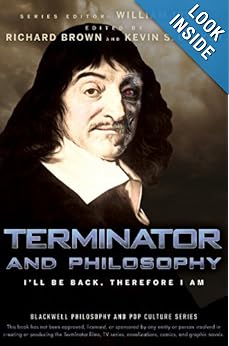
In the Spring 2013 semester I initiated a new course at LaGuardia that had the theme Cosmology, Consciousness, and Computation. The basic idea was to explore issues relating to physicalism. Intuitively, physicalism is the view that everything that exists is physical but what is the nature of physical reality? The idea I had was to have the course divided into three sections. In the first section we would do a conceptual physics course talking about the development of physics from the ancient world to the present day. Then we would turn to issues about consciousness and mind and where they fit in the physical picture we have so far developed. After that we turn to issues about computation; Is the universe computable? Or perhaps does it instantiate some computation? Is consciousness computational? Are we living in a simulation? Is the universe a hologram?
In my quest to have low cost book options for students I have adopted the Terminator book I co-edited and have supplemented that with readings from the Stanford Encyclopedia of Philosophy and other online material. The reception to the course was very good and I am really looking forward to doing it a second time in Fall 2013. I have updated the syllabus and, as usual, would welcome any suggestions or feedback.
Week I: Introduction
• →Richard Brown on What is Philosophy? – http://www.youtube.com/watch?v=ySS0bNeWZOg
Week 2: Early Attempts to Understand Mind and Physical Reality
• →Terminator Ch 10: The Nature of Time and the Universe
• Time- http://plato.stanford.edu/entries/time/
• Richard Brown on Pre-Socratic Philosophy- http://www.youtube.com/watch?v=zfLgRotdcKI&list=PLfR0qhtOKP6eYkUoW7DH8qdjwEyQnsbPJ&index=2
• Pre-Socratic Philosophy- http://plato.stanford.edu/entries/presocratics/
• Ancient Theories of the Soul- http://plato.stanford.edu/entries/ancient-soul/
• Parmenides- http://plato.stanford.edu/entries/parmenides/
• Zeno’s Paradoxes- http://plato.stanford.edu/entries/paradox-zeno/
• Ancient Atomism- http://plato.stanford.edu/entries/atomism-ancient/
• Democritus- http://plato.stanford.edu/entries/democritus/
• Intentionality in Ancient Philosophy- http://plato.stanford.edu/entries/intentionality-ancient/
• Time- http://plato.stanford.edu/entries/time/
Week 3: Modern Philosophy and Modern Science
• →Terminator Ch 2 –Animal consciousness, Descartes, and Emotions
• Descartes’ Physics- http://plato.stanford.edu/entries/descartes-physics/
• Descartes’ Epistemology- http://plato.stanford.edu/entries/descartes-epistemology/
• Descartes’ Theory of Ideas- http://plato.stanford.edu/entries/descartes-ideas/
• Other Minds- http://plato.stanford.edu/entries/other-minds/
• Animal Consciousness- http://plato.stanford.edu/entries/consciousness-animal/
• Locke on Real Essence- http://plato.stanford.edu/entries/real-essence/
• Locke’s Philosophy of Science- http://plato.stanford.edu/entries/locke-philosophy-science/
• Newton’s Philosophy- http://plato.stanford.edu/entries/newton-philosophy/
• Isaac Newton- http://plato.stanford.edu/entries/newton/
• Newton’s Views on Space, Time, and Motion-http://plato.stanford.edu/entries/newton-stm/
• The Contents of Perception- http://plato.stanford.edu/entries/perception-contents/
• The Problem of Perception- http://plato.stanford.edu/entries/perception-problem/
Week 4: Relativity Physics
• →Terminator Ch 8: paradoxes of time travel
• Einstein for Everyone:http://www.pitt.edu/~jdnorton/teaching/HPS_0410/chapters/index.html
• Brian Greene’s The Elegant Universe on NOVA-http://www.pbs.org/wgbh/nova/physics/elegant-universe.html#elegant-universe-einstein.html
• Time Travel and Modern Physics- http://plato.stanford.edu/entries/time-travel-phys/
• Time Machines- http://plato.stanford.edu/entries/time-machine/
• The Equivalence of Mass and Energy- http://plato.stanford.edu/entries/equivME/
• The Hole Argument- http://plato.stanford.edu/entries/spacetime-holearg/
• David Lewis’ The Paradoxes of Time Travel-http://www.csus.edu/indiv/m/merlinos/Paradoxes%20of%20Time%20Travel.pdf
Week 5: Quantum Mechanics
• Brian Greene’s The Fabric of the Cosmos on NOVA-http://www.pbs.org/wgbh/nova/physics/fabric-of-cosmos.html
• Copenhagen Interpretation of Quantum Mechanics:http://plato.stanford.edu/entries/qm-copenhagen/
• Many Worlds Interpretation of Quantum Mechanics-http://plato.stanford.edu/entries/qm-manyworlds/
• The Uncertainty Principle: http://plato.stanford.edu/entries/qt-uncertainty/
• Quantum Entanglement and Information: http://plato.stanford.edu/entries/qt-entangle/
• The Einstein-Podolsky-Rosen Argument in Quantum Theory-http://plato.stanford.edu/entries/qt-epr/
• Measurement in Quantum Theory: http://plato.stanford.edu/entries/qt-measurement/
• Quantum Mechanics- http://plato.stanford.edu/entries/qm/
• Richard Feynman on Double Slit Experiment- http://www.youtube.com/watch?v=hUJfjRoxCbk&list=PLfR0qhtOKP6eYkUoW7DH8qdjwEyQnsbPJ&index=3
Week 6: The Nature and Origin of the Universe
• →The Scale of the Universe- http://htwins.net/scale2/
• Hubble Deep Field: http://hubblesite.org/hubble_discoveries/hubble_deep_field/
• Cosmology and Theology- http://plato.stanford.edu/entries/cosmology-theology/
• Atheism and Agnosticism- http://plato.stanford.edu/entries/atheism-agnosticism/
• Religion and Science- http://plato.stanford.edu/entries/religion-science/
• Teleological Arguments for God’s Existence-http://plato.stanford.edu/entries/teleological-arguments/
• Cosmological Argument- http://plato.stanford.edu/entries/cosmological-argument/
• The Possible Parallel Universe of Dark Matter-http://discovermagazine.com/2013/julyaug/21-the-possible-parallel-universe-of-dark-matter#.UhDhPRbtaz6
Week 7: The Possibility of Life Beyond Earth
• Life- http://plato.stanford.edu/entries/life/
• Molecular Biology- http://plato.stanford.edu/entries/molecular-biology/
• Finding Life Beyond Earth- http://www.youtube.com/watch?v=FVzmGaGCqP8
Week 8: Consciousness in the Physical World?
• Consciousness- http://plato.stanford.edu/entries/consciousness/
• Representational Theories of Consciousness-http://plato.stanford.edu/entries/consciousness-representational/
• Functionalism- http://plato.stanford.edu/entries/functionalism/
• The Mind/Brain Identity Theory- http://plato.stanford.edu/entries/mind-identity/
• Dualism- http://plato.stanford.edu/entries/dualism/
• Zombies- http://plato.stanford.edu/entries/zombies/
Week 9: Beyond Physicalism?
• Eliminative Materialism- http://plato.stanford.edu/entries/materialism-eliminative/
• Folk Psychology as a Theory- http://plato.stanford.edu/entries/folkpsych-theory/
• The Philosophy of Neuroscience- http://plato.stanford.edu/entries/neuroscience/
• Panpsychism- http://plato.stanford.edu/entries/panpsychism/
Week 10: Transhumanism
• →Terminator Ch 4: Extended Mind, Transhumanism
• A History of Transhumanist Thought-http://www.fhi.ox.ac.uk/documents/journal_publications/al/nick_bostrom
• Biohackers: A Journey into Cyborg America- http://www.youtube.com/watch?v=K0WIgU7LRcI&list=PLfR0qhtOKP6eYkUoW7DH8qdjwEyQnsbPJ&index=48
• Tim Cannon on Potential Benefits of Sensory Augmentation-http://www.youtube.com/watch?v=KZ1KCpSL51E&list=PLfR0qhtOKP6eYkUoW7DH8qdjwEyQnsbPJ&index=46
• Aubrey de Grey on Defeating Aging- http://www.youtube.com/watch?v=d1FBJGl2c-Y&list=PLfR0qhtOKP6eYkUoW7DH8qdjwEyQnsbPJ&index=17
Week 11: A.I. and The Singularity
• →Terminator Ch 1: A.I., Chinese Room, Transhumanism
• →Terminator Ch 3: Why always with the killing?
• The Chinese Room Argument- http://plato.stanford.edu/entries/chinese-room/
• The Turing Test- http://plato.stanford.edu/entries/turing-test/
• The Frame Problem- http://plato.stanford.edu/entries/frame-problem/
• David Chalmers’ The Singularity: A Philosophical Analysis-http://consc.net/papers/singularity.pdf
• David Chalmers on Simulation and Singularity- http://www.youtube.com/watch?v=FafHdF_D8gA&list=PLfR0qhtOKP6eYkUoW7DH8qdjwEyQnsbPJ&index=13
Week 12: The Simulation Argument & The Holographic Hypothesis
• Nick Bostrom’s Simulation Argument Website- http://www.simulation-argument.com
• Nick Bostrom on The Simulation Argument- http://www.youtube.com/watch?v=nnl6nY8YKHs&list=PLfR0qhtOKP6eYkUoW7DH8qdjwEyQnsbPJ&index=24
• David Chalmers’ The Matrix as Metaphysics- http://consc.net/papers/matrix.html
• Leonard Susskind on The World as a Hologram- http://www.youtube.com/watch?v=2DIl3Hfh9tY&list=PLfR0qhtOKP6eYkUoW7DH8qdjwEyQnsbPJ&index=16

Philosophy of Dreaming
According to Owen Flanagan (2000), there are four major philosophical questions about dreaming:
These interrelated questions cover philosophical domains as diverse as metaphysics, epistemology, ethics, scientific methodology, and the philosophy of biology, mind and language. This article covers the four questions and also looks at some newly emerging philosophical questions about dreams:
- How can I be sure I am not always dreaming?
- Can I be immoral in dreams?
- Are dreams conscious experiences that occur during sleep?
- Does dreaming have an evolutionary function?
5. Is dreaming an ideal scientific model for consciousness research?
6. Is dreaming an instance of hallucinating or imagining?
Section 1 introduces the traditional philosophical question that Descartes asked himself, a question which has championed scepticism about the external world. How can I be sure I am not always dreaming, or dreaming right now? Philosophers have typically looked for features that distinguish dreams from waking life and one key debate centres on whether it is possible to feel pain in a dream.
Section 2 surveys the ethics of dreaming. The classical view of Augustine is contrasted with more abstract ethical positions, namely, those of the Deontologist, the Consequentialist and the Virtue Ethicist. The notion of lucid dreaming is examined here in light of the question of responsibility during dreaming and how we treat other dream characters.
Sections 3 covers the various different positions, objections and replies to question 3: the debate about whether dreaming is, or is not, a conscious state. The challenges from Malcolm and Dennett are covered. These challenges question the authority of the common-sense view of dreaming as a consciously experienced state. Malcolm argues that the concept of dreaming is incoherent, while Dennett puts forward a theory of dreaming without appealing to consciousness.
Section 4 covers the evolutionary debate, where empirical work ultimately leaves us uncertain of the extent to which natural selection has shaped dreaming, if at all. Early approaches by Freud and Jung are reviewed, followed by approaches by Flanagan and Revonsuo. Though Freud, Jung and Revonsuo have argued that dreaming is functional, Flanagan represents a view shared by many neuroscientists that dreaming has no function at all.
Section 5 looks at questions 5 and 6. Question 5 is about the cutting edge issue of precisely how dreaming should be integrated into the research program of consciousness. Should dreaming be taken as a scientific model of consciousness? Might dreaming play another role such as a contrast analysis with other mental states? Question 6, which raises a question of the exact qualitative nature of dreaming, has a longer history, though it is also receiving contemporary attention. The section outlines reasons favouring the orthodox view of psychology, that dream imagery is perceptual (hallucinatory), and reasons favouring the philosophical challenge to that orthodoxy, that dreams are ultimately imaginative in nature.
Table of Contents
- Dreaming in Epistemology
- The Ethics of Dreaming
- Are Dreams Consciously Experienced?
- The Function of Dreaming
- Dreaming in Contemporary Philosophy of Mind and Consciousness
- References and Further Reading

The Cave: Plato’s Allegory in Claymation
by Kent Thune - May 10th, 2013
This is a wonderful clay animation adaptation of Plato’s Allegory of the Cave, which dovetails nicely into my Decline of America piece posted yesterday. The video demonstrates simply and briefly how our decline is probable but preventable.
The number of “prisoners” increases daily. My goal is to free as many people from “the cave” as possible. Please share with anyone who may benefit.
Hat tip to my friend Ken at Cicero’s Free Citizen Post for making me aware of the video.
——————————————————————
Kent Thune is the blog author of The Financial Philosopher. You can follow Kent on Twitter @ThinkersQuill.
Reality revealed: The ultimate fabric of the universe
MacGregor Campbell, consultant
Is there such a thing as reality?
It's easy to take reality for granted: after all, science does a reasonably good job at describing the world in an objective way. But what does science have to say about the concept of reality itself?
One approach would be to identify what is most fundamental in the universe. Using this reasoning, everything around us can be broken down into molecules, which in turn are composed of atoms, which in turn are made up of smaller and smaller components. So what would this process finally uncover? And is this mysterious precursor the ultimate basis of reality?
In this animation, we look at two ways of defining what is real and look at what lies at the heart of the universe. To find out more, read our full-length feature, "Reality: The definition", or check out the rest of our special issue on reality.
For other mind-bending animations, watch how to get something from nothing or find out what "nothing" really is.
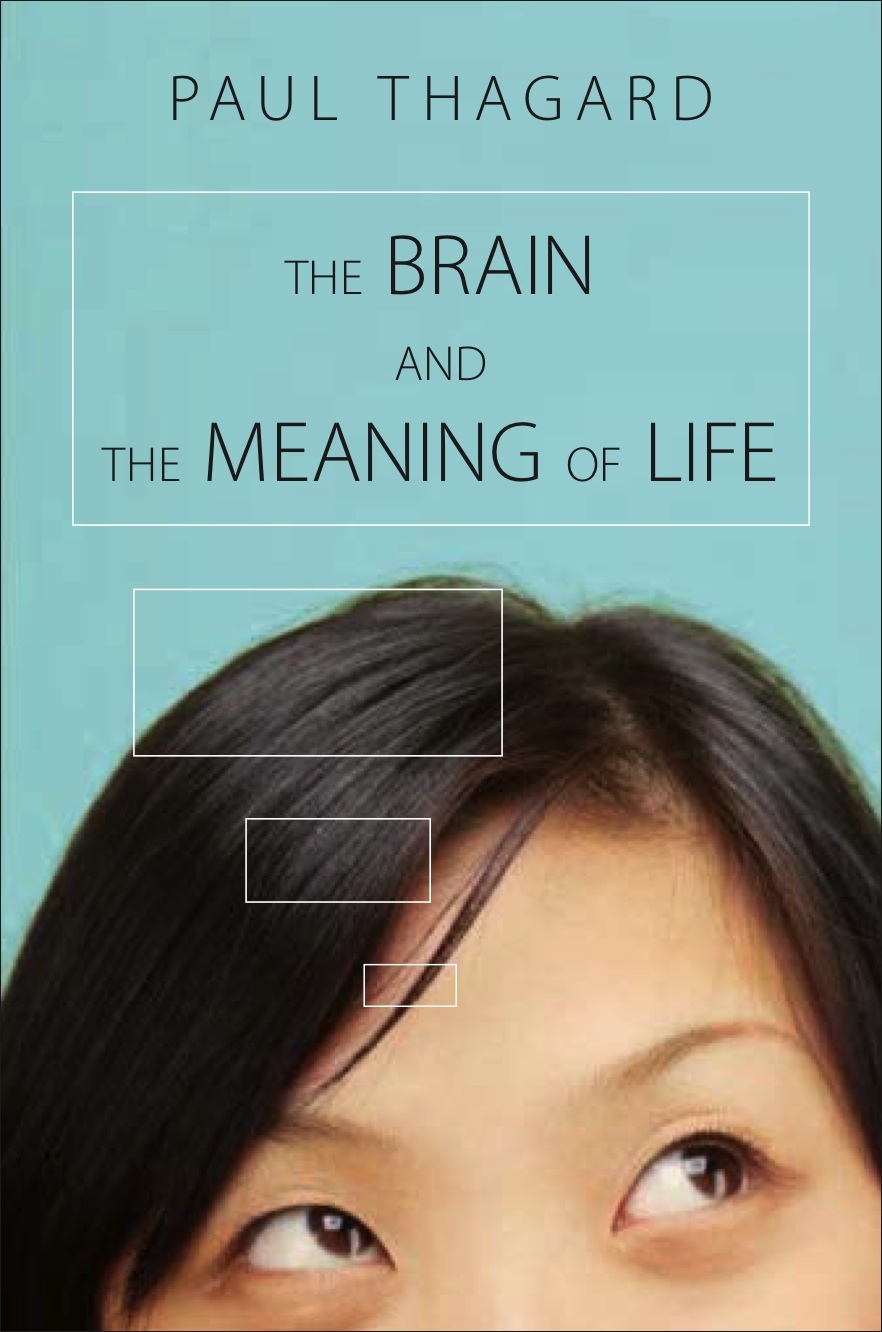
Why is life worth living? What makes actions right or wrong? What is reality and how do we know it? The Brain and the Meaning of Life draws on research in philosophy, psychology, and neuroscience to answer some of the most pressing questions about life's nature and value. Paul Thagard argues that evidence requires the abandonment of many traditional ideas about the soul, free will, and immortality, and shows how brain science matters for fundamental issues about reality, morality, and the meaning of life. The ongoing Brain Revolution reveals how love, work, and play provide good reasons for living.
Defending the superiority of evidence-based reasoning over religious faith and philosophical thought experiments, Thagard argues that minds are brains and that reality is what science can discover. Brains come to know reality through a combination of perception and reasoning. Just as important, our brains evaluate aspects of reality through emotions that can produce both good and bad decisions. Our cognitive and emotional abilities allow us to understand reality, decide effectively, act morally, and pursue the vital needs of love, work, and play. Wisdom consists of knowing what matters, why it matters, and how to achieve it.
The Brain and the Meaning of Life shows how brain science helps to answer questions about the nature of mind and reality, while alleviating anxiety about the difficulty of life in a vast universe. The book integrates decades of multidisciplinary research, but its clear explanations and humor make it accessible to the general reader.
Paul Thagard is professor of philosophy and director of the cognitive science program at the University of Waterloo, Canada. His books include Hot Thought: Mechanisms and Applications of Emotional Cognition and How Scientists Explain Disease.
Reviews:
"[Thagard] offers a tightly reasoned, often humorous, and original contribution to the emerging practice of applying science to areas heretofore the province of philosophers, theologians, ethicists, and politicians: What is reality and how can we know it? Are mind and brain one or two? What is the source of the sense of self? What is love? What is the difference between right and wrong, and how can we know it? What is the most legitimate form of government? What is the meaning of life, and how can we find happiness in it? Thagard employs the latest tools and findings of science in his attempts to answer these (and additional) questions." - Michael Shermer, Science
"A thoughtful and well-researched attempt to answer that most fundamental existential question: why not kill yourself? Or, to give it a positive spin, what gives life meaning? Thagard lays out detailed arguments that reality is knowable through science, that minds are nothing other than material brains and that there are no ultimate rights and wrongs handed down by a supernatural being." - New Scientist
"Thagard's 'neural naturalism' promises nothing short of a conceptual revolution, or better, a paradigm shift. His evidence-based strategy uses the data from psychology and neuroscience to expose empirically based answers to questions such as, What is the meaning of life? What ought one to do? . . . Thagard's reader-friendly text includes a glossary, endnotes, and extensive references." - Choice
"The name of this well-written and ambitious book understates the breadth of its scope. The book deals with the relation of modern neuroscience not only to the meaning of life, but also to ethics, metaphysics, and epistemology. . . . The discussion is rich, unorthodox, and frequently exciting." - Iddo Landau, Metapsychology Online Reviews
More reviews
TABLE OF CONTENTS:
Preface xi
Acknowledgments xv
Chapter 1: We All Need Wisdom 1
Why Live? 1
Sources of Wisdom 3
Philosophical Approaches 5
The Relevance of Minds and Brains 6
Looking Ahead 8
Conclusion 12
Chapter 2: Evidence Beats Faith 13
Faith versus Evidence 13
How Faith Works 14
How Evidence Works 20
Evidence and Inference in Science 23
Medicine: Evidence or Faith? 27
Evidence, Truth, and God 32
A Priori Reasoning and Thought Experiments 35
Conclusion 40
Chapter 3: Minds Are Brains 42
The Brain Revolution 42
Evidence That Minds Are Brains 43
Evidence for Dualism? 54
Objections to Mind-Brain Identity 59
Who Are You? 63
Conclusion 64
Chapter 4: How Brains Know Reality 67
Reality and Its Discontents 67
Knowing Objects 69
Appearance and Reality 72
Concepts 76
Knowledge beyond Perception 81
Coherence in the Brain 85
Coherence and Truth 90
Conclusion 92
Chapter 5: How Brains Feel Emotions 94
Emotions Matter 94
Valuations in the Brain 95
Cognitive Appraisal versus Bodily Perception 98
Synthesis: The EMOCON Model 100
Emotional Consciousness 105
Multilevel Explanations 108
Rationality and Affective Afflictions 111
Conclusion 116
Chapter 6: How Brains Decide 119
Big Decisions 119
Inference to the Best Plan 121
Decisions in the Brain 123
Changing Goals 126
How to Make Bad Decisions 133
Living without Free Will 137
Conclusion 140
Chapter 7: Why Life Is Worth Living 142
The Meaning of Life 142
Nihilism 143
Happiness 146
Goals and Meaning 149
Love 152
Work 158
Play 161
Conclusion 165
Chapter 8: Needs and Hopes 168
Wants versus Needs 168
Vital Needs 169
How Love, Work, and Play Satisfy Needs 171
Balance, Coherence, and Change 176
Hope versus Despair 177
Conclusion 182
Chapter 9: Ethical Brains 183
Ethical Decisions 183
Conscience and Moral Intuitions 184
Mirror Neurons 188
Empathy 190
Moral Motivation 192
Ethical Theory 195
Moral Objectivity 201
Responsibility 204
Conclusion 206
Chapter 10. Making Sense of It All 209
Connections Made 209
Wisdom Gained 213
What Kind of Government Should Countries Have? 215
How Can Creative Change Be Produced? 217
What Is Mathematical Knowledge? 221
Why Is There Something and Not Nothing? 224
The Future of Wisdom 226
Notes 231
Glossary 251
References 255
Index 271

“WHERE DID THE UNIVERSE COME FROM? WHAT WAS THERE BEFORE IT? WHAT WILL THE FUTURE BRING? AND FINALLY, WHY IS THERE SOMETHING RATHER THAN NOTHING?”It's an interesting dialogue - and of course, the Higgs Boson is part of the discussion.
Lawrence Krauss’s provocative answers to these and other timeless questions in a wildly popular lecture now on YouTube have attracted almost a million viewers. The last of these questions in particular has been at the center of religious and philosophical debates about the existence of God, and it’s the supposed counterargument to anyone who questions the need for God. As Krauss argues, scientists have, however, historically focused on other, more pressing issues—such as figuring out how the universe actually functions, which can ultimately help us to improve the quality of our lives.
Now, in a cosmological story that rivets as it enlightens, pioneering theoretical physicist Lawrence Krauss explains the groundbreaking new scientific advances that turn the most basic philosophical questions on their heads. One of the few prominent scientists today to have actively crossed the chasm between science and popular culture, Krauss reveals that modern science is addressing the question of why there is something rather than nothing, with surprising and fascinating results. The staggeringly beautiful experimental observations and mind-bending new theories are all described accessibly in A Universe from Nothing, and they suggest that not only can something arise from nothing, something will always arise from nothing.
Robert Wright (Bloggingheads.tv, The Evolution of God, Nonzero) and Lawrence Krauss (A Universe from Nothing, The Physics of Star Trek)
Play entire video
- Lawrence's book, A Universe from Nothing: Why There Is Something Rather than Nothing
- Bob on the Higgs Boson, part 1
- Bob on the Higgs Boson, part 2
- Bob on the Higgs Boson, part 3
- Lawrence in the NYT on the Higgs Boson
- Lawrence's book, "Quantum Man: Richard Feynman's Life in Science"
- Bob on Feynman on quantum mechanics


