Showing posts with label fear. Show all posts

Friday, August 01, 2014

Why Are Conservatives so Annoyed by Neil DeGrasse Tyson? Because, You Know, Science


This is so pathetic - the National Review thinks we have a "nerd problem."

Is it not enough to support a creationism museum, a publicly funded Noah's Ark theme park ($43 million dollars worth of tax breaks in Kentucky, while the state cuts social programs and education), and to have several states trying to eradicate evolution from the science classroom in public schools? How ironic is it that in some areas now, if you want your kids to get a good science education you have to send them to parochial schools?

So, the topper of all the toppers, the National Review (once seen as the intellectual mouthpiece for the conservative movement) is waging war on intellectuals, you know, those nerdy science types. So much for being intellectual. Now they are just dumb, and really afeared of them brainy folks.

Top of the list, of course, is Neil DeGrasse Tyson, along with Paul Krugman, Rachel Maddow (not to mention Ezra Klein and Nate Silver), and anyone else who believes in science and thinks that "facts" should come with references.

This part of the article is funny...
Nerds used to be 90-pound weaklings who never got the girl. Then nerds built the Internet and personal computers. Now nerds rule the world. Or at least, that part of it that isn’t controlled by retrograde politicians.
The funny thing, to me, is that I am a nerd, and used to get called a nerd, or a geek, a lot when I was in 4th-7th grades. Then an amazing thing happened, my genetics kicked in and suddenly I was a nerdy 13 year old who was 6 feet tall and weighed 180 lbs (see what I did there? science!). No one called me names anymore.

But I digress.

This article from Salon is about how the right someone is so scared of science that they didn't just stick their heads in the sand, rather, they seem to have lost their heads in their collective arses.

National Review declares war against the nerds

Why are conservatives so annoyed by Neil DeGrasse Tyson? Because, you know, science

Andrew Leonard
Wednesday, Jul 30, 2014


Paul Krugman, Neil deGrasse Tyson, Rachel Maddow (Credit: AP/Fredrik Persson/Richard Shotwell/Chris Pizzello/Photo collage by Salon)

If you prick a nerd, does he not bleed? If you wrong us, shall we not revenge? Like fire ants boiling out of their underground lair, overcome with rage at whatever dastard disturbed their slumber, nerds everywhere are taking to the streets, apoplectic at the most foul attack on entitled smarts this nation has seen since Dwight D. Eisenhower called Robert Oppenheimer a pencil-necked geek.

OK, I don’t actually have a link for that Eisenhower thing. Maybe it didn’t happen. But I do have a link for National Review’s cover-story assaulting nerd-dom, “Smarter Than Thou.” A cover story that begins by attacking none other than Neil DeGrasse Tyson — the Holy Roman Nerd-Emperor himself! — as the “the fetish and totem of the extraordinarily puffed-up ‘nerd’ culture that has of late started to bloom across the United States.”

Oh boy, them’s fightin’ words. I can tell you, nerds are spitting mad. They’ve got the torches and pitchforks ready to hand. They’re going to burn some shit down!

Well, actually, probably not. What they’re really going to do is craft some sarcastically amusing tweets, because you know, they’re nerds. That’s how nerds roll. And maybe they’ll write a clever smartphone app that can be deployed to mock people who don’t accept the science of climate change. Because, contra National Review’s Charles Cooke, who seems to believe that the new primacy of the nerd is some kind of collectivist scam by Ezra Klein and Nate Silver and Rachel Maddow and “anybody who conforms to the Left’s social and moral precepts while wearing glasses and babbling about statistics,” the cultural ascendancy of the nerd has nothing to do with who wears horn-rims on TV and everything to do with the massive technological transformation of society over the last 20 years. Nerds used to be 90-pound weaklings who never got the girl. Then nerds built the Internet and personal computers. Now nerds rule the world. Or at least, that part of it that isn’t controlled by retrograde politicians. The primacy of nerd culture is not an Ezra Klein affectation; it’s fallout from the fact that nerds are making an awful lot of money these days.

Cooke, after leading off with Tyson, fatally exposes his hand by defining the leaders of the new nerd menace as a group that, oddly, all share politics that National Review doesn’t approve of.
Prominent examples include MSNBC’s Melissa Harris-Perry, Rachel Maddow, Steve Kornacki, and Chris Hayes; Vox’s Ezra Klein, Dylan Matthews, and Matt Yglesias; the sabermetrician Nate Silver; the economist Paul Krugman; the atheist Richard Dawkins; former vice president Al Gore; celebrity scientist Bill Nye…
Later, Cooke says that “the nerds of MSNBC and beyond are not actually nerds — with scientific training and all that it entails — but the popular kids indulging in a fad.” I’m not sure it’s all that smart to attack the likes of Dawkins or Krugman, (or even Bill Nye, a mechanical engineer who worked for Boeing) as lacking scientific training. But Cooke’s real problem is that the “real” nerds — the ones that aren’t on MSNBC, also, by and large, share the political beliefs he scorns.

Cooke never mentions Silicon Valley, which is odd, because the fact that the world’s greatest preponderance of nerds also happens to be the United States’ most formidable bastion of left-wing progressive politics would seem to support his thesis that nerds are pinkos. (And yes, I know, there are a lot of libertarian nerds — but guess what, those guys believe in science too!) There’s a reason for Cooke’s omission. Acknowledging that nerds — you know, the guys and gals who invented the microchip and the PC and the smartphone — actually do have a grasp of scientific fact, which leads them to take seriously the problem of historically unprecedented carbon dioxide emissions and the idiocy of rewriting school science textbooks to include dogma about creationism and intelligent design, is a disastrous dead end for conservatives.

If Cooke honestly wanted to grapple with the cultural cachet of nerd-dom, he’d have to answer questions such as why a poll by the Pew Research Service found that in 2009 that only six percent of scientists identify as Republican. He’d have to grapple with the true reasons for Tyson’s popularity, which have much more to do with how grateful a significant portion of this nation is for someone who can rebut ignorance and religious propaganda with humor and clarity than with any political identification. He’d have to face up to the sobering reality that the majority of people who understand how the world works in terms of biology and physics and mathematics also think that our overheating globe is a serious problem.

Instead, Cooke argues that leftists are embracing the nerd-designation because it says to the world what they are not: “… which is southern, politically conservative, culturally traditional, religious in some sense, patriotic, driven by principle rather than the pivot tables of Microsoft Excel, and in any way attached to the past.”

Oh NO! Cooke dares attack nerdish chart-love! That really stings. But you know what? It’s not the fault of liberal nerds that Ken Hamm’s Creation Museum, which claims that dinosaurs were wiped out in a flood 4300 years ago, is in the South. And for better or worse, it’s not the fault of liberal nerds that large swathes of Republican politicians in the South have lined up behind the breath-taking rejection of the scientific method that is symbolized by the Creation Museum.

But this thing about attachment to the past — well maybe Cooke’s got a point there. Nerds love science fiction, in part because we love the promise of the future, a promise of Star Trek abundance and material prosperity for everyone. We look at the past, at centuries that included slavery and child labor and infant mortality and Inquisitions and the lack of female suffrage, and we think, we can do better than that. We can progress.

That’s why we like Neil DeGrasse Tyson. Because we believe that civilization is going somewhere, and that if the future isn’t better than the past, then we’re just wasting our time on this planet.


Andrew Leonard is a staff writer at Salon. On Twitter, @koxinga21.

Wednesday, June 18, 2014

Tom Ireland - What Does Mindfulness Meditation Do to Your Brain?


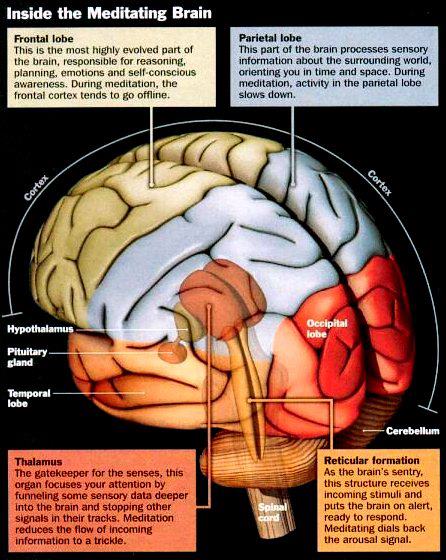
Via Scientific American, an article from Tom Ireland on the ways mindfulness meditation changes the brain, not least of which is shrinking the amygdala (fear and stress center) and thickening the prefrontal cortex (executive function).

What Does Mindfulness Meditation Do to Your Brain?

By Tom Ireland | June 12, 2014

The views expressed are those of the author and are not necessarily those of Scientific American.

As you read this, wiggle your toes. Feel the way they push against your shoes, and the weight of your feet on the floor. Really think about what your feet feel like right now – their heaviness.

If you’ve never heard of mindfulness meditation, congratulations, you’ve just done a few moments of it. More people than ever are doing some form of this stress-busting meditation, and researchers are discovering it has some quite extraordinary effects on the brains of those who do it regularly.

Originally an ancient Buddhist meditation technique, in recent years mindfulness has evolved into a range of secular therapies and courses, most of them focused on being aware of the present moment and simply noticing feelings and thoughts as they come and go.


Credit: Sebastien Wiertz via Flickr

It’s been accepted as a useful therapy for anxiety and depression for around a decade, and mindfulness websites like GetSomeHeadSpace.com are attracting millions of subscribers. It’s being explored by schools, pro sports teams and military units to enhance performance, and is showing promise as a way of helping sufferers of chronic pain, addiction and tinnitus, too. There is even some evidence that mindfulness can help with the symptoms of certain physical conditions, such as irritable bowel syndrome, cancer, and HIV.

Yet until recently little was known about how a few hours of quiet reflection each week could lead to such an intriguing range of mental and physical effects. Now, as the popularity of mindfulness grows, brain imaging techniques are revealing that this ancient practice can profoundly change the way different regions of the brain communicate with each other – and therefore how we think – permanently.


Mindfulness practice and expertise is associated with a decreased volume of grey matter in the amygdala (red), a key stress-responding region. (Image courtesy of Adrienne Taren)

No fear

MRI scans show that after an eight-week course of mindfulness practice, the brain’s “fight or flight” center, the amygdala, appears to shrink. This primal region of the brain, associated with fear and emotion, is involved in the initiation of the body’s response to stress.

As the amygdala shrinks, the pre-frontal cortex – associated with higher order brain functions such as awareness, concentration and decision-making – becomes thicker.

The “functional connectivity” between these regions – i.e. how often they are activated together – also changes. The connection between the amygdala and the rest of the brain gets weaker, while the connections between areas associated with attention and concentration get stronger.

The scale of these changes correlate with the number of hours of meditation practice a person has done, says Adrienne Taren, a researcher studying mindfulness at the University of Pittsburgh.

“The picture we have is that mindfulness practice increases one’s ability to recruit higher order, pre-frontal cortex regions in order to down-regulate lower-order brain activity,” she says.

In other words, our more primal responses to stress seem to be superseded by more thoughtful ones.

Lots of activities can boost the size of various parts of the pre-frontal cortex – video games, for example – but it’s the disconnection of our mind from its “stress center” that seems to give rise to a range of physical as well as mental health benefits, says Taren.

“I’m definitely not saying mindfulness can cure HIV or prevent heart disease. But we do see a reduction in biomarkers of stress and inflammation. Markers like C-reactive proteins, interleukin 6 and cortisol – all of which are associated with disease.”

Feel the pain

Things get even more interesting when researchers study mindfulness experts experiencing pain. Advanced meditators report feeling significantly less pain than non-meditators. Yet scans of their brains show slightly more activity in areas associated with pain than the non-meditators.

“It doesn’t fit any of the classic models of pain relief, including drugs, where we see less activity in these areas,” says Joshua Grant, a postdoc at the Max Plank Institute for Human Cognitive and Brain Sciences in Leipzig, Germany. The expert mindfulness meditators also showed “massive” reductions in activity in regions involved in appraising stimuli, emotion and memory, says Grant.

Again, two regions that are normally functionally connected, the anterior cingulate cortex (associated with the unpleasantness of pain) and parts of the prefrontal cortex, appear to become “uncoupled” in meditators.

“It seems Zen practitioners were able to remove or lessen the aversiveness of the stimulation – and thus the stressing nature of it – by altering the connectivity between two brain regions which are normally communicating with one another,” says Grant. “They certainly don’t seem to have blocked the experience. Rather, it seems they refrained from engaging in thought processes that make it painful.”


Credit: Balint Földesi via Flickr

Feeling Zen

It’s worth noting that although this study tested expert meditators, they were not in a meditative state – the pain-lessening effect is not something you have to work yourself up into a trance to achieve; instead, it seems to be a permanent change in their perception.

“We asked them specifically not to meditate,” says Grant. “There is just a huge difference in their brains. There is no question expert meditators’ baseline states are different.”

Other studies on expert meditators – that is, subjects with at least 40,000 hours of mindfulness practice under their belt – discovered that their resting brain looks similar, when scanned, to the way a normal person’s does when he or she is meditating.

At this level of expertise, the pre-frontal cortex is no longer bigger than expected. In fact, its size and activity start to decrease again, says Taren. “It’s as if that way of thinking has becomes the default, it is automatic – it doesn’t require any concentration.”

There’s still much to discover, especially in terms of what is happening when the brain comprehends the present moment, and what other effects mindfulness might have on people. Research on the technique is still in its infancy, and the imprecision of brain imaging means researchers have to make assumptions about what different regions of the brain are doing.

Both Grant and Taren, and others, are in the middle of large, unprecedented studies that aim to isolate the effects of mindfulness from other methods of stress-relief, and track exactly how the brain changes over a long period of meditation practice.

“I’m really excited about the effects of mindfulness,” says Taren. “It’s been great to see it move away from being a spiritual thing towards proper science and clinical evidence, as stress is a huge problem and has a huge impact on many people’s health. Being able to take time out and focus our mind is increasingly important.”

Perhaps it is the new age, quasi-spiritual connotations of meditation that have so far prevented mindfulness from being hailed as an antidote to our increasingly frantic world. Research is helping overcome this perception, and ten minutes of mindfulness could soon become an accepted, stress-busting part of our daily health regimen, just like going to the gym or brushing our teeth.


About the Author: Tom Ireland is managing editor at the Society of Biology and a freelance journalist covering mostly health, education and science. Follow on Twitter @Tom_J_Ireland.

The views expressed are those of the author and are not necessarily those of Scientific American.

Wednesday, May 28, 2014

How the ‘Gut Feeling’ Shapes Fear

Via Eidgenössische Technische Hochschule Zürich, this press release looks at new research on how the vagus nerve is part of our innate fear and anxiety systems. Nice to this being studied and published in a major journal, but Stephen Porges' polyvagal theory outlined this years ago.

Below the press release from ETH Zurich, there is the abstract for the article, which is (of course) sequestered behind a pay-wall.

However, do check out the Porges article linked to above, and this weekend's New York Times Magazine had an article (Can the Nervous System Be Hacked?) on vagus nerve stimulation to treat immune system disorders (rheumatoid arthritis, etc.).

How the ‘gut feeling’ shapes fear

22.05.2014 | Angelika Jacobs | Research
ETH Zürich

gut feeling
Gut feeling: the gut influences brain processes involved in emotions like fear. 
(Fotolia.com / Montage: ETH Zurich)

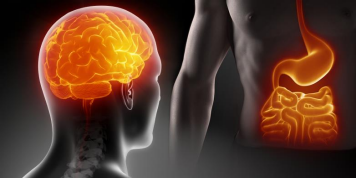
We are all familiar with that uncomfortable feeling in our stomach when faced with a threatening situation. By studying rats, researchers at ETH Zurich have been able to prove for the first time that our ‘gut instinct’ has a significant impact on how we react to fear.

An unlit, deserted car park at night, footsteps in the gloom. The heart beats faster and the stomach ties itself in knots. We often feel threatening situations in our stomachs. While the brain has long been viewed as the centre of all emotions, researchers are increasingly trying to get to the bottom of this proverbial gut instinct.

It is not only the brain that controls processes in our abdominal cavity; our stomach also sends signals back to the brain. At the heart of this dialogue between the brain and abdomen is the vagus nerve, which transmits signals in both directions – from the brain to our internal organs (via the so called efferent nerves) and from the stomach back to our brain (via the afferent nerves). By cutting the afferent nerve fibres in rats, a team of researchers led by Urs Meyer, a member of staff in the Laboratory of Physiology & Behaviour at ETH Zurich, turned this two-way communication into a one-way street, enabling the researchers to get to the bottom of the role played by gut instinct. In the test animals, the brain was still able to control processes in the abdomen, but no longer received any signals from the other direction.

Less fear without gut instinct

In the behavioural studies, the researchers determined that the rats were less wary of open spaces and bright lights compared with controlled rats with an intact vagus nerve. “The innate response to fear appears to be influenced significantly by signals sent from the stomach to the brain,” says Meyer.

Nevertheless, the loss of their gut instinct did not make the rats completely fearless: the situation for learned fear behaviour looked different. In a conditioning experiment, the rats learned to link a neutral acoustic stimulus – a sound – to an unpleasant experience. Here, the signal path between the stomach and brain appeared to play no role, with the test animals learning the association as well as the control animals. If, however, the researchers switched from a negative to a neutral stimulus, the rats without gut instinct required significantly longer to associate the sound with the new, neutral situation. This also fits with the results of a recently published study conducted by other researchers, which found that stimulation of the vagus nerve facilitates relearning, says Meyer.

These findings are also of interest to the field of psychiatry, as post-traumatic stress disorder (PTSD), for example, is linked to the association of neutral stimuli with fear triggered by extreme experiences. Stimulation of the vagus nerve could help people with PTSD to once more associate the triggering stimuli with neutral experiences. Vagus nerve stimulation is already used today to treat epilepsy and, in some cases, depression.

Stomach influences signalling in the brain

“A lower level of innate fear, but a longer retention of learned fear – this may sound contradictory,” says Meyer. However, innate and conditioned fear are two different behavioural domains in which different signalling systems in the brain are involved. On closer investigation of the rats’ brains, the researchers found that the loss of signals from the abdomen changes the production of certain signalling substances, so called neurotransmitters, in the brain.

“We were able to show for the first time that the selective interruption of the signal path from the stomach to the brain changed complex behavioural patterns. This has traditionally been attributed to the brain alone,” says Meyer. The study shows clearly that the stomach also has a say in how we respond to fear; however, what it says, i.e. precisely what it signals, is not yet clear. The researchers hope, however, that they will be able to further clarify the role of the vagus nerve and the dialogue between brain and body in future studies.

Full bibliographic information
Klarer M, Arnold M, Günther L, Winter C, Langhans W, Meyer U. (2014, May 21). Gut Vagal Afferents Differentially Modulate Innate Anxiety and Learned Fear. The Journal of Neuroscience, 34(21): 7067-7076. DOI: 10.1523/JNEUROSCI.0252-14.2014

Gut Vagal Afferents Differentially Modulate Innate Anxiety and Learned Fear

Melanie Klarer, Myrtha Arnold, Lydia Günther, Christine Winter, Wolfgang Langhans, and Urs Meyer

Author contributions: M.K., W.L., and U.M. designed research; M.K., M.A., L.G., and C.W. performed research; M.K., M.A., L.G., C.W., W.L., and U.M. analyzed data; M.K., M.A., L.G., C.W., W.L., and U.M. wrote the paper.

Abstract


Vagal afferents are an important neuronal component of the gut–brain axis allowing bottom-up information flow from the viscera to the CNS. In addition to its role in ingestive behavior, vagal afferent signaling has been implicated modulating mood and affect, including distinct forms of anxiety and fear. Here, we used a rat model of subdiaphragmatic vagal deafferentation (SDA), the most complete and selective vagal deafferentation method existing to date, to study the consequences of complete disconnection of abdominal vagal afferents on innate anxiety, conditioned fear, and neurochemical parameters in the limbic system. We found that compared with Sham controls, SDA rats consistently displayed reduced innate anxiety-like behavior in three procedures commonly used in preclinical rodent models of anxiety, namely the elevated plus maze test, open field test, and food neophobia test. On the other hand, SDA rats exhibited increased expression of auditory-cued fear conditioning, which specifically emerged as attenuated extinction of conditioned fear during the tone re-exposure test. The behavioral manifestations in SDA rats were associated with region-dependent changes in noradrenaline and GABA levels in key areas of the limbic system, but not with functional alterations in the hypothalamus-pituitary-adrenal grand stress. Our study demonstrates that innate anxiety and learned fear are both subjected to visceral modulation through abdominal vagal afferents, possibly via changing limbic neurotransmitter systems. These data add further weight to theories emphasizing an important role of afferent visceral signals in the regulation of emotional behavior.

Thursday, August 29, 2013

Mohan Pabba - Evolutionary Development of the Amygdaloid Complex


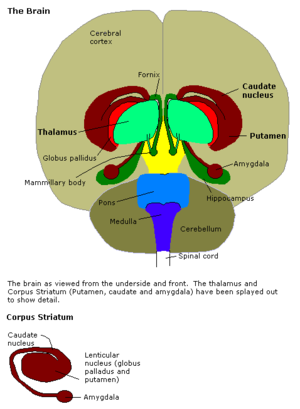
The amygdala is the integrative center for emotions, emotional behavior, and motivation located just above the brain stem in what is often referred to as the limbic region (the paleomammalian brain). The amygdala is essentially two small almond shaped structures adjacent to the hippocampus.

Here are some descriptions of the functions of the amygdala:
The central nucleus of the amygdala produces autonomic components of emotion (e.g., changes in heart rate, blood pressure, and respiration) primarily through output pathways to the lateral hypothalamus and brain stem. 
The central nucleus of the amygdala also produces conscious perception of emotion primarily through the ventral amygdalofugal output pathway to the anterior cingulate cortex, orbitofrontal cortex, and prefrontal cortex. 
Stimulation of the amygdala causes intense emotion, such as aggression or fear. 
Irritative lesions of temporal lobe epilepsy have the effect of stimulating the amygdala. In its extreme form irritative lesions of temporal lobe epilepsy can cause a panic attack. Panic attacks are brief spontaneously recurrent episodes of terror that generate a sense of impending disaster without a clearly identifiable cause. PET scans have shown an increase in blood flow to the parahippocampal gyri, beginning with the right parahippocampal gyrus. Similar but attenuated blood flow increases occurs during anxiety attacks. 
Destructive lesions such as ablation of the amygdala cause an effect opposite to the irritative lesions of temporal lobe epilepsy. Destructive lesions of the amygdala cause tameness in animals, and a placid calmness in humans characterized as a flatness of affect. Lesions of the amygdala can occur as a result of Urbach-Wiethe disease where calcium is deposited in the amygdala. If this disease occurs early in life then these patients with bilateral amygdala lesions cannot discriminate emotion in facial expressions, but their ability to identify faces remains. The anatomical area for face recognition and memory is in the multimodal association area of the inferotemporal cortex. This is a good example of how emotion in one area (amygdala) is linked with perception in another area (inferotemporal cortex) to create an intense emotionally charged memory.
The article below, courtesy of Frontiers in Neuroanatomy, offers an evolutionary history of the structures that make up the amygdala. It's pretty damn geeky, even by my standards.


Full Citation:
Pabba M. (2013, Aug 28). Evolutionary development of the amygdaloid complex. Frontiers in Neuroanatomy, 7:27. doi: 10.3389/fnana.2013.00027

Evolutionary development of the amygdaloid complex

Mohan Pabba
Neurosciences Unit, Department of Cellular and Molecular Medicine, Faculty of Medicine, University of Ottawa, Ottawa, ON, Canada
In the early 19th century, Burdach discovered an almond-shaped mass of gray matter in the anterior portion of the mammalian temporal lobe, which he called “amygdala” (Burdach, 1819–1822). The first anatomical description of the amygdala was made in 1867 by Meynert (1867). Subsequently, a large number of other nuclei were added to the amygdala to constitute what is now known as the “amygdaloid complex” (AC) (Johnston, 1923). Until this day, AC remains a subject of intense investigation in terms of content and evolutionary development since it is a much more complicated structure than what was previously thought. It is therefore, important to know the evolutionary developmental origin of AC before we can completely understand its function.

The AC is a multinuclear complex comprised of 13 nuclei. These nuclei are divided into three major groups: the basolateral, cortical-like, and centromedial. Other accessory nuclei such as the intercalated cell masses (I) and the amygdalo-hippocampus area have also been described. The basolateral group is comprised of the lateral nucleus (LA), basal nucleus (B), and accessory basal nucleus (AB) (Johnston, 1923). The cortical-like group of nuclei includes the nucleus of the lateral olfactory tract (NLOT), bed nucleus of the accessory olfactory tract (BAOT), anterior and posterior cortical nuclei (CoA and CoP, respectively), and periamygdaloid cortex (PAC). The centromedial nucleus consists of the central nucleus (CeA), medial nucleus (M), and amygdaloid part of the bed nucleus of stria terminalis (BST). The major remaining groups of AC are the amygdalohippocampal area (AHA) and intercalated nuclei (I) (Aggleton, 2000; Sah et al., 2003). These different nuclei of AC are connected within and also with various brain regions, and thus, process various types of information (e.g., olfactory and Figure 1A).
FIGURE 1 
 
Figure 1. AC of tetrapods. (A) The interconnections (left panel) and summary of the main inputs to AC and outputs from AC (right panel). The various types of inputs to AC are denoted with different types of colored arrows. (B)Pictorial diagram depicting the changes in the position of certain AC nuclei during the course of evolution. LA, lateral nucleus; MeA, medial nucleus; CeA, central nucleus; DLA, dorsal division of lateral nucleus; BST, bed nucleus of stria terminalis; BL, basolateral amygdala. The figure panels (A) and (B) are adapted and modified from Sah et al. (2003); Moreno and Gonzalez (2007b).
Swanson and Petrovich (1998) definition of amygdala as neither a structural nor a functional unit provides an attractive point to explore the evolutionary developmental aspects of AC because a growing number of evidence suggests AC as an evolutionarily conserved structure. Earlier, research on structural organization of AC in different amniotic vertebrates revealed a common pattern of organization, along with shared functional roles. Conversely, research on anamniotes provided little comparative information regarding structural organization of AC. However, recent studies have shown a homology between amygdaloid components of amniotes and anamniotes. To better understand the evolutionary and developmental history of a particular brain region, one needs to follow a “sequential (step by step) approach,” which takes into account the developmental, topological, hodological, genetical, and functional history. Interestingly, recent data on AC of mammals, reptiles, and anurans suggest that the evolution of AC occurred as common traits of telencephlon, for example, regions of cortical amygdala such as nLOT and accessory olfactory bulb (AOB) (Remedios et al., 2007; Huilgol et al., 2013); but not as the sum of unrelated structures with different origins. The present understanding of AC in developmental and adult vertebrates suggests two major divisions of telencephlon: the pallium and the subpallium (Puelles et al., 2000; Martinez-Garcia et al., 2002; Moreno and Gonzalez, 2007b; Remedios et al., 2007). This dual view or origin makes AC a histogenetic complex structure of the adult brain, with extremely intense morphogenetic and migratory processes during the development in all tetrapods (Puelles et al., 2000). In mammals, the pallial component is composed of “cortical amygdala” and “basolateral amygdala.” In turn, the subpallial component consists of the striatal component, central amygdala, and medial amygdala. This basic plan is shared by reptiles, birds, and also by anuran amphibians (Martinez-Garcia et al., 2002; Medina et al., 2004). Interestingly, this basic description is possible only in few mammalian tetrapods, but not in the non-mammalian amniotes and the anurans where they have no clear anatomical subdivisions. The existence of shared embryological AC components in all tetrapods provides clues to the presence of precursors of the amygdaloid nuclei from anamniotes (Moreno and Gonzalez, 2007b). The following sections deal with the current view on accepted and shared components of AC in tetrapods.

The amygdala is a part of a phylogentically conserved olfactory system, particularly the olfactory bulb, in vertebrate evolution in terms of embryological origin, neurochemistry, connectivity, and function (Martinez-Garcia et al., 2002; Huilgol et al., 2013). Additionally, a major part of amygdala is also an integral component of the vomeronasal system of the tetrapod (except avian) brain (Swanson and Petrovich, 1998; Moreno and Gonzalez, 2005a).

In mammals, the vomeronasal information passes via the AOB to medial (MeA) and cortical postero-medial amygdala (CoApm) (Swanson and Petrovich, 1998). In addition, the amygdala also receives information from the main olfactory bulb (MOB) and hypothalamus to modulate reproductive and defensive behaviors (Canteras et al., 1995). In reptiles and anurans, the existence of a well-developed “vomeronasal amygdala” has also been reported (Moreno and Gonzalez, 2003), although no vomeronasal amygdaloid nuclei has been described in birds so far (Martinez-Garcia et al., 2006). Thus, in all tetrapods, the main secondary vomeronasal brain areas belong to AC.

In mammals, the olfactory amygdaloid system consists of the distinct cortical (CoA, CoP nuclei, etc.) and basolateral amygdala (BL, M, LA nuclei). LA receives major sensory input, and is important for emotional behavior (Ledoux et al., 1990). Studies on birds indicate the presence of nuclei that are comparable to CoP of the mammalian amygdala. These studies also revealed the possession of counterparts similar to BM and LA of the mammalian amygdala (Martinez-Garcia et al., 2006). In reptiles, studies on the olfactory system showed comparable functional circuitry with the mammalian BA complex. The anuran counterpart of the mammalian olfactory amygdala is LA (Moreno and Gonzalez, 2004). This part of the amygdala in anurans receives directly or indirectly olfactory, visual, auditory, somatosensory, vomeronasal, and gustatory information. The observed integration that occurs in AC of tetrapods is responsible for the acquisition of “emotional memory,” which pertains to the survival of individuals during their defence against danger, their interaction with sexual partners, or their fight with an enemy (Ledoux, 2000). Therefore, the amygdala receives large sensory input information from olfactory and vomeronasal projections, and are conserved in tetrapods.

Studies on tetrapods showed CeA as the main receiver of a wide range of sensory information from other amygdaloid regions in addition to the thalamus and brain stem. Moreover, CeA is known to link and integrate the emotional and motor components of behavior (Han et al., 1997), behavioral responses to nociceptive and visceral pain (Han and Neugebauer, 2004), and behavioral responses to stressful stimuli (Saha et al., 2000). CeA also mediates many of the autonomic, somatic, endocrine, and behavioral responses in different tetrapods. The autonomic amygdala provides a link between environmental stimuli and animal behavioral responses, and thus, provides an important significance in terms of evolutionary conservation.

Another conserved shared system of tetrapods is the strong amygdalo-hypothalamic connections (Martinez-Marcos et al., 1999; Moreno and Gonzalez, 2005a). In mammals, nuclei that project to hypothalamus through the stria terminalis arise from the medial and basolateral amygdala (Swanson and Petrovich, 1998). As in mammals, the amygdalo-hypothalamic projections of anurans (Moreno and Gonzalez, 2005b) also project through the stria terminalis. In anurans, the amygdalo-hypothalamic connections control functions mediated by the hypothalamus in response to pheromones and odors (Reiner and Karten, 1985; Swanson and Petrovich, 1998).

As in mammals, the amygdalo-hypothalamic projections of anurans, project through the stria terminalis. The main similarity with amniotes is the projection to the hypothalamus from comparable amygdaloid territories carrying vomeronasal, olfactory, and multimodal information (Reiner and Karten, 1985; Swanson and Petrovich, 1998). The situation of amygdalo-hypothalamic projections in birds is more complicated because of the lack of a well-developed olfactory/vomeronasal system.

On the other hand, studies that compare the distribution of neuronal markers (either proteins or genes/transcription factors) across the development of analogous AC nuclei from different species as well as within the same species have also provided valuable information on the evolution of AC. For instance, similarities in the molecular profiles of the pallium and subpallium of mice and chickens were obtained by comparing the nested expression domains of genes such as Dlx-2, Tbr-1, Pax-6, NKx-2.1, and Emx-1 (Puelles et al., 2000). Moreno and Gonzalez, using the distribution of somatostatin, nitric oxide synthase, etc. in anuran CeA and MeA in a series of studies, has predicted that these parts of AC could be related to AC of amniotes (Moreno and Gonzalez, 2005a, 2007a). Medina et al. demonstrated a possible existence of evolutionary relationship in various AC nuclei of mammals, reptiles and birds by testing the expression patterns of genes/transcription factors such as Lhx2, Lhx9, Pax6, Islet 1, NKx2, Lhx6, and Lhx5 in forebrain regions of these animals (Medina et al., 2011). Using the similarities and differences in the expression of Lhx1 and Lhx5, Abellan et al. suggested a common pattern of evolutionary conservation in telencephalon between mice and chickens during various stages of development (Abellan et al., 2010). By examining the distribution of Lhx2, Trb1, reelin, and CdK5, Remedios et al. estimated a possible developmental and evolutionary link between nLOT of AC and neocortex (Remedios et al., 2007; Subramanian et al., 2009). Another study from Tole's group, using migratory genetic markers (e.g., NP2 and AP2α), showed that the distinct halves of AOB [posterior and anterior (pAOB and aAOB)] has different developmental origins, and that pAOB could be a component of AC as it was positioned closely to MeA in anamniotes (Xenopus) (Huilgol et al., 2013). Finally, Barger et al. using a different approach, i.e., by comparing the percentage of neurons in individual nuclei of AC between humans and apes, suggested that during the course of human evolution, LA of AC has further progressed in humans (Barger et al., 2012). 
Concluding Remarks

The classical hypothesis proposed by Edinger regarding the evolution of the brain attracted much attention (Edinger, 1908). He proposed that the telencephlon evolved in progressive stages of complexity and size, culminating to the human brain. He also stated that there is an “old brain” (the subpallium at the telencephalic base) followed by the addition of a “new brain” (the pallium at the top of the telencephlon). Nevertheless, this classical hypothesis provides evidence on the existence of a basic plan in the origin, regionalization, and organization of the forebrain of vertebrates. Based on the data pertaining to the organization of AC, there seems to have several important features that are common to all tetrapods: (1) it is formed by pallial and subpallial derivatives; (2) it is topographically situated in the ventrolateral caudal telencephalic hemispheres; (3) it has shared features in relation with different functional systems like the vomeronasal, olfactory, autonomic, and multimodal systems along with an intricate intra-amygdaloid network; (4) it is the origin of important hypothalamic projections; (5) it has a common embryological origin for several prominent features of AC; (6) it has the presence of a main output for autonomic system; finally, (7) it has abundant local circuit neurons that are shared by most amniotes. Thus, in the light of recent findings on AC (Remedios et al., 2007; Butler et al., 2011; Huilgol et al., 2013) also strongly support the idea that tetrapods share the same basic plan.

The increase in size of the pallium, especially in mammals, has an evolutionary importance. The current spatial arrangements of the mammalian AC are still found in living anurans. Therefore, it is now obvious that these “new evolutionary nuclei” would have pushed the “most conserved nuclei” (Moreno and Gonzalez, 2007b). It explains why mammals have the central, medial, and basolateral nuclei occupying the most medial positions, whereas the cortical amygdaloid nuclei occupy the most lateral positions (Figure 1B) (Moreno and Gonzalez, 2007b). Consequently, the brain of ancestral tetrapods developed an elaborate AC in response to new requirements imposed on them as a part of the transition from water-to-land. Therefore, the basic organization of the brain system, at least in the case of the AC, is still recognizable in all existing tetrapods, and can be compared with that of mammals.

Acknowledgments

I am thankful to Dr. Richard Bergeron, Dr. Marzia Martina, and Wissam B. Nassrallah for their helpful feedback on the manuscript. 

Wednesday, August 07, 2013

NPR - Fear Of Clowns: Yes, It's Real

A terrifying clown walks in a Halloween parade in New York City. (© Gonzales Photo / Demotix / Corbis)

Damn straight . . . .

This interview was inspired by The History and Psychology of Clowns Being Scary, by Linda Rodriguez McRobbie, over at Smithsonian Magazine. Good article.

Fear Of Clowns: Yes, It's Real


by NPR STAFF
August 06, 2013 5:11 PM


All Things Considered, 7 min 50 sec


Tim Curry as Pennywise in a 1990 TV adaptation of Stephen King's It. Come on, tell us you aren't just a little creeped out. The Kobal Collection

Warning: The following story may be upsetting to some people.


That's because it's about clowns.

Yes, clowns. Painted white faces, red lips, receding hairlines with tufts of wild hair, and — of course — the red foam nose. Fun for all ages, yet plenty of people are downright scared of them. There's even a word for it: coulrophobia, though that's not an official diagnosis.

Theories about why clowns are frightening have been offered over the years. Writer Linda Rodriguez McRobbie explores them at length in this month's Smithsonian Magazine, in an article called "The History and Psychology of Clowns Being Scary."

McRobbie tells NPR's Audie Cornish that she's not afraid of clowns — not exactly: "The bigger thing, though, is that I just don't find them funny." And, she points out, it's important to remember that clowns were considered adult entertainment when they first appeared.

Interview Highlights

On the roots of modern scary clowns

"At the end of the 18th and the beginning of the 19th century, there were really two guys who sort of began the modern clowning movement. In London you had Joseph Grimaldi, who was a clown from the theatrical tradition, the pantomime tradition. And on the continent, the sort of leading clown, starting from around the 1830s, was a guy called [Jean-Gaspard] Deburau, who was the Pierrot clown ... a silent figure, but very funny.

"Grimaldi had a terrible life outside of the theater. His father was an alcoholic and a tyrant, and his wife died in childbirth; his son died an alcoholic at 31; he himself died penniless and alcoholic. Pierrot, on the other hand, was slightly scarier. In 1836, he actually killed a boy who insulted him in the street; he turned around and knocked the kid on the head with his walking stick. He was ultimately acquitted of the murder, but it's a little bit frightening.

"So these two characters became almost emblematic of the idea that there's something sinister, something scary, something strange going on underneath all of the makeup."

On the friendly TV clowns of the 1950s, like Bozo and Clarabel


John Wayne Gacy painted this portrait of himself in character as Pogo the clown. Getty Images

"At this point, clowns are now solely children's entertainment. And that, I think, to some degree makes them even more suspicious. So you have this period where children are being entertained by clowns — clowns are very popular, they're on television ... yet, at the same time, this sort of banality covers up the sort of hard edges that clowns had had before, that we could live with and we could understand, and now they've become this blanketly innocuous thing, and that makes us really suspicious."

On the most notorious real-life scary clown, serial killer John Wayne Gacy

"He was convicted of 33 counts of murder ... and he was also a clown, and he would entertain at children's parties, at hospitals and places like that. And he once told the investigating officers, you know, 'A clown can get away with anything.' That, I think, really crystallized exactly what was the sort of lurking fear that people had, that you know, someone that works with children in particular, who is this symbol of hilarity, symbol of fun and silliness and innocence, and underneath it can be something truly terrifying ... It was almost open season on clowns after that."

On the roots of clown fear

"I think there is something fundamentally disturbing to people about someone who covers their face with makeup. The other thing that you hear is that clowns are able to engage in activity that is usually not socially sanctioned, and they don't suffer any consequences for having done it.

"It's certainly understandable, although I think at the end of the day, a lot of the fear of clowns actually comes back to the person underneath the makeup. And I think that's something that I saw quite a lot in every point in history, where there was someone who was tragic under their makeup, sinister under their makeup, sadistic under their makeup, and murderous under their makeup. That if the person under the makeup is themselves scary, then the clown's going to be scary."

Saturday, July 20, 2013

AV Horwitz and JC Wakefield - All We Have to Fear: Psychiatry’s Transformation of Natural Anxieties into Mental Disorders


Over at Evolutionary Psychology (a journal), Dieneke Hubbeling (Consultant Psychiatrist, and Wandsworth Crisis and Home Treatment Team, South West London) reviews the newish book from AV Horwitz and JC Wakefield, All We Have to Fear: Psychiatry’s Transformation of Natural Anxieties into Mental Disorders (2012).

These passages offer a bit of a nutshell synopsis of the book, although the review itself is very interesting and the book, despite its flaws, seems to be a move in the right direction.
All We Have to Fear is an interesting book and, at times, shocking findings are presented, such as the problems Rind and co-authors experienced after suggesting that childhood sexual abuse did not always have dramatic consequences. The authors also make clear how the incidence of anxiety disorders increased because of watered down criteria. However, the fact that many people are suffering from a disease is not as such a reason to change criteria. The chance of experiencing a common cold at least once during one’s life is higher than 50% in certain climates, but people still call it a disease and the authors do not address this issue. 
The main weakness of the book in my view is that the authors present a very simplified version of evolutionary theory. The authors mention as uncontroversial that the snapping of a septuagenarian’s femur is a disorder because femurs are biologically designed to support movement (p. 29). However, evolutionary processes are selected for a particular life-span. There is not much point in designing organs which can function for a thousand years if an organism is likely to be eaten beforehand (Kirkwood and Austad, 2000).
And with that, on to the review . . . .

Book Review: Is Fear Good for You?


A review of A. V. Horwitz and J. C. Wakefield, All We Have to Fear: Psychiatry’s Transformation of Natural Anxieties into Mental Disorders. Oxford University Press: New York, 2012, 304 pp., US$29.95, ISBN # 978-0-19-979375-4 (hardcover).

Reviewed by Dieneke Hubbeling, Consultant Psychiatrist, Wandsworth Crisis and Home Treatment Team, South West London and St. George’s Mental Health NHS Trust, Email: dieneke@doctors.org.uk.

Evolutionary Psychology
www.epjournal.net – 2013. 11(2): 436-441 
¯¯¯¯¯¯¯¯¯¯¯¯¯¯¯¯¯¯¯¯¯¯¯¯¯¯¯¯

After writing the highly acclaimed The Loss of Sadness: How Psychiatry Transformed Sorrow Into Depressive Disorder (2007), Horwitz and Wakefield have now written a book about anxiety disorders with a similar theme, namely that anxiety symptoms are too often classified as a disorder or disease and that referring to evolutionary theory is useful for rectifying this. The authors describe anxiety as a naturally designed emotion (p. ix), which enhanced survival in ancestors. Feeling anxious is often a healthy response to a difficult situation and not a sign that there is something wrong in one’s brain. This is not particularly controversial, but it is far more complicated to use evolutionary theory for establishing the difference between disorder and normal functioning than the authors assume, as I will explain in this review.

The authors introduce the topic in chapter 1, The Puzzle of Anxiety Disorders. They explain how, according to the literature, the incidence of anxiety disorders has increased dramatically from an estimated 2-4% in 1980 to an empirically established 49.5% in 2010. This increase is at least partially explained by the different methodology in epidemiological studies. Most studies asked what kind of problems people had in the past and then between 25% and 33% of the population reported symptoms of an anxiety disorder from memory. In a prospective study, whereby participants were assessed every three years, the incidence increased to 49.5% (Moffitt et al., 2010). However, broad criteria for anxiety disorder are used in these studies and Horwitz and Wakefield question this. In the rest of the chapter the authors’ signpost to their main argument that feeling anxious is often an appropriate response and not a disorder.

One of the authors, Wakefield, developed a definition of disorder years ago. According to him a disorder is a harmful failure of mechanisms to perform the functions they were biologically designed to do (Wakefield, 1992). In order to be suffering from a disorder, two requirements have to be fulfilled: The condition has to be harmful and the condition has to be caused by the breakdown of a function, which has been selected for in the past. The rationale behind this definition is clarified in Chapter 2, An Evolutionary Approach to Normal and Pathological Anxiety. The authors start with ruling out various alternatives to Wakefield’s definition. Differences in brain functioning as demonstrated by, for example, fMRI-scans cannot be a criterion for disorder because there is no difference in fMRI-scans between pathological and normal anxiety, i.e., a level of anxiety appropriate to the circumstances. Everybody should get anxious standing in front of a dangerous snake. Similarly, both normal and pathological anxiety can be learned, both normal and pathological anxiety can be constructed by societies as negative events, both normal and pathological anxiety can be outside the normal statistical range, and both normal and pathological anxiety can cause social impairment.

Wakefield and Horwitz argued that there can only be a disorder if an individual’s internal processes are not performing the functions they were biologically designed to perform. We are no longer living in the EEA (environment of evolutionary adaptedness) and there are many things we no longer need to avoid such as spiders, darkness, open spaces, etc. If we are becoming anxious in those conditions, there is no disorder or illness, as our brains are performing a function they were selected for. The authors also mention that there are cultural and individual differences in anxiety and these differences have at least partially been selected for. Different levels of anxiety can be equally adaptive as people can find different niches, and it can also be advantageous for a population to have variation in anxiety proneness because a different level of anxiety might be more adaptive in the future.

In Chapter 3, Normal, Pathological and Mismatched Anxiousness, the authors further explore the differences between normal and pathological anxiety. They emphasized that the boundary between normal and pathological is not always clear, like there is no clear boundary between child and adult. The authors repeated that mismatched anxiety is not a disorder and mentioned the analogy with taste preferences for fat and sugar. This taste preference has been selected for and can cause obesity and early death in societies with plenty of sweets available, but it is not a disorder according to Wakefield’s definition. The authors further explain that anxiety can even be not pathological in situations when there is no danger either currently or in the EEA, because anxiety functions according to the smoke detector principle. Similar to a smoke detector, it is better to give a number of false alarms than not to notice something dangerous once (Nesse, 2005).

In Chapter 4, A Short History of Anxiety and its Disorders, the authors explain that anxiety as a phenomenon was recognized at least since the ancient Greek civilization, but it was not considered a separate disorder. Maudsley, for example, classified phobias as a subtype of melancholic disorders. Freud made a distinction between realistic anxiety and anxiety neurosis, whereby realistic anxiety could be divided into primary anxiety (in which somebody experiences fear because of the actual situation) and signal anxiety (in which something threatening might happen in the future). The authors are following Freud in thinking that both realistic and neurotic anxiety can have the same symptoms and the same amount of distress. The context has to be taken into account, if one wants to make the distinction between disorder and normal experience. Horwitz and Wakefield explained that classification systems in psychiatry have tried to clarify whether symptoms are contextually appropriate or not. The Feigner criteria used patients’ own beliefs about reasonableness as the distinction between normal and pathological anxiety. The American classification system DSM mentioned objective contextual standards as well.

How to classify anxiety disorders is further discussed in Chapter 5, The Validity of the DSM Diagnostic Criteria for Anxiety Disorders. The authors mention various attempts to delineate pathological anxiety from normal anxiety, with specific phobias, social phobia, and generalized anxiety disorder as examples. Attempts in terms of intensity, number, and duration of symptoms were unsuccessful and one tried to add criteria as unreasonableness given the context or clinical significance. The authors claim that the current threshold for disorder is far too low and that too many people are considered suffering from an anxiety disorder. They suggest some improvements, such as narrowing role impairment to dysfunction in activities that have been selected for. For example, social phobia is a disorder if it stops somebody having intimate relationships, but it should not be a disorder if somebody only has difficulties with speaking in public.

In chapter 6, Fear and Anxiety in the Community, the authors explain how the criteria from the DSM-IV and other classification systems which were already too broad were also applied in rather loose way, for example by using a scale designed as a first stage screening instrument as a stand-alone assessment. Horwitz and Wakefield are particularly critical of asking people whether they were anxious when they were young. According to the authors, many anxieties in childhood disappear and one should not call them disorders. The authors also disapprove of using screening instruments after disasters, such as Hurricane Katrina, because screening scales measure symptoms and do not take the context into account. On page 167 they state “...in the attempt to create a scientific approach to psychiatric disorder, psychiatry is instead coming perilously close to transforming itself into a pseudoscience that has rendered its own domain of mental disorder meaninglessly broad.”

Post-traumatic stress disorder only entered official psychiatric classification systems after 1980 as the authors explain in Chapter 7, PTSD, but nowadays many people claim to be suffering from it and health professionals specialize in treating PTSD. Horwitz and Wakefield argued that during evolution humans must have dealt with horrific and shocking experiences. They must have learnt to avoid them, if possible. Having intrusive memories – one of the key symptoms of PTSD – might well have been helpful in doing this. The authors express again their worry that many normal responses might well have been labeled pathological.

PTSD entered the DSM classification system under the pressure of Vietnam veterans and it seems to be a diagnosis people like to have, unlike most other conditions. The authors also described the meta-analysis by Rind, Tromovitch and Bauserman (1998), who found that child sexual abuse did not always have such detrimental effects as generally assumed and how these authors were severely criticized because of the outcome of their study. Horwitz and Wakefield rightly remark that this is very worrying and that psychiatry and psychology as a science should be open to new facts, even if they go against lay opinion and current scientific views.

Nowadays more people are treated for anxiety than for depression, unlike the 1950s and 1960s. The authors explain this change in chapter 8, The Transformation of Anxiety into Depression. any people started to have health insurance, and just “being anxious” was not sufficient to have treatment costs reimbursed. Patients had to suffer from a specific disorder. Anxiety disorders were defined more restrictively than depression; for example, the duration of anxiety disorders had to be at least 6 months, and they came lower in the DSM-III hierarchy. Also for anxiety there was at least some attempt to rule out normal anxiety by stating that the fear had to be irrational, whereas with depression only recent bereavement was accepted as an exception.

In Chapter 9, Setting Boundaries between Natural Fears and Anxiety Disorders, the difficulty in establishing the presence of a disorder is reiterated and the authors emphasize the importance of using dysfunction of activities that have been selected for as an essential condition for disorder. However, the authors also state that there is a lack of knowledge of evolutionary theory and that nobody currently knows whether treatment results differ between pathological anxiety and mismatched anxiety. The authors also mention that sometimes treatment can still be useful, even if there is no disorder according to their definition.

All We Have to Fear is an interesting book and, at times, shocking findings are presented, such as the problems Rind and co-authors experienced after suggesting that childhood sexual abuse did not always have dramatic consequences. The authors also make clear how the incidence of anxiety disorders increased because of watered down criteria. However, the fact that many people are suffering from a disease is not as such a reason to change criteria. The chance of experiencing a common cold at least once during one’s life is higher than 50% in certain climates, but people still call it a disease and the authors do not address this issue.

The main weakness of the book in my view is that the authors present a very simplified version of evolutionary theory. The authors mention as uncontroversial that the snapping of a septuagenarian’s femur is a disorder because femurs are biologically designed to support movement (p. 29). However, evolutionary processes are selected for a particular life-span. There is not much point in designing organs which can function for a thousand years if an organism is likely to be eaten beforehand (Kirkwood and Austad, 2000).

The authors mention that different levels of anxiety have been selected for, because one can find different niches. However, there might be no niche available and there is frequency dependent selection. The authors would probably classify this as a kind of mismatch, because the current environment has too many people with the same level of anxiety, but they do not clearly state this.

There are different forms of anxiety, namely anxiety for a specific stimulus (phobias) and also general anxiety. An idea from evolutionary psychology is that in a dangerous environment it might be better to have a low threshold for all forms of anxiety and in a less dangerous environment it might be evolutionarily advantageous to be only anxious for specific stimuli (Bateson, Brilot, and Nettle, 2011). If this is true, the view of Horwitz and Wakefield would become even more complicated, namely that not only can somebody have a disorder because of a mismatch between current environment and environment of evolutionary adaptedness, but people can also have the wrong type of anxiety response.

If one wants to use malfunctioning of an activity that has been selected for as criterion for disorder, it is unlikely that one can easily find empirical evidence. One needs to determine not only what has been selected for, but also whether it is a mismatch with the environment, either in general or the wrong type of disorder, whether it is a quick response because of the smoke-detector principle, whether it is frequency dependent selection, etc. However, the problems are even bigger. Wakefield and Horwitz do not mention treatability as a possible criterion in Chapter 2 and they are very explicit in Chapter 9 that sometimes conditions, which are not disorders, should still be treated. One of the problems of a broad definition of anxiety disorders is that treatment costs are very high and that costs of people not being able to work are probably even higher. However, it is very counterintuitive to offer insurance-reimbursed treatment to people who are anxious because of some biological dysfunction and not to others because of a mismatch, even if they are equally dysfunctional in their social environment. Wakefield stated in another publication that using treatability as a criterion was getting things backwards (Wakefield, 1999), but this seems to be incorrect. Evolution does not really play a role in deciding whether the treatment of a patient should be paid for out of public funds (Bolton, 2008). In the rationing of health care funds, in-vitro fertilization is seen as something one can do without and cancer treatment not, but from an evolutionary perspective it would be the opposite.

At the time of writing this review, Nature published a news item about the health problems of local residents after the Fukushima disaster (Brumfiel, 2013). Many local residents suffer from anxiety and nobody can really predict the effects of radiation for particular persons in the next decades, and the argument was made for further psychological support. One could argue that it is normal to feel anxious under those circumstances, but it does influence people’s life and, if they want help for psychological difficulties, why not? Fear is not always good for you and can be extremely unpleasant.

References
  • Bateson, M., Brilot, B., and Nettle, D. (2011). Anxiety: An evolutionary approach. Canadian Journal of Psychiatry, 56, 707-715.
  • Bolton, D. (2008). What is mental disorder? An essay in philosophy, science, and values. Oxford: Oxford University Press.
  • Brumfiel, G. (2013). Fallout of fear. Nature, 493, 290-293.
  • Horwitz, A. V., and Wakefield, J. C. (2007). The loss of sadness. New York/Oxford: Oxford University Press.
  • Kirkwood, T. B. L., and Austad, S. N. (2000). Why do we age? Nature, 408, 233-238.
  • Moffitt, T. E., Caspi, A., Taylor, A., Kokaua, J., Milne, B. J., Polanczyk, G., and Poulton, R. (2010). How common are common mental disorders? Evidence that lifetime prevalence rates are doubled by prospective versus retrospective ascertainment. Psychological Medicine, 40, 899-909.
  • Nesse, R. M. (2005). Natural selection and the regulation of defenses: A signal detection analysis of the smoke detector principle. Evolution and Human Behavior, 26, 88-105.
  • Rind, B., Tromovitch, P., and Bauserman, R. (1998). A meta-analytic examination of assumed properties of child sexual abuse using college samples. Psychological Bulletin, 124, 22-53.
  • Wakefield, J. C. (1992). The concept of mental disorder on the boundary between biological facts and social values. American Psychologist, 47, 373-388.
  • Wakefield, J. C. (1999). Mental disorder as a black box essentialist concept. Journal of Abnormal Psychology, 108, 465-472.

Saturday, April 20, 2013

JOSEPH LEDOUX - For the Anxious, Avoidance Can Have an Upside


Joseph LeDoux wrote this article on anxiety recently for the New York Times' Opinionator column. He examines the use of negative reinforcement — reinforcement that occurs when a behavior prevents a stimulus from occurring — as a better form of learning. It becomes relevant in relation to trauma:
Cues associated with a trauma or other stress may start out with a narrow focus — the place where something bad happened — but may widen to include similar places, things or situations.  People with anxiety become very good at avoiding these cues as a way to control anxiety. Avoidance can be so effective that it prevents one from recovering from trauma or otherwise dealing with anxiety. 
***
As we’ve seen, people with social anxiety often cope with their problem by avoiding social situations altogether. This is not practical or beneficial. But neither is forcing oneself to show up at parties and just try to ride out the anxiety. A more effective treatment approach might be to combine anxiety-producing exposure with strategies that allow one to gain control over the anxiety trigger cues.

LeDoux is a professor of neural science at New York University and director of the Emotional Brain Institute. He is the author of The Emotional Brain: The Mysterious Underpinnings of Emotional Life, Synaptic Self: How Our Brains Become Who We Are. After dark he is a singer and songwriter in The Amygdaloids.

For the Anxious, Avoidance Can Have an Upside

By JOSEPH LEDOUX
April 7, 2013

Shortly after 9/11, I wrote an editorial in the American Journal of Psychiatry with Jack Gorman, a psychiatrist with whom I was collaborating. Many people seemed to be coping with the extraordinary events of the terror attacks by staying close to home and avoiding going back out in the world. This was not unexpected since avoidance is a well-known form of coping with traumatic events. Politicians were urging people to go back to work, to re-engage in social activities, to get on with life. Gorman and I thought this was really good advice because of something I’d discovered in my work as a neuroscientist.

I had spent much of my career studying how the rat brain learns to respond to cues associated with danger. To do this, my colleagues and I presented rats with a tone followed by a mild electric shock in a conditioning box. When we presented the tone to the rat later in a different box, he would freeze in his tracks, and would continue this way even after the tone was turned off. This kind of defense response is very potent. Once the tone acquires significance as a threat, it remains so throughout the life of the rat. The learning can be weakened by exposure to the tone in the absence of the shock, but much research shows that these extinguished responses resurface if the rat is returned to the box where the shock had occurred, or is subjected to other kinds of stress.


JooHee Yoon

Exposure therapy is commonly used to treat fears in people, but as with rats, the effects are fragile. Stress, for example, can bring back successfully treated fears.

By 2001 we had already started a new line of work involving a variation on this theme. We conditioned the rat in the usual way and then a couple of days later played the tone in another box. The rat of course froze. But as soon as it made any kind of movement, the tone was turned off. The next time, more movement was required to turn the tone off. With a bit of training like this, the rat learned to run to the other side of the chamber as soon as the tone came on, escaping the tone, and eventually it learned to avoid the tone altogether by running to the other side as soon as it was in the box.

Why did the rat learn this response? Learning in animals (and people) is often based on reinforcement. So what reinforced the response? There was no shock involved in the second phase of the study. The response was learned because it eliminated the threatening tone. This is called negative reinforcement — reinforcement that occurs when a behavior prevents a stimulus from occurring.

Unlike rats that extinguish their reactions to threats by exposure, rats that had been trained to master the tone, showed no signs of being threatened by the tone later, even in the original context where the stressful shock had occurred. Once they had this kind of control, the threat was irrelevant.

We viewed this learned response where the rat takes control of the stress as a form of active coping. Gorman and I argued that getting on with life in the wake of 9/11 was like this. Each time one went to work or to meet with friends, that person moved a step away from being frozen in place, and avoiding life. It was a step toward active coping.

Cues associated with a trauma or other stress may start out with a narrow focus — the place where something bad happened — but may widen to include similar places, things or situations. People with anxiety become very good at avoiding these cues as a way to control anxiety. Avoidance can be so effective that it prevents one from recovering from trauma or otherwise dealing with anxiety.

People with social anxiety problems, for example, can easily circumvent anxiety by avoiding social situations. This solves one problem but creates others, since social interactions are an important part of daily life, including both professional and personal life. But if one is avoiding situations where these cues are likely to be encountered, the opportunity to extinguish fears by exposure never occurs and the anxiety continues indefinitely.

Yes, our rats were performing avoidance responses. They were avoiding the tone. But when avoidance involves behaviors and thoughts that directly engage with the stress-related cues and events in order to change their impact and allow the organism to exert control over them, it is useful, a form of active coping. We call this proactive avoidance. Proactive avoidance involves what has come to be known as agency. When the person gains control of situations through their own actions, anxiety diminishes.

As we’ve seen, people with social anxiety often cope with their problem by avoiding social situations altogether. This is not practical or beneficial. But neither is forcing oneself to show up at parties and just try to ride out the anxiety. A more effective treatment approach might be to combine anxiety-producing exposure with strategies that allow one to gain control over the anxiety trigger cues.

Michael Rogan, who was a researcher in my lab when the active coping work was first being done, currently treats people with social anxiety. He suggests to his clients with social anxiety that they should, when at a party, identify strategies for temporary escape and avoidance (go into the bathroom, step outside to make a call), and also use previously learned relaxation techniques (controlled breathing, imagery, mindfulness), to “chill out.” In this way, as in the rat studies, behaviors that succeed in reducing anxiety are reinforced, and each subsequent social event is a bit more tolerable.

Once the person has learned to take action rather than simply react in the presence of anxiety-provoking cues, the cues become irrelevant, as they did for the rats. Rogan says that people who learn to control anxiety triggers in this way, like our rats, do much better than those who don’t.


A New Pathway


Much has been learned about the brain mechanisms underlying passive and active coping in rats. Freezing, the rat’s version of passive coping, is known to depend on a specific set of connections in the brain — specifically, between two regions of the amygdala: the one that processes incoming signals about the external world and the one that regulates innate reactions like freezing (via outputs to the lower brainstem). The active coping response, proactive avoidance, by contrast, requires that the information processed in the input region be redirected to a different output controller in the amygdala, one that engages goal-directed actions.

While freezing is a natural first line of defense (since predators respond to movement), it can be a problem — persistent freezing prevents active coping. Indeed, some rats, like some people, have difficulty in switching from this natural and dominant tendency to freeze when action is called for. These chronically frozen rats and people are stuck in a pathological avoidance mode. If the innate output of the amygdala that controls freezing is shut down, the rats readily make the transition to proactive avoidance.

An important key to successful treatment of people with anxiety — including social anxiety — is overcoming freezing and other forms of passive coping. In our work with rats, we are seeking ways to shut down the freezing outputs of the amygdala using behavioral or drug approaches that can be safely applied to people.

A major conceptual issue is how the re-routing takes place naturally within the amygdala, allowing the shift from freezing to active coping and thereby preventing pathological avoidance and allowing proactive avoidance and agency. Recent work has shown that connections from the prefrontal cortex, a region important in behavioral control, to the amygdala are important in allowing the shift to take place.

The amygdala has long been thought of as the accelerator on the threat train, and the prefrontal cortex the brakes. But the new work suggests that the prefrontal cortex is not just the brakes, but also the switch that controls the track on which the train travels. Figuring out how to more effectively engage the prefrontal cortex in this switching will hopefully suggest new treatment approaches.

Although avoidance has a bad rep in the field of anxiety, the nature of avoidance needs to be considered when discussing its implications. When avoidance prevents one from dealing with life, it is maladaptive. But when avoidance is proactive and part of active coping and agency, it helps the person control the accelerator, brakes, and the track switches. It is a useful adaptive activity.