Showing posts with label consumerism. Show all posts

Friday, November 28, 2014

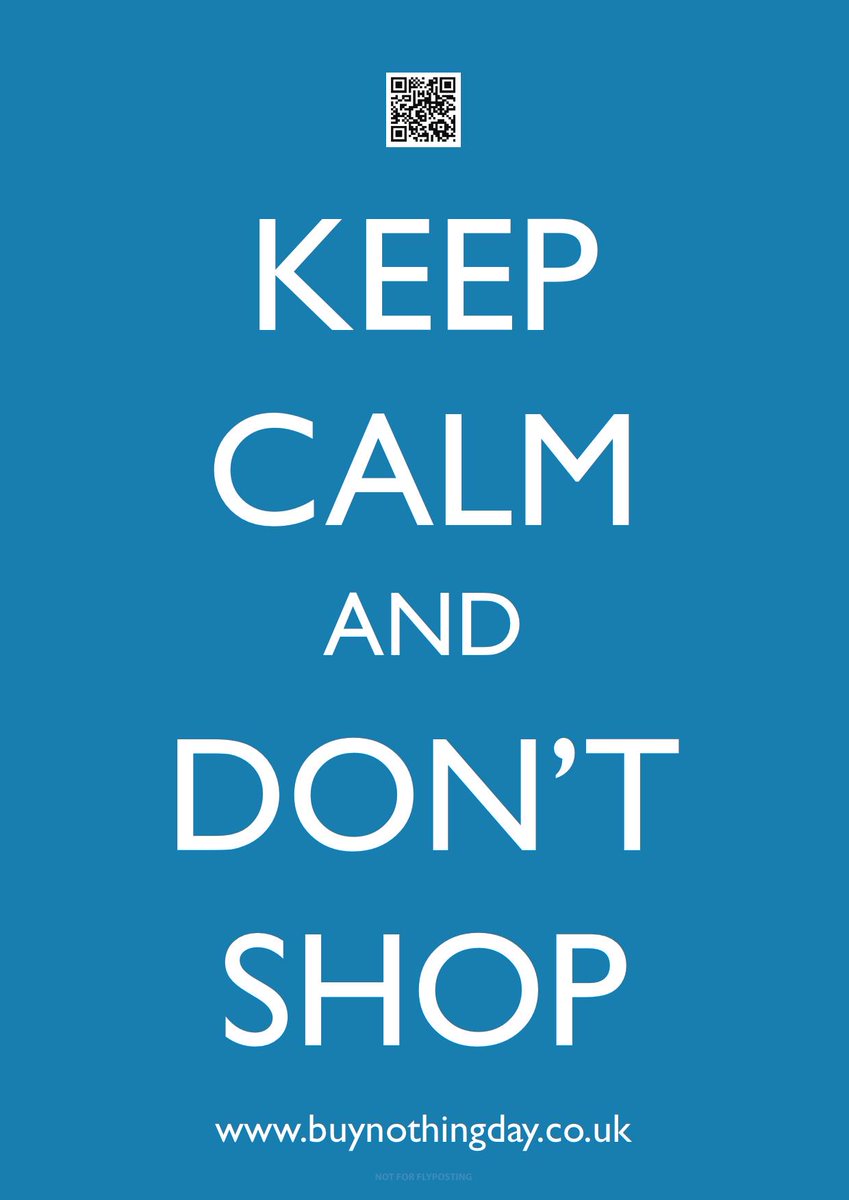
Buy Nothing Day 2014

Embedded image permalink 
“Today, humanity faces a stark choice: save the planet and ditch capitalism, or save capitalism and ditch the planet.”
– Fawzi Ibrahim


Until we challenge the entrenched values of capitalism – that the economy must always keep growing, that consumer wants must always be satisfied, that immediate gratification is imperative – we’re not going able to fix the gigantic psycho-financial-eco crisis of our times.

That challenge is a deeply personal one: in a world where every inch of the capitalist system is bullying you into submission, can you resist? When advertisers hound you day and night, can you escape? This Black Friday, a massive, absurd, and destructive consumerist machine will coordinate against you for one simple reason - to convince you to max out your credit card to buy shit you don’t need so that a broken system stays afloat. So when they say "BUY!", will you say NOTHING!”?

Buy Nothing Day is legendary for instigating this type of personal transformation … as you suddenly remember what real living is all about … you sense an upsurge of radical empowerment and feel a strange magic creeping back into your life.

Join millions of us in over 60 countries on November 28/29 and see what it feels like. Then, after Buy Nothing Day, take the next step … for generations, Christmas has been hijacked by commercial forces … this year, let’s take it back.

And why not get playful while you’re at it!? … Put up posters, organize a credit card cut up, pull off a Whirl–mart, or a Christmas Zombie walk through your local mall.
 https://www.adbusters.org/sites/all/themes/adbusters5/assets/img/6/buy_nothing_day_2014_2.jpg

Saturday, January 04, 2014

George Monbiot - Materialism: A System that Eats Us from the Inside Out

From The Guardian, in part (headline and first image), the rest is from George Monbiot's blog. This is a little late, but still highly relevant relevant:

Materialism: A system that eats us from the inside out

Buying more stuff is associated with depression, anxiety and broken relationships. It is socially destructive and self-destructive


George Monbiot
The Guardian, Monday 9 December 2013


Owning more doesn't bring happiness: 'the material pursuit of self-esteem reduces self-esteem.' Photograph: Dominic Lipinski/PA

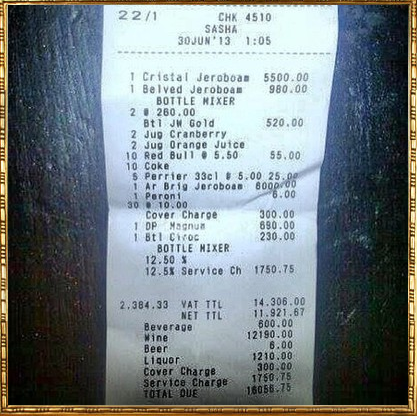
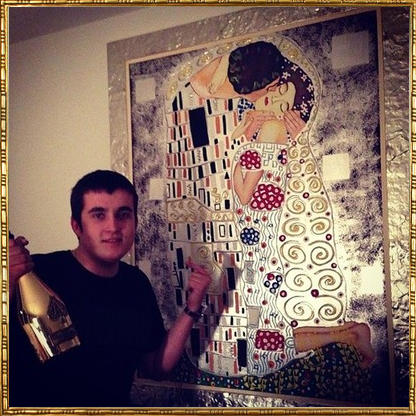
That they are crass, brash and trashy goes without saying. But there is something in the pictures posted on Rich Kids of Instagram (and highlighted by the Guardian last week(1)) that inspires more than the usual revulsion towards crude displays of opulence. There is a shadow in these photos – photos of a young man wearing all four of his Rolex watches(2), a youth posing in front of his helicopter(3), endless pictures of cars, yachts, shoes, mansions, swimming pools, spoilt white boys throwing gangster poses in private jets – of something worse; something that, after you have seen a few dozen, becomes disorienting, even distressing.


All photos taken from Rich Kids of Instagram


The pictures are, of course, intended to incite envy. They reek instead of desperation. The young men and women seem lost in their designer clothes, dwarfed and dehumanised by their possessions, as if ownership has gone into reverse. A girl’s head barely emerges from the haul of Chanel, Dior and Hermes shopping bags she has piled onto her vast bed(4). It’s captioned “shoppy shoppy” and “#goldrush”, but a photograph whose purpose is to illustrate plenty seems instead to depict a void. She’s alone with her bags and her image in the mirror, in a scene that seems saturated with despair.


Perhaps I am projecting my prejudices. But an impressive body of psychological research appears to support these feelings. It suggests that materialism, a trait that can afflict both rich and poor, which the researchers define as “a value system that is preoccupied with possessions and the social image they project”(5), is both socially destructive and self-destructive. It smashes the happiness and peace of mind of those who succumb to it. It’s associated with anxiety, depression and broken relationships.


There has long been a correlation observed between materialism, a lack of empathy and engagement with others, and unhappiness(6,7,8). But research conducted over the past few years appears to show causation.

For example, a series of studies published in June in the journal Motivation and Emotion showed that as people become more materialistic, their well-being (good relationships, autonomy, a sense of purpose and the rest) diminishes(9). As they become less materialistic, it rises.

In one study, the researchers tested a group of 18-year-olds, then re-tested them 12 years later. They were asked to rank the importance of different goals: jobs, money and status on one side, self-acceptance, fellow feeling and belonging on the other. They were then given a standard diagnostic test to identify mental health problems. At the ages of both 18 and 30, materialistic people were more susceptible to disorders. But if in that period they became less materialistic, their happiness improved.


In another study, the psychologists followed Icelanders weathering their country’s economic collapse. Some people became more focused on materialism, in the hope of regaining lost ground. Others responded by becoming less interested in money and turning their attention to family and community life. The first group reported lower levels of well-being, the second group higher levels(10).

These studies, while suggestive, demonstrate only correlation. But the researchers then put a group of adolescents through a church programme designed to steer children away from spending and towards sharing and saving. The self-esteem of materialistic children on the programme rose significantly, while that of materialistic children in the control group fell. Those who had little interest in materialism before the programme experienced no change in self-esteem(11).


Another paper, published in Psychological Science, found that people in a controlled experiment who were repeatedly exposed to images of luxury goods, to messages which cast them as consumers rather than citizens and to words associated with materialism (such as buy, status, asset and expensive), experienced immediate but temporary increases in material aspirations, anxiety and depression(12). They also became more competitive, more selfish, had a reduced sense of social responsibility and were less inclined to join demanding social activities. The researchers point out that as we are repeatedly bombarded with such images through advertisements, and constantly described by the media as consumers, these temporary effects could be triggered more or less continuously.

A third paper, published (ironically) in the Journal of Consumer Research, studied 2,500 people for six years(13). It found a two-way relationship between materialism and loneliness: materialism fosters social isolation; isolation fosters materialism. People who are cut off from others attach themselves to possessions. This attachment in turn crowds out social relationships.

The two varieties of materialism which have this effect – using possessions as a yardstick of success and seeking happiness through acquisition – are the varieties that seem to be on display at Rich Kids of Instagram. It was only after reading this paper that I understood why those photos distressed me: they look like a kind of social self-mutilation.


Perhaps this is one of the reasons why an economic model based on perpetual growth continues on its own terms to succeed, though it may leave a trail of unpayable debts, mental illness and smashed relationships. Social atomisation may be the best sales strategy ever devised, and continuous marketing looks like an unbeatable programme for atomisation.

Materialism forces us into comparison with the possessions of others, a race both cruelly illustrated and crudely propelled by that toxic website. There is no end to it. If you have four Rolexes while another has five, you are a Rolex short of contentment. The material pursuit of self-esteem reduces your self-esteem.


I should emphasise that this is not about differences between rich and poor: the poor can be as susceptible to materialism as the rich. It is a general social affliction, visited upon us by government policy, corporate strategy, the collapse of communities and civic life and our acquiescence in a system that is eating us from the inside out.

This is the dreadful mistake we are making: allowing ourselves to believe that more money and more stuff enhances our well-being, a belief possessed not only by those poor deluded people in the pictures, but by almost every member of almost every government. Worldly ambition, material aspiration, perpetual growth: these are a formula for mass unhappiness.


References:

1. http://www.theguardian.com/technology/2013/dec/06/selfies-status-updates-digital-bragging-web
2. http://richkidsofinstagram.tumblr.com/post/67779474838/dont-know-which-rolex-to-wear-so-hes-rocking
3. http://richkidsofinstagram.tumblr.com/post/63579216840/weekend-at-the-farm-robertsonpark-by
4. http://richkidsofinstagram.tumblr.com/post/61764470661/shoppy-shoppy-by-iamcece-goldrush-onlyseeorange
5. Monika A. Bauer et al, 2012. Cuing Consumerism: Situational Materialism Undermines Personal and Social Well-Being. Psychological Science 23: 517.
DOI: 10.1177/0956797611429579. http://pss.sagepub.com/content/23/5/517
6. eg http://www.rawstory.com/rs/2013/06/20/research-finds-wealth-warps-your-perspective-and-makes-you-less-ethical/
7. Tamas Martos and Maria S. Kopp, 2012. Life Goals and Well-Being: Does Financial Status Matter? Evidence from a Representative Hungarian Sample. Social Indicators Research, 105: 561–568. DOI 10.1007/s11205-011-9788-7
8. http://healthland.time.com/2011/10/13/wealth-matters-part-2-materialistic-people-are-less-happy-in-marriage/
9. Tim Kasser et al, 2013. Changes in materialism, changes in psychological well-being: Evidence from three longitudinal studies and an intervention experiment.
Motivation and Emotion. DOI 10.1007/s11031-013-9371-4
http://link.springer.com/article/10.1007%2Fs11031-013-9371-4
10. Tim Kasser et al, 2013, as above.
11. Tim Kasser et al, 2013, as above.
12. Monika A. Bauer et al, 2012. Cuing Consumerism: Situational Materialism Undermines Personal and Social Well-Being. Psychological Science 23: 517.
DOI: 10.1177/0956797611429579. http://pss.sagepub.com/content/23/5/517
13. Rik Pieters, 2013. Bidirectional Dynamics of Materialism and Loneliness: Not Just a Vicious Cycle. Journal of Consumer Research, DOI: 10.1086/671564. http://www.jstor.org/stable/10.1086/671564

Twitter: @georgemonbiot. A fully referenced version of this article can be found at Monbiot.com

Thursday, November 28, 2013

Buy Nothing Day - November 29, 2013 in U.S. (Nov. 30, International)

Everything Is Fine, Keep Shopping

Buy Nothing Day, 2013

“Today, humanity faces a stark choice: save the planet and ditch capitalism, or save capitalism and ditch the planet.”
~ Fawzi Ibrahim


Until we challenge the entrenched values of capitalism – that the economy must always keep growing, that consumer wants must always be satisfied, that immediate gratification is imperative – we’re not going able to fix the gigantic psycho-financial-eco crisis of our times.

The journey toward a sane sustainable future begins with a single step. It could all start with a personal challenge, such as this: make a vow to yourself to participate in Buy Nothing Day this year. This November 29th, go cold turkey on consumption for 24 hours … see what happens … you just might have an unexpected, emancipatory epiphany!

Buy Nothing Day is legendary for instigating this type of personal transformation … as you suddenly remember what real living is all about … you sense an upsurge of radical empowerment and feel a strange magic creeping back into your life.

Join millions of us in over 60 countries on November 29/30 and see what it feels like. Then, after Buy Nothing Day, take the next step … for generations, Christmas has been hijacked by commercial forces … this year, let’s take it back.

And why not get playful while you’re at it!? … Put up posters, organize a credit card cut up, pull off a Whirl–mart, or a Christmas Zombie walk through your local mall.

Monday, November 25, 2013

Nozomi Hayase - The Crisis of Representation and the Liberation of the Self

From RoarMag.org, Nozomii Hayase has written an excellent and important article on the only real approach to changing our failed political structure. She advocates for, and I agree with her, a change in how we as individuals live in this culture - less mindless consumerism and conformity and more  community and interpersonal connection.

In Constructing the Self, Constructing America, psychoanalyst Phillip Cushman described “the empty self” — “the bounded, masterful self” — and described how this empty self “has specific psychological boundaries, a sense of personal agency that is located within, and a wish to manipulate the external world for its own personal ends.”. It is this empty self that has made consumer culture possible.
Cushman further characterized this empty self as one that “experiences a significant absence of community, tradition and shared meaning — a self that experiences these social absences and their consequences ‘interiorally’ as a lack of personal conviction and worth; a self that embodies the absences, loneliness, and disappointments of life as a chronic, undifferentiated emotional hunger.”
This shift to the empty self following WWII has resulted in a shift in our personal identity from citizen to consumer.

This is good stuff.

The crisis of representation and the liberation of the self


by Nozomi Hayase on October 11, 2013 
 

To overcome the crisis of democracy and reaffirm our autonomy, we first of all need to liberate our empty self from mindless consumerism and conformity.

Half a year into Obama’s second term, it has become clear what has been done under his watch. He brought to the world massive banking fraud, drone attacks, indefinite detention, assassination of US citizens and an unprecedented war on whistleblowers. The rhetoric of hope and change has finally and undeniably revealed its true colors. Prominent dissident intellectual Noam Chomsky has remarked how Obama’s assault on civil liberties has progressed beyond anything he could have imagined. All of these tell-tale signs mark the slippery slide toward totalitarianism that seems to now be escalating.

Edward Snowden’s NSA files unveiled to the world mass global surveillance and the fact that the USA has become the United Stasi of America. The decay of democracy in the United States is now undeniable, as all branches of the federal government have begun to betray the very ideals this country was founded on. The exposed NSA stories have had a serious global impact, challenging the credibility of the US on all levels. Under a relentless secrecy regime, the criminalization of journalism and any true dissent has become the new norm.

In recent months, a pattern of attacks on journalism has unfolded. Examples include the APA scandal of the Department of Justice’s seizure of telephone records, the tapping of Fox News reporter James Rosen’s private emails and the British government’s detention of David Miranda, partner of the Glenn Greenwald, the primary journalist breaking the NSA story. On top of these recent developments, a media shield law has moved forward in Washington. The Senate Judiciary Committee passed a bill that narrowly defines what a journalist can be, thus taking away First Amendment protections from new forms of media. All of this points not only towards deep threats to press freedom, but to a general trend toward excessive state control and a centralization of power.

The American corporate media takes all this in stride with a business-as-usual attitude that carries the meme of “Keep Calm and Carry On”. After the NSA revelations, author Ted Rall posed the question on everyone’s lips: “Why are Americans so passive”? Obama’s blatant violations of the Fourth Amendment have reached far beyond Richard Nixon’s Watergate scandal in 1974 that led him to resign under threat of impeachment. In the midst of Obama’s aggressive persecution of those who shine light on government crimes, where are all the courageous Americans? How have the people allowed such egregious acts by the government against the Constitution?

As scandals of the NSA continue to shed light on a further subversion of basic privacy within the internet, the drumbeat of war — as Obama prepared for an attack on Syria — seemed to be no coincidence. Although Snowden’s revelations began to stir up debate and efforts for reform across the country, compared with mass protests breaking out in countries like Turkey and Brazil, the scale of the response has been relatively small and hasn’t reached the full swing needed for meaningful change. One can ask: do Americans even care or are they so defeated and disempowered by a corporatized war machine they feel there is nothing they can do at all?

The Slowly Boiling Frog and the ‘Good American’

One of the reasons for public passivity is the normalization over time of radical politics. The metaphor of the slowly boiling frog comes to mind. A frog would not jump out of a hot pot if the temperature slowly rises over time. The frog’s instinctual reaction to boiling water can be compared to an innate sense within us that detects dangerous, radical or controlling agendas and blatant unconstitutional and illegal actions of governments or corporations. Our sense to feel the changes of temperature in the habitat of this supposedly democratic society has been rendered dull and has eventually been incapacitated altogether by subversion and perception management.

This control of perception is seen most blatantly in US politics, with the manufactured pendulum between a faux right and left. For instance, the handling of the issue of raising the federal debt ceiling in 2011 illustrates this machination of perception control. Michael Hudson, President of the Institute for the Study of Long-Term Economic Trends, spoke of how the rhetoric of crisis is used to rush through profoundly unpopular and otherwise impossible agendas:

Just like after 9/11, the Pentagon pulled out a plan for Iraq’s oil fields, Wall Street has a plan to really clean up now, to really put the class war back in business … They’re pushing for a crisis to let Mr. Obama rush through the Republican plan. Now, in order for him to do it, the Republicans have to play good cop, bad cop. They have to have the Tea Party move so far to the right, take so crazy a position, that Mr. Obama seems reasonable by comparison. And, of course, he is not reasonable. He’s a Wall Street Democrat, which we used to call Republicans.
The definition of liberal can move as opponents shift views. There is a false partisanship that slowly makes the public feel comfortable with what are actually quite radical and inhumane ideas and actions. This subversive form of perception management appears to have reached its height with the current presidency. This administration, with its crafted image of the ‘progressive Obama’, has successfully co-opted the left and marched it into supporting neoconservative policies that they once claimed to reject.

Glenn Greenwald, for instance, has described Obama as much more effective in institutionalizing abusive and exploitative policies than any Republican president could ever dream of being. He points out, for instance, how “Mitt Romney never would have been able to cut Social Security or target Medicare, because there would have been an enormous eruption of anger and intense, sustained opposition by Democrats and progressives accusing him of all sorts of things.” On the contrary, Greenwald continues, Obama would “bring Democrats and progressives along with him and to lead them to support and get on board with things that they have sworn they would never, ever be able to support.”

In his Death of the Liberal Class, Chris Hedges called the election of Obama a “triumph of illusion over substance”, and “a skillful manipulation and betrayal of the public by a corporate power elite.” Hedges points out how Obama was chosen as the Advertising Age’s marketer of the year in 2008 and that “the goal of a branded Obama, as with all brands, was to make passive consumers mistake a brand for an experience.”

This subversive form of control seems to have evolved beyond the political tactics of the past. During the Bush era, manipulation was much more blunt. Naomi Klein, author of The Shock Doctrine: The Rise of Disaster Capitalism, outlined the state’s use of public disorientation during crises and catastrophes for purposes of manipulation. Klein shows how, from natural disasters to terrorists attacks, the state exploits crises by taking advantage of the public’s psychologically vulnerable state to push through its own radical pro-market agenda.

A prime example of this Shock Doctrine was the lead-up to the invasion of Iraq. After the 9/11 implosions of the Twin Towers, a climate of fear was manufactured using the rhetoric of a “war on terror”, accompanied by the repeated images of those towers collapsing. This, in turn, was followed by Secretary of State Colin Powell’s shameful performance of deceit at the UN Security Council about Iraq’s supposed weapons of mass destruction. Before the public recovered from the horrendous tragedy, the nation was rail-roaded into an illegal war.

Obama’s manufactured brand has until now been quite effective in hiding its real intentions and those of its corporate overlords. The late comedian George Carlin pointed to the emergence of creeping total government control, saying that “when fascism comes to America, it will not be in brown and black shirts. It will not be with Jack-boots. It will be with Nike sneakers and smiley shirts.” Under this guise of a liberal president, a Nobel Peace Prize laureate and constitutional scholar, Obama seems able to get away with policies unheard of since the last attempt at building up an imperial totalitarian state. The pretence of liberalism normalizes the most extreme policies with glib rhetoric of national security, thus neutralizing any oppositional force. In responding to recent NSA leaks, Obama justified the state’s espionage campaign as a vital part of the government’s counter-terrorism efforts, remarking that privacy is a necessary sacrifice for assuring security.

What has unfolded in the US political and social landscape is a kind of numbing of the senses. The machinations of public relations, tawdry distractions and manufactured desires create an artificial social fabric. It is as if a layer of skin has been added around the body that prevents us from having direct contact with the real fabric of our immediate environment. Entertainment and corporate ads desensitize us. They create a lukewarm feel-good political bath replacing authentic human experience with pseudo-reality. This artificially installed skin intermediates our experience of actual events. It misinforms those inside the boiling pan, and prevents them from getting to know the world through direct experience.

Martin Luther King, Jr. once said that “history will have to record that the greatest tragedy of this period of social transition was not the strident clamor of the bad people, but the appalling silence of good people.” History has shown how many people remain silent while witnessing the most egregious crimes against humanity. During the rise of Hitler in Germany, it was the ‘Good Germans’ who became bystanders, supporting by default the horrendous acts of one man and allowing him to dictate life and death within an entire nation.

At the ceremony of the prestigious German whistleblower prize in Germany, the acceptance speech from Edward Snowden was read by security researcher and activist Jacob Appelbaum. Appelbaum spoke to the audience of how he now lives in Berlin because in his home country of the United States, true journalism has become a dangerous trade. He conveyed the importance of not forgetting history and asked all Germans to share with Americans their history and experience with totalitarianism.

Numbed people of nations in the grip of fear easily lose connection with reality. Once we are divorced from our own senses, we come to rely on these signals from outside and regard them as our own. This creates a blind obedience to perceived outside authority, and in face of abuses and injustice it is all too easy to become passive and silent. No one person or nation is immune from this and the American people are far from an exception. As Snowden put it, we now live in a global turnkey tyranny. The key to overt fascism has not yet been turned, but smiley faces are everywhere. In the slowly boiling water of the United States of Amnesia, it may be that many are now becoming the ‘Good Americans’ who won’t speak up before it’s too late.

The Empty Self and Representation As a New Authority

How have the American people lost touch with reality? What made them so vulnerable to manipulation and political and media misinformation? No doubt the corporate media played a large role in the controlling of perception, yet there is something deeper at work. The root causes of the passivity and apathy of the populace can be better understood by looking into a particular configuration of self that has emerged in Western history.

In Constructing the Self, Constructing America, psychoanalyst Phillip Cushman analyzed how in the post-WWII United States, modern industrialization broke down the traditional social bonds and restructured the reality of community. Out of this, he argues, a specific configuration of self emerged. Cushman called it “the empty self” — “the bounded, masterful self” — and described how this empty self “has specific psychological boundaries, a sense of personal agency that is located within, and a wish to manipulate the external world for its own personal ends”. Cushman further characterized this empty self as one that “experiences a significant absence of community, tradition and shared meaning — a self that experiences these social absences and their consequences ‘interiority’ as a lack of personal conviction and worth; a self that embodies the absences, loneliness, and disappointments of life as a chronic, undifferentiated emotional hunger.”

Cushman argued how this new configuration of self and its emotional hunger was indispensable to the development of US consumer culture. Stuart Ewen, in his classic, Captains of Consciousness, explored how modern advertising was used as a direct response to the needs of industrial capitalism through its functioning as an instrument for the “the creation of desires and habits”: “The vision of freedom which was being offered to Americans was one which continually relegated people to consumption, passivity and spectatorship.” Ewen saw this in the economic shift from production to consumption and in the personal identity shift from citizens to consumers.

It did not take long for this covert manipulation of desires to be widely used for advancing certain economic or political agendas. Through unpacking his uncle Freud’s study of the unconscious, the father of modern corporate advertising — Edward Bernays — gained insight into the power of subterranean desires as a tool for manipulation. In Propaganda, Bernays put forth the idea that “the conscious and intelligent manipulation of the organized habits and opinions of the masses is an important element in democratic society. Those who manipulate this unseen mechanism of society constitute an invisible government which is the true ruling power of our country.” This deliberate work of controlling perception came to be understood as propaganda, and has been identified as “the executive arm of the invisible government.”

How does this invisible force of governance work? How is such an effective manipulation of desires on such a mass scale accomplished? It has to do with mechanisms of the unconscious; desires and drives that most people don’t even know exist. Psychoanalyst Carl Jung took Freud’s discovery of the unconscious and examined the phenomena he identified as projection. Jung described how one meets one’s repressed materials in the form of projections outside and that this projecting is carried out unconsciously.

The marketing and PR industries channel our psychological needs, then convert them into specific desires for certain products or political candidates. This manipulation of desires relies on the ability to craft effective images of products that would induce the involuntary process of projection from the individual. Whether it is images of elected officials or celebrities, the latest laundry soap or high definition TV screens, images outside present themselves as something that speaks to internal desires. They quickly appear before us as desirable objects and the representation of unconscious desires. Representation thus becomes simply an externalization of those unconscious and internal desires and emotions that are mostly unknown to us.

The manipulation of desires in a form of representation squashes our capacity to create images. Instead, images are imposed upon us from the outside. We lose connection with our own desires and, not knowing the real roots of our emotions and drives, we are cheated in the act of determining our own actions. Activity of imagining is interrupted and short-circuited to a finished product as multiple ways of manifesting our desires are narrowed down to the simple act of consuming. We become passive and end up carrying out the will of others.

Representation places the source of legitimacy outside of oneself. Whether it is a corporate brand name, political party, an ideology or slogan, one looks for objects of representation through which something inside can be projected out onto the world. A good example is seen in the US political system, in the so-called representative form of government: the system of electing officials to whom power is delegated to enact changes on behalf of the people. Another example can be found in the operation of corporations, where individuals, through the purchase of company stock, become shareholders and supposedly indirectly influence the direction of the corporation. The theory is that the corporation as an entity could represent their economic interests.

Many began to regard these outer forms as possessing intrinsic authority, giving them power to govern and influence their own lives, when in reality what underlies both cases is simply something that represents what lives in us unconsciously. The mechanism of representation harvests a mindset that makes people believe real solutions to problems can only come from somewhere outside, often from those very people who are divorced from and not really affected by any of those problems.

With the advent of consumer culture and the apparatus of image manufacturing that further reinforced the conditions of the empty self, the notion of representation has come to form a new authority. Unlike the traditional authority of churches and the nuclear family, in representation an authority is internalized and its force of control becomes more unrecognizable to those under its governance. Cushman noted that “Tte only way corporate capitalism and the state could influence and control the population was by making their control invisible, that is, by making it appear as though various feelings and opinions originate solely from within the individual.”

This is seen most clearly in electoral politics, where candidates are pre-approved and outcomes are manipulated, yet we are made to believe we are actually making rational, independent and individual decisions about who best represents our common interest — when in reality there is no real choice and we often end up voting against our own self-interest.

Beneath the universally celebrated idea of freedom lies the false freedom of an illusion of choice. We no longer connect with the source of our desires. Our human needs have become intermediated and manipulated by corporate interests. What is engineered in the guise of individualism is actually a new form of conformity. When the forces of control became invisible through the merging with the self, it became much more difficult for us to challenge the legitimacy of unequal power relations, or even to recognize them for what they are.

Crisis of Representation and Autonomy of Self


The centralized control and coercive power of the state and corporations lies in their ability to sustain the image of representation through careful manipulation, by creating a strong emotional bond within individuals. This bond of representation gives those in power access to unconscious desires. Those who control the image of representation can then generate motives and impulses and govern the will of a mass of people seemingly without exercising direct control over them. The media have played a crucial role in the control and distortion of these images of representation, hiding the real actions of those who claim to represent us. TV commercials allure us with images of perfect products and suitable political candidates — products and politicians are sold as a solution to everyday problems.

Yet some signs of deep change are arising. Images of representation are no longer so easily held. Many who use social media and who are used to sharing information are suddenly beginning to challenge the monopolized image and single-message echo chamber of the consolidated media. When one is surrounded by a multiplicity of images that are not produced by or mediated through outside powers, the projection that once mesmerized us can no longer exercise its traditional power. As a result, the legitimacy of these external forms of authority is now being challenged. Waves of whistleblowing have emerged in recent years, from Chelsea Manning to Edward Snowden, combined with the power of social media and courageous journalist like those at WikiLeaks, who continue to counteract the propaganda.

Recent protest movements around the world have been challenging the perception of authority of the nation state and its governance models as well. The year 2011 marked the beginning of worldwide uprisings. Movements from abroad found resonance in North America. Inspired by people’s struggles overseas, the disfranchised American rose up, taking to the streets at the centers of wealth and corruption. Occupy Wall Street, which began in the fall of 2011, captured the imagination of the public. From Brazil to Turkey, Egypt to Bosnia and Bulgaria, new insurgencies are still rolling in, challenging the legitimacy of “representative” governments worldwide. What these movements from below reveal is how in virtually every corner of the globe, democracy — as we have known it so far — is in crisis.

Jerome Roos, a PhD researcher at the European University Institute, synthesized the waves of revolutions since the Arab Spring of 2011 and sees them as a symptom of the global legitimation crisis of representative institutions. Pointing out a number of characteristics commonly shared in those seemingly isolated events — such as disengagement from the existing power structures and the end of political parties — he suggests that “only radical autonomy from the state can take the revolution forward.”

People are moving more and more outside of electoral politics. A call is arising for a new type of governance, for a real democracy where each person participates directly and manifests their own voice. This is a political act, but it is also much more. The current crisis of democracy is a crisis of representation. Images that perpetuate illusions about ourselves can no longer sustain our humanity. From Mubarak to Morsi, from Bush to Obama, the false images and masks of leadership are beginning to fall away as people begin to disengage with the charlatan faces of recycled puppet leaders. The mirror that has for too long reflected back false promises is now being shattered. What happens when people’s faith in institutions crumble? We are seeing chaos and destruction as never before.

In this crisis of representation, for the first time we are left with ourselves, empty and hollow, yet truly with ourselves. In this nakedness lies the possibility for true freedom. Only when our emptiness is fully confronted and accepted can we find our true autonomy. Only with emotions and desires that are truly our own can we guide the world into a future that springs from the depth of our imagination. Who am I? Who are we? What do we want? The rejection of false representation is a rejection of artificially imposed identity. Around the world, the message is loud and clear. People are saying we are no longer to be mere consumers, passively accepting the commercialized visions of a future handed down to us, with corporate values and political candidates sold to us like many brands of toothpaste. This is a voice resonating in all these movements around the world and calling for deep systemic change.

The thirst for real democracy is a thirst to be free. It is the spirit that drives us to find our true aspirations within. Our self is empty. When society loses its grip and leaders become devoid of morals and compassion for humanity, we need to declare autonomy from all those outside who try to allure us and who promise to fulfill our dreams. By connecting back with our own desires and passions we can fulfill the void of the empty self and transform empty slogans into real action. Only then will it be possible for us to become the authors of our own lives, transform history and take charge of our common destiny.

Nozomi Hayase is a contributing writer to Culture Unplugged. She brings out deeper dimensions of socio-cultural events at the intersection between politics and psychology to share insight on future social evolution. Her Twitter is @nozomimagine.

Saturday, January 05, 2013

Documentary - Culture in Decline: Consumption-Vanity Disorder


Yes. Scary. True. Brought to you by Top Documentary Films. Word of Warning: This series on our "culture in decline" is produced and created by Peter Joseph, the person behind the highly popular, but very over-rated Zeitgeist film(s) - the first one was filled with fringe conspiracy theories (including the "government orchestrated" 9/11 meme), but the more recent two films have avoided that terrain in favor of proposing a change model for a society gone more than slightly mad.
Culture in Decline” is a 30 min., Bi-Monthly Web-Series created and hosted by Peter Joseph. As with all of Peter Joseph's video work, it is part of a Free Distribution Media Project that allows open, non-profit distribution of his film media across the world. The Series' central viewing medium is YouTube, via the “Culture in Decline” Official Channel. The first episode of the first season called “What Democracy?”premiered on July 29th 2012, going viral with over 70,000 views in the first 10 days.

“Culture in Decline” is a satirical yet serious expression that challenges various cultural phenomena existing today which most of society seem to take for granted. Nothing is considered sacred in this Series except for a detached benchmark of fundamental logic and reason - forcing the viewer to step out of the box of “Normality” and to consider our societal practices without traditional baggage and biases. Common themes include Politics, Economics, Education, Security, Religion, Vanity, Governance, Media, Labor, Technology and other issues centric to our daily lives.
Here is the 30-minute third episode.

Culture in Decline: Consumption-Vanity Disorder


Culture In Decline: Episode #3 covers a new epidemic disease rapidly spreading across the world: Consumption-Vanity Disorder. Other episodes: 1. What Democracy? and 2. Economics 101.

The last thing that fish would ever notice in its habitat is the water. Likewise the most obvious and powerful realities of our human culture seemed also be the most unrecognized.

And it is only when we take pause, often at the risk of social alienation, to question the foundational principles and ideas to which our lives are oriented, a dark truth about our supposed “normality” becomes more clear.

Today we live in an ocean with enormous waves of status obsession, materialism, vanity, ego and consumerism. Our very lives had become defined not by our productive thoughts, social contributions and good will, but by superficial, delusional set of associations with the very fabric of our society that now radiates cheap romanticism, connected to vain competition, conspicuous consumption and neurotic addictions often related to physical beauty, status and superficial wealth.

In effect it is social conformity masquerading as individualism, with the virtues of balance, intelligence, peace, public health and true creativity left to rot on the sidelines. The cultural water we inhabit today runs deep with heavy pollution. It starts in our formative years when to be smart and achieving is to be a nerd or a geek.
Watch the full documentary now

Friday, November 23, 2012

Buy Nothing Day, 2012


From Adbuster's Culture Jammer headquarters, it's Buy Nothing Day, 2012.

“Today, humanity faces a stark choice: save the planet and ditch capitalism, or save capitalism and ditch the planet.”
– Fawzi Ibrahim


Until we challenge the entrenched values of capitalism – that the economy must always keep growing, that consumer wants must always be satisfied, that immediate gratification is imperative – we’re not going able to fix the gigantic psycho-financial-eco crisis of our times.

The journey towards a sane sustainable future begins with a single step. It could all start with a personal challenge, such as this: make a vow to yourself to participate in Buy Nothing Day this year. This November 23rd, go cold turkey on consumption for 24 hours … see what happens … you just might have an unexpected, emancipatory epiphany!


Buy Nothing Day is legendary for instigating this type of personal transformation … as you suddenly remember what real living is all about … you sense an upsurge of radical empowerment and feel a strange magic creeping back into your life.

Join millions of us in over 60 countries on November 23/24 and see what it feels like. Then, after Buy Nothing Day, take the next step … for generations, Christmas has been hijacked by commercial forces … this year, let's take it back.

And why not get playful while you're at it!? … Put up posters, organize a credit card cut up, pull off a Whirl–mart, or a Christmas Zombie walk through your local mall.

Put up a poster TV Spots Credit Card Cut Up Zombie Walk Whirl-mart
  • Credit Card Cut Up
    Stand in a shopping mall with a pair of scissors and a sign offering a simple service: to put an end to extortionate interest rates and mounting debt with one considerate cut.

  • Zombie Walk
    The cheerful dead wander around malls, marveling at the blank, comatose expressions on the faces of shoppers. The zombies are happy to be among their own kind, but slightly contemptuous of those who have not yet begun to rot.

  • Whirl-Mart
    You and nine of your closest friends silently drive your shopping carts around in a long, inexplicable conga line without ever actually buying anything.


Friday, December 02, 2011

Authors@Google: Jeffrey Sachs, "The Price of Civilization"


Interesting talk from Jeffrey Sachs, Director of The Earth Institute at Columbia University. He is author of The Price of Civilization: Reawakening American Virtue and Prosperity.


"The Price of Civilization"

As he has done in dozens of countries around the world in the midst of economic crises, Sachs turns his unique diagnostic skills to what ails the American economy. He finds that both political parties—and many leading economists—have missed the big picture, offering shortsighted solutions such as stimulus spending or tax cuts to address complex economic problems that require deeper solutions. Sachs argues that we have profoundly underestimated globalization's long-term effects on our country, which create deep and largely unmet challenges with regard to jobs, incomes, poverty, and the environment. America's single biggest economic failure, Sachs argues, is its inability to come to grips with the new global economic realities.

Yet Sachs goes deeper than an economic diagnosis. By taking a broad, holistic approach—looking at domestic politics, geopolitics, social psychology, and the natural environment as well—Sachs reveals the larger fissures underlying our country's current crisis. He shows how Washington has consistently failed to address America's economic needs. He describes a political system that has lost its ethical moorings, in which ever-rising campaign contributions and lobbying outlays overpower the voice of the citizenry. He also looks at the crisis in our culture, in which an overstimulated and consumption-driven populace in a ferocious quest for wealth now suffers shortfalls of social trust, honesty, and compassion.

Finally, Sachs offers a plan to turn the crisis around. He argues persuasively that the problem is not America's abiding values, which remain generous and pragmatic, but the ease with which political spin and consumerism run circles around those values. He bids the reader to reclaim the virtues of good citizenship and mindfulness toward the economy and one another. Most important, he bids each of us to accept the price of civilization, so that together we can restore America to its great promise.

Sunday, November 27, 2011

SURPLUS: TERRORIZED INTO BEING CONSUMERS

Surplus: Terrorized into Being Consumers

Worth looking at.

SURPLUS: TERRORIZED INTO BEING CONSUMERS


Why is the lifestyle of consumerism a source of such rage today? How come the privilege of buying goods does not automatically lead to happiness? Why all this emptiness despite our wealth?


Erik Gandini’s approach through Surplus is to portray this issue from an emotional rather than a factual perspective.


Shot in the US, India, China, Italy, Sweden, Hungary, Canada and Cuba during three years. Surplus is the result of a complicated editing process by talented music composer/editor/percussionist Johan Söderberg.


George W Bush’s famous ”shopping-speech” calling for a war against terrorism that deters the nation from the fear of consumption. Castro responding with hymns to the anti-consumerist, advertising-free island of Cuba. Bill Gates and Steve Ballmer preaching that the computer will give us peace on earth ”bringing people together” while Adbuster Kalle Lasn warns that advertising pollutes us mentally, that over-consumption is unsustainable and that we are running out of oil.


Surplus main man is John Zerzan, controversial philosopher whose call for property damage has inspired many to take to the streets.

Thursday, November 24, 2011

BUY NOTHING DAY / #OCCUPYXMAS


It's that time of year again - a day of mindless gluttony and familial discord followed by a day of even more mindless mass consumerism. But we need not succumb to the nonsense - we have a choice.

For the last 20 years or so, Adbusters Magazine has sponsored international Buy Nothing Day - an alternative to Black Friday.

BUY NOTHING DAY / #OCCUPYXMAS


You’ve been sleeping on the streets for two months pleading peacefully for a new spirit in economics. And just as your camps are raided, your eyes pepper sprayed and your head’s knocked in, another group of people are preparing to camp-out. Only these people aren’t here to support occupy Wall Street, they’re here to secure their spot in line for a Black Friday bargain at Super Target and Macy’s.

Occupy gave the world a new way of thinking about the fat cats and financial pirates on Wall Street. Now lets give them a new way of thinking about the holidays, about our own consumption habits. Lets’ use the coming 20th annual Buy Nothing Day to launch an all-out offensive to unseat the corporate kings on the holiday throne.

This year’s Black Friday will be the first campaign of the holiday season where we set the tone for a new type of holiday culminating with #OCCUPYXMAS. As the global protests of the 99% against corporate greed and casino capitalism continues, lets take the opportunity to hit the empire where it really hurts…the wallet.

On Nov 25/26th we escape the mayhem and unease of the biggest shopping day in North America and put the breaks on rabid consumerism for 24 hours. Flash mobs, consumer fasts, mall sit-ins, community events, credit card-ups, whirly-marts and jams, jams, jams! We don’t camp on the sidewalk for a reduced price tag on a flat screen TV or psycho-killer video game. Instead, we occupy the very paradigm that is fueling our eco, social and political decline.

Historically, Buy Nothing Day has been about fasting from hyper consumerism – a break from the cash register and reflecting on how dependent we really are on conspicuous consumption. On this 20th anniversary of Buy Nothing Day, we take it to the next level, marrying it with the message of #occupy…

We #OCCUPYXMAS.
Shenanigans begin November 25!

Monday, November 08, 2010

Anna Davies - Collaborative Consumption with Rachel Botsman

Anna Davies is the research manager and blogger for the Institute for the Future - in this post she briefly looks at the idea of collaborative consumption, an idea discussed by Rachel Botsman, who is co-author of the new book What's Mine is Yours: The Rise of Collaborative Consumption. You can read the collaborative consumption blog here.

Collaborative Consumption with Rachel Botsman

Collaborative consumption is a concept we've been following with interest at the Institute. Yesterday we were lucky enough to enjoy a visit from Rachel Botsman, who has documented the movement in her new book What's Mine is Yours: The Rise of Collaborative Consumption, co-authored with Roo Rogers. Rachel is at the end of a worldwide tour for the book, during which she's been taking her ideas to diverse audiences including Microsoft, The Feast Conference and No 10 Downing Street.

The book explores how the reduced cost of collaboration afforded by social technology is enabling people to put assets with "high idling capacity" to use. Sites such as AirB&B and ParkatmyHouse allow individuals to make smart use of resources like a driveway or a spare room that go unused most of the time. These contributions to what she terms "collaborative lifestyles" are not only providing people with new income sources, but also an outlet for creativity.

The movement has also driven some innovative solutions to tough social challenges. Take Good Gym, a scheme which is currently being piloted in Tower Hamlets, London. Good Gym starts from the premise that the very idea of gyms as a place to exercise are symptomatic of a sick society. As an alternative to the treadmill, participants sign up to run a set number of miles in their neighborhood, and on their way, they drop in to visit an elderly person who might struggle to get out and about. Participants might drop off a library book or some grocercies, or they might just stay for a chat. The motivation to stick to a running schedule is hugley increased with the knowledge that there is someone waiting for a visit. And the elderly participants in the scheme go from being passive recipients of a volunteering project to much needed "coaches," helping someone to achieve their fitness goals.

It was fantastic to hear so many great examples of this exciting movement, not least since it resonates so strongly with much of our recent thinking at the Institute (Marina's piece on crowdsourcing ambundance is just one example). We'll be following Rachel's progress closely over the next few months - thank you Rachel for dropping by!


Tuesday, June 22, 2010

Chris Hedges - American Psychosis

Reality tv illustration cartoon

Chris Hedges has a new article at Adbusters (one of my favorite progressive sites), American Psychosis. He takes an honest and harsh look at the American obsession with the "cult of the self," exemplified in our "reality" TV shows, our addiction to celebrity, and our irrational belief that fame = success, and it's available to everyone.

American Psychosis

Chris Hedges | 17 Jun 2010

Image on left by TOM MIHALEK/AFP, on right by LOE RUSSELL

Image on left by TOM MIHALEK/AFP, on right by LOE RUSSELL

The United States, locked in the kind of twilight disconnect that grips dying empires, is a country entranced by illusions. It spends its emotional and intellectual energy on the trivial and the absurd. It is captivated by the hollow stagecraft of celebrity culture as the walls crumble. This celebrity culture giddily licenses a dark voyeurism into other people’s humiliation, pain, weakness and betrayal. Day after day, one lurid saga after another, whether it is Michael Jackson, Britney Spears or John Edwards, enthralls the country … despite bank collapses, wars, mounting poverty or the criminality of its financial class.

The virtues that sustain a nation-state and build community, from honesty to self-sacrifice to transparency to sharing, are ridiculed each night on television as rubes stupid enough to cling to this antiquated behavior are voted off reality shows. Fellow competitors for prize money and a chance for fleeting fame, cheered on by millions of viewers, elect to “disappear” the unwanted. In the final credits of the reality show America’s Next Top Model, a picture of the woman expelled during the episode vanishes from the group portrait on the screen. Those cast aside become, at least to the television audience, nonpersons. Celebrities that can no longer generate publicity, good or bad, vanish. Life, these shows persistently teach, is a brutal world of unadulterated competition and a constant quest for notoriety and attention.

Our culture of flagrant self-exaltation, hardwired in the American character, permits the humiliation of all those who oppose us. We believe, after all, that because we have the capacity to wage war we have a right to wage war. Those who lose deserve to be erased. Those who fail, those who are deemed ugly, ignorant or poor, should be belittled and mocked. Human beings are used and discarded like Styrofoam boxes that held junk food. And the numbers of superfluous human beings are swelling the unemployment offices, the prisons and the soup kitchens.

It is the cult of self that is killing the United States. This cult has within it the classic traits of psychopaths: superficial charm, grandiosity and self-importance; a need for constant stimulation; a penchant for lying, deception and manipulation; and the incapacity for remorse or guilt. Michael Jackson, from his phony marriages to the portraits of himself dressed as royalty to his insatiable hunger for new toys to his questionable relationships with young boys, had all these qualities. And this is also the ethic promoted by corporations. It is the ethic of unfettered capitalism. It is the misguided belief that personal style and personal advancement, mistaken for individualism, are the same as democratic equality. It is the nationwide celebration of image over substance, of illusion over truth. And it is why investment bankers blink in confusion when questioned about the morality of the billions in profits they made by selling worthless toxic assets to investors.

We have a right, in the cult of the self, to get whatever we desire. We can do anything, even belittle and destroy those around us, including our friends, to make money, to be happy and to become famous. Once fame and wealth are achieved, they become their own justification, their own morality. How one gets there is irrelevant. It is this perverted ethic that gave us investment houses like Goldman Sachs … that willfully trashed the global economy and stole money from tens of millions of small shareholders who had bought stock in these corporations for retirement or college. The heads of these corporations, like the winners on a reality television program who lied and manipulated others to succeed, walked away with hundreds of millions of dollars in bonuses and compensation. The ethic of Wall Street is the ethic of celebrity. It is fused into one bizarre, perverted belief system and it has banished the possibility of the country returning to a reality-based world or avoiding internal collapse. A society that cannot distinguish reality from illusion dies.

The tantalizing illusions offered by our consumer culture, however, are vanishing for most citizens as we head toward collapse. The ability of the corporate state to pacify the country by extending credit and providing cheap manufactured goods to the masses is gone. The jobs we are shedding are not coming back, as the White House economist Lawrence Summers tacitly acknowledges when he talks of a “jobless recovery.” The belief that democracy lies in the choice between competing brands and the accumulation of vast sums of personal wealth at the expense of others is exposed as a fraud. Freedom can no longer be conflated with the free market. The travails of the poor are rapidly becoming the travails of the middle class, especially as unemployment insurance runs out. And class warfare, once buried under the happy illusion that we were all going to enter an age of prosperity with unfettered capitalism, is returning with a vengeance.

Read the whole article.


Thursday, November 26, 2009

Tomorrow Is "Buy Nothing Day" & The National Day of Listening

Don't be a part of the Black Friday consumer madness. Instead, buy nothing, and even better you can join NPR's National Day of Listening.

A national oral history project is trying to start a new tradition for Black Friday. Instead of hunting for bargains, StoryCorps suggests families sit down together and talk about their lives on a National Day of Listening.

Amanda Rigell, a 30-year-old middle school teacher from Johnson City, interviewed her grandmother, who was 89 at the time, for the first National Day of Listening last year.

"She was reluctant at first," Rigell said. "She doesn't really talk about herself." But then she talked for more than two and a half hours.

"She talked about her early education. She went to a tiny little school, I think there was only one other person there for a while. And she talked about drinking fresh milk from a cow. I guess that shouldn't have surprised me, but it did," Rigell said.

StoryCorps is a nonprofit project that seeks to preserve the stories of ordinary people. Rigell first learned about it when she heard some of those stories broadcast on public radio during her morning commute. She had already interviewed two people at StoryCorps recording booths when she and her father decided to interview her grandmother at home.

"I'm really glad we did it last year because her health has been declining," she said. "There was a while last month when she couldn't speak."

Read the whole article.

Buy Nothing Day, sponsored by Adbusters

So this November 27 (November 28 in Europe and overseas), we’re calling for a Wildcat General Strike. We’re asking tens of millions of people around the world to bring the capitalist consumption machine to a grinding – if only momentary – halt.

We want you to not only stop buying for 24 hours, but to shut off your lights, televisions and other nonessential appliances. We want you to park your car, turn off your phones and log off of your computer for the day.

We’re calling for a Ramadan-like fast. From sunrise to sunset we’ll abstain en masse, not only from holiday shopping, but from all the temptations of our five-planet lifestyles.

Take the Plunge:

You know what they say: a journey of a thousand miles starts with a single step. You feel that things are falling apart – the temperature rising, the oceans churning, the global economy heaving – why not do something? Take just one small step toward a more just and sustainable future. Make a pact with yourself: go on a consumer fast. Lock up your credit cards, put away your cash and opt out of the capitalist spectacle. You may find that it’s harder than you think, that the impulse to buy is more ingrained in you than you ever realized. But you will persist and you will transcend – perhaps reaching the kind of epiphany that can change the world.


Wednesday, August 26, 2009

Duff McDuffee - The Simulacrum of Self in the Quest for Authenticity

Excellent post from Duff at Beyond Growth.

The Simulacrum of Self in the Quest for Authenticity

written by Duff McDuffee on August 24th, 2009

au

When I was looking up clips of Fight Club for my first blog post, I found an interesting related video on YouTube. In the clip below, the pick-up artist and personal development guru “Tyler Durden” is giving a speech about the importance of having an authentic identity.

“Tyler” starts off by talking about the liberation he has experienced ever since he decided to entirely stop caring about other human beings and unleash his inner asshole (he doesn’t put it in quite those terms, of course). He implies how this was a wonderful step forward towards becoming more authentic, and now teaches men to be authentic assholes just like him, for the purpose of having meaningless sexual conquests with HB’s (pickup lingo for “hot babes”). You too can become an authentic asshole by attending one of his “bootcamps”…yours now for only $2000!

The ironies run many, many layers deep.

This very confused man has given himself the name of the fictional character Tyler Durden from the movie/book Fight Club. Certainly assuming another person’s name and identity is not authentic (e.g. an Elvis impersonator). To assume the name and basic identity of a fictional character as “Tyler” has done is to copy something that was never real in the first place (e.g. trekkies dressed up as Klingons). This man’s “authentic identity” is a copy with no original, a simulacrum.

Tyler Durden is not only a fictional character, but a fictional character who himself is a fake-authentic projected identity of another fictional character, who–even more ironically–is unnamed and unidentified (without an identity), and is searching for an authentic identity (just like the unnamed pick-up artist in the video) while also inauthentically attending self-help meetings he has no business attending. Yes, my head is also spinning.

It gets worse. This “Tyler” is teaching men how to have an authentic identity in order to pick up women. In other words, his “authentic” image is a ploy to get something from others, the very opposite of what is meant by authenticity.

Clearly the unnamed man in the video above is deeply, horribly confused about what it means to have an authentic identity. This would be a hilarious joke if he wasn’t obviously very serious, and if he didn’t make big bucks as a well-known teacher of “inner game”–i.e. how to deeply transform yourself into an “authentic” pick-up artist just like him, so that you can deeply and authentically manipulate women into sleeping with you. Chicks dig “authenticity,” or so I hear.

“Tyler” is clearly not living his own authentic life but a well-crafted illusion based on Chuck Palahniuk’s imagination and the culturally constructed notions of a badboy player. The tears at and nervous laughter starting around 7:55, and the big, phony smile at 8:24 betray the cool, uncaring identity he has adopted for himself as his “authentic” self.

The Price of Authenticity: Now for Only $997!

Like it or not, “Tyler” is a personal development guru who teaches “authenticity.” While he is focused on “authenticity” in order to pick-up women, other personal development gurus focus on “authenticity” in order to become financially successful, to sell people things, to create fame, etc. Consider this testimonial from Laura Roeder’s “Creating Fame” sales letter:

Laura reframes personal branding in a way that was exactly what I needed to hear at the time, and gave me permission to market myself in an authentic, non-salesy, fun way.

Roeder’s personal branding course costs $997. All this authenticity is getting expensive! After I get back from the $2000 bootcamp where I learn to authentically trick ladies into having intercourse with me, I’ll be sure to fork over another thousand to learn to authentically name drop and starfuck my way to social media fame. Only $3000 more for Frank Kern’s course on pretending to give things away for free in order to create cognitive dissonance in customers and I’ve got lust, pride, and greed covered for only $6000.

Read the whole post.


Wednesday, July 22, 2009

NPR - Chris Hedges: Empire of Illusion

I listened to this on my way home from the gym yesterday - Chris Hedges makes some good points.

Author Targets Pop Culture's 'Empire Of Illusion'

Listen Now [29 min 58 sec] add to playlist | download

Talk of the Nation, July 21, 2009 · In his new book, Empire of Illusion: The End of Literacy and the Triumph of Spectacle, Chris Hedges describes the polarities of the two societies he says we are now living in: One side is based in reality and able to separate illusion from truth; the other side is rooted in fantasy. The latter, Hedges says, is the growing majority. The Pulitzer Prize-winning journalist talks about Empire of Illusion and what he views as the erosion of American culture.

Guest:

Chris Hedges, author of Empire of Illusion: The End of Literacy and the Triumph of Spectacle, Pulitzer Prize-winning journalist, and foreign correspondent for the New York Times for 15 years.


Tuesday, July 21, 2009

Ode Magazine - We Need to Take Responsibility for What We Buy (Dan Goleman - Ecological Intelligence)

Nice - but too brief - article in support of Dan Goleman's new book, Ecological Intelligence.

We need to take responsibility for what we buy

Daniel Goleman, author of Emotional Intelligence and Social Intelligence, says we need to work on our collective relationship with the planet. In his new book, Ecological Intelligence, he argues we can do that in part by making smarter shopping choices.

E.B. Boyd | June/July 2009 issue

What is ecological intelligence?

"Ecological intelligence extends social intelligence—which is about our relationships with each other—to our relationships with the whole world, all ecosystems. It means we become intelligent about how our own activities—particularly the things we buy and use—impact nature."

Doesn’t that just mean buying things stamped "green"?

"Almost every time we buy something because we think it’s green, it’s not nearly as virtuous as we think. For example, I bought a T-shirt that was ‘organic,’ meaning the cotton was organic. But it’s still cotton. Cotton uses vast amounts of water. Plus almost all textile dyes are carcinogens. They’re dangerous to the people who dye the shirt. We need to think about the total picture, rather than just one thing."

It sounds as though it might be best to stop shopping altogether.

"The best response is to take responsibility for what you buy. Software like goodguide.com uses life cycle assessments and other databases to give you a total evaluation of things you buy. It ranks them [with similar products] in terms of their overall ecological footprints—their impact on the environment, on health and on social measures, like whether their manufacturers have sweatshops and how they treat workers. Once you compare products, you can switch to the better ones. Then you can add power to your choice by letting your friends and family know. Twittering, putting it on your Facebook page—whatever you can do to spread the word. That way other people can benefit from what you discovered."

What will change if we all start shopping this way?

"We are going to have a very real impact. I’ve talked to many people inside companies, and they are hyper-sensitive to this kind of consumer preference. The best companies are already trying to get more sustainable. This just supports the people within companies who are trying to do it."