Showing posts with label authority. Show all posts

Thursday, March 21, 2013

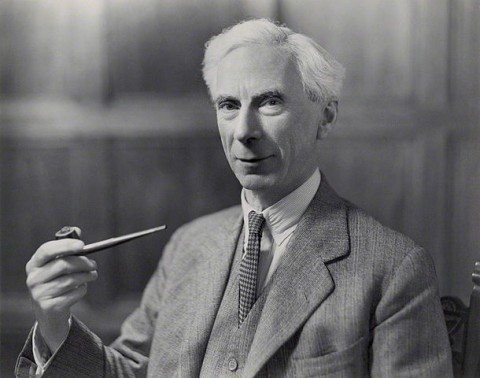
Bertrand Russell’s Ten Commandments for Living in a Healthy Democracy

Via Open Culture, this piece offers a brief summary of a 1951 article from the New York Times Magazine on “The Best Answer to Fanaticism–Liberalism,” with the subtitle: “Its calm search for truth, viewed as dangerous in many places, remains the hope of humanity.” In the article, Russell writes that “Liberalism is not so much a creed as a disposition. It is, indeed, opposed to creeds.”

Enjoy - his 10 Commandments are very intriguing.

Bertrand Russell’s Ten Commandments for Living in a Healthy Democracy


March 14th, 2013


Bertrand Russell saw the history of civilization as being shaped by an unfortunate oscillation between two opposing evils: tyranny and anarchy, each of which contain the seed of the other. The best course for steering clear of either one, Russell maintained, is liberalism.

“The doctrine of liberalism is an attempt to escape from this endless oscillation,” writes Russell in A History of Western Philosophy. “The essence of liberalism is an attempt to secure a social order not based on irrational dogma [a feature of tyranny], and insuring stability [which anarchy undermines] without involving more restraints than are necessary for the preservation of the community.”

In 1951 Russell published an article in The New York Times Magazine, “The Best Answer to Fanaticism–Liberalism,” with the subtitle: “Its calm search for truth, viewed as dangerous in many places, remains the hope of humanity.” In the article, Russell writes that “Liberalism is not so much a creed as a disposition. It is, indeed, opposed to creeds.” He continues:
But the liberal attitude does not say that you should oppose authority. It says only that you should be free to oppose authority, which is quite a different thing. The essence of the liberal outlook in the intellectual sphere is a belief that unbiased discussion is a useful thing and that men should be free to question anything if they can support their questioning by solid arguments. The opposite view, which is maintained by those who cannot be called liberals, is that the truth is already known, and that to question it is necessarily subversive.
Russell criticizes the radical who would advocate change at any cost. Echoing the Enlightenment philosopher John Locke, who had a profound influence on the authors of the Declaration of Independence and the U.S. Constitution, Russell writes:
The teacher who urges doctrines subversive to existing authority does not, if he is a liberal, advocate the establishment of a new authority even more tyrannical than the old. He advocates certain limits to the exercise of authority, and he wishes these limits to be observed not only when the authority would support a creed with which he disagrees but also when it would support one with which he is in complete agreement. I am, for my part, a believer in democracy, but I do not like a regime which makes belief in democracy compulsory.
Russell concludes the New York Times piece by offering a “new decalogue” with advice on how to live one’s life in the spirit of liberalism. “The Ten Commandments that, as a teacher, I should wish to promulgate, might be set forth as follows,” he says:
1: Do not feel absolutely certain of anything. 
2: Do not think it worthwhile to produce belief by concealing evidence, for the evidence is sure to come to light. 
3: Never try to discourage thinking, for you are sure to succeed. 
4: When you meet with opposition, even if it should be from your husband or your children, endeavor to overcome it by argument and not by authority, for a victory dependent upon authority is unreal and illusory. 
5: Have no respect for the authority of others, for there are always contrary authorities to be found. 
6: Do not use power to suppress opinions you think pernicious, for if you do the opinions will suppress you. 
7: Do not fear to be eccentric in opinion, for every opinion now accepted was once eccentric. 
8: Find more pleasure in intelligent dissent than in passive agreement, for, if you value intelligence as you should, the former implies a deeper agreement than the latter. 
9: Be scrupulously truthful, even when truth is inconvenient, for it is more inconvenient when you try to conceal it. 
10. Do not feel envious of the happiness of those who live in a fool’s paradise, for only a fool will think that it is happiness.
via Brain Pickings

Tuesday, June 05, 2012

All in the Mind - Behind the Shock Machine: Did Stanley Milgram Go Too Far?


The Milgram experiment on obedience to authority figures is an infamous series of fascinating, although morally questionable (and ethically prohibited today), social psychology experiments orchestrated by Yale University psychologist Stanley Milgram.

The studies were designed to (and succeeded in) assess the willingness of student study participants to obey an authority figure who instructed them to engage in behaviors that conflicted with their personal morals (i.e., administer electric painful shock to other subjects).

Milgram first described his research in 1963 in an article published in the Journal of Abnormal and Social Psychology, and later discussed his findings in greater depth in his 1974 book, Obedience to Authority: An Experimental View.

The entry at Wikipedia offers a pretty through discussion of the research and the controversy. For more in-depth understanding, here is Philip Zimbardo (of the Stanford Prison Experiment) talking about the Milgram material at the bottom.

Behind the Shock Machine

Broadcast: Sunday 3 June 2012 
In 1961 psychologist Stanley Milgram embarked on one of the most controversial, yet fascinating psychological experiments ever conducted. They were said to show that we are all capable of evil, in certain circumstances. Many of the participants are still traumatised by the experience. We present a panel discussion about the lessons and ethics of the Milgram experiments called 'Behind the Shock Machine – Did Science go Too Far?'.

Guests

  • Gina Perry
  • Justin Oakley, Associate Professor, Director of the Centre for Human Bioethics, Monash University (Australia)


Publications


Credits

Presenter: Lynne Malcolm
Researcher: Harry Greenwood

* * * * * * *

The Lucifer Effect: Understanding How Good People Turn Evil

[2007] Philip G. Zimbardo, Professor Emeritus of Psychology, Stanford University

Description: Perhaps no one comprehends the roots of depravity and cruelty better than Philip Zimbardo. He is renowned for such research as the Stanford Prison Experiment, which demonstrated how, in the right circumstances, ordinary people can swiftly become amoral monsters. Evil is not so much inherent in individuals, Zimbardo showed, but emerges dependably when a sequence of dehumanizing and stressful circumstances unfolds. It is no wonder then, that Zimbardo has lent both his expertise and moral outrage to the case of U.S. reservists who perpetrated the abuses at Abu Ghraib prison.

Zimbardo's latest book, The Lucifer Effect, attempts to understand -how good people do evil deeds." His talk outlines his involvement as expert witness for the defense team of one of the military police officers responsible at Abu Ghraib, and also provides a rich history of psychological research into the kind of behavior transformations evident in Iraq. First, Zimbardo presents a slideshow of Abu Ghraib abominations, including some digital photos that were not widely distributed by the media. Then he digs deep into the archives for a horrifically illustrated tour of experiments that make a persuasive case that certain, predictable situations corrupt people into wielding power in a destructive way.

He describes Stanley Milgram's 1963 Yale-based research demonstrating that people will behave sadistically when confronted by -an authority in a lab coat." A vast majority of the subjects delivered what they were told were dangerous electric shocks to a learner in another room, to the point of apparently killing the other person. Researchers skeptical of his results replicated them. This time, professors demanded that students shock real puppies standing on electrified grills. Zimbardo's own prison experiment turned an ordinary group of young men into power-hungry -guards," humiliating equally ordinary -prisoners" in the basement of Stanford's psychology building. The descent into barbarity was so rapid that Zimbardo had to cancel the experiment after a few days.

The recipe for behavior change isn't complicated. -All evil begins with a big lie," says Zimbardo, whether it's a claim to be following the word of God, or the need to stamp out political opposition. A seemingly insignificant step follows, with successive small actions, presented as essential by an apparently just authority figure. The situation presents others complying with the same rules, perhaps protesting, but following along all the same. If the victims are anonymous or dehumanized somehow, all the better. And exiting the situation is extremely difficult.

Abu Ghraib fit this type of situation to a T, says Zimbardo. The guards, never trained for their work helping military interrogators, worked 12-hour shifts, 40 days without a break, in chaotic, filthy conditions, facing 1,000 foreign prisoners, and hostile fire from the neighborhood. They operated in extreme stress, under orders to impose fear on their prisoners. Zimbardo believes the outcome was perfectly predictable, and while never absolving these soldiers of personal responsibility, believes justice won't be done until -the people who created the situation go on trial as well: George Tenet, Donald Rumsfeld, Dick Cheney and George Bush."

About the Speaker(s): Philip Zimbardo began at Stanford University in 1968, having taught previously at Yale, New York University, and Columbia University. He continues teaching graduate students at the Pacific Graduate School of Psychology, and at the Naval Post Graduate School (Monterey).

He has received numerous honors, including most recently, the Havel Foundation Prize for his lifetime of research on the human condition. Among his more than 300 professional publications and 50 books is the oldest current textbook in psychology, Psychology and Life, now in its 18th Edition, and Core Concepts in Psychology, in its 5th Edition.

Zimbardo has also been a social-political activist, challenging U.S. wars in Vietnam and Iraq, as well as the American Correctional System. Zimbardo has served as elected President of the Western Psychological Association (twice), President of the American Psychological Association, the Chair of the Council of Scientific Society Presidents, representing 63 scientific, math and technical associations (with 1.5 million members), and now is Chair of the Western Psychological Foundation.Host(s): Dean for Student Life, Technology and Culture Forum

Credit: MIT World -- special events and lectures


MIT TechTV


Friday, April 20, 2012

io9 - 10 of the Most Surprising Findings from Psychological Studies

A fun list from io9 on psychological studies that might be surprising to a lot of people. I know all of these studies, so I'd be curious to hear which ones are surprising to you?

10 of the Most Surprising Findings from Psychological Studies