Showing posts with label Evan Thompson. Show all posts

Sunday, January 04, 2015

Evan Thompson - Defining Consciousness from "Waking, Dreaming, Being"

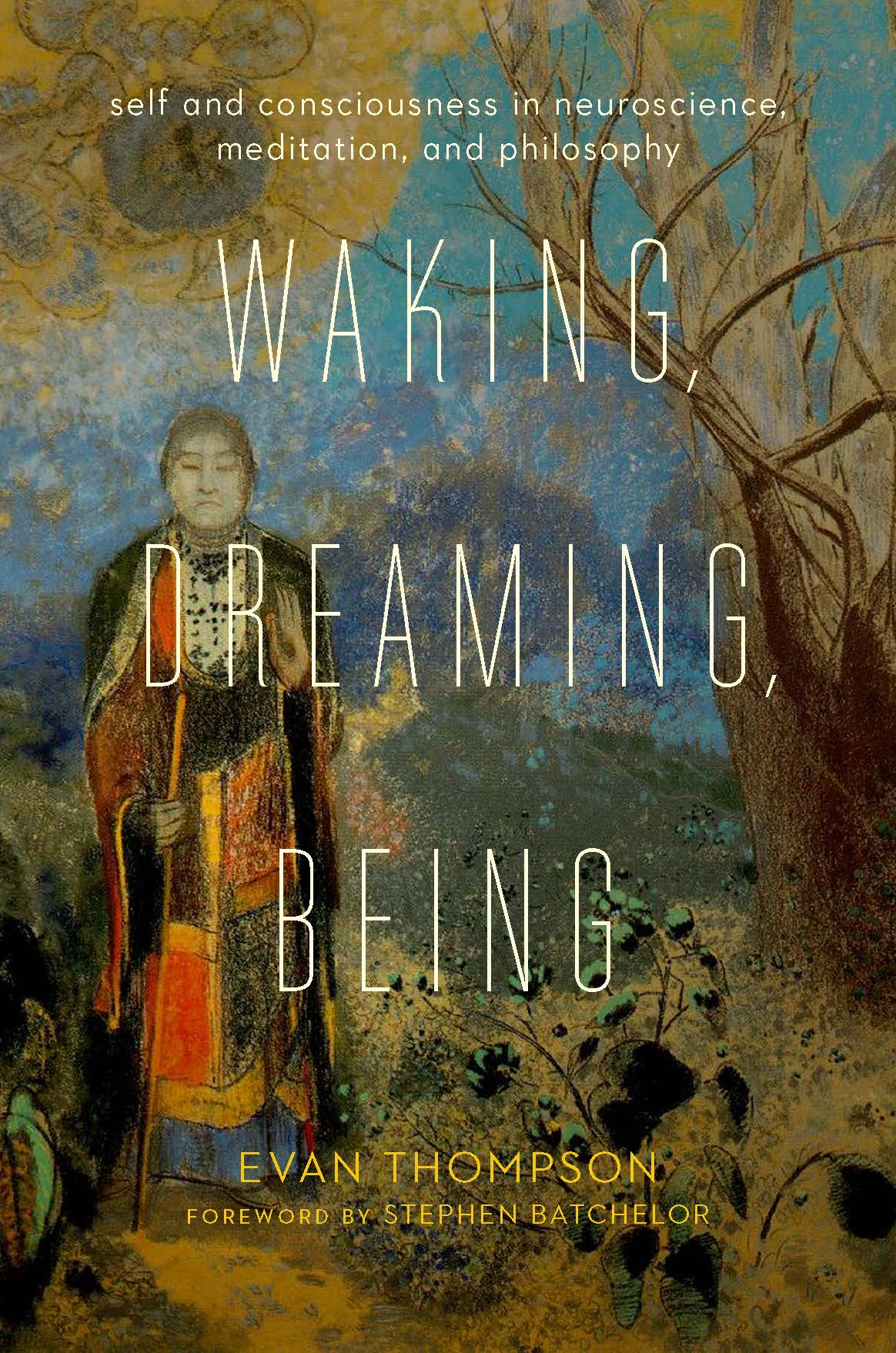
http://evanthompsondotme.files.wordpress.com/2012/11/waking-dreaming-being.jpg

Evan Thompson's new book is Waking, Dreaming, Being: Self and Consciousness in Neuroscience, Meditation, and Philosophy (2014). I'm only about 4 chapters into it at this point, but I find myself agreeing with Thompson's model of consciousness to a degree I did not anticipate. His "embodied, embedded, and relational" understanding of how consciousness functions is very similar to my own sense of consciousness.

Here are a couple of excerpts.
Moreover, the brain is always embodied, and its functioning as a support for consciousness can’t be understood apart from its place in a relational system involving the rest of the body and the environment. The physical substrate of mind is this embodied, embedded, and relational network, not the brain as an isolated system.[37]

At the same time, we can’t infer from the existential or epistemological primacy of consciousness that consciousness has ontological primacy in the sense of being the primary reality out of which everything is composed or the ground from which everything is generated. One reason we can’t jump to this conclusion is that it doesn’t logically follow. That the world as we know it is always a world for consciousness doesn’t logically entail that the world is made out of consciousness. Another reason is that thinking that consciousness has ontological primacy goes against the testimony of direct experience, which speaks to the contingency of our consciousness on the world, specifically on our living body and environment. (p. 102)
I also support his rejection of the premise that "consciousness has ontological primacy," an idea I see presented in Buddhist authors such as B Alan Wallace, Ken Wilber's integral theory, and most New Age misunderstandings of quantum mechanics (see Deepak Chopra and others of his ilk).

Over the last several years, I have become enamored of the theory of consciousness as an emergent property of matter.
The term “emergence” comes from the Latin verb emergo which means to arise, to rise up, to come up or to come forth. The term was coined by G. H. Lewes in Problems of Life and Mind (1875) who drew the distinction between emergent and resultant effects.
 ___
If we were pressed to give a definition of emergence, we could say that a property is emergent if it is a novel property of a system or an entity that arises when that system or entity has reached a certain level of complexity and that, even though it exists only insofar as the system or entity exists, it is distinct from the properties of the parts of the system from which it emerges. 
Thompson shares the emergentist position, with qualifications.
Is the view I’m presenting a version of “emergentism,” according to which consciousness is a higher-level property of living beings that emerges from lower-level biological and physical processes?[39] And if so, am I supposing that consciousness is scientifically explainable or presenting a version of “mysterianism,” the doctrine that says that the human mind is incapable of understanding how consciousness fits into the natural world?[40]
 

My view can be described as an emergentist one, in the following sense. I hold that consciousness is a natural phenomenon and that the cognitive complexity of consciousness increases as a function of the increasing complexity of living beings. Consciousness depends on physical or biological processes, but it also influences the physical or biological processes on which it depends. I also think the human
mind is capable of understanding how consciousness arises as a natural phenomenon, so I’m not a mysterian.


Nevertheless, my view differs from emergentism in its standard form, according to which physical nature, in itself, is fundamentally nonmental, yet when it’s organized in the right way, consciousness emerges. This view works with a concept of physical being that inherently excludes mental or experiential being, and then tries to show how consciousness could arise as a higher-level property of physical being so conceived. In my view, however, no concept of nature or physical being that by design excludes mental or experiential being will work to account for consciousness and its place in nature. (p. 103)
In the following passage, Thompson dismisses both the dualism of Dharmakriti and the notion of interiority of particles, a premise of Wilber's AQAL model.
Recall that Dharmakīrti reasoned in the following way: matter and consciousness have totally different natures; an effect must be of the same nature as its cause; therefore, consciousness cannot arise from or be produced by matter. This argument rejects emergentism in its standard form, for it denies that physical nature, understood as being fundamentally or essentially nonmental, is suffcient to produce or give rise to consciousness. This aspect of Dharmakīrti’s argument is hardly antiquated, for a similar and very forceful argument against standard emergentism has recently been given by the philosopher Galen Strawson.[41] In both cases, the crucial insight is that the emergence of experiental being from physical being is unintelligible, given a concept of physical phenomena as fundamentally or essentially excluding anything mental or experiential.

Whereas Dharmakīrti used his argument to support a version of mind-body dualism, Strawson uses his argument to support “panpsychism.” Dualism says that matter and consciousness have totally different natures; panpsychism says that every physical phenomenon possesses some measure of experience as part of its intrinsic nature. Neither position is attractive to me. Dharmakīrti’s dualism, which allows for modes of consciousness not dependent on the brain, doesn’t sit well with the scientific evidence, as we’ve seen. Neither does Strawson’s panpsychism. This position attributes “micro-experiences” to microphysical phenomena, despite there being no evidence for protons or electrons having any experiences of their own. Not only does ascribing “micro-experiences” to physical particles seem ad hoc, but also it gives rise to the so-called “combination problem” of how it’s possible for “micro-experiences” to coexist or combine coherently in a human or other kind of animal subject. (p. 104-105)
Thompson's point in Chapter Four, from which all of these quotes are taken, is to move the reader toward his primary philosophical position on consciousness, neurophenomenology.
Where does this leave us with regard to the project of relating consciousness to the brain, and more comprehensively, to our bodily being? Since we can’t step outside of consciousness or our embodiment, we need to work within them carefully and precisely. Instead of focusing mainly on the outward behavioral and physiological expressions of consciousness, we need to give equal attention to cultivating our experience from within. Concretely, this means we need to work with contemplative forms of mental training and embed them within a larger framework that also includes the experimental sciences of mind and life. Such a framework, in which both contemplative practice and scientific observation and measurement are seen as grounded in direct experience, is precisely what Francisco Varela had in mind when he introduced his research program of “neurophenomenology.”[43]

Neurophenomenology provides the framework for the rest of this book. (p. 105-106)
Thompson, along with by Francisco J. Varela and Eleanor Rosch first laid out a definition of neurophenomenology in their seminal book, The Embodied Mind: Cognitive Science and Human Experience (1991).

The following is an excerpt from Thompson's 2010 book, Mind in Life: Biology, Phenomenology, and the Sciences of Mind.
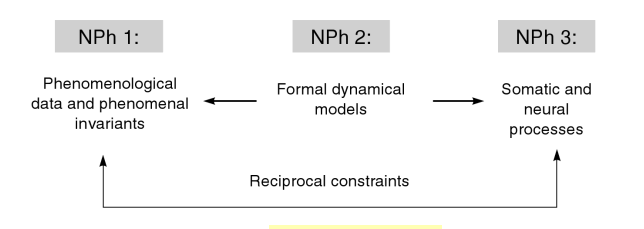
Varela formulates the “working hypothesis” of neurophenomenology in the following way: “Phenomenological accounts of the structure of experience and their counterparts in cognitive science relate to each other through reciprocal constraints” (1996. p. 343). By “reciprocal constraints” he means that phenomenological analyses can help guide and shape the scientific investigation of consciousness, and that scientific findings can in turn help guide and shape the phenomenological investigations. A crucial feature of this approach is that dynamic systems theory is supposed to mediate between phenomenology and neuroscience. Neurophenomenology thus comprises three main elements (see Figure 11.2): (1) phenomenological accounts of the structure of experience; (2) formal dynamical models of these structural invariants; and (3) realizations of these models in biological systems. Given that time-consciousness is supposed to be an acid test of the neurophenomenological enterprise, we need to see whether phenomenological accounts of the structure of time-consciousness and neurodynamical accounts of the brain processes relevant to consciousness can be related to each other in a mutually illuminating way. This task is precisely the one Varela undertakes in his neurophenomenology of time-consciousness and in his experimental research on the neurodynamics of consciousness.

Varela’s strategy is to find a common structural level of description that captures the dynamics of both the impressional-retentional-protentional flow of time-consciousness and the large-scale neural processes thought to be associated with consciousness. We have already seen how the flow of time-consciousness is self-constituting. What we now need to examine is how this self-constituting flow is supposed to be structurally mirrored at the biological level by the self-organizing dynamics of large-scale neural activity.


Figure 11.2-Neurophenomenology
Figure 11.2- Neurophenomenology

There is now little doubt in cognitive science that cognitive acts, such as the visual recognition of a face, require the rapid and transient coordination of many functionally distinct and widely distributed brain regions. Neuroscientists also increasingly believe that moment-to moment, transitive (object-directed) consciousness is associated with dynamic, large-scale neural activity rather than any single brain region or structure (Cosmelli, Lachaux, and Thompson, 2007). Hence, any model of the neural basis of mental activity, including consciousness, must account for how large-scale neural activities can operate in an integrated or coherent way from moment to moment.

This problem is known as the large-scale integration problem (Varela et al. 2001). According to dynamical neuroscience, the key variable for understanding large-scale integration is not so much the activity of the individual neural components, but rather the nature of the dynamic links among them. The neural counterparts of mental activity are thus investigated at the level of collective variables that describe emergent and changing patterns of large-scale integration. One recent approach to defining these collective variables is to measure transient patterns of synchronous oscillations between different populations of neurons (Engel, Fries, and Singer 2001; Varela et al. 2001). According to Varela (1995, 1999), these synchrony patterns define a temporal frame of momentary and transient neural integration that corresponds to the duration of the present moment of experience.
I highly recommend all three of Thompson's books that are referenced here - he is one of the leading philosophers of mind working today.

Saturday, November 08, 2014

INTERVIEW - Waking, Dreaming, Being: Philosopher Evan Thompson Explores Self and Consciousness in Neuroscience and Meditation

Awesome interview with philosopher Evan Thompson as his new book, Waking, Dreaming, Being: Self and Consciousness in Neuroscience, Meditation, and Philosophy, is just about to be released (scheduled to be released November 18, 2014). Thompson is also the author of Mind in Life: Biology, Phenomenology, and the Sciences of Mind (Harvard University Press, 2007) and the co-author of the seminal work, The Embodied Mind: Cognitive Science and Human Experience (MIT Press, 1991; new expanded edition, 2015).

This was posted in Wild River Review (edited to remove substantial typos).

INTERVIEW - Waking, Dreaming, Being

Philosopher Evan Thompson Explores Self and Consciousness in Neuroscience and Meditation

For a philosopher, staying with the open question means turning it around and examining it from all sides, without trying to force any particular answer of conclusion. But it also means not being afraid to follow wherever the argument leads. Evan Thompson, Waking, Dreaming, Being


I had the privilege of meeting philosopher, professor, scholar and writer Evan Thompson nearly ten years ago at Upaya Zen Center in Santa Fe, New Mexico for a reunion of the Lindisfarne Association hosted by one of Thompson's longtime friends and colleagues, Roshi Joan Halifax.

Thompson is the son of the Lindisfarne Association's founder, cultural philosopher and poet William Irwin Thompson, and grew up in the mileu of some of the late twentieth century's most daring and original thinkers. It was not unusual for Thompson to sit down at the dinner table with social scientist, Gregory Bateson; Buddhist scholar, Robert Thurman; biologist, Lynn Margulis; or Chilean neuroscientiest Francisco Varela, with whom Thompson would later collaborate on a groundbreaking book - The Embodied Mind: Cognitive Science and Human Experience.

 At 16, Thompson, who was home-schooled by his father, enrolled at Amherst College where he majored in Asian Studies, concentrating on Chinese language and Buddhist philosophy. He went on to earn his PhD in Philosophy at the University of Toronto and is an expert in the fields of cognitive science, philosophy of mind, Phenomenology, and cross-cultural philosophy, especially Buddhist philosophy in dialogue with Western philosophy and science. In 2014 he was the Numata Invited Visiting Professor at the Center for Buddhist Studies at the University of California, Berkeley. He is currently Professor of Philosophy at the University of British Columbia in Vancouver, Canada. 

***

When I was eight years old, my father gave me a copy of Gautama Buddha: In Life and Legend by Betty Kelen. I still have the copy, a 75-cent paperback, with my name in my own handwriting on the first page. I couldn’t put the book down.  I read it in the back seat of our old blue Volkswagen station wagon… I asked my father why he sometimes marked sentences in books he was reading with a red pen. He told me they were important ones he wanted to remember and find again. Like father like son; the red ink I marked on the paragraphs describing the aspiration to attain enlightenment and become a Buddha hasn’t faded against the yellow paper. Something about this drama of enlightenment appealed to me...Waking, Dreaming, Being


 ***

WRR: You are a philosopher, and the son of a cultural philosopher and poet. That lineage shows in your new book, Waking, Dreaming, Being. What were the challenges you faced during the writing process?

Evan Thompson: In the beginning, it was to find the right voice, and that took a fair amount of time. I started the book with journal entries, some of which became the personal narratives in the book. I didn't yet have a sense of what I was going to do with those entries, but I knew that I wanted to try to use them in something I would write about consciousness and meditation.

Later, when I tried to take those narratives and cast them into a more reflective intellectual shape, the process was quite challenging. It took me awhile to find the right way to do that. My wife, Rebecca Todd, a cognitive neuroscientist who is on the faculty with me at the University of British Columbia, has a very good ear for words that sound genuine and not mannered, so I showed her many stages of the writing. I went through five or six literary agents trying to get them to work with me. The response I got from all of them was “this is really interesting but it’s too intellectual. It’s going to be too hard for us to work with.”

When I sent the manuscript to Anna Ghosh, she said the same thing except that she really loved what I was trying to do, which was weaving back and forth between Indian philosophy, neuroscience, and personal experience. So she gave me concrete information about how to do that in an accessible way, and that was extremely helpful. It was almost a two-year process of sending the manuscript to agents, and going through different drafts. But once Anna and I started working together and successfully arrived at the tone and the voice, the writing went quite quickly.

WRR: What did Anna and Rebecca say or show you that you weren’t able to see on your own?

Thompson: They told me to assume that the reader knows nothing, and to strive to make every idea concrete through something experiential, through something that can pull a person into the narrative, through an image or a metaphor or an idea or a question. If you can create a way for the reader to relate personally to an idea, then it's much easier for them to pick up technical, scientific or philosophical concepts along the way. I knew abstractly that’s what I had to do, but something about the way that Rebecca and Anna were able to work concretely with specific examples of my writing reinforced what they were saying and provided a breakthrough for me.

***

It’s three o’clock in the morning in Dharmsala, India. The village dogs are refusing to let the monkeys outside my room have the last screech. I’m jet-lagged, and the commotion woke me up. I listen for a while, enjoying their raucous contest, and then put in earplugs and settle back to bed. The earplugs muffle the racket but amplify the sound of my own breathing, so I focus on this inner rhythm in order to fall asleep…Since I was a kid, I’ve always wanted to capture the exact moment when sleep arrives and notice when I begin to dream…colored shapes start to float on the inside of my eyelids...turning into cows and shacks and mules, like the ones I saw this morning on the bus ride up the mountain…The next thing I know, I’m flying over a large tree-filled valley. I must be dreaming...I’m having a lucid dream––the kind of dream where you know you’re dreaming…

***

WRR: Your book, ultimately, is a meditation on consciousness. Is consciousness wholly dependent on the brain or does it transcend the brain?

Thompson: That's the fundamental question of the book. I felt compelled to write about it because it kept coming up for me in different ways, some of which were personal and some intellectual. On a personal level I thought about the question a lot when I was working intensely with my friend and mentor, Chilean neuroscientist, Francisco Varela, just before he died. He was terminally ill and we knew that at some point soon he was going to die.

I write about the last real conversation I had with him, how it centered on consciousness and the question of its transcendence. It was fall of 2000 and Cisco and I were in my dad’s apartment in New York on the Upper West Side, writing a scientific article about consciousness and the brain. We weren't raising that question at all in the article but we were talking about it a lot when we weren't working. Cisco was a Buddhist, and knew that he was going to die soon, so transcendence was something he was contemplating. From a Tibetan Buddhist perspective, consciousness is the most fundamental luminous nature of awareness, underlying more ordinary cognitive forms of the mind, and it's not considered to be brain dependent. Cisco took this perspective very seriously, but he was a neuroscientist, so he was also skeptical and doubtful.

The experience of talking to Cisco about this and watching him die and feel the loss intensified the question for me. It was a question that I had always thought about, having studied Asian and Western philosophy, but also having grown up in the New Age and yoga world where it was just taken for granted that people had multiple lives and that consciousness carried on after physical death.

But of course when you start studying philosophy and science those kind of ideas get subjected to intense criticismand all of my professional career as a philosopher working with neuroscientists put a lot of critical pressure on the beliefs that I had been raised with. So, on an intellectual level, doing work in the philosophy of mind, it was natural to constantly return to that question.

WRR: How did Francisco Varela look at all this?  Especially at the end of his life when he still had much work to do. He could have felt that there was a lot he stood to lose.

Thompson: Varela had always been a very successful, groundbreaking scientist. Just before he died, he had major breakthroughs in the work he was doing on the brain basis of consciousness. Some of his studies had gotten a lot of attention, and had been published in places like Nature. He had a fantastic lab in Paris where he was bringing together people with the highest technical skills, but also with a deep interest in contemplative perspectives on consciousness.

So, the conversation I write about in Waking, Dreaming, Being occurred in my father’s apartment at a very pointed moment. Cisco was explaining to me––both from his own experience and from his understanding of Buddhist ideas––why it wouldn't be unreasonable to think that there could be an aspect to awareness or consciousness that would be unchanging across any perceptual or cognitive state, and that wouldn’t be perturbed by any bodily fluctuation. The traditional Indian image for this quality of awareness is luminosity, something I write about in the book.

Cisco was saying that from the experiential perspective of encountering the basic luminosity of awareness, which is what it is whether you're awake or dreaming or deeply asleep or under anesthesia (he had experienced being aware under anesthesia and encountering that quality of luminosity there), it would be natural to think that consciousness is something unchanging or constant, that it wouldn't be terminated by the death and decay of the brain. And as he was presenting that perspective.

I was presenting a neuroscientific perspective on why even that line of consideration––although it’s extremely compelling from a first-person experiential perspective–-does not necessarily imply that there really is a consciousness able to persist in the absence of the brain or the body.

WRR: Was he trying to convince you otherwise?

Thompson: It was a poignant role reversal––Cisco arguing the Buddhist view while I argued the neuroscientific view. But he wasn't trying to convince me or force anything. And I wasn't trying to convince him; we were exploring the matter together. He was, in his words, "staying with the open question."

I use this phrase in the book for the kind of attitude we need to cultivate, especially in the face of death. I f you have the chance, watch the film Monte Grandewhich is about his life, and was done shortly before he died. He talks about precisely what we're talking about--death and what happens to consciousness. He presents the Buddhist view and he presents the neuroscience view; and he says that you have to stay with the open question, instead of trying to resolve it intellectually. You have to do that in an existential way, with your whole being, in the face of death. So that is another key thread for me in the book, this idea of staying with the open question.

WRR: How do you stay with the open question?

Thompson: For me, it means turning the question around, thinking about it from many angles, being open and curious, and following wherever the evidence and argument take you. 

The question about consciousness and brain came to the forefront in the “Mind and Life” dialogues Francisco Varela created with the Dalai Lama. (The Mind and Life Dialogues began in 1987 as a joint quest between scientists, philosophers and contemplatives to investigate the mind, develop a more complete understanding of the nature of reality, and promote well-being.) On several occasions, some of which I've participated in and write about in the book, the Dalai Lama has presented the Tibetan Buddhist view that pure awareness is not brain-based. Of course, the neuroscientists have immediately pushed back.

As a philosopher, I'm interested in these moments when very different traditions come together, traditions that are intellectually rigorous and that can argue with, probe, and challenge each other. I'm interested in writing that does justice to the question itself rather than in trying to present an answer and defend it against all possible objections, which is what philosophers today typically try to do.
I wanted to write a book where the question was the guiding idea for looking at a range of different kinds of experience: sleeping, dreaming, lucid dreaming, the dying process, out of body experience, and perception. I wanted to bring to bear the critical observations and arguments from several different traditions--Western science and philosophy, Indian yogic philosophies, and Indo-Tibetan Buddhist philosophy.

***

I’m ten years old, sleeping in the top bunk of my room. I know I’m asleep because I’m looking down at myself lying in the bed below.  I’m floating above the bed, just beneath the ceiling... "The Patient was lying in bed and awakened from sleep, and the first thing she remembered was “the feeling of being at the ceiling of the room.”

***

WRR: I think it’s part of the human condition to believe we are eternal and to believe we exist outside our bodies. You write beautifully about out-of-body and near-death experiences. In one case, you describe an operating room, what was going on physically; and how neurologically someone could think they were outside their bodies watching the surgery. Maybe you could talk a little bit about that.

Thompson: When I was a kid, I had some very vivid out-of-body experiences. My dad explained them to me in terms of the Indian yoga cosmology, in which there are other subtle energy bodies besides the physical body. So it wasn't just that I had been raised with certain beliefs, but that I had had compelling experiences that made sense in terms of those beliefs and that seemed to support them. But then I came to have a lot of doubts when I studied neuroscience, because neuroscience has shown that these experiences are linked to certain kinds of brain activities.

Just after Cisco died, I wrote a paper with one of his PhD students, Antoine Lutz, about how to combine neuroscience with first-person investigations of experience, an approach we called, following Cisco, "neurophenomenology." When the paper was published, we got an email from a cardiologist in the Netherlands, Pim van Lommel, whose research focused on near-death experiences. He thought our approach would be a good one to use in studying near-death experiences, but he added that these experiences present a challenge to the neuroscience view that consciousness is entirely brain-based.

I already knew about near-death experiences but hadn't known there were any scientific studies of them, so I was intrigued by van Lommel's suggestion and I dived into reading a lot of the near-death experience literature. I thought that if the events in the near-death experience narratives happened exactly as they are described, with people remembering events that occurred when their brains weren't functioning, then they would pose a real challenge to the prevailing view in neuroscience that consciousness is based on the brain. So I went in thinking that near-death experiences could be important, that maybe they were an anomaly that neuroscience can’t explain.

When I started to probe deeper, howeverI became quite skeptical. Often, the narratives were constructed in a way in which the timeline made it seem as if certain things were being experienced when the brain was shut down, but if you actually looked at the evidence, there was no support for that. 

WRR: What did you ultimately find?

Thompson: Writing that chapter became a journey of discovery for me. I worked through the near-death experience literature and came out on the other side quite skeptical that these experiences show anything about consciousness having a life beyond the brain. It's not that people don’t have these experiences. People certainly  have very vivid and intense experiences, like out-of-body experiences, particularly in traumatic situations like cardiac arrest. But the way that a certain community within the medical world has presented these experiences as meaning that the spirit transcends the body, or that consciousness exists past the life of the body, that's a construction that's just not supported, let alone confirmed, by the evidence.

In that chapter (which is also published as its own short ebookI try to convey that journey of starting out thinking, "Here are these experiences…what do they mean?”, then thinking, "Let’s take a closer look,” and then thinking, "These experiences shouldn't be understood in the way they're usually described, and we need a different way to understand them." 

Instead of using them to argue for either a spiritualist agenda, which is what many near-death experience writers do, or a materialist one, which is what neuroscience debunkers of these writers do, we need to take them seriously for what they are--narratives of the first-person experience airing from circumstances that we will all in some way eventually face. After all, if one were dying or having a near-death experience, it wouldn't be the truth or falsity of the experience according to some outside religious or scientific standard that would matter most. it would be one's mental ability to be calm or peaceful or mindful in the face of what is happening. In any case, that is what contemplative and yogic traditions tell us.

***

In September 1983 my father took me to Alpbach, Austria, to the International Symposium on Consciousness, where he had been invited to speak. I had just graduated from Amherst College, where I had majored in Asian studies and studied Buddhist philosophy with Robert Thurman, so the conference which featured the Dalai Lama, quantum physicist David Bohm and Francisco Varela was the perfect graduation present. It was at this conference that Varela and the Dalai Lama first met...

***

WRR: I'm interested in another figure about whom you paint a compelling portrait: the Dalai Lama.

Thompson: My experience of the Dalai Lama is through the Mind and Life Dialogues. Some of these discussions take place at the Dalai Lama’s home in Dharamsala, with a smaller group of scientists and philosophers, and some at larger public meetings in the United States. The discussions center on the encounter and conversation between Western science and Buddhist philosophy and practice. What makes the dialogues compelling is that the Dalai Lama is interested in what science has to say but he's also not timid about critically questioning the scientists and their assumptions.

What's most interesting to me has been to watch those moments when the Dalai Lama, in confronting neuroscience, seems to allow himself to entertain the idea that consciousness could be physically or biologically based. Given his personal interest in science, and his strong personal and political aspiration to keep Tibetan Buddhism alive in the modern world, he has undertaken to bring science into the Tibetan Buddhist monastic curriculum. I wonder what effect this will have on future generations of monks and nuns, some of whom may go on to become scientists. I wonder what effect it will have on both Buddhist and scientific thinking about the mind.

In my own philosophical work, I've been very enriched by these dialogues. They've really brought home to me how scientific and philosophical efforts to understand the mind can't be limited to the concepts and language of any one tradition or community, but must strive instead to learn from diverse cultures of investigation.

WRR: In Waking, Dreaming, Being, you also explore physical practices such as Yoga and Tai Chi and how they relate to consciousness and the body. 

Thompson: The brain, of course, is part of the body; and we can’t begin to understand how the brain is able to do what it does without seeing it as part of a larger embodied context. All contemplative practices work with the body in one way or another.

If you think about something as basic as sitting meditation, you will find that it is thoroughly somatic. You have to put your body into a certain position so you can meditate, and you have to maintain a posture of stability and alertness. You have to balance between a tendency towards drowsiness and sleep versus a tendency towards mental jumpiness. All of that is bodily in terms of the energy required to directly influence the mental functions of attention or awareness or concentration.

Some traditions work directly with movement, as in walking meditation or yoga asanas (which can be held still or flowing). Then there are practices like Tai Chi with continuous movement. There's also standing meditation, which is an important component of Tai Chi training. Here you have to maintain an open, meditative mental awareness in a standing stationary posture. This practice creates a very distinct quality of awareness and energy.

WRR: You have an ongoing Tai Chi Practice.

Thompson: Yes, and from the perspective of my own experience of Tai Chi and standing and sitting meditation, I don't think we can understand contemplative practices unless we see them in a somatic context. From a scientific perspective, this makes perfect sense because the brain regulates what the rest of the body is doing and the body regulates what the brain is doing. It’s a constant back and forth conversation.

This point about embodiment also applies to dreaming. Some scientists and philosophers talk about dreams as if they were just brain-based hallucinations. I don't think that's right. I think dreaming is a kind of imagining. It puts into play affective and sensorimotor systems of the body. Physiologically, lots of things are going on in the body beyond the brain when you dream, and phenomenologically many dreams are structured in terms of a virtual dream body through which you have the feeling of inhabiting a dream world and moving around in it. So dreaming involves embodiment in both physiological and phenomenological ways.

WRR: You have many examples of dreams in your book, but my favorites are the dreams where you're flying. I've only flown once in a dream - or at least a dream I so vividly remember - and I was nine or ten years old. I'd forgotten the dream until I read your evocative descriptions of your own dreams. I deeply appreciated them because dreams are such a large part of our lives. I also appreciated your examples of different kinds of dreams because I was able to start looking at my own dreams from a technical point of view. I've been dreaming differently since I read your book.

Thompson: I'm happy to hear this because one my aims is to give people new ways to appreciate their dreams. I wrote the dream chapters first. They form the heart of the book. I use my own dreams to illustrate my ideas, along with dreams that friends have told me as well as poetry by many writers from different places and times. It was through writing down my dreams and other personal stories that I found my way into writing the book.

The first thing I wrote was the story about the book on Gautama Buddha that my dad gave me when I was a little kid. That vignette became the opening for the Prologue. Then I wrote the dream chapters, and it was through those chapters that I found my way into a different style of writing from what I had done before--trying to illustrate philosophical ideas through personal experience.

WRR: You write about using dreams to gain control over our negative emotions.

Thompson: One of the central ideas of the Tibetan Buddhist practice called "dream yoga" is to use lucid dreaming––or conscious dreaming where you are aware that you are dreaming––as an occasion for meditation. Once you're able to recognize the dream as a dream, you can try to transform the dream. Emotions tend to be very intense in dreams, but if you can recognize the dream as a dream, you can use it as an opportunity to mentally transform negative emotions like fear or anger into positive emotions like equanimity or compassion. Then you can take this practice of transforming negative emotions into waking life.

In Western psychology, lucid dreaming is often defined as being able to control the dream because you know you're dreaming. The idea is that if you have control over the dream, you can use it as a place to work out personal issues or as your own kind of private fantasy world.

I don't think there's anything wrong with looking at lucid dreaming in this way, but I'd say it's rather limited from a contemplative perspective. It misses a deeper point, which is that what makes a dream lucid isn't being able to control it; it's being able to pay attention to the dream as a dream, regardless of whether you're able to control it. 

A cognitive shift happens with that kind of attention, and that cognitive shift is what dream yoga means by recognizing the dream as a dream. Transforming the dream is about intervening in the dream or trying to control it, and that requires recognizing the dream as a dream. The interesting thing is that if you try to be still or focus your attention on just one thing in the dream, the dream will fall apart. Change, movement, and attentional shifts are needed to keep the dream going. 

So, if you can let all that happen while keeping the awareness that it's a dream, you have the unique opportunity to develop a kind of meta-awareness or mindfulness of the dream. You're able to remember that whatever is happening is a function of your mind and that there's a difference between what your mind creates--the content of the dream--and the simple watching or witnessing awareness of the that process.

WRR:  Is lucid dreaming better than non-lucid dreaming?

Thompson: I don't think we should fetishize lucid dreaming and make it into something that's special and better than non-lucid dreaming. Both belong to human experience and both are valuable. People relate to their dreams in different ways. Some people find lucidity exhilarating and others find it obtrusive. One of the ideas I write about is that dreaming is spontaneous imagining. I don't see why spontaneous imagining is intrinsically better if it's lucid.

Some Buddhist teachers say that it's always better to be lucid than nonlucid when you dream. I don't follow that way of thinking, and in Waking, Dreaming, Being I use a parable from the Daoist thinker Zuangzi (Chuang Tzu) to say why. The parable is the one where first there is a man dreaming he is a butterfly, then there is a butterfly dreaming he is a man, and we can't say whether it's a man becoming a butterfly in a dream or a butterfly becoming a man in a dream. There's no lucidity, just a succession of phases. The parable is traditionally read as an allegory of life and death. With regard to dreaming and lucid dreaming, what I take from the parable is that we need to be able to let go of lucidity and release ourselves to the full presence of the dream. If we can't, then we deprive ourselves of certain natural and valuable experiences. 

WRR: I often think a spiritual practice is ultimately about how we face the end of our lives. We deny death so much in our culture. In Indian and Buddhist traditions, there are manuals giving instruction on how to die. You describe very well a workshop you took with Roshi Joan Halifax at Upaya Zen Center, where she takes you through a guided meditation that simulates your death. It seemed, at least the way you wrote about it, that it was frightening for you. I appreciate how honestly you described your experience.

Thompson: The fear of death is basic to the human condition. We're the only animals, so far as we know, who can think forward in time in order to try to imagine the time of their own deaths, who can grapple with trying to understand how the world will be once we are gone, and who can wonder whether death is the final end or whether there is some further continuation of consciousness. Contemplative traditions, especially the Indian yogic traditions, including Buddhism, are very much concerned with preparing us for the inevitability of dying and death, both one's own and the inevitable loss of loved ones. Buddhaghosa, the fifth century A.D. Indian Buddhist philosopher, says that the moment of death is the most important moment in life and that the point of meditation is to prepare one's mind for that moment.

If you look at probably any religion, or contemplative or spiritual tradition, you'll find a confrontation with death at its source. Siddhartha Gautama renounced life in the world and set out for the forest in search of awakening because he was so distressed by the sights of sickness, old age and dying, and death in the form of a corpse. Sacrificial death is at the basis of Christianity, and of course the image of the dying god is much older than Christianity.

The "dissolution meditation" I describe in the book is Roshi Joan Halifax's modern, nonsectarian adaptation of a Tibetan Buddhist practice. She uses it in her "Being with Dying" program for end-of-life clinicians and caregivers. You imagine the progressive dissolution of your body and mind as you die. The idea is that you cannot be an effective caregiver to the dying if you are constantly turning away mentally from death, so the meditation helps one to confront the thought of one's own death. In the traditional Tibetan Buddhist context, of course, the ritual is very powerful because it's full of cultural and religious symbolism. I found Roshi Joan's version to be very compelling. So was reliving the experience in writing about it.

WRR: I appreciate the little details you put into that chapter, how the thrust of the meditation was to remain conscious, and yet people fell asleep. You describe how a few people were snoring and I imagine I would be one of those.

Thompson: Thats funny. The link between sleep and death is very old. Sleep (hypnos) and death (thanatos) are twin brothers in Greek mythology. Sleep and death were linked much earlier in The Epic of Gilgamesh. They're linked in both Old and New Testaments. In my book, I give reasons for thinking that Tibetan Buddhist descriptions of what happens to our minds when we die are in many ways extrapolation from what happens when we sleep and dream. 


WRR: In your opinion, are we the dreamer or the dream? 

Thompson: You could say we are both.

Evan Thompson, Photo by Christian Coseru

In addition to Waking, Dreaming, Being: Self and Consciousness in Neuroscience, Meditation, and Philosophy (Columbia University Press), Thompson is the author of Mind in Life: Biology, Phenomenology, and the Sciences of Mind (Harvard University Press, 2007) and the co-author of The Embodied Mind: Cognitive Science and Human Experience (MIT Press, 1991; new expanded edition, 2015).

Wednesday, November 05, 2014

"Mental Notes" from the Mind & Life Institute

Posted below are two articles from the Mind and Life Institute blog, both of which are slightly related. The first one features Evan Thompson's work with neurophenomenology and the second one looks at Richard Davidson's work with meditation and compassion as it relates to theory of mind.

Grey Matters

Mind and Life’s resident neuroscientist on the past, present, and future of neurophenomenology.


By Wendy Hasenkamp | September 18, 2014

Brain1

What is the human mind, and how can we develop it to its greatest potential?

There are many ways of trying to answer this age-old question. As a neuroscientist, I was trained within a theoretical system that largely equates the mind with the physical structure of the brain. Operating from this perspective, science has made incredible strides, giving us insights ranging from the molecular array of genes and proteins to the electrical firing patterns of individual neurons and neuronal assemblies. Yet, until recently, a central element of the human mind was largely missing from neuroscientific investigations: lived experience.

However much neuroscience can tell us about the brain, if we are to have a complete picture of the mind, conscious experience must ultimately be incorporated into our investigations. As a way to illustrate this, imagine reading a detailed description of the neural circuitry that underlies vision—the many processes that result in detecting color, contrast, shape, and motion. While such a description could provide a thorough account of the biological substrates involved in, say, observing a sunset, it is a different thing entirely to gaze at the sun dipping below the horizon and experience its gradations, beauty, stillness, as well as the emotions or memories that arise. A similar case can be made for the majority of mental processes since most have an experiential component.

To access lived experience in scientific studies, researchers must take into account what is referred to as the “subjective perspective”—the participant’s first-person point of view on their own experience, usually reported through narrative, questionnaires, scales, or novel interfaces with measurement instruments. For many decades, however, the use of subjective report in psychological and cognitive research was considered unreliable, in part due to studies showing that memories can be inaccurate, and that introspection can be influenced by factors such as expectation or denial. As a result, subjective data was largely abandoned in favor of more “objective,” third-person measures such as behavior or physiological data. Experience was thus relegated to a black box, inaccessible to science.

Fortunately, cognitive science has begun to return to first-person approaches with renewed interest. Concerns about the reliability of subjective report remain important; at the same time, recent research continues to prove the value of subjective information. The National Research Council, for example, just released a report formally urging researchers to seek information on subjective well-being, which they describe as “the self-reported levels of contentment, stress, frustration, and other feelings people experience throughout the day and while performing different activities.”

Mind and Life’s own history is related to this shift in thinking, and an emphasis on subjective experience remains central to our mission. In the 1990s, Francisco Varela, cognitive neuroscientist and one of Mind and Life’s cofounders, proposed the scientific approach known as neurophenomenology, which seeks to integrate valid first-person subjective information with third-person objective measures. Varela, along with Mind and Life Fellow Evan Thompson, believed that relating moment-to-moment subjective experiences to dynamic activity in neural networks represents an enormous opportunity for cognitive research, and will yield a more comprehensive understanding of the human mind. Areas where this approach is highly relevant include investigations into perception, attention, memory, the self, motivation, volition, emotion, spontaneous cognition, mind wandering, and craving and addiction—all fields in which Mind and Life has sponsored research.

Of course, as cognitive neuroscience continues to advance as a discipline, the development of rigorous methods to probe the subjective contents of the mind will be increasingly essential. Standard questionnaires, for example, often do not offer enough opportunity for individualized answers, and responses are framed within a priori assumptions. Interviews are more detailed, but the resultant information is qualitative in nature and complicated to code and score in a systematic way. Further, untrained participants may be unable to introspect at a high level of detail about their internal experiences, making their reports unreliable or unclear.

To encourage exploration of both the challenges and potential of neurophenomenology, I recently joined with Evan Thompson to host a special issue in the journal Human Frontiers in Neuroscience devoted to the theme of “examining subjective experience.” This issue, now complete and available online for free, contains 18 innovative articles furthering the goals of neurophenomenology. Both primary research reports as well as theoretical and methodological papers are featured, highlighting creative new approaches for probing subjective experience in real-world and laboratory settings, and for eliciting more refined and informative first-person reports. Topics include investigating the experience and neural correlates of selflessness, detailed interview methods that can be used with untrained participants, perspectives on dreaming and hypnosis, and studies of real-time biofeedback in meditators using fMRI.

In the quest to understand the mind—and in so doing, discover ways to alleviate suffering and promote flourishing—subjective experience can serve as a guiding beacon, illuminating scientific findings in a new and meaningful light. Editing this collection of articles, I have been pleased and encouraged to see the high quality of cutting-edge research that also embraces the richness of subjective experience. It is our hope that this issue will help advance the field of neurophenomenology, and serve as a resource as we continue to study the complexities of human experience in an integrative way.


WENDY HASENKAMP, PhD, serves as senior scientific officer at the Mind & Life Institute. As a neuroscientist and a contemplative practitioner, she is interested in understanding how subjective experience is represented in the brain, and how the mind and brain can be transformed through experience and practice to enhance flourishing. Her research examines the neural correlates of meditation, with a focus on the shifts between mind wandering and attention. She has also contributed to neuroscience curriculum development, teaching, and textbook creation for the Emory-Tibet Science Initiative, which aims to integrate science into the Tibetan monastic education system in India.
* * * * *

Theory of Mind

Contemplative science begins to unpack the critical elements of caring


By Wendy Hasenkamp | September 18, 2014


One of the central elements of caring involves the capacity to see things from another person’s point of view. In psychology, this ability is referred to as “theory of mind.” If we want to be able to respond to someone compassionately, we must first understand what he or she may be thinking, feeling, or perceiving—we must have a theory of his or her mind.

In order to do that, we must shift from our own perspective and “put ourselves in their shoes.” In that process, however, we don’t completely abandon our own view. Since we can’t observe others’ minds directly, we instead make use of personal memories and experiences, intuiting what another person is going through by way of analogy. If you think about it, this is actually a complicated set of cognitive operations, but we make this shift effortlessly, many times each day.

Not surprisingly, the brain mechanisms for processing self-related experiences are also used for interpreting the mental states of others. Neuroscientific research has implicated a region called the temporoparietal junction (TPJ) as important for theory of mind. The TPJ is also involved in processing self-related information (e.g., the spatial unity of self and body, or “embodiment”), and is key for distinguishing between self and other. Several medial frontal and parietal areas appear to work with the TPJ to form a brain network that underlies theory of mind.

So, if we want to become more caring, the first question we might ask is whether it’s possible to enhance our theory of mind? In psychology, theory of mind has not historically been viewed as a skill that might vary among the population, or be trainable. Until recently, theory of mind has been viewed as a capacity that is either “normal” or grossly impaired, as has been suggested in autism. However, psychology research is now beginning to examine differences in theory of mind ability in healthy adult populations. For example, it was recently shown that people who read literary fiction have improved scores on theory of mind tests.

Researchers have not yet examined whether meditation affects theory of mind ability directly, but some contemplative practices appear to target exactly this capacity.

Richard Davidson and colleagues at the University of Wisconsin studied expert and novice meditators, scanning their brains while they performed a compassion-based meditation. During the scans, participants were also exposed to emotional sounds. The study showed that both during meditation and in response to the sounds, expert meditators had greater brain activation than novices in several areas including the TPJ. In fact, more than any other area, activity in the TPJ was most strongly related to meditative expertise. This suggests that experienced meditators might be more primed to share emotion with, or take the perspective of, another person.

Another study, at Emory University, tested people’s ability to infer others’ emotions by looking only at their eyes, a standard test of “empathic accuracy” that is closely related to theory of mind. Compared to a control group trained in healthy living, participants trained in compassion were more likely to improve their accuracy on the test, indicating they were better able to judge the emotions of other people based on subtle cues. In addition, the improvement in scores correlated with increased brain activity in frontal cortical regions known to be involved in empathic accuracy and theory of mind.

Finally, a recent longitudinal study of brain structure at Harvard found that the TPJ and other regions implicated in theory of mind had increased grey matter density after eight weeks of mindfulness training. It is generally assumed that increases in grey matter (neurons) result from repeated activation of a brain region, through a process of experience-dependent neuroplasticity. This study suggests that just eight weeks of training may induce neural rewiring in brain structures important for social cognition.

Taken together, these studies indicate that meditation impacts brain areas that are critical for theory of mind. However, when interpreting such results, it is important to remember that all of these brain regions are also involved in other mental processes. For example, the TPJ has been implicated in various forms of attention, as well as aforementioned self-related processes. Of course, one can argue that these other functions are important for developing theory of mind. Still, conclusions about the specific cognitive implications of these brain changes must remain tentative until more standard behavioral and cognitive testing is applied. In future studies, it would be fascinating to examine whether people who practice meditations that involve perspective-taking show changes in basic theory of mind tests, as well as related neural alterations.

Based on all we know about how the brain changes with repeated practice of any skill, it is reasonable to assume that theory of mind can be improved through intentional exercises. In some ways however, we don’t need brain scans to show this; you can engage in these kinds of contemplative practices and see if there are effects in your own life. Can you more easily imagine how others might be feeling? Are you moved toward caring and compassion? These will be the true indicators of meaningful change.

Wednesday, September 03, 2014

The Embodied Mind - The Tricycle Interview with Philosopher Evan Thompson

Via Tricycle Magazine, this is a cool interview with philosopher Evan Thompson (best known as a co-author of The Embodied Mind: Cognitive Science and Human Experience, with Francisco Varela and Eleanor Rosch). Thompson's eagerly awaited new book is Waking, Dreaming, Being: Self and Consciousness in Neuroscience, Meditation, and Philosophy, scheduled to be released on November 11, 2014.

The Embodied Mind

An interview with philosopher Evan Thompson


To be fruitful, the encounter between Buddhism and science demands intellectual boundary crossers—rare scholars who are expert in both realms, who can translate ideas across the divide and identify and critically appraise assumptions each side brings to the table. The philosopher and cognitive scientist Evan Thompson is one of these. Thoroughly grounded in Western and Buddhist philosophy and learned in science, Thompson has been dedicated to cross-cultural and interdisciplinary dialogue between Buddhism and cognitive science for over two decades.

Bringing clashing points of view into conversation is a calling Thompson was born into. He is the son of the social philosopher and cultural critic William Irwin Thompson, who founded the Lindisfarne Association—an Esalen-like think tank and retreat devoted to “the study and realization of new planetary culture.” Thompson grew up and was homeschooled at Lindisfarne, so from the time he was young—“a little kid gripped by philosophical questions”—he was surrounded by what he describes as the “passionate and sophisticated debate” of diverse thinkers from very different spiritual and academic backgrounds.

It was at Lindisfarne that Thompson met the renowned scholar of Tibetan Buddhism Robert Thurman. Thompson was so inspired by Thurman’s vision of philosophy (as “a transformative path of rational liberation with a global heritage,” Thompson wrote in a tribute to Thurman) that he entered Amherst College at the age of 16 to study with him. It was also at Lindisfarne that Thompson met the Chilean biologist, philosopher, and neuroscientist Francisco Varela, now recognized as the founding father of the dialogue between Buddhism and cognitive science. Varela lived for several months at Lindisfarne as a Scholar-in-Residence and became a Lindisfarne Fellow and a family friend. Later, when Thompson was a graduate student, he studied with Varela at the École Polytechnique in Paris and in 1991 coauthored with Varela and the psychologist Eleanor Rosch The Embodied Mind: Cognitive Science and Human Experience. This was the first academic book to explore what Buddhist philosophy and meditation practices could offer cognitive science and to promote an “embodied” or “enactive” view of cognition; in tandem with Varela’s Mind and Life meetings with the Dalai Lama, which had begun in 1987, their book launched the Buddhism-cognitive science dialogue. The Embodied Mind has since been translated into seven languages and will be published in a second edition in 2015.

Thompson is now a professor of philosophy at the University of British Columbia. His other books include Mind in Life: Biology, Phenomenology, and the Sciences of Mind and the forthcoming Waking, Dreaming, Being: Self and Consciousness in Neuroscience, Meditation, and Philosophy.
Tricycle spoke with Thompson at a conference that he co-organized at the University of California at Berkeley, where 15 top scholars from the field of Buddhism and science gathered to tackle the question “Given the current critiques of the Buddhism and cognitive science encounter, how might we proceed?” Thompson is among those who are steering the conversation toward not only compatibilities but also differences, even contradictions, because that is where the partners in dialogue have most to learn from each other—and where, if given the chance, they may even find surprising complementarity.
—Linda Heuman, Contributing Editor

Almost two and a half decades ago, in The Embodied Mind, you critiqued a notion of mind that was already prevalent then and that continues to frame much of the current neuroscience research on meditation. What is that view, and what is wrong with it? 
We criticized the view that the mind is made up of representations inside the head. The cognitive science version says that the mind is a computer—the representations are the software, and the brain is the hardware. Although cognitive scientists today don’t think the brain works the way a digital computer does, many of them, especially if they’re neuroscientists, still think the mind is something in the head or the brain. And this idea shows up in the neuroscience of meditation. But this idea is confused. It’s like saying that flight is inside the wings of a bird. The mind is relational. It’s a way of being in relation to the world. You need a brain, just as the bird needs wings, but the mind exists at a different level—the level of embodied being in the world.

What’s your alternative view of the mind? 
The alternative view we put forward is that cognition is a form of embodied action. “Embodied” means that the rest of the body, not just the brain, is crucial; “action” means that agency—the capacity to act in the world—is central. Cognition is an expression of our bodily agency. We inhabit a meaningful world because we bring forth or enact meaning. We called this view “enaction” or the “enactive approach.”

In the enactive approach, being human is a matter of inhabiting the human world of culture and shared bodily practices. Of course we need our brain to do this, but we also need that world to be in place in order for the human brain to develop properly. The brain is what philosophers call a necessary “enabling condition” for mind and meaning, while enculturation is a necessary enabling condition for the brain. What’s important is not just what is inside the brain but what the brain is inside of—the larger space of the body and culture. That is where we find mind and meaning.

It was early in your career—you were a doctoral student—when you cowrote The Embodied Mind. Looking back, do you have any regrets—things you would have changed, knowing now what you didn’t know then?
There was a certain way we talked about mindfulness that I now think is wrong. Sometimes we described it as a special kind of inner observation that lets you see the way your mind really is apart from being mindful—as if your mind were a box and your looking into it revealed what was there all along.

Do you mean the notion that in meditation you see “what really is there”?
Yes, where “see” means looking inside to see how your mind really is apart from such looking. For example, we said that Buddhist meditation lets you see that your experience is really discontinuous and momentary, rather than a continuous flow. But one could just as well argue that certain kinds of meditation make experience gappy and then reinforce that gappiness by giving you a theoretical system that says that’s how things really are, as the Buddhist Abhidharma philosophical systems do.

If we go back to the neuroscience of meditation, the idea that mindfulness is a kind of inner observation reinforces the mistaken idea that the mind is in the head. It leads to thinking of mindfulness as a special kind of inner monitoring that scientists using brain imaging tools can identify with the activity of neural networks. This is a mistake. Mindfulness depends on the brain but isn’t inside the brain. Certain neural networks may be necessary for mindfulness, but mindfulness itself consists in a whole host of integrated mind-body skills in ethically directed action in the world. It’s not a neural network but how you live your life in the world.

Is the problem you are getting at the widespread assumption that mindfulness meditation is not mediated by concepts?
Experience and concepts are interdependent. Whether there are nonconceptual modes of experience is a complicated matter that both Buddhist and Western philosophers have argued about a lot. But in most cases of human experience you can’t have one without the other. Take science. Here you observe things, of course, but you can’t see them properly unless you have the right concepts. If you just look through a microscope with no guidance on how to look at what you see, you have no clue what you’re looking at. Even if you’re doing high school biology, you need to have concepts like “cell wall” or “organelle”—to say nothing of what’s happening at the edge of scientific discovery, where you’re using new imaging technologies and learning to see things. So observation is happening there, of course. But also a lot of conceptualizing.

Similarly, if you go on a Vipassana retreat, you may spend the first day or so watching your breath, but then you’re given a system of concepts for practicing mindfulness—concepts like “moment-to-moment arising,” “pleasant versus unpleasant,” “sensation,” “intention,” “attention,” and maybe some categories from the list of elements, or dhammas, in Theravada Buddhist philosophy. It’s a silent retreat, so this is the only thing you hear, and everyone else around you is doing the same thing, so this shapes how and what you experience. You get a powerful and socially reinforced conceptual system for making sense of what you experience. That system in that context may help to bring about certain nonconceptual experiences, but the minute you start thinking about them—which there’s no way to avoid doing—you’re back in the land of concepts.


Practitioners might hear something like this and wonder, “If I’m not turning inward and seeing things as they are in and of themselves independently of my observing them, then what is my practice about?” 
I’d say it’s about commitment to a certain way of life and participation in a community (sangha) that supports that way of life. It’s about cultivating what we think are beneficial qualities of mind and body, and beneficial ways of acting or being in the world, as in the eightfold path. I’d say that practice in this full sense of the term, which goes well beyond sitting meditation, is its own purpose or goal and is itself the expression of a noble way of life. It’s what philosophers and psychologists call autotelic, an end in itself, not a tool or instrument for something else.

I object when people reduce practice in this rich sense to a tool or instrument. Some people use the analogy that meditation is like an inner telescope: Outer science uses physical telescopes for looking at the stars, and inner science uses meditation for looking at the mind. I don’t like that analogy. It makes you think of your relationship to your own mind in an instrumental way. Your relationship to yourself is precisely not an instrumental one. A telescope is a tool for looking at something separate and distant. Meditation isn’t like that. If you think that awareness is an instrument that enables you to look within, on that analogy you’re thinking of the inner realm as one of objectivity—except it’s not, because it’s subjectivity. If you think of meditation that way, you can’t help turning your mind into an object, which is precisely what the mind is not. So here I think there is an important difference between meditation and scientific observation, despite the importance of concepts for making sense of both. Meditation can be very powerful and transformative: it can be very generative of insight, deep understanding, and connectedness. But not because it’s an instrument or tool that enables you to see a hidden inner realm.

You mentioned that the appropriation of mindfulness as an object of scientific scrutiny and research has created new forms of self-understanding for Western meditators, so that meditators start to identify themselves in terms of their inner life and their subjectivity in terms of mindfulness. How does that happen?
The ideas I’m working with here come from the Canadian philosopher Ian Hacking. He calls them “looping effects” and “making up people.” When we categorize people—as poor, homeless, obese, gifted, and so on—we also change them as a result of how we interact with them based on these categories and how they come to think of themselves in terms of those categories. This is the “looping effect.” Sometimes we even create new kinds of people who didn’t exist before. This is “making up people.” Take the category “citizen.” We categorize ourselves as citizens, but there weren’t any citizens before there were legal criteria and government procedures for applying this category. Hacking argues that this happens especially with medical and clinical categories.

I wonder whether this is happening with “mindfulness.” An originally Buddhist notion is adapted for secular clinical programs like MBSR (Mindfulness Based Stress Reduction) and MBCT (Mindfulness Based Cognitive Therapy). To assess the efficacy of such programs, specifically the idea that there’s a distinct “mindfulness” component, we need a way to scientifically define and delimit that concept. This leads to various scales for measuring mindfulness—based on what people report about themselves in response to questionnaires—and efforts to assess mindfulness behaviorally. Also, some scientists think there may be biological markers of mindfulness, such as the activation of certain brain networks. I’ve even heard some scientists and Buddhist teachers say that if we knew what these biomarkers were, we could use them to help people become more mindful. So we already have looping effects: We interact with people differently and they think of themselves differently because of this new version of mindfulness that our culture—which is to say, we—is creating. We seem to be making up a new kind of “mindful person.” Think of the mindful education movement and mindful parenting, or mindful eating and mindful sex, or mindfulness-based mind fitness training in the military—the list goes on.

Why is it important to recognize that this process is occurring in the popularization of mindfulness?
It sets up a dichotomy between “mindful” and “unmindful,” where we fixate on mindfulness so that it becomes a kind of fetish, and that blinds us to how the concept or category gets used, especially socially and politically. One of Hacking’s points—and here he’s really taking his lead from Michel Foucault—is that there are always social and political interests and power dynamics at work in looping effects and in making up people. People always get organized in certain ways for certain ends. Why should we think that it’s any different in the case of the modern mindfulness movement? The Slovenian philosopher Slavoj Zizek has argued that the current fetishizing of mindfulness fits perfectly into a consumerist corporate culture that needs to pacify itself from the endless stress of modern capitalism. My way of doing philosophy is very different from Zizek’s, but I have to agree with him on this point. Those of us who work in this area have a responsibility to keep these looping effects and their social and political ramifications in critical focus. We need to know what we’re gaining—and for the record, I do think that MBSR and MBCT are very beneficial—and what we’re losing, or what we’re creating that isn’t beneficial. Buddhist scholars are contributing to this critical project by tracing the historical and philosophical evolution of the concept of mindfulness so that we can see how the Buddhist modernist and secular versions get generated. I try to contribute from the perspectives of cognitive science and philosophy by showing why it’s not right to think of mindfulness as being in the head or brain, so we can see that it’s social, relational, and ethical.

In 1996, Francis Crick stated that consciousness is now largely a scientific problem. As a philosopher, do you agree? If not, why not?
No, I don’t agree. There are important conceptual or philosophical issues that shape how we think about consciousness and how we investigate it. Crick’s viewpoint, which most neuroscientists share, is that consciousness is in the brain, so the problem comes down to finding the neural correlates of consciousness. That’s another expression of the mind-is-in-the-head idea. It’s like saying a cathedral is in the stones. You need stones, of course, and you need them to be connected in the right way. But what makes something a cathedral is also iconography, tradition, and its being a place of worship. In other words, the larger context in which the structure is embedded helps constitute it as a cathedral. In an analogous way, consciousness isn’t in the neurons or their connections. Here the larger context that constitutes consciousness—in the sense of sentience, or felt awareness—is biological: consciousness is a life-regulation process of the whole body in which the brain is embedded. In the case of human consciousness, the context is also psychological and social. So even if we suppose—as I think it’s reasonable to do, though some Buddhists will disagree—that the brain is necessary for consciousness, it doesn’t follow that consciousness is in the brain. There are many scientific questions about how the brain enables consciousness, but those questions are miscast if they’re made into the problem of how to locate consciousness in the brain in terms of its neural correlates.

It’s also worth pointing out that Crick thought we might have a solution to the scientific problem of consciousness by the year 2000! And we still don’t have one.

So you don’t think progress in understanding consciousness is necessarily about doing more experiments?
No. I mean, experiments are great, but we need conceptual work, theoretical work. We may need to radically change how we think about things in ways that are still not clear to us.

You have said that in seeking a way forward for the Buddhism and cognitive science dialogue, philosophy should take the lead. Why?
Buddhism has very sophisticated and technical traditions of philosophy, every bit as sophisticated and technical as Western philosophy. Here we enter the arena of concepts, analysis, abstraction, models, and arguments, all of which bring us closer to science. Buddhist philosophy is very concerned with analyzing cognition, concepts, and consciousness—the subject matter of cognitive science. So this is the arena where I see Buddhism and science as having a lot to say to each other.

I also want to foreground problems of meaning—how these different traditions conceptualize the mind and what’s at stake for them in doing so. It’s really the humanities that need to take the lead in this discussion now, not neuroscience. I think science is really important, so this is not an anti-science point; it’s an anti-scientistic point. When you’re concerned with meaning, you enter into a different space of discussion, where scientific methods are not sufficient.

I am particularly concerned to deploy that thought against the idea that the neuroscience of meditation should lead the way in this dialogue, because that’s very much what the Buddhism-science discussion has been about for the past five or ten years now.

Has there been too much focus on the neuroscience of meditation?
Yes, if we mistake this work to be a genuine Buddhism-cognitive science dialogue about the mind. Buddhism isn’t reducible to meditation—most Buddhists throughout history haven’t practiced sitting meditation. And cognitive science isn’t the same as neuroscience; it’s a broader endeavor concerned with a comprehensive scientific understanding of the mind and includes not just neuroscience but psychology, linguistics, computer science and AI, cognitive anthropology, and philosophy.

A cognitive science approach to meditation is concerned not with meditation per se but with using meditation to cast new light on basic cognitive phenomena like attention or consciousness. This means using meditation to generate new data and to test rival theories and models of the mind or to devise new ones. This can be especially valuable for the neuroscience of consciousness in conjunction with psychology and cognitive anthropology.

There is a widespread assumption that once certain metaphysical commitments are taken off the table—karma, rebirth, and the possibility of enlightenment on the side of Buddhism; physicalism, reductionism, and the causal closure principle on the side of science—Buddhism and science are well-matched enterprises because they are both empirical systems interested in investigating the nature of reality. University of Michigan professor Donald Lopez has argued that such bracketing doesn’t actually work to produce compatibility, because it takes out of play the most foundational topics on both sides, topics that are both regulative principles and the site of intractable differences. Do you think this strategy works?
I think it has worked sometimes. In some way, the Mind and Life dialogues have been a paradigm of that bracketing strategy. But the most interesting moments in those dialogues are when the brackets come off. For example, to my mind, the richest of those dialogues is one of the early ones that was about the states of sleeping, dreaming, and dying, seen both from the Tibetan Buddhist perspective and from the perspective of Western science, so you have the neuroscientific viewpoint about the nature of consciousness confronting the Buddhist viewpoint. There’s a moment when the Dalai Lama gives an explanation of his view of the dying process and of the subsequent bardos, a traditional Tibetan teaching, in the presence of the scientists. And the scientists push back against the idea that there is a consciousness that could somehow have a life apart from the brain. So the brackets are off and these views are confronting each other. Those are the moments I always look for.

Are there other strategies that might be more effective than bracketing for a meaningful Buddhism-science encounter?
A different strategy, the one I use, is to conduct the dialogue in the arena of cross-cultural philosophy. Here the dialogue partner on the Buddhist side is Buddhist philosophy. In philosophy, everything can be up for grabs, but any move you make needs argumentative justification. Philosophy is concerned with issues of meaning. Science must always presuppose a space of meaningfulness that it can’t fully account for, and philosophy is concerned with that. Philosophy can show the limitations of certain scientific viewpoints—as I was doing just now with Crick’s view of consciousness—so we can see more clearly the phenomena we’re trying to understand. The Buddhist philosophical tradition becomes very important here, because it has original insights and arguments to offer.

From this cross-cultural philosophical perspective, we can’t take science for granted; we have to remember that it operates within a human community of shared norms and values and practices—what phenomenologists call the “lifeworld.” Science itself is a social practice that has the force and meaning it has because of its place in our lifeworld. Science can change the lifeworld, but it can never step completely outside it and provide some absolutely neutral perspective. To put the point another way, philosophy is concerned with the meaning of science—something that science on its own can’t tell us. And Buddhist philosophy is as relevant as Western philosophy for thinking about the meaning of science.

This perspective can also help us to remember that there are different individuals and communities in the Buddhism-science encounter, and they have different things at stake. The Dalai Lama is a Tibetan refugee and a political figure, and so he’s going to speak from a particular perspective; he has certain interests—intellectual and political and personal—that are motivating his participation in the dialogue. Buddhists like B. Alan Wallace and Matthieu Ricard are scientifically educated Westerners who have become Buddhists, so they’re going to have a different stake in the dialogue. Tibetans like Thupten Jinpa, who was brought up in the refugee community and then was educated at a Western university, are going to have another perspective. Or take Francisco Varela, the founding scientist of the Mind and Life Institute, who was a brilliant neuroscientist and became a Buddhist through a charismatic Tibetan Buddhist modernist teacher. In my own case, I grew up in the 1970s at the Lindisfarne Association, an institute that brought together scientists (including Varela), philosophers, and contemplative teachers, and this made me want to study Asian and Western philosophy in college and graduate school. So we’re all participating in a shared discussion, but we have different backgrounds and histories. Our lifeworlds are shared, but we also have our particular emergence into them from our own places. Those kinds of things are not commented on very much, but they’re actually at the heart of the encounter. After all, it’s not really Buddhism and cognitive science that are encountering each other; it’s Buddhists and cognitive scientists.

What do you see as the way forward for Buddhism and cognitive science?
What I’d like to see is a collaborative effort to develop a much richer understanding of the human mind—a cognitive science of wisdom, for lack of a better term. For example, although self-knowledge is a topic of cognitive science research, it has yet to be informed by the kind of ethical and contemplative perspective that Buddhism upholds. We need to bring into cognitive science the recognition that the human mind can cultivate mature emotional and ethical capacities of benevolence along with cognitive capacities of deep insight and understanding. Right now cognitive science has a view of the mind that’s rather narrow, where the database for mental function is mostly college students. Also, informed by that kind of cognitive science endeavor, I’d like to see a much more critical perspective on what’s happening with the commodification of mindfulness and the social looping effects I was talking about before.

Do you feel that your community of researchers, who have developed and been engaged in this dialogue between Buddhism and cognitive science, have any responsibility for how that research has been appropriated?
Yes, definitely. I think it’s very important, as I was saying before, that we draw on Buddhist studies, philosophy, and cognitive science—and I would add the history of science—to keep critically in view the larger social and political context in which we’re working and how we may be contributing to deleterious kinds of looping effects. I’ve become very concerned about the growing fetishization of mindfulness I was talking about and how this is being appropriated by the corporate elite, including very right-wing elements. I was very dismayed to see the Mind and Life Institute co-sponsor an event with the American Enterprise Institute—a conservative think tank that helped give us the Iraq War—on “Happiness, Free Enterprise, and Human Flourishing.” “Free enterprise” is a contradiction in terms that has caused a huge amount of suffering in the world. It disturbs me to see what appear as dumbed-down versions of mindfulness and hyped-up science being advertised at the World Economic Forum in Davos. Some of my Buddhist and scientist friends will say that participating in such events is skillful means, but I think that’s naive. Social philosophy and policy aren’t my areas of expertise, so I don’t have readily available recommendations, but it’s become increasingly important for me to think about these matters. My hope is that Buddhist studies, cognitive science, and philosophy can work together to analyze what’s going on in ways that can be useful to activists and socially engaged Buddhists in their efforts to challenge consumerist appropriations of mindfulness and work for positive social, political, and environmental change.

Linda Heuman is a Tricycle contributing editor.
Photographs by Preston Schlebusch