Showing posts with label Tricycle Magazine. Show all posts

Wednesday, September 03, 2014

The Embodied Mind - The Tricycle Interview with Philosopher Evan Thompson

Via Tricycle Magazine, this is a cool interview with philosopher Evan Thompson (best known as a co-author of The Embodied Mind: Cognitive Science and Human Experience, with Francisco Varela and Eleanor Rosch). Thompson's eagerly awaited new book is Waking, Dreaming, Being: Self and Consciousness in Neuroscience, Meditation, and Philosophy, scheduled to be released on November 11, 2014.

The Embodied Mind

An interview with philosopher Evan Thompson


To be fruitful, the encounter between Buddhism and science demands intellectual boundary crossers—rare scholars who are expert in both realms, who can translate ideas across the divide and identify and critically appraise assumptions each side brings to the table. The philosopher and cognitive scientist Evan Thompson is one of these. Thoroughly grounded in Western and Buddhist philosophy and learned in science, Thompson has been dedicated to cross-cultural and interdisciplinary dialogue between Buddhism and cognitive science for over two decades.

Bringing clashing points of view into conversation is a calling Thompson was born into. He is the son of the social philosopher and cultural critic William Irwin Thompson, who founded the Lindisfarne Association—an Esalen-like think tank and retreat devoted to “the study and realization of new planetary culture.” Thompson grew up and was homeschooled at Lindisfarne, so from the time he was young—“a little kid gripped by philosophical questions”—he was surrounded by what he describes as the “passionate and sophisticated debate” of diverse thinkers from very different spiritual and academic backgrounds.

It was at Lindisfarne that Thompson met the renowned scholar of Tibetan Buddhism Robert Thurman. Thompson was so inspired by Thurman’s vision of philosophy (as “a transformative path of rational liberation with a global heritage,” Thompson wrote in a tribute to Thurman) that he entered Amherst College at the age of 16 to study with him. It was also at Lindisfarne that Thompson met the Chilean biologist, philosopher, and neuroscientist Francisco Varela, now recognized as the founding father of the dialogue between Buddhism and cognitive science. Varela lived for several months at Lindisfarne as a Scholar-in-Residence and became a Lindisfarne Fellow and a family friend. Later, when Thompson was a graduate student, he studied with Varela at the École Polytechnique in Paris and in 1991 coauthored with Varela and the psychologist Eleanor Rosch The Embodied Mind: Cognitive Science and Human Experience. This was the first academic book to explore what Buddhist philosophy and meditation practices could offer cognitive science and to promote an “embodied” or “enactive” view of cognition; in tandem with Varela’s Mind and Life meetings with the Dalai Lama, which had begun in 1987, their book launched the Buddhism-cognitive science dialogue. The Embodied Mind has since been translated into seven languages and will be published in a second edition in 2015.

Thompson is now a professor of philosophy at the University of British Columbia. His other books include Mind in Life: Biology, Phenomenology, and the Sciences of Mind and the forthcoming Waking, Dreaming, Being: Self and Consciousness in Neuroscience, Meditation, and Philosophy.
Tricycle spoke with Thompson at a conference that he co-organized at the University of California at Berkeley, where 15 top scholars from the field of Buddhism and science gathered to tackle the question “Given the current critiques of the Buddhism and cognitive science encounter, how might we proceed?” Thompson is among those who are steering the conversation toward not only compatibilities but also differences, even contradictions, because that is where the partners in dialogue have most to learn from each other—and where, if given the chance, they may even find surprising complementarity.
—Linda Heuman, Contributing Editor

Almost two and a half decades ago, in The Embodied Mind, you critiqued a notion of mind that was already prevalent then and that continues to frame much of the current neuroscience research on meditation. What is that view, and what is wrong with it? 
We criticized the view that the mind is made up of representations inside the head. The cognitive science version says that the mind is a computer—the representations are the software, and the brain is the hardware. Although cognitive scientists today don’t think the brain works the way a digital computer does, many of them, especially if they’re neuroscientists, still think the mind is something in the head or the brain. And this idea shows up in the neuroscience of meditation. But this idea is confused. It’s like saying that flight is inside the wings of a bird. The mind is relational. It’s a way of being in relation to the world. You need a brain, just as the bird needs wings, but the mind exists at a different level—the level of embodied being in the world.

What’s your alternative view of the mind? 
The alternative view we put forward is that cognition is a form of embodied action. “Embodied” means that the rest of the body, not just the brain, is crucial; “action” means that agency—the capacity to act in the world—is central. Cognition is an expression of our bodily agency. We inhabit a meaningful world because we bring forth or enact meaning. We called this view “enaction” or the “enactive approach.”

In the enactive approach, being human is a matter of inhabiting the human world of culture and shared bodily practices. Of course we need our brain to do this, but we also need that world to be in place in order for the human brain to develop properly. The brain is what philosophers call a necessary “enabling condition” for mind and meaning, while enculturation is a necessary enabling condition for the brain. What’s important is not just what is inside the brain but what the brain is inside of—the larger space of the body and culture. That is where we find mind and meaning.

It was early in your career—you were a doctoral student—when you cowrote The Embodied Mind. Looking back, do you have any regrets—things you would have changed, knowing now what you didn’t know then?
There was a certain way we talked about mindfulness that I now think is wrong. Sometimes we described it as a special kind of inner observation that lets you see the way your mind really is apart from being mindful—as if your mind were a box and your looking into it revealed what was there all along.

Do you mean the notion that in meditation you see “what really is there”?
Yes, where “see” means looking inside to see how your mind really is apart from such looking. For example, we said that Buddhist meditation lets you see that your experience is really discontinuous and momentary, rather than a continuous flow. But one could just as well argue that certain kinds of meditation make experience gappy and then reinforce that gappiness by giving you a theoretical system that says that’s how things really are, as the Buddhist Abhidharma philosophical systems do.

If we go back to the neuroscience of meditation, the idea that mindfulness is a kind of inner observation reinforces the mistaken idea that the mind is in the head. It leads to thinking of mindfulness as a special kind of inner monitoring that scientists using brain imaging tools can identify with the activity of neural networks. This is a mistake. Mindfulness depends on the brain but isn’t inside the brain. Certain neural networks may be necessary for mindfulness, but mindfulness itself consists in a whole host of integrated mind-body skills in ethically directed action in the world. It’s not a neural network but how you live your life in the world.

Is the problem you are getting at the widespread assumption that mindfulness meditation is not mediated by concepts?
Experience and concepts are interdependent. Whether there are nonconceptual modes of experience is a complicated matter that both Buddhist and Western philosophers have argued about a lot. But in most cases of human experience you can’t have one without the other. Take science. Here you observe things, of course, but you can’t see them properly unless you have the right concepts. If you just look through a microscope with no guidance on how to look at what you see, you have no clue what you’re looking at. Even if you’re doing high school biology, you need to have concepts like “cell wall” or “organelle”—to say nothing of what’s happening at the edge of scientific discovery, where you’re using new imaging technologies and learning to see things. So observation is happening there, of course. But also a lot of conceptualizing.

Similarly, if you go on a Vipassana retreat, you may spend the first day or so watching your breath, but then you’re given a system of concepts for practicing mindfulness—concepts like “moment-to-moment arising,” “pleasant versus unpleasant,” “sensation,” “intention,” “attention,” and maybe some categories from the list of elements, or dhammas, in Theravada Buddhist philosophy. It’s a silent retreat, so this is the only thing you hear, and everyone else around you is doing the same thing, so this shapes how and what you experience. You get a powerful and socially reinforced conceptual system for making sense of what you experience. That system in that context may help to bring about certain nonconceptual experiences, but the minute you start thinking about them—which there’s no way to avoid doing—you’re back in the land of concepts.


Practitioners might hear something like this and wonder, “If I’m not turning inward and seeing things as they are in and of themselves independently of my observing them, then what is my practice about?” 
I’d say it’s about commitment to a certain way of life and participation in a community (sangha) that supports that way of life. It’s about cultivating what we think are beneficial qualities of mind and body, and beneficial ways of acting or being in the world, as in the eightfold path. I’d say that practice in this full sense of the term, which goes well beyond sitting meditation, is its own purpose or goal and is itself the expression of a noble way of life. It’s what philosophers and psychologists call autotelic, an end in itself, not a tool or instrument for something else.

I object when people reduce practice in this rich sense to a tool or instrument. Some people use the analogy that meditation is like an inner telescope: Outer science uses physical telescopes for looking at the stars, and inner science uses meditation for looking at the mind. I don’t like that analogy. It makes you think of your relationship to your own mind in an instrumental way. Your relationship to yourself is precisely not an instrumental one. A telescope is a tool for looking at something separate and distant. Meditation isn’t like that. If you think that awareness is an instrument that enables you to look within, on that analogy you’re thinking of the inner realm as one of objectivity—except it’s not, because it’s subjectivity. If you think of meditation that way, you can’t help turning your mind into an object, which is precisely what the mind is not. So here I think there is an important difference between meditation and scientific observation, despite the importance of concepts for making sense of both. Meditation can be very powerful and transformative: it can be very generative of insight, deep understanding, and connectedness. But not because it’s an instrument or tool that enables you to see a hidden inner realm.

You mentioned that the appropriation of mindfulness as an object of scientific scrutiny and research has created new forms of self-understanding for Western meditators, so that meditators start to identify themselves in terms of their inner life and their subjectivity in terms of mindfulness. How does that happen?
The ideas I’m working with here come from the Canadian philosopher Ian Hacking. He calls them “looping effects” and “making up people.” When we categorize people—as poor, homeless, obese, gifted, and so on—we also change them as a result of how we interact with them based on these categories and how they come to think of themselves in terms of those categories. This is the “looping effect.” Sometimes we even create new kinds of people who didn’t exist before. This is “making up people.” Take the category “citizen.” We categorize ourselves as citizens, but there weren’t any citizens before there were legal criteria and government procedures for applying this category. Hacking argues that this happens especially with medical and clinical categories.

I wonder whether this is happening with “mindfulness.” An originally Buddhist notion is adapted for secular clinical programs like MBSR (Mindfulness Based Stress Reduction) and MBCT (Mindfulness Based Cognitive Therapy). To assess the efficacy of such programs, specifically the idea that there’s a distinct “mindfulness” component, we need a way to scientifically define and delimit that concept. This leads to various scales for measuring mindfulness—based on what people report about themselves in response to questionnaires—and efforts to assess mindfulness behaviorally. Also, some scientists think there may be biological markers of mindfulness, such as the activation of certain brain networks. I’ve even heard some scientists and Buddhist teachers say that if we knew what these biomarkers were, we could use them to help people become more mindful. So we already have looping effects: We interact with people differently and they think of themselves differently because of this new version of mindfulness that our culture—which is to say, we—is creating. We seem to be making up a new kind of “mindful person.” Think of the mindful education movement and mindful parenting, or mindful eating and mindful sex, or mindfulness-based mind fitness training in the military—the list goes on.

Why is it important to recognize that this process is occurring in the popularization of mindfulness?
It sets up a dichotomy between “mindful” and “unmindful,” where we fixate on mindfulness so that it becomes a kind of fetish, and that blinds us to how the concept or category gets used, especially socially and politically. One of Hacking’s points—and here he’s really taking his lead from Michel Foucault—is that there are always social and political interests and power dynamics at work in looping effects and in making up people. People always get organized in certain ways for certain ends. Why should we think that it’s any different in the case of the modern mindfulness movement? The Slovenian philosopher Slavoj Zizek has argued that the current fetishizing of mindfulness fits perfectly into a consumerist corporate culture that needs to pacify itself from the endless stress of modern capitalism. My way of doing philosophy is very different from Zizek’s, but I have to agree with him on this point. Those of us who work in this area have a responsibility to keep these looping effects and their social and political ramifications in critical focus. We need to know what we’re gaining—and for the record, I do think that MBSR and MBCT are very beneficial—and what we’re losing, or what we’re creating that isn’t beneficial. Buddhist scholars are contributing to this critical project by tracing the historical and philosophical evolution of the concept of mindfulness so that we can see how the Buddhist modernist and secular versions get generated. I try to contribute from the perspectives of cognitive science and philosophy by showing why it’s not right to think of mindfulness as being in the head or brain, so we can see that it’s social, relational, and ethical.

In 1996, Francis Crick stated that consciousness is now largely a scientific problem. As a philosopher, do you agree? If not, why not?
No, I don’t agree. There are important conceptual or philosophical issues that shape how we think about consciousness and how we investigate it. Crick’s viewpoint, which most neuroscientists share, is that consciousness is in the brain, so the problem comes down to finding the neural correlates of consciousness. That’s another expression of the mind-is-in-the-head idea. It’s like saying a cathedral is in the stones. You need stones, of course, and you need them to be connected in the right way. But what makes something a cathedral is also iconography, tradition, and its being a place of worship. In other words, the larger context in which the structure is embedded helps constitute it as a cathedral. In an analogous way, consciousness isn’t in the neurons or their connections. Here the larger context that constitutes consciousness—in the sense of sentience, or felt awareness—is biological: consciousness is a life-regulation process of the whole body in which the brain is embedded. In the case of human consciousness, the context is also psychological and social. So even if we suppose—as I think it’s reasonable to do, though some Buddhists will disagree—that the brain is necessary for consciousness, it doesn’t follow that consciousness is in the brain. There are many scientific questions about how the brain enables consciousness, but those questions are miscast if they’re made into the problem of how to locate consciousness in the brain in terms of its neural correlates.

It’s also worth pointing out that Crick thought we might have a solution to the scientific problem of consciousness by the year 2000! And we still don’t have one.

So you don’t think progress in understanding consciousness is necessarily about doing more experiments?
No. I mean, experiments are great, but we need conceptual work, theoretical work. We may need to radically change how we think about things in ways that are still not clear to us.

You have said that in seeking a way forward for the Buddhism and cognitive science dialogue, philosophy should take the lead. Why?
Buddhism has very sophisticated and technical traditions of philosophy, every bit as sophisticated and technical as Western philosophy. Here we enter the arena of concepts, analysis, abstraction, models, and arguments, all of which bring us closer to science. Buddhist philosophy is very concerned with analyzing cognition, concepts, and consciousness—the subject matter of cognitive science. So this is the arena where I see Buddhism and science as having a lot to say to each other.

I also want to foreground problems of meaning—how these different traditions conceptualize the mind and what’s at stake for them in doing so. It’s really the humanities that need to take the lead in this discussion now, not neuroscience. I think science is really important, so this is not an anti-science point; it’s an anti-scientistic point. When you’re concerned with meaning, you enter into a different space of discussion, where scientific methods are not sufficient.

I am particularly concerned to deploy that thought against the idea that the neuroscience of meditation should lead the way in this dialogue, because that’s very much what the Buddhism-science discussion has been about for the past five or ten years now.

Has there been too much focus on the neuroscience of meditation?
Yes, if we mistake this work to be a genuine Buddhism-cognitive science dialogue about the mind. Buddhism isn’t reducible to meditation—most Buddhists throughout history haven’t practiced sitting meditation. And cognitive science isn’t the same as neuroscience; it’s a broader endeavor concerned with a comprehensive scientific understanding of the mind and includes not just neuroscience but psychology, linguistics, computer science and AI, cognitive anthropology, and philosophy.

A cognitive science approach to meditation is concerned not with meditation per se but with using meditation to cast new light on basic cognitive phenomena like attention or consciousness. This means using meditation to generate new data and to test rival theories and models of the mind or to devise new ones. This can be especially valuable for the neuroscience of consciousness in conjunction with psychology and cognitive anthropology.

There is a widespread assumption that once certain metaphysical commitments are taken off the table—karma, rebirth, and the possibility of enlightenment on the side of Buddhism; physicalism, reductionism, and the causal closure principle on the side of science—Buddhism and science are well-matched enterprises because they are both empirical systems interested in investigating the nature of reality. University of Michigan professor Donald Lopez has argued that such bracketing doesn’t actually work to produce compatibility, because it takes out of play the most foundational topics on both sides, topics that are both regulative principles and the site of intractable differences. Do you think this strategy works?
I think it has worked sometimes. In some way, the Mind and Life dialogues have been a paradigm of that bracketing strategy. But the most interesting moments in those dialogues are when the brackets come off. For example, to my mind, the richest of those dialogues is one of the early ones that was about the states of sleeping, dreaming, and dying, seen both from the Tibetan Buddhist perspective and from the perspective of Western science, so you have the neuroscientific viewpoint about the nature of consciousness confronting the Buddhist viewpoint. There’s a moment when the Dalai Lama gives an explanation of his view of the dying process and of the subsequent bardos, a traditional Tibetan teaching, in the presence of the scientists. And the scientists push back against the idea that there is a consciousness that could somehow have a life apart from the brain. So the brackets are off and these views are confronting each other. Those are the moments I always look for.

Are there other strategies that might be more effective than bracketing for a meaningful Buddhism-science encounter?
A different strategy, the one I use, is to conduct the dialogue in the arena of cross-cultural philosophy. Here the dialogue partner on the Buddhist side is Buddhist philosophy. In philosophy, everything can be up for grabs, but any move you make needs argumentative justification. Philosophy is concerned with issues of meaning. Science must always presuppose a space of meaningfulness that it can’t fully account for, and philosophy is concerned with that. Philosophy can show the limitations of certain scientific viewpoints—as I was doing just now with Crick’s view of consciousness—so we can see more clearly the phenomena we’re trying to understand. The Buddhist philosophical tradition becomes very important here, because it has original insights and arguments to offer.

From this cross-cultural philosophical perspective, we can’t take science for granted; we have to remember that it operates within a human community of shared norms and values and practices—what phenomenologists call the “lifeworld.” Science itself is a social practice that has the force and meaning it has because of its place in our lifeworld. Science can change the lifeworld, but it can never step completely outside it and provide some absolutely neutral perspective. To put the point another way, philosophy is concerned with the meaning of science—something that science on its own can’t tell us. And Buddhist philosophy is as relevant as Western philosophy for thinking about the meaning of science.

This perspective can also help us to remember that there are different individuals and communities in the Buddhism-science encounter, and they have different things at stake. The Dalai Lama is a Tibetan refugee and a political figure, and so he’s going to speak from a particular perspective; he has certain interests—intellectual and political and personal—that are motivating his participation in the dialogue. Buddhists like B. Alan Wallace and Matthieu Ricard are scientifically educated Westerners who have become Buddhists, so they’re going to have a different stake in the dialogue. Tibetans like Thupten Jinpa, who was brought up in the refugee community and then was educated at a Western university, are going to have another perspective. Or take Francisco Varela, the founding scientist of the Mind and Life Institute, who was a brilliant neuroscientist and became a Buddhist through a charismatic Tibetan Buddhist modernist teacher. In my own case, I grew up in the 1970s at the Lindisfarne Association, an institute that brought together scientists (including Varela), philosophers, and contemplative teachers, and this made me want to study Asian and Western philosophy in college and graduate school. So we’re all participating in a shared discussion, but we have different backgrounds and histories. Our lifeworlds are shared, but we also have our particular emergence into them from our own places. Those kinds of things are not commented on very much, but they’re actually at the heart of the encounter. After all, it’s not really Buddhism and cognitive science that are encountering each other; it’s Buddhists and cognitive scientists.

What do you see as the way forward for Buddhism and cognitive science?
What I’d like to see is a collaborative effort to develop a much richer understanding of the human mind—a cognitive science of wisdom, for lack of a better term. For example, although self-knowledge is a topic of cognitive science research, it has yet to be informed by the kind of ethical and contemplative perspective that Buddhism upholds. We need to bring into cognitive science the recognition that the human mind can cultivate mature emotional and ethical capacities of benevolence along with cognitive capacities of deep insight and understanding. Right now cognitive science has a view of the mind that’s rather narrow, where the database for mental function is mostly college students. Also, informed by that kind of cognitive science endeavor, I’d like to see a much more critical perspective on what’s happening with the commodification of mindfulness and the social looping effects I was talking about before.

Do you feel that your community of researchers, who have developed and been engaged in this dialogue between Buddhism and cognitive science, have any responsibility for how that research has been appropriated?
Yes, definitely. I think it’s very important, as I was saying before, that we draw on Buddhist studies, philosophy, and cognitive science—and I would add the history of science—to keep critically in view the larger social and political context in which we’re working and how we may be contributing to deleterious kinds of looping effects. I’ve become very concerned about the growing fetishization of mindfulness I was talking about and how this is being appropriated by the corporate elite, including very right-wing elements. I was very dismayed to see the Mind and Life Institute co-sponsor an event with the American Enterprise Institute—a conservative think tank that helped give us the Iraq War—on “Happiness, Free Enterprise, and Human Flourishing.” “Free enterprise” is a contradiction in terms that has caused a huge amount of suffering in the world. It disturbs me to see what appear as dumbed-down versions of mindfulness and hyped-up science being advertised at the World Economic Forum in Davos. Some of my Buddhist and scientist friends will say that participating in such events is skillful means, but I think that’s naive. Social philosophy and policy aren’t my areas of expertise, so I don’t have readily available recommendations, but it’s become increasingly important for me to think about these matters. My hope is that Buddhist studies, cognitive science, and philosophy can work together to analyze what’s going on in ways that can be useful to activists and socially engaged Buddhists in their efforts to challenge consumerist appropriations of mindfulness and work for positive social, political, and environmental change.

Linda Heuman is a Tricycle contributing editor.
Photographs by Preston Schlebusch

Sunday, May 04, 2014

Self, Ego, and the Absence of Clear Definitions in Western Buddhism


This is today's Daily Dharma quote from Tricycle.
"Our fundamental problems are our ignorance and ego-grasping. We grasp at our identity as being our personality, memories, opinions, judgments, hopes, fears, chattering away—all revolving around this me me me me. This creates the idea of an unchanging permanent self at the center of our being, which we have to satisfy and protect. This is an illusion." — Jetsunma Tenzin Palmo, “No Excuses”
Here is another wonderful Buddhist teacher, and this one a Westerner, who confuses ego and self.

The last piece of her quote is exactly right, grasping or attachment "creates the idea of an unchanging permanent self at the center of our being, which we have to satisfy and protect. This is an illusion." But the initial comment on "ego-grasping" misunderstands ego and - I'm willing to suggest - represents issues in translation of the original texts into English by people who do not understand the distinctions between ego and self.

Let's start with the self.

"Nobody ever was or had a self"


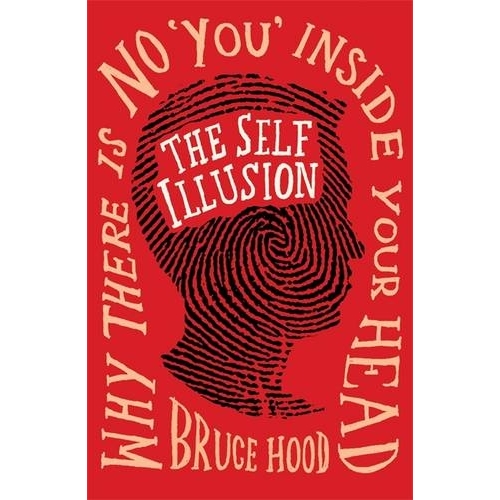
The self is an illusion, as Bruce Hood so eloquently described in his 2002 book, The Self Illusion: How the Social Brain Creates Identity. Here is a quote from his interview with Sam Harris in 2012:
For most of us, the sense of our self is as an integrated individual inhabiting a body. I think it is helpful to distinguish between the two ways of thinking about the self that William James talked about. There is conscious awareness of the present moment that he called the “I,” but there is also a self that reflects upon who we are in terms of our history, our current activities and our future plans. James called this aspect of the self, “me” which most of us would recognize as our personal identity—who we think we are. However, I think that both the “I” and the “me” are actually ever-changing narratives generated by our brain to provide a coherent framework to organize the output of all the factors that contribute to our thoughts and behaviors. 
In Integral Psychology (Wilber, 2000), the experience of an "I" is known as the proximate self (the self from which we view the world) and the "me" is known as the distal self (the self upon which the proximate self reflects).


Here is another quote from Hood in that interview:
I do not think there are many cognitive scientists who would doubt that the experience of I is constructed from a multitude of unconscious mechanisms and processes. Me is similarly constructed, though we may be more aware of the events that have shaped it over our lifetime. But neither is cast in stone and both are open to all manner of reinterpretation. As artists, illusionists, movie makers, and more recently experimental psychologists have repeatedly shown, conscious experience is highly manipulatable and context dependent. Our memories are also largely abstracted reinterpretations of events – we all hold distorted memories of past experiences.
What Hood is discussing is the lack of a concrete, unitary self. Self is more accurately understood as a process, not as a static "thing." This is the fundamental error of Buddhist psychology as interpreted in the West.

Before moving on to the ego, here is Thomas Metzinger (Being No One: The Self-Model Theory of Subjectivity, 2003) on the self:
[My] main thesis is that no such things as selves exist in the world: Nobody ever was or had a self. All that ever existed were conscious self-models that could not be recognized as models. The phenomenal self is not a thing, but a process—and the subjective experience of being someone emerges if a conscious information-processing system operates under a transparent self-model.
Again, Metzinger's concept of a self-model is roughly the same as the proximate self, the constantly changing and illusory "I" of consciousness.

In more contemporary conceptions, self is seen as a process, as on-going experiencing and narrative of thoughts, feelings, senses, and so on. There is an absence of evaluation, but attention is focused on the content, observing thoughts and feelings and watching them come and go.

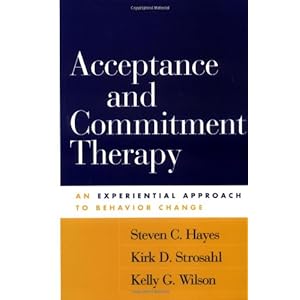
Stephen Hayes' Acceptance and Commitment Therapy model (1999/2011) recognizes three types of self: "the conceptualized self, ongoing self-awareness, and self as perspective." Each of these has its role, but one of them keeps as trapped in ideas and perceptions that are usually outdated and/or distorted.


People tell stories, narrate life histories, define their best attributes, evaluated themselves, compare their attributes to those of others, create cause and effect theories between their narrative memories and their experiences (and reflected) attributes. This is the conceptualized self (the distal self), and it can frequently be our own personally constructed prison. From Hayes:
Often consistency can be maintained more easily simply by distorting or reinterpreting events if they are inconsistent with our conceptualized self. If a person believes him- or herself to be kind, for example, there is less room to deal directly and openly with instances of behavior that could more readily be called cruel. In this way, a conceptualized self becomes resistant to change and variation and fosters self-deception.
Hayes also points out that many modern therapies (especially cognitive behavioral therapy, CBT, and dialectical behavioral therapy, DBT) focus almost exclusively on this conceptualized self, identifying healthy emotion from destructive emotions, rational thoughts from irrational, self-affirming beliefs from self-negating beliefs, and so on. This is what most of us are doing to ourselves already.

Ongoing self-awareness encourages people to see what they see (in their minds or their experience) as they see it, without objectifying, concretizing, or justifying what was felt or seen. If we do not objectify experience, we cease to need lies or self-deception to feel okay. When the specific content of our ongoing self-awareness becomes less of an issue, a "fluid and useful self-knowledge is more likely to be fostered" (Hayes, 1999).  

This aspect of self leads inherently to psychological flexibility because on-going experience is ever-changing, always creating itself anew with each passing moment.

Self as perspective, or self as context, can also be thought of as the observing self. The the observing self is a core capacity often equated with the higher self, the soul, the Atman, Buddhanature, or Christ Consciousness. For a more psychoanalytic variation, see Arthur Deikman's The Observing Self (1983). Hayes argues that "a sense of self as locus or context cannot change once it emerges, because it is so basic and fundamental." As organisms, all of us have a locus, context, or perspective, and at the same time, "awareness of an experiential locus feels transcendent." He places the spirit/matter duality in this "paradox" (his word).

When self is contextualized and process-focused, we are as close as we will get to being in the present moment, which can be equated with 2 of the four types of samadhi identified by the Buddha:
Few of us live in this state for very long, if at all.

Even if we could live in this state, it would not be conducive to paying bills, going to work, building something, writing a blog post, or much of anything else that requires we interact intentionally with the world, including awareness of past and future events.

Certainly, the more time we spend in that state, the less attached we become to our thoughts, feelings, and beliefs - we realize they are as transient as clouds in the sky. But we need Metzinger's self-model to negotiate daily life.

To be clear, none of what we have described thus far is the ego, at least not in the model of the mind I am presenting here.

[NOTE: this all might be just my theory, although it is cobbled together from years of reading and practice.] 

And so what of ego?


Sigmund Freud coined the term ego as the psychological mechanism to mediate sexual and aggression drives and reconcile the tension between id-level drives and the internalized rules and mores of society (the super ego). From Wikipedia:
The ego is the organized part of the personality structure that includes defensive, perceptual, intellectual-cognitive, and executive functions. Conscious awareness resides in the ego, although not all of the operations of the ego are conscious. Originally, Freud used the word ego to mean a sense of self, but later revised it to mean a set of psychic functions such as judgment, tolerance, reality testing, control, planning, defense, synthesis of information, intellectual functioning, and memory.[1] The ego separates out what is real. It helps us to organize our thoughts and make sense of them and the world around us.[1]
Few professionals (aside form a handful of psychoanalytic originalists) still adhere to this model. The advent of ego psychology in the early to middle part of the last century began the redefinition process. Later proponents of ego psychology
emphasized the importance of early-childhood experiences and socio-cultural influences on ego development. René Spitz (1965), Margaret Mahler (1968), Edith Jacobson (1964), and Erik Erikson studied infant and child behavior and their observations were integrated into ego psychology. Their observational and empirical research described and explained early attachment issues, successful and faulty ego development, and psychological development through interpersonal interactions.
Ego psychology has since waned in influence and popularity.


More contemporary definitions conceptualize ego not as our sense of self-importance ("man, he sure has a large ego!"), but as our adaptation(s) to experience through which we navigate the world. In the Ego States: Theory and Therapy model of John and Helen Watkins (1997), we are not born with parts or ego states--they are learned through repetition over time.
Our ego states are formed when we do something over and over again. This 'over and over again' learning creates a physical neural pathway in the brain that has its own level of emotion, abilities, and experience of living. As stated by the Watkins in their book, "Another characteristic of an ego state is that it was probably developed to enhance the individual's ability to adapt and cope with a specific problem or situation" (Watkins & Watkins, p. 29, 1997).
Once these neural pathways become wired into the brain, they are ego states, and we can be overtaken by an ego state whenever a need for that particular state occurs, or when a memory or a trigger for a specific injury is activated, an ego state may come out in an attempt to gain some resolution (repetition of the trauma). Our experience of this may feel like we were hijacked by a whole different self, and to the extent that the wounding was longitudinal there is some truth to this. In the same way that Jung defined complexes as semi-autonomous parts of the self that have been split off, the same is true of ego states.

The most extreme form of this is called dissociative identity disorder (formerly multiple personality disorder). In this condition, the parts or ego states are so adapted and structurally embeded in the mind/brain that they are autonomous, at least until the person enters therapy.

Another way of understanding this process is that ego states develop out of an attachment to or avoidance of (which is still an attachment, but to its supposed opposite) a particular experiential state. For example, as an infant and toddler, whenever I am scared or in discomfort, I would cry, a baby's only means of getting its needs met. But my hypothetical mother would yell at me to stop crying, or even spank me when I cry for too long. After a few repetitions of this, I have learned not to display overt signs of fear or pain, and I no longer cry.

As I grow up, this message is repeated frequently - boys don't cry, only wusses cry. So on top of the fear of being punished (or more accurately, to an infant, annihilated) for crying or showing fear/pain, now such expressions of healthy human emotions are equated with being a girl, and as a little boy, being a girl is about the worst thing possible (obvious nonsense, but many boys are raised this way). So I learn an adaptation--whenever I am scared or in pain/fear, I hit myself on the chest with my fist once or twice to remind me not to show my feelings.

By the time I am 8-10 years old, I have learned how to stuff down those feelings so that I don't even consciously acknowledge them. However, when something that should scare me or cause me pain does happen, I feel certain I am going to be punished, and I am filled with shame. That is the ego state that arises. The shame is sourced in that earliest experience--mommy doesn't love me when I cry, so something must be wrong with me that some things make me cry. To feel ashamed is to believe that one is defective and worthless. We will go to any lengths not to feel that shame and, especially, not let anyone else know about it. It's not rational logic, it's relational logic.

From the perspective I just outlined, ego grasping is holding onto and defending our adaptive strategies that keep us stuck in an emotional and behavioral box--our ego states. These behaviors have at one time served us well, and kept us safe, but now they are no longer adaptive and may, in fact, be harmful. Yet we cling to these strategies until we learn something better. That's one layer of ego-grasping.

A second layer of ego grasping is identifying with and internalizing our conceptualized self. We often do this, in part, as a response to triggering of an ego state. When that shame state gets triggered, we cannot tolerate the feeling so we puff ourselves up and act as if we are self-confident and secure. This may be a distorted version of self we have created and concretized, but it is dishonest and does not serve us in alleviating or removing the shame.

This gets to the heart of ego grasping: When we are attached to ego states or to the conceptualized self (the me), we continue to live within the prison of samsara, which is the source of our suffering. As long as well allow those attachments, there is no way to unlock and release the negative feelings/emotions they conceal.

Definitions


I often find myself at odds with the Western Buddhist definitions of ego and self. Too often they are confused, conflated, and seen as unnecessary, something to be shed through dedicated practice.

I prefer my own model - although it is most certainly not mine in that it is based on the work of many other people from diverse fields.

After several hours working on this post, my main point is that there needs to be some form of agreement within the Buddhist and psychological words as to what these words mean. With so many teachers from so many disciplines using this terminology now, the lack of an agreed-upon glossary of terms is confusing at best, and sometimes just plain frustrating.

Friday, March 28, 2014

Pilar Jennings - A Relational Understanding of the Student-Teacher Dyad in Spirituality

This is an excellent article from Tricycle Magazine on the relational and intersubjective nature of the student-teacher relationship in Buddhism. She goes so far as to say, "The relationship between the Buddhist teacher and student is a dyad comparable to the psychoanalytic one." I would add that this is true for spiritual traditions, not only Buddhism.
We don’t often take into account that even revered teachers may have childhood memories in need of integration, unexpected personal loss, or addictions influenced by genetic predispositions requiring treatment outside the spiritual realm. I suspect that, still young in our acquaintanceship with the dharma, we struggle to accept our teachers as people, both gifted and flawed. We tend to idolize them, as we did our parents, in order to feel safely bonded to an idealizable, all-powerful other. And while these may be sweeping claims, and idealizations are a natural part of any teacher-student relationship, I nevertheless see a pervasive struggle in developing a more adult capacity to understand our teachers in context and to accept their participation in ordinary human experience.
This reality becomes especially when the teacher or guru is damaged enough emotionally to be a narcissist or sociopath, or simply terribly immature in the psycho-sexual developmental line. It is entirely possible for a person to achieve advanced spiritual states or understands (spiritual and cognitive lines of development) and yet be highly toxic human beings who use and control others.

Within the integral community, Andrew Cohen and Marc Gafni are the obvious teachers to whom we can point and identify their destructive impact on many of their "students."

Looking into the Eyes of a Master

A relational psychotherapist explores how we can see our teachers as people, both gifted and flawed.

Pilar Jennings, PhD
Tricycle | Spring 2014


Last winter, on a chilly night just after the New Year, I sat in a darkened theater at the Rubin Museum of Art in Manhattan watching Crazy Wisdom, a documentary about the life of Chögyam Trungpa Rinpoche. Like most American Buddhists, I had heard the colorful stories about his unconventional, theatrical pedagogy—known as “crazy wisdom”—and more than a few anecdotes about his relationships to alcohol and women. I was curious to learn more about this legendary teacher who had influenced so many Western Buddhists, some who have become important teachers in their own right.

As the film progressed, I felt an increasing sense of dis-ease, or duhkha, as it’s called in Buddhist teachings. Images of a young Tibetan trying to find his way in a foreign country filled the screen as Trungpa Rinpoche recounted his loneliness and isolation and his painful recovery from a near-fatal car accident (possibly caused by his increasingly problematic alcohol use). But this footage was quickly eclipsed by the testimony of students who spoke with awe of his compelling presence and unorthodox teaching methods, his depth of insight and what—for them—was his obvious enlightenment. Indeed, the film marshaled extraordinary images: Trungpa, clad in an olive green uniform, arraying his cavalry and marching his students as if preparing for a military deployment; a preternatural rainbow radiating above his gravesite in the days after his death.

The students in the film described their enchantment with his charisma and prodigious energy but seemed oblivious to, or untroubled by, his traumatic background and what I perceived as his personal pain. The only seasoned American Buddhist scholar in the film, Robert Thurman, noted that Trungpa’s death at age 46, likely due to alcoholism, was lamentable. He could have lived much longer, Thurman suggested, carrying his teachings further. But the filmmakers didn’t linger over this analysis, returning instead to the steady flow of reverent praise.

Like other talented Tibetan monks in the 1970s and ’80s, Trungpa moved to the United States to introduce the dharma to Western students. I know other senior Tibetan teachers with comparable histories and have heard their stories of disorienting transitions to new countries, as if they’d landed on the moon without a space suit. For most of these teachers, including Trungpa, these dramatic shifts followed on the heels of a harrowing escape from the brutal Chinese occupation of Tibet. I imagined that Trungpa might also have suffered the ripple effects of culture shock and the loss of loved ones, and might have strained under the weight of his new American students’ expectations of the awakened master they wanted him to be.

As the documentary unfolded, it occurred to me that American Buddhists (with exceptions, of course) have skipped a developmental stage that would allow us to more readily notice and respond to our teacher’s subjectivity. We don’t often take into account that even revered teachers may have childhood memories in need of integration, unexpected personal loss, or addictions influenced by genetic predispositions requiring treatment outside the spiritual realm. I suspect that, still young in our acquaintanceship with the dharma, we struggle to accept our teachers as people, both gifted and flawed. We tend to idolize them, as we did our parents, in order to feel safely bonded to an idealizable, all-powerful other. And while these may be sweeping claims, and idealizations are a natural part of any teacher-student relationship, I nevertheless see a pervasive struggle in developing a more adult capacity to understand our teachers in context and to accept their participation in ordinary human experience.

Some of these struggles are complicated by practices that encourage students to envision their teachers as fully realized. Tibetan Buddhist teachings especially suggest that only when we recognize the buddhahood in our teachers may we receive the blessings of an awakened being. While these teachings offer the potential to expand and refine our awareness, they can also serve to split buddhahood from personhood, teacher from self. The restorative experience of turning to our teachers for their good counsel—which we do because we may see them as awakened—can trump the valuable activity of relying on our own capacity for wisdom and insight.

As a relational psychoanalyst, I have spent much of my training and professional life exploring how relationships—to oneself, to culture, and to loved ones—develop. As a Buddhist, I’ve been similarly engaged in examining how we cultivate a deeper and more authentic sense of connection. And as a Buddhist psychoanalyst, I’ve attempted to understand how these two disciplines might enhance our efforts to forge meaningful and sustainable relationships. For the past 30 years, Buddhist psychoanalysts have been contributing to a growing body of research and literature on the topic of the student-teacher relationship. Writers including the psychoanalysts Mark Finn, co-author of Object Relations Theory and Religion, Jeffrey Rubin, who wrote Psychotherapy and Buddhism, and Harvey Aronson, author of Buddhist Practice on Western Ground, have been exploring the ways in which Buddhist teachers bring their psychological experience to their teaching endeavors. In their work, informed by personal and professional experience, they have also considered how Buddhist students in the West might be confronted with formidable cross-cultural challenges studying with Asian-born and/or monastic teachers.


With all this in mind, in the days after seeing Crazy Wisdom I found myself revisiting the psychoanalytic theory known as intersubjectivity and drawing on its insight into how we develop the ability to be seen and known and to see and know others. The intersubjective perspective explores how babies develop a sense of self and other through their relationship with a caretaker, especially through the nuances of physical contact during feeding, bathing, play, and preparation for sleep. Ideally, through this ongoing exchange, the baby and caretaker experience a growing sense of attunement, and as a result, a bolstered trust that their basic needs, feelings, and intentions can be known to each other. One of the primary fruits of this mutual recognition is that the baby begins to see that the caretaker has his or her own reality that can be discerned and related to, just as the baby has been known by his mother or caretaker.

As the theory of intersubjectivity evolved, its proponents began to describe the psychological terrain that develops between the infant and its caretaker or, for that matter, between any two people, as a “third space.” Particularly relevant to Buddhism is the notion that such a space requires a temporary surrender of self, and that through this surrender a young child is able to sustain connection to the caretaker’s mind while more readily accepting her separateness and personhood. If the parent is distracted, however—suffering from trauma or depression, for instance—he or she may be unable to offer the baby the nuanced attunement it needs. Thus, when a third space never develops, or develops and breaks down, the child may feel he lacks the ability to affect his caretaker. He may feel reactive and “done to,” as the New York University psychoanalyst Jessica Benjamin, a leading theorist in this field, writes: it is a sense of being helplessly lost in the shadow of the other. Many adults see themselves in this helpless way when the third space in a relationship collapses—who hasn’t, at some point, been involved with someone who seems impervious to our subjectivity? What is harder to see are the ways through which we protect ourselves from a collapsed third space. Rather than suffer the terrible sense of being done to, we may opt to be the one who controls the collapsed space by dominating interactions within that relationship, opting to make others feel helpless instead of being on the receiving end of their efforts at control.

As skillful therapists from all schools of thought know, our ability to find and sustain healthy interpersonal experience does not depend on a history of perfect attunement. There is no such thing as two people—whether baby and mother, two lovers, or teacher and student—being perfectly in sync with each other’s needs and wishes. Real intimacy arises from an ongoing process of connection that at some point is disrupted and then, ideally, repaired. I think of this as an interpersonal crochet stitch: connection, disruption, repair, over and over again, until a fabric is created with enough strength and flexibility to endure the wear of any two people attempting to know one another.

But a “perfect match” is a compelling fantasy. When seeking romantic partners, we often hold out for “the one” who magically knows just how to talk to us, touch us, comfort us, without stress or discord. In seeking therapists, patients often expect to find that perfectly sage being who has transcended samsara and can serve as a knower of all truths, the perfect healer. And when seeking spiritual mentors, students are on the lookout for the enlightened being in their midst who glides graciously through life without effort and knows just how to usher the student toward awakening, as quickly as possible.

Having spent my entire adulthood and much of my childhood surrounded by Western Buddhists, I wonder if many of them had early relational experiences that stymied their capacity to feel safely engaged with a world beyond their control. People come to the dharma for many reasons, including a burgeoning sense that life could be more consistently fulfilling and joyful than previously imagined. And yet it seems to be true that relatively few arrive at Buddhist centers on the wings of psychic victory. Many people have a psychologically complex history, one influenced by trauma or loss. In this way, we practice to resolve thorny and entrenched forms of psychological pain.

The relationship between the Buddhist teacher and student is a dyad comparable to the psychoanalytic one. But in this case, it is the teacher and student who are enacting their individual emotional histories. As a result, the potential for boundary violations is rampant, and the possible victims include students who have felt manipulated and even abused by their teachers, and teachers who have felt manipulated and abused by their students. From what I have observed, both participants are vulnerable to their unconscious longing for perfect attunement, for a merger experience in which idealizations obscure a realistic view of an actual human being.

In much the same way that psychoanalytic research has emphasized the infant’s experience, and paid relatively little attention to the mother’s subjectivity, Buddhist scholars have attended to the more blatantly vulnerable actor in student-teacher relationships—the student. It is tempting to ignore the reality that there are two sentient beings in this dyad, and that both have psyches that make them capable of unskillful actions. Teachers, in fact, are vulnerable to the ways in which students project onto them both salvific and destructive capacities. And when a student idealizes the teacher to the point where he or she can’t see the guru as human, it becomes nearly impossible for that student to take into account both the teacher’s gifts and vulnerability.

But it takes two to build a third space. A teacher who has the maturity to be seen as a whole being—in addition to having a kind heart and a liberated mind—may invite the student to curb the idealizations and work instead toward cultivating the wisdom and agency they have been ascribing exclusively to the teacher. Teachers and students alike pay a price when this mutuality does not develop. Trungpa Rinpoche is not alone among famous spiritual teachers in having suffered in ways that may have required attention and treatment he never received. There are scores of senior Buddhist teachers (and I suspect this is true for all faith traditions) who privately undergo inner torment that is never addressed. The world was shocked when Mother Teresa’s journals were published, attesting to her 40 years of doubt and depression. What distressed me most was not that she had suffered depression, which is widespread, but that she was unable to seek help. Why was she left to manage such a long, dark night of the soul alone?

I can’t know whether or not Trungpa had concerned students who made efforts to respectfully confront him; I suspect there must have been some who were troubled by and worried about his alcohol use. Perhaps Trungpa resisted such concern. Whatever the case, it seems important to explore how Western Buddhist students can approach their teachers’ humanity and subjective struggles.

Having befriended a senior teacher in the Tibetan tradition, I am attempting, in my own right, to create a roomier third space between us. My teacher has a fantastic sense of humor and playfulness. We laugh together at the absurdity of our woeful human struggles. But if we’re looking to hide from a deeper, potentially more painful and healing exploration of these struggles, humor is a powerful defense. My teacher has lost some of his beloved students in the past few years, and when I asked him how he was feeling in the wake of these deaths, he replied with a joke: “How much are you gonna charge me for this session?” I laughed. When I mustered the courage to ask again, he dug his finger deep into his ear like a nervous kid, looked at the floor and said, “Truthfully, I feel numb.” I nodded. He looked at me and we nodded together. Then the phone rang, and the conversation was over.

A year ago, a senior monk and longtime friend of my teacher’s had a brain aneurism and fell into a coma for several weeks. We had all been together on retreat only a few months prior. When my teacher returned from his friend’s sickbed, I asked about his state of mind. There was more ear poking, more jokes. He shook his head, stared at his computer, his iPhone, his landline. Then he stared at the floor.

“When this happens I think, who’s next?”

For a fleeting moment we looked at each other. I added, “It’s rough when the people you know and care about get sick. Makes you feel vulnerable.”

He nodded, looked me dead in the eye and said, “How much is that gonna cost me?” I told him he should expect a hefty bill. We laughed and the phone rang, he received a text, and the conversation was over.

As I reflect on my concern for my teacher’s well-being, I see the complexity of this and other relationships that involve contrasting backgrounds and cultural influences. My teacher, like Trungpa, comes from a world shaped by his spiritual and monastic education, a world that prizes the freedom that comes from loosening attachment to personal experience. But this approach has its drawbacks. We must recognize the validity of seeing our teachers as individuals, too. My hope is that we may begin to bring them into clearer view, not only to better see their gifts of insight and compassion, but to accept the fullness of their own human struggle.

Pilar Jennings, PhD, is a psychoanalyst practicing in New York City. She is a lecturer in the graduate department of Psychiatry and Religion at Union Theological Seminary and a researcher at the Columbia University Center for Study of Science and Religion. A version of this essay was first published in Spring: A Journal of Archetype and Culture, vol. 89 (Spring 2013).

Join us this May for Enlightening Conversations 2014: "Opportunities and Obstacles in Human Awakening," a new conference series exploring the intersection of Buddhism and psychoanalysis, where Pilar Jennings will appear as a panelist.

Artwork by Tenzing Rigdol 
Image 1: Phew!, 2011, Acrylic on Canvas, Courtesy Rossi & Rossi.
Image 2: Kriti - From the Ashes of Agony, 2011, Acrylic on Canvas, Courtesy Rossi & Rossi.

Sunday, February 02, 2014

Curtis White - Your Brain on Neuroscience (Tricycle)

From the Tricycle Magazine blog, Curtis White examines the reductionist model of neuroscience and how it conceives of creativity. Cool article.

Your Brain on Neuroscience


In Silicon Valley's geek culture, creativity is currency.

Curtis White | January 30, 2014

“We (the undivided divinity operating within us) have dreamt the world. We have dreamt it as firm, mysterious, visible, ubiquitous in space and durable in time; but in its architecture we have allowed tenuous and eternal crevices of unreason which tell us it is false.” — Jorge Luis Borges

FREED AT LAST from the limits imposed by religion, science has extended its ambitions beyond the debunking of Christian dogma. It has now turned its attention to another old competitor, the secular world of the humanities and the arts. This second front in the American culture war has its roots in the decades just after the Enlightenment era, especially in the quickly matured world of post-Enlightenment scientism led by “Darwin’s bulldog,” Thomas H. Huxley. It was Huxley who first sought to describe human mental characteristics, including emotions and social organization, as neurological aspects of evolution.

The recent works I will look at all contend in one way or another that now that science has finished with the last vestiges of religious thought and answered its last objection to the scientific worldview (“why is there something rather than nothing?”), they are free to investigate the artists and all of their delusions about human consciousness and the human capacity for creativity. After all, science contends, art has its own gospel of revelation—the quasi-spiritual experience of “inspiration”—and its own messiah: the genius.

Steven Pinker claims in his widely cited book How the Mind Works that the mind is a “biologically selected neural computer.” He writes:

I want to convince you that our minds are not animated by some godly vapor or single wonder principle. The mind, like the Apollo spacecraft, is designed to solve many engineering problems, and thus is packed with high-tech systems each contrived to overcome its own obstacles.
And this is just prelude to his later conclusion that art is a “biologically frivolous and vain” activity interested only in critical obscurantism, social status, and the tickling of the brain’s dopamine reward system (like cheesecake).

The idea that creativity is a problem for scientists, not poets, is frequently made in the New York Times “Science Times.” There we find the (often droll) attempt to mechanize consciousness and creativity by laying out its relation to areas of the brain and to chemicals, especially neurotransmitters. Of particular interest at the moment is the neuroscience of creativity. Some scientists now claim to know what parts of the brain are responsible for it, and, using fMRI technology, they can even show it to us in the very act of creation, the brain in genius mode, all lit up like a conch shell with a little Christmas light inside.

The problem is that they haven’t said a word about the most ordinary aspect of their work: what is creativity? Or, at least, how are they using the word? So:

“What are you researching?”
“Creativity.”
“What do you mean by creativity?”
“You know, creativity. We’ve found the part of the brain that is its origin.”
“Yeah, but what do you mean by creativity?”
“Like, you know, coming up with the answers to crossword puzzles.”
For example, in the December 7, 2010 issue of the New York Times, the featured science articles focused on “creative problem-solving.” Puzzles, one article explained, are about “more than mere intellect” (we don’t get a definition of “intellect” either). According to Marcel Danesi, professor of anthropology at the University of Toronto, “It’s imagination, it’s inference, it’s guessing, and much of it happens subconsciously.”

Such a claim should require a little unpacking. The study of creativity takes place near the intellect and in something called the imagination? And imagination functions in something called the subconscious? And buzzing around on the periphery of all this is a housefly called guessing? Such an account is as much like neo-Platonism as it is empiricism. The only reason we are open to such claims is because we don’t think to ask what these words mean, because the words are so familiar we assume that we already know what they mean. “Oh, sure, creativity, the imagination, the subconscious, go on.” Frankly, we the people have no clue what these words mean, not with any precision, and neither do the scientists.

Now, it’s one thing to say that these terms are a loose-fitting and very provisional organization of words, a heuristic cluster of notions intended to help us discern the outlines and force fields of this we-know-not-what that we call creativity. There are very real philosophic and social stakes in that discussion. But it is a very different thing to say that “creativity” is nested in among other parts of the brain and in the interaction in the brain of neurons and chemicals.

The real purport of such research is the following message, offered with a straight face and the driest possible wit, and wordlessly consumed by the general public: “The problem of creativity will find its truth in the scientific method. We can say this because everything finds its truth in the scientific method. We have not quite got it all down, but please rest assured that with patience and a lot of money we will solve this mystery. In the meantime, enjoy these pictures of luminous brain parts."

Deprived of its cynical bonhomie, neuroscience’s assumption that there is no need to justify—beyond the prettiness of it all—its claim that the brain is a machine is like the reasoning of an ancient army to a city it has overwhelmed: “Sure, we’ve broken every common law of decency, but we are vindicated by the Right of Conquest. As for the idea that you have a grievance, that’s quite impossible because, this may come as a nasty shock to you, but ‘you’ don’t exist anymore.” As I discussed earlier, for science the perspectives offered by philosophy, poetry, art, and certainly any kind of spirituality don’t exist. For science, the idea that nature, humans, and even formerly intimate things like creativity are all mechanical goes without saying. So, if you would-be philosophers or artists have a problem with scientists treading on your turf, or with their use of undefined terms and breathtaking lapses in logic, you’re out of luck. In fact, in most popular presentations, science is reluctant to acknowledge that the humanities ever existed, except as an embarrassment. They are no more than the residue of some long-defeated enemy: the ignorant past.

And yet, the claims by neuroscience to have the best possible explanation for that thing we call creativity has demonstrated enormous popular appeal in a series of popular books and presentations, some of which have been best sellers. Notable among these works is Jonah Lehrer’s Imagine: How Creativity Works (2012). According to Lehrer, the consensus among neurophysicists is that creativity is not something that comes to us from the outside (from Muses or from a magical “Eureka!” factory). As Lehrer expresses it:

[T]he material source of the imagination: the three pounds of flesh inside the skull . . . for the first time, we can see the cauldron itself, that massive network of electrical cells that allow individuals to form new connections between old ideas. We can take snapshots of thoughts in brain scanners and measure the excitement of neurons as they get closer to a solution. The imagination can seem like a trick of matter—new ideas emerging from thin air—but we are beginning to understand how the trick works.
This is recognizably the sort of popular science journalism over which the media goes doe-eyed with admiration. So deferential are these organs to such claims that it is as if no other credible points of view existed, or that the only other points of view, like religious faith, have already been so completely discredited that they don’t need to be mentioned. So riveting are the most recent technical advances in science that skepticism is unneeded and mostly unwelcome.

Nonetheless, there are problems, and Lehrer’s book is full of them. First, the language of Lehrer’s basic description of what he and neuroscience are claiming is riddled with unsupportable, even unfathomable, claims. The claim at the heart of the book is that creativity is “that massive network of electrical cells that allow individuals to form new connections between old ideas.” In short, creativity is rewiring. Now, it is obviously true that human brains created integrated circuitry and they created the wonder of microchips, but Lehrer and, from what I can see, most others in neuroscience and in the Artificial Intelligence community feel comfortable in reversing the relationship and claiming that, actually, the human brain is simply a reflection of the super-complex electrical circuits it has created. Unfortunately, it seems never to occur to these good people that the brain-as-computer is only a metaphor.

Metaphor in place, Lehrer is free to state things that would be laughable out of the context of his book. Lehrer states that scientists can “take snapshots of thoughts in brain scanners.” They can? Snapshots of thoughts? What kind of thought can have its picture taken? Sure, as Lehrer says next, you can capture images of the “excitement of neurons,” put them in the family photo album if you want, but that is not a thought, at least not when I’m thinking.

Lehrer himself exposes the problem with supposing that brain scans provided by fMRI reveal the origin of creative thinking. He writes of Mark Beeman’s research into higher brain function at the National Institutes of Health:

Beeman was now ready to start looking for the neural source of insight. He began by having people solve the puzzles while inside an fMRI machine, a brain scanner that monitors changes in blood flow as a rough correlate [my emphasis] for changes in neural activity.
A correlate. Not a “snapshot” of the thing-itself surprised in deshabille, just a correlate. But a correlate of what? That’s the hard question that Lehrer simply ignores. Is it correlated with another unseen part of the three pounds of flesh?, to something spiritual?, or to something that is simply unknown or unknowable? The fMRI provides a ghostly trace, not the Thing wriggling on the end of a pin. Lehrer wants to assume as fact that the mechanical origin of insight (“squirts of acetylcholine,” as he says later of the inventions of dream) has been found and that all the old mythologies—which, at least, had the modesty of knowing themselves as metaphors, as correlates—are dead to us. But the truth is that neuroscience is wonderful in the way that the Hubble telescope is wonderful. Its investigations into the structure and organization of the brain are fascinating, but it no more tells us of the origins of consciousness (or creativity) than the Hubble tells us of the origins of Being.

I wonder if that’s what Lehrer felt as he created his book: a squirt of chemical here, a little quiver in the old ASTG (anterior superior temporal gyrus), a flicker of electricity between the moving parts, and, voilá, a happy shower of gamma rays. Is that what he was thinking when he pulled himself back from his work, celebratory IPA in hand? Or was there a moment in which Lehrer suspected that the very performance of his book was an argument against its conclusions? Did he never ask, “Can this expression of my will, my production, my book, be a mere chemical squirt?” It is profoundly saddening, even more saddening than his journalistic sins, that he never once paused in order to encourage his reader to ask such a question.

* * *

Lehrer emphasizes that creative brain function is not just reserved for artists and “creative types,” even though he frequently mentions artists like Beethoven, Bob Dylan, and the poet W. H. Auden. Creativity is a shared human capacity. (No argument there.) But, like so many other books in recent years (in particular, Richard Florida’s The Rise of the Creative Class: And How It’s Transforming Work, Leisure, Community and Everyday Life [2002]), Lehrer’s best examples tend to come from creativity as it works within corporations, whether Procter & Gamble, 3M, or Pixar. As a Fresh Air segment on NPR put it, Imagine (with its egregiously inappropriate association with the John Lennon song) is about “Fostering Creativity in the Workplace.” Lehrer begins his book by describing the process that led to the creation of the Swiffer mop at Procter & Gamble. Procter & Gamble accomplished their product coup, the revolutionizing of the mop, by outsourcing its creative needs to creativity specialists, the “envisioneers” at Continuum Innovations, a design firm in Boston and LA. Continuum CEO Harry West said of the Swiffer project, “They told us to think crazy.” They did, and they came up with “one of the most effective floor cleaners ever invented.”

This is not satire. No one is laughing about the absurdity of a notion of “creativity” that links Bob Dylan to Swiffer mops. We are truly meant to be excited about the liberation of creativity in the workplace, and we are certainly meant to be excited that leading the way is the ever-enlarging world of neuroscience that has set aside old illusions about the Muses and put in their place the softly glowing illumination of the human brain firmly held in its creative harness. One gets the feeling that for Lehrer the work of these neuroscientists is itself an example, maybe the supreme example, of discovery and creativity.

The logic of this science would seem to be this: because brain scanners can measure the “excitement of neurons” in the same parts of the brain for both artists and mop inventors, the activities of artists and mop inventors are the same so far as science is concerned. Best yet, science offers the possibility of learning how to engage and train these creative areas of the brain. In the “workplace” of the future, we’ll all be geniuses. The cutting-edge, high-def stereo system will be playing “Maggie’s Farm” at just the volume that neuroscience has determined to be maximally conducive to bubbling invention. The techno-hip will be circulating in the commons, freed from their cubicles at last, ideas flowing from them like colorful robes. Thus the ideal corporate ambience, where it need never be doubted that the neuroscience, the rock ’n’ roll, and the mops of the future will find a warm home.

But there’s something missing in Lehrer’s triumphant account. The polite way of identifying this something missing would be to say “social context.” The more agonistic way would be to say that for the last two centuries artists have hated mop inventors. Beethoven, one of Lehrer’s favorite examples of human creativity, seemed to hate just about everyone, and wrote his music against them, against his father, against Haydn, against “innkeepers, cobblers, and tailors,” and against the philistine nobility that paid his wages. In short, Lehrer either has never heard of or simply dismisses the role of social alienation as a driving force for what he blandly calls creativity.

Lehrer has nothing at all to say about the obvious fact that most historical change in the arts, the movement of art movements, has been social in character and not simply change for creativity’s sake, just for the pleasure of setting the old neurons buzzing, let alone for the sake of boosting a corporation’s bottom line. To read Lehrer’s version of things one would think that creativity happens simply because our brains have fun finding “solutions” and when they do find solutions they get all lit up like an Xbox action game. (Actually, it’s worse than that: according to Lehrer’s logic, the lighting up of neurons is the solution.) I’m sure that at Continuum Innovations, as at the hipper Silicon Valley ventures, the employees have dreadlocks and pierced tongues and tats and company-provided skateboards and cruiser bikes for lunch breaks. This fake bohemian geek culture acknowledges the essentially dissident character of art even while betraying it.

But the corporate types, the suits, are under no illusions about the bohemian substance of its “creatives.” Lehrer approvingly quotes Dan Wieden, founder of the advertisement agency Wieden + Kennedy:

“You need those weird fucks. You need people who won’t make the same boring, predictable mistakes as the rest of us. And then, when those weirdos learn how things work and become a little less weird, then you need a new class of weird fucks. Of course, you also need some people who know what they’re doing. But if you’re in the creative business, then you have to be willing to tolerate a certain level of, you know, weirdness.”
Of course, it’s not all about weirdos in the workplace. Lehrer devotes a chapter (“Bob Dylan’s Brain”) to music. Lehrer is particularly interested in the moment in which the folkie Dylan reinvented himself as the rock ’n’ roll Dylan. How did this transformation happen? Lehrer writes:
The question, of course, is how these insights happen. What allows someone to transform a mental block into a breakthrough? And why does the answer appear when it’s least expected? This is the mystery of Bob Dylan, and the only way to understand the mystery is to venture inside the brain, to break open the black box of the imagination.
The moment in question is the creation of the song “Like a Rolling Stone,” the hit single from Dylan’s album Highway 61 Revisited. According to Lehrer’s version of the story, Dylan was bored with what he’d been doing, trapped between his own public image as the writer of protest songs and the lame platitudes of Top 40 music. So, he retreated to Woodstock and began to let his unconscious do the work, from which emerged “Like a Rolling Stone.” Lehrer writes, “The story of ‘Like a Rolling Stone’ is a story of creative insight. The song was invented in the moment, then hurled into the world.” The song would “revolutionize rock ’n’ roll.”

I have a simple question for Lehrer: So what? Why is it good to revolutionize rock ’n’ roll? Who cares? For Lehrer it’s just another instance of the human capacity for “insight.” It is also, as with the Swiffer mop, another example of “success”; the song leads to the creation of more songs by other artists, like Jimi Hendrix, that are popular and make everyone a lot of money. Why, people become famous!

The creation of the song is not about the history of rock, and not about the brain’s need for insight, and certainly not about being successful like the proud people at Continuum Innovations. Well, what should we say, then? Without discounting the deeply pleasurable and ineffable je ne sais quoi of Dylan’s musical self-invention, for me the song is “about” its formal freedom, its raw difference from pop and folk music. It is also about the thrilling invention of a self, this new Dylan, who can walk away from the wreck of the culture of that moment, taking his “fans” with him. In short, as Friedrich Schiller put it in 1795, Dylan’s song “models freedom.” Dylan proposes, “Hey, this is what freedom feels like to me. This is what being alive feels like to me. What do you think?” The song is a proposition, a seduction, and its triumph is that it was such a wildly successful seduction. In other words, Dylan’s music (especially, for me, “Visions of Johanna” and “Desolation Row”) argues, “Can you return to being in the world in the way you were in the world before you heard this song?”

For those, like Lehrer, who do return to the world, Dylan’s judgment is this: “Your sin is your lifelessness.”

All of the “real thing” rock bands of the last forty years asked this same question. The Dead asked it, the Ramones asked it, XTC and the Pixies asked it, Radiohead asked it, and the Elephant Six bands of Athens, GA, continue to ask it (especially Kevin Barnes of Of Montreal). The answer to the question is not necessarily a yes or a no. More than anything else, the question’s purpose is to create yearning: the recognition of our own dissatisfaction with things as they stand and the creation of the possibility of a future happiness. Because now we know, thanks to this music, something about what that happiness might feel like.

As Morse Peckham writes in The Romantic Virtuoso:

One of the most common themes of German Romanticism is . . . yearning. To the question, Yearning for what? We have already encountered the answer: yearning for a condition of existence that transcends the present one, more specifically yearning for a culture that transcends the failures of the culture then available.
But, for Lehrer, Dylan is just another famous example of a “creative problem solver” no different from Milton Glaser, creator of the insipid “I ♥ NY” logo. He throws out the social, ethical, and aesthetic dimension of art for a few full-color brain scans and the instruction: go to work.

~ Curtis White is interviewed in the Spring 2014 issue of Tricycle, available online on Monday. If you enjoyed this article, please consider subscribing.

~ Curtis White is the author of the novels Memories of My Father Watching TV and Requiem. A widely acclaimed essayist, he has had work appear in Harper’s, Context, Lapham’s Quarterly, Orion, and Playboy. This essay is an excerpt from his most recent book, The Science Delusion, courtesy of Melville House.

Further reading: "A Gray Matter: Another look at Buddhism and neuroscience" | "'Neuroscience Under Attack' in the New York Times" | "Neuroscience Fiction in the New Yorker" | "The Scientific Buddha: Why do we ask that Buddhism be compatible with science?"