Wednesday, August 13, 2014

Yohan J John - The Mind Matters


This interesting article comes from 3 Quarks Daily, one of the coolest magazines on the net. Here is a cool quote to whet your appetite:
The body is not a biomechanical vehicle, and medical practitioners are not mechanics. More importantly, the mind is not a passive detector of signals from the body and the world. The mind actively integrates these signals, and the results of this integration spread out into the body and from there into the world. But a mind cannot access all its powers in isolation, because it cannot generate all the signals that it integrates. A solitary mind is just one node in a network of other minds, bodies, objects and forces. The health of each individual node depends at least in part on the health of the network as a whole.
This is an excellent essay - give it a read.

The Mind Matters

by Yohan J. John
August 11, 2014

What is the mind? And what is its relationship with the body? Philosophers, psychologists, cognitive scientists and neuroscientists have all attempted to bring their professional heft to bear on the "mind-body problem”, but consensus remains elusive. At best, mainstream academics and researchers share a metaphysical commitment: the belief that the seemingly immaterial mind emerges from ordinary matter, specifically the brain. This position — known as materialism or physicalism — has replaced mind-body dualism as the mainstream academic position on the mind-body problem. According to dualism, mind and matter are completely separate substances, and mind (or soul, or spirit) merely inhabits matter. Dualism is a problematic position because it doesn’t offer a clear explanation of how the immaterial mind can causally interact with the material body. How can the immaterial soul push the buttons in the body’s control room… if it doesn’t have hands?


Materialism avoids this issue by denying the existence of two separate substances — mind is matter too, and is therefore perfectly capable of influencing the body. But having made this claim, many materialists promptly forget about the influence of the mind on the body. There seems to be a temptation to skip the difficult step of linking complex mental phenomena with neural processes. Many people think this step is just a matter of working out the details, and they readily replace mental terms like ‘intention’, ‘attitude’, or ‘mood’, with terms that seem more solid, like ‘pleasure chemical’, ‘depression gene’, or ‘empathy neuron’. But these concepts have thus far proved woefully inadequate for constructing a mechanistic theory of how the mind works. Rather than explaining the mind, this kind of premature reductionism seems to explain the mind away. While we work out the details of how exactly the brain gives rise to intentions, attitudes, and moods, we should not lose sight of the fact that these kinds of mental phenomena have measurable influences on the body.

Recent studies linking epigenetics, neuroscience, and medicine reveal that subjective experience can have a profound impact on our physical and mental well-being. Mounting evidence is telling us something that was often neglected in the incomplete transition from dualism to materialism — that the mind is a crucial material force that influences the body, and by extension, the world outside the body.

Even a committed reductionist shouldn’t have to wait around to find microscopic neural correlates for every mental phenomenon in order to take the mind seriously. We can know that something happens without knowing how it happens. Right now I think it is important for people to realize that the mind matters, even though we don’t know exactly how, just yet.

“Your subjective experience carries more power than your objective situation.” This is the conclusion of UCLA researcher Steve Cole, interviewed by David Dobbs in his masterful essay on stress, social isolation, and health [1]. The article deals with the various ways in which stress and social isolation can lead to poor health outcomes, including increased susceptibility to cancer, depression, AIDS and other diseases. Cole tells us that "Social isolation is the best-established, most robust social or psychological risk factor for disease out there. Nothing can compete.” However, social isolation does not seal your fate. How you respond to social isolation — in other words, your attitude towards what is happening to you — is a bigger factor in many situations than your “objective” genetic or environmental circumstances. This is not the same as asserting magical “mind over matter” powers. Your attitude is unlikely to save you from Ebola. But in borderline situations, your body’s ability to fight disease and decay seems to be invigorated by the power of the mind.

If the phrase “the power of the mind” makes you uncomfortable, you need only examine the intricate causal web that links the brain with the rest of the body. The prefrontal cortex is frequently described as the brain’s "executive" or "higher cognitive" area; it is widely believed to be the neural substrate of conscious mental processing. A journal article once symbolized prefrontal functionality with a jaunty drawing of an orchestra conductor. Several crucial sub-regions of the prefrontal cortex have strong anatomical links with emotion-related subcortical areas, including the amygdala, the nucleus accumbens, and the hippocampus. This cognitive-emotional network is connected with the hypothalamic-pituitary-adrenal axis of the endocrine system, which modulates the body’s response to stress — also known as the fight-or-flight response. Signals from the hypothalamus trigger activity in the pituitary gland, which in turn sends signals to the adrenal glands, which sit on top of the kidneys. In response to signals from the pituitary gland the adrenal glands release the stress hormones cortisol, adrenaline and noradrenaline. The stress hormones enter the bloodstream, where they can influence a whole host of processes in the body and the brain. Cortisol, for instance, can increase blood sugar levels, suppress the immune system, and enhance the breakdown of fat. Cortisol also has pronounced effects on the hippocampus, a part of the brain involved in memory, navigation, and emotional processing. It can cause the dendrites of neurons to shrink, reduce the rate of birth of new neurons, and even enhance the rate of neuron death.

The network linking higher brain areas with the immune system and with metabolic processes is just one mechanism through which mental phenomena can influence basic bodily function. Through this complex web of causes, something as ephemeral as an idea or a mood can trigger physical changes in the body — changes that have real consequences for the health and well-being of the person. Importantly, the way in which a stress hormone like cortisol affects the brain can depend on higher mental processes. As it turns out, stress can sometimes be beneficial. Mild stress may contribute to increased longevity [2]. Stress hormones are also released during periods of excitement. There appear to be two kinds of stress: distress, which is a free-floating anxiety, and eustress, which is a form of motivated arousal that may improve performance on goal-directed tasks. Cortisol is released during both kinds of stress, but its levels rapidly drop if you’re enjoying yourself, or achieving a specific goal. Concepts like excitement and enjoyment depend on your higher mental processes. After all, what is exciting for you may be distressing for someone else. Similarly, your attitude towards goals depends on a variety of factors including your upbringing and your socioeconomic context. Mental processes in the brain are like lenses that magnify, shrink, reflect and refract signals from the outside world, influencing how the rest of the body reacts.

The impact of the mind on the body is vividly revealed by the placebo effect. A placebo is supposed to be an ineffective but harmless medical treatment, like a cleverly disguised sugar pill, used to deceive a patient into thinking she has been treated. One of the earliest definitions of the placebo described it as “any medicine adopted more to please than to benefit the patient” [3]. Any improvement shown by a patient given a placebo is attributed to the patient’s imagination — in other words, to her mind. When a new medical treatment is being clinically tested, patients given a placebo treatment serve as controls that are compared to patients given the real treatment. The new treatment is deemed ineffective if its effects are no better than a placebo. The underlying assumption here is that the placebo effect is the same as no effect. But right from its discovery in the 18th century, placebos were recognized to be powerful. In 1799, the British physician John Haygarth, one of the first to study the placebo effect, wrote that his findings "prove to a degree which has never been suspected, what powerful influence upon diseases is produced by mere Imagination" [4].

This attitude — how can mere imagination do all this? — has been carried forward through two centuries of medical and psychological advancement; our astonishment at the power of the placebo effect seems undiminished in the 21st century. Part of our continued bewilderment comes from the peculiar details that emerges when we examine the effect closely. A 2009 article in Wired magazine documents some of these peculiarities [5]. Research suggests that the shape, size, color and branding can all impact the effectiveness of a placebo pill. Drug companies may have used some of these insights in the design and marketing of their (ostensibly non-placebo) medications, and this may be one of the reasons that the placebo effect seems to have gotten stronger in recent years. The drug companies seem to have convinced us of the effectiveness of their pills, strengthening the ability of our minds to synergize with the drugs. But they may be victims of their own success: since the placebo effect is used as a baseline against which to compare a treatment’s efficacy, an enhanced placebo effect makes it harder for these same drug companies to get approval for new drugs.

The power of the mind, as revealed by the placebo effect, is a limited power that seems often to be outside our control. We cannot invent placebos for ourselves, because we would know that they were placebos. The mind is not like Baron Münchhausen — it cannot always pull itself out of the swamps it finds itself in. The mind’s power is strengthened by the society it is part of. Integrating the strangeness of the placebo effect with the lessons from stress and social isolation, a somewhat sobering picture emerges. In order to have a sound mind and body you might need to know that the people around you are willing to intervene. Stress is most taxing on people who are socially isolated [1]. Conversely, people with strong social support networks are better able to deal with stress and recover from its ill effects. Perhaps the placebo effect reflects some deep need on the part of those who suffer be taken seriously enough for medical attention. The body can take care of itself in many situations, but in order to recruit the healing power of the mind, there must be some sign that someone out there cares. Perhaps the size, shape and branding of a pill convey its expense, and therefore, in our money-denominated value system, the degree of concern offered by the person administering the drug. Perhaps we can alleviate a great deal of suffering without new wonder-drugs. Perhaps there is a renewable resource at our disposal that we have barely made use of: empathy.

This line of thinking is speculative, but I think it can only contribute positively to the way we treat the sick and the distressed [6]. The body is not a biomechanical vehicle, and medical practitioners are not mechanics. More importantly, the mind is not a passive detector of signals from the body and the world. The mind actively integrates these signals, and the results of this integration spread out into the body and from there into the world. But a mind cannot access all its powers in isolation, because it cannot generate all the signals that it integrates. A solitary mind is just one node in a network of other minds, bodies, objects and forces. The health of each individual node depends at least in part on the health of the network as a whole. And perhaps our social networks need to take up more responsibility for the mental and physical health of each of their nodes. A society that leaves huge numbers of its most weak and disadvantaged to fend for themselves is truly a sick society. The power of the mind suggests that we should care about it, even though we don't completely understand how it works. But its vulnerability in the face of isolation and disregard suggests that we should care about each other’s minds too. If the mind matters, then surely compassion matters too.
_________

References:

[1] Dobbs, David (2013), The Social Life of Genes, Pacific Standard.
[2] Minois, Nadège. (2000), Longevity and aging: beneficial effects of exposure to mild stress. Biogerontology.
[3] Shapiro, Arthur (1968), Semantics of the Placebo, Psychiatric Quarterly.
[4] Wikipedia entry on Placebo.
[5] Silberman, Steve (2009), Placebos Are Getting More Effective. Drugmakers Are Desperate to Know Why. Wired.
[6] As I was finalizing this essay I chanced upon a Wired article that suggests that the idea of empathy being crucial to health outcomes may not be so speculative after all! "What Kaptchuk demonstrated is what some medical thinkers have begun to call the “care effect” — the idea that the opportunity for patients to feel heard and cared for can improve their health. [...] Suffering people reflexively seek care, but in mainstream medicine, “care” tends to mean treatment and nothing more. Many patients who really need empathy and advice are instead given drugs and surgery." - Johnson, Nathaniel (2013), Forget the Placebo Effect: It’s the ‘Care Effect’ That Matters. Wired.

Radhika Santhanam-Martin - Othering Spaces: Uses of Alterity in Psychotherapy Training and Practice

 
"A hermeneutic approach ... sees interpretation emerging from the shared search for understanding. Unless jointly authored, it is really misinterpretation and misunderstanding. In other words, understandings are not conveyed from one mind into another but emerge from conversation and are thus felt as truthful." ~ Donna Orange, The Suffering Stranger - The Divine Conspiracy, p. 25
Dr Radhika Santhanam-Martin is a clinical psychologist who works in the field of trauma. She has completed a postdoctoral fellowship in transcultural mental health; a PhD in developmental neuropsychology; an MPhil in medical and social psychology; Masters in clinical psychology and Bachelors in philosophy.

The talk below was given at ASI2014: The Politics of Diversity: Pluralism, Multiculturalism and Mental Health at the Advanced Studies Institute of McGill University (June 2-4, 2014, Montreal, Québec, CA).

The talk builds on the recognition that positive (inclusionary) and negative (exclusionary) practices of Othering regularly occur in therapy, and addresses the juxtaposition of the inevitability and persistence of strangeness with our need to be related to the familiar. To illustrate these issues, she uses Donna Orange’s framework contrasting the hermeneutics of suspicion and hermeneutics of trust.

From Wikipedia, a concise definition of alterity:
Alterity is a philosophical term meaning "otherness", strictly being in the sense of the other of two (Latin alter). In the phenomenological tradition it is usually understood as the entity in contrast to which an identity is constructed, and it implies the ability to distinguish between self and not-self, and consequently to assume the existence of an alternative viewpoint. The concept was established by Emmanuel Lévinas in a series of essays, collected under the title Alterity and Transcendence (1999[1970]). 
The term is also deployed outside of philosophy, notably in anthropology by scholars such as Nicholas Dirks, Johannes Fabian, Michael Taussig and Pauline Turner Strong to refer to the construction of "cultural others."
Below, I have included some text from Donna Orange's book, The Suffering Stranger - briefer definitions of the hermeneutics of suspicion and the hermeneutics of trust.

Radhika Santhanam-Martin - Othering Spaces: Uses of Alterity in Psychotherapy Training and Practice (ASI 2014)

Published on Aug 11, 2014

Othering occurs in everyday human encounters and may be playful or violent, normative or transgressive. In ordinary social contexts, othering may be “invisible” yet have profound effects for identity, health, and well-being. The deliberate use of othering is a feature of many forms of psychotherapy, in which people are made to feel like strangers to themselves, social marking and exclusion are made visible, and the initial alienation of the clinical encounter gives way over time to a deepening mutuality. This paper explores the Othering process using a therapeutic-philosophical lens. Building on the recognition that positive or inclusionary and negative or exclusionary practices of Othering regularly occur in therapy and training contexts, we will address the juxtaposition of the inevitability and persistence of strangeness with our need to be related to the familiar. To illustrate these issues, we use Donna Orange’s framework contrasting the hermeneutics of suspicion and hermeneutics of faith. Vignettes drawn from clinical and training settings will demonstrate how Othering processes organize and develop in a network of conversations and how they get enacted and embodied. We argue for the need to hold both these hermeneutic positions (doubt and trust), in order to ethically respond to and respect the face of the Other.
* * * * *

This discussion of the hermeneutics of suspicion and the hermeneutics of trust is from Donna Orange's The Suffering Stranger - The Divine Conspiracy, p. 26-35

THE HERMENEUTICS OF SUSPICION

Paul Ricoeur (1913–2005), the most important French philosopher of hermeneutics, contributed a famous distinction in his Freud and Philosophy (Ricoeur, 1970). Believing the field of hermeneutics “at war” with itself, divided primarily between psychoanalysis and the phenomenology of religion, he described what he called a hermeneutics of suspicion and a hermeneutics of faith or restoration of meaning. “Hermeneutics seems to me to be animated by this double motivation: willingness to suspect, willingness to listen; vow of rigor, vow of obedience” (p. 27). The “school of suspicion” included Marx, Nietzsche, and Freud, “the three great destroyers.” By suspicion he meant not so much interpreting down or disparagingly, reading people’s motives as if they were up to no good, but rather looking for motives behind a theory’s claims to meaning: impulses, class interests, will to power. What Marx, Nietzsche, and Freud had in common was “the decision to look upon the whole of consciousness primarily as ‘false’ consciousness” (p. 33). Nevertheless, they were not skeptics, according to Ricoeur, but liberators. More precisely, these 19th-century [1] “masters of suspicion” set out to, in Ricoeur’s words, “clear the horizon for a more authentic word, for a new reign of Truth, not only by means of a ‘destructive’ critique, but by the invention of an art of interpreting” (p. 33). “Beginning with them, understanding is hermeneutics: henceforward, to seek meaning is no longer to spell out the consciousness of meaning but to decipher its expressions” (p. 33). In the case of Freud, we see this method not only in his case studies but most explicitly in his Negation (1925), where he taught us to read every statement of a patient as meaning the opposite of what the person consciously intended to say. With Habermas, Ricoeur was the philosopher most responsible for making psychoanalysts conscious of our work and theory as hermeneutic.


But Ricoeur also made the style of the master of suspicion, including his clever psychoanalyst, clear: “The man of suspicion carries out in reverse the work of falsification of the man of guile” (p. 34). He continued, “Freud entered the problem of false consciousness via the double road of dreams and neurotic symptoms; his working hypothesis has the same limits as his angle of attack, which was … an economics of instincts” (p. 33). In other words, Freud’s hermeneutics, his theory of meaning, assumes that consciousness always disguises and negates the truth. He therefore had to approach the patient via a tangled theory of underlying and hidden motives, what Ricoeur called a “mediate science of meaning” (p. 33). There could be no direct human-to-human contact. The school of suspicion assumes that the interpreter always faces primarily an effort not to reveal but to conceal. The hermeneut needs, therefore, what Ricoeur called a “double guile” in the attempt to outwit and unmask the motivated falsehoods and deception. What the interpreter seeks to uncover will be unconscious or at least latent. The hermeneut need assume not malicious intent but motivated concealment and disguised meanings. “Guile will be met by double guile” (p. 34).


Ricoeur believed that Freud, and the whole psychoanalytic enterprise as he understood it, clearly belonged to this hermeneutic tradition and that this hermeneutics of suspicion made sense insofar as all truth, as Heidegger and other phenomenologists had taught us, is both a revealing and a concealing, that things are and are not what they seem, that every perspective conceals others. He also, with Habermas (1971), believed that psychoanalysis intended to liberate people and, therefore, that the demystification practiced in its school of suspicion was undoubtedly necessary. To be helpful, the interpreter had to be a skeptic and to teach the patient to be a skeptic. Although Frank Lachmann (2008) critiqued such skepticism, he described it well: “One looks underneath or behind a person’s actions to find the ‘real’ motivations. Behaviors that appear kind, generous, or perhaps even an expression of gratitude and appreciation actually conceal baser, unconscious motivations that are aggressive and narcissistic” (p. 4).


It seems to me that Ricoeur was clearly right about Freud. In his Negation (Freud, 1925), he wrote,

The manner in which our patients bring forward their associations during the work of analysis gives us an opportunity for making some interesting observations. “Now you’ll think I mean to say something insulting, but really I’ve no such intention.” We realize that this is a repudiation, by projection, of an idea that has just come up. Or: “You ask who this person in the dream can be. It’s not my mother.” We emend this to: “So it is his mother.” In our interpretation, we take the liberty of disregarding the negation and of picking out the subject-matter alone of the association. It is as though the patient had said: “It’s true that my mother came into my mind as I thought of this person, but I don’t feel inclined to let the association count.” (p. 235)
Thus the content of a repressed image or idea can make its way into consciousness, on condition that it is negated. Negation is a way of taking cognizance of what is repressed; indeed it is already a lifting of the repression, though not, of course, an acceptance of what is repressed. We can see how in this the intellectual function is separated from the affective process. (pp. 235–236)

This view of negation fits in very well with the fact that in analysis we never discover a “no” in the unconscious and that recognition of the unconscious on the part of the ego is expressed in a negative formula. There is no stronger evidence that we have been successful in our effort to uncover the unconscious than when the patient reacts to it with the words “I didn’t think that,” or “I didn’t (ever) think of that.” (p. 239)
Indeed, Freud’s entire dream interpretation method (Freud, 1900) assumes that dreams conceal their true meaning. In general, the patient remains, as does the analyst, an interlocutor who cannot be trusted. Nor does this untrustworthiness yield to a straightforward method like “bracketing” the natural attitude, suggested by Husserl for phenomenologists.
Ruthellen Josselson (2004), who has studied the implications of Ricoeur’s distinction for narrative research, quoted the player king in Hamlet:

I do believe you think what now you speak;
But what we do determine oft we break.
Purpose is but the slave to memory,
Of violent birth, but poor validity;
Which now, like fruit unripe, sticks on the tree;
But fall, unshaken, when they mellow be.
Most necessary ’tis that we forget
To pay ourselves what to ourselves is debt:
What to ourselves in passion we propose,
The passion ending, doth the purpose lose.
Conceding to Shakespeare, Freud, and Ricoeur that we are transparent neither to ourselves nor to each other and that we need always to be attentive to complexity of experience, let us consider for a moment some of the clinical costs of a full-on hermeneutics of suspicion. Above all, this suspicious, skeptical, and deconstructive attitude places us at a distance from our patient, and from our patient’s experience, objectifying the patient and reducing the patient’s experience to categories. Second, my clinical attitude may be teaching my patient to take this same attitude toward himself or herself. Third, if as a clinician I am too committed to the hermeneutics of suspicion, I will be distant from my own experience and skeptical toward it and thus less emotionally available to my patients and in turn more likely to approach them skeptically and with an attitude of veiled superiority.

The hermeneutics of suspicion also, as Josselson (2004) further noted, creates a kind of esotericism: “Nothing is assumed to be accidental … only those who accept the fundamental premises of psychoanalytic interpretative strategies and understand this orientation to reading signs will find these interpretations coherent and intelligible” (p. 14). One must be initiated into the special language and be accepted as among those “in the know,” among the experts. Even in the name of liberation, elites arise—think how difficult to read is the “theory” of many badly needed cultural and political critiques—speaking languages known only among the critics but meant to unmask the deceptions and pretensions of others. Traditional psychoanalysis has been like that, intending liberation but creating its own dogmatic systems and excommunications.[2] As an interpretative system, the school of suspicion directs its attention to the gaps—indeed Freud used these as his most important argument for the existence of the unconscious (Freud, 1915/1953)—inconsistencies, omissions, and contradictions in the patient’s story. The analyst may or may not be personally suspicious and may or may not intend to keep the patient on edge. But theoretically based assumptions that a question conceals a manipulation, that a gift hides a stratagem, that a “thank you” covers aggressive intentions, that expressions of attachment always hide sexual intentions do tend to keep patients at a distance from us. Even more contemporary assumptions based on more intersubjective and relational theories, where the patient becomes our opponent in a game of chess in which we always need to be anticipating the next moves, can encourage a strong hermeneutics of suspicion. At the very least, we see the other as an opponent who aims to defeat us.
 

Freud thought his theory of the unconscious justified his version of the hermeneutics of suspicion. Though suspicion may not be cynicism and may remain a part of a devoted search for truth, its pervasiveness in psychoanalysis has, in my view, been harmful to both patients and analysts. Taken alone or even predominantly, the school of suspicion is fundamentally pessimistic. It would take more time than I have here to argue for this view, so it must stand as an assumption for now.

Before I turn to the hermeneutics of trust, however, let me say also that I believe the hermeneutics of suspicion, demystification, and unmasking to be both important and unavoidable. This approach teaches us to notice political speech that hides oppression and discrimination. It also remains unavoidable in any psychoanalysis or psychotherapy attuned to complexity and depth in psychological life, where we “suspect” that more is going on than meets the eye. I will therefore most frequently refer, as did Ricoeur, to the “school of suspicion” to signify its pervasive or predominant use. But I will be showing that for a humanistic therapeutics, suspicion must always remain nested within a hermeneutics of trust, where it becomes transformed into the questioning and risking of prejudices within a dialogic process.


THE HERMENEUTICS OF TRUST


Ricoeur originally[3] had somewhat less to say about the hermeneutics of restoration or faith (Grondin, 1994), except to contrast it with the school of suspicion, where he principally located Freud. This school of “rational faith,” in the “very war of hermeneutics” (p. 56), belongs to the phenomenology of religion and seeks restoration of meaning. In Ricoeur’s (1970) own words,

The imprint of this faith is a care or concern for the object [the text or whatever one interprets] and a wish to describe and not to reduce it. … Phenomenology is its instrument of hearing, of recollection, or restoration of meaning. “Believe in order to understand, understand in order to believe”—such is its maxim; and its maxim is the “hermeneutic circle” itself of believing and understanding. (p. 28)
Ricoeur did not suggest that we should abandon the hermeneutics of suspicion for this hermeneutics of faith and restoration but rather concluded his discussion of the two by remarking on our perplexity in the face of “harsh hermeneutic discipline” (p. 56).

My own endeavor, however, departs from Ricoeur’s at this point while making continual use of it. Because I find an almost unmitigated and merciless hermeneutics of suspicion remaining, often unchallenged, both in psychoanalysis and in popular psychology, including tendencies to shame and blame the victim, I am suggesting that we attempt to describe—if not fully conceptualize—a hermeneutics of trust. My project probably would have proved unwelcome to Ricoeur, though I cannot be sure, because he seems not to have been acquainted much with contemporary trends in psychoanalysis. On the other hand, his friendship with Emmanuel Lévinas might have provided some interest in new forms of therapeutic response, as well as a source of the perplexity (always with Lévinas!) he himself acknowledged.


My own sense of a hermeneutics of trust finds its sources in my long reading of Hans-Georg Gadamer.[4] Gadamer scholar James Risser (1997) rightly reminds us that Ricoeur’s version of hermeneutics differs from Gadamer’s, which assumes a common world and seeks to find meaning within what Robert Dostal (1987) called “the world never lost.” A profound sense of belonging—belonging to world, belonging to conversation, belonging to tradition and history—pervades Gadamer’s philosophical hermeneutics:

There is always a world already interpreted, already organized into its basic relations, into which experience steps as something new, upsetting what has led to our expectations and undergoing reorganization itself in the upheaval. Misunderstanding and strangeness are not the first factors, so that avoiding misunderstanding can be regarded as the specific task of hermeneutics. Just the reverse is the case. Only the support of the familiar and common understanding makes possible the venture into the alien, and lifting up of something out of the alien, and thus the broadening and enrichment of our own experience of the world. (Gadamer, 1976, p. 13)
Schleiermacher’s dictum that misunderstanding should be expected has to be understood within the hermeneutics of trust, the hermeneutics in which we accord to the other the chance to teach us. Because we live with others in a common world, we risk entrusting ourselves to conversation with others within it and risk reaching out to relieve their suffering.

Gadamer himself, 20 years after Truth and Method and 10 years after Ricoeur’s Freud and Philosophy, wrote an essay titled “The Hermeneutics of Suspicion,” in which he refused the choice between suspicion and faith that Ricoeur had posed, as Ricoeur himself later did, too. Instead he claimed that all hermeneutics, his dialogic hermeneutics of understanding above all, consists of and depends on participation in a common world:

“Participation” is a strange word. Its dialectic [dialogic conversation in the Platonic sense] is not taking parts, but in a way taking the whole. Everybody who participates in something does not take something away, so that the others cannot have it. The opposite is true: by sharing, by our participating in the things in which we are participating, we enrich them; they do not become smaller, but larger. The whole life of tradition consists exactly in this enrichment so that life is our culture and our past: the whole inner store of our lives is always extending by participating. (Gadamer, 1984, p. 64)
This participatory sense of inclusion and welcome creates a sense that one’s questions and thoughts will be treated with respect and hospitality. A climate and style of trust permeates this hermeneutics. British philosopher and Schleiermacher translator Andrew Bowie (2002) noted that Gadamer’s whole approach can “serve as a reminder that in many situations the detail of philosophical disagreement is less important than the preparedness to see that the other may well have a point one has failed to grasp, and the disagreement may be less important than what is shared by the interlocutors” (p. 2, emphasis added). This attitude, so characteristic of Gadamer, places him as the central philosophical voice of a hermeneutics of trust.

This hermeneutics, further, intends to understand on the assumption that the person—as Shakespeare’s player king says—believes in the truth of what he or she is saying. Scrutiny occurs within an atmosphere of trust. In Josselson’s (2004) words, “We assume that the participant is the expert on his or her own experience and is able and willing to share meanings” (p. 5). To paraphrase Gadamer in his famous 1981 encounter with Derrida (Michelfelder & Palmer, 1989), we count on the goodwill of both participants in the dialogue as we search for meaning and truth. Furthermore, we expect meaning to be both transparent and hidden, both there to be discovered and emergent from the dialogic process.


We need look no further than Freud’s (1952) case of Dora to see the contrast between the hermeneutics of suspicion and the hermeneutics of trust. First, let us note that Dora sought earnestly to get everyone concerned to take her seriously. Still, Freud assumed throughout his account, and presumably throughout the treatment, that everything Dora said meant something else besides what she said it did. (For a splendid example of how things might have turned out otherwise with a different hermeneutic, see Paul Ornstein’s, 2005 imagined reanalysis of Dora.)


The hermeneutics of trust does not presume, of course, that the patient will be able to trust us as therapists or analysts, given the background of betrayal and violence that often brings our patients into our care. Instead this hermeneutics concerns a set of attitudes and values toward our work and toward the suffering strangers who come to us. These attitudes can create a climate in which they may learn—often for the first time—that some parts of the human world are safe to trust and that they can trust their own experience of that world. It is up to the everyday practitioner of this hermeneutics of trust to treat the lost and alienated stranger as one who already belongs to our common world.


At the very least, as Gadamer often said, we listen to the other, expecting that we might learn something and be changed by the other. This critical faith also shares with the hermeneutics of Gadamer an orientation to truth as disclosure, so that being questioned by each other in dialogue becomes our access to what both Augustine and Gadamer called the verbum interius, the inner word “that is never spoken but nevertheless resounds in everything that is said” (Grondin, 1994, p. 119; cf. Gadamer et al., 2004, pp. 421–422).[5] This kind of hermeneutics rests on the assumption that we share with the other, for better and for worse, a common inherited world (Dostal, 1987) within which we attempt to understand whatever we attempt to understand. This is the hermeneutics of trust that I will be illustrating in the courageous psychoanalysts who show up later in this book. It is a kind of faithfulness to the other and to the therapeutic task that links with the ethics of Lévinas that I will introduce in the next chapter.


NOTES
1. Had he reached back further into history, I think Ricoeur might particularly have noted Niccolo Machiavelli, though perhaps without the same emancipatory intent, except from illusions of benevolence, even one’s own.
2. Once we enter the hermeneutics of trust, this “esotericism” assumes a different aspect: “It has been an irritating fact to its critics and an embarrassment to its defenders that the deeper aspects of the psychoanalytic experience may only be understood through intimate acquaintance with its practice. In other words, we can only know what psychoanalysis is in the same way that we know what it is to be human” (Reeder, 1998, p. 70).
3. See Chapter 2 for his later thinking influenced by Lévinas.
4. A related idea appears in philosopher Donald Davidson’s (1984) “principle of charity,” according to which “if we want to understand others, we must count them right in most matters” (p. 197).
5. Gadamer (1973/1993): “What is stated is not everything. The unsaid is what first makes what is stated into a word that can reach us” (p. 504).

Tuesday, August 12, 2014

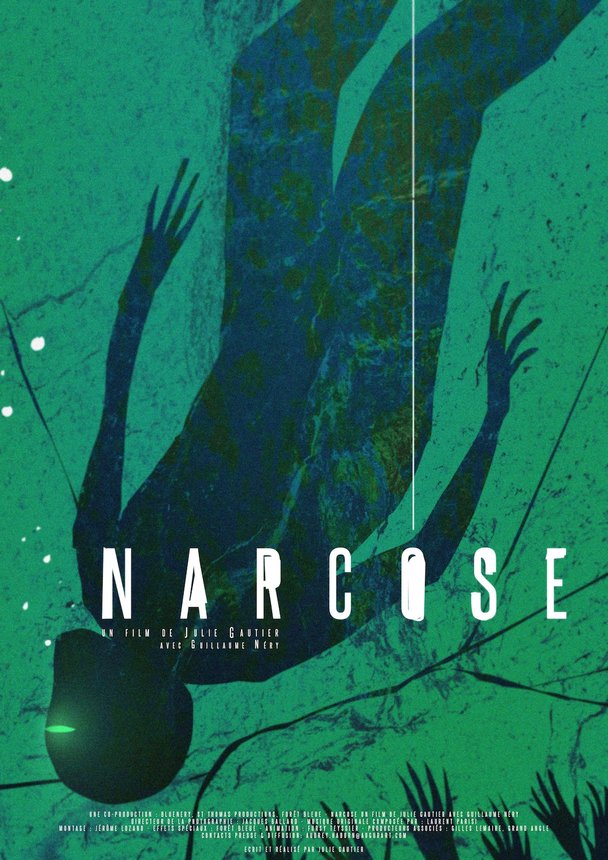
Hallucinating in the Deep Waters of Consciousness

http://ulule.me/presales/2/8/5/6582/poster_narcse02_md-2_jpg_640x860_q85.jpg

Cool video, posted at Mind Hacks (Creative Commons Attribution-NonCommercial-ShareAlike 3.0 Unported License). About the film:
Info: facebook.com/narcosebluenery
Deep water freediving exposes its practitioners to a form of narcosis, which induces several symptoms, among which a feeling of euphoria and levity that earned this phenomenon its nickname of “raptures of the deep”. The short film relates the interior journey of Guillaume Néry, the apnea world champion, during one of his deep water dives. It draws its inspiration from his physical experience and the narrative of his hallucinations.
Beautiful imagery.

Hallucinating in the Deep Waters of Consciousness

Posted by Vaughan Bell | August 4, 2014

On Saturday I curated a series of short films about other inner worlds, altered states and the extremes of mental health at London’s Shuffle Festival. I discovered one of the films literally a couple of days before the event, and it completely blew me away.

Narcose is a French documentary about a dive by world champion free diver Guillaume Néry. It documents, in real time, a five minute dive from a single breath and the hallucinations he experiences due to carbon dioxide narcosis.


Firstly, the film is visually stunning. A masterpiece of composition, light and framing.

Secondly, it’s technically brilliant. The director presumably thought ‘what can we do when we have access to a community of free divers, who can hold their breath under water for minutes at a time?’ It turns out, you can create stunning underwater scenes with a cast of apparently water-dwelling humans.

But most importantly it is a sublime depiction of Néry’s enchanted world where the boundaries between inner and outer perception become entirely porous. It is perhaps the greatest depiction of hallucinations I’ve seen on film.

Darken the room, watch it on as big a screen as possible and immerse yourself.

~ Link to Narcose on Vimeo.

Nova - Evolution: The Minds Big Bang

tree background


This video is Part 6 of a 7-Part NOVA series on evolution, narrated by Liam Neeson. In this episode, they look at the emergence of mind that may have given early homo sapiens the edge over neanderthals.

Evolution: The Minds Big Bang

2001 original air date

Anatomically modern humans existed more than 100,000 years ago, but with crude technology, no art, and primitive social interaction. By 50,000 years ago, something happened which triggered a creative, technological, and social explosion—and humans came to dominate the planet. This was a pivotal point in our evolution, the time when the human mind truly emerged. This program examines forces that may have contributed to the breakthrough, allowing us to prevail over other hominids, the Neanderthals, who co-existed with us for tens of thousands of years. The film then explores where this power of mind may lead us, as the culture we create overtakes our own biological evolution.

A New Functional Food? Triheptanoin - A Novel Medium Chain Triglyceride with Odd Chain Fatty Acids - Castor Bean Oil


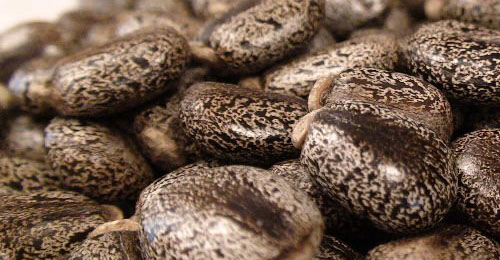
The first article here is from Science Codex and reports on new research suggesting that triheptanoin, a novel medium chain triglyceride with odd chain fatty acids, derived from Castor Bean oil, can reduce the debilitating epileptic seizures associated with Glut 1 deficiency, a rare metabolic disorder.

The cool thing is that the researchers want this oil to be declared a functional food and not a drug (although Baylor Research Institute has filed a patent on it for one particular use). Dr. Juan Pascual is an Associate Professor of Neurology and Neurotherapeutics, Physiology, and Pediatrics at UT Southwestern and lead author of the study, published in JAMA Neurology. He says, "This study paves the way for a medical food designation for triheptanoin, thus significantly expanding therapeutic options for many patients."

This article made me curious, so I did a Google search and found that this oil has shown efficacy in other forms of seizure disorders and as a possible early-stage treatment (as part of a ketogenic diet) for Alzheimer's Disease.

Citations are below the main article.

Medicinal oil reduces debilitating epileptic seizures associated with Glut 1 deficiency

Posted By News On August 11, 2014


DALLAS – Aug. 11, 2014 – Two years ago, the parents of Chloe Olivarez watched painfully as their daughter experienced epileptic seizures hundreds of times a day. The seizures, caused by a rare metabolic disease that depleted her brain of needed glucose, left Chloe nearly unresponsive, and slow to develop.

Within hours, treatment with an edible oil dramatically reduced the number of seizures for then-4-year-old Chloe, one of 14 participants in a small UT Southwestern Medical Center clinical trial.

"Immediately we noticed fewer seizures. From the Chloe we knew two years ago to today, this is a completely different child. She has done amazingly well," said Brandi Olivarez, Chloe's mother.

For Chloe and the other trial participants who suffer from the disease called Glut1 deficiency (G1D), seizure frequency declined significantly. Most showed a rapid increase in brain metabolism and improved neuropsychological performance, findings that suggested the oil derived from castor beans called triheptanoin, ameliorated the brain glucose-depletion associated with this genetic disorder, which is often undiagnosed.

"This study paves the way for a medical food designation for triheptanoin, thus significantly expanding therapeutic options for many patients," said Dr. Juan Pascual, Associate Professor of Neurology and Neurotherapeutics, Physiology, and Pediatrics at UT Southwestern and lead author of a study on the findings, published in JAMA Neurology.

For the estimated 38,000 Americans suffering from this disease, the only proven treatment has been a high-fat ketogenic diet, which only works for about two-thirds of patients. In addition, this diet carries long-term risks, such as development of kidney stones and metabolic abnormalities.

Based on the results of this trial, triheptanoin appears to work as efficiently as the ketogenic diet; however, more research needs to be done before the oil is made available as a medical food therapy, researchers said.

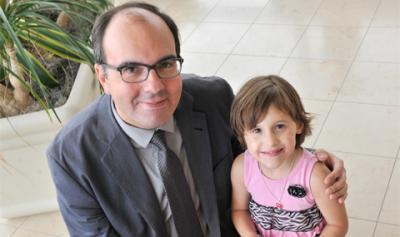
A rare metabolic disease that caused hundreds of seizures daily for 6-year-old Chloe Olivarez is now significantly under control as part of a clinical trial led by Dr. Juan Pascual that uses a medicinal oil for treatment.

"Triheptanoin byproducts produced in the liver and also in the brain refill brain chemicals that we found are preferentially diminished in the disorder, and this effect is precisely what defines a medical food rather than a drug," said Dr. Pascual, who heads UT Southwestern's Rare Brain Disorders Program, maintains an appointment in the Eugene McDermott Center for Human Growth and Development, and holds The Once Upon a Time Foundation Professorship in Pediatric Neurologic Diseases.

The oil, approved for use in research only, is an ingredient in some cosmetic products and is added to butter in some European countries. It is not commercially available in the U.S. for clinical use.

Triheptanoin's success as an experimental treatment for other metabolic diseases, along with preclinical success in G1D mice, led Dr. Pascual and his trial collaborator, Dr. Charles Roe, Clinical Professor of Neurology and Neurotherapeutics, to first conceive the idea and then launch this trial for G1D patients. The 14 pediatric and adult patients in the study consumed varying amounts of the oil, based on their body weight, four times a day. Given the trial's success, Dr. Pascual plans further research to refine the optimal dosage toward the goal of facilitating medical food designation of triheptanoin as a new G1D treatment.

While some trial participants reported mild stomach upset as a side effect, for Chloe the oil has been a miracle medicine without negative effects. Her parents, Brandi and Josh Olivarez of Waco, Texas, continue to be amazed by her progress.

"Before, she was having so many seizures a day that she couldn't even talk. Now she sings all the time, she can eat whatever she wants, and her speech is greatly improved. She still has some learning delays, but has come a long way," said Mrs. Olivarez.

Many Glut1 patients suffer from movement disorders that limit their physical capabilities, but that does not appear to be the case with Chloe. As for the seizures, she still has minor ones occasionally, but they are not debilitating.

"She is now able to run a solid mile without stopping. This would not have been possible without the oil," Mrs. Olivarez said. "Before, she had almost no muscle tone, was lethargic and had a very wide gait due to trying to balance herself while walking, which was very tiring for her."

To better understand this disease, UT Southwestern established a patient-completed registry to track G1D incidence and what treatments work or do not work for those registered.

Study author Dr. Hanzhang Lu, Associate Professor in the Advanced Imaging Research Center and of Psychiatry and Radiology, a TI Scholar in Advanced Imaging Technologies, devised a novel MRI technique used in the trial to measure brain metabolism.

(Photo Credit: UT Southwestern)
Source: UT Southwestern Medical Center

Other research:

Aso, E, Semakova, J,  Joda, L, Semak, V, Halbaut, L, Calpena, A, Escolano, C, Perales, JC, and Ferrer, I. (2013, Mar). Triheptanoin supplementation to ketogenic diet curbs cognitive impairment in APP/PS1 mice used as a model of familial Alzheimer's disease. Current Alzheimer Research; 10(3):290-297. DOI: 10.2174/15672050112099990128 [abstract]

McDonald, T, Hodson, M, and Borges, K. (2014, Apr). Triheptanoin alters anaplerosis and glutamate production in the chronic pilocarpine model of epilepsy (LB78). The FASEB Journal; 28(1): Supplement LB78. DOI: 10.1096/fj.1530-6860 [abstract]


Borges, K, Sonnewald, U. (2012, Jul). Triheptanoin--a medium chain triglyceride with odd chain fatty acids: a new anaplerotic anticonvulsant treatment? Epilepsy Res.; 100(3):239-44. doi: 10.1016/j.eplepsyres.2011.05.023 [full text]

Hadera, MG, Smeland, OB, McDonald, TS, Tan, KN, Sonnewald, U, and Borges, K. (2014, Apr). Triheptanoin partially restores levels of tricarboxylic acid cycle intermediates in the mouse pilocarpine model of epilepsy. Journal of Neurochemistry; 129(1): 107–119. DOI: 10.1111/jnc.12610 [abstract]

Monday, August 11, 2014

Neurons at Work - Research Provides a Clearer View of ‘Alternative Splicing’

Via the Harvard Gazette.

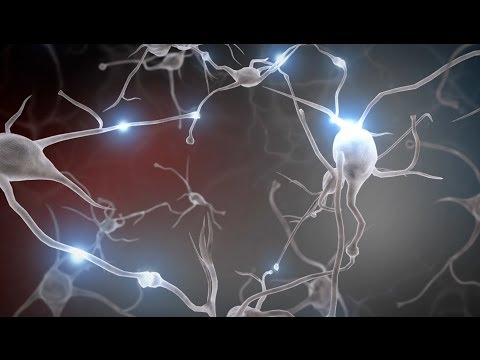
Alternative splicing allows cells to stitch genetic information into different formations, enabling a single gene to produce up to thousands of different proteins. Using C. elegans worms, John Calarco, a Bauer Fellow at the Faculty of Arts and Sciences Center for Systems Biology, and postdoctoral researcher Adam Norris were able to gather hard evidence that the alternative splicing process frequently works differently in different types of neurons. The study was described in a recent paper in Molecular Cell.

Neurons at Work

Research provides a clearer view of ‘alternative splicing’

August 11, 2014 | Editor's Pick

By Peter Reuell, Harvard Staff Writer

Film editors play a critical role by helping shape raw footage into a narrative. Part of the challenge is that their work can have a profound impact on the finished product — with just a few cuts in the wrong places, comedy can become tragedy, or vice versa.

A similar process, “alternative splicing,” is at work inside the bodies of billions of creatures — including humans. Just as a film editor can change the story with a few cuts, alternative splicing allows cells to stitch genetic information into different formations, enabling a single gene to produce up to thousands of different proteins.

Harvard scientists say they’ve now been able to observe that process within the nervous system of a living creature.

Using genetic tools to implant genes that produce fluorescent proteins in the DNA of transparent C. elegans worms, John Calarco, a Bauer Fellow at the Faculty of Arts and Sciences Center for Systems Biology, and postdoctoral researcher Adam Norris were able to gather hard evidence that the alternative splicing process frequently works differently in different types of neurons.The study was described in a recent paper in Molecular Cell.

“Splicing is an essential process in gene regulation that happens in most eukaryotic cells, all the time,” Calarco said. “It’s a fundamental part of how eukaryotic genes produce proteins, but when it goes wrong, it can lead to any number of diseases, including in the nervous system.”

On the surface, Calarco said, the splicing process is relatively simple. To manufacture a particular protein, DNA is first transcribed into messenger RNA (mRNA). But while that transcription contains the instructions to code for a protein, it also contains noncoding segments. Once those segments are removed, the remaining genetic information must be stitched back together, with different combinations producing different proteins.

Science had long understood how the process generally works. One question that remained was whether closely related cell types frequently used the process to produce distinct proteins from the same genetic building blocks.

“We were interested in looking at how splicing might be different in one type of neuron versus a different type of neuron,” said Norris. “We didn’t know whether that was often going to be true going in, so we were looking for indicators that that might be happening.”

What they found was clear — different cells splice the same genes in different ways. The process can be visualized in real time using a fluorescent protein-based approach.

“What we’ve been able to do is visualize the alternative splicing process in these animals in single neurons,” he said. “We engineered fluorescent proteins in such a way that they can provide an indication of how the RNA is being differentially spliced. If a particular coding segment is present, the protein will glow red, and if it’s removed, it will glow green.”

When Calarco and Norris used the fluorescent protein to target two types of motor neurons in the worms, they immediately saw a distinctive fluorescent pattern emerge, meaning the two classes of neurons were splicing mRNAs differently.

In additional experiments that targeted other genes, Calarco and Norris were able to identify unique patterns of splicing, suggesting that the process is different not only among different neuron types, but also among different genes.

“What this suggests is that this process is happening pretty frequently, and is very complex, even in an animal — like C. elegans — that has just 302 neurons,” Calarco said. “That’s why we believe it has a potentially large impact on understanding our own nervous system, which is immensely more complex.”

By better understanding how the splicing process works in different neurons, Calarco said, scientists might uncover insights on how it can go awry and lead to disorders such as epilepsy.

Ultimately, alternative splicing appears to play a critical role in allowing organisms to evolve greater complexity without the need for ever-larger genomes.

“There are a finite number of genes in the genome, and changing which of those gets turned on or off gives you a certain level of complexity,” Calarco said. “What alternative splicing does is add another layer of complexity, allowing an organism to diversify a cell type even more — we think this contributes a great deal to an organism’s ability to diversify its cellular function and cellular architecture.”

“We know the human nervous system is very complex,” said Norris. “I think this is one explanation for how that complexity is encoded. We’ve got on the order of billions of neurons, but we’ve only got on the order of thousands of genes. How can you create a complex, billion-neuron network with different capacities for each cell? This gives us one explanation for how an organism can do that.”

The study was performed in collaboration with Mei Zhen, a professor at the University of Toronto and a recent Radcliffe Fellow, and Shangbang Gao of the Lunenfeld-Tanenbaum Research Institute in Toronto.

Peter Gøtzsche - Deadly Medicines and Organised Crime: How Big Pharma Has Corrupted Healthcare


I came across this book kind of by accident yesterday, but it looks to be an important book ("Prescription drugs are the third leading cause of death after heart disease and cancer"). Peter C Gøtzsche is a Professor of Clinical Research Design and Analysis, and Director, The Nordic Cochrane Centre, and Chief Physician, Rigshospitalet and the University of Copenhagen, Denmark. He is highly respected in the field, having published more than 50 papers in "the big five" (BMJ, Lancet, JAMA, Annals of Internal Medicine, and New England Journal of Medicine) and his scientific works have been cited over 10 000 times.

Deadly Medicines and Organised Crime: How Big Pharma Has Corrupted Healthcare (August, 2013), 320 pages; also available as an ebook for the Kindle, here.

Here is the publisher's ad copy for the book, an interview with the author, and a link to a sample chapter.
From the Introduction

'The main reason we take so many drugs is that drug companies don't sell drugs, they sell lies about drugs. This is what makes drugs so different from anything else in life...Virtually everything we know about drugs is what the companies have chosen to tell us and our doctors...the reason patients trust their medicine is that they extrapolate the trust they have in their doctors into the medicines they prescribe. The patients don't realise that, although their doctors may know a lot about diseases and human physiology and psychology, they know very, very little about drugs that hasn't been carefully concocted and dressed up by the drug industry…If you don't think the system is out of control, then please email me and explain why drugs are the third leading cause of death…If such a hugely lethal epidemic had been caused by a new bacterium or a virus, or even one hundredth of it, we would have done everything we could to get it under control.'​

Prescription drugs are the third leading cause of death after heart disease and cancer.

In his latest ground-breaking book, Peter Gøtzsche exposes the pharmaceutical industries and their charade of fraudulent behavior, both in research and marketing where the morally repugnant disregard for human lives is the norm. He convincingly draws close comparisons with the tobacco conglomerates, revealing the extraordinary truth behind efforts to confuse and distract the public and their politicians.

The book addresses, in evidence-based detail, an extraordinary system failure caused by widespread crime, corruption, bribery and impotent drug regulation in need of radical reforms.

The author and publisher have no liability or responsibility to any entity regarding loss or damage incurred, or alleged to have incurred, directly or indirectly, by the information contained in this book.

Benefits
• Peter C Gøtzsche reveals how drug companies have hidden the lethal harms of their drugs by fraudulent behaviour, and denials when confronted with the facts.
• Addresses a general system failure caused by widespread crime, corruption and impotent drug regulation in need of radical reforms
• Evidence-based and fully referenced for further investigation of key issues and provides an in-depth level of knowledge in this area.
Sample Chapter
Alliance for Natural Health, Exclusive Interview:

We wanted to learn more about this important new book from the author himself. so we put together a list of questions to which Dr Gøtzsche was kind enough to respond by email. The questions and answers are reproduced below with minimal editing by ANH-Intl.

Dr Peter Gøtzsche, author of Deadly Medicines and Organised Crime: How big pharma has corrupted healthcare

ANH-Intl: What do you think is the single biggest threat to the safe practice of medicine that ensures the delivery of the highest quality care and best possible outcomes?

PG: That we have allowed the industry to be its own judge. As long as testing drugs is not a public enterprise, performed by disinterested researchers, we cannot trust what comes out of it.

ANH-Intl: How important are non-pharmaceutical approaches to the combat of escalating rates of major chronic diseases, such as heart disease, cancer, type 2 diabetes and obesity?

PG: Non-pharmaceutical approaches can be more important than drugs. Exercise works equally well for diabetes and depression as drugs and, in contrast to drugs, it has many other beneficial effects. Psychotherapy for depression doesn’t make people dependent on drugs and doesn’t turn transient problems into a chronic disease when people cannot stop taking their drugs. Most important of all, we need to tackle the food industry and ban junk food and junk drinks.

ANH-Intl: What is your opinion of the AllTrials initiative in terms of its potential to significantly improve the objectivity of the medical literature in future?

PG: I have campaigned for access to all data, including the raw data, from research on patients for many years. In 2010, we succeeded in gaining access, for the first time in the world, to unpublished clinical study reports at the European Medicines Agency, which had the effect that the Agency changed its policy from one of extreme secrecy – like the current FDA policy – to one of candid openness. This was to the drug industry’s great chagrin, as its business model hinges on publishing flawed research.

ANH-Intl: Similarly, do you think a sea-change in medical student education is needed to deliver better health outcomes, especially for chronic degenerative diseases?

PG: Yes. There is far too much focus on drugs as the solution to everything and far too little focus on their harms, and the education by necessity builds on flawed research, as this is what gets done and published.

ANH-Intl: Towards the end of your book you state that “What we should do is...identify overdiagnosed and overtreated patients, take patients off most or all of their drugs, and teach them that a life without drugs is possible for most of us.” Can you please explain this a little further? Should the removal of drugs be accompanied with any new modality, and if so which ones might be among the most important?

PG: Removal of drugs should usually not be accompanied by the introduction of other types of treatment. Many patients would gain a better quality of life if their drugs were taken away from them. What we need is to remember Brian McFerrin’s song: “Don’t worry, be happy”. We shall all die, but we should remember to live while we are here without worrying that some day in the future we might get ill. It is daunting how many healthy people are put on drugs that lower blood pressure or cholesterol, and it changes people from healthy citizens to patients who may start worrying about their good health. This can have profound psychological consequences apart from the side effects of the drugs that the patients don’t always realise are side effects, e.g. if they get more tired or depressed after starting antihypertensive therapy or experience problems in their sex life.

ANH-Intl: What can the public and patients do to help redress the situation? Are they effectively disempowered or are there things they can do to help build a more functional healthcare system?

PG: First of all, the public needs to know the extent to which they are being deceived in the current system, e.g. few people know that prescription drugs are the third major killer. If drug testing and drug regulation were effective, this wouldn’t happen.

ANH-Intl: Numerous problems with the medical literature are cited in your book, among them unpublished trials, fiddled statistics, unsuitable comparators and other methodological weaknesses and the preponderance of academic ‘flak’ in the form of weak, industry-sourced publications designed to muddy the waters. Bearing this in mind, what advice would you have for anyone wishing to locate high-quality published data?

PG: There are very little high-quality published data. Neither the drug industry nor publicly employed researchers are particularly willing to share their data with others, which essentially means that science ceases to exist. Scrutiny of data by others is a fundamental aspect of science that moves science forward, but that’s not how it works in healthcare. Most doctors are willing to add their names to articles produced by drug companies, although they are being denied access to the data they and their patients have produced and without which the articles cannot be written. This is corruption of academic integrity and betrayal of the trust patients have in the research enterprise. No self-respecting scientists should publish findings based on data to which they do not have free and full access.
 
ANH-Intl: Are there any classes of drug, as opposed to individual products, for which, in your opinion, there is no valid scientific or medical justification for their use in healthcare?

PG: There are several classes of drugs, e.g. cough medicines and anticholinergic drugs for urinary incontinence, where the effect is doubtful but there is no doubt about their harms, which in my opinion means they should be withdrawn from the market. There are many other types of drugs that likely have no effect. All drugs have side effects, and it is therefore difficult to blind placebo-controlled trials effectively. We know that lack of blinding leads to exaggerated views on the effect for subjective outcomes, such as dementia, depression and pain, and it is for this reason that many drugs, which are believed to have minor effects, likely aren't effective at all.

There are also classes of drugs where, although an effect has been demonstrated, their availability likely does more harm than good. I write in my book that, although some psychiatric drugs can be helpful sometimes for some patients, our citizens would be far better off if we removed all the psychotropic drugs from the market, as doctors are unable to handle them. Patients get dependent on them, and if used for more than a few weeks, several drugs will cause even worse disorders than the one that led to starting the drugs. As far as I can see, it is inescapable that their availability does more harm than good.

ANH-Intl: The chapter in your book entitled “Intimidation, violence and threats to protect sales” begins as follows: “It takes great courage to become a whistle-blower. Healthcare is so corrupt that those who expose drug companies’ criminal acts become pariahs.” Have you experienced any blowback since publishing the book?

PG: No, quite the contrary, as people have praised the book. I don't hear from the drug industry of course, but I have seen blunt lies about the book being propagated by drug industry associations and their paid allies among doctors.


M. J. Friedrich - Research on Psychiatric Disorders Targets Inflammation


This is an interesting overview of the current research on how inflammation can play a role in depression, schizophrenia, and autism. I suspect there is much more research to be done in this realm, but I believe they need to stop using pharmacological interventions targeted at a specific molecule or hormone in the immune response (such as the tumor necrosis factor [TNF] antagonist infliximab, which only showed limited efficacy in treatment resistant depression, and then only for those who had high levels of inflammation before the trial).

Rather, the use of a general anti-inflammatory agent, such as curcumin or omega-3 fats, among many others, might offer greater benefits in that they target several different immune system products. Further, improving the health of the microbiome can be the most effective method to reduce inflammation, which is as simple as a healthy diet.

Full Citation:
Friedrich, MJ. (2014, Aug 6). Research on Psychiatric Disorders Targets Inflammation. JAMA; 312(5): 474-476. doi:10.1001/jama.2014.8276.

Research on Psychiatric Disorders Targets Inflammation

M. J. Friedrich

New York—Activation of the immune system is the body’s natural reaction to infection or tissue damage, but when this protective response is prolonged or excessive, it can play a role in many chronic illnesses, not only of the body, but also of the brain.

“Psychiatric and neurodevelopmental disorders are being thought of more and more as systemic illnesses in which inflammation is involved,” noted Eric Hollander, MD, of Montefiore Medical Center and Albert Einstein College of Medicine, New York City. The cause of increased inflammation in these conditions isn’t always clear, but it has become a hot topic of investigation.

Hollander, who spoke at the annual meeting of the American Psychiatric Association held here in May, was among several investigators who discussed how immune-inflammatory mechanisms can go awry and contribute to the development of depression, schizophrenia, and autism, insights that are leading to novel experimental approaches for these and other disorders.

CYTOKINES IN DEPRESSION

“The notion that inflammation plays a role in neuropsychiatric disorders really caught fire in the context of depression,” said Andrew Miller, MD, of Emory University School of Medicine, Atlanta.

This idea came from early studies showing that patients with depression, regardless of their physical health status, exhibited cardinal features of inflammation, including increases in inflammatory cytokines in the blood and cerebral spinal fluid. The inflammatory cytokines interleukin-6 and tumor necrosis factor (TNF), as well as the acute-phase reactant c-reactive protein (CRP), are the most reliable biomarkers of increased inflammation in patients with depression, said Miller.


Studies suggest that proinflammatory processes may be activated in people with autism spectrum disorders. A medicalized parasite, the eggs of porcine whipworms, tamps down the body’s proinflammatory response and is being studied as a possible treatment for reducing symptoms of autism.  CNRI/www.sciencesource.com

Interestingly, there seems to be a special relationship between inflammation and treatment-resistant depression (TRD), which occurs in about one-third of all depressed patients, said Miller. Patients who don’t respond to antidepressant therapy tend to show an increase in inflammatory markers. Data indicate that these inflammatory molecules can sabotage and circumvent the mechanisms of action of conventional antidepressant therapy.

Given the association of inflammatory cytokines with TRD, researchers set out to test the therapeutic potential of inhibiting inflammatory cytokines in this subset of patients. Administration of a TNF antagonist has been shown to improve depressed mood in patients with other disorders, such as psoriasis and Crohn disease, suggesting that this approach might help reverse depressive symptoms in otherwise healthy patients with TRD.

In a recent proof-of-concept study, Miller and his colleagues gave infusions of the monoclonal antibody infliximab, a TNF antagonist, to 60 adults with major depression that was at least moderately resistant to medication (Raison CL et al. JAMA Psychiatry. 2013;70[1]:31-41). Based on the hypothesis that an anticytokine strategy might be effective only in patients with high inflammation before treatment, the researchers also measured CRP and other inflammatory biomarkers at baseline and throughout the study.

Infliximab did not prove to be more effective than placebo in treating TRD in the study. In fact, overall, those treated with placebo did better than those who received infliximab, said Miller. However, when patients were stratified on the basis of inflammatory biomarkers, those patients with high baseline measurements (plasma CRP concentrations >5 mg/L) had the best response to infliximab.

These results indicate that a simple test for a peripheral blood biomarker of inflammation like CRP might predict which patients would respond to immune-targeted therapy for depression, said Miller. “It’s one of the first studies in psychiatry connecting a biomarker to treatment response,” he noted.

In a subsequent study, Miller’s team compared gene expression profiles of the participants who responded to infliximab with those who did not respond. Within 6 hours after the first infusion of infliximab, the researchers were able to distinguish responders from nonresponders (Mehta D et al. Brain Behav Immun. 2013;31:205-215).

Miller’s group has also been working to identify the brain regions and pathways that are targeted by inflammatory cytokines, such as interferon-alpha—work that may lead to more personalized treatment options for patients with depression, he said (Capuron L et al. Arch Gen Psychiatry. 2012;69[10]:1044-1053).

ANTI-INFLAMMATORY TREATMENT IN SCHIZOPHRENIA

A role for the inflammatory process is also being explored in schizophrenia, noted Norbert Müller, MD, PhD, of Ludwig Maximilian University of Munich, Germany.

The influence of infectious agents on the pathogenesis of schizophrenia, as well as on other psychiatric disorders, has been discussed for decades, and prenatal and postnatal infections are considered risk factors for schizophrenia. Research in prenatal infections indicates that the culprit is not a specific infectious agent, but rather the maternal immune response (Krause D et al. World J Biol Psychiatry. 2010;11[5]:739-743).

Data from a 30-year population-based register study indicate that inflammation coming from either infection or autoimmunity is a risk factor for schizophrenia, not only during development but also later in life (Benros ME et al. Am J Psychiatry. 2011; 168[12]: 1303-1310). The risk seems to increase in a dose-dependent manner, with the risk increasing along with the number of infections, for example, said Müller.

Because of the apparent involvement of inflammatory processes in schizophrenia, the use of anti-inflammatory compounds for the disorder has received increasing attention. A number of studies carried out in the past decade using cyclooxygenase-2 (COX-2) inhibitors in addition to antipsychotic medication have shown a therapeutic effect for the disorder.

Müller noted that timing seems to influence response to this anti-inflammatory therapy because no benefit was seen in a study involving patients who had a long duration of disease (Rapaport MH et al. Biol Psychiatry. 2005;57:1594-1596). Rather, the most compelling data was for anti-inflammatory therapies carried out in the early phase of the disorder: a recent meta-analysis showed an advantage of COX-2 inhibitors only among patients who had a short duration of the disorder (Nitta M et al. Schizophr Bull. 2013;39[6]:1230-1241).

“From an immunologic point of view, this fits very well,” said Müller. “If you have chronic inflammation, it’s more or less impossible to treat effectively with a short-term anti-inflammatory therapy,” he said.

Müller’s group is also beginning to use interferon γ to activate the cellular arm of immunity (type 1 response), which appears to be blunted in most patients with schizophrenia. The work is only in early stages but so far has shown some promise.

INFLAMMATORY MECHANISMS IN AUTISM

A hyperactive immune system is also postulated to play a role in people with autism spectrum disorder (ASD). Increases in proinflammatory cytokines have been found both in the cerebrospinal fluid of patients with ASD and in postmortem brain tissue from deceased patients with autism, said Montefiore’s Hollander.

The association between immune dysfunction and ASD has led researchers to test several novel treatments that target inflammatory mechanisms to alleviate some symptoms of ASD.

One of these mechanisms involves the gut microbiome. “We can think about certain bacteria and parasites in the gut as helping to dampen the chronic inflammatory response, and that a lack of favorable gut parasites allows proinflammatory cytokines to prevail,” said Hollander.

When the microbiome is deprived, as the “hygiene hypothesis” contends has happened in developed countries, it may lead to a lack of control of the immune system. This could help explain why developed countries have higher rates of autoimmune conditions, although other factors—such as underdiagnosis—could also contribute to the lower rates in low- and middle-income countries.

Hollander and his colleagues have focused on trying to beef up the microbiome in people with ASD by introducing a medicalized parasite, Trichuris suis ova (TSO), the eggs of a porcine whipworm. Trichuris suis ova is safe in humans, does not multiply in the host, is not transmittable by contact, and is cleared from the system spontaneously.

Trichuris suis ova works by tamping down the proinflammatory response to increase its survival within the host. It has been studied with some success in autoimmune diseases such as Crohn disease and inflammatory bowel disease and appears to achieve its effects by shifting the balance of T-regulator and T-helper cells and their respective cytokines, said Hollander.

Hollander’s group has been carrying out a small preliminary study of TSO in 10 high-functioning adults with ASD who were able to give informed consent. All participants had a family or personal history of some kind of a seasonal or food allergy or a family history of autoimmune problems.

The aim of identifying this subset of people with ASD was to stratify the study population according to signs of immune dysfunction. In this way, researchers can study a more homogeneous group of people within what is considered a very heterogeneous illness, said Hollander.

In a 28-week, double-blind, randomized, crossover study, the patients received TSO for 3 months (2500 eggs every 2 weeks) followed 4 weeks later by placebo treatment for 3 months. After the first 12-week phase of TSO or placebo, the patients entered a 4-week washout before beginning the second 12-week phase.

The researchers used several measurements to assess symptoms, including stereotypy (self-stimulatory behavior), repetitive behavior, and rigidity or craving for sameness. In their interim analysis of this pilot study, they demonstrated the feasibility and safety of using TSO in an adult population with autism and have found a potential benefit from treatment in all these domains.

Hollander’s team is in the process of launching a new study of this same approach in a pediatric population with ASD, based on the idea that early intervention in developmental disorders is optimal.

In a different therapeutic approach, Hollander and his colleagues studied 10 children with ASD who had a history of symptom improvement when they had fevers. All the children spent alternate days soaking in a hot tub at 102°F (to mimic fever) or at 98°F (control condition).

The children showed improvements on the days when their body temperature was raised to 102°F, compared with the days they were bathed at 98°F. Benefits were seen particularly in restricted and repetitive behavior as well as social behavior, said Hollander.

The mechanism of action is under investigation, but researchers conjecture that raising the body’s temperature either through fever or a hot tub bath releases anti-inflammatory signals that can bring about the observed behavioral effects.

Future studies need to be done to replicate many of these findings. But researchers suggest the data represent a step toward personalizing therapies for psychiatric and neurodevelopmental disorders and provide promise for the development of inflammatory biomarkers and treatment approaches for patients who are responsive to immune-targeted therapies.

Sunday, August 10, 2014

Childhood Abuse and Neglect - The Objective Effects and the Subjective Experience


The two articles below are complimentary in their description of the impact of childhood maltreatment (CM: abuse and/or neglect). The first is only available as an abstract (paywall, of course) and the second comes from Psych Central, a nice resource for lay readers in psychology.

Together these articles show the impact of CM on the function and structure of the brain and the subjective suffering that can result from CM years later. This is the "conclusion" of the first article:
Maltreatment was associated with decreased centrality in regions involved in emotional regulation and ability to accurately attribute thoughts or intentions to others and with enhanced centrality in regions involved in internal emotional perception, self-referential thinking, and self-awareness. This may provide a potential mechanism for how maltreatment increases risk for psychopathology.
In the adults molested as children (AMAC) clients I work with, I see these two processes playing themselves out in their lives every week. The limited affect regulation and the strong tendency toward inaccurate attribution of intentions to others creates a near-constant state of hypervigilance and a general sense of being unsafe with anyone, anywhere.

Likewise, the accentuated interior focus creates a self-sustaining cycle of anxiety, depression, self-blame, and rumination on past wounding. This too can be very debilitating. 


Full Citation:
Teicher, MH, Anderson, CM, Ohashi, K, and Polcari, A. (2013, Aug 15). Childhood Maltreatment: Altered Network Centrality of Cingulate, Precuneus, Temporal Pole and Insula. Biological Psychiatry; 76(4): 297–305. DOI: http://dx.doi.org/10.1016/j.biopsych.2013.09.016

Childhood Maltreatment: Altered Network Centrality of Cingulate, Precuneus, Temporal Pole and Insula

Martin H. Teicher, Carl M. Anderson, Kyoko Ohashi, Ann Polcari

Background

Childhood abuse is a major risk factor for psychopathology. Previous studies have identified brain differences in maltreated individuals but have not focused on potential differences in network architecture.

Methods

High-resolution T1-weighted magnetic resonance imaging scans were obtained from 265 unmedicated, right-handed 18- to 25-year-olds who were classified as maltreated (n = 142, 55 men/87 women) or nonmaltreated (n = 123, 46 men/77 women) based on extensive interviews. Cortical thickness was assessed in 112 cortical regions (nodes) and interregional partial correlations across subjects were calculated to derive the lowest equivalent cost single-cluster group networks. Permutation tests were used to ascertain whether maltreatment was associated with significant alterations in key centrality measures of these regions and membership in the highly interconnected “rich club.”

Results

Marked differences in centrality (connectedness, “importance”) were observed in a handful of cortical regions. Left anterior cingulate had the second highest number of connections (degree centrality) and was a component of the “rich club” in the control network but ranked low in connectedness (106th of 112 nodes) in the network derived from maltreated-subjects (p < .01). Conversely, right precuneus and right anterior insula ranked first and 15th in degree centrality in the maltreated network versus 90th (p = .01) and 105th (p < .03) in the control network.

Conclusions

Maltreatment was associated with decreased centrality in regions involved in emotional regulation and ability to accurately attribute thoughts or intentions to others and with enhanced centrality in regions involved in internal emotional perception, self-referential thinking, and self-awareness. This may provide a potential mechanism for how maltreatment increases risk for psychopathology.
* * * * *

This article comes from Psych Central's World of Psychology blog.

Consequences of Emotional Abuse

By Archana Sankaran
August 1, 2014


I come from a family where abuse has had a generational continuity. My grandfather abused my grandmother. My grandmother abused her son, daughter-in-law and other people. (She threw food at me once.) My father bullies his wife and daughter. My mother is emotionally violent to me. I go crazy and can break stuff around my mother.

Overall it is a very disturbing home environment. No one knows how to get out of the situation and we continue to harm each other. At times it feels like a spiraling battle to death. My grandpa passed away recently, ending his part.

Abuse has many forms. Sometimes it involves power over decision-making, where some people’s opinions do not count in matters related to them. Sometimes the emotional reactions of one person are projected onto others, shifting responsibility. It also can be physically violent, involving breaking things, hitting or cutting. Gossip and social shaming was one of my grandmother’s favorite ways to get control over my father.

I think that abuse is basically a perverted mechanism for control when the healthy ways to influence people seem infeasible. Often with dysfunctional families there is a repetitive nature to these conflicts.

After a few weeks with my family, my body seems to be permanently ready for attack. My shoulder hunches up and there is constant fear in the pit of my stomach. It feels like every person around me who I let into my territory is out to harm me. And no one will choose to spend time with me if they know me fully.

For years the only places I could feel safe or relax in were ashrams and meditation halls. I spent a lot of time by myself in nature. That would eventually calm me down. I was greatly anxious in social interactions, even of a functional nature such as asking for a room to rent.

My father told me a few years ago that every man I am with would leave me. I could not believe that he had used those words on me, knowing that I hurt terribly on this topic. I had just come out of four dark years of matrimony-related sorrow. There was a sense of being boxed in and bashed up.

My father, in his anger, tuned into my wounds and stabbed me where it always hurt most. It took me a while to understand this. I reacted in shock, numbness, severe depression at times. At other times I screamed at him and he released more toxic words.

Always there was a need in me to go closer, to understand the abuse and resolve it. Not one situation resolved. I am being forced to see that there is no healthy closure available to these situations. It is wounded people reacting and damaging others from their woundedness.

Family dynamics harmed me even in less-dramatic situations. For example, I do not recall being able to relax at home with family as a child. Any time I sat down with people at home, I had to perform — an activity such as cleaning the table, or listening to a story or dreaming up projects to do.

That made me always tense when I sat down with people in social situations. How should I entertain them? Often in a group of friends this behavior of mine was not received as my insecurity but as my need to show off.

As a child, positive social stamping was extremely important to me. It was the one way to get attention from my father. I could get warmth and respect from my family and from society if I was a successful person. Social regard became a very important part of my psyche’s feel-good mechanism. I didn’t realize that they would turn completely against me if they perceived me as a failure, which happened later.

In India’s strictly traditional society, I remained unmarried. I was not able to dismiss the social rejection and shaming easily. It was a painful lesson — not only but my society is extreme. Arranged marriages still account for the majority of Indian marriages. Most of the population is married and there is little acceptance of any other choice of living.

I believe that life is a series of lessons that we have to learn and graduate from. Most of us remain broken, wounded individuals trying to cope with our ceaseless desires. May we awaken to an awareness of our wounds. May we find our path to wholeness.

~ Archana Sankaran is an artist and therapist who lives in south India. She writes on alternative health, psychology and gardening. Her blog is at http://energyclinic.wordpress.com

Three Core Concepts in Early Development - Center on the Developing Child at Harvard University


Here is a series of three short videos from the Center on the Developing Child at Harvard University on the early development of the brain. Pretty basic information, but also a nice primer on early neural development.

Three Core Concepts in Early Development

Center on the Developing Child at Harvard University

Healthy development in the early years provides the building blocks for educational achievement, economic productivity, responsible citizenship, lifelong health, strong communities, and successful parenting of the next generation. This three-part video series from the Center and the National Scientific Council on the Developing Child depicts how advances in neuroscience, molecular biology, and genomics now give us a much better understanding of how early experiences are built into our bodies and brains, for better or for worse.
For more information, please visit: http://developingchild.harvard.edu
Video #1: Experiences Build Brain Architecture
The basic architecture of the brain is constructed through a process that begins early in life and continues into adulthood. Simpler circuits come first and more complex brain circuits build on them later. Genes provide the basic blueprint, but experiences influence how or whether genes are expressed. Together, they shape the quality of brain architecture and establish either a sturdy or a fragile foundation for all of the learning, health, and behavior that follow. Plasticity, or the ability for the brain to reorganize and adapt, is greatest in the first years of life and decreases with age.
Video #2: Serve & Return Interaction Shapes Brain Circuitry
One of the most essential experiences in shaping the architecture of the developing brain is "serve and return" interaction between children and significant adults in their lives. Young children naturally reach out for interaction through babbling, facial expressions, and gestures, and adults respond with the same kind of vocalizing and gesturing back at them. This back-and-forth process is fundamental to the wiring of the brain, especially in the earliest years.  
Video #3: Toxic Stress Derails Healthy Development 
Learning how to cope with adversity is an important part of healthy development. While moderate, short-lived stress responses in the body can promote growth, toxic stress is the strong, unrelieved activation of the body's stress management system in the absence of protective adult support. Without caring adults to buffer children, the unrelenting stress caused by extreme poverty, neglect, abuse, or severe maternal depression can weaken the architecture of the developing brain, with long-term consequences for learning, behavior, and both physical and mental health.