Offering multiple perspectives from many fields of human inquiry that may move all of us toward a more integrated understanding of who we are as conscious beings.
Here are a few links that have been hanging around in my browser for the last few days (or weeks). Hope you find them interesting - follow the title links to read the whole article.
By Gary Marcus, Adam Marblestone, and Jeremy Freeman
November 12, 2014
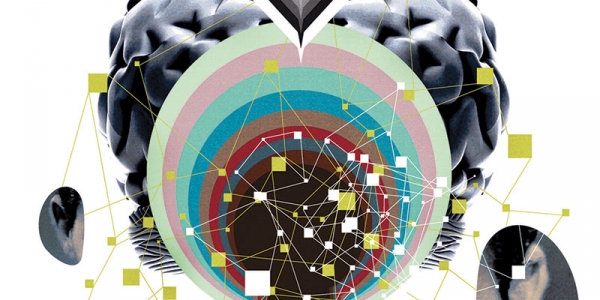
There is real reason to believe that the field is on the verge of a number of methodological breakthroughs: Soon we will be able to study the operation of the brain in unprecedented detail, yielding orders of magnitude more data than the field has ever seen before.
And that is a good thing. On virtually any account, neuroscience needs more data—a lot more data—than it has.
To begin with, we desperately need a parts list for the brain. The varied multitude of cells in the human brain have names like "pyramidal cells," "basket cells," and "chandelier cells," based on their physical structures. But we don’t know exactly how many cell types there are—some, like Cajal-Retzius cells (which play a role in brain development) are quite rare. And we know neither what all these different cell types do nor why there are so many. Until we have a fuller understanding of the parts list, we can hardly expect to understand how the brain as a whole functions.
A double exposure of weakly electric fish with recordings of brain activity. Credit Béatrice de Géa for The New York Times
James Gorman
November 10, 2014
Research on the brain is surging. The United States and the European Union have launched new programs to better understand the brain. Scientists are mapping parts of mouse, fly and human brains at different levels of magnification. Technology for recording brain activity has been improving at a revolutionary pace.
The National Institutes of Health, which already spends $4.5 billion a year on brain research, consulted the top neuroscientists in the country to frame its role in an initiative announced by President Obama last year to concentrate on developing a fundamental understanding of the brain.
Scientists have puzzled out profoundly important insights about how the brain works, like the way the mammalian brain navigates and remembers places, work that won the 2014 Nobel Prize in Physiology or Medicine for a British-American and two Norwegians.
Yet the growing body of data — maps, atlases and so-called connectomes that show linkages between cells and regions of the brain — represents a paradox of progress, with the advances also highlighting great gaps in understanding.
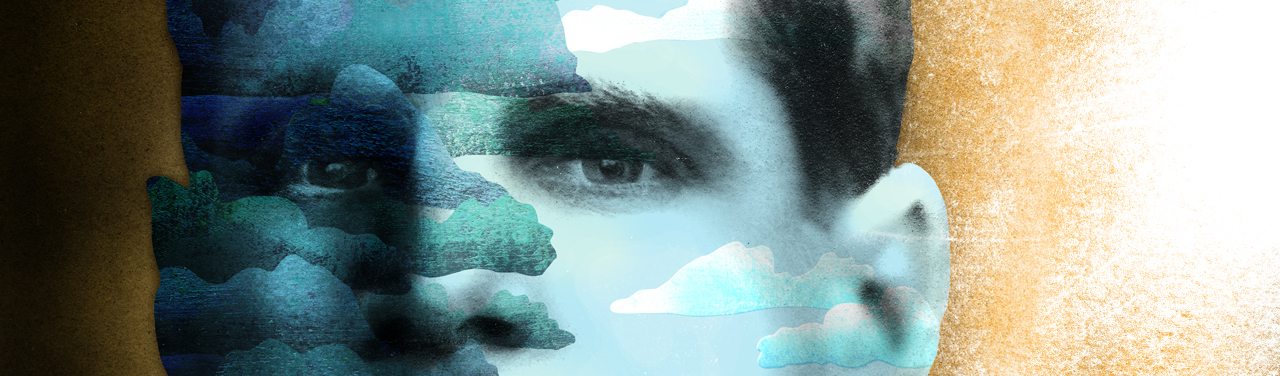
How light therapy can treat disorders from depression to Alzheimer’s disease.
By Katherine Hobson
November 20, 2014
ILLUSTRATION BY SHANNON FRESHWATER
Exactly how light works isn’t known, but many researchers suspect
that bright lights help SAD sufferers by regulating their sluggish
circadian clocks. Those clocks involve the suprachiasmatic nucleus, or
SCN, which is a small area of the brain’s hypothalamus that dictates the
rhythms of a host of bodily functions, including waking, sleeping, body
temperature, and alertness. Absent external cues, those rhythms
circulate for slightly longer than 24 hours for most people. (They
stabilized at 24:30 for a man who lived in a dark cave for two months.)
But normally these rhythms are harmonized with the external 24-hour
day/night cycle when light hits a cluster of special retinal cells that are sensitive to sunlight but not always involved with vision.
People
with SAD may have problems syncing their internal clocks in the winter,
such that darker mornings allow their body’s natural rhythms to drift
later. Exposure to an artificial bright light in the morning usually
improves their moods, says Lewy, presumably by changing the ebb and flow
of the stress hormone cortisol or other bodily processes orchestrated
by the SCN.
However, circadian rhythms appear to be disturbed in
non-seasonal maladies too, which means there is a potential for light
therapy beyond SAD, says Anna Wirz-Justice, professor emeritus at the
Psychiatric Hospital of the University of Basel. She adds that light
therapy has appeal for good reason. When it works, it does so
quickly—usually within a week or two. Also, the side effects appear to
be mild: Some patients have headaches or a slight nausea at the
beginning of treatment, and some report agitation. For researchers like
Wirz-Justice, the choice to use light rather than drugs for depression
and other mood disorders when possible is obvious. “Light is an active
pharmacological agent hitting the brain,” she says. But does it work?
Lester V. Bergman/Corbis - Feeding mice the bacterium Bacteroides fragilis can reverse autism-like symptoms.
Companies selling ‘probiotic’ foods have
long claimed that cultivating the right gut bacteria can benefit mental
well-being, but neuroscientists have generally been sceptical. Now there
is hard evidence linking conditions such as autism and depression to
the gut’s microbial residents, known as the microbiome. And
neuroscientists are taking notice — not just of the clinical
implications but also of what the link could mean for experimental
design.
“The field is going to another level of
sophistication,” says Sarkis Mazmanian, a microbiologist at the
California Institute of Technology in Pasadena. “Hopefully this will
shift this image that there’s too much commercial interest and data from
too few labs.”
This year, the US National
Institute of Mental Health spent more than US$1 million on a new
research programme aimed at the microbiome–brain connection. And on 19
November, neuroscientists will present evidence for the link in a
symposium at the annual Society for Neuroscience meeting in Washington
DC called ‘Gut Microbes and the Brain: Paradigm Shift in Neuroscience’.
In
a rare departure from technology and user-centered design topics, this
edition of the Namahn lecture series welcomed the world-renowned
biologist and primatologist Dr Frans de Waal, voted in 2011 by Discover as
among the 47 (all time) Great Minds of Science. De Waal’s work with
primates and other animals suggests that morality is neither man-made,
nor exclusive to us, but a consequence of evolution.
De Waal argues that morality is older than religion. All religion did
was appropriate innate human nature. Among people who do not believe in
evolution, many contest this view. In the US, where De Waal now lives,
Creationists believe that God created man, and that we only have
morality because of God. Even some American scientists claim that Moral
Law cannot be explained and will never be explained by evolutionary
biology.
This does not prevent Social Darwinists from applying so-called
Darwinist ideas (survival of the fittest) to society: "if you can’t
afford it, tough." But De Waal argues that the approach of these Social
Darwinists is incorrect: it does not correctly reflect either what
Darwin proved or our true nature as humans. If our ancestors had not
cooperated millions of years ago, we would not be where we are today.
Kory Floyd is professor and associate director of the school of human communication at Arizona State University, where he is also on the doctoral faculties of nursing, social psychology, clinical psychology, and family studies. He received his PhD in communication from the University of Arizona, his MA in speech communication from the University of Washington, and his BA in English literature from Western Washington University. His research focuses on the communication of affection in personal relationships and on the interplay between interpersonal behavior, physiology, and health. He has authored or edited eight books and nearly 75 journal articles and book chapters in the areas of interpersonal communication, family communication, nonverbal communication, health, and physiology.
Kory Floyd is professor of human communication at Arizona State University, where he is also on the doctoral faculties of nursing, clinical psychology, and social psychology. His research focuses on the communication of affection in personal relationships and its association with physical health and mental well-being. He has written 12 books and nearly 100 journal articles and book chapters on the topics of affection, nonverbal behavior, family communication, and psychophysiology. Dr. Floyd is currently editor-in-chief of Communication Monographs and is past editor of Journal of Family Communication. He received his PhD in human communication from the University of Arizona. He delivered a talk on "The Importance of Being Prosocial: Communication, Health, & Well-Being."