Monday, March 07, 2011

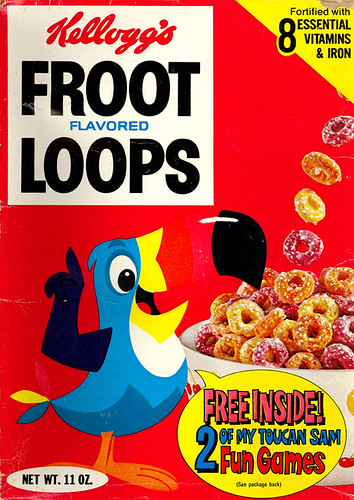
Tucan Sam Made Me Like Fruit Loops

http://farm2.static.flickr.com/1023/1402719239_837d3fcac6.jpg

This study confirms what researchers have known for ages now it seems - the attractive characters associated with a product cause children to rate its taste higher.

Here is the press release from JAMA's Archives of Pediatrics & Adolescent Medicine.
CHICAGO—The use of media characters on cereal packaging may influence children's opinions about taste, according to a report in the March issue of Archives of Pediatrics & Adolescent Medicine, one of the JAMA/Archives journals.

"The use of trade (e.g. Ronald McDonald) and licensed (e.g. Shrek) spokescharacters is a popular marketing practice in child-directed products because the presence of these figures helps children identify and remember the associated product," the authors write as background information in the article. Because children remember nonverbal representations more easily than verbal descriptions, a visual cue such as a character or logo, may help them remember information presented in an advertisement.

Matthew A. Lapierre, M.A., and colleagues at the University of Pennsylvania, Philadelphia, evaluated 80 children between the ages of 4 and 6 years (average age 5.6 years), to determine if using a licensed spokescharacter on food packaging affected children's taste assessment of the cereal. Children were shown boxes of cereal labeled either Healthy Bits or Sugar Bits, with some boxes featuring media characters and some without. Having seen only the box, participants were asked to rate the taste of the cereal on a scale of one to five.

Almost all the children reported liking the cereal, however those who saw a popular media character on the box reported liking the cereal more than those who viewed a box without a character on it. Additionally, those who sampled the cereal named Healthy Bits reported enjoying the cereal more than children who were given the same cereal under the name Sugar Bits. Children receiving the cereal with the name Sugar Bits in a box with no characters on it reported being significantly less satisfied with the taste than those in the other three groups. No significant differences were found among children in the Healthy Bits group based on the presence or absence of characters on the box.

"The results of this experiment provide evidence that the use of popular characters on food products affects children's assessment of taste," the authors conclude. "Messages encouraging healthy eating may resonate with young children, but the presence of licensed characters on packaging potentially overrides children's assessments of nutritional merit."

And here is the abstract for those who are interested.
Influence of Licensed Spokescharacters and Health Cues on Children's Ratings of Cereal Taste

Matthew A. Lapierre, MA; Sarah E. Vaala, MA; Deborah L. Linebarger, PhD

Arch Pediatr Adolesc Med. 2011;165(3):229-234. doi:10.1001/archpediatrics.2010.300

Objective To investigate whether licensed media spokescharacters on food packaging and nutrition cues affect young children's taste assessment of products.

Design In this experimental study, children viewed 1 of 4 professionally created cereal boxes and tasted a "new" cereal. Manipulations included presence or absence of licensed cartoon spokescharacters on the box and healthy or sugary cereal name.

Setting Shopping center in a large northeastern city in December 2007.

Participants Eighty children (mean [SD] age, 5.6 [0.96] years; 53% girls) and their parents or guardians.

Main Exposure Licensed cartoon characters and nutrition cues in the cereal name.

Outcome Measures Children rated the cereal's taste on a 5-point smiley face scale (1, really do not like; 5, really like).

Results Children who saw a popular media character on the box reported liking the cereal more (mean [SD], 4.70 [0.86]) than those who viewed a box with no character on it (4.16 [1.24]). Those who were told the cereal was named Healthy Bits liked the taste more (mean [SD], 4.65 [0.84]) than children who were told it was named Sugar Bits (4.22 [1.27]). Character presence was particularly influential on taste assessments for participants who were told the cereal was named Sugar Bits.

Conclusions The use of media characters on food packaging affects children's subjective taste assessment. Messages encouraging healthy eating may resonate with young children, but the presence of licensed characters on packaging potentially overrides children's assessments of nutritional merit.


Author Affiliations: Annenberg School for Communication, University of Pennsylvania, Philadelphia.

Full citation:
Lapierre, MA, Vaala, SE, Linebarger, DL. (2011, March 7). Influence of Licensed Spokescharacters and Health Cues on Children's Ratings of Cereal Taste. Arch Pediatr Adolesc Med, 165(3):229-234. doi:10.1001/archpediatrics.2010.300


Introducing a New Jounral - International Journal of Wellbeing

This looks like a move in the right direction - I would assume this is an extension of the positive psychology movement (Martin Seligman is co-author of an article in this inaugural edition). The International Journal of Wellbeing debuted last month I believe, and it seems to be an open access publication.

Here are some selections from their "About the Journal" page:
The International Journal of Wellbeing welcomes timely original high-quality scholarly articles of appropriate length on the topic of wellbeing, broadly construed. Although focused on original ideas, the International Journal of Wellbeing also publishes competent and timely review articles and critical notices. Book reviews are at the request of the editors only.We encourage submissions that are genuinely interdisciplinary (i.e. that draw on research from more than one discipline and will be of value to wellbeing researchers from more than one discipline), but we will also consider wellbeing research that is uni-disciplinary if it is of exceptional quality. Uni-disciplinary submissions should be from within the disciplines of philosophy, psychology, or economics.
___

Some submissions will be immediately rejected by the editors. Submissions that are sent for review are subject to a rigorous blind review process. At least two experts will review the submission. Everyone involved in the review process will hold all information contained in the paper as confidential until publication. Peer reviewers are usually asked to submit their review within four weeks.

The International Journal of Wellbeing provides immediate open access to its content on the principle that making research freely available to the public supports a greater global exchange of knowledge. Please note that the authors retain the copyright to their work and that the International Journal of Wellbeing has the right of first publication of the work.

All content of the International Journal of Wellbeing is licensed under a Creative Commons Attribution Non-Commercial No Derivatives License. This license allows others to share the work with an acknowledgement of the work's authorship and initial publication in this journal. The license also prevents others from using the work for profit without the express consent of the author(s). The license also prevents the creation of derivative works without the express consent of the author(s). Note that derivative works are very similar in nature to the original. Merely quoting (and appropriately referencing) a passage of a work is not making a derivative of it.
___

The decision to close the hyphenated gap between ‘well’ and ‘being’ is intentionally forward looking. We know that in some disciplines (e.g. philosophy) wellbeing is still hyphenated. A cursory glance over journals from other disciplines demonstrates that many of them are already making the transition to dropping the hyphen. We expect that the hyphen will eventually disappear from all disciplines because of how the term is usually used. Both ‘well-being’ and ‘wellbeing’ most often refer to the general subject or topic of what makes a life go well for someone; they both tend to include consideration of things that makes peoples’ lives go better and worse. To avoid confusion about when ‘well-being’ means the opposite of ill-being and when it means the topic of what makes a life go well for someone, we propose the following. ‘Wellbeing’ should to refer to the topic of what makes a life go well for someone and ‘well-being’ should refer to the more specific concept – the opposite of ill-being.
The table of contents for this first issue looks good. Their editorial and advisory board is impressive - a lot of well-known names:

Editors

  1. Dan Weijers, Victoria University of Wellington, New Zealand
  2. Aaron Jarden, The Open Polytechnic of New Zealand, New Zealand
  3. Nattavudh Powdthavee, Nanyang Technological University, Singapore

Advisory Board

  1. Roger Crisp, St Anne's College Oxford University, United Kingdom
  2. Paul Dolan, London School of Economics, United Kingdom
  3. Bruno S. Frey, University of Zurich, Switzerland
  4. Daniel Gilbert, Harvard University, United States
  5. Irwin Goldstein, Davidson College, United States
  6. Carol Graham, The Brookings Institution, United States
  7. Dan Haybron, Saint Louis University, United States
  8. John Helliwell, University of British Columbia, Canada
  9. Todd Kashdan, George Mason University, United States
  10. Simon Keller, Victoria University of Wellington, New Zealand
  11. Simon Kemp, University of Canterbury, New Zealand
  12. Richard Kraut, North Western University, United States
  13. Stephen Palmer, City University London, United Kingdom
  14. Richard D. Parry, Anges Scott College, United States
  15. Mozaffar Qizilbash, University of York, United Kingdom
  16. Toni Ronnow Rasmussen, Lund Universitet, Sweden
  17. Ken Sheldon, University of Missouri, United States
  18. David Sobel, University of Nebraska-Lincoln, United States
  19. Michael Steger, Colorado State University, United States
  20. Torbjörn Tännsjö, Stockholm University, Sweden
  21. Dianne Vella-Brodrick, Monash University, Australia

Section Editors

  1. Nicholas Agar, Victoria University of Wellington, New Zealand
  2. Erik Angner, University of Alabama at Birmingham, United States
  3. Lisa Bortolotti, University of Birmingham, United Kingdom
  4. Christopher J. Boyce, Paris School of Economics, France
  5. Ben Bradley, Syracuse University, United States
  6. George Burns, Edith Cowan University, Australia
  7. Ramon Das, Victoria University of Wellington, New Zealand
  8. Dale Dorsey, University of Kansas, United States
  9. Michalis Drouvelis, University of Birmingham, United Kingdom
  10. Elizabeth Dunn, University of British Columbia, Canada
  11. Owen Flanagan, Duke University, United States
  12. Suzy Green, Sydney University, Australia
  13. Chris Heathwood, University of Colorado, United States
  14. Paul E. Jose, Victoria University of Wellington, New Zealand
  15. Georgios Kavetsos, City University, United Kingdom
  16. Simon Luechinger, University of Luzern, Switzerland
  17. Michael McBride, University of California, Irvine, United States
  18. Lindsay G. Oades, University of Wollongong, Australia
  19. Evgeny Osin, State University, Moscow, Russian Federation
  20. Acacia C. Parks, Reed College, United States
  21. Richard D. Parry, Anges Scott College, United States
  22. William Ransome, Griffith University & Queensland University of Technology, Australia
  23. Daniel Russel, Wichita State University, United States
  24. Claudia Senik, Paris School of Economics, France
  25. Tim Sharp, University of Technology Sydney & RMIT University, Australia
  26. Angus Skinner, University of Strathclyde, United Kingdom
  27. Alena Slezackova, Masaryk University & the Academy of Sciences, Czech Republic
  28. Margarita Tarragona, Iberoamericana University, Mexico
  29. Neil Thin, University of Edinburgh, United Kingdom
  30. Stephen Wu, Hamilton College, United States
  31. Jingping Xu, University of Texas, United States

Variations of Alexithymia and Emotional Regulation

http://heatherconroy.files.wordpress.com/2010/02/alexithymia1.jpg

A group of Chinese researchers has created a more comprehensive view of alexithymia (often described as "no words for feeling”), identifying four distinct types of alexithymia partly based on an introversion/extroversion model. This can add to our understanding of how this works, which is always useful in knowing how to work with it in clients.

Here is the broader definition of alexithymia they use in the paper:
Now its definition is more explicitly refined with five dominant features: (1) difficulty in identifying one’s emotion; (2) difficulty in describing self feelings verbally;(3) a reduction or incapability to experience emotions;(4) an absence of tendencies to image one else’s emotion, or an externally oriented cognitive style; and (5) poor capacity for fantasize or symbolic thought [2].
From BMC Psychiatry, an open access paper.

Alexithymia and emotional regulation: A cluster analytical approach

Jie Chen email, Ting Xu email, Jin Jing email and Raymond CK Chan email

BMC Psychiatry 2011, 11:33. doi:10.1186/1471-244X-11-33

Published: 23 February 2011

Abstract (provisional)

Background

Alexithymia has been a familiar conception of psychosomatic phenomenon. The aim of this study was to investigate whether there were subtypes of alexithymia associating with different traits of emotional expression and regulation among a group of healthy college students.

Methods

1788 healthy college students were administered with the Chinese version of the 20-item Toronto Alexithymia Scale (TAS-20) and another set of questionnaires assessing emotion status and regulation. A hierarchical cluster analysis was conducted on the three factor scores of the TAS-20. The cluster solution was cross-validated by the corresponding emotional regulation.

Results

The results indicated there were four subtypes of alexithymia, namely extrovert-high alexithymia (EHA), general-high alexithymia (GHA), introvert-high alexithymia (IHA) and non-alexithymia (NA). The GHA was characterized by general high scores on all three factors, the IHA was characterized by high scores on difficulty identifying feelings and difficulty describing feelings but low score on externally oriented cognitive style of thinking, the EHA was characterized by high score on externally oriented cognitive style of thinking but normal score on the others, and the NA got low score on all factors. The GHA and IHA were dominant by suppressive character of emotional regulation and expression with worse emotion status as compared to the EHA and NA.

Conclusions

The current findings suggest there were four subtypes of alexithymia characterized by different emotional regulation manifestations.

You can read the pdf online, or download it.


Sunday, March 06, 2011

Tom Bartlett - The Case for Play

From The Chronicle of Higher Education. Below the article they include some books on the topic. One of the worst things we have done is take away unstructured play from our kids - they need that creative space to grow and learn new skills. The article also discusses one of my heroes, Lev Vygotsky.

The Case for Play

How a handful of researchers are trying to save childhood.

The Case for Play 1

Pretend play—being a chef "cooking" with Play-Doh, for example—may be essential to children's development, say some researchers. (Yana Paskova for The Chronicle Review)

Lucas Sherman and Aniyah McKenzie are building a house in Central Park. It is small, even by Manhattan standards, and the amenities leave something to be desired. But Lucas, who is 6, and Aniyah, who is 7, seem pleased with their handiwork. The house has a skylight (a hole torn in cardboard) and a flat-screen television (a black square of fabric). Lucas is too busy to answer a stranger's annoying questions, but Aniyah, who is holding a feather duster, explains that she must clean the walls because they are very dirty.

Lucas's father, Dan, observes the project from a nearby bench. "It's amazing what you can do with boxes and junk," he says.

That could almost be the slogan of the New York Coalition for Play, which provided the boxes and junk. The nonprofit association ran one of the two dozen booths at the Ultimate Block Party, an event last fall that brought together companies like Disney, Crayola, and Lego, along with researchers from Columbia and MIT, and attracted thousands of parents and children. The goal was to "celebrate the science of play" and to push back against the notion that education happens only when students are seated at their desks, staring at chalkboards, and scribbling furiously in their notebooks.

The rally of sorts was the brainchild of two top play researchers, Kathy Hirsh-Pasek and Roberta Michnick Golinkoff, the authors of Einstein Never Used Flashcards (Rodale, 2003) and editors, along with Dorothy Singer, of Play=Learning (Oxford University Press, 2006). They want to take what they've learned in the lab and proclaim it in the park, or wherever else people will listen. The message is this: The emphasis on standardized testing, on attempting to constantly monitor, measure, and quantify what students learn, has forced teachers to spend more of the school day engaged in so-called direct instruction and has substantially reduced or eliminated opportunities that children have for exploring, interacting, and learning on their own. Recess has, in many districts, vanished from the schedule entirely. After school, parents shuttle their kids from activity to activity, depriving them of unstructured time alone or with friends.

That matters, according to researchers, not just because play reduces stress and makes children more socially competent—which evidence suggests that it does. It matters also because play supposedly improves working memory and self-regulation; in other words, it makes kids sharper and better-behaved. So, ironically, by shortchanging them on play in favor of academics, we may actually be inhibiting their development. Hirsh-Pasek, a psychology professor at Temple University, considers the move away from play to be a crisis, even comparing it to global warming, in the sense that it may take years for the consequences to be felt. When it comes to the value of play, she declares: "The science is clear."

But how clear is it? Even researchers who've devoted much of their careers to studying play question the more inflated claims of its importance. Within the world of those who take play seriously, there are multiple camps, each with its own dearly held tenets. There are the Free Players, who argue that play is a human right and that adults should more or less leave kids alone. There are the Play Skeptics, who see play as useful for blowing off steam but are dubious about its cognitive upside. And there are Play Moderates, who advocate a mix of free play, adult-guided play, and traditional classroom instruction. No matter whom you're talking with, though, it seems every discussion about play eventually comes around to a prolific Russian psychologist who died more than 75 years ago.

Before tuberculosis claimed him, at just 37, Lev Vygotsky managed to produce a stack of volumes on topics as diverse as the psychology of art, the relationship between thought and language, the problem of consciousness, the behavior of primitive man, scientific language, and child development. While the amount of work he cranked out is notable in itself, what's more impressive is how influential that work has become, even though much of it remained unpublished and untranslated for decades following his death.

For play researchers, no one looms larger than Vygotsky, whose name, along with that of his longer-lived and better-known contemporary, Jean Piaget, pops up on seemingly every other page of the literature. Vygotsky viewed play, particularly pretend play, as a critical part of childhood, allowing a child, as he said in one oft-repeated quote, to stand "a head taller than himself." His biggest theoretical contribution may have been the Zone of Proximal Development: the idea that children are capable of a range of achievement during each stage of their lives. In the right environment, and with the right guidance (which was later dubbed "scaffolding"), children can perform at the top of that range.

For instance, Vygotsky explained, when a child can pretend that a broomstick is a horse, he or she is able to separate the object from the symbol. A broom is not a horse, but it's possible to call a broom a horse, and even to pretend to ride it. That ability to think abstractly is a huge mental leap forward, and play can make it happen.

Among the many who have been influenced by Vygotsky is Deborah J. Leong, the author, along with Elena Bodrova, of Tools of the Mind: The Vygotskian Approach to Early Childhood Education, an attempt to turn his theories into practical classroom techniques. Leong, a professor emerita of psychology at Metropolitan State College of Denver, points out that when young children are pretending, they often use bigger words than they normally would and fully inhabit their roles, like mini Method actors. If they're playing doctor, for instance, they might say "injection" or "thermometer." Recently she watched a group of preschoolers pretending to work at a well-known chain hardware store. "Welcome to Home Depot," a 4-year-old said. "You can do it, we can help." Meanwhile another group of children, who were pretending to be airport screeners, informed a would-be passenger that a bottle she was carrying was larger than the permitted three ounces.

Pretend play isn't just about vocabulary. A 2007 study published in Science looked at how 4- and 5-year-olds who were enrolled in a school that used the play-based, Vygotsky-inspired Tools of the Mind curriculum measured up to children in a more typical preschool. The students in the play-based school scored better on cognitive flexibility, self-control, and working memory—attributes of "executive function," which has been consistently linked to academic achievement. The results were so convincing that the experiment was halted earlier than planned so that children in the typical preschool could be switched to the Tools of the Mind curriculum. The authors conclude: "Although play is often thought frivolous, it may be essential."

With evidence like that, you might think that the kind of guided pretend play that Vygotsky favored would be universally embraced. In fact, according to Leong, it's fast disappearing, as the idea of learning becomes synonymous with memorization and standardized tests. Play is steadily losing out to what play proponents refer to as the "drill and kill" method. "We drill more because they can't pay attention, but they can't pay attention because they don't have these underlying play skills, so we drill more," Leong says. "It's pathetic."

Not to mention misguided, according to Kathy Hirsh-Pasek. Whether children play enough isn't an obscure debate among developmental psychologists. If it's true that children who spend too little time playing struggle with executive function, then we may be raising a generation of kids with less self-control, shorter attention spans, and poorer memory skills. If that really is the case, Hirsh-Pasek's talk about a crisis isn't so far-fetched.

She sees the Ultimate Block Party as the first step in a national effort to get people to stop dismissing play and start questioning the way we assume children learn. She wants to speak directly to parents, most of whom aren't poring over every issue of Child Development for the latest research on play. The goal, in a sound bite, is to take that research "into the streets, subways, and supermarkets."

It's not every day that an academic stages a spectacle in Central Park to bring attention to what is, honestly, a fairly small field of research. To pull it off, Hirsh-Pasek hired a public-relations agency and drummed up big-name corporate sponsors. There was a Sesame Street sing-a-long, what was billed as "New York's Largest Simon Says," and a Radio Disney Dance Party. A small company called Ridemakerz hawked its build-your-own remote-control cars. Not to mention the guy selling a nifty iPhone app that lets you play a technologically enhanced game of hide-and-seek using the smartphone's GPS capability.

There were also decidedly less-profit-driven booths, like the one run by the New York Coalition for Play. Rather than whiz-bang gadgets, they offered cardboard boxes and tubes, lots of fabric, ribbon, empty wine crates, and assorted items that would otherwise be found in a recycling bin. One of those overseeing the booth was Edward Miller, a senior researcher at the nonprofit group Alliance for Childhood, part of whose mission is to promote creative play. When asked what he thought of the Ridemakerz booth just a few yards away, he couldn't help rolling his eyes. "We're also concerned about the overcommercialization of play," he said. "The right answer is less programming and more opportunities for kids to make up things on their own."

Hirsh-Pasek is well aware that play purists look askance at including corporations in the pro-play campaign. Those who take a hard line on free play—that is, giving children basic materials like boxes and fabric and then leaving them alone—have zero use for Nickelodeon kid bands and pricey remote-control cars, which they see as just more ways for adults to get in the way. What she has in mind is a big tent, one that doesn't exclude fancy toys or snappy musical productions. Nor does she have much patience for advocates who claim that the only valuable play is the kind that doesn't involve anyone over 18. She wants kids to play on their own, sure, but she also wants them to engage in more guided play, where an adult or older child can take part.

There's research to back her up. A study she recently submitted for publication gave blocks to children divided into three groups. In one group, the blocks had already been assembled into a heliport. A second group was given blocks, and adults helped the children follow directions to build a heliport. A third group was given blocks and told to do whatever it wanted. The researchers then listened to the language children were using as they played. Those who were building a heliport with an adult used the most imaginative and spatial language (like "below," "on top," "next to"); the kids who were playing with the preassembled heliport used the least.

While she's no purist, Hirsh-Pasek is suspicious of some of the toys that purport to be educational. The title of Einstein Never Used Flashcards (subtitled How Our Children Really Learn—and Why They Need to Play More and Memorize Less) is an apparent slap at the Disney-owned Baby Einstein company. She also cites research that shows that electronic books for kids, the kind that talk and make noises, actually distract young readers: Kids who read them remember less of the narrative than kids who read the story on old-fashioned paper. What's more, Hirsh-Pasek says, she turned down millions of dollars from a corporate sponsor (which she declines to identify) that requested the right to name the Ultimate Block Party.

In many ways, she is placing herself in the middle. She's not trying to run toy companies out of business, but she is willing to criticize products that do more harm than good. She's not attempting to tear down traditional classroom education, but she is pushing hard for more play in schools obsessed with testing. To that end, she's working to make the research on play palatable for teachers and parents.

How good that research is, though, is a matter of debate. Peter K. Smith began studying play in the mid-1970s. At the time, he was a believer in the "play ethos," which he defines in his recent book, Children and Play, as the "very strong and unquestioned view of the importance of play." In that book, he quotes numerous researchers waxing enthusiastic about play's importance, asserting that it is "vital" and "the work of childhood" and "the supreme psychological need."

Later, Smith, a professor of psychology at the University of London, became a skeptic. "I looked at the textbooks of play" from Piaget forward, he says. "They said play is essential for development, that it enhanced this and this, and that and that, but they don't cite any evidence." So he decided to take a closer look. In the late 1980s, he picked a couple of studies that claimed to demonstrate the benefits of play. In one study, researchers had found that playing with small objects helped young children learn how to solve problems. Another showed that play made kids more creative. Smith replicated both using a double-blind procedure to eliminate any potential research bias.

His findings showed no difference in creativity or problem-solving ability between the kids who played and those who didn't. It was a setback for play advocates and made researchers wonder whether the field was based on science or sentimental hype.

More than two decades after Smith's debunking, researchers like Angeline Lillard, a professor of psychology at the University of Virginia, are still raising some of the same questions. "I think if you look hard at all the studies people cite as showing that play helps development, they are either correlation studies"—in other words, they don't prove that play actually causes cognitive gains—"or they have problems," she says.

Not that Lillard, or Smith, for that matter, is antiplay. Lillard is the author of the best-selling book Montessori: The Science Behind the Genius and has written about the possible links between pretend play and social cognition. She does, however, believe that the field is in need of newer and better research. "My own view is that I would like for us to have firmer footing to stand on," she says.

But while scientific support for play can be overstated, sometimes the criticism of play can be unfounded. Last September, Time magazine published an article with the headline "Free Play Won't Make Your Child Smarter." The article was prompted by a study that looked at how 2,751 preschoolers fared in programs with a variety of approaches, including free play and traditional group instruction. That study concluded that "more quality instructional time" and "less free play time" would better prepare kids for school.

But the study's case against play in school isn't entirely persuasive. It's true that the kids who spent the largest chunk of their school day (41 percent) engaged in free play were behind their counterparts on skills like naming letters, naming numbers, and writing their names. But those who spent 29 percent of their time in teacher-guided play actually performed at the same level as the kids who played much less (only 13 to 15 percent of the time) when it came to naming numbers, highest number counted, language and literacy, word and letter identification, and writing their names legibly. In short, they played twice as much but learned the same amount. One of the authors of the report, Nina Chien, a postdoctoral researcher at the University of California at San Diego, acknowledges in an e-mail that this was proof "that kids can play a lot but still make good gains."

More interesting is what the researchers didn't test. Did the children who played more demonstrate higher levels of self-control and better working memory, as other research suggests they would? If so, did they outperform the kids—preschoolers, remember—who spent 15 percent or less of their time playing? Is being smart a race to see who can memorize the most, or is it about developing capacities to deal with a complex world?

While much of the research on play focuses on young children, the implications go well beyond third grade. In junior high, play is more likely to be called "discovery learning." When professors try to get college students to look up from their iPhones, it's probably referred to as "active engagement." But the principles are the same. Stuart Brown, one of the authors of Play: How It Shapes the Brain, Opens the Imagination, and Invigorates the Soul, has reviewed thousands of life histories and concluded that play is essential for children and adults. He's intent on spreading that gospel through his organization, the National Institute for Play, whose mission is to make human play a "credentialed discipline in the scientific community."

And it's not just people. That nonhuman primates engage in sophisticated play has been thoroughly established, and anyone who has dangled a string in front of a cat has conducted animal research. In his book The Genesis of Animal Play, Gordon Burghardt, a psychology professor at the University of Tennessee, reports playful behavior in lizards, turtles, and birds. Even fish have been known to amuse themselves.

For Hirsh-Pasek, the universality of play is part of the evidence of its value. Why would we do it if it didn't confer an evolutionary advantage? She concedes that some of the play research is more suggestive than slam-dunk, and that cleaner, stronger studies would be welcome. But she also argues that we already know enough to conclude that play matters, and that failing to preserve it in the lives of children could be a disaster.

She's doing her part to stave that off. Hirsh-Pasek says 40 cities have expressed interest in holding their own Ultimate Block Parties. She and her colleagues will soon unveil a Web site to promote play research, and more books are on the way. Their goal, she says, is to restore play to its rightful, respected place in the lives of children. "Even if we don't understand it perfectly, it's silly to take play away from society," she says. "It's like taking love away. It's crazy."


The Play Books

The Ambiguity of Play, by Brian Sutton-Smith (Harvard University Press, 1997)

Sometimes called the godfather of play studies, Brian Sutton-Smith has written or edited dozens of books on play and games. He often writes about play from a Darwinian perspective: "Play begins as a major feature of mammalian evolution and remains as a major method of becoming reconciled with our being within our present universe. In this respect, play resembles both sex and religion, two other forms—however temporary or durable—of human salvation in our earthly box."

Einstein Never Used Flashcards: How Our Children Really Learn, by Roberta Michnick Golinkoff, Kathy Hirsh-Pasek, and Diane Eyer (Rodale Books, 2003)

The culture is giving us the wrong messages about how to educate young children, write Kathy Hirsh-Pasek, Roberta Golinkoff, and Diane Eyer. Earlier isn't necessarily better. Learning doesn't happen only in a classroom. They contend that the "evidence tells us that less can be more. It tells us that the 'adultification' and acceleration of children is not a positive choice, but one that robs children of their freedom to be. It tells us that to be happy, well-adjusted, and smart, children do not need to attend every class and own each educational toy."

Recess: Its Role in Education and Development, by Anthony D. Pellegrini (Lawrence Erlbaum Associates, 2005)

Recess is disappearing at many schools across the country, squeezed out by academics. Yet research by Anthony Pellegrini, a professor of educational psychology at the University of Minnesota, indicates that children are more attentive to their schoolwork after recess than before. He has argued that "recess breaks maximize children's cognitive performance and adjustment to school," and that it may be "one of the few times during the day when children have the opportunity to interact with peers and develop social skills free from adult intervention."

A Child's Work: The Importance of Fantasy Play, by Vivian Gussin Paley (University of Chicago Press, 2004)

Vivian Gussin Paley argues that the loss of creative free time, particularly storytelling and role-playing, can harm children emotionally and intellectually. Paley, a longtime kindergarten teacher at the University of Chicago Laboratory Schools, writes: "The children themselves continually reminded us that play was still their most usable context. It was not the monsters they invented that frightened them in kindergarten; it was being told to sit still and pay attention for long periods of time."—Tom Bartlett

Tom Bartlett is a senior writer for The Chronicle.


Tags: , , , , , , , , , , , , , , ,

Are temporal concepts embodied? A challenge for cognitive neuroscience

http://fasteddie.files.wordpress.com/2008/03/time-warp.jpg

From the open source Frontiers in Cognition, a cool article on temporality and embodiment. The pdf can be downloaded by following the title link.

Are temporal concepts embodied? A challenge for cognitive neuroscience

  • Department of Neurology, Center for Cognitive Neuroscience, University of Pennsylvania, Philadelphia, PA, USA

Is time an embodied concept? People often talk and think about temporal concepts in terms of space. This observation, along with linguistic and experimental behavioral data documenting a close conceptual relation between space and time, is often interpreted as evidence that temporal concepts are embodied. However, there is little neural data supporting the idea that our temporal concepts are grounded in sensorimotor representations. This lack of evidence may be because it is still unclear how an embodied concept of time should be expressed in the brain. The present paper sets out to characterize the kinds of evidence that would support or challenge embodied accounts of time. Of main interest are theoretical issues concerning (1) whether space, as a mediating concept for time, is itself best understood as embodied and (2) whether embodied theories should attempt to bypass space by investigating temporal conceptual grounding in neural systems that instantiate time perception.

Full Citation:
Kranjec A and Chatterjee A (2010) Are temporal concepts embodied? A challenge for cognitive neuroscience. Front. Psychology 1:240. doi: 10.3389/fpsyg.2010.00240


Saturday, March 05, 2011

Consciousness, Plasticity, and Connectomics: The Role of Intersubjectivity in Human Cognition

[A mapping of the brain networks involved in intersubjective consciousness]

Here is some geeky brain science stuff for your weekend reading pleasure, courtesy of Frontiers in Consciousness Research, an open source journal for cutting edge research. This is the stuff that excites me - researchers are finally starting to look at the intersubjective element in consciousness - we are not conscious in a vacuum.

Dan Siegel and his cohort is already working one angle of this in his interpersonal neurobiology, and his work is very useful to me as a therapist in training. Understanding what is happening in our brains during that interpersonal exchange is important. It is equally important to know what is happening intersubjectively in that space.

Download the pdf at the link below.

Consciousness, Plasticity, and Connectomics: The Role of Intersubjectivity in Human Cognition

  • 1Interacting Minds Project, Center of Functionally Integrative Neuroscience, Denmark
  • 2Philosophy, Louisiana State University, USA

Consciousness is typically construed as being explainable purely in terms of either private, raw feels or higher-order, reflective representations. In contrast to this false dichotomy, we propose a new view of consciousness as an interactive, plastic phenomenon open to sociocultural influence. We take up our account of consciousness from the observation of radical cortical neuroplasticity in human development. Accordingly, we draw upon recent research on macroscopic neural networks, including the “default mode”, to illustrate cases in which an individual’s particular “connectome” is shaped by encultured social practices that depend upon and influence phenomenal and reflective consciousness. On our account, the dynamically interacting connectivity of these networks bring about important individual differences in conscious experience and determine what is “present” in consciousness. Further, we argue that the organization of the brain into discrete anti-correlated networks supports the phenomenological distinction of prereflective and reflective consciousness, but we emphasize that this finding must be interpreted in light of the dynamic, category-resistant nature of consciousness. Our account motivates philosophical and empirical hypotheses regarding the appropriate time-scale and function of neuroplastic adaptation, the relation of high and low frequency neural activity to consciousness and cognitive plasticity, and the role of ritual social practices in neural development and cognitive function.

Full Citation:
Allen M & Williams G (2011). Consciousness, Plasticity, and Connectomics: The Role of Intersubjectivity in Human Cognition. Front. Psychology 2:20. doi: 10.3389/fpsyg.2011.00020


[qualities of prereflective vs. reflective consciousness and their unification -
open the image in a new tab for a full size view]


Tikkun - DOES EVOLUTION HAVE A DIRECTION? Where Is It Going? - Andrew P. Smith

http://3.bp.blogspot.com/_tzhbvr4x724/TD0PopT5pmI/AAAAAAAAADs/vj0SLCtSnQM/s1600/nonlinear_neural_net_macro_intri-2.jpg

Andrew P. Smith
has posted an article on the directionality of evolution over at Tikkun - he references integral theory in general and Ken Wilber's work in particular. However, Wilber seems to be a simple jumping off point, after which he is fleshing out the basic idea that Wilber calls "Eros" with a more scientific model and explanation that does not rely on a New Age image or metaphor. This is a very long article, so I am only sharing a small part - read the whole article at the Tikkun site.

Does Evolution Have a Direction?

Reflections on evolution and consciousness from "the Integral World"

Andrew P. Smith, who has a background in molecular biology, neuroscience and pharmacology, is author of e-books Worlds within Worlds and the novel Noosphere II, which are both available online. He has recently self-published "The Dimensions of Experience: A Natural History of Consciousness" (Xlibris, 2008).

DOES EVOLUTION HAVE A DIRECTION?

Where Is It Going?

Andrew P. Smith

Wilber seeks to use the eros concept in places where evidence strongly suggests it's not needed.

David Lane is the most recent of several authors at this site to point out the flaws in Ken Wilber's view of evolution.* In doing so, he joins an even longer list of scientists, philosophers and other academics who—beginning with the celebration of the 150th anniversary of publication of The Origin of Species two years ago—have spoken out clearly and forcefully in support of modern evolutionary theory.

If there is one single aspect of this theory at the center of controversy, it is surely embodied in the word “random”. If even Einstein resisted the notion that the universe was a game of dice, it's difficult to blame lay people for trying to find design, or at least consistency, in the story of their origins. David Lane takes great pains to point out that randomness is only one aspect of Darwinism; natural selection, what Jacques Monod (1972) called “necessity”, seems to ensure that evolution has, if no purpose, at least some kind of direction. But if it has a direction, where is it going? If survival of the fittest is not a tautology, as some critics have claimed (Wilkins 1997), shouldn't evolution to some extent be predictable? Using evolutionary theory, we can look back into the past and understand how and why certain forms of life evolved. But what can we say about the future?

We need to address this question not simply to reassure people that life is more than just a matter of chance. Predictability goes to the heart of what science is and does. Science can be succinctly defined as the attempt to identify the causes of phenomena. But the process does not stop there. When we think we know what causes a phenomenon, we attempt to use this knowledge to predict other phenomena, and ultimately, by causing them by our own actions. Indeed, scientific theories are generally validated only by the successful predictions they make. Einstein's relativity theory received an immense boost when it was demonstrated that the gravitational pull of celestial bodies did in fact result in the curvature of light. Conversely, modern string theory, for all its mathematical elegance, has failed to displace other so-called theories of everything (TOE) because of the difficulty of testing any predictions it might make (Smolin 2006).

Darwinism, nearly unique among widely accepted scientific theories today, has largely received a pass here. To be fair, the theory has proven, at the very least, to be quite consistent with many phenomena that were unknown when Darwin formulated it. For example, Darwin's ideas, when coupled with Gregor Mendel's experiments demonstrating the segregation and independent combination of hereditary properties, could have been said to predict the existence of genes. While heredity did not have to involve a macromolecule consisting of two helical strands of mutatable nucleotides, this structure turns out to have precisely the necessary properties. Moreover, comparison of DNA molecules of different but related organisms has shown that the further back in time these organisms began evolving separately—as estimated by fossil evidence—the greater their differences in nucleotide sequence (Cooper et al. 2003). This correlation between molecular and fossil dating, along with other fossil evidence of transitional or intermediate forms (Prothero 2007), constitutes powerful evidence for the theory, and should count as successful predictions. Indeed, as Theodosius Dobzhansky (1973) put it, “nothing in biology makes sense except in the light of evolution.”

Nevertheless, a key aspect of evolution is that it is not simply an historical process, but an ongoing one. It would of course be highly desirable that a theory of evolution should be capable of not just accounting for what forms of life appeared in the past, but for providing some insights into what might emerge in the future. This is where randomness becomes a problem. This randomness occurs not only in the gene mutations that are the source of hereditary variation, but perhaps also to some extent even in the selection process. The late Stephen Jay Gould, who referred to this latter kind of chance as contingency (1990), argued that random events in the past sometimes have had a major effect not just on what variants appeared, but on whether they survived. If we could rewind the evolutionary tape, Gould suggested—go back to any arbitrary date in the distant past and have evolution begin anew from that point—the results would be very different.

Like most evolutionary biologists, though, Gould was interested in the details of evolution—the specific types of structural adaptations developed by organisms. While it may be beyond our power to predict these in advance, what about more general trends? Perhaps there was nothing predictable about the emergence of a four-limbed creature that learned to walk upright and manipulate objects, but was the evolution of a brain, or some similar organ capable of processing information about the environment, inevitable? What about consciousness?

Here I will discuss the evidence for several major evolutionary trends, then briefly speculate on how they might extend into our future. As an important sidelight, I will make the case for the existence of several evolutionary processes other than Darwinism. The never-ending war between evolutionists and creationists has long tended to obscure the important point that one can fully believe in evolution without accepting that Darwinism accounts for all of it.

Complexity

Complexity is difficult to define, and several different definitions are in use. I will not attempt a precise definition here, but use an approximation that I believe is close enough to be useful. I define it in terms of the number of different states, or possibilities, that a system (a living thing or a machine) can exist in: the more states, the greater the complexity. This definition of complexity is, I believe, reasonably close to more precise definitions based, for example, on the number of computational steps required to create a system (Chaitin 1973; Bennett 1988; Lloyd 2007). In any case, it doesn't really matter if my definition fits exactly with these other, more precise definitions, because I am mainly interested in identifying a certain evolutionary trend, regardless of what name we give it.

We can easily appreciate my definition of complexity by considering what is often taken to be the most complex form of existence on earth: the human brain. With its billions of neurons and trillions of synaptic connections among these neurons, the brain clearly is capable of existing in an enormously large number of different states. Each state is distinguished from every other by the particular set of neurons that are active at that moment, and in the view of modern neuroscience, any particular such neuronal state—or at any rate, many of them—represents some specific form of information. Thus when we think or feel certain thoughts or emotions, a certain pattern of activity occurs in our brains, and this pattern is constantly changing as our thoughts and feelings change. Though the relationship of brain activity to thinking, feeling and other cognitive properties is not entirely understood, it's apparent that the enormous variety of behavior we are all capable of is closely related to the enormous number of different states our brains can exist in.[1]

Defined in this way, it seems obvious that there has been a major increase in complexity during evolution. If we consider the progression: small molecules, macromolecules, cells, invertebrates, vertebrates, humans—it's clear that over time forms of life have appeared that, by this definition, or indeed, anyone's reasonable definition, are more complex than any that preceded them. What makes this view controversial, though, is the implication that there is an inherent drive or purpose to evolution—shades of Wilber's eros—that produces this complexity. Some authors, like Robert Wright (2001), have embraced this idea, and find evidence for it throughout the history of both natural and human social evolution. Others, such as Gould (1997), have argued strenuously against it, conceding that while there has been some increase in complexity over evolutionary history, it results from chance, not any trend. In Gould's metaphor, evolution began with its back against a wall, representing zero or minimum complexity. Any change at all had to result in some increase, a step away from this wall.

I think the most reasonable position here—and the one probably accepted by the majority of scientists—lies between these two extremes. While there may not be an intelligent force guiding evolution to create life forms of increasing complexity, several scientific studies have provided evidence for an increase that does not appear to be a result of just the statistical fluctuations that Gould implied (McShea 1996; Adami 2002). David Lane, referencing Hermann Muller, points out that a process of gradually accumulating variations has the potential to create life forms of greater complexity. I would go further and say that an increase in complexity can often result in greater fitness, so that complexity is not simply possible, but often favored. Richard Dawkins (1997), one of today's strongest proponents of Darwinism, essentially made this point in a debate with Gould. Furthermore, other evolutionary processes that do not involve random variation and natural selection have also been described that could result in an evolutionary increase of complexity (Cavalli-Sforza and Feldman 1981; Kauffman 1993; Barabasi 2002; McShea 2005; Jablonka and Lamb 2005). I will be discussing some of these other processes later.

Those who argue against this idea, that natural selection very often results in increasing complexity, frequently cite the fact that some of the simplest life forms appear to be among the most well adapted. Bacteria, for example, have survived on earth for billions of years, and might well continue to survive under conditions that could result in the extinction of most or all multicellular organisms, including our own species. But those who make this argument generally overlook the fact that though bacteria are far simpler than any multicellular organism, they represent an enormous increase in complexity over what came before them—the primordial abiotic soup of organic molecules. In fact, most of the organic molecules found within bacteria and other kinds of cells today no longer exist on earth outside of these cells. They have been able to survive only by virtue of being part of a lifeform that can control, for example, the degradative processes that quickly destroy these molecules when they are found outside of living cells. So the complexity increase manifested in the evolution of bacteria, and in the still more complex eukaryotic cells that evolved later, represented, from the viewpoint of the cell's macromolecular components, a clear case of greater adaptive fitness.

What about a comparison of different multicellular organisms? There is a good argument to be made that, here, too, more complex life forms are frequently more adaptive. If our species goes extinct, it is most likely to be the result of a cataclysmic event that will also eliminate all other vertebrates and a great many invertebrates. Global warming, which along with other forms of pollution and habitat destruction is considered by many today to have the greatest potential to result in such a cataclysmic event, has already been shown to be a greater threat to many species considerably less complex than we are, including coral reefs and their associated marine invertebrate species and tropical rainforests, which are composed of an enormous diversity of plant and invertebrate as well as vertebrate species (Flannery 2005; Kolbert 2006; Wilson 2007). The World Conservation Union's Red List of endangered species as of 2007 listed 5742 vertebrate species, but also 2108 invertebrate species and 8447 species of plants. These numbers do not begin to tell the full story, as the status of the great majority of species, and particularly of invertebrate species, has not yet been evaluated; but it is telling that the number of threatened species as a percentage of species evaluated is far higher for both plants (70%) and invertebrates (51%) than for vertebrates (23%).[2]

To summarize, while there is no strict correlation between evolution and greater complexity, the fact remains that over time the process has created a significant number of different species which are more complex than any that preceded them. This has occurred not just once or twice or a few times, but literally dozens of times. While there are numerous examples of evolution going down paths that do not lead to greater complexity, it does seem that there is a bias in the selection process that ensures that greater complexity will be created more often than would be predicted on the basis of purely statistical fluctuations. From such a bias, can a trend be born?

Socialization

If natural selection seems capable of at least occasionally creating life forms of greater complexity, how exactly does it do this? It turns out that there is often a very simple answer: through combination of pre-existing life forms—whether they be molecules, cells or organisms—into societies. Such combination can potentially result in an enormous increase in the number of possibilities or states.

How societies become more complex

This can be demonstrated very easily mathematically.. Suppose we begin with a life form—what Wilber, and others including myself would call a holon—that can exist in just two different states. For example, a nerve cell might either be active, sending an electrical impulse down its axon, or inactive. If we combine this neuron with a second neuron, the combined system can exist in four different states—both neurons active, both inactive, or one or the other active. More generally, if a system consists of n components or holons, each of which can exist in x different states, then the total number of states that system may theoretically exist in is x raised to the nth power: xn. In other words, as more components are added, the complexity of the system increases exponentially.

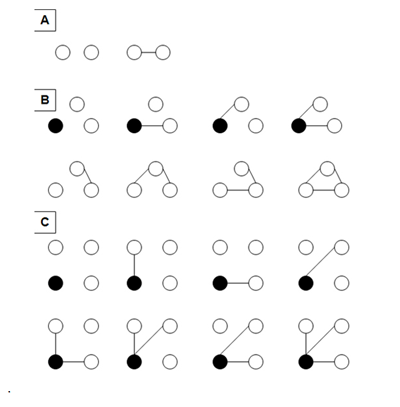
However, the complexity increase in real-life social systems is potentially much greater than even this. Suppose that a holon adopts a different state every time it interacts with another holon. Then as new holons are added to the system, the number of states that both they, and the existing member holons, can exist in increases. This is shown in Fig. 1. For two holons, the system can exist in only two states, depending on whether or not the holons are interacting. For three holons it can exist in eight different states, while a system of four holons can exist potentially in sixty-four different states. The complexity or number of states increase does not follow the simple xn rule I mentioned previously, because the states of any one holon are not completely independent of the states of all other holons. But this may be more than compensated for by the increase in potential new states as holons are added to the system.

Fig. 1. Relationship between individual and social complexity. (A) In a system consisting of just two components, each component can exist in just two possible states, interacting with the other component, or not interacting with it. These are also the only two possible states of the system as a whole. (B) In a three-component system, each component can exist in four possible states. These are shown in the top row, for the component indicated by the filled circle. This three-component system as a whole, however, can exist in eight possible states, including the four shown in the top row, and an additional four shown in the bottom row. (C) In a four-component system, each component can exist in eight possible states. This is shown for the component indicated by the filled circle. The four-component system as a whole can exist in 64 possible states, which are not shown here. As discussed in the text and endnotes, this scheme has some simplifying assumptions.

So the first lesson here is that complexity is created by social organization. Societies—and I use this term very generally, to mean not simply human or even animal societies, but combinations of molecules and cells as well—are generally more complex, and frequently, far more so, than any of their individual members. This is a point that has been lost not simply on Wilber—who clings to the erroneous and easily disproven idea that societies always have the same degree of complexity (and level of hierarchical development, an issue I will address shortly) as their individual members—but to some extent, I believe, on the entire evolution community.

The really important changes in evolution almost always involve combinations of holons into societies.
Read the rest.


NPR - Brian Greene on The Hidden Reality (Parallel Universes and the Deep Laws of the Cosmos)


Cool segment from yesterday's Science Friday on NPR's Talk of the Nation. Brian Greene is the author several excellent books, including his newest book on the nature of a possible multiverse, The Hidden Reality: Parallel Universes and the Deep Laws of the Cosmos.

This is some mind-bending stuff - I love it. Here is a section that seems to be a summary of the main ideas of Greene's multiverse approach:
So there's a version of multiple universes that comes from string theory, and it's called the Brane Multiverse, B-R-A-N-E. And that comes from the word membrane, which is one of the recent realizations in string theory is that the ingredients in the theory are not just the little, tiny vibrating strings that we've, for instance, spoken about in the past on this program. But the theory also has giant membranes which may have two dimensions, like a giant sheet, or three dimensions, a three-dimensional membrane. We call it a three-brane.

And that suggests the possibility that all we know about our universe may exists on a giant membrane. I like to think of it as a giant slice of bread. So imagine every star, every galaxy's on a giant slice of bread, with other slices of bread out there, other universes, other brane universes nearby in a giant, cosmic loaf.

I have enjoyed Greene's earlier books (particularly The Elegant Universe: Superstrings, Hidden Dimensions, and the Quest for the Ultimate Theory and The Fabric of the Cosmos: Space, Time, and the Texture of Reality), so I'll have to read this one as well.

In a new book, mathematician and theoretical physicist Brian Greene explains the concept of multiverses, and why some physicists believe there could be more than one universe. Plus, a look at the hidden universe of Greene's desk, this week's "Desktop Diary" video pick.

IRA FLATOW, host: This is SCIENCE FRIDAY. I'm Ira Flatow.

Up next: physics to make your hair hurt in a, really, a good way. Now, you're going to want to hear about this. For example, think about this: Is the universe we are living in the only one? What if, when you got into your car this morning to drive to work, another you in another universe got into a different car and drove to the beach instead?

Seems hard to believe and maybe more like science fiction, but some theoretical physicists say we might exist in one of many universes, or in a multiverse, as they call it. So what if the universe, as we know it, is really just one of many universes? What does that tell us about the laws of physics here in the universe we know of? Can we ever test the theory of a multiverse? And ultimately, does this mean we need more than one Miss Universe pageant?

Joining me now to talk about it is my guest - Brian Greene, having a good laugh with me, here. He is professor of physics and mathematics at Columbia. He's also author of a new book, "The Hidden Reality: Parallel Universes and the Deep Laws of the Cosmos," back in our New York studios.

Thanks for being with us here today.

Professor BRIAN GREENE (Physics and Mathematics, Columbia University; Author): Oh, it's my pleasure.

FLATOW: Do we need another Miss Universe, kind of?

(Soundbite of laughter)

Prof. GREENE: I guess so. I didn't - I never thought of it that way.

(Soundbite of laughter)

FLATOW: This is a serious idea, right? It's all through your book that there could be more than one universe.

Prof. GREENE: Yes. It's a strange idea, because in the old days, which means like two-and-a-half years ago...

(Soundbite of laughter)

Prof. GREENE: ...the universe meant everything, every star, every galaxy. So what would it mean to have more than one everything? But from a number of directions, our mathematical research is suggesting that what we have thought to be everything in the past, well, that may be a small part of a much grander whole that may have other realms rightly called other universes.

FLATOW: And where would they have originated?

Prof. GREENE: Well, it depends on the proposal. Actually, in the book, I go through, actually, nine different ways in which physics has come upon this idea. The simplest is perhaps there could have been more than one Big Bang. We think of the Big Bang as creating our universe, but as we have studied the Big Bang in more and more detail, the math is suggesting that the Big Bang may not have been a unique event. There may be many Big Bangs that happened at various and far-flung locations, each creating its own swelling, spatial expanse, each creating a universe -our universe being the result of only one of those Big Bangs.

FLATOW: And you talk about three different kinds of universe.

Prof. GREENE: Oh...

FLATOW: We don't say universi(ph), I guess - universes.

(Soundbite of laughter)

Prof. GREENE: Yeah. We have definitely gone with the S as the plural.

FLATOW: Yeah.

Prof. GREENE: But there are actually are these nine versions. One is from this multiple Big Bangs. Another very simple one to think about which aligns with your remarks about someone driving to the beach instead of going to work, arises from imagining that space goes on infinitely far. We don't know that it does, but that's an idea that people take very seriously, that it may go on forever.

If it does, there's a startling conclusion that really hasn't received as much attention as I think it deserves, which is in any finite region of space, matter, particles, can only arranged themselves in finitely many different configurations.

The metaphor I like think of is a deck of cards. You shuffle the deck, the cards come out in different orders, but there are only finitely many different orders. And that means if you shuffle the deck enough times, the order of cards must repeat sooner or later.

FLATOW: Ah.

Prof. GREENE: Similarly, in infinite space, the arrangement of the particles must repeat sooner or later, too. And, look, you and me, we're just collections of particles. So is the Earth and the sun. So if the particle arrangement repeats, then we are out there having this conversation.

And to speak to your introductory remarks, it's even easier for the particle arrangement almost to repeat, but not repeat exactly. That would mean that you may be doing something else. Maybe in that other universe, you have a mustache, or my name is Jonathan or...

FLATOW: Right.

Prof. GREENE: ...there's all sorts of crazy stuff happening out there, and that is all compatible with this idea of space going on infinitely far.

FLATOW: Is it possible to find any evidence of these universes at all?

Prof. GREENE: That, of course, is the key question. And I should say that the book itself is not really a cheerleading book for the multiverse. It's not a multiverse manifesto. It's taking the idea seriously, because a large fraction of the theoretical physics community is taking this idea seriously and looking at it from all angles and asking those kinds of difficult questions. Can you test it? And there are some ways in which this notion could be tested.

For instance, in the multiple Big Bang version that gives rise to different universes, it's possible that the different universes, as they expand, could collide with one another, sort of like - think of a bubble bath. Each of the Big Bangs gives rise to one expanding bubble in the cosmic bubble bath. Those bubbles can smash into each other.

And if they did, if our universe got hit by another, had a fender-bender with another universe, that would send ripples going through the cosmic microwave background radiation - heat left over from the Big Bang. And astronomers are now looking for patterns in the microwave background radiation that might suggest that we did have that encounter in the past with another universe. That'd be a very direct way of establishing that other universes are out there.

FLATOW: 1-800-989-8255. We're talking with Brian Greene, author of "The Hidden Reality: Parallel Universes and the Deep Laws of the Cosmos." You can also tweet us @scifri: @-S-C-I-F-R-I.

And talking about multiple universes here, the Large Hadron Collider, it's going to do powerful experiments. Any possibility of seeing evidence of multiple universes there?

Prof. GREENE: Yes. Absolutely. So there's a version of multiple universes that comes from string theory, and it's called the Brane Multiverse, B-R-A-N-E. And that comes from the word membrane, which is one of the recent realizations in string theory is that the ingredients in the theory are not just the little, tiny vibrating strings that we've, for instance, spoken about in the past on this program. But the theory also has giant membranes which may have two dimensions, like a giant sheet, or three dimensions, a three-dimensional membrane. We call it a three-brane.

And that suggests the possibility that all we know about our universe may exists on a giant membrane. I like to think of it as a giant slice of bread. So imagine every star, every galaxy's on a giant slice of bread, with other slices of bread out there, other universes, other brane universes nearby in a giant, cosmic loaf.

Now, to speak to your question: At the Large Hadron Collider, when protons slam against protons at very high speed, the math suggests that some of the debris created in the collisions could be ejected off of our brane, off of our universe. How would we know that? Well, the debris will take some energy with it, which means there'll be a little less energy in our detectors after the collision than before, a missing energy signature that could give evidence that we're living our lives on a brane, that there are other branes out there, that we are part of this multiverse from string theory.

FLATOW: And some of these particles that disappear from - could be going into a - one of those dimensions, which string theory allows for.

Prof. GREENE: They would - precisely right. So the other universes would be displaced from us. They'd be away from us by perhaps a millimeter or less, but in another dimension. So the dimensions that we know about would be on our piece of bread. The orthogonal directions that go from one brane to another would be the extra dimensions that string theory requires.

The remarkable thing is, you say, well, if they're out there, why don't we just see those other universes that are right nearby? And the thing is, in string theory, light, the medium by which we see, can easily travel along our brane, our universe, but it can't jump off of our brane and travel between the brane universes.

FLATOW: So it has to stay at the edge of the membrane.

Prof. GREENE: It stays on the edge when you're thinking about the edge in those extra dimensions. But it can move all around universe. I can see you. I can see stars. All of those are light beams that are going along our slice of bread. You try to make the light jump off our slice of bread so you can see the other universe, the light won't do it.

FLATOW: It just doesn't want to cooperate.

Prof. GREENE: Exactly.

FLATOW: 1-800-989-8255, talking with Brian Greene, author of "The Hidden Reality."

You know, we hear - one of the most exciting things in astrophysics is talking about this dark energy stuff. My pet theory - and I have absolutely no reason to state(ph) anything with it - is if there's another universe someplace, could that not be attracting - that the - so it's an attractive force from the outside. It looks like it's a pushing force from the inside.

Prof. GREENE: It's an interesting thought. And people have played with these kinds of ideas. I've never seen a version of that story that seemed convincing.

FLATOW: Yeah.

Prof. GREENE: But people have done a version of that with dark matter that, I think, holds, perhaps, a little bit more promise. You know, we know that there's matter out there that doesn't give off light, but affects us gravitationally. Could that be matter, say, on a nearby brane, a nearby slice of bread universe? Gravity can travel from one brane universe to another. Could it be responsible for the additional gravity that we know must be out there causing these stars and galaxies to move as they do? But the matter would be invisible, because light doesn't travel from brane to brane. That's a proposal, too, that people have studied.

FLATOW: Mm-hmm. Tell us about this - one of the kinds of universes that you have in there is the holographic universe - hard to imagine, for many of us.

Prof. GREENE: Yes. That is, in many ways, the strangest proposal of all, but it is one that may have the chance of being tested in the next few years. In fact, we're doing tests right now at the Relativistic Heavy Ion Collider. Experiments there are actually probing this idea.

And the idea is this: All that we know about in this three-dimensional world around us, this proposal suggests, may actually be a holographic-like projection of laws of physics that exist on a thin-bounding surface that surrounds us. Just like an ordinary hologram, that's a piece of thin plastic. You illuminate it the right way, it creates a realistic, three-dimensional image.

The math of string theory and the math of black hole physics suggest that everything we know about may be a similar holographic projection of fundamental information that exists on a large surface that surrounds us. Now, you may wonder: Where does this crazy idea come from?

(Soundbite of laughter)

FLATOW: You noticed the silence.

(Soundbite of laughter)

Prof. GREENE: It comes from an interesting puzzle, which comes from black holes. When you throw something into a black hole, we know it disappears. But the puzzle has been: What happens to the information that the object may contain? Let's say you throw your laptop or your iPad, whatever, you throw it into a black hole. Where does the information that that object contains go? Now, one suggestion from Stephen Hawking a long time ago is it simply disappears. The problem is, that conflicts with quantum mechanics. It creates tension with quantum mechanics.

So people like Leonard Susskind and Gerard 't Hooft, you know, they study this for a long time. And they concluded that what actually happens to the information is it gets smeared out on the surface of the black hole.

FLATOW: Mm-hmm.

Prof. GREENE: So your iPad, whatever, it goes into the black hole, but a copy of the information is smeared on the surface. That means that information on a bounding surface can describe a three-dimensional object that lives inside. And we believe what's true for black holes may be true for space more generally. We may be three-dimensional objects described, just like your iPad, that go into a black hole by information on a big, two-dimensional surface that surrounds us.

FLATOW: Do you think we'll ever know the real answer to any of this?

Prof. GREENE: Well, this particular proposal allows us to perform certain calculations that are otherwise completely impenetrable, to do with what will happen when gold nuclei slam into each other at very high speeds - which is what happens at the Relativistic Heavy Ion Collider out there in Long Island. The calculations are too hard to do in the traditional rote. But if you use this holographic version to translate the calculations into this bounding surface on the interior of this framework, you can do the math. The math makes predictions. And so far, the predictions are closer to the experimental data than any other approach that we have.

FLATOW: Wow. Talking with Brian Greene, author of "The Hidden Reality," on SCIENCE FRIDAY, from NPR.

And joining us now is Flora Lichtman, our digital video editor, who -you look - with our Video Pick of the Week. And it's a special one, Flora. Why don't you introduce it?

FLORA LICHTMAN: It is a special one. Hi, Dr. Greene.

Dr. GREENE: Hi, there.

LICHTMAN: This week's video pick is second in our series of desktop diaries. And in this desktop diary, we explore the hidden reality of Dr. Greene's desk.

(Soundbite of laughter)

FLATOW: So you...

(Soundbite of laughter)

FLATOW: It wasn't very hidden, was it, the desktop?

LICHTMAN: No, it wasn't very - it's a very tidy workspace, Dr. Greene, very, very tidy, indeed. In fact, we have a little piece of audio from that interview.

(Soundbite of archived recording)

Dr. GREENE: When I was five, six, you know, my dad would send me these 30-digit-by-30-digit multiplication problems. And I would spend a weekend doing them, you know, these huge pieces of paper, like, 30 digits by 30 - you know, that's a lot of writing.

But to get to answer at the end that no one had seen before was exciting. Now, look, no one had seen it before because there is no point in multiplying those numbers together. But I didn't care. It was just this big, spectacular game.

LICHTMAN: So I was curious, you know, is there an element of this spectacular game in the kind of work that you do now?

Dr. GREENE: Well, in a sense, yes, in that much of what we're discussing here and much of what I do in my day-to-day life is mathematical calculations. But there was a moment when I was growing up - older than five or six, but 12 or 13 or so - when I realized, because people taught me, that math can actually describe what's out there. And that changed math for me completely. It became much more than a game. It became a gateway to try to understand what's actually out there. And that's what really thrills me about these ideas. Yes, they come from math, but time and again, we have found that the math really can explain what we see.

FLATOW: And it does very - your desk, we would send Flora to do - your picture of your desk, and she came back with this wonderful, wonderful video, showing your environs that you work in.

LICHTMAN: And one thing that was surprising to us is that you do a lot of your calculations with pencil and paper...

Dr. GREENE: Yes, I do.

LICHTMAN: ...sort of a throwback.

(Soundbite of laughter)

Dr. GREENE: You know, when they get too complicated, we do turn to computers, you know? And I have good graduate students and post-docs, as well, and they're great calculators. But I was worried when you were coming and doing this desktop thing, because as I told you, there's nothing on my desktop because...

LICHTMAN: You didn't clean up for us?

Dr. GREENE: No, I did not clean up for you. I can't stand clutter. I can't stand piles of stuff. And whenever I see it, I basically just throw the stuff away.

LICHTMAN: But that's a change. That's a recent - or maybe not recent, but...

Dr. GREENE: Oh, it is a change. Yeah. When I was in college, it was completely different. In fact, there's a picture of my dorm room in the college yearbook as the most messy, most disgusting room on the Harvard campus, where I was an undergraduate. But I got to a point where I get fed up with it all, and I'm very digital. I'm this or that. And now, I'm Mr. Neat.

FLATOW: And you have multiple computers on your desk.

Dr. GREENE: I do. I do. That's correct.

FLATOW: Does each one have a different function, or do you just use them all?

Dr. GREENE: No. There are some that have more powerful programs installed on them, like Mathematica, which when I do calculations that are not really amenable to pen and paper, pencil and paper, are done in those kinds of calculational environments. So some are more powerful for that sort of an undertaking.

LICHTMAN: You know, one thing I wanted to ask you, because you use math to sort of tell this story or follow it to these, you know, speculative stories, do you feel like math is a creative act?

Dr. GREENE: I think math is a hugely creative field, because there are some very well-defined operations that you have to work within. You are, in a sense, straightjacketed by the rules of the mathematics. But within that constrained environment, it's up to you what you do with the symbols. How you go to the next step?

So rather than allowing your imagination just to run freely and wild -as you can in some areas, to great effect: screenwriting and writing fiction and things of that sort - here, you can allow your imagination to run, but it has to run within these very strict confines.

And that's why when the math says there may be other universes - you know, the things I describe in the book - we physicists sit up and take that seriously. We don't believe it until there's observational support. But when the math tells us something, we listen.

FLATOW: Do you think of yourself as the Stephen Hawking of our time?

Dr. GREENE: No, no. I mean, you know, you're talking about, you know, genius upon genius. And, you know, I try to make my contributions, however small they may be. But it's just exciting to be part of what I consider a species-wide quest that we have been on for 2,500 years, to understand reality better.

FLATOW: And if you want to understand Brian Greene's reality better, I suggest you pick up a copy of his book, "The Hidden Reality: Parallel Universes and the Deep Laws of the Cosmos." It explains all these different things we've been talking about. And also see our Video Pick of the Week, up there on our website. It's Brian's desk, joining some other great real estate up there.

LICHTMAN: Go right in to Brian's office.

FLATOW: Right there.

LICHTMAN: See where the magic happens.

FLATOW: Thank you, Brian.

Dr. GREENE: Thank you.

FLATOW: And good luck with the book. And thank you, Flora.

LICHTMAN: Thanks, Ira.

FLATOW: We'll go - we'll be assigning you to the next desk, as it comes up.

LICHTMAN: Can't wait.