Offering multiple perspectives from many fields of human inquiry that may move all of us toward a more integrated understanding of who we are as conscious beings.
This is from 2008 - but I hadn't heard it and it's a good conversation with Diane Hamilton, of integral fame (and a lineage holder in Genpo Roshi's Big Mind). This part one of two, the second part is below.
Diane Musho Hamilton, Zen sensei and Big Mind lineage holder, joins us to discuss her personal story on the path of awakening. From experiencing the death of several friends at a young age, to studying with Chogyam Trunpga in the mid-80s, to becoming the first lineage holder of a unique new spiritual process called Big Mind, join us as Diane shares the intimate details of her life as a seeker (and non-seeker).
In this dialogue we also touch in on the importance that the work of integral philosopher Ken Wilber has had on her teaching, especially with regards to what Wilber calls the three primordial perspectives. These three perspectives can be summarized by the pronouns, “I” (first-person), “we” (second-person), and “it” (third-person). Find out why these perspectives are so important to someone who is trying to bring together the spiritual quest with all of their other endeavors.
Where does awareness tend to locate itself? And how is this important in our experience and understanding of the Buddhist path of awakening? This week Diane Musho Hamilton—Zen sensei and Big Mind lineage holder—joins us again to discuss the importance of what Ken Wilber calls the three faces of spirit.
Using this powerful notion as a lens we explore questions about how and why lineage is passed down, the way that Buddhism adapts to new cultures and why it is particularly vulnerable to being destroyed, how cultural development impacts the tradition, issues surrounding the master-disciple relationship, and finally whether or not one can regulate the erotic impulse.
This is an interesting post about how the ways we language mental illness that can shape and refine our sense of identity, of self, of normalcy. It's a long post, so I'll offer up a taste and I encourage you to read the whole post.
We tend, I think, to use phrases like ‘I have depression’ or ‘I have bipolar’ rather than ‘I am depressed’ or ‘I am bipolar’. This configuration intrigues me: it suggests ownership of the mental illness, but it also makes clear a differentiation between the self and the illness. The self itself is not ill, it has an illness. Disability activists have been aware of this issue for a long time, of course. It tends to manifest along an Anglo/USAian split (though obviously not in any absolute way) where the Brits angle for ‘I’m disabled,’ as a claim of the difference of the self, and a refusal to see disability as irrelevant to the real self, whilst the USAians tend to prefer ‘having’ a disability because it’s ‘person-focused,’ not letting the subject be obscured by the disability. This in turn is the manifestation of some very different commitments, familiar from other sites of activism, to do with the (predominantly liberal) assertion of similarity and the (predominantly radical) assertion of difference. But this configuration of illness and disability, of course, has an older manifestation. Our dear old friend John Locke explicitly situated the body as property. Inalienable property — unable to be given away or sold (though this is of course coming into question with some of the new biotech… and that’s a story for another day, a nice long story!) — but property nonetheless.
This long history, of course, is part of what is challenged by certain kinds of phenomenologists, and the feminist theorists of the body that I talk about all the time. Merleau-Ponty, for example, explicitly tells us that we do not have our body, and nor are we ‘in it’, but we are it. Elizabeth Grosz focuses on the gendering of the mind/body split, saying some interesting things about how bodyliness gets allocated:
The male/female opposition has been closely allied with the mind/body opposition. Typically, femininity is represented (either explicitly or implicitly) in one of two ways in this cross-pairing of oppositions: either mind is rendered equivalent to the masculine and body equivalent to the feminine (thus ruling out women a priori as possible subjects of knowledge, or philosophers) or each sex is attributed its own form of corporeality. However, instead of granting women an autonomous and active form of corporeal specificity, at best women’s bodies are judged in terms of a ‘natural inequality,’ as if tehre were a standard or measure for the value of bodies independent of sex…. By implication, women’s bodies are presumed to be incapable of men’s achievements, being weaker, more prone to (hormonal) irregularities, intrusions, and unpredictabilities. Patriarchal oppression, in other words, justifies itself, at least in part by connecting women much more closely than men to the body and, through this identification, restricting women’s social and economic roles to (pseudo) biological terms. Volatile Bodies, p. 14.
In exploring the inadequacies of this account, the problematic politics involved, and some of the shape of an alternative account,she goes on to say
corporeality must no longer be associated with one sex (or race) which then takes on the burden of the other’s corporeality for it. Women can no longer take on the function of being the body for men while men are left free to soar to the heights of theoretical reflection and cultural production. Blacks, slaves, immigrants, indigenous peoples can no longer function as the working body for white ‘citizens,’ leaving them free to create values, morality, knowledges. Volatile Bodies, p. 22.
It is unsurprising, then, that the mind/body split continues to so inflect these supposedly new ways of talking about ourselves. Jonna’s paper is especially nice because she’s interested in how those who take part in neurofeedback understand the connection between self (mind) and brain (body). As always seems to happen when people attempt to maintain this distinction, there are (what get coded as, given the Cartesian split) confusions, incoherencies, fuzzinesses, and willfulness attributed to both brain and self in certain ways, in certain dimensions.
The self/brain split, of course, is not quite the mind/body split: the self/brain split leaves the rest of the body irrelevant, the dramatic influence of other aspects of corporeality notwithstanding (Elizabeth Wilson’s Psychosomatic does a good job of considering the influence of, for e.g, the gut on aspects of the brain).
From Open Culture - a brief post on A.O. Scott's revisit of Andrei Tarkovsky's "Solaris," the sci-fi film based on the novel by Stanisław Lem. The whole film is available at Google videos, and it's embedded below.
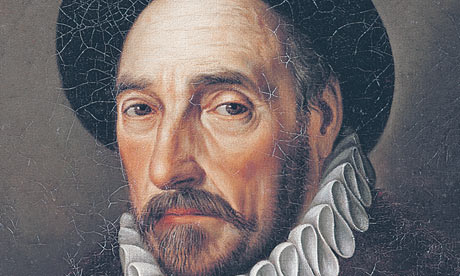
Four hundred years ago, the great French essayist recognised that our inbuilt capacity for sympathy depends on our physical proximity to others. Recent neurological research appears to back him up, argues Saul Frampton.
His house stood on a hill a few miles north of the Dordogne, about 30 miles east of Bordeaux. Its walls overlooked his poultry yard and vegetable garden, the surrounding fields neatly embroidered with vines. At one corner stood a tower containing his library, some sooty paintings, a table and a chair. And standing as a solitary sentinel over all this was an ancient porter, "whose function", admitted Montaigne, "is not so much to defend his door as to offer it with more grace and decorum", making an attack on it "a cowardly and treacherous business . . . it is not shut to anyone that knocks".
Summoned from his books, Montaigne found himself confronted by a neighbour – a man he knew almost "as an ally" – standing "completely terrified" on his doorstep. He had, he said, just been set upon by an enemy about a mile away, and begged to be let in. This Montaigne did – "as I do to everyone" – trying his best to calm and reassure his terrified countryman. But then, rather ominously:
Four or five of his soldiers arrived, with the same bearing and fright, in order to be admitted. And then more and more after them, well-equipped and well-armed, until there were twenty-five or thirty of them, pretending to have the enemy at their heels. This mystery was beginning to arouse my suspicion. I was not ignorant of the sort of age in which I lived, how my house might be envied . . . However . . . I abandoned myself to the most natural and simple course, as I do always, and gave orders for them to be let in.
The "sort of age" in which Montaigne lived was that of the French wars of religion, which stretched from 1562 to 1598. Montaigne's house stood in the middle of the region of the most intense fighting. And he himself, having tried to negotiate between the warring factions, had made enemies on both sides. It was this civil unrest, combined with Montaigne's trusting nature, that the neighbour planned to use to his advantage. Having tricked his way in, he now stood in Montaigne's living room, his men greatly outnumbering Montaigne's, and his objective clearly within his grasp.
But then, just as suddenly as he had embarked on his treacherous undertaking, the neighbour left: "He remounted his horse, his men keeping their eyes on him for some signal he might give them, very astonished to see him leave and abandon his advantage."
When Montaigne sits down to recount these events in his Essays, he says that his neighbour – "for he was not afraid to tell this story" – admitted that it was Montaigne's demeanour that had defeated his stratagem: "He has often said to me since . . . that my face and my frankness wrestled his treachery from him."
Montaigne has a reputation as a sceptical and slightly otherworldly observer of human affairs, surveying life from the isolation of his ivy-covered tower. But in the body of his work – his Essays and the Travel Journal of his trip to Italy – his writing displays an obsessive concern with the power of personal presence in moral life, and a fascination with how people act on, influence and affect each other through their physical being. In this, Montaigne can be seen to reflect a characteristically Renaissance concern with gesture and deportment. Shakespeare, in The Winter's Tale, describes Leontes and Camillo as having "speech in their dumbness, language in their very gesture". And Francis Bacon observes: "As the tongue speaketh to the ear, so the gesture speaketh to the eye."
But in his writings Montaigne seems to go beyond language – and language as metaphor – and begins to explore a deeper, more instinctive conception of our understanding of others, one that has only recently begun to be understood. For the question remains – why did Montaigne's neighbour leave when he had got so close to his supposed objective?
In the early 1990s, a team of neuroscientists at the University of Parma, headed by Giacomo Rizzolatti, discovered the surprising behaviour of certain neurons in the brains of macaque monkeys – they fired not only when the monkeys grasped food, but when they saw the experimenter grasp it. These neurons have since come to be known as "mirror neurons", or "empathy neurons". And in April last year, researchers at UCLA reported the first direct recordings of mirror neurons in humans, a fact that had long been suspected. The neurologist VS Ramachandran predicts that this discovery "will do for psychology what DNA did for biology". Scientists are excited about the huge advances to be made in the understanding of autism, schizophrenia, language, consciousness – indeed, what it is to be human.
These neurological findings not only help us to understand human and animal behaviour, but also to explain and in some ways legitimate whole swaths of the history of human culture. The philosopher David Hume argued that "No quality of human nature is more remarkable, both in itself and in its consequences, than that propensity we have to sympathise with others". And Shakespeare's theatre can be seen as a great neurological hall of mirrors in which characters both reflect and fail to reflect the emotional states of others.
But it is perhaps Montaigne who has considered this realm of human nature most deeply. As he looks into himself he recognises his "aping and imitative character"; "whatever I contemplate, I adopt – a foolish expression, a disagreeable grimace, a ridiculous way of speaking"; "I often usurp the sensations of another person". He sees that such capacities lie behind the power of theatre: how sorrow, anger, hatred, pass though writer, actor and audience, like a chain of magnetised needles, "suspended one from the other", causing us to weep for those we care little about.
For Montaigne, as for contemporary neuroscientists, humans thus have an inbuilt imitative, sympathetic capacity. Moreover, he does not see it as species-dependent (this is backed up by Rizzolatti's discovery). In one of his most famous aphorisms he asks: "When I am playing with my cat, how do I know she is not playing with me?" And he tells how animals themselves form "a certain acquaintance with one another" and greet each other "with joy and demonstrations of goodwill". Then, in a lengthy comment added to the final edition of his essays, he completes the circle from animal-to-human to human-to-human again, concluding that we cannot help but communicate ourselves in some way – that our own physical movements "converse and discourse" – even if it is something to which we are habitually blind:
What of the hands? We request, we promise, call, dismiss, menace, pray, supplicate, deny, refuse, interrogate, admire, count, confess, repent, fear . . . There is not a movement that does not speak, and in a language intelligible without instruction, a language that is common to all. From which it follows, seeing the variety and differences between other languages, that this one ought to be judged the true language of human nature.
The "true language of human nature" may seem an exaggeration, but in fact many argue that language is built on this more ancient capacity for "mirroring" the actions of others. Montaigne says he understands people "by their silence and their smiles, and I perhaps understand them better at the dinner-table than in the council-chamber". He imagines sitting next to Alexander at table, seeing him talking and drinking and "fingering his chess-men". And he notes how the ancients were more attuned to the physicality of others. Hippomachus claimed to be able to tell a good wrestler simply by the way he walked.
At this point one might ask why, if the existence of mirror neurons is such an important factor in our makeup, human history is not a series of pacts, congresses and get-togethers, rather than a chain of wars and massacres? Here, too, Montaigne, has something to tell us. For in many ways the Essays constitute not only an argument for people's capacity for sympathy, but an extended disquisition on how and why it breaks down.
The reasons he gives are diffuse and wide-ranging, and invariably filtered through his experience of 16th-century political and religious life. Above all, he concentrates on a very simple element, one that we tend to overlook in our attempts to arrive at a universal moral code – that our ability to feel sympathy with others is directly proportionate to our proximity to them. So while the Stoics advised that one can prepare oneself for death and bereavement by imagining our children and wives as fragile objects, Montaigne insists: "No wisdom is so highly formed as to be able to imagine a cause of grief so vivid and so complete that it will not be increased by the actual presence, when the eyes and ears have a share in it."
For Montaigne, as for ourselves, the language of emotion is couched in a language of spatial intimacy: we feel "close to", "attached to" and "touched" by others – as Montaigne shows in his essay "Of Friendship", dedicated to the memory of his close friend Etienne de La Boétie. And just as importantly, Montaigne recognises how vice thrives on distance. He quotes Lucretius on the callous pleasure of seeing someone far from shore, struggling against the storm. And in Rome he notes that the brotherhood of "gentlemen and prominent people" that accompany public executions hide themselves behind white linen masks. For Montaigne, human proximity is at the heart of morality. Piety is easily faked: "Its essence is abstract and hidden; its forms easy and ceremonial." But "to hold pleasant and reasonable conversation with oneself and one's family . . . this is rarer and more difficult to achieve". What is interesting is how this link between moral urgency and proximity – so blindingly true – is also something that seems to be hard-wired within us.
In his infamous series of electric-shock experiments carried out at Yale in the 1960s, the psychologist Stanley Milgram exposed people's willingness to obey figures of authority. But in a series of variations on his experiments he also showed how this was affected by distance – subjects were less likely to inflict pain on those close to them, rather than in another room. This might seem obvious, but one still needs to ask why we feel less sympathy with someone distant – it is not as if we somehow doubt the truthfulness of their pain.
It is therefore interesting to note that very recent scientific research suggests that mirror neurons can fire in ways that are dependent on spatial proximity. In a paper co-authored by Rizzolatti and published in Science in 2009, it was shown how different sets of mirror neurons fire depending on whether rhesus monkeys are witnessing actions inside or outside their peripersonal space – that is, within the range of their grasp. Could it be too far-fetched to suggest that something similar happens in our moral responses to others – that they seem more vivid, and more relevant to ourselves, the nearer the other person is, and that this is more than simply a self-interested, "rational" response?
Did Montaigne intuitively know that by inviting his would-be enemy into his living room, and into the moral equivalent of his peripersonal space (or something like it), he was simultaneously invading the moral intimacy of his assailant, and was therefore in a better position to influence him, and precipitate in him a decency similar to his own?
Montaigne's general point is clear: that we have an inbuilt propensity for sympathy and understanding, but that proximity matters. And whilst some could see this as a depressing limit on the jurisdiction of our moral sympathies, we can also see it as something on which to build. Montaigne is no political theorist, but rather a man who wishes to remind us of a fragile but significant fact: that the preservation of our moral awareness relies on the preservation of the nearness between us – something that no number of emails or tweets can ever properly replace. Even the pope is not immune to the affective influence of the nearness of others, as his secretary records during Montaigne's meeting with him in Rome – he is still a man of flesh, and blood, and feet:
The ambassador presenting them then got down on one knee, and turned back the pope's robe from his right foot, on which there is a red slipper with a white cross upon it. Those who are on their knees drag themselves along in this posture up to his foot, and stoop down to the ground to kiss it. Monsieur de Montaigne said he had slightly raised the end of his toe.
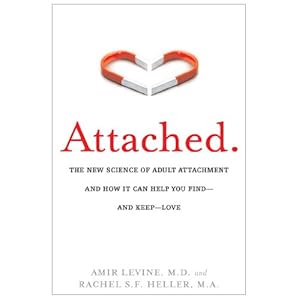
An excerpt from an interview with neuroscientist, psychiatrist and author Amir Levine. The topic - the science behind Attachment and how it can inform our dating, mating and marrying decisions.
Interviewer: Tarcher Executive Editor Sara Carder
This next piece comes from NPR's Tech Nation - a fairly in-depth look at the topic in a lengthy discussion with the authors.
Dr. Moira Gunn chats with Amir Levine and Racher Heller, co-authors of Attached: The New Science of Adult Attachment and How It Can Help You Find--and Keep--Love. In the book the authors explore the biology behind our relationship needs, teach readers how to identify their own and loved ones attachment styles. Mariette DiChristina, editor in chief of Scientific American called this book 'a valuable tool whether you are just entering a relationship with a new partner or-as in my case--even after you've been married 21 years, and had thought you knew everything about your spouse.'
Nobel Laureate Professor Gerald Edelman: with ABC presenter Natasha Mitchell in his office at The Neurosciences Institute in San Diego, California. 2010
Nobel laureate Gerald Edelman rarely gives interviews. He won the Nobel Prize in Physiology/Medicine in 1972 for his work on antibodies, but at 81 he's a true Renaissance man of the brain, heading up what he describes as a 'scientific monastry' in San Diego. He joins Natasha Mitchell to talk consciousness, creativity and 'neural Darwinism'.
The difficulty with a purely materialistic interpretation of life is that, in addition to ignoring an entire dimension of the mind, it does not deal effectively with the problems of this life. A materialistic mind is an unstable mind, for its happiness is built on transient, physical circumstances. Mental disease is as high among the affluent as it is among the poor, which is a clear indication of the limitations of the approach.
Although it is essential to maintain a reasonable material basis on which to live, the emphasis in one's life should be on cultivating the mental and spiritual causes of happiness. The human mind is very powerful and our worldly needs are not so great that they must demand all of our attention, especially in light of the fact that materialistic success solves so few of the many challenges and problems that confront men and women throughout their lives, and it does nothing for them at death.
On the other hand, if one cultivates spiritual qualities such as mental harmony, humility, non-attachment, patience, love, compassion, wisdom and so forth, then one becomes equipped with a strength and intelligence able to deal effectively with the problems of this life; and because the wealth one is amassing is mental rather than material, it will not have to be left behind at death. There is no need to enter the after-death state empty-handed. (31)
--from The Path to Enlightenment by H.H. the Dalai Lama, edited and translated by Glenn H. Mullin, published by Snow Lion Publications
The Path to Enlightenment • Now at 5O% off (Good through February 11th).
From the most recent issue of the APA's Monitor on Psychology, "time capsule" tribute to the woman who got homosexuality delisted as a mental illness and removed from the Diagnostic and Statistical Manual III of the American Psychiatric Association.
Evelyn Hooker’s groundbreaking research exploded the notion that homosexuality was a mental illness, ultimately removing it from the DSM.
By Katharine S. Milar February 2011, Vol 42, No. 2 Print version: page 24
In 1953, Evelyn Hooker, PhD, applied for a National Institute of Mental Health (NIMH) grant to conduct research on “normal homosexuals.” During this period of American history, Sen. Joseph McCarthy was seeking out communists wherever he suspected they might be lurking; homosexual acts were a crime; bomb shelters were springing up in backyards; and the term “normal” homosexual was thought to be an oxymoron. A variety of medical and psychological treatments to “cure” homosexuality were employed, including ice pick lobotomies, electroshock, chemical castration with hormonal treatment or aversive conditioning. Gay parties were raided by the police, particularly in election years when a crackdown on “sexual perversion” was seen as a positive step in the fight on crime.
Hooker’s proposal to study gay men began as a result of a close friendship she developed with a former University of California, Los Angeles, student, Sam From, who introduced her to the gay subculture. She became one of the heterosexuals “in the know.” It was From who told her it was her “scientific duty” to study homosexuals and promised her access to all the subjects she needed. Initially she demurred but eventually, with the encouragement of From and her colleague Bruno Klopfer, Hooker began an investigation that would ultimately result in the removal of homosexuality as a form of psychopathology from the Diagnostic and Statistical Manual III of the American Psychiatric Association. This research was the culmination of Hooker’s lifelong interest in social justice.
Humble beginnings
Evelyn Hooker was born Evelyn Gentry Sept. 2, 1907 in North Platte, Neb., the sixth of nine children. Photos of her as a school child show that she towered above most of her classmates; she was nearly 6 feet tall as an adult. Her family was quite poor, and neither parent was educated past fourth grade. Her adolescence was colored by these social stigmata; she attributed her study of “an oppressed, deprived people,” (homosexual men) to her early experience (Garnets & Kimmel, 2003, p. 36). After earning her bachelor’s and master’s degrees at the University of Colorado with Karl Muenzinger, she aspired to earn a doctorate at Yale, but the department chair at Colorado refused to recommend a woman to his alma mater. Instead, she completed her doctorate in experimental psychology at Johns Hopkins University in 1932, studying vicarious trial-and-error learning in rats. A fellowship in 1937–38 took her to Berlin to pursue her increasing interest in clinical psychology at the Institute for Psychotherapy. She lived with a Jewish family and witnessed, with dismay, Hitler’s rise to power. Much later, after her return to the United States, she learned that all members of her host family perished in the concentration camps.
A trip to the Soviet Union at the end of her fellowship year exposed her to another totalitarian regime and caused problems for her after she returned to a tenure track position at Whittier College, in Whittier, Calif. Suspected of holding subversive political views, she lost her position. She appealed to her graduate mentor at Johns Hopkins, Knight Dunlap, who was then chair of the department at UCLA, but he could only offer her a research associate position in the psychology department, telling Hooker that the three women in the department were “cordially disliked” and he could not appoint another woman. She was instead appointed to the UCLA Extension division, and it was here that she met Sam From as a student in her introductory psychology course.
Stimulated by her experience with various forms of discrimination and her friendship with From, Hooker began interviewing gay men who were friends or friends of friends. In the middle of her investigations, her husband, Donn Caldwell, an alcoholic, divorced her, saying he didn’t want to destroy her as he was destroying himself. In emotional turmoil, Hooker left her research and California for a time. In 1948, she returned to her job at UCLA and rented a small house from a distinguished professor of English Edward Niles Hooker. They married in 1951.
Back in California, now happily married and without heavy teaching commitments, Evelyn Hooker returned to her research on gay men. She decided that her previous interviews were not useful; they had not been planned carefully enough. So, she decided to apply for a grant from NIMH. The chief of the grants division, John Eberhart, flew out to interview her to see who this woman was who claimed she had access to any number of gay men who were neither psychiatric patients nor prisoners. He told her, given the climate of McCarthyism, everyone was being investigated and if she got the grant, “you won’t know why and we won’t know why” (1993, p. 450). (Eberhart later told Hooker that her project was derisively referred to as “The Fairy Project” by some federal officials in Washington.) Funding was granted and Hooker embarked on her study.
She recruited 30 exclusively homosexual and 30 exclusively heterosexual men, matched for age, IQ scores and education. With the aid of the Mattachine Society, one of the first gay-rights organizations, access to homosexuals was no problem, but finding heterosexual men who would agree to participate was very difficult. She could not conduct the study on the UCLA campus in spite of pressure to do so. The nature of the research required strict confidentiality, so she used a small study on her spacious Los Angeles estate on Saltair Avenue. She approached firemen, policemen, maintenance workers, any heterosexual men she could persuade to participate. Her husband said, “No man is safe on Saltair Avenue.”
Each participant took three projective tests: The Rorschach, the Make a Picture Story Test (MAPS) and the Thematic Apperception Test (TAT). After scoring the tests herself, she then gave the test protocols with all identifying information removed to experts in those tests: Bruno Klopfer for the Rorschach, Edward Shneidman, the inventor of MAPS, and Mortimer Meyer for the TAT. An adjustment rating was assigned to each participant based on the test scores, and then the experts were given paired Rorschach protocols, one from a gay participant, one from a straight participant and asked to identify the homosexual. As with heterosexuals, homosexuals’ adjustment varied from superior to disturbed. Two-thirds of the research participants in each group were judged as having average or better adjustment. Further, experts were unable to identify the gay participant’s protocol from the matched pairs at better than chance accuracy. There was no association between homosexuality and psychological maladjustment. One of her experts, who was sure he could distinguish the groups, asked for another chance to review the protocols, but was no more successful the second time than the first.
Hooker reported that one of the most exciting days of her life was the day she presented the results of her research at APA’s 1956 Annual Convention in Chicago. This ground-breaking research and the work that followed on the homosexual subculture led to Hooker’s award in 1992 for Distinguished Contribution to Psychology in the Public Interest from APA. In her response to this honor, she shared the award with the gay and lesbian community and expressed pleasure that her research and her “long advocacy of a scientific view of homosexuality” could make their lives and the lives of their families better. She closed her address by reading from a letter she had received from a gay man thanking her for her work and saying, “I think you did it because you knew what love was when you saw it, and you knew that gay love was like all other love.”
~ Katharine S. Milar, PhD, is a professor of psychology at Earlham College and historical editor for “Time Capsule.”
Garnets, L.D., & Kimmel, D. (2003). What a light it shed: The life of Evelyn Hooker. In L.D. Garnets & D.C. Kimmel (Eds.) Perspectives on gay, lesbian and bisexual experiences (pp. 31–49). New York: Columbia University Press.
Harrison, J. (Producer), & Schmiechen, R. (Director). (1991). Changing Our Minds, The Story of Dr. Evelyn Hooker. [film]. Distributed by Frameline. http://www.frameline.org
Hooker, E. (1993). Reflections of a 40-year exploration: A scientific view on homosexuality. American Psychologist, 48, 450–453.
Minton, H.L. (2002). Departing from deviance: A history of homosexual rights and emancipatory science in America. Chicago, IL: University of Chicago Press.
I have come to really look forward to the excellent Buddhism and Brain Science work that comes from the Upaya Zen Center. They offer the annual Zen Brain conference, which I WILL one day attend, and which features important people in their respective fields as presenters. This year is no different.
Here is the description from the first installment:
Buddhist philosophy and meditation practice distinguish between selflessness and fundamental mind, on the one hand, and mental states conditioned by the cognitive and affective distortion of self, on the other hand. In recent years, neuroscience has contributed new insights into the effects of meditation practice on the brain and behavior, as well as insights into how wholesome and unwholesome mental states and traits arise from and affect the workings of the brain and body.
Neuroscience also illuminates the brain systems underlying various modes of consciousness across the sleep-wake cycle, including waking states of perception, emotion, and memory, as well as dreaming, lucid dreaming, and deep sleep. In this retreat, prominent scientists and scholars will explore the koan of the basic or original nature of mind from the perspectives of Buddhist theory and practice, neuroscience, and philosophy of mind.
Special consideration will be given to the detailed conceptions of mind and consciousness in the Buddhist philosophical schools known as Yogacara/Cittamatra (Yoga-Practice/Mind-Only) and Madhyamaka (Middle Way), which also support and inform Zen. The potential cross-fertilization between these schools and contemplative neuroscience research will be emphasized at this retreat. Talks, discussions, and explorations with participants are embedded within Zazen practice throughout each day.
The 7 part series Zen Brain: Consciousness and the Fundamental Nature of Mind is now published. You can access the desired part of the series by clicking on its link below:
Cool episode - I actually met this guy a year or two back at a lecture here in Tucson. One of my former clients studied with him and now is the administrator for a group of sleep clinics.
Rubin Naiman, PhD is an internationally recognized leader in integrative sleep and dream medicine. He is director of Circadian Health Associates, an organization that provides information, goods and services in support of sleep health.
Dr. Naiman completed his undergraduate studies at Rutgers University and the University of Arizona where he received a B.A. in Anthropology with honors and high distinction. He completed his M.S. in Rehabilitation Counseling also at the University of Arizona, and earned a Ph.D. in Clinical Psychology at Alliant University (formerly U.S.I.U. and C.S.P.P.) in San Diego. Dr. Naiman has maintained a private psychology practice for more than twenty-five years and has worked as a consultant to businesses and organizations. For most of the past 20 years, he has focused on sleep and dream health services and products.
For more than a decade, Dr. Naiman served as the sleep and dream specialist at Canyon Ranch Health Resort in Tucson, where he founded the first formal sleep center at a spa. Subsequently, he served as director of sleep programs for Miraval Resort. Dr. Naiman has worked with a diverse clientele ranging from Fortune 500 CEOs to world class athletes, from homemakers to statesmen and entertainers. He has also provided consultation to organizations ranging from world class resorts to top rock and roll bands. Over the past 25 years Dr. Naiman has taught at a number of colleges and universities. He is a member of the American Psychological Association, the American Academy of Sleep Medicine, the Institute of Noetic Sciences, and the International Association for the Study of Dreams.
Dr. Naiman serves as the sleep specialist and clinical assistant professor of medicine at the University of Arizona’s Center for Integrative Medicine, directed by Dr. Andrew Weil. He is the author of groundbreaking works including Healing Night, Healthy Sleep (with Dr. Andrew Weil), The Sleep Advisor, ToSleep ToNight and The Yoga of Sleep.
THERE ARE MANY WAYS TO GET INVOLVED IN ENDING CHILDHOOD HUNGER
Share Our Strength prides itself on its renowned platforms to end childhood hunger for the nearly 17 million American children facing this invisible hunger.
Participate in One of Our Events or Programs
Share Our Strength’s Taste of the Nation launches with a sold out event in DC! Join the nation’s hottest chefs and mixologists at more than 40 Taste of the Nation events across the country. Events are volunteer-run and 100% of ticket sales help fight childhood hunger in America. For more information or to buy a ticket .
Share Our Strength’s Great American Bake Sale, presented by Domino Sugar and C&H, is a national campaign that mobilizes Americans to end childhood hunger by holding bake sales in their communities. This year’s campaign runs until July 31. Join us and hold a bake sale.
Share Our Strength’s A Tasteful Pursuit® is a national touring dinner series that features some of the nation’s best chefs who take their talents to the nation’s top culinary cities to create delicious, multi-course dinners paired with ultra-premium wines. Nearly a dozen dinners this year. All benefit Share Our Strength’s work to end childhood hunger in America. Attend an event.
Share Our Strength’s Great American Dine Out is a new national campaign that mobilizes thousands of restaurants and millions of consumers to dine out and help fight childhood hunger. Participate in the Great American Dine Out, September 20-26, 2009, and help end childhood hunger in America.
Share Our Strength’s Cooking Matters™ is a nutrition education program that teaches low-income families how to get the most nutrition out of a limited budget. Volunteer.
Make a Donation
A little show of strength from your checkbook will go a long way for America’s nearly 17 million children who face hunger. Donate Now.
Food drives are essential sources of food for community food banks. They rely heavily on food donations to distribute much needed food to struggling people. Learn more about how you can hold a food drive, but remember to take pictures and then tell us about your experiences via email or on facebook.
Become a Sponsor
We’ve earned the reputation for being one of America’s most effective nonprofits and won acclaim for our enterprising corporate partnerships. If you’re interested becoming a corporate sponsor with Share Our Strength and our efforts to end childhood hunger, learn more.
Involve your organization
Workplaces, social and professional groups, parent groups, places of worship, charities and more can hold a Great American Bake Sale, buy tickets to our culinary events or donate services, product or dollars. If you’re a restaurant, we have even more ways you can help.



 Play
Play