Thursday, May 24, 2012

New Blog - NeuroSpirit: The neuropsychology of spirituality


This is a new blog at the Psychology Today site - and it looks like it will be interesting. Here is some information about the man behind the blog:

Brick Johnstone, Ph.D., A.B.P.P., is a professor of Health Psychology at the University of Missouri. Johnstone received his B.S. in Psychology/Art History from Duke University and his Ph.D. in Clinical Psychology from the University of Georgia. He complete an internship and neuropsychology fellowship at the University of Washington. His research interests include the neuropsychology of spiritual experiences; spiritual psychoneuroimmunological models of health; and the vocational outcomes of individuals suffering from traumatic brain injury and disabilities.

His book is Rehabilitation of Neuropsychological Disorders: A Practical Guide for Rehabilitation Professionals (with Henry H. Stonnington), from Psychology Press.

A Human or Divine Experience? 

Welcome to the first blog for NeuroSpirit, a forum for discussion for those of us interested in determining how humans experience the divine. Specifically, our interest is in determining what happens in the brain during different spiritual experiences.

The last decade has seen a tremendous growth in the neuroscientific study of spirituality, but we still have no clear explanation for what is happening in the brain during such experiences. Determining the “processes” by which we can feel connected to the divine (however it is conceptualized) may help us better understand the nature of transcendence, and how we can more readily and easily connect with all things beyond the self.

First things first---there are several issues that this blog will NOT discuss nor intend to infer.
  • There is no intention to promote one religion over another.
  • There is no intention to discuss the negative aspects of religions (I’ll leave that to Daniel Dennett and Christopher Hitchens). There is too much time and energy wasted on comparing different religions. We will focus on the wonderful similarities in the spiritual connection experienced by individuals of all faith traditions (or lack thereof).
  • There is no intention to minimize the importance of religious practices.
  • There is no intention to suggest that there is one spot in the brain that makes us believe in a god.
  • There is no intention to suggest that one must experience a brain injury or a brain disorder in order to have spiritual experiences.
It is also important to make a distinction between spirituality and religion. For the purposes of this blog, religion is conceptualized as a set of formalized behaviors (e.g., prayers, meditations, rituals, etc.) and beliefs (e.g., adherence to a set of creeds necessary for salvation, etc.) associated with distinct faith traditions. In contrast, spirituality is defined as the emotional connection individuals experience with whatever they consider to be divine. This blog will focus on the similar neuropsychological processes that provide the foundation of spiritual experiences reported by all individuals when they connect with whatever they view as sacred or divine. This may be one divinity for the Abrahamic traditions (i.e., God, Allah, Jehovah), multiple divinities for polytheistic traditions (e.g., Vishnu, Brahman, etc.), the universe/Void for mystical traditions (e.g., Buddhism), or nature/the universe for atheists. I hope to stimulate your thoughts regarding what is it about humans that allows us to experience spiritual transcendence. We (i.e., interdisciplinary faculty at the University of Missouri) believe we have identified a neuropsychological process that helps explain how this sense of spiritual connection occurs.

Simply, we argue that spiritual experiences are based in the neuropsychological process of “selflessness.” Psychological research and neuropsychological case studies (i.e., related to persons with brain injuries) clearly indicate that certain parts of our brain are related to defining and focusing on the “self.” The less individuals focus on the self, the more capable they are of focusing on things beyond the self (which is the basic definition of transcendence).

In a nutshell, the right parietal lobe (RPL) of the brain is associated with “self-orientation.” If you look at a picture of yourself, the RPL becomes active. If you injure your right parietal lobe, you have “disorders of the self” such as ignoring the left side of space (in extreme cases individuals deny that their left arm/leg is theirs). The bottom line---if you injure your RPL you will focus less on yourself, or expressed another way, you become more “selfless.”

All of us have experienced a decreased focus on ourselves (or increased selflessness) at times in our lives. For example, have you ever become lost in reading a book, watching a movie, or listening to a piece of music and feel the need to orient yourself after it is finished (for me it’s Zeppelin’s Stairway to Heaven, Nugent’s Stranglehold, or Barber’s Adagio for Strings). Have you ever become lost (i.e., less focused on yourself) when watching your child in a play or getting his/her first at-bat in a t-ball league? Have you ever become lost when falling in love for the first time, totally absorbed in your lover? Or, have you ever become lost in prayer or meditation during which you feel a sense of connection with your god or universe, feeling at one with everything? If so, there’s a good chance you minimized your focus on your “self.” Buddhist monks and Franciscan nuns have been shown to minimize RPL functioning during meditation and prayer, respectively. Our research, and other research with tumor patients in Italy, suggests that injury to the RPL is also associated with increased reports of transcendence. Taken together, minimizing a focus on the self (through religious practices or injuries/disorders) can be associated with increased spiritual transcendence.

With this background, it is hoped that you will open your mind to new ways of understanding the manner in which we connect with things beyond the self. Spirituality is likely a complex, multi-dimensional experience related to many neuropsychological abilities and expressed according to different contexts and cultures, and hopefully together we can better understand the neuropsychological basis of these experiences.

Stayed tuned, upcoming blogs will discuss our MU spirituality research with persons with brain injury, neuroradiological studies of advanced religious practitioners, different religious texts and their writings regarding “selflessness,” and the manner by which culture influences the way in which these selfless experiences are interpreted (i.e., why do Buddhist monks have mystical experiences and Franciscan nuns have numinous experiences, although their brain activity is the same?).

Professor Marcus Munafo - Do I Look Happy to You?


Professor Marcus Munafo speaks at Authors at Google about recognition and interpretation of emotions in faces. Dr. Munafo is Professor of Biological Psychology in the School of Experimental Psychology at the University of Bristol (UK). Most of his research has been in the area of addiction and its association with the dopamine systems in the brain.


His books include Key Concepts in Health Psychology and Cognition and Addiction, among others.

Do I Look Happy to You?


Wednesday, May 23, 2012

Bruce Hood's Essentialism - The Self Illusion

Buddhists have been telling us that self is an illusion for around 2,500 years. Over the last 30 years or so, neuroscience has come to agreement with that view, although neuroscience has made this realization with a top-down approach (objective measurements) and the Buddha employed a bottom-up approach (subjective experience).

Thomas Metzinger - The Ego Tunnel: The Science of the Mind and the Myth of the Self and Being No One: The Self-Model Theory of Subjectivity - has been one of the most articulate authors in this realm.

 Bruce Hood has also done some good work, and his new book - The Self Illusion: How the Social Brain Creates Identity - has received a featured discussion on Edge and generated an interview with Sam Harris. I am sure there will be more reviews in the coming weeks.

Let's begin with the opening of Sam Harris's article/interview with Hood.

The Illusion of the Self

An Interview with Bruce Hood

bruce hood

Bruce Hood is currently the Director of the Bristol Cognitive Development Centre at the University of Bristol. He has been a research fellow at Cambridge University and University College London, a visiting scientist at MIT, and a faculty professor at Harvard. He has been awarded an Alfred Sloan Fellowship in neuroscience, the Young Investigator Award from the International Society of Infancy Researchers, the Robert Fantz Memorial Award and voted a Fellow by the Association for Psychological Science. He is the author of several books, including SuperSense: Why We Believe the Unbelievable. This year he was selected as the 2011 Royal Institution Christmas Lecturer—to give three lectures broadcast by the BBC—the most prestigious appointment for the public engagement of science in the UK. Bruce was kind enough to answer a few questions about his new book, The Self Illusion: How the Social Brain Creates Identity.


* * * 
In what sense is the self an illusion?
For me, an illusion is a subjective experience that is not what it seems. Illusions are experiences in the mind, but they are not out there in nature. Rather, they are events generated by the brain. Most of us have an experience of a self. I certainly have one, and I do not doubt that others do as well – an autonomous individual with a coherent identity and sense of free will. But that experience is an illusion – it does not exist independently of the person having the experience, and it is certainly not what it seems. That’s not to say that the illusion is pointless. Experiencing a self illusion may have tangible functional benefits in the way we think and act, but that does not mean that it exists as an entity.

If the self is not what it seems, then what is it?
For most of us, the sense of our self is as an integrated individual inhabiting a body. I think it is helpful to distinguish between the two ways of thinking about the self that William James talked about. There is conscious awareness of the present moment that he called the “I,” but there is also a self that reflects upon who we are in terms of our history, our current activities and our future plans. James called this aspect of the self, “me” which most of us would recognize as our personal identity—who we think we are. However, I think that both the “I” and the “me” are actually ever-changing narratives generated by our brain to provide a coherent framework to organize the output of all the factors that contribute to our thoughts and behaviors.

I think it helps to compare the experience of self to subjective contours – illusions such as the Kanizsa pattern where you see an invisible shape that is really defined entirely by the surrounding context. People understand that it is a trick of the mind but what they may not appreciate is that the brain is actually generating the neural activation as if the illusory shape was really there. In other words, the brain is hallucinating the experience. There are now many studies revealing that illusions generate brain activity as if they existed. They are not real but the brain treats them as if they were. 

Go read the whole interview.

A few days ago, Edge posted a "conversation" with Bruce Hood centered on the ideas in his new book.

ESSENTIALISM

A Conversation with Bruce Hood [5.17.12]
 
This has led me to start thinking more about what I do in terms of its tangible application in the real world? That's the external influences that have been shaping the sorts of questions I'm starting to ask now.

There's been a growing awareness that there have been a lot of problems with the way that psychological research has been going on in the past, very much lab-based type of work. There has been a general issue in the experimental method, what you typically do is you hone in on a question, and you try to refine that question by removing all the extraneous variables to try and make it as clean as possible. But then that does raise the question, to what extent? And does what you eventually find actually have real relevance or validity to the external world? Because in many senses, the complexity of the external world might be part of the problem that the brain is trying to solve.

A number of us have been getting increasingly concerned that the theories that have been derived by purely experimental methods may not necessarily translate into the real world as well. There's a combination of this external pressure to come up with research which is seen to have application, but also a growing concern that maybe some of the findings wouldn’t necessarily translate. That's the kind of major forces that have been changing the way that I do things.

I've also got increasingly interested in public communication and education, engagement, transfer of knowledge, and so there's more of that on my plate these days. I did the Christmas lectures in 2011. That was a great opportunity. I've actually changed my job title, I'm Professor of Developmental Psychology in Society. I see myself continuing with my research career, but trying to find opportunities to take that out to the general public.

To give you a tangible example, one of the things that we study in my laboratory is how children navigate or build up spatial maps of the world. They wander around our laboratory and they try to find targets, which are embedded in the floor as LED switches. It's a very useful experimental measure of foraging. How do you keep track of where you've been? How do you optimize your search behavior? That's led to some interesting ideas and we could have stayed just pursuing that, but now we're starting to say, well, can we see whether those findings actually are relevant to the real world? We're taking those paradigms and testing them out in the local science museum. That provides not only an opportunity to see whether it's relevant in the real world, but also an opportunity to engage the public. It's killing two birds with one stone. It's something that the public can actually do and it seems of importance, contribution, and also trying something that is a little bit more real world. I'm not suggesting that this is a good absolute model for foraging in the forest or the savannah, but it is a way of taking the work that has, up to this point in time, been done on laptops and then trying to make it closer to what a real world situation would be.

The environments we have been looking at are at the science museums and these are dotted around the country, where they're open to the general public, and it's usually a motivated audience that come in to try and find out what's going on in science and there's demonstrations. We've seen this as an opportunity to look at some of the findings that we have in environments that are not within the laboratory. So it's not entirely what you would regard as a field study as such because these are very unusual environments. But it is closer to what would be, certainly a lot further away from the laboratory settings that most work on intentional search has been done. There are other researchers who actually do experiments in supermarkets and different environments. This is the field of ergonomics where they're basically trying to find the best way of solving tasks in a work environment, occupational type of way. We're not really attempting to do that. I'm just finding this, we're just looking for more opportunities to engage the public in a kind of activity which has a credible experimental basis.

This is a new venture for us. This is what we're now starting to turn towards. Up to now I've been doing basically lab-based work. This is the new point in the transition I'm going to make which is to increasingly look for opportunities to do things with the general public. As yet, it's early days. It's driven, as I say, partly by motivation to be seen to be relevant, partly for the fact it's actually cheaper to do research in the real world in terms of getting the numbers through. These are all kind of factors.
The lab has changed, as I said, because the financial situation has changed in the past five years and our field has been hit heavily, I feel, in many ways. Behavioral science and psychology used to be funded by at least seven of the research councils. They've all retracted and there's really only one research council now that funds psychological research. There's greater competition. So that means the labs are getting smaller. We're not taking on as many graduate students, and I think that's probably the right thing because the climate at the moment isn't right. I think it's probably wrong to train our people to a high standard for situations where there aren't actually jobs for them. So that's one issue.

We are doing much more consultancy work. We're doing much more applied applications of the principles that we've been using, the methodologies that we use to study young children, we've been using these in sort of commercial situations. For example, we're just beginning work with Aardman, the animation company. They want questions answered about what children, preschool children and young children, like and find most memorable about some of their projects. Those are empirical questions that you can use our methodologies to unravel. That's an example of an application. The work in the museums, as I say, is the specific example of looking at foraging.

How it's changed the lab? The training that I'm now giving to the graduate students and the post docs increasingly involves them doing public engagement activity, and that's actually what everyone's asking for. The grant funding bodies, the universities now, as we've seen a change in the funding situation, we're now in this country charging fees, quite substantial fees, and so we're entering into a very competitive situation because all the universities are trying to compete with each other to get the best students. We now have to market ourselves, so there are more of these academics doing videos and snippets and stuff on the web.

What would I do with a million dollar Chair? Well, my big thing is essentialism. Its origins probably can be traced to the notion of ideal forms, which is a platonic idea. I discovered essentialism basically by reading Susan Gelman's work, and essentialism has an experimental tradition, not that old by the way, in naïve biology. The way that children reason about the world, there's a lot of good evidence to suggest that there are domains of knowledge: physical, reasoning about the physical world; reasoning about the living world, the biological one; and reasoning about the psychological world. Those three domains are the physics, the biology and the psychology, and are deemed to cover the majority of what we do when we're thinking about concepts.

In the biological world, people like Gelman have argued that children infer an invisible dimension. When they're making categorical decisions about why dogs are different from cats, for example, they go over and beyond the outward appearances, and infer that there must be some internal property that makes a dog a dog. Irrespective of changing its outward appearance or if you raise it with a litter of kittens, it will still turn out and grow up into a dog. So they kind of understand there's something over and beyond the physical aspect of it. Well, there is, it's DNA, but no four year old knows explicitly about DNA. But they do have this intuition that there is this essential property. Essentialism in the research field, in developmental psychology, started off in biology. But I was interested in essentialism basically almost contaminating to different domains for objects, the way that we treat objects as irreplaceable. This is the issue of authenticity. The authenticity of objects is starting to get into the boundary of what, of an essential property, makes something irreplaceable.
This is work I've done with Paul Bloom. We initially started looking at sentimental objects, the emergence of this bizarre behavior that you find in children in the West. They form these emotional attachments to blankets and teddy bears and it initially starts off as an associative learning type of situation where they need to self-soothe, because in the West we typically separate children, for sleeping purposes, between one and two years of age. In the Far East they don't, they keep children well into middle childhood, so they don't have as much attachment object behavior. It's common, about three out of four children start off with this sort of attachment to particular objects and then it dissipates and disappears.

What Paul and I are interested in is whether or not it was the physical properties of the object or if there was something about the identity or the authenticity of the object which is important. We embarked on a series of studies where we convinced children we had a duplicating machine, and basically we used conjuring tricks to convince the child that we could duplicate any physical object. We have these boxes which looked very scientific, with wires and lights, and we place an object in one, and activate it, and after a few seconds the other box would appear to start up by itself and you open it up and you see you've got two identical objects. The child spontaneously said, "Oh, it's like a copying machine." It's like a photocopier for objects, if you like. Once they're in the mindset this thing can copy, we then test what you can get away with. They're quite happy to have their objects, their toys copied, but when it comes to a sentimental object like a blanket or a teddy bear, then they're much more resistant to accepting the duplicate. Now, of course, we can't actually copy the things, but they think that when the machine starts up there will be another duplicated object. That's how we test their intuitions and inferences on it.

On the basis of that, we've started to, just completed a set of studies looking at copying real things, living things, like hamsters. Because the question is, would a child think that a machine that duplicates objects could duplicate minds? We're getting into the issue about minds being separate or a product of bodies. The work is still under review, so I can't say too much about it, but you can see the obvious link to the philosophical issues about mind-body dualism.

Also, we're getting into the territory of authenticity and identity. There are some fairly old philosophical issues about what confers identity and uniqueness, and these are the principles, quiddity and haecceity. I hadn't even heard of these issues until I started to research into it, and it turns out these obscure terms come from the philosopher Duns Scotus. Quiddity is the invisible properties, the essence shared by members of a group, so that would be the 'dogginess' of all dogs. But the haecceity is the unique property of the individual, so that would be Fido's haecceity or Fido's essence, which makes Fido distinct to another dog, for example.

These are not real properties. These are psychological constructs, and I think the reason that people generate these constructs is that when they invest some emotional time or effort into an object, or it has some significance towards them, then they imbue it with this property, which makes it irreplaceable, you can't duplicate it. In effect, it becomes sacred, and so I think that sacred objects, which exist across various religions, also have this notion of them being unique. You can't duplicate and you can't corrupt them. They have this property that is indivisible. I think essentialism is pervasive in our attitude towards objects, but it's also there in our attitudes to valuation.

Paul has done more work on this about works of art, what makes a masterpiece unique, and it turns out that our intuitions often guided by this sense that there's an additional property over and beyond the actual sort of physical aspects of works of art. But I think you can also see it operating in other things.

For example, a lot of marketing, when you're selling products, whether through design or just by sheer experience, what I think a lot of advertisers have realized is that certain properties, if you emphasize the essential quality of the object, this confers this notion of quality. For example, Coors beer, from what I understand, was going to relocate their brewery, but then there was this concern that they wouldn't have the original source of the water. If you start to think about a lot of luxury products, there's this notion of craftsmanship, this kind of, something of the maker going into the product. So I also think this is a principle or way of thinking which affects and influences the way we think about genetic modification, for example. Tinkering with the essence or the natural properties of things, people don't like the idea of it. It just seems to violate what are core integrity principles.

I see essentialism everywhere I look now. It just seems to be pervasive. It's one of these ways of seeing the world. People say, oh, it might just be association, but association strikes me as inadequate as an explanation as to why some things seem to have this property. Of course, Paul Rozin'’s work on moral contamination and contagion, again, I think speaks to this idea there are things which you can contaminate with evil, for example, just by wearing a killer's cardigan, things like that. So as I say, I see it everywhere. I'm hoping to continue that kind of work. So that's an example of a philosophical kind of question, or certainly a philosophical domain that I think does lend itself to the empirical studies and, who knows, that might actually turn out to have some application as far as marketers are concerned.

There are actual real colleagues, Susan Gelman and Paul Bloom and George Newman is the psychologist who's now in the Economics School at Yale. We're planning on doing some research looking at advertising and looking at what aspects of it conform to this essentialist principle. I've done some work with my graduate students showing that children have intuitions about ownership of objects. If somebody has put some craftsmanship into it, for example, if you've got some clay and I've got some clay and I take your clay and make something, and if I said, "Who owns it?" an adult would try and probably evaluate that ownership on the basis of how much effort went into it, and also who owned the original material. But young children spontaneously say, well, irrespective of who owned the material, it's actually the person who changed and transformed it. The ownership transfers to the person of the craftsmanship.

That's interesting because that gets to whole questions about intellectual property. Who had the original idea? Is there any such thing as an original idea? To what extent does modification of the idea transfer the ownership of the intellectual property? So, again, there are all these kinds of issues that are, we have intuitions about, and some of them are culturally defined, but I think there's a developmental process. I think that children start off with some basic ideas that then become modified and changed through culture. The detractors of the whole essentialist position are likely to be those from the associative schools who argue that a lot of behaviors can be explained away by simple mechanisms of learning and reinforcement, but that tends to be the older school. Nobody comes to mind about that.
Read the whole post - there is much more.

The Dalai Lama - Compassion Without Borders: Science, Peace, Ethics

Here are two videos from The Dalai Lama's visit to the University of San Diego in April of 2012 - this was part of his tour on Compassion Without Borders: Science, Peace, Ethics.


His Holiness the 14th Dalai Lama at the University of San Diego


During his visit to San Diego, His Holiness spoke at the University of San Diego on "Cultivating Peace and Justice" as part of the Joan B. Kroc Distinguished Lecture Series. Over 4,700 students, faculty and community members people were in attendance to hear him speak at the Jenny Craig Pavilion on April 18, 2012. The event was sponsored by the Joan B. Kroc Institute for Peace and Justice. His Holiness was also presented with the University of San Diego's Medal of Peace.

Cultivating Peace and Justice


This is the extended version of His Holiness the Dalai Lama's talk at the University of San Diego, as part of the Compassion Without Borders tour of April, 2012.

Tuesday, May 22, 2012

Dennis Palumbo - Dealing with Your "Inner Critic"


This is a rather shallow article on working with the inner critic, but it does offer some useful advice so I thought I'd share it here. At one point he mentions, briefly, having some self-compassion around this issue, which is really central to the ability to harmonize with the inner critic. The key is that we also must feel calmness, curiosity, clarity, compassion, confidence, creativity, courage, and connectedness with and toward that part of ourselves.

If we can befriend it instead of doing battle with it, we discover that it is there to help us, and it has always had that single goal in mind. When we were children (which is when these types of parts develop) it may have been the best option for feeling safe, to anticipate criticism before it comes from the parent and act accordingly. But as adults, these behaviors and beliefs limit our options, inhibit our creativity and joy, and are no longer useful in our lives in quite the same way.

When we befriend the critic, and learn about its needs and concerns, we may over time free it up to assume a more supportive role in our lives - in the end, it only wants our safety and happiness.

Self-criticism is a two-edged sword


Among the majority of my creative patients---TV and film writers, directors, actors, etc.---a primary concern is the struggle against their “inner critic.” By that I mean the persistent, sometimes harsh and almost always shaming “voice” that belittles or invalidates their work.

Indeed, the term “inner critic” is such a well-known concept in our culture that millions of dollars are spent on books, DVD’s, online classes and seminars promising to silence---or even banish altogether---this punishing element of most people’s inner world.

There’re two problems with this approach: first, the goal of killing off the self-critical, judgmental part of your psyche confirms the idea that there’s something wrong with you that needs to be fixed. It suggests that there’s a perfectable “you” in the future who’s unencumbered by such conflicts.

Not to mention my second objection, which is that it isn’t even possible.

Unquestionably, there’s nothing more painful about the creative process than struggling against feelings of self-doubt, even self-loathing. I’ve worked with patients who literally hate everything they create---it’s not good enough, funny enough, smart enough, commercial enough. Even those with a more balanced view of their output acknowledge the stress of continually having to keep deeply critical inner voices at bay just to get through the damn thing.

"Killing off” your inner critic won’t work; it isn’t even desirable. It’s part of who you are. A necessary part. As much as your enthusiasm, your work habits, your loves and hates, your joys and regrets. Because, like these other aspects of your emotional life, an inner critic is a two-edged sword.
Think of it this way: the same inner critic that judges our work so severely provides us with the ability to discern our likes and dislikes, to form opinions, to make decisions. It reinforces the faith in our subjective experience that allows us to choose this rather than that.

We need a sense of judgment to navigate in the world. The amount and intensity of that judgment, as with most things, lies along a continuum. Hopefully, we possess neither too much, nor too little.
Imagine waiting to cross the street at a busy intersection: With too little judgment, you might ignore the “Don’t Walk” sign and get run over; with too much judgment, you stand frozen even when the sign reads “Walk,” and therefore never get anywhere.

What I’m trying to suggest here is that we don’t judge our having an inner judge too harshly. Doing creative work in the face of a persistent inner critic is draining enough. To compound the problem by blaming yourself for being engaged in the struggle is ridiculous.

Remember, too, what I said about your inner critic being a two-edged sword. Because if we can accept with self-compassion this troubling aspect of ourselves, we might even learn something.
I’m thinking of an example from my own experience as a patient in therapy. This was many years ago, when I was struggling with some very painful issues, specifically a rather profound fear of failure that seemed unaffected by my outward success. The sessions were so gut-wrenching, I thought about quitting therapy.

Yet I kept coming, week after week, much to my own surprise. When I mentioned this to my therapist, he suggested that while the issues underlying my fear of failure were indeed painful and difficult, it was this same fear of failure that kept me coming back to therapy every week. In other words, the same thing that was causing the problem was providing the determination to keep slugging away at it. I just wouldn’t quit.

That’s when I realized what a two-edged sword my particular problem was. Like the ancient concept of yin and yang, almost every aspect of our emotional life has both an affirming and an invalidating component. Our job, then, is to examine an issue that troubles us---a harsh inner critic, for example---and learn what is both positive and negative about it, in terms of our work and our life.

If we approach our inner critic from this perspective, that of a life-long process of examination, we can co-exist with it. That along with feeling the pain of its intense scrutiny, we also develop the courage to challenge the self-defeating meanings we give to that pain. This has always been the artist’s struggle. What Rollo May calls “the courage to create.”

Or, to put it bluntly: You’re an artist. Which means, you’re your own worst critic. Join the club.

Victoria Lemle Beckner - Science of the Mind: How the Brain Works to Regulate Mood, Emotions, and Stress


This talk comes from the Osher Center for Integrative Medicine at the University of California, San Francisco. Dr. Beckner talks here on what we call evidence-based psychotherapy (which generally means one of the generic, manualized therapies like CBT or REBT or Solution-Focused Brief Therapy) - in fact, she is part of a group practice called The San Francisco Group for Evidence-Based Psychotherapy.

She is lead author on Conquering Post-Traumatic Stress Disorder: The Newest Techniques for Overcoming Symptoms, Regaining Hope, and Getting Your Life Back.


The Science and Art of Psychotherapy: Insider's Guide

Victoria Lemle Beckner, Assistant Clinical Professor in the UCSF Department of Psychiatry, discusses the different approaches to psychotherapy and how research informs clinical practice to help patients achieve lasting improvement. Series: "UCSF Osher Mini Medical School for the Public" [5/2012]

Authors@Google - Dr. Susan Kleiner: How Our Food Can Affect Our Mood and Our Weight


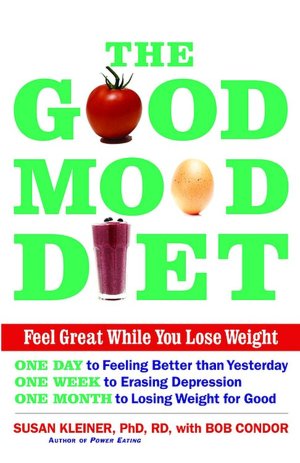
In this video from UCTV, Dr. Susan Kleiner speaks on a topic close to my heart - the connection between food and mood. Her books include The Good Mood Diet: Feel Great While You Lose Weight, The Powerfood Nutrition Plan: The Guy's Guide to Getting Stronger, Leaner, Smarter, Healthier, Better Looking, Better Sex Food!, and Power Eating, Third Edition.


Authors@Google: Dr. Susan Kleiner

Dr. Susan Kleiner is a well respected sports nutritionist. She is the author of The Good Mood Diet and discusses how the food we eat can affect our mood and our ability to manage our weight. She is also the author of Power Eating written specifically to address exercise nutritional needs.

Monday, May 21, 2012

RSA Animate - The Power of Networks w/ Manuel Lima


Each new RSA Animate is an occasion, sure to acquire tens of thousands of viewers in its first days. This new one is based on a talk by Manuel Lima, The Power of Networks in an Age of Infinite Interconnectedness. Lima's most recent book (2011) is Visual Complexity: Mapping Patterns of Information.


In this new RSA Animate, Manuel Lima senior UX design lead at Microsoft Bing, explores the power of network visualisation to help navigate our complex modern world. Taken from a lecture given by Manuel Lima as part of the RSA's free public events programme.

Listen to the full talk: The Power of Networks in an Age of Infinite Interconnectedness

Our events are made possible with the support of our Fellowship. Support us by donating or applying to become a Fellow.

Donate: http://www.thersa.org/support-the-rsa
Become a Fellow: http://www.thersa.org/fellowship/apply

The Unseen Battle of Eating Disorders


Last week there was a new study released on how the brains of women with eating disorders (anorexia and obesity) are different. This research showed that the reward circuits in the brain are sensitized in anorexic women and desensitized in obese women - a finding that suggests eating behavior is related to brain dopamine pathways involved in addictions.

Snag Films also posted a video this week on the unseen battle of eating disorders.

Brain circuitry is different for women with anorexia and obesity

Posted On: May 14, 2012

AURORA, Colo. (May 14, 2012) - Why does one person become anorexic and another obese? A study recently published by a University of Colorado School of Medicine researcher shows that reward circuits in the brain are sensitized in anorexic women and desensitized in obese women. The findings also suggest that eating behavior is related to brain dopamine pathways involved in addictions.

Guido Frank, MD, assistant professor director of the Developmental Brain Research Program at the CU School of Medicine and his colleagues used functional magnetic resonance imaging (fMRI) to examine brain activity in 63 women who were either anorexic or obese. Scientists compared them to women considered "normal" weight. The participants were visually conditioned to associate certain shapes with either a sweet or a non-sweet solution and then received the taste solutions expectedly or unexpectedly. This task has been associated with brain dopamine function in the past.

The authors found that during these fMRI sessions, an unexpected sweet-tasting solution resulted in increased neural activation of reward systems in the anorexic patients and diminished activation in obese individuals. In rodents, food restriction and weight loss have been associated with greater dopamine-related reward responses in the brain.

"It is clear that in humans the brain's reward system helps to regulate food intake" said Frank. "The specific role of these networks in eating disorders such as anorexia nervosa and, conversely, obesity, remains unclear."

Scientists agree that more research is needed in this area. The study was published in Neuropsychopharmacology.


* * * * * * *

Shadows and Lies: The Unseen Battle of Eating Disorders 

Synopsis

Anorexia nervosa and bulimia have claimed many lives, as well as headlines, in the past two decades. About five percent of urban teenage girls are affected by eating disorders. Another twenty percent dabble in unsafe weight control practices. Dieting activity can start as early as fourth grade, with some girls as young as nine having serious problems. The emotional and psychological impacts of eating disorders are felt not only by these young women themselves, but by their families and loved ones as well. This powerful and honest documentary profiles four women who are working themselves free from the deadly grip of eating disorders, and from the overwhelming physical and psychological complications associated with these deadly diseases.

Film Credits

Director: Karen Pascal

Producer: Windborne Productions


Upaya Dharma Podcasts - Ray Olson: A Hitchhiker’s Guide to Lovingkindness


A nice talk from a new teacher at Upaya Zen Center - Ray Olson brings his prison outreach experience to a talk on questioning what love and kindness really are and how can we act lovingly to those who may be hurtful or disrespectful towards us or others.

Ray Olson: 05-16-2012: A Hitchhiker’s Guide to Lovingkindness

Speaker: Ray Olson
Recorded: Wednesday May 16, 2012

PRESENTER BIO: Ray Olson, an internist by training, was a longtime Professor of Medicine at the University of North Texas Health Science Center. He has been a Zen student for over 30 years and received Jukai in 1989. He was ordained Novice Priest by Roshi Joan Halifax in 2009 and was made Dharma Holder at Upaya Zen Center in 2010. Ray serves as coordinator of Upaya’s Prison Outreach Project and teaches classes in both the local county jail and the local state penitentiary. He trains volunteers for work with prison inmates. Ray is long-married to Nancy; they have three grown children and four growing grandchildren.

TALK DESCRIPTION: In his debut talk here at Upaya, long-time teacher and novice priest Ray Olson encourages listeners to question what love and kindness really are and how can we act lovingly to those that may be hurtful or disrespectful towards us or others. Ray uses not only his own prison outreach experiences, but also the wisdom of ancient traditions and religions outside of Buddhism as well.

Play
Podcast: Play in new window | Download

Shrink Rap Radio #305 – The Dangers of Diagnosing Children as Bipolar with Stuart Kaplan, MD


Ethically, diagnosing children with bipolar is way out of bounds. Even so, since the mid-1990s, the number of children diagnosed with bipolar disorder has increased a staggering 4,000 percent. The only problem is the the children do not have the behaviors outlined in the DSM as to how bipolar manifests.

This story from NPR gives a little history of the bipolar diagnosis in children:

The Beginning Of 'Bipolar' Children
The notion that children might suffer from bipolar disorder in large numbers is new, dating back only to the mid-1990s.

Dr. Janet Wozniak, an assistant professor of psychiatry at Harvard Medical School, was one of the people who first popularized this idea.

Wozniak says that when she was starting out, most psychiatrists placed the prevalence of bipolar disorder in children somewhere between "never" and "vanishingly rare."

"Papers about bipolar disorder in children would usually start out with the phrase, 'Here's a disorder that's so rare maybe you'll see one or two in your entire lifetime in practice,' " Wozniak says.

Wozniak herself only started thinking about pediatric bipolar disorder when she got a job as a researcher in the clinic of a famous Harvard child psychiatrist named Dr. Joseph Biederman. Biederman was studying kids with attention deficit hyperactivity disorder and felt that there was a portion of the kids in his clinic whose problems with anger seemed to go way beyond normal ADHD. So he asked Wozniak to look into it.

She did. And what she found were kids who continued to struggle with intense, uncontrollable outbursts of anger — violent hitting and screaming and kicking — even after they passed through the preschool years.

She felt these outbursts were substantively different from the kind of outbursts you saw among ADHD kids, who often had problems regulating their impulses. Then one day, she says she had an insight.

"This child that I was thinking of as having really difficult-to-treat ADHD and a lot of parent-child interaction problems, I really was ignoring the serious mood component of their problem." In other words, it wasn't that the kids just had problems with their impulse control; there was a more serious problem of mood. These kids were bipolar.

Redefining A Defining Characteristic
Wozniak wrote all this up in a now famous paper proposing that some of the kids characterized as having ADHD were actually bipolar.

The paper won awards. Clinicians began to approach Wozniak at meetings saying her insights made intuitive sense. She had helped transformed their practice.

But Shaffer says that to see these children as bipolar, Wozniak and her co-author, Joseph Biederman, had to change one critical component of the traditional definition of bipolar disorder. "The defining feature of manic-depression was that it was episodic," says Shaffer. "You had episodes of depression and episodes of mania and episodes of normal mood, and that was really, its defining characteristic."

But the kids Wozniak described rarely, if ever, had these kind of discrete weeklong or month-long episodes. So to make them fit the traditional concept of bipolar disorder, Shaffer says, she and Biederman made the argument that in children, episodes presented themselves in a radically different way.

"They said maybe in childhood the episodes would be very brief and very frequent," says Shaffer. "These are called 'ultra diem,' you know, 'many times a day.' If you regarded every time children changed their mood, every time they lost their temper or became overexcited, as a mood episode, then they were really being misdiagnosed and were really cases of bipolar disorder."

Critics countered that bipolar should look the same in kids and adults, that there wasn't good evidence that these kids grew up to be bipolar, and that if you looked backward at bipolar adults, they didn't necessarily have these uncontrolled anger issues when they were young, Shaffer says.

Nevertheless, pediatric bipolar disorder took off. Today, it's estimated that at least 1 million children in the United States have been diagnosed with the disease. Wozniak is convinced that she knows why. "The diagnosis took off because it made clinical sense," she says. "Because we opened our eyes."
There is a proposal to add a new listing for the DSM-5, one which removes the lifelong stigma of bipolar diagnoses, and one which more accurately describes the behaviors.

Temper Dysregulation Disorder: This proposed new disorder is seen as a brain or biological dysfunction, but not necessarily a lifelong condition. It can only be diagnosed in children over the age of 6, and onset must begin before a child is 10. 

The disorder is characterized by severe recurrent temper outbursts in response to common stressors. To have the disorder, the person has to have had these symptoms for at least 12 months, and cannot have been free of symptoms for more than three months at a time.
  • temper outbursts involving yelling or physical aggression
  • overreacting to common stressors
  • temper outbursts occurring on average three or more times a week
  • nearly everyday the mood between temper outbursts is persistently negative.
  • in the past year the patient has not had a period longer than a day of elevated or euphoric mood.
Personally, I think this is a much more complex issue that has a lot to do with parenting (or the lack of it), environmental over-stimulation (video games, electronic education devices, television, etc.), chemical dysregulation of affective systems from environmental toxins and food additives, lack of boundaries and consequences, and a whole host of other issues. But parents and physicians want the quick fix, not the real solution.

Shrink Rap Radio #305 – The Dangers of Diagnosing Children as Bipolar with Stuart Kaplan, MD


According to Stuart L. Kaplan MD, there are six things you should know about him:

• He is a Distinguished Life Fellow of the American Academy of Child and Adolescent Psychiatry.
• He is a Clinical Professor of Psychiatry at Penn State College of Medicine.
• He was awarded the Outstanding Mental Health Professional of the Year by the National Alliance of the Mentally Ill, Saint Louis Chapter, in 1998.
• He has served as the Director of Child and Adolescent Psychiatry at three major institutions, two of which were University medical schools.
• He is Board Certified in Child Psychiatry and Adult Psychiatry and served as an examiner for the American Board of Psychiatry and Neurology 14 times.
• Dr. Kaplan has authored over 100 scientific papers, book chapters, abstracts and national and international scientific presentations.
Check out the following Psychology CE Courses based on listening to Shrink Rap Radio interviews:
A psychology podcast by David Van Nuys, Ph.D.

Sh

Sunday, May 20, 2012

Jay Efran and Mitchell Greene - Why We Cry: The Fascinating Psychology of Emotional Release

Alternet republished this article from Psychotherapy Networker on the emotional release that comes with crying. As a therapist, crying and tears come with the territory - but few of us get any training at all in the neuroscience of emotion. As the article makes clear at the beginning, many of us are still using the false "steam kettle" metaphor of emotion as energy.

Two of the most crucial things I have learned as a young therapist (meaning new in my profession) are that, (1) often the best response to tears is silence - allow the person to feel the emotions without trying to comfort them or anything else; and (2) clients' tears are often triggered by a comforting gesture, a sympathetic voice, unconditional support, or some other form of safe human contact.

According to the article,
Physiologically speaking, emotional tears are elicited when a person’s system shifts rapidly from sympathetic to parasympathetic activity—from a state of high tension to a period of recalibration and recovery.

This makes perfect sense - I have clients who are fine until they walk in the door and then they sit down and cry. They describe my office as one of the few places they feel safe, so the recalibration and recovery model seems appropriate.

Knowing how our nervous systems work can help guide what we do—and don’t do—when people burst into tears. 


At the site of the 2010 Chilean mine disaster, the son of miner Florencio Avalos burst into tears when his father was brought safely to the surface. Later that month, Caylee Anthony’s grandmother was shown weeping over her granddaughter’s death. How can two such totally different events—one joyful, one tragic—both elicit tears?

This question puzzles many clinicians, including some who are considered experts in the field of emotional expression. The problem is that few of us have received explicit training in theories of emotion. Therefore, our notions about tears and other forms of emotional release are still partly based on “steam-kettle thinking”—the culturally pervasive but biologically absurd notion that emotions are stored quantities of energy, which, like steam, wreak havoc when bottled up too long or released too abruptly. Our everyday language is rife with steam-kettle metaphors. We talk about “blowing off steam,” being “flooded with emotion,” “boiling over” with rage, and “feeling drained” after a good cry. The Freudian theory of catharsis is basically a steam-kettle model, and so are various expressive therapies, such as psychodrama, primal scream, reevaluation counseling, and Gestalt therapy. Similarly, remnants of steam-kettle theory can be found in current approaches toward regulation, stress reduction, and anger management.

The history of the field’s views on emotional release harks back to the days when skulls were trephined to release evil spirits, purgatives were administered to rid the body of toxins, and leeches were applied to purify the blood. Obviously, it’s high time to root out the vestiges of these ancient practices and bring our understanding of emotional dynamics into the 21st century. Steam-kettle thinking may have intuitive appeal, but it doesn’t provide an adequate guide for dealing with emotionally distressed clients. Moreover, it doesn’t help us answer the question of why people cry when they’re happy. Although our focus here is on tears, the theory we’re about to describe also applies to other forms of emotional expression, including fits of laughter, fearful trembling, and angry outbursts.

The Two-Stage Theory of Tears

Physiologically speaking, emotional tears are elicited when a person’s system shifts rapidly from sympathetic to parasympathetic activity—from a state of high tension to a period of recalibration and recovery. Depending on the circumstances, individuals typically describe such shifts as “letting go,” “going off duty,” or “giving up.” Of course, nothing is literally “released” when these biophysical changes occur, although the person’s adrenaline level drops and the body relaxes.

The shift from arousal to recovery is almost always triggered by a psychologically meaningful event, such as when lost children finally spot their parents and realize that they’re safe. Typically, children don’t cry when they first realize that their parents are gone; instead, they become hypervigilant and start searching for their missing caretakers. It’s only when the parents reappear—perhaps rounding the corner of the supermarket aisle—that their child “goes off duty,” and tears begin to flow. In other words, tears are elicited during the second, parasympathetic, phase of the two-stage cycle we’re describing. Again, the child usually remains dry-eyed during the initial, problem-solving phase. Evidence for this two-stage cycle has been found in multiple studies. Using physiological measures, such as heart rate, researchers documented the “handoff” from the initial fight-or-flight stage to the parasympathetic recovery stage, in which tears occur.

When parents reconnect with a lost child, they often wonder why he or she picks that time to cry, now that the danger is past. They frequently say something like, “I’m here now; why are you crying?” Or worse yet, “You’d better stop crying right this minute, or I’ll give you something to cry about!” However, the child’s physiological reaction is entirely appropriate: wide-eyed scanning in phase one, copious tears in phase two. Parents ought to be pleased, because the crying indicates that the child is comforted by their presence.

Although the two-stage arousal–recovery cycle is basically a biological invariant, certain factors affect the timing. Some children—depending on age, temperament, and background—will cry before their parent appears. They may feel safe enough to “go off duty” when, let’s say, a sympathetic store clerk takes them by the hand, offering to help. Young children frequently burst into stage-two tears whenever they exhaust their problem-solving resources, even if no adult is in sight. In evolutionary terms, such meltdowns undoubtedly contribute to survival by alerting nearby caretakers that assistance is required. This works well because under ordinary child-rearing circumstances (what biologists call the “average expectable environment”), potential helpers are almost always within earshot.

Tears are most easily triggered in response to a friendly gesture, a sympathetic voice, a familiar face, or other signs of safety. By contrast, we almost never cry at the height of a crisis, in the presence of enemies, or during periods of unrelieved sadness. One of the authors remembers being out of town when he learned of his father’s death. He successfully remained stoic while he was out in public and navigating a long bus ride home; however, he burst into tears as soon as he saw his mother waiting at the doorstep. The wordless glance they exchanged communicated that the family would survive the current crisis—a message that allowed the author to “relax” into a tearful reunion.

Although the culture is gradually becoming more gender neutral, men still have more difficulty crying in public than women. Perhaps because of their traditional roles as warriors and protectors, they’re expected to remain stalwart and avoid showing any sign of weakness to potential adversaries. Today, a common struggle plays out in movie theaters across the land. When the lights turn on at the end of some sappy romantic comedy, many men feel compelled to keep their faces taut in order to forestall being seen with tears rolling down their cheeks. By maintaining facial tension—the proverbial “stiff upper lip”—they can temporarily postpone the shift into parasympathetic activity while they hunt for something else to think about.

Men may experience “face loss” when they cry in therapy for the first time and their embarrassment is sometimes sufficient to keep them from returning for further sessions. To preempt such reactions, we typically warn men that they may feel “funny” about having cried, but that tears in therapy are a good sign, indicating courage and strength, rather than weakness. Unsurprisingly, female politicians, such as Hillary Clinton, are still obliged to avoid welling up in public if they expect to be perceived as strong leaders.

We’ve already discussed examples of situations in which tears emerge because a problem has been solved and the system can “go off duty”; however, adults and children sometimes cry in connection with problems that haven’t yet been solved, and perhaps never will be. In these instances, tears indicate that the person is at least temporarily giving up the struggle. Although this is commonly thought of as a “breakdown,” we optimistically consider it a potential breakthrough. By backing away from an overwhelming issue, the system can husband its resources and regroup for a fresh assault. This is a bit like putting a frustrating puzzle aside for the night and tackling it again in the morning, after a good night’s sleep. Because we typically cry when we feel safe, the person’s tears can suggest a willingness to enlist the help of others—perhaps the therapist, a spouse, or another trusted ally.

Years ago, a client was involved in an auto accident. As soon as she realized she hadn’t been seriously injured, she got out of her car, coolly assessed the situation, and proceeded to assist the other passengers. Shortly after the ambulance arrived, she sat down on a nearby curb and began to weep. Onlookers feared that she was experiencing some sort of delayed traumatic reaction, but they needn’t have worried. The arrival of the ambulance workers simply permitted her to move to the sidelines and relax enough to have “a good cry.” By the way, the pleasure of a good cry has virtually nothing to do with the number of tears shed. It’s the parasympathetic changes associated with the recovery phase that both feel good and are restorative for the system.

Although phase-two recuperation is almost always healthy for the system, many clinicians overreact to an adult’s tears. Our evolutionary programming, geared to raising infants, prompts us to launch into emergency action when anyone cries. We feel obliged to help, but with adults, we may not be sure what to do.

When a friend’s wife was having surgery, he spent hours pacing back and forth in the hospital waiting room. The surgeon finally appeared at the doorway and beckoned him to step outside. As he walked toward the surgeon, his anticipation level reached astronomical heights. When the surgeon announced that the operation had gone extremely well, the husband slumped to the floor and began to sob. Through his tears, he noticed a look of panic on the surgeon’s face. As he later explained, “The poor guy didn’t know what to do with me. He was speechless. I wound up having to pat him on the back and assure him that I was fine.” Evidently, the surgeon wasn’t used to seeing a grown man dissolve into tears, especially in response to good news, yet the husband’s sobs were an outward indication that his system was going off duty and efficiently replenishing its resources following the prolonged period of stress.

Like the surgeon in our story, clinicians too can feel an urge to rush in and “fix things” that aren’t broken. This often makes matters worse. Therefore, in accordance with our theoretical model and clinical experience, we offer some suggested dos and don’ts for dealing with adult clients who are crying.

The first rule is to avoid “crowding” the client with an anxious flurry of pats and hugs. If you’ve cried recently yourself, you may remember how uncomfortable it is to be fussed over at a time when you’re trying to remain connected to your experience. Tearful individuals need a relaxed, safe space in which to process their thoughts and feelings—frantic attention isn’t helpful. This is exactly the wrong time to pepper them with questions about why they’re crying or anxious inquiries about “what’s wrong?” There’ll be plenty of time for debriefing later.

Because the urge to “do something” is strong, we have to remind ourselves to relax in the presence of adult tears and allow the natural recovery phase to run its course. When a person is crying, there should be no hurry to move on in a session. Over the years, our therapeutic mantra has been “If tears are flowing, something worthwhile is happening.” Either there’s been a meaningful breakthrough, or—as we indicated earlier—the person is giving up an approach that wasn’t working.

A good rule of thumb is that as long as tears are flowing freely, you don’t have to do anything. OK, if you happen to be seated close enough (and the relationship permits), you might lightly touch the tearful person’s arm just to let him or her know that you’re fully present. Similarly, you might offer a tissue or gesture toward the tissue box. Anything more can be intrusive and counterproductive.

Certainly avoid the temptation—generated by your own anxiety—to delegitimize the person’s tears (“There’s no need to cry about it!”) or to issue false reassurances (“Everything will be fine!”). Even professionals, who ought to know better, sometimes feel an urge to stop the person from crying, as if stopping the tears would eliminate the problem. This is a bit like trying to fix a car by disconnecting the “check engine” light.

Because we want our clients to stay in touch with their experience, we gently wave off their attempts to explain, justify, or apologize for their tears (e.g., “I’m so sorry; I didn’t mean to do this”). At this point, verbal interchange is the enemy—the less said the better. When a client is in the midst of a crying episode, it’s best to avoid fancy interpretations, even if you’re sure they’re right on target.

When the tearful episode winds down, we typically ask, “What’s the thought that helped you cry?” That question tends to elicit more tears (and additional stress reduction). Notice that we say “what helped you cry” rather than “what made you cry.” We learned to use that subtle positive connotation from Harvey Jackins, the originator of Re-evaluation Counseling and an expert on the mechanisms of emotional expression. Jackins taught that, paradoxically, the best way to elicit a person’s feelings is to ask about his or her thoughts. Instead of asking “How do you feel?” ask “What are you thinking?” The “feelings” question too often produces vague generalities (“I’m feeling sad”) or unhelpful descriptions of body sensations (“There is a dull ache in my midsection”). By contrast, asking about the person’s thoughts gets us closer to the images and recollections that ease the shift from upset to recovery. For instance, in response to being asked about his thoughts, a grieving son replied, “I keep remembering me and my father being in a rowboat together. He kept apologizing because we hadn’t caught any fish. I wanted to explain that it didn’t matter, but I couldn’t get the words out [more tears]. How come I could never tell him how much I loved him?”

Note that as participant-observers we typically overestimate how long clients have been crying. A few minutes of tears may seem like an eternity, prompting the therapist to wonder whether clients will ever stop. They always do. Keep in mind that crying is a natural, adaptive process, and the best policy is to let it run its course. Some people seem to have an inexhaustible supply of tears, partly because of their system lability. They may castigate themselves for “breaking down” whenever they tear up. This generates a cycle of rising and falling tension, resulting in bouts of sobbing punctuated by flurries of self-criticism.

Defining Emotion

Explicit definitions of emotion are a rarity in the mental health literature. We’ve read entire books about the role of emotion in therapy in which the term is never defined. Yet the lack of definitional specificity hampers the development of theory and technique, so we’ll attempt to fill this gap by suggesting that term emotion be reserved for the body postures and hormonal settings that form the necessary support system for our actions. Fighting, for instance, is a high-emotion state, requiring elevated adrenaline levels and a tense musculature; sleeping, a low-emotion state, requires just the opposite. In similar fashion, one can calculate the optimal biophysical and related emotional profile for any particular class of actions.

In our ordinary language, we talk as if we have emotions only once in a while, such as when we’re experiencing great passion, overwhelming hopelessness, abject terror, or all-consuming anger; however, in our lexicon, all our tasks have an emotional underpinning, including when we cook dinner, read a novel, or take out the trash. Even calm, deliberate, problem-solving requires a rather specific set of bodily calibrations: if you’re too aroused, you can’t think straight; if you’re too relaxed, you’re apt to lose track of the problem. Thus, as biologist Humberto Maturana notes, “understanding” should be considered a legitimate and important emotional state. He uses the term “emotional contradiction” to describe the temporary mismatches between our biochemistry and our circumstances. For example, we arrive home after an argument with a coworker. Our spouse is waiting at the door, expecting a tender kiss. However, because we’re still fuming over what happened at the office, we can’t switch gears fast enough to be affectionate. Fighting and affiliating require different body postures and hormonal settings, and the biochemistry needs a bit of time to catch up. So, for the moment, the best we can do is offer our spouse a perfunctory peck, perhaps accompanied by a mumbled explanation about why we aren’t “in the mood.”

Technically speaking, tears, laughter, tantrums, and trembling aren’t emotions: they’re outward signs of abrupt shifts in neurophysiology. We’ve already explained that tears are triggered by the change from sympathetic to parasympathetic functioning. Without going into detail, we can add that laughter is the expected response to the resolution of ambiguity, tantrums are a vigorous form of protest, and shivers signal the dissipation of fear.

If emotions are merely biophysical settings, and tears, laughter, tantrums, and trembling are just indications of biochemical shifts, why do so many clinicians continue to believe that pounding pillows and other cathartic rituals have curative powers? An ingenious social psychology experiment conducted years ago, designed to test catharsis theory, sheds light on this question. Participants were first insulted. Then they were given an opportunity to get even with the perpetrator directly or listen passively while someone else defended their reputation. As it turned out, it didn’t matter how much personal energy individuals consumed redressing the grievance they’d suffered: as long as they felt that the score had been settled, their mood returned to normal. What was important was the restoration of their self-esteem, not the amount of energy they expended defending themselves. This suggests that such rituals as pounding pillows are useful only to the extent that they result in positive self-esteem changes. If the social context is right, people can feel more powerful and effective as they pretend to get even with their boss (as represented by the pillow).

Alexis had been abruptly fired from a job she’d held for 20 years. To add insult to injury, a security guard was assigned to watch her pack her things and escort her off the premises. She wasn’t even given a chance to say good-bye to the other members of her department. Later, she heard through the grapevine that her departure was being blamed on her unwillingness to adapt to change.

She felt furious each time she relived that day. Her reputation had been unfairly tarnished, and she’d been denied her day in court. There was no place for her to tell her side of the story or seek compensation for the injustices she felt she’d endured. From our perspective, she hadn’t “stored” her anger for later “release.” Anger is recreated when the person recalls what happened. Such recollections can generate postures and hormonal settings similar to the original incident, although not always at the same level.

Joining a therapy group proved a useful place for Alexis to gain closure about her situation. The group members were quite supportive and chimed in with their own tales of corporate malfeasance. She learned from the others that hustling fired employees out of the building under a guard’s scrutiny is standard practice in some industries. Thus, the way she was treated wasn’t necessarily a personal slur on her character. She discovered that she wasn’t alone in experiencing doubts about her self-worth after having been fired, even though she’d had a successful career up until that point. Through the group process, she regained her self-confidence and got back into the job market. In this case, pounding pillows and shouting epithets at an imaginary supervisor wasn’t necessary: it was sufficient that she received enough social validation to heal her bruised ego.

Because the social setting is crucial to the outcome, it can be a mistake to follow the advice of steam-kettle advocates about the value of expressing all feelings. One of the authors served as a faculty advisor for an experimental dormitory problem-solving group. In the middle of the first meeting, one of the students felt compelled to “get off his chest” that he had sexual feelings for his male roommate. This disclosure created a nightmare for the residence staff: the straight roommate insisted on an immediate dorm transfer, and the devastated gay student threatened suicide and was briefly hospitalized by the student health service. That was the end of the dormitory group program. Again, the benefits and hazards of expressing feelings depends almost entirely on the characteristics of the social setting.

The Emotional Neutrality of Tears 


We’d now like to return to the question we posed in our opening paragraph: how can happy and sad events both elicit tears? People are puzzled by the question because they automatically equate tears with sadness. In fact, tears are neither happy nor sad; they’re simply manifestations of the shift from arousal to recovery. The labels we attach to them depend entirely on the context in which they occur. For instance, the tears of the Chilean miner’s son would probably be called “tears of relief” or “tears of joy”; by contrast, the tears shed by Cindy Anthony, Caylee’s grandmother, would undoubtedly be considered “tears of grief.” The two situations aren’t as distinct as they appear. In both cases, elevated tension is followed by an event that triggers a biophysical shift. The miner’s son was worried about his father’s welfare, but he was instantly relieved to see his father emerge unharmed from the rescue capsule. In Anthony’s case, we have less information about how the event unfolded. Even if we could have asked her about it at the time, she might not have been able to provide an accurate report about what triggered her tears. This is because people in the midst of a tearful episode are typically too busy having the experience to be able to analyze it. Yet we can surmise that she was under considerable stress talking to the press about her granddaughter’s death. The tears may have been caused by a sympathetic response from the reporter or a momentary image of a happier time with Caylee. In fact, if you want to trigger a parasympathetic shift in clients who’ve suffered a loss, it’s useful to ask them to recall a pleasant or joyful time they spent with the deceased individual. This will elicit tears more regularly than descriptions of the funeral or the circumstances surrounding the person’s death.

Because life events can be difficult to analyze in real time, we’ve found it useful to study the emergence of tears by examining audience reactions to key scenes in various plays and films. Consider the classic Rodgers and Hammerstein musical The King and I. In the final scene, Anna—about to leave Siam because of her disagreements with the king—learns that he’s dying and feels compelled to pay him a last visit. Audience members are saddened that the king is ill and worried that the disputes between him and Anna won’t be resolved. Although these events provoke tension, they don’t elicit tears. When Anna visits the king’s bedside, he first scolds her for abandoning her work with his children, reminding her that she’s leaving the country of her own free will, while he’s “just . . . leaving.”

In the dialogue that follows, Anna and the king subtly acknowledge their admiration and love for each other, and the audience senses that the rift between them is beginning to heal. At a pivotal moment, the king urges his eldest son, the heir to the throne, to begin making royal proclamations to “practice” for his new role as ruler. The boy first decrees that New Year’s is to be celebrated with boat races (he likes boat races). Then, more hesitantly, he decrees that members of the court will no longer bow to the king “in fashion of lowly toad,” but instead will bow from the waist, in the more dignified Western tradition. Thinking that he might have gone too far, the prince turns to his father for reassurance: “You are angry with me, my father?” The king replies, “Why do you ask question? If you are king, you are king. You do not ask questions of sick man—nor of woman! [Pointing a finger at Anna.] This proclamation against bowing I believe to be your fault!” Anna replies, “Oh, I hope so, Your Majesty. I do hope so.” The audience weeps.

The audience isn’t crying simply out of sadness. Tears are always about something specific: an image, thought, or memory that changes the psychological and neurophysiological equation. In this case, tears flow because the king finally acknowledges—before it’s too late—his feelings for Anna and the importance of her contributions to the kingdom.

But it would be misleading to say that these are entirely tears of sadness at the king’s impending death. The emotion, as it so often is in art and life, is more complicated than any simple formulation. Throughout the play, we’ve felt the constant tension between the liberated Victorian Anna, with her Western outlook and modern view of the equality of men and women, and the old-fashioned King, whose good heart is often at odds with his outdated approach to ruling his kingdom. The world is changing, and we feel some relief that the new, more forward-looking young king is more prepared to lead his people into this new age. Our tears flow as we watch Anna and the king share a moment in which, each in their own indirect way, acknowledges what they’ve meant to each other and the depth of their bond. We can leave the theater teary-eyed, finally released from the grip of this touching play, feeling somehow complete and ready to go home.

Jay Efran, Ph.D., is emeritus professor of psychology at Temple University. He’s the coauthor of Language, Structure and Change: Frameworks of Meaning in Psychotherapy and The Tao of Sobriety. Contact: efran@temple.edu. Mitchell Greene, Ph.D., is a clinical psychologist in private practice in Wayne, Pennsylvania. 

Tell us what you think about this article by e-mail at letters@psychnetworker.org, or at www.psychotherapynetworker.org. Log in and you’ll find the comment section on every page of the online Magazine.

The Wright Show - Robert Wright and Matthew Hutson - The 7 Laws of Magical Thinking


This is a nice discussion - wide ranging - on Matthew Hutson's new book, The 7 Laws of Magical Thinking: How Irrational Beliefs Keep Us Happy, Healthy, and Sane - from this week's edition of
The Wright Show on BloggingHeads.tv.

Here is the publisher's description of the book:
What is so special about touching a piano John Lennon once owned? Why do we yell at our laptops? What drove the Yankees to dig up the Red Sox jersey secretly buried beneath their new stadium? And what's up with the phrase "Everything happens for a reason"?

Psychologists have documented a litany of cognitive biases—misperceptions of reality—and explained their positive functions. Now, Matthew Hutson shows that all of us, even the staunchest skeptics, engage in magical thinking all the time—and that we can use it to our advantage, if we know how to outsmart it.

Drawing on cognitive science, neuroscience, psychology, and anthropology, Hutson shows us that magical thinking has been so useful to us that it's hardwired into our brains. It encourages us to think that we actually have free will. It helps us believe that we have an underlying purpose in the world. It can even protect us from the paralyzing awareness of our own mortality. In other words, magical thinking is a completely irrational way of making our lives make sense.

With wonderfully entertaining stories, personal reflections, and sharp observations, Hutson has written a book that is entertaining, useful, and ever so slightly alarming.
Wright and Hutson engage in a lively and entertaining conversation.


Robert Wright (Bloggingheads.tv, The Evolution of God, Nonzero) and Matthew Hutson (The 7 Laws of Magical Thinking)

Recorded: May 11 — Posted: May 19