Showing posts with label willpower. Show all posts

Wednesday, January 01, 2014

The Science of Willpower: 15 Tips for Making Your New Year’s Resolutions Last from Dr. Kelly McGonigal

http://www.amazon.com/gp/product/1583334386/ref=as_li_ss_tl?ie=UTF8&camp=1789&creative=390957&creativeASIN=1583334386&linkCode=as2&tag=integraloptio-20 

Via Open Culture, here is a little assistance from Dr. Kelly McGonigal on how to use your willpower to make your New Year's revolutions into a way of life. McGonigal is the author of The Willpower Instinct: How Self-Control Works, Why It Matters, and What You Can Do to Get More of It, so she knows a little about how to maintain changes in our lives.

As a side note, a lot of what she says in the 15 bullet points below is good advice for anyone seeking a little more physical and psychological resilience.

The Science of Willpower: 15 Tips for Making Your New Year’s Resolutions Last from Dr. Kelly McGonigal

January 1st, 2014


At the stroke of midnight, millions of New Year’s resolutions went into effect, with the most common ones being lose weight, get fit, quit drinking and smoking, save money, and learn something new. Unfortunately, 33% of these resolutions will be abandoned by January’s end. And upwards of 80% will eventually fall by the wayside. Making resolutions stick is tricky business. But it’s possible, and Stanford psychologist Kelly McGonigal has a few scientifically-proven suggestions for you.

For years, McGonigal has taught a very popular course called The Science of Willpower in Stanford’s Continuing Studies program, where she introduces students to the idea that willpower is not an innate trait. Rather it’s a “complex mind-body response that can be compromised by stress, sleep deprivation and nutrition and that can be strengthened through certain practices.” For those of you who don’t live in the San Francisco Bay Area, you can also find McGonigal’s ideas presented in a recent book, The Willpower Instinct: How Self-Control Works, Why It Matters, and What You Can Do to Get More of It, which just came out in paperback yesterday. Below, we have highlighted 15 of Dr. McGonigal’s strategies for increasing your willpower reserves and making your New Year’s resolution endure.
  1. Will power is like a muscle. The more you work on developing it, the more you can incorporate it into your life. It helps, McGonigal says in this podcast, to start with small feats of willpower before trying to tackle more difficult feats. Ideally, find the smallest change that’s consistent with your larger goal, and start there.
  2. Choose a goal or resolution that you really want, not a goal that someone else desires for you, or a goal that you think you should want. Choose a positive goal that truly comes from within and that contributes to something important in life.
  3. Willpower is contagious. Find a willpower role model — someone who has accomplished what you want to do. Also try to surround yourself with family members, friends or groups who can support you. Change is often not made alone.
  4. Know that people have more willpower when they wake up, and then willpower steadily declines throughout the day as people fatigue. So try to accomplish what you need to — for example, exercise — earlier in the day. Then watch out for the evenings, when bad habits can return.
  5. Understand that stress and willpower are incompatible. Any time we’re under stress it’s harder to find our willpower. According to McGonigal, “the fight-or-flight response floods the body with energy to act instinctively and steals it from the areas of the brain needed for wise decision-making. Stress also encourages you to focus on immediate, short-term goals and outcomes, but self-control requires keeping the big picture in mind.” The upshot? “Learning how to better manage your stress is one of the most important things you can do to improve your willpower.” When you get stressed out, go for a walk. Even a five minute walk outside can reduce your stress levels, boost your mood, and help you replenish your willpower reserves.
  6. Sleep deprivation (less than six hours a night) makes it so that the prefrontal cortex loses control over the regions of the brain that create cravings. Science shows that getting just one more hour of sleep each night (eight hours is ideal) helps recovering drug addicts avoid a relapse. So it can certainly help you resist a doughnut or a cigarette.
  7. Also remember that nutrition plays a key role. “Eating a more plant-based, less-processed diet makes energy more available to the brain and can improve every aspect of willpower from overcoming procrastination to sticking to a New Year’s resolution,” McGonigal says.
  8. Don’t think it will be different tomorrow. McGonigal notes that we have a tendency to think that we will have more willpower, energy, time, and motivation tomorrow. The problem is that “if we think we have the opportunity to make a different choice tomorrow, we almost always ‘give in’ to temptation or habit today.”
  9. Acknowledge and understand your cravings rather than denying them. That will take you further in the end. The video above has more on that.
  10. Imagine the things that could get in the way of achieving your goal. Understand the tendencies you have that could lead you to break your resolution. Don’t be overly optimistic and assume the road will be easy.
  11. Know your limits, and plan for them. Says McGonigal, “People who think they have the most self-control are the most likely to fail at their resolutions; they put themselves in tempting situations, don’t get help, give up at setbacks. You need to know how you fail; how you are tempted; how you procrastinate.”
  12. Pay attention to small choices that add up. “One study found that the average person thinks they make 14 food choices a day; they actually make over 200. When you aren’t aware that you’re making a choice, you’ll almost always default to habit/temptation.” It’s important to figure out when you have opportunities to make a choice consistent with your goals.
  13. Be specific but flexible. It’s good to know your goal and how you’ll get there. But, she cautions, “you should leave room to revise these steps if they turn out to be unsustainable or don’t lead to the benefits you expected.”
  14. Give yourself small, healthy rewards along the way. Research shows that the mind responds well to it. (If you’re trying to quite smoking, the reward shouldn’t be a cigarette, by the way.)
  15. Finally, if you experience a setback, don’t be hard on yourself. Although it seems counter-intuitive, studies show that people who experience shame/guilt are much more likely to break their resolutions than ones who cut themselves some slack. In a nutshell, you should “Give up guilt.”
To put all of these tips into a bigger framework, you can get a copy of Kelly McGonigal’s book, The Willpower Instinct: How Self-Control Works, Why It Matters, and What You Can Do to Get More of It. Or you can get The Willpower Instinct, as a free audio book, if you care to try out Audible.com’s free trial program.

If you live in the SF Bay Area, you can take Kelly’s The Science of Willpower course that begins on January 13. (Anyone can enroll, and yes, I know that because I help run the Continuing Studies program at Stanford.)

Finally you might also want to peruse How to Think Like a Psychologist (iTunes Video), a free online course led by Kelly McGonigal. It appears in our collection of 800 Free Courses Online.

Related Content:

Monday, September 16, 2013

Where Is Self-Control in the Brain?


CNN posted this interesting article about the neuroscience of self-control and the research being done to find the "magic pill" that will allow me to refuse of piece of blueberry cheesecake.

Hmmmmm . . . cheesecake . . . .

But I digress.

It turns out that one of the best ways to ensure results to a commitment, such as losing weight or exercising regularly (two of the biggest challenges for most people), or even giving up smoking, is to have a consequence for not following through. Seems simple, but it works.

In Psychosynthesis, there is an exercise they use to help build willpower. Take a dollar worth of pennies and spread them on the table in front of you. Now, one penny at a time, stack them into 20 stacks of five pennies, or 10 stacks of ten pennies. Then spread them out again, and repeat several times. If you can make yourself do this for 10 minutes or so, they suggest you have the willpower to do anything you set your mind to (I suspect addictions are exempt from this).

Anyway, interesting article.

Where is self-control in the brain?

Scientists are investigating brain areas associated with turning down temptations


By Elizabeth Landau, CNN
September 14, 2013


STORY HIGHLIGHTS
  • Our intentions often don't match our actions
  • Brain imaging reveals clues about the biology of self-control
  • Commitments that carry consequences help people stick to their goals

Boston (CNN) -- Mmmm, a hot fudge sundae. The diet is supposed to start today, but surely it can wait until tomorrow -- or maybe the next day.

Many people know what's good for them and choose to do the exact opposite, especially when it comes to diet and exercise. Researchers are turning to the brain to find out what's behind this lack of self-control, a topic discussed in length at the American Association for the Advancement of Science meeting in Boston earlier this year.

In the future, there may be brain-based solutions to help you avoid that sundae; for now, researchers say, we can shape our environments to help us avoid temptation, and make firm commitments to change.


Value judgments and willpower  


Pinpointing complex behaviors in the brain isn't simple; we weren't born with the words "impulsivity" and "willpower" etched into particular places on our heads. Scientists are still in the early stages of figuring out how billions of cells called neurons generate particular outcomes, and which circuits do what. But some clues have emerged from recent experiments.

When people who are trying to lose weight are confronted with meal choices, it appears there are two major factors in their decision: taste and health, said Todd Hare, assistant professor of neuroeconomics at the University of Zurich.


Hare's research shows that dieters who successfully turn down fatty temptations such as ice cream put more emphasis on the healthiness of food and relatively less emphasis on the taste.

It is the opposite for dieters who can't say "no" to sweets, he said. They say they're trying to eat healthy, but "they seem unable to shift away from the more automatic, stronger representation of taste," Hare said.

By using functional magnetic resonance imaging, or fMRI, scientists can see how a brain region called the ventral medial prefrontal cortex becomes active in valuing options in predicaments like this.

The ventral medial prefrontal cortex also appears to get involved in certain monetary decisions -- for instance, when researchers present participants with the choice of accepting a large reward later or a smaller reward immediately. Hare's research on this is not yet published, but the phenomenon was described in a 2011 research review.

Scientists have also located a second important brain area for these kinds of decisions: the dorsolateral prefrontal cortex. There is more activity in this region when participants choose options that appear better for them in the long run -- the healthy food item or the larger monetary reward that will arrive later.

The interaction between these two brain regions -- the ventral medial prefrontal cortex and the dorsolateral prefrontal cortex -- is stronger for people who show greater self control with either money or food, Hare said.

"They're working together to shape the way you're going to make your choices."

Scientists are also investigating brain areas associated with turning down temptations.

University of Cambridge neuroscientist Molly Crockett and her colleagues suggested in a study earlier this year that "precommitment" -- voluntarily restricting one's access to temptation -- is more effective at promoting self control than willpower.

In the experiment, men viewed erotic images that they rated according to personal preference. Then, in one task, they could decide in advance that they would not have the option to see the images they rated poorly. In exchange, they could see the higher-rated images after a greater time delay. This is called "precommitment."

In a different task, men were challenged to use willpower to actively resist viewing the lower-rated images while they waited for the higher-rated images. Precommitment appeared to be a better strategy on average.

In impulsive participants in particular, researchers saw more activation in the ventral striatum and ventromedial prefrontal cortex areas during precommitment. These relationships between brain activation patterns and impulsive tendencies suggest that people in general may have some self-awareness about their own self-control abilities.

Are self control problems, such as overeating and overspending, the result of poor willpower or impaired ability to precommit, or both? Further research on these issues could help the development of behavioral or pharmacological interventions, according to the study.


Can we alter brain function for the better?


Currently, we don't have drugs designed to target such brain impairments associated with lack of self control.

But, in theory, a drug of the future could stimulate key brain areas to help people with self-control problems diet or save money, according to David Laibson, professor of economics at Harvard University.

If that sounds too much like science fiction, consider that many drugs are already on the market to alter brain function for the better -- for example, methylphenidate (Ritalin) for attention deficit disorder and anti-depressants for depression.

Outside the pharmacy, there is a drug to combat exhaustion and enhance attention, used by millions of Americans every day: caffeine. Laibson argued that if these substances are widely accepted, why shouldn't there be options for people who want better control of their food decisions?

The practical realities for a self-control drug are complex, however. Hare cautioned that these brain areas would be hard to target with medicine because a lot of other brain areas would be hit at the same time. No drug could selectively increase activity in the dorsolateral prefrontal cortex alone, for example.

A different approach, which has not been tried, would be to use transcranial magnetic stimulation to temporarily enhance the activity of regions of the brain near the skull. This technique -- in which magnetic fields generate small electrical currents, activating cells in a specified part of the brain -- is being explored for depression patients who don't respond to medication.

A 2010 Nature Neuroscience study used transcranial magnetic stimulation to temporarily inhibit the dorsal lateral prefrontal cortex, and showed that this led to participants making more impatient decisions.

Theoretically, this technology could be applied in the opposite way -- to train relevant brain circuitry to come online during problematic food choices among dieters, so that eventually the person's brain would respond naturally in this way, Hare said.

"If there's enough success with this in conditions such as depression, then I could see that that would be the logical next step," Hare said.

Scientists may also be able to develop behavioral interventions based on brain research -- i.e. how to train and promote self-control. Psychologists, for example, may be able to derive behavioral therapies from the "brain circuit differences that we see in people with different kinds of self control problems," said Joshua Buckholtz, assistant professor of psychology at Harvard University.

Buckholtz has unpublished research suggesting that people with high BMIs and non-obese impulsive people have similar brain chemistry patterns.


Committing to change


To recap: We're bad at self control. Scientists are looking at the brain to figure out how self control breaks down at the neurological level. Such insights could directly lead to interventions in the form of pharmaceuticals or brain stimulation.

In the meantime, what can we do to help ourselves behave more in line with our good intentions, even in the face of temptations?

"The more we recognize the commonality of this problem, the more prepared we'll be to develop solutions to solve a problem, because the solutions end up being the same across all the different domains," Laibson said.

The basis of nonpharmaceutical solutions is the big C-word: commitment. To some extent, most of us are already entrenched in a system of commitments that keep us in line. It's called the workplace.

Journalists publish articles, cashiers scan groceries and teachers grade papers because of systems built into our society that commits them to perform certain tasks, with the threat of punishment -- or not getting paid -- looming over their heads, Laibson said. Managerial structures ensure that employees at every level do what they're supposed to be doing.

"We built this system that is actually well tuned to who we are psychologically," he said. "We're not relying completely on our willpower to do everything. We are letting the system take care of us."

When it comes to money, for instance, many companies offer savings plans that automatically place a fixed percentage of your paycheck into a 401(k) account, with strict penalties if you try to access that money before retirement. Once you sign up, you don't have to think about making the choice every week; it just happens in the background.

"We don't want people to tell us what to do so that we have no freedom, but we do need a little bit of help so that we actually get to work and have a productive day instead of rolling in at 11 a.m.," Laibson said.

Applying that method to food is a lot trickier. Your boss can make you go to a 9 a.m. meeting, but you don't have a Food Manager who prods you to avoid potato chips and count calories at every single meal. Even if your workplace's cafeteria has reasonably sized portions, including small desserts, no one will stop you from buying two or three cookies.

To encourage healthy habits in an already structured workplace, companies could instead institute standing desks and hold standing or even "walking meetings," in which people move around while they discuss business instead of sit in a conference room. These interventions should, however, be tested scientifically before being widely promoted, Laibson said.

Government intervention is another way that self control could be imposed, but a controversial one. The city of New York tried to limit sugary drinks sold to 16 ounces each last year, but an appeals court ruled in July that this was "arbitrary and capricious." In Laibson's view, such a policy needs scientific evidence that it has positive health outcomes before being broadly enacted.

But you don't necessarily need a boss or government official threatening to punish you for breaking rules you already want to follow for the sake of your health. You can set up a system in which you discipline yourself.

Through the Internet, you can wager your own money to commit yourself to your own diet and exercise aspirations. A website called StickK allows you to put your own money on the line in support of whatever goal you may have; if you don't fulfill it, you lose the money. As Yale economist Dean Karlan, co-founder of StickK, told CNN in 2008, "It's a contract to make slothfulness more expensive."

Would you lose weight if money were at stake?

So, think how much money your health-conscious self would offer your sweet-tooth self to keep the ice cream in the freezer, or not buy it at all.

Change can start today.

Follow Elizabeth Landau on Twitter at @lizlandau and on Google+.

Monday, December 31, 2012

Kelly McGonigal, Ph.D. - Five Things You Can Do Instead of New Year’s Resolutions


New Year's resolutions are a great to set ourselves up for failure. We make the promises to ourselves and then when we fail (and most people do not keep their resolutions) we beat ourselves up and feel even worse about ourselves than we did on New Year's Eve.

This collection of ideas for alternatives to the usual resolutions are creative and - to me - a lot more useful and practical in terms of improving our lives.

Five Things You Can Do Instead of New Year’s Resolutions

Fresh alternatives to help you celebrate 2012 and get to your 2013 goals.
Published on December 29, 2012 by Kelly McGonigal, Ph.D. in The Science of Willpower

Tired of the traditional New Year’s resolution to lose weight, get fit, or get out of credit card debt?

Below are five fresh alternatives to help you celebrate yourself in 2012, and get to your goals in 2013.

1. Write yourself a letter from your future self, dated 1/1/2014. Imagine looking back at 2013, from a place of having achieved your most important goal for the year. In your letter, thank your present self for all you did to achieve your goals—and be specific. Or give yourself some compassionate advice from your wiser, 2014 self. Research shows that connecting to your future self in this way can help you make a difficult change and succeed at your goals.

2. List your favorite memories and triumphs of 2012, including the challenges you faced with courage or humor (even if things didn't turn out the way you hoped). Studies show that remembering your strengths increases future perseverance and willpower; and reminiscing about the past increases future happiness.

3. Imagine the highlights of 2013. Make a list of at least 5 things to look forward to in the coming year. Anything from new episodes of a favorite TV show to a big trip you want to plan. Research shows that one of the best predictors of emotional health is the ability to anticipate and savor future pleasures.

4. Make a list of what you are grateful for in your life. Sure, New Year’s is a great time to think about what you’d like to change about your life. But you’ll be much happier if you first think about everything you’re grateful for. In fact, if you make a gratitude list first, you might be surprised how it shapes your wish list for 2013. You’ll have a clearer sense of what matters most to you, and a better vision of what you want the future to look like.

5. Make a 2013 commitment to someone else. Who says a New Year’s resolution has to be about what’s wrong with you, and how you should change? Honor something bigger than yourself with a financial commitment to a cause you care about. Most non-profit organizations will allow you to pledge a monthly donation for a one-year term. A side benefit: research shows that donating money boosts happiness and self-image--the perfect antidote to the self-critical resolution.

* Kelly McGonigal, PhD is a psychologist at Stanford University. Her new book is The Willpower Instinct: How Self-Control Works, Why It Matters, and What You Can Do to Get More of It.


Kelly McGonigal, PhD, is a psychologist at Stanford University. Her latest book is The Willpower Instinct: How Self-Control Works, Why It Matters, and What You Can Do to Get More of It. She is also the author of The Neuroscience of Change and Yoga for Pain Relief.

Saturday, May 19, 2012

TEDxBayArea - Kelly McGonigal - The Science of Willpower


Stanford psychologist, author, and Buddhist (she was a speaker at last year's Buddhist Geeks Conference), Kelly McGonigal spoke a few days ago at TEDxBayArea on her new book, The Willpower Instinct. Here is the video.


Kelly McGonigal - The Science of Willpower
Stanford psychologist Kelly McGonigal will describe the biggest myths of willpower and how rethinking self-control can help you reach your goals and make difficult changes.

Kelly McGonigal, PhD, is a psychology lecturer at Stanford University and the author of several books, including The Willpower Instinct: How Self-Control Works, Why It Matters, and What You Can Do to Get More of It and The Neuroscience of Change: A Compassion-Based Guide to Personal Transformation. She is also a program developer for the Stanford Center for Compassion and Altruism Research and Education and consultant to industries ranging from healthcare and technology to education and the non-profit sector. kellymcgonigal.com

Wednesday, February 29, 2012

What makes us human? An Economist, Philosopher, Evolutionary Biologist, and Two Psychologists Offer Answers in Recent Books


From the Times Higher Education blog (UK), Matthew Reisz reviews five new books that try to answer the question of What Makes Us Human?
Those are some seriously heavyweight authors for a brief article of this type.

Here is the meat of the article, called Hearts and Minds:
In all of these books, one can point to moments of stridency and showmanship, even a pleasure in polemic, which occasionally leads the authors to try to convince us that black is white. Yet all are dazzling displays of impassioned scholarship. All combine first-hand research evidence with jokes, personal anecdotes and references to popular culture in a way that manages to be entertaining as well as informative. Kahneman has described Thinking, Fast and Slow as the first of his books aimed at a mass audience, and all five publications demonstrate how well many leading academics can communicate with a broad readership when neither constrained by the research assessment exercise nor unduly plagued by self-doubt. Read one of them and it is almost impossible not to be carried away by a sense that one has now grasped some fundamental truths. The only problem is that they can't all be right.

Both Kahneman and Trivers believe we are in some fundamental sense divided against ourselves. The former notes, for example, that the "heuristics that guide citizens' beliefs and attitudes are inevitably biased" and can only be overcome by tremendous effort. Yet he seems fairly relaxed and forgiving about these flaws: "Considering how little we know, the confidence we have in our beliefs is preposterous - and it is also essential." Furthermore, his is a strikingly chaste book, which probably devotes more space to our choice of insurance policies than our choice of sexual partners.

Trivers has a much more tormented view of the world, offers woeful tales of his women troubles and seems wryly pessimistic about the chances of self-improvement: "As individuals, we can choose whether to fight our own self-deceptions or to indulge them. I choose to oppose my own - with very limited success so far." Furthermore, since he is keen to relate everything to the core evolutionary issues of survival and reproduction, he keeps returning to the battle of the sexes. He suspects that the genes we have inherited from our mothers and those that come from our fathers are at war with each other - an idea that he confesses first occurred to him "when I was trying to poison the minds of my three daughters against their mother's people". Such elaborate arguments about genes slugging it out within us are precisely the sort of thing that Prinz is determined to discredit.

Trivers' book is a million miles away from the can-do spirit of Baumeister and Tierney's, which argues that "willpower, like a muscle, becomes fatigued from overuse but can also be strengthened over the long term through exercise" (even a shot of glucose can usually help). And if they believe that individuals can dramatically improve the quality of their lives, Pinker thinks that the human race has already done so. Although evolution has implanted in us the "demons" of revenge, sadism and evil as well as the "angels" of reason, self-control and empathy, the angels have been firmly in the ascendant since the end of the Second World War, and particularly since the collapse of the Soviet Union - and he has the statistics to prove it.

It is perhaps inevitable that a big book on human nature also ends up as a kind of self-portrait, and it is not difficult to discern major differences between the authors' temperaments, values and politics.
Baumeister is a conservative in outlook, who hopes to "combine the best of modern social science with some of the practical wisdom of the Victorians". The secret of child-rearing is apparently: "Forget about self-esteem. Work on self-control."

Trivers is a born member of the awkward squad who feels that a book on deceit is as good a place as any to lash out at Nazis, Israelis and US foreign policy. With the Soviet Union no longer around to "provide a counterweight to rapacious capitalism", the post-Cold War era has "seen intense American wars, an accelerated shift of wealth to the already wealthy...and gross thievery by the wealthy and their agents leading to near economic collapse". Pinker, meanwhile, sees the same period, with its decline in violence, as one of unprecedented good fortune.

Several of these authors offer theories about why serious scholars often disagree so fundamentally (or, more cynically, why their opponents keep getting things wrong).

Kahneman suggests that "a weakness of the scholarly mind" is "theory-induced blindness: once you have accepted a theory and used it as a tool in your thinking, it is extraordinarily difficult to notice its flaws". Successful scientists require "the ability to exaggerate the importance of what he or she is doing", which can blind them to alternative perspectives. Disciplinary divisions impose further blinkers, so that economists and psychologists often seem "to be studying different species".

Trivers is far more outspoken. As he has got older, he explains, he has begun to "care less about appearing the fool, so I am willing to live with a higher ratio of foolish thought to true insight in my statements". He seems equally unconcerned about who he might offend, dismissing whole disciplines in a couple of sentences.

Pinker also thinks he knows why many people find it hard to believe his positive narrative. In much of the world, he points out, "customs such as slavery, serfdom, breaking on the wheel, disembowelling, bearbaiting, cat-burning, heretic-burning, witch-drowning, thief-hanging, public executions, the display of rotting corpses on gibbets" and so on have "passed from unexceptionable to controversial to immoral to unthinkable to not-thought-about" during what he calls the post-Enlightenment "Humanitarian Revolution". The good news is that most of us are unlikely to be hanged, drawn and quartered. But it can be hard for people to believe that humans have made any progress when they watch atrocities every night on the television and the horrors of the past are largely forgotten.

The social sciences, Trivers tells us, would benefit from "an explicit, well-tested (biological) theory of self-interest" - which is why we find only "a few honest historians". Economics is not a true science, although it "acts like a science and quacks like one", since its vague notion of "utility" is not rooted in biology. Most psychology consists of "competing guesses about what [is] important in human development, none with any foundation".

But more interesting than this disciplinary one-upmanship is the general point that Trivers makes about human arguments. They "feel so effortless because by the time the arguing starts, the work has already been done. The argument may appear to burst forth spontaneously, with little or no preview, yet as it rolls along, two whole landscapes of information lie already organised, waiting only for the lightning of anger to reveal them."

Reading all these books gives one the exhilarating and disorienting sense of visiting five different intellectual landscapes. All are fascinating, although everyone will find some more familiar and congenial than others. But where do they give an accurate picture of the world and where are they distorted by disciplinary tunnel vision or by their authors' prejudices?

Perhaps someone will eventually produce an even bigger book, offering an aerial view of all the separate mountain plains. Until then, we might as well enjoy the scenery.
 Read the whole article.


Sunday, February 12, 2012

Authors@Google: Kelly McGonigal - The Willpower Instinct

Neuroscientist Kelly McGonigal has a new book out - The WillPower Instinct: How Self-Control Works, Why It Matters, and What You Can Do to Get More of It - and she stopped by Google a couple of weeks ago to talk about it.


Authors@Google: Kelly McGonigal
Neuroscientists talk about how we have one brain but two minds. We have a mind that acts on impulse and seeks immediate gratification, and we have another mind that controls our impulses and delays gratification to fulfill our long-term goals. We face willpower challenges when the two minds have competing goals. Learn what influences us to procrastinate or why we fail to resist temptation, and learn about small interventions that can have large, positive outcomes.

Author and Stanford health psychologist Kelly McGonigal, PhD, talks about strategies from her new book "The WillPower Instinct: How Self-Control Works, Why It Matters, and What You Can Do to Get More of It" as part of the Authors@Google series. Topics include dieting/weight loss, health, addiction, quitting smoking, temptation, procrastination, mindfulness, stress, sleep, cravings, exercise, self-control, self-compassion, guilt, and shame.

For more from Kelly McGonigal, visit http://kellymcgonigal.com/.

This event took place on January 26, 2012 at Google headquarters in Mountain View, CA.

Tuesday, February 07, 2012

Roy F Baumeister - Willpower: Self-control, decision fatigue, and energy


This conversation with Roy F Baumeister comes from the RSA - Baumeister's most recent book, and the topic of this conversation, is Willpower: Rediscovering the Greatest Human Strength.

It's worth noting the Baumeister tends toward a very conservative perspective on many topics - and this is one where he does so rather obviously. Willpower has become a conservative political tool as well - a way to blame people for their failures without taking into account the full spectrum of issues that may lead to poverty or a life of crime.

Willpower is a very individualist ideal - but we are communal people embedded in a unique environment.

Willpower: Self-control, decision fatigue, and energy

23rd Jan 2012

Listen to the audio
(full recording including audience Q&A)

RSA Keynote

Is improving your willpower the surest way to a better life?

A new understanding of how people control themselves has emerged from the past decade of research studies. Self-control depends on a limited energy supply, and each person's willpower fluctuates during the day as various events deplete and then replenish it.

The latest laboratory work reveals that decision making and creative initiative also deplete the same willpower supply, while eating and sleeping can restore it – to the extent that a life-changing decision may go in different directions depending on whether it’s made before or after lunch.

One of the world’s most esteemed psychologists, Roy F Baumeister visits the RSA to explain why willpower and self-control is one of the most important aspects of individual and societal well-being.

Chair: Matthew Taylor, chief executive, RSA

Wednesday, December 14, 2011

TEDxNaperville - Richard Hill - Consecrate the Madness

Interesting - anyone who does 25 years of Ironman triathlons is pretty tough.

TEDxNaperville - Richard Hill - Consecrate the Madness


When your body is telling you to slow down and your brain is over analyzing every situation, how can you overcome obstacles and succeed during the most challenging times? Richard outlines the strategy he used when competing in the Ironman Championship with a broken toe.

Richard Hill has been a consultant for businesses leaders on issues of strategy, performance enhancement, and leadership excellence since 1988. He has worked with CEO's of over 300 organizations ranging from small, entrepreneurial startups, to established Fortune 100 companies. Additionally, He has conducted numerous workshops and seminars for YPO and EO Forums in the Chicagoland area.

A graduate from the University of Illinois in 1984, Rich has studied and trained extensively in the areas of Organizational Coaching and Organizational Transformation. Prior to founding Gabriel Consulting Group in 1996, Rich served as a senior consultant with The Clarion Group, a firm specializing in cultural transformation in the healthcare industry. While at Clarion, Rich not only consulted to business leaders but also created and led programs designed to train and develop other coaches and consultants seeking to impact individual and organizational performance. Additionally, Rich brings a diverse background to his work that includes a bachelors degree in theatre, meditation, varied experience as a small business owner, and personal transformation.

Rich lives in Geneva, Illinois with his wife and two young children. He and his wife also have four adult children. Rich is a top ranking 25 year veteran amateur triathlete, having qualified for the Ironman World Championships in Kona, Hawaii. He also enjoys writing, composing music and performing, and currently serves as board president for the Four Winds Waldorf School in Warrenville, Illinois.

Tuesday, September 20, 2011

On Point - The Science Of Willpower

Interesting topic - willpower has been an area of interest in psychology for ages. In Willpower: Rediscovering the Greatest Human Strength, John Tierney (New York Times columnist) and psychologist Roy Baumeister look at the topic of self control and how to increase our ability in this area.
The science of willpower. How to build it. What it can and cannot do.

Listen to this story
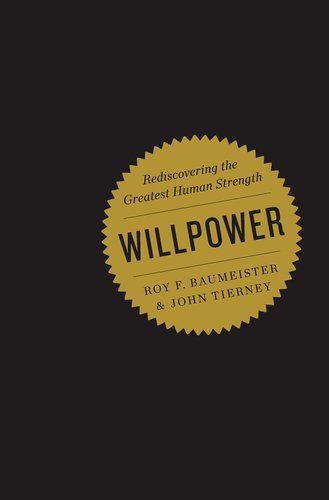
In this book cover "Willpower: Rediscovering the Greatest Human Strength," by Roy F. Baumeister and John Tierney, is shown. (AP) 
The world is an unpredictable place. It’s comforting to think we at least have some self-control. Willpower.

But willpower itself is slippery. Some days, some times we may have it. Some days, some times we may not. To eat or not eat the doughnut. Study the extra hour. My guests today have studied what willpower is. What bolsters it. What cuts it down. What influence it has in lives when starting places and circumstances can be so wildly different.

This hour On Point: we’re looking at the science and circumstances of willpower.

-Tom Ashbrook

Guests

John Tierney, New York Times columnist and co-author of Willpower: Rediscovering the Greatest Human Strength.

Roy Baumeister, psychology professor at Florida State University and co-author of Willpower: Rediscovering the Greatest Human Strength.

From Tom’s Reading List

The New York Times “Ever since Adam and Eve ate the apple, Ulysses had himself tied to the mast, the grasshopper sang while the ant stored food and St. Augustine prayed “Lord make me chaste — but not yet,” individuals have struggled with self-control. In today’s world this virtue is all the more vital, because now that we have largely tamed the scourges of nature, most of our troubles are self-inflicted. We eat, drink, smoke and gamble too much, max out our credit cards, fall into dangerous liaisons and become addicted to heroin, cocaine and e-mail.”

Excerpt

You can find a PDF excerpt here.