Dude, Where’s My Frontal Cortex?
There’s a method to the madness of the teenage brain.
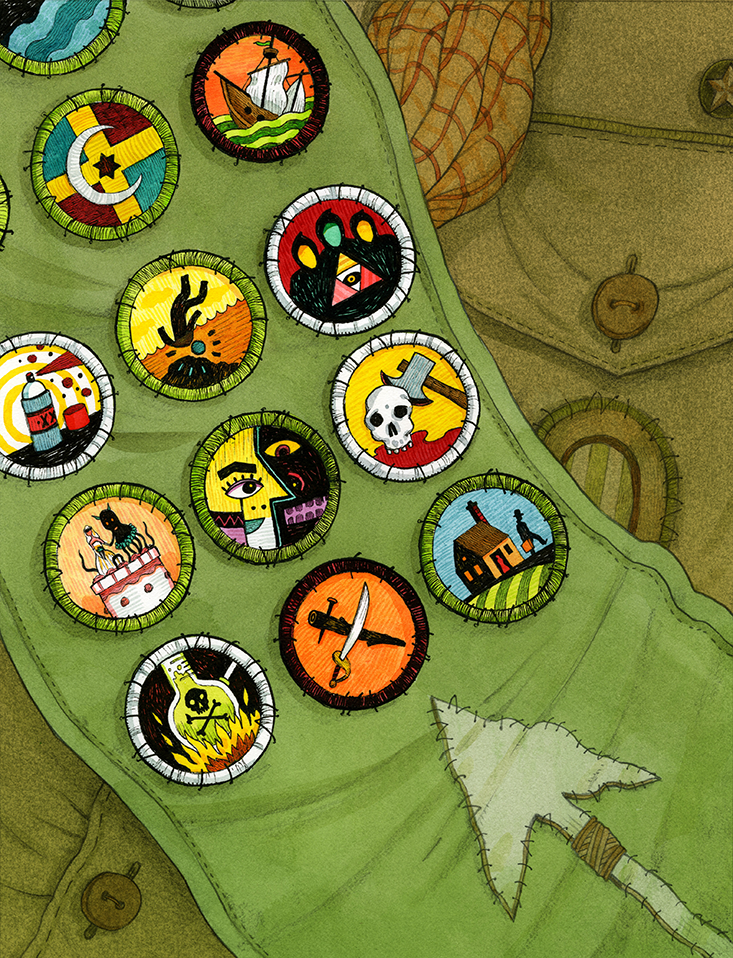
By Robert Sapolsky | Illustration by John Hendrix
July 24, 2014
IN THE FOOTHILLS of the Sierra Mountains, a few hours east of San Francisco, are the Moaning Caverns, a cave system that begins, after a narrow, twisting descent of 30-some feet, with an abrupt 180-foot drop. The Park Service has found ancient human skeletons at the bottom of the drop. Native Americans living there at the time didn’t make human sacrifices. Instead, these explorers took one step too far in the gloom. The skeletons belonged to adolescents.
No surprises there. After all, adolescence is the time of life when someone is most likely to join a cult, kill, be killed, invent an art form, help overthrow a dictator, ethnically cleanse a village, care for the needy, transform physics, adopt a hideous fashion style, commit to God, and be convinced that all the forces of history have converged to make this moment the most consequential ever, fraught with peril and promise.
For all this we can thank the teenage brain. Some have argued adolescence is a cultural construct. In traditional cultures, there is typically a single qualitative transition to puberty. After that, the individual is a young adult. Yet the progression from birth to adulthood is not smoothly linear. The teenage brain is unique. It’s not merely an adult brain that is half-cooked or a child’s brain left unrefrigerated for too long. Its distinctiveness arises from a key region, the frontal cortex, not being fully developed. This largely explains the turbulence of adolescence. It also reflects an important evolutionary pressure.
The frontal cortex is the most recently evolved part of the human brain. It’s where the sensible mature stuff happens: long-term planning, executive function, impulse control, and emotional regulation. It’s what makes you do the right thing when it’s the harder thing to do. But its neurons are not fully wired up until your mid-20s. Why?
It’s a central tenet of genetics that the genome that we start off life with, back when we were just a fertilized egg, is passed on to every subsequent cell in the body. But if the frontal cortex is the last part of the brain to fully mature, it’s the brain region least shaped by that genome and most sculpted by experience.
Our success as primates, and as individuals, revolves around social intelligence and adapting to the subtleties and idiosyncrasies of the environment. This is the portfolio of the frontal cortex. So if it’s going to develop the ability to do this right, it’s going to have to be profoundly shaped and informed by every smidgen of experience along the way.
Like evolution itself, though, maturation seldom follows a straight and narrow path. Adolescence reminds us that life has many rivers to cross, some fraught with turbulence.
AROUND THE ONSET of adolescence, the frontal cortex is the only brain region that has not reached adult levels of grey matter, made up of neuronal cell bodies. It would seem logical that gray matter levels would increase thereafter. But no, over the course of adolescence, frontal cortical gray matter volume decreases.
This occurs because of one of the cleverest things that brains ever evolved. During fetal development, mammalian brains generate far more neurons than are found in the adult brain. Why? Because the fetal brain holds a dramatic competition. Winning neurons get to migrate to the correct location and form the optimal number of connections with other neurons. Neurons that miss the cut undergo “programmed cell death.” Neuronal overproduction followed by competitive pruning (a process that has been termed “Neural Darwinism”) allows more complex and optimized neural circuitry, a wonderful example of less being more.
The same plays out in the adolescent frontal cortex. At the beginning of adolescence, gray matter volume is greater than it is in adults, and subsequently declines, as less optimally connected neurons are pruned away. Within the frontal cortex, it is the evolutionarily oldest sub-regions that mature first; the spanking new dorsolateral prefrontal cortex, for example, does not even begin to lose gray matter volume until the end of adolescence. This delayed frontal cortical maturation means that adolescents aren’t at adult levels of expertise at various cognitive tasks, like recognizing irony or Theory of Mind—the ability to operate with the knowledge that someone else has different information than you do.
In an adult, the frontal cortex steadies the activity of parts of the limbic system, a brain region involved in emotion; in contrast, in the teenage brain, the limbic system is already going at full speed, while the frontal cortex is still trying to make sense of the assembly instructions. One result of this imbalance is that emotions are more intense. Stick people in a brain scanner and show them pictures of faces expressing strong emotions. In the adult, there is activation of a prime limbic structure, the amygdala; shortly after, there is activation of frontal cortical regions, which damp the amygdaloid response: “OK, calm down, it’s just a picture of an angry/sad/happy/scared face, not the real thing.”
But in the teenager, the frontal cortical response is muted, and the amygdala’s response is augmented. That means emotional highs are higher, and the lows are lower. This is shown in studies of limbic pathways that release dopamine, a neurotransmitter central to anticipation of reward and pleasure (cocaine, for example, works on this limbic dopamine system). Average dopamine levels in adolescents and adults do not differ; what differs are patterns of dopamine release. Put an adult in a brain scanner, give them a small reward, and there’s a small degree of activation of this dopamine circuitry. Medium reward, medium activation; big reward, big activation. Now do the same with a teenager. Medium reward, medium activation, same as in the adult. With a big reward, though, dopamine signaling increases far more than in an adult. Small reward and dopamine signaling decreases. A small reward feels like a punishment. This is a neurochemical gyroscope that’s way off kilter.
The delayed maturation of the frontal cortex also helps explain the defining feature of adolescence, namely the weird predilection for bungee jumping. During risky decision-making, adolescents show less activation of some key sub-regions of the frontal cortex than do adults, and among adolescents, the less activity in these regions, the poorer the risk assessment.
And adolescents are bad at risk assessment in a particular way, shown by Sarah-Jayne Blakemore of University College London. Ask test subjects to estimate the likelihood of some event happening to them and then tell them the actual likelihood of it happening. The feedback can constitute good news, as subjects learn that a good event is more likely to occur than they thought. Conversely, the feedback can constitute bad news, as subjects learn an event can happen more often than they expected. Both adults and teens are likely to adjust their assessments when asked again about the likelihood of good news. But teens alone don’t get the picture about bad news. Researcher: What do you think the odds are of your having a car accident if you’re driving drunk? Adolescent: One chance in a gazillion. Researcher: Actually, the risk for people in general is 50 percent; now what do you think your chances are? Adolescent: Hey, we’re talking about me; one chance in a gazillion. This helps explain why adolescents have 2 to 4 times the rate of pathological gambling than adults.
So adolescents are lousy at risk assessment and take more risks. But there’s more to the story of those skeletons in Moaning Caverns. It’s not the case that adolescents and adults have an equal desire to do the same dumb-ass thing, and the sole difference is that the fully mature frontal cortex in the latter prevents them from doing so. Adolescents feel the allure of jumping off things. Middle-aged adults just recklessly cheat on their diets. Adolescents not only take more risks, they seek more novelty.
Adolescence is the time of life when we develop our tastes in music, food, and fashion, with openness to novelty declining thereafter. We’re not alone. When are lab rats most willing to try a novel food? During rodential adolescence. Among many social mammals, the adolescents of one of the sexes leave their natal group, avoiding inbreeding. Consider impalas, who live in a “harem structure,” a group of related females and offspring with one breeding male (and where the rest of the males knock around disconsolately in “bachelor herds”). When a young male hits puberty, he is driven out by the resident breeding male.
It’s different among primates. Take baboons. Two troops encounter each other on opposite sides of a stream. The males hoot and holler at each other in a manly fashion until they get bored and go back to foraging, ignoring the interlopers. An adolescent stands on the edge of the stream, riveted. “New baboons, a whole bunch of ’em!” Nervous and agitated, he runs five steps toward them, runs back four. He tentatively crosses the stream, sits on the very edge of the other bank, scampers back as soon as anyone so much as glances at him.
The next day he stays on the other side for an hour. Then an afternoon. Then a night, breaking the umbilical cord. He wasn’t pushed out of his home troop, as with impalas. He had reached the point where if he had to spend one more day with the same baboons he’s known his whole life, he’s going to scream. The same thing happens with adolescent female chimps, who can’t get off the farm fast enough, heading off into the great unknown in the next valley. We primates don’t get driven out of our herds at adolescence. We get a mad craving for novelty.
These traits are exacerbated when adolescents are around peers. In one study, Laurence Steinberg of Temple University discovered that adolescents and adults, when left on their own, don’t differ in the risks they take in a driving simulator. Add peers egging them on and rates don’t budge in adults but become significantly higher in teens. When the study is carried out in a brain scanner, the presence of peers (egging on by intercom) lessens frontal cortical activity and enhances activity in the limbic dopamine system in adolescents, but not in adults.
This teenage vulnerability to peer pressure is worsened by the fact that such pressure rarely takes the form of hesitant adolescents coerced into joining in the fun of committing random acts of kindness. Instead, pressure disproportionately takes the form of “deviance training,” increasing the likelihood of risky sexual behavior, poor health habits, substance abuse, and violence. As has been said, the greatest crime-fighting tool available to society is a 30th birthday.
One brain-imaging study reveals the neural depths of adolescent pain in not belonging. Put someone in a scanner to play a video game with two other individuals, and manipulate things so that the subject believes they are being ostracized. In adults, this social exclusion activates the amygdala along with other limbic regions associated with pain, disgust, anger, and sadness. But then the frontal cortex kicks in—“Come on, it’s a stupid game”—and the limbic structures quiet down. Do the same with an adolescent and the frontal cortex remains silent and that agonized limbic network of teenage angst wails.
The slowpoke frontal cortex is not the only explanation for teen behavior. Another factor comes into play that keeps that teen brain off balance, namely gonadal hormones like estrogen and progesterone in females, and testosterone in males. This helps explain why adolescence is more turbulent than childhood—the frontal cortex is immature at both ages, but the tsunamis of hormones haven’t started in pre-adolescents. Hormones have numerous effects on the function of both the limbic system and frontal cortex. Testosterone decreases the ability of the frontal cortex to communicate with and rein in the amygdala. Not surprisingly, landmarks of adolescent maturation in brain and behavior are less related to chronological age than to time since puberty.
The onset of puberty is not merely about the sudden onslaught of gonadal hormones. The defining feature of ovarian endocrine function is, of course, the oscillations of hormone release. In adolescent females, puberty does not arrive in full flower, so to speak, with one’s first period. Instead, for the first few years, only about half of cycles actually involve ovulation and the accompanying hormonal surges. So not only are there major fluctuations in gonadal hormone levels due to ovulation, but also higher-order fluctuations as to whether ovulation occurs. And fluctuations in hormones affect emotion and cognition. (While an adolescent male does not have the hormonal fluctuations of his female counterparts, it can’t be a great thing that his frontal cortex probably keeps getting hypoxic from all that priapic blood flow to his crotch.)
As adolescence dawns, the frontal cortex’s efficiency is diluted with superfluous connections failing to make the grade. The limbic system is fully online and dopamine is careening all over the place. Meanwhile, the brain is being marinated in the ebb and flow of gonadal hormones. No wonder the human species produces beings like Justin Bieber and Miley Cyrus, making a handy living catering to their constituency.
Party in the Brain: In adolescence, the frontal cortex is diluted with superfluous connections, dopamine is careening all over the place, and the brain is being marinated in the ebb and flow of hormones. That should explain Miley Cyrus.Getty Images for MTV
BUT ADOLESCENCE isn’t always as dark as it’s made out to be. There’s a feature of adolescence that makes up for the stupid risk-taking and hideous fashion decisions. And that’s an adolescent’s frenzied, agitated, incandescent ability to feel someone else’s pain, to feel the pains of the entire world, to want to right all its wrongs. Adolescents are nature’s most wondrous example of empathy, where the forcefulness of feeling as the other can border on nearly being the other.
This intensity is at the intersection of so many facets of adolescence. With the highs higher and lows lower, the empathic pain scalds and the glow of having done the right thing makes it seem plausible that we are here for a purpose. Another factor is the openness to novelty. An open mind is a prerequisite for an open heart, and the adolescent hunger for the new readily presents opportunities to walk a mile in someone else’s shoes. And there is the egoism of adolescence. There was a period during my late adolescence where I hung out with Quakers. They’d often say, “All God has is thee.” This is God of limited means, not just a God who needs the help of humans to right a wrong, but who needs your help most of all. Egoism is tailor-made for adolescents. Throw in inexhaustible energy and the sense of omnipotence and it seems possible to make the world whole.
A few years ago, I saw a magnificent example of the empathy that a sluggish frontal cortex can produce in teenagers. My daughter is seriously into theater and at the time she was in a production of a superb, searing play about the Bosnian genocide, Stefanie Zadravec’s Honey Brown Eyes. She played a 12-year-old Bosnian girl for whom things don’t go so great, and whose life-or-death fate is ambiguous as the play ends.
Some high school kids had come to a performance as a group outing for an English class. About halfway through the play, my daughter’s character appears for the first time, cautiously emerging from a ventilation duct in her kitchen where she’d been hiding, unaware that the soldier who had just left the apartment after killing her mother was going to return. Up until that point, she had only been hinted at as a character. The soldier had his ethnic-cleansing to-do list of names of Bosnians in the building to kill, and kept demanding of the mother, “Where’s your daughter? It says you have a daughter.” “I don’t have a daughter,” the mother repeated up until her death. So as the girl begins to emerge from the ventilation duct, the realization sweeps through the audience: there is a daughter. As my daughter began to crawl out, the teenagers in the audience did something you’re not supposed to do in a theater, something no adult with a developed frontal cortex would do. After a moment of hushed silence, two or three voices called out, “No!” Another called, “Go back in, it’s not safe!,” another, “He’s coming back!” After the play, the teenagers clustered around my little girl when she came out of the stage door, hugging her, reassuring themselves that both she and her character were OK.
This is the picture of adolescents with their hearts on their sleeves, limbic systems going full blast, and their frontal cortices straining to catch up with some emotional self-regulation. When I see the best of my university students in that agitated, optimistic state, I always have the same thought: It used to be so much easier to be like this. Having this adult frontal cortex of mine probably enables me to do good in a more efficacious, detached way. The trouble, though, is the same detachment makes it so much easier to decide that it’s really not my problem.
SO WHAT is the adaptive advantage of human brain development evolving this way? Potentially, there is no advantage. Perhaps the human frontal cortical maturation is delayed because it is the most challenging construction project the brain undertakes. In this view, wiring up something like the visual cortex can pretty much be wrapped up in the first year of life, but doing the same in the frontal cortex takes another quarter century. This seems unlikely. The frontal cortex has the same basic structure as the rest of the cortex, uses the same neurotransmitters and types of neurons. On a nuts and bolts level, its maturation is slower than necessary, suggesting that there has indeed been active selection for the delay, that there is something advantageous about it.
One possibility, of course, is the adolescent turbulence. If the frontal cortex wired up at the same speed as the rest of the brain, there’d be no Sturm und Drang, no emotional fireworks, no psychic acne. Just a simple transition from kids to fertile adults around age 12. One can imagine that something would then be lost—that developmental phase of antsy, itchy exploration and creativity that has been evolutionarily enriching. We might not have had that long line of pimply adolescent geniuses who worked away to invent fire, cave-painting, and the wheel.
Maybe. But this just-so story has to accommodate the fact that behavior doesn’t evolve for the good of the species, but for passing on copies of genes of individuals. And throughout history, for every teenager who scored big-time in the reproduction department thanks to some adolescent inventiveness, there’ve been far more who broke their necks from some adolescent imprudence.
No, I think that the genetic program of brain development has evolved to help free the frontal cortex from the straightjacket of genes. If the frontal cortex is the last part of the brain to fully mature, it is by definition the brain region least shaped by that genome and most sculpted by experience. With each passing day, the frontal cortex is more the creation of what life has thrown at you, and thus who you become.
A key theme in current neuroscience—the plasticity of the adult brain—underscores how this happens. As shown with a vast body of research, repeated stimulation of a synapse (the connection between two neurons) causes it to become more excitable, to pass on messages more readily; the synapse “remembers,” as a likely building block of how memory works. Similarly, the dense arbor of neuronal processes that determine which neurons connect to each other can expand or contract, depending on experience. Spend a summer learning how to juggle and entire circuits in the motor cortex will remap. Despite a zillion years of neuroscience dogma, it is now clear that the adult brain makes new neurons in response to things like an enriched environment. All of these occur in adults of any age, but most readily in the young adult brain. And if the frontal cortex is unique in still developing then, that makes it the brain’s hotspot for plasticity.
Why is this important? One answer comes from recent studies of intelligence in education. Some educators stress that a student’s “emotional intelligence” or “social intelligence” (as measured various ways) is a better predictor of adult success and happiness than their IQ or SAT scores. It’s all about social memory rather than memory of vocabulary words, about emotional perspective-taking, impulse control, empathy, ability to work with others, self-regulation.
There’s a parallel in other primates, with their big, slow-maturing frontal cortexes. What makes a “successful” male baboon in a world of dominance interactions? Attaining a high rank is all about muscle, sharp canines, well-timed aggression. But once alpha status has been achieved, maintaining it is all about social smarts—which potential coalitions to form, which to stay away from, how to cow a rival through psychological intimidation, having sufficient impulse control to walk away from provocations, and avoiding displacing aggression onto everyone else when you’re having a bad hair day. This is the realm where doing the right thing is often the harder thing, and adult life is filled with consequential forks in the road where intelligence lights the way forward.
This is all worth keeping in mind the next time you find yourself being an adolescent, or dealing with one who has the volume up to 11 in every domain. Sure, adolescence has its down sides, but it has its abundant pluses—the inventiveness, the optimism, the empathy. Its biggest plus is that it allows the frontal cortex time to develop. There’s no other way we could navigate the ever-increasing complexity of our social world.
~ Robert Sapolsky is professor of biology, neurology, and neurosurgery at Stanford University.
Showing posts with label teenagers. Show all posts
Showing posts with label teenagers. Show all posts
Thursday, July 24, 2014
Robert Sapolsky - Dude, Where’s My Frontal Cortex?
An excellent new article from Robert Sapolsky published at the always interesting Nautilus. Sapolsky offers some insights into the seemingly incomprehensible functioning of the teenage brain.



Thursday, July 10, 2014
What Happens to the Cool Kids When They Grow Up?

I could easily have been one of the subjects of this study. As an adolescent and teen I was desperate to be "cool," to be seen as mature, and to be "popular." It never really happened, and in some ways I was heading down the path these kids traveled - more relationship difficulties, higher rates of drug and alcohol abuse.
Fortunately for me, I bottomed out as an 18-19 year old, dropped out of the world I had been living in (including leaving behind my friends from high school), and then went back to school (after flunking out of my first college).
The kids in the study didn't make the same changes:
Allen's team said their results show that "early adolescent attempts to gain status via pseudomature behaviour are not simply passing annoyances of this developmental stage, but rather may signal movement down a problematic pathway and away from progress toward real psychosocial competence."Hitting my bottom and becoming introspective (thank you Plato, Aristotle, Shakespeare, Walt Whitman, St Theresa, Mirabi, Rumi, and so many others) saved my life. AND it allowed me to do some growing up that I failed to do as a teenager (no one grows up psychologically when they are high or drunk much of the time).
What happens to the cool kids when they grow up?
Wednesday, July 2, 2014
"Cool kids", according to a new study, are those early teens (aged 13 to 15) who want to be popular, and try to impress their peers by acting older than their years. They have precocious romantic relationships, commit relatively minor acts of bad behaviour (such as sneaking into the cinema without paying), and surround themselves with good-looking friends. These teenagers attract respect from their peers at first, but what's the story by the time they reach early adulthood?
Joseph Allen and his colleagues made contact with 184 thirteen-year-olds (98 girls) from a diverse range of backgrounds, living in the Southeastern United States. They interviewed them at that age, and then again when they were aged 14 and 15. The researchers also contacted some of their close friends and peers. Finally, the sample and their friends were followed up again a decade later, when they were aged 21 to 23.
There were short-term advantages to being a cool kid - these teens tended to be popular when they were in early adolescence. However, this popularity began to fade through teenhood. And ten years later, the cool kids were at greater risk for alcohol and drug problems, more serious criminal behaviour, and, according to their friends, they struggled with their platonic and romantic relationships. As adults, cool kids also tended to blame their recent relationship break ups on their partner not thinking they were popular enough - as if they were still viewing life through the immature lens of cool.
Allen's team said their results show that "early adolescent attempts to gain status via pseudomature behaviour are not simply passing annoyances of this developmental stage, but rather may signal movement down a problematic pathway and away from progress toward real psychosocial competence." They think cool kids' preoccupation with being precocious and rebellious gets in the way of them developing important socialisation skills. It's also likely that as they get older, cool kids feel the need to engage in ever greater acts of rebellion to command respect from their peers.
Is it possible that the researchers were simply measuring a propensity to deviance and criminality in early adolescence, making their longitudinal findings unsurprising? They don't think so. They point out that serious criminality, and alcohol and cannabis use, in early adulthood were more strongly correlated with being a cool kid in early adolescence (i.e. as measured by desire for popularity; precious romantic relationships; minor deviance; and surrounding oneself with good-looking friends) than with alcohol and drug use, and criminality at that time.
The study is not without limitations - for example, cool kids were found to lose their popularity through adolescence, but this was based on a measure of their peers' desire to be with them, not on their status. It's also possible they retained or earned popularity with teens older than them. Nonetheless, Allen and his team said their findings are novel and show that the "seemingly minor behaviours" associated with being a cool kid "predict far greater future risk than has heretofore been recognised."
_________________________________
Allen JP, Schad MM, Oudekerk B, & Chango J (2014, Jun 11). What Ever Happened to the "Cool" Kids? Long-Term Sequelae of Early Adolescent Pseudomature Behavior. Child Development; Epub ahead of print. doi: 10.1111/cdev.12250 | PMID: 24919537

* * * * *
What Ever Happened to the "Cool" Kids? Long-Term Sequelae of Early Adolescent Pseudomature Behavior.
Allen JP, Schad MM, Oudekerk B, Chango J.
Abstract
Pseudomature behavior-ranging from minor delinquency to precocious romantic involvement-is widely viewed as a nearly normative feature of adolescence. When such behavior occurs early in adolescence, however, it was hypothesized to reflect a misguided overemphasis upon impressing peers and was considered likely to predict long-term adjustment problems. In a multimethod, multireporter study following a community sample of 184 adolescents from ages 13 to 23, early adolescent pseudomature behavior was linked cross-sectionally to a heightened desire for peer popularity and to short-term success with peers. Longitudinal results, however, supported the study's central hypothesis: Early adolescent pseudomature behavior predicted long-term difficulties in close relationships, as well as significant problems with alcohol and substance use, and elevated levels of criminal behavior.
Friday, April 25, 2014
Teenage Brainstorm (Dr. Dan Siegel) - All in the Mind

Last weekend's episode of All in the Mind featured an interview with author and neuropsychiatrist Dr. Daniel Siegel, talking about his most recent book on the teenage brain, Brainstorm: The Power and Purpose of the Teenage Brain (2104).
Teenage Brainstorm
Sunday 20 April 2014
All in the Mind | Lynne Malcolm
When you’re a teenager, life is on fire, wildly exciting with limitless possibilities. It can also be overwhelming and dangerous. In the past raging hormones have been blamed – but we’re now learning that it’s down to the very particular and important way that the adolescent brain develops. Professor Dan Siegel has researched the brain and emotional development of children and now he focuses on the emerging adolescent mind during the years between 12 and 24. With a new understanding of the science and purpose behind this stage of development he suggests ways for young people to capture the positive essence of adolescence, based on mindful awareness techniques.
Audio: Hear about the Wheel of Awareness practice, one of Dr Dan Siegel’s mindsight exercises | Download MP3 (2.9MB)
Guests
Professor Daniel J. SiegelClinical professor of psychiatry, University of California Los Angeles, Author
Publications
Brainstorm: The Power and Purpose of the Teenage Brain
Daniel J. Siegel (2014)
An Inside-Out Guide to The Emerging Adolescent Mind, Ages 12 to 24
Mindsight: The New Science of Personal Transformation
Daniel J. Siegel (2010)
Change your brain and your life
Further Information
- Dr. Dan Siegel website
- Lifeline 131114
- Headspace National Youth Mental Health Foundation
- Sane Australia

Friday, March 28, 2014
Authors at Google: Dan Siegel - The Adolescent Brain and the Essence of Life

Dr. Dan Siegel stopped by Google earlier this month to talk about his newest book, Brainstorm: The Power and Purpose of the Teenage Brain (2013). Here is a synopsis of the book:
Between the ages of 12 and 24, the brain changes in important, and oftentimes maddening, ways. It’s no wonder that many parents approach their child’s adolescence with fear and trepidation. According to renowned neuropsychiatrist Daniel Siegel's New York Times bestseller Brainstorm, if parents and teens can work together to form a deeper understanding of the brain science behind all the tumult, they will be able to turn conflict into connection and form a deeper understanding of one another.Enjoy the talk!
In Brainstorm, Siegel illuminates how brain development impacts teenagers’ behavior and relationships. Drawing on important new research in the field of interpersonal neurobiology, he explores exciting ways in which understanding how the teenage brain functions can help parents make what is in fact an incredibly positive period of growth, change, and experimentation in their children’s lives less lonely and distressing on both sides of the generational divide.
Brainstorm is a New York Times bestseller and current nominee for a Books for a Better Life award.
Dan Siegel - The Adolescent Brain and the Essence of Life
Published on Mar 27, 2014
Dan Siegel visited Google LA to discuss his book "Brainstorm - The Power and Purpose of the Teenage Brain." This talk took place on March 10, 2014.
Tuesday, January 07, 2014
Daniel Siegel: "Brainstorm: The Power And Purpose Of The Teenage Brain"
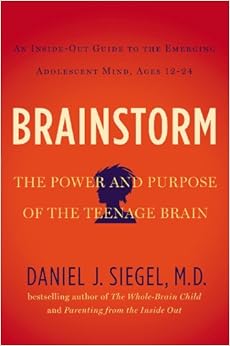
Dan Siegel has a new book out on the "power and purpose" of the teenage brain - Brainstorm: The Power and Purpose of the Teenage Brain. Yesterday morning, Siegel appeared on NPR's The Diane Rehm Show.
Daniel Siegel: "Brainstorm: The Power And Purpose Of The Teenage Brain"
Monday, January 6, 2014
Ninth-grade honors English students Jennifer Smith, left, Ruth Thomas, and Jaleesa Thomas, no relation, work on laptop computers during class at Philadelphia High School for Girls in Philadelphia, Thursday, May 10, 2007. (AP Photo/Matt Rourke)Adolescence is universally recognized as a trying time for parents and children. But new brain research suggests this period of immature and often reckless behavior is more than just a stage for parents and teens to endure. It is a vital time for adolescents to chart the course for the adults they will ultimately become. One brain researcher points out that it is during our teen years that we learn how to navigate the world outside the safety of home, how to connect deeply with others and how to safely take risks. He says that by understanding how the brain functions, teens can improve their own lives and those of their parents. Diane and her guests discuss the power and purpose of the teenage brain.
Guests
Daniel Siegel, clinical professor of psychiatry, UCLA School of Medicine and co-director, UCLA Mindful Awareness Research Center.
Read An Excerpt
Excerpted from "Brainstorm: The Power and Purpose of the Teenage Brain" by Daniel Siegel. Copyright © 2013 by Daniel Siegel. Excerpted by permission of Tarcher/Penguin. All rights reserved. No part of this excerpt may be reproduced or reprinted without permission in writing from the publisher.

Sunday, November 03, 2013
Cannabis Use During Adolescent Development: Susceptibility to Psychiatric Illness

Use of cannabis by adolescents in key developmental periods increases vulnerability to psychiatric disease and overlaps with biological changes in the endocannabinoid system. The endocannabinoid system is involved in a LOT of biological functions, including memory, appetite, energy balance and metabolism, stress response, immune function, multiple sclerosis, female reproduction, autonomic nervous system, analgesia, thermo-regulation, and sleep
Adolescence is associated with an increased incidence of psychiatric illness, and exposure to cannabis during this developmental window strongly predicts subsequent development of mood disorders, addictive disorders, and schizophrenia (A). Components of the endocannabinoid system appear as early as embryonic life, but maximal CB1R mRNA expression occurs during adolescence.When people advocate for legalizing marijuana and tout its healing benefits, most seem to ignore that there are years and years of research linking marijuana use, especially in adolescents and teens, to increased risk for mental illness and psychotic episodes.
The other thing that advocates of marijuana legalization overlook, or are ignorant of, is the tremendous increase in THC levels relative to CBD (cannabidiol), a trend that makes for a greater high and a greater risk and negative side effects. The black market has bred marijuana to be higher in THC and lower in CBD.
Medical marijuana, on the other hand, at least in San Francisco, is being bred for a higher CBD level and a lower THC level. From Wikipedia:
Cannabidiol (CBD) is one of at least 85 cannabinoids found in cannabis.[3] It is a major constituent of the plant, second to tetrahydrocannabinol (THC), and represents up to 40% in its extracts.[4] Compared with THC, cannabidiol is not psychoactive in healthy individuals, and is considered to have a wider scope of medical applications than THC,[5] including to epilepsy,[6] multiple sclerosis spasms,[7] anxiety disorders, bipolar disorder,[5] schizophrenia,[8] nausea, convulsion and inflammation, as well as inhibiting cancer cell growth.[9] There is some preclinical evidence from studies in animals that suggests CBD may modestly reduce the clearance of THC from the body by interfering with its metabolism.[10][11][12] Cannabidiol has displayed sedative effects in animal tests.[13] Other research indicates that CBD increases alertness.[14] CBD has been shown to reduce growth of aggressive human breast cancer cells in vitro, and to reduce their invasiveness.[15]Anyway, this article offers pretty solid evidence for the risks in allowing adolescents and teens to smoke marijuana, which would likely be prohibited if and when marijuana becomes widely legal. Still, kids are going to smoke weed just like kids are going to drink their parents' beer.
Cannabis use during adolescent development: Susceptibility to psychiatric illness
Benjamin Chadwick [1], Michael L. Miller [1], and Yasmin L. Hurd [1,2,3]
1. Fishberg Department of Neuroscience, Friedman Brain Institute, Icahn School of Medicine at Mount Sinai, New York, NY, USAABSTRACT
2. Department of Psychiatry, Icahn School of Medicine at Mount Sinai, New York, NY, USA
3. James J. Peters VA Medical Center, Bronx, NY, USA
Cannabis use is increasingly pervasive among adolescents today, even more common than cigarette smoking. The evolving policy surrounding the legalization of cannabis reaffirms the need to understand the relationship between cannabis exposure early in life and psychiatric illnesses. cannabis contains psychoactive components, notably Δ9-tetrahydrocannabinol (THC), that interfere with the brain’s endogenous endocannabinoid system, which is critically involved in both pre- and post-natal neurodevelopment. Consequently, THC and related compounds could potentially usurp normal adolescent neurodevelopment, shifting the brain’s developmental trajectory toward a disease-vulnerable state, predisposing early cannabis users to motivational, affective, and psychotic disorders. Numerous human studies, including prospective longitudinal studies, demonstrate that early cannabis use is associated with major depressive disorder and drug addiction. A strong association between schizophrenia and cannabis use is also apparent, especially when considering genetic factors that interact with this environmental exposure. These human studies set a foundation for carefully controlled animal studies which demonstrate similar patterns following early cannabinoid exposure. Given the vulnerable nature of adolescent neurodevelopment and the persistent changes that follow early cannabis exposure, the experimental findings outlined should be carefully considered by policymakers. In order to fully address the growing issues of psychiatric illnesses and to ensure a healthy future, measures should be taken to reduce cannabis use among teens.
Full Citation:
Chadwick B, Miller ML and Hurd YL. (2013, Oct 14). Cannabis use during adolescent development: susceptibility to psychiatric illness. Frontiers in Psychiatry: Addictive Disorders and Behavioral Dyscontrol, 4:129. doi: 10.3389/fpsyt.2013.00129
Introduction
Cannabis sativa is grown worldwide for its production of Δ9 -tetrahydrocannabinol (THC), a psychoactive compound found in the recreational drugs marijuana and hashish. The pervasiveness of this drug worldwide, along with its relatively low lethality, has led many to believe that it is of little harm. Indeed, the use of cannabis currently exceeds that of tobacco smoking among adolescents in the United States (1) (Figure 1). Whether cannabis is harmless, and without significant physiological or mental health impact, is actively debated. Unfortunately, these discussions are often not guided by evidence-based data. Research focused on the relationship between cannabis and mental health is thus important especially considering that psychiatric illnesses are complex disorders with multiple factors contributing to vulnerability and eventual expression of the illness. Based on the accruing data to date outlined in this review, developmental cannabis exposure is an important contributing factor to psychiatric vulnerability (Figure 2A).
FIGURE 1
Figure 1. Cannabis consumption is widespread in adolescents. Prevalence of this drug’s intake exceeds other illicit drug’s in eighth through twelfth graders in the USA (A), and it recently surpassed cigarette use (B). Graphs based on data adapted from Johnston et al. (1)(A,B).
FIGURE 2

Figure 2. Developmental cannabis increases vulnerability to psychiatric disease and overlaps with ontogenic changes in the endocannabinoid system. Adolescence is associated with an increased incidence of psychiatric illness, and exposure to cannabis (arrow head) during this developmental window strongly predicts subsequent development of mood disorders, addictive disorders, and schizophrenia (A). Components of the endocannabinoid system appear as early as embryonic life, but maximal CNR1 mRNA expression occurs during adolescence (B). (Green line = cannabis-exposed and gray line = unexposed individuals.)
Cannabis and Developmental Pattern of Use
Psychiatric illnesses are developmental in nature – the 12-month prevalence of any psychiatric illness is ∼40% in adolescents (2), but ∼25% in adults (3) – making it significantly germane to the strong developmental pattern of cannabis use. A plethora of studies and national surveys monitored the patterns of cannabis use in multiple ethnic and geographic populations worldwide. In the United States, cannabis use is highly prevalent during adolescence (Figure 1), the developmental period when most people initiate use. There are over 6000 first-time cannabis users per day in the US, over 60% of which are under the age of 18 (4). Approximately 34–45% of ninth through twelfth graders reported cannabis use at least once in their lifetime and the pattern of subsequent use appears more or less intermittent with 23% of 12 graders reporting use in the past month (1, 5, 6). Data from wave I–III of the National Longitudinal Study for Adolescent Health recapitulate this pattern of wide spread yet occasional use in adolescents. While the majority of teens have infrequent use, still a significant percentage, 6.6%, report daily use. Determining the long-term impact of occasional and heavy cannabis use during active periods of brain development, such as adolescence, is of critical importance. To provide such insights, data garnered from epidemiological and experimental studies is reviewed in this article. The emerging evidence strongly suggests that cannabis exposure during adolescence increases an adult’s individual vulnerability to drug addiction and schizophrenia and may also produce long-lasting effects on anxiety and mood disorders.
Endocannabinoid System
The psychoactive effects of cannabis, principally mediated by THC, occur via its interaction with the endocannabinoid system, which regulates numerous biological processes involved in development and neuroplasticity. The endocannabinoid system consists of lipid-derived ligands, receptors, and enzymes that orchestrate intercellular communication and intracellular metabolism. The most characterized endocannabinoid ligands – or endocannabinoids (eCBs) – include 2-AG and anandamide, which are presumably synthesized via phospholipase-mediated pathways. At least two G-protein coupled receptors, referred to as cannabinoid receptor-1 (CB1R) and -2 (CB2R), interact with these ligands. Additionally, recent evidence suggests that eCBs bind to ligand-gated channels, particularly TRPV1. In regard to the ligands, eCBs are synthesized from membranous precursors and immediately diffuse to nearby cannabinoid receptors, classically expressed on pre-synaptic terminals. Following these events, co-expressed enzymes, such as monoacylglycerol lipase (MGLL), α-β-hydrolase domain 6 (ABHD6), and fatty acid amide hydrolase (FAAH), degrade the ligand to terminate its signal (7, 8). Tightly regulated biosynthetic and degradative pathways ensure proper signaling throughout development, and the correct function of these processes depends on the temporal and spatial patterning of this system. Exogenously consumed cannabis produces supraphysiological effects at eCB-targeted receptors and thus usurp the normal endocannabinoid system (9).
The endocannabinoid system is critical for neurodevelopment and as such is present in early development, and maintains expression throughout life (Figure 2B), exhibiting a broad spatial distribution to regulate synaptic plasticity (10, 11). The CB1R is found in numerous central nervous system structures as early as the eleventh embryonic day, and throughout the embryonic period this receptor is expressed in subcortical and cortical regions (12). In cortical projection neurons, CB1R and local eCBs facilitate the fasciculation of descending efferents and thalamic afferents, orchestrating the tight coupling of these two tracts (13). During adolescence, the endocannabinoid system still facilitates neurodevelopment through its intricate involvement in neuroplasticity and synaptic function. Receptor levels of CB1R in the prefrontal cortex and striatum fluctuate during adolescence depending on the specific brain region. For instance, there is a rapid, sustained increase in cannabinoid receptor binding during adolescence, particularly in the striatum, that is substantially reduced (by half) in early adulthood (14). In addition, the expression of the CB1R gene (Cnr1) is highest during adolescence and gradually decreases by adulthood with the greatest decreases observed in limbic-related cortical regions such as the cingulate, prelimbic, and infralimbic cortices (15). Concomitant to developmental changes in the CB1R, levels of anandamide and 2-AG, as well as FAAH enzymatic activity, fluctuate throughout adolescence in a region- and time-specific manner (16, 17). The distinct changes in CB1R and other components of the eCB system during adolescence, some of which occur during a narrow time window, suggest that certain phases during this dynamic ontogenic period may incur different sensitivity to cannabis exposure. These observations highlight the fact that despite significant studies of CB1R in the adult brain, there are still gaps of knowledge as to the role of CB1R and the endocannabinoid system in the extensive pruning and development that is evident throughout adolescence.
Addiction Vulnerability
A gateway drug hypothesis had long been proposed implying that adolescent cannabis use predisposes individuals to use other illicit drugs as adults, thereby increasing their vulnerability to substance use disorders (18) (Figure 2A). Although, the term “gateway” has sometimes been misinterpreted to imply that all individuals who use cannabis will directly abuse other drugs, this original hypothesis by Kandel (18) conducted on cohorts of high school students suggested that cannabis use is a critical illicit drug, intermediate in the transition from legal substance use (i.e., cigarettes and alcohol) to illicit drug use (i.e., heroin, amphetamines, and LSD). Over a quarter of individuals who progressed to illicit drug use had previous experience with marijuana while only 2–3% of legal drug users without marijuana experience progressed to illicit drug use. Subsequent longitudinal studies that tracked younger adolescents found that early cannabis use positively predicted cocaine and alcohol use across a 1-year period (19). Additional evidence that early-life cannabis consumption increases cocaine use later in life is supported by studies representing broad demographic populations (20), suggesting that these findings are likely generalizable.
Prospective longitudinal studies have also offered compelling evidence in support of the gateway drug hypothesis. A landmark 25 year-long study conducted on a birth cohort from New Zealand assessed associations between age of onset, and frequency of cannabis use, with the use and/or dependence of other substances (21). Even after controlling for a number of confounding variables, such as socio-economic background, other illicit substance use, family functioning, child abuse, and personality traits, early cannabis use was still significantly associated with subsequent drug abuse and dependence. Additionally this effect was age-related such that the association between cannabis use and the development of drug abuse and dependence declined with increasing age of initiation. An important strength of this study was that data collection extended beyond self-reports, and included parental interviews, medical records, psychometric assessment, and teacher reports. Twin-studies, which control for potential confounds such as genetics and shared environmental influences, have also confirmed that early adolescent onset of cannabis use increases the likelihood of developing drug dependence later in life (22).
One concern with human epidemiological studies is the inability to distinguish between casual and purely associative relationships. This is highlighted by a common-factor modeling study which suggests that correlations between cannabis and illicit drugs were principally attributed to other factors, namely an individual’s opportunity for and propensity to use drugs (23). Therefore, it has been argued that the transition from cannabis use to other drugs is not causal but is simply an expected sequence engaged by individuals that would normally go on to use other illicit drugs. Moreover, many teens who routinely smoke cannabis also use other drugs (e.g., alcohol and tobacco). While sequential transitions and the co-abuse of other drugs during such times could potentially contribute to enhance psychiatric risk, it is impossible to ignore the growing body of evidence that suggest a significant contribution of early adolescence cannabis specifically to the propensity to develop substance abuse disorders later in life even when controlling for other substances (21, 22) (Figure 3).
FIGURE 3Animal studies allow the possibility to directly test the causal relationship between adolescent cannabinoid exposure and subsequent risk for drug addiction, independent of subject-specific factors that confound human investigations. Although a weakness of animal studies is that they do not mimic the complex nature of psychiatric disorder, specific phenotypes relevant to such disorders can be examined. In contrast to most psychiatric disorders, modeling addiction in animals is very predictive of the human condition through the use of self-administration paradigms wherein animals control their own drug intake. Under such conditions, adolescent exposure to THC reliably increases heroin self-administration (24, 25). In a similar investigation, performed in slightly older rats (approximately late adolescence), THC pre-exposure increased heroin self-administration when the contingency for heroin was fixed, but not when the work necessary to acquire heroin was progressively increased (26). Such findings imply that adolescent THC exposure increases the hedonic, but not motivational, aspects of heroin-seeking. Limited animal investigations have examined the sensitivity of early THC exposure to other “heavy” drugs of abuse such as cocaine, but the existing studies to date do highlight the generally enhancing effects of adolescent cannabinoid exposure on future drug-seeking behaviors, and experimentally support the gateway drug hypothesis.
Figure 3. Cannabis use is associated with progression to use other illicit substances in humans. Twin-studies illustrate that cannabis users have an increased risk of developing substance abuse disorder compared to their discordant twin. Graph based on data adapted from Lynskey et al. (22) (A). Cross-sectional studies reveal that earlier and more frequent cannabis use further increases this risk. Graph based on data adapted from Fergusson et al. (21) (B).
Animal studies also provide specific insights about discrete neurobiological disturbances associated with developmental cannabinoid exposure. For example, adolescent THC increases inhibitory G-protein coupled signaling in the rodent midbrain, which by modulating dopaminergic projections, enhances mesolimbic dopamine, all adaptations strongly associated with enhanced reward (24). In addition, adolescent THC exposure increased mu opioid receptor function in the nucleus accumbens, a brain region central to reward and motivated behaviors, and these receptor impairments directly correlated to heroin intake (24). Moreover, increased gene expression of proenkephalin, an opioid neuropeptide that directly modulates heroin self-administration behavior, is also induced in the nucleus accumbens of adult rats with adolescent THC exposure (25). Enhanced cocaine self-administration has also been observed in female rats as a consequence of early-life exposure to the cannabinoid agonist CP-55,940 which was associated with altered striatal dopamine transporter binding in adulthood (27), and this transporter’s disturbance is highly implicated in addiction-related behaviors. Together these and other accumulating evidence in the literature emphasize that adolescent cannabinoids persistently change mesolimbic brain regions of the adult that sufficiently predict future self-administration behavior, a phenotype relevant to drug addiction vulnerability.
Negative Affect and Anxiety
Another major question regarding the impact of adolescent cannabis relates to its role in negative affective disorders, such as major depressive disorder (MDD), which are increasingly burdensome worldwide. While equivocal, several longitudinal studies demonstrate an association between MDD and early-life exposure to cannabis. A large multi-cohort longitudinal investigation that examined the effects of adolescent cannabis use on depression and anxiety showed that frequent adolescent cannabis use increased depression and anxiety in early adulthood (28). Furthermore measures of depression and anxiety during adolescence did not predict cannabis use in young adults suggesting that this relationship was not simply due to premorbid differences. Similarly, while individuals who used cannabis during early teens did not differ in depression, suicidal ideation, or suicide attempts during adolescence, by early adulthood these individuals had significantly higher incidence of suicidal ideation and suicide attempts (29). A consistent observation was reported in another large longitudinal investigation, which found that adults with early cannabis use had increased suicidal behaviors (30). Altogether these findings emphasize the important contribution of early cannabis exposure to MDD and suicidal ideation. Importantly, accumulating evidence also implies that both adolescent exposure and the continued use during adulthood are required for these associations (31, 32) suggesting that disease may be mitigated with cannabis cessation.
It is important to note that although most studies to date imply an association of early cannabis with negative affective disorders, the longitudinal cohort investigation by Harder et al. (33) did not find any difference in depression or anxiety either during early adolescence or at the last follow-up in adulthood. This inconsistency may be due to the study’s lenient definition of a “cannabis user,” which included any participant who ever smoked cannabis prior to age 17 (∼50% population). Although additional studies are needed to understand the long-term causative effects of adolescent cannabis on negative affect, a preponderance of the evidence accrued thus far strongly suggests a correlation between these two factors.
Future longitudinal studies are clearly still needed to examine the contribution of the developmental period of onset and cessation of cannabis to the risk of negative affect. In addition, in vivo neuroimaging in humans can also offer much needed neurobiological insights. Evidence already exists demonstrating volumetric impairments in the amygdala, a brain region central to affective and addictive disorders, in cannabis users during early (34), and late (35) adolescence. Similarly, structural changes in the hippocampus, which is linked to depression (36), has been reported in individuals with cannabis use during late adolescence (35, 37).
The use of animal models has also helped to fill gaps of knowledge regarding the direct link between early-life cannabis use and negative affect and anxiety. Such experimental studies have demonstrated that early exposure to cannabinoids directly leads to dysregulation of emotional processes and induces depressive-like phenotypes later in life. For instance, escalating doses of THC to adolescent rats decreases sucrose preference, a measure of anhedonia (38). Other behavioral strategies such as the forced-swim test used to measure depression-related symptoms also reveal a pro-depressive phenotype directly associated with adolescent THC (39), although these effects generally appear stronger in females (38, 40). These findings suggest that adolescent cannabinoid exposure could affect the liability to mood disorders later in life, and the potential gender differences may relate in those well-documented in human depression.
Altered anxiety-like behavior as a consequence of adolescent cannabinoid exposure is also apparent in experimental animals though the relationship is not straightforward per se. Anxiogenesis or anxiolysis has been reported depending on the period of cannabinoid exposure and the specific task used to model anxiety. For example, chronic exposure to cannabinoid agonists – such as THC, CP-55,940, or WIN-55,212-2 – during mid- to late-adolescence, increases social anxiety as measured with a social recognition task (41–44). Other measurements of stress that do not rely on social interaction, such as the open-field and elevated plus-maze tests, indicate varying degrees of anxiolysis, not anxiogenesis (41, 45, 46). These anxiolytic effects were observed after mid- to late-adolescent exposure, whereas earlier, pre-pubertal exposures (PND 15–40) were anxiogenic (47). Consistent with the notion of critical periods, persistent alterations in anxiety almost exclusively occur after early-life exposure and not in animals exposed as adults (39).
Few animal experimental studies have specifically focused on examining neurobiological mechanisms associated with regulation of emotion in association with adolescent cannabinoid exposure. Of the studies, Page et al. (48) demonstrated that administration of the cannabinoid agonist WIN-55,212-2 to adolescents, as compared to adult rats, more profoundly and persistently disrupted cells in the locus coeruleus, a midbrain region that contains noradrenergic neurons and is implicated with depression and anxiety. Similarly, adolescent animals treated with WIN-55,212-2 exhibit altered midbrain neuronal firing characteristics that were not observed in adult-exposed rats (39). Specifically, the cannabinoid treatment resulted in hyperactivity of the noradrenergic neurons concomitant with hypoactivity of serotonergic cells (39). Such neuroadaptations would be predictive of enhanced anxiety and depression-like behavior as a consequence of early cannabinoid exposure.
Schizophrenia and Schizoaffective Disorders
Although a small fraction of teens that use cannabis develop schizoaffective disorders, a number of epidemiological studies repeatedly demonstrate elevated risk to develop these psychiatric disorders in association with early-life cannabis use. Longitudinal studies assessing the relationship between early-life cannabis exposure and schizotypal personality disorder demonstrated that early adolescent use increases adulthood symptomatology (49). Moreover, the presence and severity of schizophrenic endophenotypes, such as psychotic symptoms and prepulse inhibition, were predicted by adolescent cannabis use (50, 51).
The first longitudinal studies demonstrating an association between cannabis use before adulthood and schizophrenia were conducted in Swedish conscripts (52, 53) Although no information was known about the individuals before conscription, subjects reporting previous cannabis use at the time of conscription were significantly more likely to be diagnosed with schizophrenia later in life. These findings were replicated in multiple studies emphasizing the reproducible relationship between adolescent cannabis use and increased schizophrenia symptoms in adulthood (54, 55).
Although it is challenging to model schizophrenia in animals, phenotypes related to this disorder may be studied. Animals exposed to cannabinoids during adolescence demonstrate increased schizoaffective-like phenotypes, such as impaired sensorimotor gating, which, similar to humans, results in decreased prepulse inhibition (45). Consistent with the notion that developmental cannabinoids induce a schizophrenia-like phenotype, acute administration of the anti-psychotic haloperidol normalized prepulse inhibition in the cannabinoid-exposed rats (47).
Since not all cannabis users develop schizophrenia, early cannabis use likely interacts with other factors to facilitate the emergence of this disease (56). Accumulating data in recent years highlight that the association between early cannabis exposure and vulnerability to schizophrenia is related to individual genetics. Pioneering studies by Caspi et al. (57) demonstrated that the relationship between adolescent cannabis use and schizophreniform disorder, as well as the presence of various psychotic symptoms, was attributable to the presence of a functional polymorphism in the catechol-O-methyltransferase (COMT) gene. This enzyme degrades catecholamines, such as dopamine, and this functional variant (COMTvaline158) catabolizes this neurotransmitter more rapidly than the methionine allele (58). In cannabis users, schizophreniform disorder is predominantly observed in persons with at least one copy of the polymorphic COMT gene (59–61). Moreover, clinical laboratory experiments show that THC’s acute psychotomimetic effects are moderated by this COMT SNP with THC-induced psychotic-like experiences and cognitive impairments being more pronounced in individuals with the valine158 allele (62). Animal models also confirm a link between the genetic disturbance of COMT and developmental cannabis such that adolescent THC exposure in transgenic mice lacking endogenous COMT synergistically impacts behaviors relevant to schizophrenia (63). Overall, these human and animals studies highlight the significant association between early cannabis exposure and schizophrenia, supporting the so-called two-hit hypothesis which posits that both genetics and early environmental factors enhance individual risk to psychiatric illnesses.
Phytocannabinoids and Psychiatric Vulnerability
It is important to emphasize that while most studies focused on THC to understand the long-term impact of cannabis, the plant produces at least 70 cannabinoids (64). To date the most studied phytocannabinoid aside from THC is cannabidiol (CBD), the second major constituent of the cannabis plant. Interestingly, in contrast to THC, CBD appears to have more protective effects relevant to addiction, cognition, and negative affect. For example, CBD inhibits drug-seeking behavior associated with heroin-relapse in rats (65), reduces cigarette intake (66), and inhibits morphine reward (67). It also has anti-psychotic properties (68, 69) and reduces anxiety behavior in rodents (70) and humans (66). Most of these investigations, however, were carried out in adults. No published study to date has examined CBD in relation to adolescent development and subsequent behavioral consequences in later life. As such, it remains to be explored whether the potential positive effects of CBD on brain function seen in adults would also be evident with adolescent exposure. One intriguing consideration about CBD relevant to the developing brain is that cannabis plants today ingested by teens are grown for high THC, but low CBD content (71). This significant change in the THC:CBD ratio could reduce a normally apparent protective constituent of cannabis. The fact that so little is known about CBD and the developing brain highlights the need for research about this and other phytocannabinoids to more fully understand the impact of cannabis to psychiatric vulnerability.
Conclusion
The high prevalence of cannabis use among teens and the increasing number of states in the USA that legalize cannabis for both medicinal and recreational purposes are concerning given the surprisingly limited information known about the impact of cannabis on the developing brain and individual susceptibility. Though a causative relationship cannot be determined between marijuana’s glamorization and its increasing use in teenagers, important lessons can be learned from the major inroads made in reducing cigarette use in youths such as interventions through campaigns that made smoking less socially accepted. Based on the current evidence available from human and animal models, it is evident that cannabis use during adolescent development increases risk of psychiatric diseases such as drug addiction and schizoaffective disorders with genetic interactions. No convincing data exist to support one “common cause” that exclusively predicts which individuals using cannabis as teens will progress to addiction and psychiatric disorders later in life versus those who do not. Psychiatric diseases, such as those discussed in this review, are complex and multifactorial. Indeed, the complex transition from early cannabis use to subsequent psychiatric illness involves multiple factors such as genetics, environment, time period of initiation and duration of cannabis use, underlying psychiatric pathology that preceded drug use, and combined use of other psychoactive drugs. Whether the early onset of cannabis use relates to preexisting pathology that is then exacerbated by the drug is still debated. Additionally, it remains uncertain whether there exist specific critical windows of vulnerability during different phases of adolescent development relevant to the long-term trajectory of risk in adulthood. Longitudinal investigations, making use of neuroimaging and genetics, alongside concurrent studies in animal models are needed to fully elucidate molecular mechanisms that could provide novel treatment interventions for individuals with psychiatric disease and comorbid adolescent cannabis use.
Conflict of Interest Statement
The authors declare that the research was conducted in the absence of any commercial or financial relationships that could be construed as a potential conflict of interest.
References available at the Frontiers site
Saturday, September 28, 2013
What If the Best Remedy for a Broken Family Is No Family at All?

This excellent article from Pacific Standard Magazine looks at the San Pasqual Academy, a non-profit group home that can serve about 180 kids, located in the San Diego area of Southern California. This facility exists because families fail - and when teenagers are involved, families tend to fail in violence, neglect, and suffering, especially for the kids.
The academy believes teenagers should bond with a community of their peers and a group of adults rather than be folded into a series of potentially dysfunctional families. The concept can be reduced to a simple truth: There is no time. There are more than 60,000 foster children in California alone, and it can take years even to try to rehabilitate troubled biological parents or family members, or find stable adoptive parents.On average, foster children will have three family placements, but for teenagers it's not uncommon for teenagers to end up living in 10 to 12 different homes. By the time a kid is 12, if s/he is still living in foster care you have a single-digit chance of being adopted (if you want to be - and not all kids do).
In fact, a teenage girl in foster care is more likely to get pregnant than to get adopted. Somewhere near 25 percent of foster care kids become homeless.The way they have structured San Pasqual is highly unique and represents a new model with traditional values.
[Situated on] 238-acre parcel of land, San Pasqual Academy’s $14 million campus includes a small public high school, an organic farm, a fire station, a colony of subsidized housing for seniors (who serve as surrogate grandparents), a swimming pool, a technology center, and a manicured football field. Up to eight students live in each cottage with one or two adults, who cook meals, help with homework, and enforce bedtime. The adults are there to offer an approximation of parental support when needed, but the main focus of San Pasqual is to establish a structure whereby the kids can create their own community—and bond with it.They have a graduation rate twice that of foster kids in California. Their students are required to participate in extracurricular activities, in job training, get summer internships, and apply for college (the Friends of San Pasqual non-profit helps raise money for tuition).
Granted, this program does not accept kids with a background in violence or serious chemical addiction. And the kids have to show some desire to be there and to get an education. Still, we need more schools set up on this kind of model.
What If the Best Remedy for a Broken Family Is No Family at All?
The San Pasqual Academy argues we should let foster teenagers create their own tribe.
September 16, 2013 • By Natasha Vargas-Cooper
(ILLUSTRATION: MARK MCGINNIS)
Between the ages of eight and 16, Nora lived in 32 foster-care settings. She lived in emergency shelters for children, in the homes of well-intentioned short-stay foster parents, and at home during her mother’s brief bouts of sobriety. One of her foster families would not allow Nora (not her real name) to bring her belongings inside; she had to change her clothes in the garage. She was in her last placement for four months when her foster family decided to move—and leave her behind.
Foster children have a median number of three family placements, but many teenagers end up living in 10 to 12 different homes. If you’re still in foster care by the time you’re 12, you have a single-digit chance of being adopted if you want to be. In fact, a teenage girl in foster care is more likely to get pregnant than to get adopted. Somewhere near 25 percent of foster care kids become homeless. So, even though Nora was non-violent, sober, and free of physical and emotional disorders, her prospects were grim. The surest way for Nora to have had a fixed address, attend the same school, and establish some routine would have been placement in a group home, a highly restrictive setting usually reserved for teenagers with behavioral problems—and one of the lowest rungs on the ladder of foster-care placements.
What was unusual about Nora was her ambition. “I wanted two things more than anything,” Nora says. “I wanted to make sure my mom took better care of my younger sister than she did of me, and I wanted to go to college.” And Nora had great grades. So her social worker recommended she enroll in San Pasqual Academy, an unorthodox—some would say controversial—group home and boarding school for foster kids near San Diego, California.
What happened after that wasn’t what society has come to expect from kids who’ve lived in group homes. Nora graduated from high school, then college, and is now in her final year of graduate school. Census data reveals that about three percent of foster children earn college degrees, a tenth of the national average, but Nora’s story isn’t uncommon for San Pasqual.
TODAY, FOSTER-CARE POLICY tends to be leveraged on the assumption that a family structure best serves a child’s interests. Ideally, that would mean biological parents or relatives. But even a substitute family is considered preferable to (and more cost effective than) a group home. To be sure, research shows this is true for very young children.
San Pasqual, a non-profit that can serve about 180 kids, exists because families fail. And when teenagers are involved, families tend to fail most spectacularly. The academy believes teenagers should bond with a community of their peers and a group of adults rather than be folded into a series of potentially dysfunctional families. The concept can be reduced to a simple truth: There is no time. There are more than 60,000 foster children in California alone, and it can take years even to try to rehabilitate troubled biological parents or family members, or find stable adoptive parents.
For kids stuck in the churn of the national foster-care system through their teens, prospects for adulthood are bleak. Almost 60 percent of those who age out of the national foster-care system wind up unemployed, and more than 20 percent of young people who arrive at homeless shelters come directly from foster care. According to the Brookings Institution, 80 percent of males who have been in long-term foster care, and 57 percent of females, have been arrested at some point (compare that to 17 and four percent in the general population).
“The foster-care system is pernicious,” says retired family court judge Jim Milliken, one of the founders of San Pasqual Academy. “It’s damaging for the kids that stay too long. The vast majority of them end up with bonding disorders. They get psychological damage from never having a secure, permanent place.”
Milliken, at almost 70, is a pink-faced man with a white mop and glassy blue eyes who served for eight years as the presiding judge over San Diego County’s juvenile court. When he began his tenure in 1996, he was appalled that the average time between a child’s removal from home and landing a long-term placement was 34 months (22 more months than it’s supposed to take). Milliken instituted reforms, and family reunification rates tripled under his watch. But for all that he accomplished, he was acutely aware of the courts’ continuing failures.
“I looked around and we had all these kids who were turning 13 and 14 years old and have been in the system for years. They were being sent off to group homes because they didn’t want to go to another stranger’s house,” Milliken says. “They want to go to the same school and claim some independence.”
San Pasqual’s public school boasts a graduation rate twice that of foster kids statewide. (PHOTO: COURTESY OF SAN PASQUAL ACADEMY)
NESTLED IN ONE OF San Diego’s lush coastal canyons, on a 238-acre parcel of land, San Pasqual Academy’s $14 million campus includes a small public high school, an organic farm, a fire station, a colony of subsidized housing for seniors (who serve as surrogate grandparents), a swimming pool, a technology center, and a manicured football field. Up to eight students live in each cottage with one or two adults, who cook meals, help with homework, and enforce bedtime. The adults are there to offer an approximation of parental support when needed, but the main focus of San Pasqual is to establish a structure whereby the kids can create their own community—and bond with it.
San Pasqual, modeled after a similar academy in Israel, is the only home of its kind in the United States. And Milliken says its graduation rate is near 90 percent, as compared to 45 percent for foster youth statewide.
“I only believed half the things I read about the school,” Nora tells me over the phone from her apartment in Northern California. She was accepted into one of the school’s first graduating classes. Her San Pasqual college counselors helped her apply for grants, scholarships, and loans for her undergraduate and graduate education. Any gaps in Nora’s university funding, San Pasqual filled. “I mean, that’s more than a lot of families can do, so I’m pretty grateful,” Nora says. She has a polite lilt to her voice and adds, “I also got here because of me.”
To be accepted at San Pasqual, for the most part, students can’t have a bad history of violence or substance addiction (the state licenses schools to house various “classifications” of foster kids, but San Pasqual has some discretion and flexibility). They don’t have to be strong academically, but they do have to demonstrate that they want to be there, which means they have to request admission, even if a court recommends them. Students are required to take on extracurricular activities, undergo job training, get summer internships, and apply for college (the Friends of San Pasqual non-profit helps raise money for tuition).
RIGHT OUTSIDE HAIFA, ISRAEL, surrounded by the Mount Carmel forest, is the Yemin Orde Youth Village, a school for at-risk youth. Originally built in 1953 to shelter adult immigrants and orphans rendered homeless by the Holocaust, it now shelters mostly abandoned immigrant teens ages 12 to 19.
In 1998, Milliken took a research trip to see Israel’s extensive network of youth villages, modeled partly on the European boarding school and partly on the Israeli kibbutz. At Yemin Orde, Milliken met Chaim Peri, the philosophical father of the Israeli group-home model.
“You have a painfully short period of time to heal adolescents,” Peri says in an interview during a recent visit to the United States. “If you want to heal a family, with its own long-staying pathologies, then forget about healing the child.” Peri is in his 70s and has a thick silver mustache and a baldpate covered by a yarmulke. At Yemin Orde, he says, they tell “neglected, abused, and parentless children, half of them immigrants and half from abusive homes, ‘What your family cannot do for you, your community will.’”
Peri’s thinking is inspired in part, he says, by the pioneering writings of the British psychoanalyst John Bowlby. Bowlby’s work is, in a way, a surprising source for Peri. In his book Attachment and Loss, Bowlby argues that infants and young children need to have one secure primary caregiver, usually a biological mother, in their lives in order to form secure attachment to the outside world. This primary caregiver becomes a base from which the child can then explore the world. The thinking is, if children perceive this attachment figure to be nearby, accessible, and attentive, they will feel loved, secure, and confident. If they don’t, Bowlby posited, the child will be wracked with insecurity and emotional disorders that persist past infancy. Peri, though, understands that it’s not enough to simply place blind faith in the family unit. So he has adapted the idea of secure attachment for the realities of adolescent foster care.
“You can’t just leave a child in a pathological environment and expect them to be a part of a culture that is value laden and reveres life. The time slot is too short,” Peri says. For those who’ve had a destructive childhood, adolescence, Peri holds, is a time to recover—and find bonding and security elsewhere. “I sometimes refer to our village as a garden of late bloomers,” Peri writes in his book The Village Way, “because so many of our teenagers—like teenagers the world over—are wrapped in cocoons, dealing with traumatic childhood experiences and healing from them during the early years of adolescence. Only later are they capable of devoting themselves to building their futures. The trick is to be there for these teenagers when they are ready to bloom.” And not to leave them. No one is expelled from Yemin Orde: Everyone is told that they’ll always belong. Like a family.
The most direct inspiration for Peri’s model was the counseling work he did starting in the early ’60s, organizing schools for waves of immigrant children from countries like Ethiopia and Yemen. Given that Israel was a young nation with few people and few developed institutions, and with citizens steeped in the European boarding-school and Kibbutz models—and that many orphans were adrift in the world, with no expectation of reunifying with their families—the “village” model was a natural fit. By circumstance, the best option available, Peri says, was to create mutually collaborative and supportive communities among the children themselves, with adult supervision.
Peri’s approach was prescient. According to Cambridge researcher Michael Lamb’s review of hundreds of psychology studies, whether or not a child is related to a guardian has no impact on that child’s social and mental adjustment. More importantly, the social science and medical establishments now widely agree that the composition of a kid’s family is secondary to the family unit’s style of parenting. Peri’s model prioritizes that idea, and that approach let Milliken liberate San Pasqual from the conventional wisdom that continues to dominate foster-care policy: that family reunification always comes first.
Yemin Orde, in Israel, gives abandoned immigrant teenagers a stable place to create family. (PHOTO: COURTESY OF YEMIN ORDE)
STUDENTS AROUND SAN PASQUAL affectionately refer to Milliken as the Judge. Boys in dark baggy denim and loose white T-shirts high-five him as we enter the lunchroom. The Judge proudly talks about the record of relative success that San Pasqual has racked up during the decade it has existed. San Pasqual is no utopia and there are still plenty of shortcomings, but its statistics are much better than the national average for foster kids: None of the kids become homeless when they age out of the system since the academy provides them housing; there’s that 90 percent graduation rate from high school, with one-fourth entering college; and they have the best football team in their public-school division. That last point is not a minor one. The team has proven to be a key factor of the community. “The kids have a mascot, a silver-and-blue fire-breathing dragon—an identity, and a sense of pride,” Milliken says.
THE RESEARCH ON SAN PASQUAL is promising enough that it has renewed debate among researchers as to whether certain group home models can outperform other types of foster care. But the program is still too young and small to have a large body of data behind it. Building more campuses is an uphill slog. While San Pasqual is in part supported with public money, a number of the school’s programs depend on private fundraising; and the academy is legally classified as a group home, the least desirable form of foster care in the eyes of academia, the public, and the legislature—a technicality that makes mustering funding difficult.
And despite its impressive track record with graduation rates and retention, San Pasqual is also struggling to keep enrollment up. At times there are as many as 50 unfilled slots. Again, legal and structural problems are partly to blame: The state discourages the use of group homes as they are more expensive than private foster homes, and California puts a financial cap on the length of time a child can stay in a group home—sometimes making it hard to keep a kid at San Pasqual for all his or her high-school years.
But some of the hindrances have to do with how much San Pasqual asks of its students, and how radical its basic idea really is. On a recent afternoon, Milliken is watching students give a tour to a prospective enrollee. “We want the kids to be honest about their experience here. Potential students don’t need one more adult making them empty promises,” he says as the tour approaches.
Today’s potential student is a 14-year-old African American girl, apparently unenthusiastic. Milliken introduces himself with a hearty smile and gives some well-wishes.
“She’s not going to come here,” Milliken tells me with quiet despondency. “She doesn’t believe what we’re telling her.”
Americans often have a deep-seated suspicion of institutions, especially ones that play roles traditionally reserved for the family. And San Pasqual is a particularly pointed challenge to that sense of the family’s sanctity. Not long ago, the academy built a cluster of spacious apartments for recent alumni who have nowhere to spend holidays and breaks during college or to live after graduation. If home, as the saying goes, is the place that will always take you back, San Pasqual is an approximation of just that.


Subscribe to:
Posts (Atom)