Showing posts with label progressives. Show all posts

Thursday, November 10, 2016

"It's Still the Same United States," Says Derek Thompson at The Atlantic

I saw this article on Google + so I went to read it, because it sure doesn't feel like the same United States to me. It does not even feel like my country, a place where my values and beliefs can be at least tolerated if not accepted or shared. The actual minority (fuck the Electoral College) who elected Trump are shouting down anyone who is concerned that Trump might actually, you know, do what he has promised.

And I know there are many who share my values, because we have talked and cried together over the last 36 hours. But we feel like such a small minority at this point....

The article is brief, so I am sharing all of it here.

It's Still the Same United States

What did Americans really learn about their country on Tuesday night? 

 
Kevin Lamarque / Reuters

By Derek Thompson

In the aftermath of Donald Trump’s shocking victory, many liberals woke up Wednesday morning feeling like strangers in their own country, or perhaps, as if they were the familiar ones and it was the country itself that had become the stranger. I heard it in the voices of friends. I read it in texts from family. I found it in newspaper headlines from some of my favorite writers and in tweets and Facebook messages. What kind of a country do I live in? they asked. Something important has changed. This is not the nation I thought I knew.

But America is what we thought it was. It is still a 50-50 nation, dominated by negative partisanship, in which about half of the country will reliably vote to defeat the other half for the foreseeable future. It is still a nation of propositional pluralism—“send these, the homeless, tempest-tost to me”—crossed with ineradicable xenophobia—“go back to where you came from.” It is still a country teetering on the razor’s edge of both a social-democratic revolution and 1950s-era conservatism. That’s the country Americans knew we had at midnight Tuesday morning. And it’s the nation reflected in the votes tallied on Tuesday night.

Here is what happened 36 hours ago. Hillary Clinton seems to have narrowly won the popular vote, yet narrowly lost the election, because of the geographical distribution of her support. Donald Trump won the electoral vote due to a margin of about 100,000 votes spread across Wisconsin, Michigan, and Pennsylvania. This critical difference represents about 0.04 percent of registered voters, a statistical speck. One vote in 2,500 was the difference between electing a liberal Democrat and rewarding a candidate for the most openly racist campaign in generations.

On its own, this dramatic precarity is not an inspirational thing. But it is so much more inspiring than the prevailing idea that Trump’s victory is statistical evidence that the country Clinton-voters thought they lived in has disappeared, or utterly abandoned them, or never existed in the first place.

In some ways, the current liberal mood is the mirror image of how many conservatives felt after Obama’s win in 2008. While Democrats were triumphant, convinced that the cause of modern liberalism had finally achieved escape velocity, many conservatives were despondent, convinced that the country they thought they knew had left them behind. But the future was not an extrapolation of these hopes and fears, but rather a reversion to 50-50 divisions. Eight years later, the nation is as divided as it had been eight years before in 2000, when, after another popular two-term Democratic president left office during an economic expansion, the electorate delivered a statistical tie that surprisingly handed the White House to a Republican.

It is not self-indulgent for liberals to despair about Tuesday night’s outcome. They have many reasons to fear the near future of public policy. But it’s too early for them to despair about America. In a two-party system, the binary outcome of a vote will always be a simplified expression of the complex characteristics of the electorate. The arc of history is long, with many wobbles, and nothing about Tuesday’s vote suggests that the arrow will point in any one direction for very long.
I felt compelled to comment on the article as an antidote to the prevalent anti-liberal, anti-progressive comments that had been posted (and continue to be posted).

While there is merit to the idea that the country has not changed in any significant way, the outcome of this election was about the future of the nation--not merely the next 4-8 years, but the next 50-100 years.

It is in that sense that progressives are weeping . . . for their children, grandchildren, and great grandchildren.

The winner of this election has been given the power to shape the nation far beyond his or her lifetime. That power comes through the ability to shape the Supreme Court.

Here is my comment, which has already been labeled hysterical by one troll.
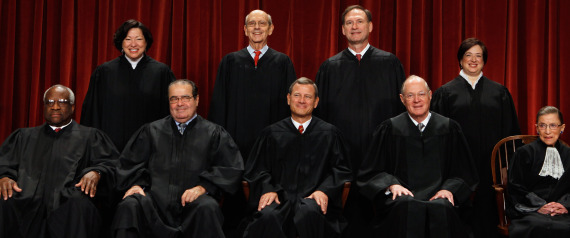
Trump will have a GOP majority in the House and the Senate, will get between 1-4 nominations to the Supreme Court, and those justices will be there for the next 30-50 years. Add those justices to Alito and Roberts, both younger, ultra-conservative ideologues, and we will effectively be witness to the dismantling of most civil, environmental, and educational reforms enacted over the last 75-100 years, including Roe v. Wade.

With Trump and the GOP controlling Congress, we are likely to see the end of minimum wage laws, the destruction of the social safety net, and the demise of nearly every other government program serving the poorest of our citizens. The GOP seems unfamiliar with the notion that a nation is judged by how it treats the weakest of its citizens. Even conservative NYT editorial writer David Brooks gets that poverty is not a condition most people can escape, no matter how hard they try.

At the same time, corporate welfare likely will increase even more, while any and all regulation of Wall Street will end or be severely curtailed (Dodd-Frank will be gone), and most regulations protecting clean air, clean water, and preserving wilderness areas will be eliminated. Renewable energy investments will end so that the Arctic tundra can be drilled for oil. If you don't believe this, look at the people Trump is choosing to lead the transition at the EPA, FTC, etc.

Trump represents the end of American progress. If it were not for the damage he can do with appointments to the Supreme Court, it would only be a 4-8 year set-back. But he can shape the Court so drastically that it could take generations to undo the damage.

On ending progress, Trump's campaign slogan announced as much: Make America Great Again. I'm sorry, when WAS America great? Prior to the admittedly awful Affordable Care Act when millions of  people had NO health care? Prior to Roe v. Wade when women got abortions from unqualified providers, and often died from the procedures? Prior to the Civil Rights Act, when minorities could be denied service, prevented from using the same schools and restrooms, and prevented from voting? Prior to the New Deal when old people died in extreme poverty and workers had no protections from unreasonable work hours and unsafe conditions?

So WHEN was America great? When higher education was only open to the wealthy, when women could not vote, when minorities were not "full" people, when slavery was legal?

Anyone who proposes that the key to dealing with change is returning to the "good old days" has no idea HOW to change, what change is, and how change becomes successful. Trump is one of those people.

So progressives weep for the loss and wasting of American potential. For possible futures that are lost with a Trump presidency.

And just so you actually get it, Clinton was NOT the answer. She was only the slightly lesser of two evils.

Tuesday, July 08, 2014

A Progressive Agenda for the Supreme Court - Why the Next President Must Be a Democrat


If there is any hope of undoing the recent decisions by the Roberts' Court, we must elect a Democratic president. As much as it pains me to say this, we have to do so even if the Democratic candidate is Hillary Clinton (shudder).

There are potentially three Justices who can retire in the next term (unless Ginsburg steps down while Obama is still president). The two oldest are Kennedy and Scalia - the first to retire will likely be Kennedy (Scalia is just too mean to retire - he'll probably live to be 100 or something, just out of spite for the rest of us).

Replacing Kennedy, now considered the swing vote on many cases, with a liberal or progressive justice could swing the balance of power to the point that the "progressive agenda" outlined below might actually be possible.

Fantasy or Forecast? A Progressive Agenda for the Supreme Court

- E.P. Clapp Distinguished Professor of Politics, Occidental College
Posted: 07/04/2014


"It's always darkest before the dawn" sang Pete Seeger. "And that's what keeps me moving on."

The recent spate of reactionary decisions by the Roberts Supreme Court -- including this week's outrageous Hobby Lobby ruling -- triggers thoughts of a better day, when the right wingers on the court will have retired or died, replaced by thoughtful liberals who will restore some semblance of fairness and democracy to this great country. On this July 4th, let's consider what it would be like if our nation's highest court was actually committed to the notion of "liberty and justice for all."

Doing so requires making a few leaps of faith, but none of them are far fetched. It depends on the outcome of the next few election cycles.

If the Democrats retain a majority in the Senate after this November, the feisty, brilliant Ruth Bader Ginsburg, now 81 years old, should retire so Obama can appoint another (younger) liberal member who will have a long tenure on the court. That won't shift the current 5-4 conservative majority, but it will guarantee that Ginsburg won't be replaced by conservative.

It would great if one or both of the older conservatives -- Antonin Scalia (now 78) or Anthony Kennedy (78 later this month) -- would retire, too, so Obama could appoint their successors. But they'll probably try to hang on until a Republican president enters the White House. Let's pray (and organize) so that doesn't happen.

Best-case scenario: A Democrat becomes president in 2016, the Democrats keep control of the Senate, and Scalia and/or Kennedy are so enfeebled by then that they have to quit. At that point, a Democratic president can replace one or both with a liberal justice.

It has become a no-no in American politics for candidates for president or Senate to discuss the characteristics they'd like to see in new Supreme Court justices, except in the vaguest, general terms. They are not supposed to have a "litmus test" for justices. Everyone knows this is bogus. Presidents generally appoint justices who agree with their political views -- compromising only enough to get their nominations confirmed by the Senate or to avoid a huge controversy.

Occasionally presidents miscalculate -- or, more accurately, their nominees change their views -- and upset the ideological applecart. The most famous example is President Dwight Eisenhower's appointment of California Gov. Earl Warren as Chief Justice in 1953. Eisenhower thought he was appointing a conservative Republican. Warren turned out to be (or became as a result of changing social and political conditions) a liberal and turned the Warren Court into one of the most liberal in history. Another turncoat was David Souter, who turned out to be more liberal - or at least centrist -- than George H.W. Bush had anticipated. Among other things, Souter dissented in Bush v Gore, but his side was outvoted 5-4, handing the presidency to GHWB's son. "Poppy" Bush wouldn't make that mistake again. His next, and last, Supreme Court appointment was Clarence Thomas.

So don't expect Hillary Clinton (or any other Democratic candidates for president) to discuss her thoughts about what kind of person she'd appoint to the Supreme Court. She won't want to get boxed in by any dreaded "litmus test," which the Republicans would use against her. But if she (or another Democrat ) wins the White House in 2016, and has a Democratic majority, liberals and progressives should push her (and the Senate Dems, especially those on the Judiciary Committee) to make appointments that will dramatically change the court's direction. Under that scenario, liberals could have a 5-4, perhaps even a 6-3, majority on the court for the next 20, 30, or even 40 years.

What would that mean in terms of public policy? A liberal majority on the Supreme Court could, and should, address the following issues:
  • Campaign Finance: Overturn Citizens United and McCutcheon rulings in order to allow real campaign finance reform that eliminates our current system of corporate-dominated legalized bribery. As David Gans recently wrote in the New Republic: "The Roberts Court is leading a free speech revolution of its own, but this time for the benefit of corporations and the wealthy." Citizens United (2010) equated "free speech" with money, giving corporations a stranglehold on elections. The McCutcheon (April 2014) ruling eliminated dollar limits for super-rich donors like the Koch brothers. Both have been boondoggles for the super-rich, big business, and the right, undermining democracy and tilting the political playing field in the wrong direction.
  • Workers Rights: Reverse the Robert Court's anti-union rulings, including last week's Harris v Quinn decision. This was yet another decision in which, by a 5-4 majority, the court sided with wealthy special interests to weaken worker protections and undermine workers' right to organize. It should come as no surprise that the right-wing National Right to Work Legal Defense Foundation -- funded by the Koch and Walton families and other corporate groups - was responsible for filing the Harris v. Quinn suit against SEIU. The Court ruled that workers who benefit from a union contract (with higher pay, health benefits, paid vacations, etc) don't have to pay union dues. They can be "free riders." Here again, the Court equates money with free speech. In this case, workers can exercise their "free speech" to avoid supporting the union, even if their lives are significantly improved by a collective bargaining contract negotiated by the union in their workplace. The Court decided that the "free speech" interests of those who object to paying for representation outweigh the right of the democratically elected majority that formed the union. Unions are the strongest bulwark to strengthen the middle class, challenge widening inequalities, and lift hardworking Americans out of poverty. The U.S. has the weakest workers' rights laws of any democratic country, which accounts in part for the decline of union membership and big business' ability to violate existing labor laws (such as firing workers who support union organizing efforts in their workplace) without suffering serious consequences. The Roberts court has piled on, siding at every turn with employers over workers.
  • Same-Sex Marriage: Make same-sex marriage a federal right and not leave it up to the states. As I've written elsewhere, the Roberts Court's June 2013 rulings on same-sex marriage favored states rights over equal rights. In its two decisions (on the Defense of Marriage Act and California's Proposition 8), the Court stopped short of proclaiming same-sex marriage a basic right. It left it to the states to determine whether gay Americans have the same right to marry as their straight counterparts. As a result, same-sex marriage advocates have to mobilize and litigate to overturn bans on same-sex marriage in those states that have them. That could take five, 10, 20, or more years, and some states may resist legalizing same-sex marriage forever. In 1967, in Loving v. Virginia, the Supreme Court knocked down all state anti-miscegenation laws that banned inter-racial marriage. It did not leave it up to the states to decide for themselves. That was a bold move, way ahead of public opinion. The Roberts Court was far more cautious. A liberal Supreme Court should apply the same logic to same-sex marriage as the Warren Court applied in Loving to inter-racial marriage. It is a basic right for all Americans, regardless of where they live.
  • Women's Rights: Overturn Hobby Lobby. This decision, rendered last week, is yet another ruling that treats corporations like "citizens" with rights -- in this case, endowing a corporation the "right" of "religious freedom." Under this outrageous ruling, corporate owners who object to birth control don't have to provide contraceptives and other forms of birth control to employees if it violates the owners' religious beliefs. This is little different from saying that a segregationist restaurant owner can avoid serving black customers if it violates his belief in white supremacy. The Hobby Lobby ruling favors corporations' so-called "religious" freedoms over women's right to control their bodies. Did anyone notice that, by the accident of history, the five conservatives on the current Supreme Court who voted in favor of Hobby Lobby, each appointed by Republican presidents, all happen to be Catholic men? They are Samuel Alito, Roberts, Scalia, Thomas and Kennedy. The three women justices -- Ginsburg (Jewish), Elena Kagan (Jewish) and Sonia Sotomayor (Latina Catholic) -- plus Stephen Breyer (Jewish) dissented in the Hobby Lobby case. This isn't meant to stereotype all Catholic men. One of the greatest liberals and civil libertarians in the Supreme Court's history -- William Brennan -- was male and Catholic. He was a staunch supporter of abortion rights and joined the pro-choice majority in Roe v Wade. But it is clear that at least one or more of the five justices who supported Hobby Lobby (certainly Scalia) were guided by religious beliefs over constitutional logic. When and if a Democrat gets to appoint the next one, two or three justices, the choices should be based on the nominees' judicial views, not their religion, but if their previous judicial decisions or writing reveal that their religious views (strict Catholicism, Orthodox Judaism, fundamentalist Protestantism, traditional Islam) lead them to reject basic rights for women, gays, people of color, or other groups, they shouldn't be appointed to any federal court, much less the Supreme Court.
  • Voting Rights: Strengthen enforcement of the Voting Rights Act (VRA), thus reversing the Robert Court's Shelby v Holder (June 2013) ruling that allows voter suppression under the guise of states rights. The 1965 act, which outlawed literacy tests and other obstacles to voting, was an important tool for civil rights activists to challenge other barriers to black political participation, such as gerrymandering of city council, state legislature, and congressional districts in order to dilute black voting strength. It had huge consequences. In 1970 there were only 1,469 black elected officials in the entire country. By 2000, that number had reached 9,040. Today, the figure is close to 11,000. In 1965, only 6.7 percent of Mississippi's black citizens were registered to vote. But four years later the number had jumped to 66.5 percent. By 2000, Mississippi had 897 black elected officials in local and state offices, plus Congress--the largest number of any state in the country. Roberts had been trying to weaken the 1965 Voting Rights Act ever since he was a young lawyer in Ronald Reagan's Justice Department. He finally got his way last year when his court, by a 5-4 margin, ruled that Section 5 of the Voting Rights Act is unconstitutional. That's the provision that requires states with the worst history of voting discrimination have to get Justice Department approval before they can revise their voting laws. Roberts said that blatant racial discrimination in voting no longer exists, so Section 5 isn't needed. As Cong. John Lewis, a veteran civil rights activist, said about the Supreme Court ruling: "There are more black elected officials in Mississippi today not because attempts to discriminate against voters ceased but because the Voting Rights Act kept those attempts from becoming law." In recent years, Republican politicians and operatives, including Karl Rove, have sought to restrict voting rights to keep people of color, young people, and poor people from voting. The Roberts Court's Shelby ruling gave them permission to declare war on voting rights. As soon as the Court made its ruling, a host of states (mostly but not entirely Southern states) began adopting laws to suppress voting rights -- such as requiring IDs in order to vote and setting the stage to gerrymander political districts to weaken black and Latino voting strength.
  • Education Funding: Mandate sufficient funding for all public K-12 schools as a basic right of all students regardless of the tax base of the surrounding community or the political/spending priorities of the states. The famous unanimous 1954 Brown vs. Board of Education ruling stated that "separate but equal" schools were inherently unequal. The justices were writing about racial segregation and later mandated that states and localities desegregate their schools "with all deliberate speed." Today, America's public schools are segregated by race and income, as Jonathan Kozol reported in his book Savage Inequalities, as UCLA professor Gary Orfield and his colleagues have documented in recent reports, and as many other studies have revealed by examining per-student spending in different school districts. As many scholars and journalists have observed, our public schools are beset with outrageously unequal funding. Students from well-off families generally go to public schools with much higher per-student spending levels than students from less affluent families. The solution is not busing or charter schools but adequate funding for all students and all schools, regardless of the size of a community's tax base. Since the 1970s, an increasing number of state courts have sought to address these disparities by requiring state legislatures to spend more money on education and/or to distribute those funds more equally. Although these rulings have made some difference, huge disparities persist. This is true within metro areas and states, but also true between states. In 2012, New Jersey spent $18,485 per student while Oklahoma spent only $8,285 per student. Differences in the cost of living do not account for these differences; it is not more than twice as expensive to live in New Jersey than in Oklahoma. And within each state, there are huge disparities. In Illinois a few years ago, New Trier Township High School District (in an affluent Chicago suburb) spent $19,927 per student while the Farmington Central Community Unit School District (a rural area in central Illinois) spent only $6,548 per student. Across the country, the accident of geography determines the quality of education that students get. We need a Supreme Court that will rule that a decent K-12 education is a basic right and that the federal government needs to enforce this right by taking over responsibility for funding public education, or requiring states not only to provide "equal" funding (per student) for every school district but also to provide "equal opportunity" for all students, which would mean spending more money in schools and school districts with a higher percentage of disadvantaged students.
Progressives can surely add to this list of issues that a Supreme Court with a liberal majority should address. Unfortunately, presidential candidates won't directly address these issues or the views of candidates they would appoint to the Supreme Court when vacancies arise. But as we watch the Roberts Court eviscerate our democracy, and protest its outrageous (usually 5-4) rulings, we should also recognize that part of why we want liberal Democrats in the White House and Congress is to make sure that the third branch of government reflects what's best about country's values -- fairness, equality, civil liberties, and civil rights.

Peter Dreier teaches Politics and chairs the Urban & Environmental Policy Department at Occidental College. His most recent book is The 100 Greatest Americans of the 20th Century: A Social Justice Hall of Fame (Nation Books, 2012).
Follow Peter Dreier on Twitter: www.twitter.com/peterdreier

Wednesday, July 17, 2013

James Hughes - Who Are the Technoprogressives?


From the IEET (Institute for Ethics and Emerging Technology), James Hughes reveals the results of a recent poll of IEET readers, over 400 of whom completed the survey (including me), and around 48% identified as technoprogressives (among other labels - we could choose more than one).

Here is one of the more interesting demographic stat collections:
Demographically, as we usually find in surveys of the transhumanist and Left movements, the technoprogressives are overwhelmingly (91%) white/European and (91%) male, although not as straight as the population at large – 17% are GLBT. Fully half (50%) have a masters, doctorate or professional degree, while another third (34%) have a bachelors degree. Most (60%) identify as atheists or agnostic, but there are technoprogressives among the respondents with every religious persuasion we asked about – "spiritual" (17%), Buddhist (13%), Unitarian Universalist (6%), Pantheist (4%), Catholic (4%), Protestant (4%), Pagan (3%), LDS (2%), Jewish (2%), Muslim (1%), and Hindu (1%).
Interesting to me, I identify as a technoprogressive, but I do not embrace many of the ideas that seem commonplace to this crowd, such as uploading consciousness into a computer to escape death (not even nearly possible, now and maybe ever), cryogenics (why the hell . . . ?), near immortality (who the hell wants to be alive for hundreds of years? have we learned nothing from vampire shows?), allowing parents to clone children, or to pick their child's basic biological traits (there goes genetic diversity), and several others.

Still, this is an interesting read . . . .

Who are the Technoprogressives?


J. Hughes
Ethical Technology

Posted: Jul 14, 2013

When we started promoting the term “technoprogressive” as the IEET’s ideological position back in 2006 it helped us move beyond being the left wing of transhumanism to being part of a broader, deeper and older political current with roots in the Enlightenment. Our recent survey of the IEET audience helps us continue to flesh out what kinds of people are responding to the technoprogressive political project.

More than 400 of you took the time to respond to the IEET survey, and half (48%) of you identified as "technoprogressive." (In later analyses of the survey I'll dig into the opinions of all the respondents, including those who didn't identify with the term "technoprogressive.")

"Technoprogressive" was one of the multiple political labels the survey provided, and most of you chose more than one to describe yourself. Of those almost all of the technoprogressives also chose political labels associated with left-wing politics, ranging from "liberal," "progressive," "anti-racist," and "Green," to various shades of radical left politics such as "libertarian socialist" and "anarchist." Surprisingly however – since the technoprogressive label was originally defined as a critique of libertarian transhumanism - some "technoprogressives" also identified as "libertarians," and a quarter (26%) of you identified as "upwingers or advocates of a future political system," as well as moderates, Euro-Liberals and Christian Democrats, and even conservatives. 
Political Identities of Technoprogressives in the 2013 IEET Survey
Liberal/Social Democratic
69%
Libertarian Right
14%
Progressive
54%
Libertarian
13%
Democrat
25%
Anarcho-capitalist
3%
US-style "liberal"
22%
Minarchist
3%
Social democrat
25%
Randian/Objectivist
1%
Democratic socialist
15%
Market socialist
8%
Other Identities

Upwinger/advocate of a future political system
26%
New Left
64%
Moderate
22%
Anti-racist
42%
Other
11%
Green
35%
European Liberal
8%
Feminist
27%
Conservative
2%
Eco-socialist
14%
Religious socialist
2%
Socialist feminist
8%
Christian Democrat
2%
Far right
0%
Radical Left
34%
Libertarian socialist
15%
Not political
5%
Radical
13%
Socialist internationalist
10%
Anarchist
8%
Revolutionary socialist
5%
Communist
4%
Anarcho-syndicalist
4%
Marxist-Leninist
1%


Clearly, the technoprogressive label, like the term "progressive," has had a broader appeal than just to people on the Left.

We also asked about your support for a variety of movements. Among the self-described "technoprogressives" support for "transhumanism" garnered the most enthusiasm, with about two thirds (65%) of technoprogressives saying they strongly supported it. There were however some technoprogressives who were hostile or indifferent to the transhumanist movement. There was also almost complete support (above 80% on support or strongly support) among the technoprogressives for abortion rights, environmentalism, dignity in dying, disability rights, secular humanism and drug legalization. After these movements though there was a more mixed opinion about "animal rights" (70% support), "singularitarianism" (63% support), "great ape rights" (62%), trade unions (56%), vegetarianism (48%) and world federalism (46%).

Among the agree-disagree statements there were nine statements that stood out as having far more support from technoprogressives than from those who did not identify as technoprogressives. Technoprogressives were more supportive of uploading, cryonics, personhood rights for robots, cloning, radical life extension, designer babies, uplifting, GMO crops and – not surprisingly – technoprogress. 
Percent Agreeing
TPs
Non TPs
Difference
I would have my mind copied to computers if it was the only way I could continue as a conscious person.
73%
43%
30%
I would consider being frozen and re-animated later if it was the only way I could continue living.
68%
41%
27%
Robots that think and feel like human beings, and aren't a threat to human beings, should be granted human rights.
81%
54%
27%
Parents should be able to have children through cloning once the technology is safe.
74%
47%
27%
It would be a good thing if people could live in good health for hundreds of years or longer.
88%
62%
26%
Parents should be able to choose the sex, intelligence and other characteristics of their children.
61%
37%
24%
It would be ethical to genetically modify apes and dolphins to be able to think and communicate more like human beings.
49%
30%
19%
Genetically-modified crops present an opportunity to improve agriculture and nutrition, and should be actively developed.
73%
55%
18%
Through science and reason, human progress is limitless.
75%
57%
18%

​

Demographically, as we usually find in surveys of the transhumanist and Left movements, the technoprogressives are overwhelmingly (91%) white/European and (91%) male, although not as straight as the population at large – 17% are GLBT. Fully half (50%) have a masters, doctorate or professional degree, while another third (34%) have a bachelors degree. Most (60%) identify as atheists or agnostic, but there are technoprogressives among the respondents with every religious persuasion we asked about – "spiritual" (17%), Buddhist (13%), Unitarian Universalist (6%), Pantheist (4%), Catholic (4%), Protestant (4%), Pagan (3%), LDS (2%), Jewish (2%), Muslim (1%), and Hindu (1%).

Overall, the survey results show that our small political tendency has attracted a very diverse constituency of very well-educated people who are mostly secular left-leaning transhumanists, but who include religious people, non-transhumanists and people not on the Left. As we knew we have a lot of work to do to broaden our appeal beyond the male white/European base, which will happen naturally as technoprogressivism continues to evolve beyond its narrow subcultural community to build alliances with the diverse movements that it has strong resonances with. In addition to organizations like Humanity+, which a third (32%) of the technoprogressives belonged to, and support for transhumanist-identified projects like SENS (18%), technoprogressives also participate in political parties (27%), religious denominations (15%), political nonprofit groups and professional associations. Raising the flag for a technoprogressive point of view in these myriad arenas is the work ahead of us.

~ James Hughes Ph.D., the Executive Director of the Institute for Ethics and Emerging Technologies, is a bioethicist and sociologist at Trinity College in Hartford Connecticut USA, where he teaches health policy and serves as Director of Institutional Research and Planning. He is author of Citizen Cyborg and is working on a second book tentatively titled Cyborg Buddha. He produces a syndicated weekly radio program, Changesurfer Radio. (Subscribe to the J. Hughes RSS feed)

Sunday, March 03, 2013

What's Left of the Political Left?

From Bookforum's Omnivore blog, a collection of links on the state of leftist politics in the "advanced industrialised economies." The title article of this collection is definitely worth the read.


What's left of the left?

MAR 1 2013
10:00AM


  • Joe Guinan (Maryland): Social Democracy in the Age of Austerity: The Radical Potential of Democratising Capital.
  • From Anarchist Studies, Brian Martin (Wollongong): Reform: When Is It Worthwhile?
  • From Renewal, what’s left of the left? A roundtable on democrats and social democrats in challenging times.
  • Darko Suvin on phases and characteristics of Marxism/s.
  • Gavin Jacobson writes in defense of Jacobin rage: You can’t divorce fiery emotions from the politics of revolution.
  • Thoughts of a veteran anarchist: An interview with Stuart Christie, author of Granny Made Me An Anarchist, General Franco Made Me A Terrorist and Edward Heath Made Me Angry.
  • Victor Osprey reviews Anti-Capitalism by Ezequiel Adamovsky.
  • Slavoj Zizek, visionary of violence: Henry Hopwood-Phillips examines one of today’s most lionized Leftists.
Here is the beginning of the title article:

What's Left of the Left? Democrats and social democrats in challenging times

Renewal 20.4 16/01/2013

James Cronin, George Ross and James Schoch’s edited collection, What’s Left of the Left:Democrats and Social Democrats in Challenging Times (Duke University Press, 2011) is a major contribution to the debate on the prospects of left parties in the advanced industrialised economies. In collaboration with the Labour Movements Group of the Political Studies Association, Renewal gathers here five reflections on the essays contained in the volume from leading academics, and a response from editor James Cronin.

Introduction

Mark Wickham-Jones, Professor of Political Science in the School of Sociology, Politics and International Studies at the University of Bristol It comes as no surprise that advocates of progressive politics across Europe, as well as North America for that matter, currently confront a number of severe challenges to their favoured project. The crisis in the eurozone raises profound question marks about the nature of the left’s economic model, most obviously in its capacity to combine economic recovery with the social commitments that define a reformist approach. The banking crisis of 2008 filtered through the collapse of housing markets, most notably in the United States, and an explosion of public debt, paved the way for prolonged recession across many advanced industrial economies. Though left governments were by no means the only candidates for blame, the economic downturn challenged assumptions about a number of variants of the progressive model, whether in terms of New Labour’s predominantly neo-liberal approach with its emphasis on a lightly regulated financial sector or of the differing forms of the social model to be found across continental Europe. Most obviously, of course, the emphasis currently placed on retrenchment and spending cuts as the necessary means of stabilising debt challenges the notion of a progressive politics.

At the same time, many European social democratic parties have experienced severe reversals at the ballot box. After thirteen years in power and three successive general election victories, New Labour lost office in May 2010. It was not alone. Since September 2009 and September 2006 respectively, the German SPD and the Swedish social democrats have been in opposition. The success of Barack Obama in 2008 seemed an isolated example of progressive success, one that is arguable in its orientation and, in the mind of many, disappointing in its execution. Only recently with the success of Francois Hollande in the 2012 French presidential elections, and the re-election of Obama, have the fortunes of the left turned up slightly.

The publication of What’s Left of the Left, edited by James Cronin, George Ross and James Shoch, marks, accordingly, a particularly useful point at which to appraise the conjuncture. How did progressive politics come to be in such a situation and what are the prospects for such an outlook at the present time? What’s Left of the Left brings together an impressive range of scholars, mostly based in North America. Different chapters in the volume develop historical and thematic perspectives as well as a number of case studies and the book is notable in offering a direct comparison between European social democracy and progressive politics in the United States. This round table, held at the University of Bristol in June 2012 and organised by the Labour Movements Group of the Political Studies Association, addresses these questions through a discussion of the volume.Perhaps inevitably, a particular focus is on the British situation and the case of New Labour (tackled by James Cronin in the book).

Tuesday, January 22, 2013

David Brooks on President Obama's Inaugural Speech


If you have not yet read or seen the President Obama's 2013 Inaugural Speech from Monday, you can watch it below or read it here.


There has been a lot said about this speech, much of which demonstrates that President Obama's desire to create more unity, a "We, the People" foundation for his second term, is not likely to get very far - liberals mostly applaud the speech and conservatives largely reject it.

However, one of the best commentaries came this morning from the New York Times op-ed columnist David Brooks. As his interests have shifted more and more toward social sciences (he reads a LOT in the realms of psychology, neuroscience, and social psychology), his columns have become thoughtful and nuanced (with some notable exceptions), and this one exemplifies that tendency in him.

The Collective Turn

By DAVID BROOKS
Published: January 21, 2013

The best Inaugural Addresses make an argument for something. President Obama’s second one, which surely has to rank among the best of the past half-century, makes an argument for a pragmatic and patriotic progressivism.

His critics have sometimes accused him of being an outsider, but Obama wove his vision from deep strands in the nation’s past. He told an American story that began with the Declaration and then touched upon the railroad legislation, the Progressive Era, the New Deal, the highway legislation, the Great Society, Seneca Falls, Selma and Stonewall.

Turning to the present, Obama argued that America has to change its approach if it wants to continue its progress. Modern problems like globalization, technological change, widening inequality and wage stagnation compel us to take new collective measures if we’re to pursue the old goals of equality and opportunity.

Obama wasn’t explicit about why we have failed to meet these challenges. But his critique was implicit. There has been too much “me” — too much individualism and narcissism, too much retreating into the private sphere. There hasn’t been enough “us,” not enough communal action for the common good.

The president then described some of the places where collective action is necessary: to address global warming, to fortify the middle class, to defend Medicare and Social Security, to guarantee equal pay for women and equal rights for gays and lesbians.

During his first term, Obama was inhibited by his desire to be postpartisan, by the need to not offend the Republicans with whom he was negotiating. Now he is liberated. Now he has picked a team and put his liberalism on full display. He argued for it in a way that was unapologetic. Those who agree, those who disagree and those of us who partly agree now have to raise our game. We have to engage his core narrative and his core arguments for a collective turn.

I am not a liberal like Obama, so I was struck by what he left out in his tour through American history. I, too, would celebrate Seneca Falls, Selma and Stonewall, but I’d also mention Wall Street, State Street, Menlo Park and Silicon Valley. I’d emphasize that America has prospered because we have a decentralizing genius.

When Europeans nationalized their religions, we decentralized and produced a great flowering of entrepreneurial denominations. When Europe organized state universities, our diverse communities organized private universities. When Europeans invested in national welfare states, American localities invested in human capital.

America’s greatest innovations and commercial blessings were unforeseen by those at the national headquarters. They emerged, bottom up, from tinkerers and business outsiders who could never have attracted the attention of a president or some public-private investment commission.

I would have been more respectful of this decentralizing genius than Obama was, more nervous about dismissing it for the sake of collective action, more concerned that centralization will lead to stultification, as it has in every other historic instance.

I also think Obama misunderstands this moment. The Progressive Era, New Deal and Great Society laws were enacted when America was still a young and growing nation. They were enacted in a nation that was vibrant, raw, underinstitutionalized and needed taming.

We are no longer that nation. We are now a mature nation with an aging population. Far from being underinstitutionalized, we are bogged down with a bloated political system, a tangled tax code, a byzantine legal code and a crushing debt.

The task of reinvigorating a mature nation is fundamentally different than the task of civilizing a young and boisterous one. It does require some collective action: investing in human capital. But, in other areas, it also involves stripping away — streamlining the special interest sinecures that have built up over the years and liberating private daring.

Reinvigorating a mature nation means using government to give people the tools to compete, but then opening up a wide field so they do so raucously and creatively. It means spending more here but deregulating more there. It means facing the fact that we do have to choose between the current benefits to seniors and investments in our future, and that to pretend we don’t face that choice, as Obama did, is effectively to sacrifice the future to the past.

Obama made his case beautifully. He came across as a prudent, nonpopulist progressive. But I’m not sure he rescrambled the debate. We still have one party that talks the language of government and one that talks the language of the market. We have no party that is comfortable with civil society, no party that understands the ways government and the market can both crush and nurture community, no party with new ideas about how these things might blend together.

But at least the debate is started. Maybe that new wind will come.

Friday, November 16, 2012

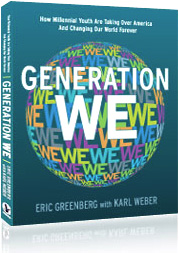
Generation WE: The Movement Begins . . . (or began)


This video was quite moving . . . I actually got goosebumps. I found it at KarmaTube - "a project of ServiceSpace, an all-volunteer run organization. Our aim is to enable individuals to contribute in meaningful ways to the world around them. Together, we hope to "be the change we wish to see in the world." This isn't a new movement - it started with the 2008 election cycle. So I wonder how active they still are - if they are?

For more information, check out Generation WE.

Video from KarmaTube

Generation WE: The Movement Begins...

"We, the youth of the United States, believe our birthright has been betrayed," declares the Millennial Generation, the largest generation in American history, to date. They inherit a country in decline and a broken political system. Still, America's young people declares a manifesto of hope - to restore the American dream.

  • Learn more about how the Millenials are emerging as a powerful political and social force.
  • Think American youth have inherited their parents' politics?  Guess again. Understand the change underway.
  • Be a responsible member of society: study the issues and vote in every election.

Generation We - the Millennials - has arrived. They have emerged as a powerful political and social force. Their huge numbers and progressive attitudes are already changing America. And the world.

The book is free to download as a PDF.

Saturday, October 20, 2012

Parsing the 2012 Presidential Race - The Most Pivotal Election of Our Time and the Role of Progressives


Here are two video talks on the 2012 election, one from Jonathan Alter on the critical importance of the 2012 presidential election, and a panel discussion of authors from The Nation on the role of progressives in this election cycle.

This is interesting and important stuff. I agree with Alter that this presidential election will determine where we head as a nation for the next couple of decades - the renegotiation of the American Social Contract.

Jonathan Alter - Why the 2012 Election Is the Most Pivotal of Our Lifetime

Author and columnist Jonathan Alter argues that the question in the 2012 presidential election is whether the country will stay on a centrist course with Obama or make a sharp turn to the right with Romney. He says that because few votes may be won by discussing the poor, the American social contract is rarely discussed but he feels it is on the line. Series: "Walter H. Capps Center Series" [10/2012]

* * * * *

The Nation at The New School: Progressives and Election 2012

A conversation about the role of progressives in the next election. How do we balance support for the Democrats with the need to mobilize grassroots support for social and economic causes? How do we determine priorities for strained resources? What should we be seeking from a second term Obama administration? Audience questions to follow conversation.

Featuring Nation contributors:
  • Katrina vanden Heuvel, Editor, publisher, The Nation
  • John Nichols, Washington correspondent, The Nation
  • Chris Hayes, MSNBC host
  • Ilyse Hogue, political strategist
  • Patricia J. Williams, Professor of Law, Columbia University
Moderated by Richard Kim, Executive Editor, The Nation

THE NEW SCHOOL FOR PUBLIC ENGAGEMENT

Sponsored by The New School and The Nation.

Location: Tishman Auditorium, Alvin Johnson/J. M. Kaplan Hall
Wednesday, October 17, 2012 7:00 p.m.


Thursday, December 08, 2011

George Lakoff - Words That Don’t Work

One of the biggest issues facing progressives, in my opinion, is their failure to understand how important words are to realizing their agenda. George Lakoff keeps trying to convince them - to little success thus far.

Think of some recent political buzz words: Obamacare, death tax, big government (refers exclusively to social programs), government handouts (social safety nets), tax relief (cutting taxes on the wealthy, so that most people who pay taxes pay at the same rate, regardless of income), job creators (supposedly the wealthy), defense of marriage (anti-gay marriage), and the list can go on and on, for example, most Americans equate socialism with communism because of the GOP/Fox News management of memes. This is how the GOP controls the national conversation and programs the voters.

Progressives have yet to understand that this is how they lose - over and over again. When is the last time the progressives controlled the conversation in the same way? The Great Society?

Common Dreams posted this recent article from Lakoff - I am including below it an interview from UC Berkeley done in 2003.
 
Progressives had some fun last week with Frank Luntz, who told the Republican Governors’ Association that he was scared to death of the Occupy movement and recommended language to combat what the movement had achieved. But the progressive critics mostly just laughed, said his language wouldn’t work, and assumed that if Luntz was scared, everything was hunky-dory.  Just keep on saying the words Luntz doesn’t like: capitalism, tax the rich, etc.

It’s a trap.

When Luntz says he is “scared to death,” he means that the Republicans who hire him are scared to death and he can profit from that fear by offering them new language. Luntz is  clever. Yes, Republicans are scared. But there needs to be a serious discussion of both Luntz’s remarks and the progressive non-response.

What has been learned from the brain and cognitive sciences is that words are defined by fixed frames we use in thinking, frames come in hierarchical systems, and political frames are defined in moral terms, where “morality” is very different for conservatives and progressives. What lies behind the Occupy movement is moral view of democracy: Democracy is about citizens caring about each other and acting responsibly both socially and personally. This requires a robust Public empowering and protecting everyone equally. Both private success and personal freedom depend on such a Public. Every critique and proposal of the Occupy movement fits this moral view, which happens to be the progressive moral view.

What the Occupy movement can’t stand is the opposite “moral” view, that Democracy provides the freedom to seek one’s self-interest and ignore what is good for other Americans and others in the world. That view lies behind the Wall Street ethic of the Greedy Market, as opposed to a Market for All, a market that should maximize the well-being of most Americans. This view leads to a hierarchical view of society, where success is always deserved and lack of success is moral failure. The rich are the moral, and they not only deserve their wealth, they also deserve the power it brings. This is the view that Luntz is defending.

Referring to the rich as “hardworking taxpayers” ignores the fact that a great percentage of the rich do not get their wealth from making things, but rather from investments in other people’s labor, and that most of the 1% are managers, not people who make things or directly provide services.  The hardworking taxpayers are the 99%. That is not the frame that Luntz wants activated.

But Luntz is not just addressing his remarks to Republicans. He is also looking to take Democrats for suckers.  How? By choosing his frames carefully, and getting Democrats to do the opposite of what he tells Republicans. There is a basic truth about framing. If you accept the other guy’s frame, you lose.

Take “capitalism.” It arises these days in socialist discourse, and is seen as the opposite of socialism. To attack “capitalism” in this frame is to accept “socialism.” Conservatives are trying to cast Progressives, who mostly have businesses or work for businesses or are looking for good business jobs, as socialists. If you take the Luntz bait, you will be sucked into sounding like a socialist. Whatever one thinks of socialism, most Americans falsely identify it with communism, and will reject it out of hand.

Luntz would love to get Democrats using the word “tax” in the conservative sense of taking money from the pockets of hardworking folks and wasting it on people who don’t deserve it.  Luntz doesn’t want Democrats pointing out how private success depends on public investment – in infrastructure, education, health, transportation, research, economic stability, protections of all sorts, and so on.  He doesn’t want progressives talking about “revenue” which is defined in a business frame to mean money needed for any institution to function and flourish. He doesn’t want Democrats talking about the rich paying their fair share for the massive amount they have gotten from prior investments in a robust Public. Luntz would love to lure progressives into talking about government “spending” rather than investments in education, health, and infrastructure that will benefit most Americans.

He doesn’t want progressives pointing out that corporations govern our lives far more than any government does — and for their profit, not ours. He doesn’t want any discussion of corporate waste, or military waste, which is huge.

Luntz would love to have Democrats talking about “entrepreneurs,” which evokes a Republican view of the market as a tool for self-interest. His proposal to discuss “job creators” instead hides the fact that the business community has not been hiring despite record profits. He certainly does not want discussion of outsourcing and minimizing pay for work, which leads corporations to eliminate or downgrade jobs and hence keep wages low when profits are high.

Hidden behind his proposal to substitute “careers” for “jobs” is his attempt to appeal to young people just out of college and grad school who expect more — a profession — not just a mere “job.”  But of course, corporations are downgrading positions away from professional careers and more toward interchangeable McJobs requiring minimal ability and with minimal pay and benefits.

Luntz is right about not saying “sacrifice.” He is right that most Americans are already hurting more than enough. They want a viable present and a future for themselves and their children and grandchildren. He is right to suggest “talking about how 'we're all in this together.' We either succeed together or we fail together." But that is the opposite of conservative morality. It is the progressive view of a moral democracy that all of Luntz’s conservative framings contradict. It is an attempt at co-opting the progressive moral system, because the Occupy movement is showing that it is an idea of Democracy that makes sense to most Americans. And it is an attempt to take Obama’s strongest moral appeal away from him.

Unfortunately, Luntz is still ahead of most progressives responding to him. Progressives need to learn how framing works. Bashing Luntz, bashing Fox News, bashing the right-wing pundits and leaders using their frames and arguing against their positions just keeps their frames in play.

Progressives have a basic morality, which is largely unspoken. It has to be spoken, over and over, in every corner of our country. Progressives need to be both thinking and talking about their view of a moral Democracy, about how a robust Public is necessary for private success, about all that the Public gives us, about the benefits of health, about a Market for All not a Greed Market, about regulation as protection, about revenue and investment, about corporations that keep wages low when profits are high, about how most of the rich earn a lot of their money without making anything or serving anyone, about how corporations govern your life for their profit not yours, about real food, about corporate and military waste, about the moral and social role of unions, about how global warming causes the increasingly monstrous effects of weather disasters, about how to save and preserve nature.

Progressives have magnificent stories of their own to tell. They need to be telling them nonstop.

Let’s lure the right into using OUR frames in public discourse.

George Lakoff
George Lakoff is the author of Moral Politics, Don't Think of an Elephant!, Whose Freedom?, and Thinking Points (with the Rockridge Institute staff). He is Richard and Rhoda Goldman Distinguished Professor of Cognitive Science and Linguistics at the University of California at Berkeley, and a founding senior fellow at the Rockridge Institute.
* * * * * * * 


From UC Berkeley News, a 2003 interview with Lakoff.

Framing the issues: UC Berkeley professor George Lakoff tells how conservatives use language to dominate politics

George Lakoff


– With Republicans controlling the Senate, the House, and the White House and enjoying a large margin of victory for California Governor-elect Arnold Schwarzenegger, it's clear that the Democratic Party is in crisis. George Lakoff, a UC Berkeley professor of linguistics and cognitive science, thinks he knows why. Conservatives have spent decades defining their ideas, carefully choosing the language with which to present them, and building an infrastructure to communicate them, says Lakoff.

The work has paid off: by dictating the terms of national debate, conservatives have put progressives firmly on the defensive.

George LakoffGeorge Lakoff dissects "war on terror" and other conservative catchphrases

Read the August 26, 2004, follow-up interview
In 2000 Lakoff and seven other faculty members from Berkeley and UC Davis joined together to found the Rockridge Institute, one of the few progressive think tanks in existence in the U.S. The institute offers its expertise and research on a nonpartisan basis to help progressives understand how best to get their messages across. The Richard & Rhoda Goldman Distinguished Professor in the College of Letters & Science, Lakoff is the author of "Moral Politics: How Liberals and Conservatives Think," first published in 1997 and reissued in 2002, as well as several other books on how language affects our lives. He is taking a sabbatical this year to write three books - none about politics - and to work on several Rockridge Institute research projects.

In a long conversation over coffee at the Free Speech Movement Café, he told the NewsCenter's Bonnie Azab Powell why the Democrats "just don't get it," why Schwarzenegger won the recall election, and why conservatives will continue to define the issues up for debate for the foreseeable future.

Why was the Rockridge Institute created, and how do you define its purpose?

I got tired of cursing the newspaper every morning. I got tired of seeing what was going wrong and not being able to do anything about it.

The background for Rockridge is that conservatives, especially conservative think tanks, have framed virtually every issue from their perspective. They have put a huge amount of money into creating the language for their worldview and getting it out there. Progressives have done virtually nothing. Even the new Center for American Progress, the think tank that John Podesta [former chief of staff for the Clinton administration] is setting up, is not dedicated to this at all. I asked Podesta who was going to do the Center's framing. He got a blank look, thought for a second and then said, "You!" Which meant they haven't thought about it at all. And that's the problem. Liberals don't get it. They don't understand what it is they have to be doing.

Rockridge's job is to reframe public debate, to create balance from a progressive perspective. It's one thing to analyze language and thought, it's another thing to create it. That's what we're about. It's a matter of asking 'What are the central ideas of progressive thought from a moral perspective?'

How does language influence the terms of political debate?

Language always comes with what is called "framing." Every word is defined relative to a conceptual framework. If you have something like "revolt," that implies a population that is being ruled unfairly, or assumes it is being ruled unfairly, and that they are throwing off their rulers, which would be considered a good thing. That's a frame.


'Conservatives understand what unites them, and they understand how to talk about it, and they are constantly updating their research on how best to express their ideas.'
-George Lakoff
If you then add the word "voter" in front of "revolt," you get a metaphorical meaning saying that the voters are the oppressed people, the governor is the oppressive ruler, that they have ousted him and this is a good thing and all things are good now. All of that comes up when you see a headline like "voter revolt" - something that most people read and never notice. But these things can be affected by reporters and very often, by the campaign people themselves.

Here's another example of how powerful framing is. In Arnold Schwarzenegger's acceptance speech, he said, "When the people win, politics as usual loses." What's that about? Well, he knows that he's going to face a Democratic legislature, so what he has done is frame himself and also Republican politicians as the people, while framing Democratic politicians as politics as usual - in advance. The Democratic legislators won't know what hit them. They're automatically framed as enemies of the people.

Why do conservatives appear to be so much better at framing?

Because they've put billions of dollars into it. Over the last 30 years their think tanks have made a heavy investment in ideas and in language. In 1970, [Supreme Court Justice] Lewis Powell wrote a fateful memo to the National Chamber of Commerce saying that all of our best students are becoming anti-business because of the Vietnam War, and that we needed to do something about it. Powell's agenda included getting wealthy conservatives to set up professorships, setting up institutes on and off campus where intellectuals would write books from a conservative business perspective, and setting up think tanks. He outlined the whole thing in 1970. They set up the Heritage Foundation in 1973, and the Manhattan Institute after that. [There are many others, including the American Enterprise Institute and the Hoover Institute at Stanford, which date from the 1940s.]

And now, as the New York Times Magazine quoted Paul Weyrich, who started the Heritage Foundation, they have 1,500 conservative radio talk show hosts. They have a huge, very good operation, and they understand their own moral system. They understand what unites conservatives, and they understand how to talk about it, and they are constantly updating their research on how best to express their ideas.

Why haven't progressives done the same thing?

There's a systematic reason for that. You can see it in the way that conservative foundations and progressive foundations work. Conservative foundations give large block grants year after year to their think tanks. They say, 'Here's several million dollars, do what you need to do.' And basically, they build infrastructure, they build TV studios, hire intellectuals, set aside money to buy a lot of books to get them on the best-seller lists, hire research assistants for their intellectuals so they do well on TV, and hire agents to put them on TV. They do all of that. Why? Because the conservative moral system, which I analyzed in "Moral Politics," has as its highest value preserving and defending the "strict father" system itself. And that means building infrastructure. As businessmen, they know how to do this very well.

Meanwhile, liberals' conceptual system of the "nurturant parent" has as its highest value helping individuals who need help. The progressive foundations and donors give their money to a variety of grassroots organizations. They say, 'We're giving you $25,000, but don't waste a penny of it. Make sure it all goes to the cause, don't use it for administration, communication, infrastructure, or career development.' So there's actually a structural reason built into the worldviews that explains why conservatives have done better.

Back up for a second and explain what you mean by the strict father and nurturant parent frameworks.

Well, the progressive worldview is modeled on a nurturant parent family. Briefly, it assumes that the world is basically good and can be made better and that one must work toward that. Children are born good; parents can make them better. Nurturing involves empathy, and the responsibility to take care of oneself and others for whom we are responsible. On a larger scale, specific policies follow, such as governmental protection in form of a social safety net and government regulation, universal education (to ensure competence, fairness), civil liberties and equal treatment (fairness and freedom), accountability (derived from trust), public service (from responsibility), open government (from open communication), and the promotion of an economy that benefits all and functions to promote these values, which are traditional progressive values in American politics.

The conservative worldview, the strict father model, assumes that the world is dangerous and difficult and that children are born bad and must be made good. The strict father is the moral authority who supports and defends the family, tells his wife what to do, and teaches his kids right from wrong. The only way to do that is through painful discipline - physical punishment that by adulthood will become internal discipline. The good people are the disciplined people. Once grown, the self-reliant, disciplined children are on their own. Those children who remain dependent (who were spoiled, overly willful, or recalcitrant) should be forced to undergo further discipline or be cut free with no support to face the discipline of the outside world.

So, project this onto the nation and you see that to the right wing, the good citizens are the disciplined ones - those who have already become wealthy or at least self-reliant - and those who are on the way. Social programs, meanwhile, "spoil" people by giving them things they haven't earned and keeping them dependent. The government is there only to protect the nation, maintain order, administer justice (punishment), and to provide for the promotion and orderly conduct of business. In this way, disciplined people become self-reliant. Wealth is a measure of discipline. Taxes beyond the minimum needed for such government take away from the good, disciplined people rewards that they have earned and spend it on those who have not earned it.
Read the rest of the interview.