Showing posts with label pragmatism. Show all posts

Friday, October 18, 2013

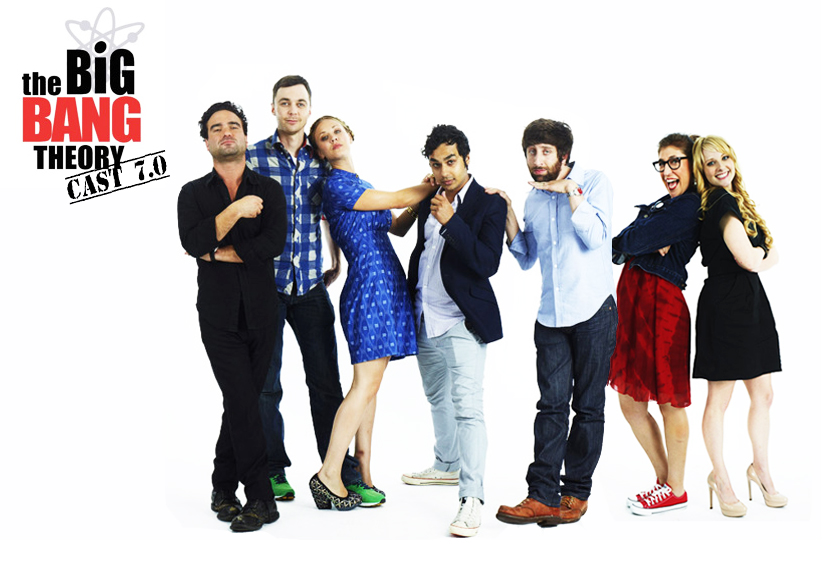
Verbal Humor in "The Big Bang Theory" Comes from the Contrast Between Maximal Relevance and Optimal Relevance


Huh? Way to take the fun out of the best sit-com in ages. Still, it's cool to see a linguistic philosophical examination of a popular culture artifact.


Full Citation:
HU Shuqin. (2013). A Relevance Theoretic Analysis of Verbal Humor in The Big Bang Theory. Studies in Literature and Language, 7 (1), 10-14. DOI: http://dx.doi.org/10.3968/j.sll.1923156320130701.2549


Shuqin HU

Abstract


Relevance theory proposes a hypothesis of relevance in human communication. Human communication is an ostensive-inferential process, in which the hearer tries to seek the intended relevance by selecting different context assumptions. It is applicable to humor study. This paper takes the sitcom The Big Bang Theory as a case study. By analyzing some verbal humor examples within this framework, it proves that humor comes from the contrast between maximal relevance and optimal relevance.

INTRODUCTION

As a special kind of human communication, humor is always welcomed by people. No one can resist its power, because it can bring happiness and pleasant feeling to a person in depression; it can sooth a sad heart and give people a comfortable feeling. In a sense, humor is a way to a happy and colorful life. Since it plays an indispensable role in human communication, humor has been studied from different disciplinary viewpoints including philosophy, psychology, sociology, literature, rhetoric, linguistics and so on. With the development of humor study, the linguistic perspective is becoming the mainstream of thoughts because it is more applicable and more systematic. In this paper, a pragmatic theory, relevance theory will be employed in studying the creation and appreciation of humor. The theory is developed on the basis of communication and cognition. Although Relevance theory is not specially designed to study humor, it has been proved a very efficient framework to study humor, a special kind of communication.

American situation comedy is gaining on popularity in China, especially among young people. The recent hit series The Big Bang Theory will be taken as data source in this humor study.

The study of the verbal humor in sitcoms has both theoretical and practical values. Theoretically, it will enrich humor study, an important aspect of linguistic study. Practically, it will help Chinese people appreciate this form of TV artistic work better and hence enhance cross-cultural communication. At the same time, this kind of study also helps with English teaching in China. This paper will analyze the verbal humor in one of the recently popular sitcom The Big Bang Theory cognitively within the framework of the relevance theory. In the following, a general research history of humor and an introduction of The Big Bang Theory will be given respectively.

Research on Humor
 
The study of humor can trace back to the time of Aristotle and Freud. A commonly accepted classification divides traditional theories of humor into three groups: the Superiority Theory, the Release Theory, and the Incongruity Theory.

The Superiority Theory is mainly advocated by Aristotle and Hobbes. It holds that humor is an expression of superiority. We laugh at other’s misfortune or shortcoming, which reflect our sense of superiority. It’s characterized by one’s cognitive comparison of self against others on the basis of intelligence, beauty, strength, wealth and in a subsequent personally-experienced elation, triumph or victory as a result of such self-others comparisons.

The Release Theory examines humor from psychological perspectives. It points out that laughter is a means which can be used to release or reduce the strain coming from controlled thought or rationality. Freud is the chief exponent for the release theory.

The Incongruity Theory studies humor cognitively for the first time. In this theory, humor involves some kind of difference between what one expects and what one receives. It’s based on the mismatch between two ideas in the broadest possible sense.
As the linguistic research on humor in modern times develops, Semantic-oriented studies on humor prevail in the early year of humor research, among which the Semantic Script Theory of Humor (SSTH), and the General Theory of Verbal Humor (GTVH) are the most influential. However, many recent studies have given attention to the social factors, especially in pragmatic-oriented studies of humor. Pragmatics, with its programmatic lack of boundaries, is becoming the natural place to locate the linguistic side of the interdisciplinary study of humor.

A Short Introduction of The Big Bang Theory

Situation comedy or sitcom is a television program lasting nearly half an hour long with a regular cast and in a regular location such as household or workplace. Humor, especially verbal humor plays a crucial part in creating the entertaining effect of the comedy.

The Big Bang Theory is an American situation comedy created and produced by Warner Bros. Television and Chuck Lorre Productions. It won the best comedy series TCA award in August 2009, and is honored as “the best situation comedy after Friends.

The two main characters in the show are two roommates who work at the California Institute of Technology, one is experimental physicist Leonard Hofstadter and the other is theoretical physicist Sheldon Cooper. They are brilliant physicists with higher than average IQ, but quite awkward in social skills. They have two equally geeky friends and co-workers, Howard Wolowitz, an aerospace engineer, and Rajesh Koothrappali, a particle astrophysicist. Across the hall lives Penny, an attractive blonde waitress and aspiring actress, who later becomes Leonard’s girl friend; the geekiness and intellect of the four guys is contrasted with Penny’s social skills and common sense for comic effect.

Read the Full Text: PDF

References

  • Attardo, S. (2001). Humorous text: A semantic and pragmatic analysis. Berlin/New York: Mouton de Gruyter.
  • Freud, S. (1976). Jokes and their relation to the unconscious. London: Penguin Books.
  • Liao, D. H. (2010). Relevance theory and the interpretation of English humor. Journal of Chongqing College Education.
  • Sperber, D., & Wilson, D. (1986/1995). Relevance: Communication and cognition. Oxford Blackwell.
  • Thomas, J. (1995). Meaning in interaction: An introduction to pragmatics. London: Longman Group limited.
  • Xiong, X. L. (2004). Cognitive pragmatics. Shanghai: Shanghai Foreign Language Education Press.
  • Xiong, X. L. (2004). Cognitive pragmatics. Shanghai: Shanghai Foreign Language Education Press.
  • Yus, F. (2003). Humor and the search for relevance. Journal of Pragmatics.

Wednesday, May 15, 2013

The Partially Examined Life, Episode 76: Deleuze on What Philosophy Is

From The Partially Examined LIfe - a very cool philosophy podcast and blog - this is an interesting discussion on Gilles Deleuze's vision of what philosophy is. Here are a few helpful links to get you acquaniuted with his ideas.

Gilles Deleuze at the Stanford Encyclopedia of Philosophy

Other Internet Resources
Enjoy the podcast.

Episode 76: Deleuze on What Philosophy Is


Podcast: Play in new window | Download (Duration: 2:10:55 — 119.9MB)
Posted by Mark Linsenmayer on May 14, 2013


On Gilles Deleuze and Félix Guattari’s What Is Philosophy? (1991).

How is philosophy different from science and art? What’s the relationship between different philosophies? Is better pursued solo, or in a group? Deleuze described philosophy as the creation of new concepts, whereas science is about functions that map observed regularities and art is about creating percepts and affects. Just reading or writing about past philosophers is not enough; you have to actually create concepts, and to create or understand a concept requires a “plane of immanence,” which is something like a set of background intuitions that is not private to a particular mind. Such a plane constitutes an image of what thought is and determines what questions will be considered legitimate, so trying to evaluate a past philosophy without grappling with the plane means you’ll inevitably misunderstand the philosopher and your critiques will just talk past him or her. Likewise, if you yank a philosophical concept out of its plane and try to turn it into a proposition that you can evaluate, it’s inevitably going to seem weak, like “just an opinion,” because propositions are not what philosophy creates. As for a pragmatist, “truth” for Deleuze is something defined within a plane, not some transcendental standard used to judge planes or concepts.

Mark, Seth, and Dylan are joined by “sophist” (PhD in rhetoric) Daniel Coffeen to try to figure this out. Read more about the topic and get the book.

End song: “Tolerated” by New People, the new album Might Get It Right. Read about it.

Please go to partiallyexaminedlife.com/donate to help support our efforts. A recurring donation will gain you all the benefits of PEL Citizenship, including another Deleuze discussion.

Tuesday, January 22, 2013

David Brooks on President Obama's Inaugural Speech


If you have not yet read or seen the President Obama's 2013 Inaugural Speech from Monday, you can watch it below or read it here.


There has been a lot said about this speech, much of which demonstrates that President Obama's desire to create more unity, a "We, the People" foundation for his second term, is not likely to get very far - liberals mostly applaud the speech and conservatives largely reject it.

However, one of the best commentaries came this morning from the New York Times op-ed columnist David Brooks. As his interests have shifted more and more toward social sciences (he reads a LOT in the realms of psychology, neuroscience, and social psychology), his columns have become thoughtful and nuanced (with some notable exceptions), and this one exemplifies that tendency in him.

The Collective Turn

By DAVID BROOKS
Published: January 21, 2013

The best Inaugural Addresses make an argument for something. President Obama’s second one, which surely has to rank among the best of the past half-century, makes an argument for a pragmatic and patriotic progressivism.

His critics have sometimes accused him of being an outsider, but Obama wove his vision from deep strands in the nation’s past. He told an American story that began with the Declaration and then touched upon the railroad legislation, the Progressive Era, the New Deal, the highway legislation, the Great Society, Seneca Falls, Selma and Stonewall.

Turning to the present, Obama argued that America has to change its approach if it wants to continue its progress. Modern problems like globalization, technological change, widening inequality and wage stagnation compel us to take new collective measures if we’re to pursue the old goals of equality and opportunity.

Obama wasn’t explicit about why we have failed to meet these challenges. But his critique was implicit. There has been too much “me” — too much individualism and narcissism, too much retreating into the private sphere. There hasn’t been enough “us,” not enough communal action for the common good.

The president then described some of the places where collective action is necessary: to address global warming, to fortify the middle class, to defend Medicare and Social Security, to guarantee equal pay for women and equal rights for gays and lesbians.

During his first term, Obama was inhibited by his desire to be postpartisan, by the need to not offend the Republicans with whom he was negotiating. Now he is liberated. Now he has picked a team and put his liberalism on full display. He argued for it in a way that was unapologetic. Those who agree, those who disagree and those of us who partly agree now have to raise our game. We have to engage his core narrative and his core arguments for a collective turn.

I am not a liberal like Obama, so I was struck by what he left out in his tour through American history. I, too, would celebrate Seneca Falls, Selma and Stonewall, but I’d also mention Wall Street, State Street, Menlo Park and Silicon Valley. I’d emphasize that America has prospered because we have a decentralizing genius.

When Europeans nationalized their religions, we decentralized and produced a great flowering of entrepreneurial denominations. When Europe organized state universities, our diverse communities organized private universities. When Europeans invested in national welfare states, American localities invested in human capital.

America’s greatest innovations and commercial blessings were unforeseen by those at the national headquarters. They emerged, bottom up, from tinkerers and business outsiders who could never have attracted the attention of a president or some public-private investment commission.

I would have been more respectful of this decentralizing genius than Obama was, more nervous about dismissing it for the sake of collective action, more concerned that centralization will lead to stultification, as it has in every other historic instance.

I also think Obama misunderstands this moment. The Progressive Era, New Deal and Great Society laws were enacted when America was still a young and growing nation. They were enacted in a nation that was vibrant, raw, underinstitutionalized and needed taming.

We are no longer that nation. We are now a mature nation with an aging population. Far from being underinstitutionalized, we are bogged down with a bloated political system, a tangled tax code, a byzantine legal code and a crushing debt.

The task of reinvigorating a mature nation is fundamentally different than the task of civilizing a young and boisterous one. It does require some collective action: investing in human capital. But, in other areas, it also involves stripping away — streamlining the special interest sinecures that have built up over the years and liberating private daring.

Reinvigorating a mature nation means using government to give people the tools to compete, but then opening up a wide field so they do so raucously and creatively. It means spending more here but deregulating more there. It means facing the fact that we do have to choose between the current benefits to seniors and investments in our future, and that to pretend we don’t face that choice, as Obama did, is effectively to sacrifice the future to the past.

Obama made his case beautifully. He came across as a prudent, nonpopulist progressive. But I’m not sure he rescrambled the debate. We still have one party that talks the language of government and one that talks the language of the market. We have no party that is comfortable with civil society, no party that understands the ways government and the market can both crush and nurture community, no party with new ideas about how these things might blend together.

But at least the debate is started. Maybe that new wind will come.

Thursday, March 15, 2012

De Been and Taekema - What Piece of Work is Man? Frans De Waal and Pragmatist Naturalism

In this open access article posted at the Social Science Research Network, Wouter De Been and Sanne Taekema (both of Erasmus University Rotterdam [EUR] - Erasmus School of Law) examine the research of primatologist Frans De Waal on the inherent goodness of primates (including, of course, human beings) and how this could and should impact the law.

However, they reject De Waal's stance that we embrace Adam Smith’s moral theory (focused on sympathy and empathy) and argue that a return to pragmatism is more suitable to adjusting the legal system to fit with De Waal's research. Following Jesse Prinz, they believe that moral goodness is as much (likely more) socially constructed as it is a natural element of our nature, thus the rejection of Smith and the move toward pragmatism (John Dewey and others).

Erasmus University Rotterdam, Erasmus School of Law,
Department of Jurisprudence/Department of Socio-Legal Studies
Taekema@law.eur.nl and Debeen@law.eur.nl

Erasmus Working Paper Series on Jurisprudence and Socio-Legal Studies
No. 12-01: February 23, 2012, Version: 1.0

Abstract:
Frans de Waal has questioned a central premise of liberal theory, i.e. that human beings are primarily defined by selfishness and rationality. This premise does not conform to what we know from research about our primate origins - namely that primates are gregarious and guided by sympathy and empathy. De Waal argues we should return to Adam Smith’s moral theory and his focus on sympathy and empathy. We believe a return to pragmatism would be more appropriate. Pragmatism largely conforms to the view of human nature that De Waal’s research now supports. We argue that pragmatism can provide a more sophisticated framework to integrate recent insights about primate sociality into political and legal theory. Moreover, we think the pragmatist approach can enrich the hermeneutic strain in De Waal’s research.

The intelligent acknowledgment of the continuity of nature, man and society will alone secure a growth of morals which will be serious without being fanatical, aspiring without sentimentality, adapted to reality without conventionality, sensible without taking the form of calculation of profits, idealistic without being romantic.
~ John Dewey (1983 (1922), p. 13)

Citation: De Been, W. and Taekema, S. (February 20, 2012). What Piece of Work is Man? Frans De Waal and Pragmatist Naturalism. Erasmus Working Paper No. 12-01. Available at SSRN: http://ssrn.com/abstract=2009375

Here are a couple of paragraphs from the Introduction that outline the arc of their article and arguments.

In this article we will bring De Waal and pragmatism together. We believe both these bodies of work can reap benefits from such a confrontation. For De Waal, pragmatism offers a more robust and comprehensive philosophical framework. Smith’s moral theory can provide inspiration, but it is too much a product of the 18th century to account for all the things we have learned about human beings since. Pragmatism provides a more current perspective on the issues that concern De Waal. For pragmatism, in turn, De Waal can contribute much more sophisticated insights into primate and social behavior. His research presents a strong case for the innate gregariousness and natural social virtue of human beings, things that the classical pragmatists assumed without much empirical evidence. As a result, they can flesh out pragmatism with a more robust substantive conception of life in groups. This could make a considerable contribution to pragmatism as a substantive theory. Pragmatism has been criticized for being banal, for merely providing a framework for research and understanding, but leaving everything as it is and lacking any substantive content (Rorty 1991). What De Waal shows is that the naturalism of pragmatism provides much more of a substantive theory than just an acceptance of contingency.
The article consists of three parts. To begin with, we will describe De Waal’s recent critique of the contract tradition and the view of human beings implicit in it. Secondly, we will describe the continuities of his work with classical pragmatism and suggest how De Waal’s critique can be subsumed in a pragmatic framework. Finally, we will address some of the theoretical consequences of bringing together classical pragmatism with De Waal’s insights. Three themes will be discussed in this final section. First, the consequences of replacing selfishness and individualism as basic premises of legal and political theory will be elaborated upon. If methodological individualism is replaced with a broader understanding of human nature that embraces such notions as sympathy, kindness, and need for companionship, then this will obviously militate against the formulation of a single, coherent ideal theory. Moreover, it will raise the question of the scope of our moral obligation to others. If the basic assumption is that people pursue their self-interest, the scope is clear. In the end people just fend for themselves. If the basic assumption is that people act out of sympathy and fellow feeling, this raises the question of how far this sympathy extends and what the scope of our obligations is. Second, both De Waal’s work and pragmatism seem to turn on the rejection of such dichotomies as the one between nature and culture, or fact and value. Again this favors the substitution of the transcendental style of theorizing characteristic of contract theory, with a more hermeneutic, comparative approach rooted in reality. The third and last theme is what pragmatism has to offer De Waal. Tracing the methodological similarities between De Waal and pragmatism raises the question how close De Waal’s primatology is to the naturalist methodology of the pragmatists. Combining nature and culture the way De Waal does also calls for reflection on the proper methodology to study the combination. Here, a pragmatist hermeneutics may provide an closer link between De Waal and the humanities and social sciences.