Showing posts with label hominids. Show all posts

Wednesday, September 25, 2013

Linking brains and brawn: Exercise and the evolution of human neurobiology

Near the end of 2012 (electronic online first, Nov. 12), David Raichlen, an anthropologist at the University of Arizona, and John Polk, an anthropologist and surgeon at the University of Illinois, published a review article suggesting that human brain size increased commensurate with a more aerobic lifestyle, including more long-distance running.

One of the contributing factors they mention in the introduction is that long-distance running (more than 5K or 3.6M) had become a part of the hominid hunting technique.

Our ancestors, beginning with H. erectus, shifted to a hunting and gathering lifestyle that required higher levels of aerobic activity [21–24], with morphological evidence showing adaptations for increased long-distance trekking and the adoption of endurance running (ER; aerobic running for distances of more than 5 km) as a new hunting method [17,18].
While there is some support for this position, there is equal, if not more, support for the notion that a higher protein diet is directly responsible for human brain growth during this evolutionary period.

Importantly, the human brain (adult) uses about 25% of total calorie intake just for brain function (this number approaches 60% in newborns, which is why breast feeding [milk protein and lipids] is so important). In order to support that much energy consumption (consider that the average ape brain uses only 8% of its caloric intake for brain function), proto-humans needed to change their diets from mostly plant material to the higher calorie animal meat and bone marrow. This evolutionary step likely allowed proto-humans to maintain smaller and shorter digestive systems than more plant based apes.  

According to Katharine Milton [The Critical Role Played by Animal Source Foods in Human (Homo) Evolution, 2003]:
Without routine access to ASF, it is highly unlikely that evolving humans could have achieved their unusually large and complex brain while simultaneously continuing their evolutionary trajectory as large, active and highly social primates. As human evolution progressed, young children in particular, with their rapidly expanding large brain and high metabolic and nutritional demands relative to adults would have benefited from volumetrically concentrated, high quality foods such as meat. 
Richard Wrangham has added to this idea that cooking meat (and other foods) made many foods more bioavailable, which allowed hominids to digest more calories from the foods they consumed, again providing much needed energy to maintain the larger brains we were growing.
What spurred this dramatic growth in the H. erectus skull? Meat, according to a long-standing body of evidence. The first stone tools appear at Gona in Ethiopia about 2.7 million years ago, along with evidence that hominids were using them to butcher scavenged carasses and extract marrow from bones. But big changes don’t appear in human anatomy until more than 1 million years later, when a 1.6-million-year-old skull of  H. erectus shows it was twice the size of an australopithecine’s skull, says paleoanthropologist Alan Walker of Pennsylvania State University in State College. At about that time, archaeological sites show that H. erectus was moving carcasses to campsites for further butchering and sharing; its teeth, jaws, and guts all got smaller. The traditional explanation is that H. erectus was a better hunter and scavenger and ate more raw meat than its small-brained ancestors. (Ann Gibbons, Food for Thought, Science Magazine, June 15, 2007)
Finally, Mary Nassar and her team (Language Skills and Intelligence Quotient of Protein Energy Malnutrition Survivors, 2011) looked at the effects of protein energy malnutrition (PEM is the most common and the most debilitating form of malnutrition) on the physical and cognitive ability of children:
The study was conducted on 33 children aged 3–6 years who suffered from protein energy malnutrition (PEM) during infancy in comparison to 30 matching children to assess the long-term deficits in cognition and language skills. The patients’ files were revised to record their admission and follow-up data and history, clinical examination, intelligence quotient and language assessment were done. The study revealed that 2–5 years from the acute attack the PEM patients were still shorter than the controls and their cognitive abilities were poorer.
All of this is to say that there are other and better arguments for increased brain size in human evolution. More importantly, the likelihood is that several factors - increased aerobic exercise, increased protein intake, decreased digestive system - all contributed to the increase in brain size.

Full Citation:
Raichlen DA, Polk JD. (2013). Linking brains and brawn: Exercise and the evolution of human neurobiology. Proc R Soc B, 280: 20122250. doi: 10.1098/rspb.2012.2250


Linking brains and brawn: exercise and the evolution of human neurobiology

David A. Raichlen [1] and John D. Polk [2,3]
1. School of Anthropology, University of Arizona, Tucson, AZ 85721
2. Department of Anthropology, University of Illinois Urbana–Champaign, Urbana, IL 61801
3. Department of Surgery, University of Illinois Urbana–Champaign, Urbana, IL 61801
The hunting and gathering lifestyle adopted by human ancestors around 2 Ma [editor's note: Ma = millions of years before the present] required a large increase in aerobic activity. High levels of physical activity altered the shape of the human body, enabling access to new food resources (e.g. animal protein) in a changing environment. Recent experimental work provides strong evidence that both acute bouts of exercise and long-term exercise training increase the size of brain components and improve cognitive performance in humans and other taxa. However, to date, researchers have not explored the possibility that the increases in aerobic capacity and physical activity that occurred during human evolution directly influenced the human brain. Here, we hypothesize that proximate mechanisms linking physical activity and neurobiology in living species may help to explain changes in brain size and cognitive function during human evolution. We review evidence that selection acting on endurance increased baseline neurotrophin and growth factor signalling (compounds responsible for both brain growth and for metabolic regulation during exercise) in some mammals, which in turn led to increased overall brain growth and development. This hypothesis suggests that a significant portion of human neurobiology evolved due to selection acting on features unrelated to cognitive performance.
Here is the beginning of the article, which lays out some compelling evidence for why they have developed this model.

1. Introduction


A wealth of recent studies detail connections between physical activity and neurobiology [1,2]. In particular, aerobic physical activity (APA) generates, and protects new neurons, increases the volume of brain structures and improves cognition in humans and other mammals [2–8]. These neurobiological effects accrue during an individual’s lifetime, and a great deal of research has begun to explore the implications of APA for cognitive health [5]. However, recent data also suggest that there is an evolutionary relationship between APA and the brain, including a positive correlation between aerobic capacity and brain size across a wide range of mammals [6]. Here, we review this growing body of evidence suggesting that the relationship between APA and neurobiology exists across evolutionary timescales, and that selection acting on endurance capacity in mammals may have had important effects on the evolution of brain size in these taxa.


In addition to neurobiological effects on mammals in general, this recent work has profound implications for human brain evolution. The human brain is approximately three times larger than expected for our body size, due to increases in several brain components, including the frontal lobe, temporal lobe and cerebellum [9,10]. This major increase in both absolute brain size and brain size relative to body mass occurred during the early evolution of the genus Homo, becoming especially pronounced during the evolution of Homo erectus [9,11–13] (figure 1). Because brain size changes in human evolution are often interpreted in the context of cognition [11], previous hypotheses for increased brain size in hominins have focused on greater social complexity [14] or enhanced ecological demands on cognition [15,16]. However, at the same time as brain size began to increase in the human lineage, aerobic activity levels appear to have changed dramatically [17–20]. Our ancestors, beginning with H. erectus, shifted to a hunting and gathering lifestyle that required higher levels of aerobic activity [21–24], with morphological evidence showing adaptations for increased long-distance trekking and the adoption of endurance running (ER; aerobic running for distances of more than 5 km) as a new hunting method [17,18]. Thus, in addition to reviewing patterns of brain evolution in non-human mammals, we propose the novel hypothesis that selection acting
on human locomotor endurance had a measurable effect on the evolution of human brain structure and cognition.

To explore hypotheses linking physical activity and brain evolution, we begin by reviewing proximate mechanisms that allow APA to alter the adult mammalian brain. We then examine intra- and interspecific studies (as well as artificial selection experiments) that suggest selection acting to improve endurance capacity alters these proximate mechanisms and, in the end, affects neurobiological evolution in mammals that have an evolutionary history of endurance activity (athletic species). Finally, we explore correlations between APA and neurobiology across evolutionary time-scales in the human lineage. The purpose of this review is not to suggest that aerobic activity alone is responsible for all aspects of human brain size or cognitive evolution. However, our review suggests that aerobic activity represents a previously unrecognized factor in mammalian neurobiological evolution, and highlights the possibility that noncognitive selection pressures may have played an important role in the development of the human brain.

2. Effects of aerobic physical activity on the brain: proximate mechanisms


Many studies suggest that APA leads to the formation of new neurons (neurogenesis) in some portions of the adult brain [2–4,7,25–27]. In rodents, voluntary wheel-running produces a three- to fourfold increase in neurons in the dentate gyrus of the hippocampus [2,8]. There is also some limited evidence that neurobiological changes associated with APA occur in other brain regions [2]. For example, there is a trend towards increased neurogenesis, and evidence of gliogenesis (generation of new glia that support neuronal activity) with APA in the frontal cortex of rats [28,29], and neurogenerative activity induced by APA was found in superficial cortical layers and in the motor cortex of rodents [29].

Activity-induced neurogenesis has a major impact on cognitive function and on the size of brain components. For example, performance in memory and spatial learning tasks improves following APA in non-human taxa such as monkeys [30] and rodents [8,31,32]. In humans, aerobic fitness is positively correlated with hippocampal and basal ganglia volume in children and older adults [25,33,34], with grey matter density in the insula of young adults [35], as well as with the amount of grey and white matter in the frontal lobe and other brain areas of older adults [27]. These structural changes across many brain regions appear to have significant functional effects. In school-aged children, fitness levels and participation in higher amounts of physical activity are correlated with improved cognitive function [5,26,36]. In healthy young adults (approx. 22 years of age), both acute and long-term APA improves performance on memory tasks, suggesting enhanced hippocampal function [37]. Finally, several studies have linked APA with either improved cognitive performance (especially executive functions and spatial memory) or a reduction in cognitive decline in older populations [3,38,39]

Read the whole article.

Wednesday, April 18, 2012

PLoS Blogs - Should Chimpanzees Have Moral Standing? An Interview with Frans de Waal

A week ago I posted a TED Talk by Frans de Waal - Moral Behavior in Animals - in which he discussed the higher morality of animals. In this interview with de Waal from PLoS Blogs, he argues that chimps should not be subject to any experiments that we do not run on humans. He also published an article in PLoS Biology,Research Chimpanzees May Get a Break,” in which he evaluated a recent Institute of Medicine report, commissioned by the National Institutes of Health to evaluate the scientific need for using chimpanzees in biomedical research.

Should Chimpanzees Have Moral Standing? An Interview with Frans de Waal


Frans de Waal (Photo: Catherine Marin)

Whether from hubris or insecurity, humans like to view our species as the crown of creation, beings beyond compare in the animal kingdom, as if our advanced cognitive and behavioral skills appeared de novo with the emergence of the Homo lineage. Few have done more to demonstrate the folly of such an anthropocentric view than Frans de Waal.

For nearly 40 years, de Waal has studied the evolutionary origins of social intelligence in primates, from capuchin monkeys to chimpanzees, eviscerating the notion that only humans are capable of empathy, emotions, altruism, and morality, and of transmitting social mores and culture. Likewise, he argues, we can’t blame nature “red in tooth and claw” for our history of violence, warfare, and male dominance.

A lifelong student of animal behavior, de Waal is C.H. Candler Professor of Psychology and director of the Living Links Center for the Advanced Study of Ape and Human Evolution at the Yerkes National Primate Research Center at Emory University. He started studying chimpanzees in 1975, and was the first to show that chimpanzees engage in coalition “politics” and practice reconciliation and conflict resolution. De Waal has explored the evidence and implications of other species’ cognitive capacities in nine books, including The Age of Empathy, which incorporates his most recent work on the evolutionary origins of morality, empathy, and emotions.

In a new article published in PLoS Biology,Research Chimpanzees May Get a Break,” de Waal considers a recent Institute of Medicine report, commissioned by the National Institutes of Health to evaluate the scientific need for using chimpanzees in biomedical research. Given what we know about the cognitive, social, emotional, and cultural attributes of chimpanzees, de Waal argues, the question is fundamentally an ethical one. And for de Waal, the answer is clear: the sort of experiments that can ethically be done on human volunteers are okay to do on chimpanzees.

I spoke with him in Vancouver at AAAS, the annual meeting of the American Association for the Advancement of Science, after his plenary talk, “Good Natured: From Primate Social Instincts to Morality.”

Gross: Your research has repeatedly drawn parallels between nonhuman primate and human cognition and behavior. In explaining your research focus, you’ve said, “For me, there is nothing more logical than to look at human society through the lens of animal behavior.” What can animal behavior tell us about human behavior?

De Waal: I’ve always looked at humans as animals and I’ve always looked at animals as having emotions and so on, and sharing cognition with humans. So for me it’s really not a contradiction. People often say, “Well, we are not animals.” That’s not something that a biologist understands actually. If we’re not animals what are we? We’re certainly not plants.

Gross: What would you say to those who argue that there are huge gaps in cognition between monkeys and apes and humans?

De Waal: Over the years the dividing line between humans, certainly between humans and the apes, has sort of become fuzzy under the influence of field work, such as the work by Jane Goodall, Toshisada Nishida, and others, and under the influence of experimental work on cognition, which has shown all sorts of capacities that we had not suspected in the apes.

Also, neuroscience has not really helped maintain the dividing line because the brain of a human doesn’t contain any parts that the brain of an ape doesn’t have. The human brain is much bigger than, let’s say, the chimpanzee brain. It’s three times bigger. But there’s nothing in there as far as we can tell that is not in a chimpanzee brain. At the microscopic level there are a few differences and they’re probably interesting, but you would think if humans are so dramatically different, as different as the philosophers have often assumed, that you would find something in the human brain that is absolutely unique and that you would say, “Well, there’s a part there that no one else has,” but we have never found it.

Gross: What are some of the seminal experiments that revealed similarities in cognitive or behavioral traits between apes and humans, suggesting we’re not in fact unique, as many like to think?

De Waal: There are many. For example, tool use used to be considered uniquely human. And then when it was found in captivity by Köhler, this is in the 1920s, people would say, “Well, but at least in the wild they never do it.” And then it was found in the wild, and then they would say, “Well, at least they don’t make tools.” And then it was found that they actually also make tools.

So tool use was one of those dividing lines. Mirror self-recognition is a key experiment that was first conducted on the apes. The language experiments, even though we now doubt what the apes do is actually what we would call “language,” they certainly put a dent in that whole claim that symbolic communication is uniquely human.

My own studies on, let’s call it “politics,” and reconciliation behavior and pro-social behavior have put a dent in things. And so I think over the years every postulate of difference between humans and apes has been at least questioned, if not knocked over. As a result, we are now in a situation that most of the differences are considered gradual rather than qualitative.

And the same is true, let’s say, between a chimp and a monkey. There are many differences between chimps and monkeys in cognitive capacities, but we consider them mostly gradual differences.

The more we look at it, even if you take the difference between, let’s say, a human and a snake or a fish, yes, between those species the differences are very radical and huge, but even these species rely on some of the learning processes and reactions that we also know of in humans.

Gross: In your PLoS Biology commentary, you note that the Institute of Medicine committee lacked expertise in key areas. What was the biggest oversight, in your opinion?

De Waal: The NIH made the curious request that ethics was going to be kept out of the discussion, which is strange since the whole reason we are discussing chimpanzees and not rats or mice is the ethical issue of why would we use the chimpanzee, which is a close [human] relative and shows so many emotions and cognitions that humans have as well. Is it justified to use chimpanzees?

To try to keep the ethics question out was, I think, a misjudgment on the part of NIH. But the IOM then put a bioethicist in charge so their response was more or less we cannot keep ethics out, let’s talk about it.

The report is very interesting because it was written by people who are not experts in chimpanzees but who listened to many experts, so they had hearings at which we spoke, for example. They were open about that and talked with us, and the resulting report is actually quite balanced.

The report basically argues that except maybe for one exception there is no urgent reason to keep using chimpanzees for biomedical studies. Their main conclusion is that the justification to keep using chimpanzees for this purpose is actually not that strong.

Gross: Yet they’ve left the door open to continue some research.

De Waal: Yes, they have left the door open for prophylactic hepatitis C vaccine testing. Normally that kind of testing would require large numbers because you want statistical power. Now, the NIH owns less than 1,000 chimps, which can certainly not all be used for that kind of testing, so we’re talking about a small sample of a couple of hundred that could potentially be used, which is not sufficient to do anything dramatic. So I don’t see it as a viable option. They have mentioned that that’s the one area in which chimps could still be extremely useful. But I’m not sure we can fill this particular need at this point.

Gross: What if there were sufficient numbers of chimps to provide the appropriate statistical power?

De Waal: Even if we had the numbers I would have questions like, Is this the best use for an animal that we consider ethically problematic to be used, because you’re going to be virally infecting them, which is something that I would want to avoid at this point. Rodent models are coming up very fast, and are likely to take the place of the apes. So even if we had the numbers, I’m questioning whether we should be doing it and whether we haven’t reached the point now in the discussion where we say let’s draw a line and say it’s over as far as chimps are concerned for biomedical research.

Gross: What in your view is the most compelling reason to stop invasive research on chimpanzees?

De Waal: The most compelling reason would be an ethical one. I myself have never done any invasive studies in chimps for exactly that reason. I don’t want to do that kind of thing on the chimpanzee because they are so mentally and psychologically close to us. Most people of my generation and younger who work with this species share this feeling. It’s almost like you’re working with humans, you know, they are very closely related to us.

It’s very easy to extend the moral qualms we would have with experiments on humans to chimpanzees. It’s much easier to extend them to chimpanzees than to, let’s say, rats or mice which are so much more distant from us.

Gross: What criteria should we use to decide what type of research on chimpanzees would be morally acceptable?

De Waal: I think we should keep doing non-invasive studies on chimpanzees, such as behavioral studies or comparative genomics, maybe non-invasive neuroscience. It’s hard to do the same imaging studies as we do on humans at the moment, but it’s going to happen, I think, one day.

For me, non-invasive would be defined as research that I would not mind doing on a human. And it does require a different mindset at NIH and maybe other funding agencies because sometimes if you submit proposals to them that include chimpanzees, they still will argue, “Well, you’re using animals, why don’t you go into the brain and manipulate it this way or that to enhance your study?”

The science community needs to change that mindset and treat chimpanzee studies basically the way they treat human studies. There’s a lot of things we cannot do on humans, and that we will not do on humans, and that will be the situation for chimpanzee research, I think, where we say, “Well, we can do all the same things that we do on humans, but that’s about it.”

Gross: In your commentary, you point out that the United States shares the distinction with Gabon of being the only nations in the world to hold chimpanzees in biomedical facilities. That’s surprising.

De Waal: The movement to remove chimpanzees out of research laboratories started to get teeth about ten years ago. The movement existed probably earlier but at least ten years ago certain countries like Japan and the Netherlands had chimpanzees in labs and said they stopped this kind of research for ethical reasons, it was very explicitly for ethical reasons.

And I think the U.S. is going to join the other countries, maybe not today, maybe not tomorrow, but it will happen because the whole trajectory – and that’s what’s pointed out in the IOM report – is in this direction. And my argument is why not get ahead of that trajectory, and why not do it now rather than wait a couple of years.

Gross: What should be done with chimpanzees that would be retired?

De Waal: There is a bit of a desire on the part of existing facilities to keep the chimpanzees there and turn the facilities into sanctuaries. But actually most existing research facilities are not particularly suited for that, because they were built for research, for shifting chimpanzees around, for having them in small groups so that you could easily work with them. They’re not optimal facilities for keeping them around. Whereas there are certain sanctuaries that have a lot of space, that have forests available for them, and I think that’s the way we should retire them. We should retire them in large social groups and hopefully still in environments in which some limited, non-invasive studies, like behavioral studies, can still be done.

I think the whole retirement issue needs to be rethought. Some money will need to be put into it. This cannot be done on the cheap, and if you look at the Netherlands and Japan, they invested quite large sums of money in the retirement of research chimpanzees.

Gross: You recently wrote a commentary called What Is an Animal Emotion?, a subject that was long considered off limits for study. Why has there been such resistance to studying emotions?

De Waal: The view of emotions in the field of animal behavior has been quite negative under the influence of the behaviorists. Skinner would say that if animals have emotions – he would put “emotions” always in quotation marks because he really didn’t believe in them – but if they have them, they’re largely irrelevant and have nothing to do with behavior.

So the view used to be very negative. And then, of course, with the cognitive revolution human emotions became a major issue. Human emotions were recognized, but the behaviorists kept a taboo on animal emotions.

That is completely changing. Not so much under the influence of behavioral scientists such as myself, even though we do our best, it has changed mostly under the influence of neuroscience. If neuroscientists test fear in humans, they see that it activates the amygdala in the brain, then they take rats and they stimulate the amygdala and they get fear responses, and they say, “Well, if the same part of the brain is involved in the same sort of responses, we should use the same terminology for the two responses so we’re going to call it fear in humans as well as in rats.”

And so the neuroscientists are much less reluctant to talk about fear, aggression, love even, affection – they use all these emotional terms because they see the correspondence between what happens in the monkey brain or the rat brain and the human brain.

As a result, the taboo on animal emotions is crumbling very rapidly and I think the behavioral scientists who are still reluctant, they need to catch up with what is happening. My feeling has always been that it’s very hard to find an emotion that humans have that a chimpanzee cannot have.

I sometimes think of guilt and shame as the only ones that are maybe left. But even for those I could make the argument that they are not as uniquely human as we often think.

But all the rest, definitely, like jealousy and affection and anger, all these kind of emotions, the physiological and behavioral signs are there and increasingly also the neurological signs, so I see no reason to keep that completely separate between human and animal.

Gross: Do you see any applications for our current understanding of this cognition continuum for animals? Are there any policy recommendations aside from the Institute of Medicine report on chimpanzees that you can see coming out of our deeper appreciation of animal capacities in cognition and behavior?

De Waal: I’m not sure that what happened with chimps is going to happen to all species because people don’t worry much about rodents. For example, when we have rodents in the home we try to get rid of them, and so I’m not sure that people are going to apply the same concern that they have for chimps or elephants to other animals.

But I do feel there is a general trend in society, in the public, and scientists need to pay attention to that, of taking animals more seriously than we used to.

And this may also have an effect in the agricultural industry, on how we treat agricultural animals, which is a much larger number than research animals, actually, and so it may have effects everywhere, effects on the ethics of how we treat animals, and this will probably also affect the biomedical community.

It doesn’t mean that we will stop doing what we’re doing but we may start doing it differently. That’s my understanding of the movement, that we will increasingly think twice before we do certain procedures on animals.

Gross: Is there anything else you’d like to say about the IOM report?

De Waal: I found the report to be quite solid. It was well-written and balanced and I was also glad to see that the NIH took it seriously. They immediately put a stop on all the research to reflect on their position. I don’t know what the outcome of their deliberations is going to be, but their reaction was a sign of the times, because society is taking the issue increasingly seriously.

Liza Gross is Senior Science Writer/Editor for PLoS Biology. You can find her on Twitter as @lizabio (views her own!).

Saturday, April 14, 2012

Bookforum Omnivore - How We View Human Evolution

Bookforum's Omnivore posted a nice collection of links on human evolution and how we assemble the family tree of our ancestors. Enjoy!


Saturday, April 07, 2012

NPR - How Homo Sapiens Became 'Masters Of The Planet'


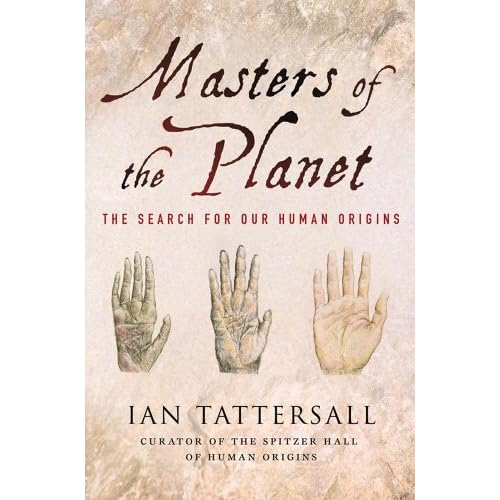
This was an interesting segment from yesterday's Talk of the Nation Science Friday. Paleoanthropologist Ian Tattersall discusses human origins in this interview supporting his new book, Masters of the Planet; The Search for Our Human Origins. It's an informative discussion.

One nit to pick - a woman asks about the paleo diet craze and whether he has thought about its accuracy. Rather than address the real issue (eating unnatural processed foods) that paleo attempts to "cure," he makes a more abstract comment about how primates, including humans, are generalists in what we can eat, i.e., omnivores, which is true.

But there is an overwhelming pile of evidence now that the closer to nature we eat, the healthier we are. This means no processed foods (or as little as humanly possible - some days a protein bar or shake is better than not eating), but eating fresh, grass-fed meats, free-range eggs, fruits and vegetables, and nuts - and if we eat grains at all they should be whole grains (wild rice, quinoa, whole oats, etc).

OK, I now step down from my soapbox and return you to the regularly scheduled post.

How Homo Sapiens Became 'Masters Of The Planet'

April 6, 2012

The first Homo sapiens appeared on the planet some 200,000 years ago. But even though they looked fully human, they didn't act fully human until they began creating symbolic art, some 100,000 years later. Paleoanthropologist Ian Tattersall discusses those human origins in his book Masters of the Planet.


This is SCIENCE FRIDAY. I'm Ira Flatow. We're broadcasting from the Milstein Hall of Ocean Life at the American Museum of Natural History in New York. That's the one with the big, blue whale hanging from the ceiling. And besides the oceans, one of the main themes of the museum is human origins. Where did we all come from? And it may not be what you think.

For example, did you know that homo sapiens, you and me, first appeared on Earth about 200,000 years ago? Those early humans would have looked almost exactly like us, but they didn't act fully human at that time or think like we do, and even though we are, and we were, are the same species.
So what happened? What is it that clicked to make us the language-speaking, artistic, world-dominating species we are today? My next guest talks our beginnings in his new book "Masters of the Planet: The Search for our Human Origins." Ian Tattersall is also curator of the Spitzer Hall of Human Origins here at the American Museum of Natural History in New York. Welcome back to SCIENCE FRIDAY.

IAN TATTERSALL: Thank you, Ira.

FLATOW: Tell us, you know, tell us why - I was really shocked that we are still the same homo sapiens. Well, how does that work?

TATTERSALL: Well, species normally have quite a substantial longevity. I mean, 200,000 years is not a long time for a species to be in existence. But the earliest evidence we have of people who look just like us comes from sites in Africa that date to about 200,000 years ago.

FLATOW: And so what does it mean that they were not fully human that we would think of today?

TATTERSALL: Interestingly enough the archeological record that goes along with these early fossils that we can recognize as homo sapiens is pretty much the same as the fossil record that was left by the - the archeological record that was left by their contemporaries. Two hundred thousand years ago, there were several different kinds of hominid in the world, and in fact there had been several different kinds of hominid living simultaneously in the world really all the way back to the very beginning of the human family, something like seven million years ago.

The human family tree, it turns out, has been very bushy. Every couple of years, I've had to redo my family tree of the human group, and I think I'm up to 23 species now that most people would agree are recognizable. And three or four of them at least have been in simultaneous occupation in the world at any one time.

FLATOW: And so why did one succeed while the other 22 did not?

TATTERSALL: I think it has to do with the fact that, at some point in its existence, Homo sapiens became an insuperable competitor. It became very intolerant of competition and able to sort of enforce that intolerance. And that involves a major behavioral change. And I think it was a change, basically, in cognition - the change in the way in which human beings process information about the world in their minds.

FLATOW: And what was that? What was the advantage that they got?

TATTERSALL: I think...

FLATOW: Was it a brain - the brain changed different, or what happened?

TATTERSALL: It wasn't simply a matter of brain size. Thirty thousand years ago, there were Neanderthals still existing in the world, a separate species of human that came into existence about the same time as Homo sapiens, but separately. We were - we evolved in Africa. The Neanderthals evolved in Europe, and they had brains just as big as ours. But they didn't behave in the same way that we behave today, and they behaved more like the early Homo sapiens that we find in Africa and...

FLATOW: How do you figure out how a human who lived 150,000 years ago thought or behaved? How do you know that?

TATTERSALL: Well, that's the key question, of course. And all we have to judge from - if we can't judge from raw brain size, what we can judge from is the archeological leavings of these early hominids. The material evidence they left of their behavior, which is mostly in the form of stone artifacts and of campsites and so forth, which give us some idea of the complexity of what they were doing. And the Neanderthals were great stone craftsmen. No question about it.
But they were kind of stereotyped, in a way, in which they made tools. They didn't make tools with a kind of creativity and the inventiveness that was characteristics of the human beings who came along later.

FLATOW: We've heard so many times that, you know, if a Neanderthal were next to you on the subway, you wouldn't know the difference. Is that true, or is that folk - urban folklore?

TATTERSALL: To an extent. I think I would recognize a Neanderthal...
(SOUNDBITE OF LAUGHTER)
TATTERSALL: ...if it was next to me in the subway.

FLATOW: And you have every day, on the - right.

TATTERSALL: But, you know, we have considerable experience here in making reconstructions of ancient hominids - reconstructing how they looked in life. And it's very true, that when you sculpt a face onto a skull, you layer on the underlying tissues, the muscles and so forth and then the superficial tissues, and you've got this bold creature with no hair on its head or on its face. The look is very distinctive. It looks very, very different from Homo sapiens. Then when you put the wig on, it's much harder to tell apart.

So that, in fact, we can make this kind of reconstruction and show it in a way in which it stands out from the rest. But if it sat next to you on the subway, you might not have too much of a notion.

FLATOW: I'm Ira Flatow, and this is SCIENCE FRIDAY from NPR. If you'd like to ask a question, you can step up to the microphones we have there. We'd be very happy to talk with Ian Tattersall whose new book is "Masters of the Planet: The Search for Our Human Origins." And on the cover, you show three different hands. What are you trying to illustrate with that three different hands?

TATTERSALL: Well, the cover came as a bit of a surprise to me. As a matter of fact...

FLATOW: I hate it when that happens.

TATTERSALL: But...
(SOUNDBITE OF LAUGHTER)
TATTERSALL: But I think it's a very dramatic cover. In fact, what it shows is the hand of, I think, a gibbon or a siamang, and a hand of a chimpanzee, and the hand of a modern human. You can see the hand proportions are very different. And what you have there is two higher primates, two apes with very long, slender hands. So they're very good for grasping branches in the trees. And you'll notice that our own hand is much, much shorter. In fact, it's much broader, The axis of the hand is across, rather than long. And that is what makes it possible for us to manipulate items in the precise way in which we can do and make those stone tools that our predecessors made.

FLATOW: You write that one important factor that is totally unique to hominids and is paradoxical is the possession of complex culture, especially as it's expressed in technology. Can you explain a little bit more about that?

TATTERSALL: Yeah. Obviously, culture is in the strictest sense is not confined to human beings. Chimpanzees, for example, in different parts of Africa pass along, from one generation to another - they pass along particular ways of doing things. But no other creature has a culture of the depth and the richness that human beings have. And human beings have taken culture to a whole new level. And we have come - biologically, we've come a very long way in a very short time.

And I think it's culture that has allowed us to do that because having culture as a buffer against the environment that's allowed different kinds of hominid to spread out over the world and occupy some very marginal environments, which they very often have had to abandoned. There's been this history of fragmenting of the human population which is exactly the circumstances under which you'd expect a lot of evolutionary change to happen.

FLATOW: You also write in your book, that one of the great modifying - or catalysts for change, has been climate change over the years. Can you tell us about that?

TATTERSALL: Yes, indeed. The last several million years have been a time of increasingly unsettled climates. The climate has gotten cold and warm on a larger timescale, as well on smaller timescales too, changing the environment. Any hominid groups staying in the same place would successively encounter lots and lots of different environments and it's ability to accommodate to environmental change which is one of the ingredients for our success in the world. But you have this effect of climate change and fragmentation of populations - human populations couldn't remain in one place forever.

If an ice sheet comes and covers the place where you're living, you're not going to be staying there. You're going to be moving somewhere else more congenial. It's this effect of environmental, climatic and environment change on populations that really has provided the circumstances under which evolutionary innovations could be fixed in populations.

FLATOW: After the break, lots more on human origins with my guest Ian Tattersall, author of the new book "Masters of the Planet." Stay with us.
(SOUNDBITE OF MUSIC)
FLATOW: I'm Ira Flatow, and this is SCIENCE FRIDAY from NPR.
Welcome back. We're here at the American Museum of Natural History in New York, talking about the new book "Masters of the Planet: The Search for Our Human Origins" with my guest Ian Tattersall. He's also curator of the Spitzer Hall of Human Origins here at the American Museum of Natural History in New York. Yes, ma'am?

UNIDENTIFIED WOMAN #1: You have to excuse the simplicity of my question, but it's coming from a sixth-grade student of mine who asked me once: If we evolved from primates, how come there's no evidence of that evolution in primates currently?

TATTERSALL: Well, you know, currently, we're looking at one slice in time. So there's just a sampling of a particular time point.

FLATOW: Can I just interrupt for a second?

TATTERSALL: Yeah.

FLATOW: Point of reference is everybody thinks we came from monkeys.

UNIDENTIFIED WOMAN #1: Right.

FLATOW: Could you clear that up for us? Did we come from monkeys?

TATTERSALL: No. We are not descended from monkeys. But monkeys and we are descended from the same common ancestor.

FLATOW: Thank you. I just want to get that out of the way.

TATTERSALL: Right.

UNIDENTIFIED WOMAN #1: I'll let him know.

TATTERSALL: And the reason why, I think, for example, people say, well, why aren't chimpanzees - if it's such a good idea to get a big brain and to become human-like, why aren't chimpanzees doing the same thing? And I think, quite frankly, that the chimpanzees are already too committed to a particular kind of quadrupedal locomotion on the ground to become upright. Our ancestor was a much more generalized ancestor. It seems that upright walking was the original adaptation of the hominid group - of the general hominid group.

And I suspect that hominids didn't start walking upright on the ground at a time when the forest cover in Africa was shrinking, simply because it was a good idea to do that. I think they've probably - the hominid ancestors probably already moved around in the trees, holding their trunks upright so that when they came down to the ground they would have been most comfortable moving upright. And clearly, that's not true for a chimpanzee today. A chimpanzee, if he wants to move over the ground, effectively, drops to all fours and moves off quadrupedally.

FLATOW: Let's go to a question in the audience. Yes, sir.

UNIDENTIFIED MAN: Hi. I was reading an article a while ago that was talking about whether humans will no longer have to evolve because we don't need to adjust to nature anymore because we are adjusting nature ourselves. I was wondering, what's your take on that?

TATTERSALL: Well, I think, first of all, that the human ability to accommodate to the environment culturally meant we could go to many more different areas of the world than we would otherwise have been able to do. And therefore, we're more subject to fragmentation of our population by environmental change. That's one thing. And we evolved in this kind of, sort of, unsettled environmental picture. And human beings for the - or human precursors for the - virtually all of hominid history, have been thinly spread over the landscape.

They have lived in very small densities, in very small groups, moving over large swaths of territory, which again, gives you good circumstances for isolation and evolutionary innovation. Since 10,000 years ago when our species became sedentary, settled down, first started living in villages, then towns and now in urban settings, our population has become huge. Our population is seven billion and increasing, and we're packed, cheek by jowl, over the surface of the Earth.

And these are circumstances in which you could not imagine that significant new genetic innovations could become fixed. Population, the size of ours, is simply - has simply too much genetic inertia to change. So I think as long as demographic circumstances remain the same as they are today, Homo sapiens is going nowhere.

FLATOW: Well, what is the mechanism that's preventing that exactly? You say we're bunched together. There are too many people together. Why is the - why does that stop evolution?

TATTERSALL: It's extremely difficult to get the fixation of any genetic novelty arising in a very, very big population. To get the fixation of genetic novelties which arise spontaneously in populations, you really need to have a small unstable gene pool that can react to this kind of circumstance.

FLATOW: Thank you for that question. Yes, ma'am.

UNIDENTIFIED WOMAN #2: I was wondering if you could talk about how technology is being applied in your field, and maybe how you're using at the museum - to keep things modern, talking about a very old topic.

TATTERSALL: Well, the world is constantly changing, and this is true of paleoanthropology too. The human fossil record is expanding enormously. There are new discoveries that's being announced practically every week. There are new techniques of looking at all data that are becoming available online. So this is a very exciting thing to be involved in, and the problem is more a problem of keeping up with the change rather than thinking of ways to reflect that change.

FLATOW: Mm-hmm. Talking with Ian Tattersall, author of "Masters of the Planet: The Search for Our Human Origins." What are some of the big gaps that you think we need to fill in? Or are there gaps in our history that...

TATTERSALL: Well, I think with every new fossil that's found, the probability decreases that anybody will come up with a new fossil, will force everybody to rewrite the textbooks. They used to be obligatory. Every time a new fossil - a human fossil was announced, that the journalist would say, oh, this is going to...

FLATOW: Rewrite the textbooks.

TATTERSALL: ...rewrite the textbooks, yeah. Now, we have a really good human fossil record, and we, I think, are perceiving the general outlines as this sort of very bushy experimental tree. What's really interesting, though, is what we can do with that data we have.

A couple of years ago, I would never have been able to imagine that people would be in a position to reconstitute the diet of the Neanderthals from the little phytoliths, the little grains of mineral material that are gained from plants that are imbedded in the calculus that forms on the Neanderthal teeth. Who would've imagine this? A dentist's nightmare has sort of become a really good source of information about what our relatives did and ate in the past. This kind of thing is happening all the time. And so I'm not seeing huge gaps to be filled, but what I'm saying is a story that is being fleshed out enormously and in ways that are really impossible to anticipate.

FLATOW: Do you think - people always talk about, you know, as we get better technology, maybe we'll be able to reconstruct the DNA of something...

TATTERSALL: Mm-hmm.

FLATOW: ...either, you know, the DNA of a wooly mammoth or maybe the Neanderthal.

TATTERSALL: Mm-hmm.

FLATOW: Do you think that's going to be possible some time?

TATTERSALL: Well, hopefully, it won't be possible in my lifetime. I think it would raise too many ethical questions. Homo sapiens has had a very bad, you know, history in the way in which it has dealt with its close relatives in the fossil and the living records. I mean, Neanderthals are gone now. We're working on the chimpanzees and the orangutans and the gorillas, and after that, that was - it will be the monkeys. I...

FLATOW: You mean losing them all.

TATTERSALL: Losing them. Well...

FLATOW: Losing them, yeah.

TATTERSALL: ...we really are. And my gosh, if we recreated the Neanderthal by some miracle, what would we do with it?
(SOUNDBITE OF LAUGHTER)
TATTERSALL: You know, it would raise some really extraordinary ethical issues that we haven't even began to grapple with.

FLATOW: Yeah. Question in the audience?

UNIDENTIFIED WOMAN #3: The word paleo has been a big word on book covers these years, "The Paleo Diets," et cetera, where these folks discussed that the best way for humans to eat is to eat pre-agricultural, in other words no grains, no rice, go back to the meats, go back to the protein and the fruits and the vegetables and the tubers, et cetera. Are you familiar with these books and them discussing how early people ate and how, our digestive system involved and how we should eat? Have you given that any thoughts?

TATTERSALL: Yeah. There's always, you know, there's the Neanderthal diet, "The Caveman Diet," the recommendation that you should eat this and that and the other, but what is quite extraordinary about our hominid family in general is how generalist we are. It's very interesting that there are some chimpanzee groups that live in an environments that are not too different from the kind of environment that our very early bipedal relatives lived in, and they live in a very, very different way. Chimpanzees coming out of the forest into tree-savanna surroundings eat exactly the same things that their relatives in the forest did.

Our precursors coming out of the forest started exploiting a much wider range of foodstuffs from very early on, including, apparently, animal carcasses, at least regionally. And what this tells me is that we are incredibly generalist in terms of what we eat. So I can't imagine what you would describe a natural diet as being.

FLATOW: And in your book you say that tapeworms can actually tell us something about our past diets. How does that work?

TATTERSALL: You know, the tapeworm question is a very interesting one. We - and the idea is that we had to acquire the tapeworm from somewhere, and apparently the tapeworm that infects the human beings is related to a carnivore tapeworm. And probably, the easiest way of transmitting tapeworm cysts or whatever would have been for human beings at a very early stage to be feeding on the same carcasses that had been attacked by carnivores, again pointing towards a propensity for carnivory in early stage.

FLATOW: Do you find yourself still having to defend the idea of human evolution?

TATTERSALL: I think less often than I might fear. We have had very - we've had exhibitions on human evolution looked at by millions of people every year. We have brought original human fossils in to display to the general public to give people an idea of the richness of the record that we're dealing with, and we have run into really rather little objection from the quarter that you're suggesting.

FLATOW: Yeah. Yeah. I'm Ira Flatow, and this is SCIENCE FRIDAY from NPR. Let's go to the, yes, the mic there.

BETH ANN FREED: Hi, Beth Ann Freed(ph). Back to the food, I've heard few things recently about how cooking has affected our evolution and how we - I mean, I work with teeth and I see that our teeth aren't good for much but cooked food. Talking about all of these human ancestral cousins, how many of us had fire? And talking about the generalist nature of diet, which came first, being a generalists or cooking, and how did those come together?

TATTERSALL: You know, that's an excellent question. I think the generalist tendency probably came first because we know our ancestors of three and a half, 4 million years were, presumably now, pursuing a generalist diet. The cooking argument is a very compelling one though, but it's entirely circumstantial. We know that about 2 million years ago, human or hominid brain sizes began to expand. For the first two or 3 million, maybe 4 million years of hominid evolution, brain size relative to body size had flatlined and remained basically in the ape range. And then suddenly, about 2 million years ago, the curve turned sharply upwards, and the human brain sizes, on average, start getting bigger very fast.

Now, there's a penalty to developing a big brain. We may think we have big brains, and so it's got to be a good idea, but, actually, a big brain is a very costly organ to have. Our brains are about 2 percent of our body weight, but they can use up to 25 percent of all the energy...

FLATOW: No kidding.

TATTERSALL: ...that we consume. And so there is a cost to be paid. And there is an argument that you could not have started to increase brain size without increasing the quality of the diet, and the most obvious way to increase the quality of the diet is actually to use cooking to make the nutrients in the diet much more available than they are in the raw state, and this is a very compelling argument. The only problem is that we have no physical evidence...

FLATOW: It's just a theory.

TATTERSALL: ...to support it.

FLATOW: Yeah. It's a theory about how you can get more...

TATTERSALL: Yeah. It's a theory and it's a very beguiling theory, and it could even be true, but we don't have the physical evidence that we would want to substantiate it. In fact, there are people who argue that regular cooking came in quite late. We only begin to find campfires routinely as part of human occupation sites about 400,000 years ago. There is one instance in - from Israel reported of a succession of hearths dating from about 800,000 years ago, but it's an outlier until about 400,000 years ago. So between 2 million years ago when brains started to expand and 400,000 years ago, there's not a lot of really compelling evidence that people were cooking. Inferentially, it's a great story, but we're still looking for the hard evidence.

FLATOW: But in science, a theory is not good enough. You need to have the evidence for it.

TATTERSALL: Well, you know, in science, you know, we make a big thing out of science dealing with testable hypotheses and information, and yet there's a lot that we believe in science that we can't directly test. All we ask is that it be - that what we believe is consistent with what we can't test. And in that perspective, the circumstantial argument for cooking, it still retains a certain amount of attraction.

FLATOW: Yeah. Ian Tattersall, thank you very much for taking time to be with us today.

TATTERSALL: It's been a pleasure.
(SOUNDBITE OF APPLAUSE)

FLATOW: Author of "Masters of the Planet: The Search for Our Human Origins." You can see the - you can hear the rest of our conversation with Ian Tattersall in our podcast.