Vietnam’s Neuroscientific Legacy
By Emily Anthes | October 2, 2014
Credit Illustration by Nicole Rifkin
In 1967, William F. Caveness, a neurologist and veteran of the Korean War, began building a registry of living soldiers who had suffered head trauma in Vietnam. Studies of veterans of the Second World War had suggested that penetrating head injuries could cause seizures, and Caveness, who had documented post-traumatic epilepsy in soldiers injured during the Korean War, was eager to understand more about this connection. “He saw that the Vietnam War was heating up, and he wanted to study some American combat veterans who suffered penetrating brain injuries and survived,” said Jordan Grafman, the director of brain-injury research at the Rehabilitation Institute of Chicago.
Caveness, the chief of the Laboratory of Experimental Neurology at the National Institute of Neurological and Communicative Disorders and Stroke, asked military field surgeons to fill out a form whenever they treated an American soldier with a head injury. The doctors would note the date, time, and geographic location of each injury, and whether the soldier had been wearing a helmet when he was wounded. They would mark the position of the wound on a diagram of a human head, as well as record a heap of clinical information: What was the patient’s pulse, blood pressure, and temperature? Had he lost consciousness, sight, or speech? Could he respond to pain or commands? Were all his reflexes intact?
“I’m sure Bill Caveness thought, ‘We aren’t going to get much here because it’s the heat of combat,’ ” Grafman said. But forms came pouring in from the battlefields and military hospitals of Vietnam, describing young men who’d been hit with shells, missile fragments, and other shrapnel. Caveness ultimately received information about approximately two thousand servicemen who’d suffered traumatic brain injuries between 1967 and 1970.
Scientists have been learning from these men ever since. The Vietnam Head Injury Study, as it is now known, has allowed researchers to track the long-term consequences of head injuries, identify the factors that influence recovery, and even map the cognitive architecture of the brain. This year alone, Grafman has published papers on the neural basis of social problem-solving, pathological aggression after brain damage, and the relationship between caregiver style and cognitive decline—all based on Caveness’s research. The study has yielded more than one hundred scientific papers so far and is likely to yield many more. “It’s the gift that keeps on giving,” Grafman said.
The registry began paying dividends almost immediately. Even before it was complete, information about the most common locations of head wounds prompted the military to redesign its helmets. When the war ended, and Caveness and his colleagues began reviewing the veterans’ medical records, they made discoveries that taught doctors the best way to treat penetrating head injuries: nearly half of the men had had their skulls rebuilt in a procedure known as a cranioplasty. Analyzing these cases, the researchers found that cranioplasties were less likely to cause complications such as infection or a leakage of cerebrospinal fluid when they took place at least a year after the injuries. The team recommended that, in the future, neurosurgeons follow that timetable when reconstructing damaged skulls.
In the years that followed, Caveness secured a grant to continue studying the men and convinced the Air Force to fly the veterans to Washington, D.C. so that he could examine them in person. Caveness died before he could assemble his research subjects, but Grafman and other researchers took over. Between 1981 and 1984, the Air Force ferried five hundred and twenty Vietnam veterans to the Walter Reed National Army Medical Center, and the new scientific team performed a weeklong assessment of each of them. They collected more than twenty thousand pieces of data on each participant, including information about post-traumatic epilepsy, Caveness’s original area of interest. The researchers learned that fifty-three per cent of the servicemen had developed seizures in the years after the war and identified several factors—including bleeding in or around the brain and the presence of unrecovered metal fragments—that made epilepsy more likely.
As the scientists continued to track the veterans over the decades, they documented the long-term cognitive repercussions of brain trauma. Before joining the military, the men had all taken the Armed Forces Qualification Test (A.F.Q.T.), which measures several aspects of intelligence. These scores served as valuable benchmarks, giving researchers insight into each man’s cognitive aptitude before his injury. Scientists found that as the veterans aged, they lost cognitive skills more quickly than uninjured vets. But high levels of intelligence were protective; among the wounded vets, those who had scored the highest on the A.F.Q.T. deteriorated more slowly than those who had performed poorly. Researchers have now also used the tools of molecular genetics to peer inside the veterans’ cells, identifying several genes that seemed to influence how well they recovered from their head trauma. “Having a good or bad variant of a gene can predispose an individual to a better or worse outcome,” said Aron Barbey, who joined the project, in 2009, when he was a post-doctoral fellow at the National Institute of Neurological Disorders and Stroke, where Grafman was working. (Barbey now directs the Decision Neuroscience Laboratory at the University of Illinois at Urbana-Champaign.)
In addition to expanding our knowledge about devastating head injuries, the Vietnam Head Injury Study has also provided insight into how healthy brains function. Although shrapnel is a horror for soldiers, it can be useful for neuroscientists, as it tends to cause damage that is limited and localized, rather than distributed across the entire wrinkly organ. By studying the cognitive, behavioral, or emotional deficits that occur after an injury to a specific neural structure, scientists can deduce something about that structure’s typical role in the brain. One series of studies revealed that Vietnam veterans with damage to a particular area of the frontal lobe—a region known as the ventromedial prefrontal cortex (vmPFC)—were more aggressive, had reduced emotional intelligence, and demonstrated more stereotypical attitudes about gender than control subjects or veterans with lesions in other areas, providing evidence that the vmPFC is involved in social cognition and conduct.
By cataloguing the areas of brain damage in the veterans, and cross-referencing that information with data on their deficits and difficulties, Barbey, Grafman, and their colleagues have been able to map out the neural circuits involved in general intelligence, emotional intelligence, and social problem-solving. They recently discovered that many of the same brain areas—a network of structures in the frontal lobe and parietal cortex—underlie all three of these abilities. Historically, many psychologists have viewed general intelligence as separate from social and emotional intelligence, Barbey said. But these results fit with the more recent view that these skills are intertwined and interrelated. “The brain is not making a strong distinction between these forms of intelligence,” Barbey said.
And for all they have taught us about damage and destruction, these men are also a testament to the brain’s ability to recover from seemingly catastrophic injury. “If you just look at the CT scans and saw the amount of brain tissue missing, you’d say, ‘Oh my god, they’ll have to be in nursing homes,’ ” Grafman said. But many went on to have relatively normal lives. They got married and started families. Most went back to work. Some even stayed in the military. “They had their own impairments and deficits, but through a combination of motivation and will, and the care of their family and friends, the majority of them managed to reënter society,” Grafman said. One man, known as J. S., sustained a gunshot wound that obliterated most of his left hemisphere. He struggled with words after his injury but remained capable with numbers and spent many years living on his own, in a trailer by a lake.
There is still more to learn from these veterans, most of whom are now in their sixties and seventies; some of the men have even expressed interest in donating their brains after their deaths. The study participants have been “extremely devoted,” Grafman told me. “They felt they wanted to help veterans in the future.” And, over the decades, the researchers and their subjects have developed close bonds. “I’m just grateful to know these guys and to hear their stories,” Grafman said. “I hope we gave something back to them as well, because they gave a whole lot to us.”
To read more about the mind and the brain, visit our collection of archive selections and new stories on the subject.
Showing posts with label veterans. Show all posts
Showing posts with label veterans. Show all posts
Sunday, October 05, 2014
The Neuroscientific Legacy of the Vietnam War
From The Atlantic, Emily Anthes takes a look at how the Vietnam War (as a result of The Vietnam Head Injury Study) has helped us understand a great deal about the human brain.


Saturday, October 04, 2014
Breathing, Meditation, and Helping PTSD

Researchers at the University of Wisconsin, working in Richard Davidson's lab, have found that Sudarshan Kriya Yoga can help reduce the symptoms of PTSD and allow them to better manage the condition.
The original article is paywalled at the Journal of Traumatic Stress, so here is a summary from the British Psychological Society, followed the abstract of the research article.
Breathing, Meditation, and Helping PTSD
BPS News | 18/09/2014
Servicemen and women with post-traumatic stress disorder (PTSD) could benefit from trying breathing-based meditation, a new study suggests.
Research by the University of Wisconsin-Madison, published in the Journal of Traumatic Stress, found that a practice known as Sudarshan Kriya Yoga can help sufferers better manage the condition.
This, it stated, is because this form of breathing directly affects the autonomic nervous system, which means it can have an effect on symptoms of PTSD such as hyperarousal - when a person constantly feels on guard and jumpy.
Richard Davidson, one of the authors of the study, is keen for additional research to be carried out, so physicians could eventually be able to prescribe treatment based on an individual's "cognitive and emotional style".
"Right now, a large fraction of individuals who are given any one type of therapy are not improving on that therapy," he observed.
Mr Davidson said this means the only way to improve the situation is to determine "which kinds of people will benefit most from different types of treatments"
Our breathing is radically affected by how we are feeling, e.g. short breaths with anger, long sighs with sadness etc, obviously affecting our oxygen supplies to the body and so maybe exacerbating our feelings even more. I would have thought that any regular deep breathing technique would be useful in such situations. However, the breathing technique in this study has previously been found to help with different physical ailments as well as mental health, even DNA and gene expression. It is therefore no surprise that it was found to benefit symptoms of PTSD. As the authors suggest, however, different approaches or even breathing techniques may be more helpful for different individuals. (The sudarshan kriya technique is widely used in India and worldwide through the endeavours of Sri Sri Ravi Shankar and his organisation, The Art of Living).
Chartered Psychologist Dr Kate Sparks comments:
"Our breathing is radically affected by how we are feeling - for example, short breaths with anger, long sighs with sadness - obviously affecting our oxygen supplies to the body and so maybe exacerbating our feelings even more.
"I would have thought that any regular deep breathing technique would be useful in such situations. However, the breathing technique in this study has previously been found to help with different physical ailments as well as mental health, even DNA and gene expression. It is therefore no surprise that it was found to benefit symptoms of PTSD.
"As the authors suggest, however, different approaches or even breathing techniques may be more helpful for different individuals. The sudarshan kriya technique is widely used in India and worldwide through the endeavours of Sri Sri Ravi Shankar and his organisation, The Art of Living."
* * * * *
Full Citation:
Emma M. Seppälä, EM, Nitschke, JB, Tudorascu, DL, Hayes, A, Goldstein, MR, Nguyen, DTH, Perlman, D, and Davidson, RJ. (2014, Aug 26). Breathing-Based Meditation Decreases Posttraumatic Stress Disorder Symptoms in U.S. Military Veterans: A Randomized Controlled Longitudinal Study. Journal of Traumatic Stress; 27(4): 397–405. DOI: 10.1002/jts.21936
Breathing-Based Meditation Decreases Posttraumatic Stress Disorder Symptoms in U.S. Military Veterans: A Randomized Controlled Longitudinal Study
Emma M. Seppälä1, Jack B. Nitschke, Dana L. Tudorascu, Andrea Hayes, Michael R. Goldstein, Dong T. H. Nguyen, David Perlman, and Richard J. Davidson
Abstract
Given the limited success of conventional treatments for veterans with posttraumatic stress disorder (PTSD), investigations of alternative approaches are warranted. We examined the effects of a breathing-based meditation intervention, Sudarshan Kriya yoga, on PTSD outcome variables in U.S. male veterans of the Iraq or Afghanistan war. We randomly assigned 21 veterans to an active (n = 11) or waitlist control (n = 10) group. Laboratory measures of eye-blink startle and respiration rate were obtained before and after the intervention, as were self-report symptom measures; the latter were also obtained 1 month and 1 year later. The active group showed reductions in PTSD scores, d = 1.16, 95% CI [0.20, 2.04], anxiety symptoms, and respiration rate, but the control group did not. Reductions in startle correlated with reductions in hyperarousal symptoms immediately postintervention (r = .93, p < .001) and at 1-year follow-up (r = .77, p = .025). This longitudinal intervention study suggests there may be clinical utility for Sudarshan Kriya yoga for PTSD.
Friday, June 20, 2014
Ceremonial PTSD Therapies Favored by Native American Veterans
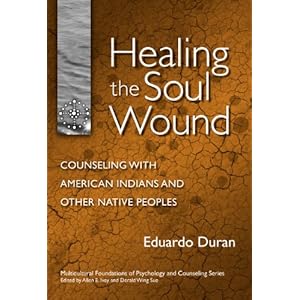
This is interesting, and it confirms a growing trend I have seen in aboriginal peoples seeking to return to the spiritual traditions that once nourished their people. One of the best books I have seen on the subject is Healing the Soul Wound: Counseling with American Indians and Other Native Peoples (2006) by Eduardo Duran.

Ceremonial PTSD therapies favored by Native American veterans
Medical News Today | Friday 20 June 2014
Native American veterans battling Post Traumatic Stress Disorder find relief and healing through an alternative treatment called the Sweat Lodge ceremony offered at the Spokane Veterans Administration Hospital.
In the Arizona desert, wounded warriors from the Hopi Nation can join in a ceremony called Wiping Away the Tears. The traditional cleansing ritual helps dispel a chronic "ghost sickness" that can haunt survivors of battle.
These and other traditional healing therapies are the treatment of choice for many Native American veterans, - half of whom say usual PTSD treatments don't work - according to a recent survey conducted at Washington State University. The findings will be presented at the American Psychological Association conference in Washington D.C. this August.
The study is available online at https://www.surveymonkey.com/s/nativeveterans.
Led by Greg Urquhart and Matthew Hale, both Native veterans and graduate students in the WSU College of Education, the ongoing study examines the attitudes, perceptions, and beliefs of Native American veterans concerning PTSD and its various treatment options. Their goal is to give Native veterans a voice in shaping the types of therapies available in future programs.
"Across the board, Native vets don't feel represented. Their voices have been silenced and ignored for so long that they were happy to provide feedback on our survey," said Hale.
Historically, Native Americans have served in the military at higher rates than all other U.S. populations. Veterans are traditionally honored as warriors and esteemed in the tribal community. A 2012 report by the Department of Veterans Affairs showed that the percentage of Native veterans under age 65 outnumbers similar percentages for veterans of all other racial groups combined.
The WSU survey provides a first-hand look at the veterans' needs, but more importantly, reveals the unique preferences they have as Native American veterans, said Phyllis Erdman, executive associate dean for academic affairs at the college and mentor for the study.
Cultural worldview
Urquhart said many Native veterans are reluctant to seek treatment for PTSD because typical western therapy options don't represent the Native cultural worldview.
"The traditional Native view of health and spirituality is intertwined," he explained. "Spirit, mind, and body are all one - you can't parcel one out from the other - so spirituality is a huge component of healing and one not often included in western medicine, although there have been a few studies on the positive effects of prayer."
For many years, the U.S. government banned Native religious ceremonies, which subsequently limited their use in PTSD programs, said Urquhart. Seeking to remedy the situation, many Veterans Administration hospitals now offer traditional Native practices including talking circles, vision quests, songs, drumming, stories, sweat lodge ceremonies, gourd dances and more. Elders or traditional medicine men are also on staff to help patients process their physical and emotional trauma.
"PTSD is a big issue and it's not going away anytime soon," said Hale who identifies as Cherokee and was a mental health technician in the Air Force.
Urquhart, who is also Cherokee and developed mild symptoms of PTSD after a tour as a cavalry scout in Iraq, said there have been very few studies on Native veterans and PTSD. He and Hale designed their survey to be broader and more inclusive than any previous assessments. It is the first to address the use of equine therapy as a possible adjunct to both western treatments and Native ceremonial approaches.
Standard treatments disappointing
So far, 253 veterans from all five branches of the military have completed the survey, which includes 40 questions, most of them yes or no answers. It also includes an open-ended section where participants can add comments. The views reflect a diverse Native population ranging from those living on reservations to others who live in cities.
The majority of survey takers felt that "most people who suffer from PTSD do not receive adequate treatment," said Urquhart. For Native veterans who did seek standard treatment, the results were often disappointing. Sixty percent of survey respondents who had attempted PTSD therapy reported "no improvement" or "very unsatisfied."
Individual counseling reportedly had no impact on their PTSD or made the symptoms worse for 49 percent of participants. On the other hand, spiritual or religious guidance was seen as successful or highly successful by 72 percent of Native respondents. Animal assisted therapy - equine, canine, or other animals - was also highly endorsed.
"The unique thing about equine therapy is that it's not a traditional western, sit-down-with-a-therapist type program. It's therapeutic but doesn't have the stigma of many therapies previously imposed on Native Americans," said Urquhart.
Strongly supportive of such efforts, Erdman is expanding the long-running WSU Palouse Area Therapeutic Horsemanship (PATH) program to include a section open to all veterans called PATH to Success: A Warrior's Journey.
Giving veterans a voice
Urquhart, Hale, and teammate, Nasreen Shah say their research is gaining wide support in Native communities throughout the nation.
The team plans to distribute the survey results to all U.S. tribes, tribal governments, Native urban groups, and veteran warrior societies. They also hope the departments of Veterans Affairs and Indian Health Services will take notice and continue to incorporate more traditional healing methods into their programs.
As one Iroquois Navy veteran commented on the survey, "Traditional/spiritual healing can be very effective together with in depth education and background in modern treatment methods."
A Nahua Army veteran agreed, writing, "Healing ceremonies are absolutely essential, as is story telling in front of supportive audiences. We need rituals to welcome back the warriors."
Monday, May 26, 2014
Monday, June 10, 2013
Can an Ecstasy Pill Treat PTSD?
From the BBC Future site, this is a pretty good article on the efforts to get MDMA approved for the treatment of PTSD in soldiers. However, what they see as a potential good thing feels to me like more of the same bureaucratic BS:
[Rick] Doblin [founder and executive director of MAPS] thinks that getting MDMA through the FDA’s regulatory hurdles will only take eight to 10 years and $15 to $20 million – relatively speedy and cheap compared to what is normally required to license a new drug. “The FDA knows more about MDMA right now than any drug that they’ve ever approved in their entire history,” he says, pointing to a wealth of literature generated, ironically, by MDMA’s illegal status.Ten years seems like a long time for a drug we already know is safer than most (if not all) psycho-pharmaceuticals.
Could ecstasy help treat soldiers with PTSD?
Sharon Weinberger
CODE RED| 6 June 2013
A trial is currently assessing whether the drug MDMA can treat Post-Traumatic Stress Disorder – whether the new research will convince critics is another matter.
The University of Southern California's Institute for Creative Technologies is leading the way in creating virtual humans. The result may produce real help for those in need.
It is hardly surprising that Tony Macie has an over-developed sense of awareness. As a US Army private he served for 15 months in Baghdad, calling in artillery and air support in his role as a member of a reconnaissance unit. Deadly roadside bombs and insurgent attacks were everyday occurrences in the city divided by sectarian violence. Being hyper-vigilant can help keep a soldier alive in a warzone, but when Macie returned home in 2007, he couldn’t switch off. “My brain was working on overdrive all the time,” he says. “I couldn’t relax, couldn’t unwind.”
He was diagnosed with Post-Traumatic Stress Disorder (PTSD), but found the standard treatments – mainly psychotherapy and anti-depressants – were of little help. While searching for an effective alternative, Macie came across the website of Multidisciplinary Association for Psychedelic Studies (MAPS). This not-for-profit group was sponsoring research into the use of MDMA, better known by its street name ecstasy, as a treatment for PTSD. He enrolled in a study that is currently looking at whether combined use of the drug and psychotherapy could provide relief for those with the debilitating anxiety disorder.
MDMA was originally developed by scientists at the German chemical and pharmaceutical company Merck a century ago, while they were investigating ways to stop abnormal bleeding. In the 1970s, a number of psychiatrists used the chemical to enhance communication with patients. The practice ended when MDMA became better known as a party drug, leading to it being outlawed in the US in 1985.
Evidence for its therapeutic efficacy was largely anecdotal. However, a small clinical trial published in 2010 suggested the drug can increase response to psychotherapy among people with PTSD. Now Rick Doblin, the founder and executive director of MAPS, hopes further studies, such as the one Macie is taking part in, will eventually lead to MDMA being approved by the US Food and Drug Administration as a new effective treatment option for PTSD. “Everywhere we go, what we’re told is ‘this is really important’, but the people we’ve spoken with were not high enough in the hierarchy to comfortably say yes,” says Doblin. He does, however, believe he is making headway. He recently had a meeting in the Pentagon to discuss his research (although he declined to identify the office on the record).
On trial
MAPS also funded the clinical trial published three years ago, which was led by Michael Mithoefer, a psychiatrist based in South Carolina. It involved 20 PTSD patients, the majority of whom had the disorder after being sexually assaulted, or being sexually or physically abused as children. Participants were given either MDMA or an inactive placebo during psychotherapy sessions, and were later assessed for symptoms of PTSD. Ten of the 12 (83%) given MDMA responded positively, compared to just two of the eight (25%) who took placebos.
Mithoefer’s interest in MDMA dates back to a career shift in 1991, when he moved from emergency medicine to psychiatry. “I was interested in experiential therapy, helping people shift their consciousness in some way,” he says. He became interested in MDMA's possible use in psychotherapy from anecdotal evidence reported prior to the drug's US ban. "There were published reports, but no controlled research," he says. PTSD was beginning to rise in the public consciousness in light of the wars in Iraq and Afghanistan. "I thought it behooved us to take a careful look at whether these anecdotal reports of MDMA could be born out with rigorous controlled trials."
Mithoefer is also running the trial that Macie is participating in. A group of 24 veterans and firefighters will take part in three sessions during which they will be given MDMA before undergoing psychotherapy. The hypothesis is that participants will feel less fear and be better able to talk about the traumatic experiences that caused their PTSD while under the influence of the drug.
One problem with the previous study was the use of inactive placebos. Those in the control group would have known that they were not receiving the active drug and this knowledge could have influenced their mental state. To get around this Mithoefer is giving those in the current study low, medium, or high doses. As participants will not know which does they have been given, he says this should effectively create double-blind conditions that would give the study greater validity. Results will be measured using a questionnaire-based PTSD diagnostic tool. The study is due to be completed next year.
Treatment options for PTSD are by and large ineffective, and so MDMA is not the only “non-traditional” treatment under investigation. At the Army’s Fort Bliss Restoration and Resilience Center in Texas, patients receive therapies ranging from acupuncture to Reiki, a Japanese spiritual treatment. In California, researchers at the Pentagon-funded Institute for Creative Technologies have studied the use of virtual reality as part of “exposure therapy” for veterans with PTSD.
Bad reputation
These days, researchers have no problems finding subjects for such work. It is estimated that the US military is diagnosing between 14,000 and 15,000 new cases of PTSD every year among deployed service members. “We have 400 veterans on a waiting list who have called us, and that’s without doing recruiting,” says Mithoefer.
Doblin thinks that getting MDMA through the FDA’s regulatory hurdles will only take eight to 10 years and $15 to $20 million – relatively speedy and cheap compared to what is normally required to license a new drug. “The FDA knows more about MDMA right now than any drug that they’ve ever approved in their entire history,” he says, pointing to a wealth of literature generated, ironically, by MDMA’s illegal status.
But whether the new research will convince critics, particularly those influenced by MDMA's reputation as a party drug, is more doubtful. Part of the problem is overcoming the stigma of hallucinogens, and some of the biased research that has been done in the past. Jonathan Moreno, a bioethicist and professor at the University of Pennsylvania, points to the studies conducted by Timothy Leary of Harvard in the 1960s. In a prison study, Leary claimed that hallucinogens combined with psychotherapy could reduce re-offending among prisoners, but those conclusions were later shown to be erroneous. Doblin published a follow-up study, highlighting problems with Leary's means of tracking re-offending in the long-term.
“It’s striking that even in the 60s and 70s people lined up on different sides on hallucinogens,” says Moreno. The lines are drawn pretty dark on various positions.”
It’s not just the recreational use and abuse of MDMA that raises concerns. There is what Doblin calls the “disastrous legacy of mind control experiments” at the Pentagon. During the Cold War, both the Army and the CIA experimented with using hallucinogens as a weapon. Particularly notorious was MK Ultra, a CIA project which experimented with the use of psychedelics for mind control, sometimes with unwitting subjects.
“That is in people’s minds,” says Doblin, adding that it has been sufficiently far in the past that it is not their dominant concern.” Doblin does say he was approached by a former member of the military who asked about the possibility of using MDMA, which fosters feeling of trust, as a tool for interrogating terrorists. “That was a scary thing,” says Doblin, who also expressed doubt such use would be effective.
The bigger barrier, Doblin says, is the fear of MDMA's recreational associations, and that it could be misused. Several researchers at the US Department of Veterans Affairs (VA) turned down requests to be interviewed about Mithoefer's MDMA study. "VA does not use ecstasy as a treatment for PTSD," said a spokesman in a statement. "Nor has it conducted, nor is currently conducting, any studies into whether it could be used in such a capacity." Ecstasy "is an illegal drug and VA would not involve veterans in the use of such substances."
For Macie, however, much of the debate is academic. He has taken part in one session of combined MDMA and psychotherapy as part of Mithoefer's study and already believes the approach has helped him. He does not see the drug as a magic bullet and recognises such treatment is likely to still require a great deal of effort on his part. “I don’t want you to think that doing it puts you in happy mode forever,” he says. “It’s hard work.”
~ If you would like to comment on this story or anything else you have seen on Future, head over to our Facebook page or message us on Twitter.


Monday, May 31, 2010
Elephant Journal - Memorial Day Observations – Noam Chomsky’s Perspective (from Democracy Now!)

I posted a new piece for Memorial Day over at Elephant Journal, Memorial Day Observations – Noam Chomsky’s Perspective (from Democracy Now!).
Here is a brief taste:
I am not patriotic. I do not say the Pledge of Allegiance because my allegiance is not to a flag or a nation, but to human beings in general. I believe we should honor the warriors, however, even while we hate the war. I believe, as many are starting to realize, that out government has long ago ceased to be “by the people and for the people.” I believe that all of our most recent wars have not been based on higher ideals but, rather, politics and greed.The post goes on from there, and it also includes links to a recent video of Noam Chomsky, via Democracy Now!, that is very much worth watching (or reading, since they include the transcript).
Tags:
Tuesday, November 11, 2008

Subscribe to:
Posts (Atom)