Showing posts with label social anxiety. Show all posts

Friday, May 30, 2014

An Analysis of Early Developmental Trauma in Social Anxiety Disorder and Posttraumatic Stress Disorder


Here is another article for the "does a bear shit in the woods" file. OF COURSE social anxiety and PTSD are connected to developmental trauma - almost EVERYTHING we call mental illness is the result of developmental trauma or shock trauma.

On the bright side, at least someone is doing the research and writing the articles - in time, maybe we will stop looking for the magic pill to make it all better and start paying attention to how our children are being raised. If we want to reduce the psychological adaptations we call mental illness, then we need to start with teaching people how to be good nurturing parents (which means helping them deal with their own traumas).

Full Citation:
Bishop, M. Rosenstein, D, Bakelaar, S, and Seedat, S. (2014, May 29). An analysis of early developmental trauma in social anxiety disorder and posttraumatic stress disorder.
Annals of General Psychiatry; 13:16. doi:10.1186/1744-859X-13-16

An analysis of early developmental trauma in social anxiety disorder and posttraumatic stress disorder


Melanie Bishop, David Rosenstein, Susanne Bakelaar and Soraya Seedat
Author Affiliations

Abstract (provisional)


Background

The early contributions of childhood trauma (emotional, physical, sexual, and general) have been hypothesized to play a significant role in the development of anxiety disorders, such as posttraumatic stress disorder (PTSD) and social anxiety disorder (SAD). The aim of this study was to assess childhood trauma differences between PTSD and SAD patients and healthy controls, as measured by the Early Trauma Inventory.

Methods

We examined individuals (N = 109) with SAD with moderate/severe early developmental trauma (EDT) (n = 32), individuals with SAD with low/no EDT (n = 29), individuals with PTSD with EDT (n = 17), and healthy controls (n = 31). The mean age was 34 years (SD = 11). Subjects were screened with the Mini-International Neuropsychiatric Interview (MINI), Liebowitz Social Anxiety Scale (LSAS), Clinician-Administered PTSD Scale (CAPS), and Childhood Trauma Questionnaire (CTQ). Analysis of variance was performed to assess group differences. Correlations were calculated between childhood traumas.

Results

Although not statistically significant, individuals with PTSD endorsed more physical and sexual childhood trauma compared with individuals with SAD with moderate/severe EDT who endorsed more emotional trauma. For all groups, physical and emotional abuse occurred between ages 6 and 11, while the occurrence of sexual abuse in individuals with PTSD was at 6-11 years and later (13-18 years) in individuals with SAD with moderate/severe EDT. For emotional abuse in all groups, the perpetrator was mostly a primary female caregiver; for sexual abuse, it was mostly a nonfamilial adult male, while for physical abuse, it was mostly a caregiver (male in PTSD and female in SAD with moderate/severe EDT).

Conclusions

The contribution of childhood abuse to the development of PTSD and SAD and the differences between these groups and other anxiety disorders should not be ignored and attention should be given to the frequency and severity of these events. The relationship of the perpetrator(s) and the age of onset of childhood abuse are also important considerations as they provide a useful starting point to assess impact over the life course. This can, in turn, guide clinicians on the optimal timing for the delivery of interventions for the prevention of PTSD and SAD.

The complete article is available as a provisional PDF. The fully formatted PDF and HTML versions are in production.

Monday, May 27, 2013

Ecstasy-Assisted Therapy for Social Anxiety?

MDMA has been shown to improve the symptoms of post-traumatic stress disorder, so why not social anxiety as well?

Ecstasy-Assisted Therapy for Social Anxiety?

By TRACI PEDERSEN Associate News Editor
Reviewed by John M. Grohol, Psy.D. on May 26, 2013


The FDA recently approved a novel study that will examine whether the drug ecstasy could be of benefit to autistic adults suffering from social anxiety.

Ecstasy, known scientifically as N-methyl-3,4-methylenedioxyamphetamine (MDMA) has a reputation as a raver’s drug of choice and, in 1985, was classified as a Schedule I controlled substance — a category reserved for dangerous drugs with no medical value.

The drug, however, has been of interest to researchers who believe it could aid in psychotherapy.

Known for its “empathogenic effects,” MDMA has been shown to reduce the fear of emotional harm while promoting feelings of social connection. MDMA also produces a sense of euphoria and mild hallucinations.

Although “street ecstasy” often contains dangerous contaminants, the researchers believe using pure MDMA in a controlled setting could help certain patients.

“The study could start enrolling subjects in several months,” said Brad Burge, the communications director at Multidisciplinary Association for Psychedelic Studies.

“However, it could be six months or more depending on how long the [Institutional Review Board] review process takes, how long it takes to set up the study site at the Harbor-UCLA Medical Center/Los Angeles Biomedical Research Institute, how long it takes to recruit subjects, and other factors. I estimate it will be four to eight months.”

The study would investigate the safety and therapeutic potential of MDMA-assisted therapy for treating social anxiety in 12 autistic adults.

“This study will be the first time MDMA-assisted therapy has been explored in a clinical trial for social anxiety, and the first time it’s been explored to help adults on the autism spectrum,” Burge said.

“The many case reports collected by study co-investigator Alicia Danforth in her recently submitted doctoral dissertation indicate that it is likely to provide at least some benefit.”

“Existing research also shows that MDMA is safe enough for use in clinical research,” he added. “It’s a promising area of research, and indicates a real shift in how the public sees MDMA and other psychedelics.”

The FDA concluded that the study was “reasonably safe to proceed as currently written,” but also offered some safety recommendations.

A similar study found that MDMA could help those suffering from post-traumatic stress disorder.

One rape survivor reported that the drug helped her cope with trauma by allowing her to “control where I was thinking and going, and look at things differently.”

Source: Multidisciplinary Association for Psychedelic Studies

Wednesday, August 10, 2011

The Diane Rehm Show - Shyness and Social Anxiety

http://unfitmind.files.wordpress.com/2010/06/social_phobia1.jpg

This was an excellent segment of The Diane Rehm Show - strangely, the only thing I remember is that if you want to have a day with lower social anxiety, then have some tender love-making the night before.

Oh yeah, one of the very cool guests is Todd Kashdan of George Mason University - I'm a fan of his work, notably Curious?: Discover the Missing Ingredient to a Fulfilling Life.
Tuesday, August 9, 2011

Statue, Montparnasse Cemetery - seamonkey78704

Statue, Montparnasse Cemetery (seamonkey78704)

Many of us feel nervous if we have to make a speech in public. But for the more than 40% of Americans who are chronically shy, even ordering food in a restaurant can cause deep anxiety. Their palms sweat, their hearts race, and their faces grow flush. Medical treatment and therapy is widely available for social anxiety, but some argue that shyness is not a sickness. They say shy people listen better and have higher levels of empathy. A look at shyness, its evolutionary basis, and why it might be an asset.

Guests

David Sloan Wilson, Distinguished Professor of Biology and Anthropology at the State University of New York (SUNY) in Binghamton; director of The Evolution Institute.

Dr. Liza Gold, Clinical Professor of Psychiatry at Georgetown University Medical Center.

Todd Kashdan, Associate Professor of Psychology and Senior Scientist at George Mason University.

Susan Cain, author of the forthcoming book, "Quiet" (2012) and The Power of Introverts blog.

Related Links

Sunday, June 19, 2011

Burning Brightly - Allowing Your Soul to Shine

http://27.media.tumblr.com/tumblr_lj5o3whCcN1qccm1no1_400.jpg

This is the Daily Om from a week or two ago. I've been letting it sit for some reason, perhaps because it feels too relevant to my life right now. As I begin my work as a therapist, I feel like there is so much to learn, and at the same time, when I am sitting with clients I feel like this is what I should have been doing years ago (even though I know I was not ready then).

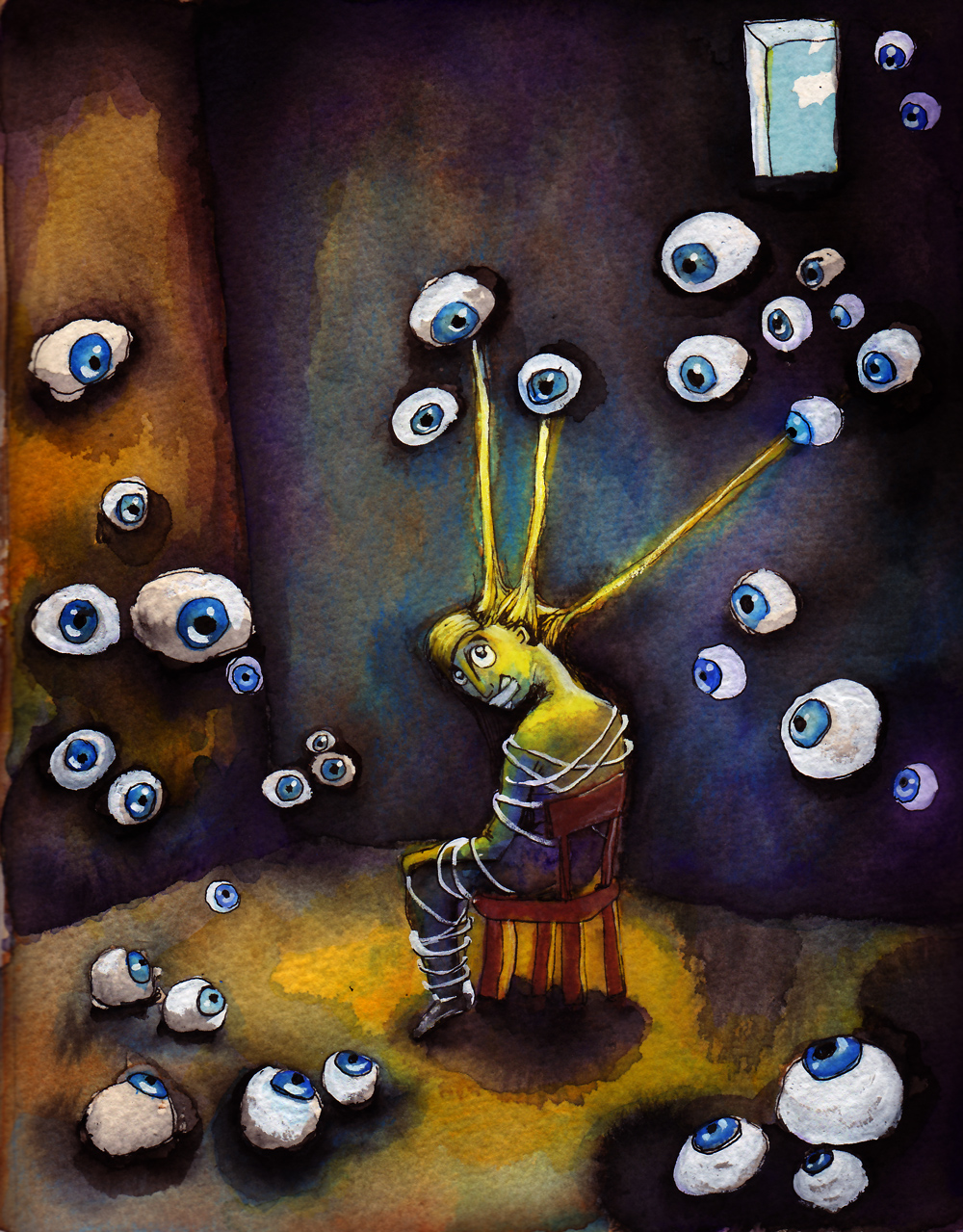
I have spent much of my life trying to be invisible. Social anxiety does that to a person. And as this article mentions, making myself invisible also has the unintentional result of preventing me from living in and owning my own talents and skills.

Blogging without a pseudonym was a first step in the direction of living more publicly, and then attending conferences and speaking at them, all of which has moved me to this point where I participated as a speaker in a large teleconference for men this last week, the same week in which I began to see clients.

Burning Brightly
Allowing Your Soul to Shine


When we hide and try to be invisible and unseen by all
we are only really hiding from ourselves.

At times, we’ve all wanted to crawl under a rock and hide away from the world. We may have preferred to be invisible rather than let other people see us or notice that we exist. This desire not to be seen often happens when we are feeling very hurt, angry, or simply weary of the world. And while we may console ourselves with the defense that we are shy, an introvert, or a loner, we may actually be hiding.

When we hide and make believe that we are invisible, we can think that we no one sees us even though, truthfully, we are only really hiding from ourselves. And while we may try to live life as inconspicuously as possible, we only succeed in becoming more conspicuous because people can’t help but notice that we are trying to hide our light. None of us are meant to hide; each one of us radiates a unique brilliance that is meant to illuminate the world. When we try to dim our light, we diminish the natural radiance of the Universe, and we deprive the people around us of the unique gifts and talents that we are here to share.

Stepping out of the wings and letting your light shine is actually a way to serve the planet. We each have a responsibility to contribute to our community, and we do this when we let ourselves be seen. It doesn’t do anyone any good when we try to hide. We are all beings of light and we are here to light the way for each other. When we let ourselves shine, we become a bright mirror that others can see their own reflected brilliance through, and they can’t help but want to shine also. Shine your light out into the world, bless those around you by sharing your gifts, and watch the universe glow.