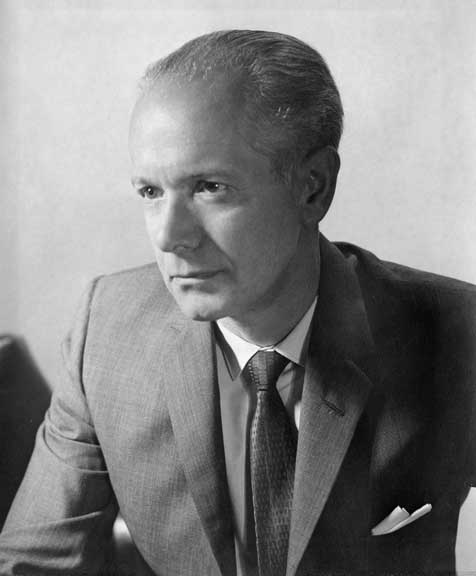
Robert Stolorow is one of the co-founders of the intersubjective systems theory model of relational psychoanalysis, along with Donna Orange, George Atwood, and Bernard Brandchaft. Among the foundational books written by Stolorow and others in this group are
Working Intersubjectively: Contextualism in Psychoanalytic Practice (2001, with Orange and Atwood),
Contexts of Being: The Intersubjective Foundations of Psychological Life (2002, with Atwood), and
Psychoanalytic Treatment: An Intersubjective Approach (2000, with Atwood and Brandchaft).
Stolorow's blog at
Psychology Today, from which this post is shared, is
Feeling, Relating, Existing: On Emotion and the Human Dimension. This is the bio given at PT:
Robert D. Stolorow, Ph.D., Ph.D. is a Founding Faculty Member at the Institute of Contemporary Psychoanalysis, Los Angeles, and at the Institute for the Psychoanalytic Study of Subjectivity, New York City. He is the author of World, Affectivity, Trauma: Heidegger and Post-Cartesian Psychoanalysis (Routledge, 2011) and Trauma and Human Existence: Autobiographical, Psychoanalytic, and Philosophical Reflections (Routledge, 2007) and coauthor of eight other books. He received the Distinguished Scientific Award from the Division of Psychoanalysis of the American Psychological Association in 1995, the Haskell Norman Prize for Excellence in Psychoanalysis from the San Francisco Center for Psychoanalysis in 2011, and the Hans W. Loewald Memorial Award from the International Forum for Psychoanalytic Education in 2012.
In this post, Stolorow clarifies the differences between empathy, as first proposed by Heinz Kohut in his Self Psychology model, and the "phenomenological contextualism" proposed in the intersubjective systems model.
Emotional dwelling is more than empathic understanding
Published on August 10, 2013 by Robert D. Stolorow, Ph.D. in Feeling, Relating, Existing
“The person with understanding does not know and judge as one who stands apart and unaffected; but rather, as one united by a specific bond with the other, he thinks with the other and undergoes the situation with him.”—Hans-Georg Gadamer
Traditional notions of therapeutic empathy have been pervaded by the Cartesian doctrine of the isolated mind. This doctrine bifurcates the subjective world of the person into outer and inner regions, reifies and absolutizes the resulting separation between the two, and pictures the mind as an objective entity that takes its place among other objects, a “thinking thing” that has an inside with contents and looks out on an external world from which it is essentially estranged. Within this metaphysical vision, human beings can encounter each other only as thinking subjects, and something like empathic immersion—what psychoanalytic innovator Heinz Kohut famously called vicarious introspection—is required to bridge the ontological gap separating their isolated minds from one another. In a post-Cartesian philosophical world, no such bridging is required, as we are all always already connected with one another in virtue of our common humanity (including our common finitude and existential vulnerability) and our co-disclosive relation to a common world.
Kohut’s and others’ contention that a therapist’s empathic immersions can be neutral and objective is especially saturated with Cartesian assumptions. One isolated mind, the therapist, enters the subjective world of another isolated mind, the patient. With his or her own psychological world virtually left outside, the therapist gazes directly upon the patient’s inner experience with pure and preconceptionless eyes. From my vantage point, this doctrine of immaculate perception (Nietzsche) entails a denial of the inherently intersubjective nature of analytic understanding, to which the therapist’s subjectivity makes an ongoing, unavertable, and indispensable contribution.
The framework of phenomenological contextualism developed by my collaborators and me embraces the hermeneutical axiom that all human thought involves interpretation and that therefore our understanding of anything is always from a perspective shaped and limited by the historicity of our own organizing principles—by the fabric of preconceptions that the philosopher Gadamer called prejudice. The claim that all analytic understanding is interpretive means that there are no decontextualized absolutes and universals, no neutral or objective analysts, no immaculate perceptions, no God’s-eye views of anything or anyone—and thus no empathic immersions in another’s experiences. This contextualist sensibility keeps our horizons open to multiple, relationally expanded possibilities of meaning. Analytic understanding is thus seen as forming and evolving within a dialogical context.
From my vantage point, therapeutic inquiry is a dialogical process in which each participant, in varying degrees and at different times, engages in reflection upon three interrelated domains—the meanings organizing one’s own experience, the meanings organizing the other’s experience, and the dynamic intersubjective system constituted by these interacting worlds of meaning. Furthermore, in this dialogical process each participant (far from entering the other’s subjective world and leaving his or her own outside) continually draws on his or her own experiential world in search of analogues for the possible meanings governing the other’s experiences. Empathic (-introspective) understanding is thus grasped as an emergent property of a dialogical system, rather than as a privileged possession of an isolated mind.
But now I want to push the relational envelope even further and radicalize what I have said so far. There is something disengaged in the traditional conceptions of therapeutic empathy. Kohut was aware of this, and in his last lecture before he died, he characterized empathy as a value-neutral investigative activity that could even be used for malevolent purposes. He suggested that the Nazis’ practice of putting sirens on the bombs they dropped on London demonstrated an exquisite empathic understanding of the terror that would be evoked in those on the ground who heard them.
Recently, I have been moving toward a more active, relationally engaged form of therapeutic comportment that I call emotional dwelling. In dwelling, one does not merely seek to understand the other’s emotional pain from the other’s perspective. One does that, but much more. In dwelling, one leans into the other’s emotional pain and participates in it, perhaps with aid of one’s own analogous experiences of pain. I have found that this active, engaged, participatory comportment is especially important in the therapeutic approach to emotional trauma. The language that one uses to address another’s experience of emotional trauma meets the trauma head-on, articulating the unbearable and the unendurable, saying the unsayable, unmitigated by any efforts to soothe, comfort, encourage, or reassure—such efforts invariably being experienced by the other as a shunning or turning away from his or her traumatized state. Let me give a couple of examples of emotional dwelling and the sort of language it employs from my own personal life.
In the immediate aftermath of my late wife Dede’s death in February 1991, my soul brother and collaborator of 4 decades, George Atwood, was the only person among my friends and family members who was capable of dwelling with me in the magnitude of my emotional devastation. He said, in his inimitable way, “You are a destroyed human being. You are on a train to nowhere.” George lost his mother when he was 8 years old, and I think his dwelling in and integrating his own experience of traumatic loss enabled him to be an understanding home for mine. He knew that offering me encouraging platitudes would be a form of emotional distancing that would just create a wall between us.
My father suffered a terrible trauma when he was 10 years old. He was sitting in class, the kid sitting in front of him was horsing around, the teacher threw a book at the kid, the kid ducked, and the book took my dad’s eye out on the spot. For the rest of his life, he lived in terror of blindness—a terror that I remember pervaded our household when I was growing up. Sixty years after that terrible trauma, he was to have cataract surgery on his remaining eye, and his optic nerve was vulnerable to being knocked out in virtue of the glaucoma medication he had been using for decades. When I went to see him just prior to the surgery, I found him in a massively (re)traumatized state—terrified, fragmented, disorganized, and deeply ashamed of the state he was in. Family members tried to offer him reassurance: “I’m sure it will be fine.” Really? Such platitudes only demonstrated to him that no one wanted to be close to him in his traumatized state. Having gone through my own experience of devastating trauma, I knew what he needed instead. I said, “Dad, you have been terrified of blindness for nearly your entire life, and there’s a good chance that this surgery will blind you! You are going to be a fucking maniac until you find out whether the surgery blinds you! You’re going to be psychotic; you’re going to be climbing the walls!” In response to my dwelling with his terror, my dad came together right before my eyes and, as was our custom, we had a couple of martinis together. The surgery was successful and did not blind him.
If we are to be an understanding relational home for a traumatized person, we must tolerate, even draw upon, our own existential vulnerabilities so that we can dwell unflinchingly with his or her unbearable and recurring emotional pain. When we dwell with others’ unendurable pain, their shattered emotional worlds are enabled to shine with a kind of sacredness that calls forth an understanding and caring engagement within which traumatized states can be gradually transformed into bearable painful feelings. Emotional pain and existential vulnerability that find a hospitable relational home can be seamlessly and constitutively integrated into whom one experiences oneself as being.
Copyright Robert Stolorow